
20 Sensory Garden Paths For Kids That Make Every Step a Discovery

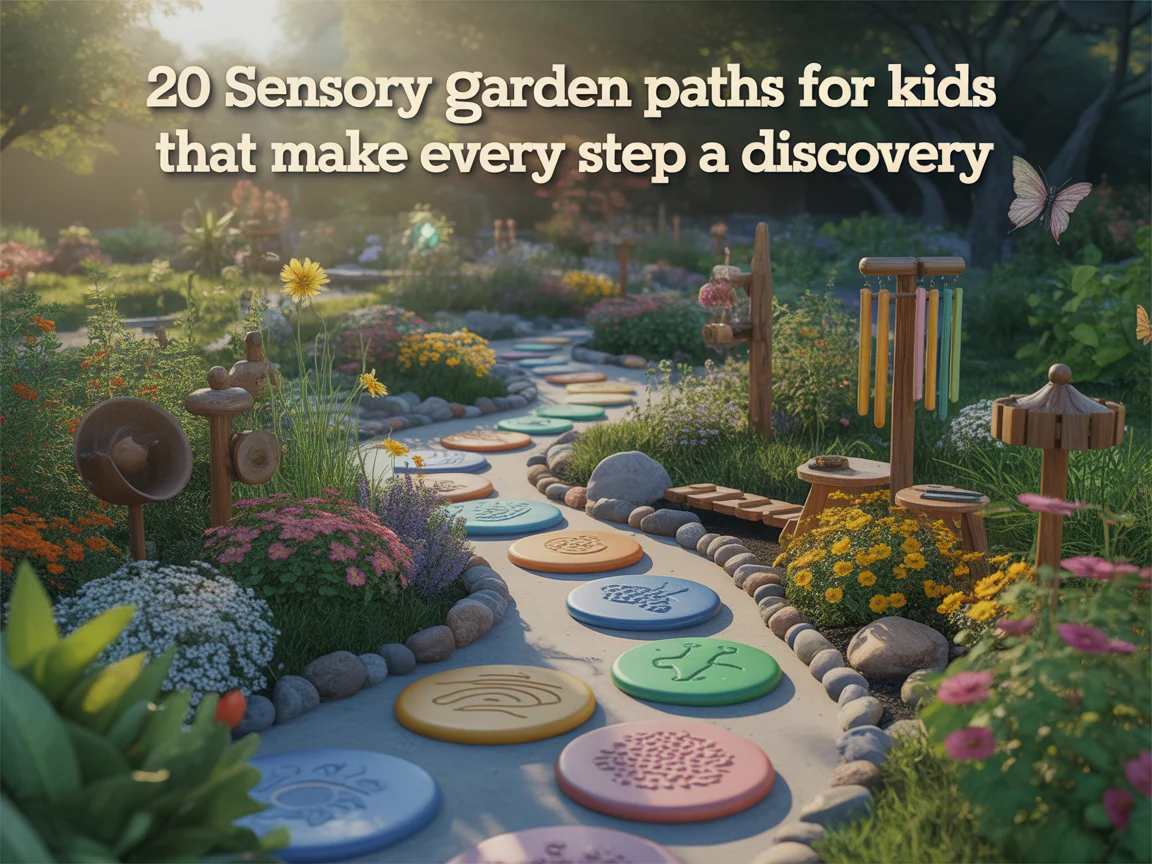
I watched a five-year-old girl with autism walk a sensory garden path for the first time at a therapeutic garden I helped design, and the way she moved through it told me everything I needed to know about why these paths matter. She did not rush. She stopped at every surface change, crouched to press her palms flat on each different texture, looked up to locate the sound of the wind chime before moving toward it, and sat down in the lavender border section for four full minutes breathing in the scent with her eyes closed. Her mother cried quietly behind me. Neither of us said anything.
Sensory garden paths for kids are outdoor walkways deliberately designed to stimulate two or more of the five senses at every step through the use of varied surface textures, fragrant plants, sound elements, visual color sequences, water features, and edible plantings, supporting sensory processing development, physical coordination, and emotional regulation in children of all abilities. They work equally well as sensory garden ideas for schools, home gardens, and specialist therapeutic settings designed specifically around sensory garden ideas for autism.
Since that afternoon, I have designed and built sensory pathways for kids in primary schools, nurseries, therapeutic gardens, and private homes. I have consulted occupational therapists, special educational needs coordinators, and class teachers throughout every project.
In this article, I am sharing 20 sensory garden paths for kids that I have either built, observed, or researched thoroughly enough to recommend with complete confidence.
Multi-Texture Barefoot Sensory Path
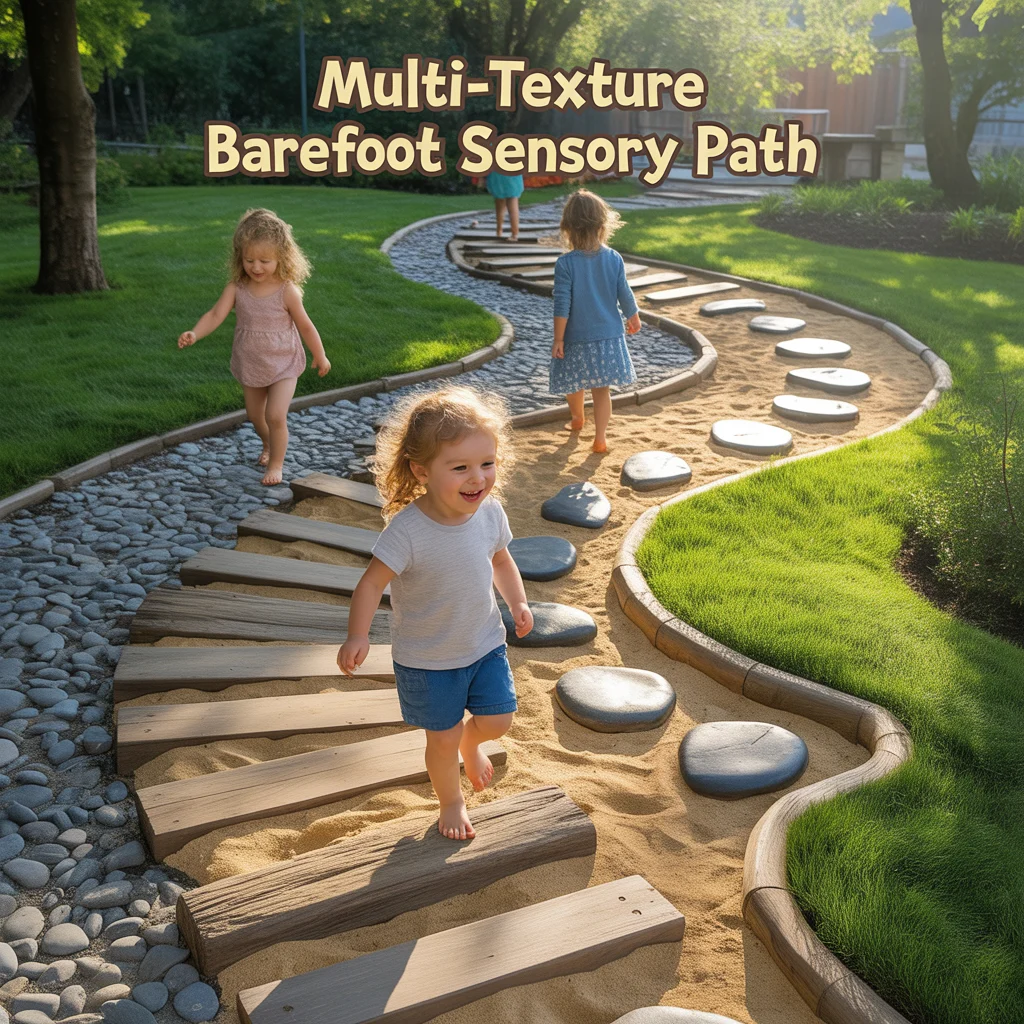
A multi-texture barefoot sensory path places eight to twelve sections of different natural and manufactured materials in a defined sequence along a 10 to 20-foot path route, so each step a child takes in bare feet produces a completely different physical sensation from the step before. I built a ten-section version at a primary school using smooth river pebbles, fine sand, soft grass, warm bark chip, cool damp soil, flat slate, soft moss, dry leaves, rubber granules, and compacted gravel, and every child who used the path slowed their walking pace instinctively at each material transition, pausing to feel the difference before moving forward. The occupational therapist working with the school described it as the most consistently engaging sensory path element she had observed across four years of outdoor therapy sessions.
Materials for a Barefoot Texture Sensory Path
Smooth river pebbles, fine sand, and warm bark chip are three foundational materials for a barefoot sensory garden path for kids. Smooth river pebbles at 20 to 40mm size provide a gentle massage sensation through the foot arch that delivers proprioceptive feedback to the nervous system and suits sensory garden ideas for autism where proprioceptive input supports regulation. Fine sand at 3-inch depth in a timber-edged section provides a warm, yielding surface with temperature variation between morning and afternoon that most children find highly engaging to walk through slowly. Warm bark chip at 3-inch depth provides a springy, slightly uneven surface that activates the foot muscles actively during barefoot walking on the sensory path.
Safety Requirements for a Barefoot Sensory Path
A barefoot sensory garden path for kids requires four safety measures before any child uses the path. All pebble and stone sections must use rounded aggregate only, with no angular stones above 40mm. All timber edging boards require smooth sanding on every exposed edge with no protruding fixings. The full path surface requires inspection for glass, wire, or sharp debris before each session. Children under 5 require adult supervision throughout barefoot use. I follow all four measures on every barefoot sensory path project I install and provide a written safety inspection checklist with every completed installation for ongoing school or home use by supervising adults.
Fragrant Herb Sensory Garden Path
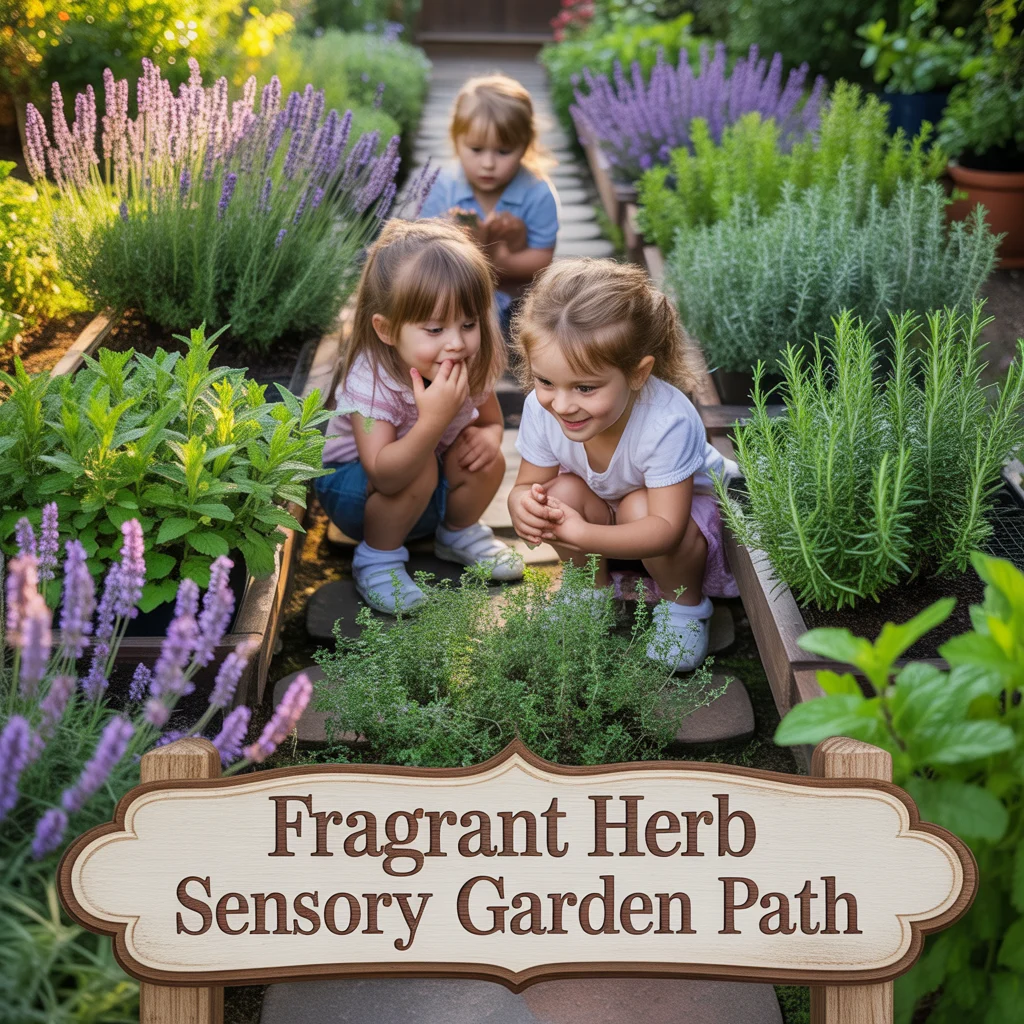
A fragrant herb sensory garden path plants aromatic herbs along both sides of the walkway at child hand height so the scent changes every few steps as different species are brushed against during the walk. I designed this for a primary school outdoor sensory path for schools, planting lavender, rosemary, spearmint, lemon thyme, and chamomile at 18-inch intervals along a 24-foot path, and the school’s occupational therapist noted that the lavender section produced a measurable calming response in four children with sensory processing differences who typically showed distress during outdoor sessions. The scent produced by lightly touching the herbs was noticeable from 6 feet away on warm afternoons.
Best Herbs for a Fragrant Sensory Path for Kids
Lavandula angustifolia, Mentha spicata, and Thymus citriodorus are three herbs suited to a fragrant sensory garden path for kids. Lavandula angustifolia provides a calming fragrance from June to August at 18 to 24 inches height, recognized in occupational therapy settings as a scent that reduces anxiety in children with sensory processing differences. Mentha spicata, spearmint, releases a sharp, clean fragrance immediately when the leaves are touched and grows vigorously in a contained border, providing a reliably accessible scent stimulus throughout the growing season. Thymus citriodorus, lemon thyme, stays below 6 inches in height between path stones and releases a citrus-herbal fragrance when lightly trodden, providing ground-level scent stimulation at every footfall on the sensory path.
Herbs to Exclude From a Children’s Sensory Path
Rue, pennyroyal, and tansy are three herbs requiring exclusion from any sensory garden path for kids because each produces compounds harmful to children through direct contact or ingestion. Rue produces a phototoxic sap that causes severe skin blistering on areas exposed to sunlight after contact, presenting a serious risk on a children’s path where bare hands regularly touch plant material. Pennyroyal contains a toxic essential oil harmful if ingested by children, excluding it from any edible or taste-safe path section. I produce a written plant exclusion list for every sensory garden path for kids project and verify every existing plant in the garden against the list before installation begins and before any child uses the completed path.
Colour Sequence Stepping Stone Path
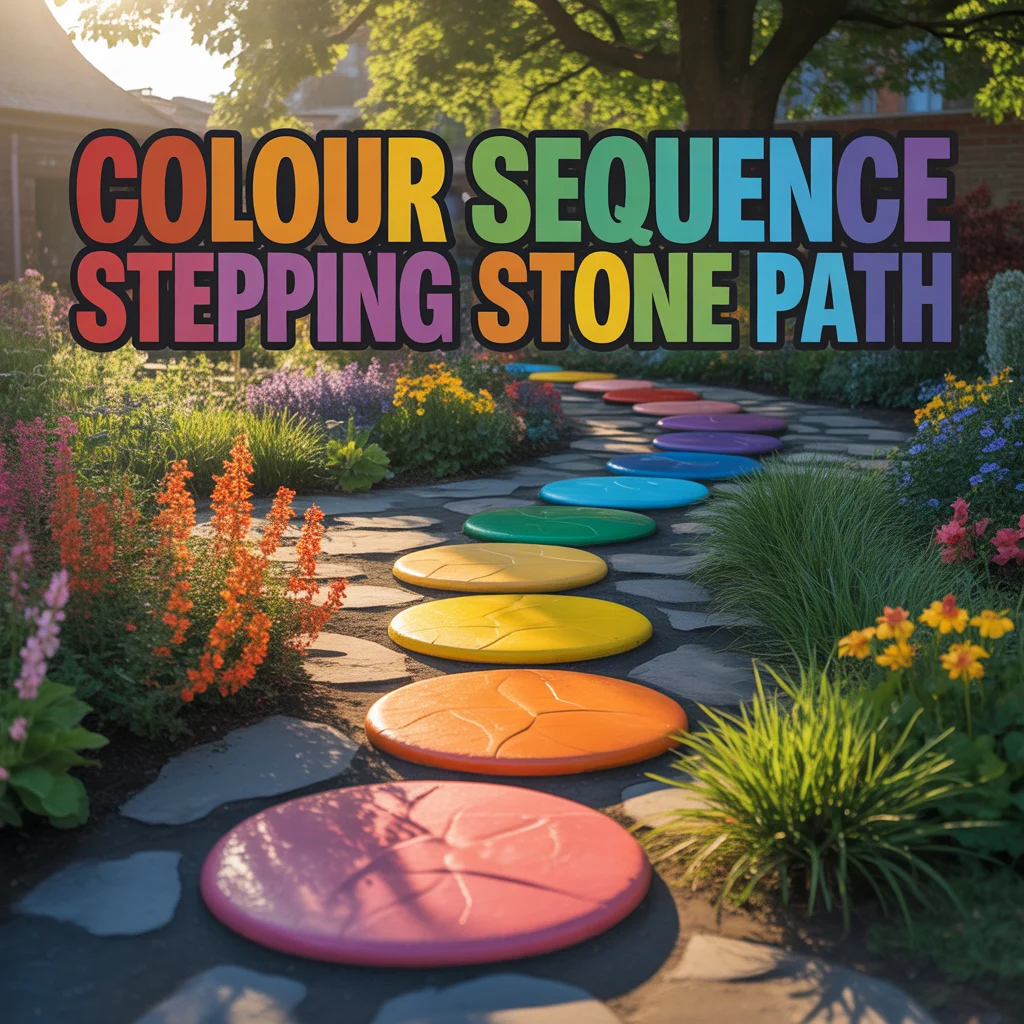
A colour sequence stepping stone path places painted or coloured paving pads in a deliberate rainbow or thematic colour order along the path route, creating a visually stimulating walkway that supports colour recognition, pattern awareness, and gross motor development in children aged 2 to 8. I painted a red, orange, yellow, green, blue, and purple sequence on twelve concrete stepping pads at a nursery school garden and the children began naming colours, jumping between pads, and creating movement games without any adult direction within the first session of use. The total path cost was $52 in materials and the child-initiated learning it produced exceeded every other element in that nursery outdoor space.
Colour Materials for a Visual Sensory Path
Non-toxic exterior paint on concrete pads, coloured rubber tiles, and coloured resin-bound gravel sections are three colour options for a visual sensory garden path for kids. Non-toxic exterior paint on 12-by-12-inch concrete pads costs $8 to $12 per pad including a sealer coat and suits a home garden or school sensory path on a limited budget where affordable materials are the priority. Coloured rubber tiles cost $12 to $25 per 12-by-12-inch tile and provide a non-slip, weather-resistant surface that withstands heavy school outdoor use without colour fading for 5 to 8 years under normal conditions. Coloured resin-bound gravel creates a permanent, durable colour path surface at $15 to $30 per square foot installed and suits an outdoor sensory path for schools requiring a long-lasting low-maintenance surface.
Developmental Benefits of Colour Paths for Kids
A colour sequence sensory path supports three developmental areas in children aged 2 to 7. First, colour recognition through repeated physical engagement with named colours in an outdoor active learning context produces stronger memory encoding than seated classroom colour learning. Second, pattern recognition through the repeating colour order of the path sequence develops early mathematical thinking skills as children predict the next colour before reaching it. Third, gross motor development through the jumping, stepping, and balancing movements children perform between colour pads builds coordination, spatial awareness, and bilateral body movement in a child-directed physical activity that requires no adult instruction to initiate or sustain.
Sound Garden Path With Wind Instruments
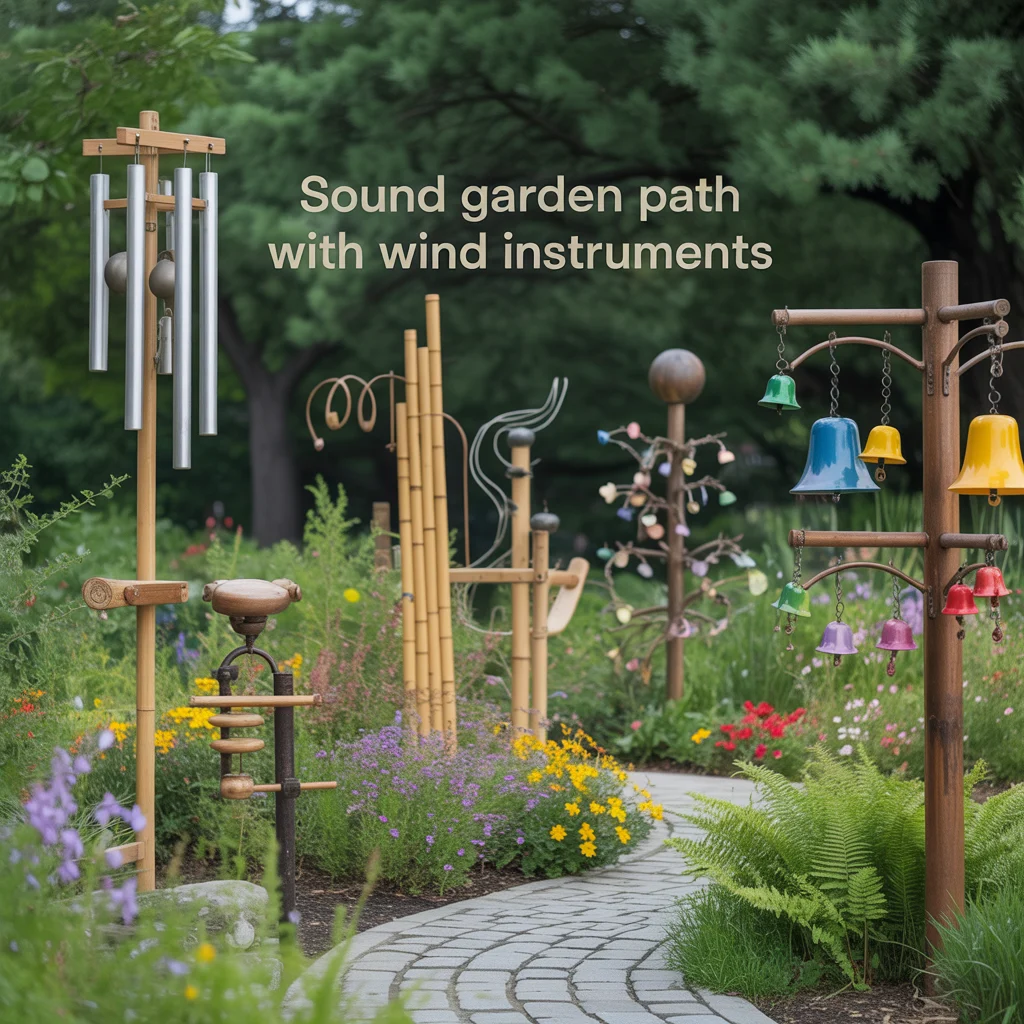
A sound garden path places child-height musical instruments and passive sound elements at regular intervals along the path for children to engage with auditory stimulation as they move through the route. I specified five sound elements for an outdoor sensory path for schools: an aluminium xylophone, a set of bongo drums, a steel tongue drum, bamboo wind chimes, and a section of rustling Miscanthus sinensis grass, positioned at 8-foot intervals along a 40-foot path. The class teacher reported that children invented a sequential musical game using all five elements within three days of the path opening, returning to repeat the game voluntarily during every outdoor session for the following six weeks.
Outdoor Instruments for a School Sensory Sound Path
An outdoor xylophone, outdoor bongo drums, and a steel tongue drum are three instruments suited to an outdoor sensory path for schools. An outdoor xylophone with aluminium keys produces clear tuned notes that allow children to pick out simple melodies and costs $180 to $450 from specialist outdoor music suppliers. Outdoor bongo drums use weather-resistant synthetic heads on a stainless steel frame, producing a warm percussion sound when struck with the palm and costing $120 to $280 per set. A steel tongue drum produces gentle resonant tones from individual cut steel tongues and suits sensory garden ideas for autism because the soft, sustained sound provides a calming auditory input rather than a sharp percussive impact that may overwhelm children with auditory sensitivity.
Passive Sound Elements for a Children’s Sensory Path
Bamboo wind chimes, rustling ornamental grasses, and a recirculating water channel are three passive sound elements suited to a sensory garden path for kids where ambient auditory stimulation accompanies the physical walking experience. Bamboo wind chimes produce a soft hollow knocking sound in light wind that is distinct from metal chimes and suits children with auditory sensitivity who find sharp metallic sounds uncomfortable or overstimulating. Miscanthus sinensis and Stipa tenuissima produce a continuous gentle swishing sound in winds above 5mph, providing passive auditory stimulation along the full path length without requiring any action from the child to initiate the sound. A recirculating water channel of 6-inch width produces a continuous adjustable water sound suited to a calming section of the sensory path.
Edible Plant Sensory Path
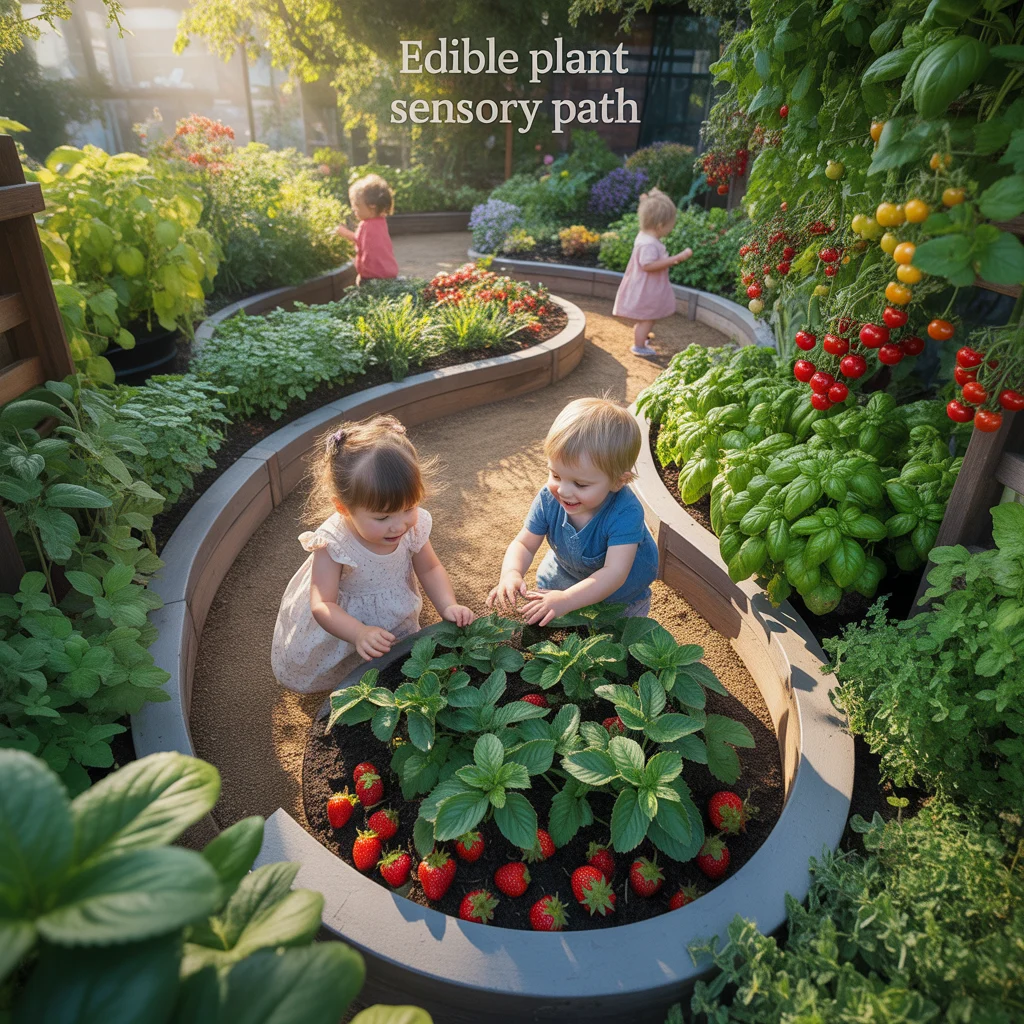
A sensory garden path with edible plants places taste-safe child-friendly edible plants at hand height along both sides of the path at child reach level, creating a walking route where children taste, smell, and touch as they move along. I planted strawberries, cherry tomatoes, mint, nasturtiums, and sweet peas in raised borders of 18-inch height on both sides of a 16-foot school sensory path, and the class teacher reported that three children who had previously refused all fruit and vegetables at school began eating strawberries and nasturtium flowers from the path plants within two weeks of the path opening. The direct hand-to-plant-to-mouth experience of the sensory path bypassed every food refusal pattern those children showed in the school dining room.
Edible Plants for a Children’s Sensory Garden Path
Strawberries, Mentha spicata, and nasturtiums are three edible plants suited to a sensory garden path for kids. Strawberries produce sweet red fruit from June to September at 6 to 8 inches height, accessible to children from age 2 upward in a raised border position alongside the path. Mentha spicata, spearmint, produces strongly flavoured leaves from April through October in a contained raised border and offers both a taste and an olfactory sensory stimulus from a single plant. Nasturtiums, Tropaeolum majus, produce edible flowers in orange, yellow, and red with a mild peppery flavour that children engage with directly from the plant at path edge level, combining visual colour, taste, and tactile stimulation in one accessible path planting.
Plants to Remove From a Children’s Sensory Edible Path
Digitalis, Taxus baccata, Atropa belladonna, Euphorbia, and Solanum nigrum are five plants requiring immediate removal from any sensory garden path for kids before children access the space. Digitalis, foxglove, produces all plant parts as toxic and attracts children with tall colorful flower spikes that are visually similar to edible flowers. Taxus baccata, yew, produces highly toxic red berries that visually resemble edible fruits and must be removed from every school or home sensory path where children have unsupervised access to the surrounding planting. I check every plant in the garden against a written toxic plant list on every sensory garden path for kids project before any child uses the completed installation.
Tactile Wall Panel Sensory Path
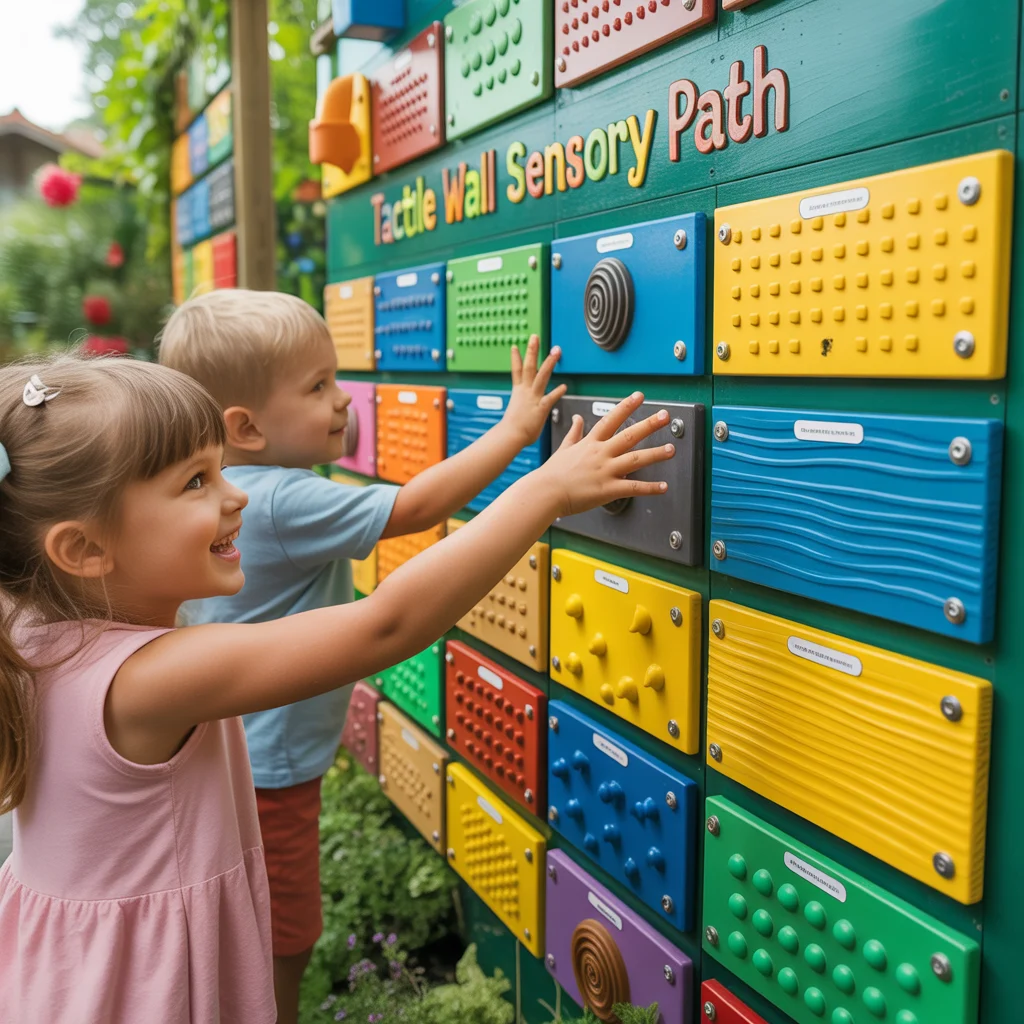
A tactile wall panel sensory path fixes vertical boards at child hand height along the boundary fence or wall beside the path, each containing a different material surface for children to run their hands along as they walk. I installed six panels at 3-foot intervals beside a school sensory path using smooth pebble mosaic, rough bark, soft artificial grass, cool metal mesh, raised bubble wrap sealed under resin, and corrugated card sealed in weatherproof resin. Every child who used the path ran both hands along the panels without any instruction, which the occupational therapist described as spontaneous tactile seeking behaviour at a frequency she had not previously observed on any other element of the school outdoor sensory path.
Tactile Panel Materials for a School Sensory Path
Smooth pebble mosaic, rough bark surface, and soft artificial grass panels are three tactile materials suited to a school sensory garden path wall installation. Smooth pebble mosaic uses river pebbles set in exterior adhesive on 12-by-12-inch plywood backing and provides a cool, hard, irregular surface that contrasts directly with the softer panels on either side. Rough bark surface uses sections of natural tree bark fixed with exterior adhesive to provide a warm, dry, naturally textured surface at child hand height alongside the path. Soft artificial grass at 12 by 12 inches provides the softest contrasting surface of any panel material and is particularly suited to sensory garden ideas for autism where a very gentle low-intensity touch stimulus supports regulation without overwhelming the child’s sensory system.
Mounting Heights for Tactile Panels on a Children’s Sensory Path
Tactile panels on a sensory garden path for kids are mounted at heights specific to the age group using the path. For children aged 2 to 4, the panel center sits at 24 to 28 inches above the path surface. For children aged 4 to 7, the panel center sits at 30 to 34 inches. For children aged 7 to 12, the panel center sits at 36 to 42 inches. In a school sensory path serving mixed ages from 3 to 10, I mount panels at 32 inches as the standard position, providing comfortable hand access for the full age range without requiring younger children to stretch upward or older children to stoop significantly during the tactile exploration of each panel surface.
Animal Footprint Discovery Path
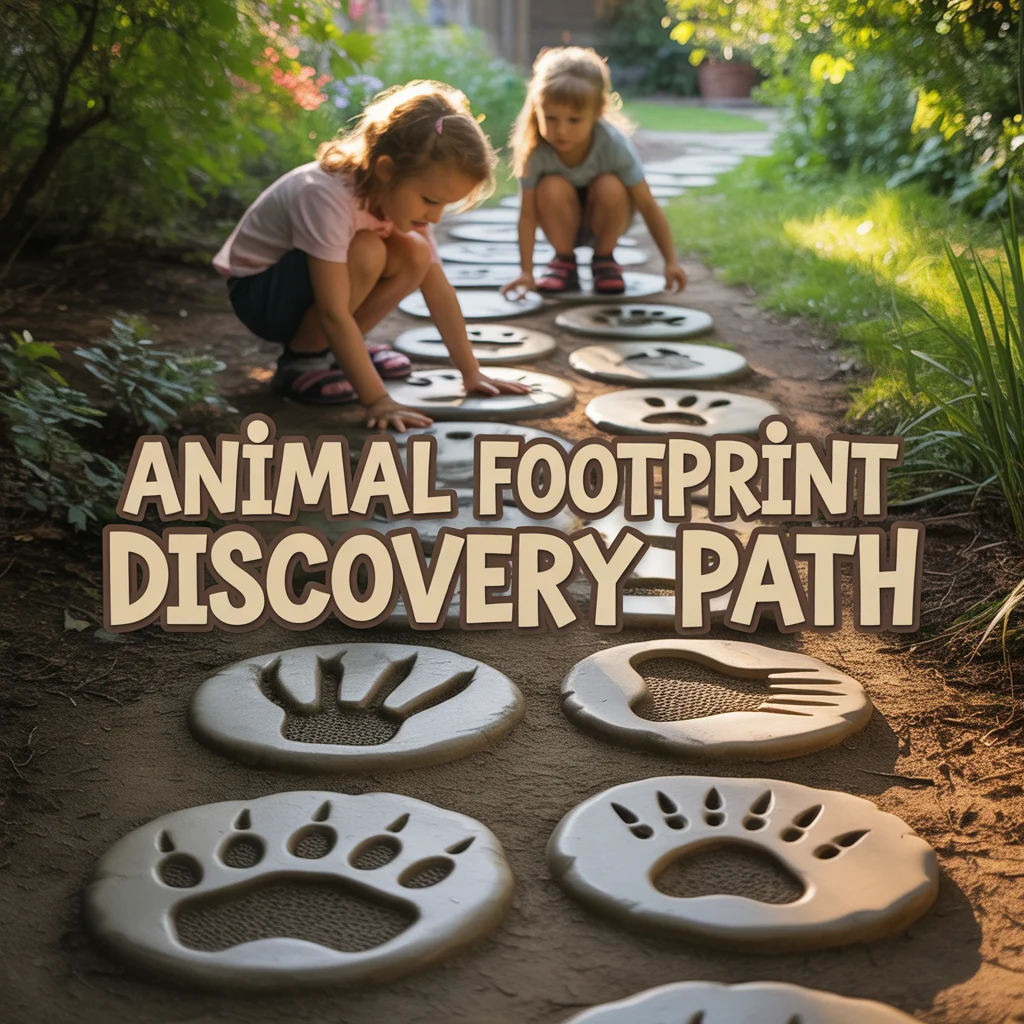
An animal footprint discovery path embeds cast animal footprints of foxes, badgers, rabbits, ducks, deer, and hedgehogs into the path surface, creating a nature discovery walk that connects children with local wildlife through recognizable animal imagery at every step. I cast twelve animal footprints into wet concrete stepping pads at a school sensory path project, and the children used the prints for animal identification, track measurement with rulers, and imaginary animal tracking games during every observed outdoor session following installation. The nature connection produced by the prints extended into classroom activities as children researched the animals whose tracks appeared on their outdoor sensory path.
Casting Animal Prints Into Sensory Path Stepping Stones
Animal prints are cast into concrete sensory path stepping stones by pressing a silicone animal print stamp into wet concrete at 5 to 8mm depth, removing the stamp cleanly after 20 minutes when the concrete has firmed enough to retain the impression without edge crumbling. Commercial silicone animal footprint stamps in fox, badger, rabbit, and bird formats cost $8 to $20 per set and produce sharp, accurate impressions in a standard 3:1 sand and cement concrete mix. I cast all twelve animal print stones for a school sensory path project in a single afternoon session at a total material cost of $57, and the stones have remained structurally intact and clearly legible after three years of daily school use on the outdoor sensory path.
Nature Activities Using Animal Print Sensory Path Stones
Animal identification, track measurement, and imaginary tracking games are three nature activities suited to an animal print sensory garden path for kids at different developmental stages. Animal identification asks children to name each animal from its footprint shape alone, connecting the physical sensory path experience with science curriculum knowledge of local wildlife. Track measurement gives children a ruler and asks them to record the length and width of each print and compare measurements between species, adding a mathematical dimension to the sensory path outdoor learning activity. Imaginary tracking games ask children to follow a specific animal’s print sequence along the path, moving in the way they imagine that animal moves from one stone to the next.
Digging Patch Sensory Path Station
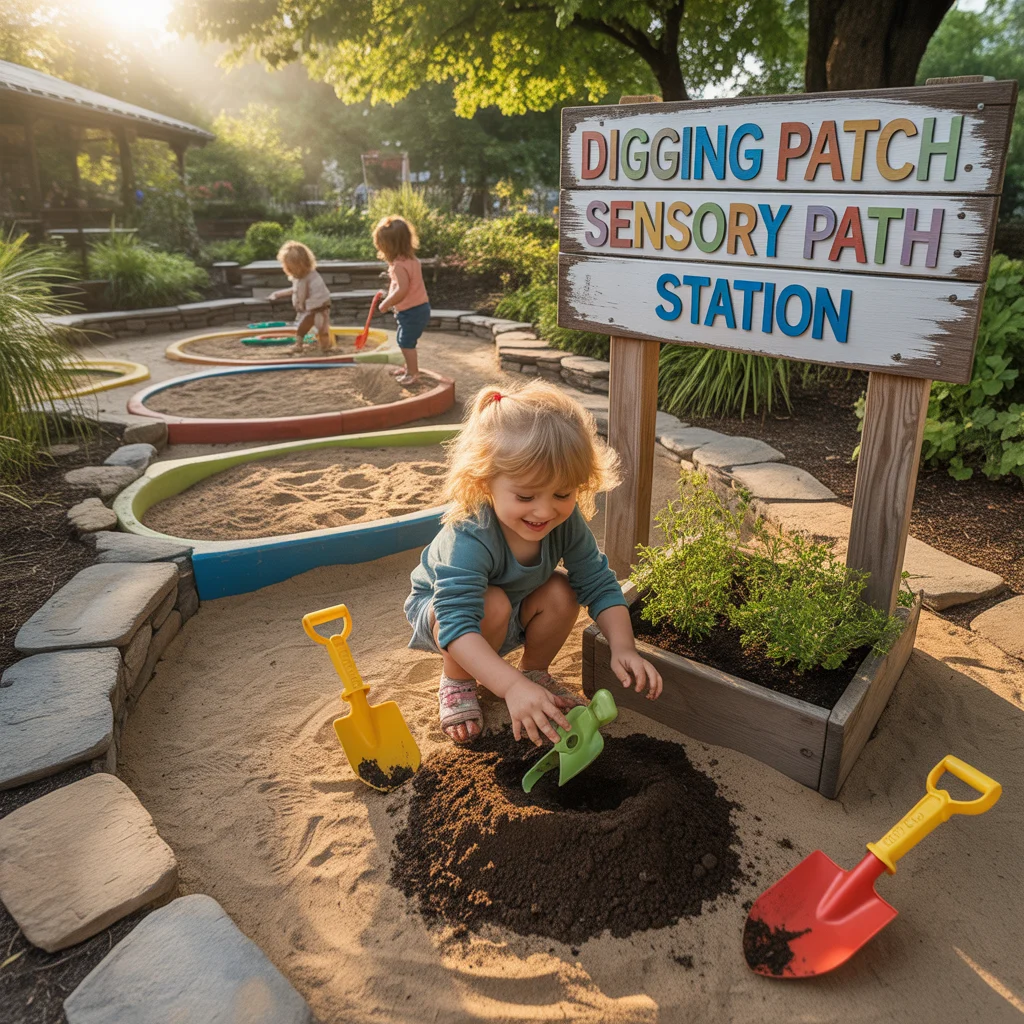
A sensory garden path with a digging patch incorporates a contained soil area of 2 to 3 square feet accessible directly from the path surface where children dig, handle, and manipulate the material as part of the path experience. I included a digging patch in a school outdoor sensory path project using a raised timber-edged bed of 18-inch height containing a 50/50 mix of topsoil and horticultural sand, and the digging section produced the longest average dwell time of any element on the full 35-foot path. Children aged 3 to 8 consistently spent 8 to 15 minutes at the digging patch compared to 1 to 3 minutes at other path elements, making it the highest-engagement station on the entire sensory pathway for kids.
Digging Materials for a Children’s Sensory Path Station
A 50/50 topsoil and sand mix, kinetic sand, and fine horticultural grit are three digging materials suited to a sensory garden path for kids. A 50/50 topsoil and horticultural sand mix produces a loose, easily workable material that clumps when wet and crumbles when dry, providing two distinct tactile experiences in different weather conditions at $8 to $15 per cubic foot. Kinetic sand produces a uniquely tactile material that holds its shape when squeezed and falls apart slowly when released, providing a sensory experience that standard soil or sand cannot replicate and suits sensory pathways for kids with specific tactile seeking behaviours. Fine horticultural grit provides a cool, free-draining loose material suited to a covered sensory path area where drainage is important.
Containing a Digging Patch on a Sensory Garden Path
A digging patch on a sensory garden path for kids requires timber, brick, or composite edging of 8 to 12 inches height on all four sides to contain the digging material during active group use by children. Timber edging of 3-by-8-inch sawn oak costs $3 to $6 per linear foot and provides practical cost-effective containment. A 12-inch border of rubber matting surrounding the patch catches spillage and prevents slipping on loose material during active digging use. I set the digging patch flush with the path surface on all school sensory path installations so children approach and work at the patch without stepping over a raised edge, which reduces trip risk and allows children with mobility challenges to access the digging station from a seated position on the path surface.
Water Play Sensory Path Section
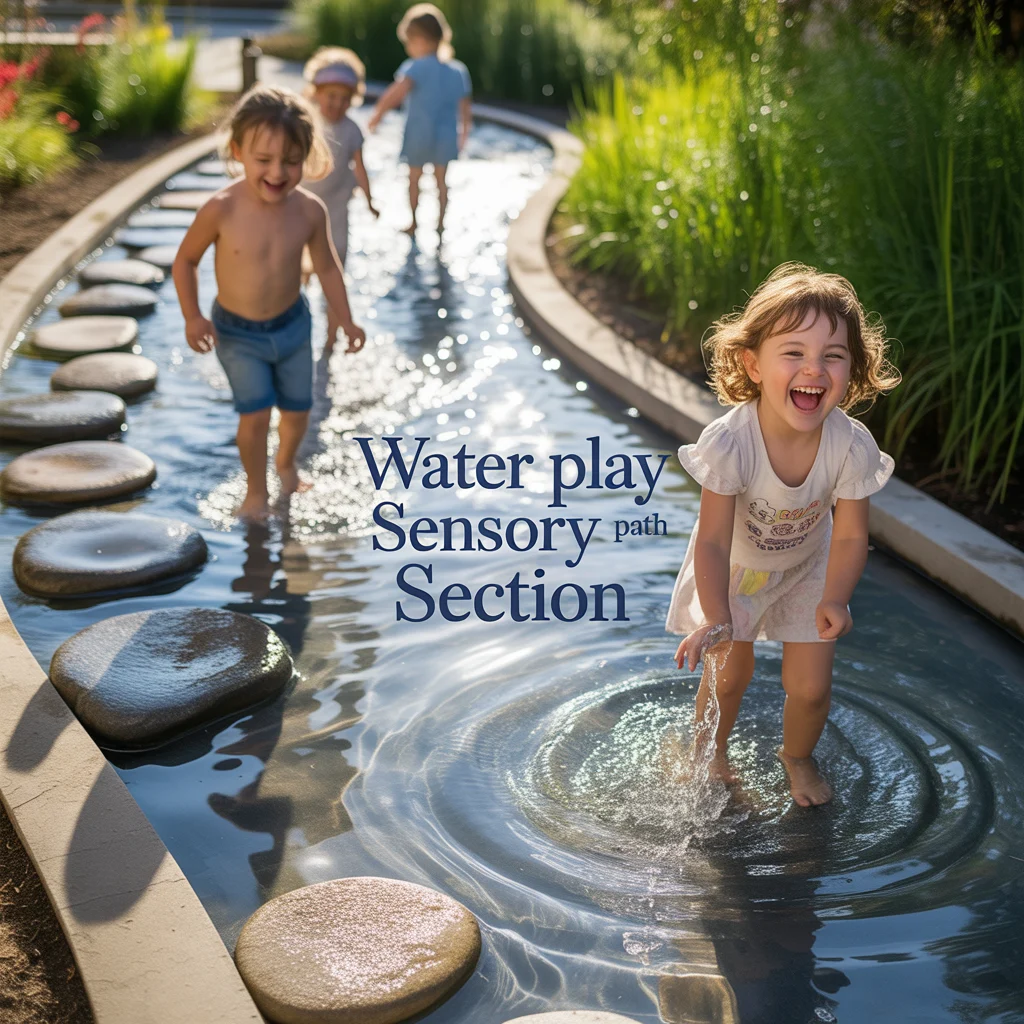
A sensory garden path with a water play section incorporates a shallow recirculating channel directly accessible from the path where children engage with flowing water as a tactile and auditory sensory activity. I included a recirculating water channel of 8-inch width and 3-inch depth alongside a 6-foot section of a school sensory path, with smooth pebbles and small water plants in the channel bed, and children engaged with the channel by trailing hands in the flow and moving pebbles for an average of 12 minutes per child per session. This was the longest sustained engagement time recorded on any element of the full path during the formal project evaluation period.
Water Safety Standards for a Children’s Sensory Path
A water play section on a sensory garden path for kids requires a maximum water depth of 3 inches at any point, a non-slip rubber matting zone of 24 inches on the path side of the water feature, a watertight EPDM rubber liner, and a drainage outlet with a lockable cover for emptying after each session. The 3-inch maximum depth complies with guidance issued by the Royal Society for the Prevention of Accidents for water features in child-accessible outdoor spaces. I specify this depth on every children’s water sensory path installation and include a visible depth marker in the channel so supervising adults can confirm compliance at a glance before each session begins.
Aquatic Plants for a Sensory Path Water Section
Caltha palustris, Mentha aquatica, and Myosotis scorpioides are three aquatic plants suited to the water section of a sensory garden path for kids. Caltha palustris, marsh marigold, produces bright yellow flowers from March to May in 0 to 3 inches of water, providing early spring colour in the sensory path water channel. Mentha aquatica, water mint, grows in 0 to 3 inches of water and produces a strong mint fragrance when touched, adding an olfactory sensory stimulus to the water play experience on the path. Myosotis scorpioides, water forget-me-not, produces small blue flowers from May to August in shallow water at below 6 inches height, suiting the shallow depth of a children’s sensory path water channel.
Balance and Movement Challenge Path
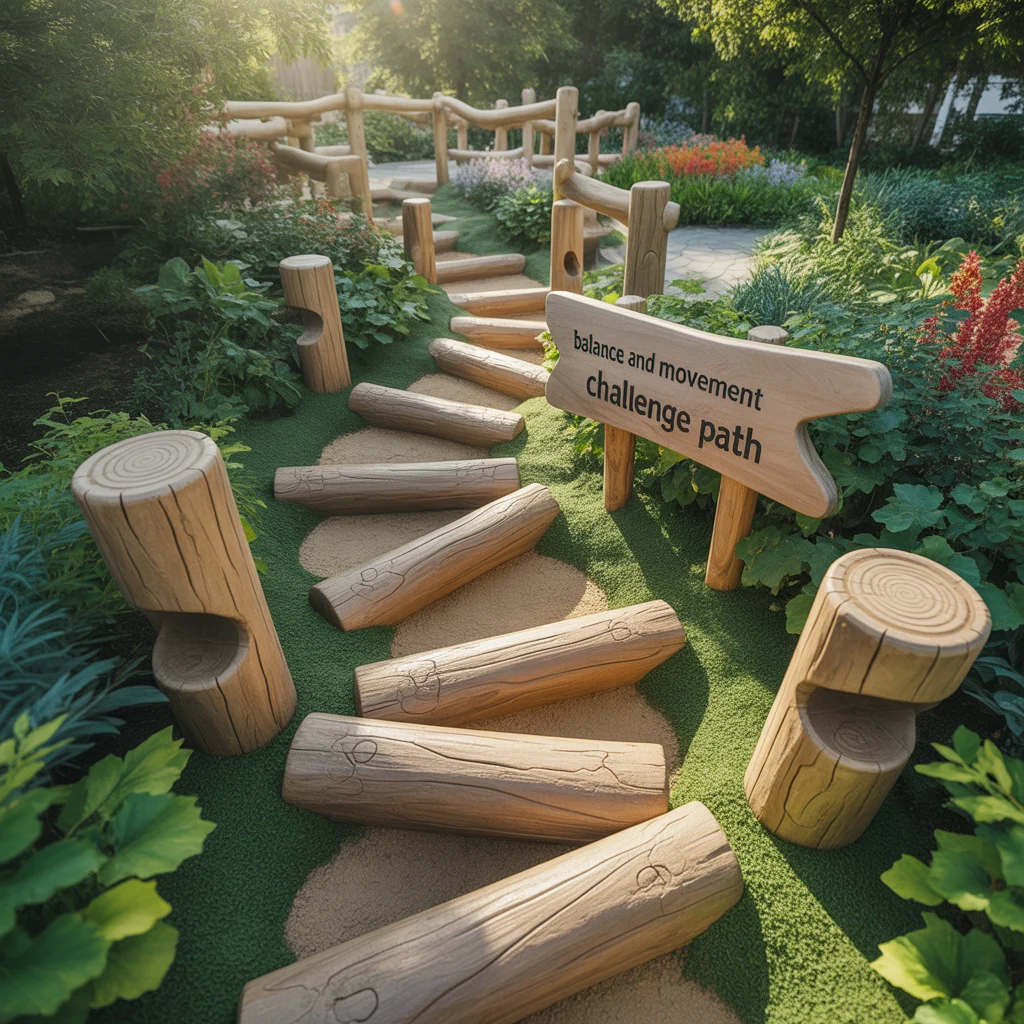
A sensory garden path with a balance and movement section uses stepping elements of different heights and widths that require active balance adjustment as the child moves through the path, providing proprioceptive and vestibular sensory input alongside the surface texture stimulation of the surrounding path material. I designed a balance sequence for a therapeutic garden for children with autism using five log slice stepping rounds at heights between 2 and 6 inches, followed by large smooth river boulders and a low plank bridge between timber posts. The occupational therapist reported the balance section produced the most active gross motor engagement of any element on the path, with children voluntarily repeating the sequence an average of four times per session.
Balance Elements for a Children’s Sensory Garden Path
Log slice stepping rounds, river boulder stepping stones, and low balance beams are three balance elements suited to a sensory garden path for kids. Log slice rounds of 12 to 18 inches diameter and 3 to 6 inches height set at irregular intervals in compacted bark chip provide a changing stepping challenge that engages balance adjustment at every step along the path section. River boulders of 200 to 400mm diameter set at 2 to 4 inches above the path surface provide a rounded, slightly unstable stepping surface requiring continuous balance engagement. Low balance beams of 6 to 8 inches width and 4 to 6 inches height allow children to practice walking a raised surface with visible ground on both sides of the beam.
BS EN 1176 Compliance for Balance Elements on School Paths
Balance elements on an outdoor sensory path for schools require compliance with BS EN 1176, the British Standard for playground equipment safety, which specifies free-fall heights, surface impact requirements, and entrapment zone dimensions. Log slice stepping rounds and river boulders at maximum 6 inches above a compacted bark chip surface of 3-inch minimum depth fall within the low-risk category of BS EN 1176 and do not require a certified safety surface below them. I consult the current BS EN 1176 document on every school sensory path project before finalizing the balance element specification and include the relevant standard references in the project documentation supplied to the school for their records and Ofsted compliance files.
Mirror and Light Reflection Path

A sensory garden path with mirror and light reflection elements uses outdoor acrylic mirrors, reflective metal panels, and stainless steel wind spinners alongside the path to create visual stimulation through reflected light and movement that engages visual tracking and spatial awareness development in children. I installed three outdoor acrylic mirrors in different sizes on the boundary fence beside a school sensory path combined with two stainless steel wind spinners on posts at the path edge, and the reflected light patterns moving across the path surface produced visible excitement and focused visual tracking behaviour in children aged 3 to 5 during every observation session I conducted over an eight-week evaluation period.
Mirror Safety for a Children’s Sensory Garden Path
All mirrors on a sensory garden path for kids must be UV-stable acrylic rather than glass to eliminate shattering risk if struck during outdoor play. Acrylic outdoor mirrors rated to BS EN 71 toy safety standards provide the correct safety level for a children’s sensory path. Acrylic mirrors of 30 by 20 inches cost $35 to $65 each and fix to a fence or wall using stainless steel screws through pre-drilled holes, with the mirror surface placed 5mm from the backing surface to allow air circulation and prevent moisture trapping. I fix all sensory path mirrors at 28 to 36 inches center height, placing the reflection zone at child eye level for the primary age group using the path throughout the school day.
Reflective Elements Beyond Mirrors for a Sensory Path
Stainless steel wind spinners, reflective mosaic tile panels, and crystal prism hangings are three reflective elements suited to a sensory garden path for kids alongside mirror panels. Stainless steel wind spinners on 36-inch posts produce moving reflected light patterns on the path surface in sunlight, creating a continuously changing visual stimulus that alters with wind speed and direction throughout the day. Reflective mosaic tile panels using mirror-finish glass tiles on a plywood backing produce a varied reflected light pattern in direct sun. Crystal prism hangings on a horizontal line across the path produce rainbow light patterns in direct sunlight that move slowly across the path surface as the sun angle changes, creating a gentle, calming visual stimulus suited to sensory garden ideas for autism.
Mud Kitchen Sensory Path Station
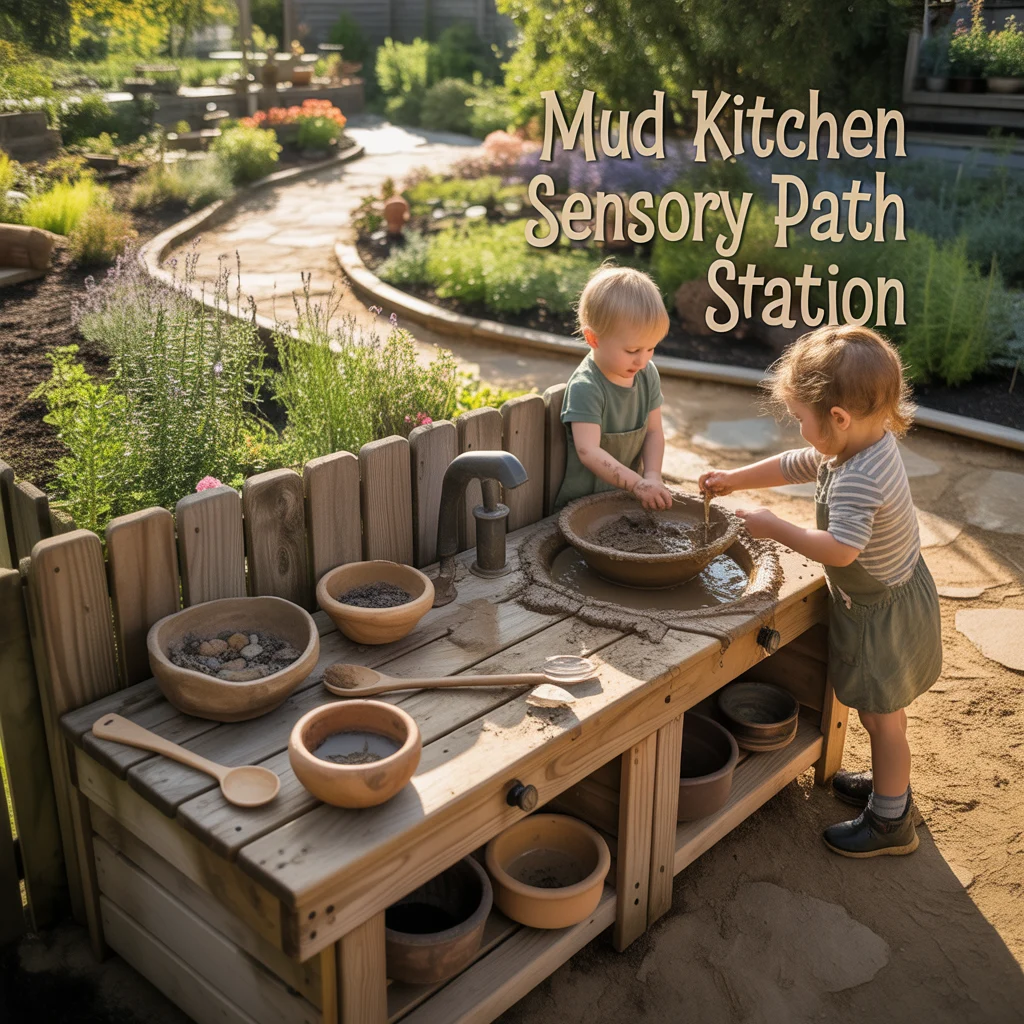
A sensory garden path with a mud kitchen station provides a child-height outdoor kitchen unit directly off the path where children mix mud, water, leaves, and natural materials in structured outdoor cooking play, delivering intense tactile and olfactory sensory stimulation. I built a mud kitchen for a school sensory path using reclaimed timber, a Belfast sink at 24-inch height, and a low-pressure tap connected to a garden hose, and the mud kitchen produced the highest child dwell time of any element on the full 35-foot school outdoor sensory path within the first week of opening. Children aged 3 to 8 consistently spent 10 to 18 minutes at the mud kitchen compared to 1 to 4 minutes at other elements.
Mud Kitchen Construction for a Children’s Sensory Path
A mud kitchen for a sensory garden path for kids requires a stable work surface at 22 to 26 inches height for children aged 3 to 7, a water source with adjustable flow, and a mud supply area of 18 by 18 inches minimum. The work surface uses 3-by-2-inch pressure-treated softwood with 19mm exterior plywood top, costing $45 to $75 in materials for a 24-by-36-inch unit. The water source connects to an outdoor garden tap using a standard hose fitting with a child-operable lever valve costing $12 to $25. I position every mud kitchen on a 36-by-48-inch non-slip rubber mat to prevent slipping on wet mud surrounding the station during active use by multiple children simultaneously.
Natural Materials for a Mud Kitchen Sensory Path Station
Leaf litter, pine cones, seed heads, and small pebbles are four natural materials suited to a mud kitchen station on a sensory garden path for kids. Leaf litter provides a fragrant, varied tactile material that children add to mud mixes for texture and colour variation without any preparation or cost. Pine cones provide a hard, structured material that contrasts with the soft mud base and children use as decorative additions to mud kitchen constructions. Seed heads from allium, nigella, and teasel provide geometrically varied objects that children incorporate into mud kitchen play without adult direction, responding to the natural variety of shape and texture each seed type presents during the active sensory path session.
Nature Collection Board Sensory Path
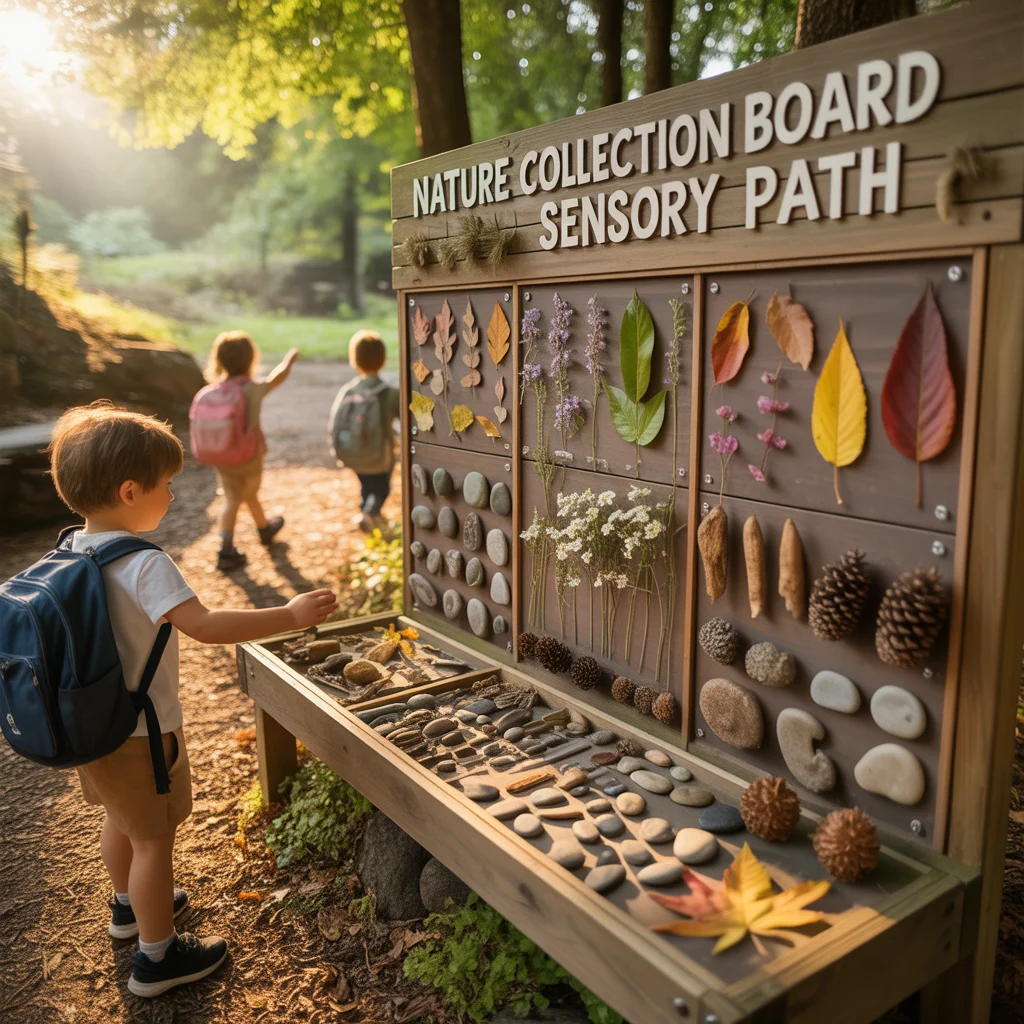
A sensory garden path with a nature collection board provides a wall-mounted display at child height where children collect and display natural objects found during the path session, including leaves, seed heads, stones, feathers, and bark pieces, creating a tactile and visual nature documentation activity linked to the sensory path experience. I installed a board with 20 compartments at 32-inch height beside a school sensory garden path, and children began filling compartments with natural objects in the first session and returned on subsequent days to replace objects, compare finds, and label collections with their teacher. The board cost $32 in materials and produced more child-initiated learning than any other single element on the full outdoor sensory path.
Nature Collection Board Construction for a Sensory Path
A nature collection board for a sensory garden path for kids uses a 600mm-by-900mm sheet of 12mm exterior plywood divided into 12 to 20 compartments by 2-by-1-inch timber dividers, sealed in two coats of exterior varnish and mounted at 32-inch center height. Each compartment measures approximately 80mm by 80mm by 30mm depth, accommodating natural objects up to 70mm in any dimension including most seed heads, small stones, feathers, and bark sections. I build nature collection boards at $25 to $40 each in materials and consistently find them among the highest-engagement elements relative to their installation cost on completed sensory garden path projects, with children returning to the board repeatedly across multiple outdoor sessions.
Natural Objects for a Sensory Path Collection Board
Seed heads, feathers, bark pieces, and smooth pebbles are four natural objects suited to a nature collection station on a sensory garden path for kids. Seed heads from allium, nigella, teasel, and poppy provide geometrically varied objects that children sort and compare by shape without adult direction. Feathers provide a very soft, light tactile object that contrasts strongly with harder items in the collection and suits sensory garden ideas for autism where contrasting tactile properties between objects is a deliberate therapeutic goal of the path session. Smooth pebbles provide a cool, dense, hard object that children sort by size, colour, and surface texture as a spontaneous classification activity during the sensory path nature collection session.
Mindfulness and Calm Corner Sensory Path
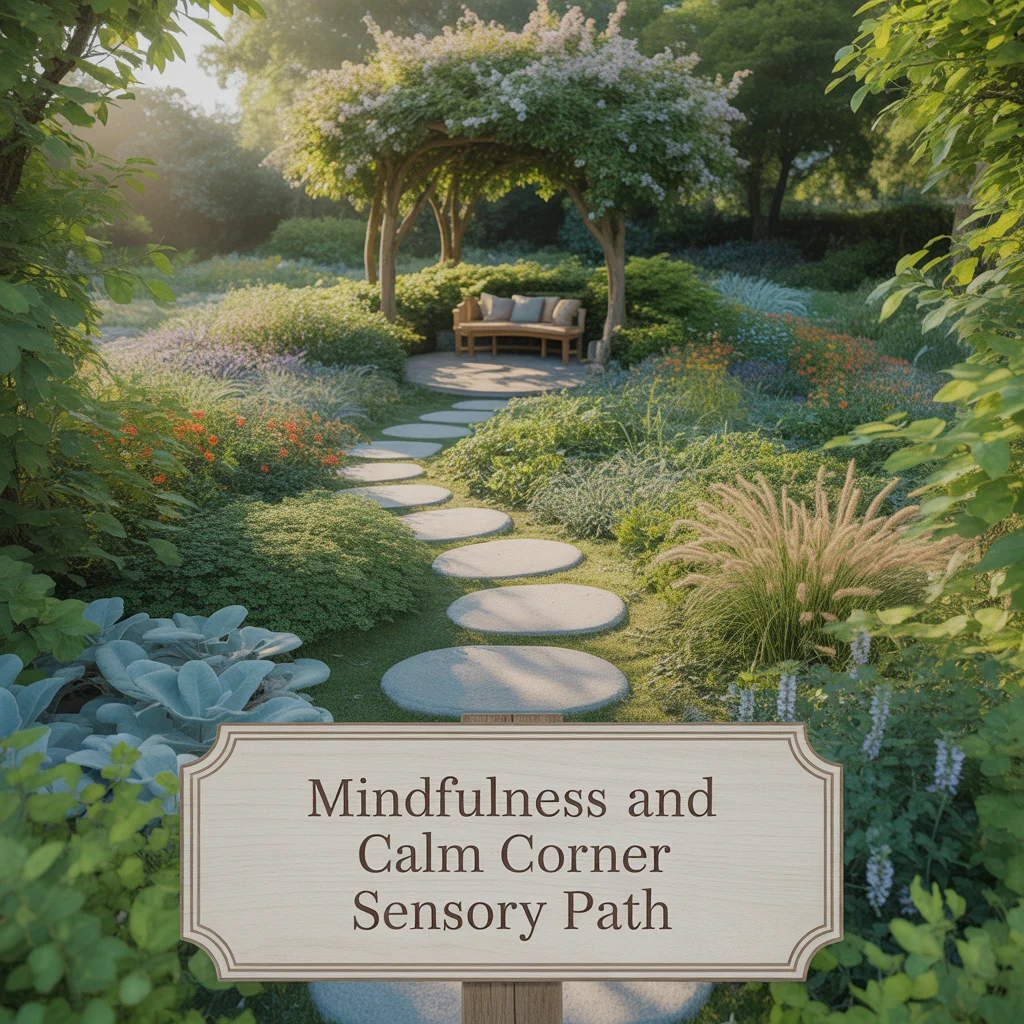
A sensory garden path with a mindfulness and calm corner provides a sheltered resting area at the end of the path where children sit, breathe, and regulate their sensory experience after walking the more stimulating sections. I included a calm corner at the end of a school sensory path using a curved willow screen enclosing a 4-foot-square area with a low wooden bench, a lavender border, and a bamboo chime overhead, and the occupational therapist reported that several children with sensory processing differences used the corner independently as a self-regulation space throughout school sessions without any adult prompting for the full six-week observation period.
Calming Plants for a Sensory Path Mindfulness Corner
Lavandula angustifolia, Stachys byzantina, and Festuca glauca are three plants suited to a mindfulness corner on a sensory garden path for kids. Lavandula angustifolia provides a calming fragrance recognized in occupational therapy settings, with research published in the International Journal of Neuropsychopharmacology in 2014 identifying lavender fragrance as producing measurable reductions in anxiety in both adults and children. Stachys byzantina, lamb’s ear, produces intensely soft, woolly silver leaves that children find soothing to touch and is one of the most consistently effective calming tactile plants used in sensory garden ideas for autism therapy settings. Festuca glauca produces a fine-textured blue-grey grass mound that generates a gentle rustling sound in light wind and provides simultaneous auditory and visual calm stimulation at the mindfulness corner of the sensory path.
Seating for a Sensory Path Calm Corner
A low timber bench, a tree stump seat, and a curved willow woven seat are three seating options for a mindfulness corner on a sensory garden path for kids. A low timber bench at 12 to 16 inches seat height suits children aged 3 to 10 and costs $25 to $45 in materials using 3-by-6-inch pressure-treated softwood. A tree stump seat at 12 to 14 inches height provides a natural, informal seating option that suits a naturalistic sensory path calm corner at zero cost when a suitable log section is available in the garden. A curved willow seat uses dried willow rods woven into a low curved form providing both seating and partial enclosure simultaneously, suiting a calm corner where the structure itself contributes to the sheltered, enclosed character of the resting space.
Seasonal Colour Change Discovery Path
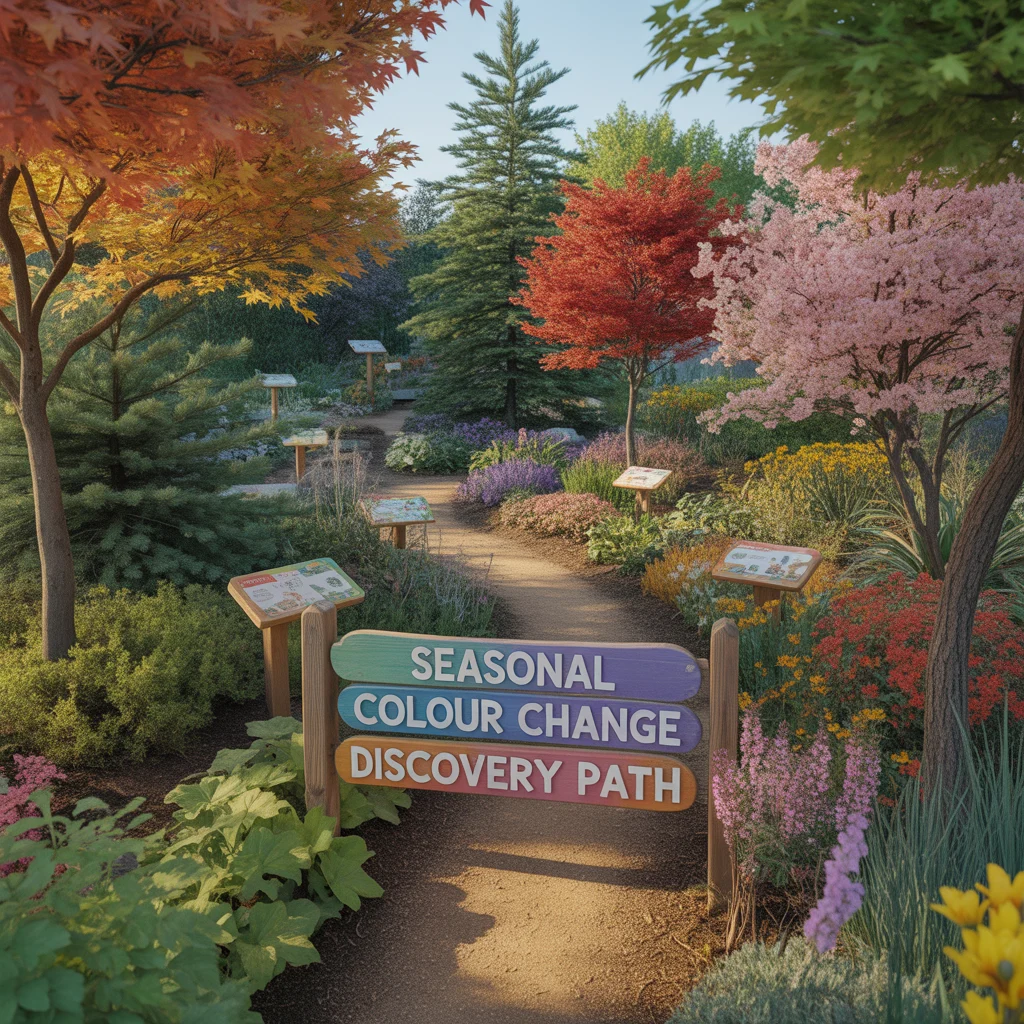
A sensory garden path with seasonal colour change planting uses a planned sequence of bulbs, perennials, and shrubs that produce different flower colours and foliage tones in each season, creating a sensory garden path that looks and smells different in spring, summer, autumn, and winter and gives children a direct observable connection to seasonal change through the plants alongside their outdoor path. I planned a four-season sensory path for a school using spring bulbs, summer perennials, autumn-berrying shrubs, and winter bark interest plants, and the class teacher reported that children began noticing and commenting on plant changes without any adult prompting by the second half of the first year of use.
Spring and Summer Flowers for a Seasonal Sensory Path
Narcissus Tete-a-Tete, Allium hollandicum, and Echinacea purpurea are three flowers suited to the spring and summer phases of a seasonal sensory garden path for kids. Narcissus Tete-a-Tete produces small yellow flowers on 6-inch stems from February to April, providing the season’s first colour on the sensory path and signalling the beginning of the growing year to children. Allium hollandicum Purple Sensation produces 4-inch purple spheres on 3-foot stems from May to June, providing a distinctive, visually memorable flower that children identify with the sensory path season after season. Echinacea purpurea produces pink cone flowers from July to September with decorative seed heads that remain attractive on the sensory path through October and November.
Autumn and Winter Interest for a Seasonal Sensory Path
Cotoneaster horizontalis, Cornus alba Sibirica, and Stipa tenuissima are three plants suited to the autumn and winter phases of a seasonal sensory garden path for kids. Cotoneaster horizontalis produces bright red berries from September through February that attract birds to the sensory path area and provide strong visual colour during the months when most other path plants have finished flowering. Cornus alba Sibirica produces vivid red stems from November through March after leaf fall, providing intense winter colour on the sensory path when the red stems become fully visible against the winter sky. Stipa tenuissima produces feathery golden-buff seed heads through winter that move in the lightest wind and provide both a visual and sound stimulus on the sensory path during outdoor sessions in cold weather.
Outdoor Musical Instrument Path
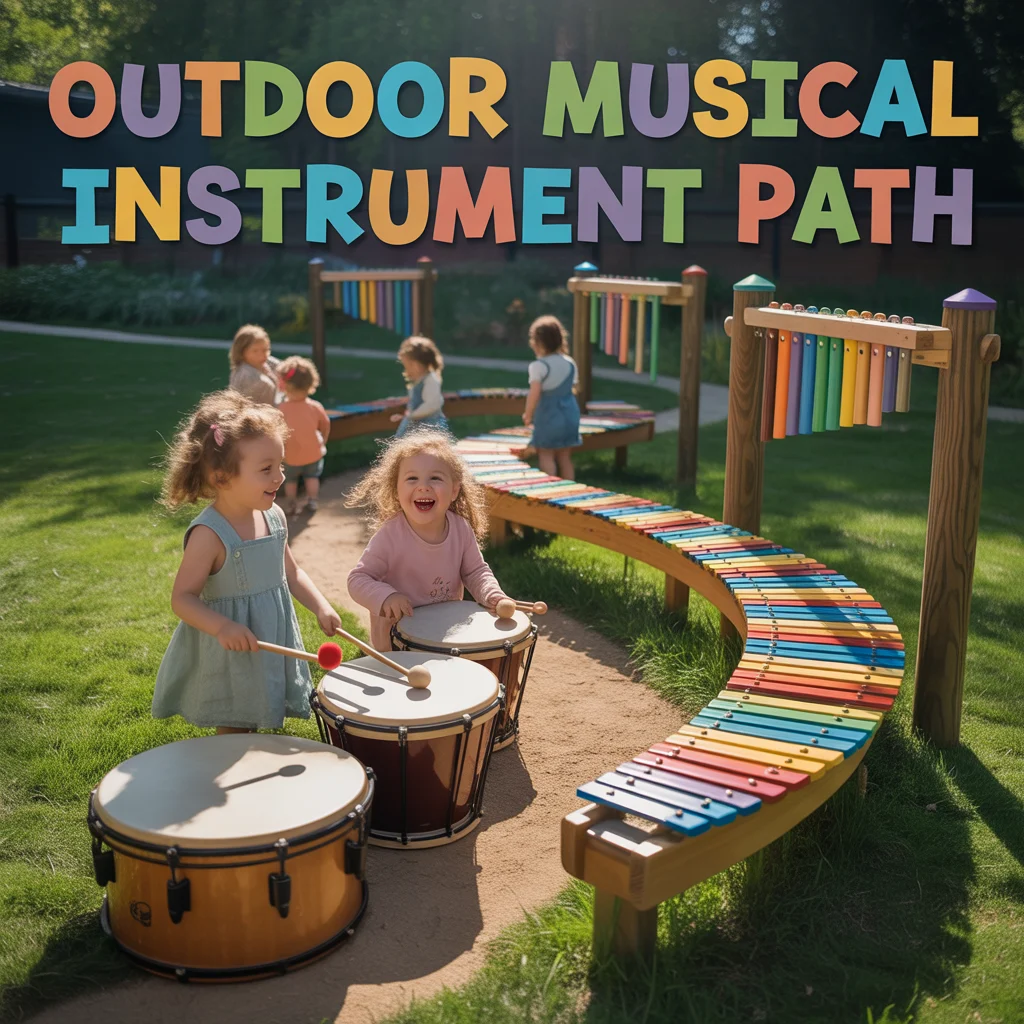
A sensory garden path with giant outdoor musical instruments places child-height percussion, string, and resonating instruments at intervals along the path for children to play as they move through the route, providing an intentional music-making sensory path element rather than the passive wind-dependent sound of chimes and rustling grasses alone. I specified four instruments for an outdoor sensory path at a school: an outdoor xylophone, bongo drums on a post, a resonating steel tongue drum, and mounted tubular bells, all at 36-inch playing height and 8-foot spacing. The class teacher reported children composed sequential path music pieces using all four instruments within two days of the installation opening for school use.
Instrument Materials and Weather Resistance for School Paths
Aluminium xylophone keys, synthetic bongo drum heads, and stainless steel tongue drum bodies are three instrument material specifications suited to a permanent outdoor sensory path for schools. Aluminium xylophone keys resist corrosion completely in outdoor conditions, maintain accurate tuning without adjustment for 5 to 8 years, and produce a clear, bright tone audible across the full path length. Synthetic bongo drum heads withstand UV exposure and rain without cracking or losing tension, maintaining consistent drum tone throughout the year. Stainless steel tongue drum bodies resist surface rust without any protective coating and suit a school outdoor sensory path where zero maintenance instrument materials reduce the burden on school facilities staff.
Mallet Storage for Outdoor Path Instruments
Outdoor musical instruments on a sensory garden path for kids require mallets stored permanently at each instrument to allow independent child use without an adult fetching equipment before each session. Stainless steel mallet holders of 25mm diameter tube welded to the instrument post provide permanent, weatherproof storage for one or two mallets at each instrument. I specify mallet cord lengths of 300mm maximum on all school sensory path instrument installations, which prevents the mallet from being carried more than 300mm from the instrument but allows full arm movement during active playing. Mallets with a rubber head diameter of 40mm produce the clearest note on both xylophone and tongue drum and provide the most durable mallet specification for outdoor school use.
Giant Bubble Station Sensory Path

A sensory garden path with a giant bubble station uses a post-mounted bubble wand stand at child height beside the path with a refillable solution tray, allowing children to produce giant bubbles as a visual and tactile sensory activity during the path session. I installed a giant bubble station beside a school sensory garden path using a 500mm diameter wire wand on a 36-inch post with a 4-litre solution tray, and the station produced visible excitement and sustained engagement in every child who used the path, including two children with autism who had shown no interest in any other element of the outdoor sensory path during the preceding two-week observation period before the bubble station was added.
Giant Bubble Solution for a School Sensory Path
A reliable giant bubble solution for a school outdoor sensory path uses 6 parts water, 1 part washing-up liquid, and 1 part glycerol, mixed gently to prevent premature foaming before use. Glycerol, available from pharmacies at $4 to $8 per 250ml, strengthens the bubble membrane and increases the maximum bubble size achievable with a 500mm wand from approximately 300mm diameter without glycerol to 600mm or more with the glycerol addition. I mix the solution in a 4-litre batch at the start of each outdoor session and find this quantity sufficient for a class of 30 children using the bubble station for 20 minutes during a school sensory garden path session.
Bubble Station Safety for a Children’s Sensory Path
A bubble station on a sensory garden path for kids requires a non-slip rubber mat of 36 by 48 inches surrounding the solution tray to prevent slipping on spilled bubble solution, a lockable lid on the solution tray to prevent unsupervised access between sessions, and weekly cleaning of the wire wand with warm water to prevent soap residue buildup. The solution tray requires emptying and refilling with fresh solution each week to prevent bacterial growth in standing liquid. I specify a wand of 3mm galvanised wire for all school sensory path bubble stations because thinner wire bends during active use by children and thicker wire requires excessive solution volume to produce a full bubble membrane on each use.
Story Trail Sensory Path
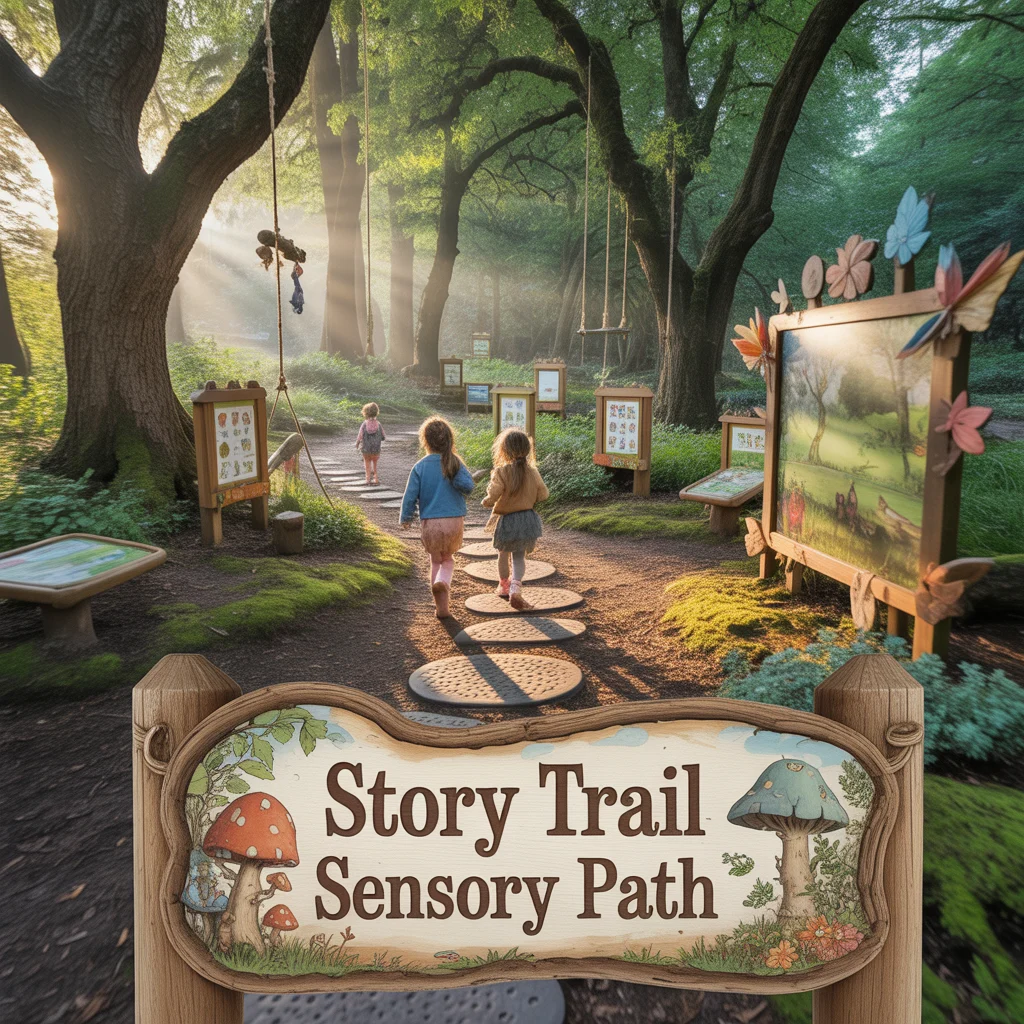
A story trail sensory garden path uses illustrated story panels, character footprint markers, and themed planting sections to combine physical sensory stimulation with narrative imagination and early literacy engagement on a single connected outdoor path route. I designed a story trail sensory path at a nursery school using six illustrated panels showing a sequential fox and garden story, with fox footprint stepping stones and scented plants matching the story events at each panel. Children engaged with the story trail on repeated visits, retelling the story from memory using the panel illustrations as prompts, and following the fox footprints between panels without adult direction after the second session of use.
Story Panel Materials for an Outdoor Sensory Path
Weatherproof printed aluminium panels, outdoor ceramic tile picture panels, and hand-painted exterior plywood panels are three panel materials suited to an outdoor story trail sensory garden path for kids. Weatherproof printed aluminium panels using UV-stable dye-sublimation printing cost $25 to $60 per 300mm-by-400mm panel and remain legible for 10 or more years outdoors. Outdoor ceramic tile picture panels provide a permanent, washable surface suited to a school outdoor sensory path where panels require regular cleaning. Hand-painted exterior plywood panels cost $8 to $15 per panel in materials and suit a home garden sensory path where adult artistic input is available to create personalized story illustrations specific to the child or children using the sensory pathway.
Story Themes for a Sensory Garden Path Trail
A woodland animal story, a growing seed story, and a weather adventure story are three themes suited to a story trail sensory garden path for kids. A woodland animal story follows a named animal character through different garden habitats represented by the planting sections along the path, connecting the narrative to the sensory experience of walking through each habitat. A growing seed story follows a single seed from planting to flowering in illustrated stages, with each panel positioned beside the corresponding planting on the sensory path. A weather adventure story follows a child character through different weather events represented by weather-watching elements, shadow sections, and water features along the path route, connecting narrative directly to physical sensory experiences present on the path.
Butterfly and Bee Observation Sensory Path
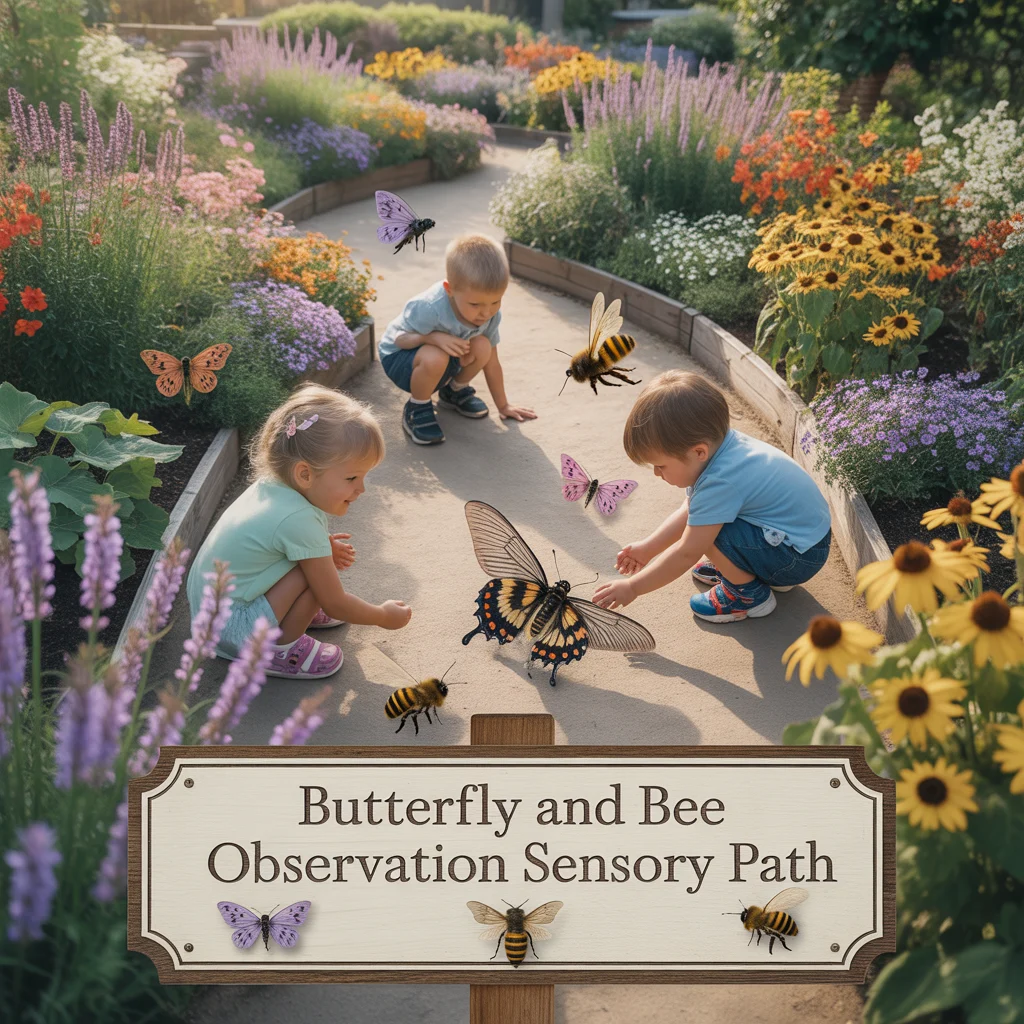
A sensory garden path with a butterfly and bee observation section uses nectar-rich planting, insect hotels, and log piles at the path edge to attract live insects as direct sensory observations during the path session. I planted a dedicated border of lavender, Echinacea purpurea, and Verbena bonariensis beside a 15-foot section of a school sensory path and recorded bee or butterfly activity at the border on 18 out of 20 observed sessions during the June to September period. Children developed the ability to sit quietly and observe insects across the six-week observation period, demonstrating a measurable improvement in attention, stillness, and focused observational behaviour that the class teacher had not achieved through any indoor learning activity.
Nectar Plants for a Sensory Path Insect Observation Border
Lavandula angustifolia, Echinacea purpurea, and Verbena bonariensis are three nectar-rich plants suited to an insect observation border on a sensory garden path for kids. Lavandula angustifolia attracts bumblebees and honeybees consistently from June to August, making bee observation reliable throughout the lavender flowering period on the school sensory path. Echinacea purpurea attracts peacock, red admiral, and painted lady butterflies from July to September, providing butterfly observation opportunities from midsummer. Verbena bonariensis attracts butterflies and hoverflies from July to October at a rate that makes it one of the most reliably insect-visited plants for a school sensory garden path insect observation border throughout the late summer and early autumn outdoor learning period.
Insect Hotel Designs for a Children’s Sensory Garden Path
A bundled bamboo tube hotel, a drilled log block, and a layered natural material box are three insect hotel designs suited to a sensory garden path observation station for kids. A bundled bamboo tube hotel uses hollow bamboo sections of 6 to 10mm diameter bundled together in a weatherproof housing and provides nesting cavities for red mason bees and leafcutter bees at zero material cost when bamboo canes are available from the garden. A drilled log block uses a 6-inch-diameter log section with 5 to 8mm holes drilled to 50mm depth at 20mm intervals, providing simple effective cavities at $0 cost from a garden log section. A layered natural material box uses bamboo, timber, pinecones, and dried leaves in a timber frame at $25 to $60 to build.
Numbered and Lettered Discovery Sensory Path
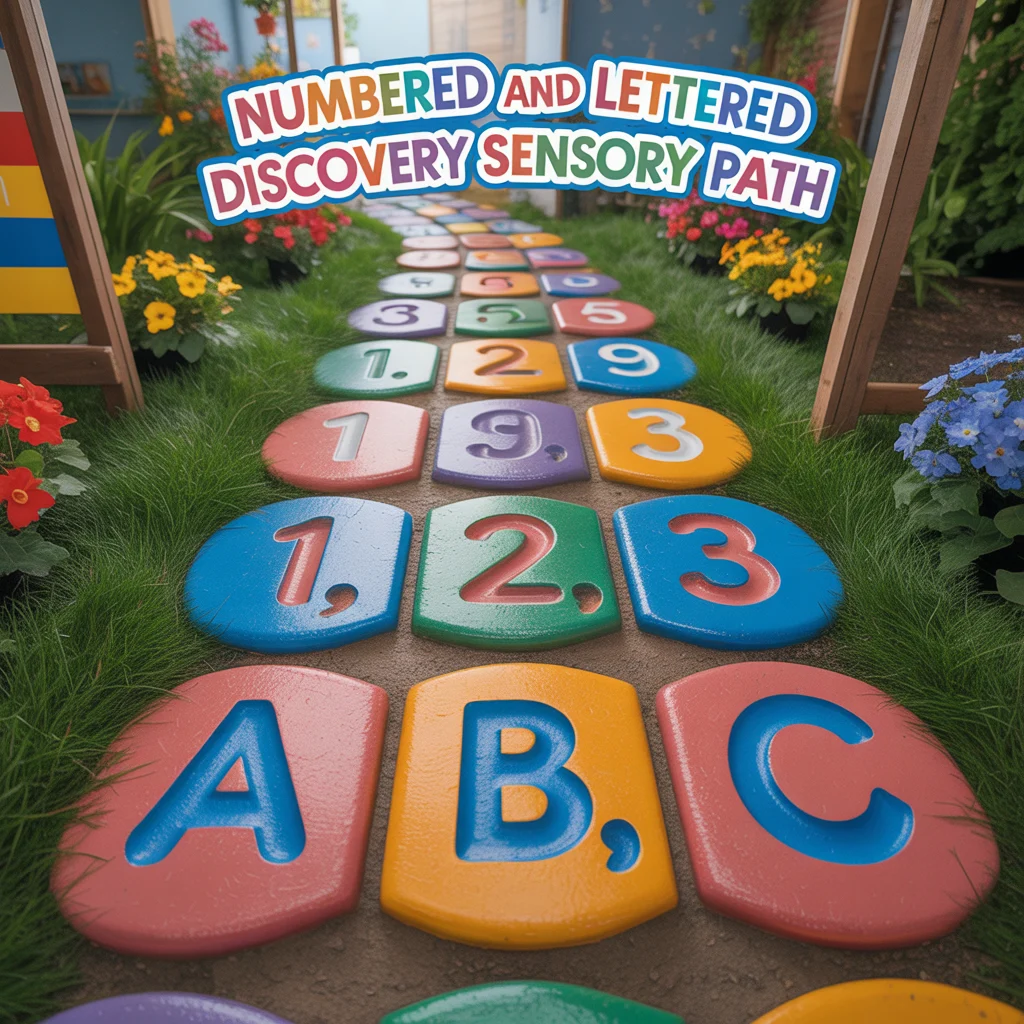
A numbered and lettered sensory garden path embeds letters and numbers into stepping stones combined with corresponding plants and natural objects to create a path that supports early literacy and numeracy through physical movement and nature connection. I created an A to G alphabet section at a primary school using seven stepping stones with ceramic letter tiles paired with labelled plants starting with each letter, and children began spontaneously reading plant labels and matching them to the stepping stone letters within the first week of the outdoor sensory path opening. The combined physical, visual, and reading engagement of the numbered path produced learning outcomes the class teacher described as more memorable than equivalent indoor literacy activities.
Making Numbered Stepping Stones for a Sensory Path
Ceramic tile letter inserts, cast concrete letter stepping stones, and painted letter pads are three installation methods for a numbered or lettered sensory garden path for kids. Ceramic tile letter inserts use commercial alphabet tiles set in exterior adhesive on 12-by-12-inch concrete pads, producing a durable, legible letter that withstands school outdoor use for 10 or more years without fading or lifting under normal daily foot traffic. Cast concrete letter stones poured into commercial alphabet molds cost $8 to $20 per stone from specialist sensory garden suppliers. Painted letter pads using non-toxic exterior paint on concrete pads cost $2 to $4 per stone in materials but require repainting every 2 to 3 years under heavy school use conditions.
Learning Activities for a Numbered Sensory Garden Path
Counting sequences, alphabet matching, and letter-to-plant recognition are three learning activities suited to a numbered and lettered sensory garden path for kids. Counting sequences ask children to step on numbers in order from 1 to 10 while counting aloud, combining gross motor movement with verbal number rehearsal in an outdoor sensory path context. Alphabet matching gives children picture cards of the plants beside the path and asks them to match each card to the correct letter stone, combining early reading skills with nature observation alongside the sensory path. Letter-to-plant recognition asks children to find a plant beginning with the letter on the stone they are standing on, combining the physical sensory path experience with phonics knowledge in a child-directed outdoor learning activity.
Frequently Asked Questions
What is a sensory garden path for kids?
A sensory garden path for kids is an outdoor walkway that deliberately stimulates two or more of the five senses at every step through varied surface textures, fragrant plants, sound elements, colour sequences, water features, and edible plantings, supporting sensory processing development, coordination, and emotional regulation in children of all abilities. They work equally well as sensory garden ideas for schools, home gardens, and specialist therapeutic settings built around sensory garden ideas for autism. The path format suits children from age 2 upward and adapts to different developmental needs, sensory sensitivities, and outdoor space sizes from a 10-foot home garden path to a 200-foot school outdoor sensory trail.
What materials are used in outdoor sensory paths for schools?
Rubber tiles, textured concrete stepping pads, smooth river pebbles, bark chip, artificial grass sections, and coloured resin-bound gravel are the primary surface materials used in outdoor sensory paths for schools, with tactile wall panels, numbered stones, balance elements, and instrument stations added to extend the developmental range. Rubber tiles rated to BS EN 1176 playground safety standards are the most widely used material on school outdoor sensory paths because they provide a non-slip, impact-absorbing surface in a range of colours and textures that suits both tactile and visual sensory stimulation. I specify rubber tiles on all school sensory path projects because the material withstands daily foot traffic for 8 to 12 years.
Are sensory garden paths effective for children with autism?
Sensory garden paths for autism support sensory integration, self-regulation, and nature engagement in children on the autism spectrum, as confirmed by guidance from the National Autistic Society and applied by occupational therapists in therapeutic garden settings across the United Kingdom. Barefoot paths, tactile wall panels, calm corners with lavender planting, and gentle water sound features are the four sensory path elements most consistently reported by occupational therapists as producing positive responses in children with autism spectrum disorder. I have worked on three therapeutic sensory garden path projects specifically for children with autism and observed sustained engagement increases and reduced anxiety behaviours in all three settings within six weeks of each path opening.
How do you make a sensory garden path for kids at home?
A home sensory garden path for kids is made by laying six to eight stepping stones of different textures at 12-inch intervals, planting lavender, mint, and creeping thyme at the path edges, and adding one sound element such as a wind chime or small water feature alongside the route. Total material cost for a basic home sensory path ranges from $45 to $120 depending on materials and plant choices. I built a version for a school project for $68 in materials in a single afternoon, and the path produced immediate sustained sensory engagement in every child who used it during the first week of access, including children who had previously shown minimal interest in outdoor activities.
What plants are best for a sensory garden path for kids?
Lavender, creeping thyme, spearmint, chamomile, and nasturtiums are the five best plants for a sensory garden path for kids because each provides a distinct primary sensory stimulus: lavender for calming scent, thyme for foot-level fragrance, spearmint for touch-release fragrance, chamomile for sweet ground-level scent, and nasturtiums for edible colour and taste. All five are non-toxic, child-safe, and available from standard garden centres at $2 to $6 per plant. I plant all five species on every sensory garden path for kids project I design to cover the olfactory, tactile, visual, and gustatory senses within the planting scheme alone, providing multi-sensory engagement without any manufactured equipment on the path.