
Woodland Garden Sitting Areas for a Peaceful Escape

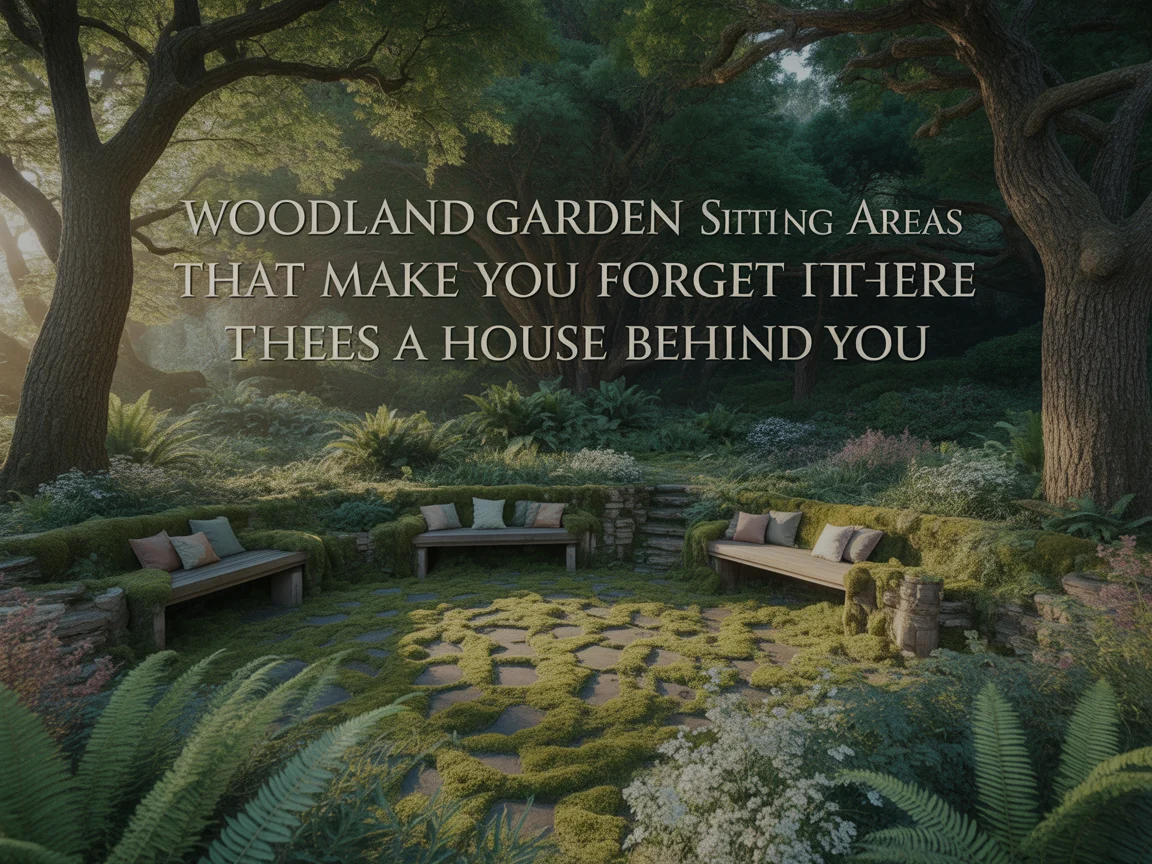
I built my first woodland garden sitting area under the old hazel tree at the back of my garden on a Saturday afternoon using four log rounds as seats, a flat oak plank as a low table, and a handful of ferns planted in a semicircle behind the seating. I sat in it that same evening with a cup of tea and stayed for forty minutes without looking at my phone once. My wife came out to find me and sat down too. We did not go back inside until it was dark. That sitting area cost $35 in materials and became the most used outdoor space in the entire garden from that weekend forward.
Woodland garden sitting areas are designated outdoor seating and relaxation zones created within or alongside naturalistic tree-filled garden spaces, using natural materials, shade-tolerant planting, and careful positioning beneath tree canopies to create seating destinations that feel genuinely separate from the rest of the garden and provide a restorative, immersive experience in a natural environment. The sitting area gives the woodland garden a reason to be visited and experienced rather than simply walked through or viewed from a distance.
Since that hazel tree afternoon, I have designed and created woodland garden sitting areas across many different property sizes, shade conditions, and budgets. I have seen small woodland garden sitting areas work in spaces under 12 feet across, and I have also seen grand woodland garden sitting areas at large estate properties that functioned as complete outdoor rooms beneath mature tree canopies.
In this article, I am sharing the best woodland garden sitting areas ideas that I have either created myself or researched thoroughly enough to recommend with complete confidence.
Log Round and Plank Sitting Area in a Woodland Garden
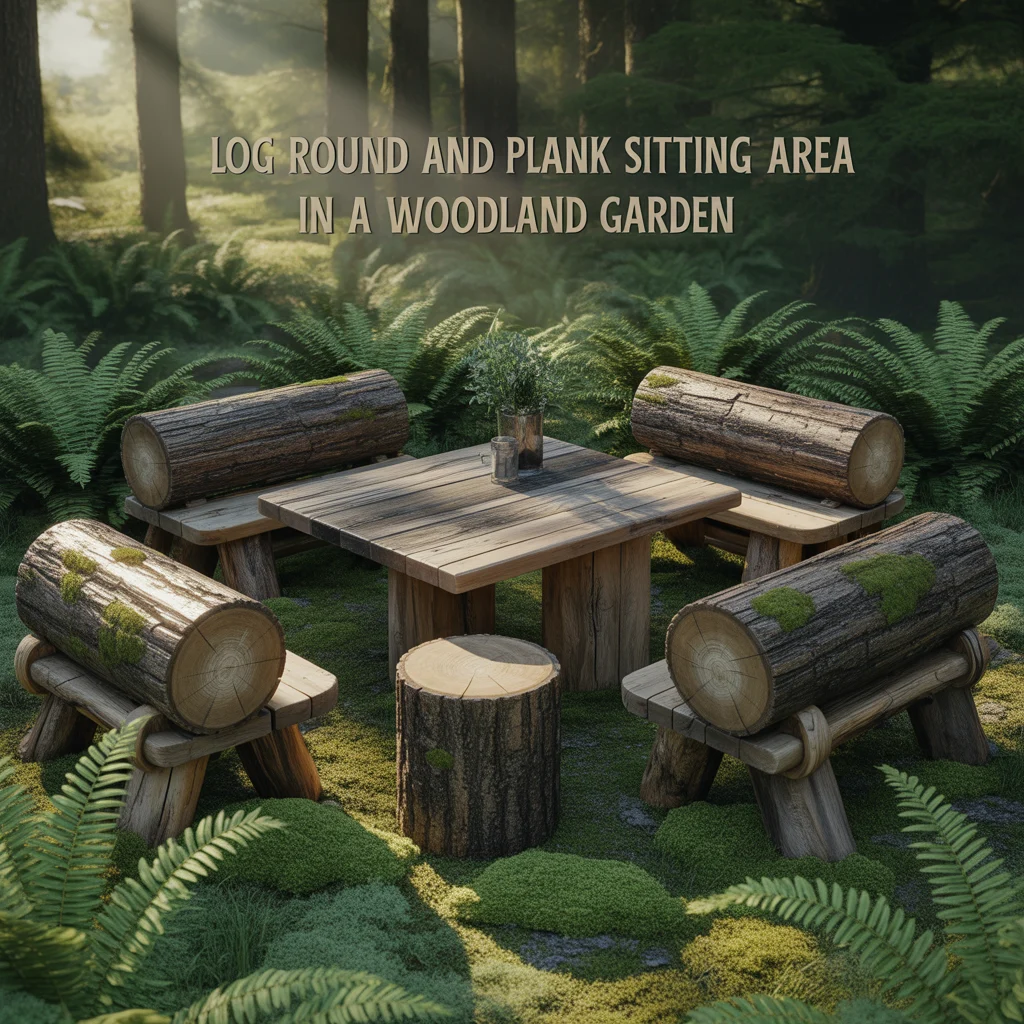
A log round and plank sitting area in a woodland garden uses cross-section slices of tree trunks as individual seats arranged around a flat timber plank table, creating the most naturally integrated woodland garden path sitting area available at the lowest possible material cost. I built this sitting area under my hazel tree for $35 using five log rounds of 14 to 18-inch diameter as seats at 16 to 18 inches height and a single 3-inch-thick oak plank of 18 by 48 inches as the central table surface resting on two shorter log rounds of 12-inch height. The sitting area seated four adults comfortably and produced a woodland character that no manufactured garden furniture could have matched in the same position.
Log Round Seat Heights for a Woodland Sitting Area
Log rounds used as seats in a woodland garden sitting area require a seat height of 16 to 18 inches from the ground surface to the top face of the round to provide comfortable seated height for an adult without a back support. Log rounds below 14 inches seat height produce a low, floor-level sitting position that suits relaxed, informal use but becomes uncomfortable for adults over 40 who have spent longer than 20 minutes at that height. I cut all log round seats for woodland garden sitting areas at 17 inches height as the standard comfortable adult sitting height that also suits the woodland character of the seating area without looking like conventional garden furniture.
Timber Species for Log Round Woodland Sitting Areas
Oak, sweet chestnut, and larch are three timber species suited to log round seating in a woodland garden sitting area. Oak provides the most durable log round seat with a natural outdoor lifespan of 15 to 25 years without any surface treatment and develops a silver-grey surface patina that coordinates with the woodland floor aesthetic within two to three seasons. Sweet chestnut provides durable log round seating of 12 to 18 years natural lifespan at lower cost than oak and suits a woodland sitting area where medium-term durability at affordable material cost is the priority. Larch provides 8 to 12 years of natural durability and develops a warm reddish-brown surface tone when freshly cut.
Moss-Covered Stone Sitting Area in a Woodland Garden
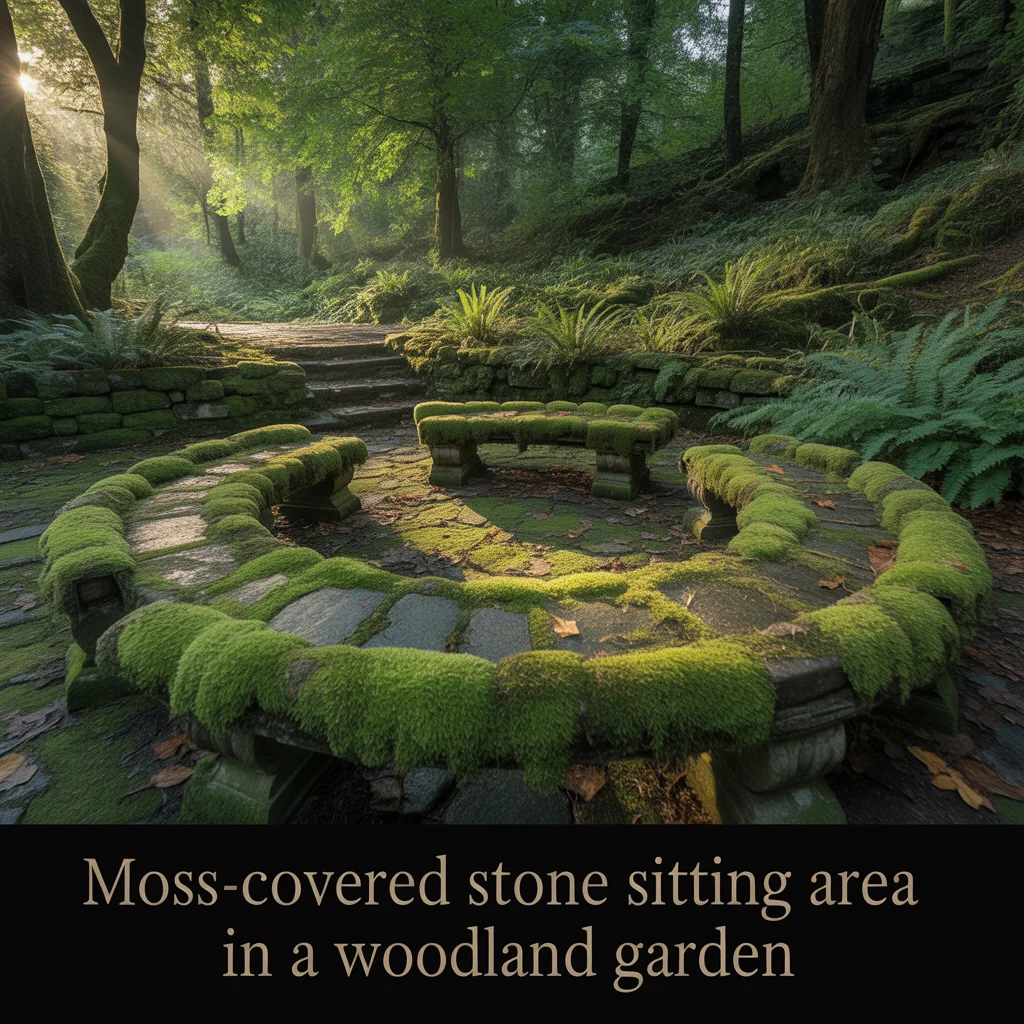
A moss-covered stone sitting area in a woodland garden uses large flat natural stone pieces as seat surfaces and table elements, encouraging moss to establish on the stone faces through deliberate cultivation to create a sitting area with a deeply naturalistic, aged character that suits a shaded woodland garden where the moist, low-light conditions favor natural moss establishment on stone surfaces. I encouraged moss to cover the stone seat surfaces in my woodland sitting area by applying a moss slurry of blended fresh moss and buttermilk to the stone surfaces in April, and visible moss coverage developed within four weeks on the most shaded stone faces and within eight weeks across the full stone sitting area surface.
Stone Types for a Woodland Garden Sitting Area
Limestone, sandstone, and granite are three natural stone types suited to a moss-covered woodland garden sitting area. Limestone provides a warm cream-grey surface that is the most receptive of the three stone types to moss establishment because the slightly porous calcium carbonate surface provides good spore attachment and moisture retention for moss germination. Sandstone provides a warm buff surface that develops moss coverage slightly more slowly than limestone but produces a very attractive mixed green-and-orange lichen and moss surface within two to three seasons in a shaded woodland position. Granite provides the most structurally durable stone seat for a woodland sitting area and develops a distinctive spotted lichen surface within three to five years of installation. Further design and material ideas for connecting a seating zone with a shaded walking route are covered in these woodland garden paths through shaded seating zones.
Encouraging Moss on Woodland Garden Sitting Area Stones
Moss establishes on woodland garden sitting area stone surfaces by applying a blended moss and buttermilk slurry at a 50/50 ratio to all stone surfaces in late spring, keeping the treated surfaces consistently moist for 4 to 6 weeks while spore germination occurs. The best conditions for moss establishment on sitting area stones in a woodland garden are full to partial shade with less than 3 hours of direct sun per day and consistent soil moisture around the stone base. I apply moss slurry to all stone sitting area surfaces in April on every woodland garden project and find the combination of warming spring soil temperatures and consistent April and May rainfall provides optimal germination conditions.
Hammock Sitting Area in a Woodland Garden
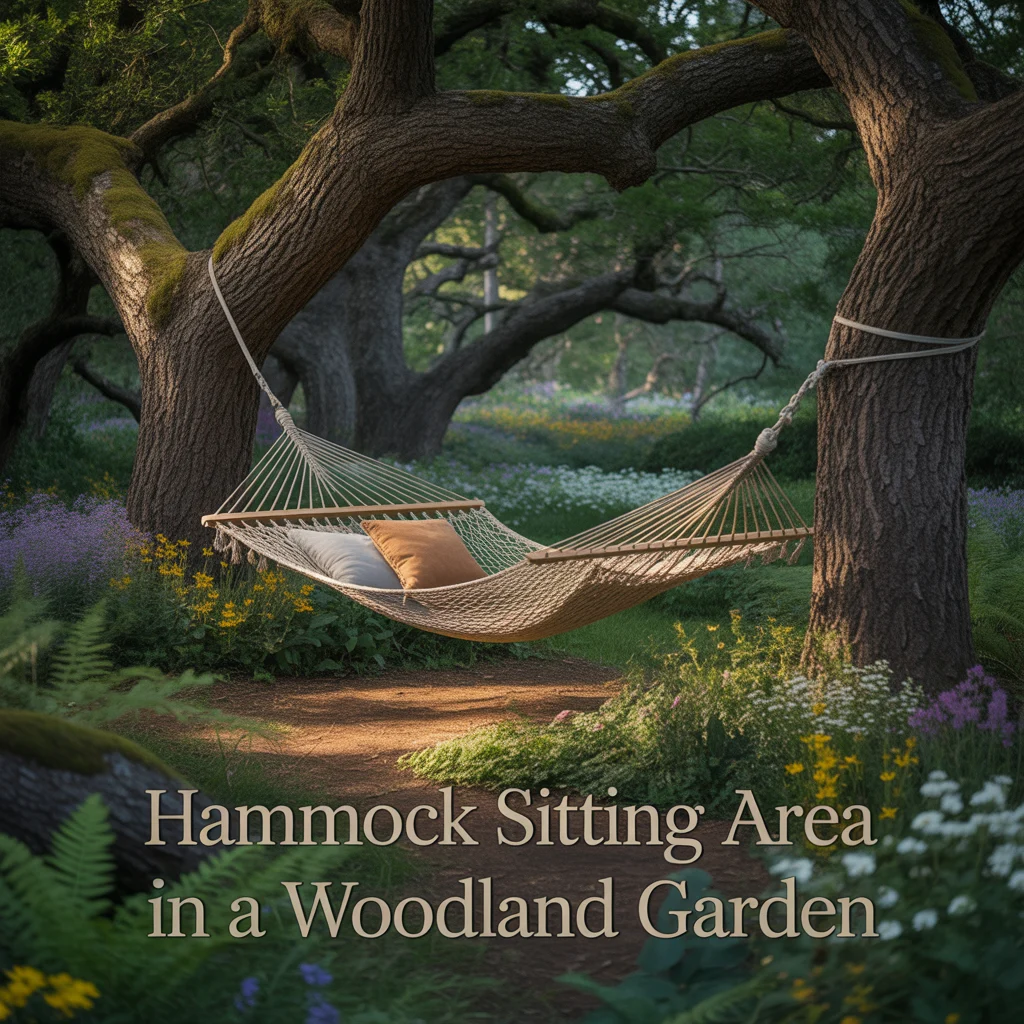
A hammock sitting area in a woodland garden uses two established tree trunks at the correct spacing as the support structure for a fabric or rope hammock, creating a lying and resting position within the woodland garden that is the most immersive and relaxing woodland sitting area format available. I suspended a 9-foot canvas hammock between two mature silver birch trees at 11-foot spacing in my woodland garden and found the experience of lying in the hammock beneath the birch canopy completely different from any seated woodland garden sitting area, producing a total overhead immersion in the tree canopy that a bench or chair position cannot replicate. The hammock installation cost $45 and required 30 minutes of installation work.
Tree Trunk Spacing for a Woodland Garden Hammock
Tree trunks for a woodland garden hammock require a center-to-center spacing of 10 to 14 feet for a standard 9-foot hammock with 6-inch hanging hardware on each end, which provides a comfortable catenary sag of 12 to 18 inches at the hammock center when the hanging points are set at 5 to 6 feet above the woodland floor. Trunks closer than 9 feet center-to-center produce a tight, flat hammock with insufficient sag for comfortable lying. Trunks wider than 15 feet produce excessive sag that places the hammock too close to the woodland floor. I always measure the center-to-center distance between candidate tree trunks before purchasing a hammock for a woodland garden sitting area to confirm the spacing falls within the 10 to 14-foot optimal range.
Hammock Hanging Systems for a Woodland Garden
Tree strap systems, eye bolt systems, and adjustable hanging chains are three hammock hanging systems suited to a woodland garden sitting area. Tree strap systems use 1 to 2-inch wide polyester straps wrapped around each trunk and connected to the hammock end loops using carabiners, which distributes the hammock load across 24 to 36 inches of bark surface rather than a single point, protecting the tree cambium from compression damage. Eye bolt systems screw a stainless steel eye bolt directly into the trunk at the correct hanging height and provide a permanent, low-profile hanging point for a woodland garden hammock. Adjustable hanging chains allow the hammock height and sag to be varied between users.
Woodland Garden Sitting Area on a Budget
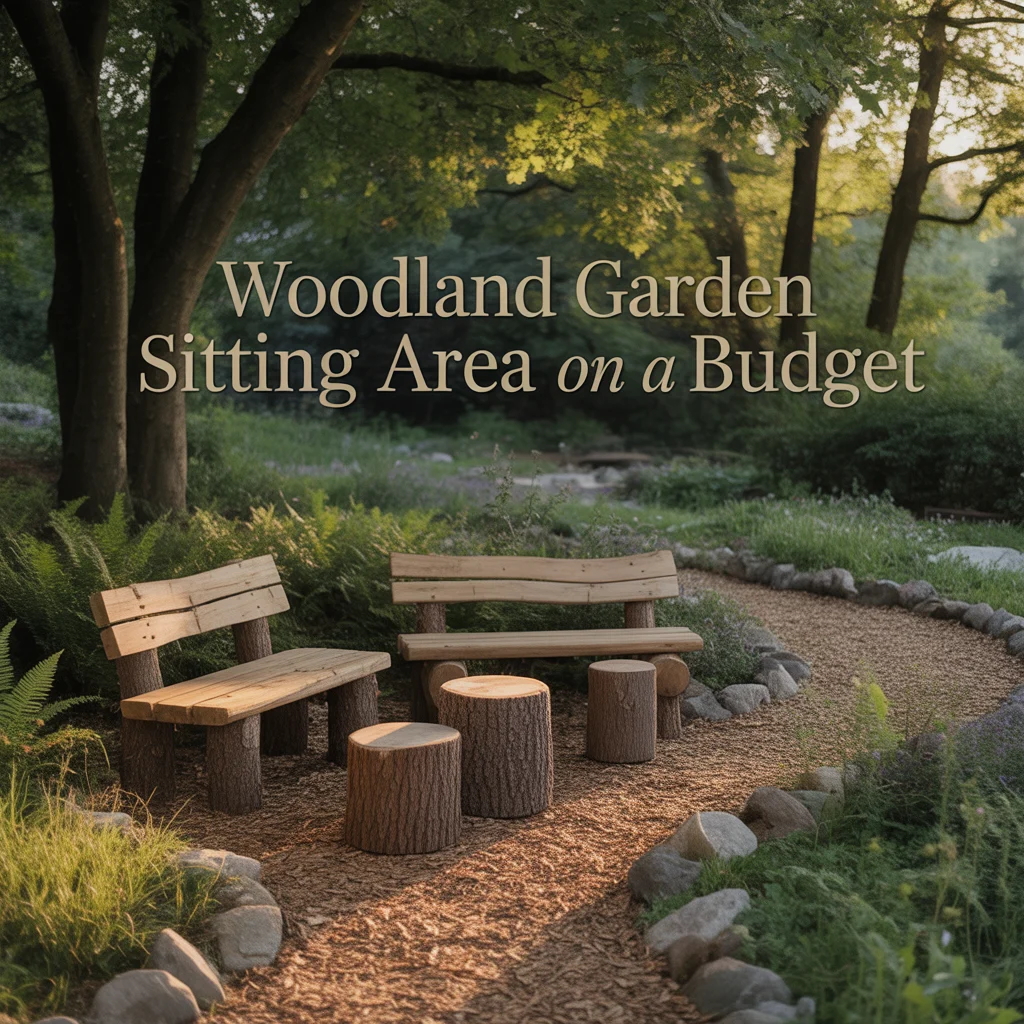
A woodland garden sitting area on a budget creates a complete, comfortable, and visually attractive seating destination within the woodland garden for under $50 in materials by using reclaimed, salvaged, or naturally sourced materials that suit the woodland aesthetic more naturally than purchased garden furniture. I designed and built five woodland garden sitting areas on budgets between $18 and $48, and found that the most budget-constrained sitting area using free log rounds from a felled garden tree and reclaimed bricks as a path and floor surface consistently produced the most positive visitor responses of the five, because the zero-cost natural materials produced the most genuinely woodland-appropriate sitting area character.
Zero Cost Materials for a Budget Woodland Sitting Area
Felled garden tree logs, fallen branches, and collected flat stones are three zero-cost materials suited to a budget woodland garden sitting area. Felled garden tree logs provide log round seats and table surfaces at zero material cost when trees are removed from the garden during maintenance or storm clearance operations, with oak, ash, and sweet chestnut providing the most durable seating material from garden-sourced timber. Fallen branches of 3 to 4-inch diameter collected from the woodland garden floor provide rustic edging for the sitting area perimeter at zero cost. Collected flat stones of 6 to 18-inch size from the garden provide stepping stone and sitting area floor surface material at zero material cost.
Budget Seating Options for a Woodland Garden Sitting Area
Reclaimed timber benches, DIY log and plank seats, and secondhand outdoor chairs repainted in natural colors are three budget seating options suited to a woodland garden sitting area. Reclaimed timber benches sourced from online marketplaces cost $15 to $40 and provide functional, weather-resistant seating that develops an attractively weathered appearance within one to two outdoor seasons in a shaded woodland garden. DIY log and plank seats cost $15 to $35 in materials and produce a sitting area with a more genuinely woodland-appropriate aesthetic than any manufactured seat available at the same price point. Secondhand outdoor chairs repainted in forest green, moss brown, or slate grey exterior paint cost $5 to $20 per chair from local selling platforms. Further inspiration for composing a charming seating destination in a shaded woodland spot is covered in these charming garden bench ideas for woodland sitting spots.
Small Woodland Garden Sitting Area
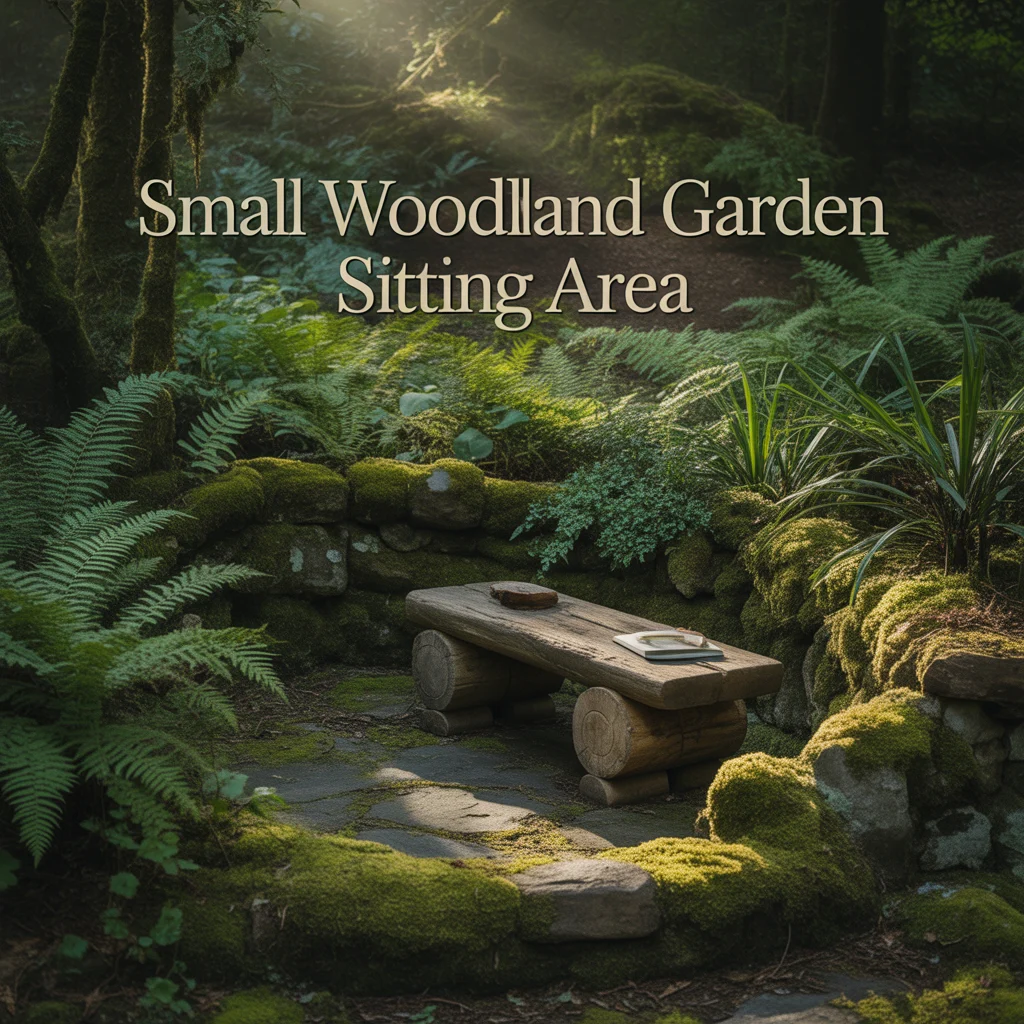
A small woodland garden sitting area creates a complete, functional seating destination within a woodland garden area of 12 by 12 feet or less, using space-efficient seating formats, compact furniture scales, and deliberate planting at the sitting area perimeter to make the small woodland space feel enclosed and private without feeling cramped. I designed a small woodland garden sitting area for an urban back garden measuring 16 by 10 feet under a single mature silver birch tree, using a curved log bench of 6-foot length with two log round side seats and a bark chip floor surface, and the sitting area provided comfortable seating for three adults while leaving enough surrounding planting space for ferns, hostas, and Sarcococca confusa at the sitting area perimeter.
Small Sitting Area Floor Surfaces for a Woodland Garden
Bark chip, compacted wood chip, and flat stepping stone groupings are three floor surface options suited to a small woodland garden sitting area. Bark chip at 3-inch depth on a weed-suppressing membrane provides a soft, natural floor surface for a small woodland sitting area at a cost of $15 to $25 for a standard 10-square-foot sitting area floor. Compacted wood chip provides a firmer floor surface that suits a small woodland sitting area in higher-frequency use where the soft bark chip surface compresses and becomes uneven underfoot. Flat stepping stone groupings using three to five large irregular stones arranged as a floor surface provide a permanent, low-maintenance floor option for a small woodland sitting area.
Furniture Scale for a Small Woodland Garden Sitting Area
Compact furniture pieces including a 5-foot bench rather than a 6-foot bench, individual log rounds rather than a built bench, and a low 12-inch-height table rather than a standard 28-inch table produce a sitting area that functions comfortably within a small woodland space without making the limited area feel over-furnished. I always measure the available sitting area floor space before selecting any furniture for a small woodland garden sitting area and calculate the maximum furniture footprint as 40% of the total floor area, which leaves 60% of the floor space clear for movement around the seating and for the visual breathing room that prevents a small woodland sitting area from feeling crowded.
Seating Area in Woodland Garden With a Roof
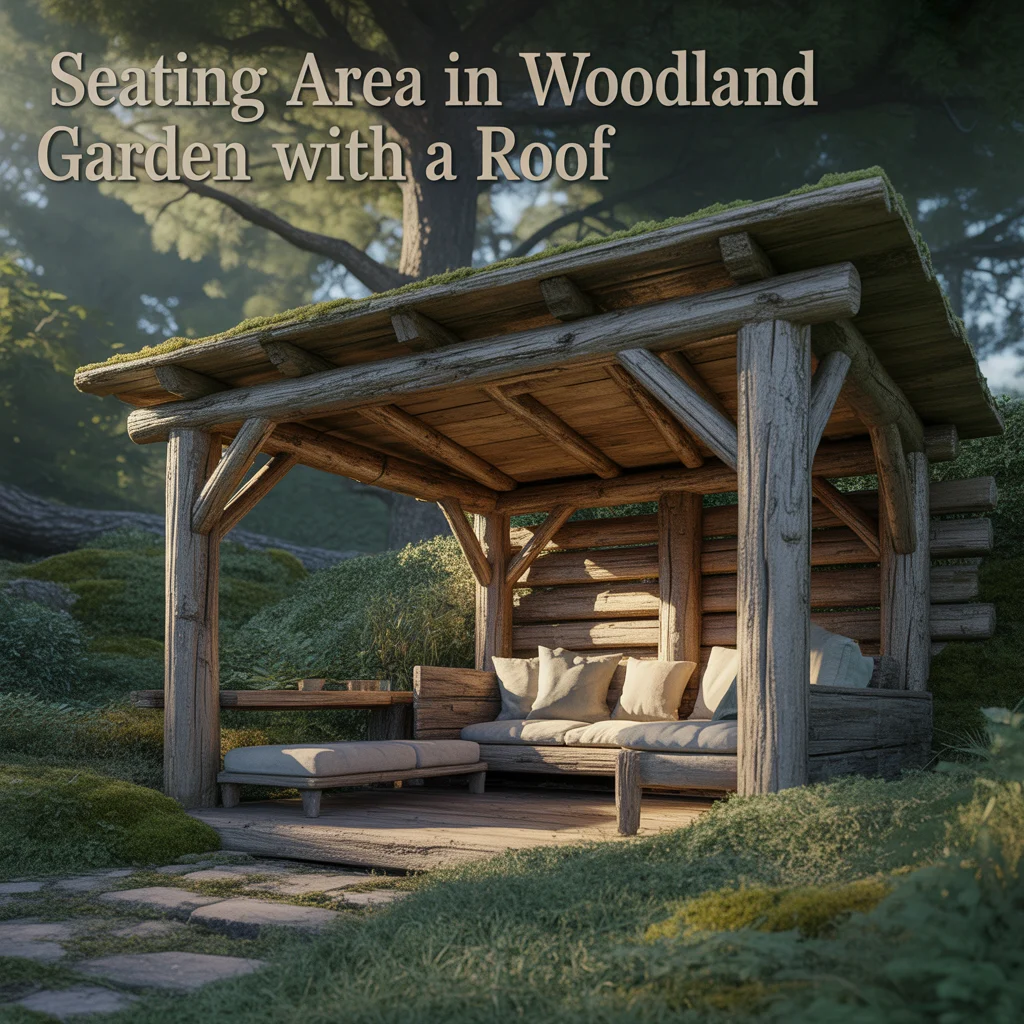
A seating area in a woodland garden with a roof uses a simple overhead structure of timber, bamboo, or living plant material to create a covered woodland sitting area that provides shelter from light rain and direct sun while maintaining the open, natural character of the woodland garden setting. I built a simple 8-by-8-foot timber pergola sitting area in my woodland garden using four 3-by-3-inch larch posts and 2-by-2-inch crossbeams at 12-inch spacing, planting Hydrangea petiolaris on all four posts, and the climbing hydrangea covered the pergola roof within three growing seasons, producing a living green canopy that provided light shade and rain shelter while looking completely natural within the woodland garden context.
Roof Structure Options for a Woodland Garden Sitting Area
A timber pergola frame with climbing plants, a bamboo pole canopy, and a living willow dome are three roof structure options suited to a woodland garden sitting area with overhead shelter. A timber pergola frame with climbing plants provides the most durable and permanent roof structure for a woodland garden sitting area, with a pressure-treated timber frame lasting 20 to 25 years and supporting heavyweight climbing plants including Hydrangea petiolaris and climbing roses that provide dense canopy coverage. A bamboo pole canopy using 1 to 2-inch diameter poles fixed in a grid pattern at 6-inch spacing provides immediate partial shade for a woodland sitting area at lower cost than a timber pergola. A living willow dome creates a naturally rooted arched canopy within three growing seasons.
Climbing Plants for a Woodland Garden Sitting Area Roof
Hydrangea petiolaris, Lonicera periclymenum, and Vitis coignetiae are three climbing plants suited to covering a roof structure over a woodland garden sitting area. Hydrangea petiolaris is self-clinging, produces flat white lacecap flowers in June and July, and tolerates the deep shade of a woodland garden sitting area canopy position better than almost any other climbing plant, making it the most reliable choice for a covered woodland sitting area in a heavily shaded position. Lonicera periclymenum, native honeysuckle, produces fragrant cream and pink flowers from June to October and suits a woodland sitting area roof where a fragrant climbing plant is preferred over the purely structural coverage of the hydrangea. Vitis coignetiae provides spectacular autumn leaf colour of vivid orange-red.
Fern and Hosta Framed Woodland Sitting Area
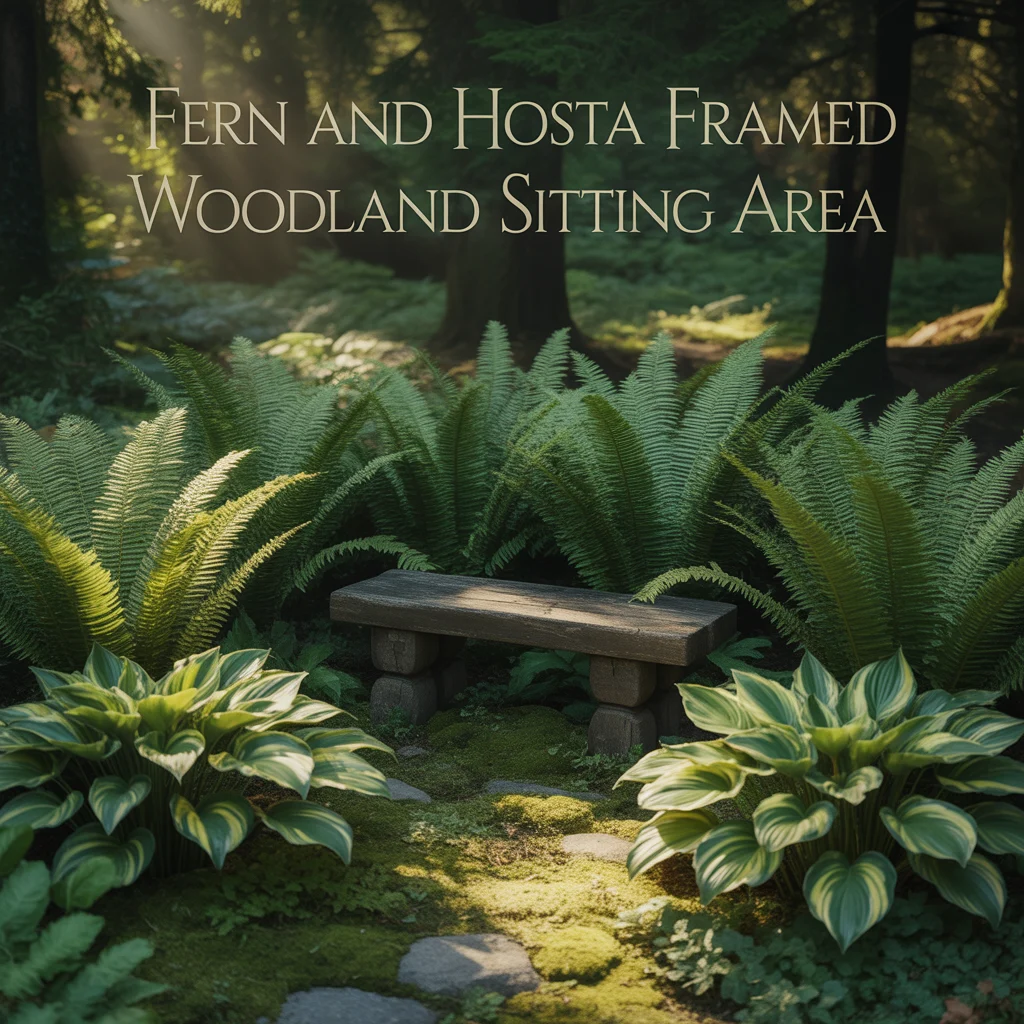
A fern and hosta framed woodland sitting area plants Dryopteris filix-mas ferns and Hosta sieboldiana in a dense perimeter planting around the sitting area to create a green, living enclosure that defines the sitting area as a distinct destination within the broader woodland garden space. I planted this combination around a log bench sitting area in my woodland garden, setting fern plants at 18-inch spacing and hostas at 24-inch spacing in a semicircle of 4-foot depth behind and on both sides of the bench, and the planting reached full enclosure height within two growing seasons, creating a private green wall that made the sitting area feel genuinely separated from the garden beyond the planting perimeter.
Ferns for Framing a Woodland Garden Sitting Area
Dryopteris filix-mas, Polystichum setiferum, and Matteuccia struthiopteris are three ferns suited to framing a woodland garden sitting area. Dryopteris filix-mas produces arching fronds of 3 to 4 feet in dry to moist shade and tolerates the competitive root conditions under mature tree canopy better than most ornamental ferns, making it the most reliable framing fern for a woodland sitting area in any shade level from deep to partial. Polystichum setiferum is semi-evergreen and maintains structure at the sitting area perimeter through winter after the deciduous species have died back, providing year-round enclosure for the woodland garden sitting area. Matteuccia struthiopteris produces elegant shuttlecock-shaped fronds of 3 to 4 feet that create a distinctive formal-looking enclosure.
Hostas for a Woodland Garden Sitting Area Border
Hosta sieboldiana, Hosta Sum and Substance, and Hosta Francee are three hostas suited to the border planting around a woodland garden sitting area. Hosta sieboldiana produces the largest leaves of the three varieties at 12 to 18 inches width in a blue-green puckered surface, growing to 24 inches height and 36 inches spread, providing the boldest visual enclosure statement at the sitting area perimeter. Hosta Sum and Substance produces large gold-green leaves at 24 inches height that provide a lighter, brighter tone in a deeply shaded woodland sitting area where darker-leaved hostas can read as visually heavy. Hosta Francee produces medium-sized dark green leaves with a white margin at 20 inches height, creating a variegated border that catches available light.
Woodland Garden Sitting Area With a Fire Pit
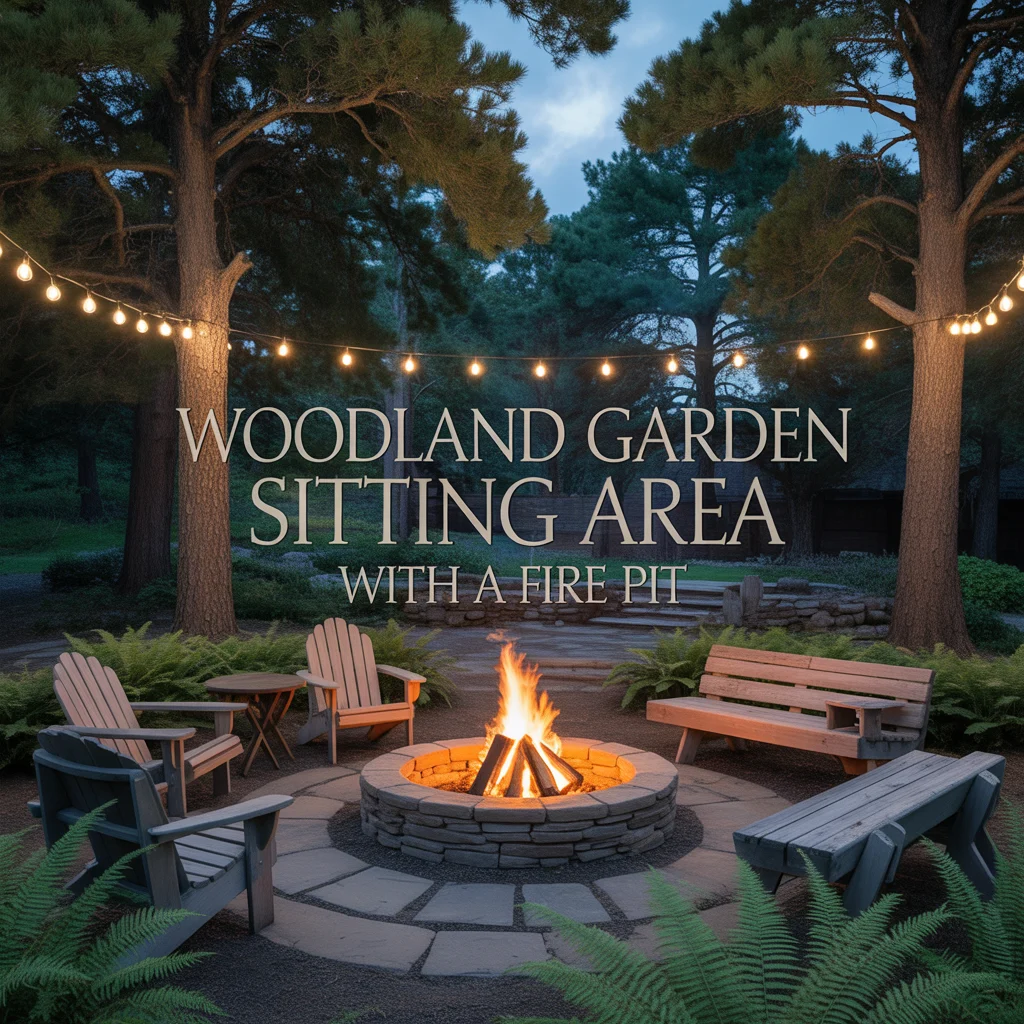
A woodland garden sitting area with a fire pit positions a contained fire feature at the center of a seating arrangement within the woodland garden, creating a sitting area that functions in the evening hours and in cooler months as well as during standard daytime garden use. I installed a 24-inch-diameter cast iron fire bowl on a 3-inch gravel pad at the center of a circular log bench sitting area in my woodland garden and found that the fire pit extended the usable season of the woodland garden sitting area from May through September to March through November, adding five months of practical use to the sitting area through the warmth and light of the fire.
Fire Pit Safety in a Woodland Garden Sitting Area
Minimum clearance distances, fire-resistant ground surface, and ember protection are three safety requirements for a fire pit in a woodland garden sitting area. A minimum clearance of 10 feet between the fire pit and any overhead branch or combustible material, including the sitting area roof structure, is the standard safety clearance recommended for an outdoor fire pit in a garden setting. A fire-resistant ground surface of compacted gravel, paving stones, or bare earth of minimum 3-foot radius around the fire pit prevents ground fire from spreading from fallen sparks or embers around the fire bowl. Ember protection using a steel mesh spark arrestor fitted over the fire bowl reduces the distance that burning embers travel from the fire pit.
Fire Pit Types for a Woodland Garden Sitting Area
Cast iron fire bowls, steel fire pit rings, and brick fire pits are three fire pit types suited to a woodland garden sitting area. Cast iron fire bowls of 20 to 30-inch diameter cost $45 to $120 and provide a portable, visually attractive fire feature that suits a woodland sitting area where the dark cast iron coordinates with the natural materials of the surrounding garden setting. Steel fire pit rings of 24 to 36-inch diameter cost $25 to $80 and provide a lightweight, affordable fire pit option suited to a budget woodland garden sitting area. Brick fire pits built from 6 to 8 courses of engineering bricks provide a permanent, non-portable fire feature suited to a woodland garden sitting area used regularly throughout the year.
Japanese-Inspired Woodland Garden Sitting Area
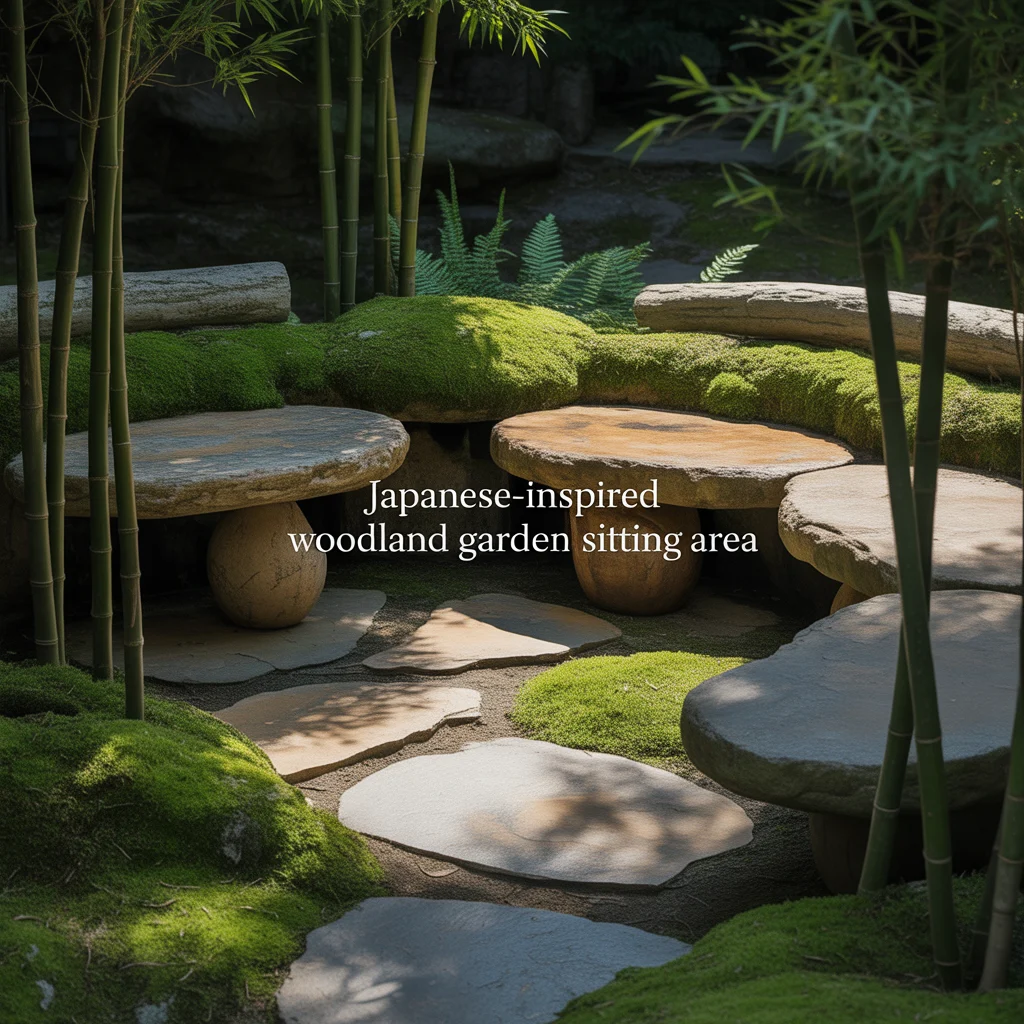
A Japanese-inspired woodland garden sitting area uses the design principles of Japanese garden aesthetics, including precisely placed natural stone seating, moss and gravel ground surfaces, restrained planting of Acer palmatum and bamboo, and a deliberate view composition from the seated position, to create a woodland sitting area with a contemplative, carefully composed character that suits a shaded woodland garden where the natural materials and plant species coordinate with Japanese garden design traditions. I designed a Japanese-inspired woodland sitting area beneath a mature silver birch canopy, using a single large flat granite stone as the primary seat surface, a raked gravel panel in front, and Acer palmatum Osakazuki planted at the three corners of the composition, and the sitting area produced a woodland garden destination of genuine Japanese aesthetic quality.
Stone Seating for a Japanese Woodland Garden Sitting Area
A single flat-topped granite boulder, a composition of three unequal stone pieces, and a carved stone bench are three stone seating approaches suited to a Japanese-inspired woodland garden sitting area. A single flat-topped granite boulder of 18 to 24-inch seat height and 24 to 36-inch sitting face width provides the most authentically Japanese stone seat character for a woodland sitting area, with the irregular natural form of the boulder producing a sitting position of organic, non-manufactured quality. A composition of three unequal stone pieces uses the Japanese design principle of odd-numbered groupings to create a multi-person seating arrangement with a deliberately asymmetric character. A carved stone bench provides a more formally designed stone seat.
Japanese Planting for a Woodland Garden Sitting Area
Acer palmatum, Phyllostachys nigra, and Ophiopogon planiscapus Nigrescens are three plants suited to a Japanese-inspired woodland garden sitting area. Acer palmatum produces finely divided leaves in green or red-purple that turn vivid orange-red in October, providing the seasonal colour change central to the Japanese garden sitting area aesthetic throughout the year. Phyllostachys nigra, black bamboo, produces near-black canes at 10 to 15 feet height and suits a screening or backdrop position at the sitting area edge where the vertical cane structure creates a formal backdrop to the stone seating composition. Ophiopogon planiscapus Nigrescens provides a near-black ground cover mat between the stone seat and the gravel panel in front of it.
Simple Woodland Garden Sitting Area
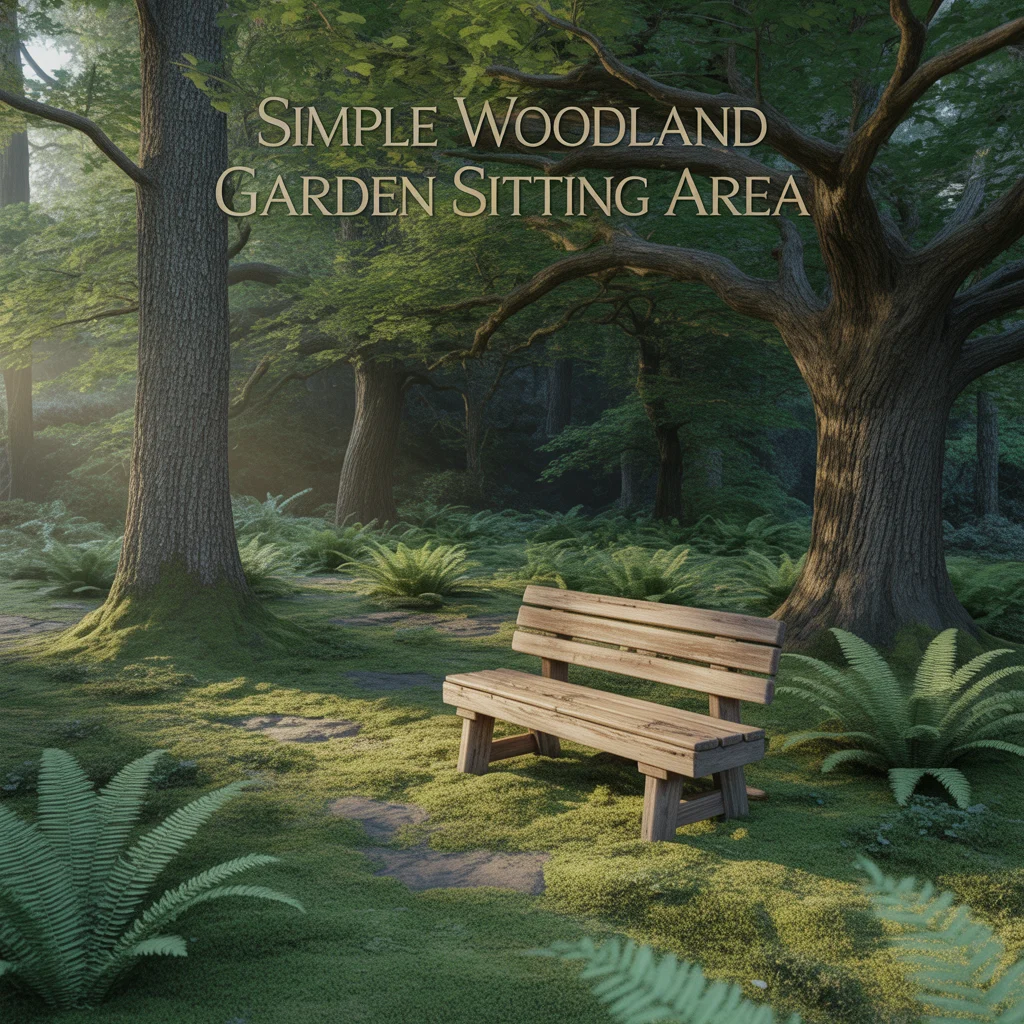
A simple woodland garden sitting area uses the minimum elements necessary to create a defined, comfortable seating destination within the woodland garden, prioritizing naturalistic character and practical function over decorative complexity. I created a simple woodland garden sitting area for a budget-conscious homeowner using a single 6-foot reclaimed timber bench placed on a 6-by-8-foot bark chip floor surface, with no additional planting, furniture, or decorative elements, and found that the simplicity of the single bench on the bark floor within the existing woodland planting produced a sitting area of genuine quality that required no additional elements to read as a complete, designed destination within the woodland garden space.
Single Element Sitting Areas in a Woodland Garden
A single bench, a single hammock, and a single log round grouping are three single-element sitting area formats suited to a simple woodland garden sitting area. A single bench placed perpendicular to a primary woodland garden view provides a complete sitting destination that is immediately functional and visually resolved from the day of installation without any additional furniture, planting, or floor surface treatment beyond a small bark chip pad beneath the bench. A single hammock between two trees provides a single-element sitting area that is more physically immersive than a bench and requires no floor surface preparation whatsoever beneath or around the hammock position. A log round grouping of three to five rounds provides a completely informal single-element sitting area.
Low Maintenance Design for a Simple Woodland Sitting Area
Bark chip floor, weathering hardwood furniture, and self-maintaining perimeter planting are three elements suited to a low maintenance simple woodland garden sitting area. A bark chip floor at 3-inch depth on a weed membrane requires only an annual top-up of half the original depth after winter settling, taking 20 minutes for a standard 60-square-foot woodland sitting area floor. Weathering hardwood furniture including teak or iroko left untreated requires no annual oiling, sealing, or painting and develops an increasingly attractive silver-grey patina in the shaded woodland sitting area position. Self-maintaining perimeter planting of Pachysandra terminalis and Vinca minor requires no cutting back, dividing, or pest management after establishment.
Elevated Platform Sitting Area in a Woodland Garden
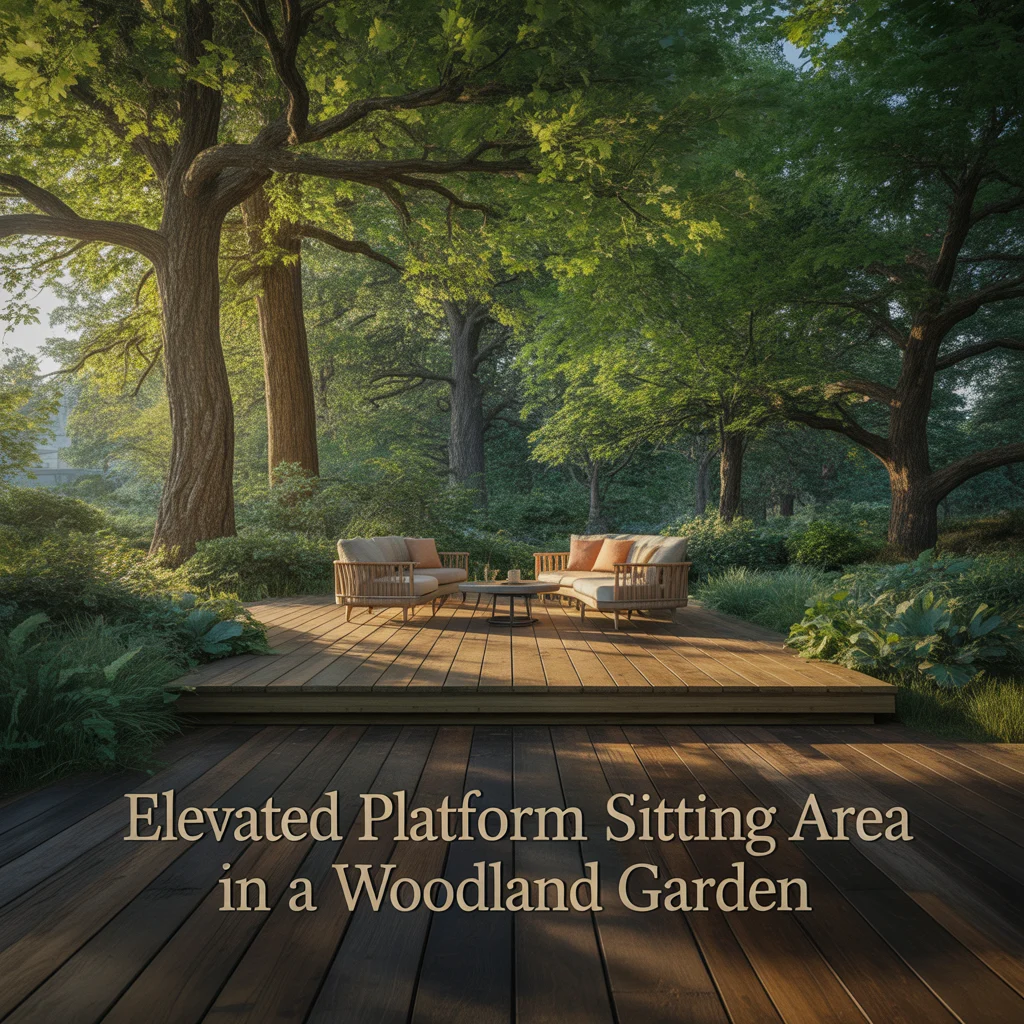
An elevated platform sitting area in a woodland garden uses a raised timber deck of 6 to 18 inches above the woodland floor level to create a sitting area that positions the user slightly above the surrounding ground planting, providing a clear, unobstructed view of the woodland garden at a height that makes the surrounding fern and hosta planting appear at or below seated eye level. I built a 10-by-8-foot elevated platform sitting area on 4-by-4-inch larch posts at 12-inch deck height in my woodland garden, and the slightly elevated position above the surrounding fern and hosta planting produced a viewing quality from the seated deck position that was markedly better than any ground-level sitting area in the same garden space.
Elevated Platform Construction for a Woodland Sitting Area
An elevated woodland garden sitting area platform uses 4-by-4-inch pressure-treated posts at 8-foot intervals as the foundation supports, connected by 2-by-6-inch rim and interior joists at 16-inch centers, with 5/4-by-6-inch pressure-treated or hardwood decking boards fixed perpendicular to the joists producing the sitting area floor surface. Posts are set in post-mix concrete at 18-inch depth to provide a frost-resistant, stable base for the platform structure without excavating close to established tree root zones. I position all woodland sitting area platform posts at minimum 3-foot clearance from any tree trunk with diameter above 4 inches and avoid cutting any visible surface roots larger than 1 inch diameter during post hole excavation.
Views From an Elevated Woodland Garden Sitting Area
A spring bluebell view, a fern canopy view, and a tree trunk composition view are three view types that benefit from the elevated position of a raised woodland garden sitting area. A spring bluebell view from a platform sitting area at 12 to 18-inch height places the viewer above the 12 to 18-inch bluebell flower stems in late April, providing a canopy-level view across the full bluebell colony surface rather than the ground-level view available from a non-elevated sitting position. A fern canopy view from a platform at 18-inch height positions the viewer at the same level as the arching fern frond tips in July, creating the impression of sitting within the fern layer rather than above it.
Wildlife-Focused Woodland Garden Sitting Area
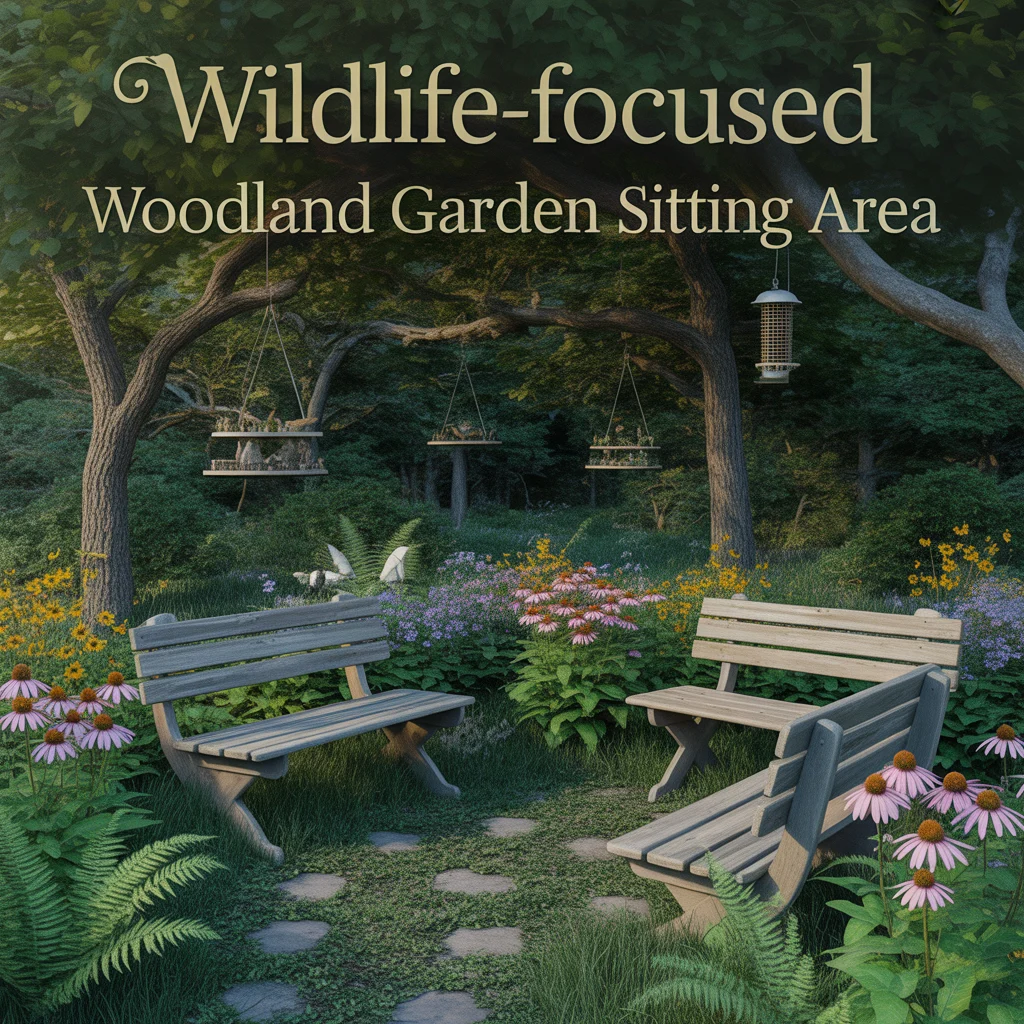
A wildlife-focused woodland garden sitting area positions the seating element at a deliberate distance and orientation from bird feeding stations, insect hotels, and wildlife planting to create a sitting area where direct, close-range wildlife observation is the primary purpose of the seated experience. I positioned a teak bench at 8 feet from a bird feeding station containing four feeder types alongside my woodland garden path, and the morning sitting sessions at that bench produced regular observations of 6 to 10 bird species during a single 20-minute period throughout the year, including great spotted woodpeckers, nuthatches, and coal tits that would not approach within 15 feet of any sitting position that lacked the shelter and stillness of the enclosed woodland sitting area.
Bird Feeding Features for a Woodland Garden Sitting Area
A post-mounted feeder pole, a ground feeding station, and a bird bath are three bird feeding features suited to a wildlife-focused woodland garden sitting area. A post-mounted feeder pole of 6 to 7 feet height positioned 6 to 8 feet from the sitting area bench provides the most effective close-range bird observation for a woodland sitting area, with four different feeder types attracting the maximum variety of bird species to the observation zone. A ground feeding station using a flat stone or wooden tray placed 4 to 6 feet from the bench attracts ground-feeding species including blackbirds, robins, and thrushes to the close-range observation zone of the woodland garden sitting area. A bird bath provides water and preening observation at close range.
Wildlife Planting for a Woodland Garden Sitting Area
Sambucus nigra, Ilex aquifolium, and Lonicera periclymenum are three wildlife-supporting plants suited to a woodland garden sitting area border. Sambucus nigra, elder, produces white flowers in June attracting insects and red-black berries in August attracting birds, providing two distinct wildlife support functions at the sitting area edge. Ilex aquifolium, holly, produces winter berries from October through February attracting thrushes, fieldfares, and redwings to the sitting area observation zone during the winter months. Lonicera periclymenum, native honeysuckle, produces fragrant flowers from June to October attracting long-tongued bee species and the spectacular hummingbird hawkmoth to the woodland garden sitting area.
Seasonal Woodland Garden Sitting Area
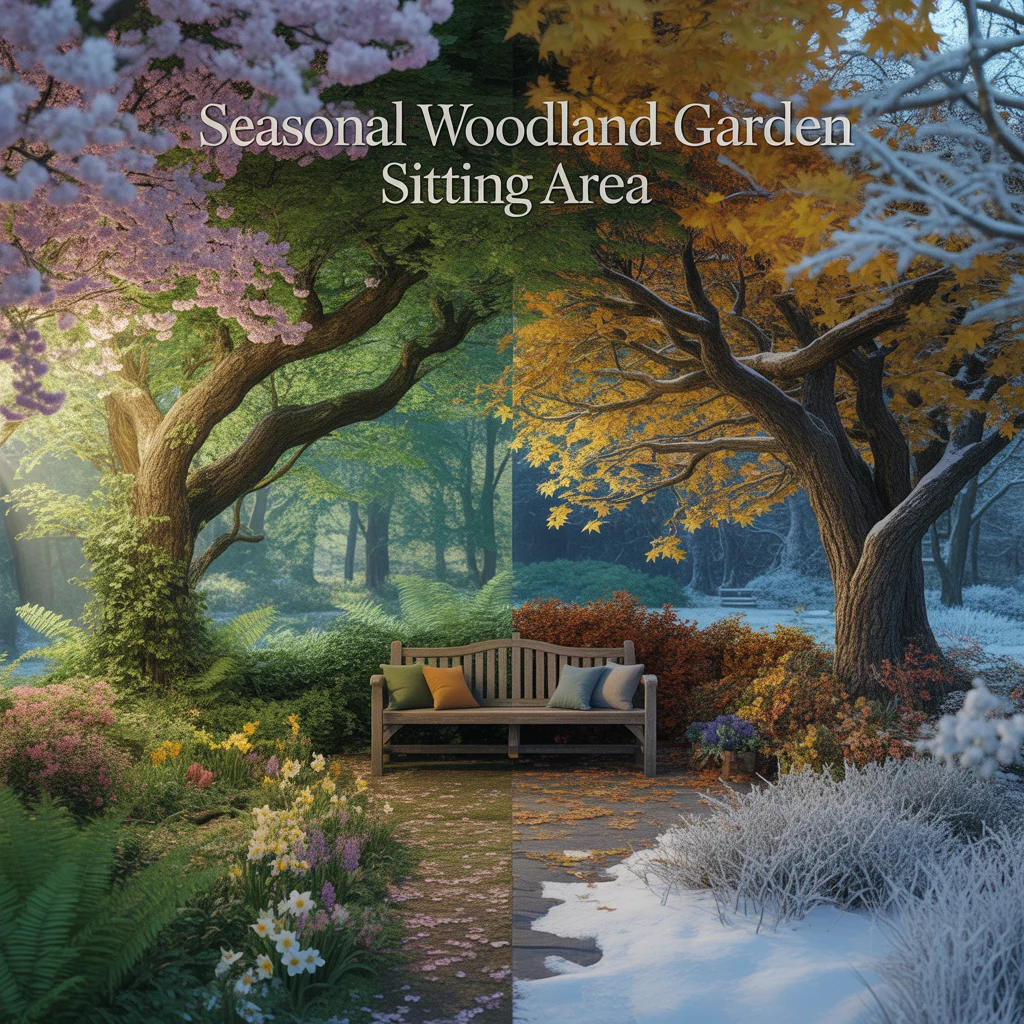
A seasonal woodland garden sitting area is designed and planted to provide its most spectacular and immersive experience during one specific season, typically spring when bluebells and spring flowers surround the sitting area, or autumn when surrounding Acer and Betula trees produce peak leaf color above and around the seating position. I designed an autumn-focused woodland sitting area at a large residential property using Acer palmatum, Betula pendula, and Cornus alba Sibirica planted around a curved log bench sitting area, and the October leaf color display above and around the sitting area produced the most visited and most photographed sitting area in the entire garden throughout the full year of use.
Spring-Focused Woodland Garden Sitting Areas
A bluebell clearing sitting area, a spring bulb framed bench, and a primrose and anemone floor sitting area are three spring-focused woodland garden sitting area designs. A bluebell clearing sitting area positions the bench at the center of an established Hyacinthoides non-scripta colony, creating a sitting destination surrounded by blue-purple flower spikes at 12 to 18 inches height in April and May that produces the most photographically compelling spring woodland sitting area available in a domestic garden. A spring bulb framed bench surrounds the bench with Narcissus, Muscari, and Anemone nemorosa planted in a dense perimeter planting that flowers in sequence from February through May, providing a changing spring flower display at the sitting area edge.
Autumn-Focused Woodland Garden Sitting Areas
Acer palmatum Osakazuki, Fothergilla major, and Cornus alba Sibirica are three plants suited to an autumn-focused woodland garden sitting area. Acer palmatum Osakazuki produces the most vivid individual leaf colour of any Acer variety, turning pure scarlet in October and November at a garden-suitable height of 10 to 15 feet over 20 years, making it the definitive autumn-focused sitting area specimen tree. Fothergilla major produces multi-coloured autumn foliage in red, orange, and yellow simultaneously at 6 to 8 feet height, providing a mid-height autumn colour layer between the sitting area floor and the tree canopy above. Cornus alba Sibirica provides red winter stems visible from the sitting area from November through March.
Woodland Garden Sitting Area With Water Sound
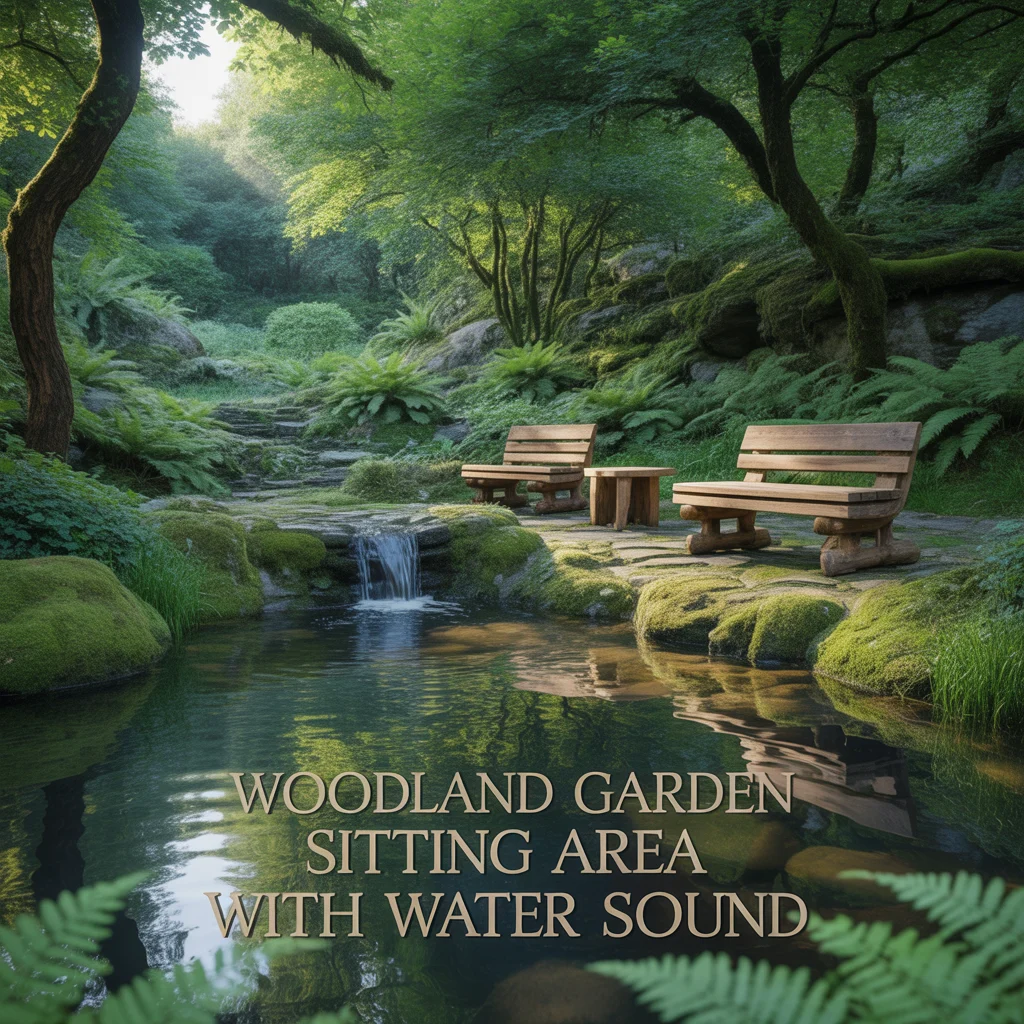
A woodland garden sitting area with water sound positions a recirculating fountain, rill, pond, or stream feature within hearing distance of the seating area to introduce the continuous, calming sound of moving water into the woodland sitting experience, creating a sitting destination that engages the auditory sense as well as the visual and tactile senses already provided by the woodland garden environment. I positioned a small recirculating stone bubbler fountain 4 feet from a curved log bench sitting area in my woodland garden, and the continuous gentle water sound from the fountain combined with the bird sounds and wind-in-tree ambient sound of the woodland garden to produce a sitting experience of sensory richness that I found genuinely difficult to leave on warm evenings.
Water Feature Types for a Woodland Garden Sitting Area
A bubbler fountain, a natural-edged pond, and a recirculating stream are three water features suited to a woodland garden sitting area. A bubbler fountain of 12 to 18-inch diameter placed 3 to 5 feet from the sitting area bench produces a gentle upward water sound at 40 to 45 decibels that is clearly audible from the seated position and provides a continuous calming background sound throughout the sitting area use period. A natural-edged pond of 6 by 4 feet positioned within 6 to 10 feet of the sitting area provides both water sound from any fountain or cascade feature and visual reflection of the woodland canopy above in the pond surface. A recirculating stream creates the most naturalistic water sound.
Pond Planting for a Woodland Garden Sitting Area
Caltha palustris, Iris pseudacorus, and Osmunda regalis are three plants suited to a pond alongside a woodland garden sitting area. Caltha palustris produces bright yellow flowers in March and April in shallow water at the pond edge, providing the first seasonal colour at the sitting area water feature before most woodland plants have emerged. Iris pseudacorus produces tall yellow flag flowers in May and June at 3 to 4 feet height at the pond edge, providing a strong vertical accent visible from the sitting area across the water surface. Osmunda regalis, the royal fern, produces spectacular 4 to 6-foot arching fronds at the pond edge that connect the pond planting visually to the fern planting around the sitting area perimeter.
Low Maintenance Woodland Garden Sitting Area
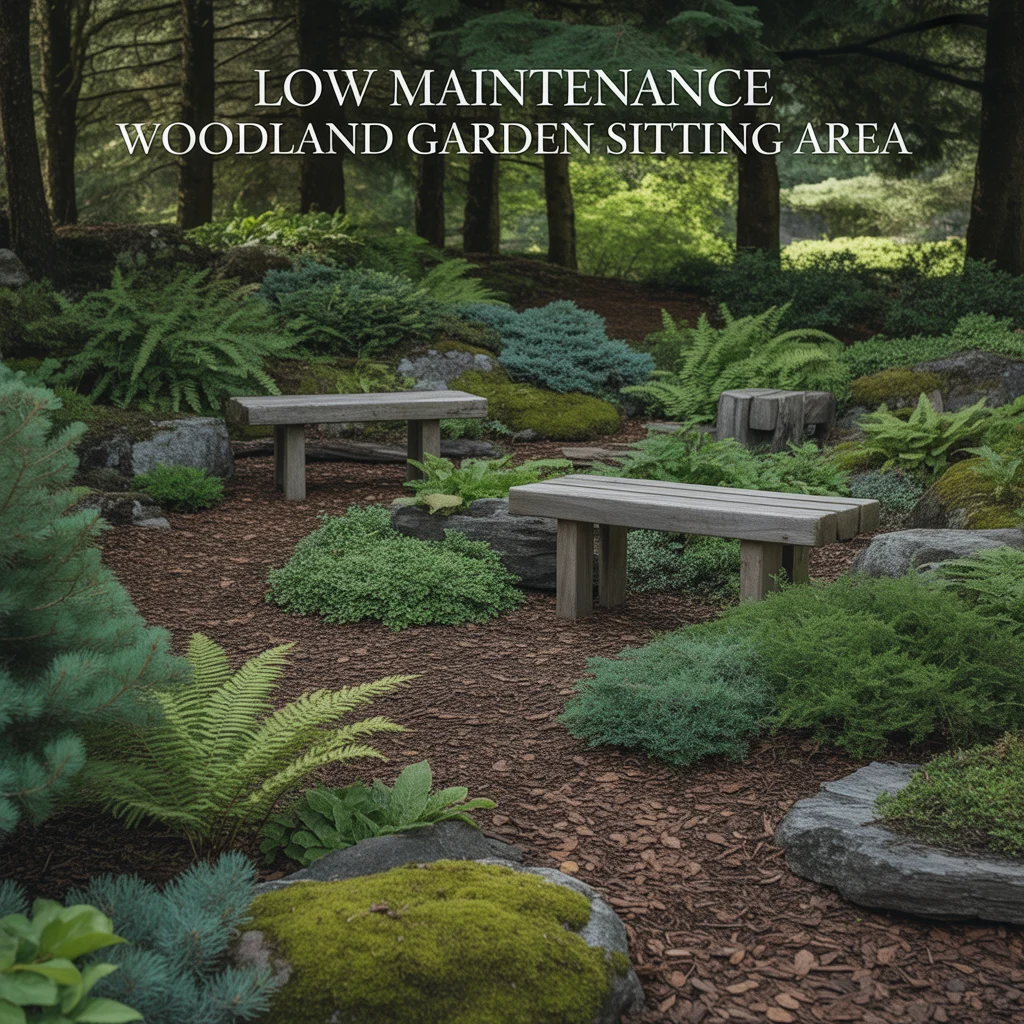
A low maintenance woodland garden sitting area uses materials, planting, and furniture choices that minimize the ongoing maintenance requirements after the initial installation, with a target of under one hour of total annual maintenance for the full sitting area including the floor surface, seating, and surrounding planting. I designed a low maintenance woodland sitting area for a homeowner in her late seventies who wanted a woodland garden destination without the maintenance demands of a formal garden, using a recycled plastic bench, a compacted wood chip floor on 130-gram membrane, and a perimeter planting of Pachysandra terminalis, and the sitting area has required only one bark top-up and two deadheading sessions in three full years of use.
Low Maintenance Furniture for a Woodland Garden Sitting Area
Recycled plastic lumber benches, powder-coated aluminium chairs, and teak benches left to weather naturally are three low maintenance furniture options suited to a woodland garden sitting area. Recycled plastic lumber benches require no treatment, no painting, no oiling, and no protection against weathering in any outdoor exposure condition, providing a completely maintenance-free seating surface for 25 to 50 years in a shaded woodland sitting area. Powder-coated aluminium chairs provide complete rust and corrosion resistance and require no maintenance beyond an annual wipe with a damp cloth. Teak benches left to weather naturally require no annual treatment and develop an increasingly attractive silver-grey patina in the shaded woodland sitting area environment.
Low Maintenance Ground Surface for a Woodland Sitting Area
Compacted wood chip on a 130-gram woven membrane, compacted gravel on a heavy-duty membrane, and large flat stone groupings are three low maintenance ground surface options suited to a woodland garden sitting area. Compacted wood chip at 3 to 4-inch depth on a 130-gram woven polypropylene membrane requires only an annual top-up of half the original depth after winter settling, taking 20 minutes for a standard 60-square-foot sitting area floor. Compacted gravel at 2-inch depth on a heavy-duty membrane provides a firmer, more permanent sitting area floor that requires only annual raking and no replacement for 10 or more years. Large flat stone groupings provide a permanent, zero-maintenance sitting area floor.
Nighttime Woodland Garden Sitting Area With Lighting
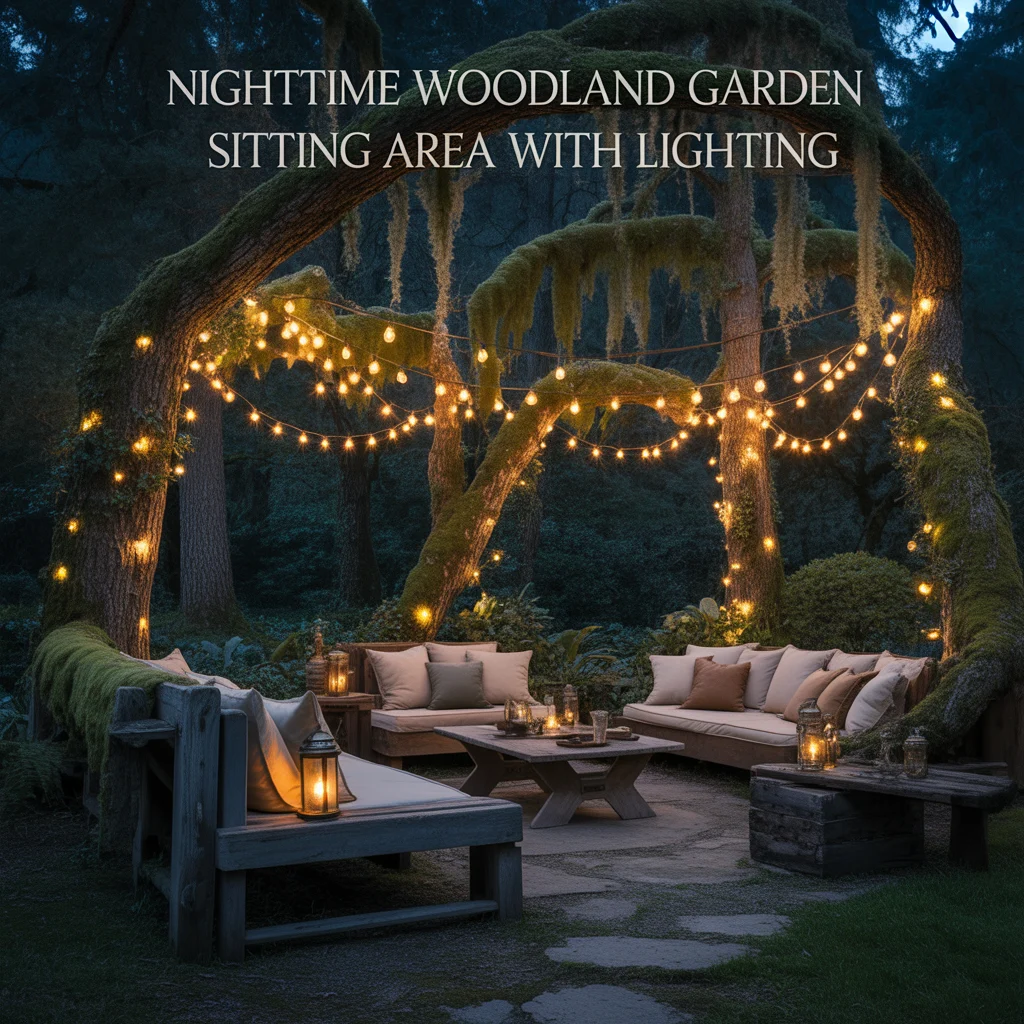
A nighttime woodland garden sitting area with lighting extends the usable hours of the woodland garden sitting area into the evening and provides an atmospheric after-dark woodland experience using solar spike lights, low-voltage LED fittings, or candle lanterns positioned at the sitting area perimeter and along the connecting path. I fitted eight solar spike lights at 3-foot intervals along the path leading to my woodland sitting area and placed four large glass hurricane lanterns with pillar candles at the corners of the sitting area bark chip floor, and the after-dark woodland sitting experience produced by the candle lanterns within the darkened tree canopy was the most atmospheric evening garden experience I have created in any project.
Solar Lighting for a Woodland Garden Sitting Area
Solar spike lights, solar lantern stakes, and solar string lights are three solar lighting options suited to a woodland garden sitting area. Solar spike lights along the connecting path at 3 to 4-foot alternating intervals define the route to the sitting area after dark and cost $8 to $25 per unit without any wiring requirement. Solar lantern stakes of 300 to 600mm height placed at the sitting area perimeter produce a warm, lantern-aesthetic light at $12 to $35 per unit that suits the naturalistic character of the woodland garden sitting area better than more technically precise LED alternatives. Solar string lights on 3-foot border stakes produce a continuous run of small warm light points suited to a woodland sitting area used for evening entertaining.
Candle Lanterns for a Woodland Garden Sitting Area
Hurricane glass lanterns, metal-framed outdoor lanterns, and reclaimed glass jar candle holders are three candle lantern types suited to a woodland garden sitting area. Hurricane glass lanterns of 30 to 40cm height placed at the sitting area corners and on any central table provide a warm, flickering candle light that no LED alternative fully replicates in terms of the organic quality of the light movement and the 1800K colour temperature of a burning candle flame. Metal-framed outdoor lanterns provide a more decorative lantern form that suits a cottage or romantic woodland sitting area aesthetic at $15 to $45 per lantern. Reclaimed glass jar candle holders provide a zero-cost lantern alternative for a budget woodland sitting area evening lighting.
Related
best outdoor garden bench ideas for shaded woodland areas
how to design a flower bed with benches in a woodland setting
zone 4 woodland garden ideas with natural seating areas
Frequently Asked Questions
What is the best seating for a woodland garden sitting area?
A simple teak or oak bench is the best seating for a woodland garden sitting area because it provides comfortable, weather-resistant seating that develops an attractive silver-grey weathered patina in the shaded woodland environment without any maintenance, and its simple linear form suits the naturalistic woodland garden character better than more elaborate garden furniture designs. Log round seating provides the most naturalistic and lowest-cost woodland sitting area option when garden tree logs are available. Recycled plastic lumber benches provide the most genuinely low maintenance woodland seating for an owner who wants zero maintenance requirements from the sitting area furniture throughout the full year.
How do I create a woodland garden sitting area on a budget?
A woodland garden sitting area on a budget is created for under $50 using free log rounds from a felled garden tree as seats, a single reclaimed timber plank as a table surface, and a bark chip floor from two bags of decorative bark spread on a plastic sheet base. The total cost of the bark chip floor is $16 to $24 for two bags, the log rounds cost $0 from a felled tree, and the reclaimed plank costs $0 to $15 from an online free listing or reclamation yard. This combination produces a complete, functional, and visually natural woodland sitting area that suits the aesthetic character of a woodland garden more authentically than any purchased garden furniture set at ten times the material cost.
What plants should I put around a woodland garden sitting area?
Dryopteris filix-mas ferns, Hosta sieboldiana, Pachysandra terminalis, and Sarcococca confusa are the four best plants to put around a woodland garden sitting area because all four are shade-tolerant, low-maintenance after establishment, and provide year-round visual interest from different seasonal qualities. Dryopteris provides structural fern fronds from April to October. Hosta provides bold blue-green foliage from April to October. Pachysandra provides evergreen ground cover year-round. Sarcococca provides strongly fragrant white flowers in January and February, which make the winter sitting area experience particularly rewarding on mild mornings when the sweet fragrance is concentrated around the seated position.
How do I make a woodland sitting area low maintenance?
A woodland garden sitting area is made low maintenance by using a recycled plastic or weathering teak bench requiring no annual treatment, a bark chip floor on a 130-gram woven membrane requiring only annual top-up, and self-maintaining ground cover planting of Pachysandra terminalis or Vinca minor that suppresses weeds and requires no cutting back after the second growing season. The combination of these three elements produces a woodland sitting area requiring approximately 30 to 45 minutes of total annual maintenance, compared to 3 to 5 hours for a sitting area with painted furniture, annual border weeding, and an untreated gravel floor that requires regular redistribution throughout the year.
How do I light a woodland garden sitting area at night?
A woodland garden sitting area is lit at night most effectively using solar spike lights along the connecting path at 3 to 4-foot intervals and large hurricane candle lanterns placed at the sitting area corners, which provides both safe path navigation and an atmospheric warm light at the sitting area itself. Solar spike lights cost $8 to $25 each and require no wiring, suiting a woodland sitting area connected to the house by a path through planting where burying electrical cable would disturb established root systems. Hurricane candle lanterns cost $12 to $35 each and produce the warmest, most atmospheric light quality of any outdoor lighting option for a woodland garden sitting area used in the evening hours.