
15 Garden Paths With Pergolas for a Beautiful Walk

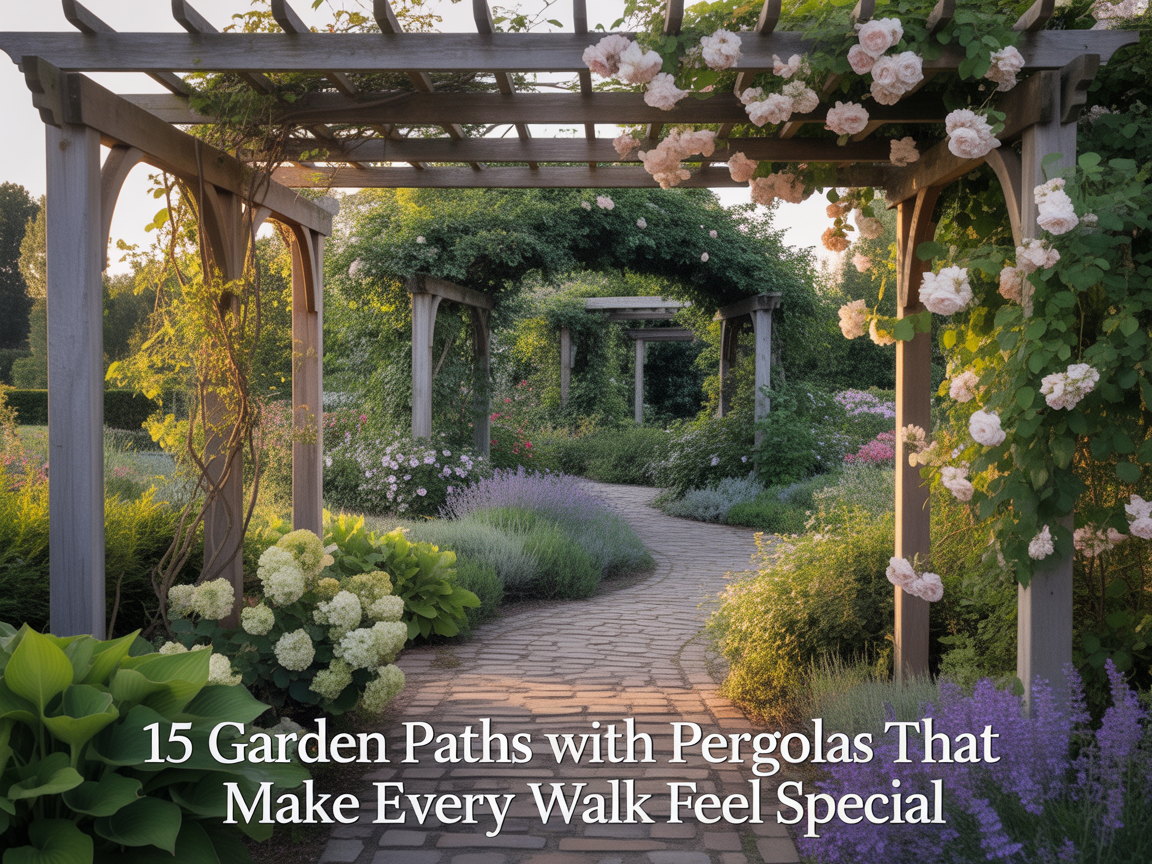
I still remember the first time I walked through a garden path covered by a pergola draped in climbing roses. It felt completely different from any ordinary garden walk. The light came through in small patches, the scent of the flowers was right at face level, and the whole path had this calm, covered feeling I had never noticed in an open garden before.
Garden paths with pergolas are walkways that run beneath a freestanding or attached overhead structure made of posts and crossbeams, often dressed with climbing plants like wisteria, roses, or jasmine. They create a shaded, structured corridor through a garden that feels entirely different from a simple open path.
Since that first experience, I have spent a lot of time studying different pergola walkway ideas and trying several designs in my own outdoor space. I have seen small garden paths with pergolas work beautifully in tight backyards, and I have also seen long, grand pergola walkways attached to houses that connect an entire property.
In this article, I am sharing 15 garden paths with pergolas that I have personally found worth trying. Each one covers a different situation, budget, or style. By the end, you will know exactly which design fits your garden best.
Classic Wooden Pergola Walkway
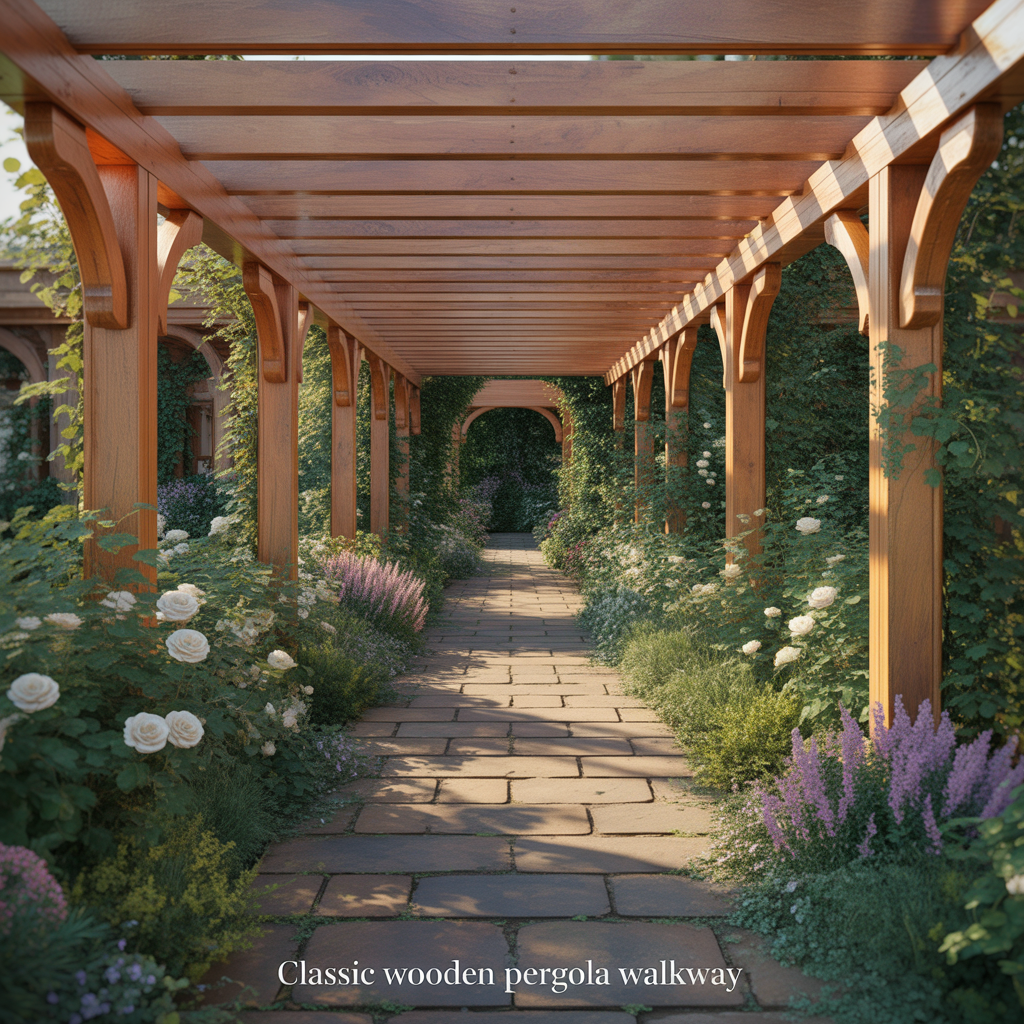
A classic wooden pergola walkway is the most widely used design in residential gardens today. It uses pressure-treated timber or cedar posts with horizontal crossbeams, typically spaced 8 to 10 feet apart along the path’s length. I built one in my own garden using 4×4 cedar posts, and the natural wood color blended perfectly with the surrounding flower beds. The structure cost me around $600 for a 20-foot path, which I found very reasonable for the change it made to the whole garden.
Best Wood Types for This Design
Cedar and redwood are the two best wood choices for a pergola walkway because both resist moisture and insect damage without heavy chemical treatment. Cedar stays stable for 15 to 20 years when sealed once a year. Pressure-treated pine costs around $300 less per project but needs more frequent sealing to prevent splitting. I used cedar on my own walkway because the warm golden color makes the path feel more welcoming right from the start.
Best Climbing Plants for a Wooden Pergola Path
Wisteria, climbing roses, and clematis are the three most popular climbing plants for this design. Wisteria produces hanging flower clusters up to 12 inches long and covers a 20-foot structure in 3 to 4 growing seasons. Climbing roses like New Dawn or Zephirine Drouhin bring color and fragrance at eye level. Clematis works well for smaller garden paths with pergolas because it grows at a slower rate and stays manageable without heavy pruning.
Pergola Walkway Attached to House
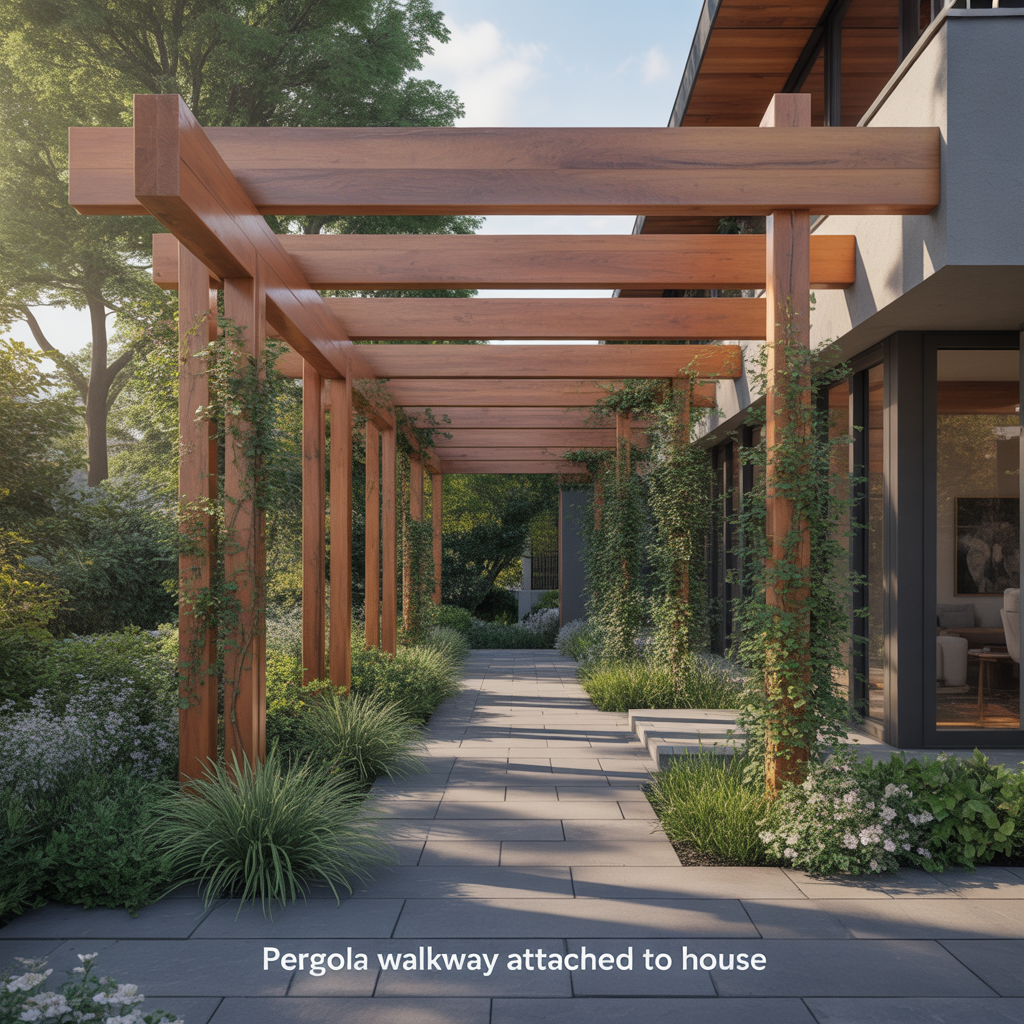
A pergola walkway attached to a house runs along the side of the building and uses the wall as one structural support, which reduces the number of posts needed. I saw this design at a friend’s home where the pergola connected the back door directly to the garden shed, a distance of about 30 feet. The attached design saved around 40% on materials compared to a fully freestanding structure of the same length because one side of every overhead beam rests on a ledger board fixed to the wall.
How the Ledger Board Connection Works
The ledger board is a horizontal timber bolted directly into the wall studs, typically at a height of 8 to 9 feet. Every overhead beam then rests on this ledger on one end and on a freestanding post on the opposite end. When I helped a neighbor install one, we used galvanized lag bolts spaced 16 inches apart to fix the ledger, which gave the structure enough strength to hold the weight of mature wisteria without any movement.
Design Tips for an Attached Pergola Walkway
Keep the width between the house wall and the outer posts at a minimum of 4 feet so two people can walk through comfortably side by side. I recommend a minimum roof pitch of 5 degrees on attached designs to allow rainwater to drain away from the house wall. Painting the ledger board with an exterior wood primer before installation prevents water from sitting between the board and the wall, which is the most common cause of rot in a pergola walkway attached to a house.
Small Garden Paths With Pergolas
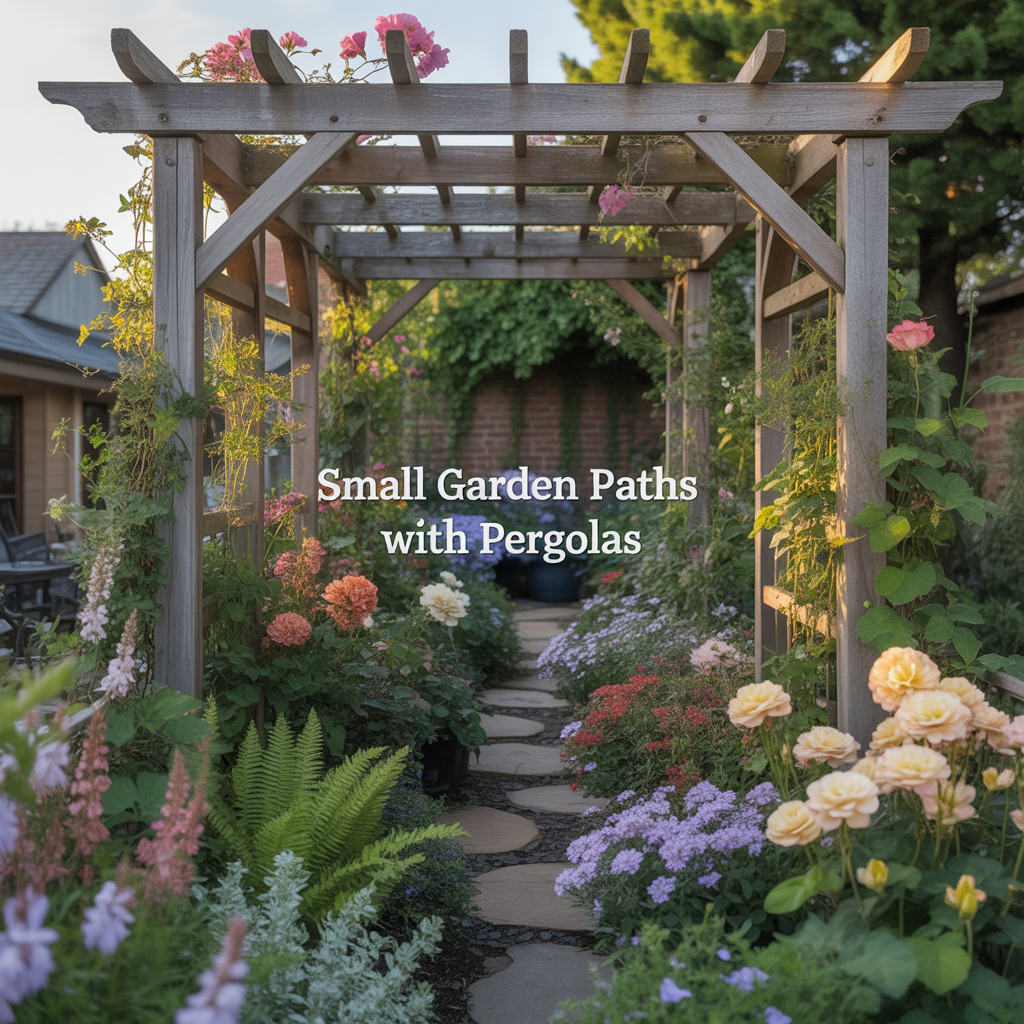
Small garden paths with pergolas work in spaces as compact as 10 feet long and 4 feet wide, making them a practical choice for urban backyards and terraced gardens. When I first tried this in a narrow side passage between my house and the boundary fence, I used just three post pairs spaced 5 feet apart. The result was a full overhead structure in a space I had previously left empty and unused. The total material cost came to under $250.
Compact Post Spacing for Small Pergola Paths
In a small garden path, post pairs spaced 4 to 5 feet apart create enough visual structure without making the walkway feel crowded. I found that two post pairs produce a defined entrance effect, while three post pairs give a proper corridor feel even in a short space. Using 3×3 posts instead of the standard 4×4 posts keeps the proportions correct in a narrow pergola walkway trellis setup where wider timber would look visually heavy and out of place.
Plant Choices for Small Pergola Paths
Jasmine and honeysuckle are the two best climbing plants for small garden paths with pergolas because both grow at a moderate pace and stay manageable with simple pruning once a year. Jasmine produces white flowers from June through September and fills a small pergola path with noticeable fragrance. Honeysuckle attracts pollinators and produces flowers in yellow, orange, and red. Both plants grow well in containers if the path has no adjacent soil bed, which is common in paved urban gardens.
Simple Garden Paths With Pergolas

Simple garden paths with pergolas use a minimal structure, typically two rows of posts and flat crossbeams with no decorative cuts or extra lattice panels. I like this design because it takes one weekend to build and requires basic carpentry skills. The clean lines suit modern and contemporary gardens especially well, and the structure draws attention to the path itself rather than the overhead framework. I built a version using basic sawn timber and painted it white, and it became the most commented-on feature in my garden that season.
The Right Post Height for a Simple Pergola Path
A post height of 7 to 8 feet is the standard for a simple pergola walkway because it gives enough overhead clearance for tall adults while keeping the structure visually grounded. Posts taller than 9 feet start to look out of proportion in a domestic garden setting. I used 8-foot posts on my simple design and found that height created the right balance between open and enclosed, which is the feeling most people are looking for in garden paths with pergolas.
Surface Materials That Work Well Underneath
Gravel, brick pavers, and natural stone are the three most effective surface materials beneath a simple pergola path. Gravel costs the least at around $1 to $3 per square foot and drains well after rain. Brick pavers cost $4 to $8 per square foot and create a more formal look. Natural stone, including sandstone or limestone flags, costs $8 to $15 per square foot and works well in cottage-style gardens where the rough texture of the stone contrasts with the clean pergola lines above.
Pergola Walkway With Trellis Panels
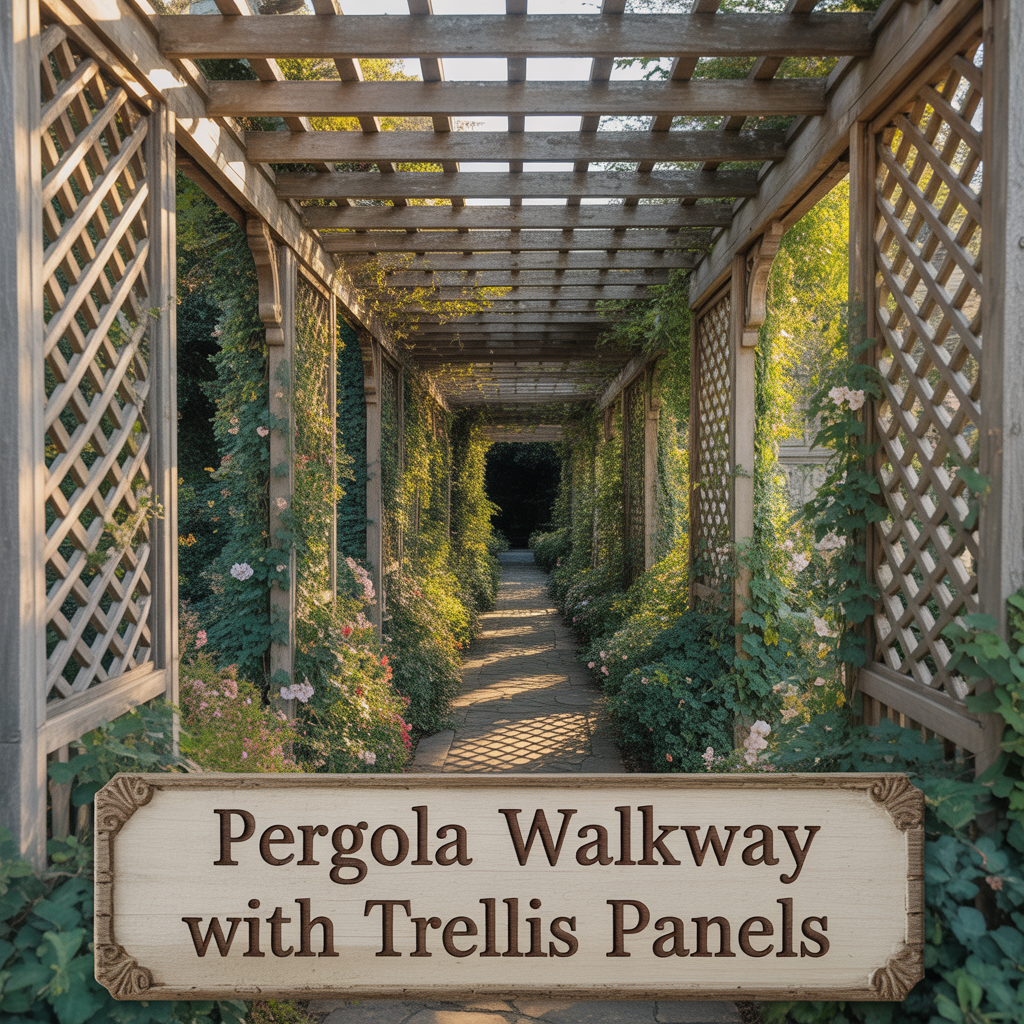
A pergola walkway trellis design adds vertical lattice or trellis panels between the posts along the sides of the path, which gives climbing plants a second growing surface below the overhead beams. I added trellis panels to an existing pergola path in my garden two years ago, and within one season the panels were fully covered in climbing hydrangea. The additional growing surface made the path feel completely enclosed in greenery from floor to overhead beam, which is a much denser effect than an open-sided design produces.
How to Fix Trellis Panels Between Posts
Trellis panels are fixed between pergola posts using routed channels or simple surface-mounted timber battens on each post face. I used 2×2 timber battens screwed to each post face, spaced to create a 12mm gap behind the panel, which allows air to circulate and prevents the panel from sitting in standing water at the base. This method takes about 30 minutes per panel and requires no specialist tools. Standard trellis panels measure 6 feet by 2 feet, which fits neatly between posts set 6 feet apart on a pergola walkway.
Plants Suited to a Pergola Walkway Trellis
Climbing hydrangea, star jasmine, and passion flower are three plants that perform especially well on a pergola walkway trellis because all three attach directly to the trellis surface without needing additional wire support. Climbing hydrangea produces flat white flower heads up to 10 inches wide in early summer and develops attractive peeling bark in winter, giving the trellis a year-round decorative surface. Star jasmine is the best choice for a south-facing trellis because it tolerates full sun and produces heavily scented white flowers from May to July.
Pergola Walkway Kits
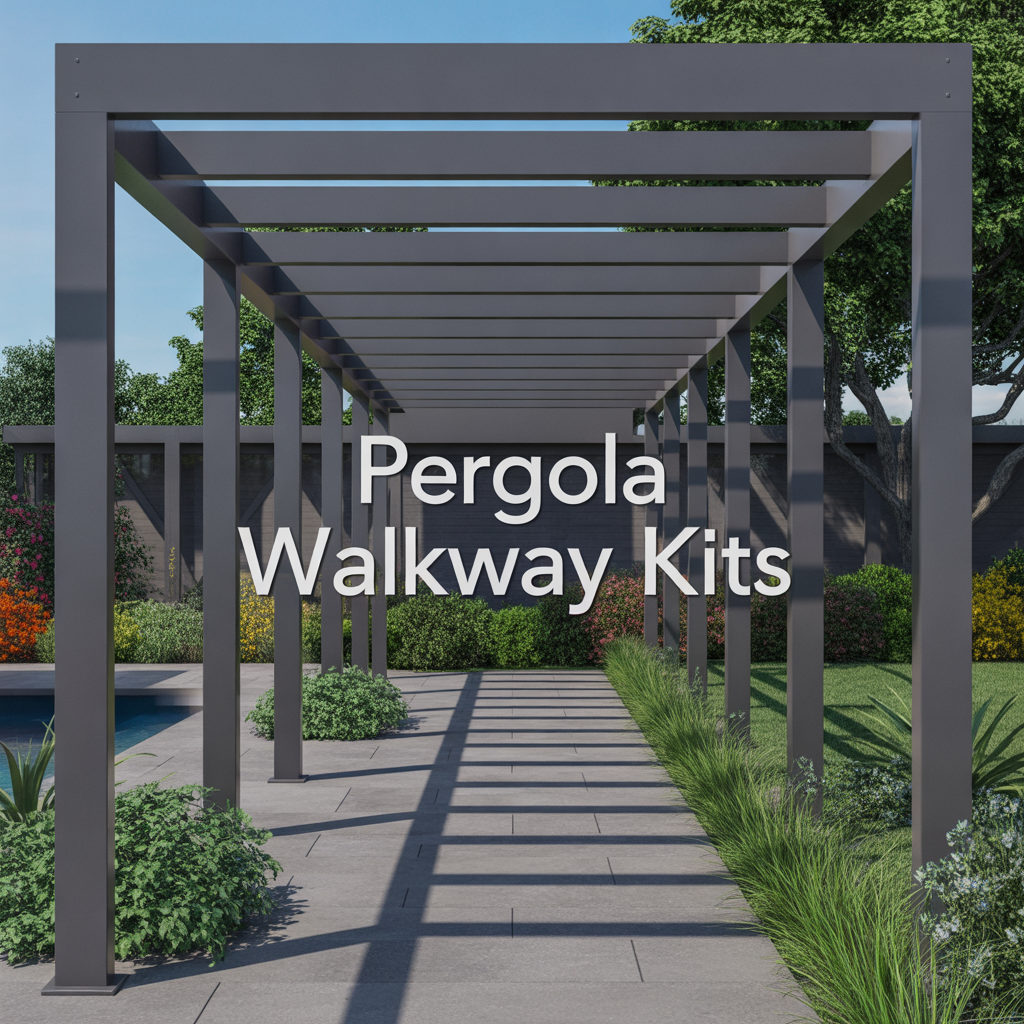
Pergola walkway kits are pre-cut, pre-drilled structures sold as complete packages that include all posts, beams, hardware, and assembly instructions. I ordered a cedar pergola walkway kit online two years ago and had the full structure standing in one day with two people working together. Most pergola walkway kits on the market cover a span of 10 to 14 feet and cost between $400 and $1,200 depending on the wood species and beam profile. They are the fastest route to a finished pergola path without hiring a contractor.
What to Check Before Buying a Pergola Walkway Kit
Before ordering a pergola walkway kit, check three things: the post dimensions, the included hardware type, and whether the kit covers the full length of the path or requires multiple units joined together. Most kits use 4×4 posts and include galvanized steel post anchors, which I found adequate for a stable installation in firm garden soil. For a longer path requiring two or more kits joined end to end, check that the manufacturer provides connector hardware, because aligning the post spacing between two separate kits without it is difficult.
Top Features to Look For in a Kit
The three features worth prioritizing in a pergola walkway kit are pre-routed post tops, heavy-duty post base anchors, and UV-resistant timber coating applied at the factory. Pre-routed post tops hold the crossbeams in fixed position, which prevents lateral movement in high winds. Heavy-duty post anchors rated for 500 pounds per post are the standard for a stable installation. A factory-applied UV coating saves the cost and time of treating the timber yourself before installation, which on a bare wood kit adds around $80 to $150 in materials and several hours of work.
Brick Path With a Pergola Arch Entrance
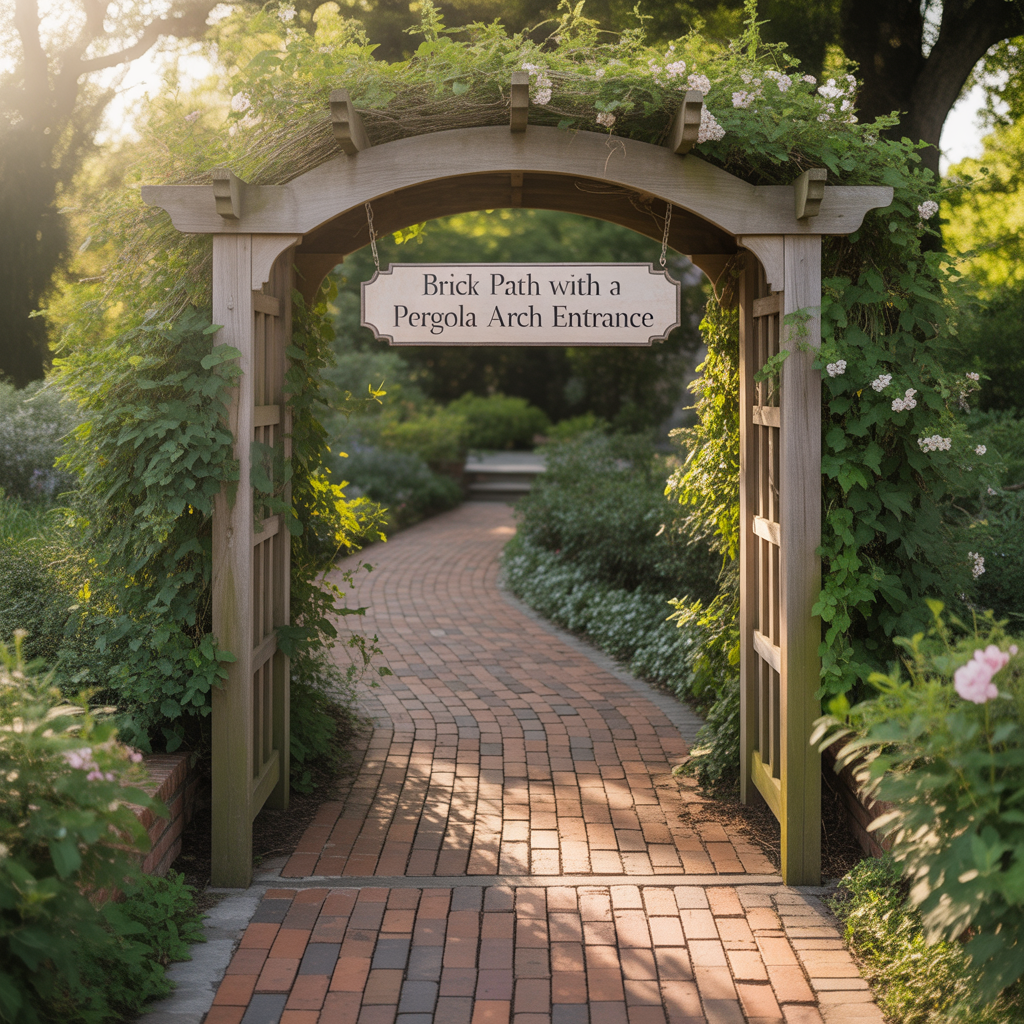
A brick path with a pergola arch entrance uses a single arched pergola structure at the start of the walkway as a formal entry point rather than running the structure the full length of the path. I saw this design used at a walled kitchen garden where a single 8-foot-wide arch marked the entrance to a 40-foot brick path beyond it. The arch was covered in Rosa Veilchenblau, a purple climbing rose that flowers in June, and the contrast between the deep purple flowers and the warm brick path underneath was genuinely striking.
Building a Single Arch Pergola Entrance
A single arch pergola entrance requires two posts, two curved or straight overhead beams, and a central connecting ridge beam or curved top section. Timber arches with a circular top profile are the most decorative option and cost around $180 to $350 ready-made from garden suppliers. Flat-topped arch entrances are simpler to build from scratch using standard timber and basic joinery. I used a flat-topped version with decorative routed ends on the crossbeams, which took four hours to build and cost $95 in materials.
Brick Path Surfaces That Pair Well With a Pergola Arch
Reclaimed clay bricks, new terracotta pavers, and tumbled sandstone are the three best path surfaces beneath a pergola arch entrance. Reclaimed clay bricks have an aged appearance that suits traditional and cottage garden styles and cost between $1.50 and $4.00 per brick. New terracotta pavers provide a uniform color and size that works well in formal garden designs. Tumbled sandstone is the softest in color and suits gardens with a Mediterranean or relaxed planting style where the pergola arch is dressed with vines rather than roses.
Metal Pergola Walkway
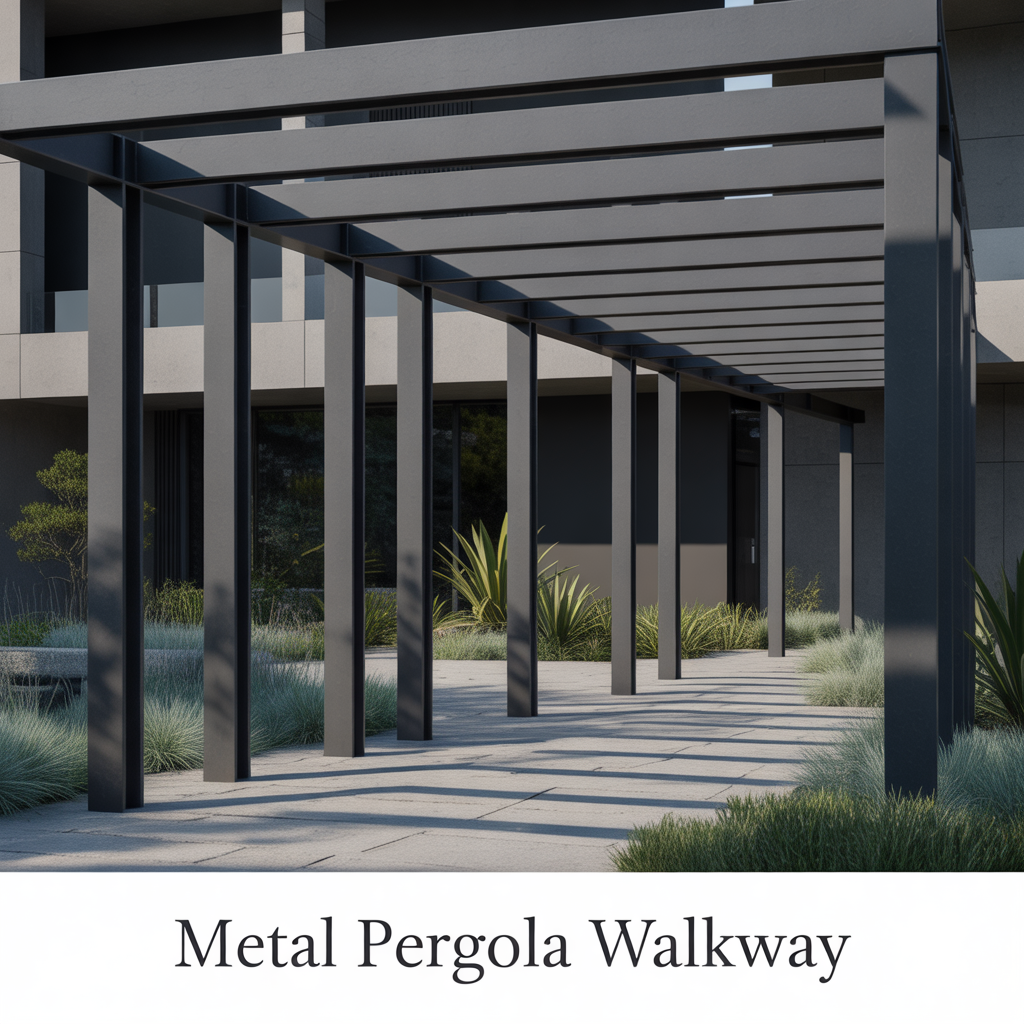
A metal pergola walkway uses steel or aluminum posts and beams instead of timber, producing a thinner, more geometric structure that suits contemporary and industrial-style gardens. I visited a garden last year that used a powder-coated black steel pergola over a concrete path, and the combination of the dark metal frame against white concrete and green foliage was one of the cleanest garden designs I have seen in person. Steel pergola walkway structures start at around $800 for a 12-foot span and can be powder-coated in over 200 standard colors.
Steel vs Aluminum for a Metal Pergola Walkway
Steel is stronger than aluminum and allows for thinner post profiles, typically 3×3 inches compared to the 4×4 inches commonly needed in aluminum, which creates a more refined visual appearance. Aluminum is lighter and completely rust-proof without any surface treatment, making it a lower-maintenance option in coastal gardens where salt air causes steel to corrode faster. I prefer steel for its structural rigidity, but I recommend aluminum for any garden within 1 mile of the coast or in a very high-rainfall climate where keeping up with surface maintenance is difficult.
Plant Choices for a Metal Pergola Walkway
Climbing roses, Virginia creeper, and Boston ivy are three plants that attach well to metal pergola structures. Virginia creeper and Boston ivy both use adhesive pads to grip directly onto metal surfaces without wire support, covering a full structure in 2 to 3 seasons. Climbing roses need wire supports fixed horizontally between the metal posts, spaced 12 inches apart vertically. I fixed 14-gauge galvanized wire to my metal pergola posts using vine eyes screwed directly into the steel, and the wire held the weight of two mature climbing roses without any sagging after three years.
Rustic Log Pergola Walkway
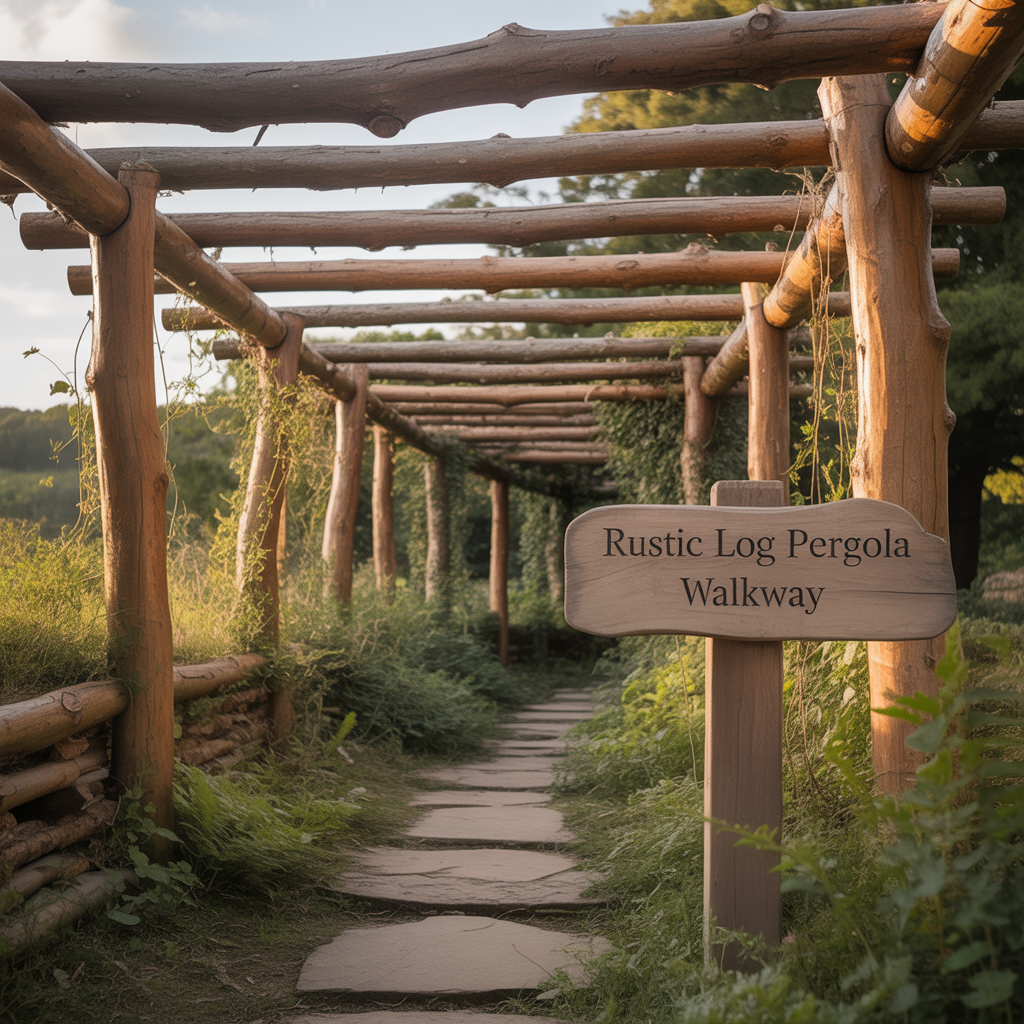
A rustic log pergola walkway uses unfinished or lightly finished round timber poles instead of sawn lumber, creating an organic, woodland-style structure that looks as though it grew out of the garden rather than being constructed in it. I built a version of this using hazel poles sourced from a local coppice, which cost me $80 for a full 18-foot path. The poles were 3 to 4 inches in diameter, which gave enough structural strength while keeping the overall appearance light and natural. This is the most inexpensive pergola walkway idea I have tried.
How to Source and Prepare Log Poles for a Pergola Path
Hazel, sweet chestnut, and larch are the three most widely used species for rustic log pergola poles because all three have high natural resistance to decay at the base where the pole meets the ground. Bark-on poles are the most decorative option but need to have the bark dried and set before installation to prevent it from loosening and falling off within the first year. I peeled the lower 18 inches of each hazel pole before setting it in post-mix concrete, which significantly slowed moisture uptake and extended the life of the base from around 5 years to closer to 12.
Rustic Planting Ideas for a Log Pergola Walkway
Rosa mulliganii, old-fashioned rambling roses, and Lonicera periclymenum are the three climbing plants that suit a rustic log pergola path most naturally. Rosa mulliganii produces enormous clouds of single white flowers in late June and grows vigorously enough to cover a 20-foot rustic structure in a single season if planted in fertile soil. Lonicera periclymenum, the native woodbine honeysuckle, produces cream and deep pink flowers with a strong evening fragrance and suits the informal character of a hazel or chestnut log structure far better than modern hybrid climbing plants.
White Painted Pergola Walkway
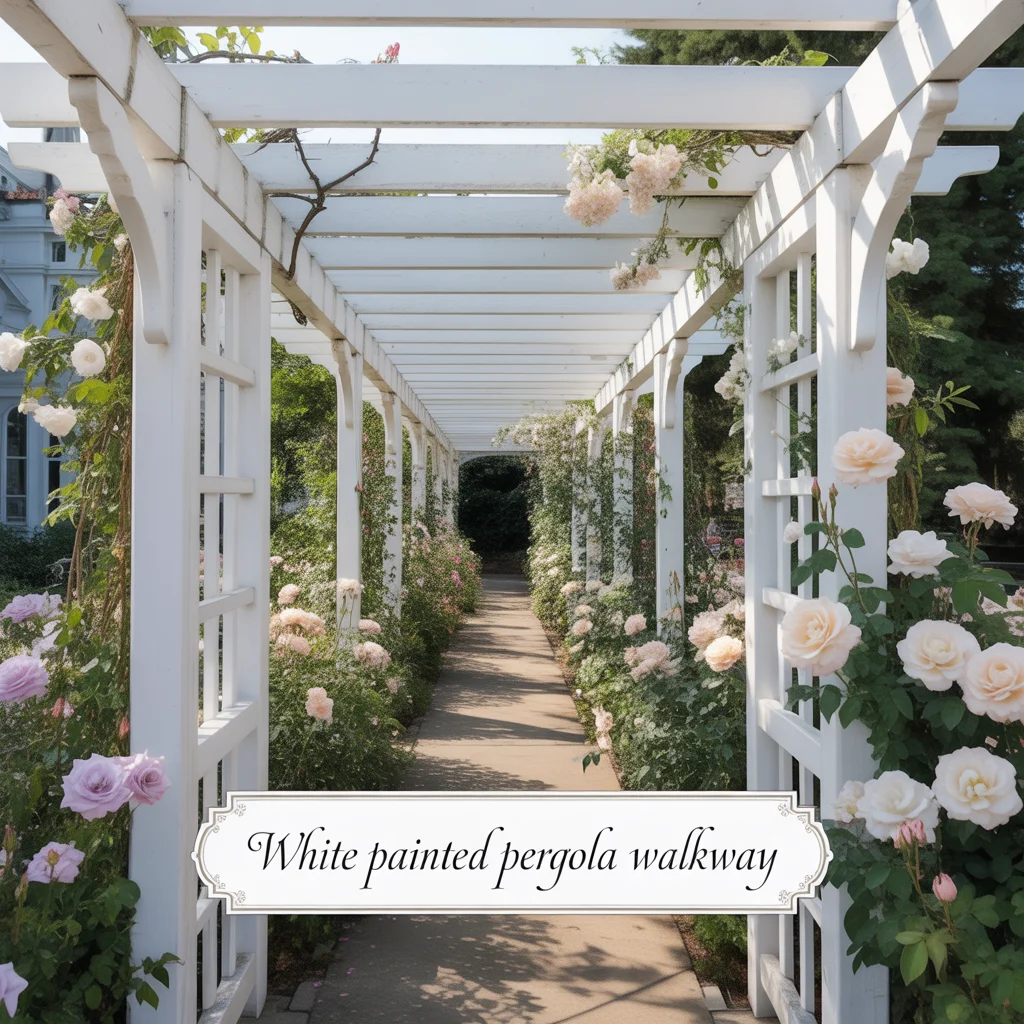
A white painted pergola walkway creates a formal, structured appearance that suits traditional, Georgian, and cottage garden designs. I painted an existing cedar pergola walkway in my garden with an exterior masonry-grade white paint two seasons ago, and the change in the space was immediate. The white frame made the green foliage of the climbing plants look more saturated and the whole path became a clear visual axis through the garden. White-painted pergola paths appear frequently in formal English garden designs and in Mediterranean-influenced outdoor spaces where white walls and green planting are the dominant visual theme.
Best Paint Products for an Exterior Pergola Walkway
Exterior microporous wood paint, exterior satin wood paint, and exterior masonry paint are the three best coating options for a white pergola walkway. Microporous wood paint allows moisture vapor to pass through the film, which prevents the blistering and peeling common with standard gloss on outdoor timber. I used an exterior satin finish on my cedar pergola because the low sheen suits the garden setting better than a high-gloss finish, which can look institutional in a natural outdoor space. All three options require a primer coat on bare timber before the finish coat to achieve a consistent coverage.
Maintenance Schedule for a White Painted Pergola Path
A white painted pergola walkway needs an inspection and a light clean with a soft brush and mild soap solution every spring to remove green algae growth, which collects on horizontal surfaces in shaded garden conditions. A full repaint is typically needed every 4 to 6 years on a structure in full outdoor exposure. I found that cleaning the structure in early April, before climbing plants produce their new growth, is the easiest time to access all surfaces of the frame without disturbing established plant growth around the posts.
Japanese-Inspired Pergola Garden Path

A Japanese-inspired pergola garden path uses dark-stained timber, minimal crossbeam spacing, and a gravel or stepping-stone path surface to create a structured, calm walkway with strong visual contrast between the dark overhead frame and the pale path surface below. I have admired this style in several public Japanese gardens and spent time studying how the proportions differ from a standard Western pergola walkway. The key difference is that Japanese-style pergola structures use tighter beam spacing, typically 12 to 18 inches between each overhead lateral, which creates a more defined shadow pattern on the ground below.
Timber Stains for a Japanese-Style Pergola Walkway
Dark shou sugi ban cedar, black exterior stain, and dark ebony woodstain are the three finishes most consistent with a Japanese garden aesthetic. Shou sugi ban is a Japanese charring technique in which the surface of the timber is lightly burned with a torch to create a dark, textured, carbonized surface that is naturally water-resistant and insect-resistant without any chemical treatment. I tested this technique on a sample post using a standard blowtorch and a wire brush, and the result was a genuine deep charcoal surface that required no additional sealing in my climate.
Ground Surfaces for a Japanese-Inspired Pergola Path
White granite gravel, large slate stepping stones, and black basalt pavers are the three ground materials that best complement a dark-stained Japanese-style pergola walkway. White granite gravel at a depth of 3 inches reflects light upward into the underside of the pergola frame, which creates a distinctive shadow-and-light effect at midday. Large irregular slate stepping stones placed directly in the gravel at an irregular spacing of 18 to 24 inches produce the characteristic walking rhythm of a traditional Japanese garden path, where the placement of each stone controls the pace of movement through the space.
Rose-Covered Pergola Garden Path
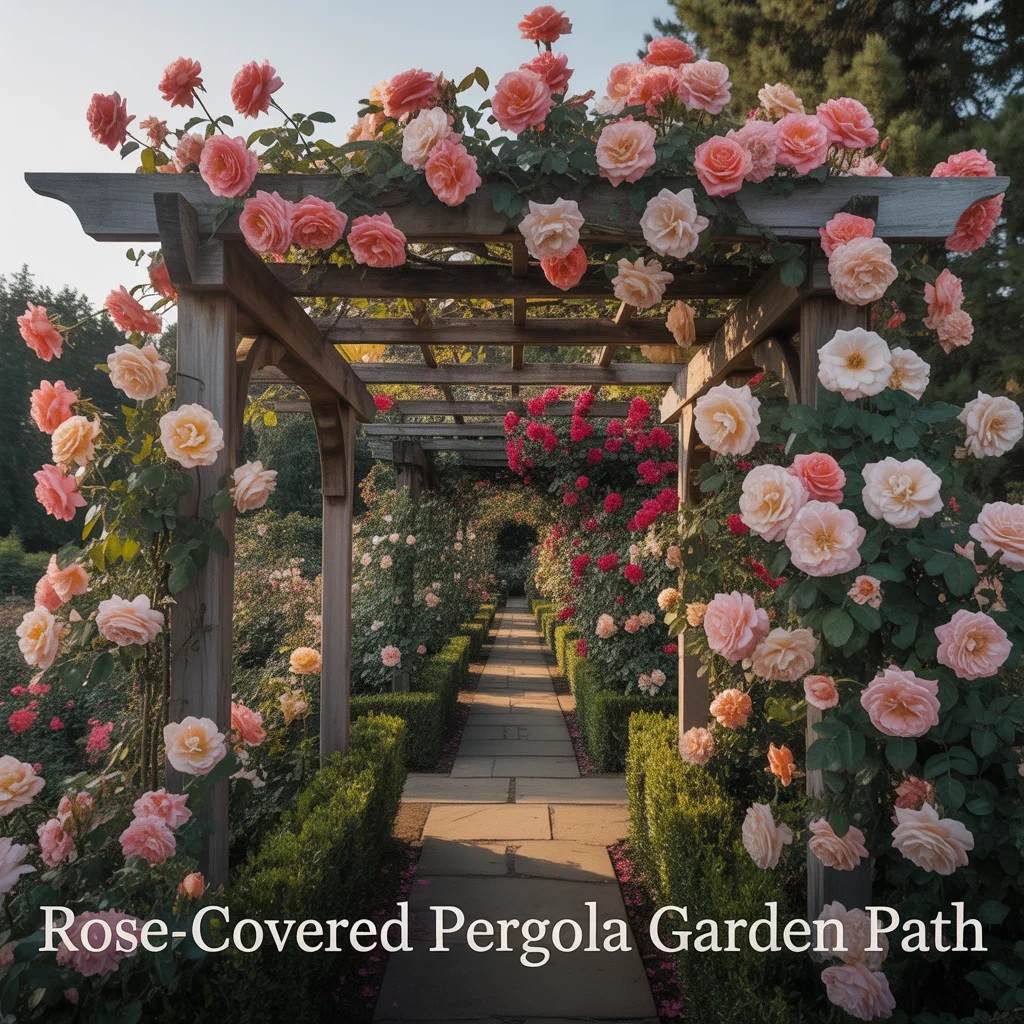
A rose-covered pergola garden path is the most romantic and widely photographed version of garden paths with pergolas, most commonly associated with the cottage garden style and English country house gardens. I grew up near a garden that had a 60-foot rose-covered pergola walkway, and in late June when all the roses were in full flower, the path was genuinely one of the most beautiful things I have seen outdoors. The structure used 6×6 oak posts, which were heavy enough to support the mature weight of 20-year-old climbing roses without any visible strain on the timber.
Best Climbing Rose Varieties for a Pergola Walkway
New Dawn, Albertine, and Veilchenblau are the three climbing roses I most strongly recommend for a pergola garden path. New Dawn is a repeat-flowering pale pink rose that produces flowers from June through to October and is the most widely planted climbing rose for pergola structures in the United Kingdom. Albertine is a once-flowering copper-pink rose with an exceptionally strong fragrance that fills the full length of a pergola path during its 3-week peak in late June. Veilchenblau produces clusters of small purple-violet semi-double flowers and is one of the few climbing roses tolerant of partial shade, making it useful for a pergola walkway on the north-facing side of a garden.
Training Climbing Roses on a Pergola Walkway
Climbing roses need horizontal wire supports fixed between the pergola posts to train the long canes into a roughly horizontal position, which stimulates the maximum number of lateral flowering shoots per cane. I use 12-gauge galvanized wire fixed to vine eyes screwed into each post, with horizontal wires at 12-inch vertical intervals. When I tie the main canes into a near-horizontal position in February each year, the number of flowers produced per cane in June increases noticeably compared to canes left to grow vertically, which produce flowers only at the tip.
Wisteria Pergola Garden Path
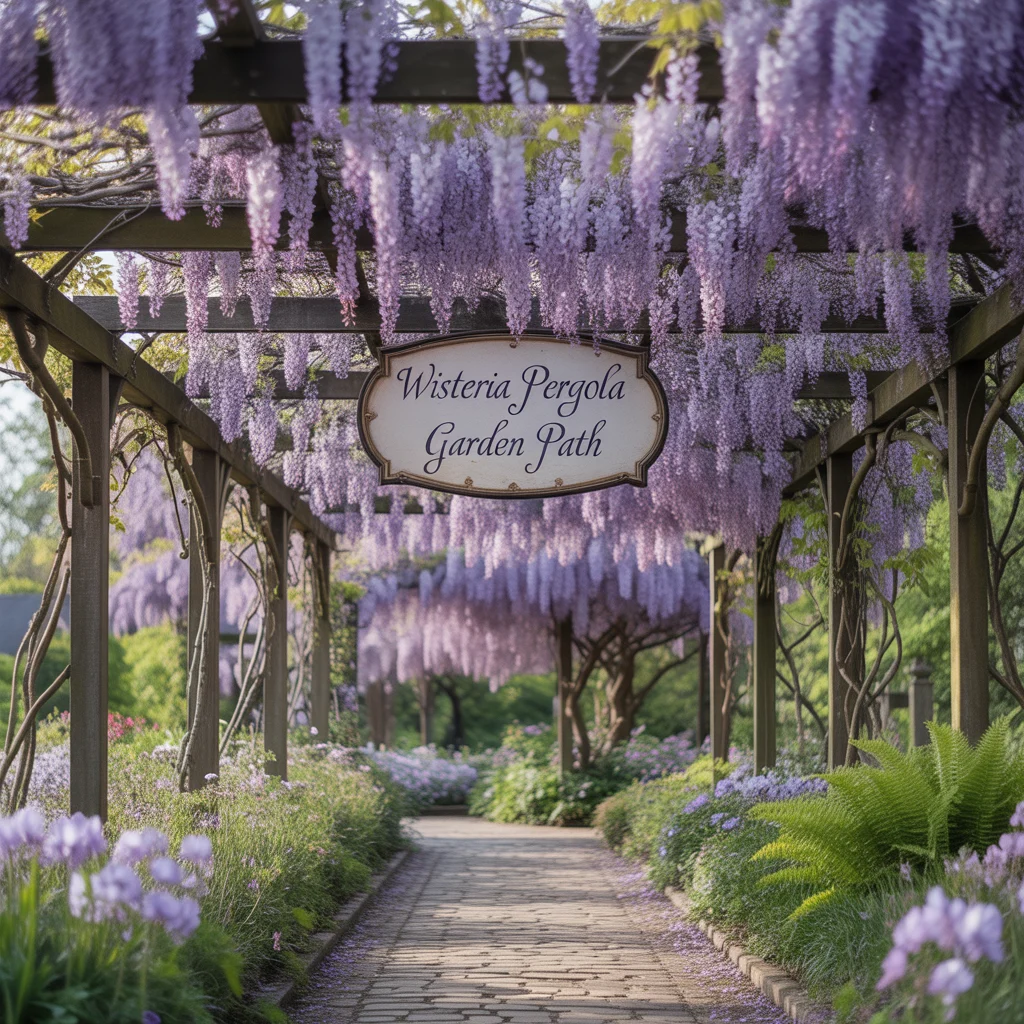
A wisteria pergola garden path is the most structurally demanding version of garden paths with pergolas because mature wisteria can weigh several hundred pounds and exerts significant lateral force on the pergola posts during high winds. I have seen poorly built pergola walkways pulled apart by the weight and movement of mature wisteria after just 8 to 10 years of growth, so the structure supporting a wisteria walkway needs to be significantly more robust than one designed for lighter climbing plants. The minimum recommended post size for a wisteria pergola path is 6×6 inches, with post base anchors rated for at least 800 pounds of uplift per post.
Wisteria Varieties Best Suited to a Pergola Walkway
Wisteria sinensis, Wisteria floribunda, and Wisteria brachybotrys are the three species commonly grown over pergola walkways. Wisteria sinensis produces the most vigorous growth and the longest flower racemes, up to 12 inches in length, in late April and May before the leaves develop, which gives the whole pergola path a spectacular appearance in spring. Wisteria floribunda is slightly less vigorous and produces racemes up to 18 inches long in some named varieties, but flowers slightly later in May when the leaf canopy has already started to develop. Wisteria brachybotrys is the most compact species, suited to smaller pergola structures in smaller gardens.
Pruning a Wisteria Pergola Walkway
Wisteria on a pergola garden path requires pruning twice a year to keep it manageable and to maximize flower production. The first pruning takes place in August, when all the long whippy new shoots produced since spring are cut back to 5 leaves from the base of each shoot. The second pruning takes place in January or February, when those same shoots are cut back again to 2 to 3 buds. I have followed this two-cut pruning schedule on a wisteria pergola path for 6 years, and the flower production improves noticeably each year compared to the single-prune approach I used in the first two seasons.
Modern Concrete and Steel Pergola Garden Path

A modern concrete and steel pergola garden path combines poured concrete or large-format concrete slabs as the path surface with a powder-coated steel pergola structure overhead, creating a highly contemporary garden design that suits urban and architectural outdoor spaces. I have seen this combination used most effectively in courtyard gardens and roof terraces where the clean geometric lines of the steel frame complement the built environment around the space. Large-format concrete slabs measuring 24×24 inches cost between $4 and $12 each and are available in grey, charcoal, and off-white finishes that work well beneath a dark steel pergola structure.
Planting Combinations for a Concrete and Steel Pergola Path
Ornamental vines, Fallopia baldschuanica, and climbing hydrangea are three climbing plants that suit the contemporary aesthetic of a concrete and steel pergola path. Ornamental vines including Vitis coignetiae produce very large leaves up to 12 inches wide that soften the hard lines of the steel frame during summer and turn a vivid orange-red in autumn before the leaves fall. Fallopia baldschuanica, also known as Russian vine, is the fastest-growing climbing plant available and can cover a full steel pergola structure in a single season, though it requires very firm control pruning twice a year to prevent it from becoming invasive.
Lighting a Modern Steel Pergola Walkway
LED strip lighting fixed along the underside of the steel crossbeams is the most effective lighting approach for a modern pergola garden path because it produces an even wash of light across the full path surface without visible fittings. I installed a 24-volt LED strip on the underside of each crossbeam in a steel pergola walkway last autumn and the result after dark was a long, evenly lit corridor of soft white light that looked entirely professional. The full installation cost $140 in materials and took half a day using waterproof LED strip rated to IP65, which is the minimum weathering standard needed for permanent outdoor installation.
Cottage Garden Pergola Path With Mixed Planting
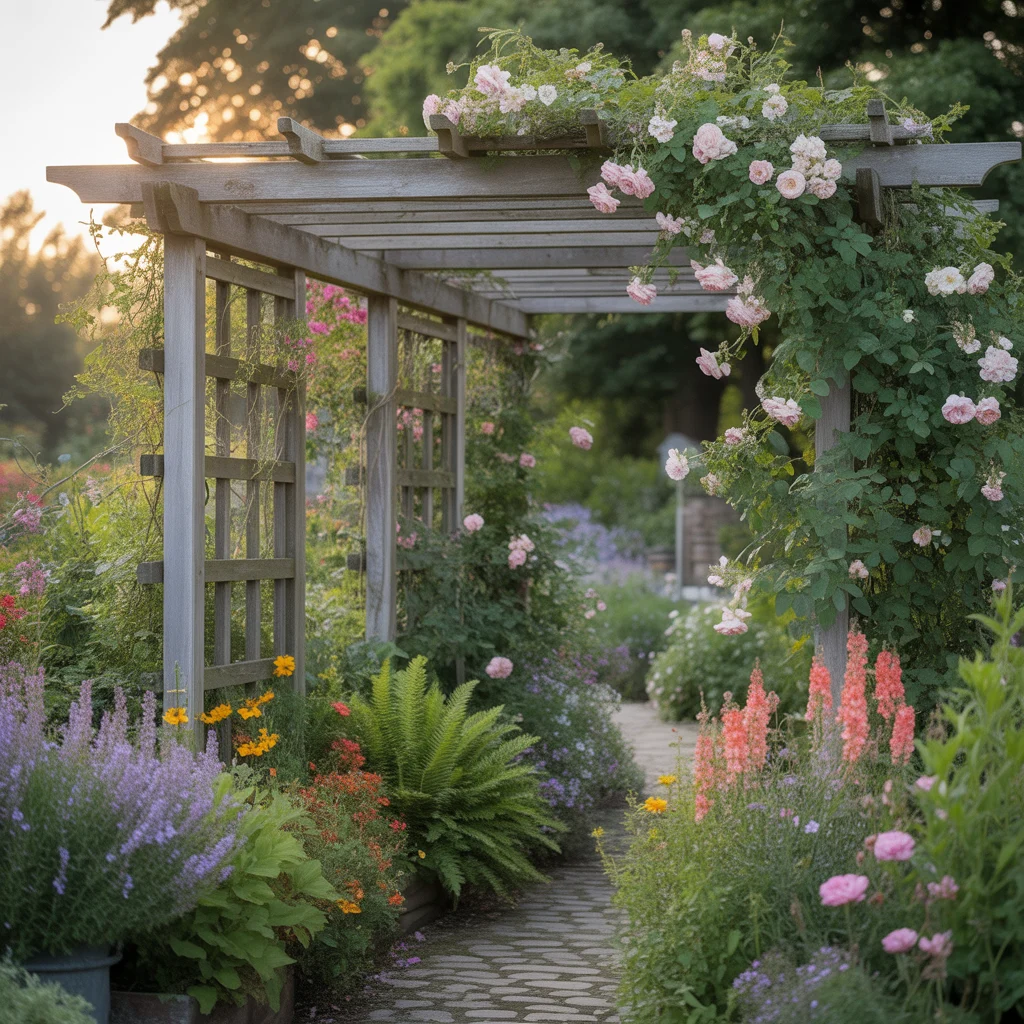
A cottage garden pergola path uses a painted or stained timber structure combined with a densely planted mix of climbing plants, which creates an informal, abundant look very different from a single-species pergola walkway. I planted a combination of Clematis montana, Lonicera periclymenum, and Rosa Zephirine Drouhin on a single 24-foot timber pergola path, and the result was a succession of flower and fragrance from April through to October, with no gap longer than two weeks between one plant finishing and the next beginning. This layered planting approach is the most effective way to maintain interest on a pergola garden path throughout the full growing season.
How to Layer Climbing Plants on a Cottage Pergola Path
Layering climbing plants on a pergola path works best when the three plants selected have different flowering times and different growth habits. A spring-flowering clematis like Clematis montana covers the upper structure first in April and May. A midsummer climber like a climbing rose takes the central zone from June through August. A late-season vine like a passion flower or late-flowering clematis, such as Clematis tangutica, brings yellow lantern flowers and silver seedheads from August through October. I space the plants 8 feet apart along the path’s length to give each one adequate root space and light without overcrowding.
Path Surface Options for a Cottage Garden Pergola Walkway
Mown grass, compacted hoggin, and tumbled cobblestones are the three path surfaces that suit a cottage garden pergola walkway most naturally. A mown grass strip 3 to 4 feet wide running beneath the pergola gives a soft, informal feel that suits the relaxed planting style of a cottage garden. Compacted hoggin, a self-binding gravel made from crushed limestone or granite, produces a firm, dry surface at a cost of around $2 to $4 per square foot and weathers to a natural brown-orange tone that complements the warm colors of cottage garden planting. Tumbled cobblestones are the most durable surface for a frequently used cottage pergola path and require no maintenance after installation.
Related:
Garden paths with pergolas and climbing roses
Gest garden path ideas for narrow side yards
Garden walkway designs with fountains and water features
Frequently Asked Questions
How long does a garden path with a pergola last?
A well-built garden path with a pergola made from pressure-treated timber or cedar lasts between 15 and 25 years with basic annual maintenance, which includes cleaning the wood surface in spring and applying a penetrating wood oil or sealant every 2 to 3 years. Steel and aluminum pergola structures last significantly longer, with powder-coated steel rated for 25 to 40 years in standard outdoor conditions. The path surface beneath the pergola, whether gravel, brick, or stone, typically outlasts the timber structure above it when laid on a correctly prepared sub-base of compacted hardcore and sharp sand. I re-sealed my own cedar pergola walkway last spring for the third time in eight years and the timber still shows no sign of structural decay at any of the post bases.
What is the minimum width for a pergola walkway?
The minimum practical width for a pergola walkway is 4 feet, which allows one adult to walk through comfortably with space on either side for climbing plant growth from the posts. A width of 5 to 6 feet is the recommended standard for a domestic garden pergola path because it allows two people to walk through side by side without feeling restricted. For a pergola walkway attached to a house used as the primary route between the house and the garden, I recommend a minimum width of 5 feet to accommodate garden furniture, wheelbarrows, or other items that may need to pass through. Widths below 4 feet create a tunnel effect that most people find uncomfortable in a covered walkway.
Can I install a pergola walkway kit myself?
A pergola walkway kit is installable by one or two adults with basic DIY skills and standard hand tools over one to two days, depending on the length of the path and the post-fixing method used. Most kits use bolt-down post anchors fixed to a concrete pad or surface-mount anchors fixed into existing paving, which eliminates the need to dig post holes or mix concrete. I installed a 12-foot pergola walkway kit on my own in a single afternoon and found the assembly instructions clear enough to follow without any prior carpentry experience. The most time-consuming part of the installation was leveling the post anchor plates, which took about 40 minutes per pair using a spirit level and packing shims.
Which climbing plants grow fastest on a pergola walkway?
Wisteria sinensis, Fallopia baldschuanica, and Clematis montana are the three fastest-growing climbing plants for a pergola walkway. Fallopia baldschuanica is the absolute fastest, capable of producing 12 meters of new growth in a single season, which means it can cover a full 20-foot pergola path from scratch within one growing year. Clematis montana is the most practical fast grower for a domestic pergola path because it is vigorous enough to cover a structure in 2 to 3 seasons but much easier to control than Fallopia. Wisteria takes 3 to 5 years to produce significant coverage but then becomes self-sustaining and grows more densely each year after that, which is why I planted it on my own permanent pergola walkway rather than on a temporary structure.
What is the difference between a pergola walkway and an arbor?
A pergola walkway is a linear structure that runs the length of a path, supported by two parallel rows of posts, and is designed for walking through from one end to the other. An arbor is a smaller, single-arch structure typically placed at a single point in a garden, such as a gateway or a seating area, and is not designed to span a long walking distance. The practical difference is that a pergola walkway creates an entire covered corridor, while an arbor creates a single covered point. In some gardens I have visited, a single arbor is placed at the entrance to a simple garden path with pergolas further along the route, which combines both structures effectively to mark the transition from open garden to covered walkway.