
19 Garden Paths With Pots That Add Instant Charm

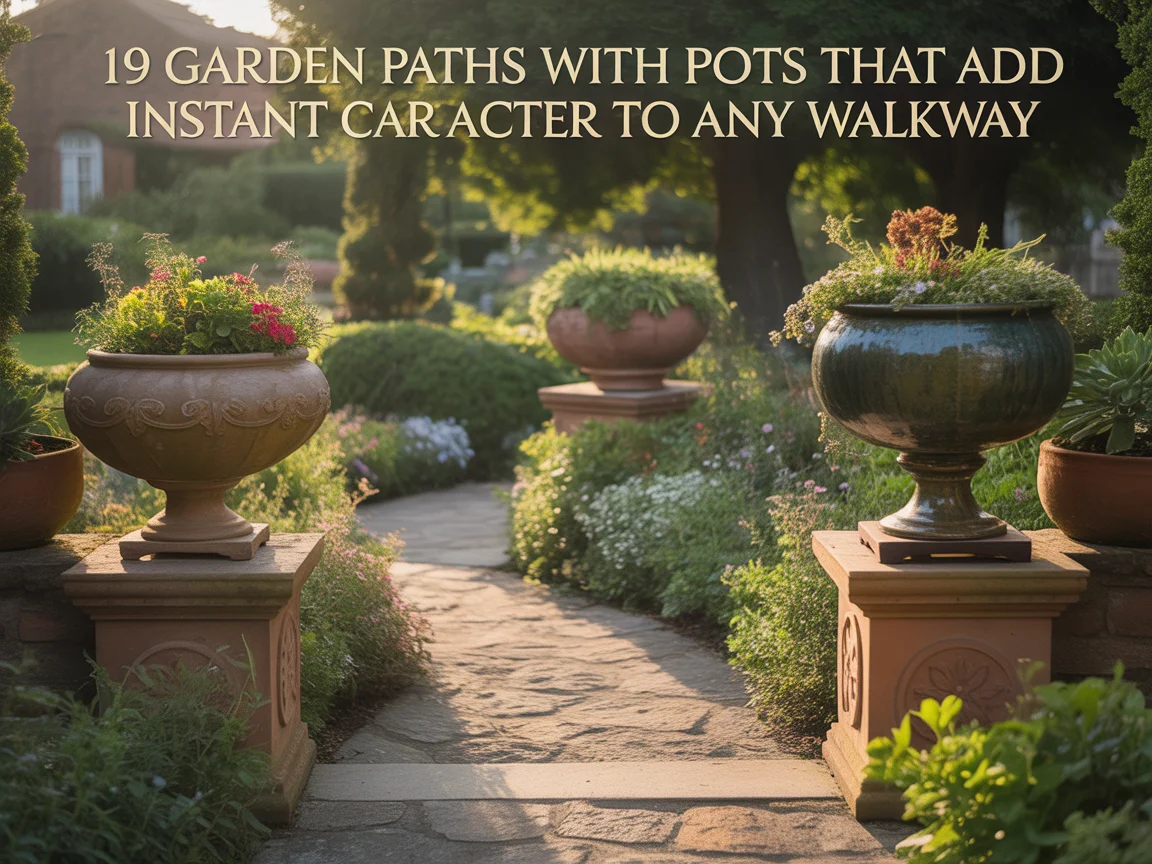
I once visited a garden where the path itself was completely ordinary, a straight run of basic concrete slabs from the gate to the front door. But the owner had placed twelve large terracotta pots in graduating sizes on alternating sides of the path from the gate to the step, each one planted with a different combination of herbs, trailing plants, and clipped box balls. The path looked completely designed and deliberate despite the concrete slabs being the most generic material available. I remember thinking that the pots did more work for that path than any expensive paving material could have done.
Garden paths with pots combine a walkable surface with container plants placed at regular or grouped intervals along the path edges, adding seasonal colour, height variation, fragrance, and decorative interest to the walkway without any permanent planting or structural changes to the garden. The pots give the path a furnished, lived-in quality that planted borders cannot replicate with the same flexibility, and the path gives the pots a clear linear context that makes them look deliberately placed rather than scattered randomly.
Since that visit, I have studied and created many garden paths with pots across different styles, sizes, and budgets. I have seen small garden paths with pots in compact front gardens produce results that rival professional landscaping, and I have also seen large formal garden paths lined with matching terracotta and stone containers of genuine architectural quality.
In this article, I am sharing 19 garden paths with pots that I have either designed myself or researched thoroughly enough to recommend with complete confidence.
Terracotta Pot-Lined Garden Path
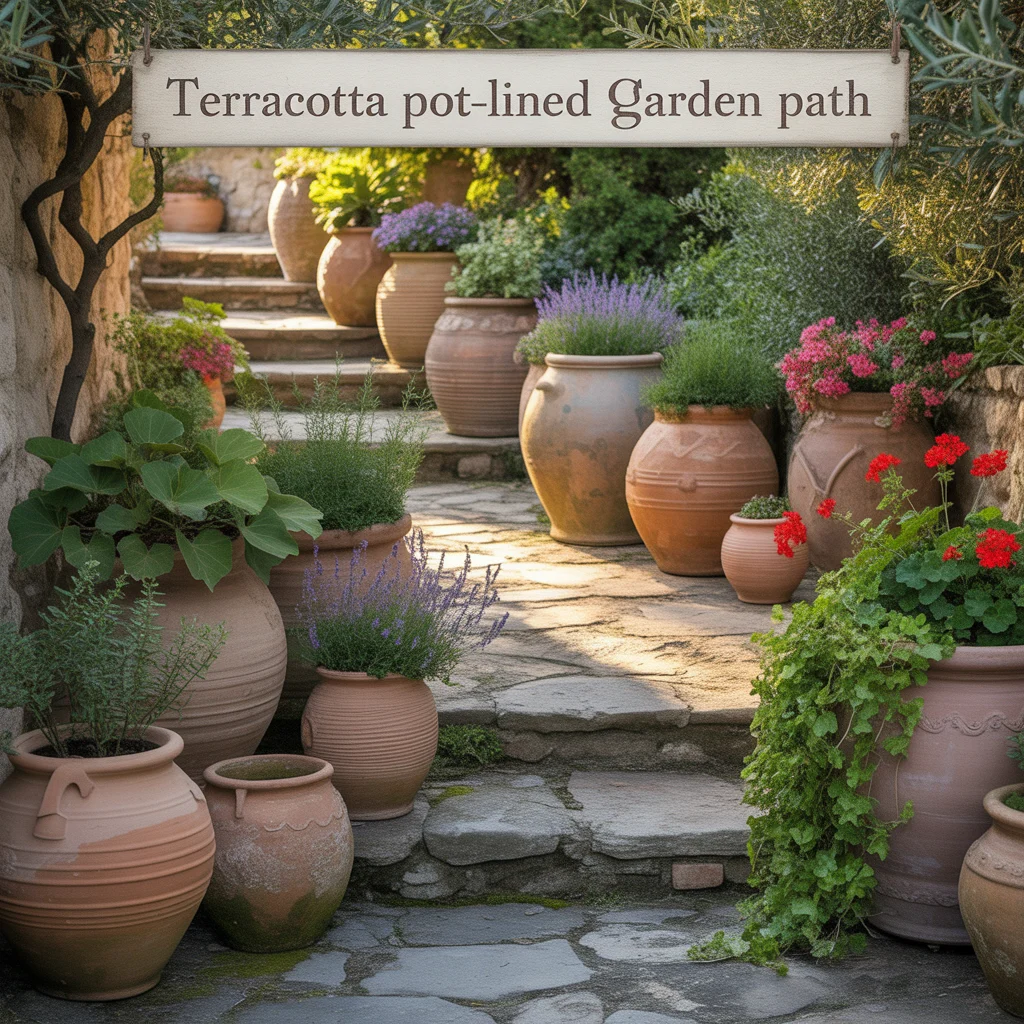
A terracotta pot-lined garden path places hand-thrown or machine-pressed terracotta pots in graduated sizes at regular intervals along one or both sides of the path, creating a warm, traditional walkway that suits cottage, Mediterranean, and period garden styles. I lined a 20-foot gravel path with ten terracotta pots in three different sizes, positioning the largest pots at the path entrance and reducing the size toward the far end, and the graduating scale produced a perspective effect that made the path appear longer than its actual measurement from the garden entrance. The total pot cost was $85 from a local garden centre sale, which I found remarkably affordable for the visual impact produced.
Terracotta Pot Sizes for a Garden Path
Large terracotta pots of 14 to 18 inches diameter, medium pots of 10 to 12 inches, and small pots of 6 to 8 inches are three size categories suited to a terracotta pot-lined garden path. Large pots at the path entrance create an immediate visual statement and provide enough soil volume for substantial planting including standard-trained shrubs, tall grasses, or large flowering perennials. Medium pots at the path mid-section provide the visual rhythm of the path display and suit compact perennials, herb plantings, and trailing plants. Small pots at 6 to 8 inches suit the narrowest path sections or the transition between the main pot display and the path terminus, providing a finishing detail rather than a dominant visual element.
Terracotta Pot Materials and Frost Resistance
Hand-thrown terracotta, machine-pressed terracotta, and frost-proof treated terracotta are three terracotta types suited to a garden path with pots in an outdoor setting. Hand-thrown terracotta has a thicker wall section of 15 to 20mm and a slightly irregular surface that suits a traditional or cottage garden path aesthetic, costing $15 to $45 per medium pot. Machine-pressed terracotta has a thinner, more uniform wall of 10 to 12mm and suits a formal or symmetrical pot-lined path display, costing $8 to $25 per medium pot. Frost-proof treated terracotta has been fired at higher kiln temperatures to reduce water absorption to below 6%, producing a pot rated for outdoor year-round use in UK winter conditions at $18 to $55 per medium pot.
Bay Tree Standard Pots on a Formal Garden Path
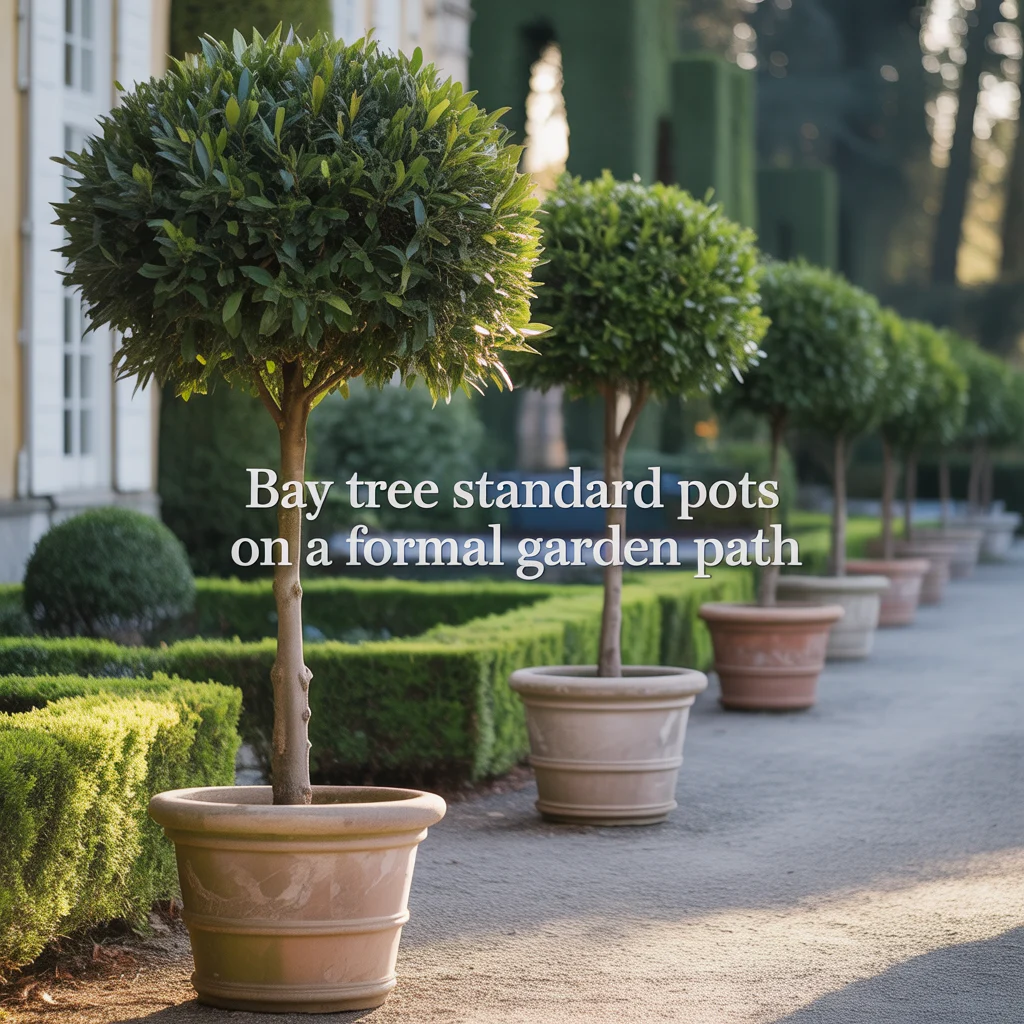
Bay tree standard pots on a formal garden path place matching containers of Laurus nobilis trained to a standard lollipop form at equal intervals on both sides of the path, creating a formal, architectural pot display that suits period properties, formal garden designs, and front garden paths where a structured, year-round pot display is the design intention. I specified two pairs of matching black fibreglass pots containing Laurus nobilis standards at the entrance and midpoint of a 25-foot York stone front garden path, and the four standard bay trees produced an immediate formal character that suited the Georgian proportions of the property from the day of installation.
Bay Tree Standard Sizes for a Garden Path
Half-standard bay trees of 60 to 80cm stem height, standard bay trees of 80 to 100cm stem height, and tall standard bay trees of 100 to 120cm stem height are three sizes suited to a formal pot display on a garden path. Half-standards suit a path of 3 feet width where a taller standard would proportionally overpower the path width, with the 60 to 80cm stem height producing a lollipop canopy at a visually comfortable level for a narrow path. Standard bay trees at 80 to 100cm stem height suit a path of 4 to 5 feet width, providing an elegant vertical accent without the canopy encroaching on the walking space above head height. Tall standards at 100 to 120cm stem height suit a wide formal path of 5 feet or more where the additional height reinforces the formal character of the path entrance.
Pot Materials for Formal Bay Tree Displays
Black fibreglass pots, lead-effect resin pots, and genuine Portland stone urns are three pot materials suited to a formal bay tree display on a garden path. Black fibreglass pots of 16 to 20 inches diameter weigh 3 to 6kg compared to 25 to 40kg for an equivalent stone pot, making them practical for a path position where weight is a concern or where the pots need to be moved seasonally. Lead-effect resin pots produce the appearance of aged lead planters at a fraction of the cost and weight of genuine lead, costing $45 to $120 per pot compared to $300 to $800 for a genuine antique lead planter. Portland stone urns provide the most architecturally authentic pot for a formal Georgian or period property garden path but require permanent positioning due to their weight of 40 to 120kg per pot.
Seasonal Flowering Pots Along a Garden Path
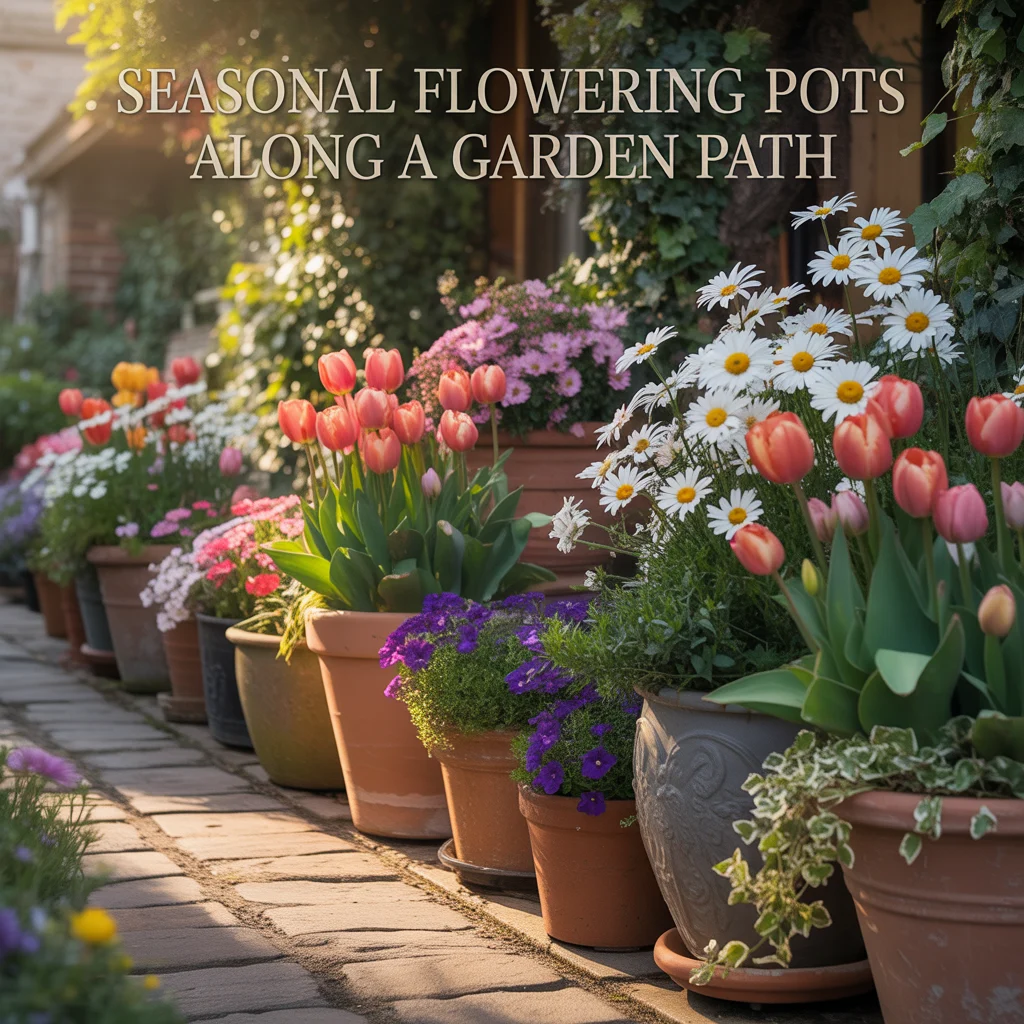
Seasonal flowering pots along a garden path change the pot plantings four times per year to create a garden path display that reflects each season, using spring bulbs in February to April, summer flowering annuals from May to September, autumn perennials and ornamental grasses in September to November, and evergreen structural plantings from November to February. I converted my own front path into a seasonal pot display five years ago using six matching black glazed ceramic pots, replanting them each season, and found the annual total planting cost of $45 to $65 produced a path that looked completely different and fully appropriate for each season throughout the year.
Spring Pot Plantings for a Garden Path Display
Narcissus Tete-a-Tete, Hyacinthus orientalis, and Tulipa Queen of Night are three spring plantings suited to seasonal pot displays on a garden path. Narcissus Tete-a-Tete produces small yellow flowers from February to April at 6 to 8 inches height, providing the earliest seasonal pot colour on a garden path and the first visual signal that the growing season has begun. Hyacinthus orientalis produces densely packed flower spikes in blue, pink, and white from March to April with an exceptionally strong sweet fragrance that is noticeable at the path entrance from 10 feet away on warm spring days. Tulipa Queen of Night produces deep maroon-purple flowers on 24-inch stems in late April and May, providing the most dramatic single spring pot flower colour for a garden path display.
Summer and Autumn Pot Plantings for a Garden Path
Pelargonium, Osteospermum, and Echinacea purpurea are three plantings suited to summer and autumn seasonal pot displays on a garden path. Pelargonium in upright or trailing form produces continuous flower colour from May to October in red, pink, white, and coral, requiring no deadheading in modern single-flowered varieties and tolerating dry pot compost conditions better than most summer flowering plants. Osteospermum produces large daisy flowers in white, yellow, orange, and purple from May to October and suits a pot position receiving 4 or more hours of direct sun per day on the path edge. Echinacea purpurea transitions the pot display from summer into autumn, producing pink cone flowers from July to September with decorative seed heads that remain attractive in the pot through October and November.
Clipped Box Ball Pots on a Garden Path
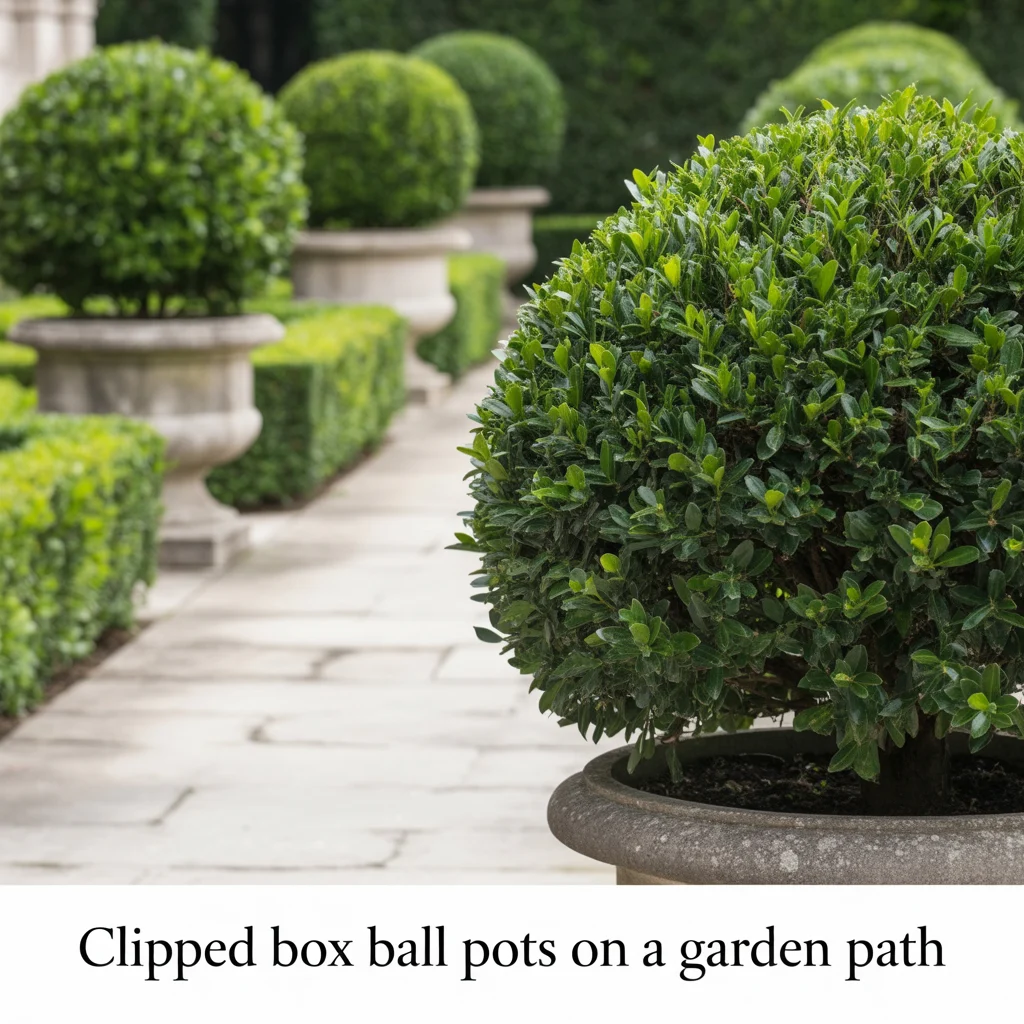
Clipped box ball pots on a garden path place matching containers of Buxus sempervirens clipped to a round ball form at regular intervals along the path, creating a geometric, year-round pot display that suits both formal and contemporary garden path styles. I placed six matching grey fibreglass pots containing 12-inch-diameter box balls at 4-foot intervals on alternating sides of a 24-foot gravel path at a residential project, and the regular alternating rhythm of the rounded green forms against the pale gravel produced a simple garden path with pots of immediate formal character that required no seasonal replanting to maintain its appearance.
Box Ball Sizes for a Garden Path Pot Display
Box balls of 8 to 10 inches diameter, 12 to 14 inches diameter, and 16 to 18 inches diameter are three sizes suited to a clipped box ball pot display on a garden path. Balls of 8 to 10 inches suit a narrow path of 2.5 to 3 feet width where a larger ball would proportionally dominate the path. Balls of 12 to 14 inches suit a path of 3 to 4 feet width and provide the most visually resolved proportion between the ball size, the pot diameter, and the path width across the range of standard domestic garden path dimensions. Balls of 16 to 18 inches diameter suit a wider path of 4 to 5 feet or a formal entrance path where the larger ball scale reinforces the architectural character of the entrance.
Box Ball Alternatives for a Garden Path Pot Display
Ilex crenata balls, Pittosporum tenuifolium balls, and clipped Euonymus japonicus balls are three box ball alternatives suited to a garden path pot display. Ilex crenata balls provide a visually identical alternative to Buxus sempervires and resist box blight, making them the direct substitute for gardens where Cylindrocladium buxicola is established in the local area. Pittosporum tenuifolium Tom Thumb produces a naturally compact, rounded form of dark purple-green foliage that clips to a ball shape and provides a darker foliage tone than box, suiting a contemporary path pot display where a bolder foliage colour is the design intention. Clipped Euonymus japonicus balls provide a variegated green and yellow-green alternative that suits a path pot display where a lighter, brighter foliage tone is needed.
Small Garden Paths With Pots in a Compact Space
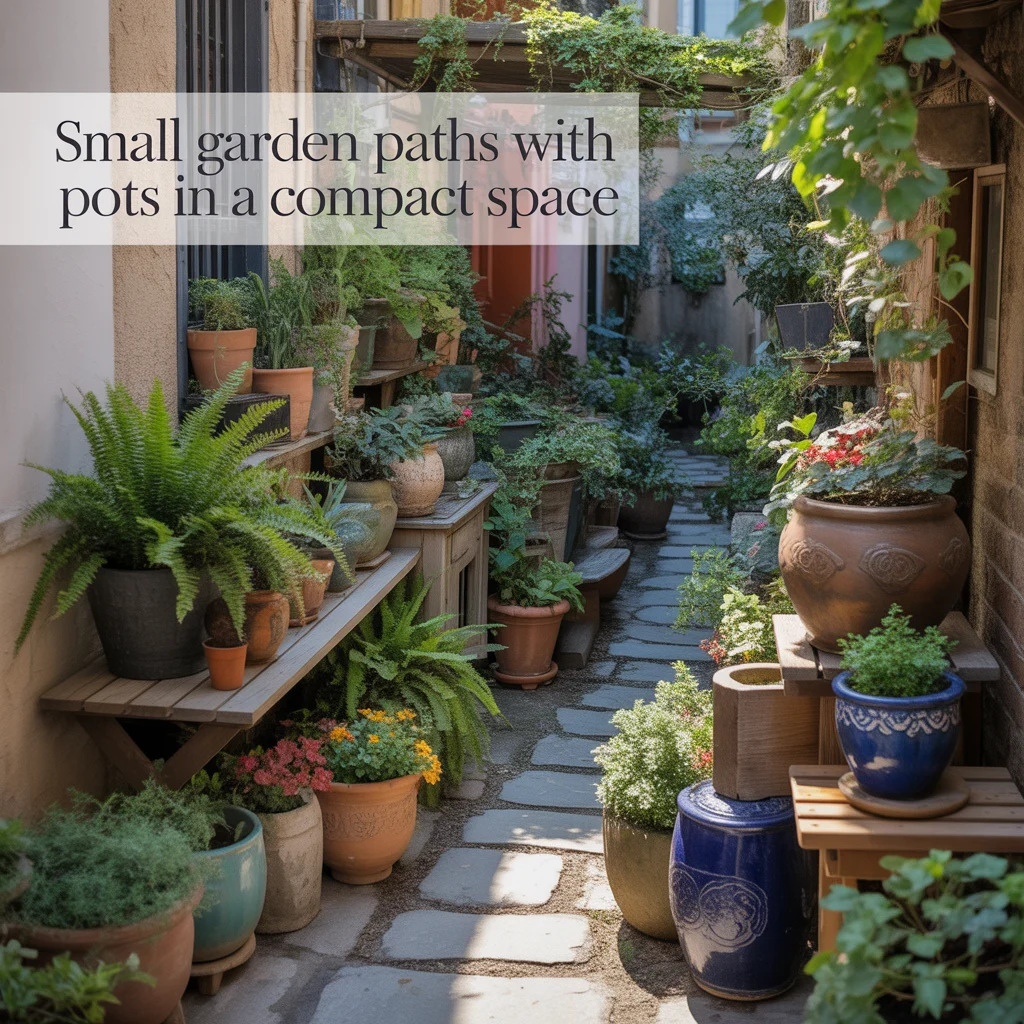
Small garden paths with pots in a compact space use a reduced number of carefully chosen pots in sizes proportional to the path width to create a pot-lined path display that suits gardens of 10 to 15 feet in total length without overwhelming the limited space. I designed a small garden path with pots for a terraced house front garden measuring 12 feet from gate to step, using four pots of 10-inch diameter in matching aged terracotta at 3-foot intervals on one side only, and the single-sided arrangement in a compact space produced a welcoming, characterful entrance that a symmetrical double-sided arrangement would have made feel cluttered.
Pot Placement Rules for a Small Garden Path
Single-sided placement, alternating single placement, and grouped cluster placement are three pot placement approaches suited to a small garden path with pots in a compact space. Single-sided placement positions all pots along one side of the path only, leaving the opposite side clear and maintaining a comfortable walking width in a space too narrow for double-sided pot placement. Alternating single placement positions individual pots alternately on left and right sides of the path at 3-foot intervals, creating a visual rhythm that uses less physical path edge space than a double continuous row while still producing a defined pot-lined path character. Grouped cluster placement uses two to three pots placed together as a single display unit at the path entrance and terminus rather than spacing individual pots along the full path length.
Pot Sizes Proportional to a Small Garden Path
Pots of 8 to 10 inches diameter suit a small garden path of 2.5 to 3 feet width, maintaining comfortable walking space while providing enough pot volume for substantial planting. Pots larger than 12 inches diameter on a 2.5-foot-wide small garden path reduce the effective walking width to under 2 feet when the pot is placed at the path edge, which creates a physically and visually restrictive walkway. I always measure the path width before selecting pot sizes for a small garden path with pots project and calculate the maximum pot diameter as path width in inches divided by 4, which produces a pot size that leaves a minimum of 75% of the path width clear for walking after the pots are in position on both sides.
Modern Garden Path With Matching Glazed Pots
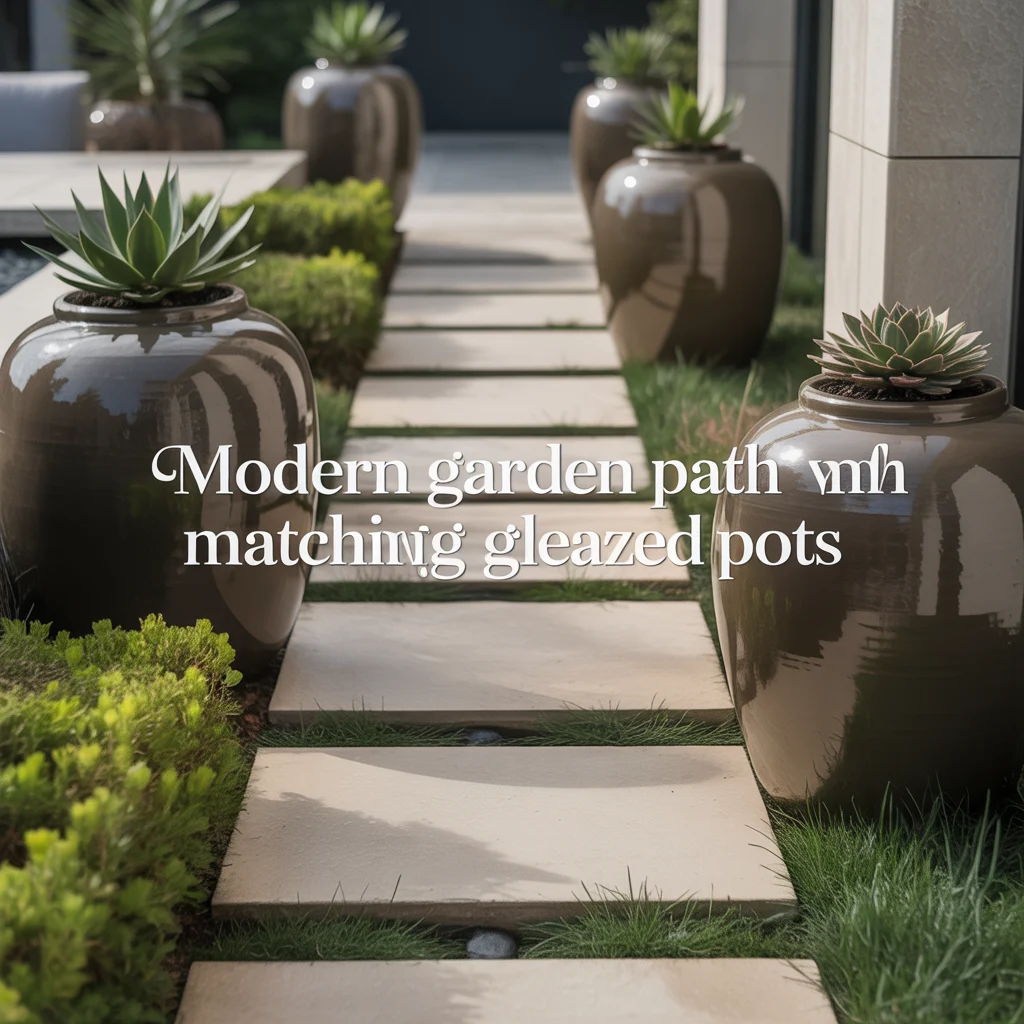
A modern garden path with matching glazed pots uses sets of identical glazed ceramic or porcelain pots in black, white, charcoal, or steel blue along the path edge to create a contemporary pot display that suits modern garden designs, urban outdoor spaces, and new-build properties where clean, uniform materials are consistent with the architectural character of the surrounding space. I specified six matching 14-inch-diameter matt black glazed ceramic pots at 4-foot intervals along one side of a 25-foot large-format porcelain path at a contemporary residential project, and the visual consistency of the matching black pots against the grey porcelain path surface produced an ideas for planters outside that looked professionally designed without any complex arrangement or grouping.
Glazed Pot Colors for a Modern Garden Path
Matt black, grey-blue, and pure white are three glazed pot colours suited to a modern garden path display. Matt black glazed pots provide the strongest visual contrast against pale stone, porcelain, or light gravel path surfaces and suit a contemporary garden design where dark furniture, metal edging, and rendered surfaces are the dominant material palette. Grey-blue glazed pots provide a softer contrast against pale path surfaces and suit a contemporary garden design where the pot colour coordinates with steel, aluminium, or painted timber elements in the surrounding garden. Pure white glazed pots suit a minimalist modern path display where the absence of colour in the pots allows the planting inside each pot to provide the only colour element in the path display.
Plants for Modern Glazed Pots on a Garden Path
Phormium tenax, Aeonium arboreum, and Agapanthus Headbourne Hybrids are three plants suited to modern glazed pots on a contemporary garden path. Phormium tenax produces stiff, sword-shaped leaves in green, bronze, or variegated forms at 3 to 4 feet height, providing a strong architectural pot plant that suits the geometric character of a modern garden path display. Aeonium arboreum produces rosette-shaped succulent foliage on branching stems at 2 to 3 feet height in dark purple or green, providing an unusual, structural pot plant suited to a sheltered modern path in a mild or coastal garden. Agapanthus Headbourne Hybrids produce round blue flower heads on 3-foot stems from July to September in pots of 12 inches or above.
Herb Pot Garden Path
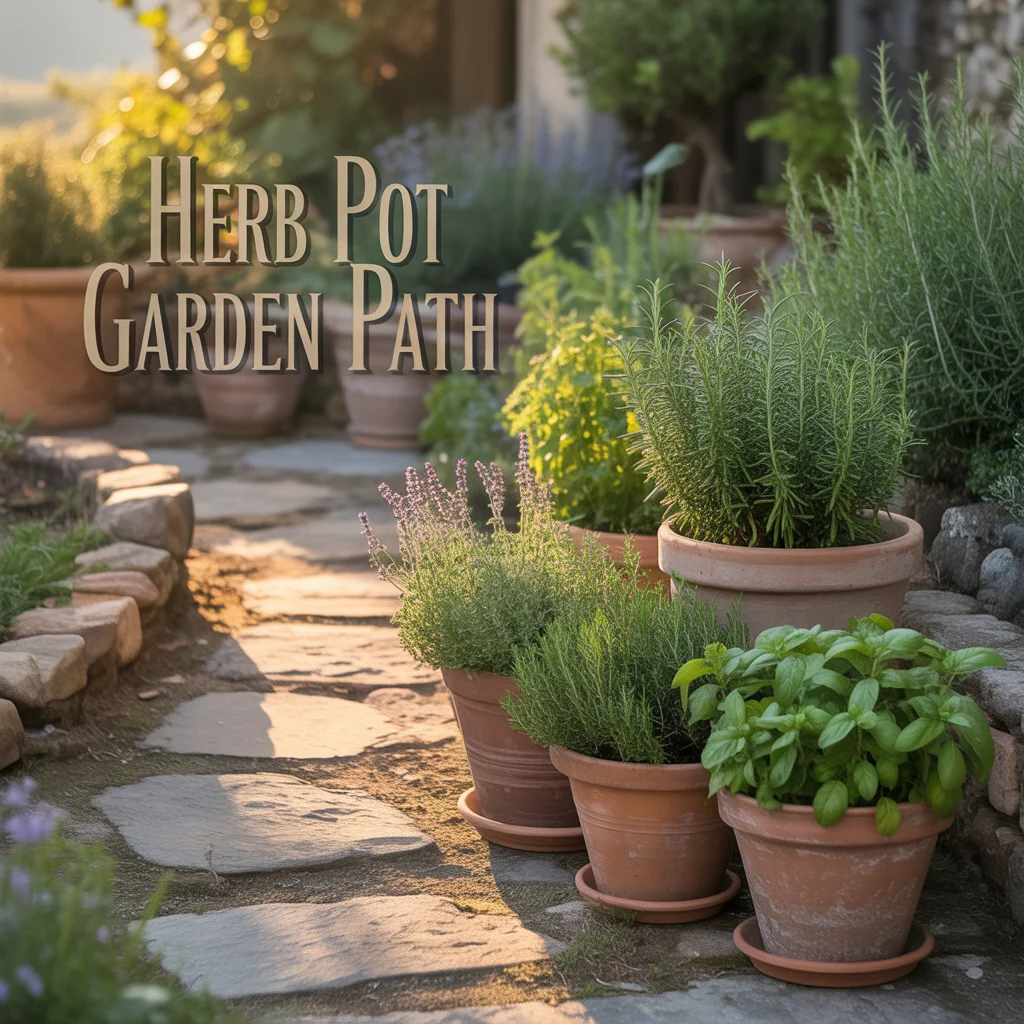
A herb pot garden path places terracotta or ceramic pots planted with culinary and aromatic herbs along the path edges, creating a productive and fragrant pot display that suits a kitchen garden path, a path leading to a vegetable garden, or any garden path where a combined decorative and functional pot display is the design intention. I created this display along the 16-foot gravel path leading to my vegetable garden using eight terracotta pots planted with lavender, rosemary, thyme, mint, chives, sage, lemon verbena, and chamomile, and the path became my first point of contact with the garden on every visit because I stopped to touch and smell the herb pots on both sides before reaching the vegetable beds.
Herbs for a Garden Path Pot Display
Lavandula angustifolia, Rosmarinus officinalis, and Mentha spicata are three herbs suited to pots on a garden path. Lavandula angustifolia provides a calming fragrance from June to August at 18 to 24 inches height in a 10 to 12-inch pot, releasing its scent both in warm air and when the foliage is lightly brushed during walking. Rosmarinus officinalis grows to 18 to 24 inches in a 10-inch pot and produces blue flowers from March to May before most other path pot plants are showing seasonal colour, extending the fragrant herb pot path display into early spring. Mentha spicata grows vigorously in a 10-inch pot and requires containment in a pot to prevent the spreading root system from colonizing surrounding path edge areas, making it one of the few herbs that performs better in a path pot than in a planted border.
Herb Pot Care for a Low Maintenance Garden Path
Low maintenance garden paths with pots of herbs require three consistent care actions to maintain productive, well-shaped plants throughout the growing season. First, water herb pots deeply once or twice per week during dry periods from May to September, allowing the compost to dry partially between waterings to prevent root rot in lavender and rosemary. Second, harvest regularly from all culinary herbs from June onward to prevent the plants from becoming woody and sparse at the base and to encourage continued production of fresh soft growth. Third, apply a slow-release granular fertilizer at 10 grams per 10-inch pot in March each year to replace the nutrients depleted by regular harvesting during the previous season.
Topiary Pot Display on a Garden Path
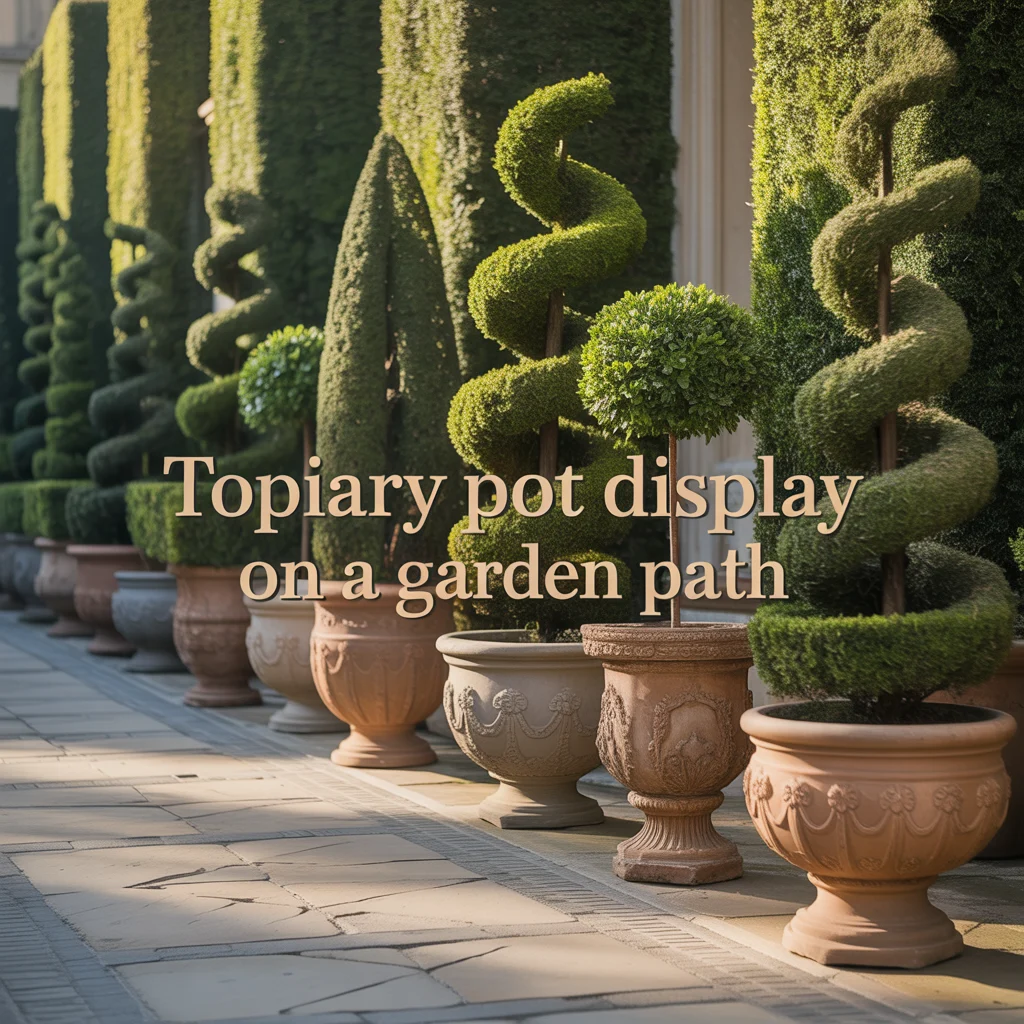
A topiary pot display on a garden path uses pots containing formally clipped evergreen shrubs in geometric shapes including cones, pyramids, spirals, and balls placed at the path edges to create a structured, year-round pot display that provides permanent visual interest regardless of season and suits formal, contemporary, and cottage garden path styles depending on the pot material and topiary form selected. I placed four matching black fibreglass pots containing clipped yew cones at the entrance and midpoint of a formal garden path and the clean geometric cone forms in the dark pots produced an immediate sense of arrival and formality that the path had previously lacked without any pot display.
Topiary Forms for Garden Path Pots
Cone, spiral, and pyramid are three topiary forms suited to pots on a garden path. A cone topiary of 24 to 36 inches height in a 14-inch pot suits the entrance to a formal or cottage garden path and provides a strong vertical accent that draws the eye along the path length. A spiral topiary of 30 to 48 inches height in a 14 to 16-inch pot suits a formal garden path where a more decorative and distinctive topiary form is preferred over the simpler cone, at a higher initial plant cost of $45 to $120 per spiral compared to $20 to $55 per cone of equivalent height. A pyramid topiary of 24 to 48 inches height in a 12 to 16-inch pot suits a contemporary garden path where the angular geometric form of the pyramid coordinates with straight-edged modern path materials and garden structures.
Topiary Maintenance for a Garden Path Pot Display
Topiary plants in garden path pots require clipping two to three times per season to maintain their geometric profile in the high-growth conditions produced by regular watering and fertilizing in containers. The first clip in April shapes the new spring growth back to the intended geometric profile. The second clip in July addresses the summer growth flush that extends the plant surface beyond the clipped profile. A third clip in September maintains the profile through the winter months for gardens where the topiary pot display is visible from the house during the dormant season. I clip all topiary path pot plants with Niwaki ARS topiary shears and use a simple cardboard profile template cut to the shape of the intended topiary form to achieve consistent, accurate clipping on all four sides of the plant simultaneously.
Vintage and Upcycled Container Path Display
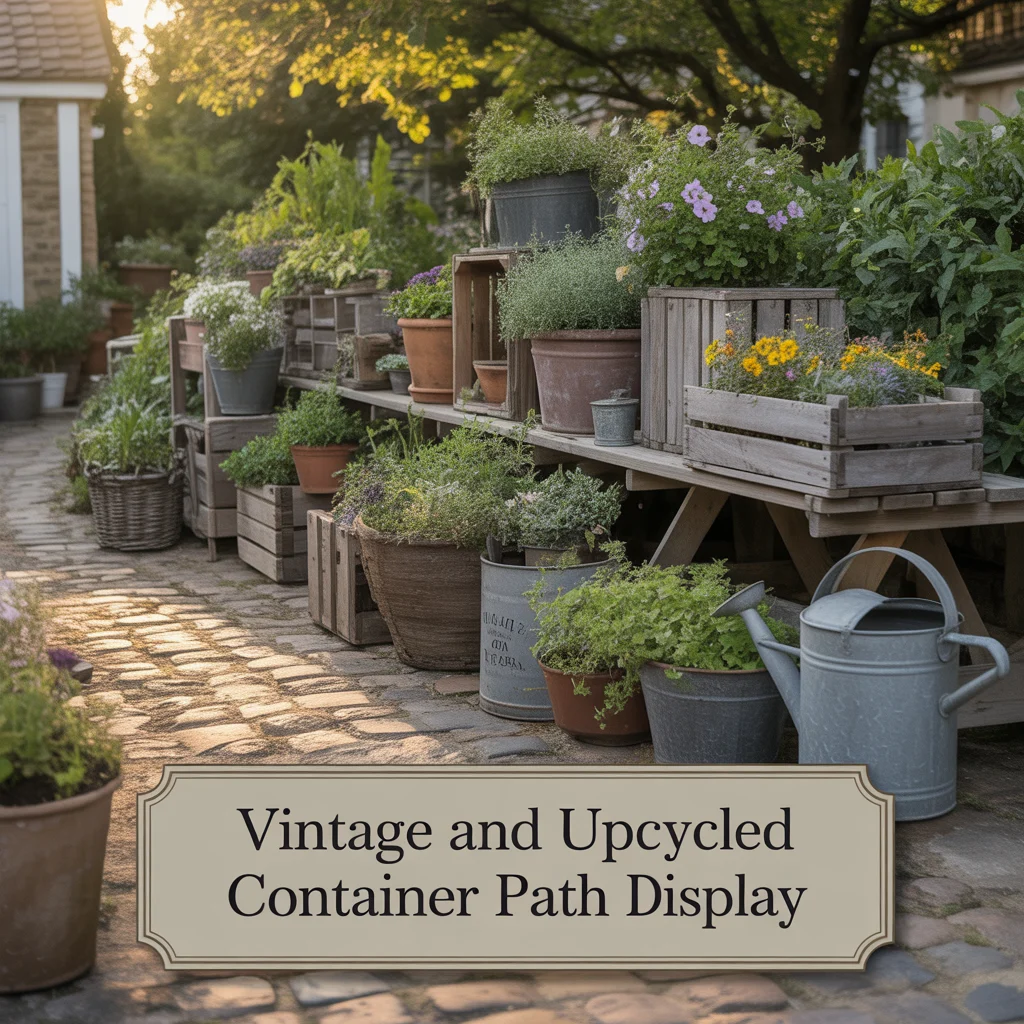
A vintage and upcycled container path display uses reclaimed and repurposed containers including old tin watering cans, galvanized buckets, wooden wine crates, chimney pots, and aged olive oil jars as the planting containers along the path edge, creating a characterful, individual path display that suits cottage, eclectic, and informal garden styles where the containers themselves are as visually interesting as the plants growing in them. I created this display along a bark chip path in my kitchen garden using a collection of old tin cans, a galvanized livestock trough, two Victorian chimney pots, and a reclaimed wooden crate, all planted with a mixture of herbs and annual flowers, and the path became the most photographed section of my garden from the day the display was complete.
Upcycled Containers for a Garden Path Display
Galvanized steel buckets, Victorian chimney pots, and reclaimed wooden wine crates are three upcycled container types suited to a garden path display. Galvanized steel buckets of 10 to 14-liter capacity provide enough soil volume for most annual and perennial path pot plantings and cost $8 to $18 from hardware suppliers or $0 from reclamation sales, with drainage holes added by drilling three 10mm holes in the base before planting. Victorian chimney pots at 12 to 18 inches diameter and 18 to 36 inches height provide a tall, vertical container suited to trailing plants that cascade over the pot rim and downward along the path edge. Reclaimed wooden wine crates lined with a heavy-duty plastic bag with drainage holes provide a shallow container suitable for annual flowers and herbs in a garden path pot display.
Waterproofing and Preparing Upcycled Containers
Upcycled containers for a garden path pot display require preparation before planting to prevent rapid deterioration from the outdoor watering and weathering cycle. Galvanized steel containers require no waterproofing but benefit from a ring of gravel at the base before compost to improve drainage and prevent the compost from compacting against the container base. Wooden containers require two coats of exterior timber preservative applied to all interior and exterior surfaces before planting, or a heavy-duty polythene liner of 250-micron thickness fixed inside the crate with staples to prevent direct compost contact with the timber. Terracotta chimney pots require no preparation other than placing a small piece of mesh over the drainage opening at the base before filling with compost.
Tall Statement Pots at a Garden Path Entrance
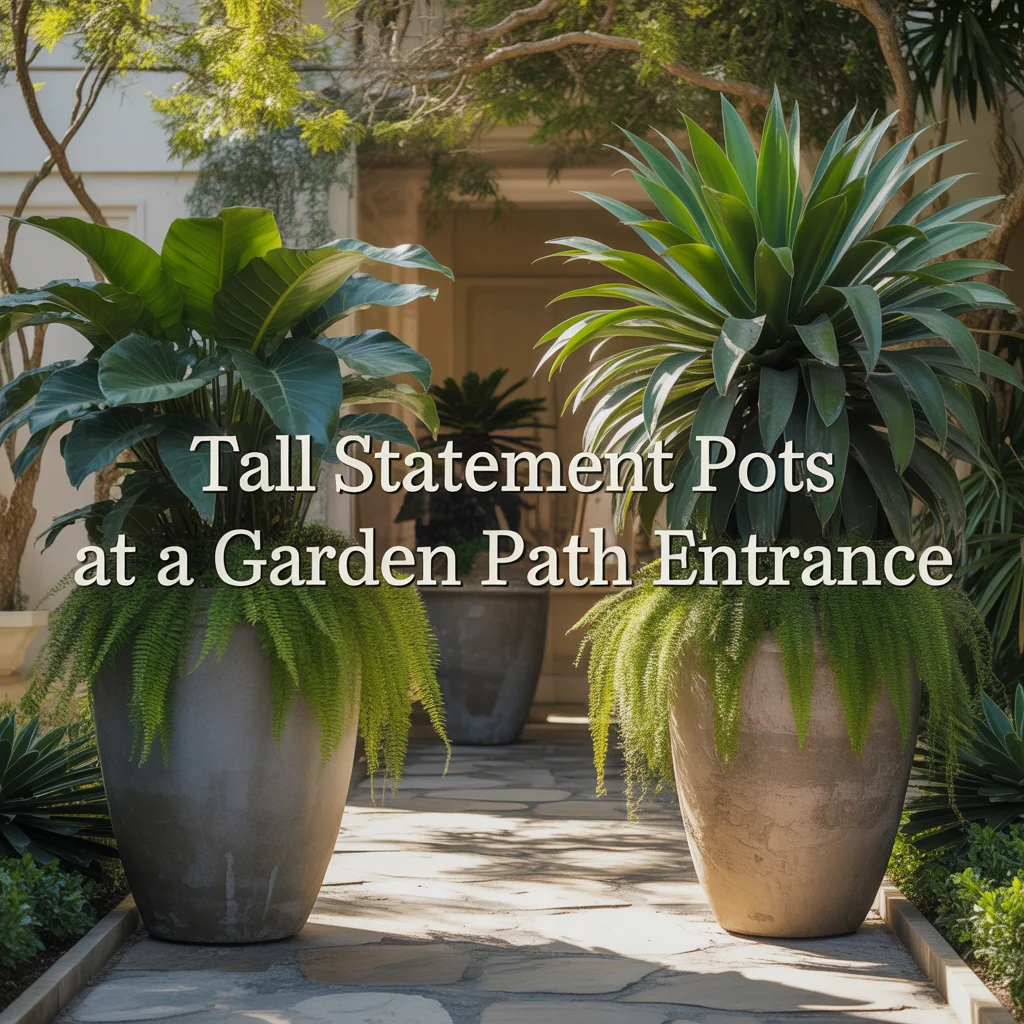
Tall statement pots at a garden path entrance uses one or two large, visually dominant containers of 18 to 24 inches diameter and 20 to 30 inches height placed at the first point of the path to create an immediate visual focal feature that announces the beginning of the walkway and establishes the style of the garden at the entrance. I placed two matching 22-inch-diameter aged stone-effect fibreglass urns at the entrance of a 25-foot formal garden path at a residential project, planting each urn with a standard-trained Olea europaea olive tree, and the two statement urns with the olive standards produced a Mediterranean formal entrance that suited the south-facing garden orientation and the warm stone path surface beneath them.
Statement Pot Materials for a Garden Path Entrance
Aged stone-effect fibreglass, genuine reconstituted stone, and large glazed ceramic are three materials suited to statement pots at a garden path entrance. Aged stone-effect fibreglass provides the appearance of a genuine stone urn at a fraction of the weight, costing $65 to $180 per large urn and weighing 4 to 8kg compared to 30 to 80kg for an equivalent reconstituted stone urn. Genuine reconstituted stone urns of 20 to 24 inches diameter cost $120 to $350 each and weather to a natural lichen-covered surface within three to five years in an outdoor garden path position. Large glazed ceramic statement pots of 20 to 24 inches diameter cost $80 to $220 each and suit a modern or contemporary garden path entrance where the reflective glazed surface coordinates with modern path materials and garden finishes.
Plants for Statement Entrance Pots on a Garden Path
Olea europaea, Cordyline australis, and Rosa The Fairy standard are three plants suited to large statement pots at a garden path entrance. Olea europaea, the olive tree, grows to 4 to 6 feet in a 20-inch statement pot and provides year-round silver-grey foliage with occasional small white flowers and olive fruits, suiting a Mediterranean or contemporary garden path entrance in a sunny, sheltered position. Cordyline australis produces a bold, architectural rosette of sword-like leaves at 3 to 5 feet height in a statement pot, tolerating coastal and urban garden path conditions better than most large architectural pot plants. Rosa The Fairy standard produces pale pink flowers from July to October on a 36-inch-stem standard and suits a cottage or traditional garden path entrance pot display. Anyone combining statement pots with planted borders along the same walkway will find useful pairing ideas in these garden paths with flowers planted alongside pot displays.
Matching Pot Pairs on a Symmetrical Garden Path
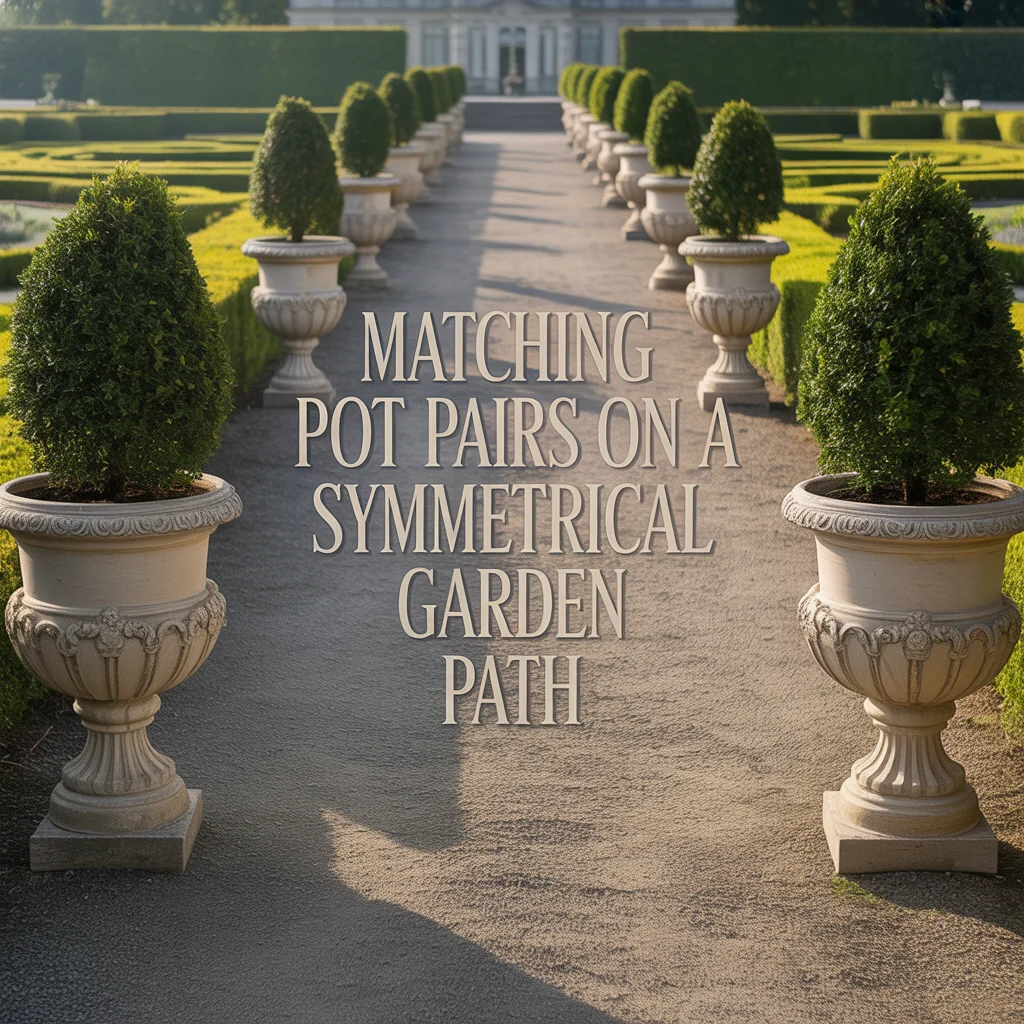
Matching pot pairs on a symmetrical garden path places identical pots in pairs directly opposite each other on both sides of the path at regular intervals, creating a formal, mirror-image pot display that reinforces the symmetry and axis of a formal garden path design. I specified three pairs of matching 14-inch square grey fibreglass pots at 6-foot intervals along both sides of a 24-foot formal garden path, planting each pot with identical clipped Buxus sempervirens balls, and the six matching pot and plant combinations produced a formal corridor effect that made the path read as the primary design axis of the entire garden from the house terrace at the opposite end.
Pot Pairing Principles for a Formal Garden Path
Identical pots in identical sizes, matching plants in identical stages of growth, and consistent placement distances from the path edge are three requirements for a successful matching pot pair display on a formal garden path. Identical pots must match in material, colour, finish, and exact dimensions to produce the formal symmetrical effect, because even a slight size difference between paired pots is immediately visible when both pots are in view simultaneously from the path approach direction. Matching plants in identical growth stages require purchasing both plants of each pair from the same batch at the same supplier, which ensures the plant height, spread, and vigour are as closely matched as possible at the time of planting.
Flowers for Matching Pot Pairs on a Garden Path
Agapanthus Headbourne Hybrids, Hydrangea arborescens Annabelle, and Lavandula angustifolia Hidcote are three flowering plants suited to matching pot pairs on a formal garden path. Agapanthus Headbourne Hybrids produce identical round blue flower heads on 3-foot stems from July to September in pots of 12 inches or above, providing the most naturally uniform matching flower display of any summer-flowering pot plant. Hydrangea arborescens Annabelle produces large round white flower heads of consistent size from July to October and suits a matching pair in 16-inch pots on a semi-shaded formal path. Lavandula angustifolia Hidcote produces matching purple flower spikes of uniform height in a compact, even growth habit that maintains its symmetrical appearance without clipping throughout the June to August flowering season.
Trailing Plant Pots Along a Garden Path
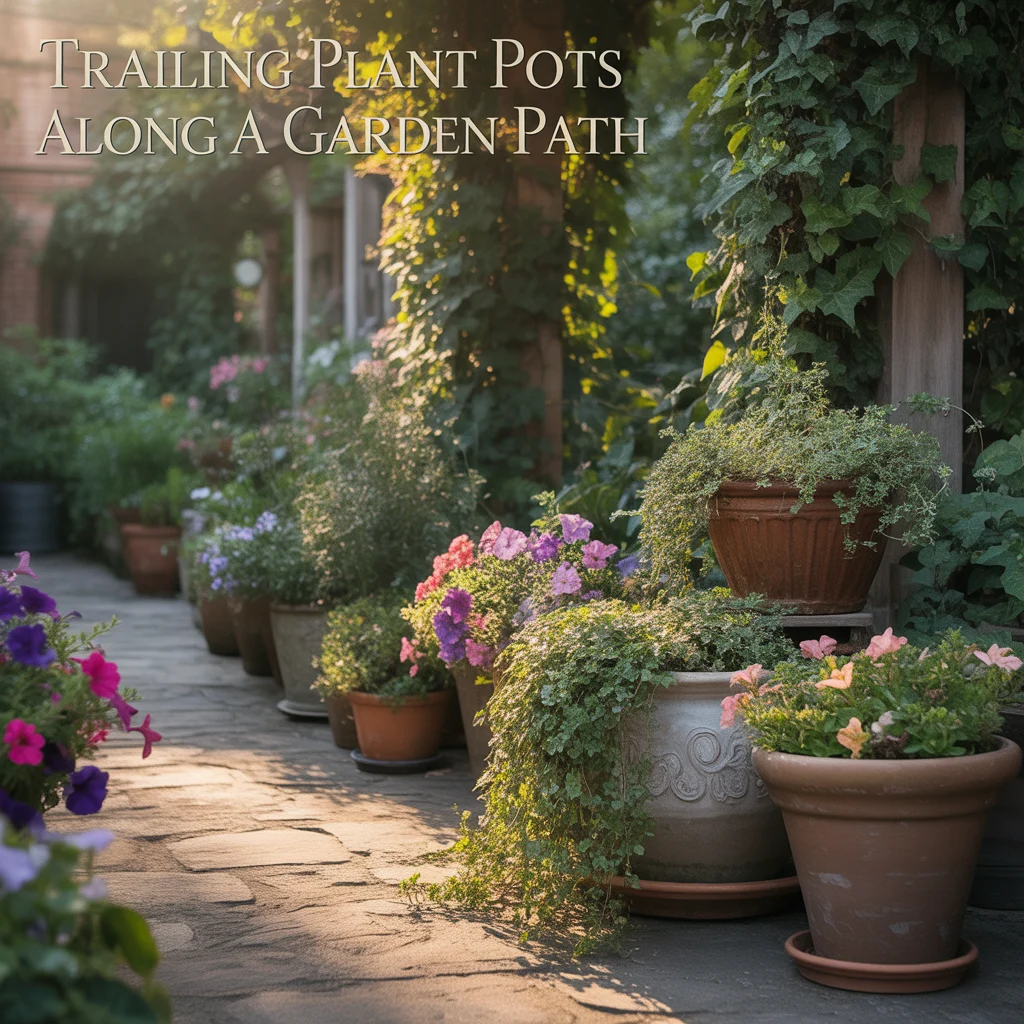
Trailing plant pots along a garden path use containers positioned at path edge level with trailing and cascading plants that spill downward and outward over the pot rim, softening the transition between the path surface and the surrounding garden and adding a loose, relaxed planting quality to the walkway that upright pot displays cannot produce. I placed six 12-inch terracotta pots planted with Lobelia erinus, Bacopa monnieri, and Helichrysum petiolare trailing varieties along both sides of a 20-foot brick path at a residential project, and the cascading growth from the pots by midsummer produced a softened, overflowing path edge effect that the homeowner described as making the path look like it had been there for decades.
Trailing Plants for Garden Path Pots
Lobelia erinus, Bacopa monnieri, and Helichrysum petiolare are three trailing plants suited to pots on a garden path. Lobelia erinus in trailing form produces a cascade of small blue, white, or crimson flowers from May to October at 6 to 12 inches trailing length, providing continuous flower colour at path edge level throughout the main growing season. Bacopa monnieri produces tiny white or pink flowers on trailing stems of 12 to 18 inches from May to October, providing a fine-textured, delicate cascade over the pot rim that suits a cottage or informal garden path pot display. Helichrysum petiolare produces soft, silver-grey felted trailing foliage of 18 to 24 inches length from May to October, providing a foliage trailing element that suits a pot mixed with flowering trailing companions on a garden path.
Pot Heights for Trailing Plants on a Garden Path
Pots at ground level, on low pot feet, and on raised pot stands are three height positions suited to trailing plants on a garden path. Trailing plants in pots at ground level produce a relatively short cascade length before the trailing stems reach the path surface, which suits compact trailing varieties of 6 to 10 inches trailing length. Pots raised on 2 to 3-inch pot feet allow trailing stems to extend 8 to 12 inches below the pot base before touching the path surface, increasing the visible trailing length of the display. Pots on raised stands of 6 to 12 inches height allow the longest trailing cascade and suit larger trailing varieties of 18 to 24 inches, providing the most dramatic flowing effect of the three position options on a garden path with pots.
Terracotta Pot Groupings on a Garden Path
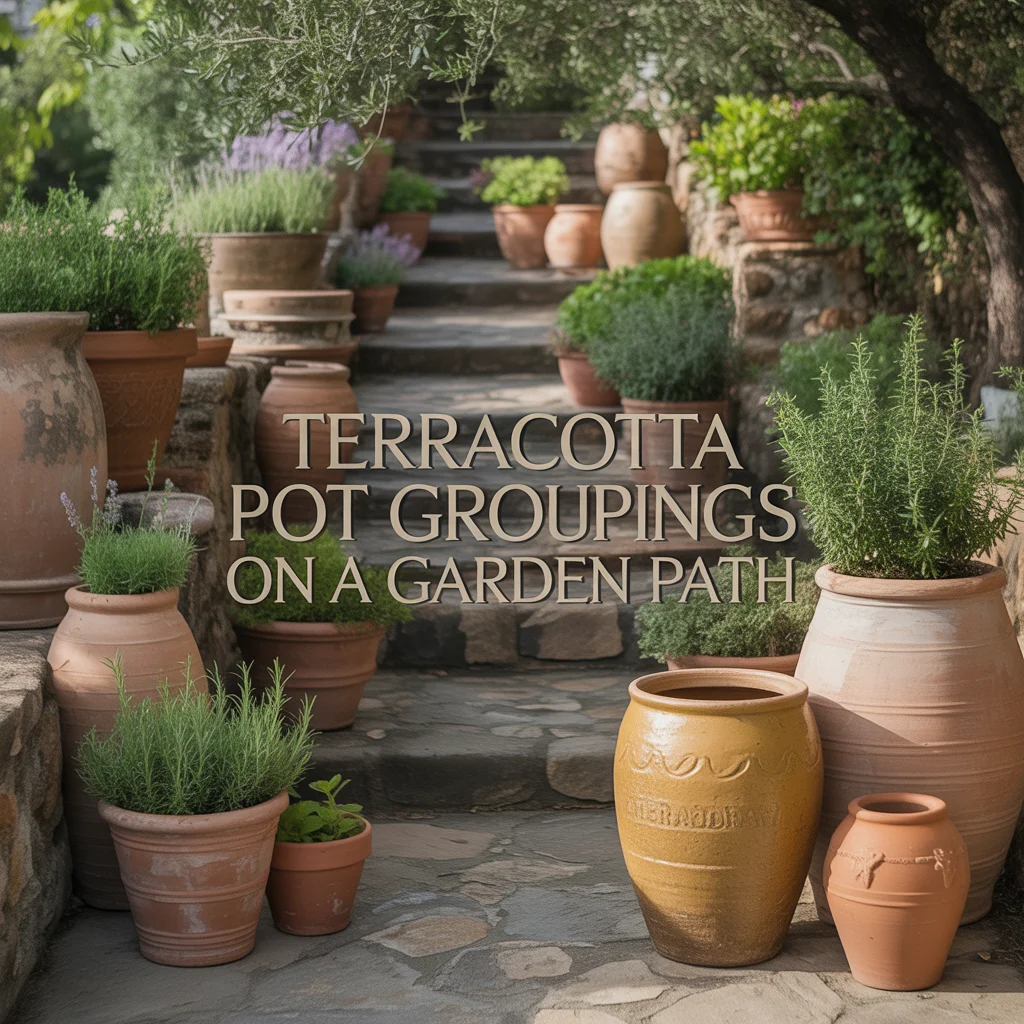
Terracotta pot groupings on a garden path place clusters of three to five pots in different sizes and heights together at intervals along the path rather than spacing individual pots at regular distances, creating a more informal, naturalistic pot display that suits cottage, country, and relaxed garden path styles. I replaced the evenly spaced individual pots on my own garden path with three groupings of five pots each at 6-foot intervals, and the grouped arrangement produced a path display that looked more personally curated and less regimented than the individual spacing had done, while using exactly the same number of pots and plants.
Creating a Terracotta Pot Grouping for a Path Display
A terracotta pot grouping for a garden path uses five pots in three different sizes: one large pot of 14 to 16 inches as the tallest visual anchor, two medium pots of 10 to 12 inches flanking the large pot, and two small pots of 6 to 8 inches at the front of the grouping. The large anchor pot is placed at the back of the grouping against the path edge or adjacent border, the two medium pots are placed on either side slightly forward, and the two small pots complete the front of the grouping at path surface level. I orient the grouping so the tallest pot faces the primary viewing direction of the path approach, which ensures the height graduation from back to front is clearly visible from the garden entrance. For paths where a bench is incorporated between pot groupings, practical placement and styling ideas are covered in these garden paths with benches between pot arrangements.
Plants for a Terracotta Pot Grouping on a Garden Path
Using pots in garden beds alongside a terracotta grouping display produces the most integrated path appearance, with the pot groupings connecting the planted border planting to the path surface level. Inside the groupings themselves, planting the large anchor pot with a tall structural plant such as Agapanthus or a clipped standard, the medium pots with mid-height flowering perennials or herbs, and the small front pots with trailing or low-growing plants produces the full height range from ground level to 3 feet in a single grouped pot display at each path position.
Low Maintenance Garden Path With Pots of Evergreen Plants
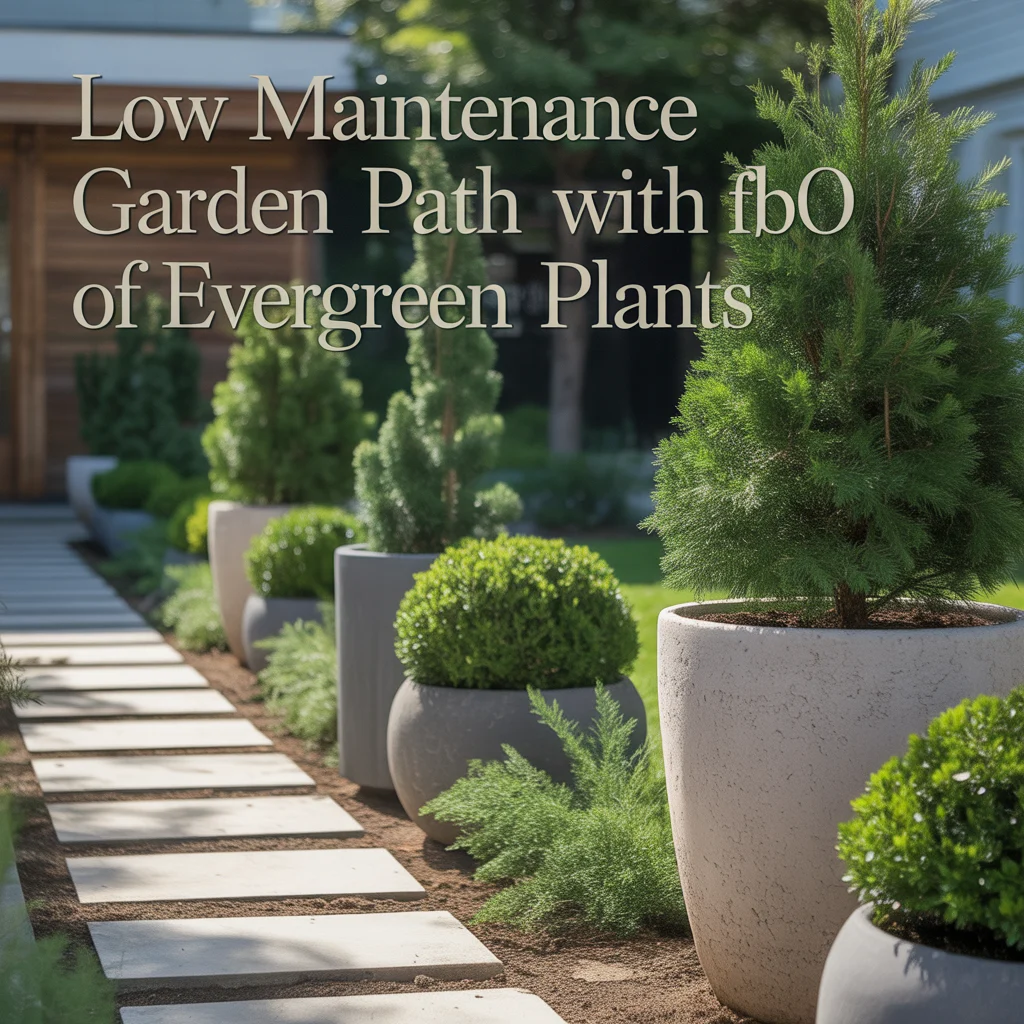
A low maintenance garden path with pots of evergreen plants uses containers planted with permanent evergreen shrubs, grasses, and perennials that provide year-round structure and interest without seasonal replanting, feeding schedules more demanding than once per year, or regular deadheading. I created a low maintenance pot path display for a rental property using twelve pots planted with Sarcococca confusa, Carex oshimensis Evergold, Pittosporum tenuifolium, and Liriope muscari, and the display maintained a presentable, green, well-furnished path appearance in every month of the three years since installation with no replanting and two fertilizer applications per year.
Evergreen Plants for Low Maintenance Path Pots
Sarcococca confusa, Carex oshimensis Evergold, and Liriope muscari are three evergreen plants suited to low maintenance pots on a garden path. Sarcococca confusa, sweet box, produces small white flowers with an exceptionally strong vanilla fragrance in January and February and maintains glossy dark green foliage year-round in 10 to 12-inch pots, providing the most pleasant winter surprise of any garden path pot plant when its fragrance is detected on a cold January morning. Carex oshimensis Evergold produces bright gold and green striped arching foliage year-round in a compact 12-inch mound that requires no cutting back, dividing, or deadheading to maintain its appearance. Liriope muscari produces dark green strap leaves year-round with violet flower spikes in September and October, providing the most seasonal floral interest of the three species in an otherwise year-round foliage evergreen pot display.
Fertilizing Evergreen Pot Plants on a Garden Path
Evergreen plants in garden path pots require two fertilizer applications per year to maintain healthy growth and prevent the yellowing and sparse growth that develops when container compost becomes nutrient-depleted after 12 to 18 months. The first application takes place in March using a balanced slow-release granular fertilizer at 10 grams per 10-inch pot, which releases nutrients gradually throughout the main growing season from April to September. The second application takes place in September using a low-nitrogen, high-potassium fertilizer such as sulphate of potash at 5 grams per 10-inch pot, which hardens the current season’s growth before winter without stimulating soft, frost-vulnerable new shoots in autumn.
Cottage Garden Pot Display on a Garden Path
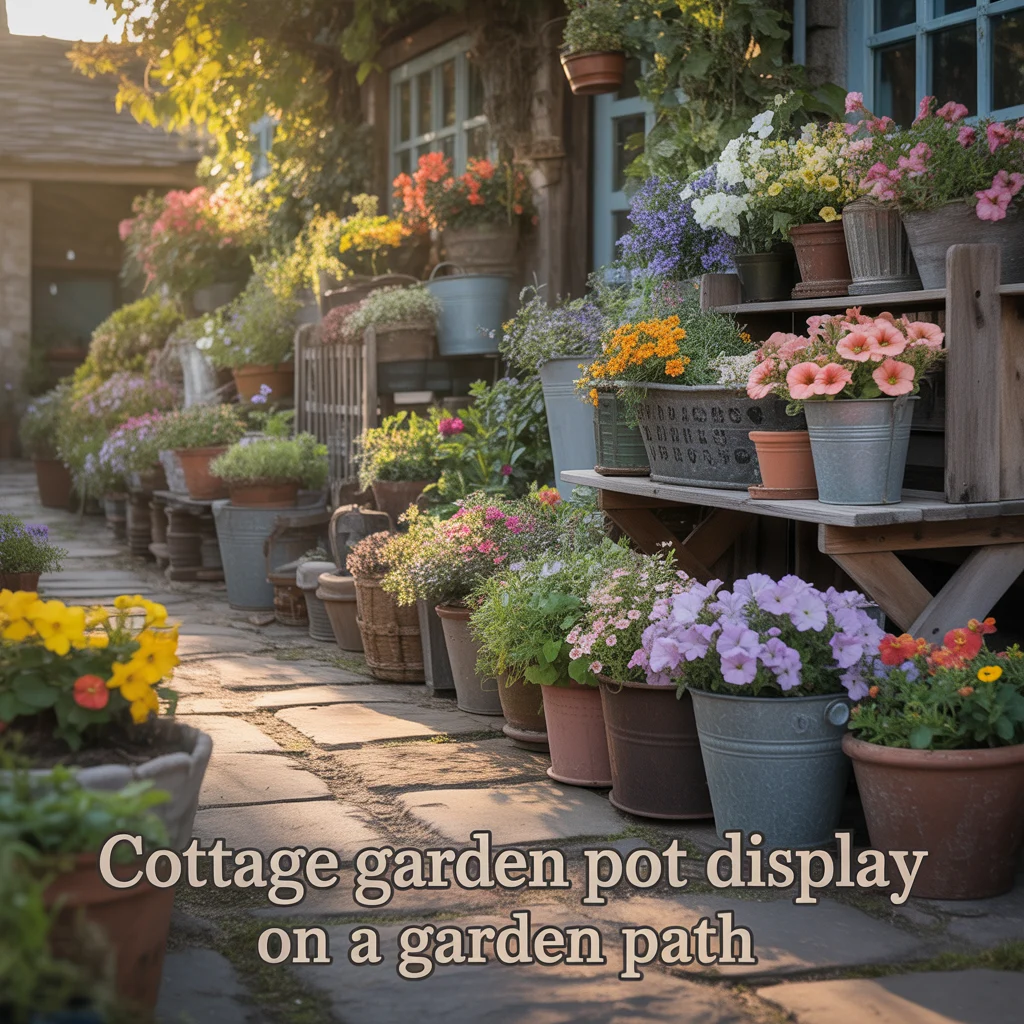
A cottage garden pot display on a garden path uses a mixture of terracotta, glazed, and aged stone pots in different sizes, shapes, and heights planted with cottage garden flowers including roses, foxgloves, sweet peas, lavender, and geraniums to create a relaxed, abundant path display that suits the informal, overflowing character of a cottage garden style. I created a cottage garden pot path at a residential project using twelve pots in five different sizes and three different materials, planted with Rosa The Fairy standard, Lavandula angustifolia, Geranium rozanne, Lobelia erinus, and Thymus vulgaris, and the combination of different pot forms and cottage planting produced a path that looked personally accumulated rather than deliberately designed, which is precisely the character that defines a successful cottage garden path pot display. Anyone managing a large number of path pots will find practical workspace and organisation ideas in these best potting bench ideas for managing path pot displays.
Cottage Pot Materials for a Garden Path
Aged terracotta, hand-glazed ceramic in soft colours, and weathered concrete are three pot materials suited to a cottage garden path display. Aged terracotta with a natural green moss and white mineral deposit surface provides the most authentically weathered pot appearance for a cottage path display and is achieved either through natural outdoor ageing over two to three years or by applying a live moss culture to new pots. Hand-glazed ceramic in soft sage green, pale blue, or cream produces a gentle colour presence in the pot display that suits the muted, harmonious colour palette of a cottage garden path. Weathered concrete pots in grey, warm buff, or natural aggregate finishes provide a robust, low-cost alternative to terracotta that ages to a similarly natural surface within two to three seasons.
Cottage Flowers for Garden Path Pot Planting
Rosa The Fairy, Lavandula angustifolia Hidcote, and Digitalis purpurea are three cottage flowers suited to a garden path pot display. Rosa The Fairy produces small pale pink flowers in large clusters from July to October on a compact 18-inch pot plant, providing a long-season cottage rose presence at path edge level without the large root system of a standard rose requiring annual pot repotting. Lavandula angustifolia Hidcote provides the classic cottage garden fragrance and purple flower spike from June to August in a 10-inch pot. Digitalis purpurea produces tall flower spikes of 4 to 5 feet from a 14-inch pot in June and July, providing the most dramatically tall single pot plant in a cottage garden path display.
Seasonal Bulb Pot Display on a Garden Path
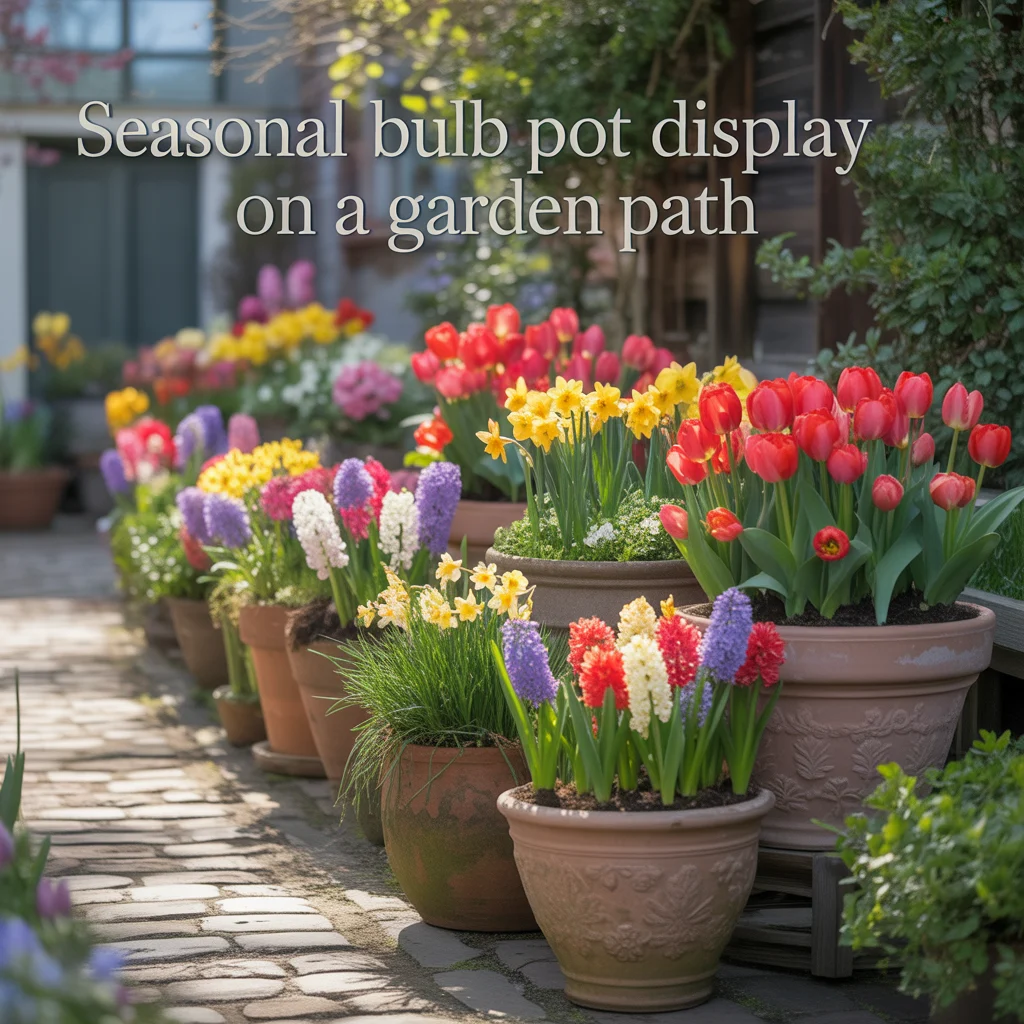
A seasonal bulb pot display on a garden path uses containers planted with spring, summer, and autumn bulbs to create a pot display on the path that follows the natural bulb sequence from the first snowdrops in February through the dahlias and cannas of late summer, providing a continuously changing pot display that requires minimal maintenance between the bulb planting in autumn and the flowering display the following year. I planted twelve pots with a three-season bulb sequence at a residential project, planting Galanthus in September, Narcissus in October, Tulipa in October at 6-inch depth below the narcissus, and Dahlia tubers in May, and the sequential flowering from February through October produced an uninterrupted bulb pot display throughout the entire growing season.
Spring Bulbs for Garden Path Pot Displays
Galanthus nivalis, Narcissus Tete-a-Tete, and Tulipa Ballerina are three spring bulbs suited to a seasonal path pot display. Galanthus nivalis produces nodding white flowers on 6-inch stems from February to March in a 6-inch pot at the path edge, providing the season’s first flower display before any other plant on the path produces visible growth. Narcissus Tete-a-Tete produces small yellow flowers on 6-inch stems from March to April and suits the smallest path pots where a compact narcissus species is needed rather than a full-sized daffodil that would outgrow a pot of under 8 inches diameter. Tulipa Ballerina produces orange-red lily-flowered blooms on 22-inch stems in late April, providing the tallest and most dramatically coloured spring bulb display in a path pot collection.
Summer Bulbs for Garden Path Pot Displays
Dahlia Bishop of Llandaff, Lilium regale, and Gladiolus Priscilla are three summer bulbs suited to a seasonal path pot display. Dahlia Bishop of Llandaff produces red flowers with dark foliage on 3-foot stems from July to October in 14-inch or larger pots, providing the most continuously flowering summer bulb pot display for a garden path. Lilium regale produces large white trumpet flowers with a strong fragrance on 3 to 4-foot stems in July from 14-inch pots containing three bulbs, providing the most powerfully fragrant summer bulb pot display for a garden path. Gladiolus Priscilla produces pink and white flower spikes on 3-foot stems from July to September in 12-inch pots, providing a vertical, architectural summer flower display at path edge level.
Ideas for Planters Outside a Front Garden Path
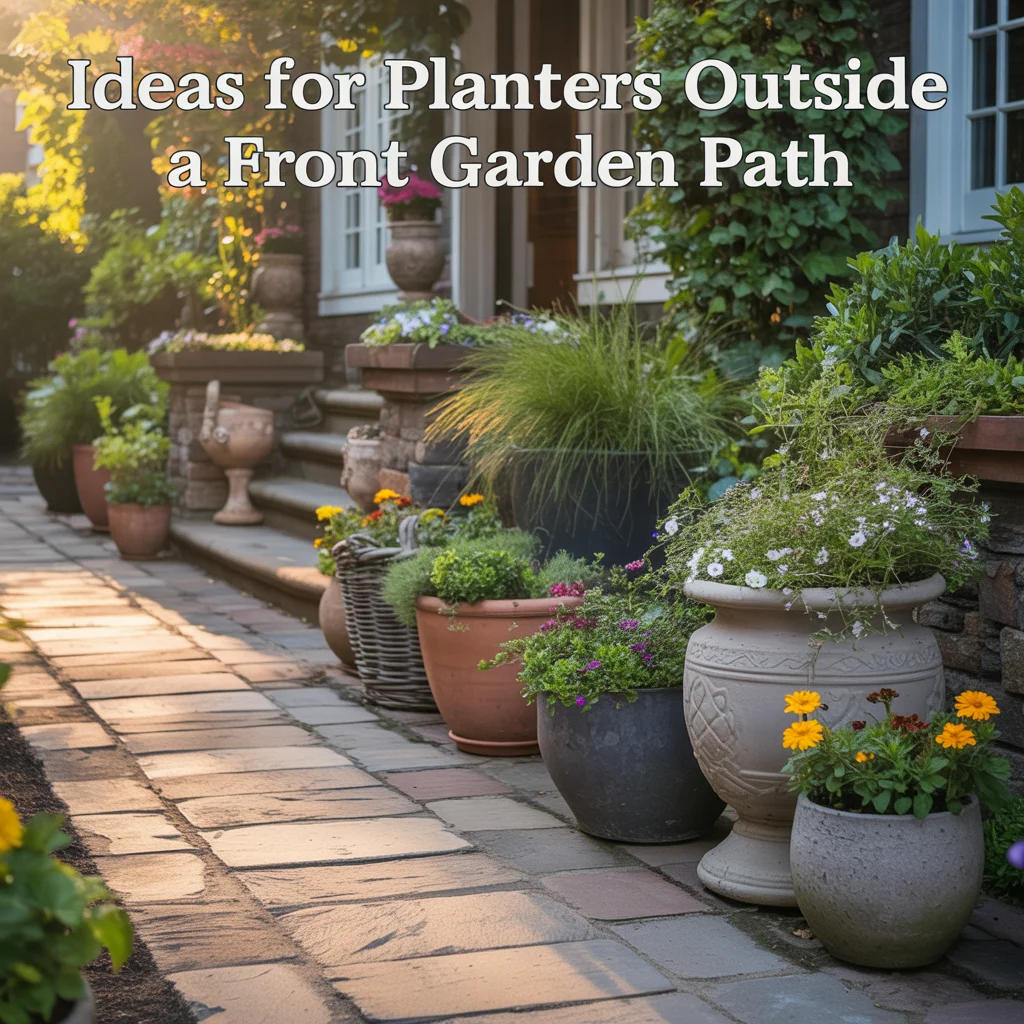
Ideas for planters outside on a front garden path focus on creating a welcoming entrance display that is visible from the street, suits the architectural character of the property, and requires maintenance levels appropriate for a front garden position that receives less daily attention than a rear garden space. I redesigned the front path of a Victorian terrace using four matching black ribbed ceramic pots in two sizes at the gate posts and step, planting the gate post pots with Laurus nobilis standards and the step pots with seasonal Lavandula angustifolia, and the simple four-pot entrance arrangement produced an immediate transformation of the property’s street appearance from an unremarkable front door to a clearly maintained and considered garden entrance.
Front Door Path Pot Arrangements
Flanking pot pairs at the door step, graduated pot rows along the path length, and gate post accent pots are three front door path pot arrangements suited to ideas for planters outside on a residential front garden path. Flanking pot pairs at the door step use two identical pots placed one on each side of the front door to frame the entrance and create a symmetrical focal point at the path terminus. Graduated pot rows use three to five pots in reducing sizes placed on one or both sides of the path from the gate to the door, creating a visual sequence that guides the visitor from the street to the entrance. Gate post accent pots place a single large pot at each gate post to mark the beginning of the path and establish the planting style of the entrance display from the street viewpoint.
All-Year Pot Plantings for a Front Garden Path
Buxus sempervirens ball, Laurus nobilis standard, and Euonymus fortunei Emerald Gaiety are three year-round plantings suited to pots outside on a front garden path. Buxus sempervirens ball in a 12-inch pot provides a permanent, year-round green geometric form that suits any architectural style from Victorian to contemporary. Laurus nobilis standard in a 16-inch pot provides an elegant, aromatic evergreen standard that requires only one light trim per year to maintain its lollipop form and is the most widely planted all-year front garden path pot plant in formal residential garden design. Euonymus fortunei Emerald Gaiety produces white-edged green leaves year-round in a 10-inch pot and provides a bright, low-maintenance alternative to box for a front path pot display in a position receiving less than 4 hours of direct sunlight per day.
Using Pots in Garden Beds Alongside a Path
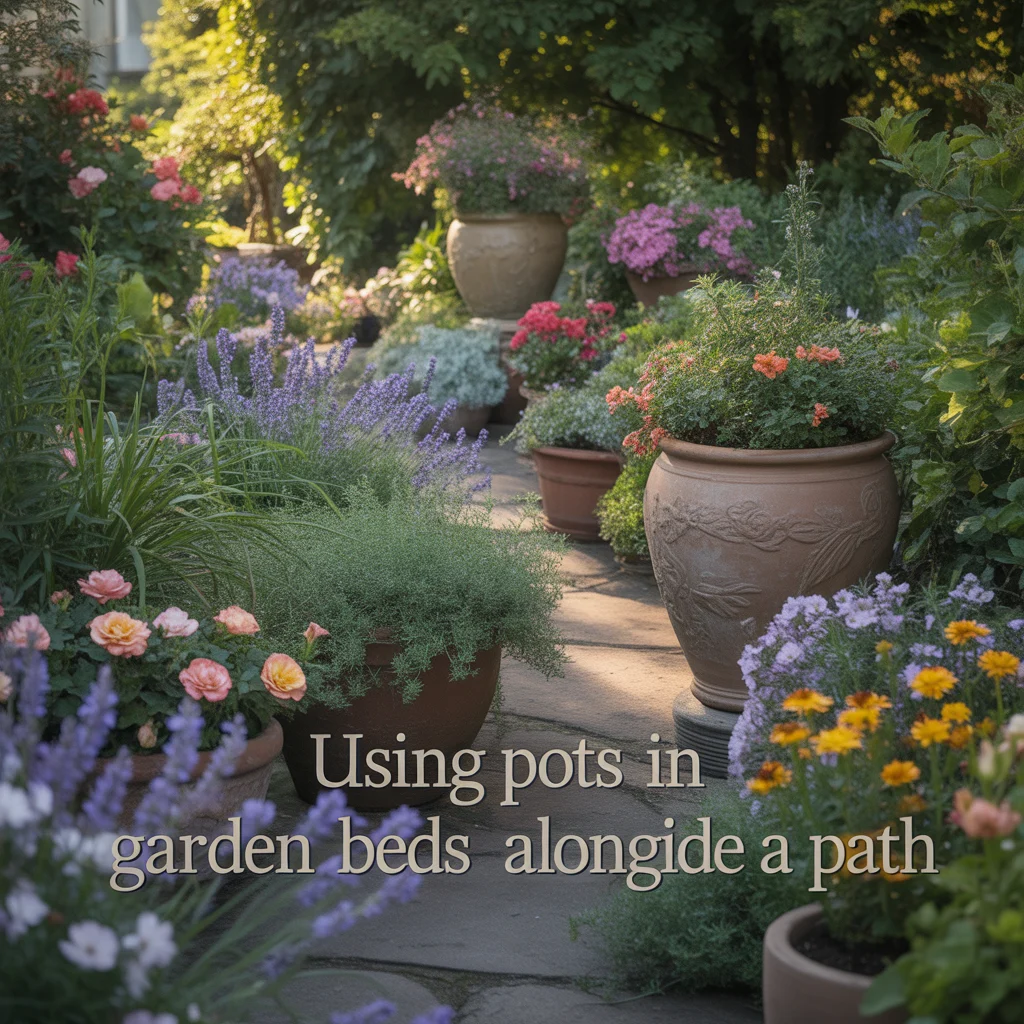
Using pots in garden beds alongside a path integrates container plants within the planted border on both sides of the walkway, placing pots directly in the border soil among the planted perennials and shrubs to add height, colour emphasis, and seasonal change at specific points within the border planting scheme without removing or replacing permanent plants. I incorporated four large terracotta pots into the planted borders on both sides of a 22-foot garden path at a residential project, sinking the pot bases 4 inches into the border soil to stabilize them and positioning them at 6-foot intervals to mark the quarter points of the path length, and the integrated pot and border combination produced a path display that read as considerably more sophisticated than either the border alone or a separate pot-lined path would have achieved.
How to Integrate Pots Into Garden Bed Path Borders
Pots are integrated into garden bed borders alongside a path by sinking the lower third of the pot into the border soil to provide stability, surrounding the visible pot body with low-growing border plants that conceal the lower pot section and create the impression of the pot emerging from the planting rather than sitting on top of it. I use a trowel to excavate a circular hole in the border soil slightly smaller than the pot diameter, then press the pot firmly into the hole until the desired amount of the pot body is buried. Border plants including Alchemilla mollis, Geranium rozanne, and Nepeta x faassenii are planted around the base of the embedded pot at the normal 12 to 18-inch spacing to create the integrated planting effect.
Pot Plants That Suit Integration Into a Garden Bed Path Border
Agapanthus africanus, Phormium cookianum, and Rosa Olivia Rose Austin in a container are three pot plants suited to integration into a garden bed alongside a garden path. Agapanthus africanus in a 14-inch pot produces blue flower heads that emerge above the surrounding border perennials in July to September, providing a flower presence at a height level not produced by the surrounding border planting. Phormium cookianum in a 14-inch pot provides a bold, sword-leaved accent plant in the border that creates a strong vertical form at the specific points where extra height emphasis is needed in the border design alongside the path. Rosa Olivia Rose Austin in a 16-inch container produces clear pink flowers at 3 to 4 feet height from June to October and provides a concentrated rose presence at specific path positions.
Seasonal Changing Pot Display on a Garden Path
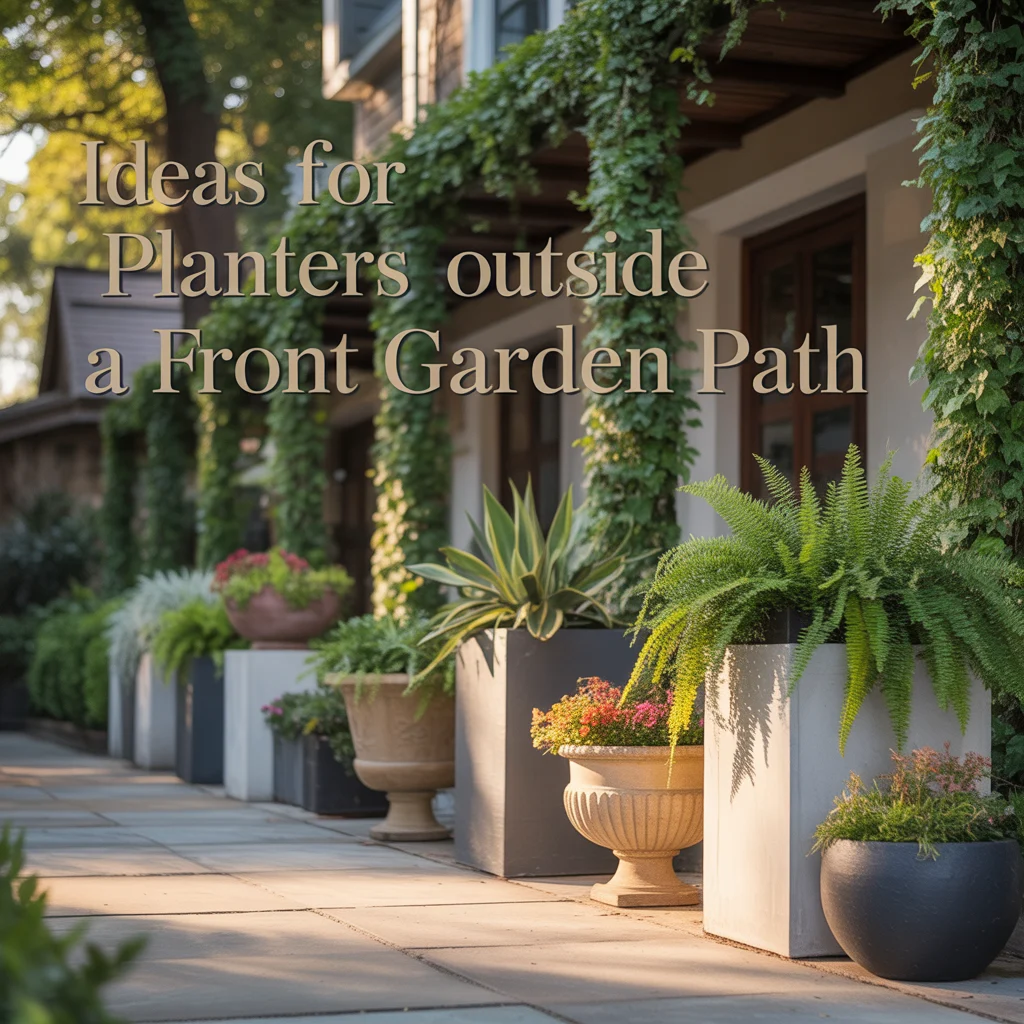
A seasonal changing pot display on a garden path updates the pot plantings and sometimes the pots themselves four times per year to create a garden path display that is never the same twice and reflects the current season in both plant material and container style with a minimal annual investment of $40 to $80 per season for a standard six-pot path display. I have maintained a seasonal changing pot display on my own front path for four consecutive years using a core collection of six matching pots replanted each season, and the discipline of changing the display four times per year has produced a path that consistently receives complimentary comments from visitors in every season, including winter when the Sarcococca fragrance from the winter pot planting is the primary reason visitors comment positively.
Winter Pot Plantings for a Seasonal Garden Path Display
Sarcococca confusa, Helleborus niger, and Skimmia japonica Rubella are three winter plantings suited to a seasonal pot display on a garden path. Sarcococca confusa produces small white flowers with a vanilla fragrance in January and February at 18 inches height in a 12-inch pot, providing the most appreciated winter pot planting of any species I have used on a garden path because the unexpected fragrance in the coldest months of the year produces a genuine emotional response in visitors who encounter it for the first time. Helleborus niger, the Christmas rose, produces white flowers from December to February at 12 inches height in a 10-inch pot, providing visible winter flower colour on the garden path during the months when all other flowering path pot plants are dormant. Skimmia japonica Rubella produces red winter buds from October through to March when they open as white flowers.
Transitioning Between Seasonal Pot Displays
The transition between seasonal pot displays on a garden path is managed most efficiently by preparing the new season’s pot plantings on the day before they are needed, which allows the new pots to be placed on the path immediately as the outgoing season’s pots are removed without leaving the path unfurnished for any period. I keep a seasonal planting calendar for my own path pot display recording the planting dates, plant names, pot sizes, and total seasonal cost for each of the four annual transitions, which allows me to plan the next season’s display before the current season has ended and ensures the new plantings are always ready for immediate installation on the transition date.
Related
How to use borders to anchor pots along a garden path
Backyard pathway ideas with container garden styling
Stunning stone garden path ideas with decorative pots
Frequently Asked Questions
What pots look best on a garden path?
Terracotta pots of 10 to 14 inches diameter look best on a standard garden path because the warm orange-brown colour of terracotta suits the widest range of path surface materials including brick, stone, gravel, and timber, and the natural ageing of terracotta over one to two seasons produces a weathered patina that makes the pots look established and considered rather than newly purchased. For a modern or contemporary garden path, matching matt black glazed ceramic pots in a consistent size and spacing produce the most visually resolved contemporary pot display. For a formal garden path, matching lead-effect resin or stone-effect fibreglass pots in pairs provide the formal symmetry suited to a period or architecturally designed entrance.
How many pots should I put along a garden path?
A garden path of 20 feet benefits from six to eight pots placed at 3 to 4-foot intervals on alternating sides, which provides a defined pot-lined path character without filling the path edge so densely that the walking experience feels crowded. For a path of 10 to 15 feet, four pots in two pairs or a single grouped arrangement of four to five pots at the path entrance and terminus produces sufficient pot presence without overcrowding a compact space. I calculate the minimum number of pots needed to produce a defined pot-lined path character as one pot per 3 feet of path length on one side, which provides a visually rhythmic display without unnecessary expense on additional containers.
What plants are best for low maintenance garden path pots?
Buxus sempervirens balls, Laurus nobilis standards, and Sarcococca confusa are the three best plants for low maintenance garden path pots because all three are evergreen, require no seasonal replanting, and need only one or two maintenance interventions per year. Buxus sempervirens requires one clip per year in July. Laurus nobilis requires one trim per year in April. Sarcococca requires no clipping or pruning and simply grows slowly and evenly without any intervention. All three plants require watering once or twice per week from May to September and a balanced slow-release fertilizer application in March, which represents the minimum maintenance commitment of any planted path pot display that still produces a presentable year-round appearance.
How do I stop garden path pots from blowing over?
Garden path pots are prevented from blowing over by using pots of sufficient weight for their height, filling the base of lightweight pots with 2 inches of gravel before adding compost, and positioning pots against a wall, step, or adjacent pot that provides lateral support. Pots with a height-to-base-width ratio above 2:1 are inherently unstable in exposed garden positions and require additional ballast of gravel or sand at the base to lower the center of gravity. I add 1 to 2 inches of pea gravel to the base of all fibreglass and lightweight resin pots on exposed garden path positions, which reduces the tip risk significantly without adding enough weight to make the pots difficult to move for seasonal replanting.
Can I use pots on a narrow garden path without blocking the walkway?
Pots on a narrow garden path of 2.5 to 3 feet width are placed without blocking the walkway by using a maximum pot diameter of path width in inches divided by 4, positioning pots on one side only rather than both sides simultaneously, and using tall, narrow pot forms rather than wide, low containers that extend further into the path walking space. On a 30-inch-wide path, the maximum pot diameter is 7.5 inches, which leaves 22.5 inches of clear walking width after pot placement on one side. Tall cylindrical pots of 8 to 10 inches diameter and 14 to 18 inches height provide a significant visual path presence at narrow path widths while maintaining adequate walking clearance throughout the pot-lined section of the walkway.