
Woodland Gardens With Paths for a Magical Shaded Space

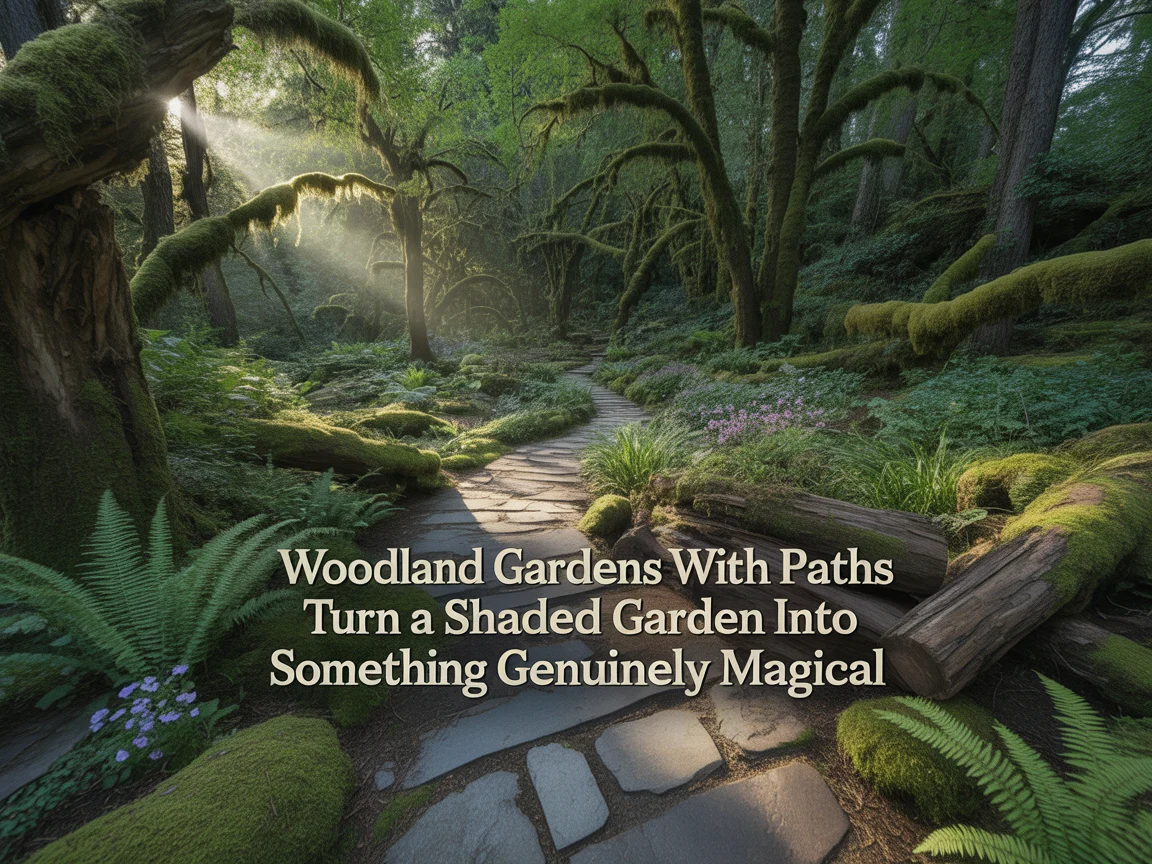
I converted the shadiest section of my back garden into a woodland garden three years ago, and the path I laid through it changed everything about how the space felt. Before the path existed, the area under the old apple and hazel trees was simply a shaded patch of ground with patchy grass that I mowed reluctantly twice a month. After I laid a curved bark chip path through it and planted either side with ferns, hostas, and Sarcococca, the same space became the section of my garden I walked to every morning before doing anything else.
Woodland gardens paths combine naturalistic shade-tolerant planting of ferns, hostas, astilbes, and woodland flowers beneath an existing or newly planted tree canopy with defined walking routes of bark chip, stepping stones, timber rounds, or natural earth that allow the garden space to be moved through and experienced rather than simply viewed from the edge. The path gives the woodland garden structure and a reason to walk into it, while the surrounding planting gives the path a living, changing backdrop throughout every season.
Since that first woodland garden path, I have designed and created woodland gardens with paths across many different properties and shade conditions. I have seen simple woodland gardens with paths work in spaces as small as 15 feet across, and I have also seen large low-maintenance woodland garden designs covering hundreds of square feet of established tree canopy.
In this article, I am sharing the best woodland gardens with paths ideas that I have either created myself or studied closely enough to recommend with complete confidence.
Bark Chip Path Through a Fern and Hosta Woodland Garden
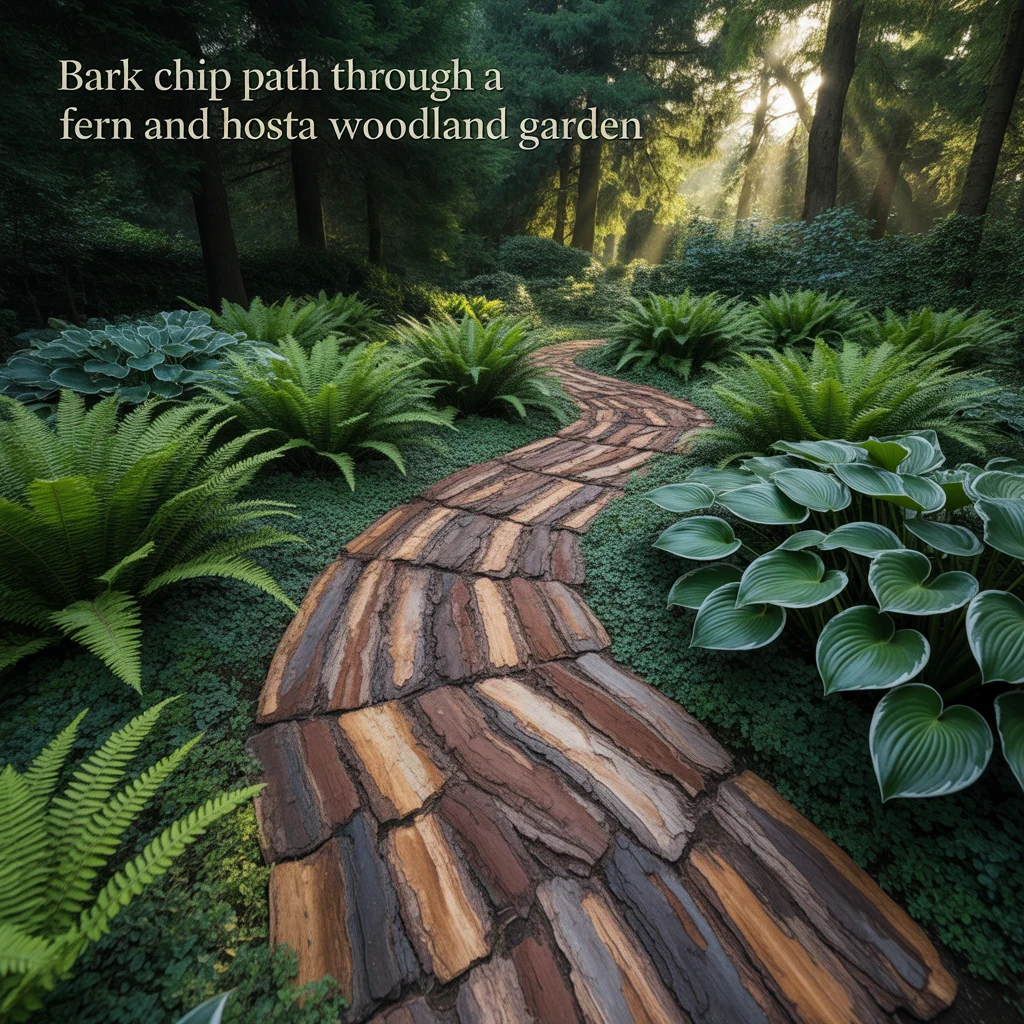
A bark chip path through a fern and hosta woodland garden is the most widely created and most photographed version of woodland gardens with paths, producing a soft, natural walking surface that suits the forest floor aesthetic and provides a weed-suppressing, moisture-retaining layer that benefits the surrounding shade planting simultaneously. I laid this combination in my own garden using medium bark chip at 3-inch depth on a heavy-duty weed membrane, and the path required only one top-up in three years while the surrounding Dryopteris filix-mas ferns and Hosta sieboldiana developed into the full, established woodland planting I had planned from the initial design.
Bark Chip Types for a Woodland Garden Path
Medium pine bark, composted wood chip, and fine decorative bark are three bark types suited to a woodland garden path. Medium pine bark at 25mm to 40mm chip size provides the most stable walking surface for a woodland path because the larger chip resists displacement underfoot better than fine bark at the same depth, and the warm reddish-brown color coordinates with tree bark and autumn leaf colors in the woodland garden setting. Composted wood chip available free from local tree surgeons provides a zero-cost woodland path surface that suits a naturalistic woodland garden where the irregular chip size and varied brown-grey tone of composted material is consistent with the forest floor aesthetic. Fine decorative bark at 10mm to 20mm provides the flattest, most comfortable walking surface for a heavily used woodland garden path.
Ferns for a Woodland Garden Path Border
Dryopteris filix-mas, Polystichum setiferum, and Athyrium filix-femina are three ferns suited to the borders of a bark chip woodland garden path. Dryopteris filix-mas produces arching fronds of 3 to 4 feet in dry to moist shade and tolerates the competitive root conditions under mature tree canopy better than most ornamental ferns, making it the most reliable species for a woodland garden path border in any shade level from deep to partial. Polystichum setiferum is semi-evergreen and provides winter structure at the woodland path edge after deciduous species die back, maintaining a green presence in the woodland garden during the months when the path is most clearly visible. Athyrium filix-femina produces the most delicate, finely divided fronds of the three species.
Stepping Stone Woodland Path Through Bluebells
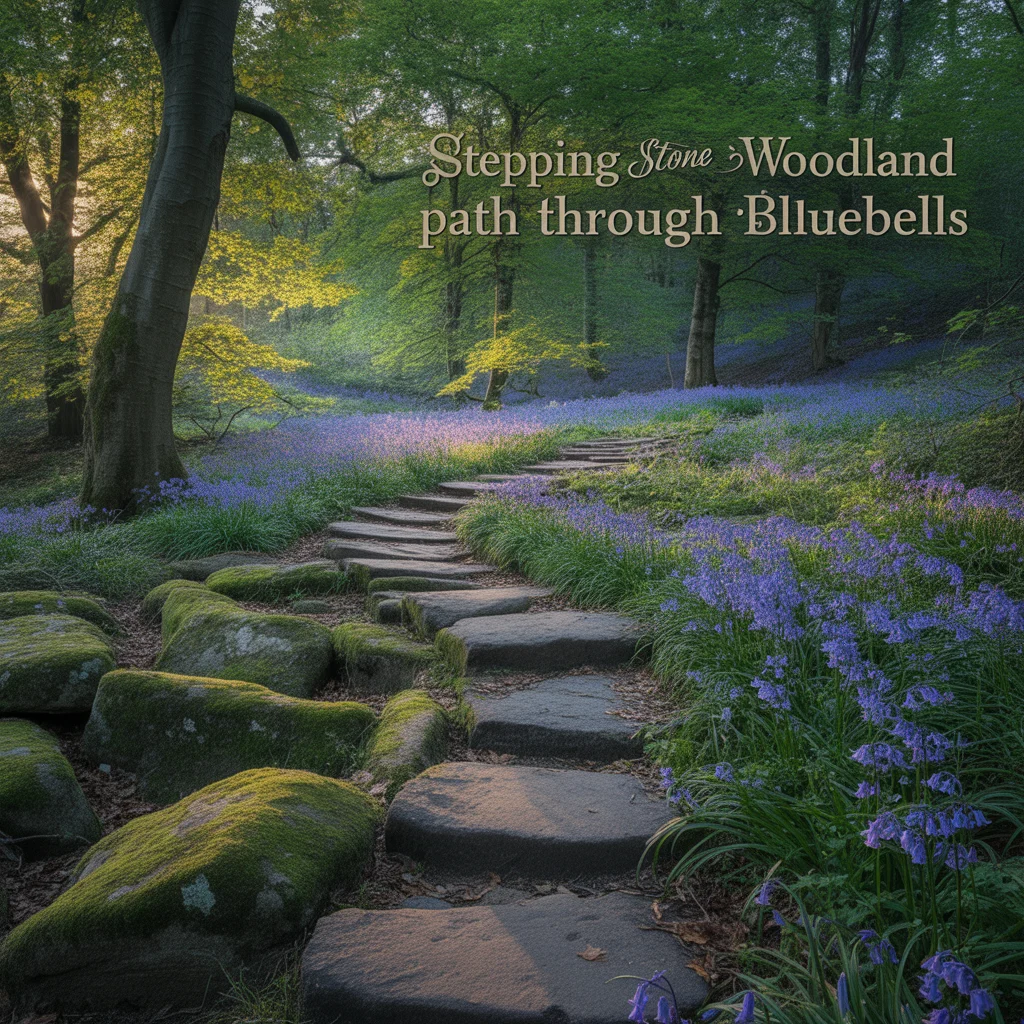
A stepping stone woodland path through bluebells uses large irregular stone pieces set in a winding route through an established or newly planted Hyacinthoides non-scripta bluebell colony, creating a woodland garden path that allows the user to move through the bluebell planting during the April and May flowering peak without trampling the flowers underfoot. I created a stepping stone path through a bluebell colony in my woodland section using eight large irregular limestone pieces set at 16-inch intervals in a gently curved route, and the ability to walk into the center of the bluebell planting rather than viewing it only from the edge changed the entire character of the April experience in my garden.
Setting Stepping Stones in a Bluebell Woodland Garden
Stepping stones in a bluebell woodland garden path are set by identifying the positions between existing bluebell bulb clusters where soil disturbance during stone placement will affect the minimum number of established bulbs, then excavating each stone pocket carefully to stone thickness plus 20mm of sharp sand bedding depth. I use a hand trowel rather than a full spade to excavate each stepping stone pocket in a bluebell woodland area, which reduces the risk of cutting through the papery bluebell bulbs at 2 to 4 inches below the soil surface. Each stone is pressed into the sharp sand bed with the stone face set 20mm above the surrounding soil to allow the bluebell growth to grow around the stone base in the first season.
Bluebell Woodland Garden Path Planting
Hyacinthoides non-scripta, Anemone nemorosa, and Primula vulgaris are three woodland plants suited to a stepping stone bluebell woodland garden path. Hyacinthoides non-scripta, the native English bluebell, produces nodding deep blue-purple flower spikes in April and May at 12 to 18 inches height and spreads by bulb offset and self-seeding to colonize a woodland floor area within 3 to 5 years of initial planting. Anemone nemorosa, wood anemone, produces white flowers in March and April before the bluebells and fills the woodland path planting area with an early spring white flower carpet. Primula vulgaris, the wild primrose, produces pale yellow flowers from February to April in partial woodland shade.
Curved Earth Path Through a Naturalistic Woodland Garden
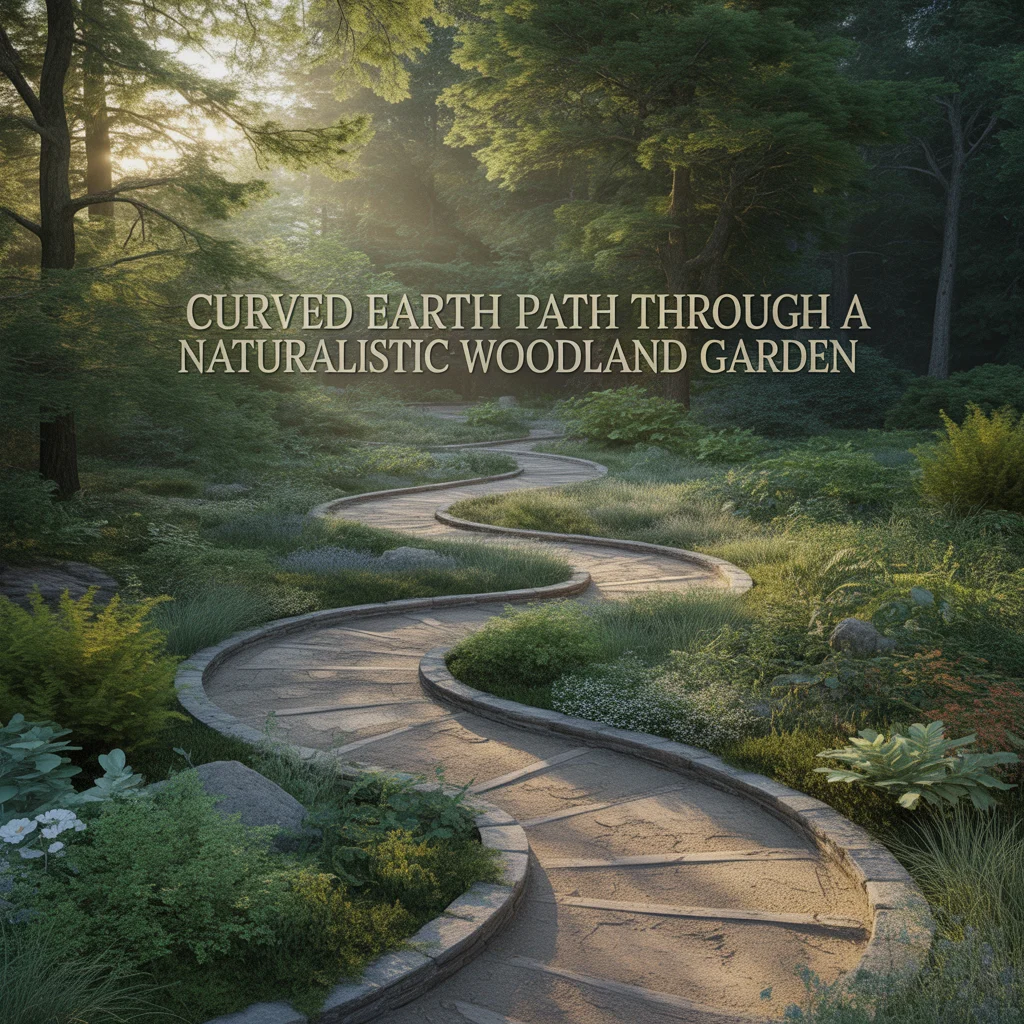
A curved earth path through a naturalistic woodland garden uses the soil itself as the path surface, compacted by repeated foot traffic into a firm, defined route through the woodland planting that develops naturally over time as the path is used. I allowed a natural earth path to develop in my woodland garden section by walking the same curved route repeatedly over two seasons without laying any material, and found that the compacted earth surface became stable and clearly defined within four to six weeks of regular use, producing the most naturally integrated path of any type I have created in a woodland garden setting.
Maintaining a Natural Earth Woodland Garden Path
A natural earth path in a woodland garden requires two maintenance tasks per year. First, in March, any surface rooting from surrounding plants that has encroached onto the compacted path surface during the previous growing season is removed using a hand fork, which maintains the clear distinction between the path and the surrounding woodland garden planting. Second, in October, any fallen leaves that have accumulated on the earth path surface are cleared to prevent the leaf layer from breaking down into a slippery organic mat on the path surface during wet autumn weather. I complete both tasks in under 30 minutes for a 25-foot natural earth woodland path.
When a Natural Earth Path Suits a Woodland Garden
A natural earth path suits a woodland garden with three specific conditions: established tree canopy that shades the path surface and reduces grass and weed germination, soil with adequate drainage that prevents the path from becoming waterlogged in wet conditions, and light to moderate foot traffic of fewer than 15 daily passes that compacts the soil sufficiently without churning it into mud. A natural earth path does not suit a heavily shaded woodland garden on clay soil in a high-rainfall position, where the combination of shade, moisture, and clay produces a path surface that becomes muddy and slippery from October through to April even with light traffic.
Log Roll Edged Woodland Garden Path
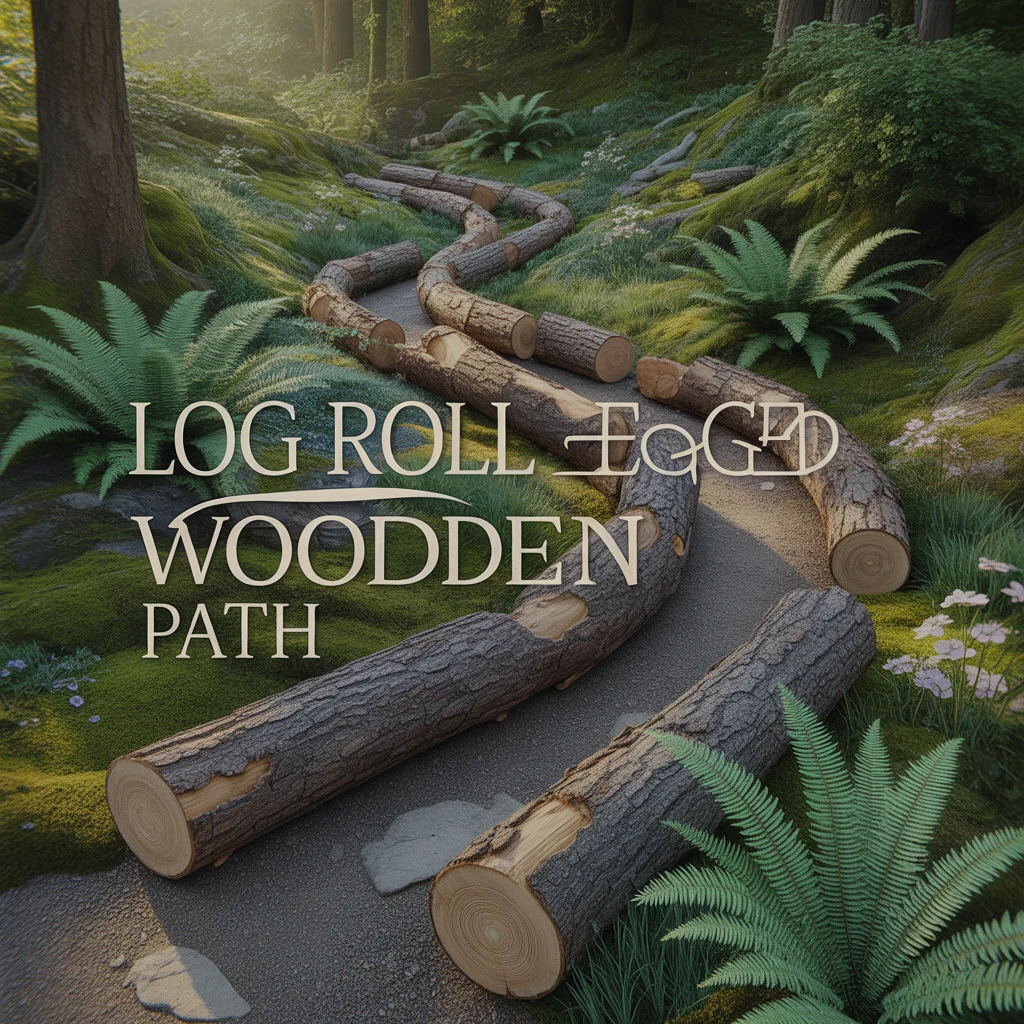
A log roll edged woodland garden path uses a bark chip or earth surface path contained on both sides by log roll edging made from short rounded timber sections wired together in a continuous flexible roll, creating a path with a strongly naturalistic character where the rounded timber edging coordinates with the tree trunks, fallen logs, and organic materials throughout the surrounding woodland garden. I installed log roll edging on a 30-foot bark chip woodland garden path and found the rounded timber edging produced a path that looked as though it had been designed specifically for the woodland setting, as opposed to the manufactured appearance of standard timber board edging on the same type of path. Further bark surface options and woodland path designs are covered in these garden paths with bark for natural woodland surfaces.
Log Roll Edging Types for a Woodland Garden Path
Rustic hazel log roll, split chestnut log roll, and pressure-treated pine log roll are three log roll edging types suited to a woodland garden path. Rustic hazel log roll uses 3 to 4-inch diameter rounded hazel poles wired at 6-inch intervals into a continuous roll, providing a natural, slightly irregular edging suited to an informal woodland garden path at $4 to $7 per linear foot. Split chestnut log roll uses halved chestnut sections providing a more finished, uniform edging surface with the natural durability of sweet chestnut timber at $5 to $8 per linear foot. Pressure-treated pine log roll provides the most affordable option at $2 to $4 per linear foot with a 10 to 15-year service life.
Installing Log Roll Edging on a Woodland Path
Log roll edging on a woodland garden path is installed by driving the pointed base stakes of each roll section into the soil alongside the prepared path edge at the correct depth to position the roll top face at the intended bark chip surface level, typically 3 inches above the sub-base level. I unroll the log roll along the path edge and drive each stake individually rather than trying to press the full roll into position at once, which prevents the roll from twisting and keeps the edging top face at a consistent height along the full path length. Adjacent roll sections are joined by twisting the wire ends of each roll around each other at each overlap point.
Moss and Stepping Stone Woodland Garden Path
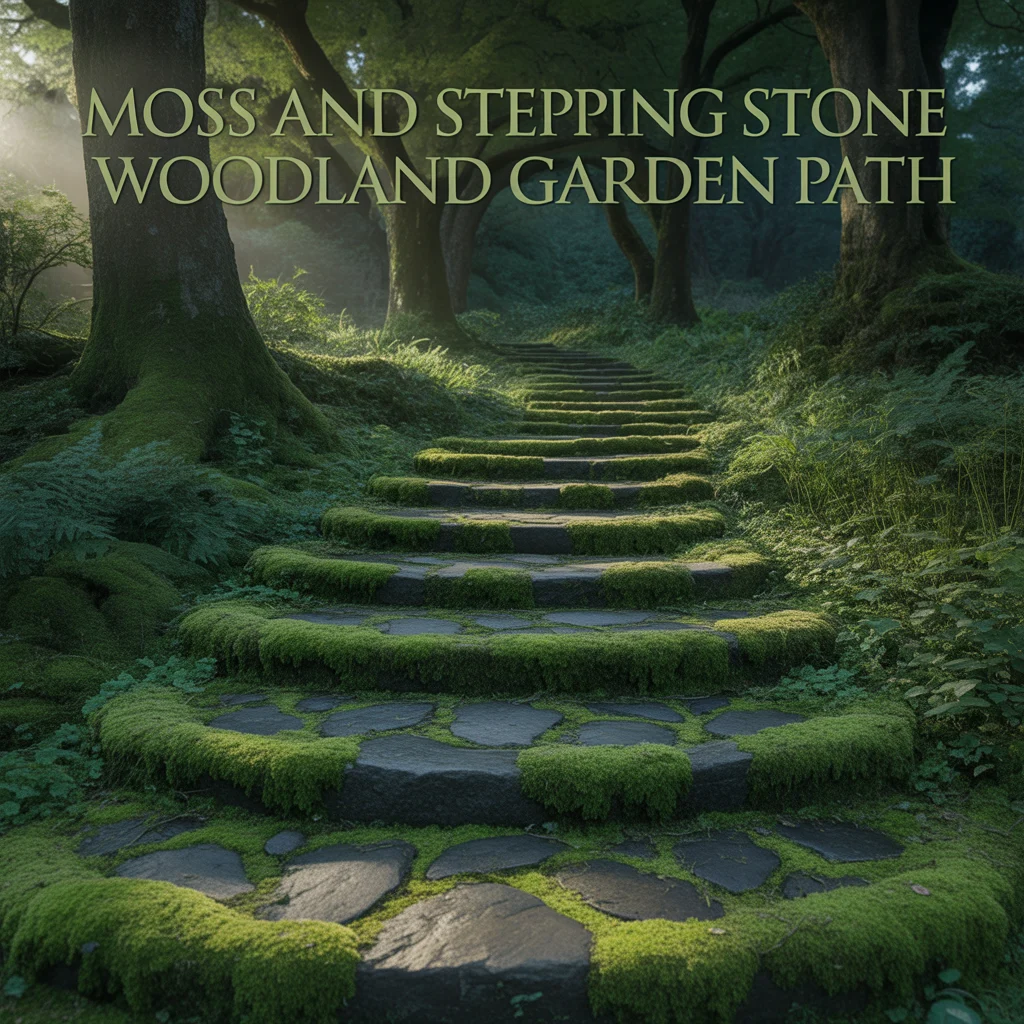
A moss and stepping stone woodland garden path uses flat stepping stones as the firm walking surface with deliberately cultivated or naturally establishing moss filling all the gaps between and around the stones, creating a path with a deep green, forest floor aesthetic that suits a shaded woodland garden where the moist, low-light conditions favor natural moss establishment around the stone surfaces. I encouraged moss to establish between the stepping stones of my woodland garden path by applying a moss slurry of blended fresh moss and buttermilk to the soil gaps in March, and visible moss growth appeared within three weeks in the most shaded positions and within six weeks across the full path gap surface.
Encouraging Moss in a Woodland Garden Path
Moss establishes in woodland garden path stone gaps by applying a 50/50 mixture of blended fresh moss and buttermilk brushed into the path gaps at 2mm depth and kept consistently moist for 4 to 6 weeks while spore germination occurs. The best conditions for moss establishment in a woodland path are full to partial shade with less than 3 hours of direct sun per day, consistent soil moisture without waterlogging, and a gap substrate of fine soil or horticultural grit rather than compacted mortar or concrete. I apply moss slurry in April on all woodland garden path projects and find the combination of warming spring soil and consistent rainfall in April and May provides the optimal germination conditions.
Stone Types for a Moss Woodland Garden Path
Yorkstone, reclaimed limestone, and Welsh slate are three stone types that suit a moss woodland garden path. Yorkstone provides a warm buff-grey surface that creates a harmonious tonal relationship with dark green moss because the mid-tone stone color allows the moss to read clearly without overpowering the stone surface visually. Reclaimed limestone weathers to a soft cream-grey that suits a formal or heritage woodland garden path where the aged stone appearance coordinates with the mature character of the established tree canopy above. Welsh slate in blue-grey provides a cool, dark stone surface that creates the strongest visual contrast with bright green moss, suiting a contemporary or dramatic woodland garden path design.
Timber Round Woodland Garden Path
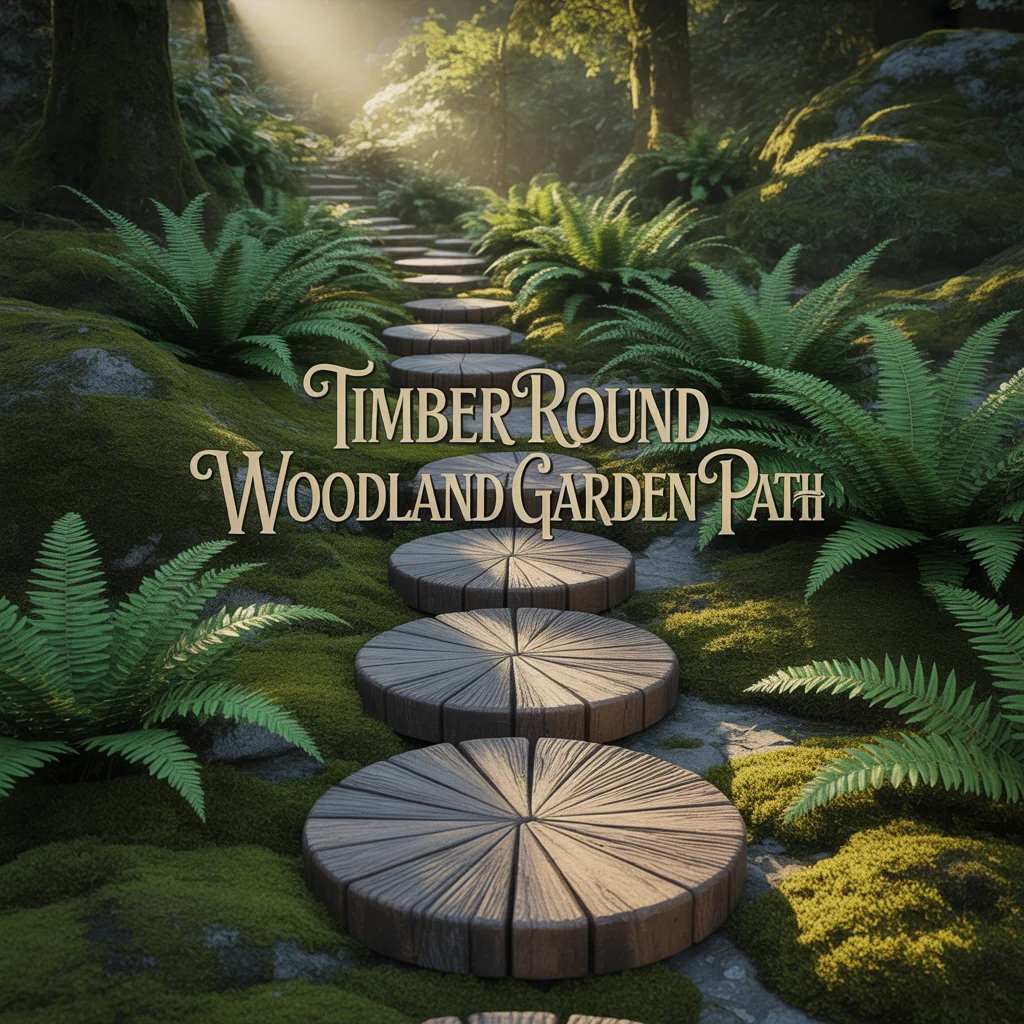
A timber round woodland garden path uses cross-section slices of tree trunks as the individual stepping elements through a woodland garden, creating the most naturally integrated path material available for a woodland garden setting because the circular wood grain surface of each round is visually identical to the cross-sections visible on the fallen and cut trees that are natural features of any woodland environment. I cut rounds from a felled oak tree in my garden and set them in a bark chip path through the woodland section, and the rounds looked as though they belonged in the space in a way that no manufactured stepping stone could have achieved in the same woodland context.
Timber Round Sizes for a Woodland Garden Path
12 to 16-inch diameter, 16 to 20-inch diameter, and mixed irregular diameter rounds are three size categories suited to a woodland garden path. Rounds of 12 to 16-inch diameter suit a narrow woodland garden path of 2 to 3 feet width where smaller rounds provide a natural, delicate stepping element without dominating the path. Rounds of 16 to 20-inch diameter provide a more confident foot placement suited to a woodland garden path in regular daily use as the primary access route through the woodland area. Mixed irregular diameter rounds of 10 to 24 inches provide the most naturalistic appearance of the three options, with the varied sizes replicating the irregular nature of genuine woodland floor timber cross-sections.
Preserving Timber Rounds on a Woodland Garden Path
Timber rounds on a woodland garden path require two coats of exterior timber preservative rated for ground contact applied to all surfaces before installation to extend the lifespan from 3 to 5 years untreated to 10 to 15 years with treatment. The end grain faces on the top and bottom of each round absorb moisture most rapidly and require special attention during preservative application, with an additional brush coat applied to each end grain face 30 minutes after the full first coat to ensure maximum penetration. I treat all timber rounds before installation rather than in place, which allows all surfaces including the base face to be fully coated rather than just the accessible top and side faces.
Wildflower Woodland Garden Path in Spring
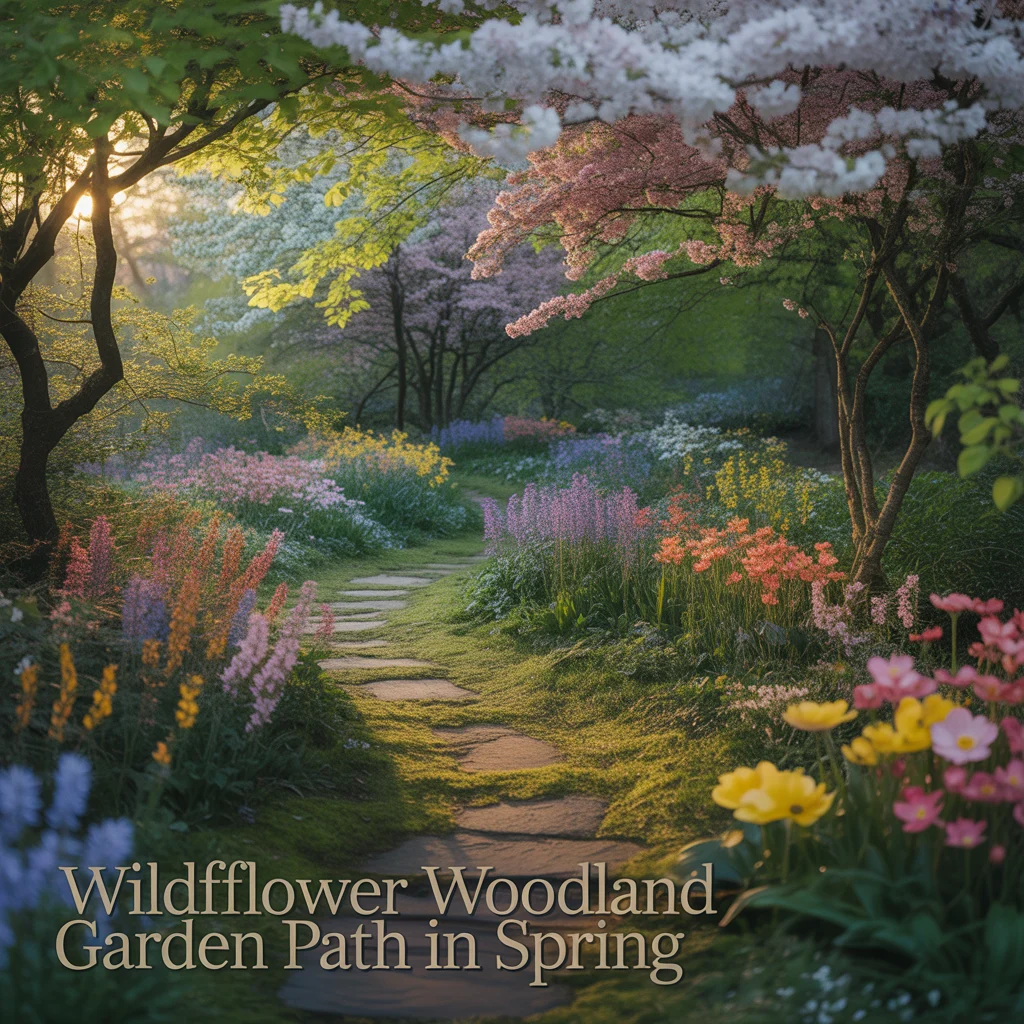
A wildflower woodland garden path in spring uses native spring woodland flowers planted on both sides of a bark chip or earth path to create a woodland garden that reaches its peak visual display in April and May when Hyacinthoides non-scripta, Anemone nemorosa, and Primula vulgaris flower simultaneously alongside the path. I designed a spring wildflower woodland garden path at a residential project, planting native bluebells, wood anemones, and primroses in drifts on both sides of a 20-foot bark chip path, and the spring flowering display in the first full season after planting produced a woodland garden path that the homeowner described as the best thing I had done to their garden in fifteen years of working there.
Spring Woodland Flowers for a Garden Path
Hyacinthoides non-scripta, Anemone nemorosa, and Erythronium dens-canis are three spring woodland flowers suited to a woodland garden path planting. Hyacinthoides non-scripta produces deep blue-purple flower spikes in April and May at 12 to 18 inches height and self-seeds freely after the first flowering season, gradually building a naturalistic colony on both sides of the woodland garden path. Anemone nemorosa produces white flowers in March and April before the bluebells begin, extending the woodland path flowering season into early spring. Erythronium dens-canis, the dog’s tooth violet, produces nodding pink flowers in April at 6 to 8 inches height and suits a shaded woodland path position where its delicate flower form can be appreciated at close range.
Planting Spring Woodland Flowers Alongside a Garden Path
Spring woodland flowers alongside a garden path are planted in autumn between September and November as dry bulbs or growing plants, using a bulb planting auger fitted to a cordless drill for efficient mass planting in established woodland garden soil. Hyacinthoides non-scripta bulbs are planted at 4-inch depth and 4-inch spacing in irregular drifts rather than regular rows, which produces the naturalistic colony effect characteristic of a genuine woodland bluebell display. I plant spring woodland flowers in irregular groups of 20 to 50 bulbs of the same species rather than mixing species within the same planting area, because species groupings produce a stronger, more natural visual impact along the woodland garden path than an evenly mixed distribution.
Low Maintenance Woodland Garden With Paths
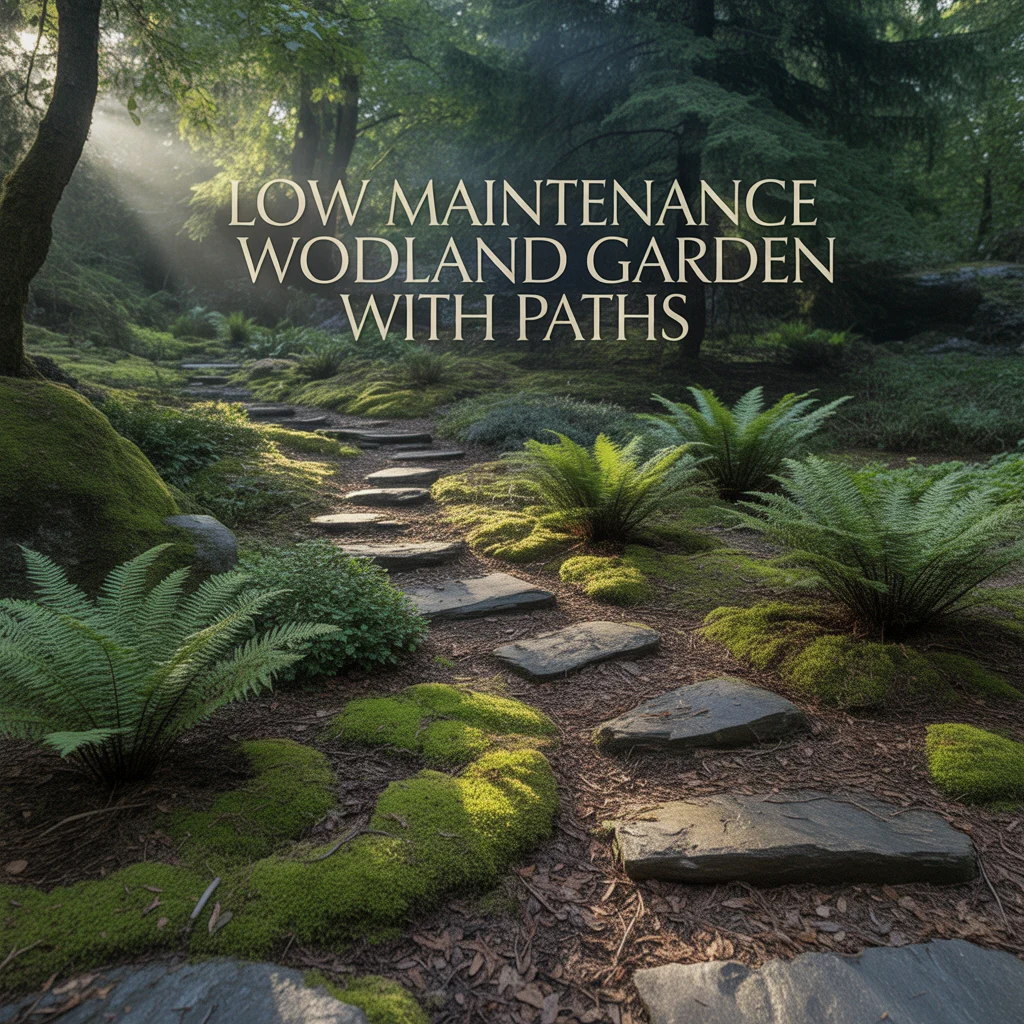
A low maintenance woodland garden with paths uses a combination of bark chip paths on weed-suppressing membrane, ground cover planting that suppresses weeds after two growing seasons, and naturally durable path edging materials that require no annual treatment to create a woodland garden path system that needs under one hour of maintenance per month throughout the growing season. I designed a low maintenance woodland garden with paths for a homeowner in her seventies who wanted the naturalistic aesthetic of a woodland garden without the high maintenance demands of a formal garden, and the combination of Pachysandra terminalis ground cover, bark chip paths on 130-gram membrane, and log roll edging produced a woodland garden that has required only seasonal bark top-ups in three years.
Ground Cover Plants for a Low Maintenance Woodland Garden Path
Pachysandra terminalis, Vinca minor, and Liriope muscari are three ground cover plants suited to a low maintenance woodland garden with paths. Pachysandra terminalis forms a dense, weed-suppressing mat under tree canopy within two to three seasons and requires no cutting back, no dividing, and no pest management, making it the most genuinely low maintenance ground cover for a woodland garden path border. Vinca minor spreads at 18 to 24 inches per season and produces purple-blue flowers from March to May, providing both weed suppression and seasonal flower color alongside the woodland path without any maintenance intervention after the second growing season. Liriope muscari provides dark green strap leaves year-round with September flower spikes.
Low Maintenance Woodland Path Materials
Bark chip on weed membrane, compacted decomposed granite, and gravel on weed membrane are three low maintenance surface materials for a woodland garden path. Bark chip on a 130-gram woven polypropylene membrane requires only an annual top-up of half the original bark depth after the first winter settling, taking 20 minutes per 25-foot path section. Compacted decomposed granite at 3-inch depth provides a firmer, more permanent woodland path surface that requires annual raking to redistribute material and no other intervention for 8 to 12 years. Gravel on a weed membrane provides a completely permanent low maintenance woodland path surface once established, requiring only annual raking and no bark replacement.
Small Woodland Garden With a Winding Path
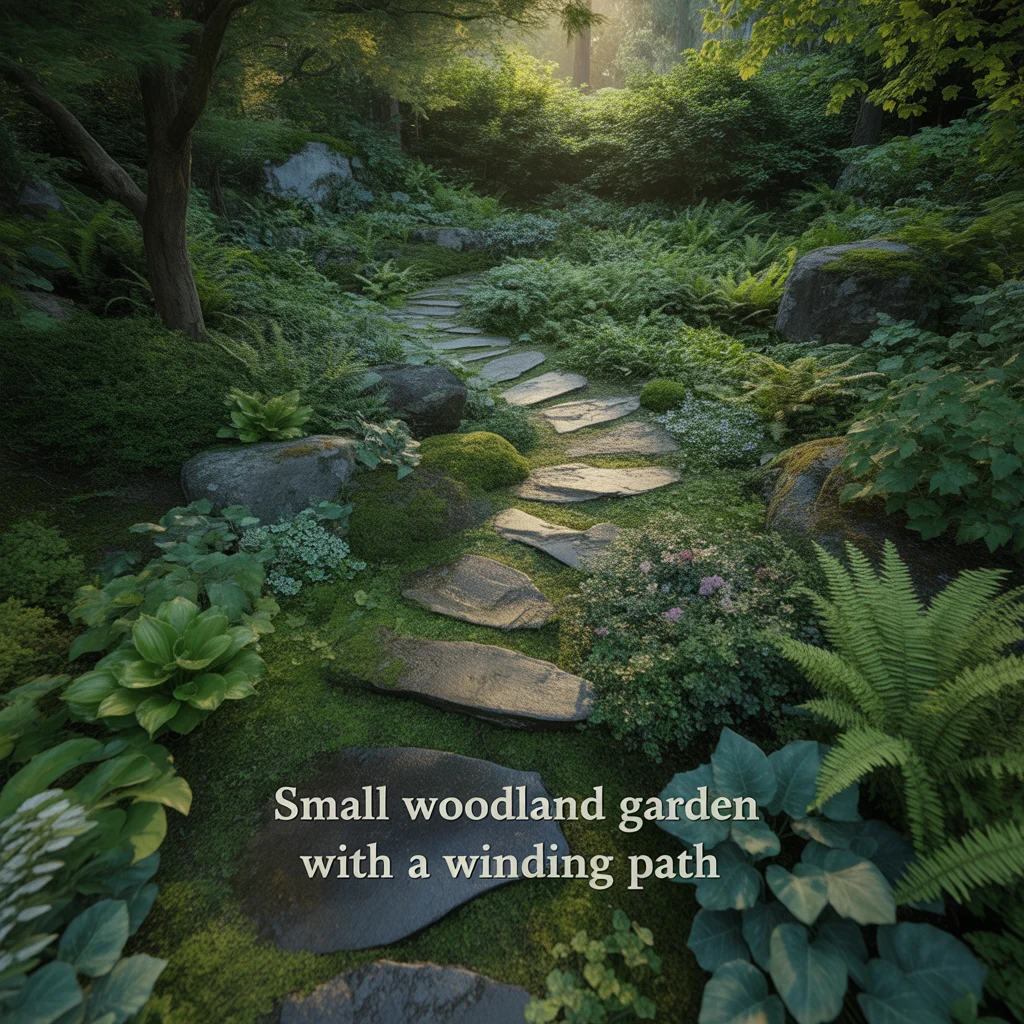
A small woodland garden with a winding path creates the visual impression of a larger, more immersive woodland space by using a curved, winding path route that reveals the woodland garden gradually as the visitor moves through it, rather than displaying the full extent of the small space at once from the entrance point. I created a small woodland garden path in a space measuring 18 by 12 feet at a urban terraced property, using a winding bark chip path that changed direction three times within the small area, and the winding route through the fern and hosta planting made the space feel significantly larger than its physical dimensions on every visit.
Designing a Winding Path in a Small Woodland Garden
A winding path in a small woodland garden is designed by identifying at least three turning points within the available space and connecting them with smooth curves rather than sharp angles, which produces a flowing path that suits the organic character of a woodland garden design. I use a garden hose to test path routes in small woodland gardens before committing to any layout, moving the hose between different winding configurations and assessing each one from multiple standing positions before selecting the route that reveals the most planting as the visitor moves through the path. A winding path in a small woodland garden measures 18 to 24 inches in width, which preserves maximum planting space on both sides.
Planting for a Small Woodland Garden Path
Hosta sieboldiana, Dryopteris filix-mas, and Sarcococca confusa are three plants suited to the borders of a small woodland garden with a winding path. Hosta sieboldiana provides large blue-green leaves of 12 to 18 inches width that create a bold, architectural planting presence at the path edge from April through October. Dryopteris filix-mas produces arching fern fronds that lean over the winding path edges in summer, creating the enclosed, overhung path character that distinguishes a genuine small woodland garden from a simply shaded planting area. Sarcococca confusa provides fragrant white winter flowers that are most appreciated on a winding path where the visitor passes close to the plant.
Woodland Garden Path With a Pond
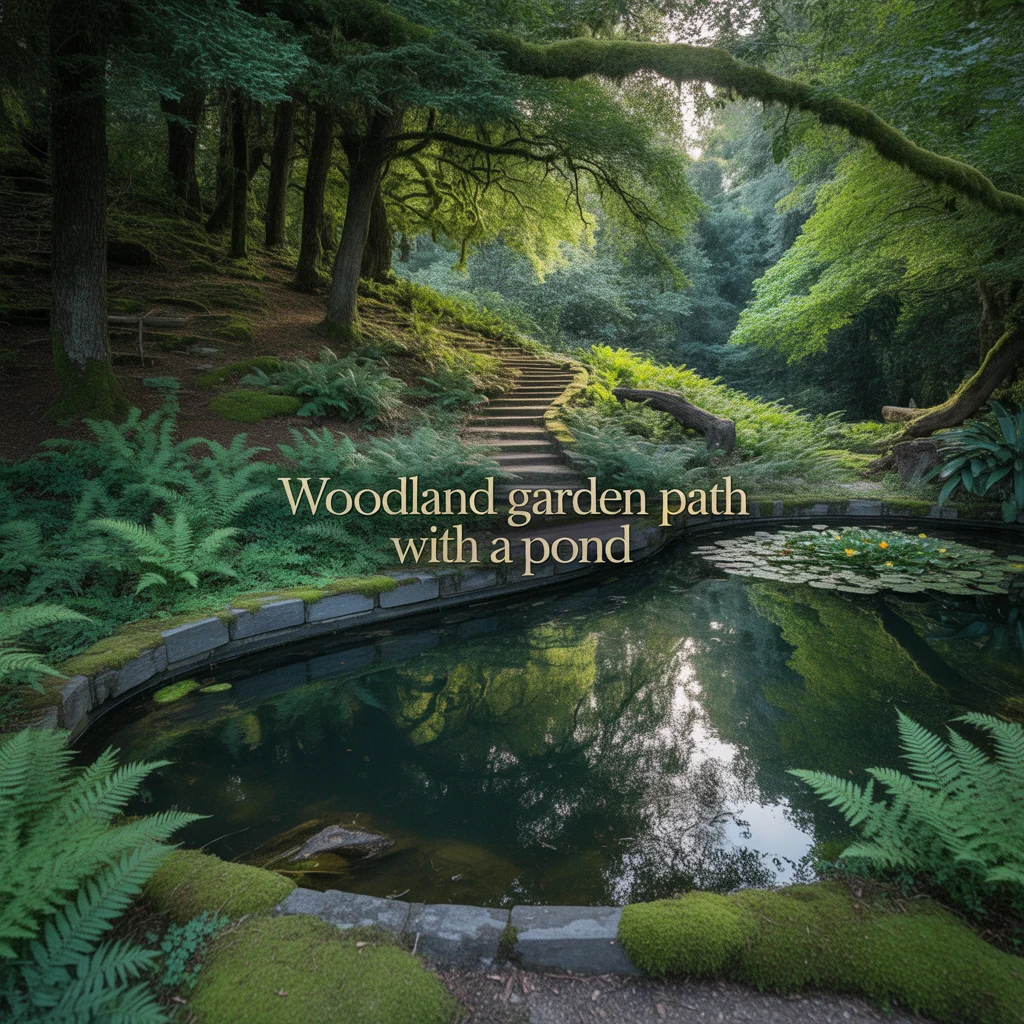
A woodland garden path with a pond incorporates a natural-edged pond or bog garden feature alongside or at the end of the woodland path, creating a destination on the path route that introduces the sound, reflection, and wildlife of water into the woodland garden experience. I designed a woodland garden path with a small natural pond at the path terminus for a residential project, using a 6-by-4-foot butyl-lined pond surrounded by Caltha palustris, Iris pseudacorus, and Carex riparia planting, and the combination of the bark chip path leading through the fern and hosta woodland garden to the pond produced a complete woodland garden experience of genuinely high quality within a 25-by-20-foot shaded garden area.
Pond Placement in a Woodland Garden With Paths
A pond in a woodland garden with paths is positioned at the end of the main woodland path as the primary destination, or at a path junction where the visitor makes a choice between continuing along the path or pausing at the pond. Positioning the pond at a path curve rather than a straight terminus creates the element of discovery, where the water feature is revealed gradually as the visitor rounds the curve rather than being visible from the path entrance. I position woodland garden ponds with a minimum 6-foot clearance between the pond edge and the nearest established tree trunk to reduce the leaf fall into the water and the competitive root pressure on the butyl liner from established tree roots. Ideas for creating comfortable resting points along this type of path are covered in these woodland garden sitting areas along forest-style paths.
Marginal Plants for a Woodland Garden Pond Path
Caltha palustris, Iris pseudacorus, and Osmunda regalis are three marginal plants suited to a pond in a woodland garden with paths. Caltha palustris, marsh marigold, produces bright yellow flowers from March to May in shallow water and suits the moist, shaded conditions at the edge of a woodland garden pond alongside the path. Iris pseudacorus produces tall yellow flag iris flowers from May to June at 3 to 4 feet height in shallow water, providing a strong vertical accent at the pond edge that is visible from the approaching woodland garden path. Osmunda regalis, the royal fern, produces spectacular arching fronds of 4 to 6 feet alongside the pond edge, connecting the pond planting visually to the fern planting along the woodland garden path.
Formal Woodland Garden With Stone Paths
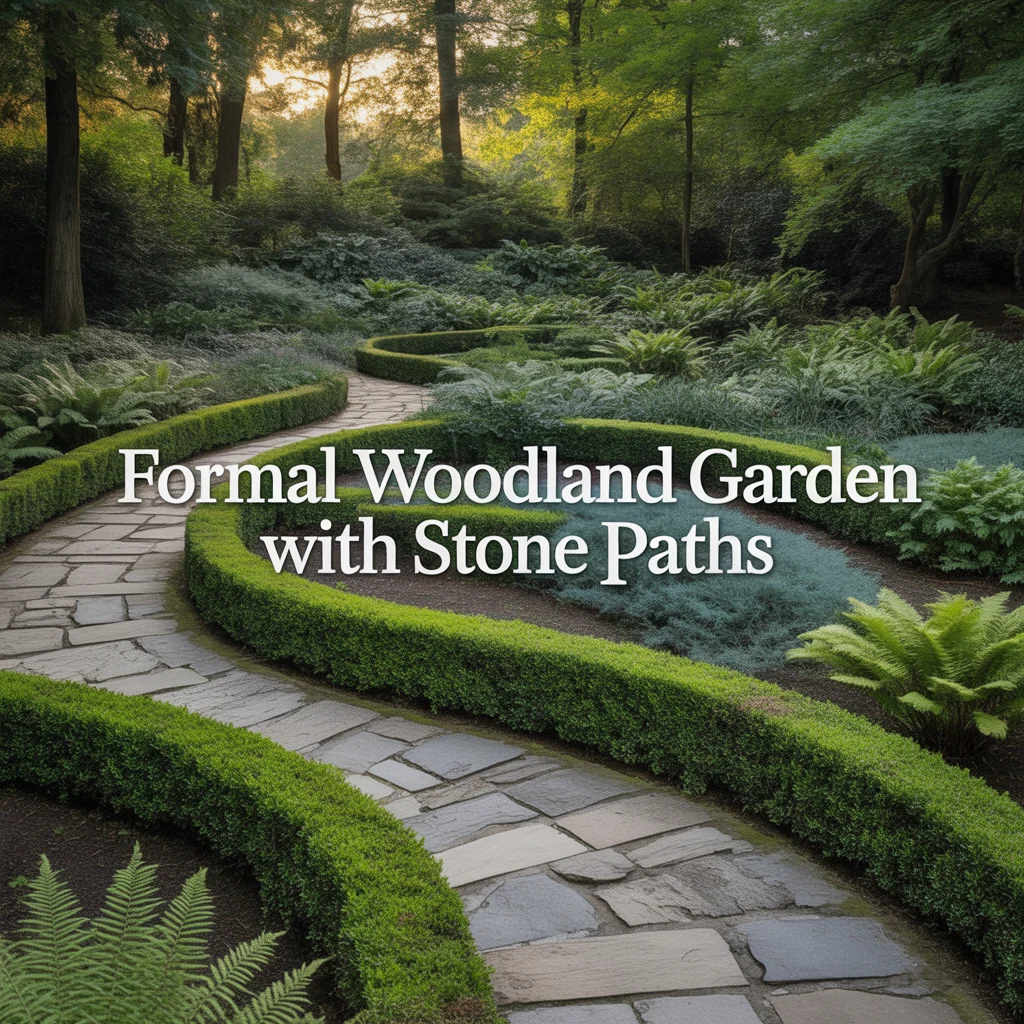
A formal woodland garden with stone paths uses cut or dressed stone flags as the path surface through a woodland garden design, creating a woodland garden path combination that suits large period properties, heritage gardens, and cultivated woodland gardens where the natural character of the woodland setting is complemented by the permanence and craftsmanship of a formal stone path rather than the informal bark chip surface typically associated with woodland path ideas. I studied formal woodland garden paths at three National Trust properties and found that Yorkstone flag paths through established woodland planting consistently produced the most sophisticated woodland garden path aesthetic, combining the timeless quality of the stone with the living, changing character of the woodland planting above and beside it.
Stone Types for a Formal Woodland Garden Path
Yorkstone, reclaimed limestone, and granite setts are three stone types suited to a formal woodland garden path. Yorkstone in random irregular format provides the most period-appropriate formal path surface through a woodland garden and develops an increasingly attractive lichen-covered patina in the shade and moisture of a woodland environment over 5 to 10 years of outdoor installation. Reclaimed limestone produces a cream-grey surface that suits a formal woodland garden at a period property where the pale stone color provides a clear path visibility beneath the reduced light levels of a dense tree canopy. Granite setts in a fan pattern produce a formal, decorative stone path that suits a structured woodland garden design at a large estate property.
Formal Planting Alongside a Stone Woodland Garden Path
Clipped box balls, standard-trained Taxus baccata, and Hydrangea arborescens Annabelle are three formal planting options suited to a stone path in a formal woodland garden. Clipped box balls of 18-inch diameter in matching stone pots placed at 4-foot intervals alongside the stone path reinforce the formal character of the pathway while maintaining the woodland garden character of the surrounding shade planting. Standard-trained Taxus baccata in matching containers flanking the path entrance provides a permanent formal structure at the woodland garden path entrance point. Hydrangea arborescens Annabelle produces large white flower heads from July to October in the partial shade of a formal woodland garden, providing seasonal flower color directly alongside the stone path.
Japanese-Inspired Woodland Garden With Paths

A Japanese-inspired woodland garden with paths uses the design principles of Japanese garden aesthetics, including irregular stepping stone placement, moss ground cover, raked gravel sections, and restrained planting of Acer palmatum, bamboo, and Ophiopogon, to create a woodland garden path that connects the naturalistic character of a woodland space with the deliberate, contemplative quality of a Japanese garden design. I designed a Japanese-inspired woodland garden path at a residential project under a mature silver birch canopy, using large irregular slate stepping stones through a moss and Ophiopogon planiscapus ground cover with Acer palmatum planted at three path bends, and the combination produced a woodland garden path of genuine Japanese aesthetic quality in a compact 25-by-15-foot shaded space.
Japanese Stepping Stone Placement in a Woodland Garden
Japanese stepping stone placement in a woodland garden path uses an irregular stepping sequence where consecutive stones are placed at slightly different distances and slight lateral offsets from each other, producing a path that requires the walker to adjust their pace and direction subtly at each stone, which is the Japanese garden design intention of creating a deliberately paced, attentive walking experience. I place stepping stones at 14 to 18-inch intervals with a 2 to 4-inch lateral offset alternating left and right of the path center axis on Japanese-inspired woodland garden paths, which produces the characteristic slight weaving quality of a traditional Japanese garden path without creating an exaggerated or uncomfortable walking movement.
Japanese Planting for a Woodland Garden Path
Acer palmatum, Phyllostachys nigra, and Ophiopogon planiscapus Nigrescens are three plants suited to a Japanese-inspired woodland garden path. Acer palmatum produces finely divided leaves in green or red-purple that turn to vivid orange-red in October, providing the seasonal colour change that is central to the Japanese garden aesthetic experience alongside the woodland path. Phyllostachys nigra, black bamboo, produces distinctive near-black canes at 10 to 15 feet height and suits a screening position at the path edge where the vertical cane structure creates a dramatic backdrop to the stepping stone woodland path. Ophiopogon planiscapus Nigrescens provides a near-black ground cover mat that creates a striking dark surface between and around the stepping stones.
Woodland Garden With Paths and Wildlife Features
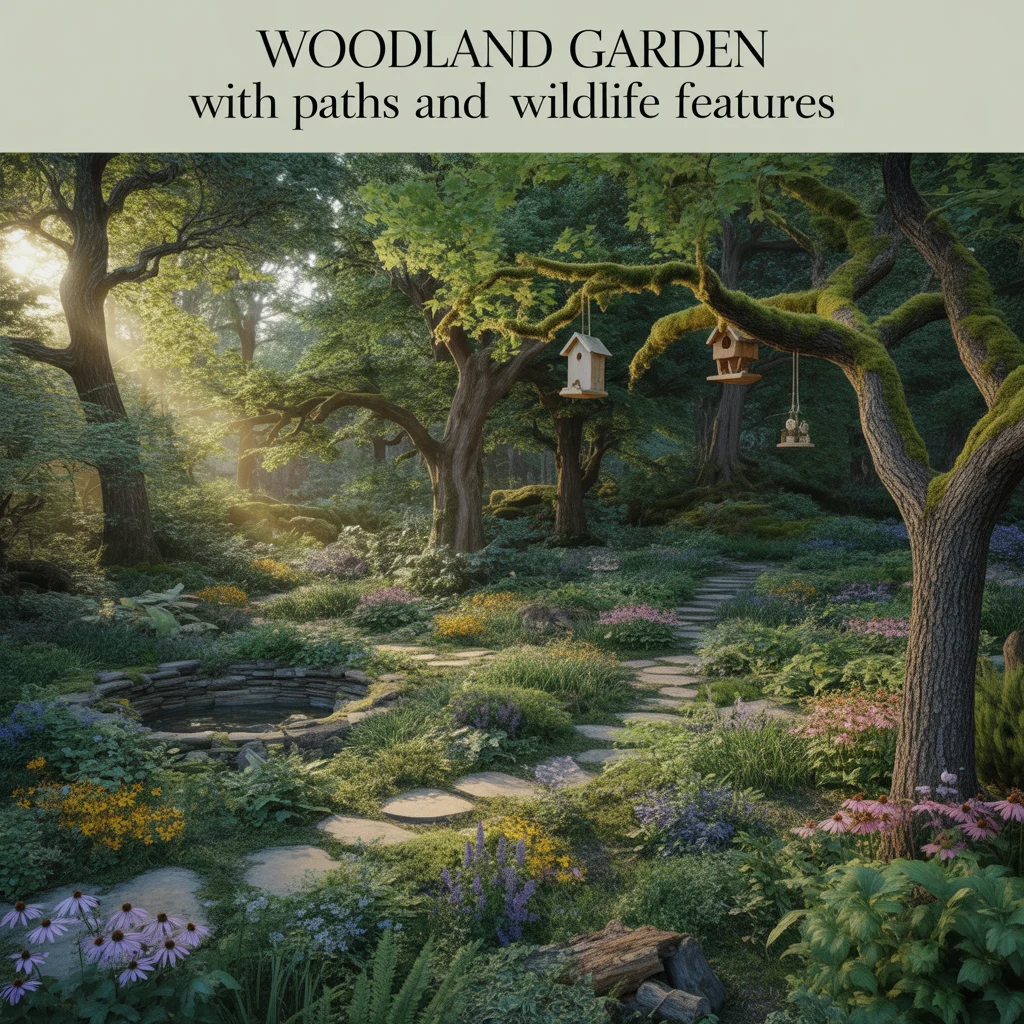
A woodland garden with paths and wildlife features incorporates bird feeders, insect hotels, log piles, and nectar-rich planting directly alongside the woodland garden path to create a walking route through an actively wildlife-supporting garden space where bird and insect activity is visible from the path at close range throughout the year. I installed a bird feeding station, two insect hotels, and a log pile alongside my own woodland garden path and the wildlife activity at each feature was immediately noticeable during morning path walks from the first week of installation, with robins at the feeding station and mason bees investigating the insect hotel drilling holes within days of the features being placed.
Wildlife Features for a Woodland Garden Path
Log piles, insect hotels, and bird feeding stations are three wildlife features suited to a woodland garden with paths. Log piles positioned within 3 feet of the path edge at 2 to 3-foot height provide habitat for stag beetles, hedgehogs, slow worms, and woodland fungi that are directly observable from the path without disturbing the wildlife using the log pile. Insect hotels mounted at 1 meter height on path-edge posts provide nesting habitat for solitary bees and lacewings and suit a woodland garden path position where the hotel faces south-east to receive morning sun on the nesting hole surfaces. Bird feeding stations at 5-foot height and 8-foot path clearance provide close-range bird observation from the walking path.
Wildlife Planting for a Woodland Garden Path
Sambucus nigra, Ilex aquifolium, and Lonicera periclymenum are three wildlife-supporting plants suited to a woodland garden with paths. Sambucus nigra, elder, produces white flowers in June that attract insects and red-black berries in August that attract birds, providing two distinct wildlife support functions in the same plant at the woodland path edge. Ilex aquifolium, holly, produces berries from October through February that attract thrushes, fieldfares, and redwings to the woodland garden path area during the winter months when other berry-producing plants have been depleted. Lonicera periclymenum, native honeysuckle, produces fragrant flowers from June to October that attract long-tongued bee species and hummingbird hawkmoths to the woodland path border.
Elevated Boardwalk Path Through a Woodland Garden
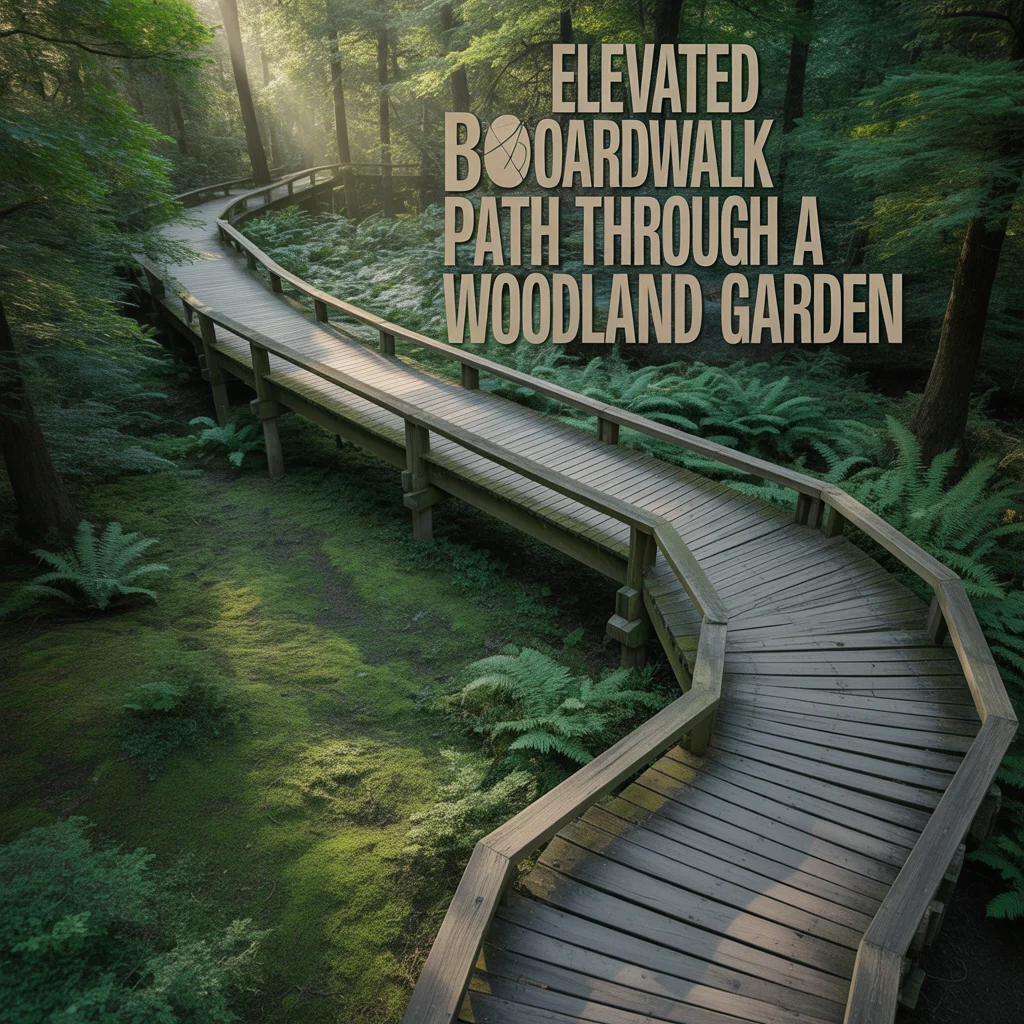
An elevated boardwalk path through a woodland garden uses a raised timber deck walkway at 6 to 18 inches above the woodland floor to create a path that moves through the woodland planting without any disturbance to the soil and root systems below, allowing the woodland ground flora including bluebells, wood anemones, and mosses to grow uninhibited beneath the boardwalk structure while providing a firm, dry walking surface above. I studied elevated boardwalk paths at Woodland Gardens, Lisburn, and several other public woodland gardens in the United Kingdom and found that the boardwalk path format consistently produced the most immersive woodland garden path experience available because it places the visitor physically within the woodland canopy at a height that makes the surrounding tree trunks and understorey planting feel enclosing and dimensional.
Building an Elevated Woodland Garden Boardwalk
An elevated woodland garden boardwalk uses 4-by-4-inch pressure-treated posts at 8-foot intervals as foundation supports, connected by 2-by-6-inch rim and interior joists at 16-inch centers, with 5/4-by-6-inch pressure-treated decking boards fixed perpendicular to the joists to produce the walking surface. Posts are set in post-mix concrete at 18-inch depth to provide frost-resistant stability without excavating close to established tree root zones. I position all boardwalk posts at minimum 3-foot clearance from any tree trunk with diameter above 4 inches and avoid cutting any visible surface roots larger than 1 inch diameter during the post hole excavation.
Woodland Ground Flora Beneath an Elevated Boardwalk
Hyacinthoides non-scripta, Anemone nemorosa, and Galium odoratum are three woodland ground flora plants suited to growing beneath an elevated boardwalk path in a woodland garden. Hyacinthoides non-scripta bluebells grow successfully beneath an elevated boardwalk because the raised deck structure allows enough light penetration to the forest floor below to support bluebell flowering in April and May before the tree canopy closes overhead. Anemone nemorosa flowers in March and April before the tree canopy overhead restricts light to the woodland floor beneath the boardwalk. Galium odoratum, sweet woodruff, produces a dense mat of whorled leaves with white flowers in May and tolerates the deep shade beneath an established boardwalk in a woodland garden.
Seasonal Autumn Woodland Garden With Paths
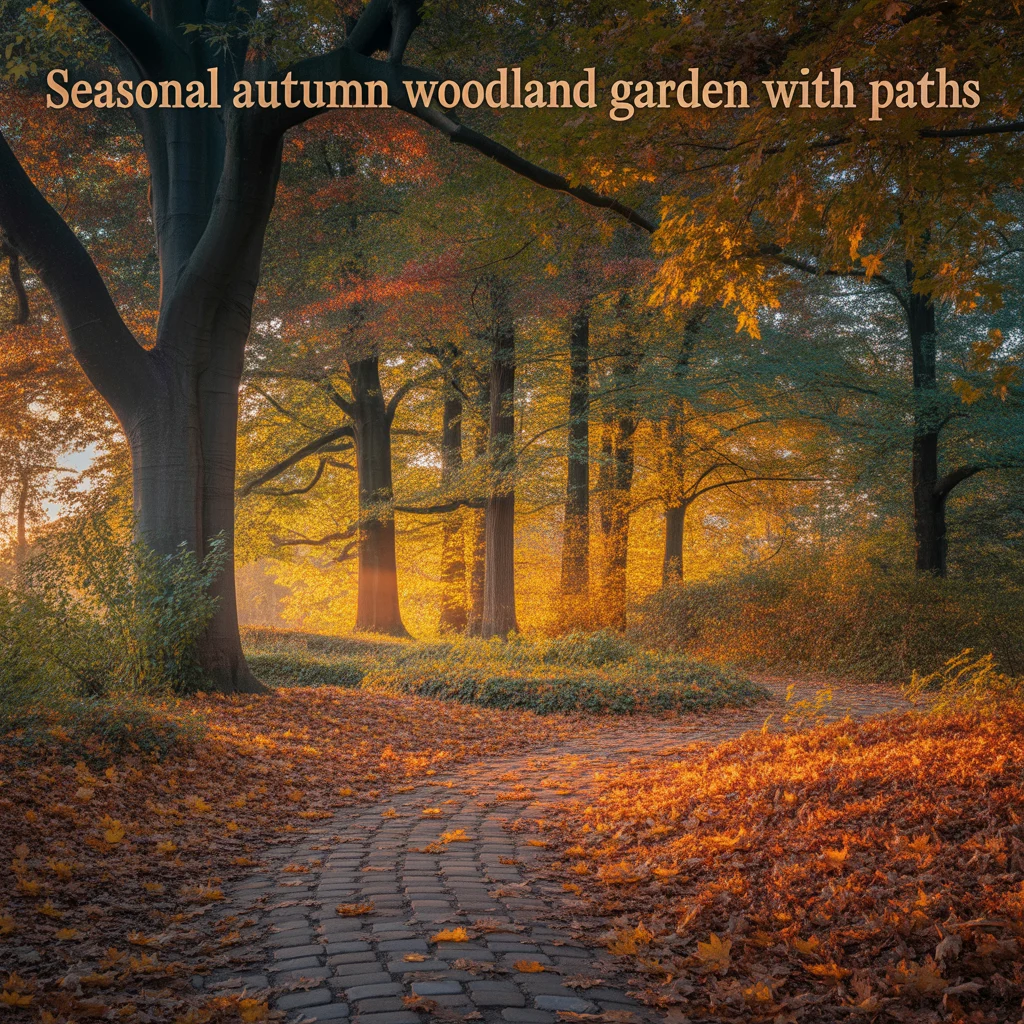
A seasonal autumn woodland garden with paths uses deliberate planting of Acer, Betula, Liquidambar, and Cornus species to create a woodland garden that provides its most spectacular display in September and October when the autumn leaf color transforms the full woodland garden space and the paths through it become routes through a seasonal color display of genuine intensity. I designed an autumn-focused woodland garden path at a large residential property using Acer palmatum, Betula pendula, and Cornus alba Sibirica planted along the full length of a 40-foot bark chip path, and the October leaf color display alongside and above the path produced the most widely photographed garden feature at that property throughout the year.
Trees for an Autumn Woodland Garden Path
Acer palmatum, Betula pendula, and Liquidambar styraciflua are three trees suited to an autumn woodland garden with paths. Acer palmatum produces the most vivid individual leaf color of any tree suited to a woodland garden path, with named varieties including Acer palmatum Osakazuki producing pure scarlet autumn color and Acer palmatum Sango-kaku producing yellow and coral foliage at a garden-suitable height of 10 to 15 feet over 20 years. Betula pendula, silver birch, produces golden yellow autumn foliage and distinctive white bark that provides year-round visual interest alongside the woodland garden path beyond the 3-week autumn color peak. Liquidambar styraciflua produces multi-colored autumn foliage in red, orange, and purple simultaneously.
Ground Level Autumn Planting for a Woodland Path
Fothergilla major, Cornus alba Sibirica, and Gaultheria procumbens are three ground level autumn plants suited to a woodland garden path border. Fothergilla major produces vivid multi-colored autumn foliage in red, orange, and yellow at 6 to 8 feet height, providing a mid-height autumn color layer between the woodland path surface and the tree canopy above it. Cornus alba Sibirica produces red stems that are most visible from October through March after the autumn leaf fall and provides a winter structure at the woodland path edge. Gaultheria procumbens provides a low ground cover of dark green leaves with bright red berries from October through February, providing color at the path surface level throughout the winter months in the woodland garden.
Related
best ground cover plants for woodland garden path edges
zone 4 woodland garden ideas with natural path designs
garden paths around a tree in a woodland garden setting
Frequently Asked Questions
What plants are best for a woodland garden path?
Dryopteris filix-mas ferns, Hosta sieboldiana, Sarcococca confusa, and Vinca minor are the four best plants for a woodland garden path border because all four are shade-tolerant, low maintenance after establishment, and provide visual interest across different seasons. Dryopteris filix-mas provides structural fern fronds from April through October. Hosta sieboldiana provides bold blue-green foliage from April to October. Sarcococca confusa provides fragrant winter flowers from January to March. Vinca minor provides evergreen ground cover year-round with spring flowers. I plant all four species on every woodland garden path project to ensure the path border provides interest in every month of the year.
What is the best path material for a woodland garden?
Bark chip on a heavy-duty weed-suppressing membrane is the best path material for a woodland garden because the natural brown color and organic texture of bark chip coordinates with the forest floor aesthetic more naturally than any manufactured material, and the soft, cushioned surface feels appropriate for a naturalistic woodland garden setting. Medium pine bark at 25mm to 40mm chip size provides the most stable walking surface of any bark material. Bark chip requires an annual top-up of approximately 50% of the original depth after the first winter settling, which costs $8 to $12 per 10 square feet of path surface per year.
How do I create a low maintenance woodland garden with paths?
A low maintenance woodland garden with paths is created by combining bark chip paths on 130-gram woven polypropylene membrane with Pachysandra terminalis or Vinca minor ground cover planting on both sides, which produces a woodland garden path system requiring only annual bark top-up and a 30-minute seasonal tidy of the ground cover edges. The weed membrane beneath the bark path prevents weed establishment in the path surface for 8 to 10 years. The ground cover planting suppresses weeds in the border areas after two growing seasons, eliminating the regular hand-weeding that a bare soil woodland garden border requires throughout the growing season.
How wide should a woodland garden path be?
A woodland garden path measures most effectively at 2 to 3 feet in width, which provides comfortable walking space for a single person and allows the planting on both sides to lean slightly over the path edges without creating an obstructed or overgrown walking route. A woodland path wider than 4 feet loses the enclosed, immersive character that distinguishes a woodland garden path from a standard open garden path, because the wider surface allows too much overhead light onto the path and reduces the sense of moving through a planted space rather than across an open area. I use 24 to 30-inch widths on all woodland garden path projects.
What makes a woodland garden path look natural?
A woodland garden path looks natural when the path material, edge treatment, and surrounding planting all use materials found in or derived from a genuine woodland environment. Bark chip, timber rounds, irregular stepping stones, and natural earth all look natural in a woodland garden because they are materials present in a real woodland floor. Log roll edging, fallen branch borders, and moss-covered stone edges all look natural because they replicate genuine woodland floor features. Regular manufactured edging, straight geometric paving, and formal clipped hedges look unnatural in a woodland garden path because none of these elements exist in a real woodland environment.