
Zone 4 Woodland Garden Ideas for Cold Climates

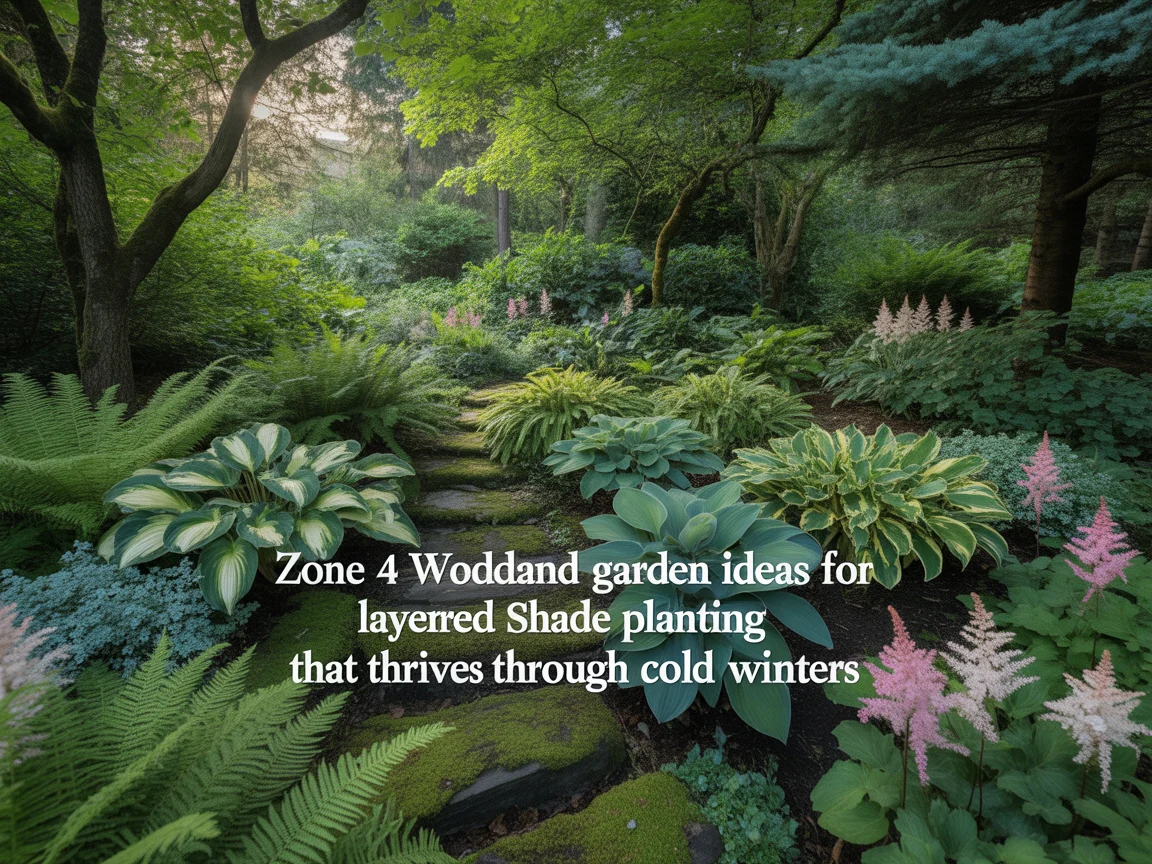
I converted the shadiest section of my Zone 4 garden into a layered woodland planting three years ago, and the first winter tested it immediately. Temperatures dropped to minus 25 degrees Fahrenheit in January, the ground froze to 18 inches, and the snow stayed on the ground for eleven weeks without a break. I expected losses. I got almost none. Every Hosta had died back cleanly to the crown. Every Astilbe had disappeared completely underground. Every Trillium was invisible. And then April came, and every single plant returned exactly as it had left in October, with the Trilliums particularly spectacular that spring after the hard winter preceding them. Zone 4 shade gardening rewards patience and correct plant selection with a resilience that warmer climate woodland gardens simply cannot match.
Zone 4 woodland garden ideas for layered shade planting create multi-level naturalistic woodland garden spaces using cold-hardy plants rated to minus 30 to minus 20 degrees Fahrenheit, organized into four to five distinct planting layers from the canopy level through the understory, shrub, ground cover, and bulb layers, producing a shade garden that displays seasonal interest from early spring through late autumn and maintains structural presence even through the dormant winter months. The layered approach replicates the natural structure of a cold-climate deciduous woodland, producing a planting composition that is both ecologically sound and visually complex.
Since that first severe winter test, I have expanded, refined, and studied Zone 4 layered shade planting across multiple woodland garden projects in cold climate regions. I have seen tiny shade garden ideas work in spaces under 15 feet across, and I have also seen extensive low maintenance woodland garden designs covering hundreds of square feet of established tree canopy.
In this article, I am sharing the best Zone 4 woodland garden ideas for layered shade planting that I have either implemented or researched thoroughly enough to recommend.
Understanding the Five Planting Layers in a Zone 4 Woodland Garden
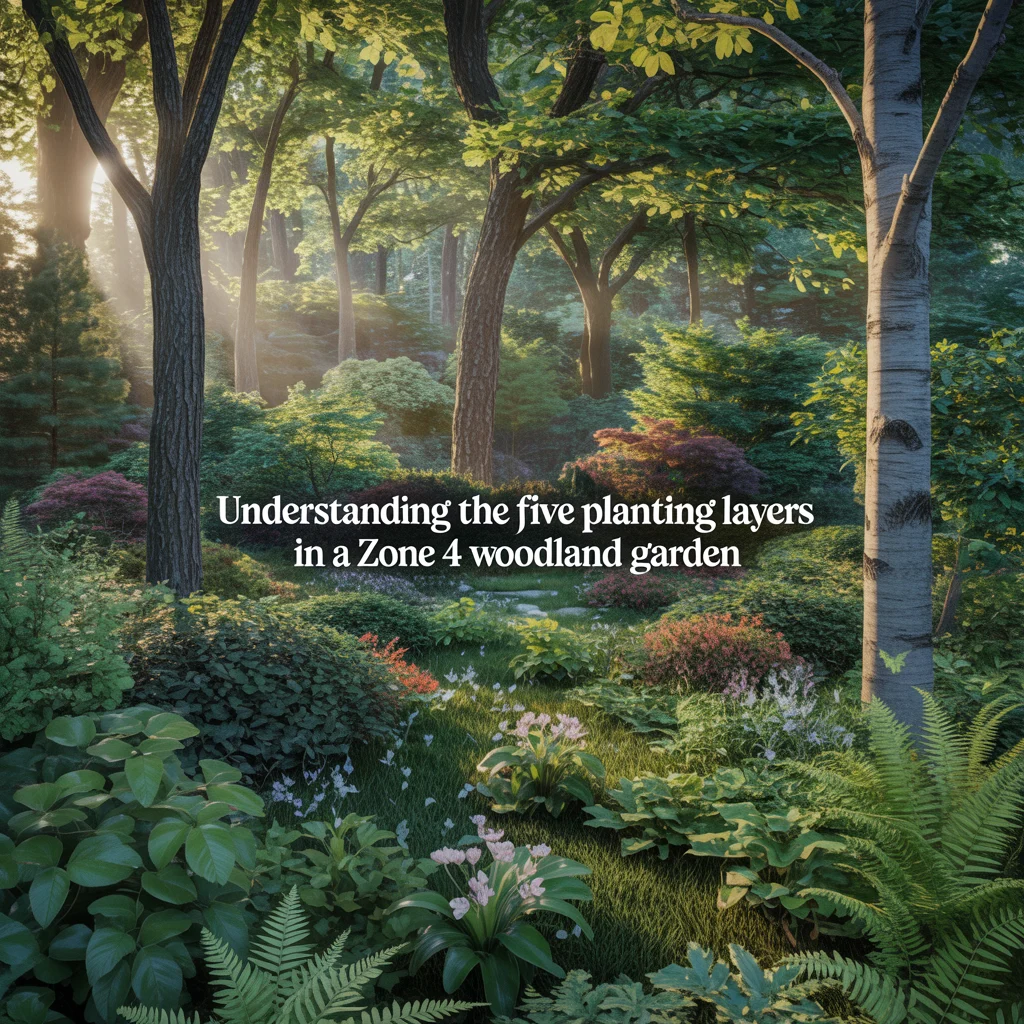
A Zone 4 woodland garden achieves its naturalistic complexity and seasonal richness through the deliberate use of five planting layers organized at distinct height levels within the garden space, each layer performing a specific ecological and visual function within the overall woodland garden planting composition. I design every Zone 4 woodland garden around the five-layer structure as the organizing principle of the planting plan, because a shade garden that lacks one or more layers always appears incomplete regardless of the quality of the individual plants used within the layers that are present.
The Five Woodland Garden Planting Layers Defined
Canopy, understory, shrub, ground cover, and bulb are the five planting layers of a Zone 4 woodland garden. The canopy layer provides the primary shade that defines the woodland character of the garden and consists of established deciduous trees of 30 to 60 feet height including Acer saccharum, Betula papyrifera, and Quercus rubra. The understory layer at 10 to 25 feet uses small trees and large shrubs including Amelanchier canadensis and Cornus alternifolia. The shrub layer at 3 to 10 feet uses shade-tolerant flowering and fruiting shrubs. The ground cover layer at 6 to 36 inches provides the primary visual display. The bulb layer provides seasonal accent beneath all other layers.
Applying the Layer Model to a Small Zone 4 Shade Garden
The five-layer model applies to a small Zone 4 shade garden by scaling each layer proportionally to the available space, using a single existing garden tree as the full canopy layer, one or two understory specimens as the middle height, selected shrubs at the border rear, ground cover planting throughout, and seasonal bulbs beneath the ground cover. A small shade garden of 15 by 20 feet with a single mature Betula papyrifera birch tree already provides the canopy and dappled shade conditions needed for all four lower layers beneath. I plan small Zone 4 woodland garden designs around existing trees as fixed anchor points and build the remaining layers outward and downward from the canopy structure already present.
Zone 4 Hardy Canopy Trees for a Woodland Garden
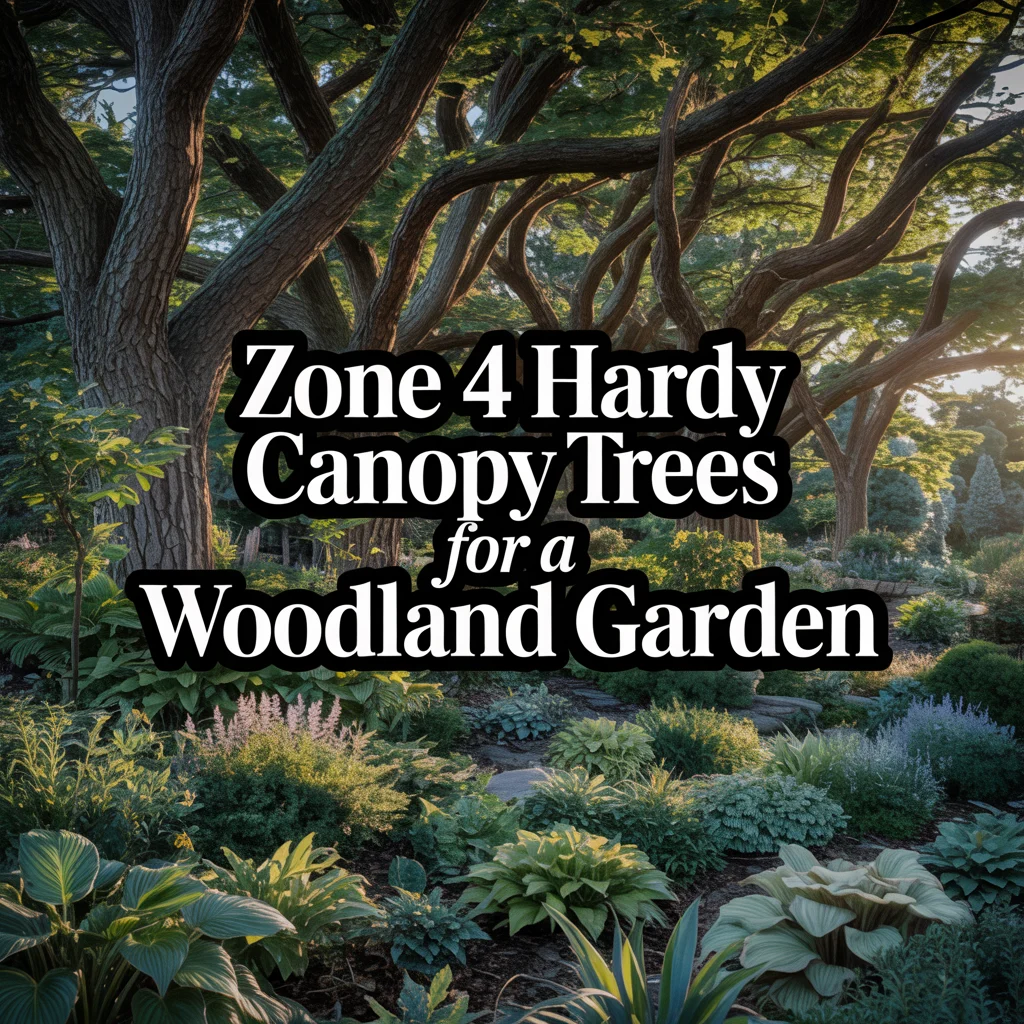
The canopy layer of a Zone 4 woodland garden requires deciduous trees that survive minimum temperatures of minus 30 to minus 20 degrees Fahrenheit, produce a leaf canopy sufficient to create the dappled to moderate shade conditions needed by woodland understory and ground cover plants, and provide seasonal interest through spring flowers, summer canopy, autumn color, and winter bark or branch structure in the garden space. I select canopy trees for Zone 4 woodland gardens based on three criteria applied in sequence: confirmed Zone 4 hardiness rating, canopy density suited to the intended shade level for the understory planting, and seasonal ornamental value beyond summer leaf coverage.
Native Canopy Trees for a Zone 4 Woodland Garden
Acer saccharum, Betula papyrifera, and Quercus rubra are three native canopy trees suited to a Zone 4 woodland garden layered planting scheme. Acer saccharum, sugar maple, produces the most spectacular autumn color of any native North American deciduous tree, turning vivid orange-red from late September through October at 40 to 80 feet height and providing a dense summer canopy suited to hostas and ferns beneath. Betula papyrifera, paper birch, produces a light, dappled canopy at 30 to 70 feet height with distinctive white bark that provides winter interest after leaf fall and suits a woodland garden requiring brighter shade conditions for more light-demanding ground cover species. Quercus rubra, red oak, provides a moderate density canopy at 60 to 75 feet with good autumn color.
Ornamental Canopy Trees for a Zone 4 Shade Garden
Betula nigra, Amelanchier laevis, and Cercidiphyllum japonicum are three ornamental canopy trees suited to a Zone 4 woodland shade garden. Betula nigra, river birch, rated to Zone 4 with protection, produces attractive peeling cinnamon-orange bark and a light canopy at 40 to 70 feet height that suits a brightly shaded woodland garden position. Amelanchier laevis, Allegheny serviceberry, produces white flowers in April before the leaves emerge, edible fruits in June, and orange-red autumn color at 15 to 25 feet height, suiting the upper range of the understory layer in a Zone 4 woodland garden. Cercidiphyllum japonicum, katsura tree, produces small heart-shaped leaves that smell of caramel when they fall in autumn.
Zone 4 Understory Layer: Small Trees and Large Shrubs
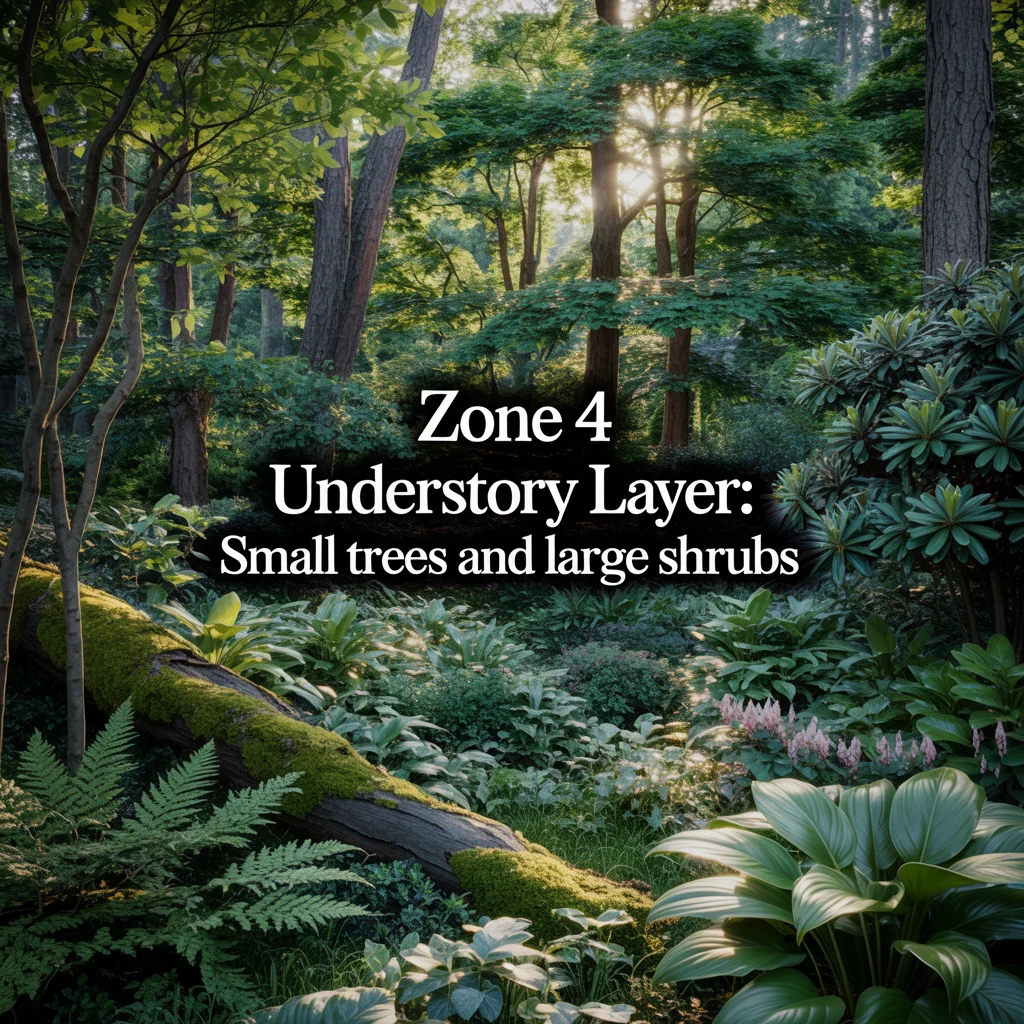
The understory layer of a Zone 4 woodland garden occupies the 10 to 25-foot height range beneath the main canopy, providing an intermediate shade layer that increases the total shade depth of the garden space and contributes seasonal flowers, fruit, and ornamental bark to the woodland garden display at a height visible to a standing adult throughout the growing season. I plant the understory layer as the second design stage of all Zone 4 woodland garden projects after the canopy trees are established, because the understory plants require the partial shade of the canopy to perform well and cannot be planted until the canopy is producing adequate shade.
Native Understory Trees for a Zone 4 Woodland Garden
Cornus alternifolia, Hamamelis virginiana, and Carpinus caroliniana are three native understory trees suited to a Zone 4 woodland garden. Cornus alternifolia, pagoda dogwood, produces horizontal tiered branching at 15 to 25 feet height with white flowers in May, blue-black berries in July attracting birds, and purple-red autumn color, providing three distinct seasons of ornamental value in the Zone 4 woodland garden understory layer. Hamamelis virginiana, native witch hazel, produces yellow flowers in October and November after the leaves have fallen, providing the last flower of the Zone 4 woodland garden season at a height of 10 to 20 feet. Carpinus caroliniana, American hornbeam, provides muscle-like grey bark and orange autumn color.
Understory Layer Spacing for a Zone 4 Woodland Garden
Understory trees and large shrubs in a Zone 4 woodland garden are spaced at 12 to 20-foot centers depending on the mature spread of the selected species, which provides enough space for each understory specimen to develop its full mature form without overcrowding the layer while maintaining an adequate density of coverage to contribute meaningfully to the intermediate shade depth of the layered woodland garden space. I calculate the required number of understory plants for a Zone 4 woodland garden space by dividing the total garden width by the average mature spread of the selected species at 10-year maturity, then reducing by 20% to account for natural overlap between adjacent plants at the edges of each canopy zone.
Zone 4 Shrub Layer Planting for a Woodland Garden
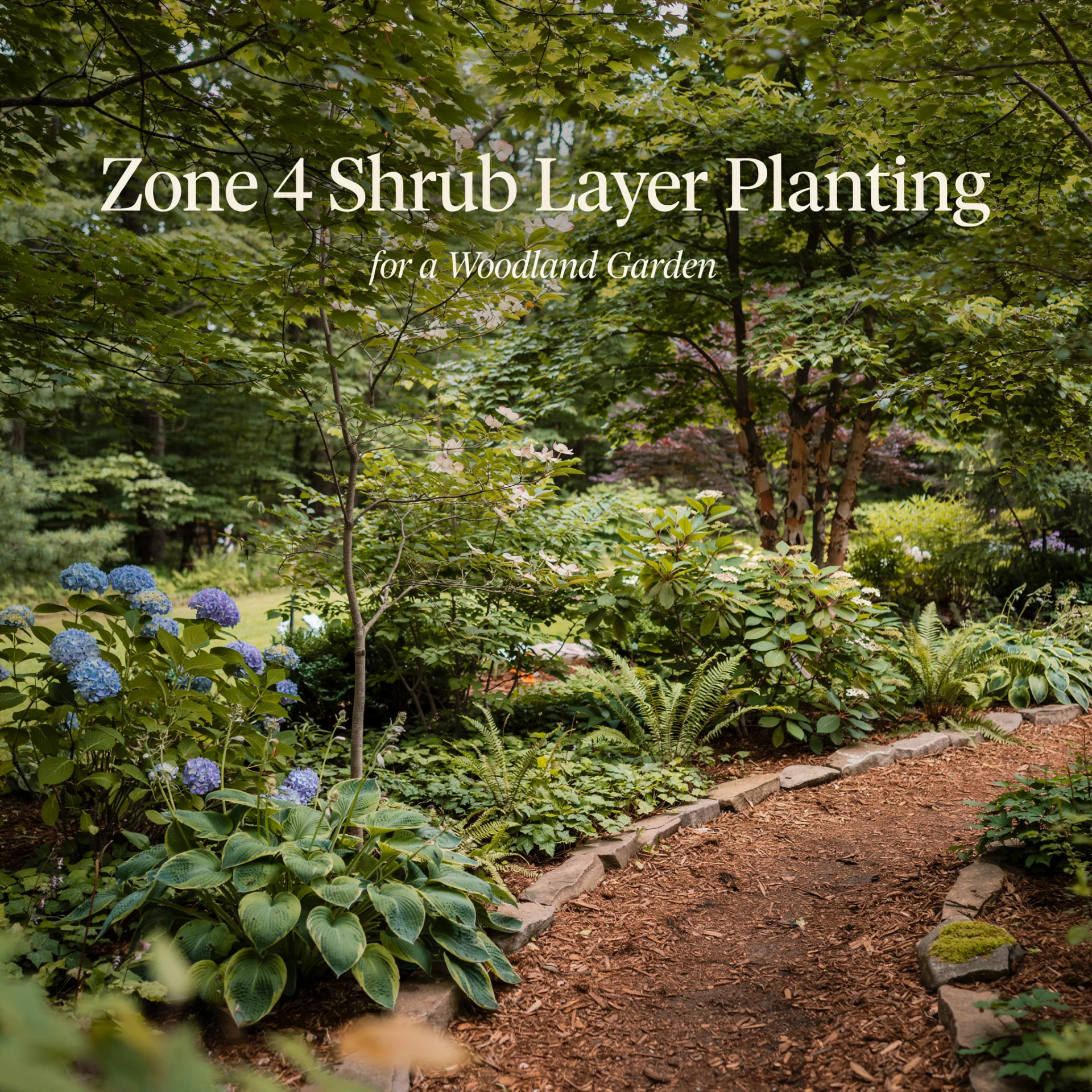
The shrub layer of a Zone 4 woodland garden occupies the 3 to 10-foot height range and provides the primary structural framework at eye-height and below within the woodland garden space, using shade-tolerant Zone 4 hardy shrubs that flower, fruit, or provide ornamental foliage beneath the canopy and understory layers above them. I select shrubs for the Zone 4 woodland garden shrub layer based on their ability to produce a visually significant seasonal display at their rated Zone 4 hardiness without full sun, because most shrubs produce their best performance in full sun and a significant number become sparse and non-flowering in shade conditions below 4 hours of direct sun per day.
Zone 4 Hardy Flowering Shrubs for a Woodland Garden
Rhododendron canadense, Viburnum lentago, and Fothergilla gardenii are three Zone 4 hardy flowering shrubs suited to the shrub layer of a woodland garden. Rhododendron canadense, rhodora, produces vivid rose-purple flowers in May before the leaves emerge at 2 to 4 feet height in partial shade, providing the most vivid early spring flower in the Zone 4 woodland garden shrub layer at a size suitable for smaller woodland gardens. Viburnum lentago, nannyberry, produces white flower clusters in May and blue-black fruits in September at 12 to 18 feet height in partial to full shade, bridging the upper shrub layer and the lower understory in a Zone 4 layered woodland garden. Fothergilla gardenii produces white bottlebrush flowers in May and vivid autumn foliage.
Zone 4 Hardy Shrubs for Autumn and Winter Interest
Aronia melanocarpa, Ilex verticillata, and Cornus sericea are three Zone 4 hardy shrubs providing autumn and winter interest in the woodland garden shrub layer. Aronia melanocarpa, black chokeberry, produces white flowers in May, glossy dark fruits in September that persist through winter, and brilliant red-purple autumn foliage at 3 to 6 feet in partial shade. Ilex verticillata, winterberry holly, produces the most spectacular winter berry display of any Zone 4 hardy native shrub, with bright red berries remaining on the bare branches from October through February at 6 to 10 feet height in the woodland garden. Cornus sericea, red twig dogwood, provides vivid red stems throughout winter at 5 to 8 feet.
Zone 4 Hostas: The Foundation of the Ground Cover Layer
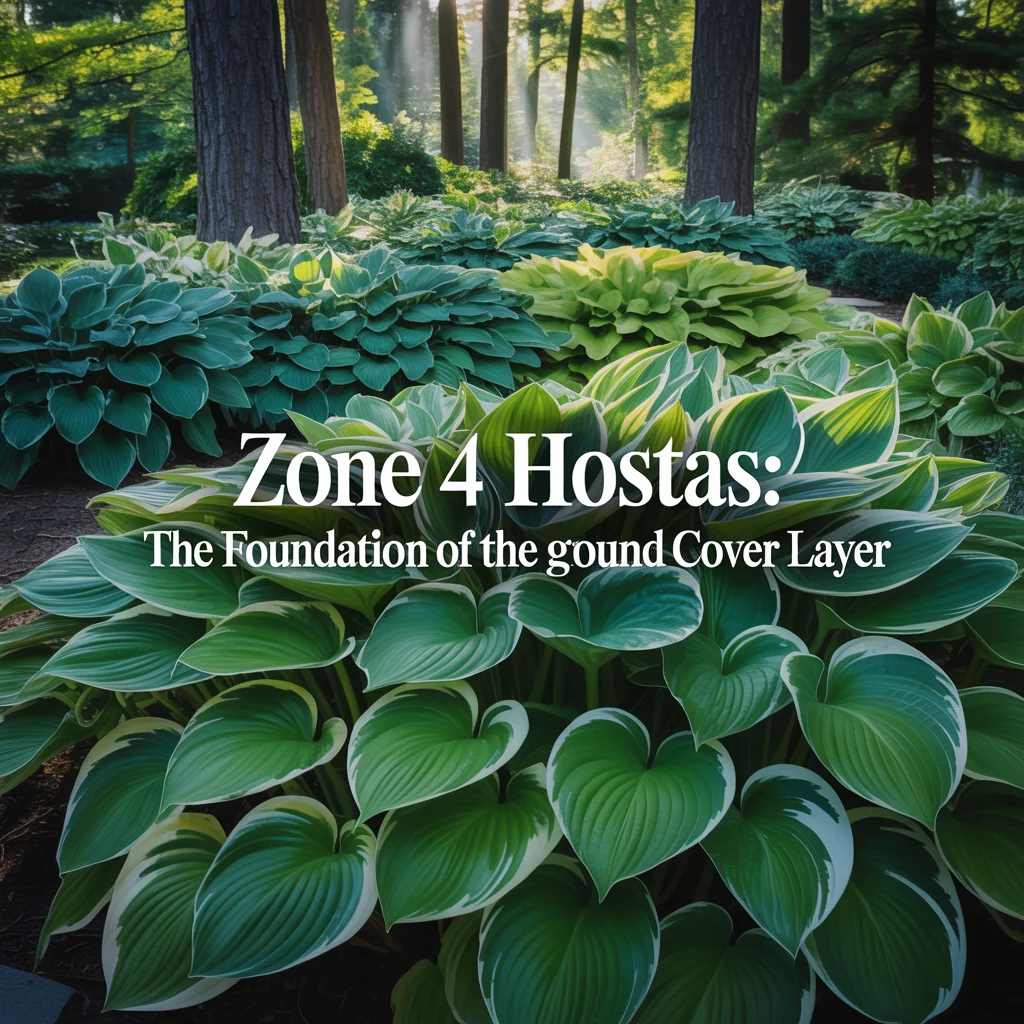
Hostas form the foundation of the ground cover layer in Zone 4 woodland garden layered planting because no other genus provides the same combination of bold foliage in the widest possible range of sizes, colors, and textures, complete reliability at Zone 4 hardiness temperatures of minus 30 to minus 20 degrees Fahrenheit, and an expanding leaf canopy that suppresses weeds effectively throughout the ground layer planting area from May through September. I use hostas as the primary ground cover structural element in every Zone 4 woodland garden layered planting, positioning large-leaved varieties as specimen anchors and smaller varieties as gap fillers between the structural specimens.
Large-Leaved Hostas for a Zone 4 Woodland Garden
Hosta sieboldiana Elegans, Hosta Sum and Substance, and Hosta Empress Wu are three large-leaved hostas suited to the Zone 4 woodland garden ground cover layer. Hosta sieboldiana Elegans produces deeply textured blue-grey leaves of 12 to 15 inches width in a mound of 24 to 30 inches height, providing the most striking large foliage specimen in the Zone 4 woodland ground layer and the best natural slug resistance of any large hosta due to the dense surface texture that deters slug feeding. Hosta Sum and Substance produces chartreuse to gold leaves of up to 18 inches width in a massive mound of 30 to 36 inches height, providing the most dramatic single-plant foliage presence in the Zone 4 woodland garden ground layer. Hosta Empress Wu reaches 4 to 6 feet at maturity.
Companion Hostas for a Layered Zone 4 Shade Garden
Hosta Halcyon, Hosta Patriot, and Hosta June are three mid-size companion hostas suited to a layered Zone 4 shade garden. Hosta Halcyon produces steel-blue leaves of moderate size in a tidy mound of 18 to 22 inches height that suits a spacing of 18 inches between plants, providing a dense, weed-suppressing ground cover across large areas of the Zone 4 woodland garden at affordable plant quantities. Hosta Patriot produces dark green leaves with a wide irregular white margin at 22 to 26 inches height, providing the strongest foliage contrast of any variegated mid-size hosta in a Zone 4 shade garden. Hosta June provides gold-centered blue-margined leaves at 18 to 22 inches height.
Zone 4 Hardy Ferns for the Woodland Garden Ground Layer
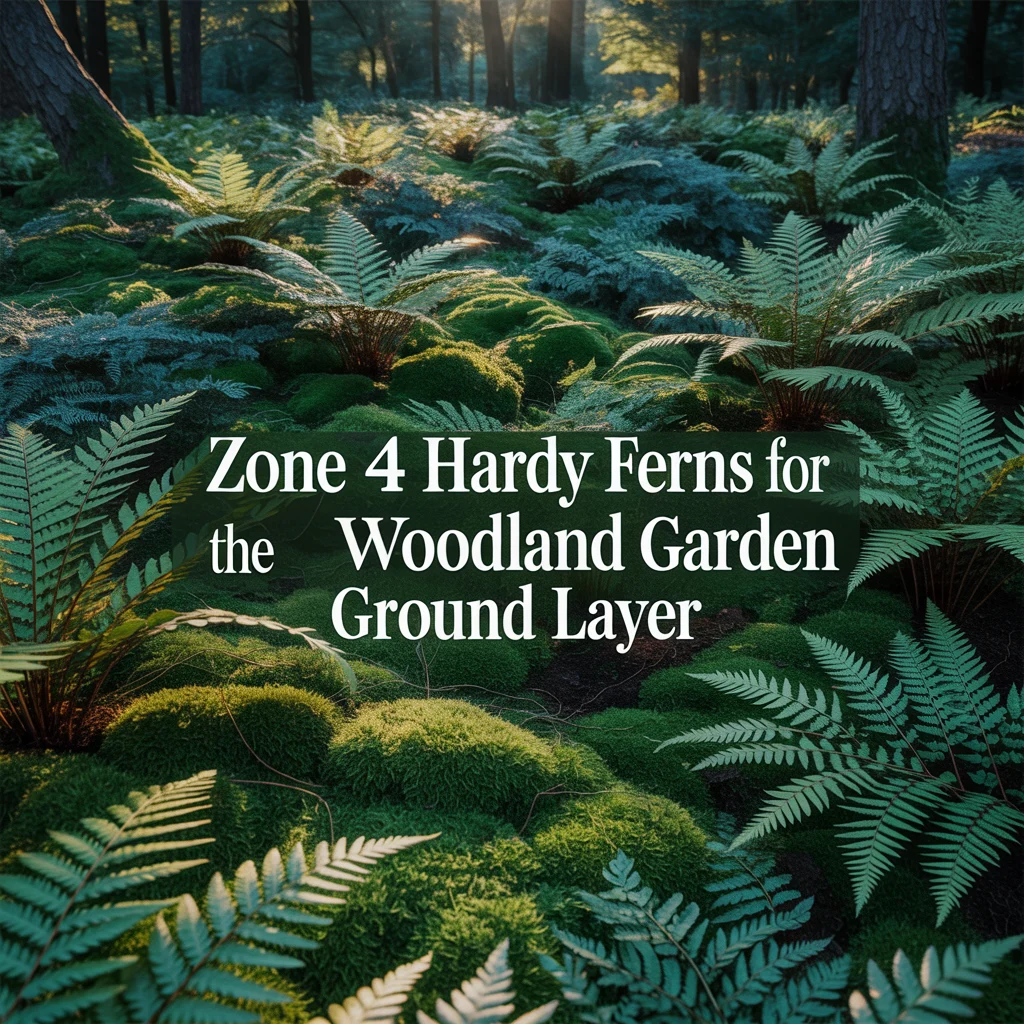
Ferns provide the most naturalistic and ecologically authentic ground cover component of the Zone 4 woodland garden layered planting, replicating the fern communities present in genuine temperate deciduous woodland ecosystems throughout the cold climate regions of North America and providing textural contrast with the broad-leaved hostas that dominate the ground layer. I always include at least three fern species in the Zone 4 woodland garden ground layer, selecting species for their differing frond textures, heights, and seasonal behavior to extend the fern contribution to the woodland garden display across the full growing season.
Native Ferns for a Zone 4 Woodland Garden
Athyrium filix-femina, Dryopteris marginalis, and Osmunda claytoniana are three native ferns suited to the Zone 4 woodland garden ground layer. Athyrium filix-femina, lady fern, produces delicate, finely divided fronds of 2 to 3 feet in moist to wet partial shade, providing the most gracefully textured fern frond in the Zone 4 woodland garden ground layer at the widest possible shade tolerance range. Dryopteris marginalis, marginal wood fern, is semi-evergreen and provides partial winter structure in the Zone 4 woodland garden ground layer after the deciduous fern species die back, maintaining visible green fronds through most of the winter in mild periods. Osmunda claytoniana, interrupted fern, produces bold arching fronds of 3 to 4 feet.
Ornamental Ferns for a Zone 4 Shade Garden
Athyrium niponicum Pictum, Matteuccia struthiopteris, and Dryopteris erythrosora are three ornamental ferns suited to a Zone 4 layered shade garden. Athyrium niponicum Pictum, Japanese painted fern, produces the most visually distinctive fern frond in the Zone 4 shade garden, with silver-grey, green, and burgundy coloration on arching fronds of 12 to 18 inches height that suit a front-of-border position in the ground layer. Matteuccia struthiopteris, ostrich fern, produces the largest fronds of any Zone 4 hardy fern at 3 to 5 feet height in a distinctive upright shuttlecock form that spreads by underground runners to form colonies in moist partial shade. Dryopteris erythrosora provides copper-red spring fronds.
Zone 4 Native Woodland Wildflowers for the Ground Layer
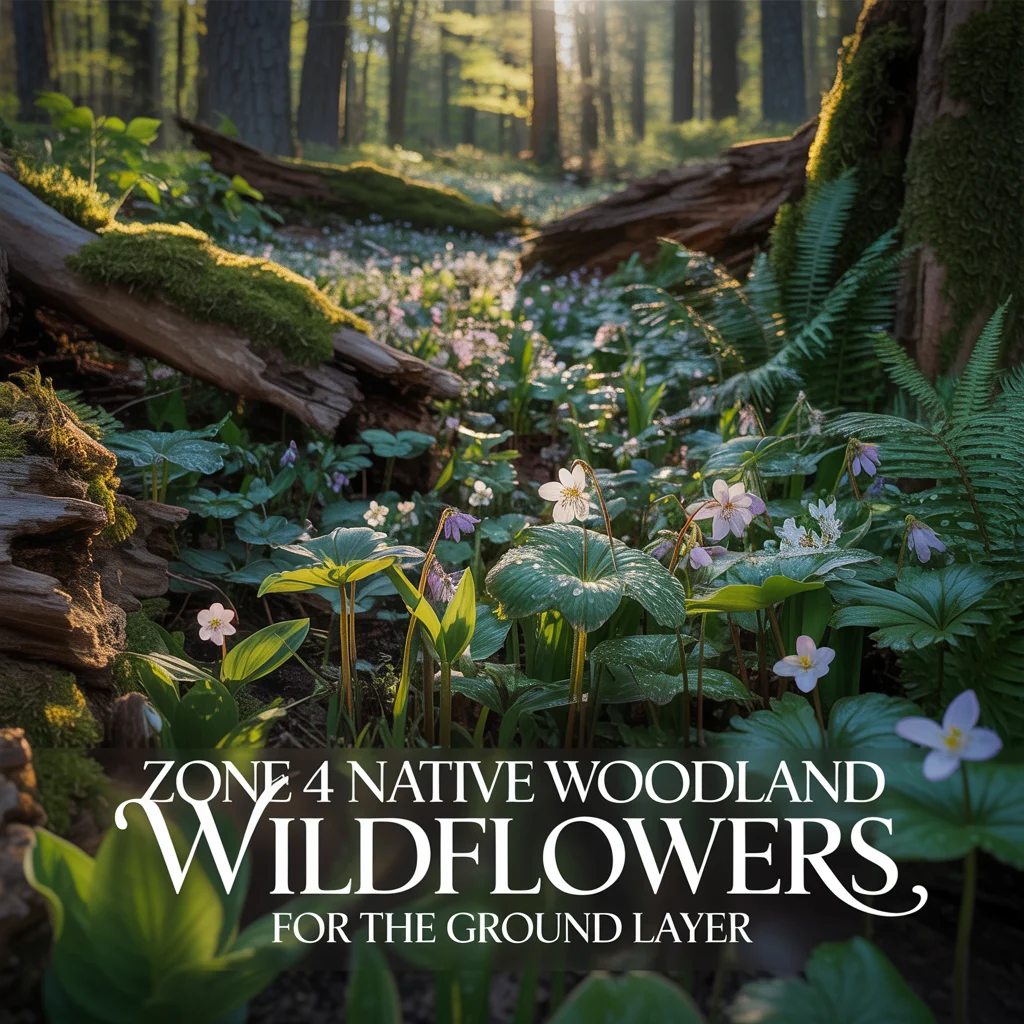
Native woodland wildflowers provide the most seasonally rich and ecologically valuable component of the Zone 4 woodland garden ground layer, producing early spring flowers before the tree canopy leafs out and reduces light levels, summer foliage interest beneath the established shade, and autumn seed head structure that extends the visual contribution of the ground layer beyond the primary flowering period. I plant native woodland wildflowers as the seasonal accent layer within the Zone 4 woodland garden ground cover, interspersed between the structural hosta and fern plantings to provide color and textural variety at ground level.
Spring-Flowering Zone 4 Native Woodland Wildflowers
Trillium grandiflorum, Sanguinaria canadensis, and Mertensia virginica are three spring-flowering Zone 4 native woodland wildflowers. Trillium grandiflorum, great white trillium, produces a three-petaled white flower that fades to pink above a trio of broad leaves from April to May at 12 to 18 inches height in partial to full shade, providing the most iconic native wildflower of the North American deciduous woodland ground layer in a Zone 4 shade garden. Sanguinaria canadensis, bloodroot, produces pristine white poppy-like flowers on 6-inch stems in April before the leaves fully emerge, flowering for only 7 to 10 days but producing broad lobed leaves that persist as attractive ground cover through the summer season. Mertensia virginica produces blue flowers in April at 12 to 24 inches.
Summer and Autumn Zone 4 Woodland Wildflowers
Actaea racemosa, Polygonatum biflorum, and Arisaema triphyllum are three Zone 4 native woodland wildflowers suited to summer and autumn display. Actaea racemosa, black cohosh, produces tall white flower spikes of 4 to 6 feet from July to August in the Zone 4 shade garden, providing the tallest native wildflower display of any woodland ground layer plant and contributing a significant structural vertical accent to the layered shade planting. Polygonatum biflorum, Solomon’s seal, produces arching stems of 2 to 3 feet with pendant white flowers in May and attractive blue-black berries in September, providing ornamental interest across three seasons in the Zone 4 woodland garden ground layer. Arisaema triphyllum provides a distinctive Jack-in-the-pulpit flower in May.
Zone 4 Bulb Layer for a Woodland Garden
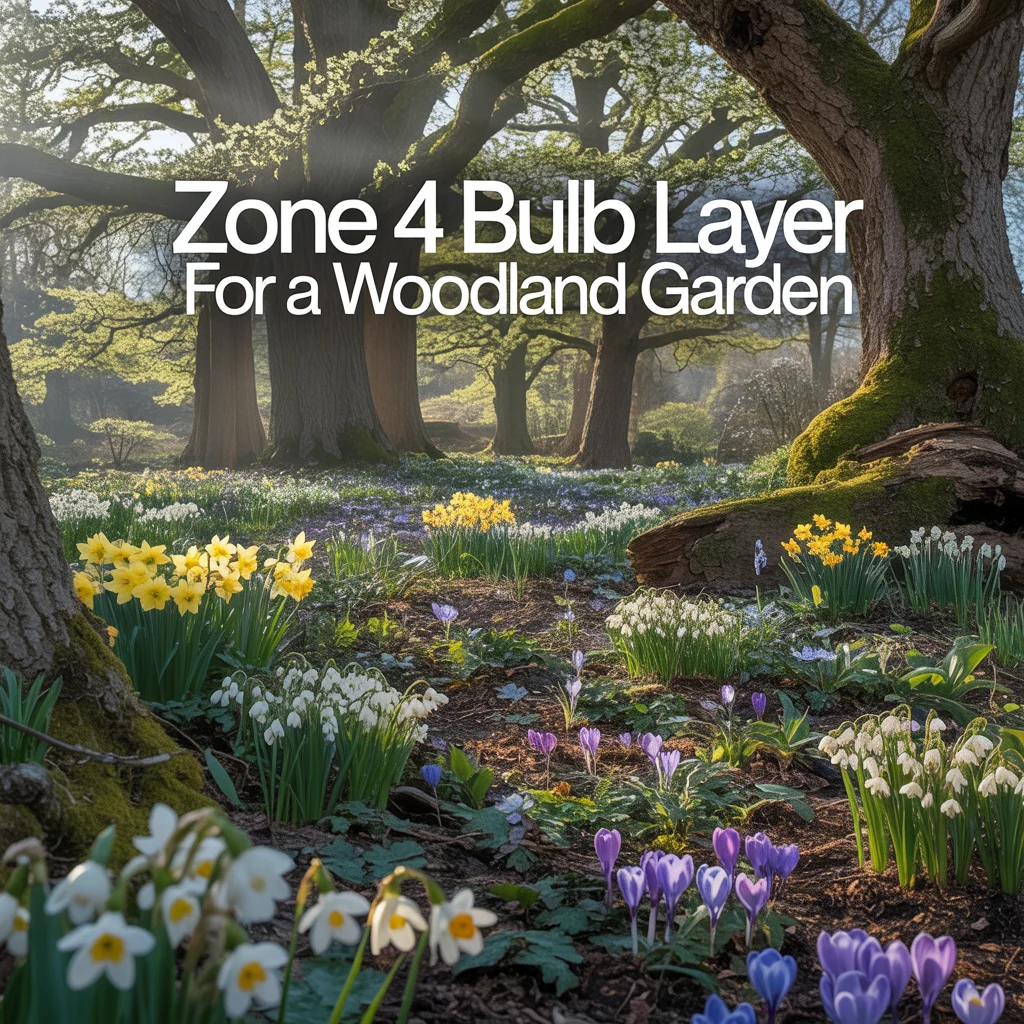
The bulb layer of a Zone 4 woodland garden provides the earliest seasonal display of any planting layer, with spring ephemerals flowering and completing their growth cycle before the tree canopy leafs out and reduces light levels to the woodland floor, and with autumn-flowering species contributing a final display in the woodland garden after the ground cover plants begin their seasonal dieback. I plant the bulb layer as the final installation stage of all Zone 4 woodland garden layered planting projects, setting bulbs between and beneath the established ground cover plants in autumn for spring flowering or in late spring for autumn display.
Spring Ephemerals for a Zone 4 Woodland Garden Bulb Layer
Erythronium americanum, Claytonia virginica, and Dicentra cucullaria are three spring ephemeral bulb layer plants suited to a Zone 4 woodland garden. Erythronium americanum, trout lily, produces nodding yellow flowers on 4 to 8-inch stems in April above attractively mottled green and purple leaves, flowering for 2 to 3 weeks before the leaves yellow and disappear completely by June, leaving no visible trace in the woodland garden until the following spring. Claytonia virginica, spring beauty, produces small pink-striped white flowers in March and April at 3 to 6 inches height in large naturalistic colonies throughout the woodland garden floor, self-seeding freely throughout the Zone 4 woodland ground layer. Dicentra cucullaria provides white bleeding heart flowers in April.
Hardy Bulbs for a Zone 4 Woodland Garden
Narcissus species, Galanthus nivalis, and Camassia leichtlinii are three hardy bulbs suited to the Zone 4 woodland garden bulb layer. Narcissus species including Narcissus Tete-a-Tete and Narcissus Thalia perform reliably to Zone 4 hardiness, producing yellow or white flowers in April beneath the still-bare tree canopy before the shade levels increase sufficiently to inhibit bulb performance in subsequent seasons. Galanthus nivalis, snowdrop, produces white nodding flowers from February to March at 4 to 6 inches height, providing the earliest possible flower in the Zone 4 woodland garden bulb layer and performing reliably for decades in a stable, undisturbed woodland garden floor position. Camassia leichtlinii provides blue-purple spikes in May at 2 to 3 feet.
Zone 4 Shade Garden Design: Simple Layout Ideas
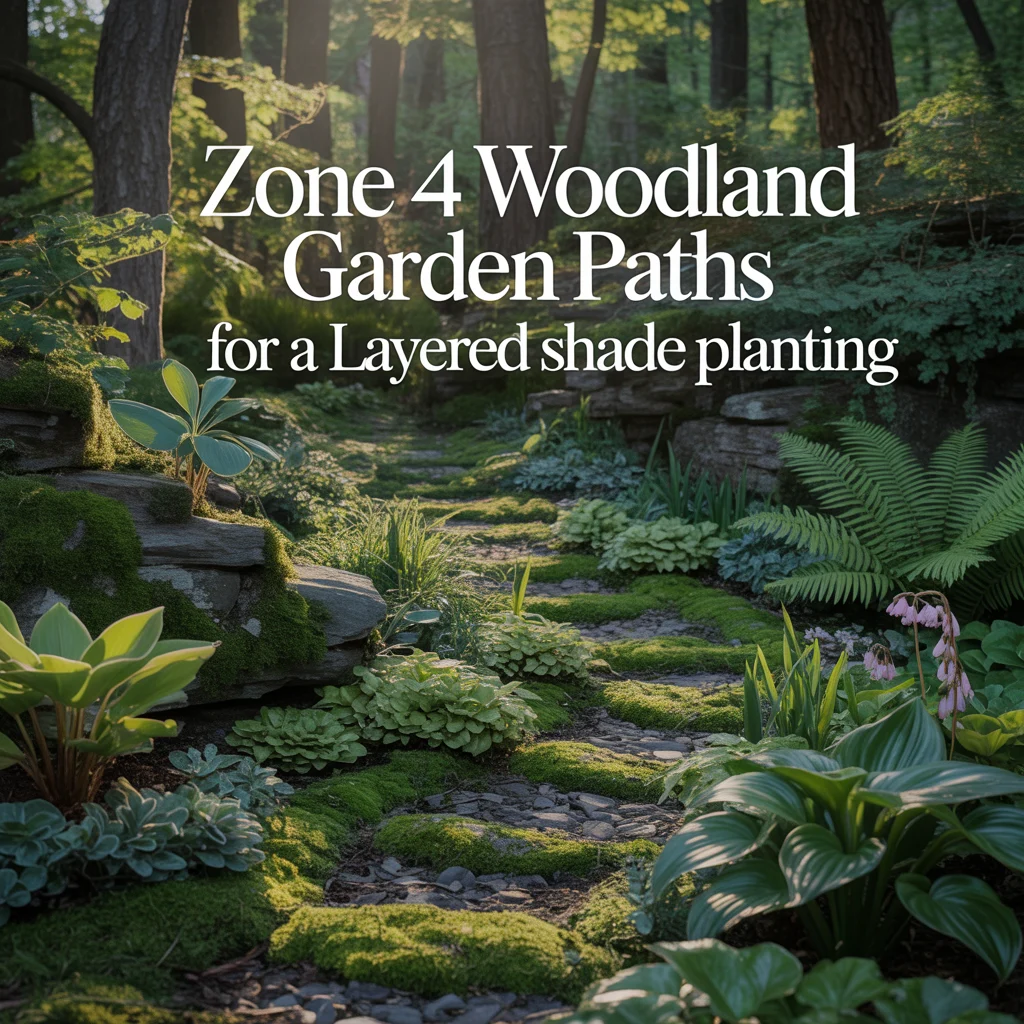
Simple shade garden layout ideas for a Zone 4 woodland garden apply the five-layer planting structure within a straightforward spatial arrangement that any homeowner can plan and implement without professional design assistance, producing a layered woodland garden that develops its full mature character over 3 to 5 years from the initial planting season. I create simple Zone 4 shade garden layouts around three spatial principles: place the largest plants at the rear and perimeter, create curved rather than straight planting boundaries between species groups, and leave 20 to 30% of the ground layer as open mulched space for the planting to expand into over the first two growing seasons. Ideas for positioning a restful seating spot within this kind of cold-hardy layered planting are covered in these woodland garden sitting areas in a zone 4 landscape.
Simple Zone 4 Shade Garden Layout for a Rectangular Space
A rectangular Zone 4 shade garden layout of 20 by 15 feet uses the rear boundary as the shrub layer position, the two side boundaries as secondary planting positions, and the central and front areas as the primary ground layer planting zone. The shrub layer at the rear positions one Viburnum lentago at center and two Fothergilla gardenii at 4-foot spacing on each side, providing a 15-foot rear shrub backdrop. The ground layer fills the central 15-by-10-foot area with alternating Hosta sieboldiana Elegans at 3-foot spacing and Athyrium filix-femina at 18-inch spacing, with Trillium grandiflorum and Polygonatum biflorum distributed through the gaps. Bulbs are scattered throughout in informal drifts of 20 to 30 per species.
Simple Zone 4 Shade Garden Paths Within the Layout
A simple shade garden layout in Zone 4 includes a defined path of 18 to 24-inch width through the planting to allow access to the rear shrub layer for maintenance and to provide a walking route that allows the layered woodland garden planting to be experienced from within the planted space rather than only from the garden perimeter. I use bark chip at 3-inch depth on a weed membrane as the standard simple path surface for all Zone 4 shade garden layouts, because the bark chip material coordinates with the woodland aesthetic of the layered planting and requires only an annual top-up to maintain its functional path surface and weed-suppressing properties.
Zone 4 Astilbes for the Woodland Garden Ground Layer
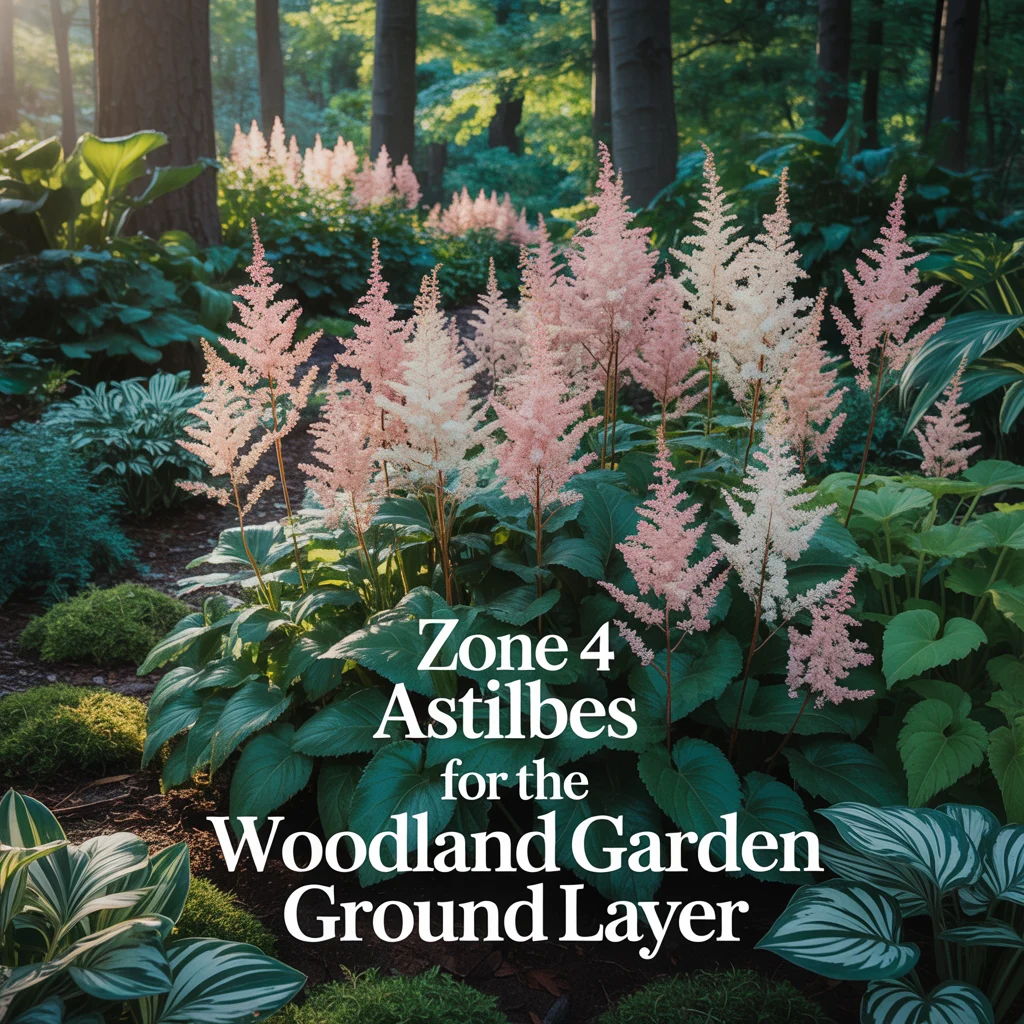
Astilbes provide the most reliable summer flower display in the Zone 4 woodland garden ground layer, producing feathery plumes of white, pink, red, or lavender from June through August in partial to full shade at heights ranging from 12 inches in dwarf varieties to 4 feet in the largest forms, and performing consistently through Zone 4 winters without any protection or special preparation before the first frost. I include at least two Astilbe varieties in every Zone 4 woodland garden ground layer to extend the flowering period beyond the 3 to 4-week peak of any single variety, selecting early, mid, and late-season varieties that collectively provide a 6 to 8-week summer flower display.
Astilbe Varieties for a Zone 4 Woodland Garden
Astilbe chinensis Pumila, Astilbe x arendsii Fanal, and Astilbe chinensis Visions are three Astilbe varieties suited to a Zone 4 woodland garden. Astilbe chinensis Pumila produces lavender-pink flower plumes at 12 to 15 inches height from August to September, providing the latest-flowering Astilbe variety for a Zone 4 woodland garden and one of the most drought-tolerant Astilbes for a shade garden with occasional dry periods under established tree canopy. Astilbe x arendsii Fanal produces deep red flower plumes at 18 to 24 inches height from June to July, providing the richest Astilbe color in the Zone 4 woodland garden early summer display. Astilbe chinensis Visions produces lilac-purple plumes at 18 inches from July to August.
Astilbe Care in a Zone 4 Shade Garden
Astilbes in a Zone 4 shade garden require division every 3 to 4 years to prevent the central clump from dying out as the rhizome expands outward from the original planting center, which occurs when the plant’s energy is concentrated in the outer growing edges rather than the center of the established clump. I divide all Astilbe clumps in the Zone 4 woodland garden in early spring when the red shoot tips are emerging from the soil surface, which provides the best root establishment conditions before the summer heat places stress on the divided sections. Each divided section requires at least one strong shoot and an adequate portion of the fibrous root system to re-establish successfully in the woodland garden ground layer.
Bleeding Heart in a Zone 4 Layered Woodland Garden
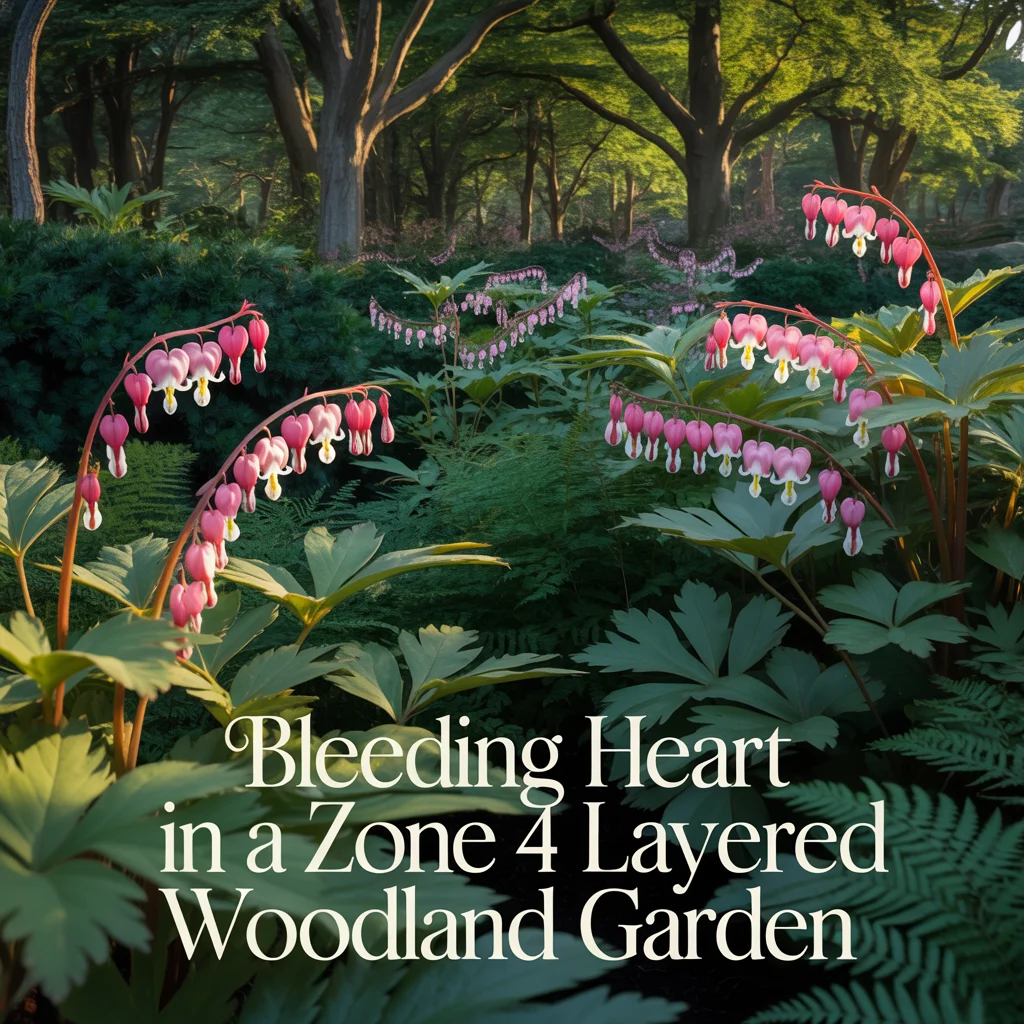
Dicentra spectabilis, old-fashioned bleeding heart, is one of the most widely planted and most visually distinctive perennials for the Zone 4 woodland garden ground layer, producing arching stems of 24 to 36 inches carrying pendant heart-shaped pink and white flowers from May to June in a display that no other Zone 4 woodland plant replicates in terms of the combination of delicate flower form and bold arching stem presentation. I plant Dicentra spectabilis as a specimen anchor plant at the front of the shrub layer boundary in all Zone 4 woodland garden designs because the plant’s height and spread at peak flowering in May makes it the most visually prominent ground layer plant in that month.
Dicentra Species for a Zone 4 Woodland Garden
Dicentra spectabilis, Dicentra eximia, and Dicentra formosa Gold Heart are three Dicentra species suited to a Zone 4 woodland garden. Dicentra spectabilis produces the largest individual plant form at 24 to 36 inches height with the most abundant flower display of any Dicentra in May to June, dying back completely to the ground by late July and leaving a gap in the ground layer that requires neighboring plants to fill after midsummer. Dicentra eximia, fringed bleeding heart, produces smaller, more delicate pink flowers on 12 to 18-inch plants from May through September, providing a more compact and longer-flowering Dicentra for a Zone 4 woodland garden where the seasonal dormancy of spectabilis creates a planting gap problem. Dicentra formosa Gold Heart provides golden foliage with pink flowers.
Managing Dicentra Spectabilis Summer Dormancy
Dicentra spectabilis becomes dormant and disappears completely from the Zone 4 woodland garden ground layer between July and September, leaving a gap of 18 to 24 inches diameter in the planting scheme that requires neighboring plants to expand into the space without competing with the dormant crown below the soil surface. I address the Dicentra dormancy gap in Zone 4 woodland garden designs by planting Hosta sieboldiana at 18-inch spacing to each side of the Dicentra clump, with the hosta expanding outward over the dormancy gap from July as the Dicentra foliage yellows and collapses. The hosta leaves cover the gap completely within 3 to 4 weeks of Dicentra dormancy beginning.
Zone 4 Woodland Garden Paths for a Layered Shade Planting
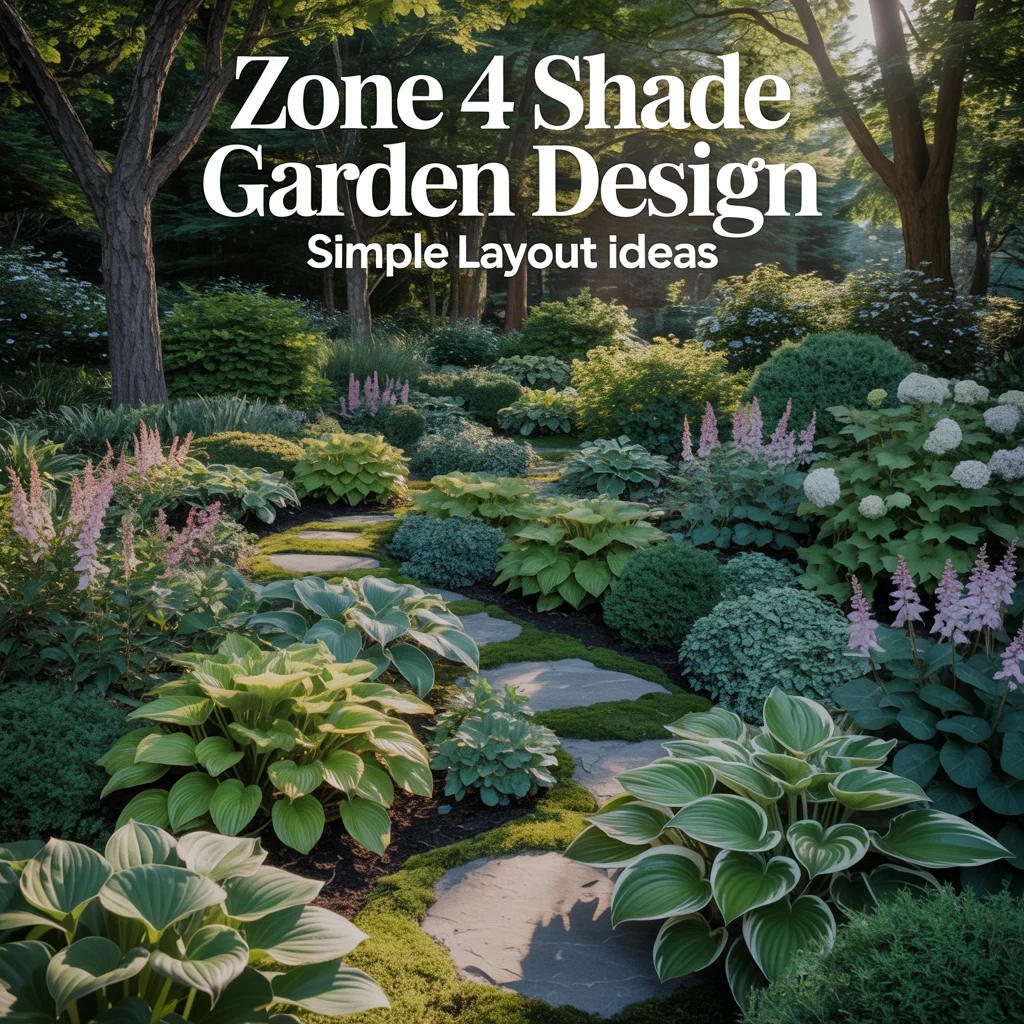
Woodland garden paths in a Zone 4 layered shade garden provide the access route that allows the full layered planting to be experienced from within the planted space at all height levels, from the bulb layer at ankle height through the ground cover layer at knee to waist height to the shrub layer visible at eye level. I design the path system of every Zone 4 woodland garden as the first structural element of the layout plan before any plant positioning decisions are made, because the path routes determine which sections of the layered planting are accessible for maintenance and which planting groups are visible from the walking route through the woodland garden.
Simple Woodland Garden Path Ideas for a Zone 4 Shade Garden
A bark chip path, a stepping stone path, and a compacted wood chip path are three simple woodland garden path ideas suited to a Zone 4 shade garden. A bark chip path at 24-inch width on a heavy-duty weed membrane provides the most naturally woodland-appropriate path surface for a Zone 4 layered shade garden, coordinating with the forest floor aesthetic of the surrounding planting and requiring only an annual spring top-up to maintain its functional depth and weed-suppressing quality. A stepping stone path of large irregular limestone or sandstone pieces set at 16-inch intervals through the Zone 4 woodland planting provides a more permeable and plant-friendly path that does not require any sub-base preparation and minimizes disturbance to the shallow root systems of ground layer plants.
Woodland Path Edging for a Zone 4 Shade Garden
Log roll edging, natural stone border edging, and a planted grass edge are three edging options suited to a woodland garden path in a Zone 4 layered shade garden. Log roll edging of 3 to 4-inch rounded timber sections provides the most naturally woodland-appropriate containment for a bark chip path in a Zone 4 shade garden, using the same organic material language as the surrounding planting and the path surface to create a coherent woodland floor aesthetic throughout the full path and border zone. Natural stone border edging using irregular limestone or granite pieces laid flat along the path edge provides a permanent, frost-resistant border that coordinates with any stepping stone path elements and suits a Zone 4 woodland garden with stone as a recurring design material.
Low-Maintenance Zone 4 Woodland Garden Design
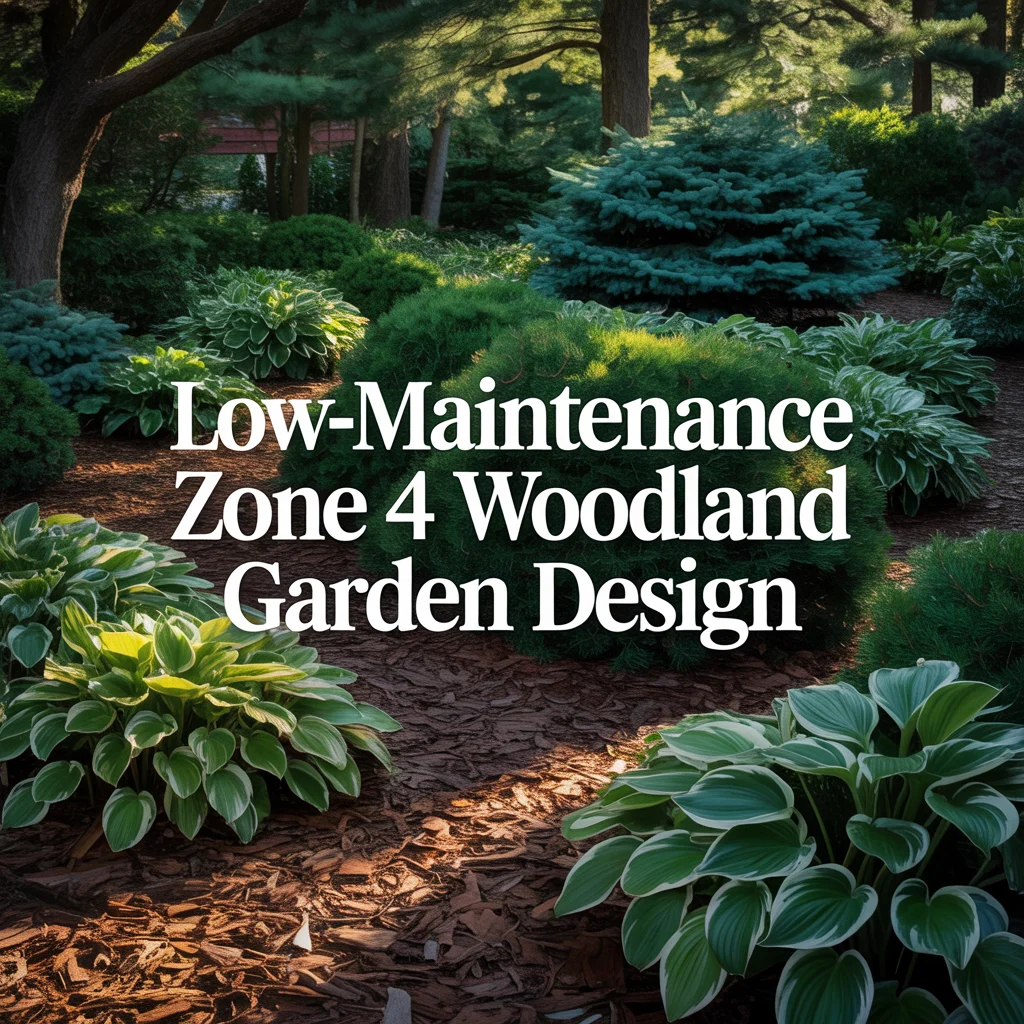
A low-maintenance Zone 4 woodland garden design uses plant species selected specifically for their ability to suppress weeds, self-sustain without division, and perform consistently through severe winter conditions without any protective treatment, creating a layered shade garden that requires under one hour of maintenance per month during the growing season after the first two years of establishment. I design all low-maintenance Zone 4 woodland garden schemes around three principles: use ground cover plants that spread to suppress weeds between specimens, select species that do not require annual division or staking, and choose path and edging materials that need only seasonal attention rather than weekly maintenance.
Self-Sustaining Ground Cover for a Low-Maintenance Zone 4 Woodland Garden
Pachysandra terminalis, Vinca minor Hardy, and Epimedium species are three self-sustaining ground cover plants suited to a low-maintenance Zone 4 woodland garden. Pachysandra terminalis forms a dense, weed-suppressing evergreen mat under Zone 4 tree canopy within two to three seasons, requiring no cutting back, no dividing, and no feeding to maintain its weed-suppression function in the woodland garden ground layer indefinitely after establishment. Vinca minor Hardy, rated Zone 4 with selection of the hardiest cultivars, provides spreading ground cover with blue flowers in spring at zero maintenance after establishment. Epimedium species provide drought-tolerant, deer-resistant ground cover in dry shade under established Zone 4 trees. Further design ideas for connecting this kind of cold-hardy planting with a walking route are covered in these woodland gardens with paths suited to zone 4 planting.
Low-Maintenance Shrub Selection for a Zone 4 Woodland Garden
Ilex verticillata, Aronia melanocarpa, and Viburnum lentago are three low-maintenance shrubs suited to a Zone 4 woodland garden. Ilex verticillata requires no annual pruning to maintain its natural form, no fertilizer beyond the organic matter provided by the woodland leaf mulch, and no winter protection in Zone 4 conditions, making it the most genuinely maintenance-free ornamental shrub for a Zone 4 woodland garden shrub layer. Aronia melanocarpa provides ornamental flowers, fruits, and autumn color without any annual maintenance beyond the occasional removal of suckers at the shrub base. Viburnum lentago requires minimal pruning and provides wildlife value through its berry production.
Zone 4 Woodland Garden for Wildlife and Ecology
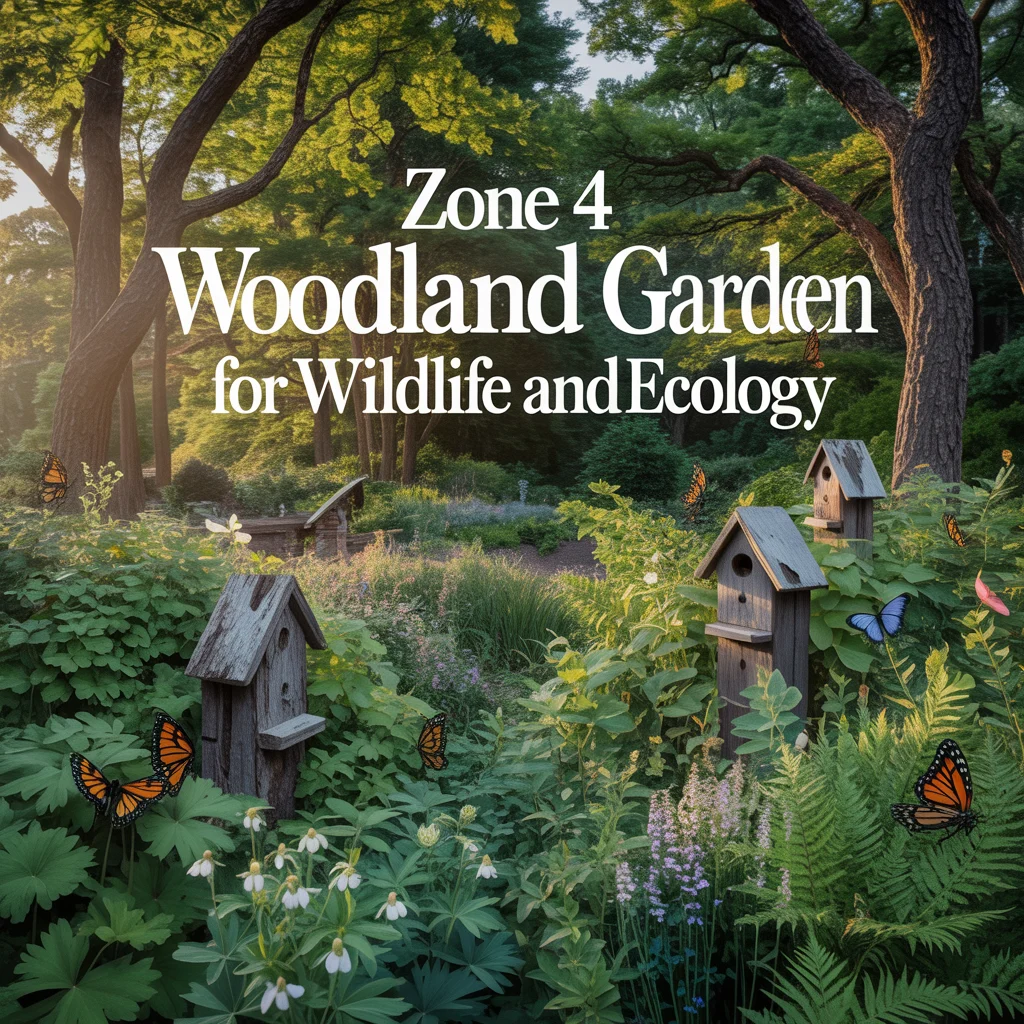
A Zone 4 woodland garden designed for wildlife and ecology uses native plants at every layer, incorporates habitat features including log piles, insect hotels, and water sources, and minimizes non-native plant use to create a layered shade garden that supports the full range of native woodland wildlife species including pollinators, birds, small mammals, and amphibians throughout the year. I design wildlife-focused Zone 4 woodland gardens using the North American native plant layer model developed by the Xerces Society and the National Wildlife Federation, specifying a minimum of 70% native plant content at each of the five planting layers to provide adequate food and habitat resources for the native wildlife species dependent on specific plant communities.
Native Plants for Wildlife at Each Zone 4 Woodland Layer
Quercus rubra at the canopy, Viburnum lentago at the shrub layer, Polygonatum biflorum at the ground layer, and Erythronium americanum at the bulb layer are four native wildlife-supporting plants suited to each layer of a Zone 4 woodland garden. Quercus rubra, red oak, supports over 500 caterpillar species as a host plant according to research by entomologist Doug Tallamy, making it the single highest-wildlife-value tree in the Zone 4 woodland garden canopy layer. Viburnum lentago provides berries eaten by over 35 bird species. Polygonatum biflorum produces berries eaten by thrushes and wood thrushes in September. Erythronium americanum provides early spring pollen for queen bumblebees emerging from winter dormancy.
Habitat Features for a Zone 4 Wildlife Woodland Garden
A brush pile from pruning waste, a shallow wildlife pond, and a rock pile with crevice habitat are three habitat features suited to a Zone 4 wildlife woodland garden. A brush pile constructed from annual pruning of the shrub layer provides overwinter habitat for native bees, small mammals, and amphibians at zero cost from material produced during the regular woodland garden maintenance. A shallow wildlife pond of 6 by 4 feet with a maximum depth of 18 inches provides water for birds, amphibians, and beneficial insects throughout the growing season and supports aquatic insect communities that form part of the wider woodland garden food web. A rock pile provides habitat for native ground beetles and beneficial insects.
Tiny Shade Garden Ideas for Zone 4: Making Every Square Foot Count
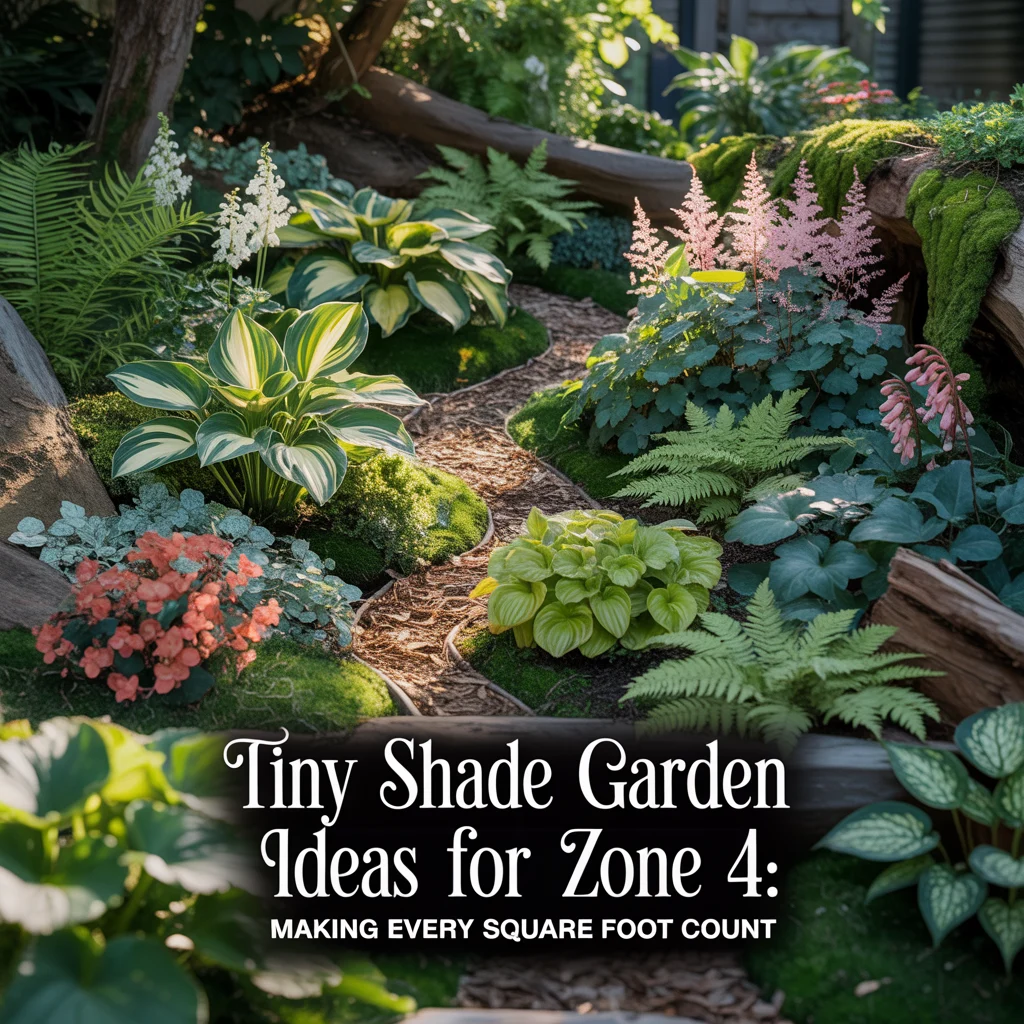
Tiny shade garden ideas for Zone 4 apply the layered woodland planting structure to gardens with limited space, often as small as 8 by 10 feet under a single established tree, by scaling each plant layer to the smallest viable specimen size, using columnar or compact forms rather than standard-sized woody plants, and maximizing visual complexity within the limited floor area through deliberate contrast between the textures, heights, and colors of adjacent plants at each layer. I design tiny Zone 4 shade gardens as complete five-layer woodland communities in miniature, refusing to omit any layer simply because the available space is small, because the layered structure is as important to the character of a tiny shade garden as it is to a large woodland garden.
Plant Selection for a Tiny Zone 4 Shade Garden
Dwarf Cornus canadensis, compact Astilbe Pumila, and miniature Hosta Blue Mouse Ears are three plant selections suited to a tiny Zone 4 shade garden that maintain the layered structure within a very limited space. Cornus canadensis, bunchberry, grows as a spreading ground cover of 4 to 6 inches height rather than a tree or large shrub, producing white flowers in May and red berries in August in a dense, low mat that suits a tiny Zone 4 shade garden where a full-size dogwood would not be appropriate. Astilbe Pumila at 12 to 15 inches provides the shrub-scale summer flower display within the ground layer of a tiny shade garden. Hosta Blue Mouse Ears provides a compact blue mound at 8 to 10 inches height.
Maximizing Seasonal Display in a Tiny Zone 4 Shade Garden
A tiny Zone 4 shade garden achieves maximum seasonal display by selecting plants whose peak visual periods do not overlap, ensuring that each month from March through October has a different primary plant contributing its main display in the limited garden space. I plan tiny Zone 4 shade garden seasonal sequences by listing all selected species in a table with their primary display months and confirming that no month from March through October is without a primary plant display before finalizing the planting list. A complete tiny shade garden seasonal sequence for Zone 4 typically includes Galanthus in March, Dicentra in May, Astilbe in July, Actaea in August, Acer autumn color in October, and Ilex winterberry in November through February.
Year-Round Interest in a Zone 4 Woodland Garden
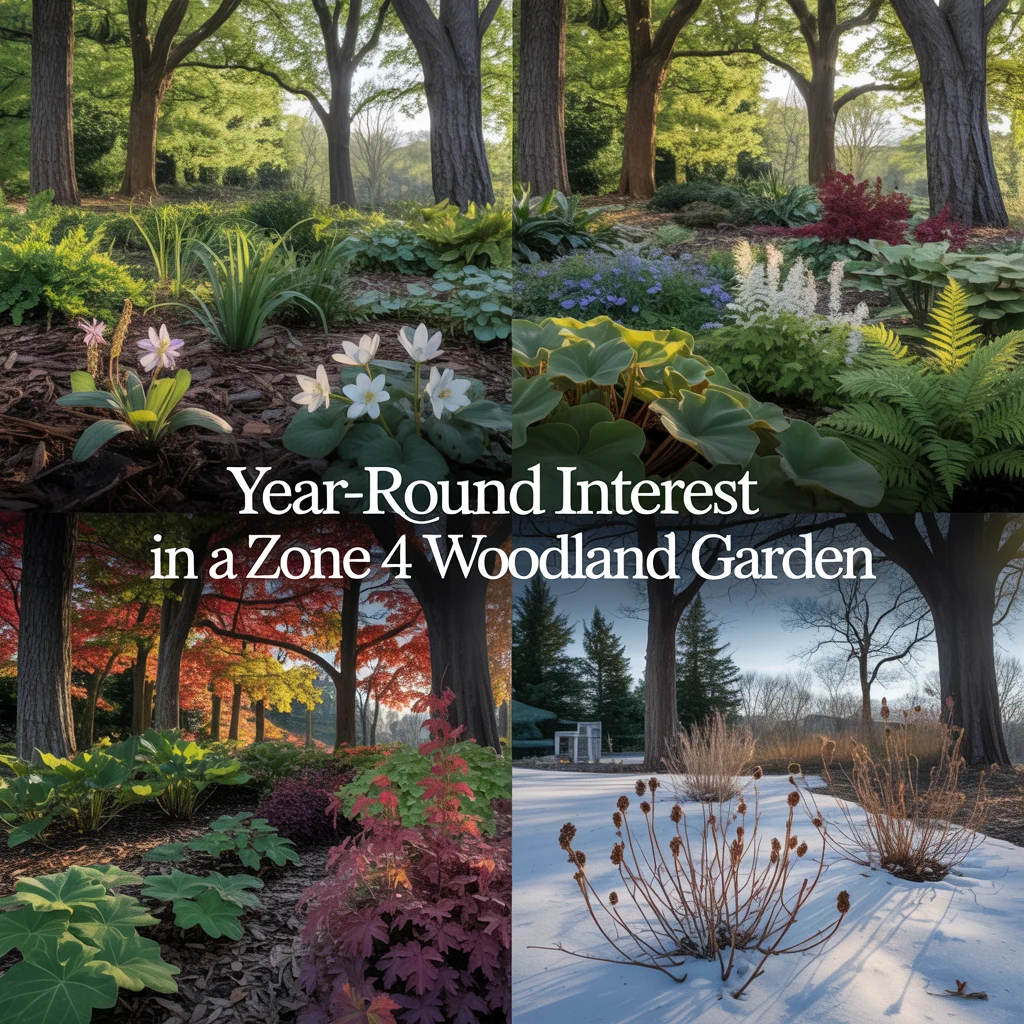
A Zone 4 woodland garden designed for year-round interest plans every element of the layered planting to provide visual contribution in every month of the year, from the earliest snowdrop emergence in March through the fern and hosta summer peak to the autumn color of Acer and the winter berry and bark structure that sustains the woodland garden’s visual presence through the coldest months of the Zone 4 winter season. I plan year-round interest as a conscious design objective from the initial plant selection stage of every Zone 4 woodland garden project, assigning each plant to its primary display month in a twelve-month planting calendar before confirming the final species list.
Winter and Early Spring Interest in a Zone 4 Woodland Garden
Ilex verticillata berries, Cornus sericea red stems, and Galanthus nivalis are three plants providing winter and early spring interest in a Zone 4 woodland garden. Ilex verticillata winterberry holly retains its vivid red berries on bare stems from October through February in the Zone 4 woodland garden, providing the most visually striking winter ornamental display of any native shrub in the cold climate layered shade garden. Cornus sericea red twig dogwood produces vivid red stem color most intensely from November through March on the current season’s growth, with the color intensity peaking on the youngest 1-year-old stems closest to the stem tips in the Zone 4 winter garden. Galanthus nivalis flowers from late February to March.
Summer Peak Display in a Zone 4 Layered Woodland Garden
Astilbe x arendsii, Actaea racemosa, and Hosta Sum and Substance are three plants providing the summer peak display in a Zone 4 layered woodland garden. Astilbe x arendsii in mid-season varieties produces white, pink, and red flower plumes from June to July at 24 to 36 inches height, providing the most abundant summer flower display of any Zone 4 woodland garden ground layer plant during the canopy’s maximum shade period. Actaea racemosa produces white flower spikes of 4 to 6 feet from July to August, contributing the tallest wildflower display in the Zone 4 woodland garden at the height of the summer growing season. Hosta Sum and Substance provides its largest, most spectacular foliage display from June through August.
Related
best garden paths with bark for zone 4 winter conditions
how to use ground cover plants on zone 4 garden paths
garden paths around a tree in a cold climate woodland garden
Frequently Asked Questions
What plants work best for Zone 4 layered shade planting?
Hosta sieboldiana, Dryopteris marginalis, Astilbe x arendsii, Trillium grandiflorum, and Dicentra spectabilis are the five best plants for Zone 4 layered shade planting because all five provide distinct seasonal contributions at different height levels within the woodland garden ground layer, all are confirmed Zone 4 hardy at minus 30 to minus 20 degrees Fahrenheit, and all perform well in the partial to full shade conditions beneath a deciduous tree canopy. Hosta provides bold summer foliage, Dryopteris provides winter-persistent fern structure, Astilbe provides summer flowers, Trillium provides spring wildflower display, and Dicentra provides the most graceful May flowering of any Zone 4 shade garden perennial.
How do I create a layered shade garden in Zone 4?
A Zone 4 layered shade garden is created by establishing plants in the correct sequence from largest to smallest: canopy trees first, understory trees second, shrubs third, ground cover perennials fourth, and bulbs last. Each layer requires 2 to 3 years of establishment before the next layer below it is planted in sequence, which allows the upper layers to create the shade conditions needed by the layers below them. Starting with an existing mature garden tree eliminates the canopy establishment period and allows all lower layers to be planted simultaneously in the first season. I plant all five layers simultaneously only when the canopy tree is already established and producing adequate shade for the intended ground layer species.
What ferns are hardy to Zone 4 for woodland gardens?
Dryopteris marginalis, Athyrium filix-femina, Osmunda claytoniana, and Matteuccia struthiopteris are four ferns confirmed hardy to Zone 4 for woodland garden planting. Dryopteris marginalis is semi-evergreen and provides partial winter frond structure that other Zone 4 ferns do not. Athyrium filix-femina provides the most delicate frond texture of any Zone 4 hardy fern at 2 to 3 feet height. Osmunda claytoniana provides the most architectural form at 3 to 4 feet. Matteuccia struthiopteris provides the most vigorous spreading colony habit and the tallest fronds at 3 to 5 feet, suiting a Zone 4 woodland garden where rapid ground cover establishment is the priority.
Can I create a woodland garden in a small Zone 4 shaded space?
A complete five-layer woodland garden is achievable in a Zone 4 shaded space as small as 8 by 10 feet under a single established tree by using compact plant forms at each layer, including dwarf Cornus canadensis at the ground layer instead of a standard Cornus tree, Fothergilla gardenii at 3 feet rather than a large viburnum at the shrub layer, and miniature Hosta Blue Mouse Ears at 8 inches rather than large Hosta sieboldiana in the ground layer. The layered structure of the planting creates visual complexity within the tiny shade garden that makes the space feel larger than its physical dimensions, because the multiple height levels of plant material provide vertical visual interest that extends the perceived depth of the small Zone 4 woodland garden space.
How do I maintain a Zone 4 woodland garden through winter?
A Zone 4 woodland garden requires three pre-winter maintenance tasks completed before the first hard frost: cutting back deciduous perennials to ground level, applying a 3-inch leaf mulch across the full planting area, and removing any diseased or damaged plant material from the garden surface. Cutting back hostas, astilbes, and bleeding heart prevents the dead foliage from harboring fungal pathogens through the winter months. A 3-inch leaf mulch from collected garden leaves applied across the full woodland garden floor insulates the root zones of all ground layer plants during Zone 4 temperature extremes and decomposes into valuable organic matter by the following spring. No additional winter protection is required for confirmed Zone 4 hardy species selected appropriately for the garden’s planting conditions.