Garden Bench Landscaping Ideas for Integrated Seating Design

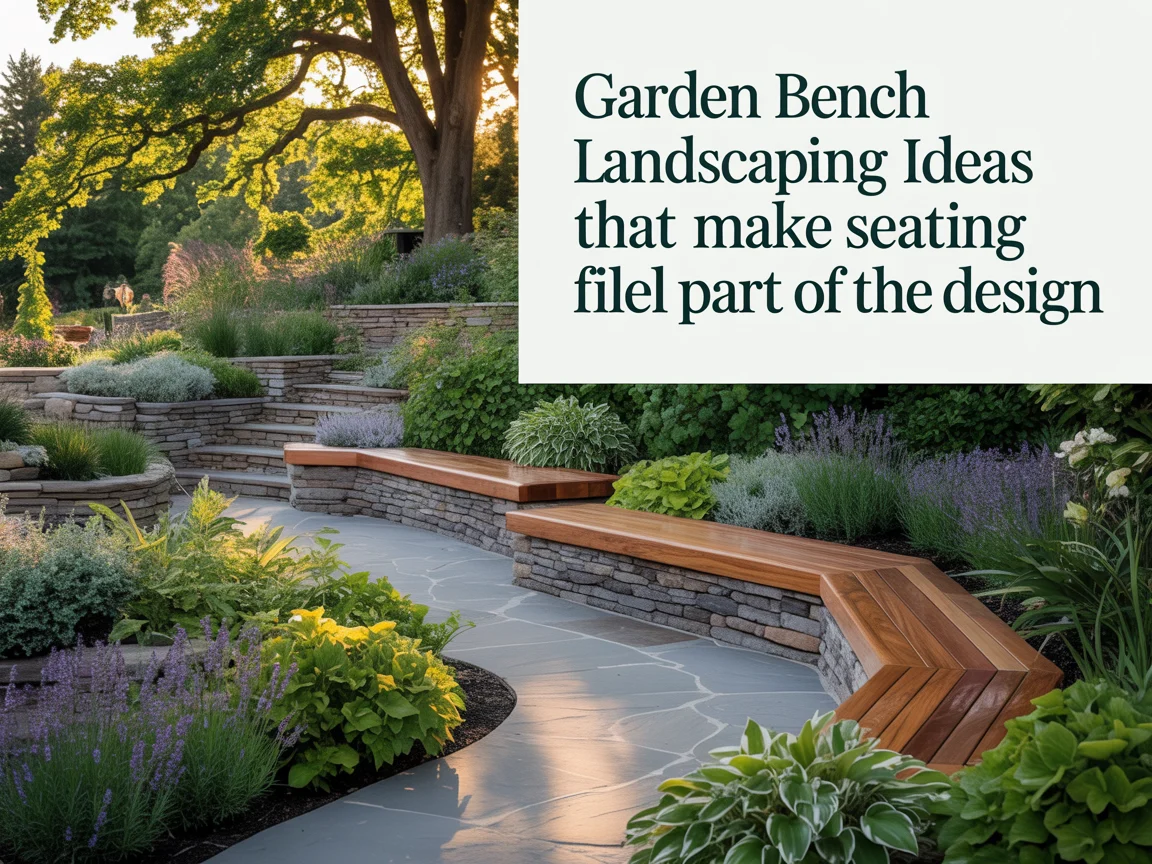
I visited a garden design show three years ago where one installation stopped me completely. It was not a show garden with a dramatic water feature or a complex planting scheme. It was a simple L-shaped bench built into the corner of a low stone retaining wall, with a gravel surface below and a mixed planting of Lavandula angustifolia and Salvia nemorosa in the raised bed above. The bench was part of the wall. The wall was part of the path. The path was part of the garden. Nothing felt added as an afterthought, and that integration was the entire point. It cost less than many standalone bench installations I have seen, and it looked ten times more considered.
Garden bench landscaping ideas integrate the seating element into the surrounding garden design as a deliberate structural, material, and spatial component rather than placing a standalone bench in an existing space, creating outdoor seating that feels planned from the beginning of the design rather than positioned after all other elements are complete. The bench becomes part of the landscape rather than furniture placed within it, and the result is a garden that reads as a single unified outdoor design.
Since that show garden moment, I have studied and executed garden bench landscaping ideas across many different design styles, budgets, and garden sizes. I have seen simple wooden garden bench landscaping ideas achieve the same integration as complex professional schemes, and I have also seen expensive standalone benches placed without thought produce a result that no amount of surrounding planting could resolve.
In this article, I am sharing 22 garden bench landscaping ideas that I have either designed myself or studied closely enough to recommend with complete confidence.
Built-In Bench Integrated Into a Retaining Wall
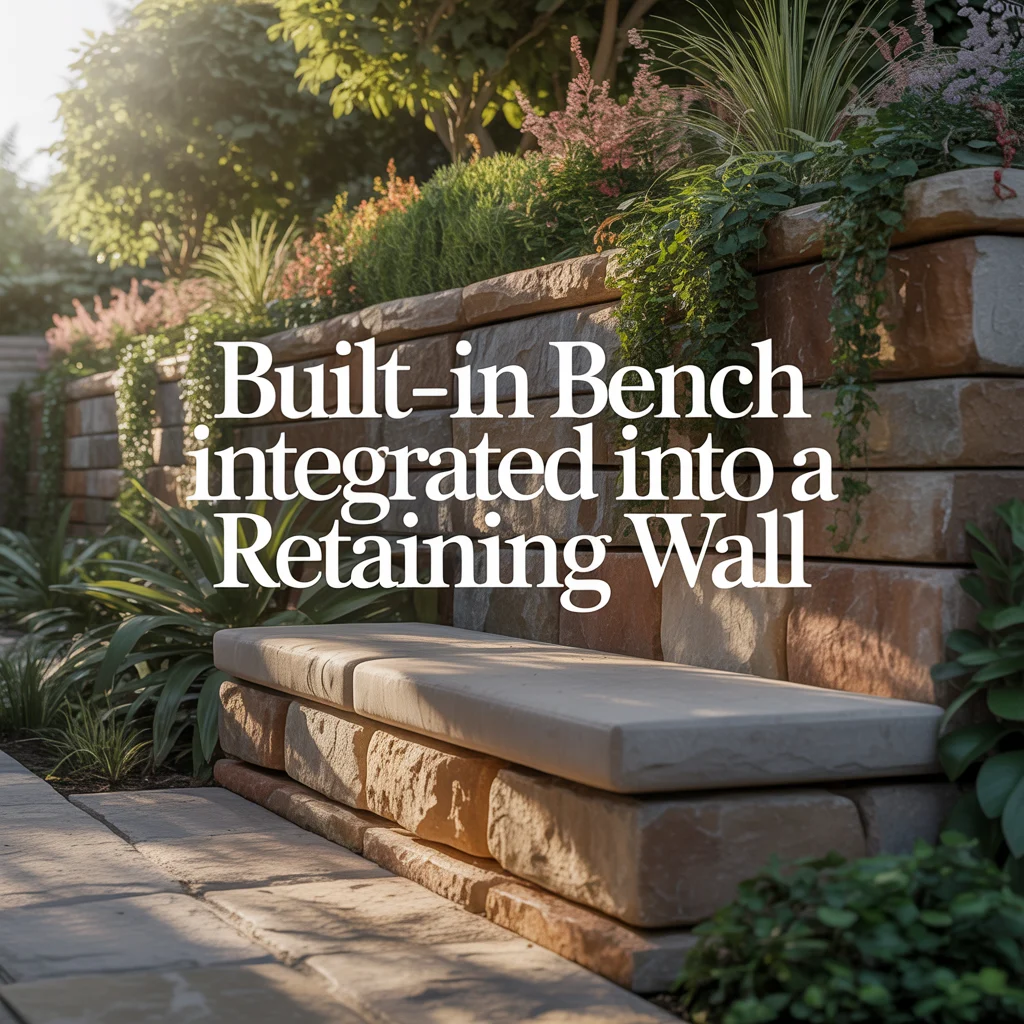
A built-in bench integrated into a retaining wall uses the top course or a deliberately stepped section of a stone, brick, or timber retaining wall as the bench seat surface, creating a seating element that is structurally part of the garden landscape rather than a separate furniture piece positioned against it. I designed this integration at a sloped residential garden project, extending the top face of a railway sleeper retaining wall outward by 18 inches on a 5-foot section to create a built-in seat platform at the correct 17-inch height, and the bench felt like it had been part of the original retaining wall design rather than added afterward.
Retaining Wall Materials for a Built-In Bench Landscape
Railway sleepers, natural stone dry-stone wall, and brick retaining wall are three retaining wall materials suited to a built-in bench landscaping idea. Railway sleepers at 200mm by 100mm cross-section provide the most straightforward material for integrating a bench seat into a retaining wall, with the sleeper top face extended horizontally at the correct seat height providing a wide, stable, naturally finished bench surface at $18 to $28 per sleeper. Natural stone dry-stone wall at 450mm width provides a structurally stable, naturally finished wall top that suits a bench seat surface in a rural, cottage, or heritage landscape garden. Brick retaining wall provides a formal bench seat platform suited to a period garden.
Bench Height Considerations for a Wall-Integrated Landscape Bench
A retaining wall integrated bench seat reads most effectively when the wall face height positions the seat surface at 16 to 18 inches above the lower path or terrace level, which provides the correct adult seated height without requiring any additional raised platform. A retaining wall of 14 to 16-inch height provides a bench that is slightly low for most adults but comfortable for children and suits a family garden bench landscaping design. A retaining wall of 18 to 22-inch height provides an adult-height bench seat and suits a formal or entertaining garden bench landscaping idea where comfortable adult seating is the primary function of the integrated bench element within the landscape design.
Curved Bench Arrangement Around a Fire Pit
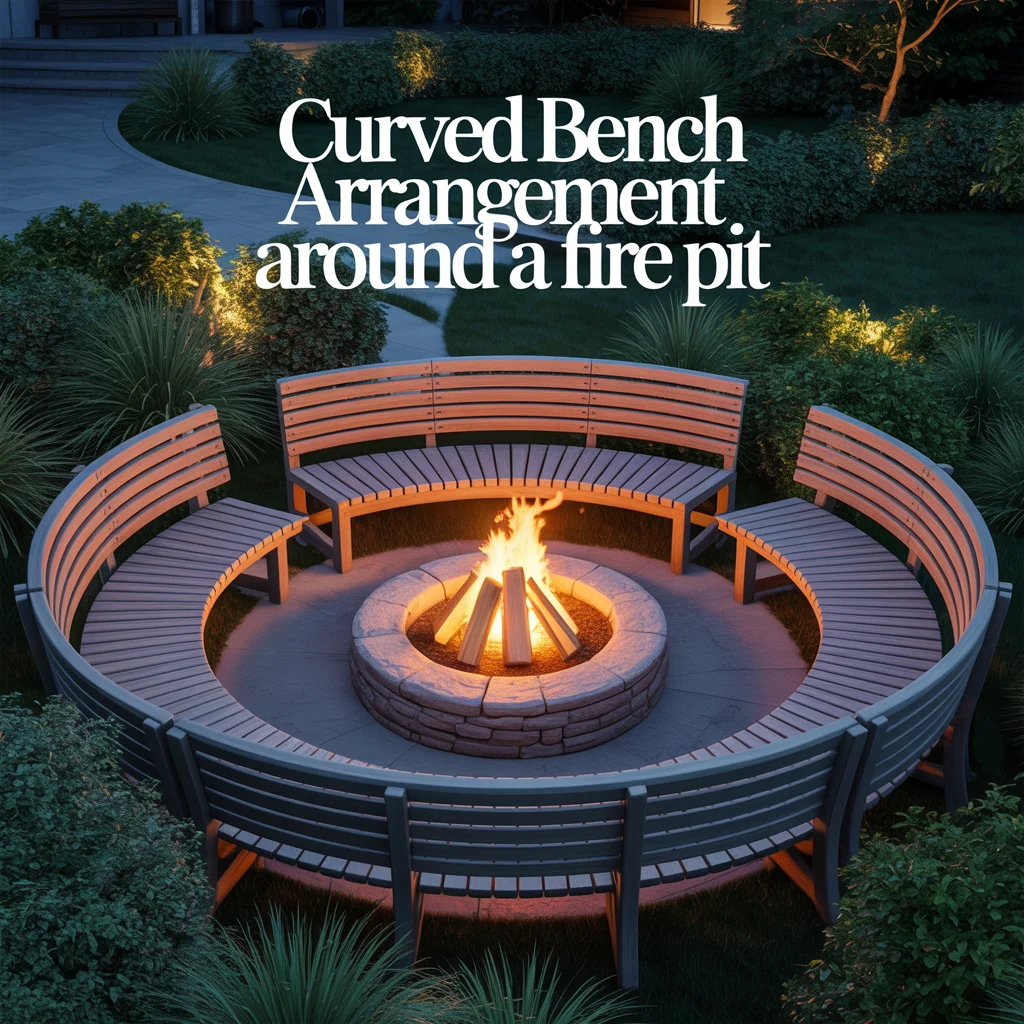
A curved bench arrangement around a fire pit uses a semicircular or full circular bench configuration surrounding a central fire feature to create the most socially focused garden bench landscaping idea, producing a landscape seating area where all bench positions face inward toward the fire and the view from every seat is shared with every other seated user simultaneously. I designed a curved bench landscape around a 30-inch cast iron fire bowl at a residential project using two curved sections of 5-foot timber bench in a semicircular arrangement, surfacing the surrounding area in compacted gravel with a 3-foot radius fire-resistant stone pad beneath the fire bowl, and the curved fire pit bench landscape became the most used outdoor space at the property from March through November.
Curved Bench Configurations for a Fire Pit Landscape
A full circular bench, a semicircular bench, and two facing straight bench sections are three configurations suited to a fire pit garden bench landscaping arrangement. A full circular bench of 8 to 10-foot internal diameter provides seating for 8 to 12 people around a central fire pit and suits a large garden entertainment landscape where group seating around the fire is the primary outdoor social function. A semicircular bench provides seating for 4 to 8 people and suits a smaller landscape garden where a full circle would occupy a disproportionate area or where the semicircle is positioned against a boundary wall or hedge backdrop. Two facing straight bench sections provide the most formal fire pit bench arrangement.
Fire Pit Materials for a Garden Bench Landscape
A cast iron fire bowl, a steel fire ring, and a built stone fire pit are three fire features suited to a garden bench landscaping scheme. A cast iron fire bowl of 24 to 30-inch diameter costs $45 to $120 and provides a portable, visually appropriate fire feature that suits a curved bench landscape arrangement where the dark cast iron coordinates with stone, timber, or metal bench materials. A steel fire ring of 24 to 36-inch diameter costs $25 to $80 and provides a lightweight, affordable fire feature suited to a budget garden bench landscaping idea around a fire pit. A built stone fire pit using 3 to 4 courses of natural stone provides the most permanent, landscape-integrated fire feature for a curved bench landscaping scheme.
Wooden Garden Bench Landscaping With Planted Surrounds
A wooden garden bench landscaping idea with planted surrounds positions a timber bench at the center of a deliberate planting scheme where the choice, height, and arrangement of surrounding plants is planned alongside the bench placement rather than added afterward, creating a garden landscape where the bench and the planting are designed as a single unified composition. I designed a wooden garden bench landscape at a cottage residential project, planning the surrounding planting of Rosa Gertrude Jekyll, Lavandula angustifolia Hidcote, and Alchemilla mollis simultaneously with the bench position and path connection, and the resulting landscape composition looked completely considered from the day the planting was installed.
Planting Design Principles for a Wooden Bench Landscape
A three-layer planting scheme using tall backdrop plants, medium flanking plants, and low front-edge plants is the most effective planting design principle for a wooden garden bench landscaping idea. The tall backdrop layer of 3 to 5 feet height including roses, hornbeam hedge, or Hydrangea paniculata is planted directly behind the bench at 12 to 24-inch clearance from the bench back, providing a green or flowering wall visible from the path approach. The medium flanking layer of 18 to 30 inches flanks the bench on both sides at arm-height level. The low front-edge layer of 6 to 12 inches at the front of the bench base softens the transition from the planting to the path surface.
Wood Species for a Garden Bench Landscaping Scheme
Teak, iroko, and pressure-treated softwood are three wood species suited to a garden bench landscaping idea. Teak provides the most durable and naturally weather-resistant bench wood for a permanent landscape installation, lasting 25 to 40 years without surface treatment and developing a silver-grey patina that coordinates with natural stone, gravel, and aged timber in the surrounding landscape. Iroko provides a comparable hardwood performance at 15 to 25-year outdoor lifespan and lower cost than teak, suiting a garden bench landscape where hardwood quality is required at a more accessible budget. Pressure-treated softwood provides the most affordable wooden bench material for a DIY garden bench landscaping idea.
Simple Garden Bench Landscaping With Gravel Seating Area
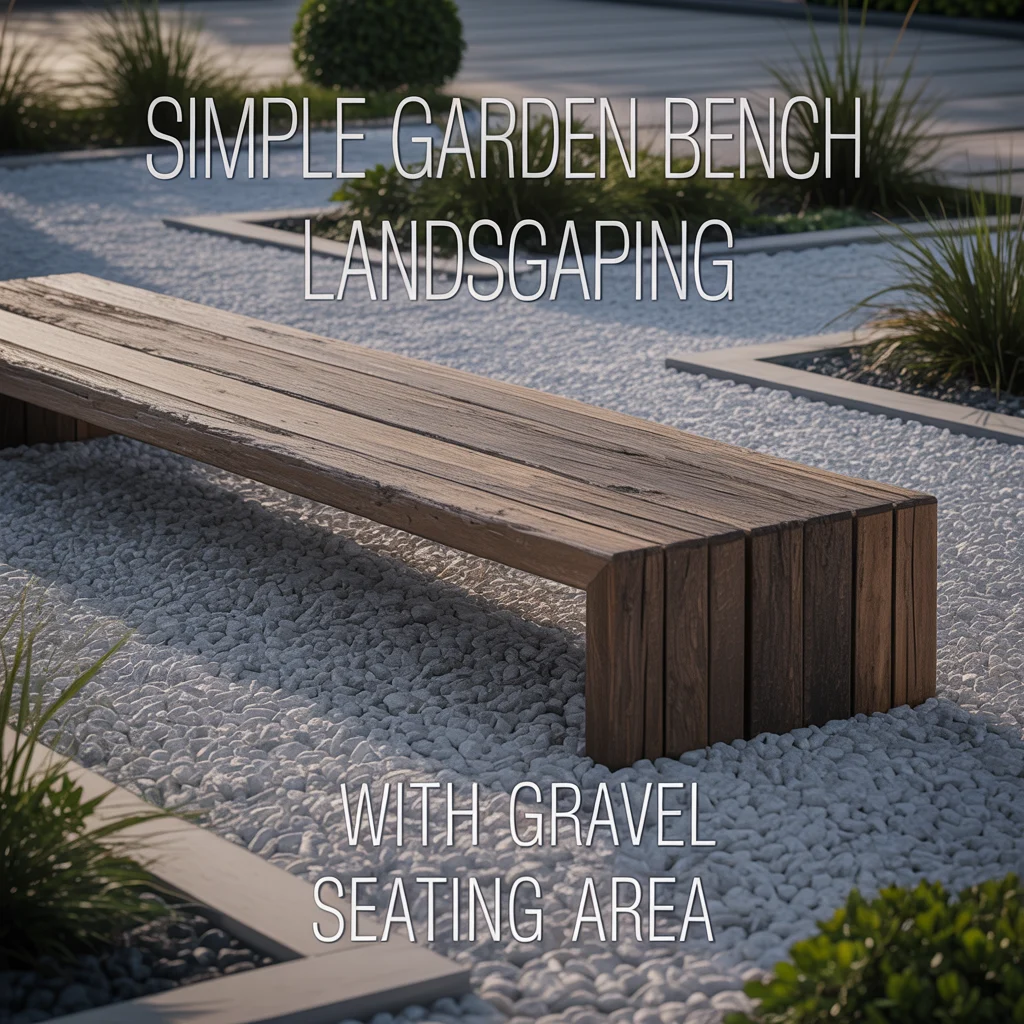
A simple garden bench landscaping idea using gravel creates a defined seating area by surfacing a 6-by-8-foot zone around the bench with compacted decorative gravel rather than leaving the bench on lawn, bark, or bare soil, producing a clearly defined landscape feature that gives the bench a purposeful context within the garden design. I created this simple bench landscaping for a homeowner who had placed a good teak bench on a lawn for two years without it ever looking properly positioned, and the addition of a 6-by-8-foot gravel pad beneath and around the bench, edged with flexible steel edging, immediately produced a composed landscape seating feature from an existing bench that had previously looked casually placed.
Gravel Types for a Simple Bench Landscaping Seating Area
Pea gravel, golden gravel, and slate chippings are three gravel types suited to a simple garden bench landscaping seating area. Pea gravel at 10 to 14mm provides a soft, rounded surface of warm buff tones that suits a cottage or informal garden bench landscape, costing $2 to $3 per square foot at 2-inch depth. Golden gravel at 14mm provides the warmest and most photogenic gravel surface for a simple bench landscaping area and coordinates well with teak, sandstone, and terracotta materials in the surrounding landscape design. Slate chippings in blue-grey provide a cool, contemporary gravel surface suited to a modern garden bench landscaping scheme.
Gravel Seating Area Dimensions for a Garden Bench Landscape
A gravel seating area for a garden bench landscape measures most effectively at a minimum of 2 feet of clear gravel depth in front of the bench and 1 foot on each side, with no gravel behind the bench when the bench back is positioned against a planting border or boundary. For a standard 4-foot bench, the minimum effective gravel seating area measures 6 feet wide and 4 feet deep in front of the bench. A more generous gravel area of 8 by 6 feet provides a landscape seating zone that reads as a proper outdoor room rather than simply a surface beneath a bench, and suits a garden bench landscaping scheme where the seating area is intended to accommodate additional outdoor furniture alongside the primary bench.
DIY Garden Bench Landscaping With Railway Sleepers
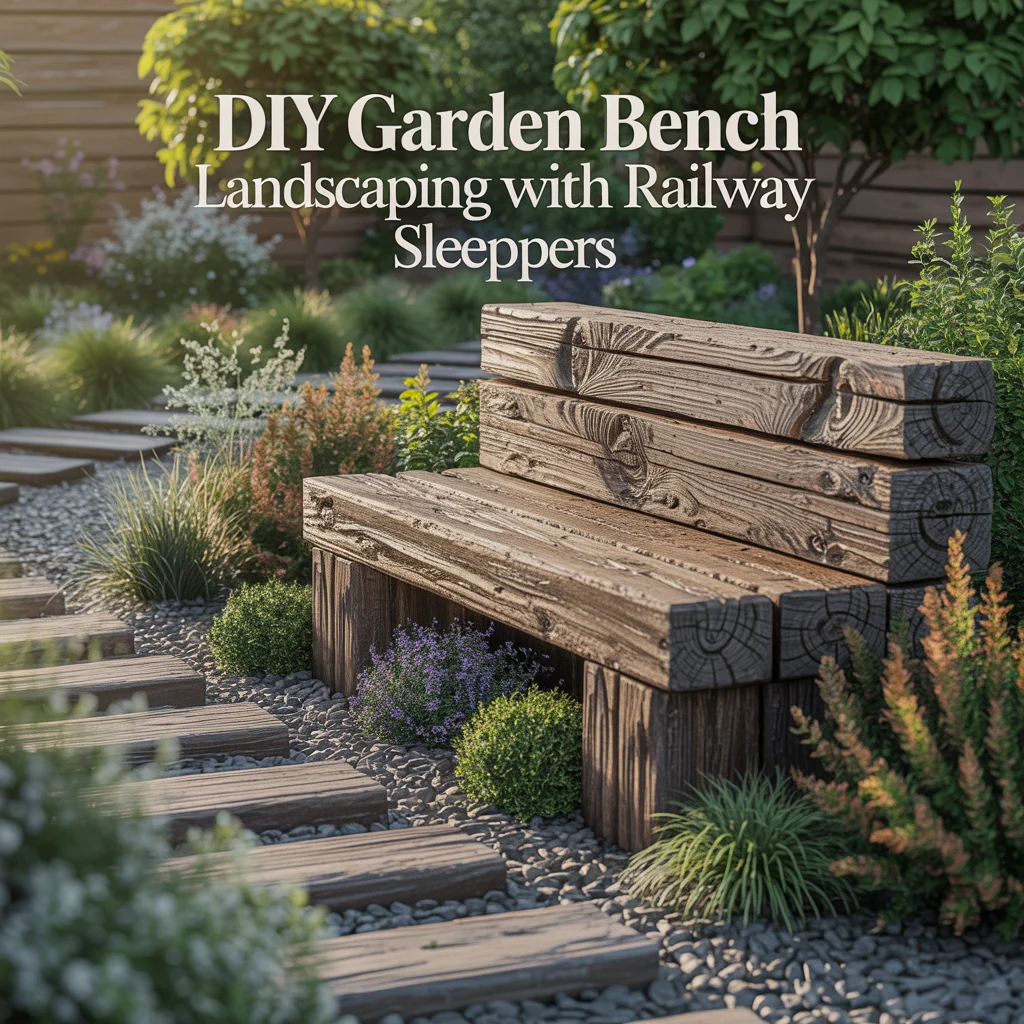
A DIY garden bench landscaping idea using railway sleepers integrates reclaimed or new timber sleepers as both the bench material and the surrounding landscape hardscaping elements, creating a cohesive outdoor design where the bench, the path, and the retaining or edging elements all use the same material in a unified sleeper landscape. I designed and built a DIY sleeper bench landscape for a residential project using reclaimed oak sleepers for a 3-step path sequence, a retaining border edge on both sides, and a built-in bench seat at the top step level, and the consistent use of the oak sleeper material throughout the full landscape design produced a cohesive outdoor space that looked professionally designed at a fraction of the professional installation cost.
Building a DIY Sleeper Bench for a Garden Landscape
A DIY railway sleeper bench for a garden landscape uses two half-sleeper sections of 450mm length as the bench legs, set vertically in the soil at 18-inch height above ground with 12-inch depth below the surface, connected by a full-width sleeper section of 2,400mm length as the seat resting across the two leg sections. The seat sleeper is fixed to the leg sections using 150mm structural screws driven from the top face of the seat into the top of each leg at two fixing points per leg. I use new oak sleepers for all DIY garden bench landscaping projects that include the bench as an integral design element, reserving reclaimed sleepers for path and edging elements where the character of aged material suits the informal landscape.
Sleeper Bench Landscaping Style Options
A sleeper bench with a gravel surround, a sleeper bench integrated into a terraced slope, and a sleeper bench with planted sleeper raised bed are three landscaping style options suited to a DIY railway sleeper bench garden landscape. A sleeper bench with a gravel surround uses the same sleeper material for the bench structure and the surrounding edging frame, filling the enclosed area with decorative gravel to create a defined sleeper and gravel seating landscape. A sleeper bench integrated into a terraced slope uses the bench as the top element of a stepped railway sleeper retaining landscape, positioning the seat naturally at the gradient change. A sleeper bench with planted raised bed combines bench and productive planting in one landscape feature.
Garden Bench Landscaping With Paving and Path Integration
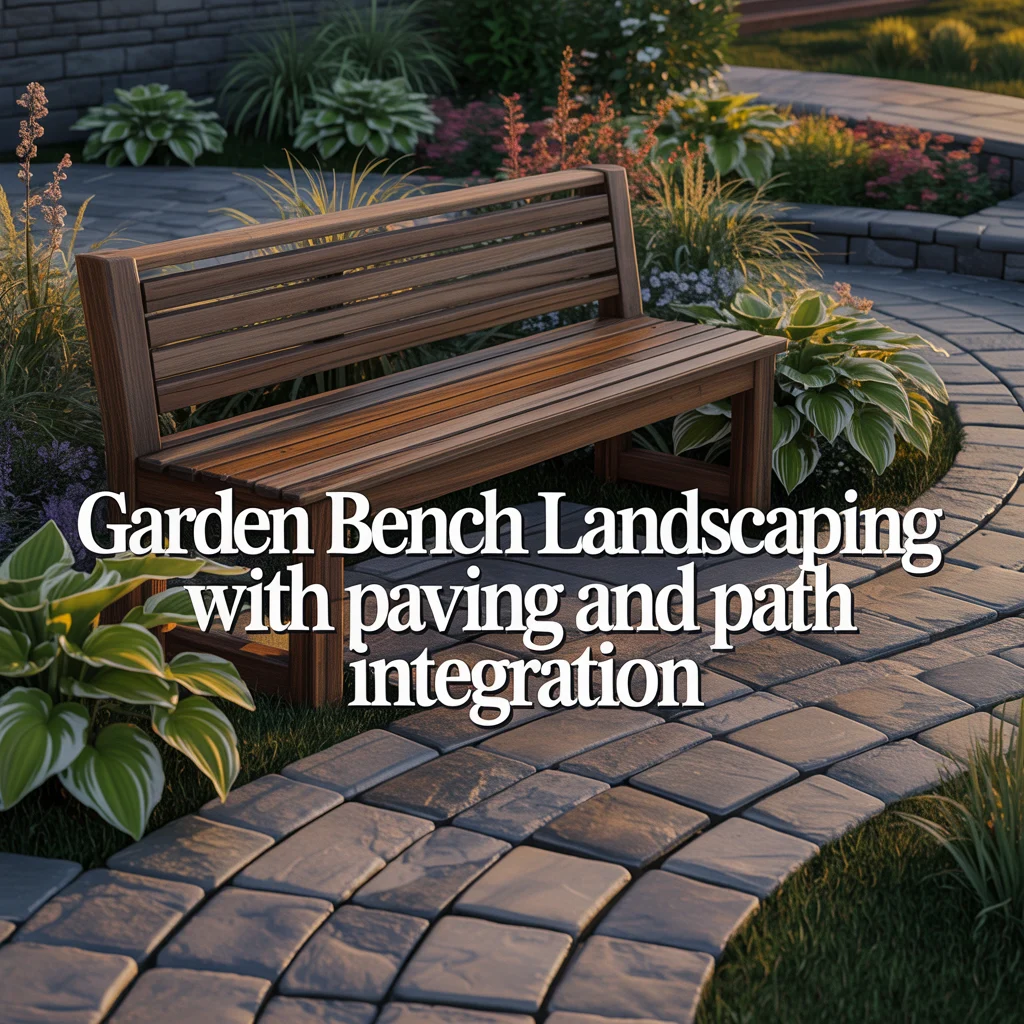
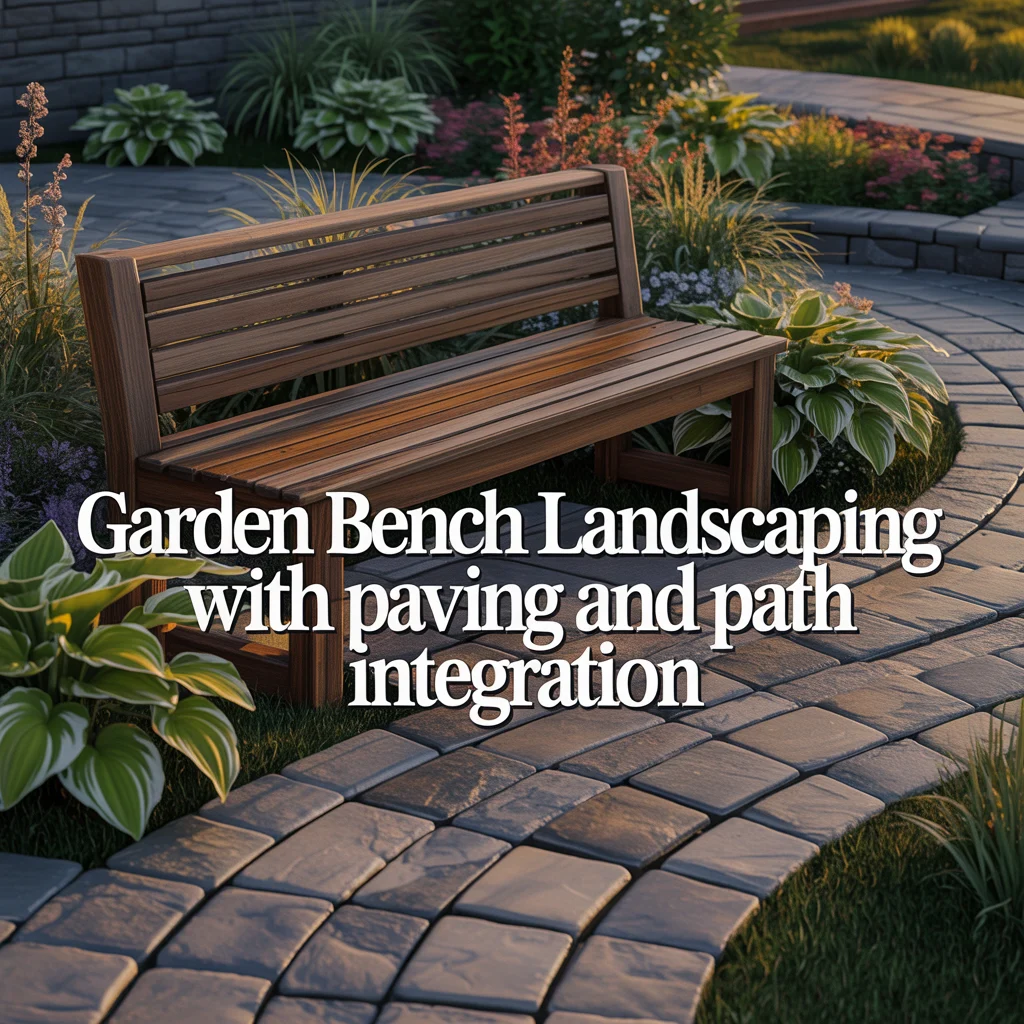
A garden bench landscaping idea with paving and path integration positions the bench at the terminus or midpoint of a defined paved path, extending the paving material of the path surface into a wider seating platform beneath and around the bench to create a continuous landscape surface that connects the path and the bench in the same material language. I designed this integration at a formal garden project using 600mm by 600mm grey limestone pavers on the approach path, widening to a 6-by-6-foot paved seating platform at the bench terminus where the same limestone continued as the floor of the bench landscape area, and the material continuity produced a bench landscaping composition of complete formal coherence.
Path-to-Seating Area Transitions in a Bench Landscape
A flush level transition, a single step up, and a change in paving pattern are three transition types suited to a garden bench landscaping path-to-seating area connection. A flush level transition uses the same paving material at the same surface level from the path through to the bench platform, creating the most seamless connection between the walking route and the seating destination in the landscape. A single step up of 100 to 150mm at the seating area edge marks the arrival at the bench area with a deliberate level change that defines the seating zone as a distinct destination within the garden landscape. A change in paving pattern marks the seating area using the same material in a different bond or orientation.
Paving Materials for a Garden Bench Landscaping Scheme
York stone, porcelain pavers, and brick are three paving materials suited to a garden bench landscaping path and seating integration scheme. York stone in random irregular format provides the most naturally appropriate and period-correct paving for a formal garden bench landscaping scheme at period properties, costing $20 to $35 per square foot installed. Porcelain pavers in 600mm by 600mm or 600mm by 900mm format provide the most contemporary and low-maintenance paving surface for a modern garden bench landscape, costing $15 to $30 per square foot installed. Brick in a herringbone or stretcher bond provides a warm, traditional paving surface suited to a cottage or Victorian garden bench landscape.
Garden Bench Landscaping With Hedges and Topiary
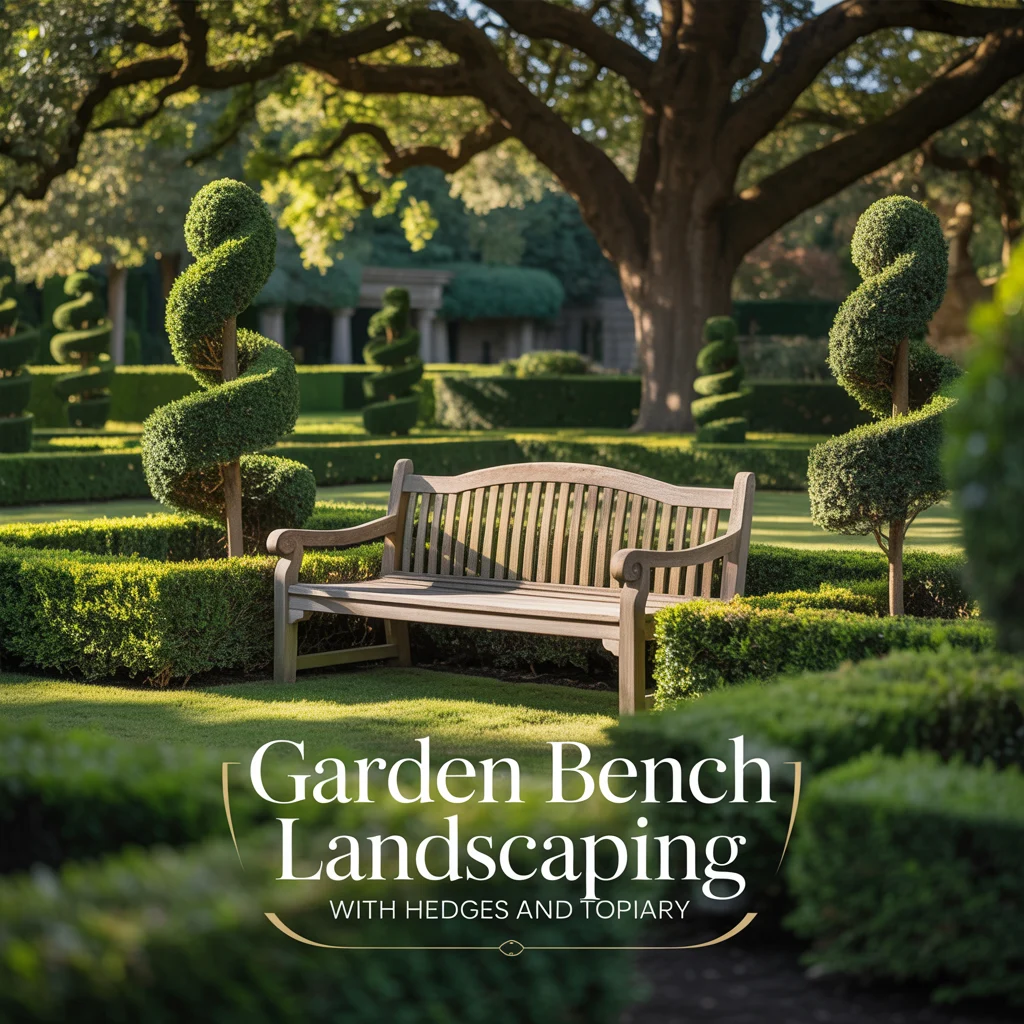
A garden bench landscaping idea with hedges and topiary uses clipped evergreen hedges or topiary forms as the primary landscape framing element around the bench, creating a structured green enclosure that defines the bench position as a formal garden destination and provides the architectural precision of living walls alongside and behind the seating. I designed a garden bench landscape at a large formal residential garden using 5-foot Taxus baccata hedges on three sides of the bench seating area with a York stone path approach on the fourth side, and the yew-enclosed bench landscape produced the most dramatic and formally resolved bench seating destination in the property.
Hedging Species for a Garden Bench Landscaping Scheme
Taxus baccata, Buxus sempervirens, and Carpinus betulus are three hedging species suited to a garden bench landscaping scheme. Taxus baccata provides the most precisely clipped, dense evergreen hedge for a formal bench landscape, reaching 4 to 6 feet of clipped height within 8 to 10 years from young stock at $3 to $8 per bare-root plant. Buxus sempervirens provides a lower hedge of 18 to 36 inches suited to a formal bench landscape where full enclosure is not the intention and a structured low border defines the bench area without creating an enclosed corridor effect. Carpinus betulus, hornbeam, provides a formal hedge with distinctive autumn leaf retention suiting a seasonal bench landscape.
Topiary Forms for a Garden Bench Landscape
Cone topiary flanking the bench, ball topiary in pots on both bench sides, and a pleached hornbeam overhead canopy are three topiary forms suited to a garden bench landscaping scheme. Cone topiary of 24 to 36-inch height planted directly in the ground on both sides of the bench provides a permanent, architecturally precise vertical framing element that suits a formal or period garden bench landscape. Ball topiary of 12 to 18-inch diameter in matching terracotta or stone-effect pots placed on both sides of the bench provides a formal, symmetric framing that suits a formal bench landscape. A pleached hornbeam overhead canopy trained above the bench provides an architectural overhead ceiling.
Small Garden Bench Landscaping Ideas for Compact Spaces
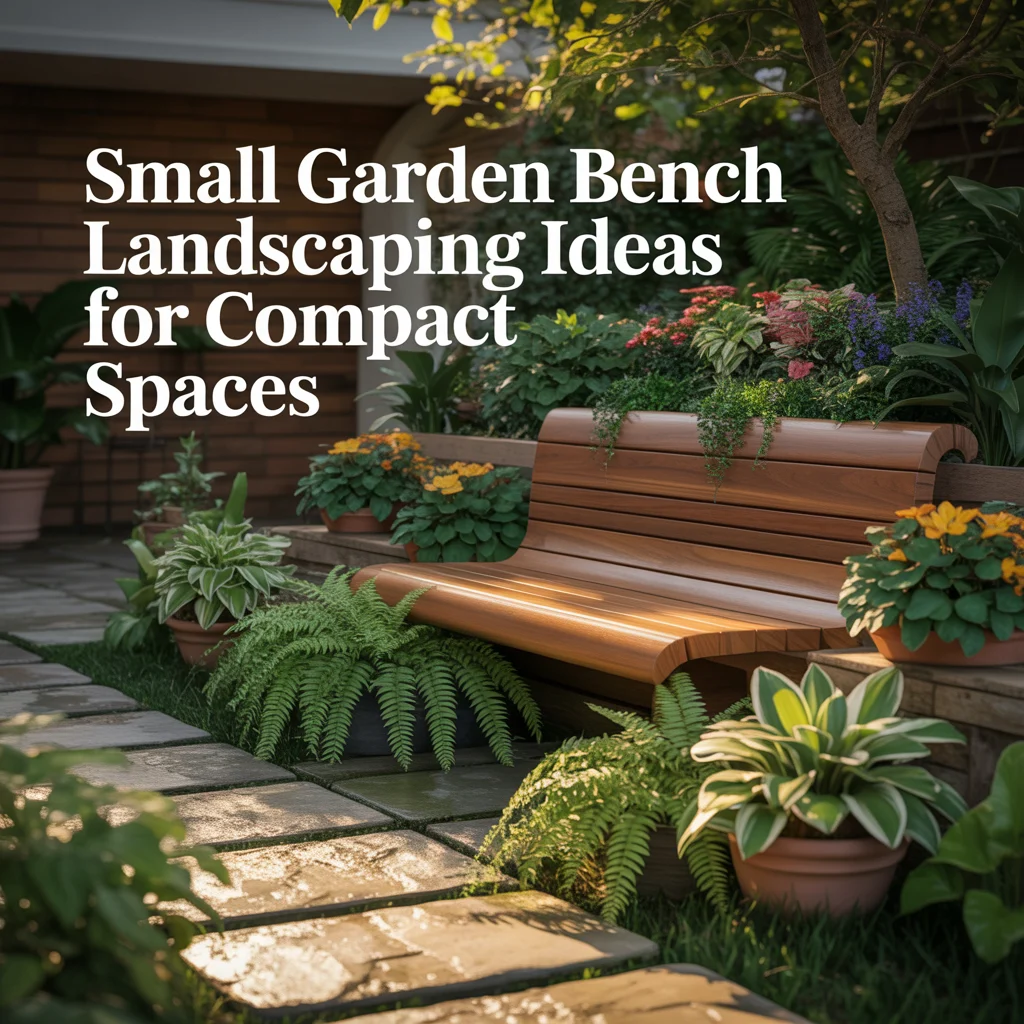
Small garden bench landscaping ideas for compact spaces use reduced-scale bench formats, tight planting schemes, and efficient space planning to create a composed bench landscape in a garden area of under 200 square feet without making the limited space feel over-furnished or visually cluttered. I designed a small garden bench landscape for a 15-by-12-foot urban back garden, using a 3-foot painted hardwood bench on a 4-by-5-foot gravel pad with two 10-inch terracotta pots of clipped Buxus balls on both sides and a single climbing rose on the boundary wall behind the bench, and the complete small bench landscape used $85 in materials while producing a composed garden seating destination of genuine design quality.
Space-Efficient Bench Landscape Formats for Small Gardens
A wall-mounted fold-down bench, a corner-positioned bench with angled path approach, and a built-in bench within a raised bed structure are three space-efficient bench landscape formats suited to a small garden. A wall-mounted fold-down bench of 4-foot length takes zero floor space when folded against the boundary wall and provides a temporary bench landscape seating position when deployed, suiting a compact garden where permanent floor-level seating would occupy too much of the limited outdoor space. A corner-positioned bench uses the two adjacent boundary walls as natural enclosure and requires only 5 by 5 feet of floor space for a complete small garden bench landscape including a 2-foot gravel surround on both open sides.
Plants for a Small Garden Bench Landscape
Lavandula angustifolia, Rosa The Fairy, and Geranium rozanne are three plants suited to a small garden bench landscape where space efficiency and long flowering season are the primary planting criteria. Lavandula angustifolia at 18 to 24-inch height and 18-inch spread provides fragrance, flower color, and structural definition at the bench edge of a compact landscape in a plant of 6 to 8 square feet footprint that is proportionally correct for a small garden bench landscape. Rosa The Fairy provides continuous pale pink flowers in large clusters from July to October on a compact 18-inch plant that suits the tight planting zones of a small bench landscape. Geranium rozanne provides ground-level color from June to October.
Garden Bench Landscaping With a Pergola Structure
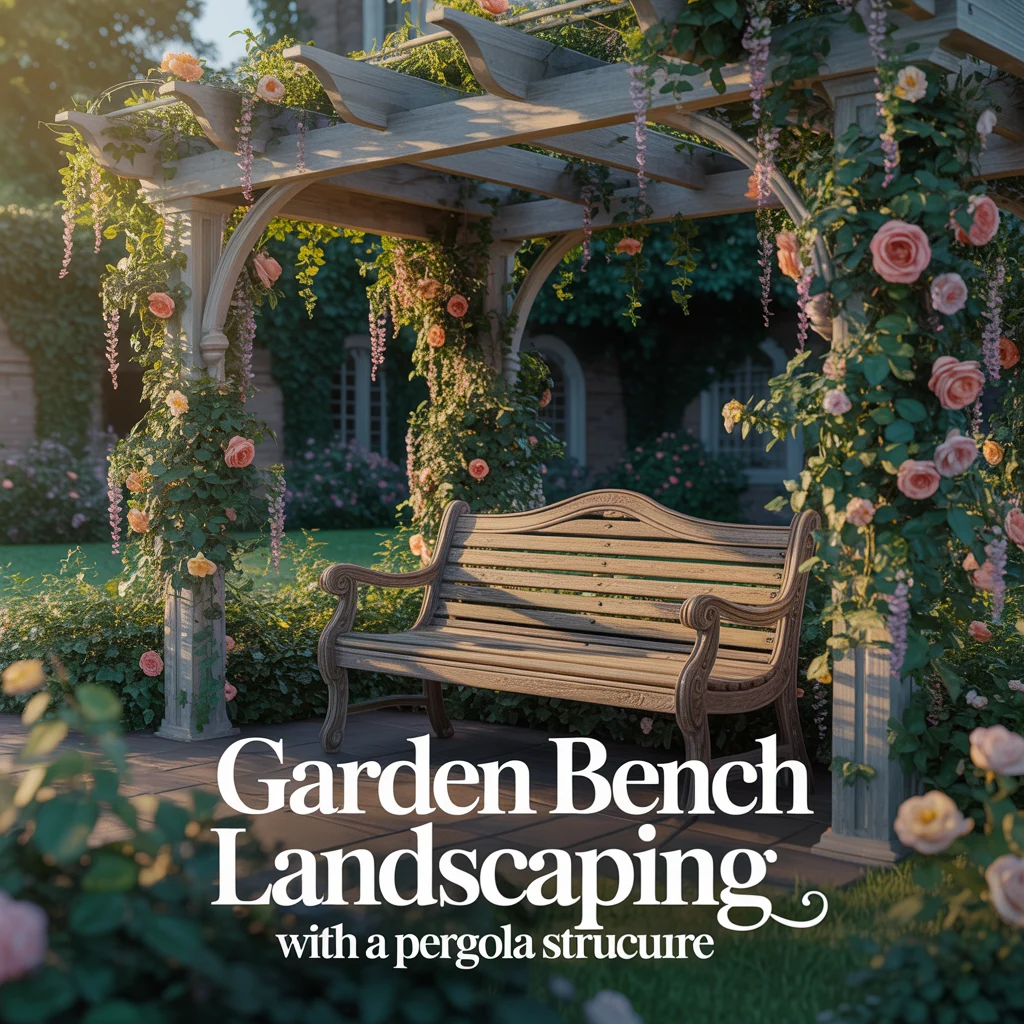
A garden bench landscaping idea with a pergola structure integrates the bench within a timber or steel overhead frame to create a partially covered seating landscape element that provides shelter from light rain and direct sun while framing the bench within an architectural overhead structure that makes the seating feel genuinely enclosed within a designed outdoor room. I designed a pergola bench landscape at a residential project using four 3-by-3-inch larch posts, 2-by-2-inch crossbeams at 12-inch spacing, and a 5-foot teak bench centered within the structure, planting Rosa Zephirine Drouhin on all four posts and underplanting with Lavandula angustifolia at the bench base level, and the completed pergola bench landscape read as a complete outdoor room. A wider range of bench styles suited to this kind of structural landscape integration is covered in these outdoor garden bench ideas integrated into landscaping.
Pergola Dimensions for a Garden Bench Landscape
A 6-by-6-foot pergola, an 8-by-6-foot pergola, and a 10-by-8-foot pergola are three sizes suited to a garden bench landscaping scheme. A 6-by-6-foot pergola suits a 4-foot bench with 1-foot clearance on each side, providing the minimum enclosed space for a comfortable single bench landscape seating position with adequate headroom above the seated user. An 8-by-6-foot pergola suits a 5-foot bench with 1.5-foot clearance on each side and allows a small side table to be incorporated into the bench landscape without overcrowding the enclosed pergola space. A 10-by-8-foot pergola suits a larger bench with a complete outdoor furniture grouping including a bench and two additional chairs.
Pergola Materials for a Garden Bench Landscape
Pressure-treated softwood, European oak, and powder-coated steel are three pergola frame materials suited to a garden bench landscaping scheme. Pressure-treated softwood at 3-by-3-inch post and 2-by-2-inch beam section provides the most affordable pergola frame material for a garden bench landscape, costing $120 to $250 in timber and fixings for a standard 6-by-6-foot structure with a 15 to 20-year service life. European oak provides a naturally durable, characterful frame material at $280 to $550 for the same structure with a 25 to 40-year service life. Powder-coated steel in black or anthracite provides the most contemporary and low-maintenance pergola frame for a modern garden bench landscape.
Garden Bench Landscaping With Raised Bed Integration
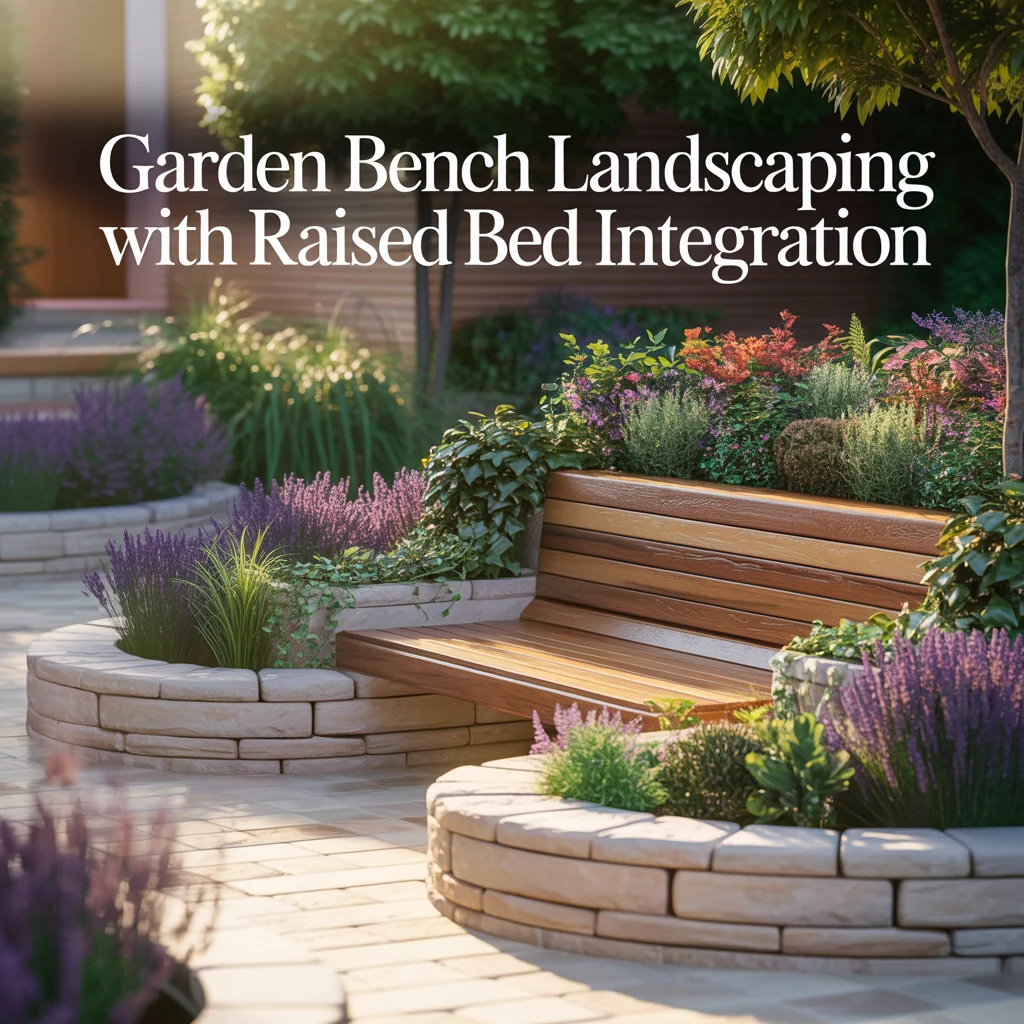
A garden bench landscaping idea with raised bed integration combines the bench seating element with an adjacent or surrounding raised planting bed, creating a landscape feature where the growing productivity and visual interest of the raised bed directly enhances the seated experience at the bench position. I built a combined raised bed and bench landscape at a kitchen garden project, creating a 3-foot-high oak sleeper raised bed with a 5-foot bench along one face and planting the raised bed with herbs, trailing nasturtiums, and Echinacea, and the combined landscape feature produced a garden destination where the homeowner sat while tending the raised bed and spent considerably more time in the kitchen garden than before the bench landscape was installed.
Raised Bed and Bench Landscape Configurations
A bench alongside a raised bed, a bench integrated into a raised bed end wall, and a U-shaped raised bed with a bench at the open end are three configurations suited to a garden bench landscaping idea with raised beds. A bench alongside a raised bed positions the seat parallel to the long face of the bed at 18 to 24-inch clearance, creating a side-by-side working and sitting landscape that suits a kitchen garden bench landscaping scheme. A bench integrated into a raised bed end wall uses the extended side walls of the raised structure as integral seat platforms at both ends, creating the most space-efficient combined landscape of bench and productive growing area.
Plants for a Raised Bed Garden Bench Landscape
Lavandula angustifolia, Echinacea purpurea, and Salvia nemorosa are three plants suited to a raised bed alongside a garden bench landscape. Lavandula angustifolia at the front raised bed edge provides a fragrant border at seated nose height when the bench user is seated at the adjacent bench position in the landscape, releasing fragrance most powerfully on warm afternoons throughout the June to August flowering period. Echinacea purpurea provides pink cone flowers from July to September at 24 to 30 inches height in the raised bed mid-section, providing a visually impactful flower display directly at the bench landscape seating position from midsummer. Salvia nemorosa provides violet-blue spikes from May to August.
Formal Garden Bench Landscaping With Symmetrical Layout
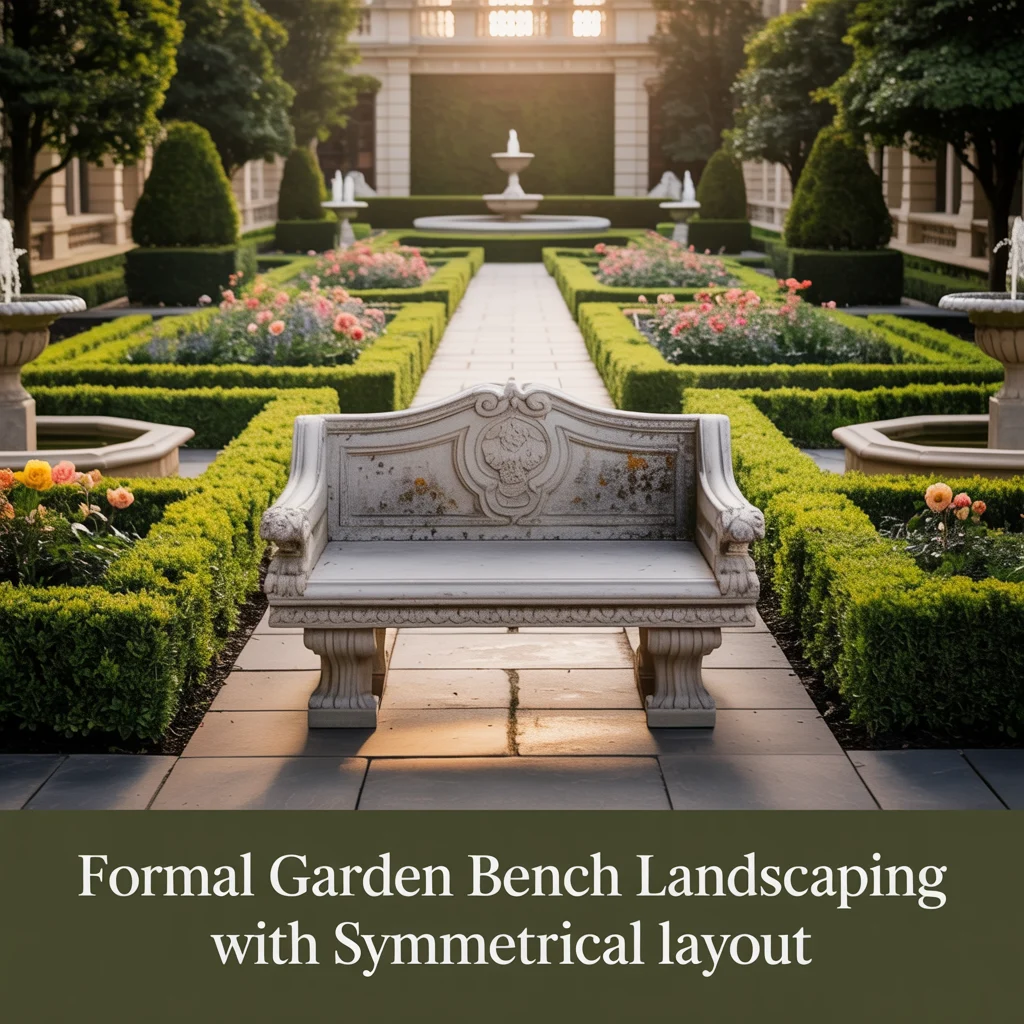
A formal garden bench landscaping idea with symmetrical layout uses mirror-image planting, paving, and accessory elements on both sides of the bench axis to create a landscape composition of deliberate architectural precision suited to period properties, formal walled gardens, and large estate gardens where the symmetry of the bench landscape reinforces the formal design language of the surrounding property. I designed a formal symmetrical bench landscape at a Georgian property using a York stone path flanked by matching box hedges leading to a central stone bench, with identical Laurus nobilis standards in matching stone urns on both sides of the bench and a clipped Taxus baccata backdrop, and the formal landscape produced the most architecturally resolved bench setting I have completed.
Symmetrical Planting for a Formal Bench Landscape
Matching Laurus nobilis standards in matching pots, identical Rosa standards, and equal-height Taxus baccata cones on both sides are three symmetrical planting approaches suited to a formal garden bench landscaping scheme. Matching Laurus nobilis standards of equal stem height and head diameter in identical stone or terracotta urns placed on both sides of the formal bench provide the most permanent, year-round symmetrical planting element for a formal bench landscape. Identical Rosa standard pairs in matching pots provide a formal symmetrical planting with seasonal flower color from June to October that adds decorative character to the formal bench landscape beyond the purely structural quality of the evergreen standard alternatives.
Hardscaping for a Formal Symmetrical Bench Landscape
A straight York stone path flanked by matching sett borders, a circular or square formal paving platform at the bench position, and matching stone plinth or pier details at the bench landscape entrance are three hardscaping elements suited to a formal symmetrical garden bench landscaping scheme. A straight York stone path in a random irregular format flanked by granite sett border courses on both sides leading directly to the formal bench terminus provides the most classically appropriate formal approach path for a period garden bench landscape. A square 6-by-6-foot formal paving platform of the same York stone at the bench position provides a defined formal arrival zone within the overall symmetrical bench landscape design.
Garden Bench Landscaping Beside a Water Feature
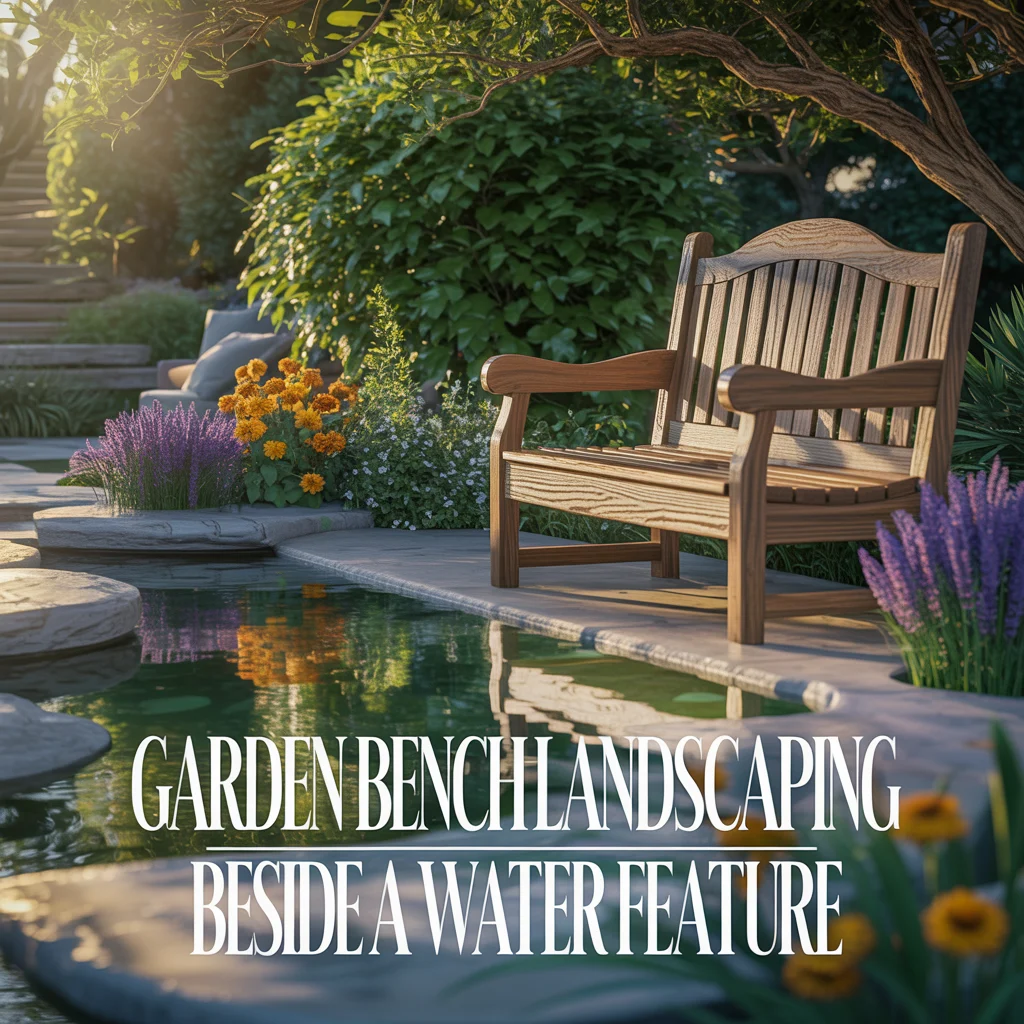
A garden bench landscaping idea beside a water feature positions the bench within a designed landscape where a fountain, rill, or pond feature is planned as part of the same composition, creating a seating landscape that integrates moving water sound and visual reflection as deliberate elements of the bench seating experience rather than incidental features of the surrounding garden. I designed a bench water feature landscape at a courtyard project using a narrow 8-inch copper rill running parallel to the 5-foot York stone path toward the bench terminus, and the sound of the moving water accompanied the full walk to the bench and continued from the seated bench position throughout the sitting period.
Water Features for a Garden Bench Landscaping Scheme
A recirculating bubbler fountain, a narrow rill alongside the approach path, and a formal rectangular pond at the bench seating area are three water features suited to a garden bench landscaping scheme. A recirculating bubbler fountain of 14 to 20-inch diameter placed 3 to 5 feet from the bench produces a gentle water sound at 40 to 45 decibels audible from the seated bench position and suits a courtyard or compact bench landscape where a larger water feature would not be proportionally appropriate. A narrow rill of 6 to 8 inches running alongside the approach path and past the bench position provides a linear water element that connects the path and the bench water feature landscape.
Pond-Side Bench Landscaping Design
A bench positioned at the long edge of a formal rectangular pond, a bench at the narrow end of a pond looking along the pond length, and a bench on a slightly elevated position above the pond level are three pond-side bench landscape positions. A bench at the long edge of a rectangular pond positions the seated user parallel to the water surface, providing the widest possible view across the pond reflection from the seated position in the bench landscape. A bench at the narrow end of the pond looking along the full pond length positions the user to see the complete pond surface, any fountain, and the planting beyond in a single viewed composition from the bench in the landscape.
Garden Bench Landscaping With Lighting Integration
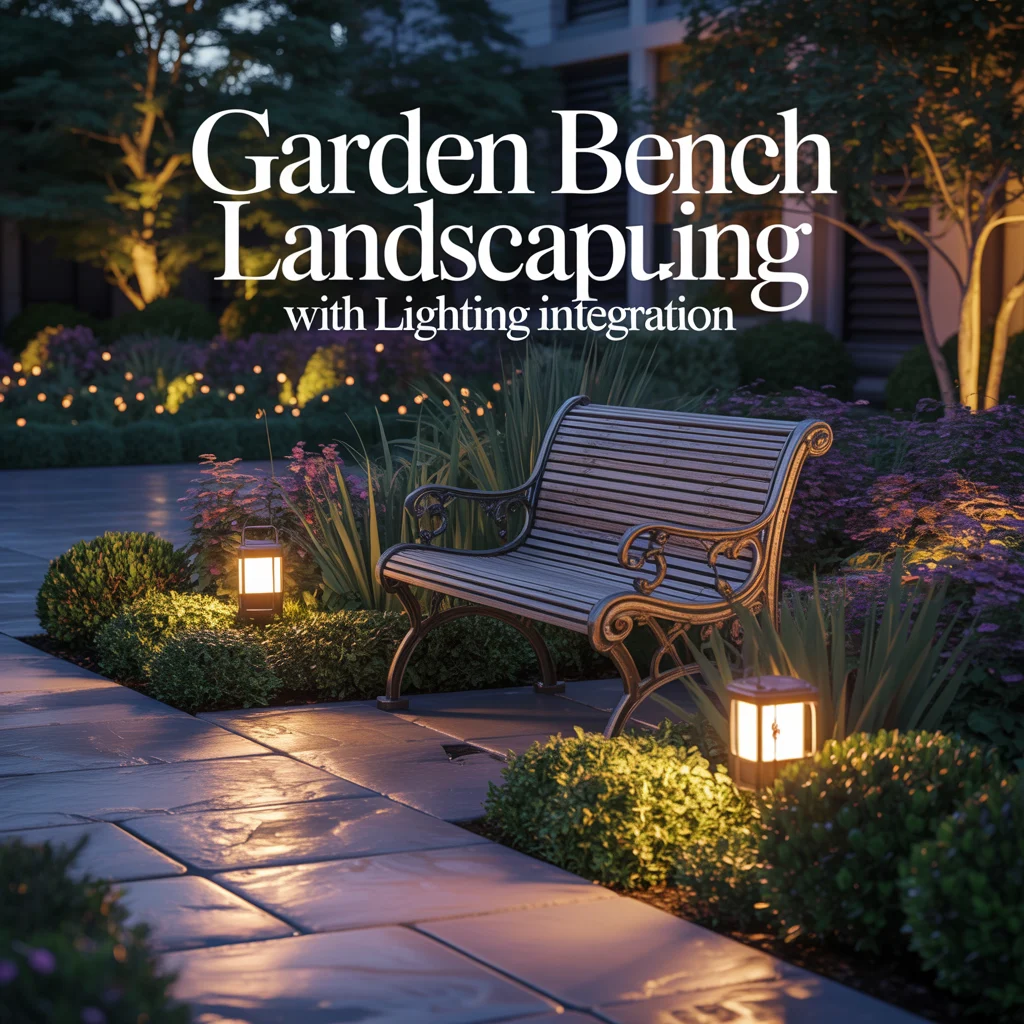
A garden bench landscaping idea with integrated lighting plans the bench position and the surrounding landscape lighting as a single design exercise, ensuring that the bench is visually connected to the lighting scheme and that the approach path, the bench seating area, and the surrounding planting are all addressed within the same lighting design. I designed a complete bench lighting landscape at a residential project using four ground-recessed LED uplighters at the approach path edges, two LED spike spotlights directed at the planted backdrop behind the bench, and solar bollard lights at the bench corner positions, and the after-dark bench landscape produced a garden feature that the homeowner described as superior to the daytime appearance.
Approach Path Lighting for a Garden Bench Landscape
Ground-recessed LED path lights, LED bollard lights, and solar spike lights are three approach path lighting options suited to a garden bench landscaping scheme. Ground-recessed LED path lights set flush into the path paving surface on alternating sides at 4-foot intervals cost $25 to $60 per fitting and require 12-volt low-voltage wiring but provide the most refined, unobtrusive path lighting for a formal garden bench landscape. LED bollard lights of 300 to 500mm height at 4-foot intervals alongside the path cost $35 to $80 per unit and provide a more substantial lighting presence suited to a path of 4 to 5 feet width approaching a larger formal bench landscape seating area. Solar spike lights provide a no-wire solution.
Bench Accent Lighting in a Garden Landscape
Directional LED spike spotlights angled at the planting behind the bench, LED strip lights beneath the bench seat rail, and LED uplighters recessed into the seating platform surface are three accent lighting approaches suited to a garden bench landscaping scheme. Directional LED spike spotlights aimed at the backdrop planting or boundary wall behind the bench cost $25 to $55 per unit and create a dramatic lit backdrop effect that makes the bench visible and inviting from the garden entrance after dark. LED strip lights beneath the bench seat rail at 2700K warm white provide a subtle floating light effect that illuminates the bench seating platform from below without any visible fitting hardware above the bench surface.
Garden Bench Landscaping With Native Planting

A garden bench landscaping idea with native planting uses UK or regionally native plant species as the primary landscape planting surrounding the bench, creating a seating destination where the ecological value of the surrounding planting supports local wildlife while simultaneously providing a naturalistic, seasonal backdrop to the bench seating position. I designed a native planting bench landscape at a rural residential project using Crataegus monogyna hedge, Sambucus nigra, Rosa canina, and Digitalis purpurea as the surrounding planting composition, and the bench within the native planting landscape attracted more bird and insect activity at close range than any other bench setting I have created in a non-native planting context.
Native Plants for a Garden Bench Landscaping Scheme
Crataegus monogyna, Rosa canina, and Sambucus nigra are three native plants suited to a garden bench landscaping scheme with ecological planting. Crataegus monogyna, hawthorn, provides dense thorny hedging at the bench landscape perimeter with white flowers in May and red haws from September, creating a wildlife-supporting hedge backdrop for the bench seating position that suits a rural or naturalistic landscape. Rosa canina, dog rose, produces single pink flowers in June and bright red hips from August through December, providing a loosely growing native rose backdrop at the bench landscape that suits an informal or country garden setting. Sambucus nigra provides white flowers in June and black berries in August.
Ecological Benefits of a Native Planting Bench Landscape
Pollinator support, bird feeding, and habitat provision are three ecological benefits produced by a native planting garden bench landscaping scheme. A native planting bench landscape supporting pollinators produces measurably higher bee and butterfly visit rates at the bench position during the main garden season compared to an equivalent non-native planting bench landscape, with Crataegus monogyna alone providing nectar and pollen for over 300 insect species. A native bird-feeding bench landscape using Sambucus nigra, Ilex aquifolium, and Rosa canina provides berry food resources for blackbirds, thrushes, and fieldfares from August through February at the bench seating position. Habitat provision through log piles and insect hotels adds to the ecological character of the native bench landscape.
Garden Bench Landscaping Ideas for a Sloped Garden
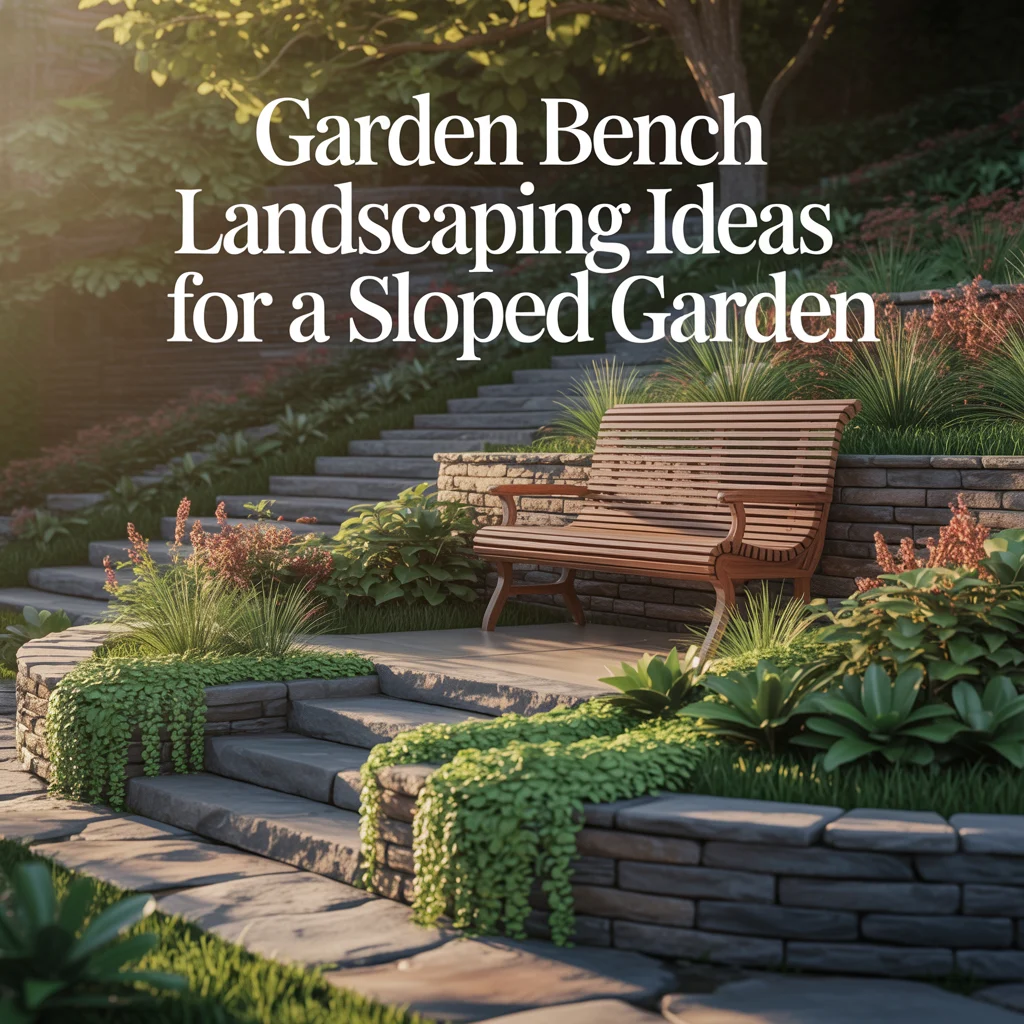
Garden bench landscaping ideas for a sloped garden use the natural terrain of an uneven or sloped garden to create a bench landscape that relates directly to the gradient, using retaining elements, stepped approaches, and terraced platform areas to position the bench at a defined level within the sloped landscape rather than on a makeshift flat area cut into the slope. I designed a sloped bench landscape at a residential property with a 1-in-6 gradient, creating a 6-by-8-foot compacted gravel terrace retained by a single course of oak sleepers at the bench position, approached by four railway sleeper steps, and the terraced bench landscape transformed an unusable sloped area into the best garden destination on the full property.
Terracing Approaches for a Sloped Garden Bench Landscape
A single retained terrace, a two-level cascade terrace, and a natural contour bench on the slope are three terracing approaches suited to a sloped garden bench landscaping scheme. A single retained terrace uses one retaining wall of sleepers, stone, or brick to create a flat bench platform of 6 by 8 feet minimum at the most usable gradient level in the sloped garden, providing a level, stable bench landscape seating area without the complexity of multiple terrace levels. A two-level cascade terrace creates two connected flat areas at different heights with the bench on the upper level looking down over the lower terrace level, providing a view landscape from the bench position.
Step and Path Design for a Sloped Bench Landscape
Railway sleeper steps, natural stone flag steps, and brick steps with planted risers are three step and path designs suited to a sloped garden bench landscaping scheme leading to a bench on a terraced level. Railway sleeper steps with compacted gravel treads provide the most naturalistic and DIY-accessible approach to a sloped garden bench landscape, suiting an informal or cottage garden where the timber character of the sleeper steps coordinates with the material of the bench at the top of the sloped path. Natural stone flag steps using sandstone or limestone at 40mm thickness provide a more refined approach surface suited to a formal sloped garden bench landscape.
Bench Landscaping With Planted Containers Integrated Into the Design
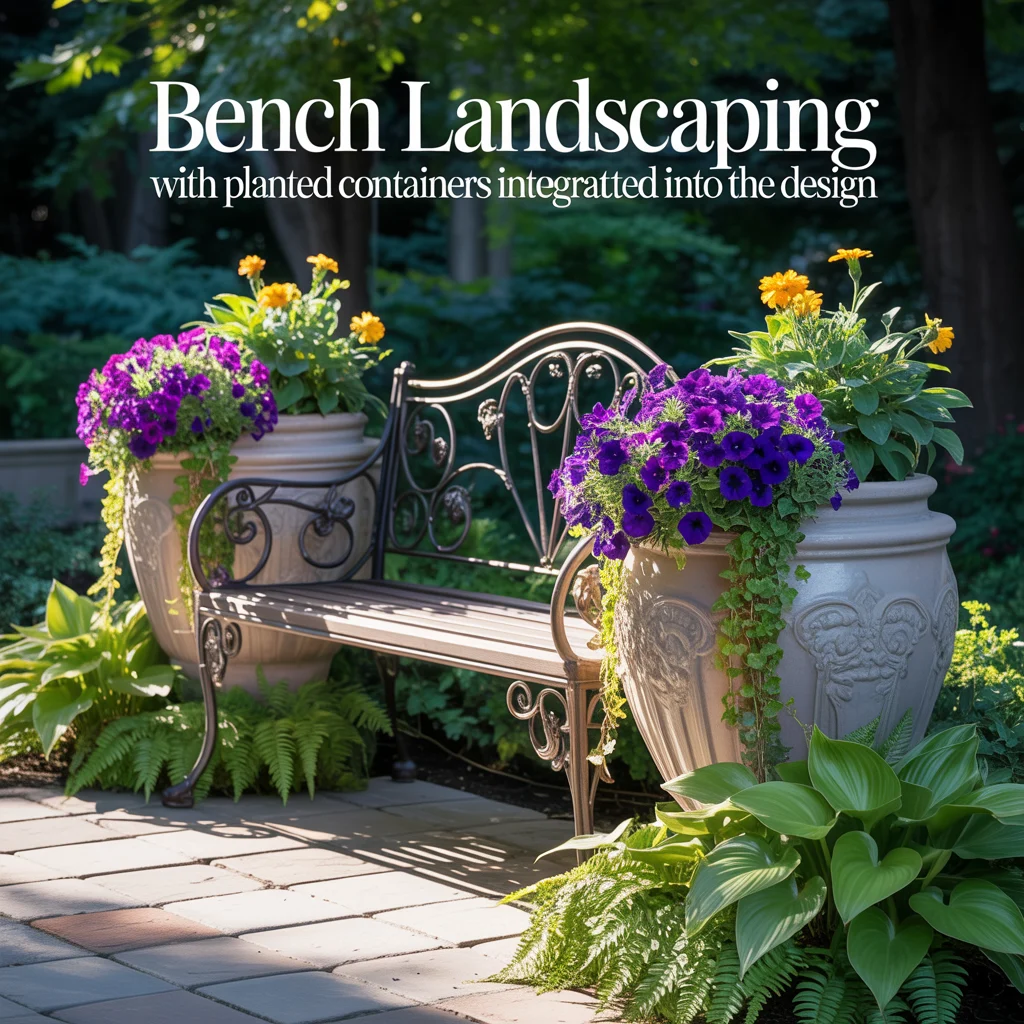
A garden bench landscaping idea with planted containers integrated into the scheme uses a planned arrangement of containers as structural design elements within the bench landscape, positioning pots not as casual accessories but as deliberate architectural and botanical components that form part of the landscape composition surrounding the bench. I designed a container-integrated bench landscape for a paved courtyard using six matching 14-inch slate-grey fibreglass pots at three planned positions around the bench, planting them with Agapanthus, clipped box balls, and seasonal Lavandula, and the container positions were drawn on the landscape plan at the same time as the bench and path positions rather than placed after completion.
Container Placement in a Garden Bench Landscape
Flanking pairs at the bench sides, a sequence along the approach path, and an asymmetric grouping at the bench corner are three container placement strategies suited to a garden bench landscaping scheme. Flanking pairs use matching containers on both sides of the bench at equal distances and heights, creating formal symmetric framing of the bench landscape seating position that suits a period or formal garden design. A sequence along the approach path places matching containers at regular intervals on one or both sides of the path leading to the bench, creating a visual rhythm that guides the garden visitor toward the bench landscape seating destination. An asymmetric grouping uses three containers of different sizes at one corner of the bench landscape.
Matching Container Materials for a Bench Landscaping Scheme
Slate-grey fibreglass, aged terracotta, and Portland stone effect resin are three container materials suited to a planned garden bench landscaping scheme. Slate-grey fibreglass containers in 12 to 18-inch diameter provide the most contemporary and lightweight matching pot for a garden bench landscape, costing $35 to $80 per unit at 15 to 20-inch diameter and weighing 3 to 6kg compared to 20 to 40kg for equivalent stone pots. Aged terracotta containers in graduated sizes provide the most naturally charming and cottage-appropriate pot material for an informal garden bench landscape. Portland stone effect resin provides a convincing stone appearance at a fraction of the stone weight for a formal bench landscape. Further design inspiration for composing a charming seated destination within this kind of planted landscape is covered in these charming garden bench ideas with landscape planting.
Garden Bench Landscaping in a Woodland Garden Setting
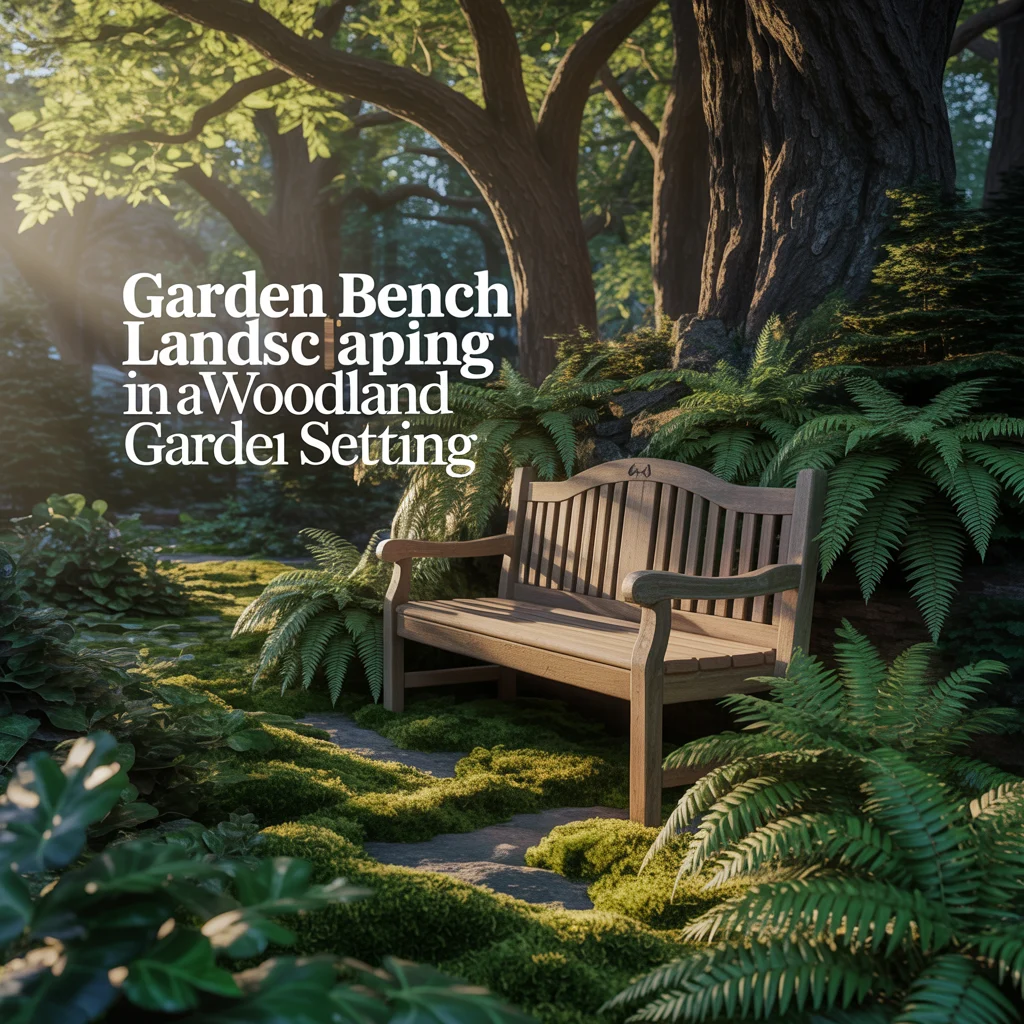
A garden bench landscaping idea in a woodland garden setting positions the bench within a designed woodland garden landscape, integrating the bench material, floor surface, and surrounding planting with the naturalistic character of the woodland environment to create a seating destination that feels genuinely part of the woodland landscape rather than placed within it. I designed a woodland bench landscape at a residential project with mature silver birch trees using a reclaimed oak bench on a compacted bark chip floor, surrounding the seating area with Dryopteris filix-mas ferns, Hosta sieboldiana, and Sarcococca confusa as the designed landscape planting, and the integrated woodland bench landscape used the existing tree canopy as its primary design asset.
Woodland Bench Materials That Suit the Landscape
Reclaimed oak, weathered teak, and recycled plastic in brown woodgrain are three bench materials suited to a woodland garden bench landscape. Reclaimed oak provides the most naturally appropriate bench material for a woodland garden landscape because the aged, weathered surface of reclaimed oak timber visually belongs in the woodland environment in a way that new or manufactured bench materials do not. Weathered teak in silver-grey provides a naturally aged hardwood surface that suits the shaded, moist conditions of a woodland bench landscape and requires no annual treatment to maintain its weathered appearance. Recycled plastic in brown woodgrain provides a completely maintenance-free woodland bench that resists the damp conditions.
Woodland Landscape Design Around a Garden Bench
A bark chip floor on a weed membrane, a log roll edging boundary at the seating area perimeter, and a fern and hosta planting scheme are three woodland landscape design elements suited to a garden bench in a woodland setting. A bark chip floor at 3-inch depth on a 130-gram woven polypropylene membrane provides the most appropriate woodland floor surface for a bench landscape seating area, creating a soft, natural surface that suits the aesthetic character of the woodland environment and requires only annual topping up. Log roll edging at the seating area perimeter defines the bench landscape boundaries using the most naturally woodland-appropriate edging material available for a shaded garden.
Garden Bench Landscaping With an Outdoor Room Concept
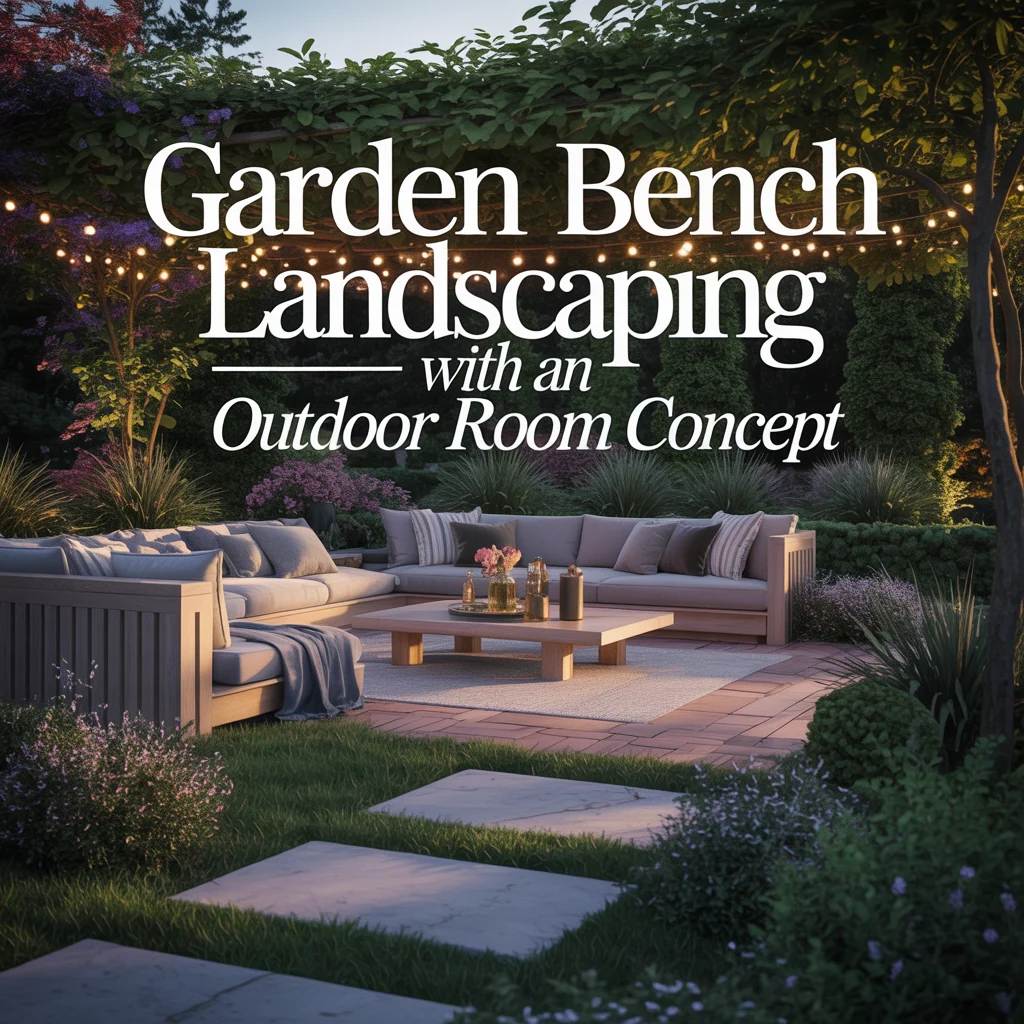
A garden bench landscaping idea using the outdoor room concept treats the bench seating area as a fully designed room with defined floor, walls, ceiling, and focal point elements, applying interior design principles to the outdoor bench landscape to create a seating destination with the spatial completeness and comfort of an indoor room translated to the garden setting. I applied the outdoor room concept to a garden bench landscape at a residential project, defining the floor with a 8-by-10-foot York stone platform, the walls with 5-foot Taxus baccata hedges on three sides, the ceiling with a timber pergola roof planted with Hydrangea petiolaris, and the focal point with a stone bench as the primary furniture element, and the resulting landscape felt like a genuine outdoor room.
Four Elements of the Outdoor Room Bench Landscape
Floor, walls, ceiling, and focal point are the four elements of an outdoor room concept applied to a garden bench landscaping scheme. The floor is defined by a paving, gravel, or deck material that occupies the full bench seating area, creating a clear boundary between the room and the surrounding garden. The walls are defined by hedges, planting borders, boundary fencing, or pergola sides that enclose the seating area on two or three sides. The ceiling is defined by an overhead pergola, a tree canopy, or a trained climbing plant that creates a sense of enclosure above the bench seating position. The focal point is the bench itself as the primary furniture element of the outdoor room landscape.
Outdoor Room Bench Landscape Scale and Proportions
An outdoor room bench landscape reads most effectively when the enclosed seating area measures 8 by 10 feet to 12 by 14 feet, providing enough floor space to accommodate the bench, appropriate clearance for sitting and standing, and the psychological sense of a room rather than simply a defined area. A bench seating landscape smaller than 6 by 6 feet feels restrictive as an outdoor room concept and suits a compact bench landscape alcove rather than a full outdoor room. A bench landscape larger than 15 by 15 feet loses the enclosed, room-like quality that the outdoor room concept produces and begins to read as an open courtyard rather than an intimate seating landscape.
Garden Bench Landscaping With a Wildlife Focus
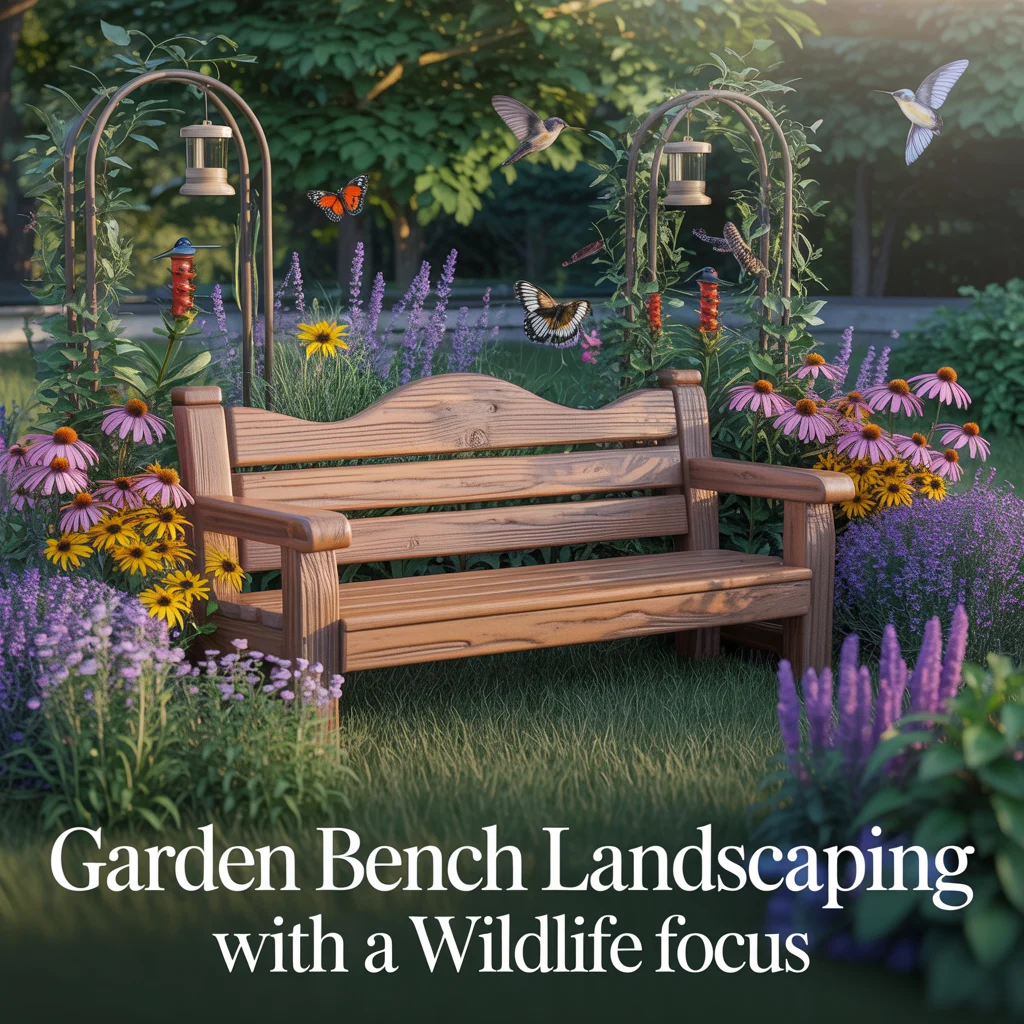
A garden bench landscaping idea with a wildlife focus deliberately positions the bench to maximize close-range observation of bird, insect, and amphibian activity in the surrounding landscape, using deliberate placement of feeding stations, wildlife planting, and habitat features at calculated distances from the bench seating position to create a landscape where wildlife observation is the primary designed purpose of the seating element. I designed a wildlife-focused bench landscape at a residential project using a teak bench positioned 8 feet from a bird feeding station, 6 feet from a flowering pollinator border, and 10 feet from a wildlife pond, and the bench produced a seating landscape where bird and insect observation was consistently possible throughout the garden season without any specialist equipment.
Wildlife Habitat Features for a Bench Landscape
A bird feeding station, an insect hotel, and a wildlife pond are three habitat features suited to a wildlife-focused garden bench landscaping scheme. A post-mounted bird feeding station of 6 to 7 feet height positioned 6 to 8 feet from the bench at a 45-degree angle from the bench face places the feeders within the natural forward viewing arc of a seated person and attracts the maximum variety of bird species to the close-range observation zone of the bench landscape throughout the year. An insect hotel mounted at 1 meter height on a path-edge post within 5 feet of the bench provides nesting habitat for solitary bees visible from the bench landscape seating position.
Pollinator Planting for a Wildlife Bench Landscape
Lavandula angustifolia, Echinacea purpurea, and Verbena bonariensis are three pollinator plants suited to a wildlife-focused garden bench landscaping scheme. Lavandula angustifolia attracts bumblebees and honeybees consistently from June to August, making the bee observation at the bench landscape seating position reliably sustained throughout the lavender flowering period. Echinacea purpurea attracts peacock, red admiral, and painted lady butterflies from July to September, providing butterfly observation from the bench at the bench landscape position throughout the late summer months. Verbena bonariensis attracts butterflies and hoverflies from July to October, extending the insect observation season at the bench landscape into early autumn.
Garden Bench Landscaping With an Orchard Setting
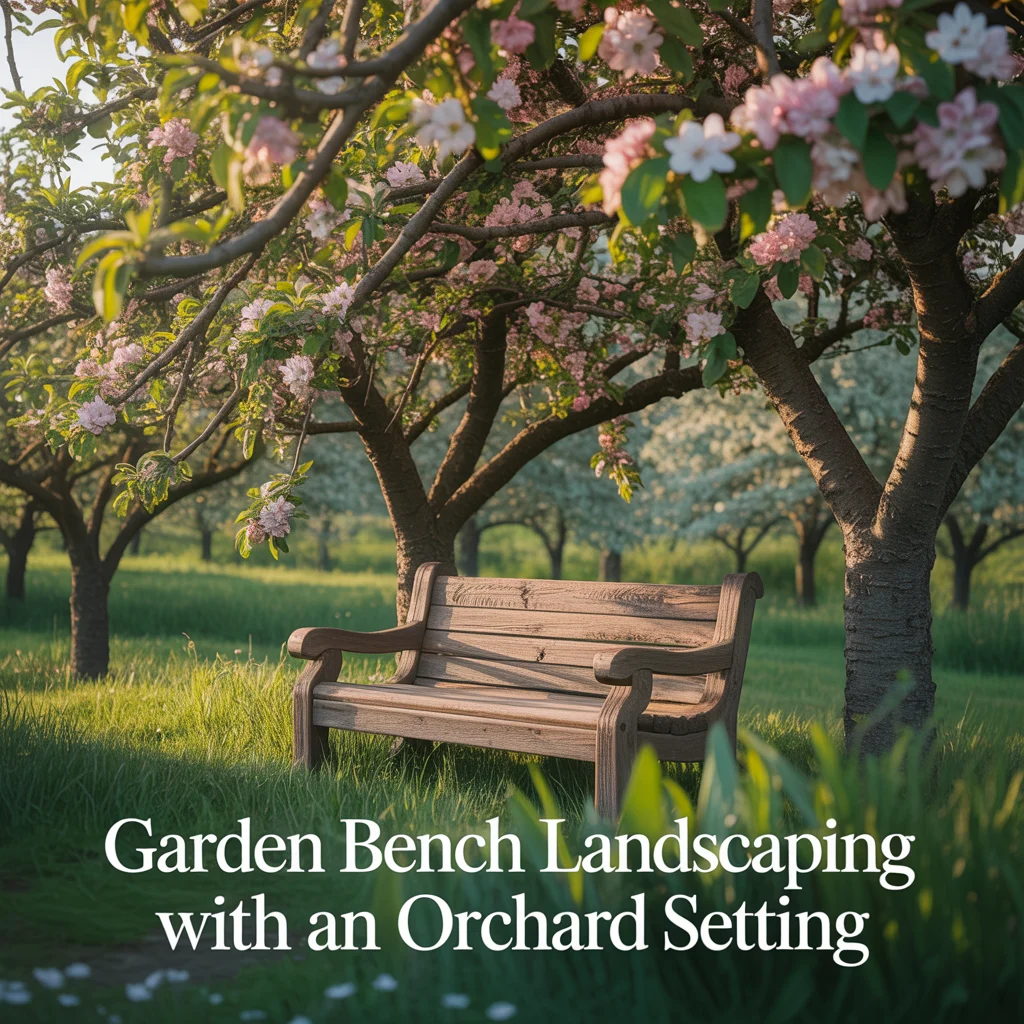
A garden bench landscaping idea in an orchard setting positions the bench beneath or within an established or newly planted orchard of fruit trees, creating a bench landscape that provides seasonal interest through spring blossom above the bench in April, summer fruit development through June to August, and autumn harvest color and fruit drop in September and October. I designed an orchard bench landscape at a residential property with six established apple trees, positioning a reclaimed oak bench at the geometric center of the orchard, underplanting with Narcissus bulbs and Geranium macrorrhizum ground cover, and creating a compacted gravel seating pad beneath the bench, and the orchard bench landscape produced genuinely different seasonal experiences from the seating position in every month of the year.
Fruit Tree Species for an Orchard Bench Landscape
Malus domestica apple, Pyrus communis pear, and Prunus avium cherry are three fruit tree species suited to an orchard garden bench landscaping scheme. Malus domestica in heritage varieties including Cox, Bramley, and Discovery provides spring blossom from April to May at 10 to 15 feet height above the bench and autumn fruit from August to October, producing the longest seasonal interest period of any fruit tree in an orchard bench landscape. Pyrus communis pear provides white spring blossom in April and autumn fruit from September to October at 12 to 18 feet height, with the upright growth habit of some pear varieties creating a particularly elegant tree canopy above the bench landscape seating position. Prunus avium provides the most spectacular spring blossom.
Ground Cover for an Orchard Bench Landscape
Hyacinthoides non-scripta, Geranium macrorrhizum, and Narcissus bulbs are three ground cover options suited to an orchard garden bench landscape. Hyacinthoides non-scripta bluebells planted in drifts throughout the orchard floor around the bench position provide a spectacular blue-purple flower carpet at 12 to 18 inches height from April to May, creating the most visually impactful spring orchard bench landscape ground display in a domestic garden. Geranium macrorrhizum provides a spreading, fragrant semi-evergreen ground cover through the orchard around the bench at 12 inches height, suppressing weeds and providing pink flowers from May to June throughout the bench landscape setting. Further ideas for using a flower bed as the primary landscape setting around a bench are covered in these flower bed with benches as a landscaping centerpiece.
Coastal Garden Bench Landscaping Ideas
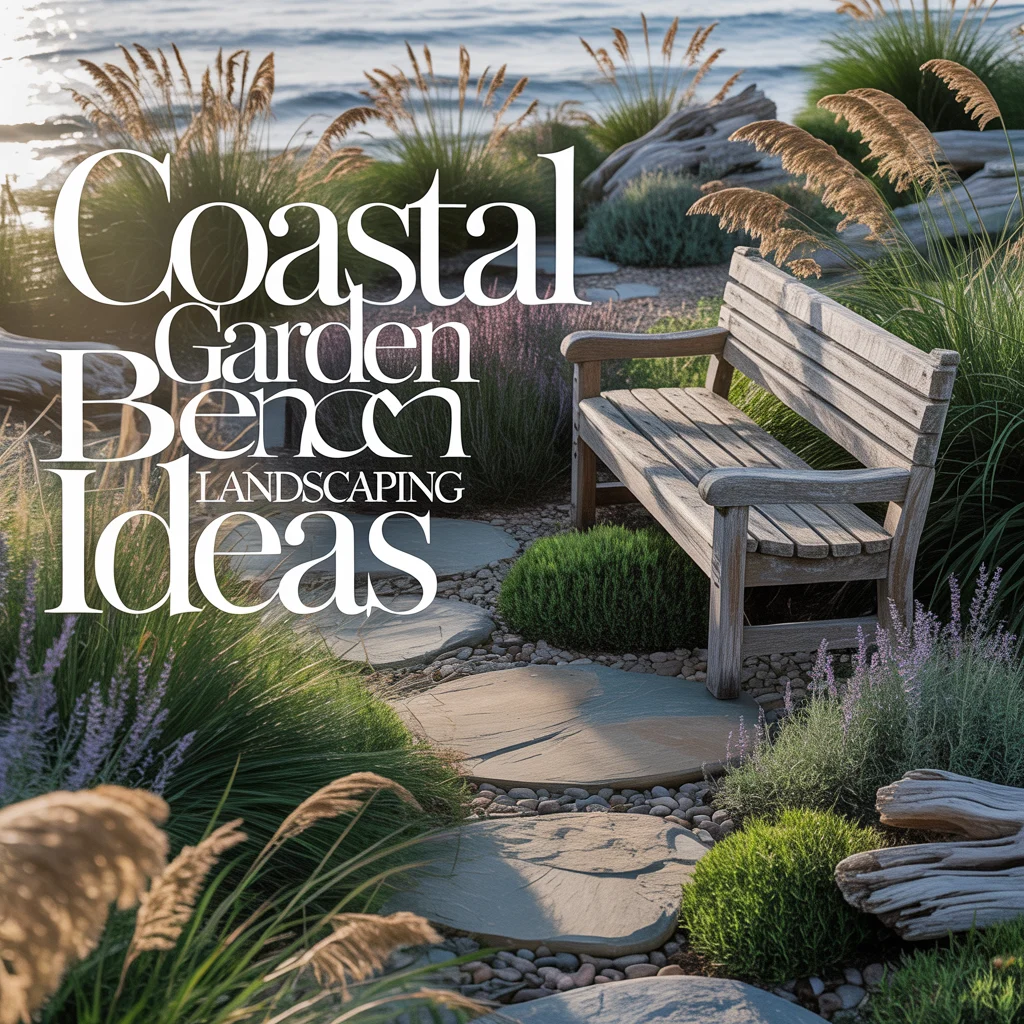
Coastal garden bench landscaping ideas address the specific material and plant selection requirements of a bench landscape in an exposed coastal position, where salt-laden winds, high rainfall, and strong sun require both the bench material and the surrounding landscape planting to be specifically suited to coastal growing conditions. I designed a coastal bench landscape at a seaside residential property 200 meters from the shoreline, using a powder-coated aluminium bench on a compacted crushed shell seating pad, surrounded by Hebe Great Orme, Lavandula angustifolia Hidcote, and Pittosporum tenuifolium, and the coastal bench landscape maintained its designed appearance through two full winters of coastal exposure without any deterioration in bench material or planting.
Bench Materials for a Coastal Garden Landscape
Powder-coated aluminium, recycled plastic lumber, and stainless steel frame with teak slats are three bench materials suited to a coastal garden bench landscaping scheme. Powder-coated aluminium provides complete corrosion resistance in a salt-wind coastal environment and requires no annual maintenance, providing a permanently weather-resistant bench frame in any coastal bench landscape at $180 to $450 for a standard 4 to 5-foot bench. Recycled plastic lumber provides complete resistance to salt-wind corrosion and coastal UV exposure with a 25 to 50-year lifespan and zero maintenance, suiting a coastal bench landscape where the lowest possible maintenance requirement is the primary material selection criterion.
Coastal Plants for a Garden Bench Landscape
Hebe Great Orme, Pittosporum tenuifolium, and Escallonia Iveyi are three coastal plants suited to a garden bench landscaping scheme in an exposed seaside position. Hebe Great Orme produces pink flower spikes from June to October at 3 to 4 feet height and tolerates salt-wind exposure without leaf scorch, providing a reliable flowering backdrop for a coastal bench landscape. Pittosporum tenuifolium produces small, wavy-edged green leaves on dark stems at 6 to 10 feet height and provides the best coastal evergreen backdrop planting for a bench landscape, tolerating coastal conditions better than box, yew, or hornbeam in exposed positions. Escallonia Iveyi produces white flowers in July and August.
Garden Bench Landscaping With a Four-Season Design
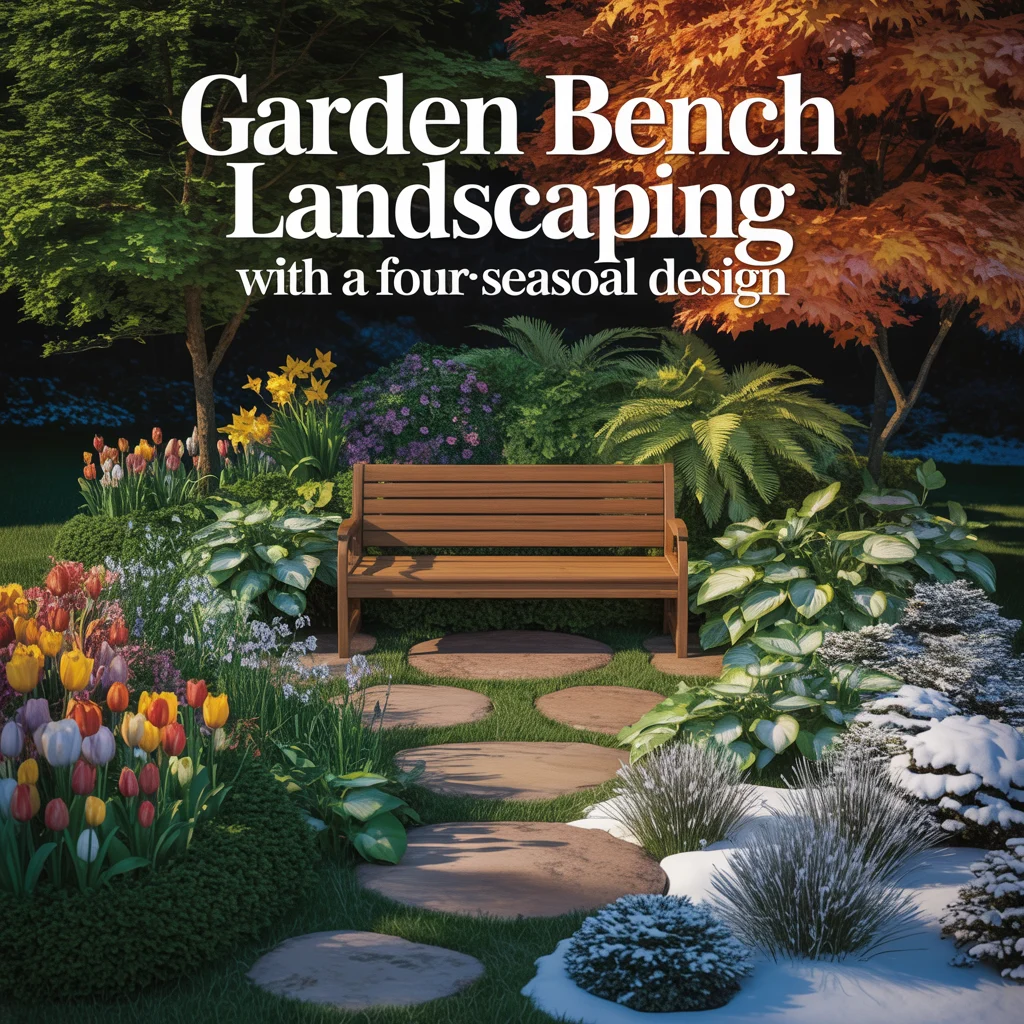
A garden bench landscaping idea designed for four-season interest plans every element of the surrounding landscape planting, hardscaping, and seasonal accessories to provide visual appeal, structural interest, and practical comfort at the bench position in every month of the year, creating a bench landscape that rewards regular year-round use rather than providing a peak summer experience followed by five months of visual dormancy. I designed a four-season bench landscape at a residential project that included winter-flowering Sarcococca and Helleborus within 3 feet of the bench, spring bulbs throughout the surrounding planting, summer perennial borders on both sides, and autumn Acer and Cornus color at the landscape perimeter, and the homeowner confirmed using the bench in every month of the first full year after completion.
Winter Interest in a Four-Season Bench Landscape
Sarcococca confusa, Hamamelis x intermedia, and Cornus alba Sibirica are three winter interest plants suited to a four-season garden bench landscaping scheme. Sarcococca confusa produces small white flowers with a vanilla fragrance in January and February within 3 feet of the bench, providing the most appreciated winter sensory stimulus in a four-season bench landscape during the coldest and least planted months of the year. Hamamelis x intermedia produces spidery copper or yellow flowers from December to March on a 8 to 10-foot shrub, providing the most visually distinctive winter flower in a bench landscape visible from the path approach before reaching the seated bench position. Cornus alba Sibirica provides red stems from November through March.
Summer and Autumn Seasons in a Four-Season Bench Landscape
Echinacea purpurea, Rudbeckia fulgida, and Acer palmatum are three plants suited to the summer and autumn phases of a four-season garden bench landscaping scheme. Echinacea purpurea provides pink cone flowers from July to September at 24 to 30 inches height alongside the bench, attracting bees and butterflies to the bench landscape throughout late summer. Rudbeckia fulgida Goldsturm extends the bench landscape flower display into October with gold daisy flowers and maintains decorative seed heads through November and December. Acer palmatum provides the most vivid autumn colour of any ornamental tree suitable for positioning at the perimeter of a four-season bench landscape, turning vivid orange-red in October within the surrounding planted landscape composition.
Related
best garden paths with benches for landscaped walkways
how to use borders around a landscaped garden bench area
top outdoor garden benches for landscaped garden spaces
Frequently Asked Questions
What is the difference between a garden bench and a landscaped bench?
A landscaped garden bench is integrated into the surrounding garden design as a planned structural and spatial element, while a standalone garden bench is placed in an existing garden space without coordinated surrounding design. A landscaped bench has a defined approach path, a deliberate floor surface, a planned backdrop or enclosure, and a surrounding planting scheme all designed simultaneously with the bench position. A standalone bench is positioned after the garden is complete and relies on existing garden elements to provide context. The landscaped bench reads as part of the garden design. The standalone bench reads as furniture placed in a garden, which is a fundamentally different visual result.
How do I integrate a bench into my garden landscaping?
A bench is integrated into garden landscaping by designing the bench position, surrounding planting, floor surface, and approach path simultaneously rather than placing the bench after all other elements are complete. The four integration steps are: select the bench position based on garden axis, view, or destination logic; define the floor surface of gravel, paving, or deck around the bench; plan the backdrop and flanking planting at three height layers; and design the approach path to lead directly to the bench as its terminus. I follow these four steps on every garden bench landscaping project and find the integrated result consistently superior to placing a bench in an existing garden without prior design planning.
What is the best wood for a garden bench landscaping project?
Teak is the best wood for a garden bench landscaping project because it provides 25 to 40 years of outdoor service without surface treatment, develops a silver-grey patina that coordinates naturally with stone, gravel, and planted landscape materials, and maintains its structural integrity in all weather conditions without splitting, cracking, or warping. Iroko provides a comparable hardwood performance at lower cost, suiting a garden bench landscaping project where hardwood quality is required at a more accessible price point. Pressure-treated softwood provides the most affordable DIY garden bench landscaping material, costing 30 to 50% less than hardwood alternatives with a 15 to 20-year service life.
How much does a professional garden bench landscaping project cost?
A professional garden bench landscaping project costs between $800 and $4,500 depending on the bench material, surrounding hardscaping, planting, and lighting specification. A simple bench on a gravel seating pad with basic planting costs $800 to $1,500 for professional supply and installation. A formal bench landscape with paved platform, hedging, and planned planting costs $1,500 to $2,800. A fully integrated outdoor room bench landscape with pergola, integrated lighting, bespoke paving, and professional planting design costs $2,800 to $4,500 or more. DIY garden bench landscaping reduces the total cost by 40 to 60% compared to professional installation for equivalent material specifications and design quality.
Can I create a garden bench landscaping scheme on a small budget?
A complete garden bench landscaping scheme is achievable for under $150 using a secondhand bench painted in a heritage exterior color, a simple gravel seating pad edged with flexible steel edging, two matching terracotta pots of lavender or clipped box, and a bark chip or gravel approach path from the nearest connecting route. The four elements of painted bench, defined floor, flanking pots, and a connected path produce the essential components of a landscaped bench setting at the most accessible budget level. I have completed garden bench landscaping projects for under $100 using a free reclaimed bench, salvaged brick as path edging, free wood chip from a tree surgeon as the floor surface, and divided garden plants as the surrounding planting.