
Flower Beds With Benches for a Beautiful Garden Retreat

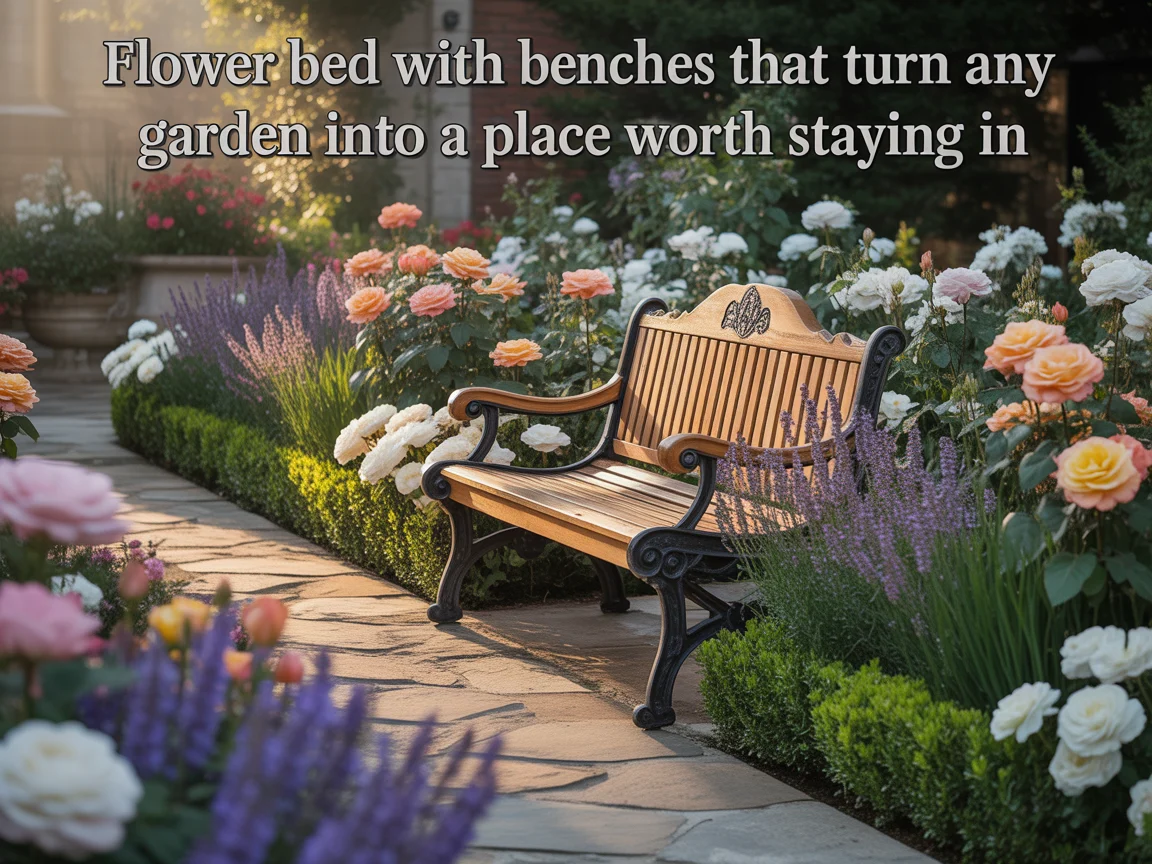
I helped a neighbor redesign her back garden two summers ago, and the single decision that changed everything was moving her bench from the patio edge into the center of her rose flower bed. She thought I was joking at first. A bench inside a flower bed seemed odd to her until I explained that sitting surrounded by roses on three sides produces a completely different experience from sitting six feet away from them looking across. We moved the bench on a Saturday morning. By Sunday evening she had sent me three photographs from the bench with her coffee cup in frame and a message saying she had already sat there four times that day.
A flower bed with benches combines a planted flower border or raised bed with one or more seating elements positioned within, alongside, or at the center of the planting, creating an outdoor space where sitting is surrounded by living flower color, fragrance, and seasonal change rather than simply positioned near it. The flowers give the bench a sensory setting that hard landscaping cannot provide, and the bench gives the flower bed a human purpose that makes the planting feel designed for living in rather than purely for looking at.
Since that rose garden Saturday, I have designed and studied flower beds with benches across many garden styles, planting schemes, and budgets. I have seen a single reclaimed bench within a simple lavender bed produce results equal to elaborate professional garden designs, and I have also seen complex raised flower bed bench combinations create genuinely memorable outdoor spaces.
In this article, I am sharing 19 flower bed with benches ideas that I have either created myself or studied closely enough to recommend.
Rose Flower Bed With a Teak Bench
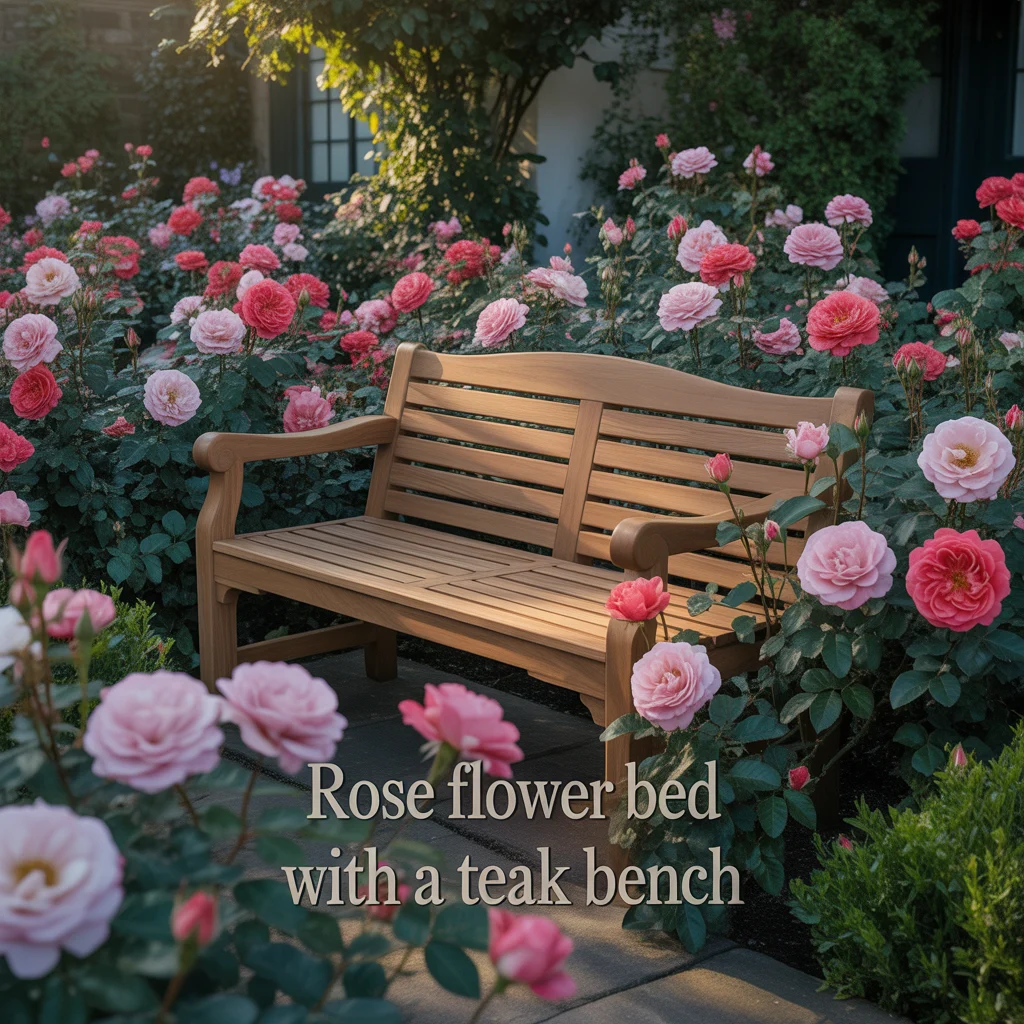
A rose flower bed with a teak bench positions a classic hardwood bench within or directly adjacent to a rose border, creating a seated experience where large fragrant rose blooms at shoulder and waist height surround the seating on multiple sides during the June to October flowering season. I planted a semicircular rose bed of 8-foot radius around a Lutyens-style teak bench at a residential project using Rosa Gertrude Jekyll, Rosa Munstead Wood, and Rosa The Generous Gardener, and the seated position within the rose planting in July produced a flower and fragrance experience that the homeowner described as the most enjoyable outdoor moment she had in her garden across the entire year.
Rose Varieties for a Flower Bed With Benches
Rosa Gertrude Jekyll, Rosa Olivia Rose Austin, and Rosa Munstead Wood are three rose varieties suited to a flower bed with benches. Rosa Gertrude Jekyll produces large deep pink flowers with the strongest old rose fragrance of any David Austin variety from June to October at 4 feet height, suiting a bench positioned 18 inches from the planting where the fragrance concentrates at seated nose level. Rosa Olivia Rose Austin produces clear pink flowers at 3 to 4 feet from June to October with a lighter growth habit that suits a tighter bench clearance of 12 inches without thorns obstructing movement. Rosa Munstead Wood provides deep crimson-purple flowers with intense fragrance at 3 to 4 feet from June to October. For anyone wanting to connect this type of rose bench planting to a wider walkway, design ideas are covered in these garden paths with benches placed inside flower beds.
Teak Bench Positioning Within a Rose Flower Bed
A teak bench within a rose flower bed is positioned with a minimum clearance of 18 inches between the bench face and the nearest rose stem to prevent thorned canes from catching clothing when sitting and standing. The bench back faces the tallest rose planting to provide a green and flowering backdrop, with shorter companion planting of Alchemilla mollis or Nepeta at the front bench edge. I always use Rosa Zephirine Drouhin for any rose planted within 12 inches of a bench because this thornless climbing variety eliminates the snagging risk that thorned species create at close bench clearances in a flower bed with benches design on any residential garden project.
Lavender Flower Bed With a Garden Bench
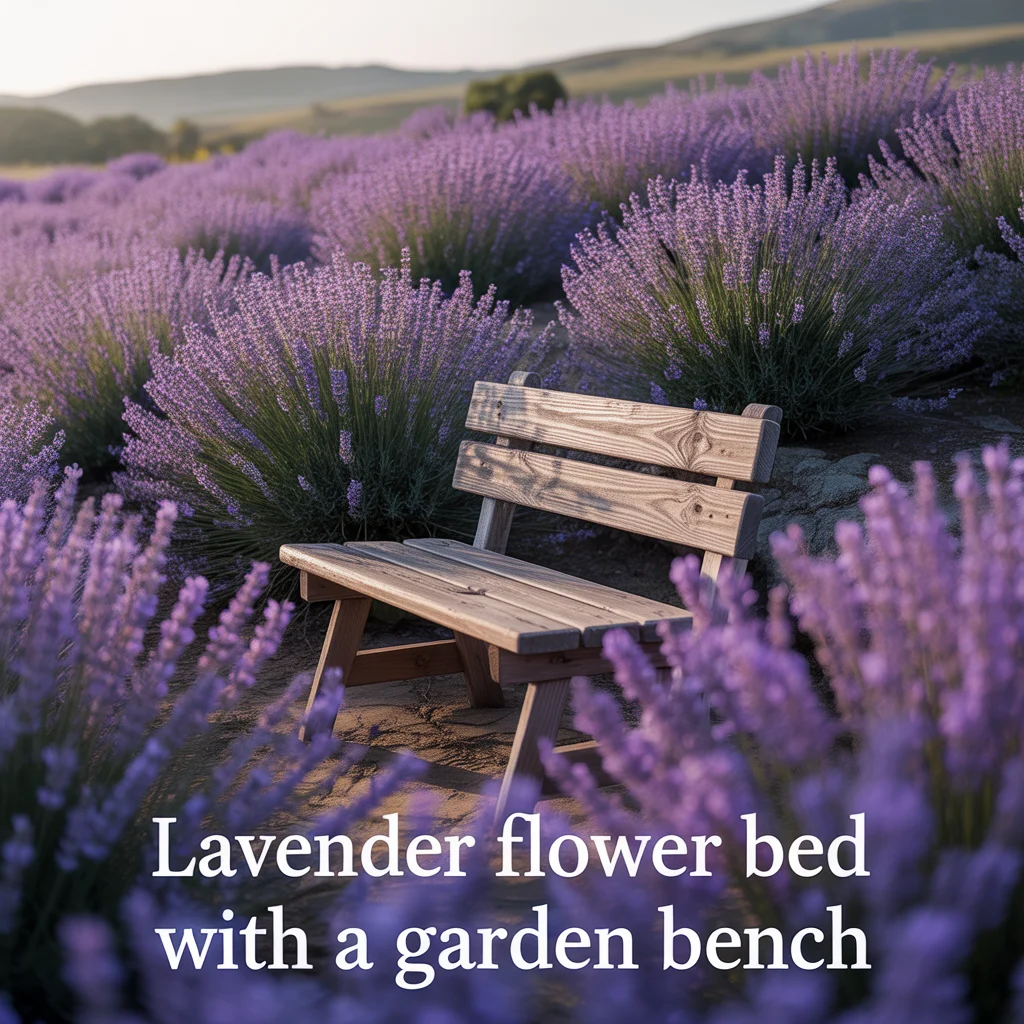
A lavender flower bed with a garden bench surrounds or lines the approach to a bench with Lavandula angustifolia planting, creating a seated position where the calming fragrance, purple flower spikes, and soft silver-green foliage of lavender frame the bench on all visible sides during the June to August flowering peak. I designed a lavender flower bed bench combination at a front garden project using Lavandula angustifolia Hidcote at 18-inch spacing in a U-shaped arrangement around three sides of a painted hardwood bench, and the enclosed lavender planting produced a scented seated destination that transformed the functional front garden into a genuinely enjoyable outdoor sitting space visited multiple times daily through summer.
Lavender Varieties for a Flower Bed With Benches
Lavandula angustifolia Hidcote, Lavandula angustifolia Munstead, and Lavandula x intermedia Grosso are three varieties suited to a lavender flower bed with benches. Hidcote produces the most compact, even growth of 18 to 24 inches height and suits a bench enclosed by lavender on multiple sides where a tight hedge-like planting profile frames the seating neatly throughout the season. Munstead provides a slightly wider growth at the same height and suits a more informal lavender flower bed around a bench where a softer planting edge is preferred. Grosso produces the strongest fragrance of the three on 30-inch stems and suits a bench where maximum scent impact at the seated position is the primary design goal.
Bench Styles That Suit a Lavender Flower Bed
A painted timber bench in sage green, a white cast iron bench, and a weathered teak bench are three styles suited to a lavender flower bed. A painted timber bench in sage green provides a color that coordinates directly with the silver-green lavender foliage, creating a unified bench and planting palette when the lavender is not in flower. A white cast iron bench provides the strongest visual contrast with the deep purple Hidcote flowers in June and July and suits a formal or cottage garden lavender flower bed with benches design. A weathered teak bench in silver-grey coordinates with the silver-grey tone of lavender foliage throughout the year.
Built-In Bench With a Raised Flower Bed
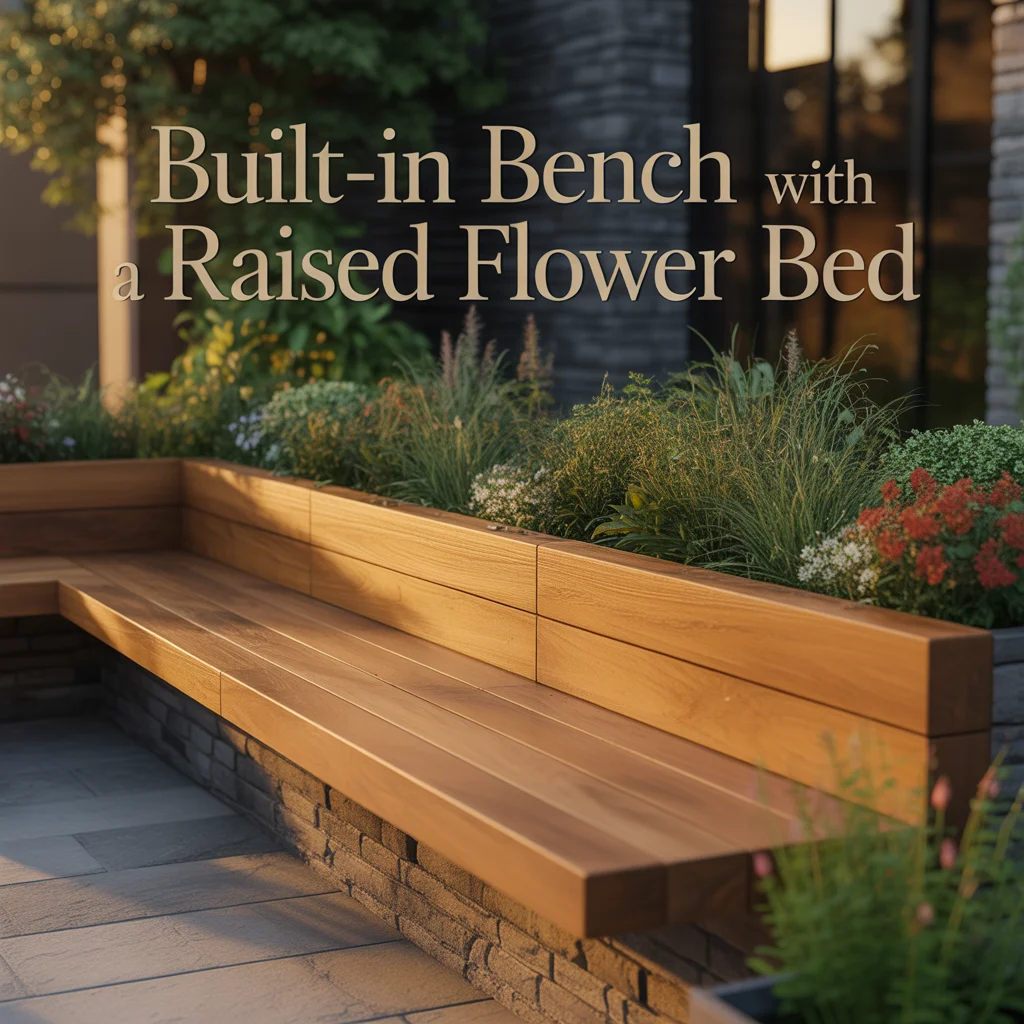
A built-in bench with a raised flower bed integrates the seating surface directly into the raised bed wall structure, using the extended bed walls as seat platforms to create a combined planting and seating element that functions as a single unified garden feature. I built a 3-foot-high raised flower bed using 3-inch-thick oak boards, extending the side walls outward by 18 inches at each end to create two integral bench seat platforms at 17-inch seat height, and the combined structure produced a flower bed with benches feature that suited the compact courtyard better than any separate flower bed and bench arrangement would have in the same limited space.
Built-In Bench Designs for a Raised Flower Bed
A side wall extension bench, a front wall bench, and an L-shaped corner bench are three built-in designs suited to a raised flower bed with benches. A side wall extension bench extends the raised bed side walls outward beyond the flower bed width to create seat platforms on both ends, suiting a rectangular raised bed of 6 feet or more where the platforms sit at the correct height relative to the structure. A front wall bench uses the front raised bed face as the bench back, with a separate seat board at 17-inch height attached below the planted bed level. An L-shaped corner bench suits a corner-positioned raised flower bed where two bench arms meet at right angles.
Plants for a Raised Flower Bed With Built-In Benches
Lavandula angustifolia, Echinacea purpurea, and Salvia nemorosa are three plants suited to a raised flower bed with built-in benches because all three stay within the raised bed boundary without overhanging adjacent seat surfaces. Lavandula angustifolia at 18 to 24 inches height planted at the front raised bed edge provides fragrance at seated nose level when a person is seated on the integral bench platform alongside the raised flower bed. Echinacea purpurea provides pink cone flowers from July to September at 24 to 30 inches height in the mid-bed section. Salvia nemorosa provides violet-blue spikes from May to August at 18 to 24 inches height in the raised bed.
Cottage Garden Flower Bed With a Bench
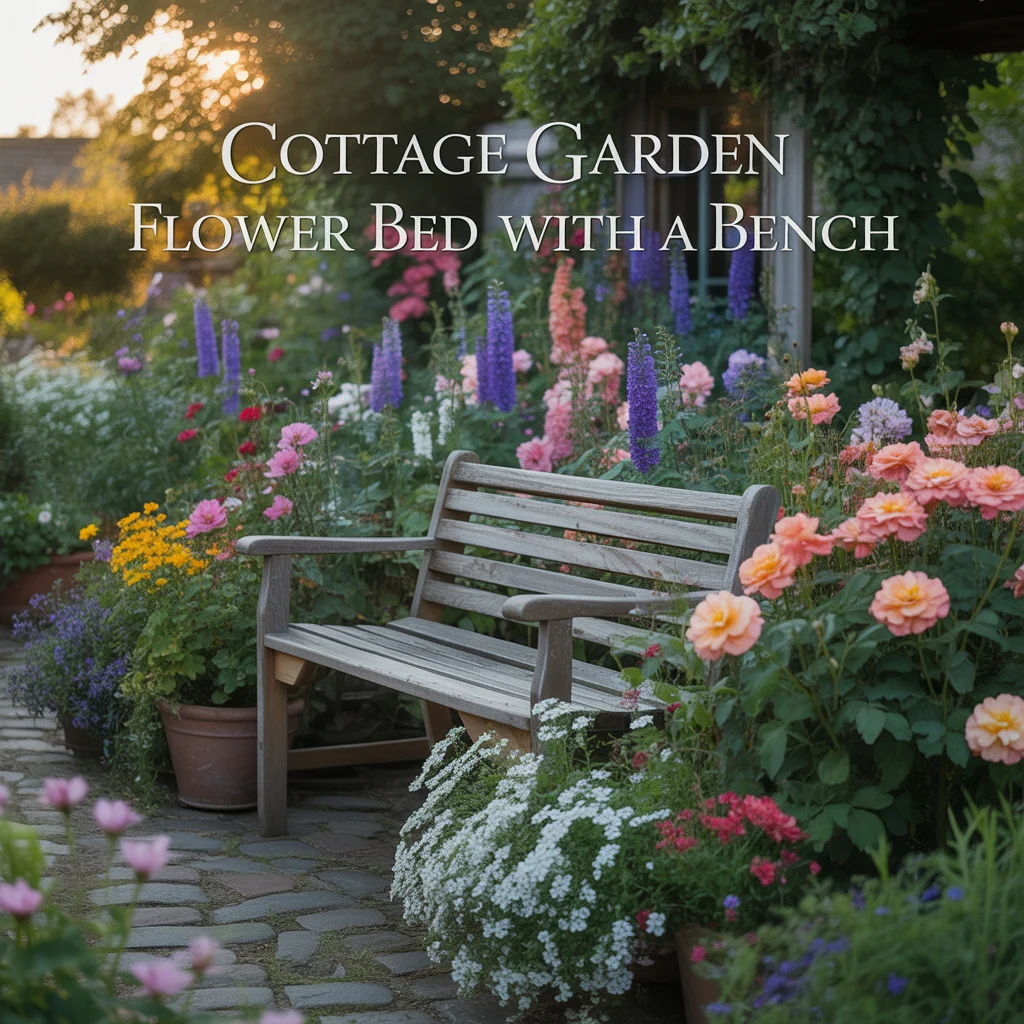
A cottage garden flower bed with a bench uses a wide mixed border of 18 to 36 inches on both sides of a centrally positioned bench, filled with perennials, bulbs, biennials, and roses in an informal arrangement that produces a continuously changing seasonal display from February through October. I designed a cottage garden flower bed bench at a residential project using Rosa Gertrude Jekyll, Alchemilla mollis, Geranium rozanne, Salvia nemorosa, and Nepeta x faassenii on both sides of a reclaimed timber bench, and the combined planting produced a cottage flower bed with benches that served as the dominant garden feature from May through September of every growing season after planting.
Perennial Mix for a Cottage Flower Bed With Benches
Alchemilla mollis, Geranium rozanne, and Salvia nemorosa Caradonna are three perennials suited to a cottage garden flower bed with benches. Alchemilla mollis provides a low-growing weed-suppressing base of soft pleated leaves and yellow-green flowers at the bench edge level, concealing bare soil at the front of the flower bed directly alongside the seated position. Geranium rozanne produces blue-violet flowers continuously from June to October at 12 inches height and spreads to 24 inches, providing reliable continuous color at bench level throughout the season. Salvia nemorosa Caradonna produces upright violet-blue spikes from May to August at 24 inches height alongside the bench.
Seasonal Planning for a Cottage Flower Bed With Benches
Planning a cottage flower bed with benches across all seasons ensures the bench has planting interest on all sides throughout the full year. Spring bulbs including Narcissus Tete-a-Tete and Allium hollandicum provide February to June colour before summer perennials reach full height around the bench position. Summer perennials including Rosa, Geranium rozanne, and Salvia provide the June to September main display surrounding the bench. Autumn-flowering Aster x frikartii Monch extends the flower bed display through October. Winter Sarcococca confusa maintains fragrant interest at the bench position through January and February when all other planting is dormant. Further ideas for composing a charming seating destination within a planted display like this are covered in these charming garden bench ideas surrounded by flower beds.
Modern Flower Bed With a Contemporary Bench
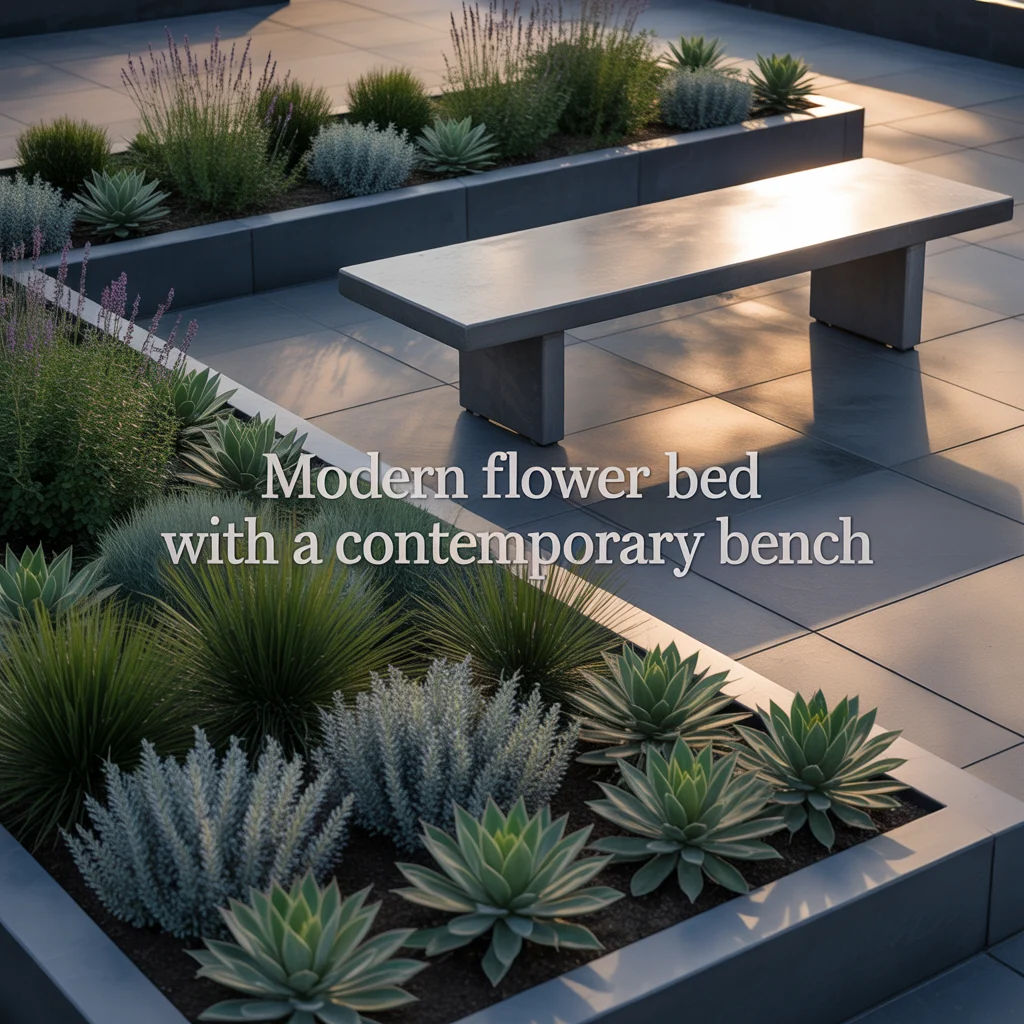
A modern flower bed with a contemporary bench uses large-format architectural planting of Agapanthus, Phormium, and ornamental grasses alongside a powder-coated steel or horizontal-slat hardwood bench to create a flower bed and bench combination suited to contemporary architecture, urban outdoor spaces, and designed garden areas where bold sculptural planting forms coordinate with the clean geometric lines of a modern bench design. I specified a modern flower bed bench at a new-build residential project using Agapanthus Headbourne Hybrids, Pennisetum alopecuroides, and Phormium tenax alongside a matt black powder-coated steel bench, and the result produced a contemporary flower bed with benches of strong visual quality.
Contemporary Plants for a Modern Flower Bed With Benches
Agapanthus Headbourne Hybrids, Pennisetum alopecuroides, and Echinacea purpurea Magnus are three plants suited to a modern flower bed with contemporary benches. Agapanthus produces round blue flower heads on 3-foot stems from July to September, providing the most architectural and sculptural flower form suitable for a contemporary flower bed alongside a modern bench. Pennisetum alopecuroides produces arching grass clumps at 24 inches with purple-brown bottlebrush flowers from August to October, providing a naturalistic grass-textured border alongside the bench. Echinacea purpurea Magnus provides bold pink cone flowers from July to September at 2 to 3 feet height within the modern flower bed composition.
Contemporary Bench Materials for a Modern Flower Bed
Powder-coated steel in anthracite grey, corten steel, and iroko hardwood with a horizontal slat profile are three bench materials suited to a contemporary flower bed with benches. Powder-coated steel in RAL 7016 anthracite grey coordinates with charcoal grey porcelain or concrete path materials alongside the modern flower bed. Corten steel develops an orange-brown rust patina within 6 to 12 months that coordinates with gravel mulch and terracotta pot materials in a contemporary planting scheme. Iroko hardwood with a horizontal slat profile produces a warm timber bench surface that bridges contemporary and traditional garden styles in a flower bed with benches setting at any property type.
Wildflower Bed With a Rustic Bench
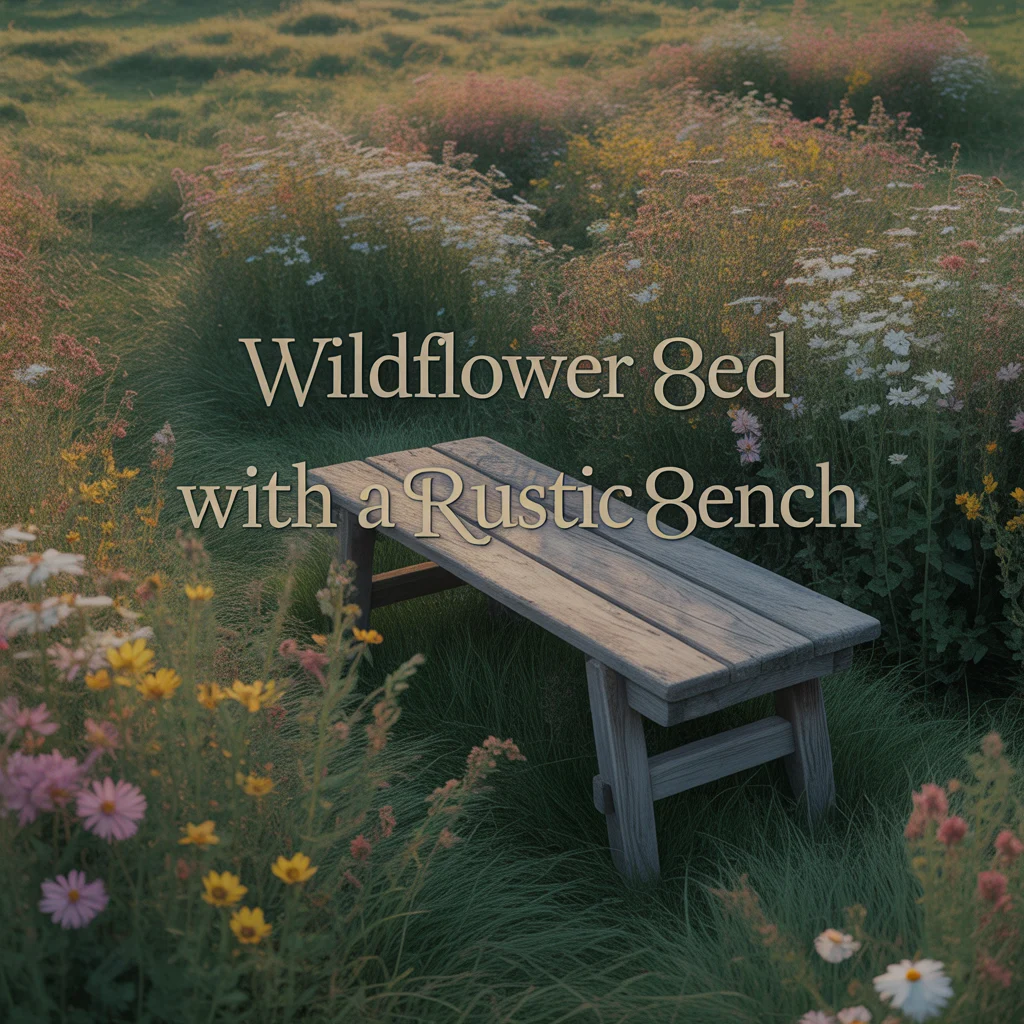
A wildflower bed with a rustic bench positions a rough-sawn or reclaimed timber bench within a wildflower meadow planting, creating a seating destination where tall natural flower growth surrounds the bench during the May to September flowering season. I placed a reclaimed oak bench at the center of a 15-foot-diameter cleared circle within my wildflower meadow area, and the rustic bench surrounded by ox-eye daisies, field scabious, and knapweed produced a seating destination that looked as though it had been there for decades from the very first summer after the wildflower seeding established around the bench position.
Wildflower Species for a Wildflower Bed With Benches
Leucanthemum vulgare, Knautia arvensis, and Centaurea nigra are three wildflower species suited to a wildflower bed surrounding benches. Leucanthemum vulgare, ox-eye daisy, produces white flowers from May to July at 24 to 30 inches height, providing the most abundant and visually dominant flower display around the bench during early summer. Knautia arvensis, field scabious, produces lilac-blue pincushion flowers from July to September at 24 to 36 inches height, extending the wildflower bed flowering season around the bench through the full summer period. Centaurea nigra produces purple flowers from July to September at 18 to 24 inches alongside and around the bench seating position.
Rustic Bench Materials for a Wildflower Bed
Reclaimed oak boards, rough-sawn sweet chestnut, and log and plank construction are three rustic bench materials suited to a wildflower bed with benches. Reclaimed oak provides the most durable rustic bench surface with a natural outdoor lifespan of 20 to 30 years and develops an attractively weathered silver-grey surface that coordinates with the dried grass and seed head tones of a wildflower bed in autumn and winter. Rough-sawn sweet chestnut provides naturally durable rustic benches of 12 to 18 years lifespan and suits a wildflower bed where the rougher, more organic timber surface enhances the naturalistic flower bed with benches design.
Spring Bulb Flower Bed With a Bench
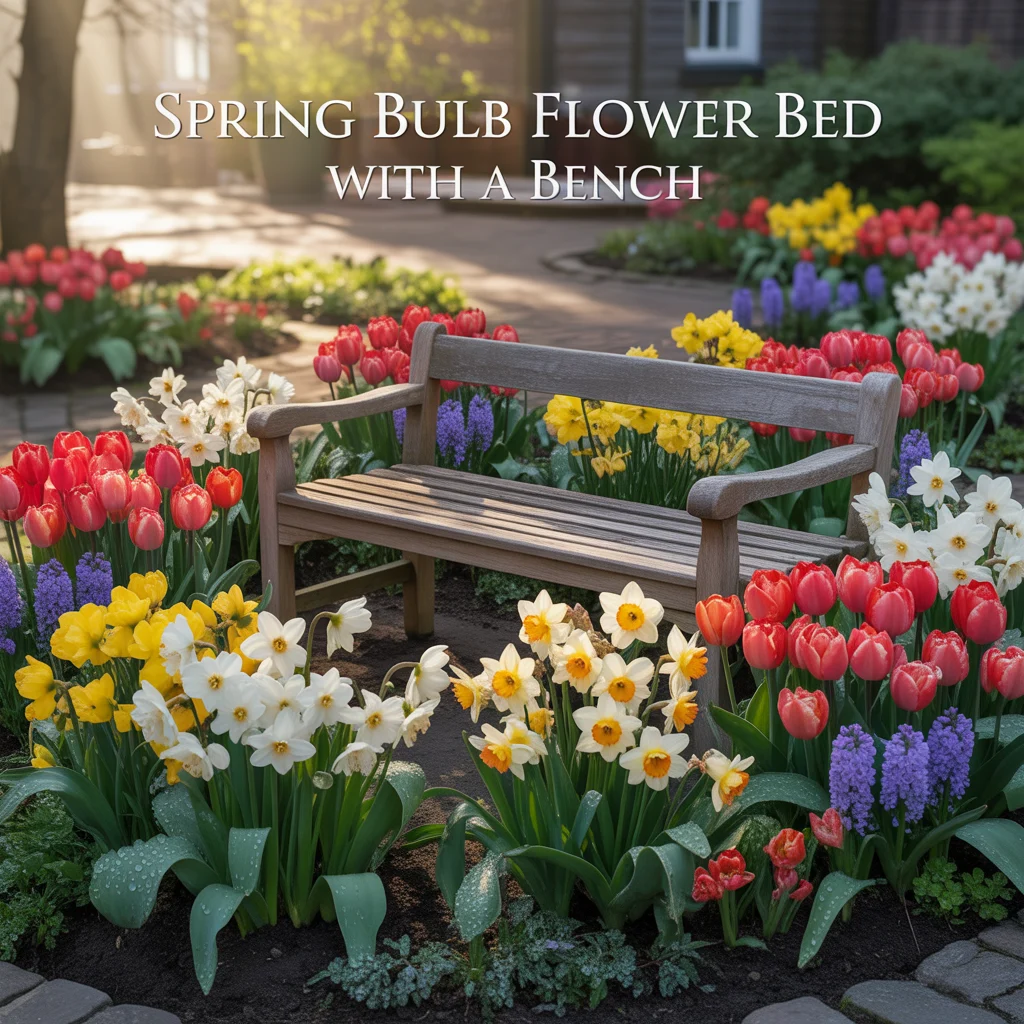
A spring bulb flower bed with a bench uses a concentrated planting of Narcissus, Tulipa, Allium, and Hyacinthus around or alongside a bench to create a flower bed and bench experience designed specifically for the March to June spring season. I planted a U-shaped spring bulb bed around a painted bench at a front garden project using Narcissus Tete-a-Tete, Tulipa Queen of Night, Muscari armeniacum, and Allium hollandicum in a sequence providing flowering from February through June, and the bench within the spring bulb planting became the most visited sitting position in the full garden from March to early June each year.
Spring Bulb Sequence for a Flower Bed With Benches
Galanthus nivalis, Narcissus Tete-a-Tete, and Tulipa Ballerina are three bulbs suited to a sequential spring flower bed surrounding a bench. Galanthus nivalis produces white nodding flowers on 6-inch stems from February to March, providing the earliest possible flower colour around the bench before any other surrounding planting shows seasonal growth. Narcissus Tete-a-Tete produces small yellow flowers on 6-inch stems from March to April, suiting the narrow planting zone immediately surrounding the bench legs and front face at ground level. Tulipa Ballerina produces orange-red lily-flowered blooms on 22-inch stems in late April, providing the most visually impactful spring bulb around the seated bench position throughout the season.
Bench Positioning in a Spring Bulb Flower Bed
A bench positioned within a spring bulb flower bed requires a clear gravel, brick, or stone floor surface of minimum 18 inches on all sides of the bench legs to prevent bulb damage from foot traffic around the seated position during the spring flowering season. Spring bulbs planted closer than 12 inches to a bench leg position are routinely damaged by approach and departure movements from the seat, reducing the density of the spring flower display at the most visible bench edge positions. I always mark bench leg positions before planting any spring bulbs in a flower bed with benches design, planting bulbs a minimum of 15 inches from each leg corner.
Herb and Kitchen Garden Flower Bed With a Bench
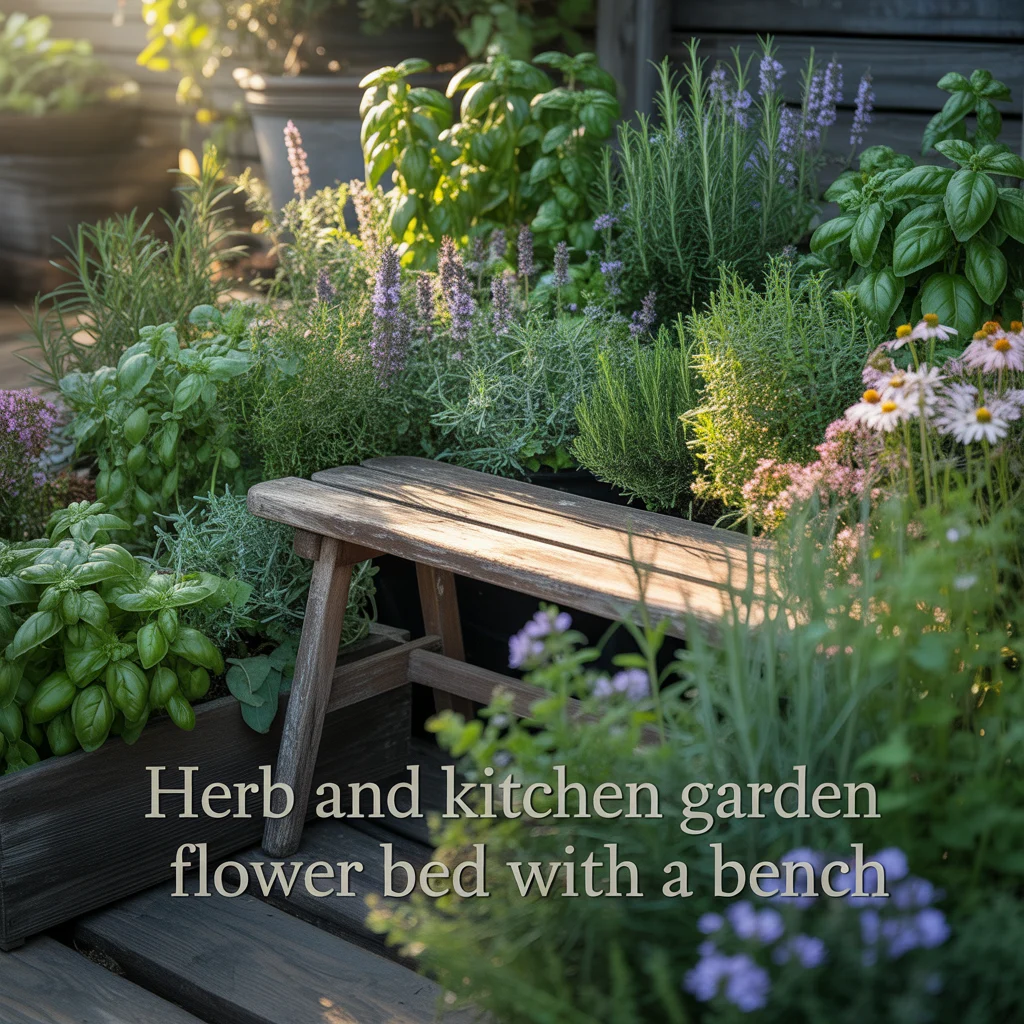
A herb and kitchen garden flower bed with a bench places a bench within a productive herb growing area, creating a seating destination where the fragrance of lavender, rosemary, thyme, and mint surrounds the bench at multiple height levels simultaneously. I placed a reclaimed timber bench alongside a 6-foot-wide herb bed at a kitchen garden project and found it became the most consistently used garden bench at the full property, because the homeowner sat in it every morning before picking herbs for breakfast, combining the practical task of herb harvesting with the enjoyable sensory experience of sitting surrounded by the fragrant herb flower bed planting.
Herbs for a Kitchen Garden Flower Bed With Benches
Lavandula angustifolia, Rosmarinus officinalis, and Mentha spicata are three herbs suited to a kitchen garden flower bed with benches. Lavandula angustifolia provides a calming fragrance from June to August at 18 to 24 inches height directly alongside the bench, releasing its scent most powerfully on warm afternoons when aromatic oils are activated by ambient temperature. Rosmarinus officinalis grows to 18 to 24 inches in the herb bed alongside the bench and produces blue flowers from March to May before most other bench planting begins its flowering display. Mentha spicata releases a fresh fragrance when lightly touched from the bench seating position during warm summer days.
Edible Flowers for a Kitchen Garden Bench Flower Bed
Nasturtiums, borage, and calendula are three edible flowering plants suited to a kitchen garden flower bed with benches. Nasturtiums produce edible flowers in orange, yellow, and red from June to October at 12 to 18 inches height alongside the bench, providing both a visual display and a harvestable flower directly from the seated bench position. Borage produces star-shaped blue flowers from June to September at 18 to 24 inches height with edible flowers of mild cucumber flavour that can be picked directly from the seated bench position. Calendula produces bright orange and yellow flowers from May to October at 18 to 24 inches throughout the full growing season.
Flower Bed With a Bench Around a Tree
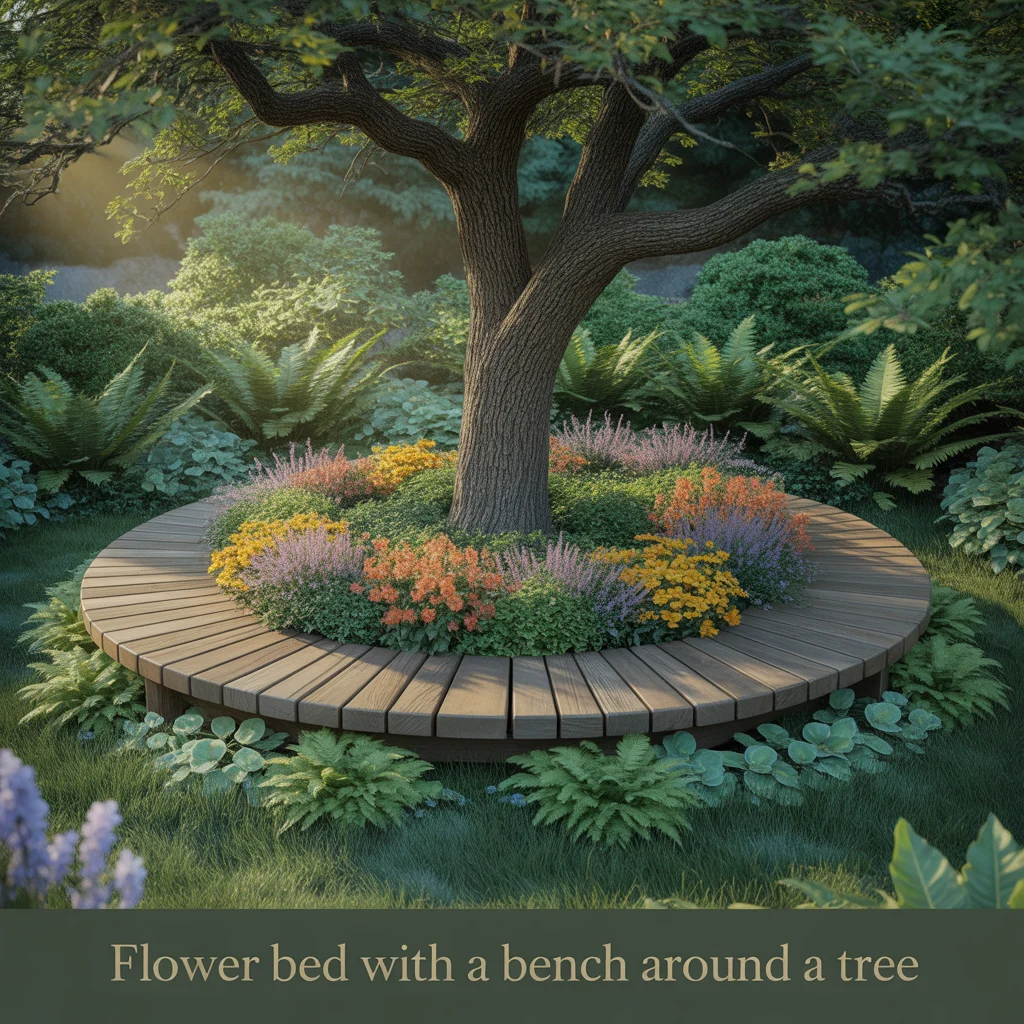
A flower bed with a bench around a tree positions the seating within a circular or semicircular flower bed surrounding an existing tree trunk, integrating the tree as the backdrop and overhead canopy of the bench experience. I designed a circular flower bed with a curved bench around a mature apple tree at a residential project using Rosa Gertrude Jekyll on the outer edge, Geranium rozanne at mid-level, and Alchemilla mollis at the bench base, and the flower bed and bench combined with the apple tree canopy above produced a seating destination of genuine horticultural and design quality that the homeowner used as her primary garden sitting point throughout the season.
Circular Planting Layers Around a Tree Bench Flower Bed
A circular flower bed around a tree bench uses three concentric planting rings to create a layered flower display at the bench. The outer ring uses tall plants of 3 to 5 feet including roses or tall grasses that provide a backdrop behind the bench. The middle ring uses medium plants of 18 to 30 inches that flank the bench at seated shoulder height on both sides. The inner ring uses low plants of 6 to 12 inches planted between the bench and the tree trunk at ground and knee level. I plan the three planting rings using concentric chalk circles drawn at 12-inch intervals from the trunk base outward, establishing each zone before any plants are placed around the bench.
Tree Species That Suit a Flower Bed With Benches
Apple trees, silver birch, and ornamental cherry are three tree species that suit a flower bed with benches arranged around the trunk. Apple trees provide a spreading canopy at 10 to 15 feet that creates natural shade over the bench position and provides seasonal interest through spring blossom, summer fruit development, and autumn harvest alongside the surrounding flower bed. Silver birch, Betula pendula, provides a light dappled canopy allowing adequate light to reach the surrounding flower bed planting and provides white bark year-round interest as a backdrop to the bench. Ornamental cherry provides spring blossom in March and April above the bench.
Front Garden Flower Bed With a Bench
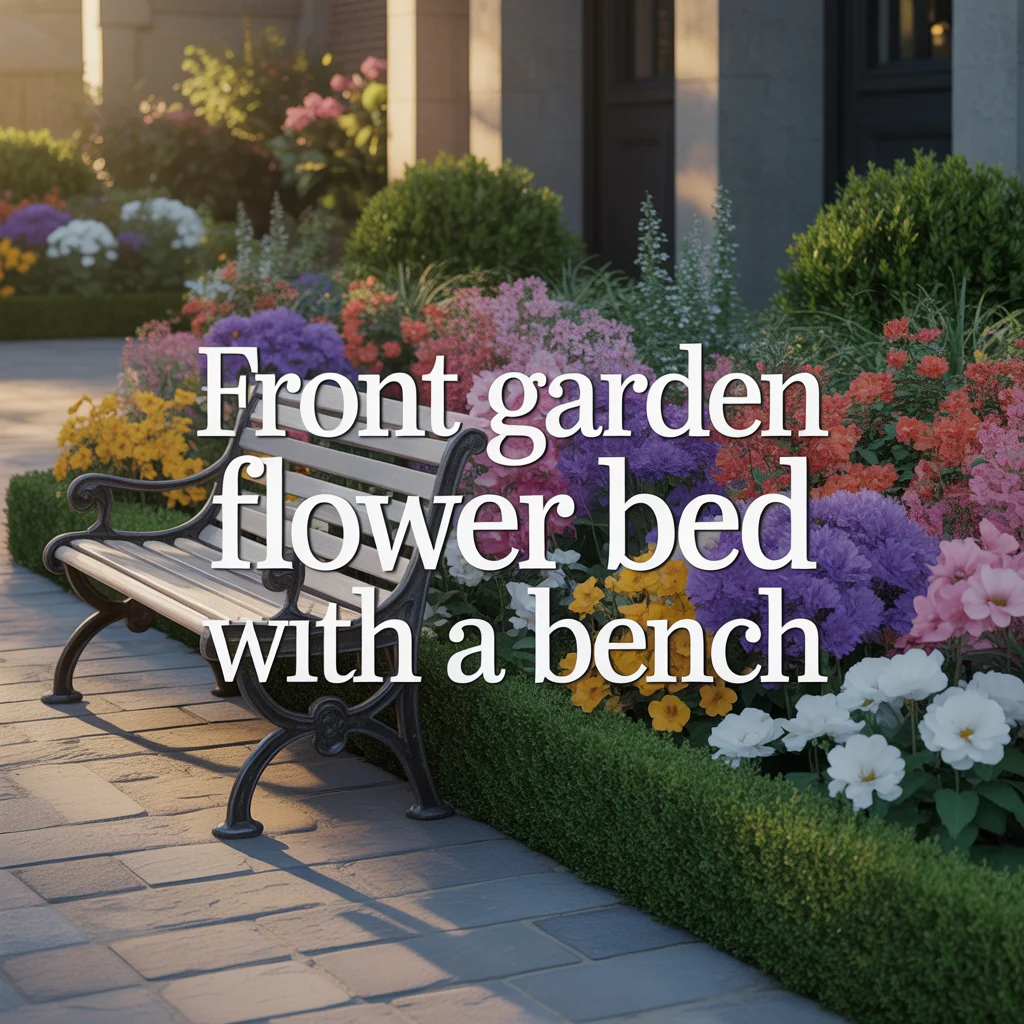
A front garden flower bed with a bench creates a welcoming street-facing entrance feature combining flowering planting with an inviting seating element, transforming a front garden from a purely transitional space into a destination that provides both kerb appeal and a practical outdoor sitting position. I redesigned a front garden at a terraced house using a central oval flower bed of 6 by 4 feet containing Rosa The Fairy, Lavandula angustifolia, and Geranium rozanne with a painted cast iron bench at the rear arc of the oval, and the combination produced a front garden that stopped pedestrians to look and comment more consistently than any other front garden in the same street.
Flower Bed Shapes for a Front Garden With Benches
An oval central flower bed, a crescent border flower bed, and a U-shaped surround flower bed are three shapes suited to a front garden with benches. An oval central flower bed positions the bench at the far arc with planting surrounding it on three sides, creating a formal symmetrical front garden composition when viewed from the street approach direction. A crescent border flower bed curves along the front boundary with the bench at the midpoint facing back toward the house, suiting a front garden where the view from the bench toward the house is more attractive than the view toward the street. A U-shaped surround flower bed encloses the bench on three sides.
Low Maintenance Flowers for a Front Garden Bench Bed
Lavandula angustifolia, Rosa The Fairy, and Geranium rozanne are three low maintenance flowers suited to a front garden flower bed with benches. Lavandula angustifolia requires only one annual prune in August, no staking, no deadheading, and no dividing for 8 to 10 years, making it the most genuinely low maintenance flowering plant for a front garden flower bed around a bench. Rosa The Fairy produces small pale pink flower clusters from July to October on a compact 18-inch plant with very few thorns, requiring only one annual tidy cut. Geranium rozanne requires one cut-back in March and no other maintenance throughout the full growing season. Ideas for connecting a low maintenance bench bed like this to a wider walkway are covered in these garden paths with flowers leading to bench seating.
Shaded Flower Bed With a Bench
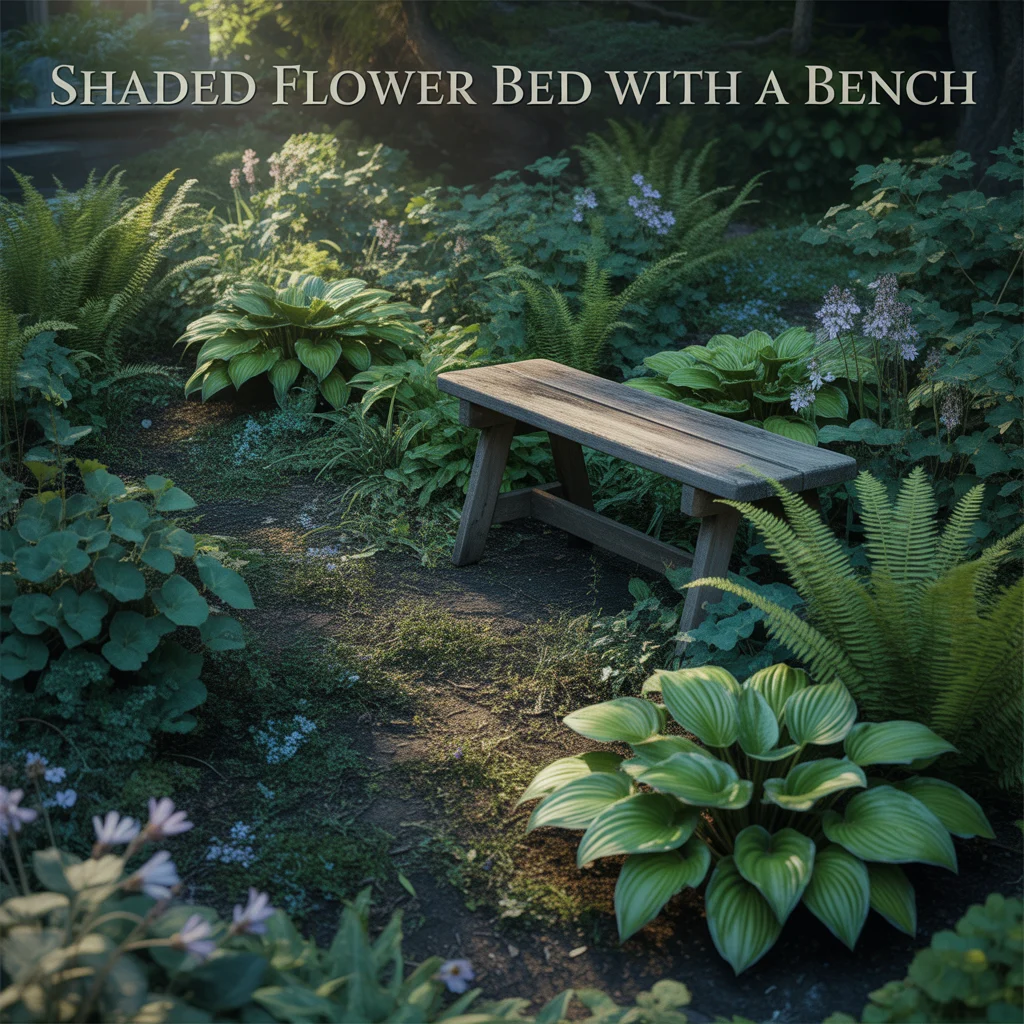
A shaded flower bed with a bench uses shade-tolerant flowering plants alongside a bench in a garden position receiving less than 4 hours of direct sun per day, creating a seated experience surrounded by the flowers, fragrance, and foliage of shade-adapted species. I planted a shaded flower bed around a bench under a mature apple tree canopy using Hydrangea arborescens Annabelle, Astilbe chinensis Purpurlanze, Hosta sieboldiana, and Sarcococca confusa, and the shaded flower bed produced a bench planting that outperformed every sunny flower bed with benches in the same garden in terms of seasonal visual interest per square foot of planted area throughout the full growing season.
Shade-Tolerant Flowers for a Shaded Bench Flower Bed
Hydrangea arborescens Annabelle, Astilbe chinensis Purpurlanze, and Digitalis purpurea are three shade-tolerant flowering plants suited to a shaded flower bed with benches. Hydrangea arborescens Annabelle produces large round white flower heads of 10 to 12 inches diameter from July to October in partial shade, providing the most visually dramatic flower display of any shade-tolerant plant at bench level. Astilbe chinensis Purpurlanze produces upright purple flower plumes at 3 to 4 feet from August to September, extending the shaded bench flower display into late summer. Digitalis purpurea produces tall flower spikes of 4 to 5 feet in partial shade from June to July alongside the bench position.
Winter Fragrance in a Shaded Bench Flower Bed
Sarcococca confusa, Hamamelis x intermedia, and Daphne mezereum are three winter-fragrant plants suited to a shaded flower bed with benches that provide year-round interest. Sarcococca confusa produces small white flowers with a vanilla fragrance in January and February at 18 inches height in full to partial shade, providing the most appreciated winter fragrance of any shade-tolerant plant at bench level in a shaded garden position. Hamamelis x intermedia produces spidery yellow or copper flowers with a sweet fragrance from December to March on a large shrub of 8 to 10 feet in partial shade. Daphne mezereum produces intensely fragrant pink flowers from February to March directly alongside the bench.
Fragrant Mindfulness Flower Bed With a Bench
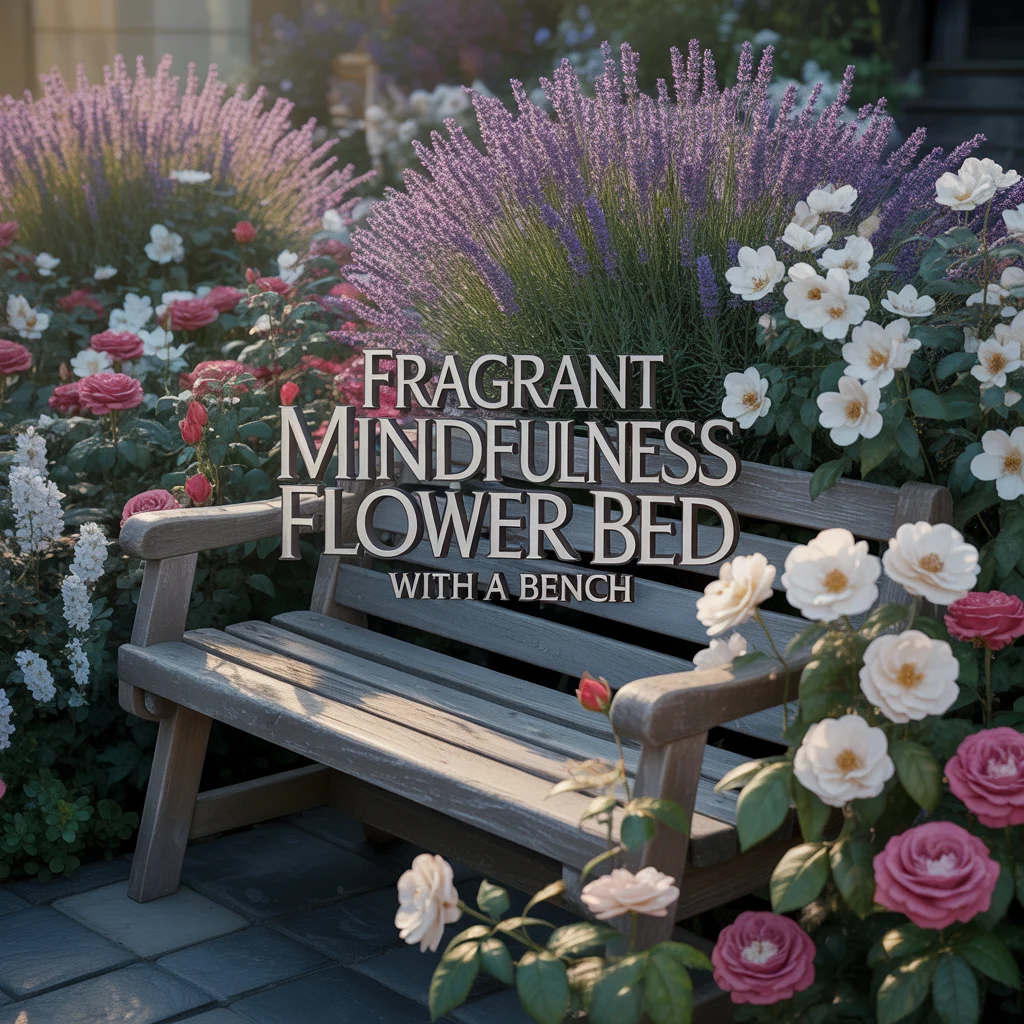
A fragrant mindfulness flower bed with a bench deliberately combines the most calming and intensely fragrant flower species around a quiet sheltered bench, creating a garden seating destination specifically designed for mindful resting, quiet contemplation, and sensory wellbeing. I designed a fragrant mindfulness bench flower bed for a homeowner who requested a garden space for daily mindfulness practice, using Lavandula angustifolia, Rosa Gertrude Jekyll, Sarcococca confusa, and Nicotiana sylvestris in a U-shaped planting around a simple teak bench, and the homeowner reported using the bench for a 15-minute daily sitting session from the day of completion through eight consecutive months of the first year.
Most Calming Flowers for a Mindfulness Bench Flower Bed
Lavandula angustifolia, Rosa Gertrude Jekyll, and Chamaemelum nobile are three flowers with calming properties suited to a mindfulness bench flower bed. Lavandula angustifolia provides a calming fragrance recognized in occupational therapy settings, with research published in the International Journal of Neuropsychopharmacology in 2014 identifying lavender fragrance as producing measurable reductions in anxiety levels in adults. Rosa Gertrude Jekyll provides the strongest old rose fragrance of any David Austin variety and the scent of roses is associated with stress reduction in multiple published fragrance studies. Chamaemelum nobile provides a sweet apple-like fragrance at ground level around the bench when lightly brushed during sitting.
Bench Design for a Fragrant Mindfulness Flower Bed
A simple undecorated teak bench, a curved bench, and a bench with a low back are three bench designs suited to a fragrant flower bed mindfulness space. A simple undecorated bench provides a seating surface without decorative complexity, suiting a mindfulness space where visual simplicity alongside the flower planting is the design intention. A curved bench of 5 to 6-foot length provides a seating form that encloses the user slightly on both sides, increasing the sense of being held within the fragrant flower bed. A bench with a low back of 12 to 18 inches provides lumbar support for extended sitting without the visual height of a full-back bench competing with the flower planting behind it.
Children’s Flower Bed With a Garden Bench
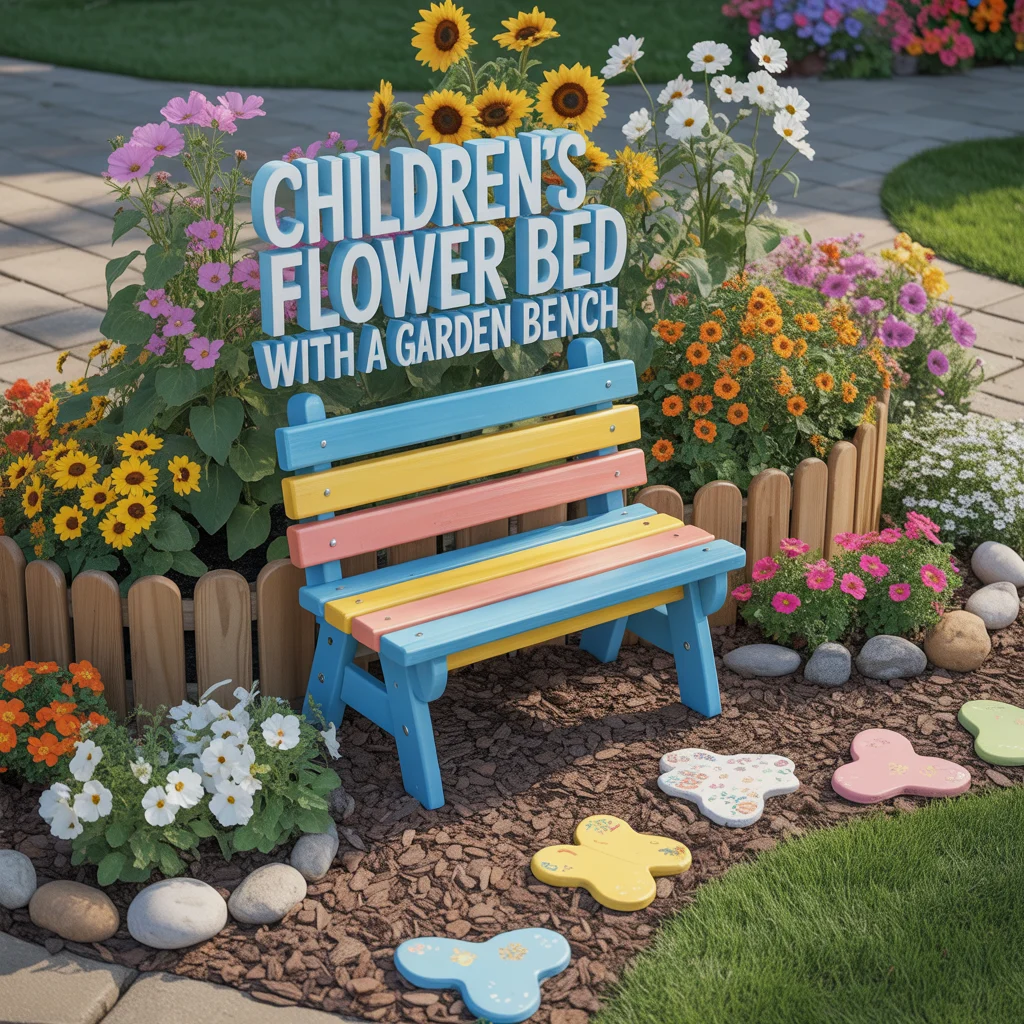
A children’s flower bed with a garden bench creates a child-scaled seating destination surrounded by child-safe, sensory, and edible flowering plants that engage children in outdoor planting, nature discovery, and garden sitting activities. I designed a children’s flower bed bench for a family garden using a low 14-inch bench surrounded by strawberries, nasturtiums, sunflowers, and Echinacea, and found the children used the bench as a base for nature observation activities including watching bees on the Echinacea and picking nasturtium flowers to taste from the seated bench position throughout the full summer season without any adult encouragement to do so.
Child-Safe Flowers for a Children’s Bench Flower Bed
Sunflowers, nasturtiums, and Echinacea purpurea are three child-safe flowering plants suited to a children’s flower bed with benches. Sunflowers produce the most visually dramatic child-engaging flower alongside a bench, growing to 4 to 8 feet from a seed sown in April and producing a large flower head by August that children can measure, track, and harvest seeds from while seated on the adjacent bench. Nasturtiums produce edible flowers in orange, yellow, and red that children can pick and taste directly from the seated bench position without any adult preparation. Echinacea purpurea attracts bees and butterflies to the bench area, providing a live nature observation from the seated position.
Bench Height for a Children’s Flower Bed
A bench seat height of 10 to 12 inches suits children aged 3 to 5 who can mount and dismount independently at this height. A seat height of 12 to 14 inches suits children aged 5 to 8 who benefit from a slightly higher position relative to their longer leg length. A seat height of 14 to 16 inches suits children aged 8 to 12 who are approaching adult proportions and find lower bench heights uncomfortable for sitting periods longer than 10 minutes in a flower bed garden setting. I build all children’s flower bed bench seats at 13 inches as the single compromise dimension suiting the widest age range from 4 to 10 years comfortably.
Four-Season Flower Bed With a Bench
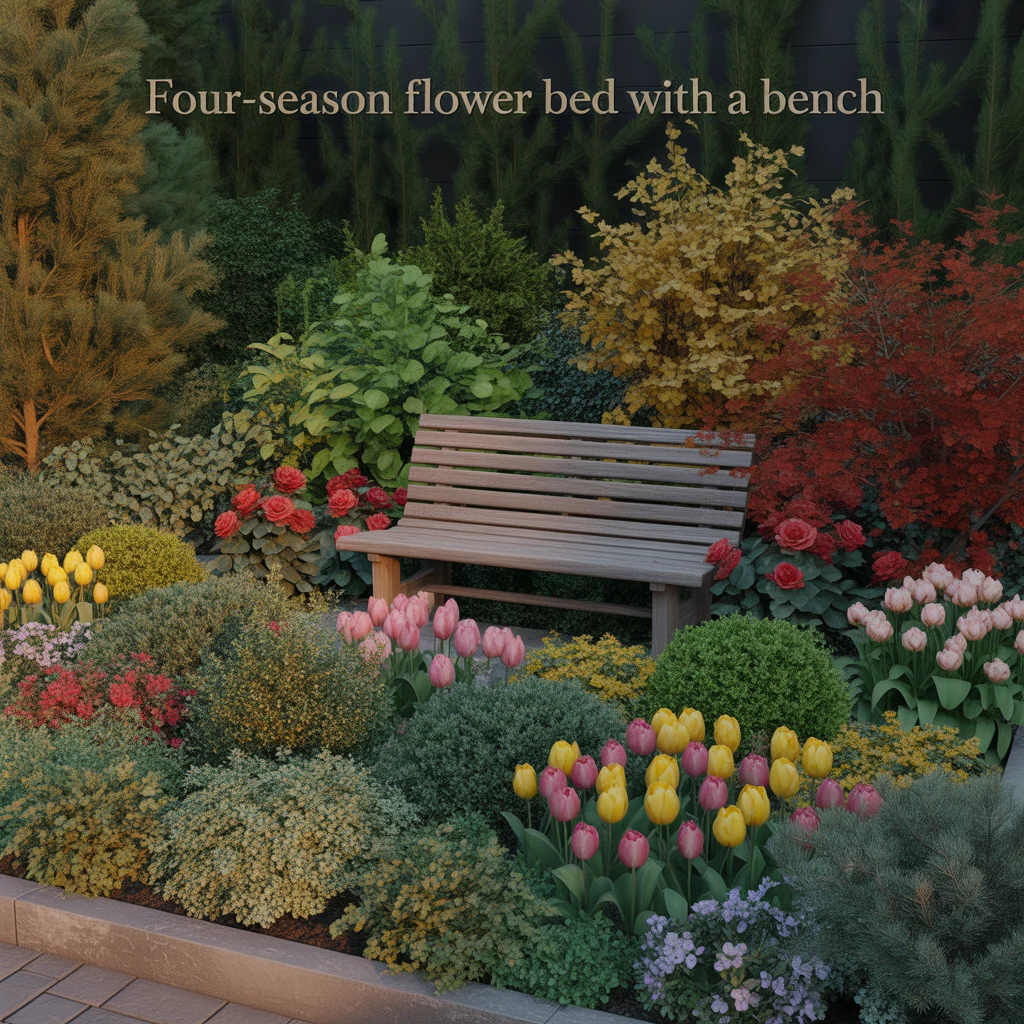
A four-season flower bed with a bench plans the surrounding planting across all four seasons to ensure some flowering plant provides visible colour, fragrance, or structural interest at the bench position in every month of the year. I designed a four-season flower bed bench at a residential project using Galanthus in February, Narcissus in March, Allium in May, Rosa in June, Echinacea in August, Aster in October, and Sarcococca from November through January, and the homeowner confirmed the bench provided something worthwhile at every visit throughout the entire first full year after the planting was completed.
Winter and Spring Interest for a Four-Season Bench Flower Bed
Galanthus nivalis, Helleborus niger, and Narcissus Tete-a-Tete are three plants suited to the winter and spring phase of a four-season flower bed with benches. Galanthus nivalis provides the first flower colour at the bench position from February to March at 6-inch height, giving the seated winter visitor a fragile, unexpected close-range flower display during the coldest months. Helleborus niger produces white flowers from December to February at 12 inches height directly alongside the bench. Narcissus Tete-a-Tete produces small yellow flowers from March to April at 6 inches directly around the bench base, transitioning from winter structure to the taller spring planting that follows throughout April and May.
Summer and Autumn Interest for a Four-Season Bench Flower Bed
Echinacea purpurea, Rudbeckia fulgida Goldsturm, and Aster x frikartii Monch are three plants suited to the summer and autumn phase of a four-season flower bed with benches. Echinacea purpurea provides pink cone flowers from July to September at 24 to 30 inches height at the bench mid-border level, attracting butterflies and bees to the bench position throughout late summer. Rudbeckia fulgida Goldsturm produces bright gold daisy flowers from August to October at 24 inches height alongside the bench, extending the flower display into early autumn with warm tones. Aster x frikartii Monch provides lavender-blue daisy flowers through October when most other bench planting has finished.
Memorial Flower Bed With a Bench
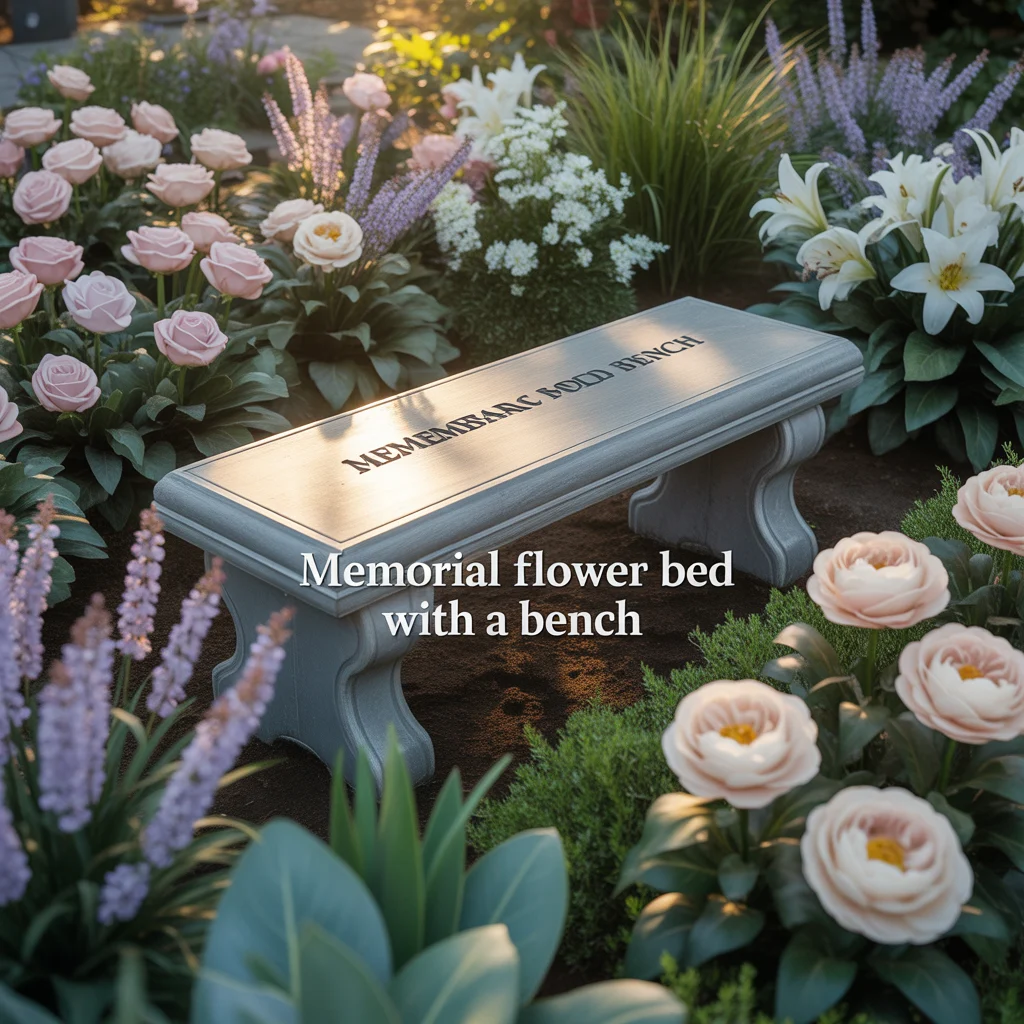
A memorial flower bed with a bench uses a dedicated bench with a commemorative plaque positioned within a personally meaningful flower planting to create a garden seating destination carrying emotional significance for the garden owner or their family, transforming a section of the flower garden into a place of quiet remembrance. I helped a homeowner design a memorial flower bed bench for her late husband who had loved roses, using a simple oak bench with a brass plaque surrounded by his three favorite varieties Rosa Graham Thomas, Rosa Gertrude Jekyll, and Rosa Munstead Wood, and the completed memorial flower bed with benches became the most visited and valued garden feature from the day of installation.
Meaningful Flowers for a Memorial Bench Flower Bed
Rosa Graham Thomas, Lavandula angustifolia, and Rosmarinus officinalis are three flowers with personal and symbolic associations suited to a memorial bench flower bed. Rosa Graham Thomas produces golden-yellow flowers with a strong tea rose fragrance from June to October at 4 feet height, providing a warm positive seasonal display at a memorial bench without the heavier emotional associations of deeper red or purple roses. Lavandula angustifolia provides a calming, meditative fragrance alongside the bench that suits the quiet reflective purpose of a memorial garden seating position throughout the growing season. Rosmarinus officinalis carries the traditional association with remembrance and provides aromatic year-round planting.
Plaque Options for a Memorial Bench in a Flower Bed
A brass plaque on the bench back rail, a carved timber inscription, and a separate stone plaque in the flower bed ground are three options suited to a memorial bench within a flower bed. A brass plaque of 3 by 5 inches on the bench back rail provides the most understated and classically appropriate memorial inscription for a flower bed bench, with professional engraving costing $45 to $80. A carved timber inscription uses a router or chisel to carve text directly into the bench back rail, providing a more organic personal alternative to a separately attached metal plaque. A separate stone plaque set into the flower bed ground provides an additional memorial element visible from the seated bench position.
Sensory Accessible Flower Bed With a Bench
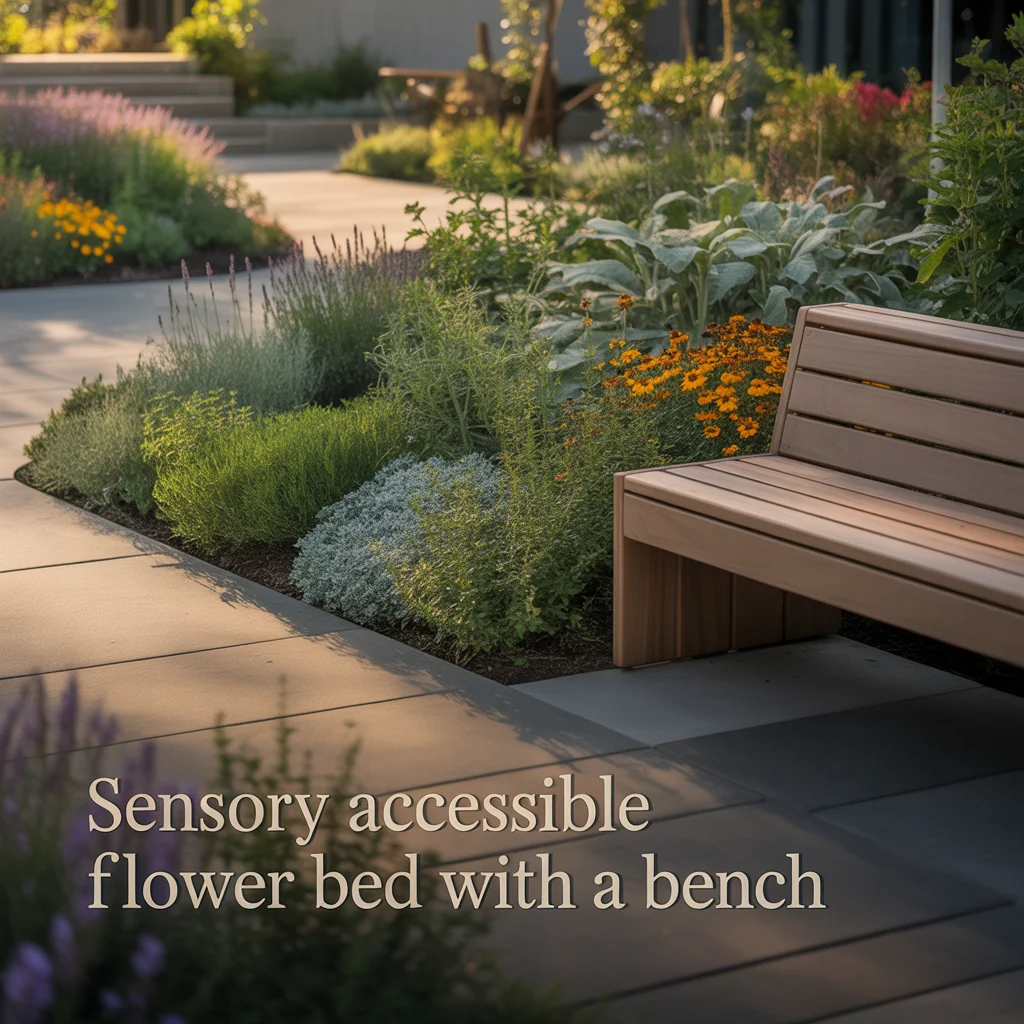
A sensory accessible flower bed with a bench positions the seating at the center of a specifically planned sensory planting designed to be fully experienced from a seated position, with all flowering plants selected and positioned at heights accessible to seated adults including those using wheelchairs or having limited mobility. I designed an accessible sensory flower bed bench for an elderly homeowner with limited mobility, planting the full bed at heights between 6 and 24 inches from ground level using fragrant, textural, and visually stimulating species throughout this range, creating a flower bed with benches that provided a complete sensory garden experience from a stationary seated position.
Accessible Planting Heights for a Sensory Bench Flower Bed
Ground-level plants of 6 to 8 inches, mid-height plants of 12 to 18 inches, and reach-height plants of 18 to 24 inches are three planting categories suited to an accessible sensory flower bed with benches. Ground-level plants including Thymus serpyllum and Dianthus provide fragrance and texture at ground level within easy visual range of a seated person. Mid-height plants of 12 to 18 inches including Lavandula angustifolia and Salvia nemorosa provide the core flower display at bench arm and knee level within touching distance of a seated person. Reach-height plants of 18 to 24 inches provide the upper flower bed layer accessible with a gentle forward lean from the bench seat.
Sensory Flowers for an Accessible Bench Flower Bed
Lavandula angustifolia, Stachys byzantina, and Dianthus barbatus are three sensory flowers suited to an accessible flower bed with benches. Lavandula angustifolia provides both a calming fragrance at seated arm level and a distinctive soft velvety leaf texture when touched, delivering two simultaneous sensory stimuli from the bench seated position. Stachys byzantina, lamb’s ear, produces intensely soft woolly silver leaves at 6 to 8 inches height, providing the most distinctive tactile sensory stimulus of any flowering plant suitable for a ground-level accessible bench flower bed position. Dianthus barbatus provides a sweet clove fragrance and bright color at 12 to 18 inches height directly alongside the bench.
Budget Flower Bed With a Bench
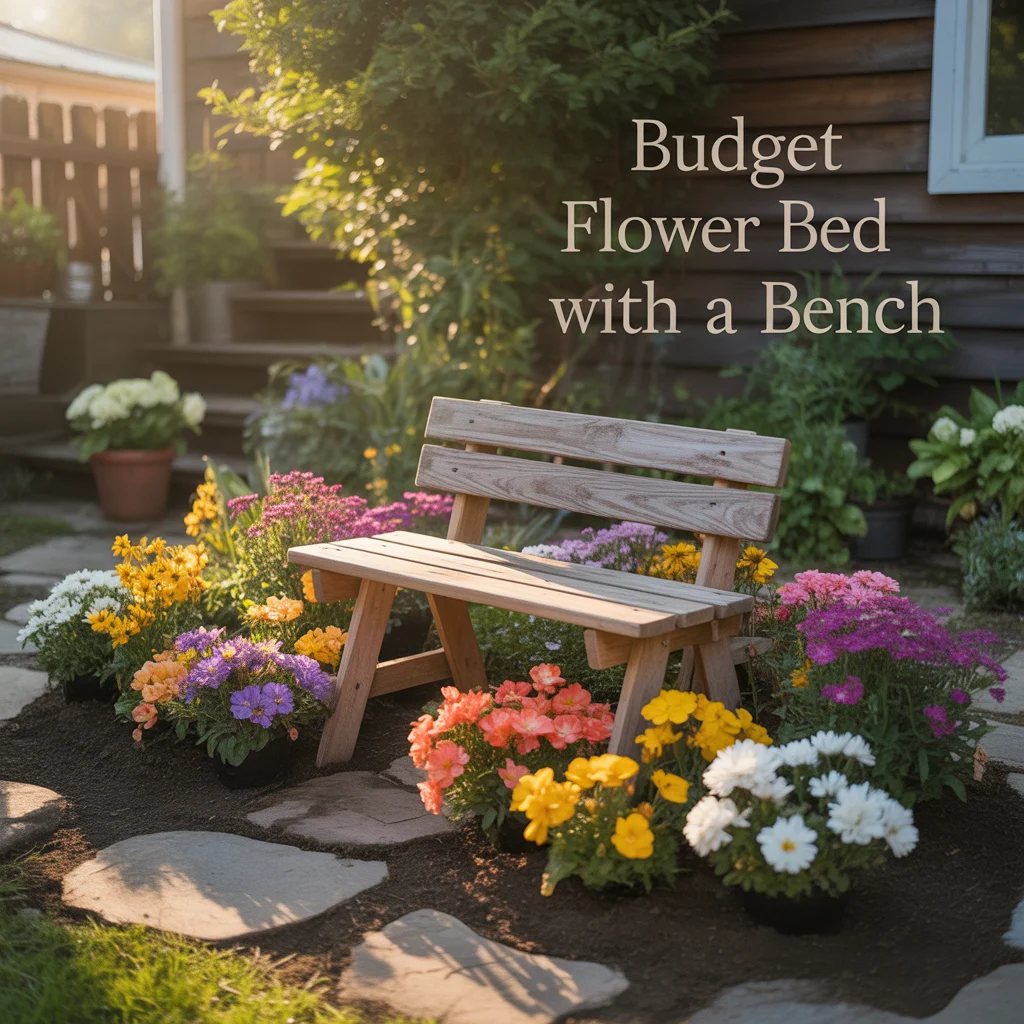
A budget flower bed with a bench creates a complete attractive and functional flowering garden bench destination for under $60 in total materials using a reclaimed or DIY bench, direct-sown annual flower seeds, and divided perennial plants from elsewhere in the garden. I created a complete flower bed with benches for $45 using a reclaimed timber plank bench sourced free from an online listing, $12 in annual flower seeds including cosmos, nasturtiums, and sunflowers, and divided Geranium rozanne and Alchemilla mollis from established plants already growing in the garden, and the flower bed bench produced a photographically attractive garden feature throughout the full summer season at genuinely minimal cost.
Free and Low Cost Flowers for a Budget Bench Flower Bed
Self-seeding annuals, divided perennials, and free bulbs from garden division are three zero-cost flower sources suited to a budget flower bed with benches. Self-seeding annuals including Erigeron karvinskianus, Alcea rosea hollyhocks, and Aquilegia vulgaris establish freely from seed dropped by existing garden plants and can be transplanted as seedlings to the new bench flower bed at zero material cost. Divided perennials including Geranium rozanne, Nepeta x faassenii, and Salvia nemorosa are produced by lifting and splitting established clumps from elsewhere in the garden in spring, providing free flowering plants for the new bench flower bed. Free bulbs from garden division provide spring colour.
DIY Bench Options for a Budget Flower Bed
A reclaimed timber plank bench, a railway sleeper bench, and a brick and stone slab bench are three DIY bench options suited to a budget flower bed with benches. A reclaimed timber plank bench uses two log sections as legs and a single wide plank as the seat surface, costing $0 from a felled garden tree or $15 to $25 in reclaimed timber from an online listing. A railway sleeper bench uses two half-sleeper sections as legs and a full sleeper on edge as the seat surface at $25 to $45 in reclaimed sleeper materials. A brick and stone slab bench uses two stacked brick columns as legs and a natural stone slab as the seat, providing a permanent low-cost flower bed bench.
Painted Bench in a Flower Bed
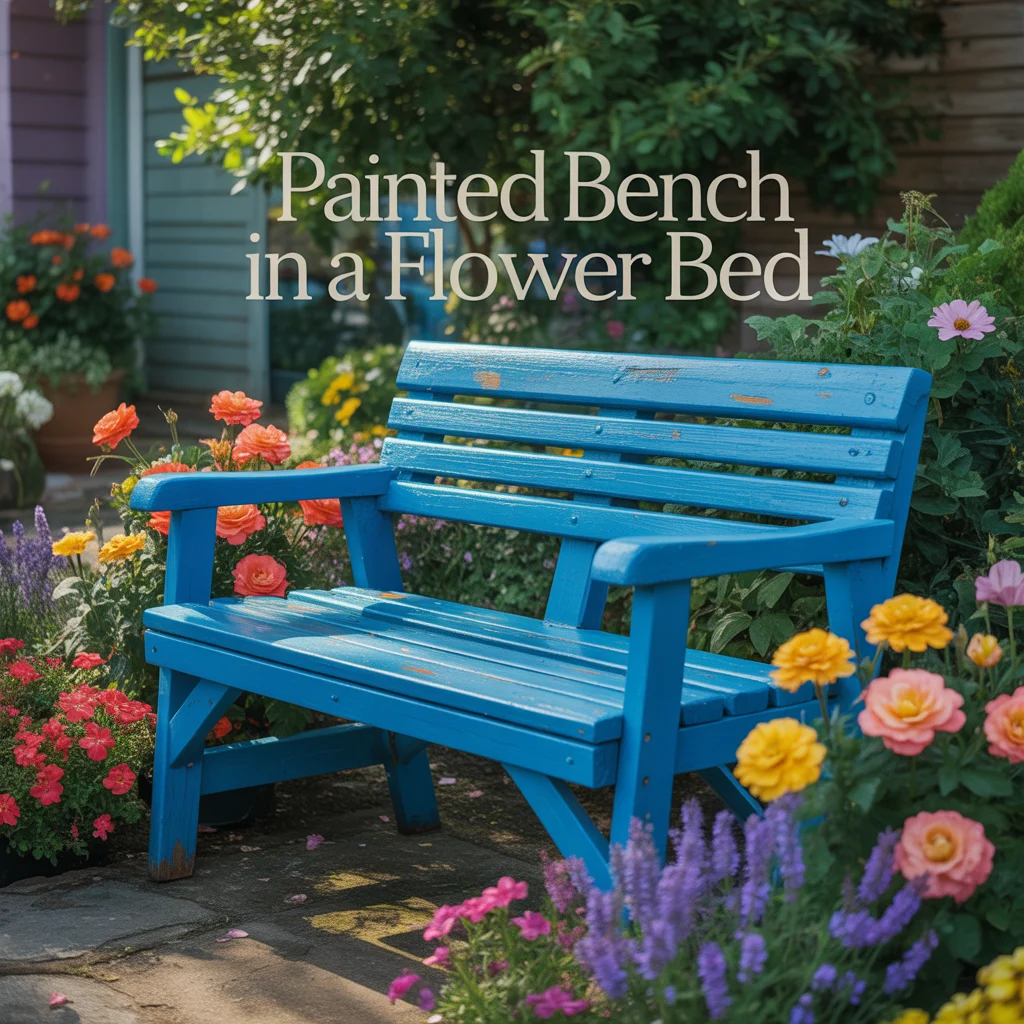
A flower bed with a painted bench uses exterior wood paint in a carefully chosen color to create a visual connection between the bench and the surrounding planting, turning the bench color itself into a design element that coordinates with, contrasts against, or complements the flower colors in the adjacent bed. I painted a plain softwood bench in deep sage green alongside a flower bed of Rosa Gertrude Jekyll and Lavandula angustifolia Hidcote, and the sage green bench color coordinated so precisely with the silver-green lavender foliage that the bench appeared to grow out of the flower bed rather than sitting beside it, which was the most visually resolved flower bed with benches result I have achieved using color selection alone.
Paint Colors for a Bench in a Flower Bed
Sage green, slate blue, and deep red oxide are three paint colors suited to a bench within a flower bed. Sage green in a muted grey-toned tone coordinates with lavender foliage, Stachys byzantina silver leaves, and most garden foliage, making it the most universally suited bench color for a flower bed with benches in a cottage or informal garden design. Slate blue in a muted grey-blue tone coordinates with the purple and blue flower tones of Lavandula, Salvia, Nepeta, and Agapanthus alongside the bench. Deep red oxide coordinates with warm-toned flower colors including orange roses, Helenium, and Rudbeckia in a hot-colored flower bed with benches design.
Exterior Paint Finishes for a Garden Flower Bed Bench
Microporous exterior wood paint, exterior satin paint, and exterior chalk paint sealed with varnish are three paint finish options for a bench in a flower bed. Microporous exterior wood paint allows moisture vapor to pass through the film, preventing the blistering and peeling that standard gloss produces on outdoor timber within two to three years in a flower bed position where surrounding planting creates humid conditions around the bench. Exterior satin paint provides a low-sheen finish that suits a bench in a flower bed better than a high-gloss finish, which can look clinical against natural flower planting. Exterior chalk paint provides the most matte heritage-appropriate finish for a bench in a cottage flower bed.
Flower Bed With a Bench at the Path Terminus
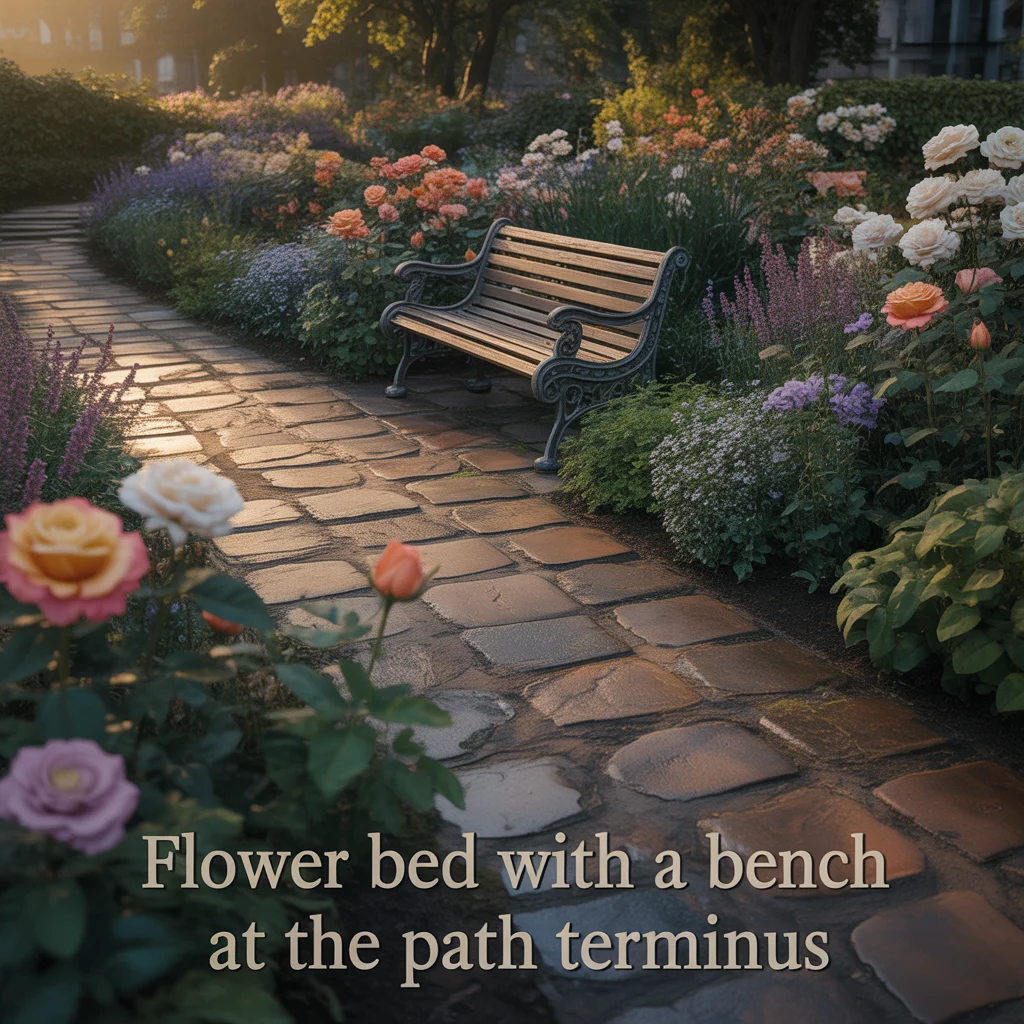
A flower bed with a bench at the path terminus positions the bench within a flower bed at the far end of a garden path, creating a combined flower and seating destination that gives the path a clear visual terminus and rewards the person who walks the full path length with a seated position surrounded by flower planting. I designed this combination at a 35-foot formal garden path project, positioning a teak bench within a circular flower bed of 8-foot radius at the path terminus, planted with Rosa Gertrude Jekyll on the outer arc, Agapanthus at mid-height, and Alchemilla mollis at bench base level, producing a garden path destination of complete visual and sensory quality from arrival to seated experience.
Flower Bed Shapes for a Path Terminus Bench
A circular flower bed, a semicircular apse flower bed, and a rectangular U-shaped flower bed are three shapes suited to a bench at a path terminus. A circular flower bed of 8 to 10-foot diameter with the bench at the center provides the most formally resolved path terminus flower bed and bench combination, with the circular planting surrounding the bench equally on all sides and the path arriving through a break in the circle at the path entrance side. A semicircular apse flower bed curves around the bench on three sides with the fourth side open to the path approach, providing a partially enclosed flower bed bench terminus. A rectangular U-shaped flower bed encloses the bench on three sides with the path arriving at the open fourth side.
Plants for a Flower Bed Bench at a Path Terminus
Rosa Gertrude Jekyll, Agapanthus Headbourne Hybrids, and Alchemilla mollis are three plants suited to a flower bed surrounding a bench at a garden path terminus. Rosa Gertrude Jekyll provides a tall fragrant backdrop at 4 feet height behind the terminus bench, creating a flowering wall of deep pink blooms visible from 30 to 40 feet along the path approach. Agapanthus Headbourne Hybrids provide a bold mid-height flower display at 3 feet on both sides of the bench terminus from July to September. Alchemilla mollis provides a low weed-suppressing base planting at bench foot level that conceals any bare soil in the terminus flower bed directly around the bench leg positions.
Related
best outdoor garden bench ideas for flower bed placement
how to use pots around a flower bed bench arrangement
garden bench landscaping ideas for flower bed integration
Frequently Asked Questions
What flowers look best in a flower bed with benches?
Lavender, roses, and Geranium rozanne are the three best flowers for a flower bed with benches because all three provide long flowering seasons of 3 to 5 months, suit the close-range sensory experience of a seated garden position, and grow to heights of 18 to 48 inches that frame the bench without obstructing the seated view. Lavender provides fragrance at seated nose level throughout June to August. Roses provide both fragrance and large flower forms at shoulder and eye height. Geranium rozanne provides continuous ground-level color from June to October directly at bench base and path edge level throughout the full growing season.
How far should a bench be from a flower bed?
A bench sits most effectively at 12 to 18 inches from the nearest flower planting when flowers are planted alongside the bench, providing close-range sensory access to fragrance and color without physical contact between plants and the seated person during normal sitting and standing movements. Thorned roses require a minimum 18-inch clearance from the bench face. Thornless species and soft-stemmed perennials tolerate 12-inch clearance without discomfort. A bench positioned more than 36 inches from the nearest flower planting loses the close-range flower bed relationship and reads as a separate garden element rather than a bench genuinely within or alongside a flower bed design.
What is the best bench material for a flower bed?
Weathered teak is the best bench material for a flower bed because it requires no annual maintenance, develops a silver-grey patina that coordinates with most flower bed planting colors, and provides a 25 to 40-year outdoor lifespan in the moist conditions common directly alongside a planted flower bed. Recycled plastic lumber provides a completely maintenance-free alternative at 25 to 50-year lifespan for a flower bed bench where zero annual maintenance is the absolute priority. Painted softwood provides the most versatile material where the bench color is intended to coordinate deliberately with the specific flower colors in the adjacent planting scheme throughout the season.
How do I protect a bench in a flower bed from moisture damage?
A bench in a flower bed is protected from excessive moisture by raising the bench legs on 2-inch gravel pads, maintaining 12 to 18 inches of clear air between the bench seat and the nearest plant stem, and using teak, recycled plastic, or powder-coated metal rather than untreated softwood as the bench material. Gravel pads beneath each bench leg prevent timber from sitting in wet soil that accelerates decay at the leg base. Clear air around the bench seat prevents prolonged contact with wet foliage that keeps timber permanently damp and reduces its outdoor service life significantly. Teak and recycled plastic naturally resist the increased moisture levels present in a flower bed environment.
Can I build a raised flower bed with an integrated bench seat?
A raised flower bed with an integrated bench seat is built by extending the side walls of the raised bed outward by 18 inches on both ends to create seat platforms at 17-inch height, using the same material as the raised bed wall for structural and visual consistency. The seat platform boards are fixed to the wall extension using 3-inch galvanized screws at 6-inch intervals, and all exposed seat surfaces are sanded smooth to prevent splinter risk. I build raised flower bed bench combinations from 3-inch-thick oak or pressure-treated softwood boards, both of which provide the structural depth needed for a stable long-lasting combined raised flower bed and integrated bench seat installation.