
20 Garden Paths With Rose Arches for Special Walks

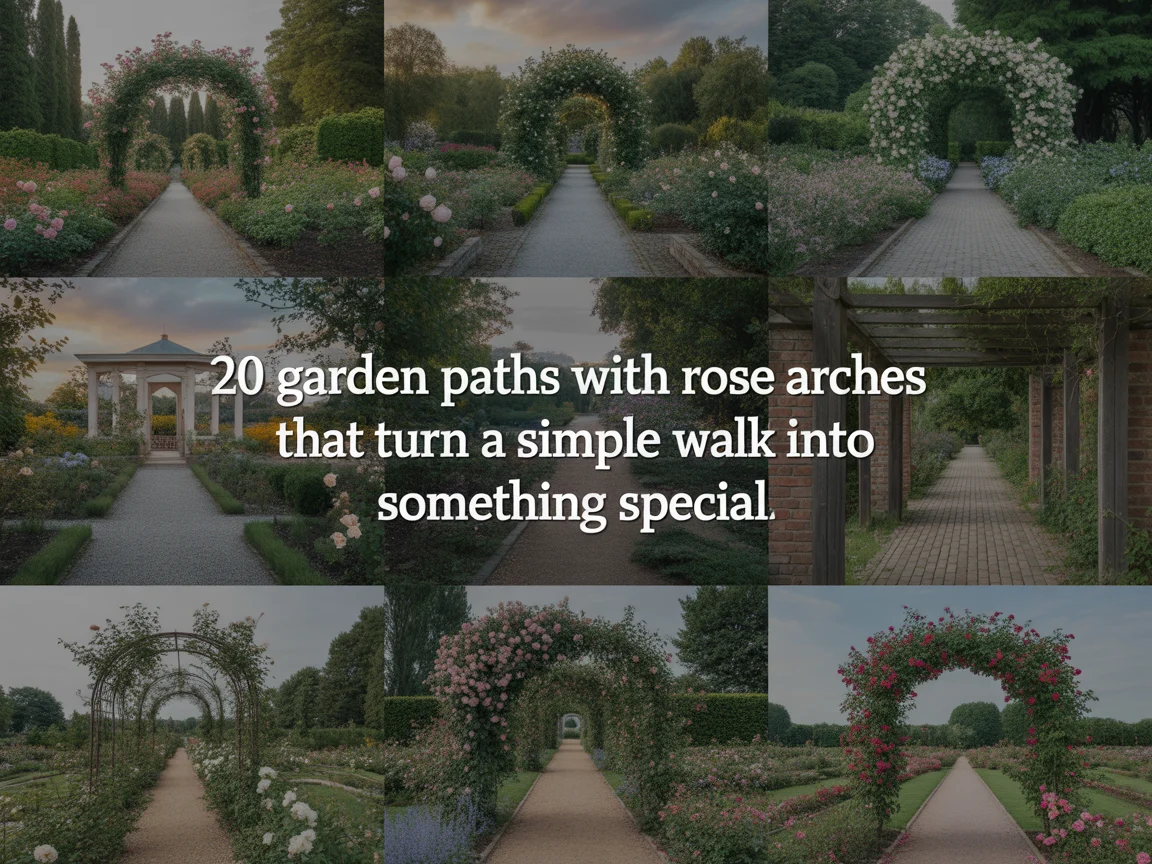
I walked through a rose arch on a garden path for the first time at a heritage garden open day, and I stopped halfway through just to look up. The arch above me was completely covered in pale pink Rosa New Dawn, the flowers were hanging at face level, and the scent was strong enough that I stood there for a full minute before the person behind me politely cleared their throat. That was the moment I understood why garden paths with rose arches appear in practically every cottage garden photograph ever taken.
Since that first experience, I have planted, built, and studied rose arch path designs across many different garden styles and sizes. I have seen a single rose arch work as a powerful entrance feature on a 10-foot front garden path, and I have seen ten consecutive arches create a full tunnel effect over a 60I walked through a rose arch on a garden path for the first time at a heritage garden open day, and I stopped halfway through just to look up. The arch above me was completely covered in pale pink Rosa New Dawn, the flowers were hanging at face level, and the scent was strong enough that I stood there for a full minute before the person behind me politely cleared their throat. That was the moment I understood why garden paths with rose arches appear in practically every cottage garden photograph ever taken.
Garden paths with rose arches combine a directional walkway with one or more curved overhead structures covered in climbing r-foot kitchen garden walkway.
In this article, I am sharing 20 garden paths with rose arches that I have either created myself or studied closely enough to recommend with complete confidence.
Classic Cottage Garden Path With a Single Rose Arch
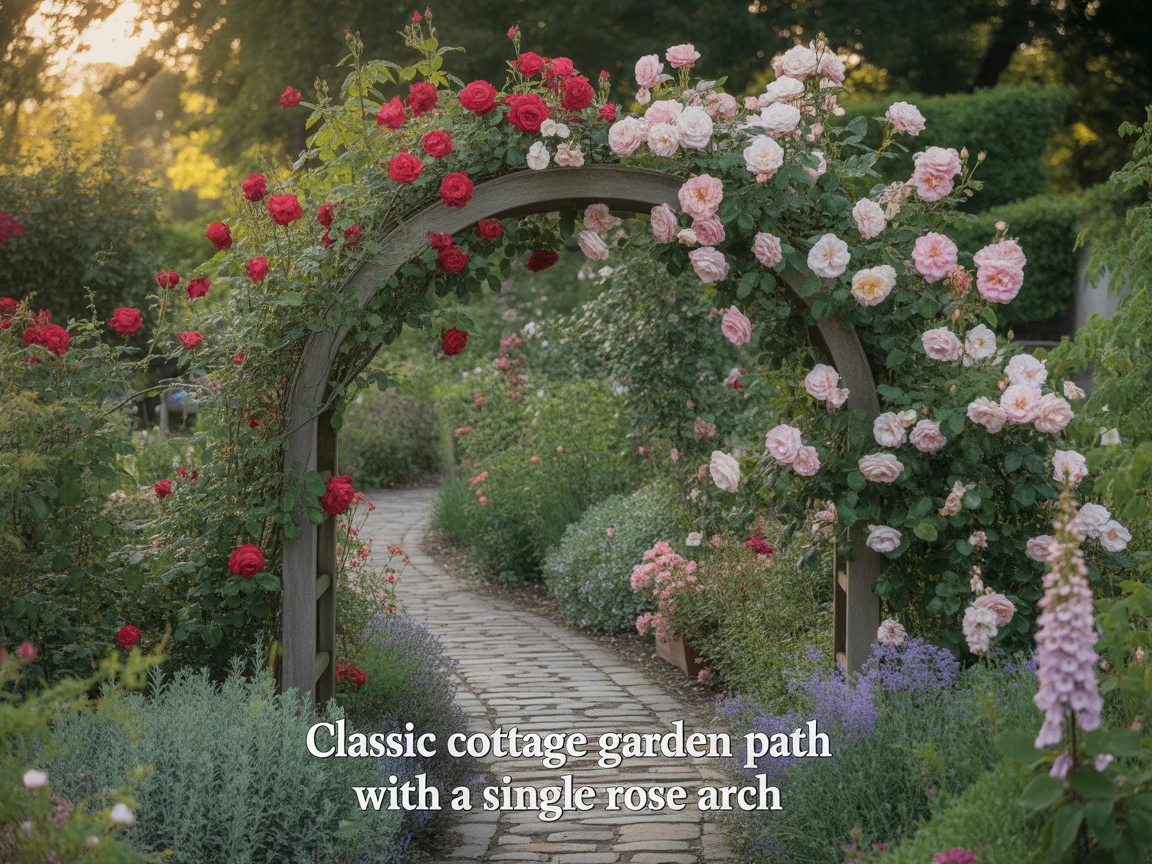
A classic cottage garden path with a single rose arch places one arched structure at the entrance to the garden path, marking the transition from the public space outside to the private garden within. This is the most widely planted version of garden paths with rose arches, and it suits front gardens, side entrances, and internal garden divisions equally well. I installed a single painted steel rose arch at the entrance to my front garden path four years ago and planted Rosa Zephirine Drouhin on both posts in the same week. By the third season, the arch was fully covered in deep pink flowers from June to September, and the scent reached the pavement 15 feet away on warm mornings.
Best Rose Arch Materials for a Single Entrance Arch
Painted steel, powder-coated aluminium, and pressure-treated timber are three materials suited to a single rose arch on a cottage garden path. Painted steel arches cost $45 to $120 and suit a cottage garden path where the arch will be completely covered by climbing rose growth within two to three seasons, making the material largely invisible under the plant. Powder-coated aluminium arches cost $80 to $180 and last longer than painted steel without rust forming at the weld points where paint chips. Pressure-treated timber arches cost $90 to $220 and suit a cottage garden path where the structure itself is visible as a design feature before the rose establishes full coverage.
Positioning a Single Rose Arch on a Garden Path
A single rose arch on a garden path sits most effectively when its center aligns precisely with the path’s center line, with the arch legs positioned 6 inches outside the path edge on each side. This placement allows the climbing rose canes to grow inward over the arch top without hanging down into the walking space below the arch until they have reached sufficient length. I positioned my own arch with the legs 8 inches outside the path edge, which gave the rose canes enough lateral growing space to spread across the full arch width before turning inward at the top, producing a denser coverage of the overhead section within two seasons than a tighter placement would have achieved.
Brick Path With a Series of Rose Arches
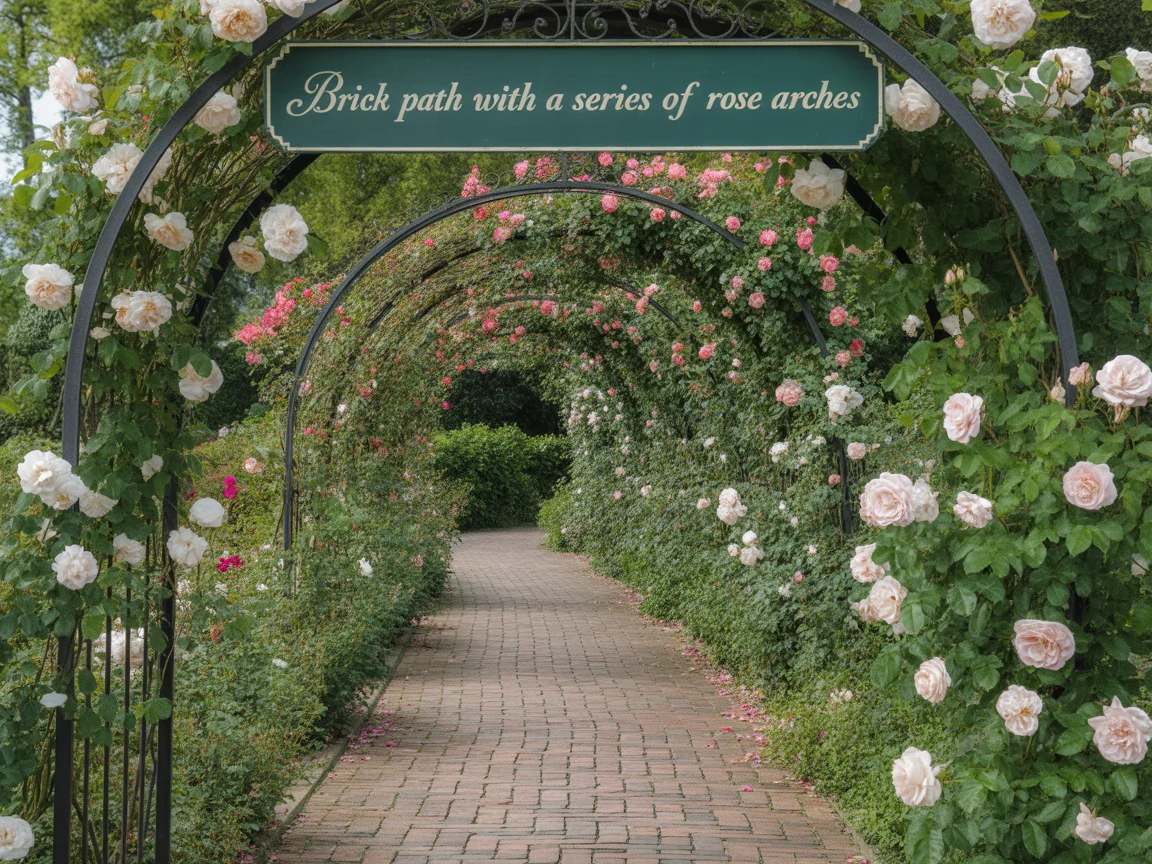
A brick path with a series of rose arches uses multiple arched structures placed at regular intervals along the full length of the walkway to create a covered corridor effect in which the path passes beneath a continuous sequence of flowering overhead frames. I saw this design at a walled kitchen garden where seven painted steel arches were placed at 8-foot intervals over a 56-foot brick path, each planted with a different climbing rose variety, so the flowering sequence moved along the arch series from one end to the other as different varieties reached their peak at slightly different times through June and July.
Spacing Rose Arches Along a Brick Garden Path
Rose arches along a brick garden path are spaced most effectively at intervals of 6 to 10 feet between each arch, measured from the center of one arch to the center of the next. Spacing of 6 feet produces a closely sequenced series where the rose growth from adjacent arches overlaps at the midpoint between them within three to four seasons, creating a near-continuous overhead canopy. Spacing of 10 feet produces a series of clearly individual arch features with open sky visible between them, which suits a longer path where a full tunnel effect would make the walkway feel excessively enclosed. I used 8-foot spacing on a six-arch brick path project and found the resulting coverage balanced between a defined tunnel and an open path after four growing seasons.
Brick Path Surfaces That Suit a Rose Arch Series
Reclaimed clay bricks, new terracotta pavers, and tumbled red sandstone setts are three path surfaces suited to a brick garden path with a series of rose arches. Reclaimed clay bricks in a stretcher bond or herringbone pattern produce a warm, aged surface that suits the cottage garden aesthetic most commonly associated with rose arch path designs. New terracotta pavers produce a more uniform color and suit a formal or symmetrical rose arch series where consistency of the path surface reinforces the regular spacing of the arches above it. Tumbled red sandstone setts produce the most textured and organic surface of the three options and suit a rose arch path in an informal or country garden setting.
Gravel Path With Painted White Rose Arches
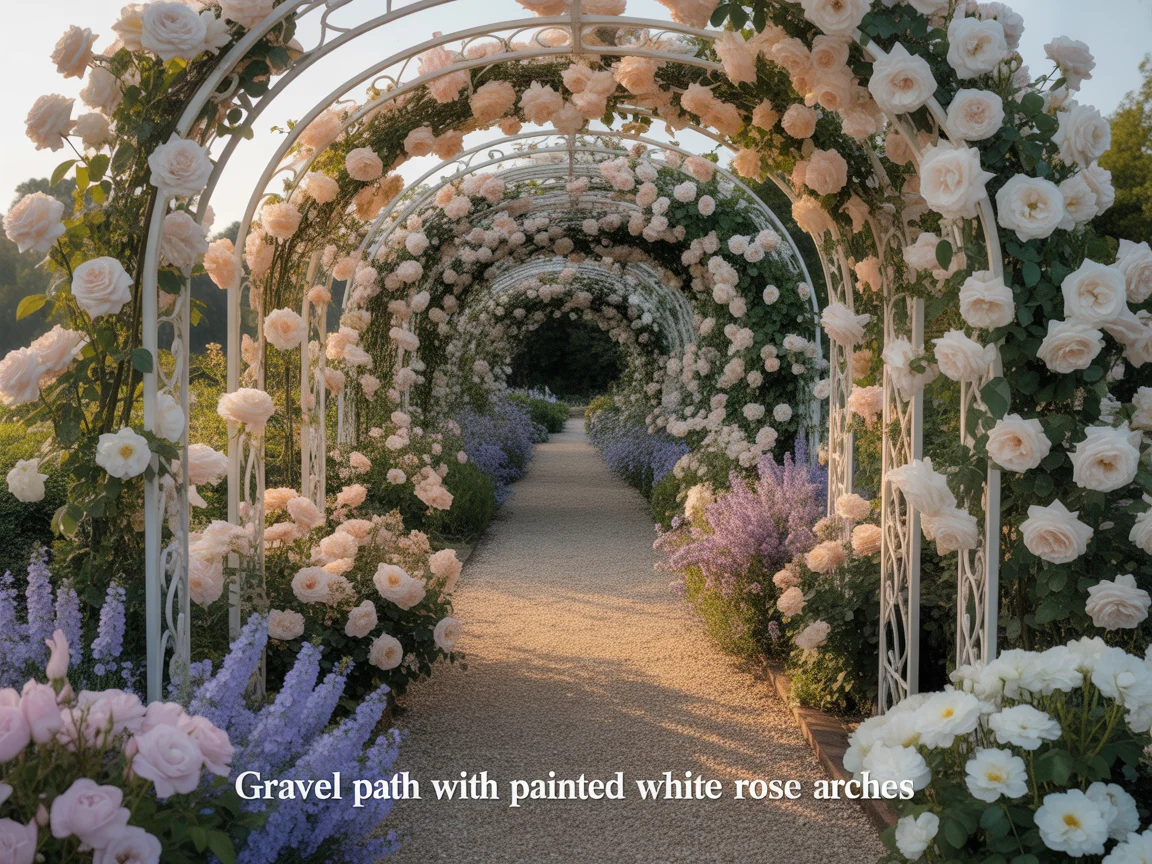
A gravel path with painted white rose arches is the combination I personally find most effective for a small to medium cottage garden because the white paint of the arch structure is visible and decorative even before the climbing roses establish full coverage, and the pale gravel surface below reflects enough light to make the whole path feel open and bright. I created this combination in my own garden using three white-painted steel arches at 7-foot intervals over a 21-foot pea gravel path and planted Rosa Iceberg, a white repeat-flowering climbing rose, on all six arch legs. The all-white color scheme of arch and flower produced a clean, coherent garden path design that photographed well in every season.
White Paint Finishes for a Rose Arch Garden Path
Gloss white, satin white, and matt white are three paint finishes used on rose arch structures over a gravel garden path. Gloss white produces the most reflective surface and keeps the arch looking clean and fresh longest between repaints, though it shows rust spots and chips more visibly than lower-sheen finishes. Satin white produces a mid-level sheen that suits a cottage garden setting better than full gloss and hides minor surface imperfections more effectively. Matt white produces the softest appearance and suits a rustic or informal rose arch path design where a fully polished surface would look out of place. I used satin white on my own arches and found the finish lasted four years before requiring a light sanding and recoat.
Gravel Depths and Sub-Bases for a Rose Arch Path
A gravel path beneath rose arches requires a minimum depth of 2 inches of gravel over a heavy-duty weed-suppressing membrane laid on a compacted sub-base of 3 inches of hardcore. The membrane is essential on a rose arch path because the arch leg planting pockets are cut through the membrane at the installation stage, and any membrane gaps allow weed growth directly at the base of the arch legs where it is most difficult to remove without disturbing the rose roots. I use a woven polypropylene membrane rated at 100 grams per square meter on gravel rose arch paths and find zero weed penetration through the membrane after four years, with the only weed growth occurring in the arch leg planting pockets as expected.
Stepping Stone Path With a Rose Arch Entrance
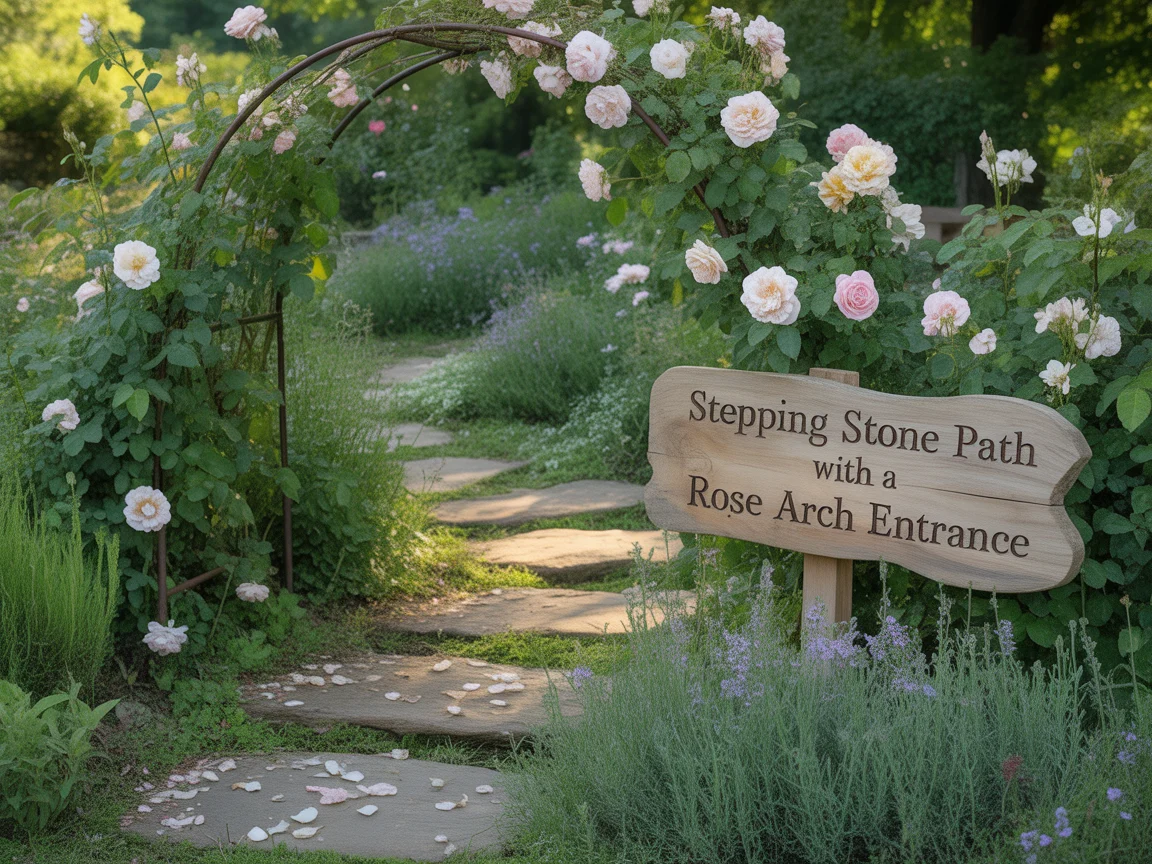
A stepping stone path with a rose arch entrance uses large individual stones set in grass or ground cover to lead to a single rose arch that marks the beginning or end of the stepping stone walkway. I planted this combination in the side section of my garden using 20-by-20-inch slate stepping pads set in a lawn at 14-inch intervals, leading to a timber rose arch planted with Rosa Albertine on both legs. The warm copper-pink flowers of Albertine against the dark grey slate stepping stones produced one of the most photographed areas of my garden in June when the rose reaches its single annual flowering peak.
Stepping Stone Materials That Suit a Rose Arch Path
Riven slate, natural sandstone, and sawn granite are three stepping stone materials that suit a garden path with a rose arch entrance. Riven slate in dark blue-grey tones creates a strong color contrast with the warm pinks and reds of climbing roses and costs $8 to $16 per 20-by-20-inch pad. Natural sandstone in buff or honey tones produces a warm surface color that complements both pale and deep rose flower colors and costs $10 to $20 per 20-by-20-inch pad. Sawn granite in light grey produces a very flat, stable stepping surface that suits a formal rose arch entrance where the clean geometry of the stone suits a more structured design intent.
Ground Cover Between Stepping Stones Beneath a Rose Arch
Creeping thyme, chamomile, and mind-your-own-business are three ground cover plants suited to the gaps between stepping stones on a path leading to a rose arch. Creeping thyme produces small pink flowers in June that coincide with the main rose flowering season, creating a coordinated planting display from ground level to arch height simultaneously. Chamomile produces small white daisy flowers and releases a pleasant fragrance when lightly trodden, adding a second scent layer to the rose fragrance already present at arch height. Mind-your-own-business produces a dense bright green mat that fills stone gaps within one season and suits a shaded path section beneath an established rose arch.
Formal Symmetrical Path With Matching Rose Arches
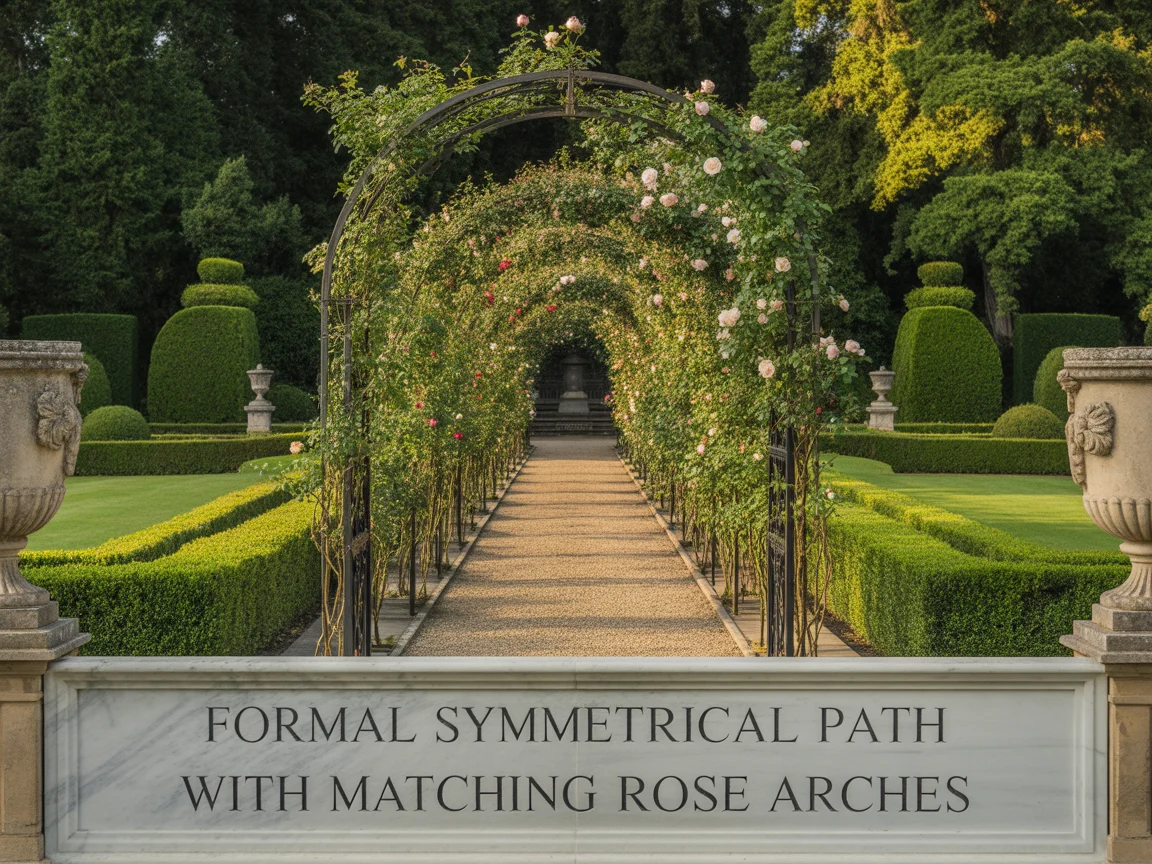
A formal symmetrical garden path with matching rose arches places identical arch structures at equal intervals on a straight path, with the same climbing rose variety planted on every arch leg, to create a unified, repeating overhead feature that reinforces the formal character of the garden design. I visited a formal walled garden where four matching black powder-coated steel arches were placed at 10-foot intervals over a 40-foot York stone path, each planted with Rosa Tuscany Superb on the outer legs and Rosa Veilchenblau on the inner legs, producing a deliberate color graduation from deep crimson at the path edges to purple-violet at the arch tops.
Achieving Symmetry in a Rose Arch Garden Path
Symmetry on a formal rose arch garden path requires three elements to be consistent across all arches: identical arch dimensions, identical planting on matching positions of every arch, and identical spacing between each arch measured to within 1 inch. I set out the arch positions on a formal path project using a measuring tape and string lines stretched between two fixed points at each end of the path, marking each arch position on the path surface with chalk before driving any posts. This preparation took 45 minutes but produced an arch spacing accurate to within 0.5 inches across a 50-foot path length, which is the level of precision needed for the symmetrical effect to read correctly from the path entrance.
Climbing Rose Varieties for a Formal Symmetrical Path
Rosa Tuscany Superb, Rosa Veilchenblau, and Rosa Blush Noisette are three climbing rose varieties suited to a formal symmetrical rose arch garden path. Rosa Tuscany Superb produces semi-double deep crimson flowers with prominent yellow stamens in a single June flowering and grows to 8 feet, covering a standard arch fully within three seasons. Rosa Veilchenblau produces clusters of small purple-violet flowers in June and July and is one of the few climbing roses that tolerates partial shade, which suits a formal path with tall hedging on both sides. Rosa Blush Noisette produces pale pink flowers repeatedly from June to October and grows to 10 feet, providing the longest flowering season of the three varieties.
Narrow Side Garden Path With a Compact Rose Arch
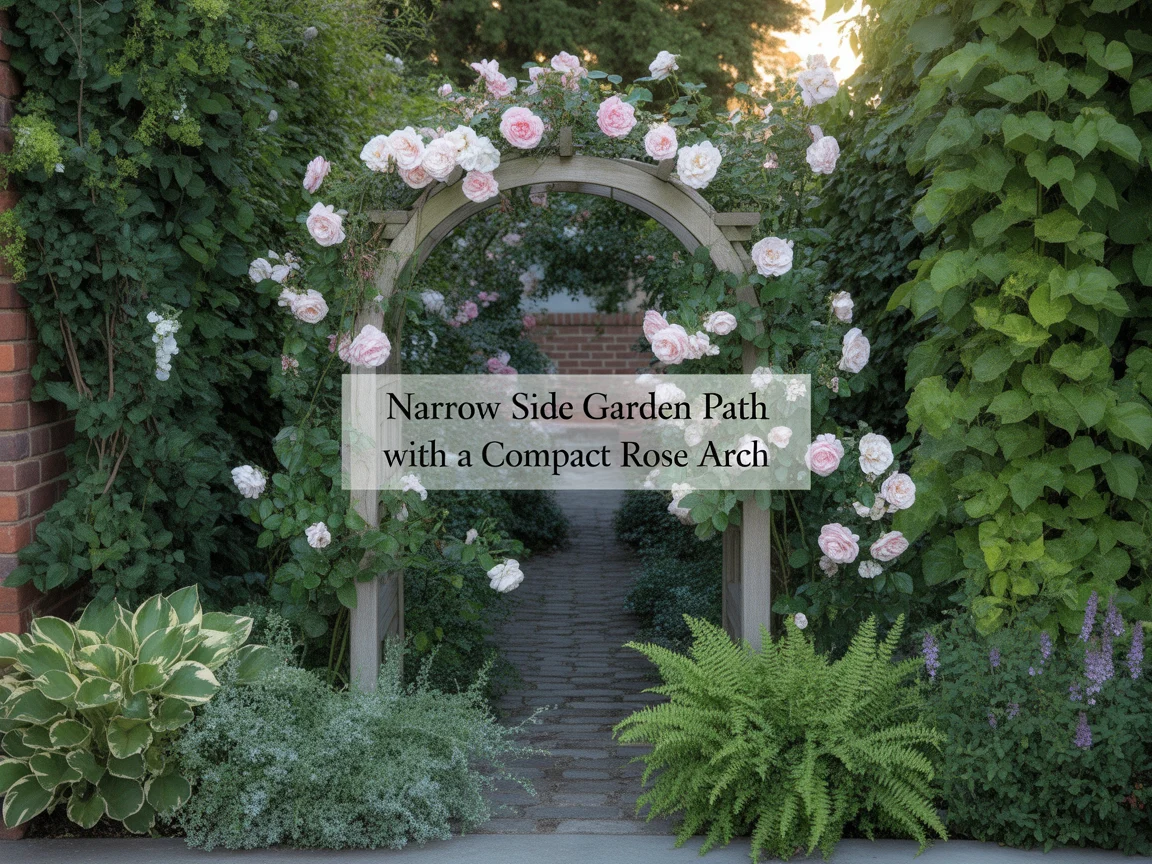
A narrow side garden path with a compact rose arch uses a smaller arch structure of 36 to 42 inches internal width and 78 to 84 inches in height to create a rose-covered feature in a side passage or narrow strip garden where a standard-sized arch would be too wide to fit without the legs obstructing the walking space. I fitted a compact 38-inch internal width arch in a 4-foot-wide side passage, which left 7 inches of clearance on each side of the arch legs for walking without brushing against the post faces. The reduced arch width means the rose covers the structure fully within two seasons rather than three because the horizontal growing distance across the top is shorter.
Compact Rose Arch Dimensions for a Narrow Path
A compact rose arch for a narrow garden path measures most effectively at 36 to 42 inches internal width and 78 to 84 inches in height, which provides a minimum of 6 inches clearance between the arch leg and the path edge on each side in a 4-foot-wide passage. The arch depth from front to back should be a minimum of 12 inches to provide sufficient surface area for the climbing rose canes to wrap around the arch top without being forced into a tight bend that splits the cane bark. I measured the internal dimensions of compact arches from six manufacturers and found that the most practical minimum specification for a 4-foot-wide path is 38 inches internal width by 80 inches height by 14 inches depth.
Compact Climbing Roses for a Narrow Path Arch
Rosa Narrow Water, Rosa The Fairy trained as a climber, and Rosa Dortmund are three climbing rose varieties suited to a compact arch on a narrow garden path. Rosa Narrow Water is a repeat-flowering blush pink climber that grows to 8 feet and produces a manageable spread of 4 to 5 feet, which suits a compact arch without producing excessive sideways growth that would encroach on the walking space of a narrow path. Rosa Dortmund produces single red flowers with a white eye from June to October and grows vigorously to 10 feet with a spread of 6 feet, requiring annual pruning to keep the growth within the bounds of a compact arch on a narrow passage.
Wildflower Meadow Path With a Rustic Timber Rose Arch
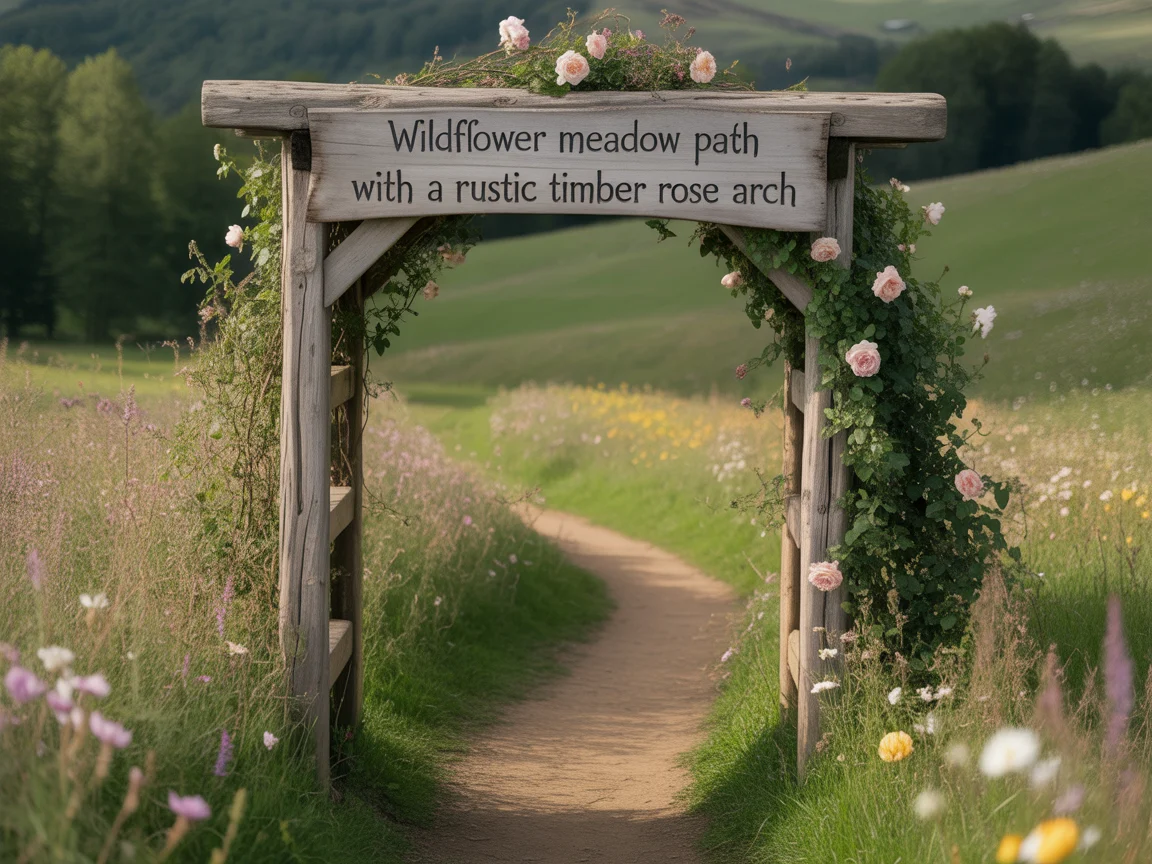
A wildflower meadow path with a rustic timber rose arch uses a mown grass strip through a wildflower meadow leading to a rough-sawn or lightly finished timber arch planted with an old-fashioned rambling or climbing rose that suits the naturalistic character of the surrounding meadow planting. I created this in my own garden three summers ago, maintaining a 2.5-foot-wide mown grass strip through a newly established wildflower meadow and erecting a rough-sawn oak arch at the meadow entrance planted with Rosa mulliganii on both legs. By the second season, the rose had reached the top of the arch and the white flower clusters in late June contrasted directly with the wildflower meadow planting growing at ground level around the base of the arch posts.
Rustic Timber Arch Construction for a Meadow Rose Path
A rustic timber arch for a wildflower meadow rose path uses 4-by-4-inch rough-sawn oak or larch posts set 24 inches in post-mix concrete, connected by two horizontal crossbeams of 3-by-2-inch timber at the top and a curved or straight overhead rail between them. Rough-sawn timber costs 20 to 30% less than planed timber of equivalent section and suits the informal character of a meadow path better than a smoothly finished surface. I used rough-sawn larch for a meadow arch project because larch is naturally resistant to decay and has a warm reddish-brown color when freshly cut that ages to a silver-grey within two to three years, which suits the naturalistic meadow setting without any surface treatment.
Rambling Roses for a Wildflower Meadow Arch Path
Rosa mulliganii, Rosa filipes Kiftsgate, and Rosa American Pillar are three rambling roses suited to a rustic timber arch on a wildflower meadow path. Rosa mulliganii produces enormous clouds of single white flowers in late June and grows very vigorously to 30 feet, making it the most visually dramatic rose for a large rustic arch where no restraint on size is needed. Rosa filipes Kiftsgate is even more vigorous than mulliganii and suits only a very large, permanent arch structure because its mature weight can damage lighter frames. Rosa American Pillar produces clusters of single pink flowers with a white eye in July and grows to 15 feet, which suits a standard meadow path arch of 84 to 96 inches in height more practically than the two larger rambling varieties.
Kitchen Garden Path With a Rose Arch Tunnel
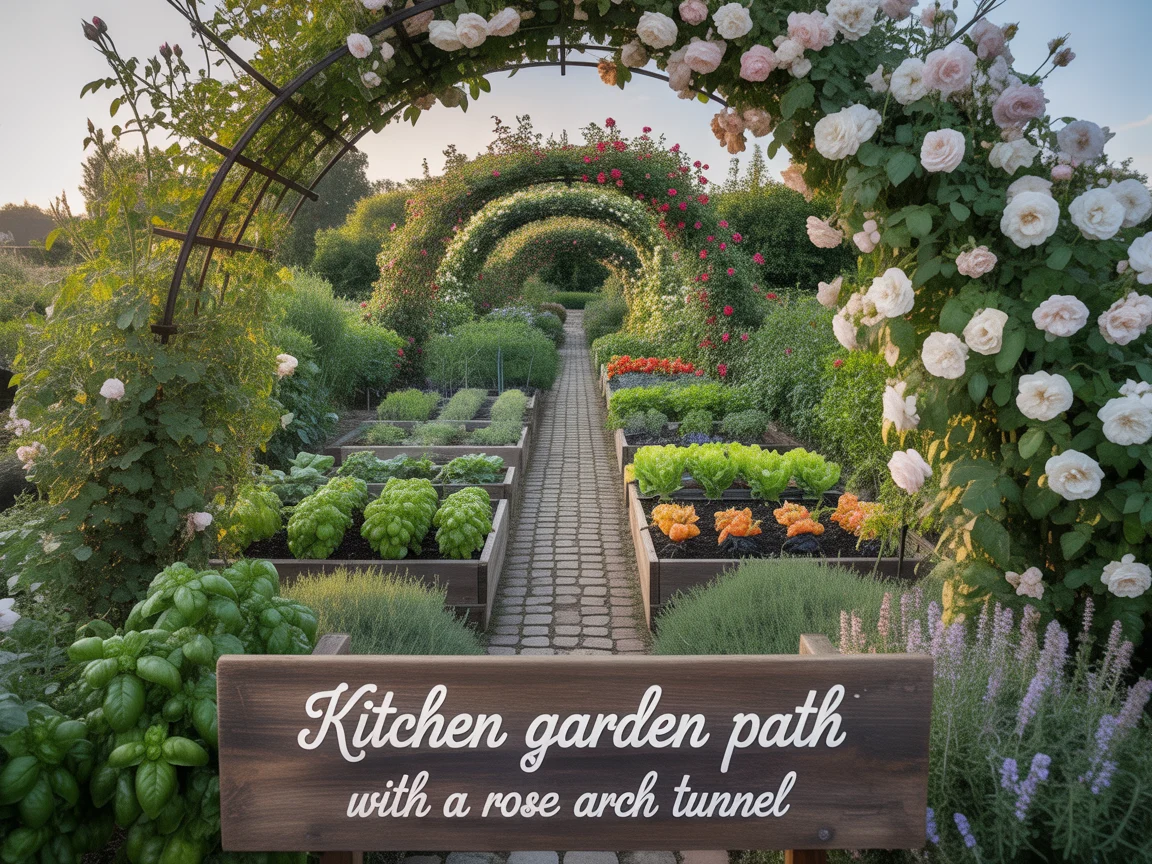
A kitchen garden path with a rose arch tunnel uses a series of closely spaced arches, typically 6 to 8 feet apart, over a central path running between productive growing beds to create a covered walkway that is both a functional path through the growing space and the most visually impressive feature in the kitchen garden. I spent two years studying the construction and planting of rose arch tunnels in kitchen gardens before building my own 32-foot version using five steel arches at 8-foot intervals planted with alternating Rosa Albertine and Rosa New Dawn on opposite arch legs. The tunnel reached full coverage by its fourth season and produced flowers from late May to late September with the two varieties overlapping in their peak flowering periods through June.
Steel vs Timber Arches for a Rose Arch Tunnel
Steel and timber are two arch materials used in a kitchen garden rose arch tunnel, and the practical differences affect both the installation process and the long-term structural performance under the weight of mature rose growth. Steel arches at 16mm diameter tube construction provide sufficient strength for a single arch but require cross-bracing between adjacent arches in a tunnel series to prevent the whole structure from swaying under wind load and the weight of established roses. Timber arches of 4-by-4-inch post and 3-by-2-inch beam construction are inherently more rigid than tubular steel and suit a rose arch tunnel without additional cross-bracing, though the post bases require checking for decay every five years.
Alternating Rose Varieties in a Kitchen Garden Arch Tunnel
Alternating two climbing rose varieties on consecutive arches of a kitchen garden path tunnel produces a flowing color sequence along the tunnel length and extends the combined flowering period beyond what a single variety would provide. Rosa Albertine, with its copper-pink once-flowering peak in late June, pairs effectively with Rosa New Dawn, whose pale pink repeat-flowering begins in June and continues to October, because the two varieties are in simultaneous flower for approximately three weeks in late June, creating the densest flowering display of the season before Albertine finishes and New Dawn continues alone through summer. I found this pairing the most satisfying combination in the kitchen garden tunnel I built.
Front Garden Path With a Rose Arch and Picket Gate
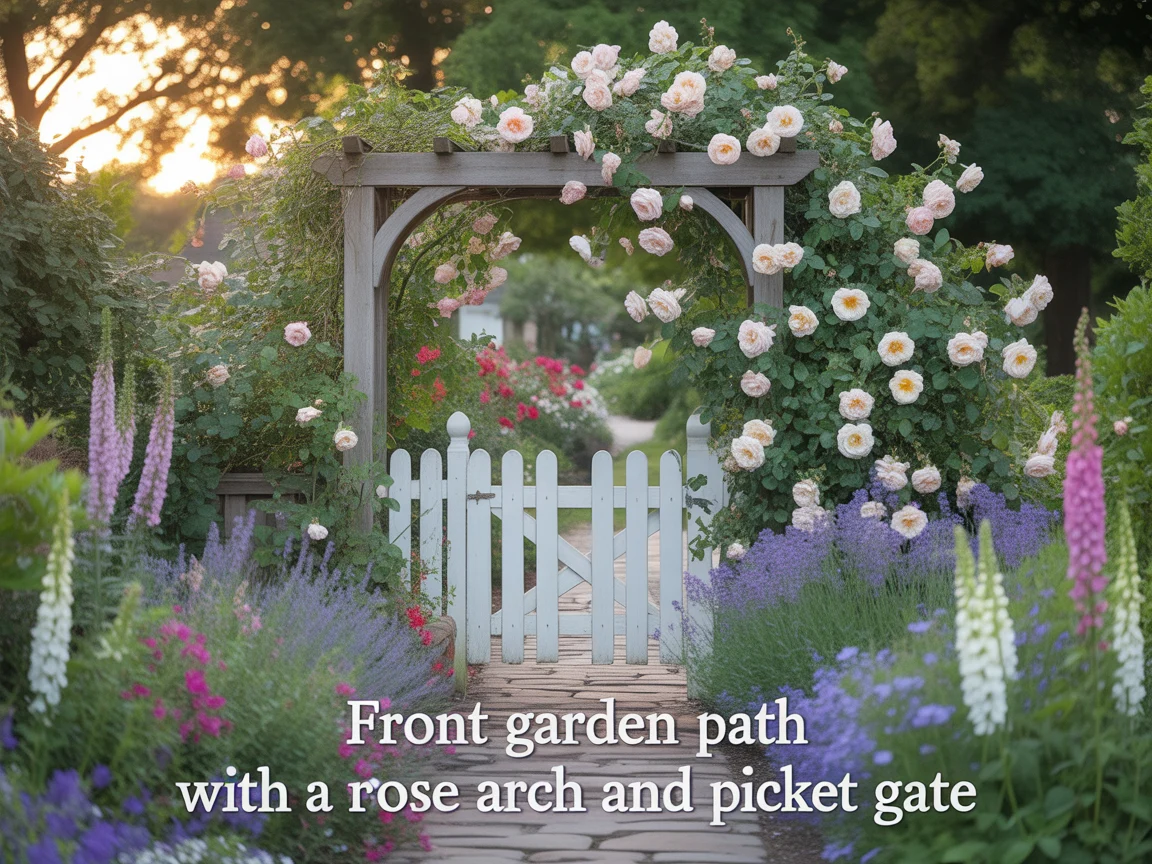
A front garden path with a rose arch and picket gate combines the arch and gate into a single entrance structure by mounting the arch directly above or immediately behind the gate posts, so the visitor passes through the gate and immediately under the rose arch in one continuous movement. I helped a neighbor install this combination using a 36-inch picket gate between two 5-by-5-inch oak posts with a matching timber arch mounted on the same posts above the gate, planted with Rosa Zephirine Drouhin on both sides. The thornless Zephirine was the correct choice for a gate arch where people pass close to the rose canes at face level every time they use the entrance.
Mounting a Rose Arch Above a Garden Gate
A rose arch mounted above a garden gate uses the gate posts as the arch legs, with the arch side rails bolted directly to the post faces at the height where the arch begins its curve. The arch side rails require a minimum clear height of 84 inches above the path surface to allow comfortable passage under the arch while carrying the gate hardware below. I bolted the arch side rails to the oak posts at 84 inches using 8mm coach bolts, which provided a firm connection without splitting the post timber. The combined gate and arch structure moved as a single rigid unit after assembly, with no independent movement between the gate posts and the arch frame even in strong wind conditions. Anyone planning this type of entrance will find a comprehensive range of styles, materials, and construction details in these garden paths with gates and rose arch combinations, which cover everything from picket and arch cottage entrances to formal brick pier designs and contemporary timber gate installations suited to different path widths and garden styles.
Thornless Climbing Roses for a Gate Arch on a Front Path
Rosa Zephirine Drouhin, Rosa Kathleen Harrop, and Rosa Veilchenblau are three thornless or near-thornless climbing roses suited to a rose arch mounted above a garden gate on a front path. Rosa Zephirine Drouhin is the most widely planted thornless climbing rose for gate arches and produces deep pink flowers with a strong fragrance from June to October. Rosa Kathleen Harrop is a sport of Zephirine Drouhin with softer pink flowers and the same thornless characteristic, producing a slightly less vigorous plant that suits a smaller gate arch. Rosa Veilchenblau is technically a rambler with very few small thorns and produces purple-violet flowers in June and July, making it the most distinctive color option of the three.
Pergola Path Extended With Rose Arches
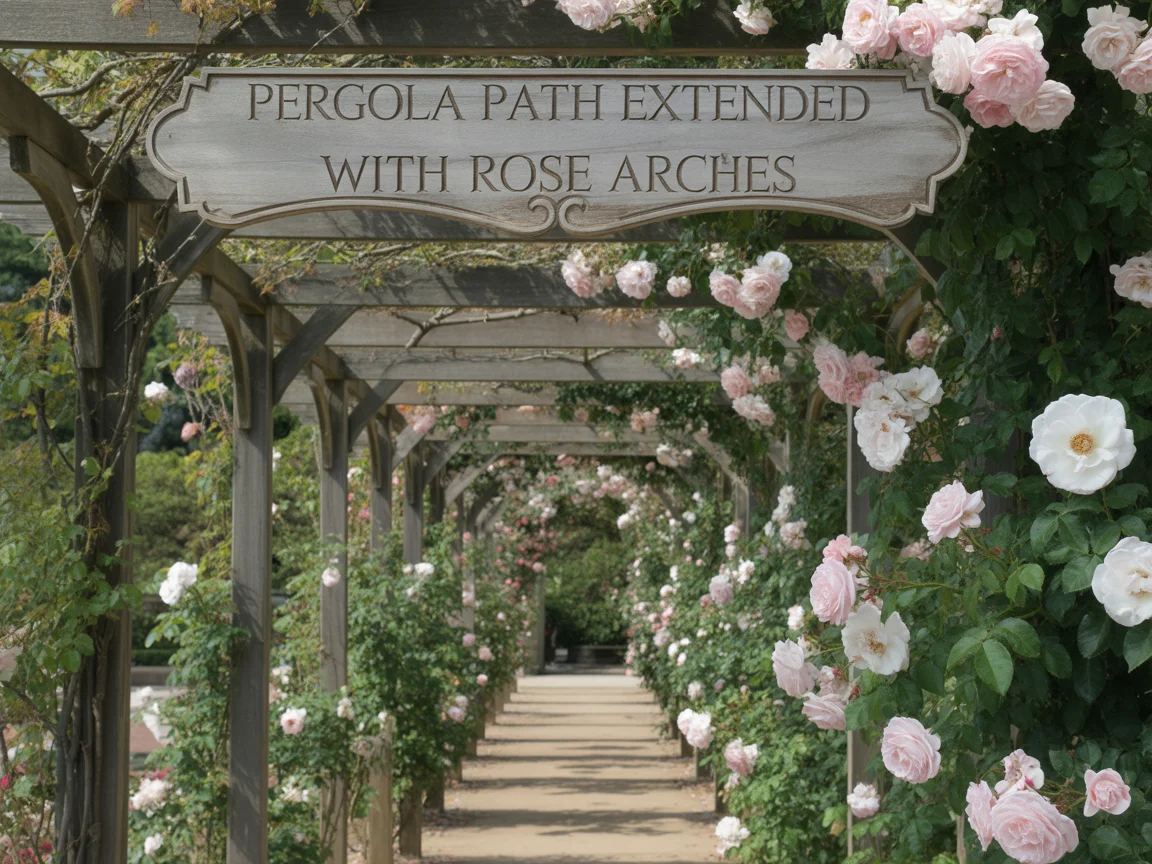
A pergola path extended with rose arches uses a timber pergola structure as the primary covered walkway with one or more standalone rose arches placed at the entrance or exit of the pergola to create a transition between the fully covered pergola section and the open garden beyond. I added two rose arches to an existing 20-foot cedar pergola path in my garden, placing one arch at each end of the pergola and planting Rosa New Dawn at the entrance arch and Rosa Compassion at the exit arch. The two arches framed both ends of the pergola visually and created a layered overhead planting effect where the rose growth on the arches connected visually with the wisteria growing over the pergola itself.
Matching Rose Arch Style to an Existing Pergola
A rose arch placed at the entrance or exit of a pergola path reads most effectively when its material and finish coordinate with the pergola structure it adjoins. A cedar or oak pergola suits a timber arch of the same or complementary wood species, with both structures finished in the same exterior wood oil or stain color. A painted softwood pergola suits a painted steel or painted timber arch in the same color as the pergola, which I found the simplest way to create a visual connection between the two structures. I used the same exterior grey-green paint on both my arch frames and the cedar pergola posts, and the unified color made the combined structure read as a single designed element from the garden entrance.
Connecting Rose Growth Between an Arch and a Pergola
Climbing rose growth from an arch placed at the entrance to a pergola connects with the pergola structure most effectively when horizontal training wires are fixed between the arch top and the first pergola crossbeam, providing a continuous surface for the rose canes to travel from the arch across the junction and onto the pergola frame. I fixed 14-gauge galvanized wire in three horizontal runs between my entrance arch and the first pergola crossbeam, spaced 12 inches apart vertically, and tied the leading rose canes to the wire in the second growing season. By the third season the rose had crossed the junction and was growing along the first section of the pergola overhead beam.
Shaded Garden Path With Shade-Tolerant Rose Arches
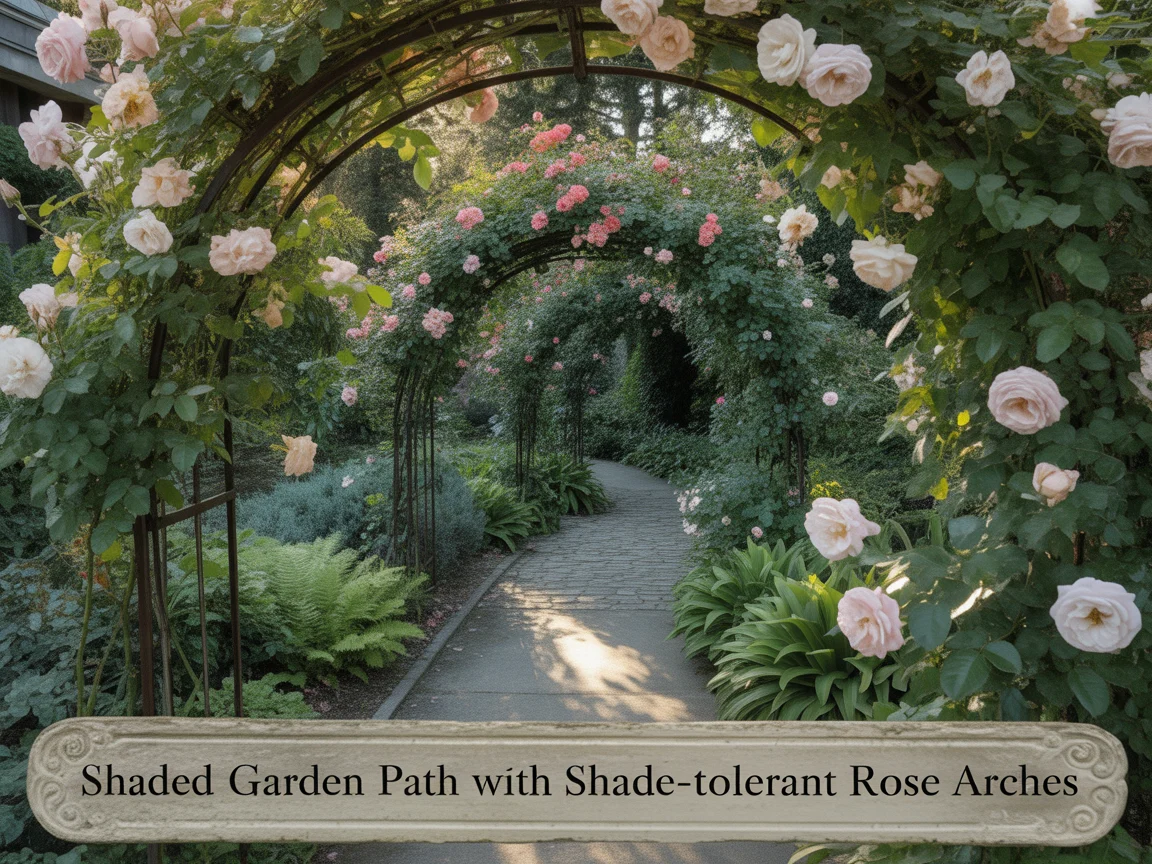
A shaded garden path with shade-tolerant climbing roses on arches solves the common problem of wanting a rose arch on a path that receives fewer than 4 hours of direct sunlight per day, where standard repeat-flowering hybrid tea or floribunda climbing roses produce insufficient flowers to justify the arch planting. I planted a north-facing garden path arch with Rosa Veilchenblau and Rosa Madame Alfred Carriere four years ago, and both varieties produced a genuinely impressive flower display in their respective June and repeat flowering periods despite the path receiving direct sun for only 2 hours per day in midsummer.
Climbing Rose Varieties That Tolerate Shade
Rosa Madame Alfred Carriere, Rosa Veilchenblau, and Rosa Seagull are three climbing roses that tolerate partial shade on a garden path arch. Rosa Madame Alfred Carriere produces creamy white flowers with a strong fragrance repeatedly from June to October and tolerates a north-facing position better than almost any other climbing rose, growing to 15 feet on a shaded arch. Rosa Veilchenblau produces purple-violet flowers in June and July and tolerates shade well because of its rambler parentage, which gives it the ability to produce flowers on older wood rather than only on new growth. Rosa Seagull produces large clusters of single white flowers in June on a vigorous plant that grows to 20 feet and covers a shaded arch fully within three seasons.
Path Surfaces That Brighten a Shaded Rose Arch Garden Path
White marble chippings, pale limestone flags, and light grey porcelain pavers are three path surfaces that brighten a shaded garden path beneath rose arches. White marble chippings at 10mm chip size reflect the maximum amount of available light upward into the underside of the rose arch canopy, which improves the visibility of the flower display on the shaded face of the arch. Pale limestone flags in cream or buff tones produce a bright path surface that suits a shaded arch planted with white or pale pink climbing roses. Light grey porcelain pavers produce a clean, reflective surface that suits a contemporary shaded arch path where the path material needs to work harder visually because the lower light levels reduce the flower display compared to a full-sun arch.
Japanese-Inspired Garden Path With a Red Rose Arch
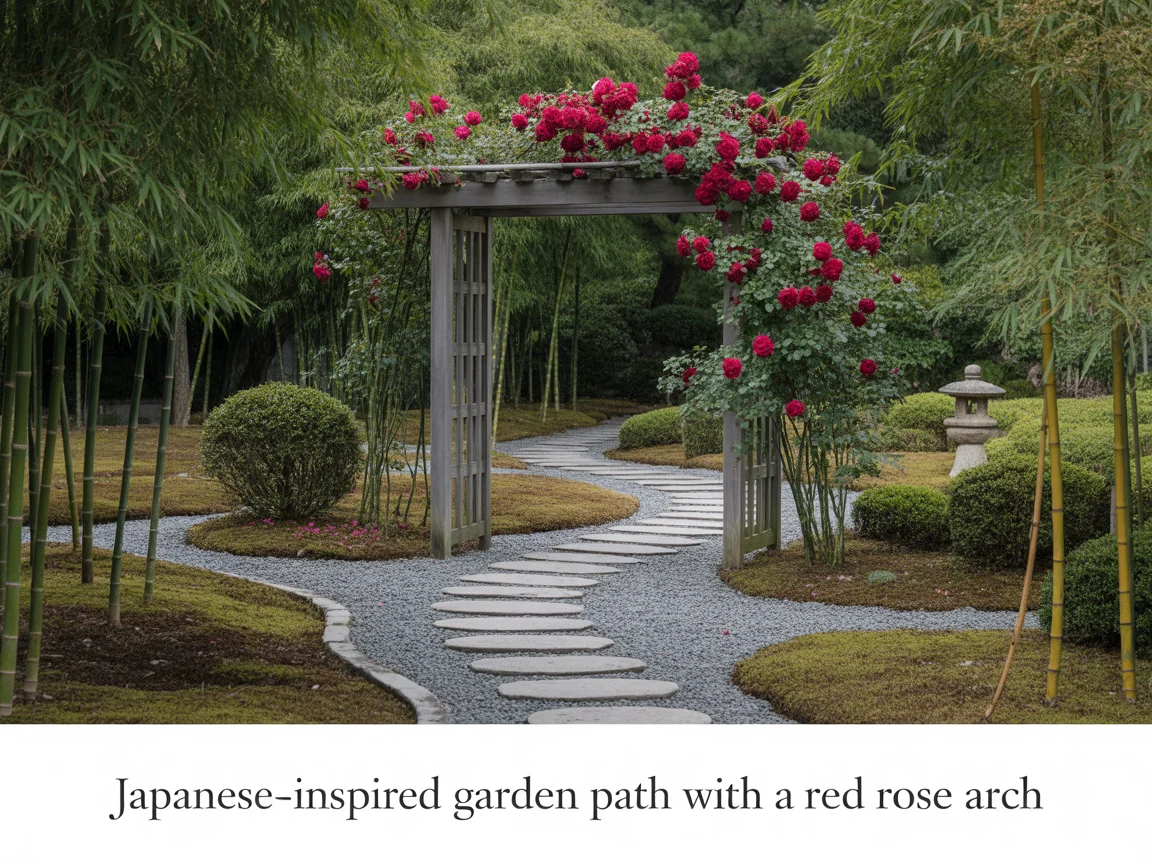
A Japanese-inspired garden path with a red rose arch uses the clean geometry of a Japanese garden design, including raked gravel, stepping stones, and clipped evergreen planting, with a single red-painted timber or steel arch planted with a deep red climbing rose as the focal entrance feature. I visited a garden that used this combination with a deep red powder-coated steel arch at the entrance to a gravel and stepping stone path, planted with Rosa Guinee, one of the darkest red climbing roses available. The deep red of both the arch paint and the rose flowers against the pale gravel path surface produced an entrance of strong visual impact that suited the deliberate, restrained character of the Japanese-inspired garden design around it.
Deep Red Climbing Roses for a Japanese-Inspired Path Arch
Rosa Guinee, Rosa Souvenir du Docteur Jamain, and Rosa Tuscany Superb are three deep red climbing roses suited to a red arch on a Japanese-inspired garden path. Rosa Guinee produces the darkest red flowers of any climbing rose, described as near-black in deep shadow, on a plant growing to 15 feet with a strong fragrance in its once-flowering June peak. Rosa Souvenir du Docteur Jamain produces deep crimson-purple flowers repeatedly from June to October on a plant growing to 12 feet that tolerates partial shade, making it the most practical deep red choice for a path arch not in full sun. Rosa Tuscany Superb produces semi-double deep crimson flowers with gold stamens in a single June flowering and grows to 8 feet.
Gravel and Stone Combinations for a Japanese Rose Arch Path
White Shirakawa sand, dark grey granite chippings, and black basalt stepping stones are three ground material choices that suit a Japanese-inspired garden path with a red rose arch. White Shirakawa sand, the traditional raked gravel of Japanese garden design, produces the purest white surface and creates the strongest contrast with a dark red arch and rose combination. Dark grey granite chippings at 14mm chip size produce a subtler, more muted ground surface that suits a Japanese garden path where the red arch and rose are intended to be the dominant visual element without competition from a very bright path surface. Black basalt stepping stones set in either the white sand or grey gravel produce a strong tonal sequence from black ground stones through grey gravel to red arch at the entrance.
Rose Arch Path With Underplanting in the Cottage Style
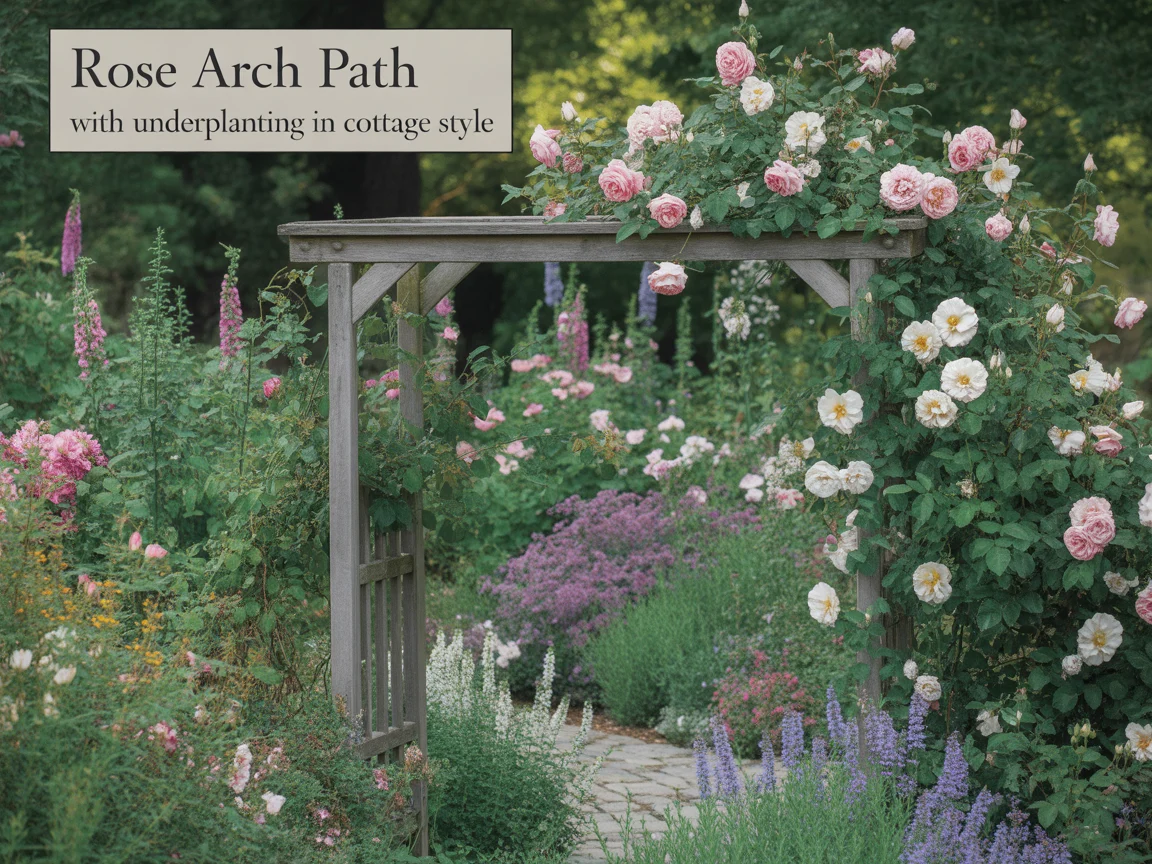
A rose arch path with underplanting in the cottage style uses the base of each arch leg as a planting position for low to medium-height cottage garden perennials, so the planting scheme extends from ground level through the mid-height perennials to the climbing rose on the arch above, creating a layered vertical planting effect at every arch position along the path. I planted Geranium rozanne, Lavandula angustifolia Hidcote, and Nepeta x faassenii at the base of each arch leg on a four-arch rose path project, and the combination of the blue and purple tones of the three underplanting species with the pink tones of the Rosa New Dawn overhead produced a color scheme that worked across the full height of the arch planting from June through September.
Perennial Underplanting for Rose Arch Path Legs
Geranium rozanne, Lavandula angustifolia, and Salvia nemorosa are three perennials suited to underplanting the legs of rose arches on a cottage garden path. Geranium rozanne produces blue-violet flowers continuously from June to October and forms a low mound of 12 inches height that fits the base of an arch leg without obscuring the path edge. Lavandula angustifolia Hidcote produces compact upright spikes of deep purple flowers from June to August at 18 inches height and releases a strong fragrance when brushed against on the path edge, adding a second scent layer beneath the climbing rose fragrance above. Salvia nemorosa produces dense upright spikes of violet-blue flowers from June to August at 18 inches height and repeats flowering if cut back after the first flush.
Bulbs to Plant at Rose Arch Path Leg Bases
Allium hollandicum, Narcissus Thalia, and Tulipa Queen of Night are three bulbs suited to planting at the base of rose arch legs on a cottage garden path. Allium hollandicum produces spherical purple flower heads on 36-inch stems in May and June, providing vertical interest at arch leg bases before the climbing rose reaches its main flowering period in late June. Narcissus Thalia produces elegant white flowers on 14-inch stems in April, giving the arch leg bases early season interest when the climbing rose has not yet produced any flower buds. Tulipa Queen of Night produces deep purple-maroon flowers on 24-inch stems in May and suits the base of a rose arch planted with a deep pink or crimson climbing variety where the dark tulip color provides a rich tonal contrast.
Modern Garden Path With a Minimalist Rose Arch
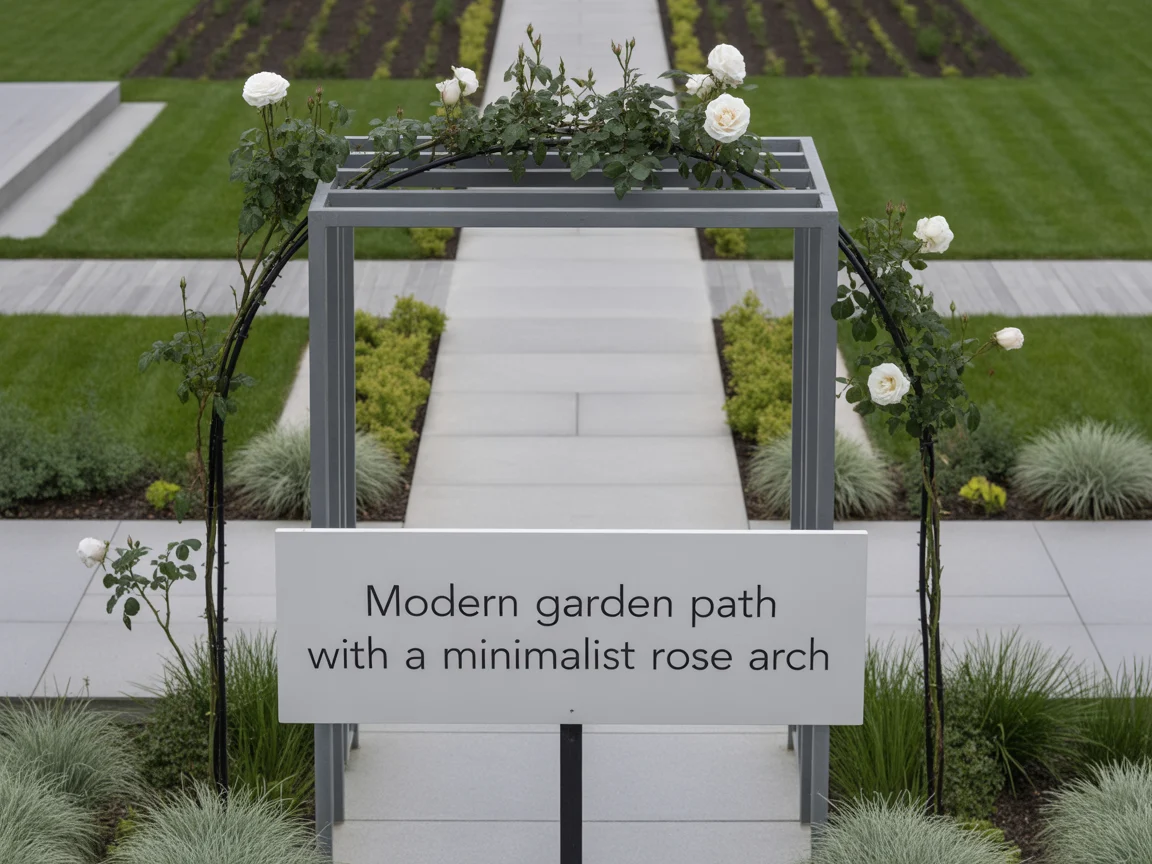
A modern garden path with a minimalist rose arch uses a clean-lined arch structure in powder-coated steel or corten steel with a simple rectangular rather than curved profile, planted with a single climbing rose variety selected for its flower color and fragrance rather than its vigour, to create a rose arch that suits a contemporary garden design without the abundant, loose character of a traditional cottage rose arch. I saw this design used in a contemporary urban garden where a single corten steel rectangular arch, 84 inches tall and 48 inches wide, was planted with Rosa Falstaff on both legs at the end of a large-format porcelain path, and the deep crimson flowers against the orange-brown corten surface was a combination I had not seen before and found genuinely striking.
Corten Steel Rose Arches for a Modern Path
A corten steel rose arch develops a distinctive orange-brown rust patina within 6 to 12 months of outdoor installation and requires no further surface treatment after the initial patina forms, making it the most genuinely low-maintenance arch material for a modern garden path. Corten steel arches are available from specialist metalwork suppliers in custom sizes and cost $180 to $450 for a standard single arch depending on the section size and overall dimensions. The warm orange-brown tone of weathered corten steel suits climbing roses in deep red, crimson, and purple tones where the warm metal color complements the cool-toned flowers, and also suits pale cream or white roses where the contrast between the rusted metal and the pale flowers is very strong.
Climbing Roses for a Minimalist Modern Rose Arch
Rosa Falstaff, Rosa Lady of Shalott, and Rosa Climbing Iceberg are three climbing roses suited to a minimalist modern rose arch on a contemporary garden path. Rosa Falstaff produces deep crimson-purple double flowers repeatedly from June to October on a plant growing to 8 feet, which suits a minimalist arch where a compact, manageable growth habit is needed. Rosa Lady of Shalott produces warm salmon-orange flowers repeatedly from June to October and grows to 10 feet, producing a color that suits a corten steel arch particularly well because the warm tones of the rose and the metal complement each other directly. Rosa Climbing Iceberg produces pure white flowers repeatedly from June to October on a vigorous plant growing to 12 feet.
Walled Garden Path With Heritage Rose Arches
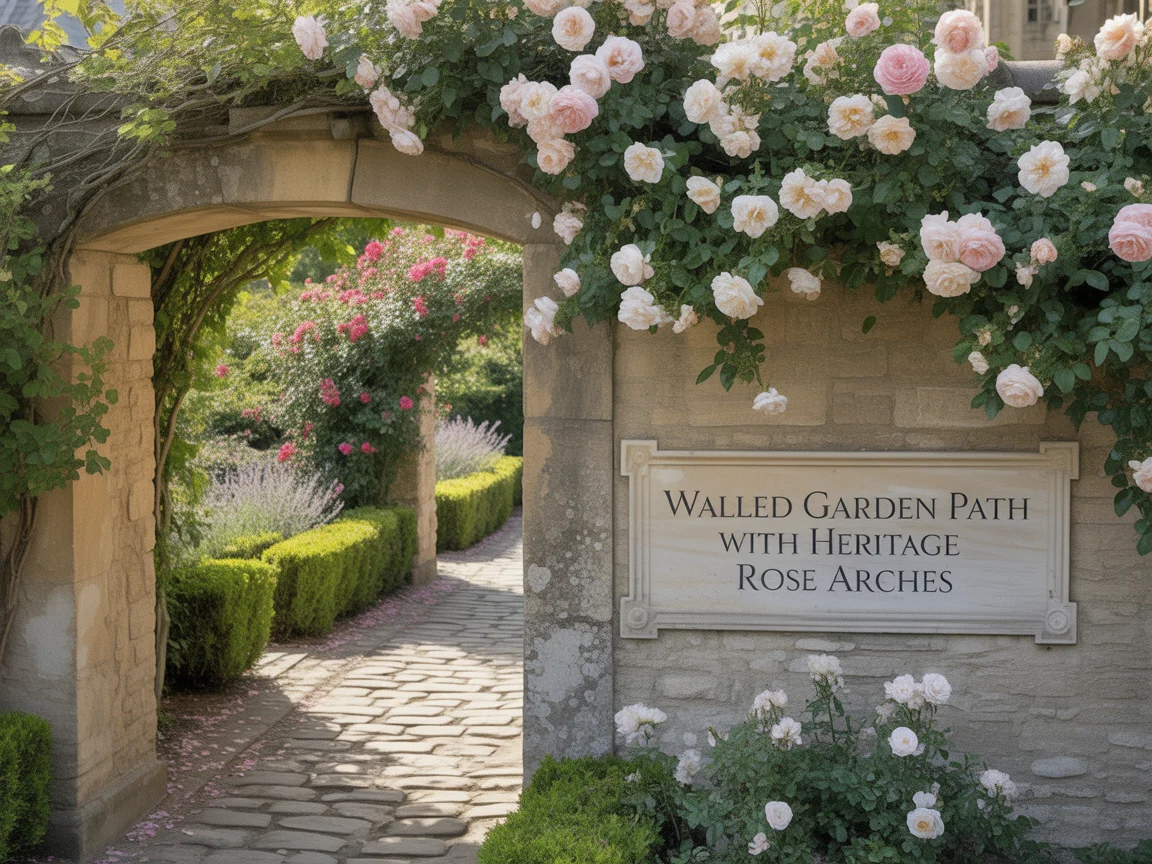
A walled garden path with heritage rose arches uses old garden rose varieties, specifically those bred before 1867 and classified as old garden roses, on arch structures over a walled garden path to create a historically authentic rose planting that suits the period character of an old walled garden space. I spent a morning at a National Trust walled garden studying the heritage rose arch planting on the central path, where Rosa Great Maiden’s Blush, Rosa Charles de Mills, and Rosa Cardinal de Richelieu were grown on a series of arches along the main walk, and the combination of the old rose flower forms, the heavy fragrance, and the aged stone walls around the path produced a planting experience I have not found in any garden planted with modern climbing rose varieties.
Heritage Climbing Roses for a Walled Garden Arch Path
Rosa Blush Noisette, Rosa Climbing Cecile Brunner, and Rosa Madame Gregoire Staechelin are three heritage climbing roses suited to arches on a walled garden path. Rosa Blush Noisette is a Noisette class rose bred in 1817 that produces clusters of small pale pink flowers repeatedly from June to October and grows to 12 feet, tolerating the partial shade common on south-facing walled garden paths. Rosa Climbing Cecile Brunner produces tiny perfect pink flowers in clusters repeatedly from June to October on a very vigorous plant growing to 20 feet, which covers a large arch or series of arches more quickly than most heritage roses. Rosa Madame Gregoire Staechelin produces large deep pink flowers with a strong sweet fragrance in a single June flowering and grows to 15 feet.
Path Surfaces for a Heritage Walled Garden Rose Arch Walk
Reclaimed York stone flags, hand-made clay pavers, and compacted hoggin are three path surfaces suited to a heritage walled garden path with rose arches. Reclaimed York stone flags in buff-grey tones produce the most historically authentic surface for a walled garden path and cost $18 to $30 per square foot for genuine reclaimed material in good condition. Hand-made clay pavers in terracotta or red-brown tones produce a warm, aged path surface that suits the cottage rose aesthetic of a heritage walled garden arch planting. Compacted hoggin, a self-binding gravel of crushed limestone, produces a historically authentic surface at $2 to $4 per square foot that was widely used in Victorian kitchen garden paths and suits a heritage rose arch walk where a low-cost path surface is needed over a long distance.
Herb Garden Path With Scented Rose Arches
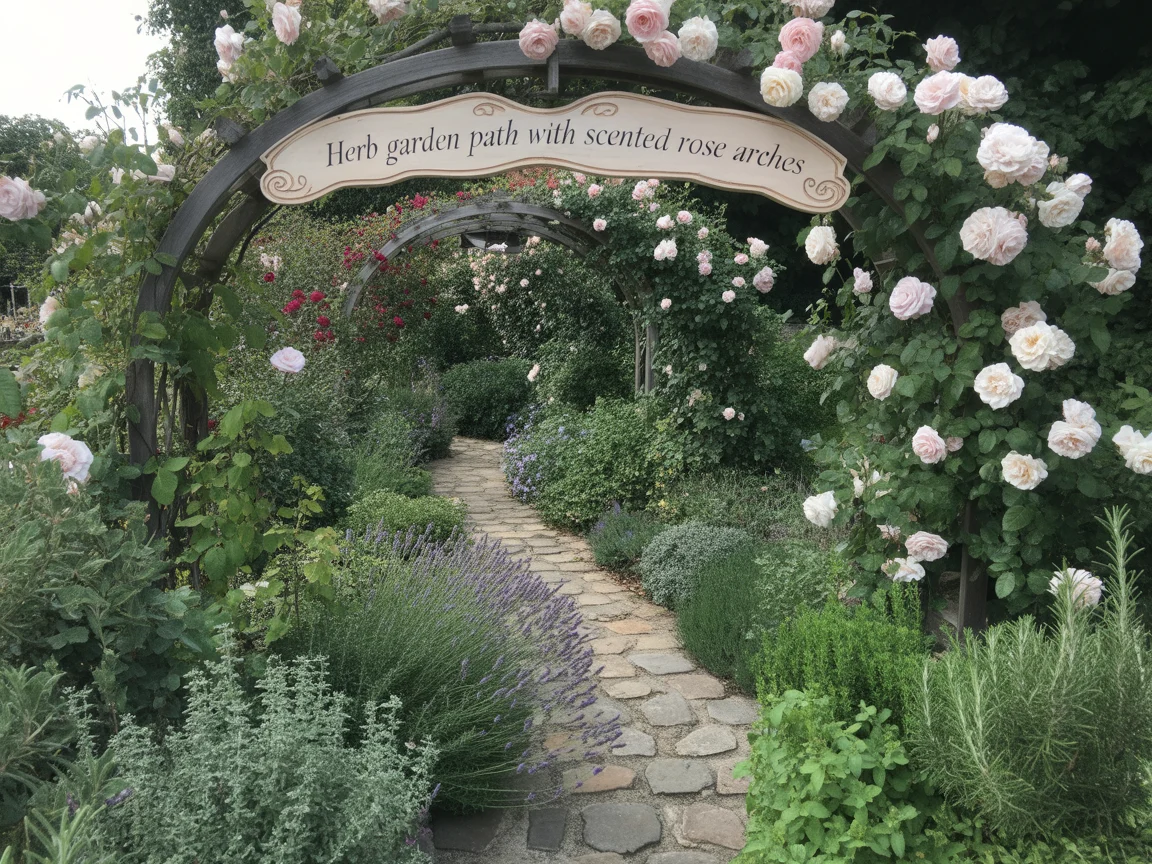
A herb garden path with scented rose arches combines the fragrant planting of a kitchen herb garden with the overhead rose arch to create a sensory garden path where scent is the primary experience at every level from the ground-level herbs to the rose flowers at arch height. I planted this combination three years ago with a lavender and thyme edged gravel path leading through two arches planted with Rosa Gertrude Jekyll, the most strongly fragrant modern climbing rose I have grown, and found that the combined scent of the lavender at path edge level and the Gertrude Jekyll flowers at overhead height produced an intensity of fragrance on warm June mornings that stopped me in the middle of the path on several occasions.
Most Fragrant Climbing Roses for a Herb Garden Arch Path
Rosa Gertrude Jekyll, Rosa Madame Isaac Pereire, and Rosa Climbing Ena Harkness are three climbing roses with the strongest fragrance suited to a herb garden path arch. Rosa Gertrude Jekyll produces large deep pink flowers repeatedly from June to October with a classic old rose fragrance rated as one of the most intense of any modern climbing rose, growing to 10 feet. Rosa Madame Isaac Pereire is a Bourbon climber producing very large deep pink flowers with an exceptionally powerful fragrance in June and again in September, growing to 15 feet. Rosa Climbing Ena Harkness produces deep crimson flowers with a classic hybrid tea fragrance repeatedly from June to October on a plant growing to 15 feet that suits a warm, sheltered herb garden arch position.
Herb Planting That Complements a Scented Rose Arch Path
Lavandula angustifolia, Thymus vulgaris, and Rosmarinus officinalis are three herbs that complement scented climbing roses on a herb garden arch path. Lavandula angustifolia produces purple flower spikes from June to August at 18 to 24 inches height and releases its fragrance most strongly in warm afternoon sun, providing a ground-level scent layer beneath the rose arch above it. Thymus vulgaris stays below 6 inches in height at the path edge and releases a warm, herbal fragrance when lightly brushed against, which contrasts with the floral sweetness of the rose fragrance above it. Rosmarinus officinalis produces blue flowers from March through May before the climbing rose begins its season, providing fragrance on the herb garden path in the months before the rose arches reach their peak.
Rose Arch Path With Evening Lighting
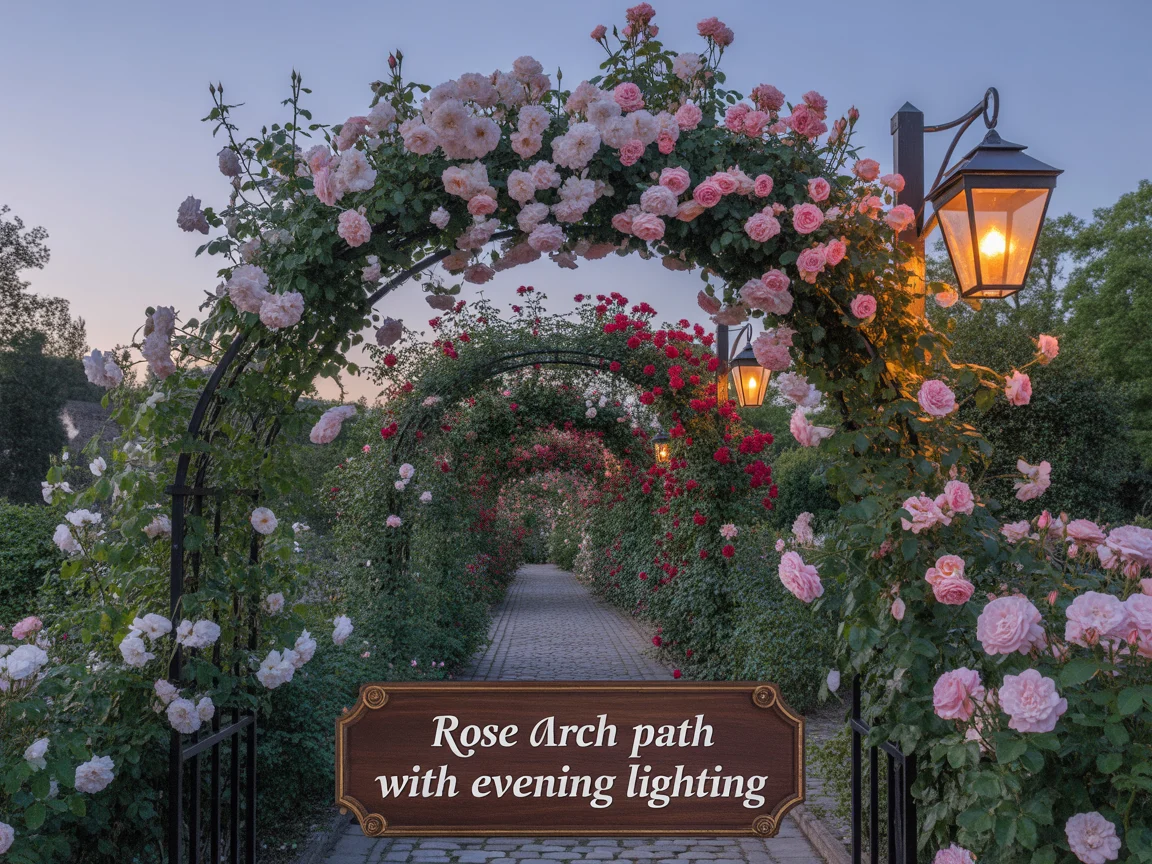
A rose arch path with evening lighting uses low-voltage LED fixtures to illuminate the arch structure and the climbing rose growth after dark, extending the visual and atmospheric experience of the rose arch path into the evening hours when the garden is otherwise dark and the arch planting is invisible. I fitted waterproof LED uplighters at the base of each arch leg on a four-arch path last autumn and the result after dark was a sequence of illuminated rose arches that looked completely different from the daytime appearance, with the upward light catching the underside of the rose canes and the arch structure producing a warm, defined pattern of light along the path.
LED Lighting Positions for a Rose Arch Garden Path
Ground-recessed uplighters, surface-mounted spike spotlights, and LED strip lighting fixed to the arch inner face are three lighting positions suited to a rose arch garden path. Ground-recessed uplighters set at the base of each arch leg direct light upward through the climbing rose canes and onto the arch structure from below, producing the most dramatic illumination of the rose plant itself. Surface-mounted spike spotlights positioned 18 inches from each arch leg base and angled upward at 45 degrees produce a wider spread of light across the arch face and suit an arch with dense rose coverage where a tight upward beam would be blocked by the lower canes. LED strip lighting on the inner face of the arch produces an even wash of soft light downward onto the path surface.
Solar vs Mains LED Lighting for a Rose Arch Path
Solar LED spike lights and mains-powered low-voltage LED uplighters are two power options for a rose arch garden path, and each suits different site conditions. Solar spike lights cost $8 to $25 per unit and require no wiring, but produce reliable light output only on arches that receive a minimum of 4 hours of direct sunlight per day on the solar panel face. Mains-powered 12-volt LED uplighters cost $25 to $60 per fitting plus installation wiring and produce consistent light output regardless of available daylight, making them the correct choice for a rose arch path in a shaded garden where solar charging is unreliable. I use mains-powered uplighters on my own arch path because the rose coverage produces sufficient shade to prevent reliable solar charging on the arch leg positions.
Children’s Garden Path With a Small Rose Arch
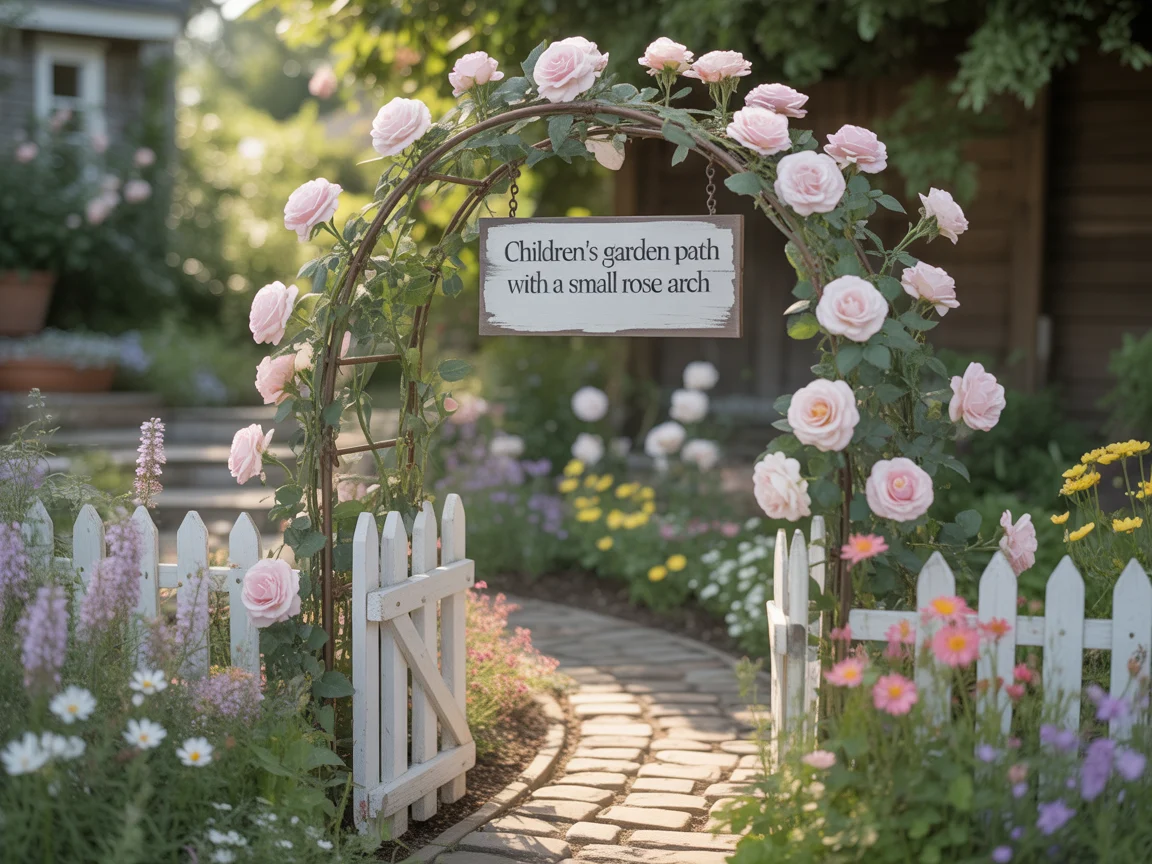
A children’s garden path with a small rose arch uses a reduced-height arch structure of 72 to 78 inches, planted with a compact, thornless climbing rose, to create a rose arch entrance or feature on a path designed primarily for children’s use where full adult-height structures and thorned roses would be unsuitable. I planted a 72-inch-tall arch with Rosa Climbing Little White Pet, a compact semi-climbing rose growing to 6 feet, on a stepping stone path through a children’s play garden section, and the lower arch height produced a feature that children could clearly see as an overhead structure rather than something existing at adult height that they had to look up to notice.
Compact Thornless Roses for a Children’s Garden Arch
Rosa Climbing Little White Pet, Rosa The Fairy trained as a climber, and Rosa Kathleen Harrop are three compact or thornless roses suited to an arch on a children’s garden path. Rosa Climbing Little White Pet produces clusters of small rosette-shaped white flowers repeatedly from June to October on a compact plant growing to 6 feet, which suits a 72-inch arch without requiring annual pruning to prevent the growth from overwhelming the structure. Rosa The Fairy produces small pale pink flowers in large clusters from July to October on a plant growing to 5 to 6 feet when trained, with very few thorns that make it the most child-safe climbing rose option. Rosa Kathleen Harrop is thornless and produces soft pink flowers repeatedly from June to October on a plant growing to 8 feet.
Safe Path Surfaces for a Children’s Garden Rose Arch
Rubber bark mulch, fine grass, and smooth concrete pavers are three path surfaces suited to a children’s garden path with a rose arch. Rubber bark mulch at 3 inches depth provides a soft, impact-absorbing surface that reduces injury risk from falls and costs $3 to $6 per square foot. Fine grass mown to 1.5 inches produces a soft path surface between stepping stones and suits a naturalistic children’s garden path with a rustic rose arch. Smooth concrete pavers in 12-by-12-inch format produce a firm, flat surface free of trip hazards that suits a children’s garden path where wheeled toys are used alongside the rose arch route.
Wedding-Style Garden Path With Multiple Rose Arches
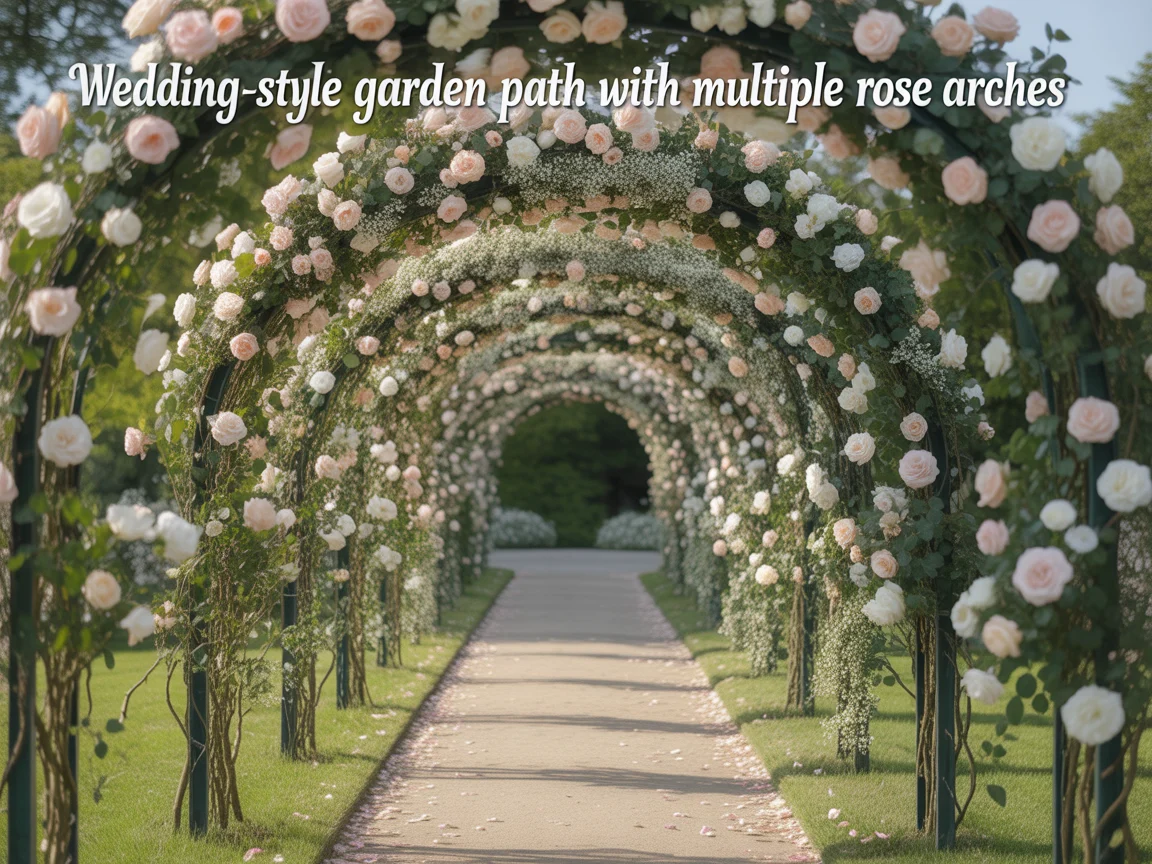
A wedding-style garden path with multiple rose arches uses a series of closely spaced white-painted arches planted with white or pale pink climbing roses to create a formal, celebratory path design that suits a garden used for outdoor events or simply a homeowner who wants their garden to produce the most photographically impressive rose arch display possible. I have seen this design installed as a permanent garden feature at three private properties where the owners specifically wanted a garden that looked spectacular during the June rose season, and in each case the multiple white arch series produced a path that genuinely looked like a prepared event venue when the roses were in full flower.
White Climbing Roses for a Wedding-Style Arch Path
Rosa Climbing Iceberg, Rosa Madame Alfred Carriere, and Rosa Bobbie James are three white climbing roses suited to a wedding-style multiple arch garden path. Rosa Climbing Iceberg produces pure white flowers in large clusters repeatedly from June to October on a vigorous plant growing to 12 feet, providing the longest flowering season of any white climbing rose on an arch series. Rosa Madame Alfred Carriere produces creamy white flowers with a strong fragrance from June to October and tolerates partial shade, which suits a closely spaced arch series where the inner arches receive less direct sun than the outer ones. Rosa Bobbie James is a very vigorous rambler producing large clusters of small white flowers in June on a plant growing to 30 feet, suited only to a permanent, substantial arch series where exceptional vigour is an advantage.
White Arch Structures for a Wedding-Style Rose Path
White powder-coated steel, white-painted timber, and white galvanised steel are three arch structures suited to a wedding-style rose arch garden path. White powder-coated steel arches cost $60 to $150 each and produce a consistent, durable white finish that lasts 10 to 15 years without repainting, which suits a permanent multiple arch installation where repainting the full series would be a significant maintenance undertaking. White-painted timber arches cost $90 to $220 each and suit a garden where the arch structure is visible between rose plants during winter, because the painted timber reads as a more substantial and decorative structure than thin steel tube when the roses are not in leaf.
Year-Round Interest Garden Path With Rose Arches and Clematis
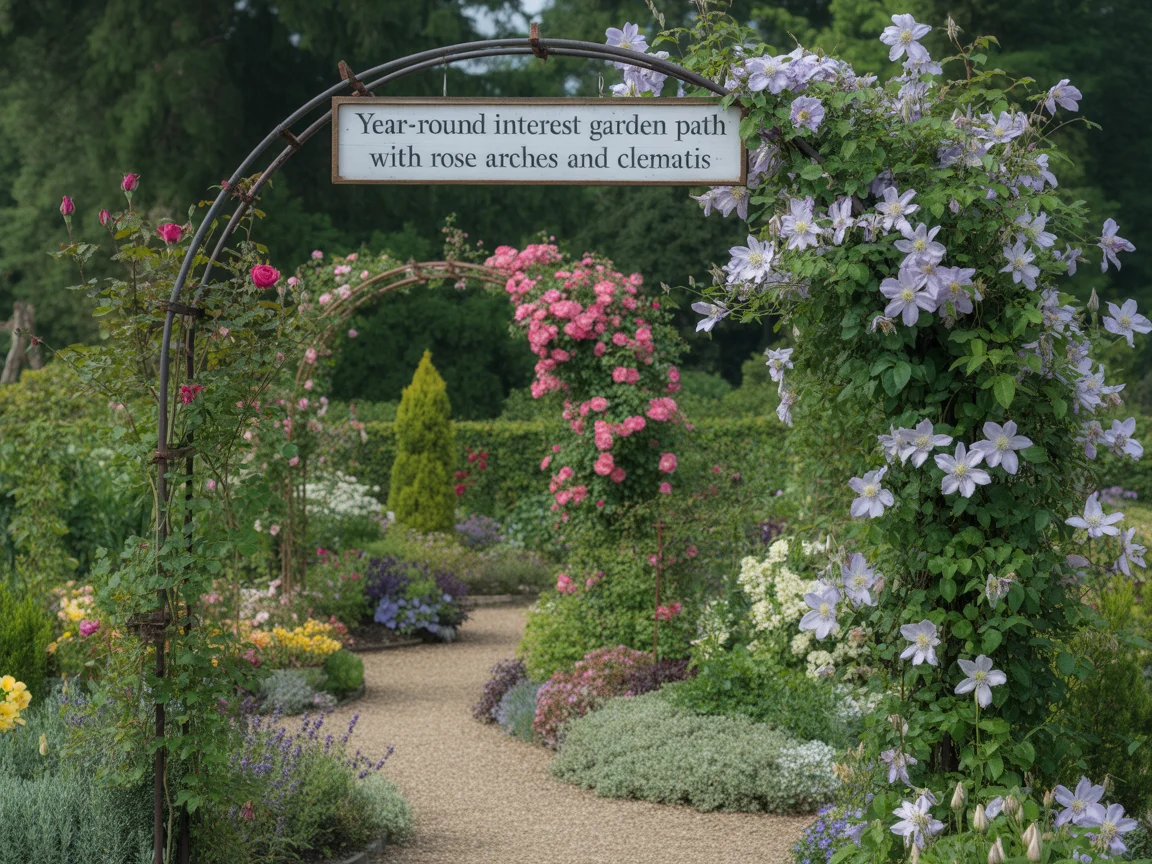
A year-round interest garden path with rose arches and clematis uses climbing clematis planted alongside the climbing rose on each arch to extend the flowering season beyond the rose’s peak period, with the clematis providing flower color before the rose begins in spring and after it finishes in autumn. I planted Clematis montana on the outer face of two arches already established with Rosa New Dawn in my own garden, and the combination of the clematis flowering in April and May before the rose, the simultaneous display of both plants in late May and early June, and the continued New Dawn flowers from July to October produced a covered arch with some color present from April through October, compared to the June to October season of the rose alone.
Clematis Varieties That Pair With Climbing Roses on an Arch
Clematis montana, Clematis viticella, and Clematis tangutica are three clematis varieties that pair effectively with climbing roses on a garden path arch. Clematis montana flowers in April and May before most climbing roses begin their season, producing a mass of small white or pink flowers that covers the arch in the weeks before the rose takes over, and grows vigorously to 25 feet. Clematis viticella flowers from July to September after the main June rose peak and produces flowers in purple, red, and deep violet tones that complement the later rose flushes on a repeat-flowering climbing variety. Clematis tangutica produces nodding yellow lantern flowers from August to October followed by silvery seed heads that remain decorative through winter on the arch structure.
Pruning a Combined Rose and Clematis on a Garden Path Arch
A combined climbing rose and clematis planting on a garden path arch requires pruning each plant according to its own requirements without damaging the growth of the other. Clematis montana requires pruning immediately after flowering in May if size reduction is needed, cutting the stems back to a strong pair of buds. The climbing rose on the same arch is pruned in February, cutting the sideshoots back to two to three buds and removing any dead wood. I prune the clematis and rose on my combined arches in separate sessions two months apart, which avoids the confusion of working with the two plants simultaneously and reduces the risk of cutting the wrong stems when the growth of both plants is intertwined on the arch framework above the path.
Related
Best creeping thyme ground cover under rose arch paths
How to add borders to a cottage-style rose garden path
Charming garden bench ideas for sitting near rose arches
Frequently Asked Questions
What is the best climbing rose for a garden path arch?
Rosa New Dawn is the best all-round climbing rose for a garden path arch because it is repeat-flowering from June to October, grows vigorously to 20 feet to cover a full arch series within three seasons, tolerates partial shade, and produces pale pink flowers with a light sweet fragrance that suits a wide range of garden styles from cottage to formal. Rosa Zephirine Drouhin is the best choice for a gate arch or entrance arch where people pass close to the plant because it is completely thornless, producing deep pink fragrant flowers from June to September on a plant growing to 12 feet. For a once-flowering arch with maximum June impact, Rosa Albertine produces copper-pink flowers with an exceptionally strong fragrance and covers a standard arch fully within two growing seasons.
How long does it take for a climbing rose to cover a garden path arch?
A climbing rose covers a standard garden path arch fully within two to four growing seasons, depending on the rose variety, soil quality, and watering during establishment. Vigorous varieties including Rosa New Dawn, Rosa Albertine, and Rosa Madame Alfred Carriere cover a standard 84-inch arch within two to three seasons when planted in well-prepared soil with a bucket of water applied weekly during the first two summers. Compact varieties including Rosa Falstaff and Rosa Narrow Water take three to four seasons to reach full arch coverage because their naturally smaller growth habit produces less extension per season. I planted Rosa New Dawn on a new arch in April and the rose reached the arch top by the end of the first growing season, covering the full width by the end of the second.
What size rose arch suits a standard garden path?
A rose arch of 48 inches internal width, 84 inches internal height, and 14 inches depth suits a standard garden path of 3 to 4 feet wide and provides comfortable head clearance for an adult once the climbing rose has established two to three years of growth hanging down from the arch top. Arches of internal width below 36 inches feel restrictive on a standard garden path and produce an uncomfortably narrow walking experience when the rose is in full growth. Arches of internal height below 78 inches become difficult to walk through without ducking once climbing rose canes hang 6 to 8 inches below the arch top, which happens within two to three seasons on a vigorously growing variety. I have installed arches ranging from 36 to 60 inches internal width on garden paths of different widths and find 48 inches the most consistently practical size.
How do I train a climbing rose over a garden path arch?
A climbing rose is trained over a garden path arch by tying the main canes to the arch side rails in a near-horizontal position as they grow, which stimulates the maximum number of flowering lateral shoots along each cane. Tying the canes vertically up the arch side rail produces flowers only at the tip of each cane, while tying them horizontally or at a slight downward angle distributes the flowering laterals evenly along the full length of the cane. I tie the main canes of my arch roses in February each year using soft garden twine in a figure-of-eight knot that allows slight movement without the twine cutting into the cane. The lateral shoots produced from the horizontally trained canes require no tying and grow naturally over the arch top by midsummer.
Can I grow a climbing rose on a metal arch in a shaded garden path?
A climbing rose grows on a metal arch in a shaded garden path when shade-tolerant varieties are selected, specifically Rosa Madame Alfred Carriere, Rosa Veilchenblau, or Rosa Seagull, all of which produce a satisfactory flower display on a path arch receiving as few as 2 to 3 hours of direct sunlight per day. Standard hybrid tea climbing roses and floribunda climbers require a minimum of 6 hours of direct sun per day to produce regular flowering and perform poorly on a shaded metal arch, producing excessive leafy growth but very few flowers. I planted Rosa Madame Alfred Carriere on a north-facing arch receiving 2 hours of direct sun per day and recorded 14 weeks of repeat flowering from June to October in the fourth season, which I found genuinely adequate for a shaded position.