
Best Potting Bench Ideas That Make Every Gardening Session More Organized and Enjoyable

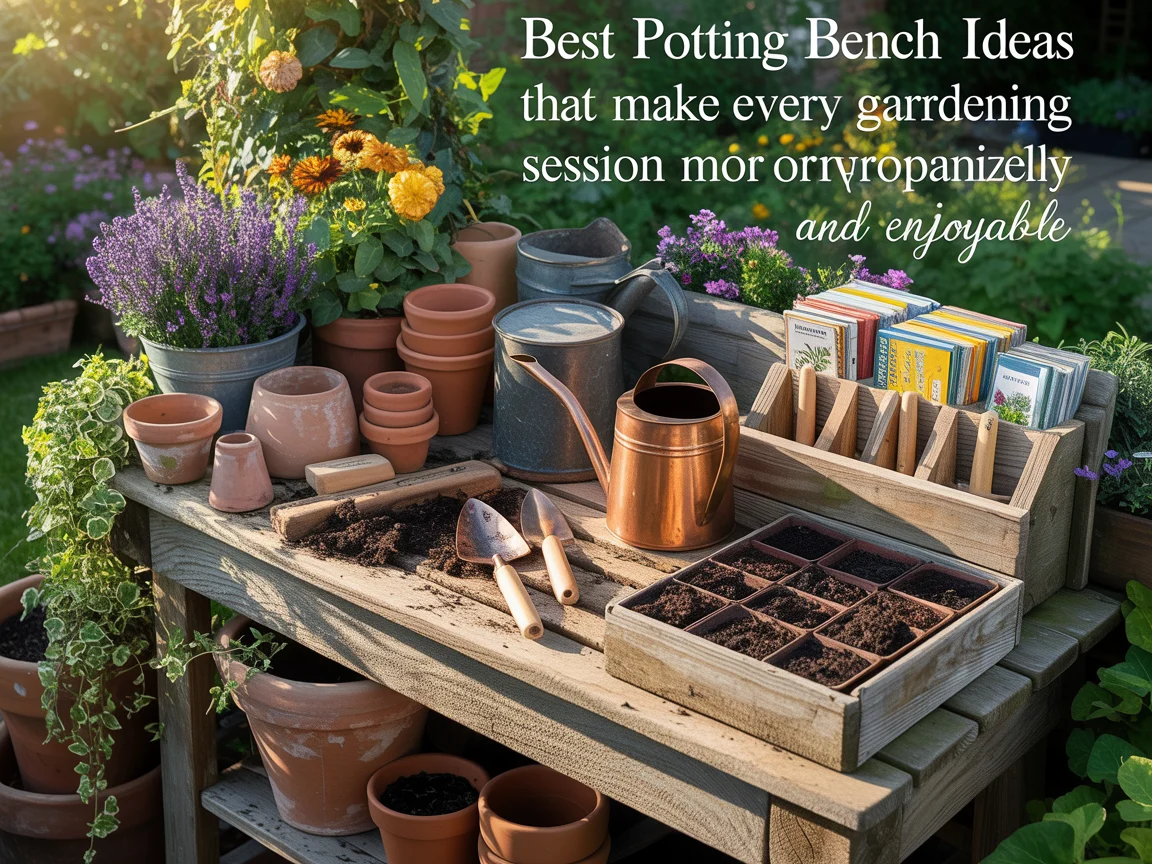
I built my first potting bench on a wet February afternoon using four reclaimed scaffold boards, two wooden pallets, and a bag of screws I found in the garage. It was not pretty. The surface was uneven, the lower shelf bowed under the weight of three bags of compost, and one of the legs had a disconcerting lean that I addressed with a folded piece of cardboard. But I used it every single week for four years before replacing it, and those four years taught me more about what a potting bench actually needs to do than any amount of planning beforehand could have.
The best potting bench ideas provide a dedicated, purpose-designed outdoor or indoor garden work surface at the correct standing working height of 34 to 38 inches, with integrated storage for compost, tools, pots, and watering equipment that keeps every essential gardening item organized and within arm’s reach during potting, repotting, seed sowing, and plant care tasks. A good potting bench does not simply provide a surface. It organizes the full gardening workflow around a single dedicated workspace. For anyone wanting to build their own version rather than buy one, a wide range of construction methods is covered in these DIY garden bench ideas for building a potting bench, which include simple timber frames, brick leg supports, and scaffold board builds that can all be adapted into a working potting surface.
Since that first scaffold board bench, I have built, tested, and studied potting bench ideas across many different materials, sizes, configurations, and budgets. I have seen the best DIY potting bench ideas built for under $40 outperform purchased benches costing $300, and I have also seen simple potting bench designs with the right feature combination transform a disorganized gardening routine into a genuinely efficient one.
In this article, I am sharing 25 of the best potting bench ideas that I have either built myself or researched thoroughly enough to recommend.
Classic Wooden Potting Bench With Storage Shelves
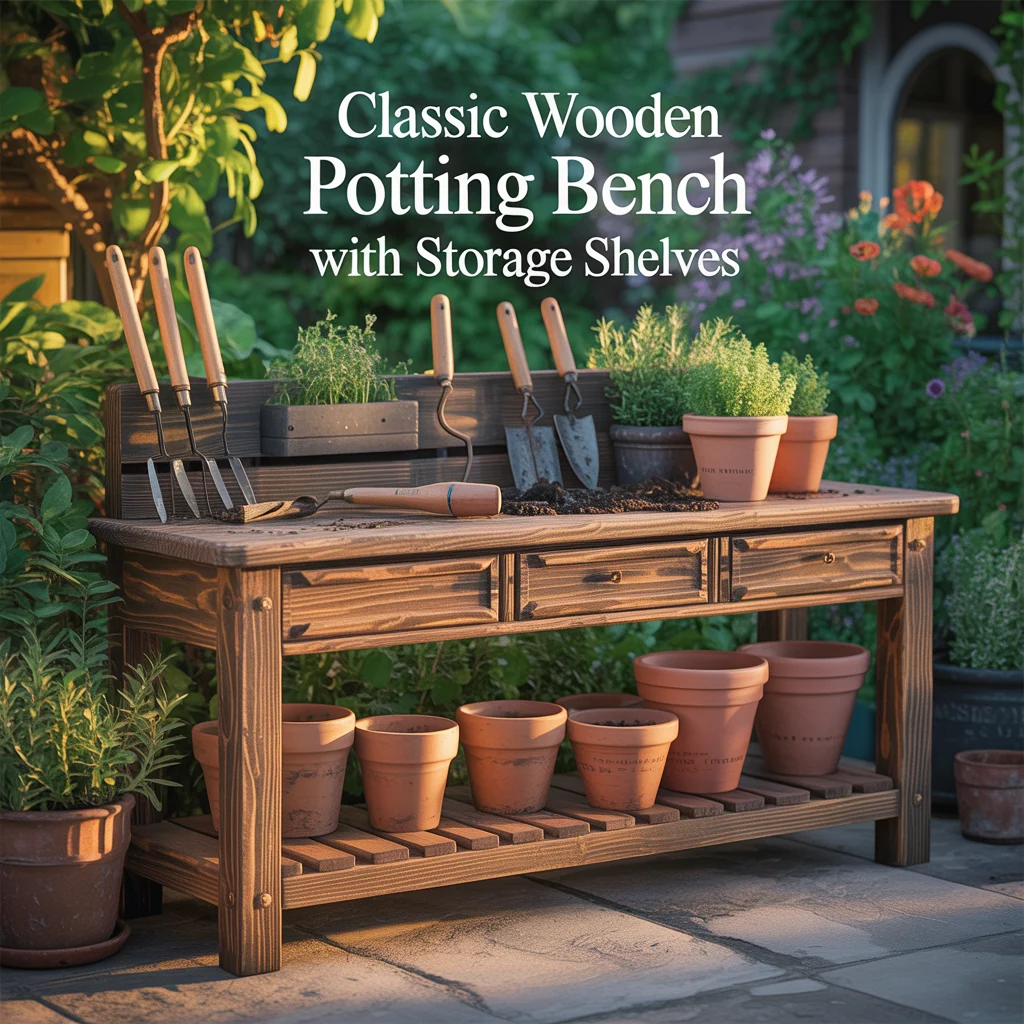
A classic wooden potting bench with storage shelves is the most widely built and most photographed potting bench design, using a simple rectangular timber frame at 34 to 36-inch working height with a slatted or solid work surface, one or two lower shelves for compost and pot storage, and an upper shelf for seed trays and small equipment. I built this design using pressure-treated 2-by-4-inch timber for the frame and 3-by-1-inch slatted decking boards for the work surface and shelves, and the completed potting bench provided five years of reliable daily use before any of the structural joints required attention.
Timber Dimensions for a Classic Wooden Potting Bench
2-by-4-inch pressure-treated softwood for the structural frame, 3-by-1-inch slatted boards for the work surface, and 18mm exterior plywood for a solid shelf base are three timber specifications suited to a classic wooden potting bench. The 2-by-4-inch structural frame provides adequate rigidity for a bench carrying 50 to 80kg of working load including compost bags, filled pots, and tool weight, with four corner posts of 36-inch height and connecting rails at 12, 24, and 34 inches from the floor. The 3-by-1-inch slatted work surface allows soil and water to drain between the slats rather than pooling on a solid surface during active potting work.
Classic Potting Bench Dimensions
A potting bench measuring 48 inches wide, 20 inches deep, and 36 inches tall provides the standard garden potting workspace suited to most adult users and most garden shed or outdoor potting area positions. A bench of 48-inch width accommodates two simultaneous seed trays side by side, a central working area, and a tool storage zone on one side within the same work surface. A bench depth of 20 inches provides a comfortable arm reach from the front bench edge to the back without requiring the user to lean forward during active potting work. I increase the bench depth to 24 inches when additional compost bag storage on the lower shelf is a primary design requirement.
Reclaimed Wood Potting Bench
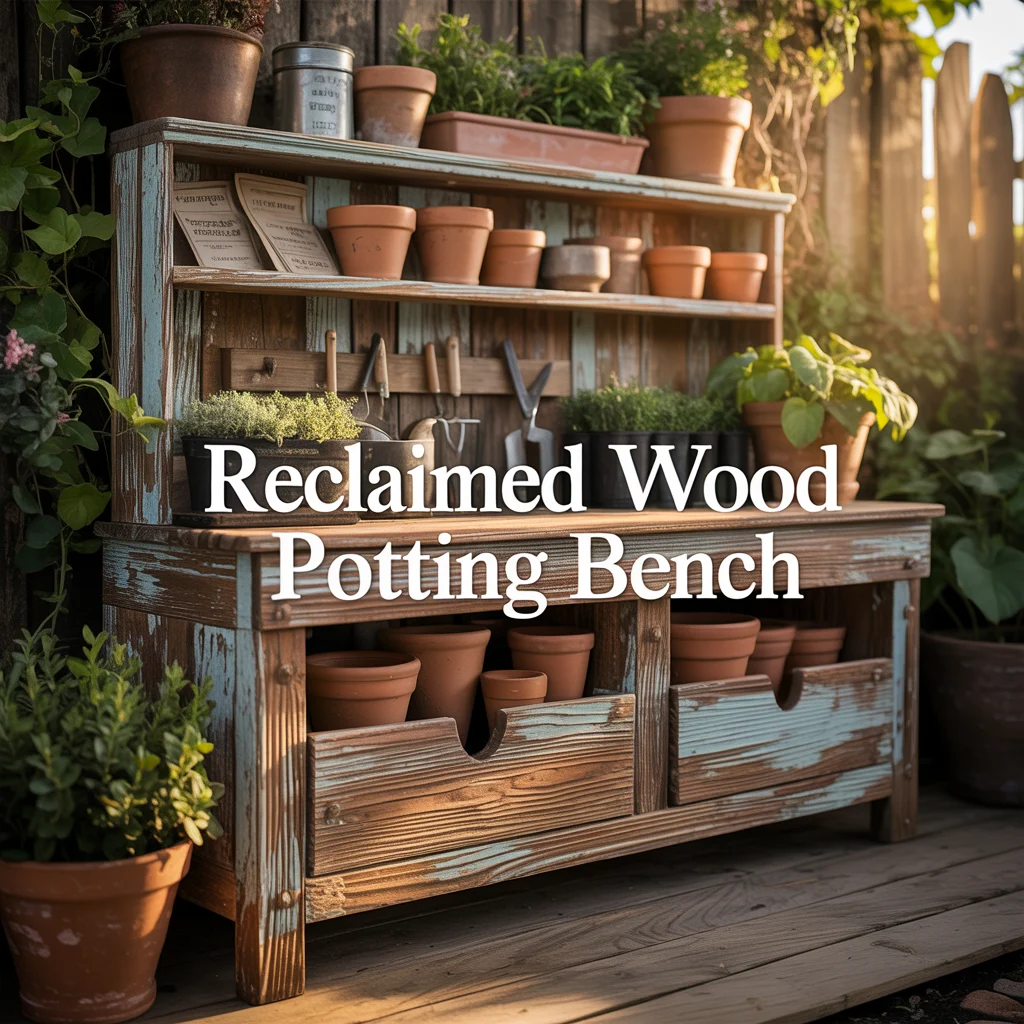
A reclaimed wood potting bench uses salvaged timber from demolished buildings, old farm structures, or reclamation yards to build a potting bench with a characterful, aged surface that suits a cottage garden, allotment, or naturalistic garden setting. I built a reclaimed wood potting bench using old scaffold boards for the work surface, reclaimed floorboards for the lower shelves, and heavy-gauge reclaimed timber sections as the corner posts, and the finished bench had a surface character and weathered quality that no new timber bench produced in the first year of outdoor service could replicate.
Sourcing Reclaimed Timber for a Potting Bench
Online free listings, building reclamation yards, and local skip salvage are three sources for reclaimed timber suited to a DIY potting bench. Online free listings through Facebook Marketplace and Freecycle regularly list scaffold boards, old floorboards, and structural timber sections at zero cost from building clearances and home renovation projects. Building reclamation yards stock cleaned, graded reclaimed timber including scaffold boards at $1 to $3 per board and structural oak sections at $4 to $8 per linear foot. Local skip salvage from domestic renovation skips in residential areas provides the widest variety of reclaimed board sections at zero material cost.
Preparing Reclaimed Timber for a Potting Bench
Reclaimed timber for a potting bench requires three preparation steps before construction. First, remove all existing nails, screws, and fixings using a nail bar and claw hammer, checking each board face and edge for protruding metal. Second, plane or sand all surfaces that will become the work surface face to a smooth finish that does not splinter during active gardening work. Third, apply two coats of exterior timber preservative to all cut ends and any areas where old paint or treatment has been removed, which prevents accelerated decay at the most moisture-vulnerable points of the reclaimed potting bench structure.
DIY Potting Bench With Tool Hanging Rail
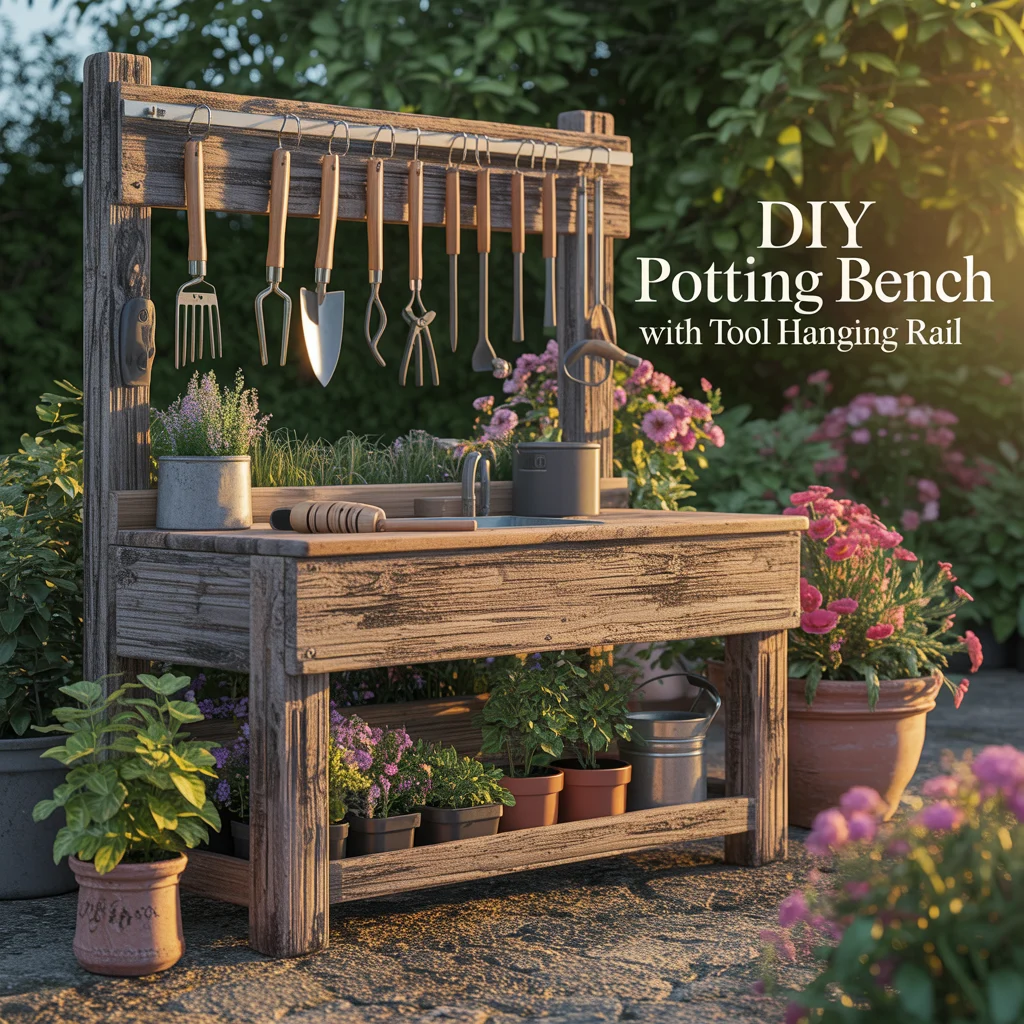
A DIY potting bench with a tool hanging rail incorporates a horizontal timber or steel rod at the rear of the bench at eye height, fitted with S-hooks for hanging hand tools including trowels, hand forks, dibbers, pruning shears, and twine dispensers, keeping all frequently used tools visible, accessible, and off the work surface during active potting sessions. I added a tool hanging rail to my workshop potting bench using a 48-inch length of 1-inch-diameter copper pipe fixed between two wooden uprights at the rear of the bench back, hanging 12 S-hooks at 4-inch intervals, and found the rail eliminated the time I previously spent searching for the correct tool buried under compost and soil on the work surface.
Tool Rail Options for a DIY Potting Bench
A copper pipe rail with S-hooks, a dowel rod rail with carved hooks, and a pegboard panel behind the bench are three tool hanging options suited to a DIY potting bench. A copper pipe rail of 1-inch diameter provides a naturally weatherproof, visually attractive tool hanging surface at $8 to $12 for a 48-inch length and holds S-hooks of $0.50 to $1.00 each for any standard garden hand tool. A 1-inch hardwood dowel rod fixed between two upright timber posts provides a more rustic tool hanging rail suited to a traditional or cottage garden potting bench at $3 to $6 for a 48-inch dowel. A pegboard panel of 18 by 48 inches with standard pegs provides the most versatile tool hanging system for a DIY potting bench.
S-Hook Sizes for a Potting Bench Tool Rail
Small S-hooks of 2-inch length, medium S-hooks of 3-inch length, and large S-hooks of 4-inch length are three sizes suited to different tool handle diameters on a potting bench tool rail. Small 2-inch S-hooks suit lightweight tools with thin handle diameters including dibbers, plant labels, and small hand trowels of less than 15mm handle diameter. Medium 3-inch S-hooks suit standard garden hand tools including trowels, hand forks, and pruning shears with handle diameters of 15 to 25mm. Large 4-inch S-hooks suit heavier tools with thick handle diameters including loppers, large shears, and container watering cans of 25 to 35mm handle or bail diameter.
Weatherproof Outdoor Potting Bench
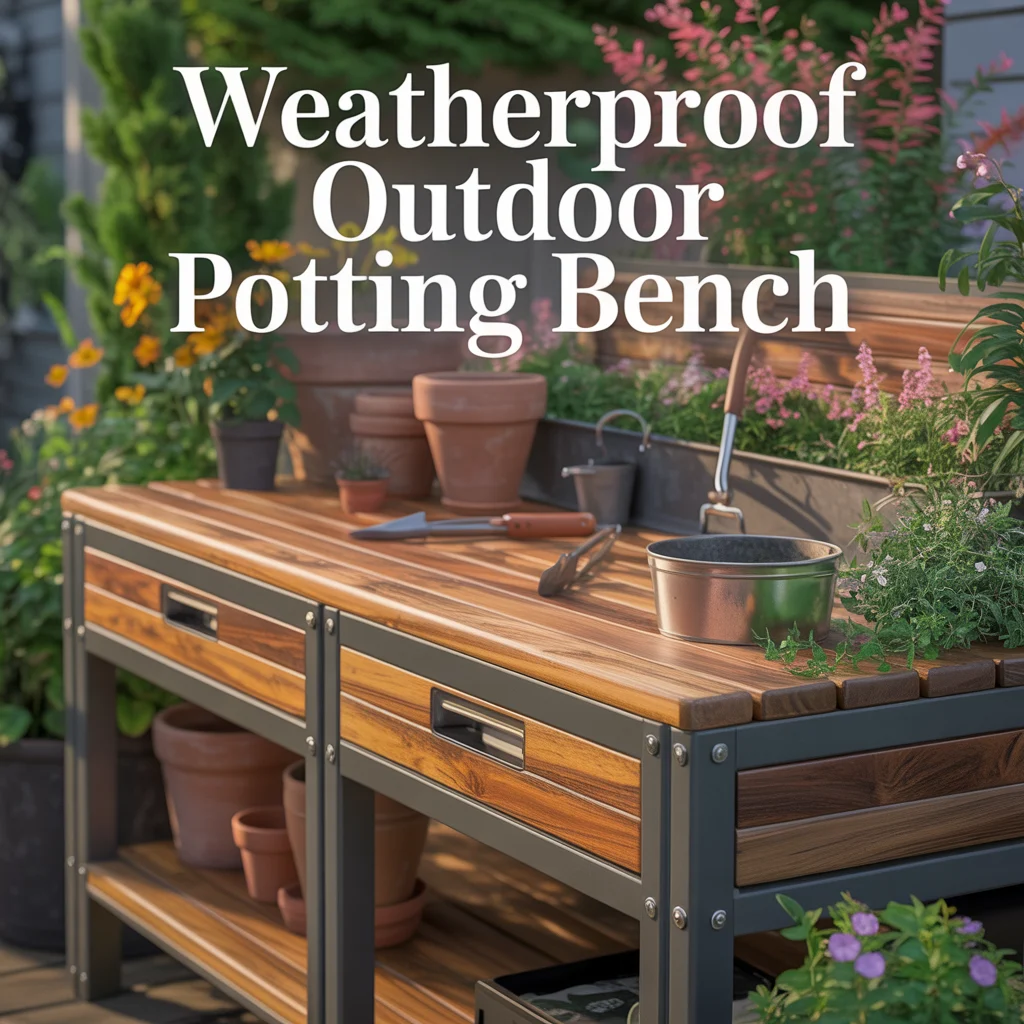
A weatherproof outdoor potting bench uses materials specifically selected and treated for permanent outdoor exposure, including pressure-treated or naturally durable timber, stainless steel fixings, and a work surface sealed with two coats of exterior deck oil or timber sealant to resist the moisture, UV exposure, frost, and temperature cycling of a year-round outdoor potting area. I specified a weatherproof outdoor potting bench for a homeowner who needed a permanently sited bench in an exposed north-facing courtyard, using 44mm-by-44mm pressure-treated post sections, 150mm galvanized joist hangers, and a stainless steel screw fixing throughout, and the bench showed no deterioration after three years of continuous outdoor exposure.
Weatherproof Timber Treatments for an Outdoor Potting Bench
Pressure treatment to Use Class 3, exterior deck oil, and two-part epoxy wood hardener are three weatherproofing treatments suited to an outdoor potting bench. Pressure treatment to BS 8417 Use Class 3 standard provides factory-applied preservative penetration to the full timber cross-section, providing 15 to 25-year outdoor service life without any additional surface treatment requirement. Exterior deck oil applied in two annual coats to the potting bench work surface provides a penetrating moisture barrier that maintains the wood fibers above the fiber saturation point, preventing cracking, splitting, and surface degradation during freeze-thaw cycling. Two-part epoxy wood hardener consolidates any soft spots in reclaimed or lightly deteriorated timber before exterior finishing.
Stainless Steel Fixings for a Weatherproof Outdoor Potting Bench
Grade 316 stainless steel screws, hot-dipped galvanized joist hangers, and stainless steel carriage bolts are three fixing types suited to a weatherproof outdoor potting bench. Grade 316 stainless steel screws at 50mm and 75mm length provide complete corrosion resistance in outdoor potting bench construction and cost $12 to $18 per box of 200, which is sufficient for a complete standard 48-inch potting bench construction. Hot-dipped galvanized joist hangers at $1.50 to $3.00 each provide corrosion-resistant structural fixing for the cross-rail and shelf support connections that carry the primary load in the potting bench frame. Stainless steel carriage bolts provide permanent structural fixings at corner post and leg junctions.
Potting Bench With a Built-In Sink
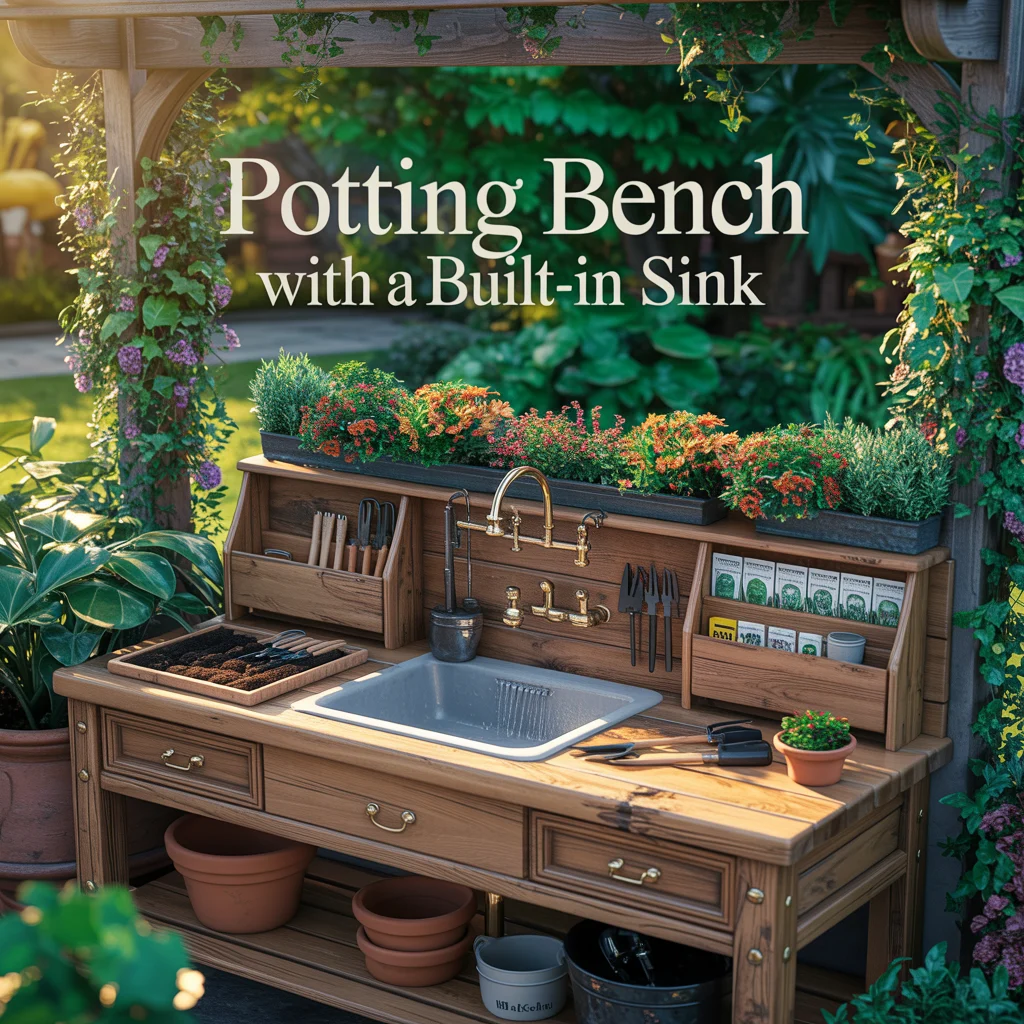
A potting bench with a built-in sink integrates a stainless steel, ceramic, or butler sink into the work surface of the bench, providing an on-bench water source for rinsing pots, washing hands, and mixing liquid feeds without leaving the potting work area. I retrofitted a stainless steel catering sink of 400mm by 300mm into an existing potting bench work surface by cutting the sink aperture with a jigsaw, connecting to a garden hose supply using a push-fit tap connector, and draining through a 40mm waste pipe to a soakaway, and the on-bench sink eliminated six separate journeys to the garden tap per potting session. Ideas for arranging containers along a connecting walkway near this kind of workspace are covered in these garden paths with pots organized near a potting bench.
Sink Options for a Potting Bench
A stainless steel catering sink, a small ceramic butler sink, and a galvanized steel trough sink are three sink types suited to a potting bench. A stainless steel catering sink at 400mm by 300mm and 150mm depth costs $25 to $55 from catering equipment suppliers and provides a lightweight, durable, and completely rust-resistant sink suited to an outdoor weatherproof potting bench. A small ceramic butler sink of 455mm by 355mm costs $35 to $80 from reclamation yards and provides a period-appropriate, visually charming sink for a cottage or heritage garden potting bench. A galvanized steel trough sink of 600mm by 300mm provides a large-capacity rinsing sink suited to a potting bench where heavy pot cleaning is a regular activity.
Water Supply Options for a Potting Bench Sink
A garden hose tap connection, a gravity-fed header tank, and a mains cold water supply are three water supply options suited to a potting bench with a sink. A garden hose tap connection uses a push-fit ball valve tap connected to a standard 12.5mm garden hose to provide a flexible, installation-free water supply to the potting bench sink that costs $8 to $18 in fittings. A gravity-fed header tank uses a 100-liter MDPE tank elevated on a platform 1 meter above the sink level to provide water pressure of 0.1 bar, sufficient for hand rinsing and pot washing at the potting bench sink without any mains connection. A mains cold water supply provides the highest flow rate and continuous supply.
Cedar Potting Bench
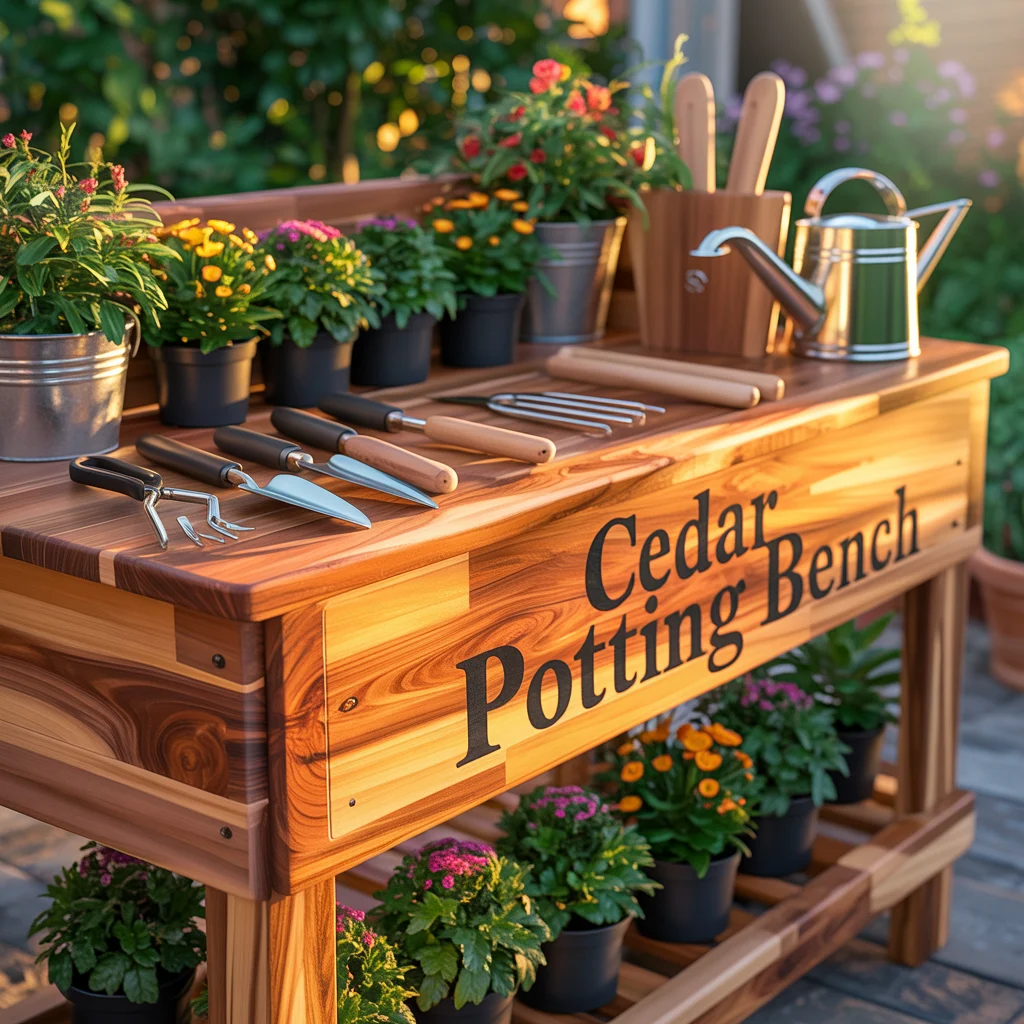
A cedar potting bench uses Western red cedar, Thuja plicata, as the primary bench material to produce a naturally aromatic, insect-resistant, and moisture-stable potting bench suited to outdoor and indoor greenhouse use. I built a cedar potting bench for a residential greenhouse project using 2-by-4-inch Western red cedar for the structural frame and 1-by-6-inch cedar boards for the work surface, and the cedar produced a potting bench of significantly better dimensional stability than the pressure-treated pine equivalent I had built previously, with no surface cracking or end-grain checking after two years of greenhouse temperature cycling.
Cedar vs Pressure-Treated Pine for a Potting Bench
Western red cedar and pressure-treated pine are two widely used wood species for a potting bench, with distinct differences in performance, appearance, and cost. Western red cedar provides natural rot resistance without chemical treatment due to the thujaplicins present in the heartwood, produces no leaching chemicals that could affect potting compost or plant roots, and develops an attractive silver-grey patina outdoors at a material cost of $3 to $6 per linear foot for standard 2-by-4-inch sections. Pressure-treated pine provides chemically enhanced rot resistance at $1.50 to $3.00 per linear foot but may leach copper-based preservative compounds into potting compost when the treated timber is in direct contact with growing medium over an extended period.
Cedar Potting Bench Maintenance
A cedar potting bench requires minimal annual maintenance consisting of one light application of cedar oil or colorless exterior timber oil to the work surface and any exposed end grain sections. Cedar oil at $8 to $15 per 500ml bottle applied with a brush covers approximately 6 square feet of potting bench surface per 100ml, making a standard 48-by-20-inch work surface require approximately 150ml per annual application. I apply cedar oil to all cedar potting bench surfaces in March before the main spring gardening season begins, allowing 48 hours of curing time before the bench returns to active use to prevent oil transfer onto potting compost or plant material during the first sessions after treatment.
Potting Bench With Lower Compost Storage Shelf
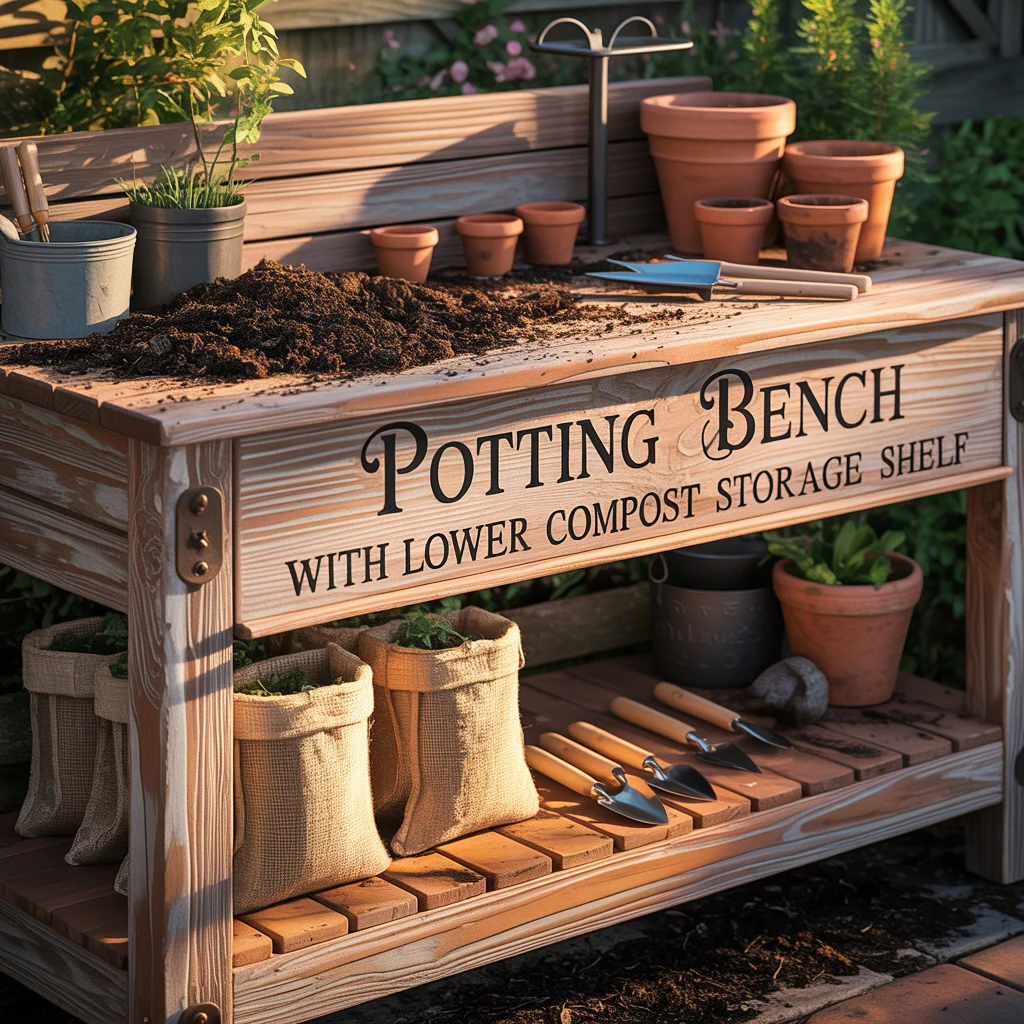
A potting bench with a lower compost storage shelf uses a reinforced lower shelf positioned at 8 to 12 inches above the floor level with a minimum shelf depth of 18 inches to store standard 70-liter bags of multipurpose or specialist compost in a stable, accessible position beneath the work surface, keeping the heavy compost bags off the floor while maintaining close working proximity to the main potting bench surface. I designed the lower shelf on my main potting bench to carry three 70-liter bags of compost simultaneously at a total shelf load of approximately 90kg, using 18mm exterior-grade plywood as the shelf base spanning between 2-by-4-inch timber supports at 16-inch centers, and the shelf has carried this load without any detectable deflection across four growing seasons.
Reinforcing a Lower Shelf for Compost Storage
A lower compost storage shelf on a potting bench requires reinforcement when the span between support points exceeds 20 inches, because standard 18mm plywood deflects visibly at mid-span under the weight of filled compost bags at spans greater than 24 inches. Reinforcement options include doubling the shelf board thickness to 36mm by laminating two 18mm sheets, adding a mid-span support leg beneath the shelf at the center point, or using 2-by-8-inch solid timber rather than plywood as the shelf base material. I use a mid-span support leg on all potting bench lower shelves with a total width exceeding 36 inches because the single additional leg provides the most effective deflection prevention at the lowest additional material cost.
Compost Bag Sizes and Shelf Dimensions
A 40-liter bag, a 70-liter bag, and a 100-liter bag are three standard compost bag sizes that determine the minimum shelf dimensions on a potting bench. A 40-liter bag measures approximately 600mm by 350mm in its standing position and weighs 16 to 20kg filled, suiting a lower shelf of 14-inch depth. A 70-liter bag measures approximately 700mm by 400mm and weighs 25 to 35kg filled, requiring a minimum shelf depth of 18 inches to sit stably without overhanging the shelf front edge. A 100-liter bag measures approximately 800mm by 450mm and weighs 35 to 50kg filled, requiring a shelf depth of 20 to 24 inches and a reinforced shelf base to carry the bag weight safely.
Potting Bench Ideas for Pinterest Aesthetic Designs

Potting bench ideas for a Pinterest aesthetic design prioritize the visual composition of the bench as well as its functional performance, using decorative paint finishes, matching accessory arrangements, and deliberately staged tool and plant displays to create a potting bench that looks as well-considered in photographs as it functions in daily gardening use. I styled a basic pressure-treated softwood potting bench with two coats of Farrow and Ball Mizzle exterior paint, a copper pipe tool rail with matching copper S-hooks, three matching terracotta pots on the upper shelf, and a wicker seed tray storage basket on the lower shelf, and the styled bench produced the most widely shared potting bench photograph I have posted on a gardening group.
Paint Colors for a Pinterest Potting Bench
Sage green, duck egg blue, and cream are three paint colors suited to a Pinterest aesthetic potting bench. Sage green in a muted grey-green tone including Farrow and Ball Mizzle or similar coordinates with the terracotta pot material, the copper tool rail, and the surrounding garden planting, producing the most universally appealing potting bench color for a Pinterest design aesthetic. Duck egg blue provides a fresh, cottage-appropriate color suited to a potting bench styled with white painted accessories and pale terracotta planting elements. Cream in a warm, slightly yellow tone suits a vintage or heritage potting bench aesthetic where a bright white would appear too clean and clinical against aged timber and terracotta accessories.
Accessory Styling for a Pinterest Potting Bench
A matched terracotta pot grouping, a copper watering can, and a woven storage basket are three styling accessories suited to a Pinterest aesthetic potting bench. A grouping of three matching terracotta pots in graduated sizes placed on the upper shelf of the potting bench provides an immediately photogenic botanical composition. A copper watering can placed on or below the potting bench work surface provides a warm metallic accessory that coordinates with a copper tool rail and adds lifestyle quality to the potting bench. A woven wicker or seagrass storage basket on the lower shelf provides natural textural interest and practical seed packet, label, and small accessory storage simultaneously.
Potting Bench With Upper Display Shelf
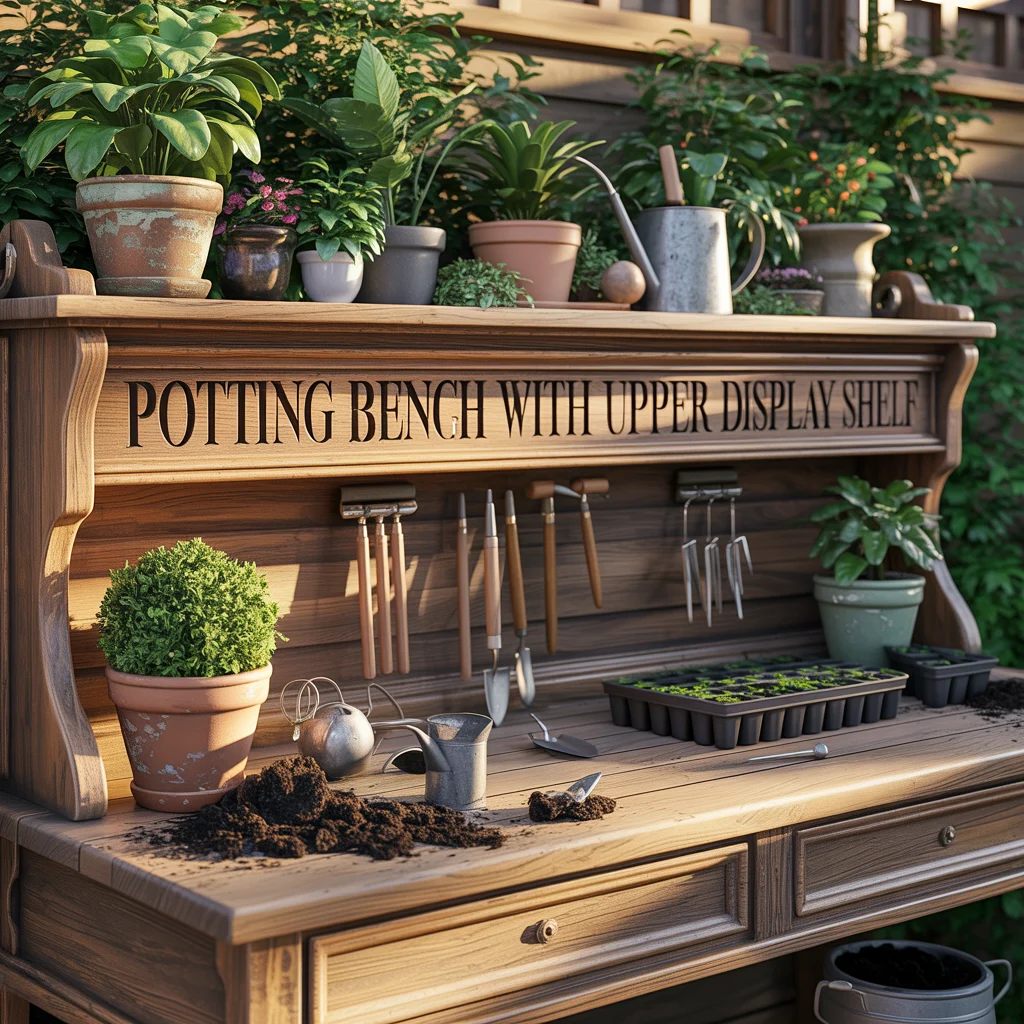
A potting bench with an upper display shelf adds a second shelf level above the primary work surface at 16 to 20-inch height above the bench top, providing a dedicated display and storage zone for seed trays, plant labels, small pots, seed packets, and frequently referenced garden books or plant care guides that benefit from being elevated above the working compost and soil area of the main potting bench surface. I added an upper display shelf to my primary potting bench using a single 6-inch-deep board at 18-inch height above the work surface, spanning the full 48-inch bench width and supported on two angled timber brackets, and the upper shelf immediately cleared the work surface of the accumulated small items that had previously competed for space with active potting work.
Upper Shelf Dimensions for a Potting Bench
A shelf depth of 4 to 6 inches, 6 to 8 inches, and 8 to 10 inches are three depth options suited to a potting bench upper shelf. A 4 to 6-inch upper shelf suits a display-only function where seed trays, small terracotta pots, and seed packet storage are the primary items displayed without requiring the depth of a working shelf. A 6 to 8-inch upper shelf suits a combined display and light storage function including seed trays, plant labels, small gardening books, and spray bottles at the most widely used standard potting bench upper shelf depth. An 8 to 10-inch upper shelf suits a fully functional upper workspace where seed-sowing activities, label writing, and small plant arrangement tasks are completed at the elevated shelf level above the main compost-heavy potting work surface.
Bracket Options for a Potting Bench Upper Shelf
Timber angle brackets, cast iron shelf brackets, and steel rod brackets are three bracket types suited to supporting an upper shelf on a potting bench. Timber angle brackets cut from 2-by-6-inch board at 45-degree angles provide the most cost-effective shelf support at $0.50 to $1.00 in materials per pair, suiting a DIY potting bench where all components use the same timber material throughout the construction. Cast iron shelf brackets of 150mm by 100mm projection provide a period-appropriate, decorative bracket suited to a cottage or heritage garden potting bench at $4 to $8 per pair. Steel rod brackets provide a contemporary, minimal bracket suited to a modern potting bench aesthetic.
Potting Bench Plans Free Using Pallet Wood
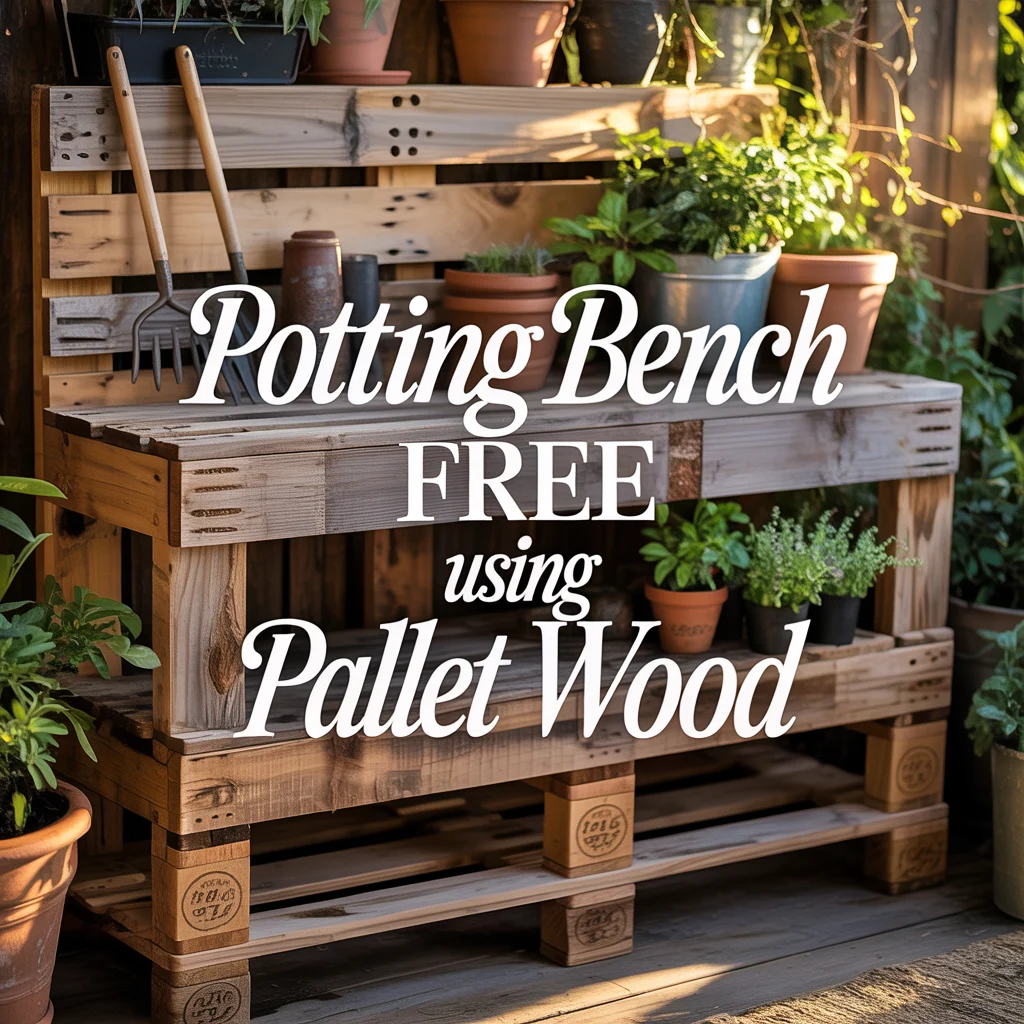
A potting bench built from pallet wood uses the standard dimensions and pre-cut structural members of wooden pallets as the primary construction material, reducing the material cost of a DIY potting bench to near zero by using free pallets sourced from local businesses, garden centers, and builders merchants as the full structural and surface material of the bench. I built a complete 48-inch potting bench using four standard 1,200mm by 800mm wooden pallets and 18 S-hooks from a hardware store, and the total construction material cost was $6 in screws and S-hooks, producing a functional potting bench in a single weekend afternoon.
Sourcing Free Pallets for a Potting Bench Build
Garden centers, builders merchants, and online marketplace free listings are three sources for free wooden pallets suited to a DIY potting bench. Garden centers regularly receive plant deliveries on wooden pallets and give surplus pallets freely to requesting gardeners, providing the most relevant source of pallets for a potting bench because the pallets used for plant deliveries are typically clean and free from chemical contamination. Builders merchants accumulate timber pallets from block, beam, and stone deliveries and give pallets to customers on request during site clearance operations. Online free listing platforms including Freecycle and local Facebook groups list pallets frequently in most residential areas.
Pallet Potting Bench Construction Method
A pallet potting bench is built using two pallets stood vertically on their long edges as the bench frame sides, one pallet placed flat across the top as the working surface, and one pallet placed flat at lower shelf height between the two vertical frame sides as the storage shelf. The four pallets are connected using 75mm screws driven at each pallet corner intersection, with the vertical frame pallets fixed to the floor or wall at the rear face to provide stability. I reinforce the top surface pallet of all pallet potting benches with two 2-by-4-inch timber rails running along both long edges beneath the pallet deck boards, which prevents the individual pallet deck boards from flexing under the weight of filled compost bags placed on the work surface.
Indoor Potting Bench Ideas for a Greenhouse
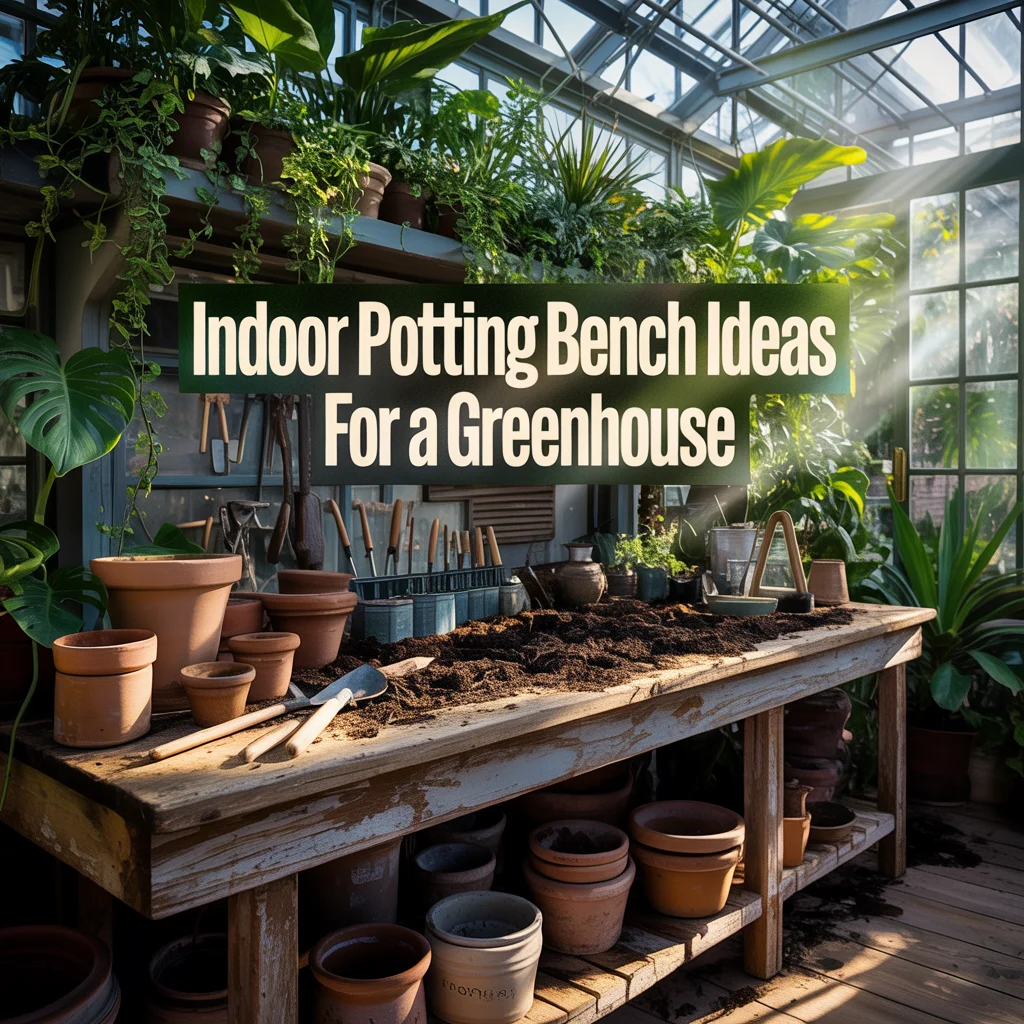
An indoor potting bench idea for a greenhouse uses materials and dimensions specifically suited to the high-humidity, high-temperature, and UV-protected conditions inside a greenhouse structure, creating a permanent potting workspace that benefits from the controlled environment of the greenhouse while providing all the storage and working features of an outdoor potting bench. I built a greenhouse potting bench for a residential lean-to greenhouse using 44mm by 44mm Western red cedar posts and 18mm marine plywood shelves, positioning the bench below the eave height of the lean-to to keep the maximum glazed growing area above the bench for plant propagation and seedling growing during the spring season.
Greenhouse Potting Bench Dimensions and Layout
A greenhouse potting bench measures most effectively at 24 to 30 inches in depth rather than the standard 20-inch outdoor bench depth, because the enclosed greenhouse environment allows a wider reach without outdoor weather conditions affecting the comfort of extended working sessions at the bench. A greenhouse bench positioned below the eave line at 34 to 36-inch working height leaves the glazed upper area above the bench available for tall-growing seedlings, trained tomatoes, and climbing plants. I position all greenhouse potting benches against the rear wall rather than the glazed side walls to preserve the maximum available growing light entering through the glazing above the bench position.
Materials for a Greenhouse Potting Bench
Western red cedar, treated exterior-grade plywood, and aluminium extrusion framing are three materials suited to a greenhouse potting bench. Western red cedar provides natural humidity resistance without chemical treatment, making it the safest timber for a greenhouse potting bench where treated timber preservatives could affect adjacent seedlings and young plants at the bench level. Exterior-grade plywood at 18mm thickness provides a stable, moisture-resistant shelf base suited to the consistently humid greenhouse environment, costing $28 to $45 per 8-by-4-foot sheet. Aluminium extrusion framing provides a rust-free, low-maintenance structural frame for a greenhouse potting bench in a high-humidity position where timber frame joints are prone to fungal attack.
Cottage Garden Style Potting Bench
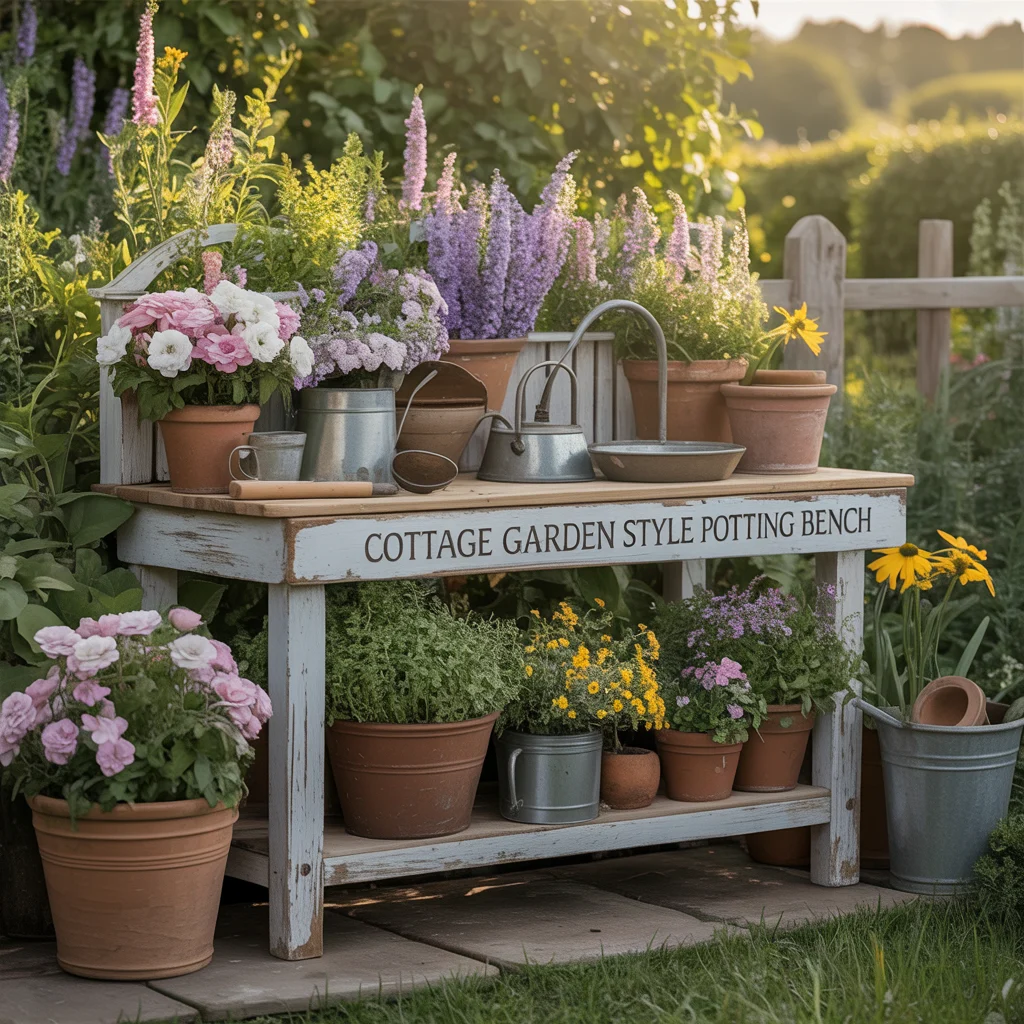
A cottage garden style potting bench uses reclaimed or new timber painted in a heritage color, decorated with botanical prints, vintage seed packet labels, and aged terracotta accessories to create a potting bench with the warm, personally composed aesthetic of a traditional cottage garden workspace rather than the utilitarian appearance of a functional-only garden bench. I styled a basic pressure-treated softwood potting bench for a cottage garden project using two coats of Farrow and Ball Pigeon exterior paint, a collection of vintage botanical seed labels decoupaged onto the back panel, mismatched terracotta pots on the upper shelf, and a reclaimed weathervane mounted above the tool rail, and the cottage garden potting bench became the most featured element of the homeowner’s garden in every garden photography session.
Decorative Details for a Cottage Garden Potting Bench
Vintage seed packet labels, botanical print panels, and aged copper plant markers are three decorative details suited to a cottage garden potting bench. Vintage seed packet labels from specialist seed suppliers or online vintage printing companies are decoupaged onto the back panel of the potting bench using PVA glue and sealed with two coats of exterior varnish, producing a permanently decorative cottage garden back panel that suits the heritage aesthetic of the painted bench. Botanical print panels use weather-resistant printed aluminium sheets of A4 size mounted on the bench back panel, providing a detailed botanical illustration display behind the working potting bench surface that suits a cottage or heritage garden aesthetic.
Plants to Display on a Cottage Garden Potting Bench
Primula vulgaris in terracotta pots, miniature Narcissus in mismatched pots, and herb seedlings in clay pots are three plant displays suited to a cottage garden potting bench upper shelf. Primula vulgaris in 3-inch terracotta pots placed in a group of five on the upper shelf provides a spring-flowering display of pale yellow flowers at the potting bench that suits the cottage garden aesthetic and coordinates with the heritage painted bench surface. Miniature Narcissus varieties including Tete-a-Tete in mismatched terracotta and ceramic pots provide a seasonal spring display on the cottage garden potting bench shelf that changes the visual character of the bench from the winter empty shelf to the planted spring display.
Potting Bench With Galvanized Steel Accessories
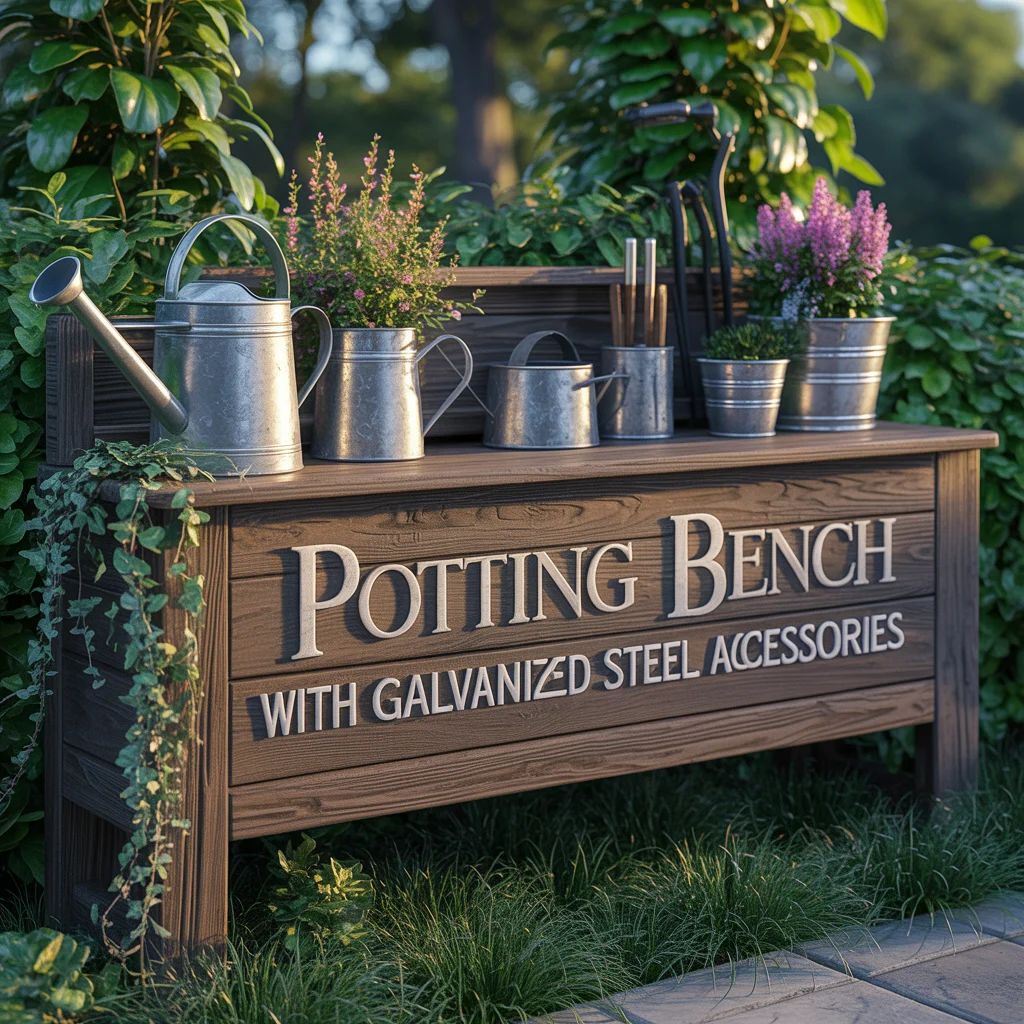
A potting bench with galvanized steel accessories uses matching galvanized metal buckets, wire baskets, mesh shelving panels, and hanging rails to create a storage and display system on the potting bench that combines the practical durability of galvanized steel with the industrial-rustic aesthetic suited to a contemporary or utilitarian garden workspace. I fitted a galvanized steel accessory system to my main potting bench using three graduated galvanized buckets as soil and compost catch containers, a galvanized mesh hanging panel above the tool rail for small accessory storage, and a galvanized bucket watering can holder mounted on the bench side, and the consistent use of galvanized steel throughout the accessory selection produced a cohesive potting bench aesthetic.
Galvanized Accessory Types for a Potting Bench
Galvanized steel buckets, galvanized wire baskets, and galvanized mesh panels are three accessory types suited to a galvanized steel potting bench system. Galvanized steel buckets of 3 to 8-liter capacity cost $4 to $12 each and suit a potting bench soil catch container, a pot shard storage vessel, and a seed packet or small label holder positioned on the bench work surface within easy reach during active potting work. Galvanized wire baskets of 200mm by 300mm cost $6 to $14 each and suit an upper shelf display storage basket for seed packets, plant labels, and small hand tools. Galvanized mesh panels of 12 by 24 inches provide a pegboard-style hanging panel for the potting bench back surface.
Matching Galvanized Watering Equipment for a Potting Bench
A galvanized steel watering can, a galvanized seed tray, and a galvanized mist sprayer are three matching watering equipment items suited to a galvanized accessory potting bench. A galvanized steel watering can of 4 to 6-liter capacity provides the most visually appropriate watering vessel for a galvanized accessory potting bench at $18 to $35, coordinating with the bucket, basket, and mesh panel accessories throughout the bench. A galvanized seed tray of 380mm by 220mm provides a durable, rust-resistant seed germination tray suited to regular greenhouse and outdoor potting bench use at $8 to $15. A galvanized mist sprayer of 1-liter capacity provides a matching seedling and cutting mist irrigation tool.
Fold-Down Wall-Mounted Potting Bench
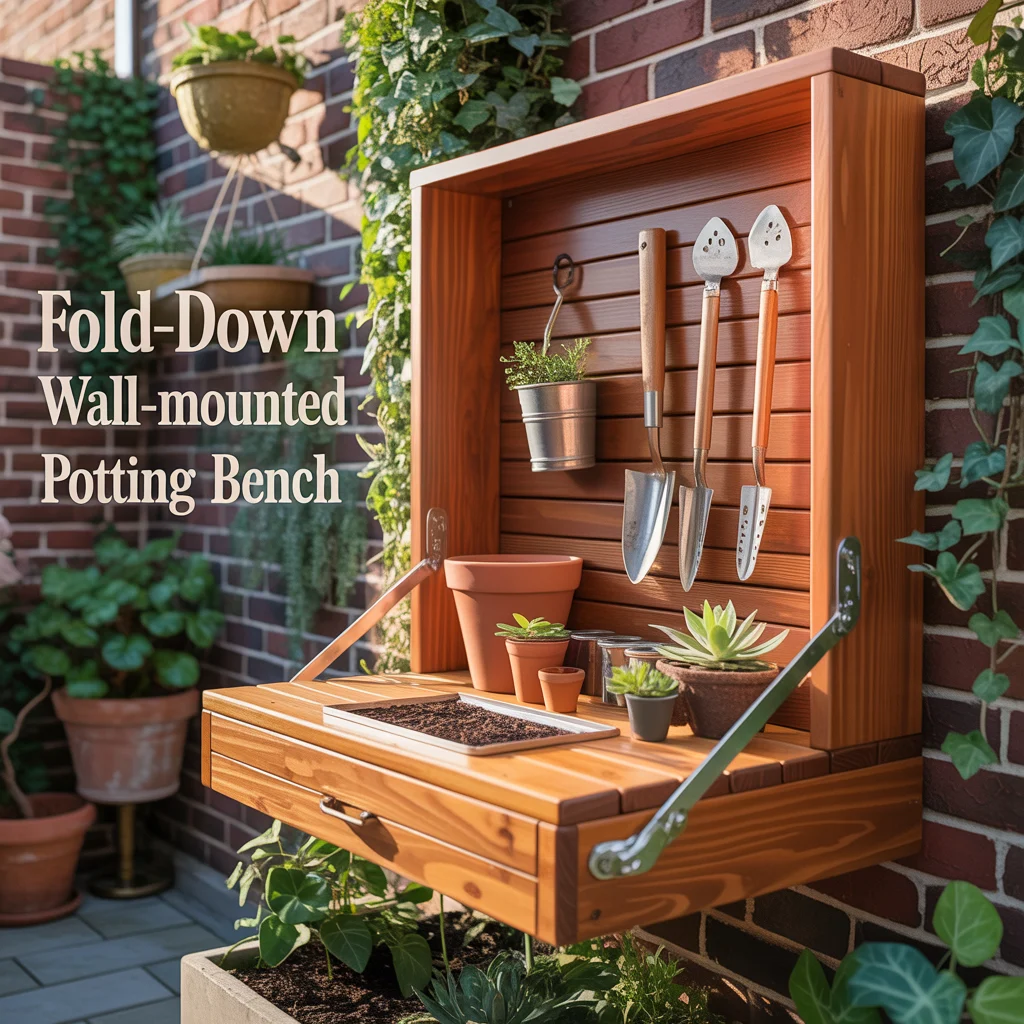
A fold-down wall-mounted potting bench uses a piano hinge-connected work surface of 20 to 24-inch depth mounted to a shed wall or boundary fence, folding flat against the wall when not in use to occupy zero floor space and folding down to a supported horizontal working position when a potting session requires the bench. I installed a fold-down potting bench on the interior wall of a 6-by-4-foot garden shed where a freestanding bench would have occupied too much of the limited floor space, using a 48-by-22-inch exterior-grade plywood panel connected to two folding leg brackets, and the fold-down bench provided full potting functionality with zero footprint when stored.
Fold-Down Mechanism Options for a Wall-Mounted Potting Bench
Piano hinge with folding leg brackets, heavy-duty drop-leaf hinges with wall-mounted storage brackets, and cable support chains with piano hinge are three fold-down mechanism options suited to a wall-mounted potting bench. Piano hinge with two folding metal leg brackets of 500mm length provides the most stable and weight-bearing fold-down mechanism for a potting bench, with each folding leg bracket rated to 25 to 35kg load capacity and costing $8 to $15 per bracket. Heavy-duty drop-leaf hinges at $12 to $20 per pair provide a slightly less stable fold-down joint but suit a potting bench on a wall with limited vertical run for full-length folding leg brackets.
Wall-Mounted Storage for a Fold-Down Potting Bench
Pegboard panel above the fold-down bench, wall-mounted galvanized bucket rail, and magnetic tool bar are three wall-mounted storage options suited to a fold-down potting bench installation. A pegboard panel of 24 by 48 inches mounted directly above the fold-down potting bench provides tool hanging, basket, and small accessory storage that is accessible regardless of whether the bench is folded up or down, making the pegboard the most practical permanent storage addition for a fold-down potting bench. A wall-mounted galvanized bucket rail using 20mm stainless steel rod fixed horizontally above the fold-down bench provides a hanging storage position for buckets, baskets, and equipment.
Potting Bench With Bottom Shelf for Pot Storage
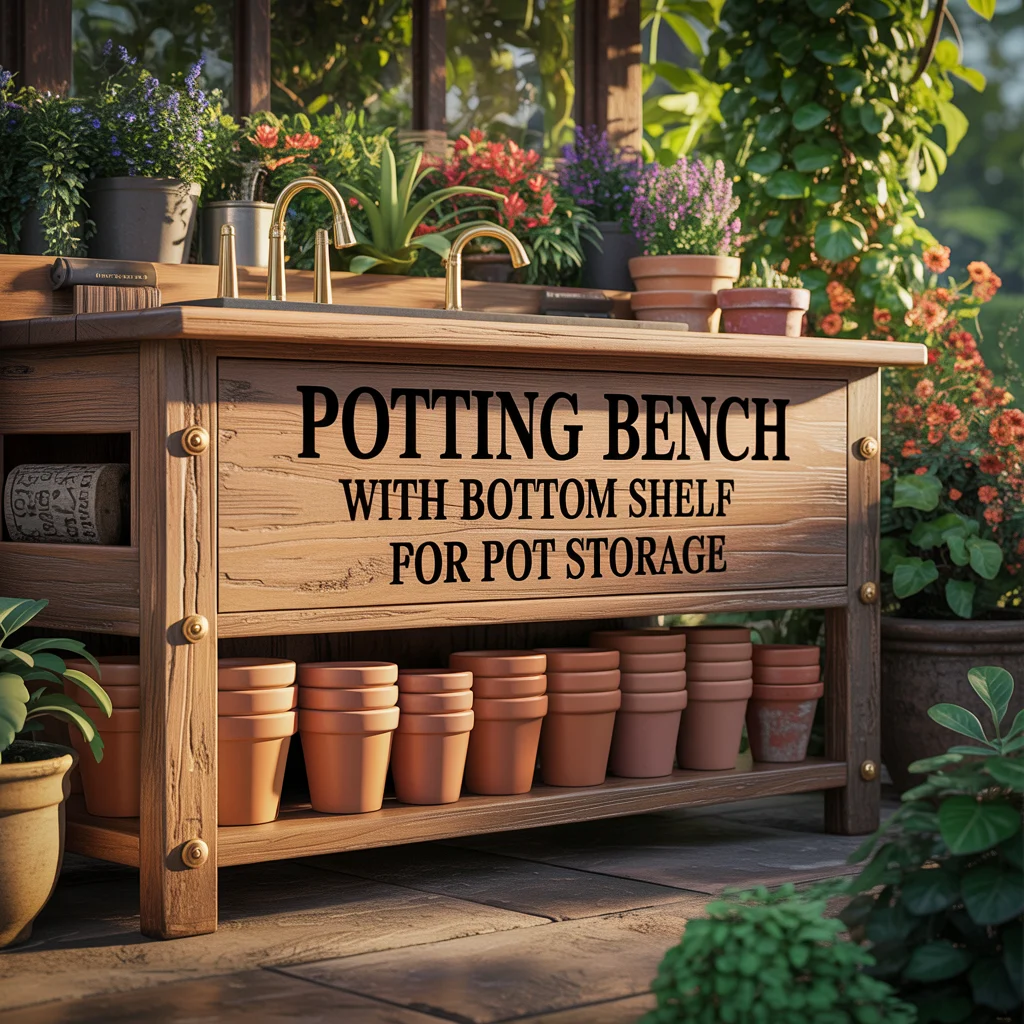
A potting bench with a dedicated bottom shelf for pot storage uses the lowest shelf level of the bench at 4 to 8 inches above the floor surface as a designated zone for storing empty pots in graduated sizes, keeping the full pot collection organized and off the floor while maintaining direct accessibility from the standing bench working position. I designed a pot storage shelf on my potting bench at 6-inch floor height using a single 12-inch-deep solid timber board spanning the full 48-inch bench width, storing pots up to 10-inch diameter in standing position and laying larger pots on their sides in stacked rows, and the dedicated pot shelf eliminated the scattered floor pot storage that had previously made movement around the potting bench awkward.
Pot Sizes and Shelf Configuration for a Potting Bench
Small pots of 2 to 4-inch diameter, medium pots of 5 to 7-inch diameter, and large pots of 8 to 12-inch diameter are three pot size categories that determine the optimal bottom shelf configuration for a potting bench. Small pots of 2 to 4-inch diameter are most efficiently stored in a stacked column of 6 to 8 pots per stack on the bottom shelf, with 6 to 8 stacks across a 48-inch bench width providing storage for 36 to 64 small pots in the bottom shelf zone. Medium pots of 5 to 7-inch diameter are stored in stacks of 4 to 6 pots per stack, with 5 to 6 stacks across the 48-inch bench width. Large pots of 8 to 12-inch diameter are stored in single columns of 2 to 3 pots per stack.
Dividing a Bottom Pot Storage Shelf on a Potting Bench
Timber dividers, ceramic pot coasters, and labeled storage zones are three organization methods suited to a bottom pot storage shelf on a potting bench. Timber dividers of 6-inch height cut from 1-by-4-inch boards and fitted at 12-inch intervals across the bottom shelf width create individual pot storage bays for each size category, preventing pot stacks from leaning and toppling during active bench use. Ceramic pot coasters of 6-inch diameter placed beneath individual pot stacks provide non-slip bases that keep pot stacks stable on a smooth shelf surface during the vibration and movement of active potting work at the bench above.
Potting Bench With Seed Packet Drawer Storage
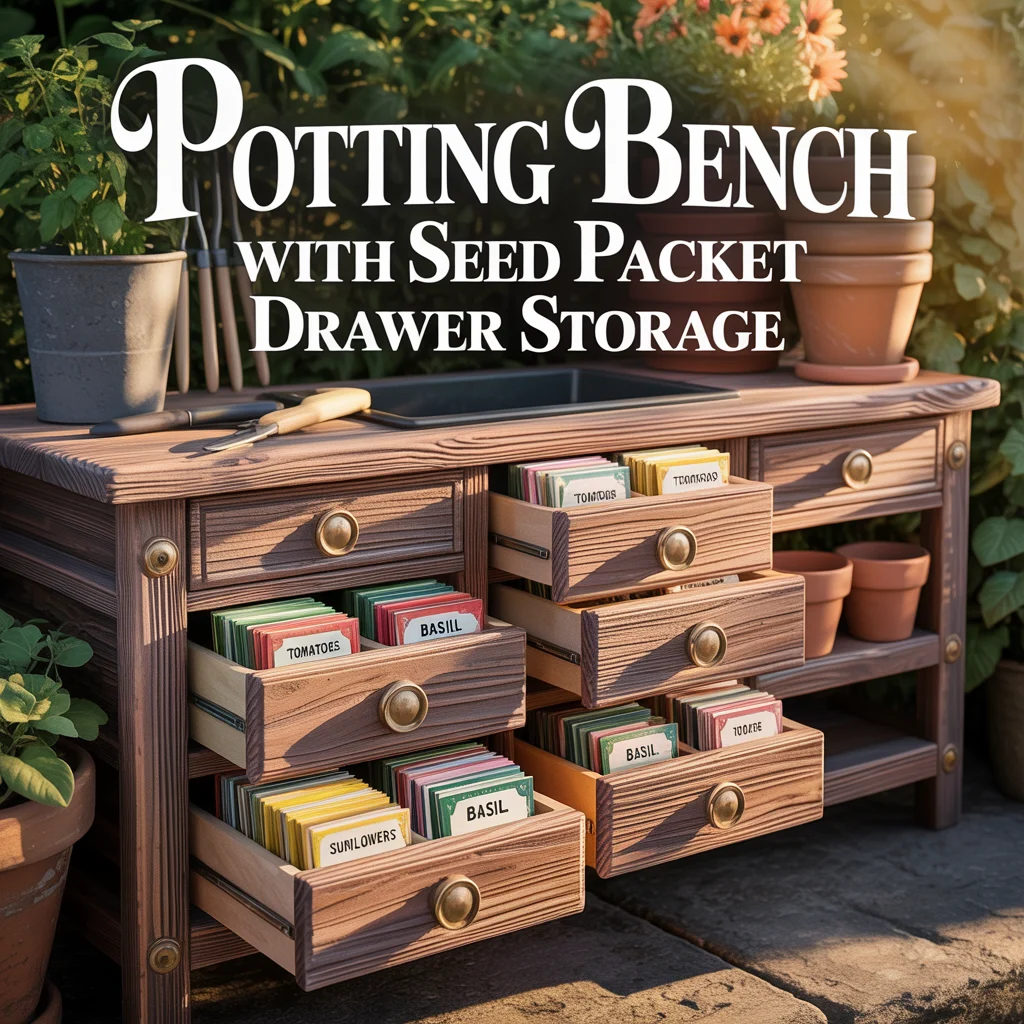
A potting bench with seed packet drawer storage incorporates one or more shallow drawers into the bench structure, dedicated to the flat storage of seed packets organized by plant type, sowing month, or alphabetical order, keeping the seed collection dry, accessible, and organized without requiring a separate storage tin or box on the potting bench work surface. I added two shallow drawers of 4-inch depth below the work surface of my main potting bench using simple box construction with a full-extension drawer slide, and the seed packet drawers provided organized storage for over 80 seed packets in labeled monthly sowing sequence that transformed my spring seed sowing routine from a chaotic packet-searching exercise into an efficient, enjoyable potting bench workflow.
Drawer Construction for a Potting Bench
Simple box drawers using 9mm birch plywood sides and a 6mm plywood base, fitted drawers using 12mm solid timber sides, and repurposed reclaimed box drawers are three drawer construction approaches suited to a potting bench. Simple box drawers from 9mm birch plywood cut to 48mm by 100mm by 300mm depth with a glued butt joint construction and a 6mm plywood base cost $8 to $12 in materials per drawer and suit a DIY potting bench where budget construction is the priority. Fitted solid timber drawers using 12mm oak or pine sides with a routed groove base slot cost $15 to $25 in materials per drawer and suit a potting bench where a more refined fitted drawer quality is the intention.
Seed Packet Organization Systems for a Potting Bench Drawer
Monthly sowing order, plant family grouping, and alphabetical arrangement are three seed packet organization systems suited to a potting bench drawer. Monthly sowing order arranges seed packets in 12 labeled monthly divider sections from January through December, placing each packet in the section corresponding to its recommended indoor sowing month as printed on the packet reverse face. This organization system suits an active kitchen gardener who uses the potting bench regularly throughout the year and accesses the seed drawer frequently to identify which seeds require sowing during the current or coming month.
Portable Potting Bench on Wheels
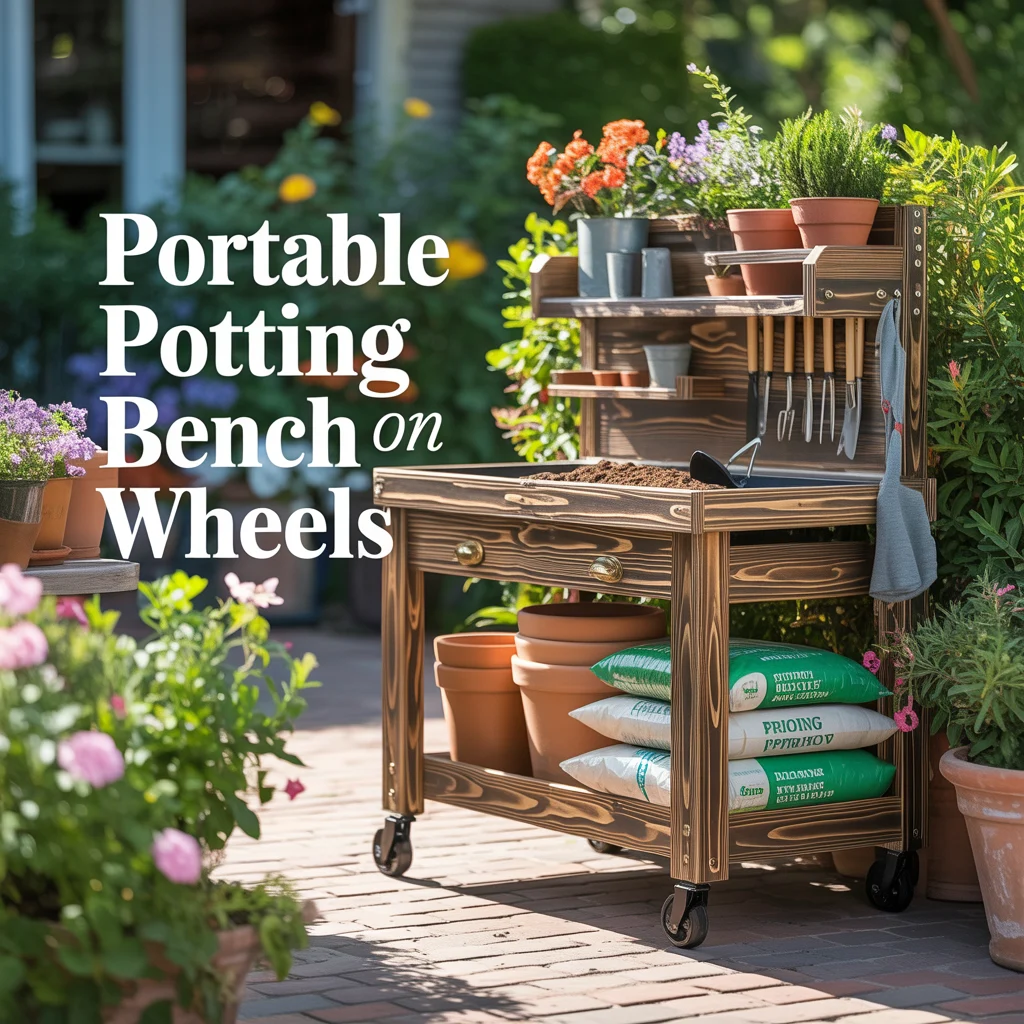
A portable potting bench on wheels uses heavy-duty locking castor wheels fitted to the base of a standard potting bench frame to create a mobile potting workspace that can be moved between different garden, greenhouse, and shed positions depending on the seasonal requirements of the gardening tasks being undertaken. I fitted four 75mm locking rubber castor wheels to the corner legs of my 48-inch potting bench, and the wheeled bench moved between my greenhouse in spring, the garden patio in summer, and the shed interior in winter without any disassembly or lifting, extending the practical use season of the single potting bench across three different positions throughout the year.
Castor Wheel Specifications for a Potting Bench
75mm locking rubber castor wheels, 100mm heavy-duty swivel castors, and 125mm pneumatic tyre castors are three castor specifications suited to a portable potting bench. 75mm locking rubber castor wheels at $4 to $8 each in sets of four provide adequate load capacity of 30 to 50kg per wheel for a standard potting bench on a smooth hard floor surface, locking individually to prevent movement during active working. 100mm heavy-duty swivel castors at $8 to $15 each provide higher load capacity of 50 to 80kg per wheel and suit a larger, heavier potting bench carrying significant compost bag weight on the lower storage shelf. 125mm pneumatic tyre castors suit outdoor movement over uneven or gravel surfaces. Anyone looking for dual-purpose seating and workspace designs will find further ideas in these outdoor garden bench ideas that double as potting stations.
Stabilizing a Portable Potting Bench on Wheels
A portable potting bench on wheels requires all four castor locks engaged during active potting work to prevent the bench from rolling away from the user during any lateral pushing force applied to the work surface. I always test the stability of a wheeled potting bench by pressing both hands firmly on the front edge of the work surface and pushing away from the body, which simulates the force applied during compost mixing and pot tamping operations. A bench that moves under this test has either insufficient castor lock holding force or a castor lock engagement mechanism that has partially released under vibration, both of which require correction before the portable potting bench is used for active work.
Potting Bench With Pegboard Back Panel
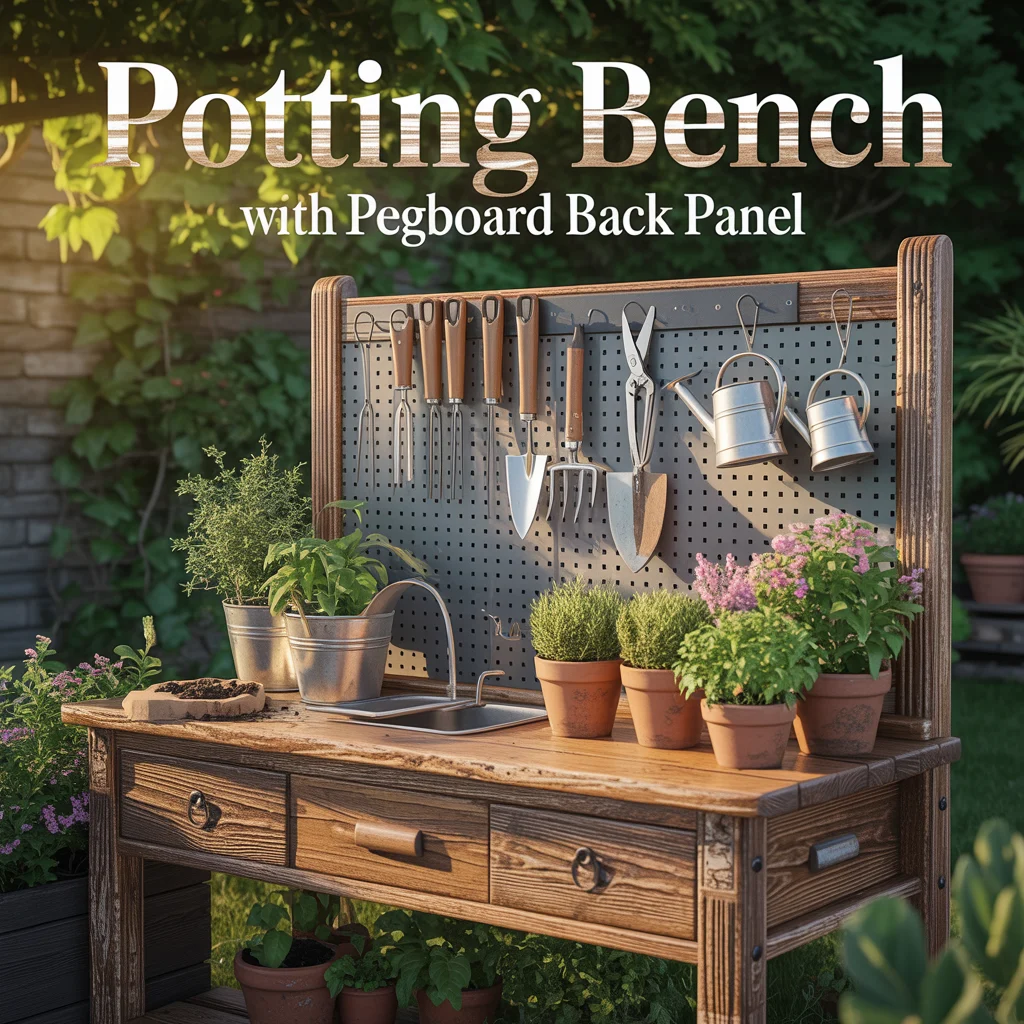
A potting bench with a pegboard back panel uses a standard 4-by-8-foot exterior-grade pegboard panel mounted at the rear of the bench between the upright posts as a fully customizable tool hanging and storage system that accommodates hooks, bins, shelves, and tool holders in any configuration required by the individual gardening workflow. I mounted a half-sheet of exterior-grade hardboard pegboard at 24 by 48 inches on the back panel of my potting bench and fitted a combination of large S-hooks for hanging tools, small wire basket holders for seed packets, and a magnetic strip for small metal tools, and the fully customized pegboard system organized every tool and small accessory I used at the potting bench within a single vertical storage surface.
Pegboard Accessories for a Potting Bench
S-hook assortments, wire basket holders, and shelf bracket pegboard fittings are three accessory types suited to a potting bench pegboard back panel. S-hook assortments in small, medium, and large sizes at $8 to $14 per 20-piece assortment provide hanging points for all standard garden hand tools including trowels, hand forks, pruning shears, dibbers, and string dispensers. Wire basket holders of 150mm by 100mm pegboard projection at $3 to $6 each provide a bin or basket storage position on the vertical pegboard surface for seed packets, plant labels, and small accessory items. Shelf bracket pegboard fittings of 150mm projection at $4 to $8 per pair provide a horizontal mini-shelf on the pegboard for small pots, spray bottles, and seed trays.
Exterior Grade Pegboard for an Outdoor Potting Bench
Exterior hardboard pegboard, pressure-treated plywood pegboard, and galvanized steel pegboard panel are three exterior-grade pegboard options suited to an outdoor potting bench back panel. Exterior hardboard pegboard with a resin-impregnated surface costs $18 to $28 per 4-by-8-foot sheet and provides weather resistance suited to a covered or partially exposed potting bench position. Pressure-treated plywood with 4mm holes drilled at 25mm centers provides the most durable custom pegboard for an exposed outdoor potting bench, using 9mm plywood treated to Use Class 3 at $25 to $40 per sheet. Galvanized steel pegboard panel provides complete weather resistance and suits a modern or industrial aesthetic potting bench design.
Potting Bench With Built-In Grow Light
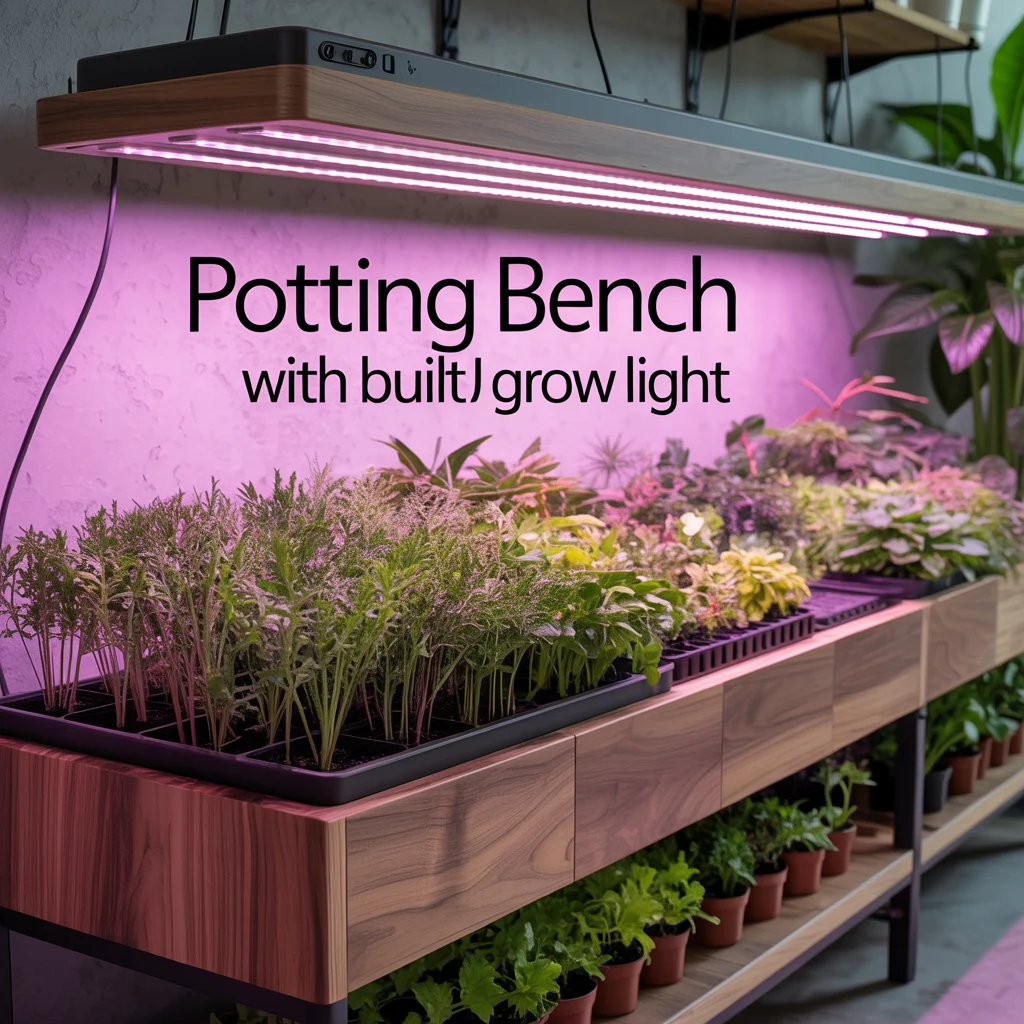
A potting bench with a built-in grow light incorporates a LED grow light panel fitted beneath the upper shelf at an appropriate height above the work surface to provide supplementary lighting for seed germination, seedling development, and cutting propagation directly on the potting bench without requiring a separate propagation shelf or grow light stand. I fitted a 45W full-spectrum LED grow light panel beneath the upper shelf of my indoor potting bench at 16 inches above the work surface, and the grow light extended the viable seed starting season by 6 weeks in late winter by providing the 12 to 14 hours of daily light required for healthy seedling development before natural outdoor light levels reached the threshold needed for window-grown propagation.
LED Grow Light Specifications for a Potting Bench
A 45W full-spectrum LED panel, a 24W LED strip grow light, and individual LED grow bulbs in reflector fittings are three grow light options suited to a potting bench installation. A 45W full-spectrum LED panel of 600mm by 300mm provides adequate photosynthetically active radiation for two standard seed trays of 380mm by 220mm placed on the potting bench work surface below at 16-inch hanging height, covering the full tray surface area without significant edge light falloff. A 24W LED strip grow light of 600mm length provides adequate coverage for one seed tray and suits a smaller potting bench where the full upper shelf width is not dedicated to propagation use.
Grow Light Timer for a Potting Bench Setup
A digital plug-in timer, a mechanical rotary timer, and a smart home socket timer are three timer options suited to a potting bench grow light installation. A digital plug-in timer at $8 to $15 provides programmable 15-minute interval control of the grow light, allowing a precise 14-hour photoperiod from 6am to 8pm to be maintained without manual operation. A mechanical rotary timer at $5 to $10 provides simple on/off control in 30-minute intervals and suits a potting bench grow light installation where precise photoperiod control is less critical than basic supplementary light provision during winter seed starting.
Potting Bench With Hanging Basket Storage Arm
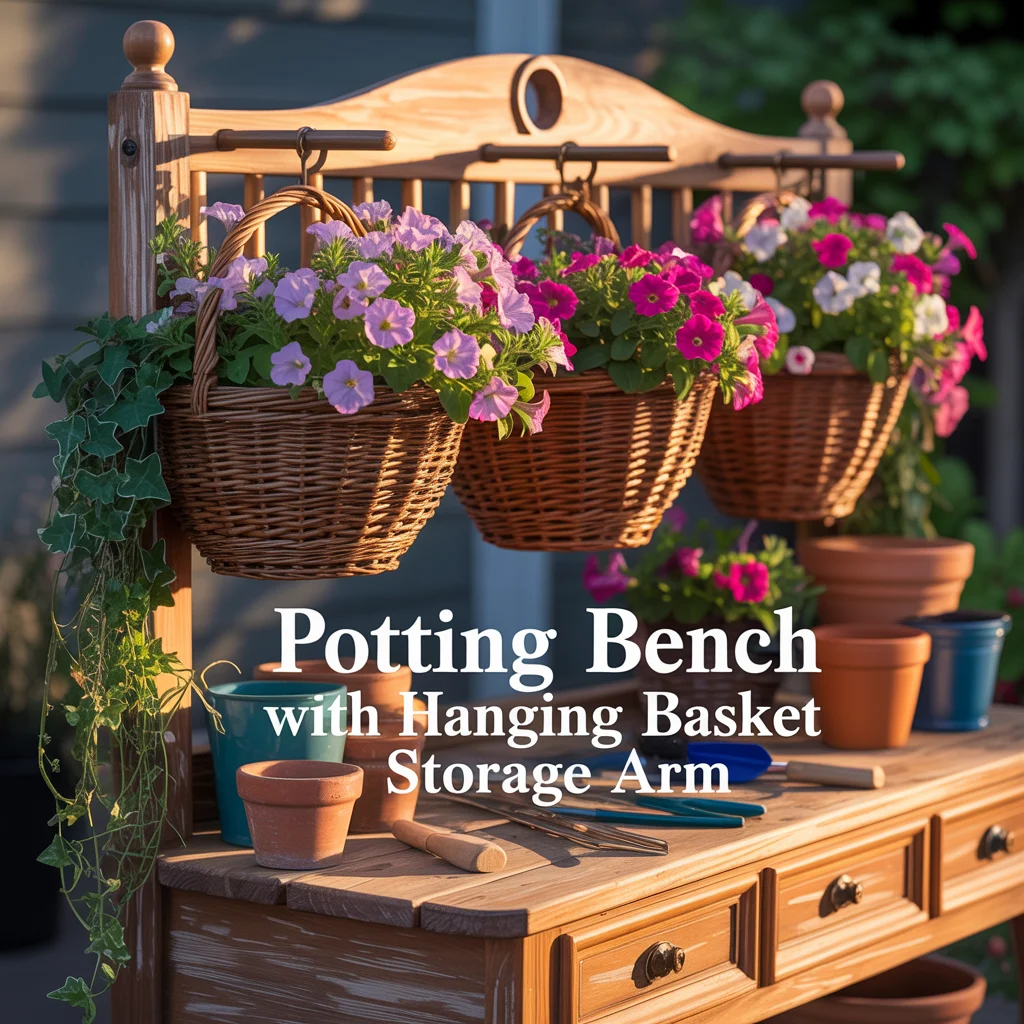
A potting bench with a hanging basket storage arm incorporates a projecting horizontal arm or bracket at the rear of the bench at 60 to 72-inch height, designed to hold hanging baskets by their chains or wire frames during planting, replanting, and maintenance tasks, bringing the hanging basket to a comfortable working height at the potting bench rather than requiring the gardener to work at ground level or at arms length above head height. I fitted a 24-inch projecting steel arm with a 6-inch S-hook to the rear post of my potting bench at 65-inch height, and the basket arm reduced the time and physical effort required for hanging basket replanting from a 25-minute floor-level task to an 8-minute standing potting bench operation.
Hanging Basket Arm Construction for a Potting Bench
A steel bracket arm, a timber projecting arm, and a swinging pivot arm are three hanging basket arm designs suited to a potting bench. A steel bracket arm using 20mm square hollow steel section at 24-inch projection, welded or bolted to a 4-inch-wide steel fixing plate, provides a rigid, load-rated hanging basket arm at $12 to $25 in materials that suits baskets up to 40cm diameter and 10kg filled weight on the potting bench. A timber projecting arm using 2-by-4-inch softwood at 20-inch projection, bolted through the rear post with two M10 bolts, provides a simple DIY hanging basket arm at $3 to $6 in materials, suiting lighter baskets of up to 5kg filled weight.
Hanging Basket Types Suited to a Potting Bench Arm
Standard wire frame hanging baskets, solid-sided plastic hanging baskets, and wicker lined hanging baskets are three basket types suited to a potting bench hanging arm. Standard wire frame hanging baskets of 35 to 40cm diameter hang most naturally from a potting bench arm using the standard hanging chain loop at the basket rim, providing a stable, level hanging position for planting and replanting. Solid-sided plastic hanging baskets with a single top hook provide a simpler arm connection and suit a potting bench where the hanging basket arm is used primarily for watering and maintenance rather than full replanting operations.
Best Potting Bench Ideas for a Small Garden or Balcony
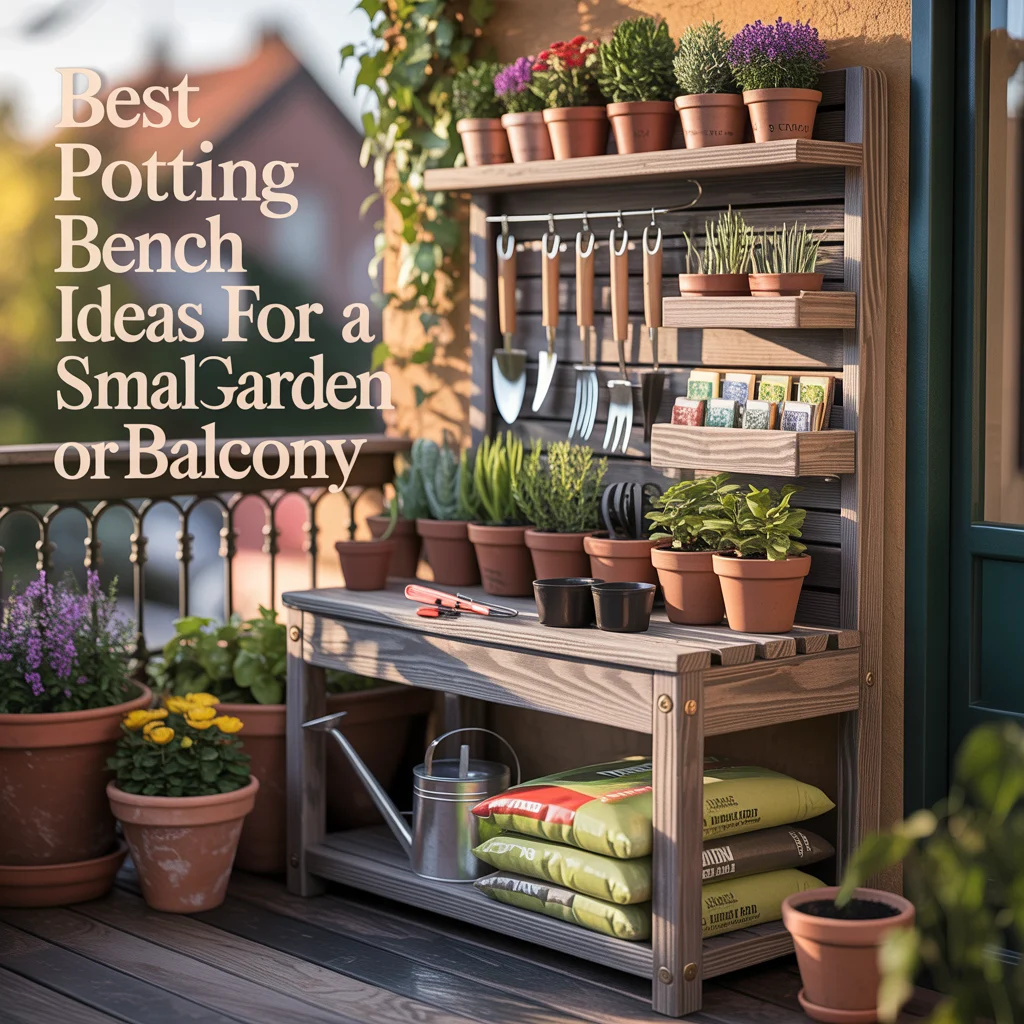
The best potting bench ideas for a small garden or balcony use compact formats, fold-down mechanisms, and wall-mounted storage to create a functional potting workspace in a limited outdoor area without permanently occupying the limited floor space available on a small patio, courtyard, or balcony. I designed a small garden potting bench for a first-floor apartment balcony measuring 6 by 4 feet, using a wall-mounted fold-down work surface of 18 by 36 inches fitted with a pegboard above and three galvanized buckets for compost and pot storage, and the complete folded potting station occupied only 4 inches of depth against the balcony wall when not in use.
Compact Potting Bench Dimensions for a Small Space
A 24-inch-wide bench, a 36-inch-wide bench, and a 48-inch-wide bench are three width options suited to different small garden and balcony sizes. A 24-inch-wide potting bench provides the minimum practical potting workspace for a single user, accommodating one standard seed tray on the work surface and a single compost container below, suiting a balcony or compact courtyard where space is severely limited. A 36-inch-wide potting bench provides a more comfortable working width suited to a small garden patio or shed wall where additional floor space of 12 to 18 inches is available compared to the minimum compact bench format. A 48-inch bench suits a small garden with a shed or utility area.
Vertical Storage Solutions for a Small Garden Potting Bench
Wall-mounted magnetic tool bars, vertical galvanized pipe racks, and wall-mounted pocket organizers are three vertical storage solutions suited to a small garden potting bench. A wall-mounted magnetic tool bar of 24-inch length at $12 to $20 holds metal-handled tools and pruning shears directly against the wall above the small potting bench without requiring any horizontal shelf or rail space. A vertical galvanized pipe rack using 1-inch copper or steel pipe sections fixed horizontally to the wall at 6-inch vertical intervals provides a tiered storage rack for pots, spray bottles, and small equipment above the compact potting bench work surface.
Potting Bench With Compost Caddy Trough
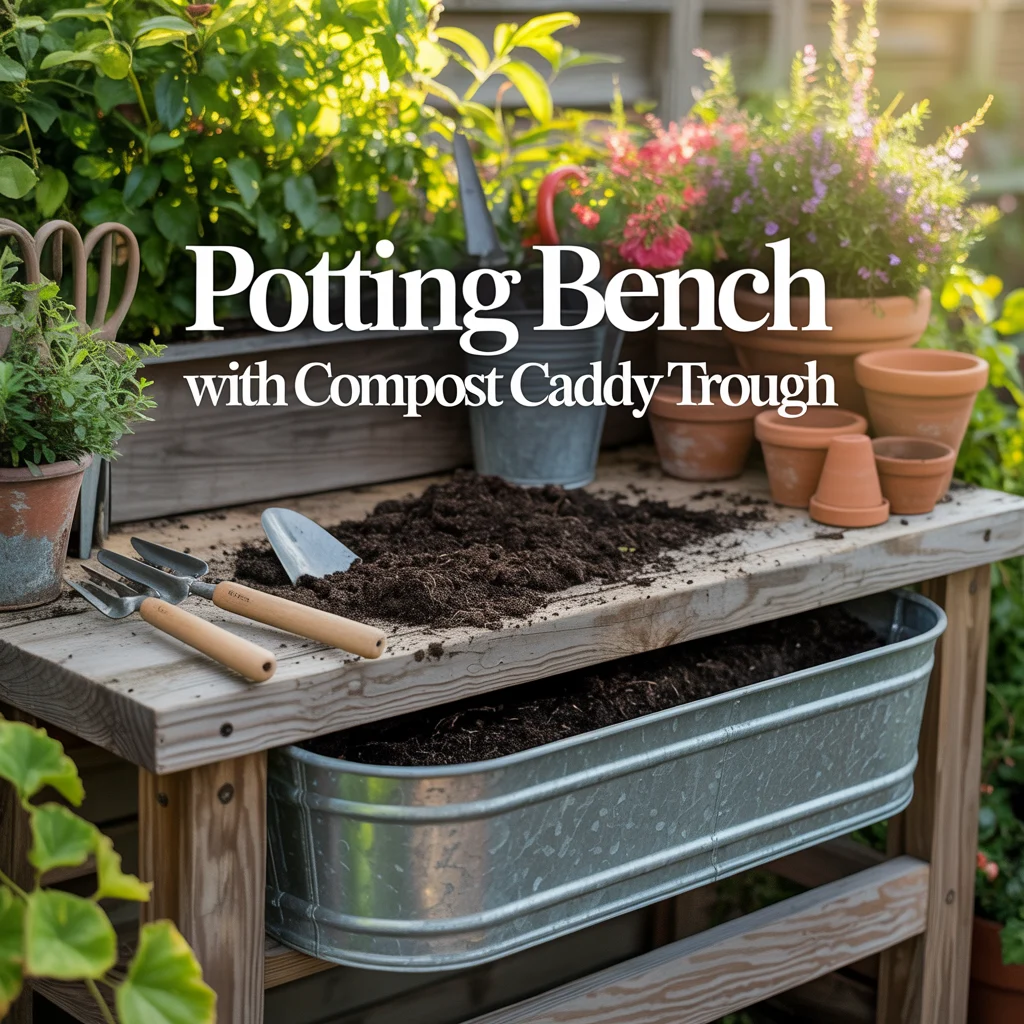
A potting bench with a built-in compost caddy trough incorporates a shallow open trough of 6 to 8-inch depth and 12 to 16-inch width along the front or rear edge of the work surface, providing a contained zone for loose compost during active potting work that prevents soil from falling off the work surface edge and collects any overspill for easy return to the compost bag below. I fitted a 48-inch-long, 12-inch-wide, 8-inch-deep timber trough along the front edge of my potting bench work surface using 1-by-8-inch timber boards, and the trough reduced the amount of compost falling from the bench to the floor during active potting sessions from a significant cleanup task after every session to a negligible amount.
Trough Construction for a Potting Bench Compost Caddy
A timber trough using 1-by-8-inch exterior-grade boards, a galvanized steel sheet-formed trough, and a repurposed zinc plant trough are three trough construction options suited to a potting bench compost caddy. A timber trough from 1-by-8-inch exterior-grade boards with a butt-jointed box construction costs $6 to $12 in materials for a 48-inch length and provides a contained compost zone at the potting bench front edge that suits a traditional timber bench aesthetic. A galvanized steel sheet trough formed from 0.8mm galvanized sheet at $12 to $18 provides a more durable and moisture-resistant compost trough for a high-use outdoor potting bench.
Compost Caddy Trough Positioning on a Potting Bench
A trough at the front bench edge, a trough at the rear bench edge below the back panel, and a removable trough insert in the work surface are three positioning options suited to a potting bench compost caddy. A trough at the front bench edge provides the most accessible compost containment position for a right-handed or left-handed user scooping compost from the trough into pots held directly on the main work surface behind the trough, allowing a full arm reach into the trough from the standing position without leaning over the work surface. A trough at the rear bench edge suits a potting bench positioned against a wall where reaching the front edge is less ergonomic than the rear position.
Repurposed Furniture Potting Bench Ideas
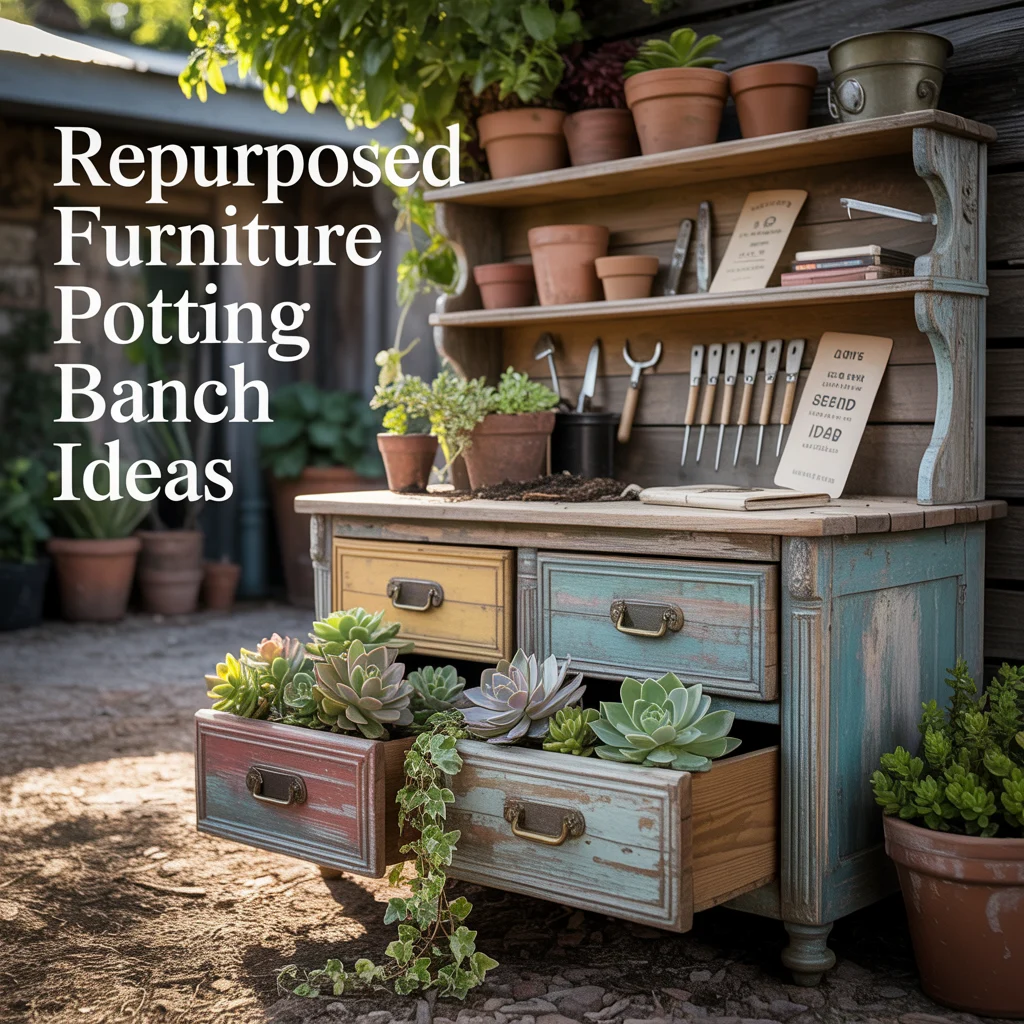
Repurposed furniture potting bench ideas use existing household or garden furniture including old dressers, console tables, workbenches, kitchen units, and writing desks as the base structure for a potting bench conversion, producing a characterful and uniquely styled potting bench from salvaged furniture at a fraction of the cost of a purpose-built bench. I converted a 1970s teak kitchen dresser into a potting bench by removing the upper cabinet doors, fitting a stainless steel sink into the lower work surface section, painting the full unit in Farrow and Ball Mizzle exterior paint, and adding galvanized S-hook rails to the open upper shelves, and the converted dresser produced the most individually styled potting bench I have seen in any domestic garden.
Best Furniture Types for a Potting Bench Conversion
An old kitchen dresser, a workbench or workmate table, and a reclaimed console table are three furniture types suited to a potting bench conversion. An old kitchen dresser with an upper open shelf section and a lower work surface with cupboard storage provides the most complete potting bench conversion candidate because the existing furniture already provides upper display shelving, a work surface at approximately the correct height, and lower enclosed storage, requiring only the addition of a protective surface treatment and tool hanging accessories to function as a complete potting bench. A workbench or workmate table provides the most structurally appropriate base for a potting bench conversion due to its robust construction.
Converting an Old Dresser Into a Potting Bench
An old dresser is converted into a potting bench by five sequential modifications. First, remove all interior cabinet shelves below the work surface and replace with a single reinforced shelf at 12-inch height for compost bag storage. Second, sand and prime the full exterior surface with exterior wood primer. Third, apply two coats of exterior masonry or timber paint in a heritage color to all exterior surfaces. Fourth, fit a stainless steel sink into the work surface if water supply is available at the dresser position. Fifth, add S-hooks or pegboard to the open upper shelf section for tool hanging storage. I complete all five modifications in a single weekend for a standard kitchen dresser potting bench conversion.
Potting Bench With a Zinc or Galvanized Steel Work Surface
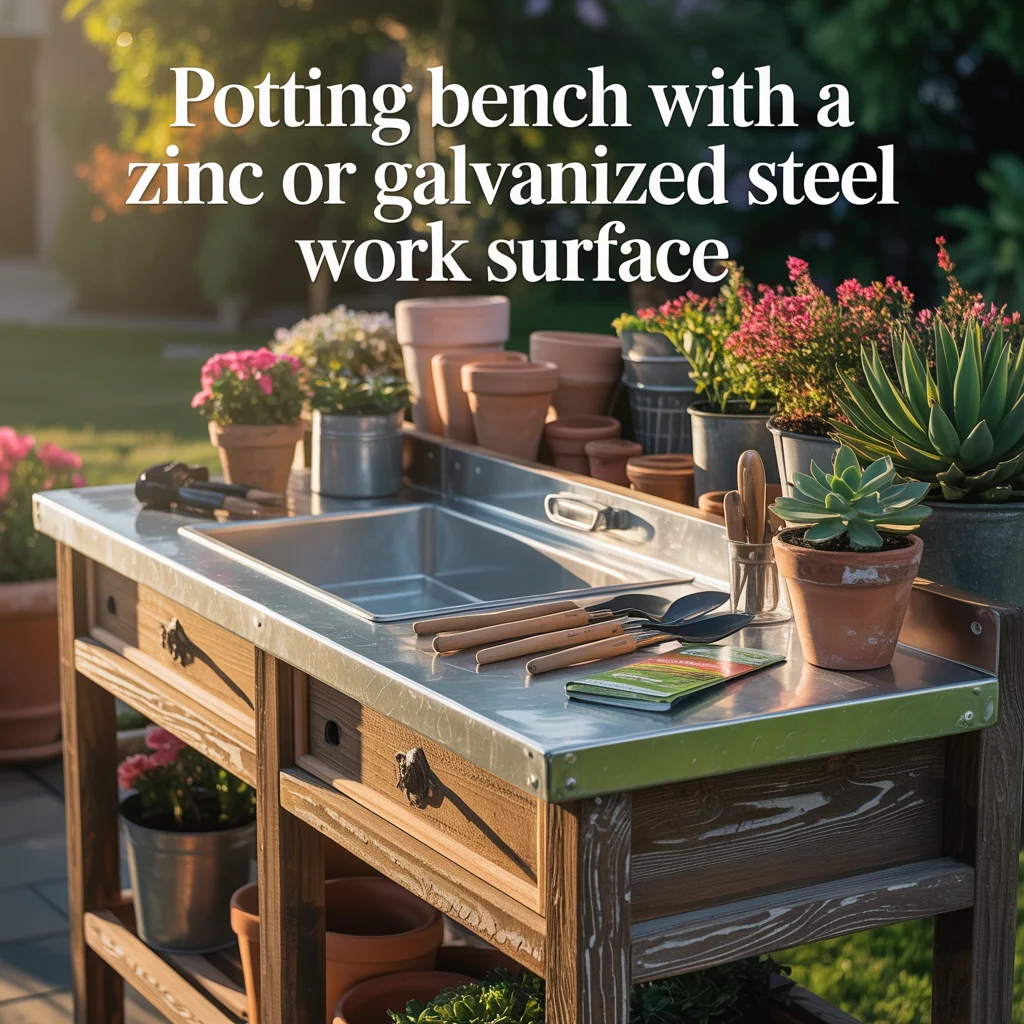
A potting bench with a zinc or galvanized steel work surface uses a sheet metal top surface in place of timber on the standard potting bench frame, providing a completely waterproof, wipe-clean, soil-resistant working surface that extends the service life of the active potting area from the 5 to 7-year typical for an untreated timber work surface to an indefinite period for the galvanized or zinc metal surface. I commissioned a zinc work surface for my main potting bench from a local sheet metal fabricator at $45 for a 48-by-20-inch zinc sheet with folded edges, and the zinc surface has required no maintenance beyond occasional wiping in three years of continuous outdoor potting use.
Metal Work Surface Options for a Potting Bench
Zinc sheet, galvanized steel sheet, and stainless steel sheet are three metal work surface options suited to a potting bench. Zinc sheet at 1.5mm thickness provides the most aesthetically charming metal work surface for a potting bench, developing a distinctive blue-grey patina within the first outdoor season that suits a cottage, heritage, or contemporary garden aesthetic, at $35 to $65 for a standard 48-by-20-inch surface. Galvanized steel sheet at 1.2mm thickness provides the most affordable metal work surface at $18 to $35 for the same dimensions and suits a potting bench where material cost is the primary surface selection criterion. Stainless steel provides the most hygienic and easiest-cleaning metal surface for a potting bench used for food plant propagation.
Fitting a Metal Work Surface to a Timber Potting Bench Frame
A zinc or galvanized steel work surface is fitted to a timber potting bench frame by placing the metal sheet over the timber surface, folding the edges down over the front and both side timber edges at 30mm depth, and fixing through the folded edge with 16mm stainless steel screws at 150mm intervals. The rear edge of the metal surface is turned down at 25mm against the back timber rail and fixed similarly. A bead of neutral-cure silicone sealant is applied between the metal surface and the timber frame before fixing to prevent water penetration beneath the metal surface that would accelerate decay in the timber frame below the protective metal work surface.
Best DIY Potting Bench Plans Summary for All Skill Levels
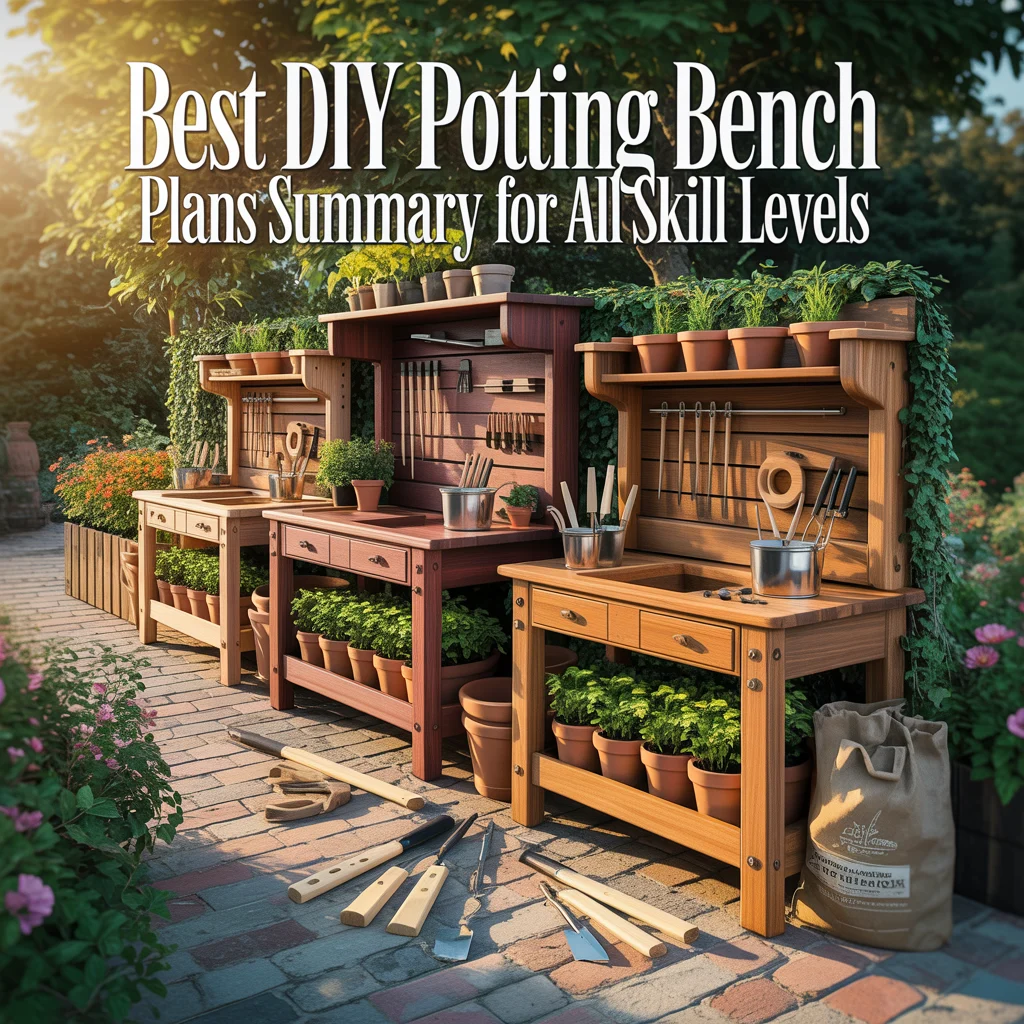
The best DIY potting bench plans for all skill levels range from a simple two-pallet construction requiring only a screwdriver and 75mm screws, to a fully fitted timber frame potting bench with drawers, pegboard, sink, and upper shelf requiring a table saw, drill, jigsaw, and router. I have built potting benches at all five skill levels described below and found that the most important design decision at any skill level is determining the correct bench height for the primary user before construction begins, because an incorrect bench height produces more long-term dissatisfaction with an otherwise well-built potting bench than any other single construction error.
Beginner DIY Potting Bench Plans
A pallet potting bench, a scaffold board bench, and a converted old table are three beginner-level potting bench plans suited to a first-time builder with basic screwdriver and saw skills. A pallet potting bench requires no cutting, no joints, and no measuring beyond the confirmation that two pallets stood on edge provide the correct 34 to 36-inch seat height when the third pallet is placed flat on top as the work surface. A scaffold board bench uses four 3-meter boards cut to two 4-foot and two 2-foot lengths with 3-by-2-inch timber legs, requiring only a handsaw, drill, and screwdriver to construct a complete functional potting bench in under three hours at a material cost of $18 to $35.
Intermediate and Advanced DIY Potting Bench Plans
Intermediate plans use a fully dimensioned timber frame with mortise-and-tenon or lap joint corners, a solid work surface with a routed front edge, and integrated lower and upper shelves at specific designed dimensions. Advanced plans add a fitted drawer section below the work surface, a built-in sink with drain waste, a grow light panel under the upper shelf, and a custom pegboard panel with fitted accessory positions for each individual tool in the builder’s gardening toolkit. I recommend beginning with a beginner pallet or scaffold board bench for a first potting bench build regardless of general woodworking skill level, because the specific requirements of a potting bench as a working garden tool are best understood through use before committing to a more complex and permanent construction.
Related
best garden bench landscaping ideas near a potting area
how to place a potting bench along a backyard pathway
charming garden bench ideas that combine style and function
Frequently Asked Questions
What height should a potting bench be?
A potting bench should measure 34 to 38 inches in height from the floor to the work surface, with 36 inches providing the standard comfortable working height for an adult of 5 feet 6 inches to 6 feet. A bench below 32 inches causes lower back strain during extended potting sessions because the user must bend forward to reach the work surface. A bench above 40 inches raises the working position above the comfortable elbow height of most adults. I determine the correct individual potting bench height by asking the intended user to stand with arms relaxed and measure from the floor to the bent wrist crease, which provides the correct ergonomic working height for that person specifically.
What wood is best for an outdoor potting bench?
Western red cedar is the best wood for an outdoor potting bench because it provides natural rot resistance without chemical treatment, dimensional stability in outdoor humidity cycling, and complete safety for seedling propagation where chemically treated timber could leach preservatives into potting compost. Pressure-treated softwood provides the most affordable alternative at significantly lower cost, with modern copper-based treatments considered safe for general garden use when timber is not in direct contact with edible plant root zones. Teak provides the longest-lasting outdoor potting bench surface of any timber species at 25 to 40-year lifespan without treatment but at the highest material cost of the three options.
How do I waterproof a potting bench work surface?
A potting bench work surface is waterproofed by applying two coats of exterior deck oil at 24-hour intervals, allowing 48 hours of full cure time before returning the bench to active use. Exterior deck oil penetrates the timber fibers rather than forming a surface film, preventing moisture absorption from above and below the work surface without creating a surface coating that chips, peels, or requires complete stripping before reapplication. Annual reapplication maintains the waterproofing level throughout the outdoor service life of the potting bench. A zinc or galvanized steel work surface provides a permanently waterproof alternative to a timber surface at $18 to $65 depending on the metal type.
Can I make a potting bench from pallets?
A fully functional potting bench is made from four standard wooden pallets with no additional timber required, using two pallets stood vertically on their long edges as the bench frame sides, one pallet placed flat across the top as the work surface, and one pallet placed flat at lower shelf height between the two vertical frame sides as the storage shelf. The four pallets are connected using 75mm screws at each pallet intersection corner and the completed bench provides a 48-inch working width at approximately 34-inch working height. I reinforce the top surface pallet with two 2-by-4-inch timber rails beneath the deck boards on all pallet potting bench builds to prevent work surface deflection under compost bag weight.
What should I put on a potting bench?
The six essential items for a potting bench are a compost scoop, a hand trowel, a dibber, plant labels, seed packets organized by sowing month, and a watering can or spray bottle for immediate seedling irrigation after potting. Beyond the essentials, the most useful additions are a pot shard container for drainage layer material, a bucket for plant waste and dead material, a small brush for cleaning the work surface between tasks, a sharp knife for cutting compost bags and taking cuttings, and a notebook for recording potting dates, seed sowing records, and plant care notes at the bench during each garden session.