
19 Garden Paths With Ground Cover for a Beautiful Landscape

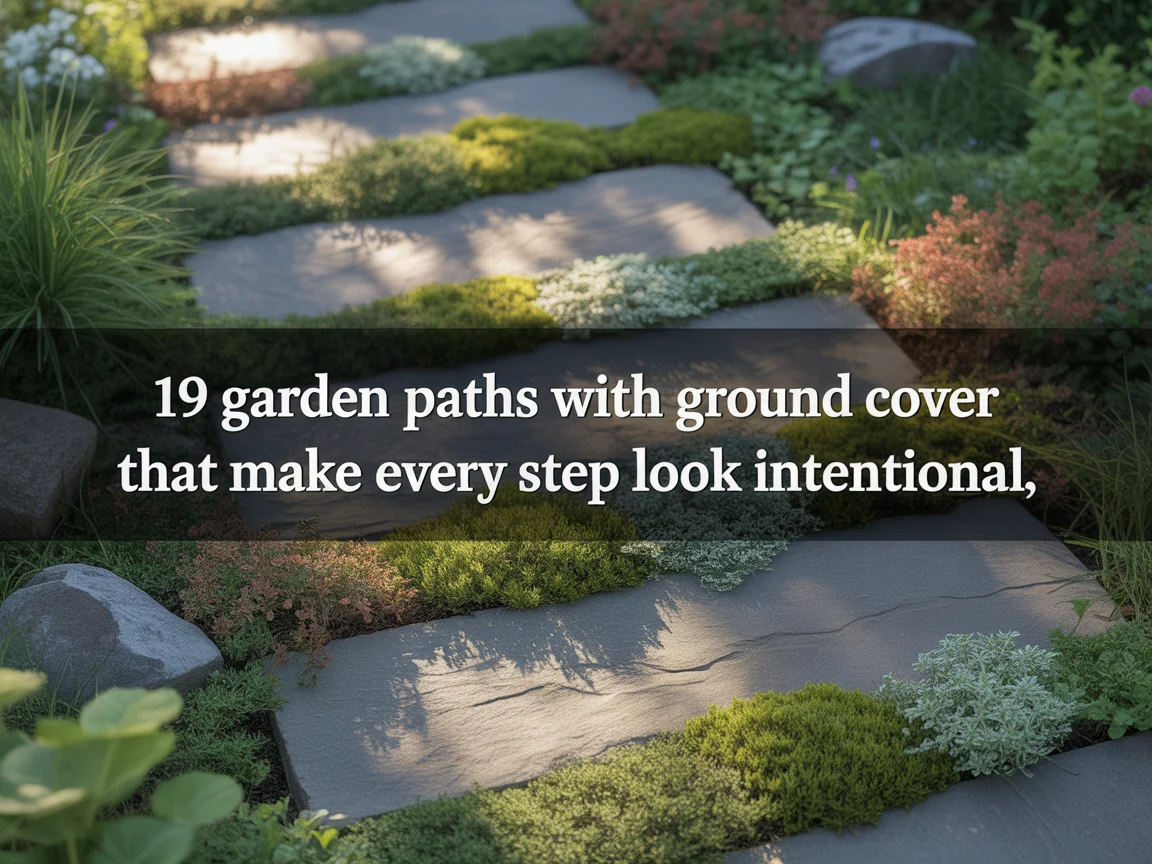
I ripped out a perfectly functional concrete path in my side garden three years ago and replaced it with stepping stones set in creeping thyme. My neighbor thought I had lost my mind. By June of that same year, the thyme had spread between every stone, produced a carpet of tiny pink flowers, and released a warm herbal scent every time I walked across it. My neighbor asked me how to do the same thing in her garden before the summer was over.
Garden paths with ground cover combine a walkable surface of stones, pavers, or timber with low-growing spreading plants that fill the gaps between path materials, suppressing weeds naturally and softening the appearance of hard landscaping at the same time. The ground cover gives the path a living surface that changes with the seasons, and the path gives the ground cover a defined structure that prevents it from spreading beyond the intended garden area.
Since that first thyme path, I have tried many ground cover combinations on garden paths of different styles, sizes, and budgets. I have seen ground cover path ideas work on a budget of under $50 in a small garden path through grass, and I have also seen elaborate modern garden path ideas where ground cover was used as a deliberate design feature across a large contemporary outdoor space.
In this article, I am sharing 19 garden paths with ground cover that I have either created myself or studied closely enough to recommend with full confidence.
Stepping Stones With Creeping Thyme Ground Cover
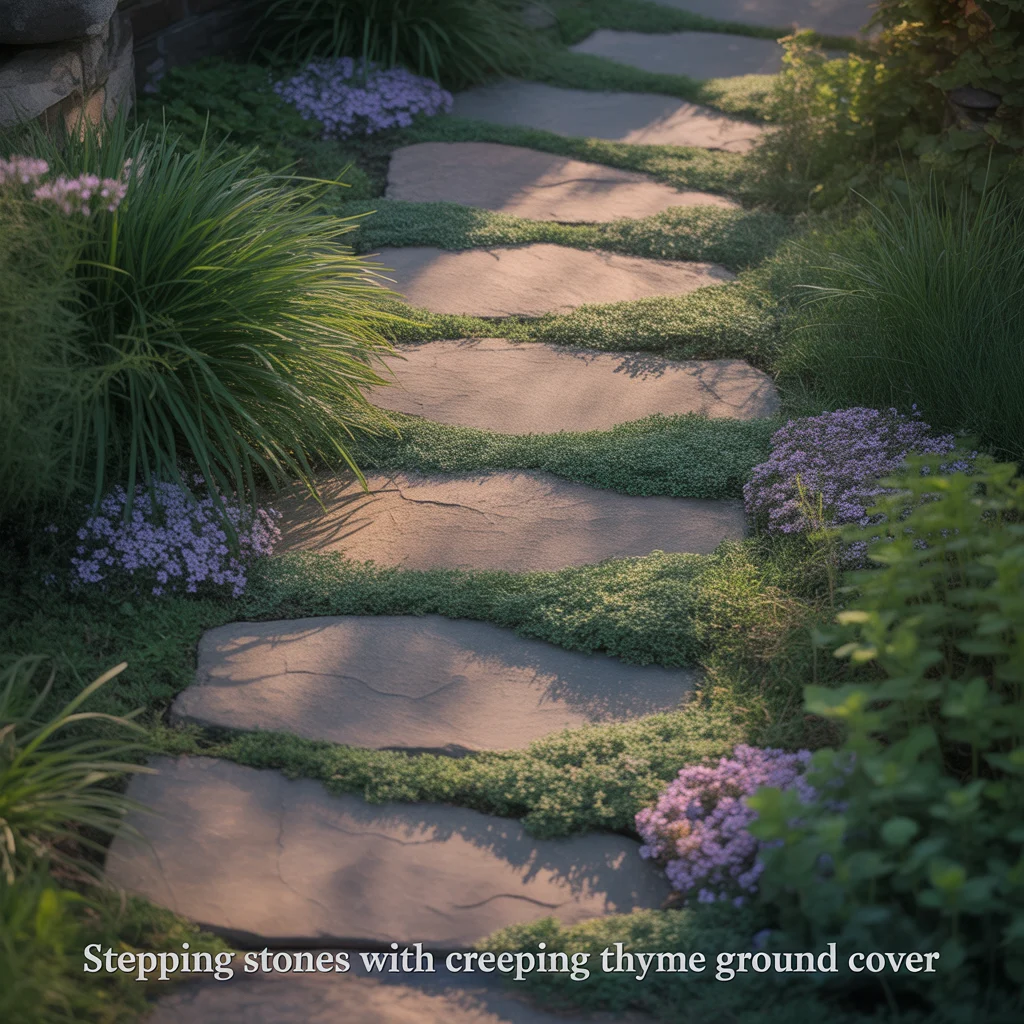
Stepping stones with creeping thyme ground cover is the most widely planted version of garden paths with ground cover, and it is the combination I recommend first to any homeowner asking for a low maintenance garden path idea that looks better each year rather than worse. Creeping thyme fills the gaps between stepping stones within one growing season, produces pink or white flowers from May to July, and releases a warm herbal fragrance when lightly trodden. I planted Thymus serpyllum Coccineus between 20-by-20-inch sandstone stepping pads on a 15-foot path and the thyme covered the full gap area between every stone by the end of its first summer, with zero weeding required after establishment.
Best Thyme Varieties for a Stepping Stone Path
Thymus serpyllum, Thymus praecox, and Thymus polytrichus are three creeping thyme varieties suited to a stepping stone garden path with ground cover. Thymus serpyllum produces the most vigorous spreading growth of the three, reaching 18 inches in spread per plant within one season and staying below 2 inches in height. Thymus praecox produces slightly larger flowers in a deeper pink-purple tone and spreads at a moderate rate suited to a smaller garden path where slower coverage is acceptable. Thymus polytrichus is the most compact variety, staying below 1 inch in height and producing a very dense mat that suits the narrow gaps between closely spaced stepping stones on a small garden path idea.
Stepping Stone Sizes for a Thyme Ground Cover Path
Stepping stones for a creeping thyme ground cover path measure most effectively at 18 by 18 inches or 20 by 20 inches per stone, set at intervals of 12 to 16 inches between each stone’s leading edge. Gaps of 4 to 8 inches between the stones provide enough soil surface for the thyme to establish a root zone before spreading across the gap to the next stone. I used 4-inch gaps between my 20-by-20-inch sandstone pads and found the thyme filled these gaps completely within 10 weeks of planting, producing a fully covered surface between every stone by midsummer of the first year.
Garden Path Ideas Through Grass Using Flush Pavers
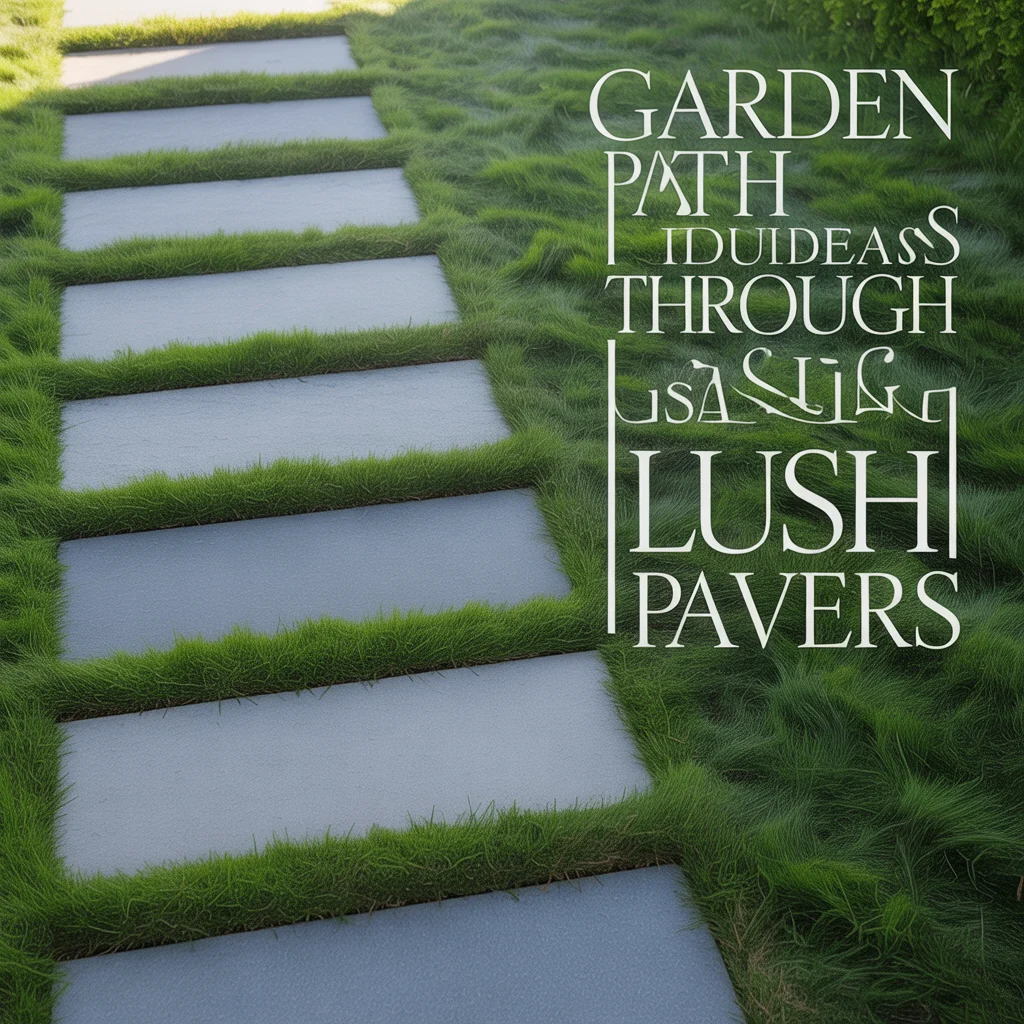
Garden path ideas through grass using flush pavers set level with the lawn surface create a low maintenance garden path that allows a standard lawn mower to pass directly over the paving without any manual edge trimming around raised stone edges. I installed this design in my back garden using 24-by-24-inch concrete pavers set flush with the surrounding turf on a 20-foot path between two lawn sections, and the mowing time for that section of garden reduced from 15 minutes of combined mowing and trimming to 4 minutes of straight mowing passes directly over the pavers. The grass itself acts as the ground cover between and around the path pavers.
How to Set Pavers Flush With a Grass Ground Cover Path
Flush pavers on a grass ground cover garden path are set on a 2-inch compacted sharp sand bed over a 3-inch hardcore sub-base, with the finished paver surface sitting 5mm above the surrounding turf level to allow for grass growth and slight settling after installation. Setting the pavers exactly flush at installation typically results in the paver surface sitting 5 to 10mm below the turf level after one growing season as the grass thickens, which creates a trip hazard and a collection point for standing water. I set my own pavers at 5mm above the turf and found the grass grew up to the paver surface level within six weeks, producing the flush appearance I wanted without the sunken paver problem.
Paver Materials for a Grass Ground Cover Garden Path
Concrete pavers, porcelain pavers, and natural sandstone are three materials suited to a flush-set grass ground cover garden path. Concrete pavers at 24 by 24 inches cost $3 to $7 each and provide a flat, stable surface that suits a low maintenance garden path idea where affordability is the primary concern. Porcelain pavers at the same size cost $8 to $18 each and produce a smoother, more refined surface suited to a modern garden path idea through grass where the path material needs to suit a contemporary garden design. Natural sandstone at 24 by 24 inches costs $10 to $22 per slab and produces a warm, organic surface that suits a traditional or cottage garden path through grass.
Moss Path Between Slate Stepping Stones
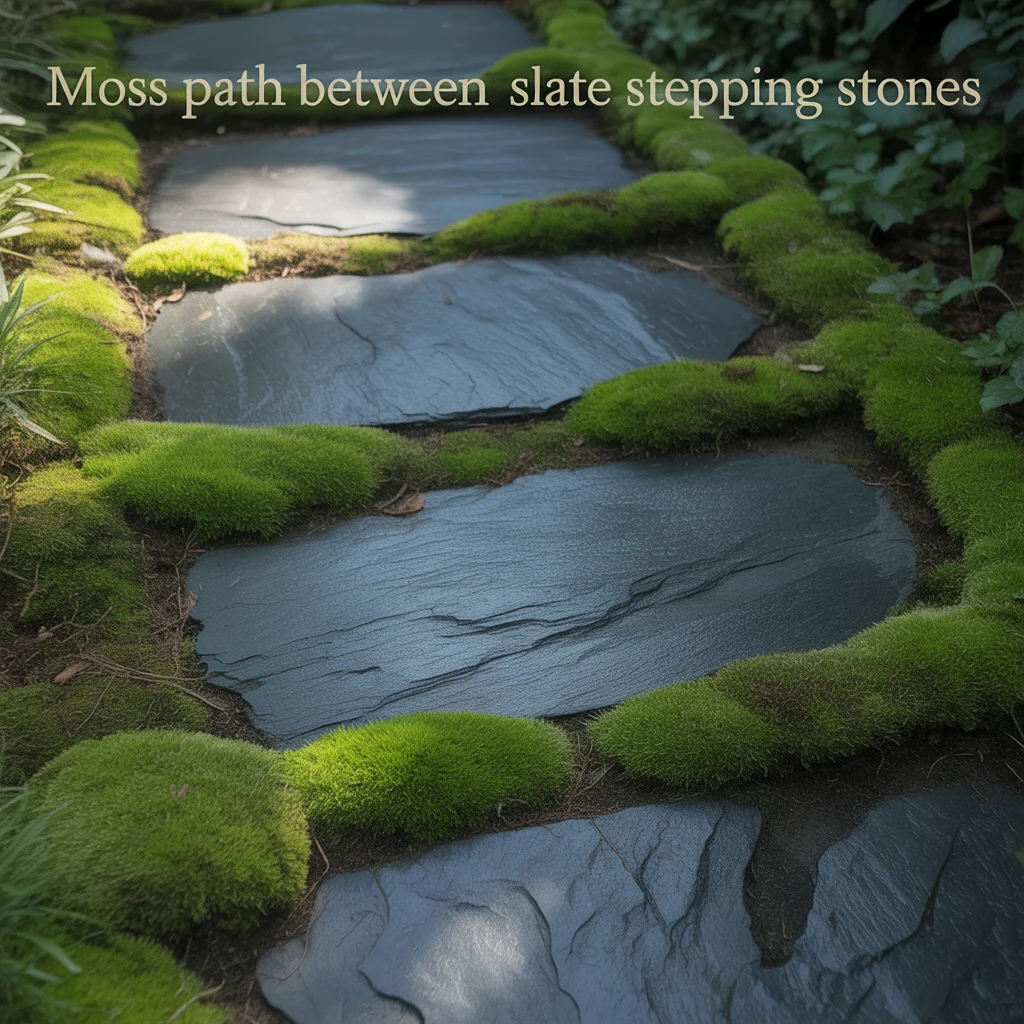
A moss path between slate stepping stones uses the natural establishment of moss in shaded, moist garden conditions to create a soft, green ground cover between dark slate pads, producing one of the most naturalistic and visually distinctive small garden path ideas available for a shaded garden space. I created a moss path in the shadiest section of my garden by laying irregular slate stepping pieces in an existing shaded area where moss was already establishing naturally in the soil, and within two seasons the moss had spread to fill every gap between the slate pieces without any planting or encouragement from me. The path cost $45 in slate pieces and $0 in ground cover planting.
How to Establish Moss on a Garden Path
Moss establishes on a garden path between stepping stones by applying a moss slurry made from blended fresh moss mixed with buttermilk or natural yogurt to the prepared soil surface between the path stones. The slurry is spread at 2mm thickness across the gaps and kept moist for 4 to 6 weeks while the moss spores establish root contact with the soil. I tried this technique on a test section of path in spring and found visible moss growth within 3 weeks in the shadiest sections and within 6 weeks in the slightly brighter areas. The best results came from sections receiving less than 2 hours of direct sun per day, where the moss established most densely and remained green throughout summer without additional watering.
Slate Stepping Stone Shapes for a Moss Ground Cover Path
Irregular random shapes, large rectangular pieces, and circular cut slate are three slate forms suited to a moss ground cover garden path. Irregular random slate shapes produce the most naturalistic path appearance and suit a woodland or shaded garden style where the informal stepping pattern enhances the natural character of the moss ground cover. Large rectangular slate pieces measuring 24 by 12 inches produce a more structured path pattern that suits a modern garden path idea where geometry is important. Circular cut slate pieces of 18 to 20 inches diameter produce a distinctive decorative path layout that suits a small garden path idea where the individual stone shapes are a deliberate design feature.
Ajuga Ground Cover Path With Bark Chip Stepping Areas
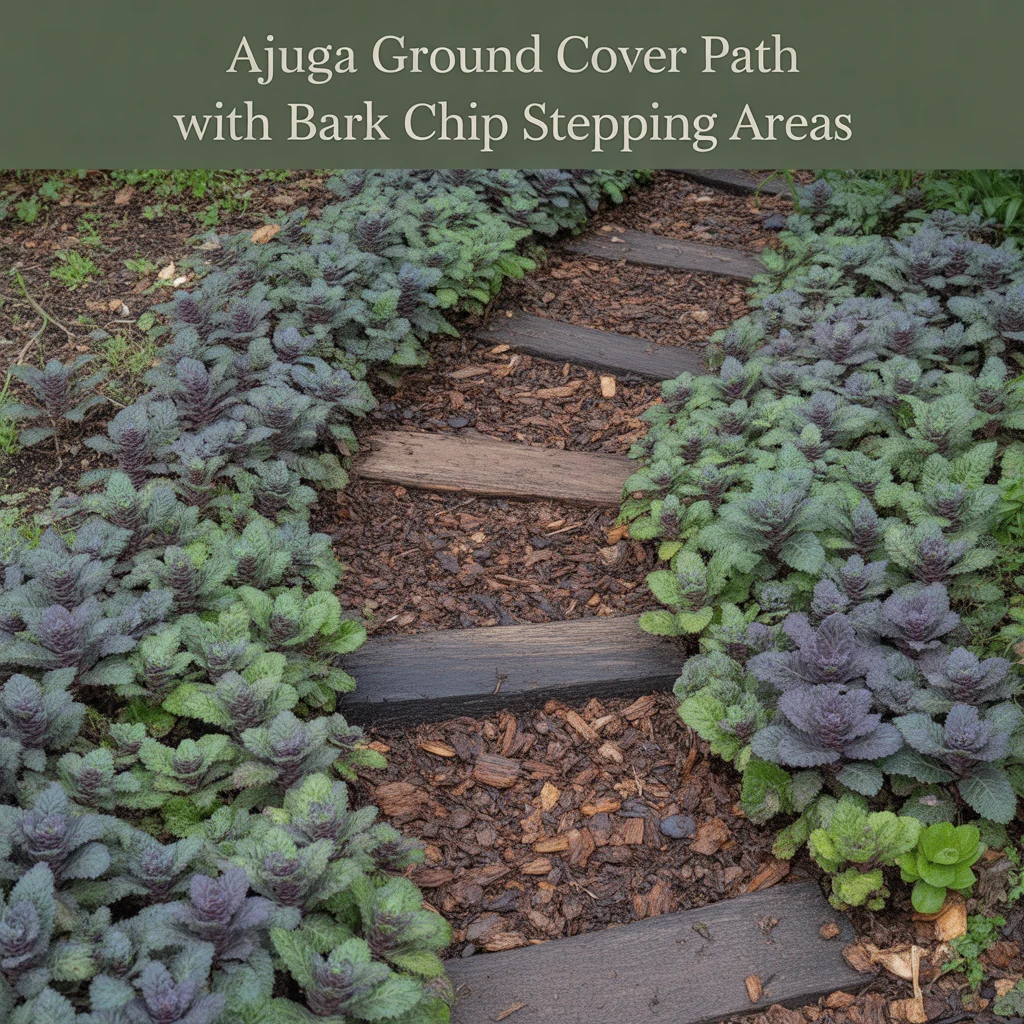
An ajuga ground cover path with bark chip stepping areas uses Ajuga reptans, a low-growing evergreen perennial with deep bronze-purple leaves and blue flower spikes, as the primary ground cover between bark chip sections that provide a firm walking surface along the path route. I planted this combination in a shaded border path using alternating 2-foot sections of bark chip and planted ajuga, and the result was a path that looked like a naturally planted garden edge rather than a constructed walkway. The ajuga spread to cover the full gap area between the bark sections within two seasons, and the blue flower spikes in April and May added color to the path before any other plant in the border was flowering.
Ajuga Varieties for a Garden Path Ground Cover
Ajuga reptans Atropurpurea, Ajuga reptans Burgundy Glow, and Ajuga reptans Catlin’s Giant are three ajuga varieties suited to a garden path with ground cover. Ajuga reptans Atropurpurea produces the deepest bronze-purple leaf color and spreads aggressively to 18 inches per plant within one season, making it the fastest-establishing variety for covering path gaps between stepping areas. Ajuga reptans Burgundy Glow produces variegated leaves in pink, white, and bronze that create a more colorful ground cover effect between path stones and spreads at a moderate rate. Ajuga reptans Catlin’s Giant produces larger leaves than standard ajuga at 4 to 5 inches in length and taller blue flower spikes reaching 8 inches, providing a bolder visual presence on a wider garden path.
Bark Chip Depths for a Ground Cover Garden Path
Bark chip used as a stepping surface on a garden path with ground cover requires a minimum depth of 3 inches over a weed-suppressing membrane to provide a firm, clean walking surface that does not compress to mud in wet weather. Fine bark at 10 to 20mm chip size produces the flattest walking surface and suits a path through a shaded border where the fine texture coordinates with the soft appearance of the ajuga ground cover beside it. Coarse bark at 25 to 40mm chip size produces a more rustic surface suited to a woodland path where the larger chip size suits the informal character of the surrounding planting. I use fine bark on all my ground cover border paths and find a 3-inch depth lasts 2 years before a top-up is needed.
Sedum Ground Cover Path With Concrete Pavers
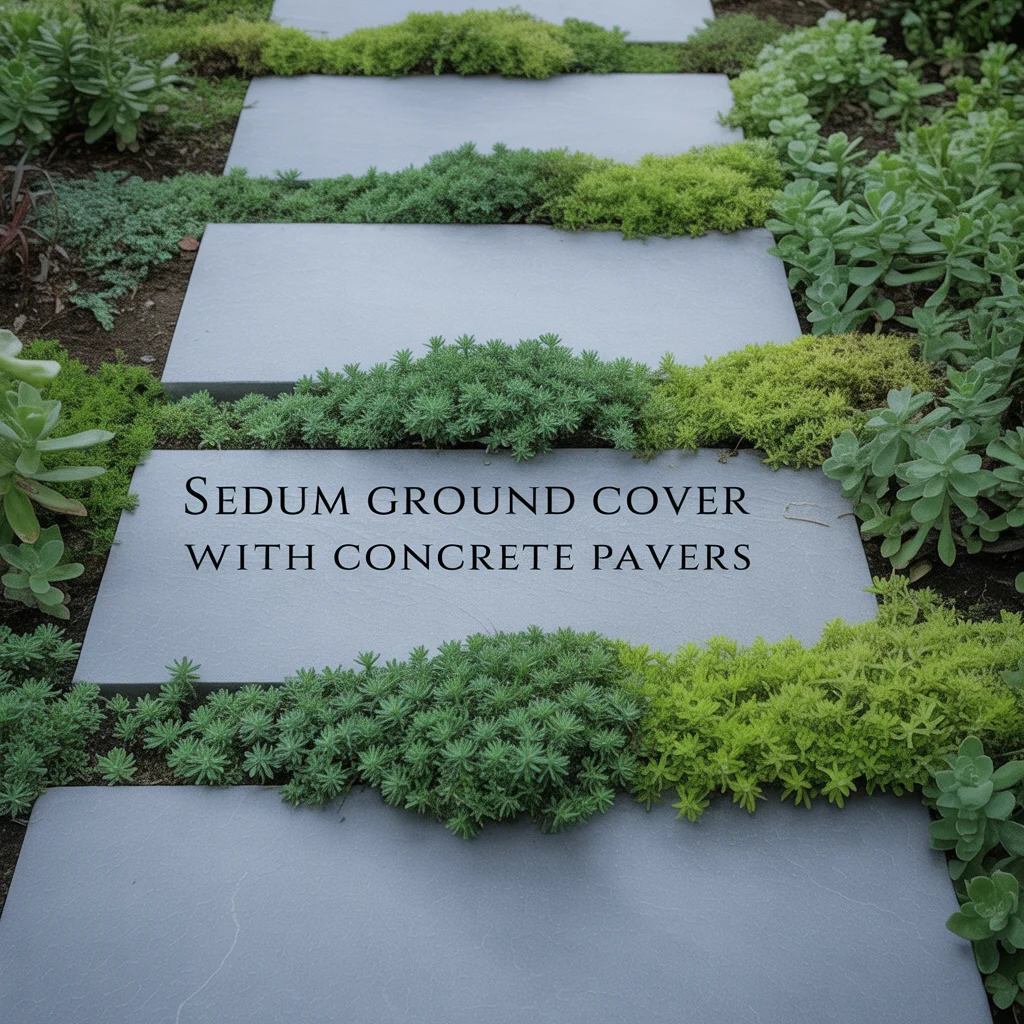
A sedum ground cover path with concrete pavers uses low-growing sedum species planted in the gaps between pavers to create a drought-tolerant, low maintenance garden path idea suited to sunny, free-draining garden positions where other ground cover plants struggle to establish in dry summer conditions. I planted Sedum acre in the joints between concrete pavers on a south-facing path and found the sedum established quickly, covered the joints fully within one season, and required no watering at all after the first 6 weeks of establishment. The yellow flowers produced by Sedum acre in June added a decorative detail to the path surface at a time when the surrounding border planting was approaching its peak.
Sedum Varieties for a Paver Ground Cover Path
Sedum acre, Sedum album, and Sedum spurium are three sedum varieties suited to a garden path with ground cover between pavers. Sedum acre produces bright yellow flowers in June and stays below 2 inches in height, tolerating foot traffic and full sun exposure better than most other sedum species. Sedum album produces white flowers in July and August on a slightly taller plant of 3 to 4 inches, which suits the joints of wider-spaced pavers where a slightly more visible ground cover plant is appropriate. Sedum spurium produces pink or red flowers from July to September in a spreading mat of 12 inches per plant, providing the longest flowering period of the three varieties on a sunny garden path with ground cover.
Joint Width for Sedum Between Path Pavers
Sedum ground cover establishes most effectively in paver joints of 1 to 3 inches width, which provides enough soil volume for the roots to anchor without the joint being so wide that the sedum takes multiple seasons to fill the gap fully. Joints narrower than 0.5 inches provide insufficient soil depth and volume for any ground cover plant including sedum to establish a viable root system. I used 1.5-inch joints between my concrete pavers on the sedum path project and found this width allowed the Sedum acre to fill every joint completely within 8 weeks of planting in April, producing a fully covered joint surface by June of the first year.
Chamomile Lawn Path Between Raised Bed Borders
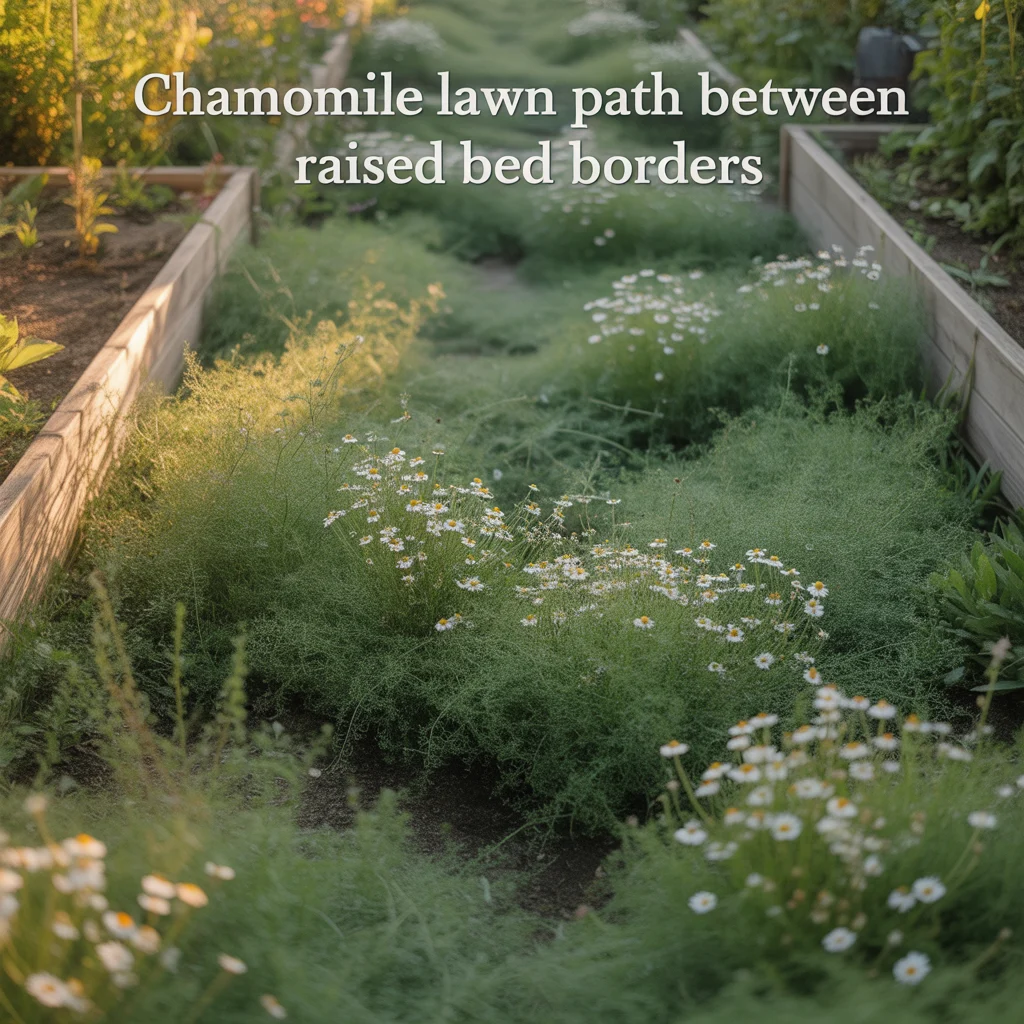
A chamomile lawn path between raised bed borders uses Chamaemelum nobile Treneague, the non-flowering lawn chamomile, as a complete ground cover surface between two raised vegetable or flower beds, creating a soft, fragrant walking surface that releases a sweet apple scent when lightly trodden. I planted this in my kitchen garden as a garden path idea on a budget, using plug plants of Chamaemelum nobile Treneague at 6-inch spacing across a 2.5-foot-wide, 14-foot-long path between two raised beds. The plug plants cost $28 in total and covered the full path surface within one growing season, producing a dense green mat that has required only two light trimming sessions per year to maintain at 1 inch height.
Chamomile Path Establishment and Maintenance
A chamomile ground cover garden path requires plug plants at 6-inch spacing planted in late spring after the last frost date, watered weekly for the first 6 weeks until establishment, and kept free of weed competition during the first season while the plants spread to fill the gaps. After full establishment in the second year, a chamomile path requires only one light trim with a rotary mower set to its highest blade position in late June to maintain a dense, even surface. I have maintained my chamomile path in this way for three years and find the annual maintenance takes less than 20 minutes for a 14-foot path, which makes it one of the most genuinely low maintenance garden path ideas I have tried.
When Chamomile Path Ground Cover Suits a Garden
A chamomile ground cover path suits a garden path that receives moderate foot traffic of fewer than 10 passes per day, full to partial sun exposure of 4 or more hours per day, and free-draining soil conditions that prevent waterlogging in winter. Chamomile does not suit a heavily shaded path because insufficient light produces thin, weak growth that fails to create the dense mat surface needed for a walkable ground cover path. I tested chamomile on a north-facing path section and found the growth too sparse to create a usable surface after two full growing seasons, which confirmed that this ground cover is suited only to paths receiving adequate direct sunlight for at least half the day.
Modern Garden Path With Liriope Muscari Ground Cover
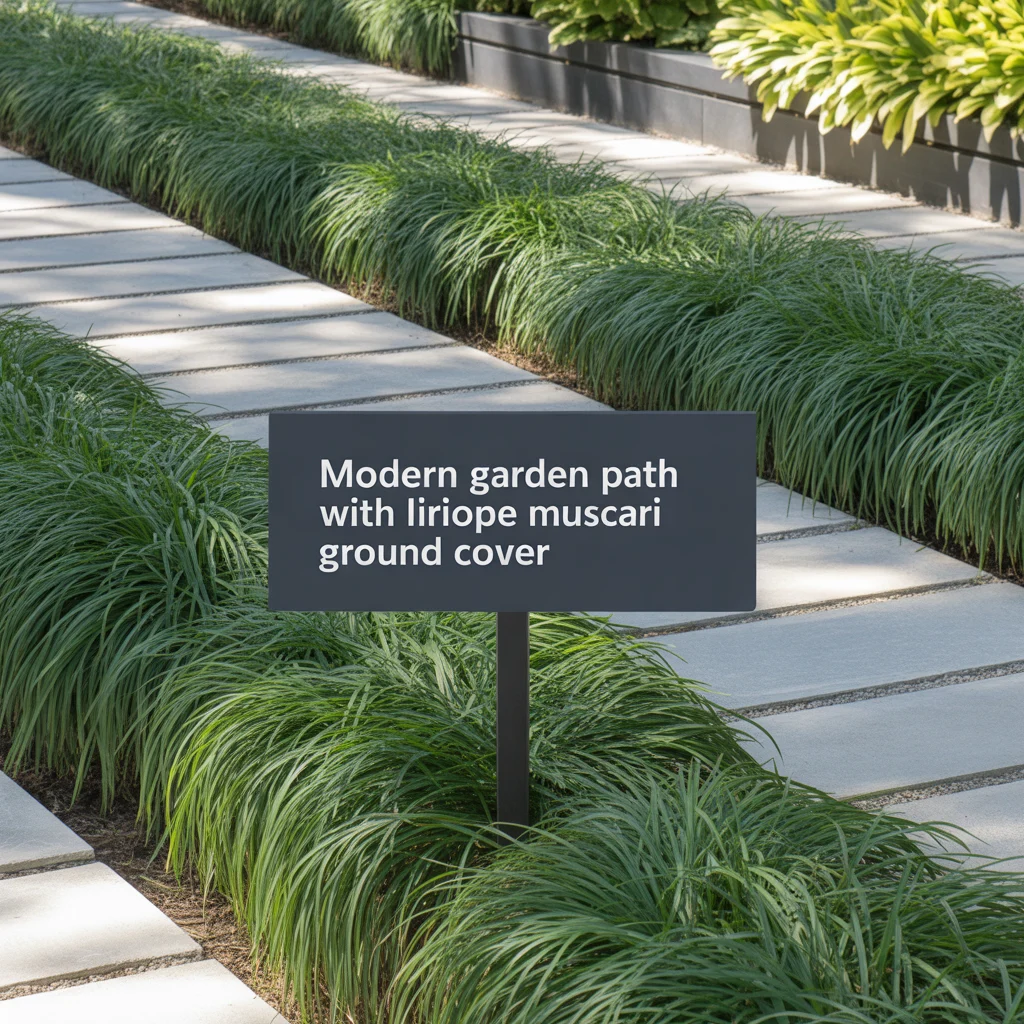
A modern garden path with Liriope muscari ground cover uses the dense, grass-like foliage of Liriope muscari as a border ground cover planted along both sides of a large-format paver or porcelain path, creating a clean, architectural planting that suits contemporary and minimalist garden designs where a more ornamental grass effect is needed without the maintenance of actual grass. I used Liriope muscari as the ground cover alongside a 20-foot large-format grey porcelain path in a modern garden design project, spacing the plants at 12-inch intervals in two parallel rows on each side of the path, and the dense dark green strap leaves produced a year-round border presence that required no cutting, no feeding, and no division for three consecutive years.
Liriope Muscari Varieties for a Modern Path Ground Cover
Liriope muscari, Liriope muscari Big Blue, and Liriope muscari Variegata are three varieties suited to a modern garden path with ground cover. Liriope muscari produces dark green strap leaves to 12 inches in length and violet flower spikes in September and October, providing late-season interest alongside a modern path after most other border plants have finished. Liriope muscari Big Blue produces the same dark foliage with larger, more prominent flower spikes and grows slightly more vigorously, reaching a clump width of 18 inches in three seasons. Liriope muscari Variegata produces cream-edged green leaves that provide a lighter, more decorative edge to a modern path and suits a design where a variegated ground cover plant adds contrast against a dark paver surface.
Spacing Liriope Muscari Along a Modern Garden Path
Liriope muscari planted as a ground cover border alongside a modern garden path is spaced at 10 to 14 inches between each plant, measured from center to center, which produces a continuous border edge with no visible soil gaps after two growing seasons. Plants spaced at 10 inches produce a fully closed border edge within one season but cost more per linear foot of path edge than wider spacing. Plants spaced at 14 inches take two seasons to produce a fully closed edge but cost approximately 30% less per linear foot of path. I use 12-inch spacing on modern path ground cover projects as the consistent balance between establishment speed and planting cost.
Small Garden Path Ideas With Baby’s Tears Ground Cover
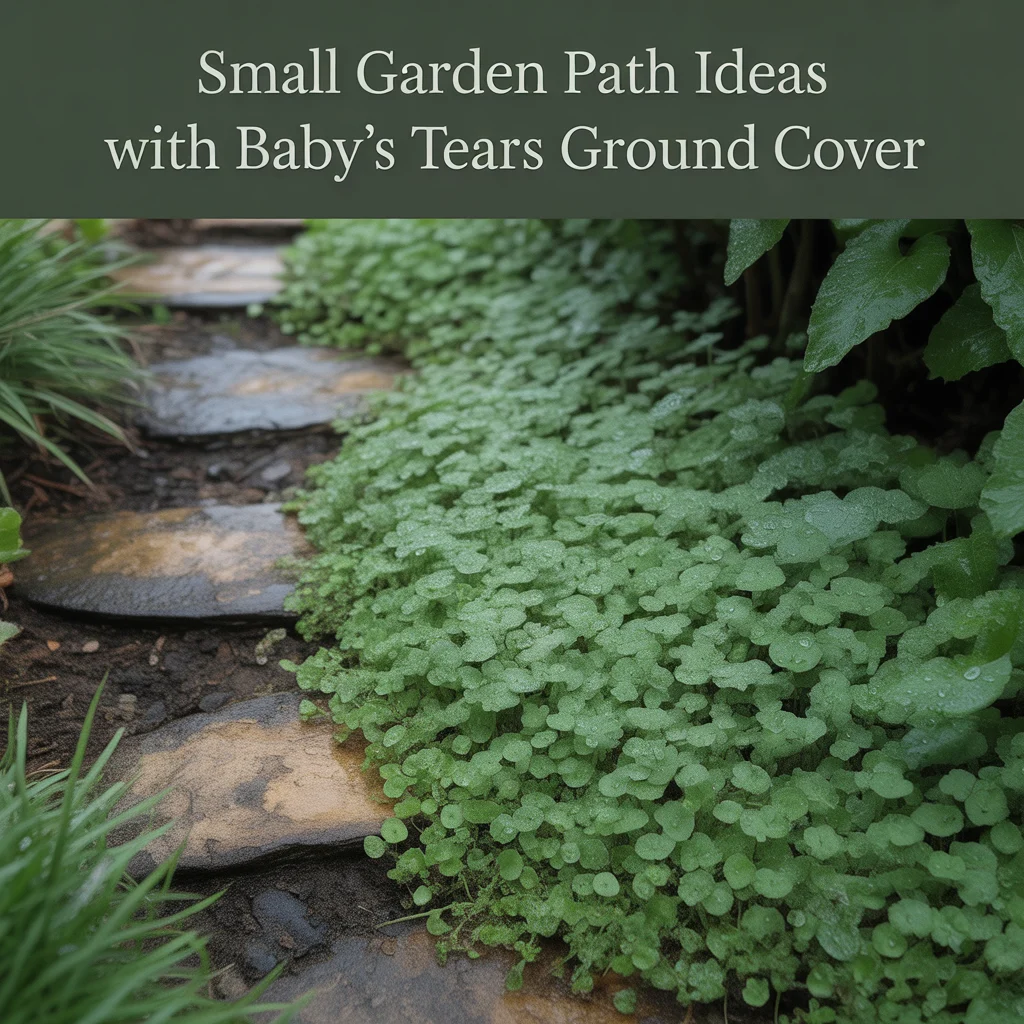
A small garden path idea using baby’s tears, the common name for Soleirolia soleirolii, uses this very fine-textured, bright green ground cover plant in the gaps between stepping stones on a small garden path to create the most delicate and intricate ground cover surface available for a shaded, moist path in a small outdoor space. I planted baby’s tears between irregular stepping stones on a 10-foot path in a small shaded courtyard garden and the plant spread to fill every stone gap within 6 weeks, producing a surface that looked more like a scaled-down moss garden than a conventional planted path. The effect was particularly strong in photographs, which is why this ground cover appears in small garden path ideas collections so frequently.
Growing Conditions for Baby’s Tears on a Garden Path
Baby’s tears requires consistent moisture, shade or dappled light, and shelter from frost and strong winds to perform well as a ground cover on a garden path. The plant tolerates zero frost and dies back completely in temperatures below 0 degrees Celsius, which limits its use as a year-round ground cover to gardens in mild coastal or urban climates. In frost-prone gardens, baby’s tears suits a path in a sheltered courtyard against a south-facing wall where the microclimate remains above freezing on all but the coldest nights. I grow baby’s tears on a path in a sheltered urban courtyard and find it stays fully green and dense from March through November, dying back partially in December and January before recovering fully by late March.
Combining Baby’s Tears With Stepping Stone Materials
Smooth slate, polished black granite, and dark grey porcelain are three stepping stone materials that suit baby’s tears ground cover on a small garden path. Smooth slate produces a strong contrast between the dark grey stone surface and the bright yellow-green of the baby’s tears foliage, creating one of the most visually distinctive small garden path ideas available for a shaded space. Polished black granite produces the strongest color contrast of the three options and suits a contemporary small garden path where the refined stone surface and the delicate plant create an intentional pairing of hard and soft materials. Dark grey porcelain at 12 by 12 inches suits a small garden path where the regular geometry of the pavers contrasts with the completely informal spreading habit of the baby’s tears between them.
Lawn Path Through Grass With Mown Strip Design
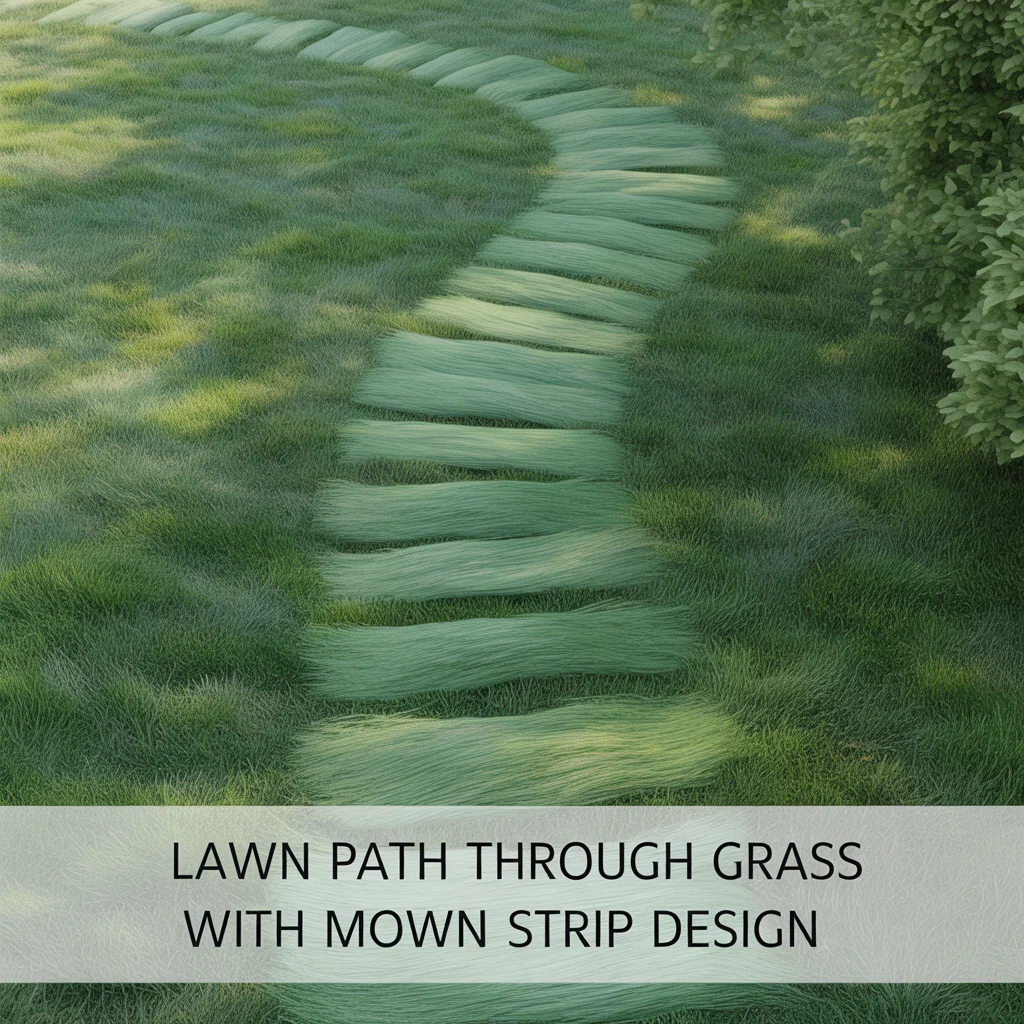
A lawn path through grass with a mown strip design uses a narrow mown strip maintained at a shorter height than the surrounding lawn or meadow grass to create a defined path route without any hard materials at all, making it one of the most affordable garden path ideas on a budget available to any homeowner with a lawn mower. I created a mown strip path through the meadow section of my back garden by setting my rotary mower to 25mm cutting height and mowing a 24-inch-wide strip through the surrounding 100mm-tall meadow grass, and the contrast between the short mown strip and the tall meadow growth on both sides defined the path route immediately without any marking, edging, or material cost.
Mowing Heights for a Grass Ground Cover Path
A mown strip path through grass requires the path strip to be cut at 20 to 30mm height while the surrounding grass is maintained at 80 to 120mm or left as meadow growth at 150 to 300mm, producing a height difference that clearly defines the path route. A cutting height below 15mm on a mown strip path causes the grass to thin and develop bare patches in dry summer conditions, which suits neither a garden path idea through grass nor the general health of the lawn. I maintain my own mown strip path at 25mm cutting height, cutting it weekly during the main growing season from April to September, and find the path remains clearly defined from the surrounding meadow at this height throughout the season.
Mown Strip Path Widths for Different Garden Sizes
A mown strip path through grass measures most effectively at 18 to 24 inches wide in a small garden, 24 to 30 inches wide in a medium garden, and 30 to 36 inches wide in a large garden or meadow area. A width below 18 inches feels too narrow for comfortable walking and makes the path visually indistinct from a distance, reducing its effectiveness as a defined route through a lawn or meadow. A width above 36 inches starts to look like a section of mown lawn rather than a defined path, which removes the visual contrast that gives the mown strip path its distinctive appearance. I use 24-inch widths in all my mown strip path designs and find this width suits the proportions of most domestic garden sizes.
Garden Path Ideas on a Budget With Bark and Clover

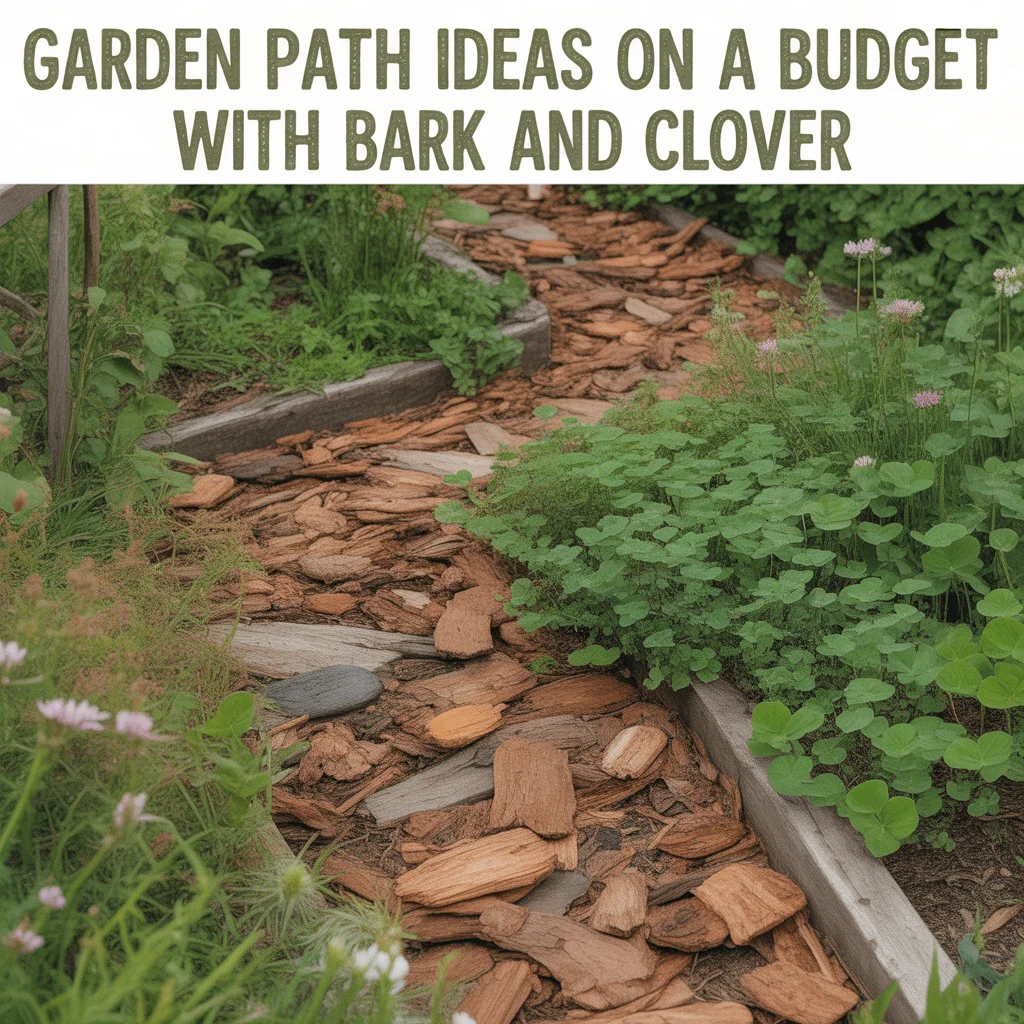
A garden path idea on a budget using bark chip and white clover ground cover creates a low-cost, naturalistic path surface where a 3-inch depth of bark chip provides the walking surface and Trifolium repens, white clover, is seeded or planted in the border areas on both sides to act as a spreading ground cover that suppresses weeds and attracts pollinators. I created this combination for a total material cost of $32 for a 20-foot path using two bags of bark chip at $8 each and two packets of white clover seed at $8 each, sown directly into the cultivated border soil on both sides of the bark path in April. The clover germinated within 10 days and covered the border soil on both sides of the path by mid-June.
White Clover as a Ground Cover Path Border Plant
White clover, Trifolium repens, is one of the most cost-effective ground cover plants for the border areas alongside a garden path because it germinates rapidly from direct-sown seed, spreads by stolons to cover bare soil quickly, fixes nitrogen from the air to improve soil fertility, and produces white flowers from May to October that attract bees and other pollinators. The plant stays below 4 inches in height when left unmown and below 1.5 inches when mown, giving the path border a neat appearance without regular trimming. I sow white clover at 2 grams per square meter on path border areas and find it produces full coverage within 6 weeks of germination in spring.
Low-Cost Path Materials That Suit Clover Ground Cover
Bark chip, wood chip, and pea gravel are three low-cost walking surface materials that suit a garden path on a budget with clover ground cover on the borders. Bark chip at $8 to $12 per bag costs the least per square foot of path coverage and produces a soft, natural surface that suits the informal character of a clover-bordered path. Wood chip sourced free from local tree surgeons costs nothing and suits a longer rural or meadow path where a rough, naturalistic surface is appropriate. Pea gravel at $2 to $4 per square foot is slightly more expensive than bark but produces a firmer, more permanent walking surface and suits a path where a longer-lasting material is needed alongside the clover ground cover border.
Formal Brick Path With Campanula Ground Cover Joints
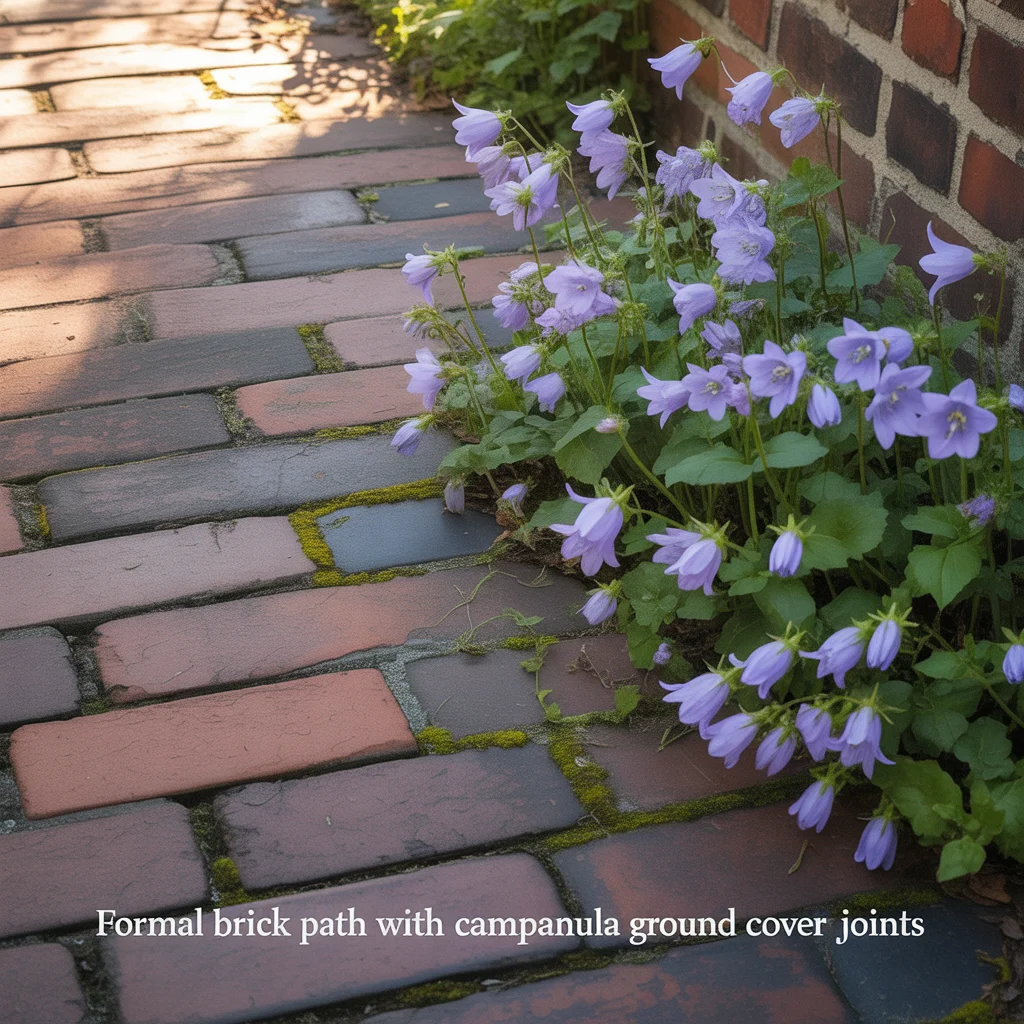
A formal brick path with Campanula portenschlagiana in the mortar joints uses the naturally self-seeding habit of this low-growing bellflower to colonize the gaps between brick pavers, producing a path surface where small purple-blue flowers appear directly from the brick joints from June to August. I saw this design in a formal walled garden where a herringbone brick path had been deliberately planted with Campanula portenschlagiana in alternate joints, and within three seasons the plant had self-seeded throughout the full joint network of the path, producing a flowering brick surface that required no maintenance other than removing any plants that spread beyond the path edge.
Campanula Varieties for Brick Path Joints
Campanula portenschlagiana, Campanula poscharskyana, and Campanula cochleariifolia are three campanula varieties suited to the joints of a brick garden path with ground cover. Campanula portenschlagiana produces dense mounds of small purple-blue bell flowers from June to August and stays below 6 inches in height, which suits a formal path joint without producing growth that trips pedestrians. Campanula poscharskyana spreads more aggressively than portenschlagiana and produces star-shaped lavender-blue flowers on trailing stems, which suits a path where generous joint coverage is wanted quickly. Campanula cochleariifolia, the fairy thimble, produces the smallest flowers of the three and stays below 3 inches, suiting the narrow joints of a fine-textured brick path.
Maintaining Campanula in Formal Path Joints
Campanula in brick path joints requires one maintenance session per year in March, in which any dead stems from the previous season are removed by hand and any plants that have spread onto the brick surface rather than staying within the joint are pulled back to the joint boundary. The plant self-seeds freely throughout the brick joint network after the first flowering season, which means new plants appear in joints where no deliberate planting was made without any intervention. I find the self-seeding habit of Campanula portenschlagiana in brick path joints the most genuinely maintenance-free ground cover behavior of any plant I have used on a low maintenance garden path idea, requiring an average of 15 minutes of attention per 10 square feet of path per year.
Woodland Path With Pachysandra Ground Cover
A woodland garden path with Pachysandra terminalis ground cover uses this dense, evergreen perennial as the primary ground cover on both sides of a bark chip or stepping stone path running through a shaded woodland garden or tree-covered section of a larger garden. I planted Pachysandra terminalis as the ground cover on both sides of a 25-foot bark chip woodland path under a canopy of mature oak and beech, and within three growing seasons the pachysandra had formed a continuous, weed-free mat of dark green foliage from the path edge to the surrounding tree bases, eliminating all weeding in that section of the garden entirely. It is the single most effective weed-suppressing ground cover I have used under mature tree canopy.
How Pachysandra Suppresses Weeds on a Garden Path
Pachysandra terminalis suppresses weeds on a garden path border by forming a dense mat of overlapping leaves at 8 to 10 inches height that prevents light from reaching the soil surface below, which stops weed seeds from germinating. The plant spreads by underground stolons at a rate of 6 to 8 inches per season, gradually colonizing bare soil areas between established plants. I planted pachysandra at 12-inch spacing on my woodland path border and found zero weed growth between established plants by the end of the second season, compared to the weekly weeding the same border had required before the ground cover was planted. The time saving in weeding alone justified the $45 planting cost for the 25-foot path border within the first season.
Pachysandra Varieties for a Shaded Garden Path
Pachysandra terminalis, Pachysandra terminalis Variegata, and Pachysandra procumbens are three pachysandra varieties suited to a shaded woodland garden path with ground cover. Pachysandra terminalis is the most vigorous and densely covering variety, producing glossy dark green leaves on upright stems of 8 to 10 inches and spreading reliably in full to partial shade. Pachysandra terminalis Variegata produces white-edged green leaves that create a brighter ground cover surface in deep shade where the standard dark green variety can look too heavy. Pachysandra procumbens, the native American species, produces larger, slightly rough-textured leaves in a softer grey-green tone and spreads more slowly than terminalis, suiting a naturalistic woodland path where gradual establishment is acceptable.
Heuchera Border Path With Gravel Ground Surface
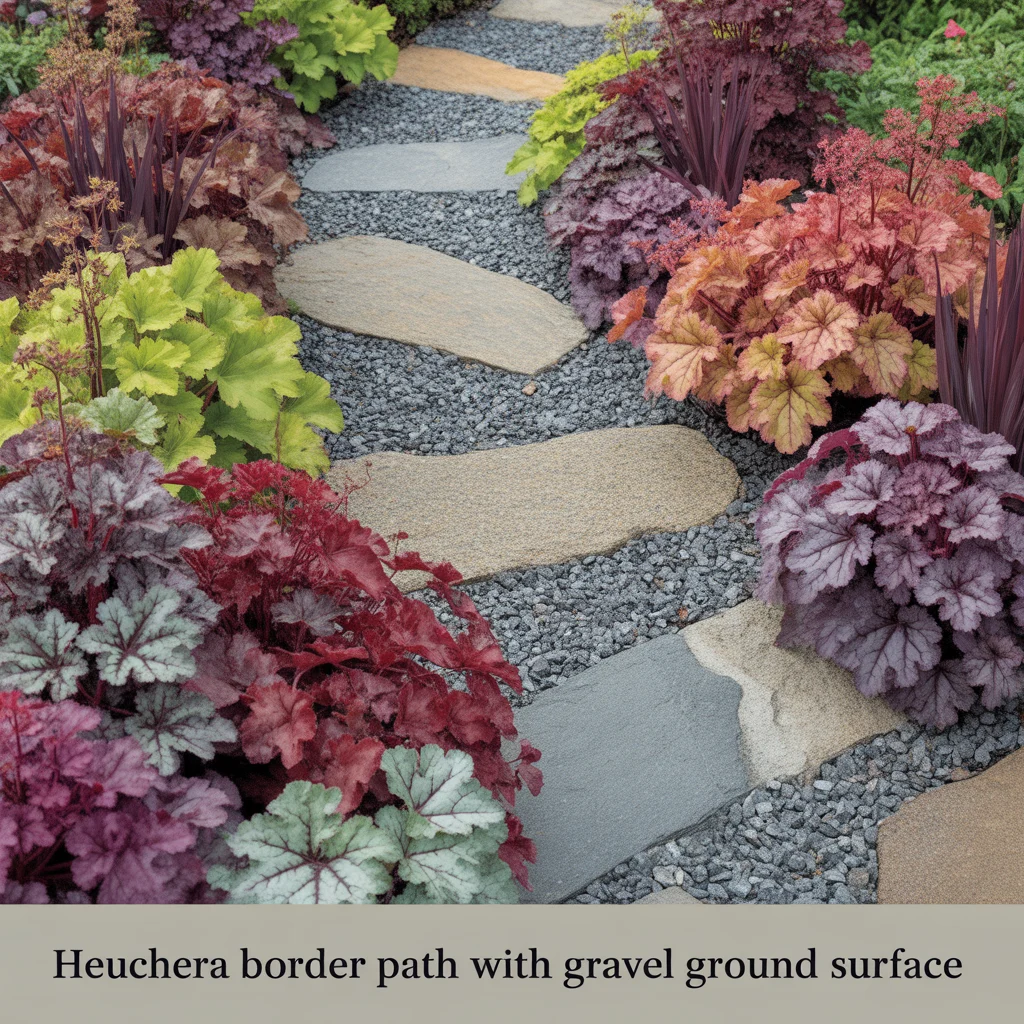
A heuchera border path with a gravel ground surface uses Heuchera, also known as coral bells, as a colorful ground cover plant on both sides of a gravel path, providing year-round foliage color in tones of bronze, burgundy, silver, and lime green that makes the path borders as decorative in winter as they are in the main growing season. I designed a path using 14mm golden gravel with Heuchera Palace Purple on both sides and the combination of the golden gravel and the deep burgundy heuchera foliage produced a color contrast that was more visually effective than many flowering plant combinations I have tried on garden path borders. Heuchera requires no cutting back, no dividing for three to four years, and no staking.
Heuchera Varieties for a Garden Path Ground Cover Border
Heuchera Palace Purple, Heuchera Obsidian, and Heuchera Lime Rickey are three heuchera varieties suited to a gravel garden path with ground cover borders. Heuchera Palace Purple produces large, deep burgundy-purple leaves with a metallic sheen and grows to 18 inches in height and 20 inches in spread, making it the most visually impactful variety for a path border planting. Heuchera Obsidian produces the darkest leaves of any heuchera, described as near-black in strong light, on a plant growing to 14 inches and suits a modern garden path idea where the dark foliage creates a bold contrast with pale gravel or light paving. Heuchera Lime Rickey produces bright lime-green leaves and suits a shaded path where a light-colored ground cover plant improves visibility.
Gravel Colors That Contrast With Heuchera Ground Cover
Golden gravel, white marble chippings, and pale buff limestone are three gravel colors that create effective visual contrast with heuchera ground cover on a garden path. Golden gravel at 14mm chip size produces a warm amber surface that contrasts most strongly with deep burgundy and purple heuchera varieties and suits a traditional or cottage garden path style. White marble chippings produce the strongest light-reflecting surface and create the maximum contrast with dark-leaved heuchera varieties like Obsidian, which suits a contemporary small garden path idea where strong visual contrast is the design intention. Pale buff limestone suits a naturalistic path design with a wider range of heuchera colors because the neutral stone tone works with both warm and cool foliage tones.
Erigeron Daisy Ground Cover Between Paving Stones
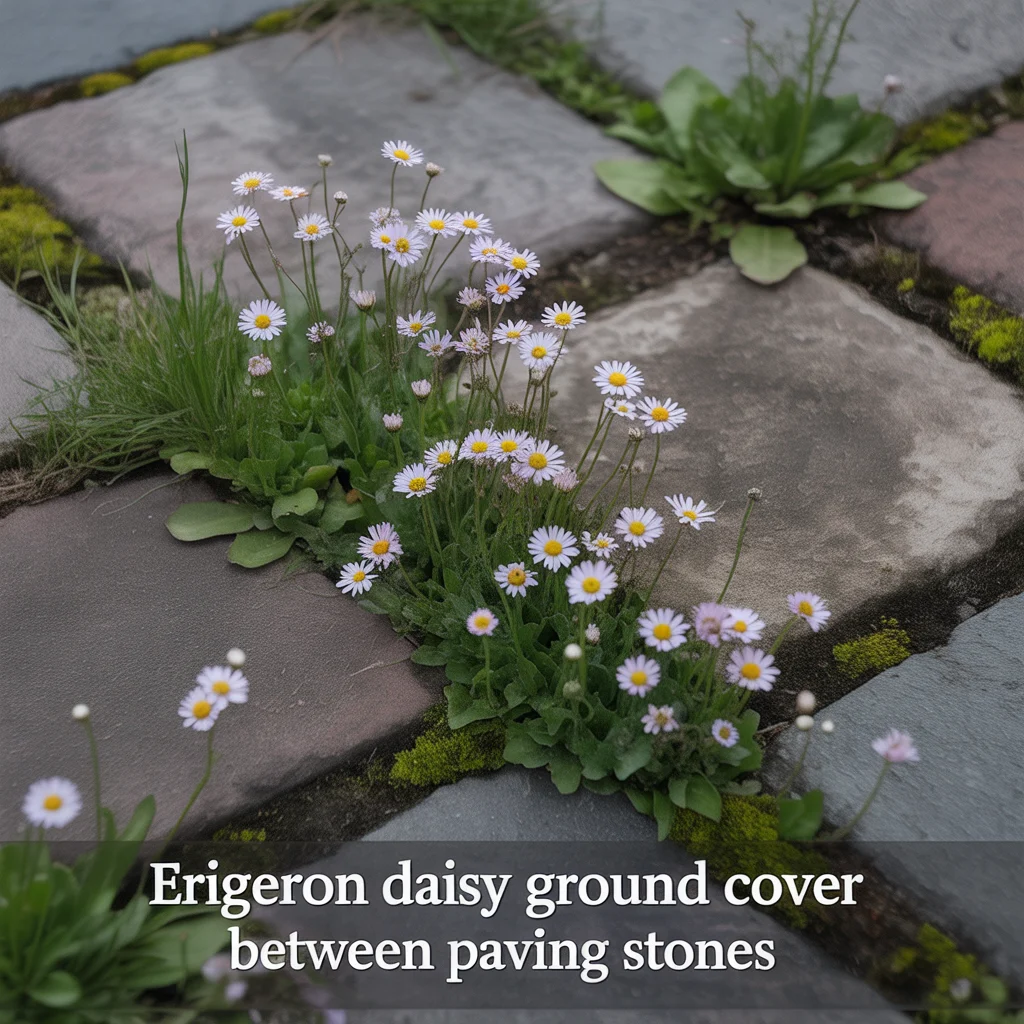
Erigeron karvinskianus, the Mexican fleabane daisy, is a self-seeding annual and short-lived perennial that establishes itself in the joints of paving stones and produces small white and pink daisy flowers from May to November, creating the most prolific and longest-flowering ground cover available for the joints of a garden path with ground cover. I planted Erigeron karvinskianus in the joints of a York stone path three years ago by pressing seed into the open mortar joints in April, and the plant has self-seeded throughout the entire path joint network since the first flowering season, appearing in new joints each year without any further planting or intervention on my part. The daisy flowers are present on the path for 6 months of the year.
Establishing Erigeron in Garden Path Joints
Erigeron karvinskianus establishes in paving path joints by direct sowing of seed into open mortar joints in April or May, pressing the seed into the joint surface with a finger and watering lightly until germination occurs in 14 to 21 days. The plant requires no soil preparation in the joint because it germinates and grows in the minimal residual mortar and accumulated debris already present in mature paving joints. I sowed my first erigeron plants into 10 individual joints on a York stone path and found the plant had self-seeded into 34 additional joints by the end of the first flowering season, which is typical of the aggressive self-seeding behavior that makes this the easiest-establishing ground cover for a paved garden path.
Paving Stone Types That Suit Erigeron Ground Cover
York stone, random limestone flags, and aged concrete pavers are three paving stone types that suit Erigeron karvinskianus as a joint ground cover on a garden path. York stone has wide, irregular joints that provide a generous soil volume for erigeron roots and suits the cottage garden aesthetic most associated with this daisy ground cover. Random limestone flags produce similarly irregular joints and a pale stone surface that makes the white and pink erigeron flowers highly visible against the path background. Aged concrete pavers develop open, slightly crumbled joints over time that provide easy access points for erigeron self-seeding and suit a garden path on a budget where the aged concrete surface benefits from the softening effect of the daisy ground cover in the joints.
Prairie-Style Garden Path With Grasses as Ground Cover
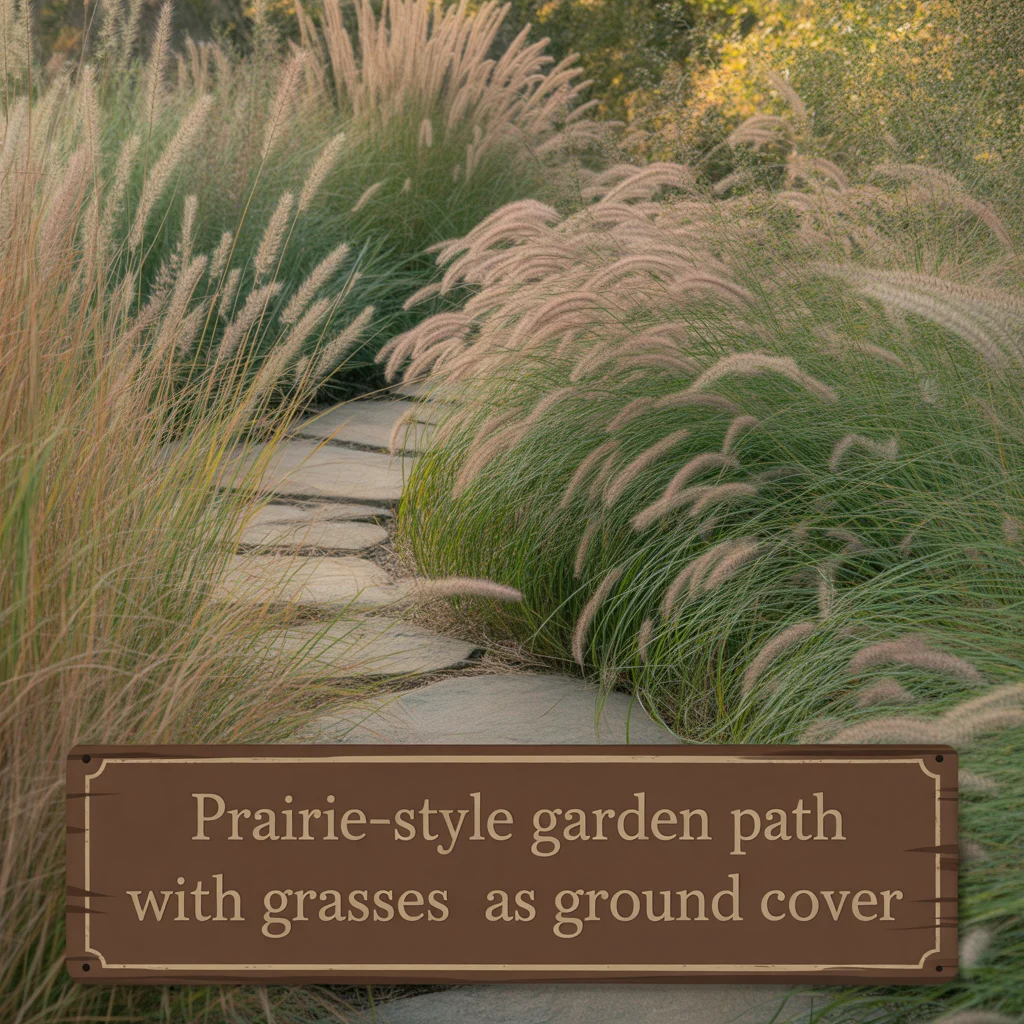
A prairie-style garden path with ornamental grasses as ground cover uses low-growing grass species planted in drifts alongside a path to create a ground-level planting that mimics the flowing, naturalistic character of a prairie or meadow planting style around a defined walkway. I studied this design at a contemporary public garden where a crushed granite path ran through drifts of Sesleria autumnalis, Festuca glauca, and Stipa tenuissima planted at ground level on both sides, and the combination of the silver-grey crushed granite path surface and the mixed green, blue-grey, and golden grass planting on both sides produced a modern garden path idea of real originality and visual interest throughout the full year.
Low-Growing Grass Species for a Prairie Path Ground Cover
Festuca glauca, Sesleria autumnalis, and Carex oshimensis Evergold are three low-growing grass species suited to a prairie-style garden path with ground cover. Festuca glauca produces a dense, steel-blue mound of fine-textured leaves reaching 12 inches in height and spread, providing a distinctive cool-toned ground cover alongside a path that suits both contemporary and naturalistic garden styles. Sesleria autumnalis produces mid-green leaves with a slightly glossy surface and stays below 14 inches in height, tolerating drier soil conditions than most ornamental grasses. Carex oshimensis Evergold produces bright gold and green striped leaves in an arching mound of 12 inches height that suits a shaded path position where other prairie grasses would produce insufficient growth.
Path Surfaces That Suit a Prairie Grass Ground Cover
Crushed granite, decomposed granite, and compacted hoggin are three path surfaces suited to a prairie-style garden path with grass ground cover. Crushed granite at 6mm chip size produces a firm, well-draining surface that suits a prairie path design and costs $2 to $4 per square foot. Decomposed granite, sometimes called DG, compacts to a near-solid surface that sheds water quickly and suits a prairie path where a harder surface than loose gravel is needed for regular foot traffic. Compacted hoggin produces a natural buff-brown surface that suits a prairie or meadow path design where the organic tone of the path material coordinates with the naturalistic grass planting on both sides.
Vinca Minor Ground Cover Path Through a Shaded Garden
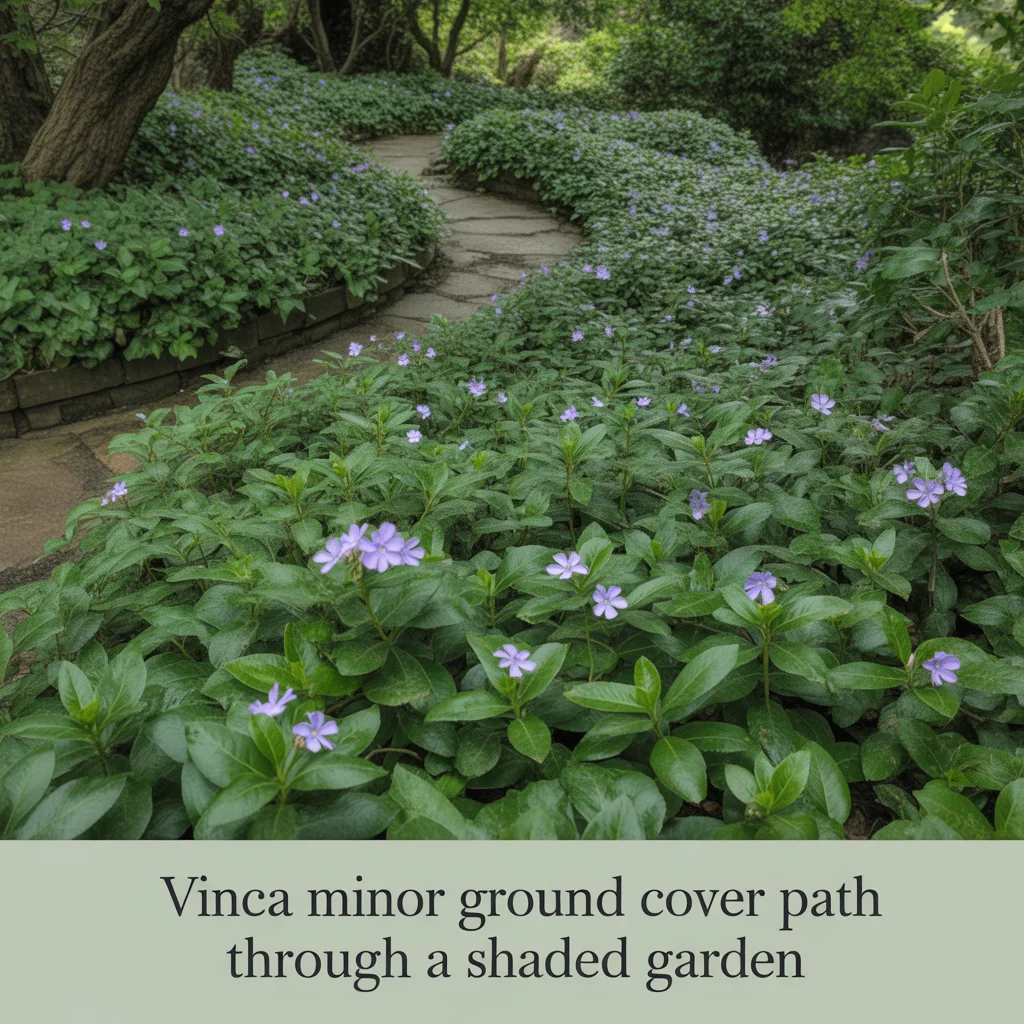
A Vinca minor ground cover path through a shaded garden uses the vigorous, trailing stems of lesser periwinkle to create a dense, dark green ground cover on both sides of a shaded path that suppresses weeds completely after two seasons and produces small purple-blue flowers from March to May at the beginning of the garden year. I planted Vinca minor on both sides of a shaded bark chip path under a dense apple tree canopy and found it the most reliable of any ground cover I have tried in difficult dry shade conditions, maintaining dense coverage without watering, feeding, or dividing for four consecutive years. The March flowers appeared before any other plant in that section of the garden was showing color. Anyone working with a similar combination of a shaded path and a dominant tree overhead will find a wide range of planting and design options covered in these garden paths around a tree with ground cover plants, which include Pachysandra, Liriope, and Vinca plantings between stepping stone paths, circular gravel designs, and complete shade planting schemes that turn a difficult dry-shade position into the most visually resolved feature in the garden.
Vinca Minor Varieties for a Shaded Garden Path
Vinca minor, Vinca minor Alba, and Vinca minor Atropurpurea are three varieties suited to a shaded garden path with ground cover. Vinca minor produces the standard purple-blue flowers on a plant that spreads at 18 to 24 inches per season in favorable conditions, making it the fastest-establishing variety for a shaded path border. Vinca minor Alba produces white flowers on the same vigorous spreading plant and suits a shaded path where a lighter flower color is needed to maintain visibility in low-light conditions. Vinca minor Atropurpurea produces deep purple-red flowers that contrast strongly with the dark green foliage and suits a shaded path in a garden where deeper flower tones are preferred for the ground cover planting.
Controlling Vinca Minor on a Garden Path Border
Vinca minor spreads at a rate of 18 to 24 inches per season and requires one maintenance session per year in March, in which any stems that have spread beyond the intended border area onto the path surface or into adjacent planting areas are cut back to the border edge using shears or a half-moon edging tool. I control the vinca on my shaded path border in a single 30-minute session each March, cutting back the leading stems to a line 3 inches inside the path edge on both sides, which prevents the trailing stems from creating a trip hazard on the path surface during the following growing season. The cut material is composted directly because vinca does not re-root from stem cuttings once separated from the parent plant.
Herb Spiral Path With Thyme and Oregano Ground Cover
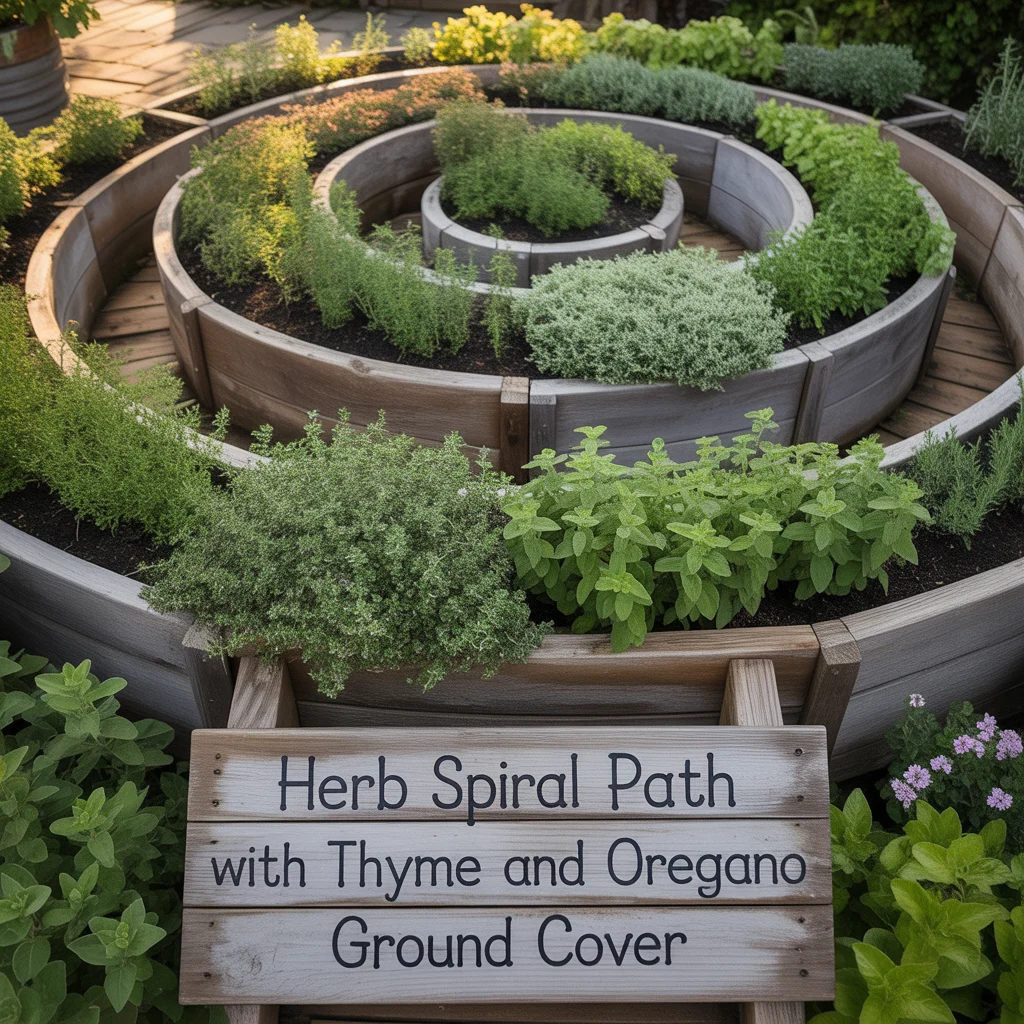
A herb spiral path with thyme and oregano as the ground cover uses creeping thyme and prostrate oregano planted between the stepping stones of a path leading to or around a herb spiral growing feature, creating a sensory garden path where the herbs used as ground cover are the same culinary herbs grown in the spiral above, producing a coherent and usable planting scheme from ground level to the full height of the spiral. I created this combination on the path approach to my own herb spiral, planting Thymus vulgaris and Origanum vulgare Compactum between 18-by-18-inch sandstone stepping pads on the 8-foot approach path, and harvested thyme and oregano from both the spiral and the path ground cover throughout the cooking season.
Prostrate Oregano for a Herb Path Ground Cover
Origanum vulgare Compactum is the best oregano variety for a garden path ground cover because it stays below 4 inches in height, spreads to 12 inches per plant within one season, and produces the same culinary flavor as standard upright oregano despite its low-growing habit. Standard Origanum vulgare grows to 18 to 24 inches and is not suited to a path ground cover position because the upright growth produces stems that obstruct the path surface. I harvest the Origanum vulgare Compactum from my path ground cover by cutting small sprigs with scissors rather than pulling the stems, which prevents disturbing the root system and allows the plant to regenerate the cut area within 3 to 4 weeks during the growing season.
Stepping Stone Spacing for a Herb Ground Cover Path
Stepping stones on a herb ground cover path are spaced at 14 to 16-inch intervals to allow comfortable walking while leaving enough soil gap between stones for the thyme and oregano ground cover to establish a full root system and spread between the stones. Gaps below 3 inches between stepping stones provide insufficient soil volume for either thyme or oregano to establish a viable root system, resulting in thin, patchy coverage that does not suppress weeds effectively. I use 4-inch gaps between my sandstone stepping pads on herb ground cover paths and find this gap width produces full coverage of the gap soil surface within 8 to 10 weeks of planting in spring, which is the fastest establishment time of any gap width I have tested on ground cover path projects.
Japanese Garden Path With Mondo Grass Ground Cover
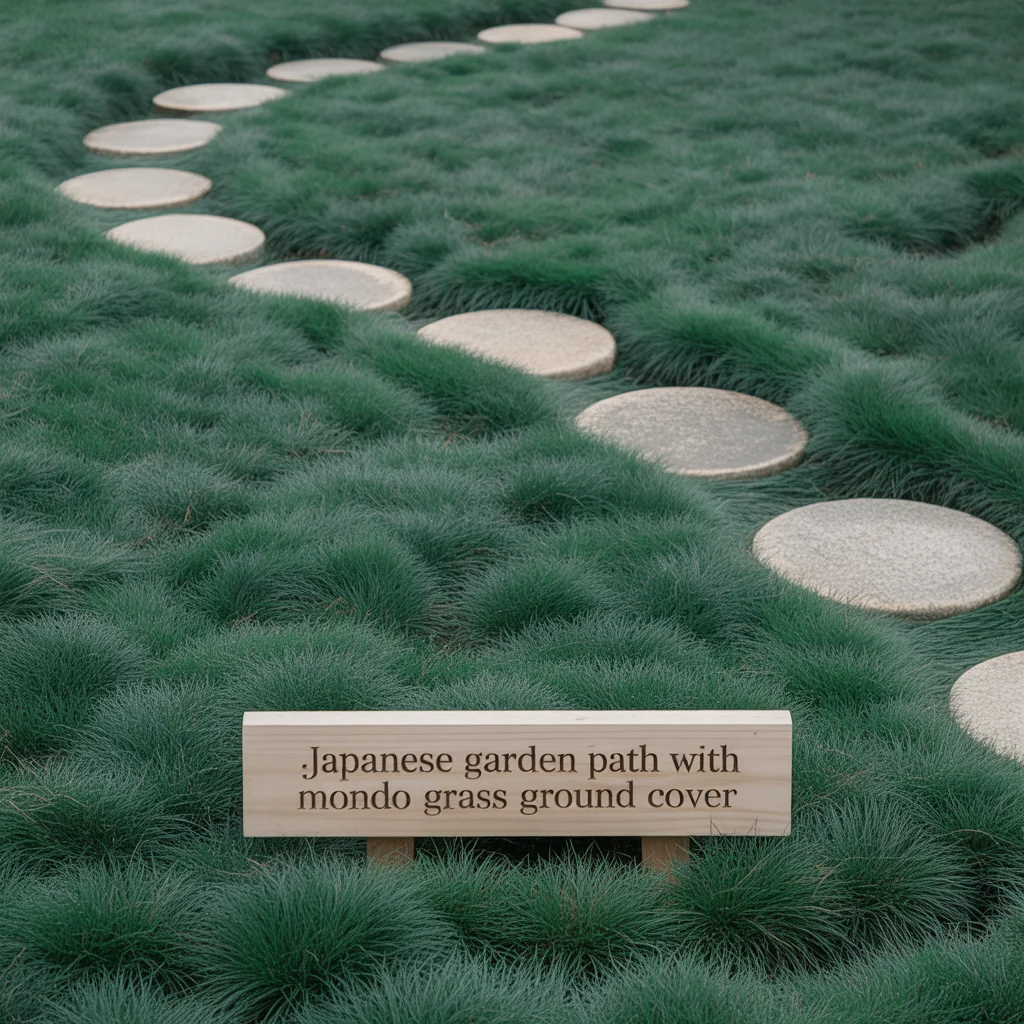
A Japanese garden path with Ophiopogon japonicus, commonly called mondo grass, as the ground cover uses this very low-growing, fine-textured grass-like plant to create a dense, dark green mat between stepping stones or alongside a raked gravel path in a Japanese-inspired garden design. I planted Ophiopogon japonicus between irregular stepping stones on a Japanese-inspired garden path and found the plant produced the most convincing low-maintenance alternative to a full moss garden I have tried, staying below 2 inches in height, spreading slowly and densely without becoming invasive, and remaining green throughout the year including the coldest winter months when most other ground cover plants either die back or lose color.
Ophiopogon Japonicus vs Black Mondo Grass for a Path
Ophiopogon japonicus and Ophiopogon planiscapus Nigrescens, known as black mondo grass, are two mondo grass varieties suited to a Japanese garden path with ground cover, producing very different visual effects between path stones. Ophiopogon japonicus produces dark green, very fine-textured leaves at 2 to 3 inches height and spreads at 4 to 6 inches per season, creating a grass-like green mat that suits a traditional Japanese garden stepping stone path. Ophiopogon planiscapus Nigrescens produces near-black leaves at 4 to 6 inches height and creates a dramatically dark ground cover that contrasts strongly with pale stepping stones and suits a contemporary Japanese-inspired garden path where the black foliage is used as a deliberate design element.
Raked Gravel and Mondo Grass Combinations for a Japanese Path
White granite gravel, black basalt chippings, and silver-grey pea gravel are three gravel types that produce effective combinations with mondo grass ground cover on a Japanese garden path. White granite gravel creates the strongest contrast with the dark green of Ophiopogon japonicus and produces the most traditional Japanese garden path appearance when raked in parallel lines around dark stepping stones with mondo grass borders. Black basalt chippings create a tonal match with Ophiopogon planiscapus Nigrescens black mondo grass and suit a path where a very dark, unified color palette is the design intention. Silver-grey pea gravel produces a neutral mid-tone that suits both green and black mondo grass and is the most affordable of the three options at $2 to $3 per square foot.
Budget Stepping Stone Path With Mixed Wildflower Ground Cover
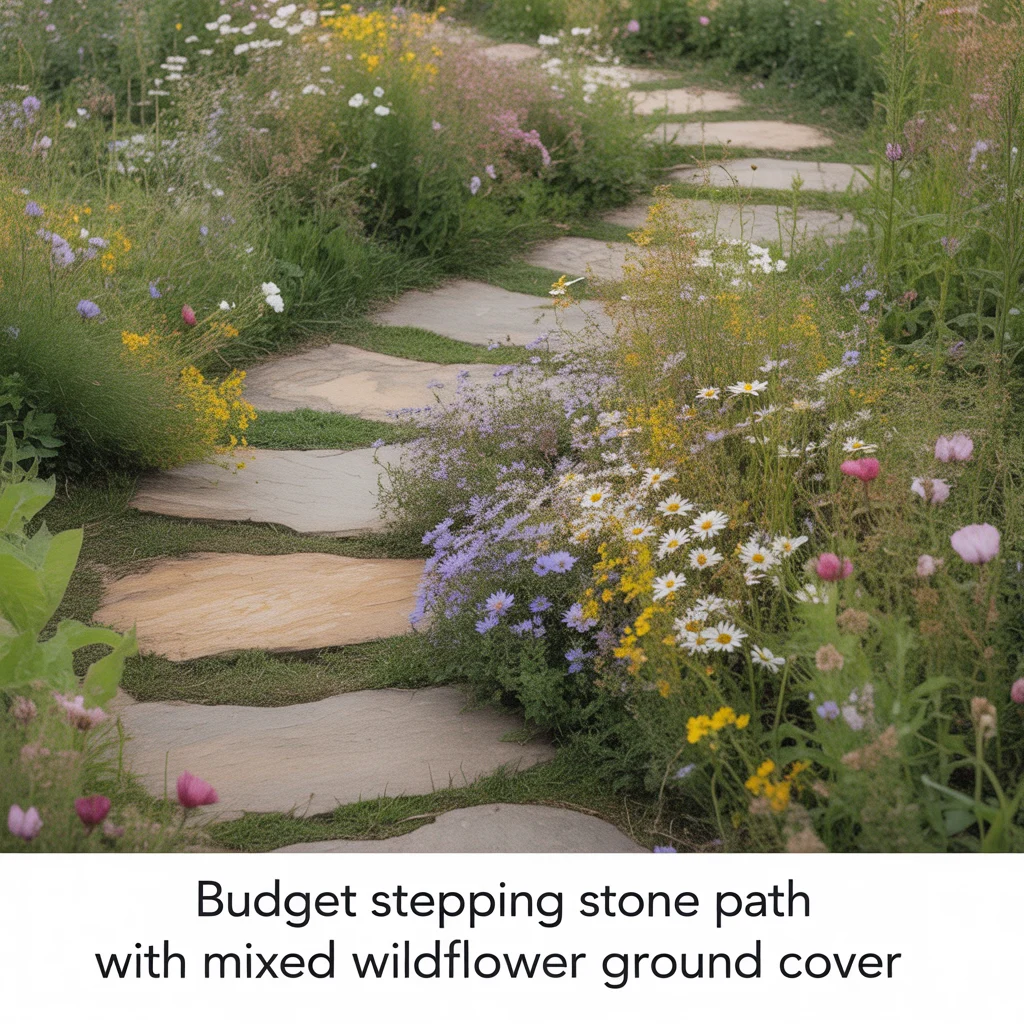
A budget stepping stone path with mixed wildflower ground cover uses reclaimed or low-cost concrete stepping pads set in cultivated soil that is seeded with a wildflower meadow mix to create a path surface where the stepping stones provide the walkable route and the surrounding wildflower growth provides a natural, constantly changing ground cover display from May through September. I created this as a deliberate garden path idea on a budget, using 12-by-12-inch reclaimed concrete pavers sourced free from a neighbor’s garden clearance, set in a section of garden seeded with a native wildflower mix costing $12 per 100 square feet. The total path cost was $12 for a 15-foot route through a new wildflower growing area.
Wildflower Mix Selection for a Path Ground Cover
A native annual wildflower mix, a perennial meadow mix, and a low-growing wildflower blend are three seed mix options suited to a stepping stone garden path with wildflower ground cover. A native annual wildflower mix including Papaver rhoeas, Centaurea cyanus, and Leucanthemum vulgare produces flowers in the first season from a spring sowing and costs $8 to $15 per 100 square feet. A perennial meadow mix takes two seasons to flower but produces a self-sustaining display from the third year onward without re-sowing, costing $12 to $20 per 100 square feet. A low-growing wildflower blend selected for species staying below 18 inches suits a stepping stone path where tall wildflowers would visually obscure the path route from the garden entrance.
Managing Wildflower Ground Cover Around Path Stepping Stones
Wildflower ground cover around stepping stones on a garden path requires one main management cut per year in September or October, after the last wildflower seed heads have ripened and shed their seed for the following season. The cut is made at 3 to 4 inches above the soil surface using a strimmer or lawn mower set to its highest cutting position, removing all the above-ground plant material and leaving the soil surface clear for the germination of the following year’s annual wildflowers. I complete this annual cut on my wildflower path in the first week of October and find it takes 20 minutes for a 15-foot path area, after which the path looks bare until the new wildflower seedlings emerge in March of the following spring.
How to use bark as a low-maintenance path ground cover
Woodland gardens with paths and natural ground cover
Sensory garden path ideas for kids using textured ground cover
Frequently Asked Questions
What is the best ground cover plant for a garden path?
Creeping thyme is the best ground cover plant for a garden path because it tolerates light foot traffic, stays below 2 inches in height, produces flowers from May to July, releases a pleasant fragrance when trodden, and suppresses weeds effectively after one growing season. Thymus serpyllum is the most vigorous spreading variety and suits paths receiving full sun and free-draining soil conditions. For shaded paths, Vinca minor or Pachysandra terminalis are the best alternatives because both establish reliably in dry shade conditions where creeping thyme fails to produce sufficient growth. I have used creeping thyme on more garden paths with ground cover than any other species and find it the most consistent performer across a wide range of soil and light conditions.
How do I stop weeds growing between path stones with ground cover?
Weeds between path stones are prevented by planting a dense ground cover species that fills the full gap area between stones within one growing season and excludes light from the soil surface below. Creeping thyme, Sedum acre, and Ajuga reptans are three ground cover plants that establish dense enough coverage to prevent weed germination between path stones when planted at the correct spacing of 6 to 8 inches between plants. Before planting, removing all existing weeds and their roots from the gaps between path stones prevents established perennial weeds from competing with the new ground cover during its first season. I apply a 1-inch layer of fine horticultural grit over the gap soil surface before planting ground cover, which suppresses annual weed seedlings during the establishment period.
What are the cheapest garden path ideas using ground cover?
A mown grass strip through a lawn, a bark chip path with white clover borders, and stepping stones set in a wildflower seed area are the three cheapest garden path ideas using ground cover, with total material costs ranging from $0 to $32 for a standard 15 to 20-foot path. A mown strip path through existing grass costs nothing beyond the electricity or fuel for the lawn mower and produces an immediately defined path route without any additional materials. A bark chip and white clover path costs $16 to $32 depending on the quantity of bark needed. Stepping stones set in a wildflower seeded area cost the price of the seed plus any stepping stone materials, which can be zero if reclaimed pavers are available locally.
How do I maintain a garden path with ground cover plants?
A garden path with ground cover requires three maintenance tasks completed on an annual schedule: edge trimming to prevent the ground cover from spreading onto the path surface, removal of any weeds that establish before the ground cover reaches full coverage, and division or cutting back of any plants that become too tall or dense for comfortable path use. Edge trimming using a half-moon edger or string trimmer takes 20 to 30 minutes per 20-foot path once a year in spring. Weed removal is required only in the first and second seasons before the ground cover establishes full coverage. After full establishment, a correctly chosen ground cover plant requires no further weed control because the dense growth excludes light from the soil and prevents new weed germination entirely.
Can ground cover plants survive being walked on in a garden path?
Creeping thyme, Chamaemelum nobile Treneague, and Sedum acre are the three ground cover plants best able to survive regular foot traffic on a garden path because all three produce growth that recovers quickly from light compression and do not develop permanent bare patches from normal pedestrian use. Creeping thyme tolerates up to 20 walking passes per day without visible damage to the growth mat. Chamaemelum nobile Treneague, the non-flowering lawn chamomile, tolerates moderate foot traffic of 10 to 15 daily passes on a garden path. Delicate ground cover plants including baby’s tears, moss, and Campanula cochleariifolia tolerate occasional foot traffic only and suit stepping stone paths where the plant grows between stones rather than directly underfoot on the walking surface.