
17 Garden Paths With Flowers That Feel Like a Garden Painting

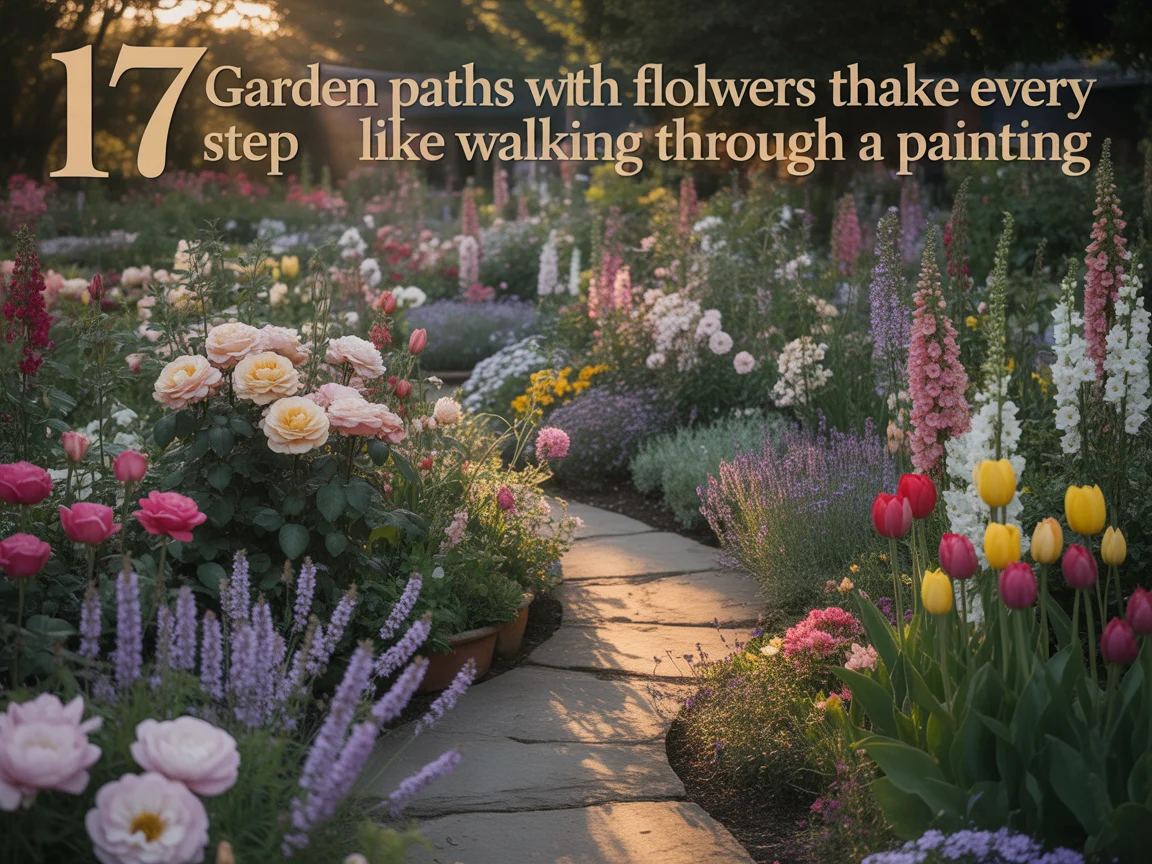
I redesigned the approach path to my front door four years ago with one specific goal: I wanted flowers at every level from ground to shoulder height on both sides of the path so that walking to my own front door felt like an experience rather than a functional necessity. I planted creeping thyme between the stepping stones, lavender at knee height along both edges, foxgloves and roses at mid-height behind them, and climbing roses on the wall above. By June of the following year, every visitor stopped at the gate before walking up the path just to take it in.
Garden paths with flowers combine a walkable surface with flowering plants placed at the path edges, between path stones, along border plantings, or overhead on arches and pergolas, creating a walking route that engages colour, scent, and seasonal change simultaneously at multiple height levels. The flowers give the path a living quality that hard landscaping alone cannot produce, and the path gives the flowers a defined linear structure that makes them look organized rather than random.
Since that front path project, I have designed and studied many flower walkway ideas across different styles, seasons, and budgets. I have seen single-species flower paths produce extraordinary results, and I have also seen complex multi-layer flowering schemes create garden paths that rival any professional flower walkway design.
In this article, I am sharing 17 garden paths with flowers that I have either planted myself or researched thoroughly enough to recommend with complete confidence.
Lavender-Lined Garden Path With Flowers
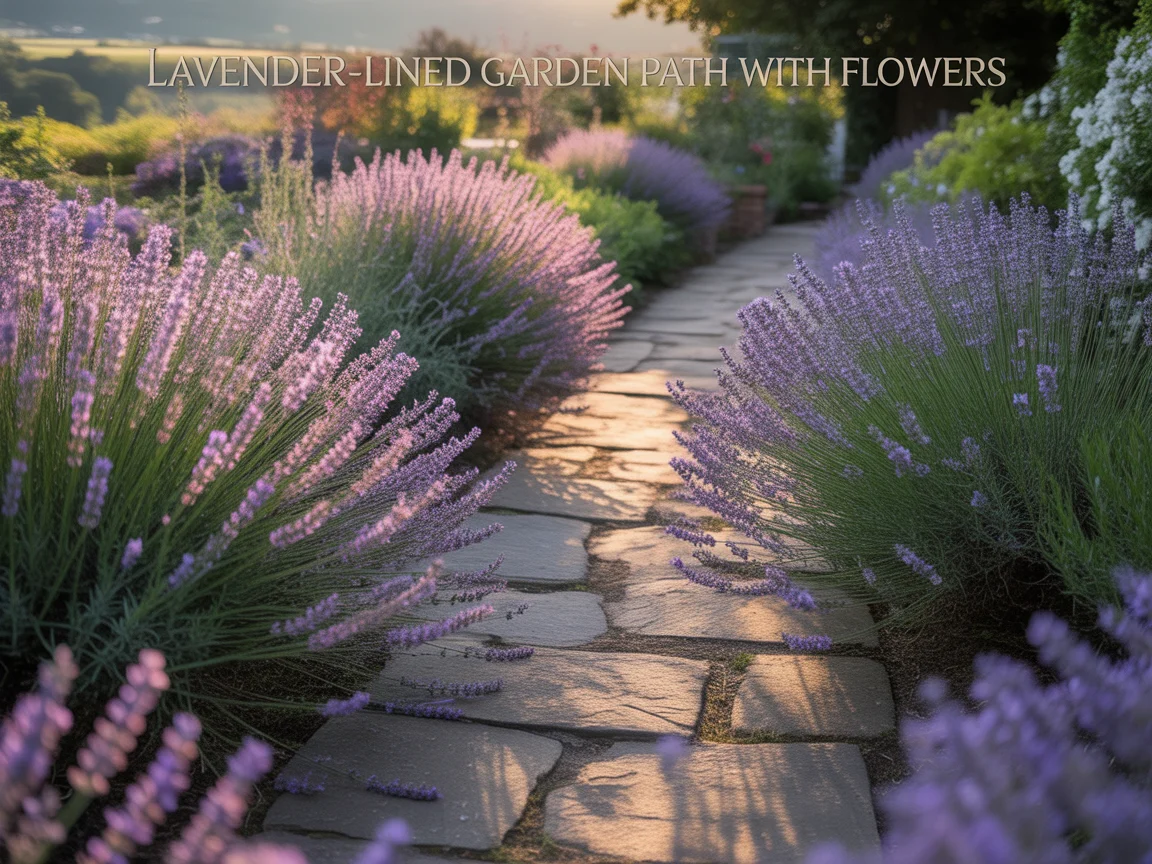
A lavender-lined garden path with flowers is the most consistently planted and widely photographed flower walkway idea in domestic garden design, and it is the first flower path planting I recommend to any homeowner asking for a low-maintenance, high-impact flowering path border. The combination of the dense purple flower spikes, the silver-green foliage, and the intense fragrance released when the plants are brushed against makes lavender uniquely suited to a path position where the plant is physically close to anyone walking past. I planted Lavandula angustifolia Hidcote at 18-inch spacing along both sides of a 20-foot York stone path and the border reached full, even coverage with zero gaps between plants by the end of the second growing season.
Best Lavender Varieties for a Flower Garden Path
Lavandula angustifolia Hidcote, Lavandula angustifolia Munstead, and Lavandula x intermedia Grosso are three lavender varieties suited to a flower garden path. Hidcote produces the deepest purple flower spikes at 18 to 24 inches height with the most compact, formal growth habit, suiting a path where a neat, even hedge-like border is the design intention. Munstead produces lighter purple flowers at the same height with a slightly wider spread and suits an informal cottage flower path where a less rigidly formal lavender border is preferred. Grosso is a lavandin hybrid that produces the strongest fragrance of all three varieties on tall 30-inch stems and suits a path border where the scent experience is the primary design goal rather than compact border neatness.
Spacing Lavender Along a Garden Flower Path
Lavender for a garden path with flowers is planted at 18-inch centers in a single row for a moderate-density flower border, or at 12-inch centers in a double staggered row for a denser, fuller border that reaches complete gap coverage within one growing season. I plant lavender in spring between March and May on all flower path projects, applying a 1-inch gravel mulch around each plant base after planting to suppress weeds and retain soil moisture during the establishment period. A single row at 18-inch spacing for a 20-foot path requires 14 plants per side, costing $28 to $56 per border row at garden centre prices of $2 to $4 per plug plant.
Rose-Lined Cottage Flower Garden Path
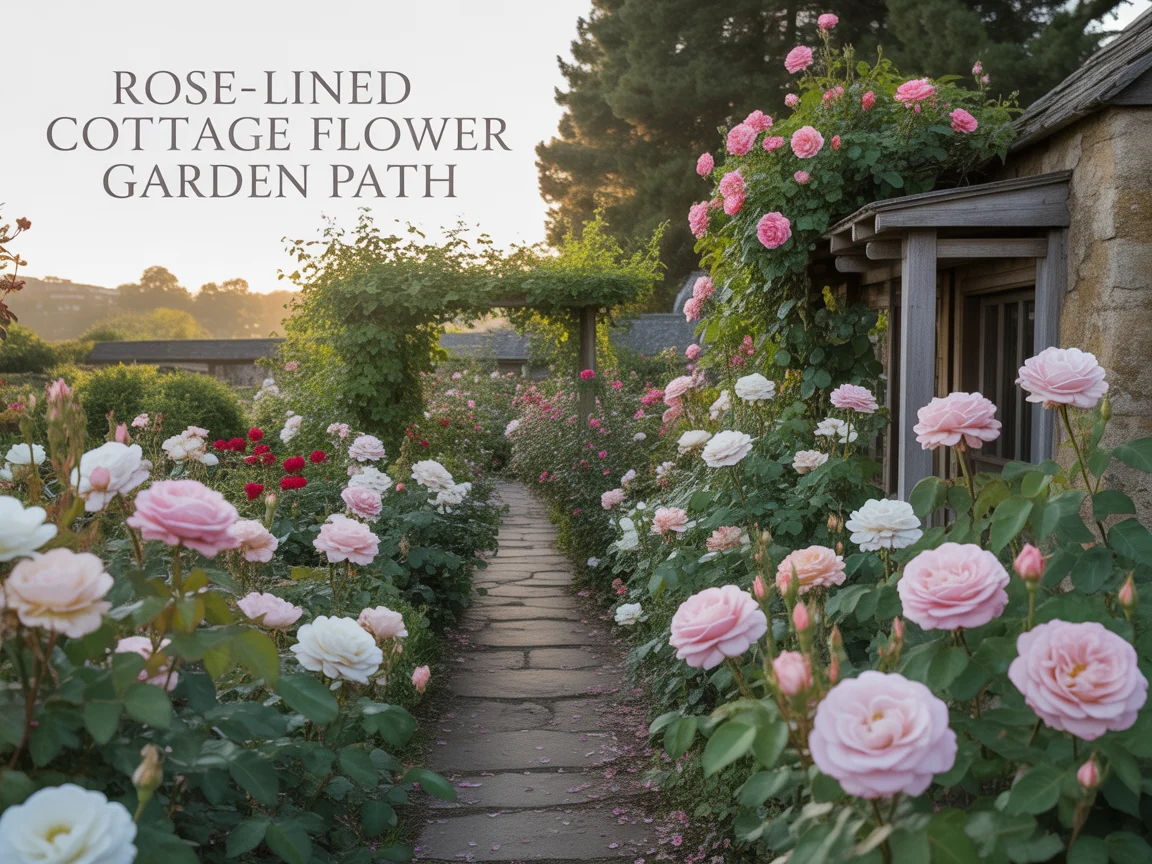
A rose-lined cottage flower garden path uses shrub roses planted along both sides of the path to create a flowering border of 3 to 5 feet height that produces blooms from June through October in a wide range of pink, red, white, and apricot tones. I planted Rosa Gertrude Jekyll on one side and Rosa Munstead Wood on the other side of a 24-foot reclaimed brick path at a residential project, and the combination of the large deep pink Gertrude Jekyll flowers and the deep crimson Munstead Wood flowers on opposite sides of the path produced a flower walkway of intense colour and fragrance from June through September that the homeowner described as the best decision she had made in fifteen years of gardening.
Shrub Rose Varieties for a Garden Flower Path
Rosa Gertrude Jekyll, Rosa The Generous Gardener, and Rosa Olivia Rose Austin are three shrub roses suited to a garden path with flowers. Rosa Gertrude Jekyll produces large deep pink flowers with the strongest old rose fragrance of any David Austin variety from June to October at 4 feet height and suits a mid-border position on a path of 3 feet or more width. Rosa The Generous Gardener produces soft pink flowers on a spreading shrub or light climber from June to October at 5 feet height and suits a wider path border where the generous spreading habit adds depth to the flower display behind the path edge. Rosa Olivia Rose Austin produces clear pink flowers with a light fragrance from June to October at 3 to 4 feet height and suits a narrower path border where a more compact rose growth habit is needed.
Companion Planting for a Rose Flower Path
Alchemilla mollis, Nepeta x faassenii, and Geranium rozanne are three companion plants suited to the base of rose bushes on a garden path with flowers. Alchemilla mollis provides a low-growing, weed-suppressing base planting of soft pleated leaves and small yellow-green flowers at the path edge level that conceals the bare lower stems of the roses above it. Nepeta x faassenii produces lavender-blue flowers from May to September at 18 inches height that bridges the gap between the path surface and the rose flowers above, filling the full border height from ground to rose bloom level. Geranium rozanne produces blue-violet flowers continuously from June to October and spreads to 24 inches, providing reliable ground-level colour coverage at the path edge throughout the main rose flowering season.
Foxglove and Allium Flower Path
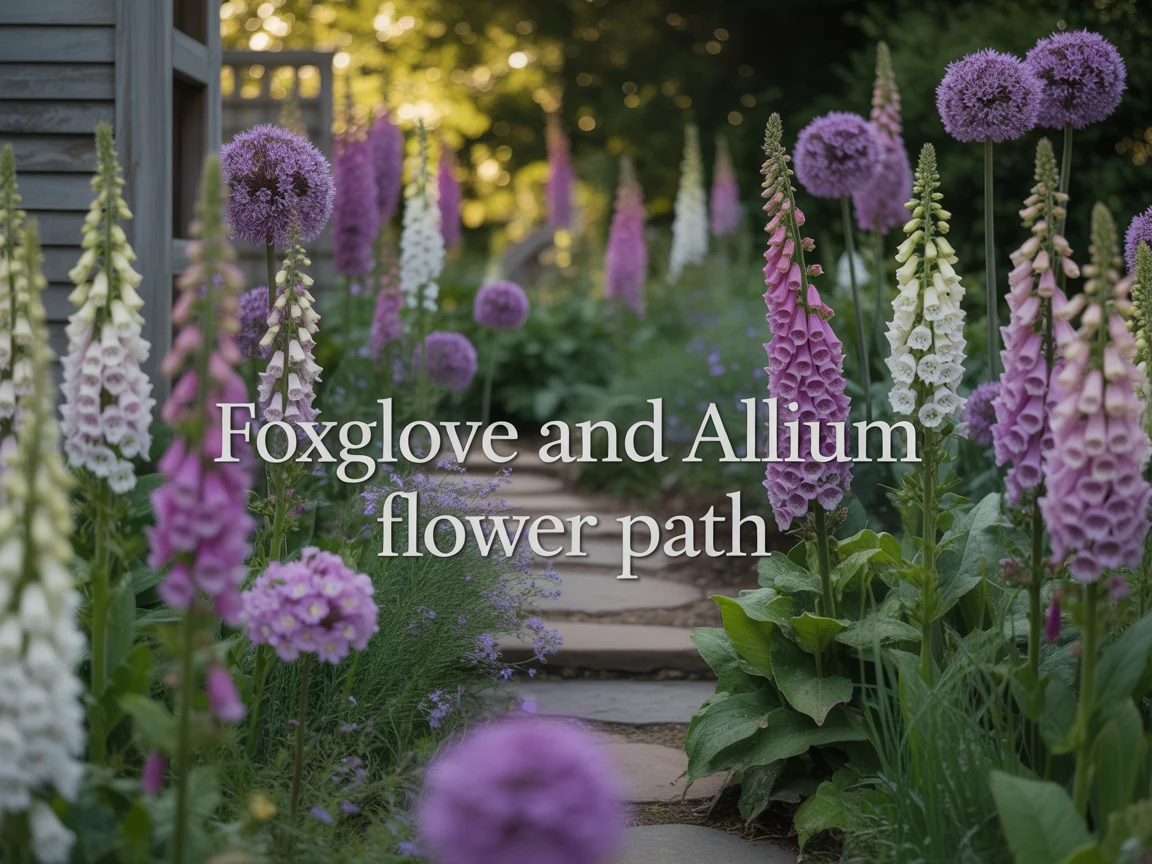
A foxglove and allium flower path uses the vertical flower forms of Digitalis purpurea foxgloves and Allium hollandicum spheres to create a garden path with flowers where the dominant visual element is height rather than spread, producing tall flowering columns and spheres that rise above the path edges at 3 to 5 feet and create an elevated flower display that changes completely between the May allium peak and the June foxglove peak. I planted this combination along a gravel path in my own garden and found the contrast between the tall upright foxglove spikes and the perfectly round allium spheres created the most visually distinctive single-border combination I have planted on any flower path project.
Foxglove Varieties for a Garden Flower
Digitalis purpurea, Digitalis purpurea Alba, and Digitalis purpurea Camelot Cream are three foxglove varieties suited to a garden path with flowers. Digitalis purpurea produces the classic tall purple-pink flower spikes of 4 to 5 feet from June to July, self-seeding prolifically throughout the path border and reappearing year after year without replanting once established. Digitalis purpurea Alba produces pure white flower spikes at the same height and suits a path border where a pale colour scheme or a contrast with deeply coloured companion plants is the design intention. Digitalis purpurea Camelot Cream produces cream flower spikes with burgundy spotting inside the tube from June to July at 5 feet height, providing the most distinctive foxglove flower detail for a cottage flower walkway design.
Allium Varieties for a Garden Flower Path
Allium hollandicum Purple Sensation, Allium Globemaster, and Allium sphaerocephalon are three allium varieties suited to a flowering garden path. Allium hollandicum Purple Sensation produces 4-inch-diameter deep purple spheres on 3-foot stems in May and June at a cost of $0.80 to $1.50 per bulb, making it the most affordable allium for large-quantity path border planting. Allium Globemaster produces the largest flower heads at 8 to 10 inches diameter on 3 to 4-foot stems in June and July, suiting a path border where maximum individual flower presence is the design goal. Allium sphaerocephalon produces small oval purple-red heads on 2-foot stems in July and August, extending the allium flower path display beyond the main May and June peak.
Cottage Flower Path With Mixed Annual and Perennial Planting
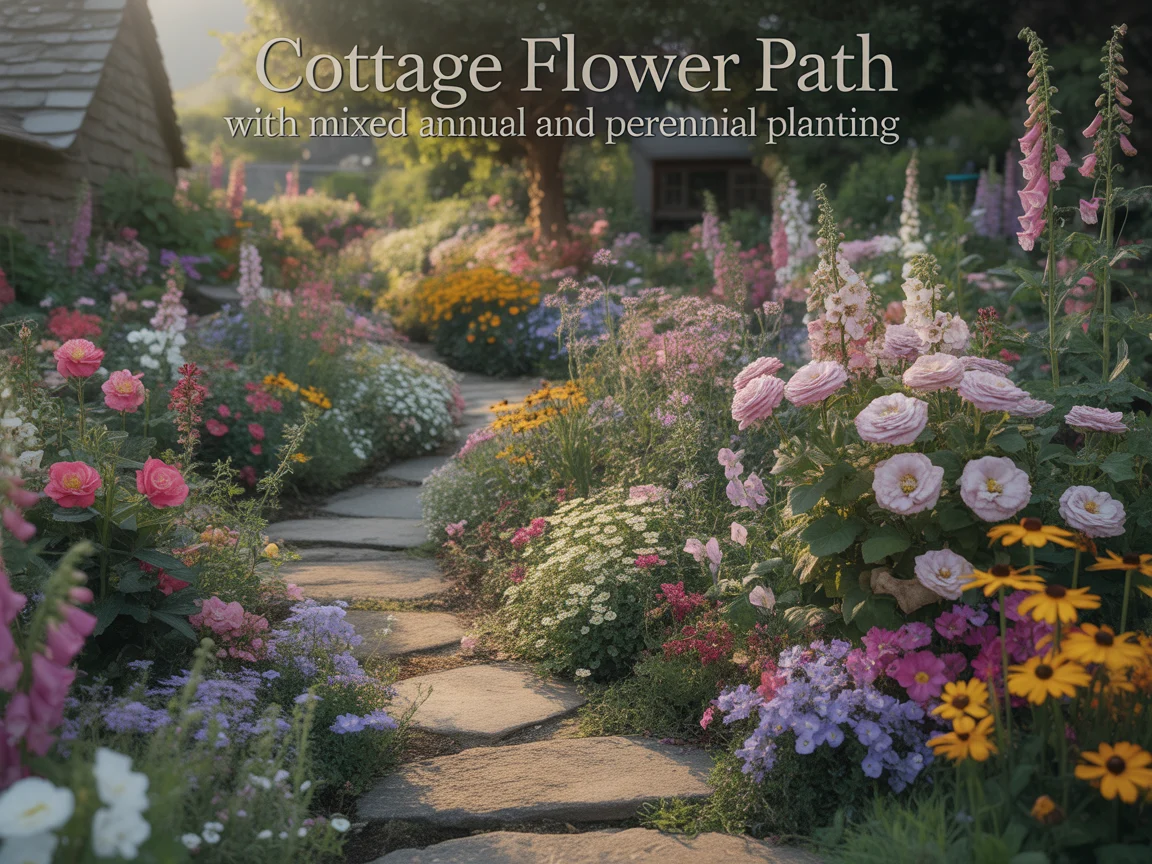
A cottage flower path with mixed annual and perennial planting combines permanent perennial plants with seasonal annual bedding to create a garden path with flowers that maintains a continuous display from February through October, using the perennials for structural backbone and the annuals for seasonal colour change. I designed this type of flower walkway for a residential project where the homeowner wanted maximum colour impact throughout the full season, planting a permanent framework of Salvia nemorosa, Echinacea purpurea, and Agapanthus Headbourne Hybrids with annual gaps at 18-inch intervals for Cosmos, Zinnia, and Nicotiana changed each season.
Perennial Framework Flowers for a Mixed Path Border
Salvia nemorosa, Echinacea purpurea, and Agapanthus Headbourne Hybrids are three perennial framework flowers suited to a cottage flower garden path. Salvia nemorosa Caradonna produces upright violet-blue spikes from May to August at 24 inches height, providing a repeating vertical accent that reads as a structural element in the flower border regardless of which annual plants fill the gaps between salvia clumps each season. Echinacea purpurea produces pink cone flowers from July to September at 24 to 30 inches height with decorative seed heads that remain attractive into winter. Agapanthus Headbourne Hybrids produce round blue flower heads on 3-foot stems from July to September with bold strap foliage that provides year-round structure in the path flower border.
Annual Flowers for a Garden Path With Flowers
Cosmos bipinnatus, Zinnia elegans, and Nicotiana sylvestris are three annual flowers suited to seasonal gap planting in a mixed cottage flower path border. Cosmos bipinnatus produces feathery, delicate flowers in pink, white, and crimson from June to October at 3 to 4 feet height, providing a light, airy flower quality that contrasts with the more solid forms of the perennial companion plants in the border. Zinnia elegans produces bold, round flowers in orange, yellow, red, and pink from July to October at 18 to 24 inches height, providing the richest colour saturation of any annual flower for a path border. Nicotiana sylvestris produces tall white trumpet flowers with a strong evening fragrance from June to September at 4 to 5 feet height.
Tulip and Forget-Me-Not Spring Flower Path
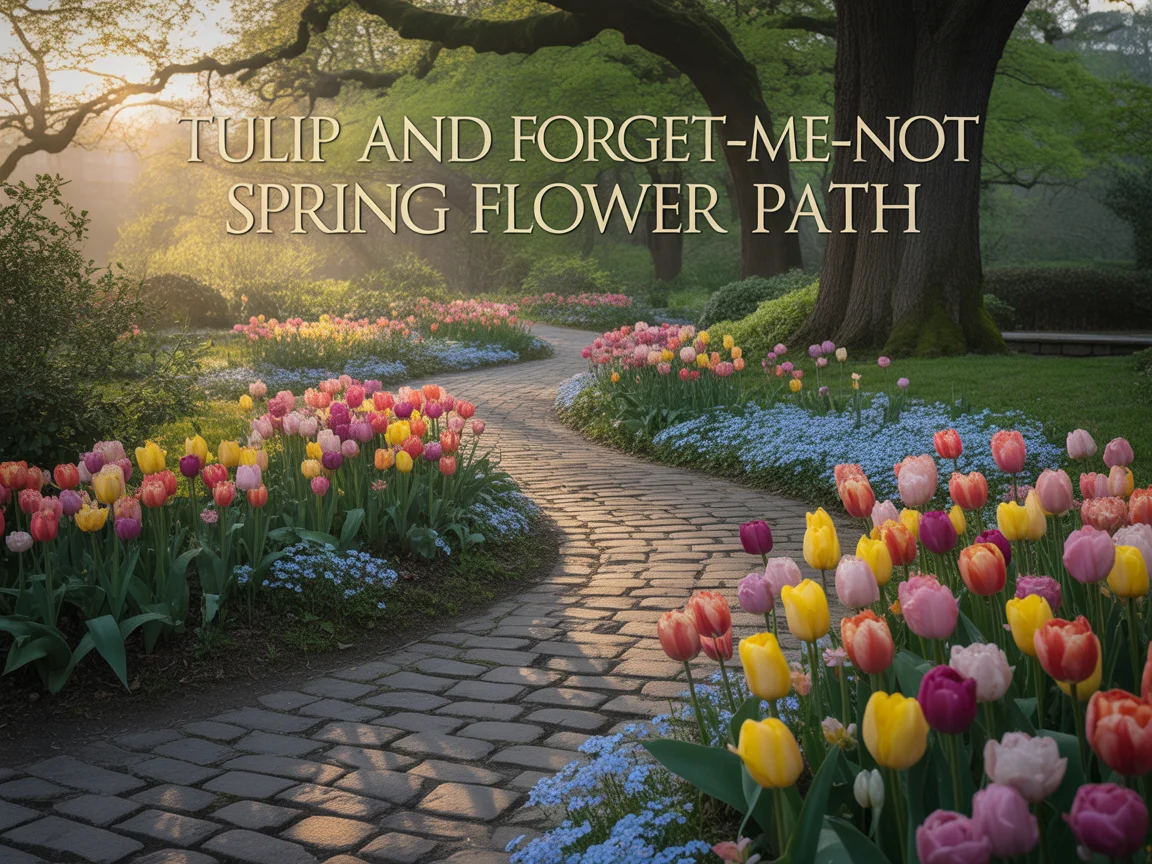
A tulip and forget-me-not spring flower path uses the classic cottage garden combination of tall tulip stems rising above a low carpet of Myosotis forget-me-nots to create a garden path with flowers specifically designed for the April and May spring season, producing the most intense flower display available in a spring path border using two plants that cost under $20 combined for a 15-foot path border. I planted this combination alongside a stepping stone path through a lawn section of my garden in October, and the following April produced a blue-and-purple carpet at ground level with tall crimson and purple tulip stems emerging through it that stopped visitors at the garden entrance before they had taken three steps.
Tulip Varieties for a Spring Flower Path
Tulipa Queen of Night, Tulipa Ballerina, and Tulipa White Triumphator are three tulip varieties suited to a spring flower garden path. Tulipa Queen of Night produces deep maroon-purple flowers on 24-inch stems in late April and May, providing the most dramatic single tulip colour available for a spring path border and the strongest visual contrast with the blue Myosotis carpet below it. Tulipa Ballerina produces orange-red lily-flowered blooms on 22-inch stems in late April, providing a warm flame-coloured alternative to the dark Queen of Night tones. Tulipa White Triumphator produces elegant white lily-shaped flowers on 26-inch stems in May and suits a spring flower path where pale tones are needed for the tulip layer above the blue forget-me-not carpet.
Planting a Tulip and Forget-Me-Not Flower Path
A tulip and forget-me-not combination on a garden path with flowers is planted in two stages in autumn. First, tulip bulbs are planted at 6-inch depth in October at 6-inch spacing throughout the border area. Second, forget-me-not plugs or young plants are planted in the spaces between the tulip bulb positions in October or November at 6-inch spacing, which allows the forget-me-nots to establish root systems before winter and produce a full, dense carpet by April. I always plant tulip bulbs first and mark their positions with short sticks before planting the forget-me-nots around the marked positions, which prevents me from accidentally planting a forget-me-not directly above a tulip bulb and obstructing the emerging stem in spring.
Wisteria Flower Walkway Over a Garden Path
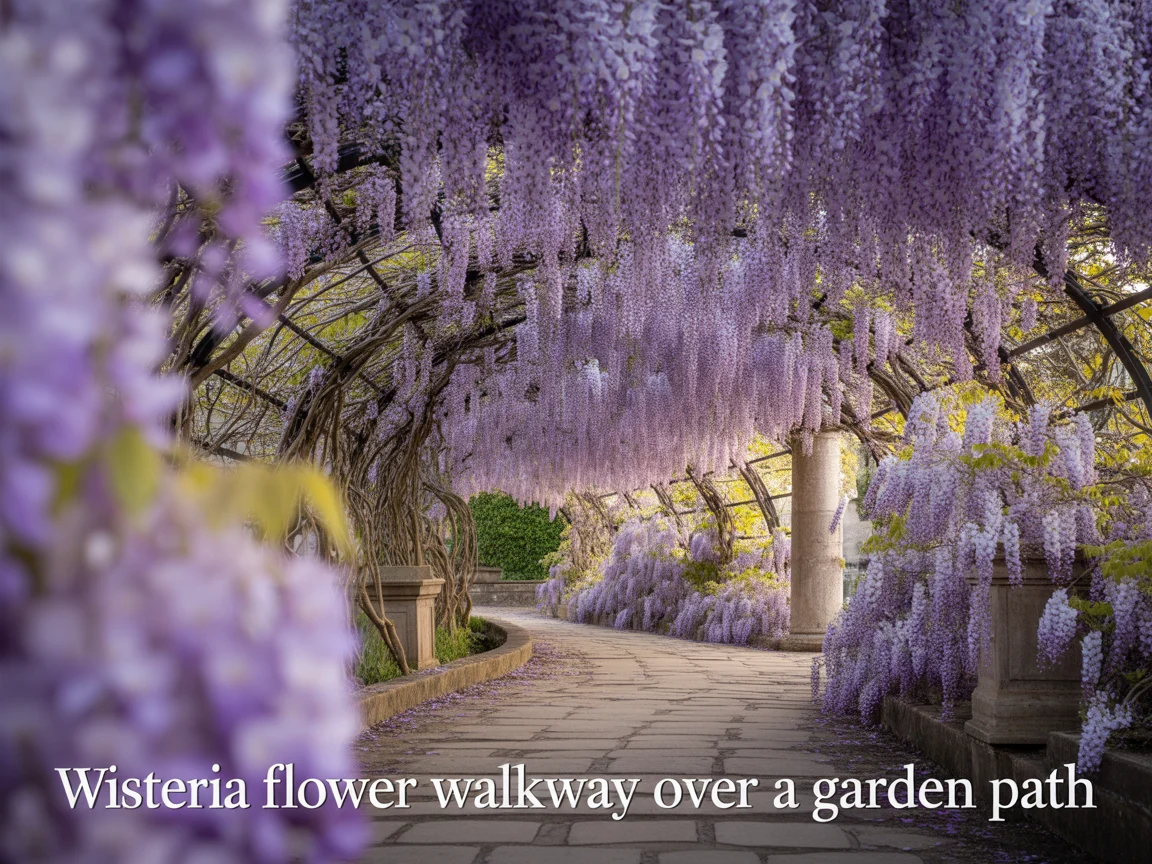
A wisteria flower walkway uses Wisteria sinensis or Wisteria floribunda trained over a pergola or arch structure above a garden path to create an overhead flower display of hanging lilac racemes in May that turns the path into a flower tunnel for three to four weeks at the peak of the wisteria flowering season. I designed and planted a wisteria walkway at a formal garden project using three steel arches at 8-foot intervals over a 20-foot York stone path, training Wisteria sinensis on all three arch frames, and the combined flower display in the third season after planting produced a flower walkway of such visual impact that the homeowner extended the path by 10 feet to include two more arches.
Wisteria Species for a Garden Flower Walkway
Wisteria sinensis, Wisteria floribunda, and Wisteria brachybotrys Shiro-kapitan are three species suited to a wisteria flower walkway over a garden path. Wisteria sinensis produces the most vigorous growth and the most abundant flowering of the three species, with racemes of 12 inches length in May before the leaves fully develop, and grows to 30 feet over three to four seasons. Wisteria floribunda produces longer racemes of up to 18 inches in named varieties and flowers slightly later in May as the leaves begin to emerge, with the foliage and flowers present simultaneously. Wisteria brachybotrys Shiro-kapitan produces white flowers with a stronger fragrance than the lilac-flowered species and suits a flower walkway where a pale colour overhead flower display is the design intention.
Training Wisteria Over a Garden Path Arch
Wisteria on a garden path arch is trained by tying the main leader stems to the arch side rails in a near-horizontal position as they grow, which stimulates the maximum number of flowering spurs along each trained stem. Vertical wisteria stems produce flowers only at the growing tip, while horizontal stems produce flowering spurs at every node along their length. I tie the main wisteria stems to the arch rails in February each year using soft garden twine in a figure-of-eight knot that allows slight movement without cutting into the stem. The flowering spurs produced from the horizontally trained stems require pruning twice a year in August and February to maintain maximum flower bud production on the arch.
Echinacea and Rudbeckia Late Summer Flower Path
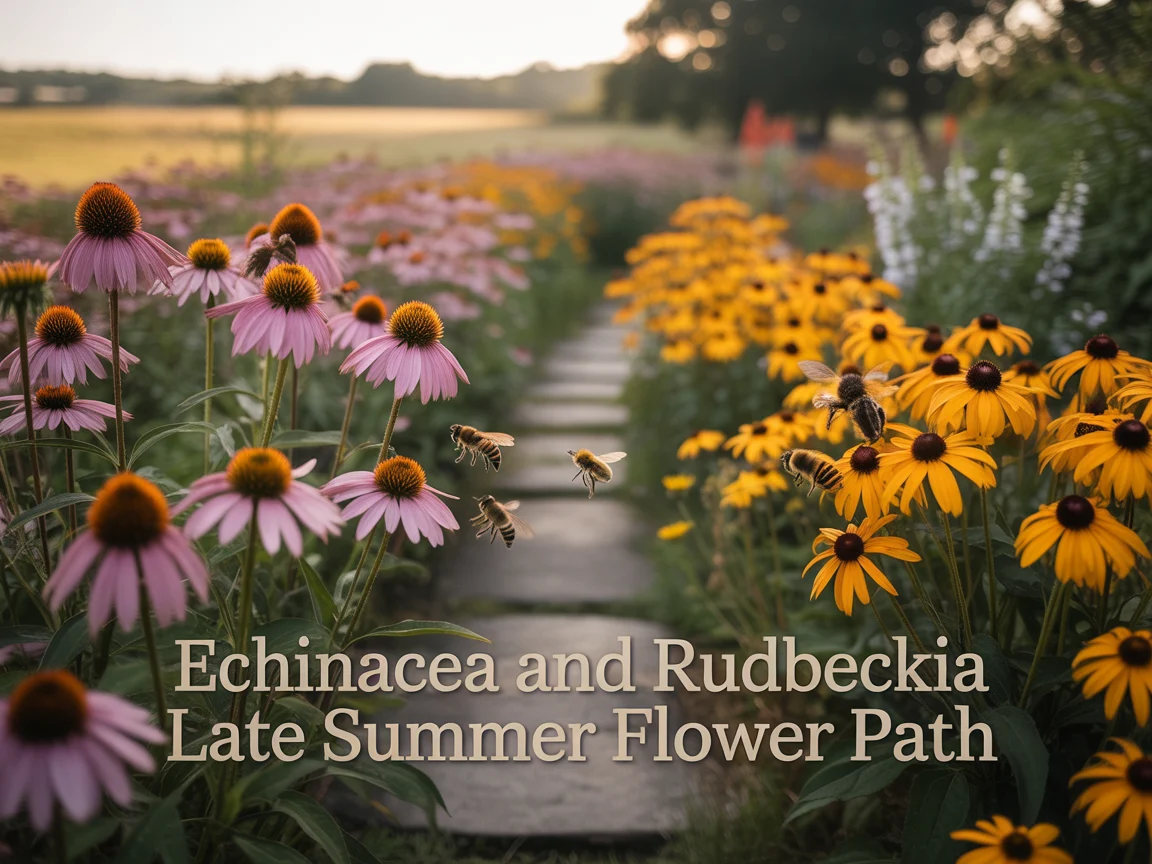
An Echinacea and Rudbeckia late summer flower path uses these two prairie-native perennials to create a garden path with flowers that peaks from July through October, filling the period when many spring and early summer flower path plantings have finished their main display. I planted Echinacea purpurea Magnus and Rudbeckia fulgida Goldsturm in alternating groups of three along both sides of a 22-foot gravel path at a residential project, and the combined orange-gold Rudbeckia and pink-purple Echinacea display produced a warm-toned flower path that performed consistently from late July through to the first frost without any deadheading or additional feeding beyond the initial planting soil preparation.
Echinacea Varieties for a Summer Flower Garden Path
Echinacea purpurea Magnus, Echinacea purpurea White Swan, and Echinacea Cheyenne Spirit are three Echinacea varieties suited to a summer flower garden path. Echinacea purpurea Magnus produces large flat-rayed pink flowers with an orange central cone on 3-foot stems from July to September, providing the boldest and most weather-resistant pink flower form of any echinacea variety for a path border. Echinacea purpurea White Swan produces white flowers with an orange-green central cone from July to September at 2 to 3 feet height, suiting a path border where a pale summer flower colour is needed alongside deeper-coloured companion plants. Echinacea Cheyenne Spirit produces flowers in a mixed range of red, orange, yellow, and purple from July to September and suits a path border where multiple flower colours from a single species are the planting intention.
Rudbeckia Varieties for a Late Summer Path Border
Rudbeckia fulgida Goldsturm, Rudbeckia hirta Indian Summer, and Rudbeckia laciniata Herbstsonne are three Rudbeckia varieties suited to a late summer flower garden path. Rudbeckia fulgida Goldsturm produces bright gold daisy flowers with a dark brown central cone in dense, compact clumps of 24 inches height from August to October, providing the most reliable and weather-resistant Rudbeckia for a permanent path border planting. Rudbeckia hirta Indian Summer produces very large flowers of 6 to 9 inches diameter in gold, orange, and mahogany from July to October as a short-lived perennial or annual, providing the largest individual flower head of any Rudbeckia for a path border. Rudbeckia laciniata Herbstsonne produces tall stems of 5 to 6 feet with reflexed gold flowers from August to October, suiting the back of a wide flower path border.
Dahlia Flower Walkway Garden Path
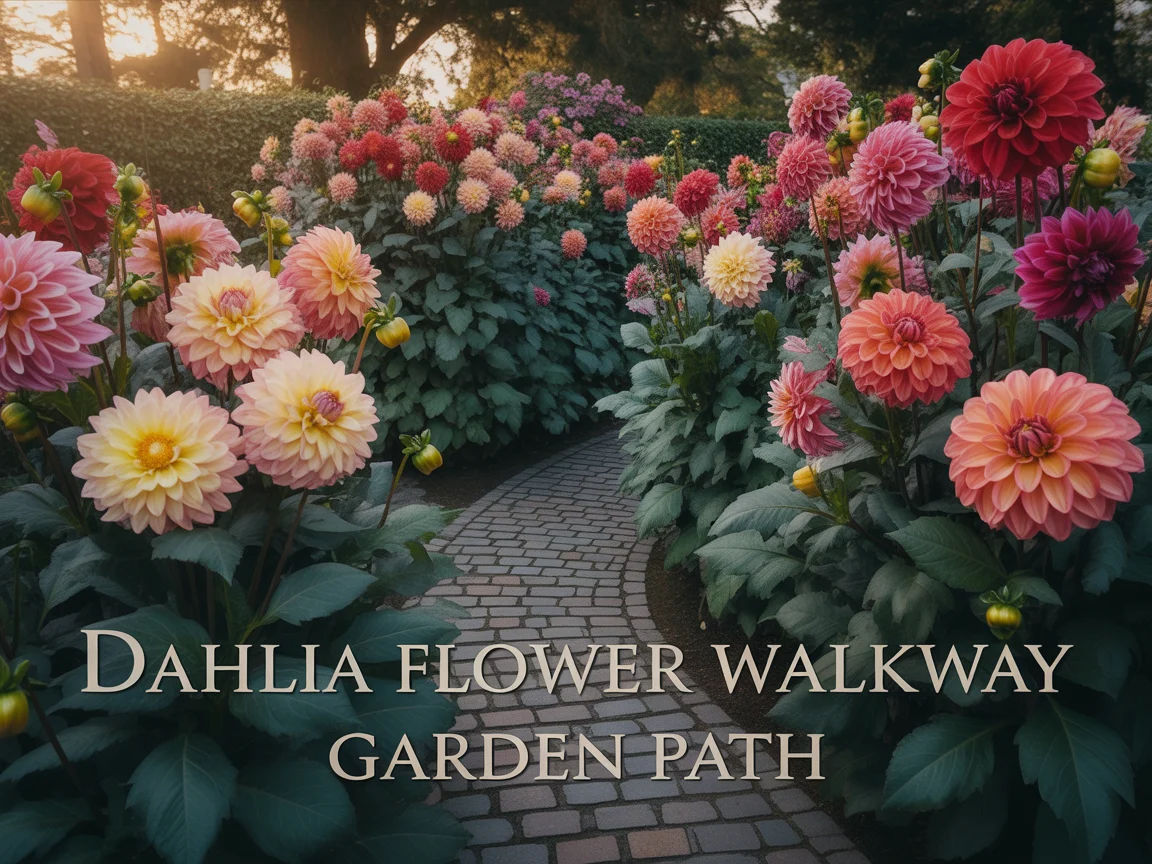
A Dahlia flower walkway garden path uses border dahlias planted along one or both sides of the path to produce the most abundantly flowering path border available from July through October, with dinner-plate, decorative, and cactus dahlia varieties providing flower heads of 4 to 12 inches diameter in every colour except blue. I planted a dahlia border alongside a brick path in my own garden using Dahlia Bishop of Llandaff, Dahlia Café au Lait, and Dahlia Karma Choc in alternating positions, and the combined display from late July to the first frost produced a flower walkway of intensity and colour that guests photographed on every visit from August onwards.
Dahlia Varieties for a Garden Path With Flowers
Dahlia Bishop of Llandaff, Dahlia Café au Lait, and Dahlia Mystic Spirit are three dahlia varieties suited to a garden path with flowers. Dahlia Bishop of Llandaff produces single red flowers with dark bronze-black foliage on 3 to 4-foot stems from July to October, providing the most dramatic foliage and flower colour combination of any garden dahlia. Dahlia Café au Lait produces large decorative blooms in soft peach, caramel, and cream tones from July to October at 3 to 4 feet height, producing the most widely photographed dahlia flower colour for a path border planting. Dahlia Mystic Spirit produces orange semi-double flowers above very dark, near-black foliage from July to October at 3 feet height, providing a warm-toned flower with a dark foliage backdrop that suits both formal and informal flower path designs.
Supporting Dahlias on a Garden Path Flower Border
Dahlias on a garden path flower border require individual bamboo stake supports inserted at planting time to prevent the tall, flower-heavy stems from falling across the path surface. I use 4-foot bamboo stakes inserted 12 inches into the soil at each dahlia tuber planting position, tying the main stem to the stake with soft garden twine at 12-inch intervals as the plant grows. A wire peony hoop of 24-inch diameter and 36-inch height placed over the emerging dahlia plant in May provides a more secure support system than individual staking and suits a flower path border dahlia where the growing stem is not visible from the path approach direction, making the hoop structure invisible within the flower display by midsummer.
Wildflower Meadow Flower Garden Path
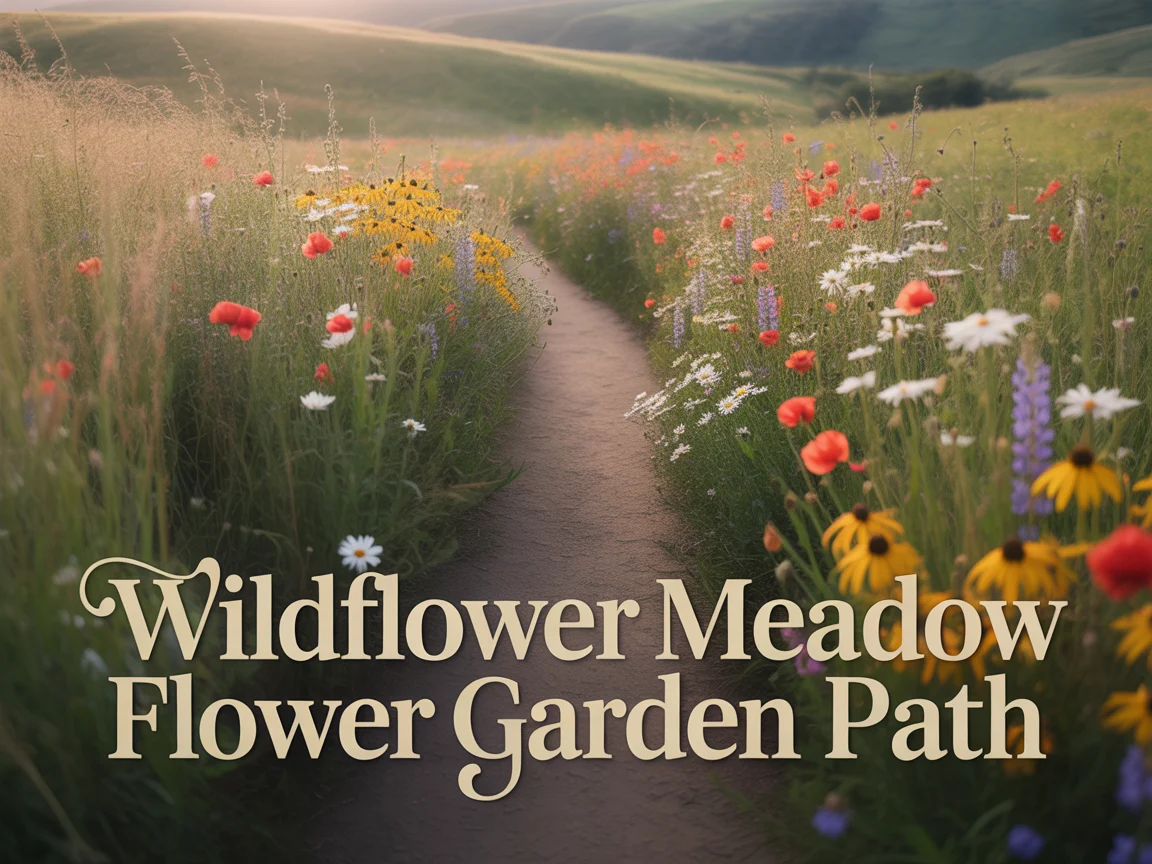
A wildflower meadow flower path uses a mown grass strip through a wildflower planting to create a garden path with flowers on both sides that changes through the season as different species reach their flowering peak from May through September. I created this design by converting 4-foot-wide strips on both sides of a 2-foot mown grass path in my back garden into a native wildflower area, seeding with an ox-eye daisy, field scabious, and knapweed mix, and the flower display that emerged from May onward produced a flower walkway effect that cost $14 in seed and required less maintenance than any planted border flower path I have created.
Wildflower Species for a Meadow Flower Path
Leucanthemum vulgare, Knautia arvensis, and Centaurea nigra are three wildflower species suited to a meadow flower garden path. Leucanthemum vulgare, ox-eye daisy, produces white flowers with yellow centers from May to July at 24 to 30 inches height, providing the most abundant and visually dominant flower display in the meadow path border during the early summer period. Knautia arvensis, field scabious, produces lilac-blue pincushion flowers from July to September at 24 to 36 inches height, extending the meadow path flower display through the full summer period. Centaurea nigra, common knapweed, produces purple thistle-like flowers from July to September at 18 to 24 inches height and tolerates the drier soil conditions common in a sunny meadow path position better than most wildflower species.
Establishing a Wildflower Meadow Path From Seed
A wildflower meadow flower path is established from seed by preparing the border areas on both sides of the mown path strip in late August, removing all existing grass and weed cover by scarifying or skimming the top 1 inch of turf, then sowing a native wildflower and grass mix at 5 grams per square meter in September. Sowing in September rather than spring produces the best first-year germination results because many native wildflower species require a cold winter period to break their dormancy, which spring-sown seed does not receive. I sow wildflower seed for all meadow flower path projects in the first two weeks of September and find the germination rate from September sowing consistently higher than spring-sown test sections on the same projects.
Sunflower Flower Garden Path
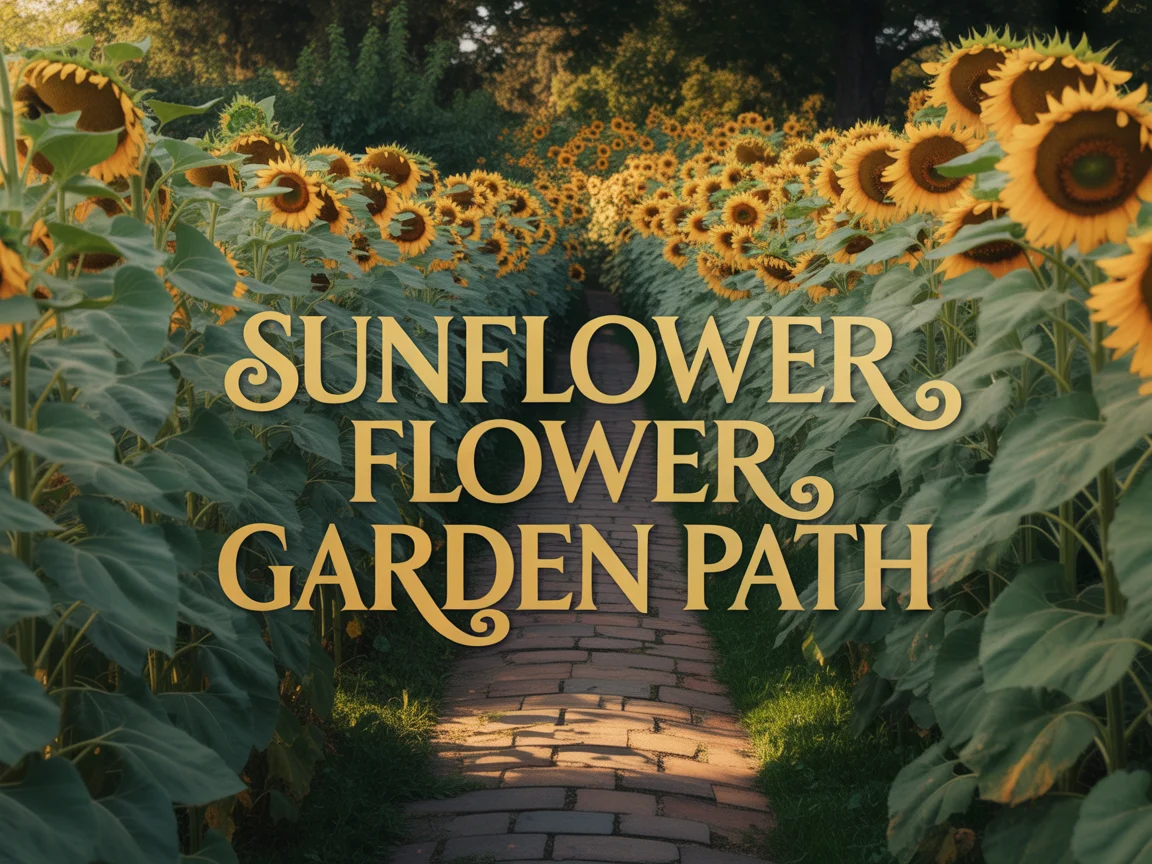
A sunflower flower garden path uses tall Helianthus annuus sunflowers planted in rows alongside the path to create a dramatic summer flower walkway that produces flowers from July to September on stems of 4 to 8 feet height, creating an elevated flower display that children find particularly engaging and that produces a scale of flower presence on both sides of the path that no other annual plant replicates. I planted a sunflower path in my vegetable garden area using two rows of Helianthus annuus Russian Giant on each side of a 15-foot bark chip path, and the path through the 8-foot sunflower stems in August felt like walking through a completely enclosed flower corridor at a cost of $4 in seed.
Sunflower Varieties for a Garden Flower Path
Helianthus annuus Russian Giant, Helianthus annuus Velvet Queen, and Helianthus annuus Lemon Queen are three sunflower varieties suited to a garden path with flowers. Russian Giant produces the classic single large yellow flower heads of 12 inches diameter on 6 to 8-foot stems from July to September, providing the most recognizable and impactful sunflower display for a tall flower path border. Velvet Queen produces dark red-mahogany flowers with a dark central cone on 5-foot stems from July to September, providing a distinctive warm colour alternative to the standard yellow sunflower for a path with flowers. Lemon Queen produces multiple smaller pale yellow flowers on branching 5-foot stems from July to September, providing a more densely flowered and slightly lower path border effect than the single-headed giant varieties.
Sowing Sunflowers for a Garden Path Flower Border
Sunflowers for a garden path with flowers are sown directly in the path border position in late April or May after the last frost date, pressing individual seeds 1 inch deep at 12-inch spacing in a single or double row along the path edge. Direct sowing in the final path border position produces stronger, deeper-rooted plants than transplanted indoor-sown sunflowers because the tap root develops without the transplanting check that occurs when pot-grown seedlings are moved to the final position. I sow two seeds at each 12-inch position and remove the weaker seedling when both germinate, which ensures full border coverage without gaps from failed germination at any individual sowing point along the path flower border.
Peony Border Flower Garden Path
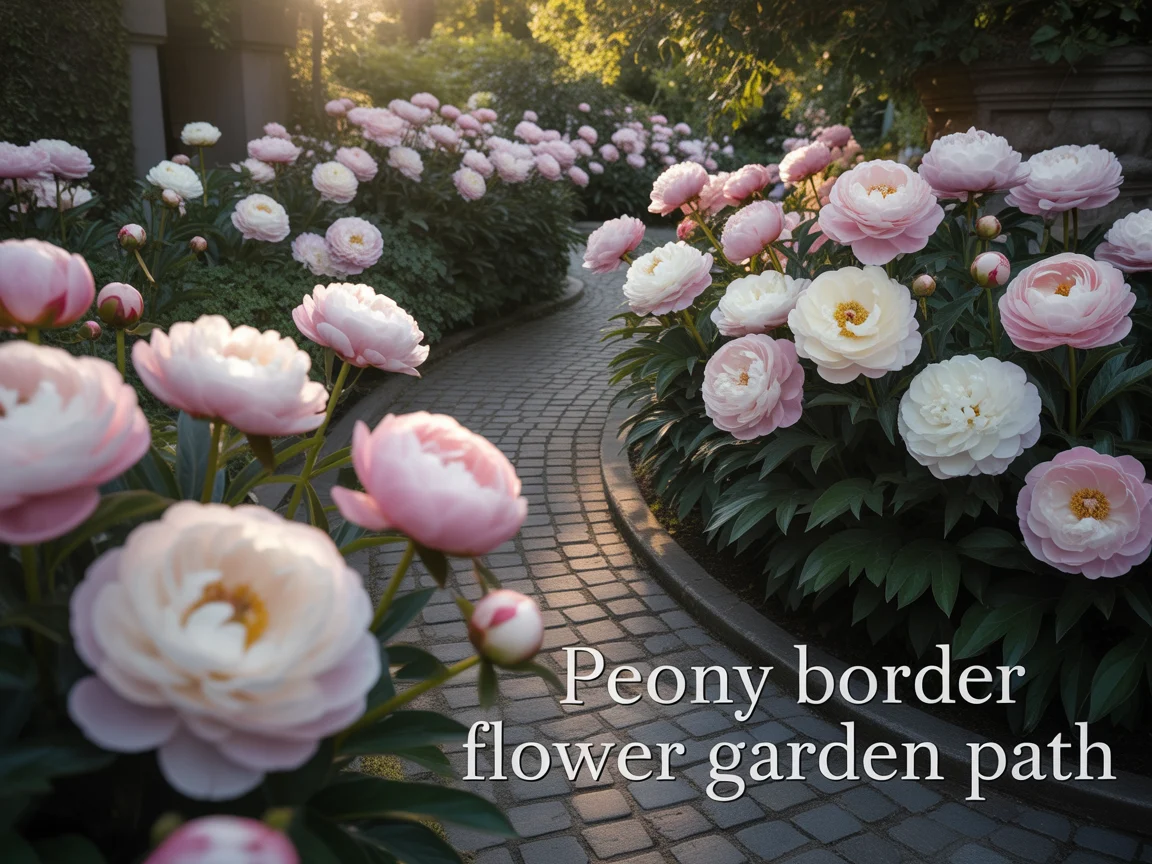
A peony border flower garden path plants Paeonia lactiflora varieties along both sides of the path to create a spring and early summer flower display of large, full, heavily fragrant blooms from May to June that produces the most individually impressive flower heads of any perennial plant suitable for a path border position. I planted Paeonia Sarah Bernhardt and Paeonia Bowl of Beauty along both sides of a 20-foot gravel path at a residential project, and the May to June flowering display produced flower heads of 5 to 6 inches diameter in soft pink and deep rose tones with a heavy, sweet fragrance that was noticeable from the garden entrance before reaching the path.
Peony Varieties for a Garden Path With Flowers
Paeonia Sarah Bernhardt, Paeonia Bowl of Beauty, and Paeonia Duchesse de Nemours are three peony varieties suited to a garden path with flowers. Paeonia Sarah Bernhardt produces large fully double soft pink flowers with a strong fragrance in late May and June on 3-foot stems, providing the most elegantly formed peony bloom for a path flower border. Paeonia Bowl of Beauty produces distinctive anemone-form flowers with deep rose outer petals and cream inner petals in late May and June at 3 feet height, providing the most unusual and eye-catching peony flower form for a path border planting. Paeonia Duchesse de Nemours produces fully double white flowers with a strong fragrance in May and June at 2 to 3 feet height, suiting a pale-toned flower path where white blooms coordinate with surrounding planting and path materials. For anyone wanting to extend the flower display from border level to overhead with a climbing element above the same walkway, there is detailed guidance on arch dimensions, rose variety selection, and training techniques in these garden paths with rose arches over flower-lined walks, which cover everything from single entrance arches and cottage gate combinations to full kitchen garden tunnel designs suited to paths of different lengths and styles.
Staking Peonies on a Garden Path Flower Border
Peonies on a garden path flower border require support rings installed in March before the shoots emerge from the ground, which prevents the heavy fully double flower heads from collapsing across the path surface during the May and June flowering peak. Wire peony support rings of 18 to 24 inches diameter and 24 to 30 inches height placed over the emerging crown in March allow the stems to grow up through the ring structure, which supports the flower heads from below at the natural stem height. I install peony support rings on all flower path peony planting in March and find that rings installed after the stems reach 12 inches are less effective because pushing the stems through the ring at that stage risks snapping the brittle spring growth. For anyone who wants to take their peony planting a step further by creating a seating destination within the flower display rather than simply alongside it, there is practical guidance on bench positioning, clearance distances, and companion planting in these flower bed with benches for sitting among blooms, which cover everything from rose and lavender flower bed bench designs to cottage garden mixed borders, shaded flower beds, and fragrant mindfulness garden seating schemes.
Sweet Pea Flower Walkway Garden Path
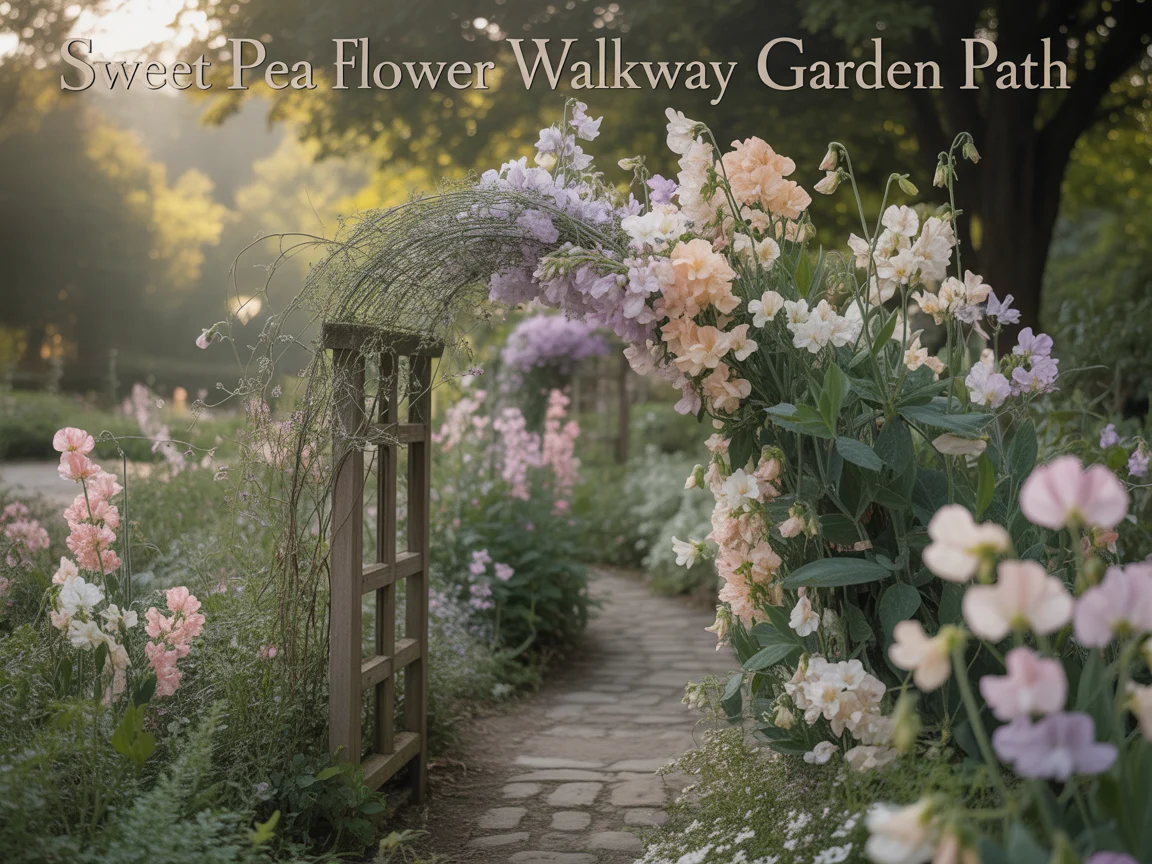
A sweet pea flower walkway garden path uses Lathyrus odoratus sweet peas grown on vertical wire supports, bamboo cane structures, or timber trellis panels alongside the path to create a summer flower display of 4 to 6 feet height with the most intensely fragrant flowers available from any climbing annual plant. I grew sweet peas on 6-foot bamboo cane wigwams placed at 3-foot intervals along both sides of a 20-foot gravel path, planting three sweet pea plants per wigwam in five varieties chosen for different flower colours, and the combined flower and fragrance display from June through August produced the most praised flower walkway I have created in any domestic garden setting.
Sweet Pea Varieties for a Flower Garden Path
Lathyrus odoratus Matucana, Lathyrus odoratus Cupani, and Lathyrus odoratus Spencer Varieties are three sweet pea types suited to a garden path with flowers. Lathyrus odoratus Matucana is one of the oldest sweet pea varieties, producing small bicolour flowers in deep purple and maroon with an exceptionally strong fragrance from June to August, providing the most intensely scented sweet pea display for a flower walkway path. Lathyrus odoratus Cupani produces similar bicolour purple and maroon flowers and is considered one of the finest heritage sweet pea varieties for fragrance intensity on a climbing flower path structure. Spencer Varieties produce the largest flowers in a wide range of colours including white, pink, red, salmon, and lavender, at a slightly reduced fragrance compared to the heritage varieties.
Sweet Pea Support Structures for a Garden Path
Bamboo cane wigwams, vertical wire panels, and free-standing obelisks are three support structures suited to sweet pea growing on a garden path with flowers. Bamboo cane wigwams of six 6-foot canes tied at the top produce a 12-inch-diameter support at ground level that suits three sweet pea plants per wigwam and costs $2 to $4 per structure in materials. Vertical wire panels using 14-gauge galvanized wire strung between posts at 12-inch vertical intervals produce a flat support surface suited to a path border where a continuous flower hedge effect along the full path length is preferred over individual wigwam structures. Free-standing obelisks of 6-foot height at 12-inch base width suit a formal flower path border where a structured, architectural support form is consistent with the garden design.
Geranium and Nepeta Flower Path
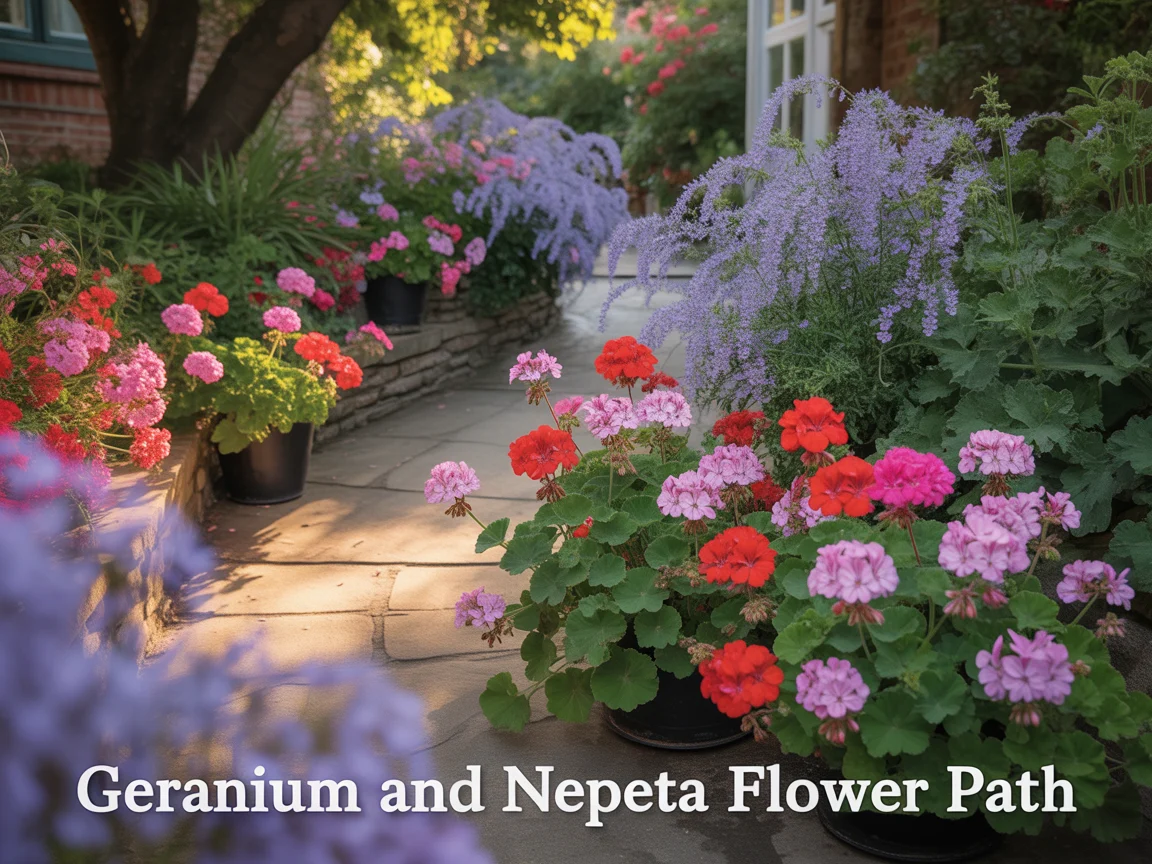
A Geranium and Nepeta flower path combines the two most reliably long-flowering hardy perennials in the medium-height range to create a garden path with flowers that produces a continuous blue, violet, and pink flower display from May through October on both sides of the path with minimal maintenance requirements after the first season of establishment. I planted Geranium rozanne and Nepeta x faassenii Walkers Low along both sides of a 22-foot sandstone path at a residential project, and the combined border produced visible flower colour on both species in every week of observation from the last week of May through to the first frost in late October.
Geranium Varieties for a Garden Flower Path
Geranium rozanne, Geranium pratense Mrs Kendall Clark, and Geranium psilostemon are three geranium varieties suited to a garden path with flowers. Geranium rozanne produces blue-violet flowers with a white eye continuously from June to October and forms a spreading mound of 12 inches height and 24 inches spread, providing the longest flowering period of any hardy geranium and the most reliable continuous path border colour from early summer to autumn frost. Geranium pratense Mrs Kendall Clark produces pale lilac-blue flowers with white veining in June and July at 24 to 30 inches height, providing a taller, more upright flower form than Rozanne in a path border. Geranium psilostemon produces vivid magenta flowers with a black eye from June to July at 30 to 36 inches height, providing the most intensely coloured flower of any hardy geranium for a path border.
Nepeta Varieties for a Garden Flower Path
Nepeta x faassenii, Nepeta Six Hills Giant, and Nepeta racemosa Walker’s Low are three nepeta varieties suited to a garden path with flowers. Nepeta x faassenii produces compact lavender-blue flower spikes of 18 inches height from May to September with a soft, billowing growth habit that overhangs the path edge slightly, creating a natural softening of the transition between path surface and border. Nepeta Six Hills Giant produces the same lavender-blue flowers at 24 to 36 inches height with a correspondingly larger spread, suiting a wider path border where the greater plant scale is proportionally appropriate. Nepeta racemosa Walker’s Low provides an intermediate scale at 20 to 24 inches height, bridging the proportional difference between the two standard varieties for a path of moderate width.
Hydrangea Border Flower Garden Path
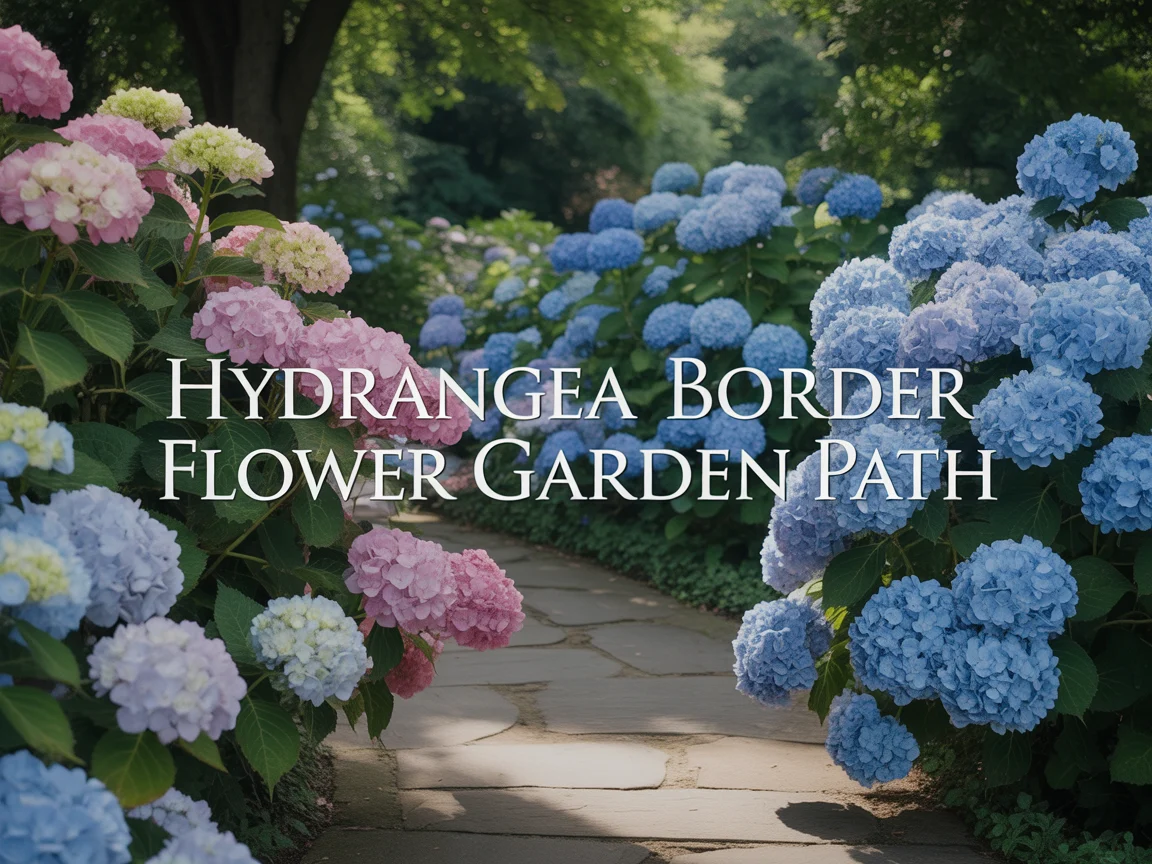
A hydrangea border flower garden path plants mophead, lacecap, or panicle hydrangeas along one side or both sides of the path to create a summer and autumn flower display of large flower heads in white, pink, blue, and purple that persists from July through to the first frost and continues as a decorative dried flower structure through the winter months. I planted Hydrangea macrophylla Annabelle along one side of a 20-foot bark chip path under partial tree canopy, and the large white mophead flower heads of 10 to 12 inches diameter from July to October produced a flower path border of genuine scale and presence in a shaded position where most other flowering path border plants fail to produce adequate flower production.
Hydrangea Varieties for a Garden Path With Flowers
Hydrangea arborescens Annabelle, Hydrangea paniculata Limelight, and Hydrangea macrophylla Endless Summer are three hydrangea varieties suited to a garden path with flowers. Hydrangea arborescens Annabelle produces large round white flower heads of 10 to 12 inches diameter from July to October on a compact 4-foot shrub that tolerates partial shade, making it the most practically useful hydrangea for a flower path border under tree canopy. Hydrangea paniculata Limelight produces cone-shaped white flower heads that age to pink-green from July to October on an upright 6-foot shrub, suiting a path border in full sun. Hydrangea macrophylla Endless Summer produces blue or pink mophead flowers repeatedly from June to September and suits a path border in partial shade where repeat flowering through the summer is the primary requirement.
Hydrangea Flower Colour Adjustment for a Path Border
Hydrangea macrophylla flower colour on a garden path with flowers is determined by the soil pH in the root zone, producing blue flowers in acidic soil of pH 5.5 or below and pink flowers in alkaline soil of pH 6.5 or above. To produce blue hydrangea flowers on a flower path border, I apply aluminium sulphate at 25 grams per 10 liters of water as a soil drench in March and June each year, which lowers the pH around the root zone sufficiently to produce blue flower coloration in most macrophylla varieties grown in neutral garden soil. To maintain pink flowers on a flower path border, ground limestone at 100 grams per square meter applied in March prevents pH from dropping below 6.5 in naturally acidic garden soils.
Fragrant Flower Path With Roses and Herbs
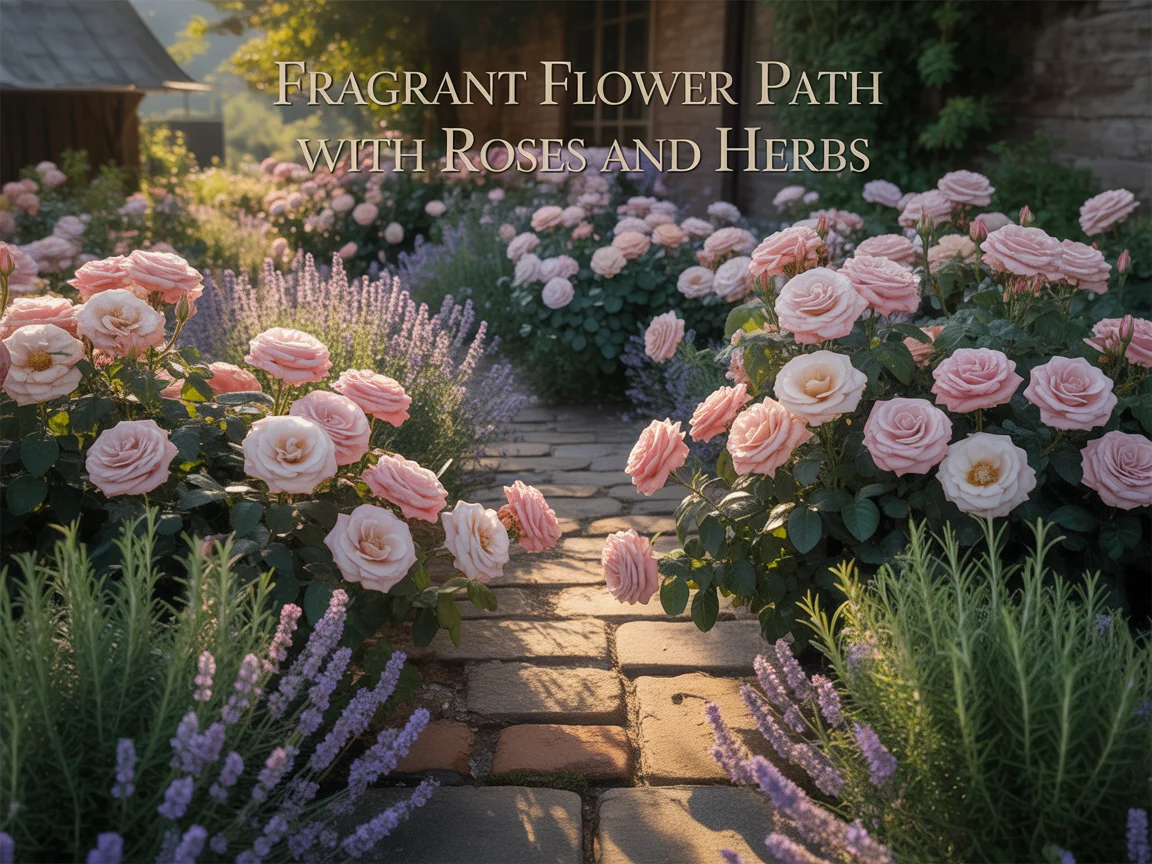
A fragrant flower path with roses and herbs combines climbing or shrub roses with culinary and ornamental herbs to create a garden path with flowers where fragrance at multiple height levels is the primary sensory experience, with the rose fragrance at shoulder and waist height and the herb fragrance at knee and foot level released when the border plants are lightly brushed against during walking. I designed this combination for a residential project using Rosa Zephirine Drouhin on both sides of a 24-foot path at wall height, Rosa Gertrude Jekyll as mid-border shrub planting, and Lavandula angustifolia, Rosmarinus officinalis, and Thymus vulgaris as the herb ground level planting, producing the most multisensory flower path I have completed.
Fragrant Roses for a Garden Flower Path
Rosa Zephirine Drouhin, Rosa Gertrude Jekyll, and Rosa Madame Isaac Pereire are three fragrant roses suited to a scented flower garden path. Rosa Zephirine Drouhin is thornless, produces deep pink flowers with a strong rose fragrance from June to September, and grows as a climber to 12 feet, suiting a flower path wall or fence position where people pass in close proximity to the plant at face level. Rosa Gertrude Jekyll produces large deep pink flowers with the strongest old rose fragrance of any David Austin variety from June to October at 4 feet height. Rosa Madame Isaac Pereire is a Bourbon climber producing very large deep pink flowers with an exceptionally powerful fragrance in June and again in September, growing to 15 feet and suiting a large pergola or arch structure above a flower walkway path.
Herbs for a Fragrant Flower Garden Path
Lavandula angustifolia, Rosmarinus officinalis, and Thymus vulgaris are three herbs suited to the ground-level fragrance layer on a garden path with flowers. Lavandula angustifolia provides a calming fragrance from June to August at 18 to 24 inches height that is released both passively in warm air and actively when the foliage is lightly touched during walking. Rosmarinus officinalis provides a sharp, resinous fragrance from the foliage when touched and produces blue flowers from March to May before the roses above it begin their season, extending the fragrant flower path display into early spring. Thymus vulgaris stays below 6 inches in height at the path edge and releases a warm herbal fragrance when lightly trodden, providing the lowest fragrance level of the three herbs at ground level on the flower path.
Formal Flower Garden Path With Clipped Standards and Seasonal Bedding
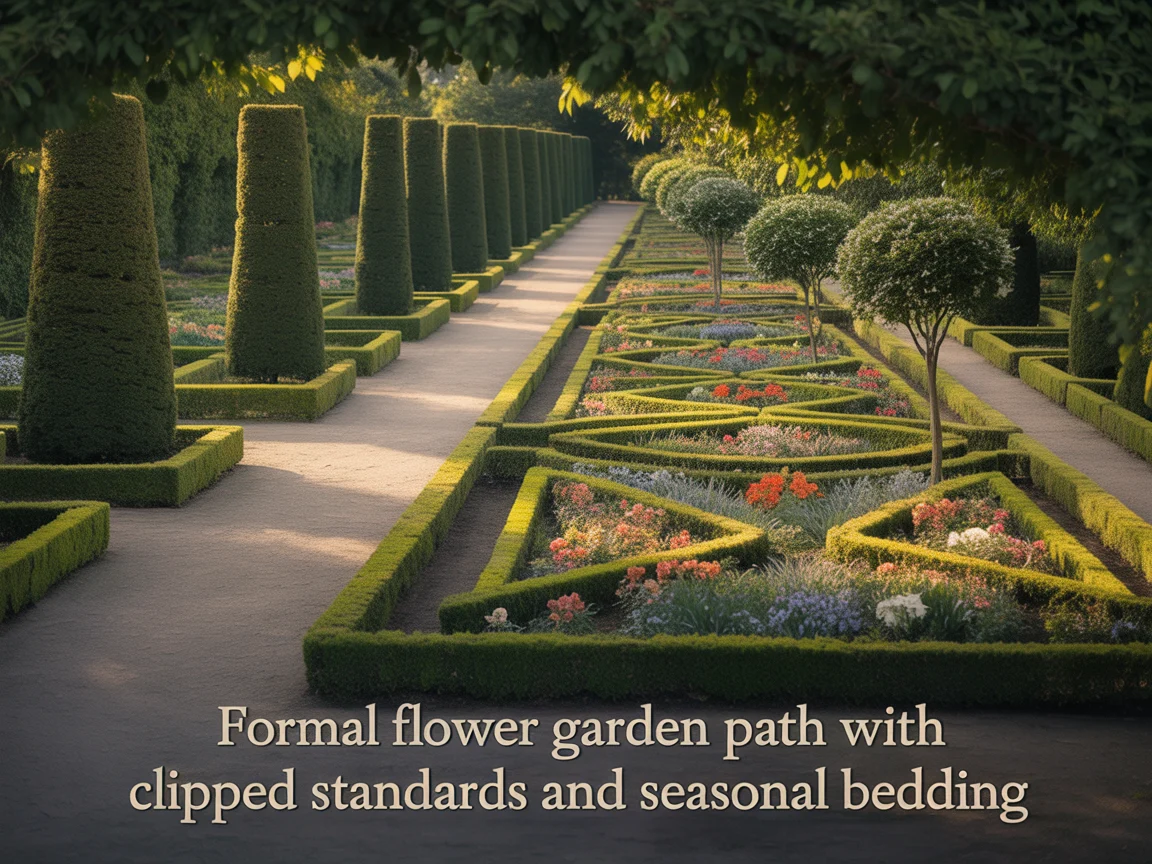
A formal flower garden path with clipped standard plants and seasonal bedding combines standard-trained shrubs at regular intervals along the path with seasonal annual bedding plants at the base of each standard to create a flower walkway with a formal, structured appearance where the overhead standard flower display and the ground-level bedding display function as two separate flower layers on the same path border. I designed this formal flower path at a period property using standard-trained Rosa The Fairy on 36-inch stems at 4-foot intervals along both sides of a York stone path, underplanted with alternating Pelargonium and Alyssum bedding, and the combination of the rose standards overhead and the bedding at ground level produced the most formally organized flower path I have designed.
Standard Plants for a Formal Flower Garden Path
Rosa The Fairy standard, Fuchsia standard, and Lollipop Buxus standard are three standard-trained plants suited to a formal flower garden path. Rosa The Fairy produces small pale pink flowers in large clusters from July to October on a 36-inch-stem standard, providing a classic formal rose standard for a flower path border at a manageable scale. Fuchsia standard produces trailing pendulous flowers in pink, red, and purple combinations from June to October and suits a sheltered formal flower path position in a warm, frost-protected garden. Lollipop Buxus standard provides a formal ball-headed evergreen standard that suits a flower path where year-round structural presence is needed alongside seasonal bedding at the base.
Seasonal Bedding for a Formal Flower Path
Pelargonium, Begonia semperflorens, and Antirrhinum majus are three seasonal bedding plants suited to the base planting of a formal flower garden path with standards. Pelargonium produces continuous flower color from May to October in red, pink, white, and coral at 12 to 18 inches height, providing reliable, weather-resistant bedding color at the base of the path standards. Begonia semperflorens produces compact mounds of 8 to 10 inches with continuous flower color from June to October and tolerates partial shade, suiting a formal flower path where the standard canopy above reduces the light reaching the bedding below. Antirrhinum majus produces upright flower spikes of 18 to 24 inches in a wide range of colors from June to September, providing a taller bedding element that bridges the height gap between the ground-level bedding and the standard rose canopy above.
Four-Season Flower Garden Path
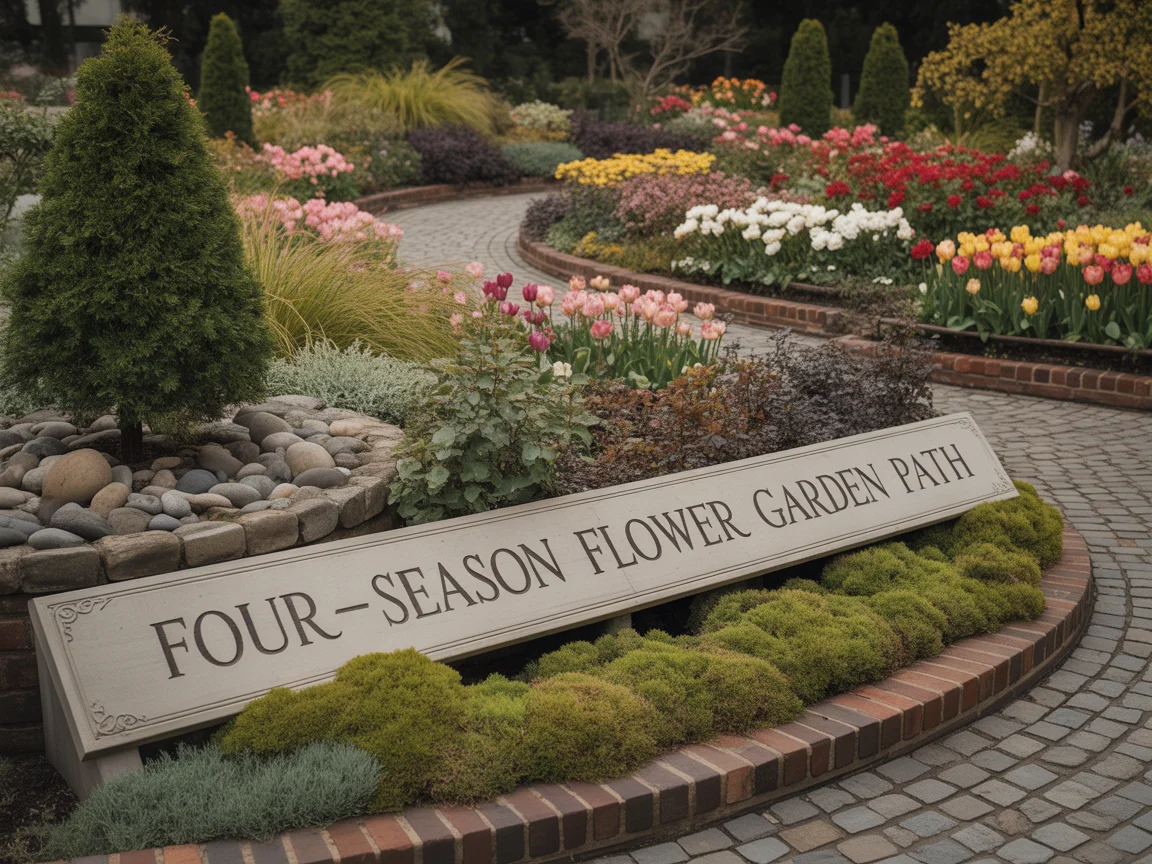
A four-season flower garden path plans the flower border planting on both sides of the path across all four seasons, ensuring that some flowering plant is producing visible colour and interest in every month of the year from the snowdrop emergence in February through the dried seed head structure of November and December. I planned a four-season flower path at a residential project using February snowdrops, April narcissus, May alliums, June roses, July Echinacea, August dahlias, September Rudbeckia, October Aster, and November dried grass and seed heads as the sequential flower display components, and the homeowner confirmed that the path border produced something visually noteworthy in every month of the first full year after planting.
Spring and Summer Flowers for a Four-Season Path
Galanthus nivalis, Narcissus Tete-a-Tete, and Allium hollandicum are three spring flowers suited to a four-season flower garden path. Galanthus nivalis produces white nodding flowers on 6-inch stems from February to March, providing the earliest visible flower on the path border and signaling the beginning of the four-season planting sequence. Narcissus Tete-a-Tete produces small yellow flowers on 6-inch stems from March to April, providing a yellow spring colour immediately after the snowdrops finish. Allium hollandicum Purple Sensation produces 4-inch purple spheres on 3-foot stems from May to June, transitioning the spring flower path display from the low bulb flowers of February to April into the taller, bolder flower forms of the summer season.
Autumn and Winter Interest for a Four-Season Flower Path
Aster x frikartii Monch, Rudbeckia fulgida Goldsturm, and Pennisetum alopecuroides are three plants suited to the autumn and winter phase of a four-season flower garden path. Aster x frikartii Monch produces lavender-blue daisy flowers continuously from July to October at 30 inches height and is the most reliably mildew-resistant aster for a path border, providing an autumn flower display after the summer peak species have finished. Rudbeckia fulgida Goldsturm produces gold flowers from August to October with attractive dark seed heads that remain decorative through November and December when left uncut. Pennisetum alopecuroides produces arching grass clumps with purple-brown bottlebrush flowers from August to October and golden dried stems through winter, providing the structural path border interest for the November to February period before the spring bulbs begin the sequence again.
Related
best creeping thyme and low-growing flowers for path
Relevanthow to use pots of flowers along a garden walkway
Relevantflagstone path ideas surrounded by cottage garden flowers
Frequently Asked Questions
What flowers are best for a garden path border?
Lavender, Geranium rozanne, Nepeta x faassenii, Echinacea purpurea, and Alchemilla mollis are the five best flowers for a garden path border because all five are hardy perennials that produce long flowering seasons of 3 to 5 months, require minimal maintenance after establishment, and grow to heights of 12 to 24 inches that suit a path edge position. Lavender provides the strongest fragrance. Geranium rozanne provides the longest individual flowering season from June to October. Nepeta produces the softest, most billowing flower effect at the path edge. Echinacea provides the boldest individual flower head. Alchemilla mollis provides the best low-growing ground coverage at the front edge of the path border.
How do I create a flower walkway on a budget?
A flower walkway on a budget is created by using direct-sown annual seeds, self-seeding biennials, and divided perennial plugs rather than buying large container plants, which reduces the flower path planting cost by 60 to 80% compared to a fully container-planted border scheme. Cosmos, sunflowers, and sweet peas grown from seed cost $2 to $6 per packet and produce enough plants for a 20-foot path border. Foxglove and forget-me-not biennials self-seed freely once established, producing free plants each year from the initial planting. Dividing established perennials from elsewhere in the garden and replanting the divisions along the path produces a completely free flower path border from plants already owned.
What is the best fragrant flower for a garden path?
Rosa Zephirine Drouhin is the best fragrant flower for a garden path because it is thornless, which makes it safe for a path position where people pass in close contact with the plant, and produces a strong classic rose fragrance from June to September on a climbing plant that suits a wall or arch above the path. For a ground-level fragrant flower path border, Lavandula angustifolia Grosso produces the strongest lavender fragrance of any lavender variety and releases its scent both passively in warm air and actively when touched. For a spring fragrance, Hyacinthus orientalis planted at the path edge in autumn produces an intensely sweet spring fragrance in March and April before the summer perennial flowers begin their season.
How do I maintain a flower garden path border?
A flower garden path border requires four seasonal maintenance tasks: spring deadheading setup in March, summer deadheading from June to August, post-flowering cut-back in September, and winter preparation in November. Spring maintenance involves cutting back all dead stems from the previous season to ground level and applying a balanced slow-release fertilizer at 50 grams per square meter. Summer deadheading removes spent flower heads from roses, dahlias, and repeat-flowering perennials to encourage continued flower production. September cut-back reduces the height of tall perennials after the main flowering season. November preparation involves lifting and storing dahlia tubers and applying a 2-inch composted bark mulch to protect perennial crowns through winter. I complete all four tasks on my own flower path in under 4 hours total per year for a 20-foot border.
Can I grow flowers between garden path stones?
Creeping thyme, Erigeron karvinskianus, and Chamaemelum nobile Treneague are the three flowers best suited to growing between garden path stones because all three tolerate occasional foot traffic, stay below 3 inches in height, and produce flowers that add colour to the path surface at ground level. Creeping thyme produces pink flowers in June and releases a herbal fragrance when lightly trodden. Erigeron karvinskianus produces small white and pink daisy flowers from May to November and self-seeds freely throughout the path joint network after the first season, spreading to fill all available joints without any further planting. Chamaemelum nobile Treneague produces a fragrant, dense mat below 1 inch height and suits the narrowest path stone joints where creeping thyme would be too tall.