20 Garden Paths With Benches for a Relaxing Garden Stop

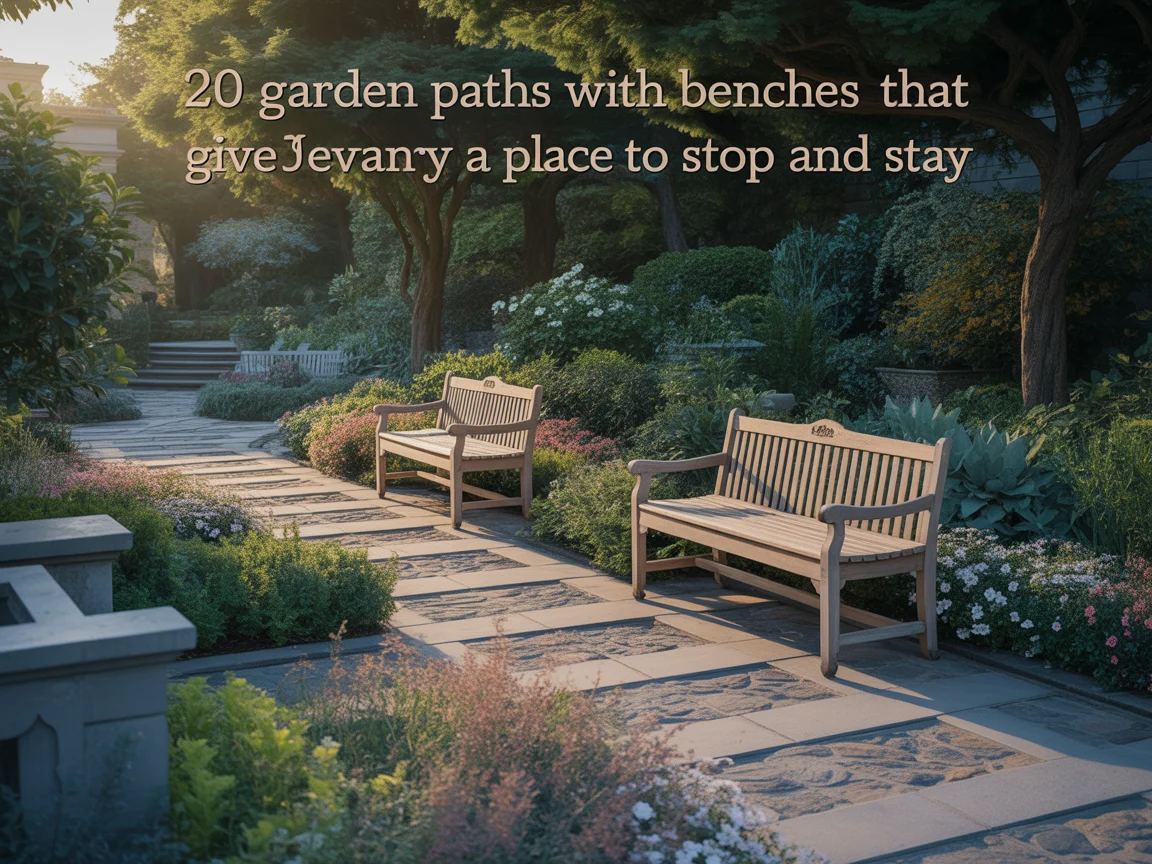
I walked a garden path last summer that stopped me completely before I reached the end of it. The path curved gently through a mixed border and halfway along, positioned at the inside of the curve, sat a simple teak bench framed by two large Hydrangea arborescens Annabelle plants in full white flower. There was no reason to sit unless you wanted to, but I sat for twenty minutes. The bench gave the path a destination that the path terminus alone could never have provided, and the combination of the curved walkway and the positioned bench turned a good garden into a genuinely memorable one.
Garden paths with benches combine a walkable outdoor surface with one or more seating points positioned at deliberate intervals along the route, giving the path both a practical resting function and a series of visual destinations that make the walk more organized and enjoyable than a path without any seated stopping points. The bench gives the path a reason to pause, and the path gives the bench a purposeful approach that makes the seating feel earned rather than arbitrarily placed.
Since that summer garden visit, I have studied and designed many garden paths with benches across different styles, materials, and settings. I have seen a beautiful garden bench transform a simple straight path into a destination experience, and I have also seen park bench landscaping ideas applied to private gardens with equally impressive results.
In this article, I am sharing 20 garden paths with benches that I have either created myself or researched thoroughly enough to recommend with complete confidence.
Teak Bench on a Formal Garden Path
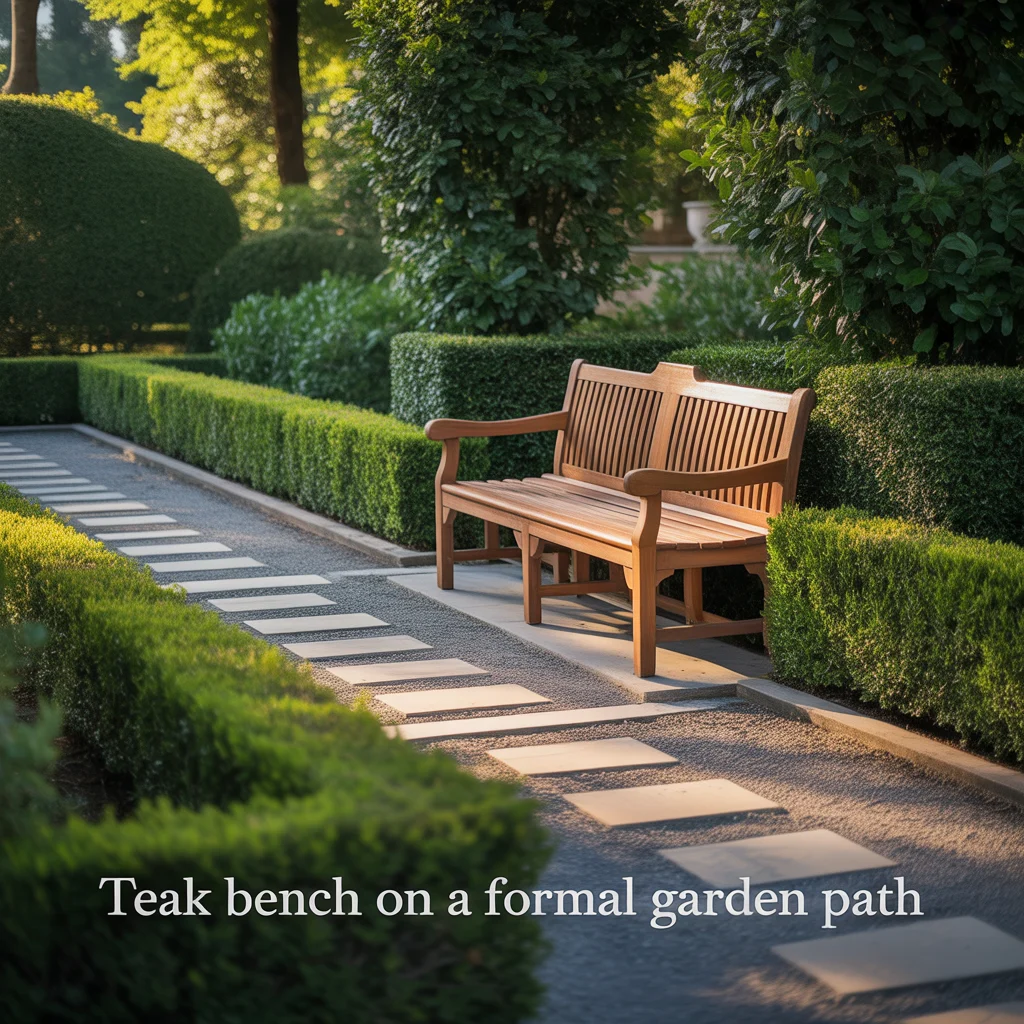
A teak bench on a formal garden path places a classic Lutyens or Westminster-style hardwood bench at the terminus or midpoint of a straight formal walkway to create a seated focal point that draws the eye along the path length and provides a practical resting position at the most visually prominent point in the garden design. I specified a Lutyens-style teak bench at the terminus of a 35-foot York stone formal path at a residential project, flanking the bench with two matching clipped yew cones in stone pots, and the combination of the warm teak, the pale stone path, and the dark evergreen flanking plants produced a beautiful garden bench arrangement that photographed well in every season including winter when the teak had weathered to a silver-grey patina.
Teak Bench Styles for a Formal Garden Path
Lutyens style, Westminster style, and Chippendale style are three teak bench designs suited to a formal garden path. The Lutyens bench uses a distinctive curved back with scrolled arms and central decorative splat, measuring 4 to 5 feet in length and costing $280 to $650 depending on teak grade and construction quality. The Westminster bench uses a simpler straight back with vertical slats and outswept arms, measuring 4 to 6 feet in length at $180 to $450, and suits a more restrained formal path where the Lutyens decorative detail would be too ornate. The Chippendale bench uses a geometric lattice back panel in a Chinese-influenced design and suits a formal path in a period garden where the decorative back detail provides a strong visual element when viewed from the path approach direction.
Teak Bench Maintenance on a Garden Path
A teak bench on a garden path requires two maintenance options depending on the preferred appearance. Applying teak oil or teak sealer once per year in April maintains the warm golden-brown tone of the timber and prevents surface cracking in the first five years of outdoor use. Leaving the teak untreated allows natural weathering to a silver-grey patina within two to three years, which many garden designers consider the most attractive appearance for a teak garden bench in a period or naturalistic garden setting. I leave all teak benches on garden path projects untreated when the surrounding garden has a naturalistic or cottage character, because the silver-grey weathered teak suits these settings considerably better than the maintained golden-brown of an oiled bench.
Wooden Garden Path With a Rustic Bench
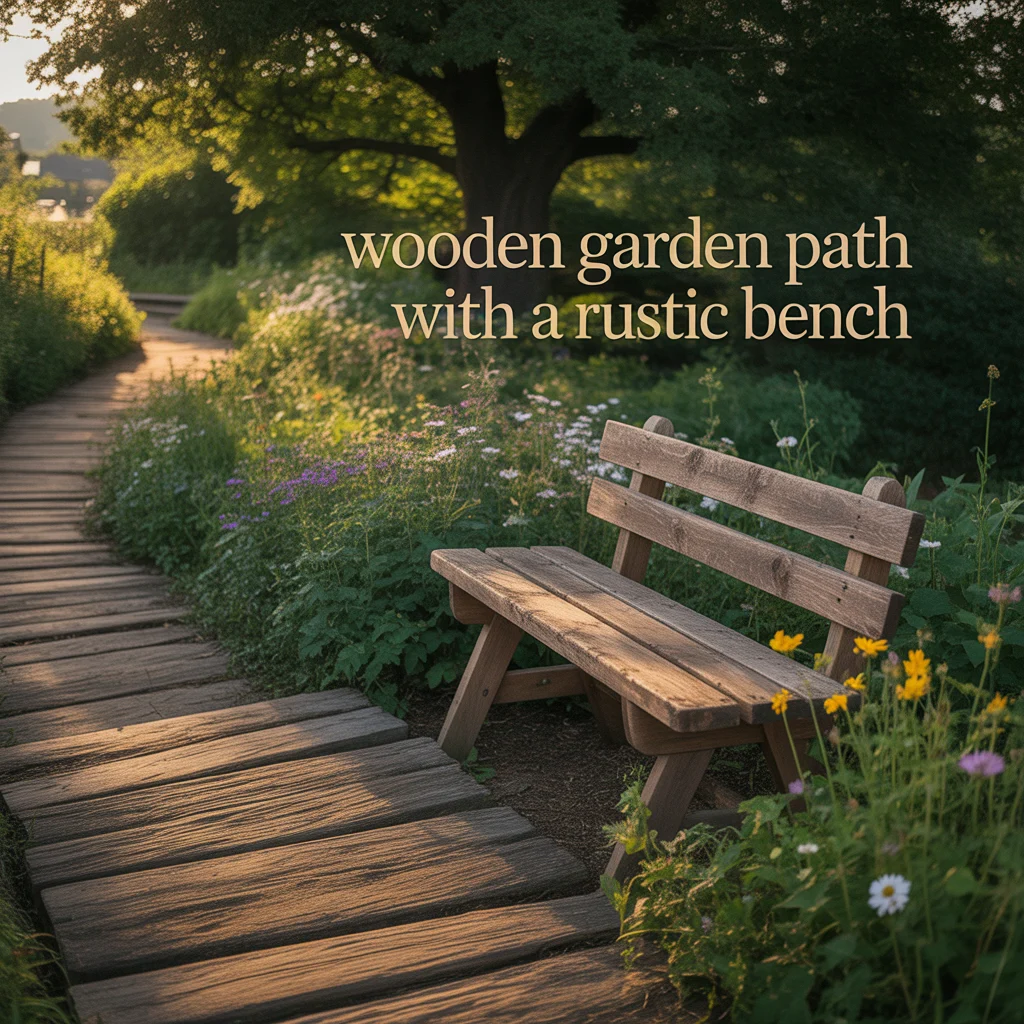
A wooden garden path with a rustic bench combines a timber surface walkway of railway sleepers, decking boards, or sawn timber stepping sections with a rough-sawn or reclaimed timber bench positioned at the path edge or terminus to create a cohesive natural timber aesthetic throughout the path and seating design. I laid a 20-foot railway sleeper stepping path through my woodland garden section and built a simple rough-sawn oak bench from two log slices as legs and a single 3-inch-thick oak plank as the seat, positioning it at the path end against the garden boundary fence, and the combination of the sleeper path surface and the oak bench produced a woodland garden paths with benches arrangement that suited the naturalistic setting completely.
Building a Rustic Log Bench for a Garden Path
A rustic log bench for a wooden garden path uses two log cross-sections of 12 to 14 inches diameter and 16 to 18 inches height as the bench legs, connected by a single sawn timber seat plank of 12 to 18 inches width and 2 to 3 inches thickness. The log legs are set on a 2-inch compacted gravel pad to prevent direct timber contact with the soil, which extends the log base lifespan from 3 to 5 years in direct soil contact to 8 to 12 years on a gravel pad. I fix the seat plank to the log legs using 5-inch galvanized screws driven at a 45-degree angle through the underside of the plank into the top face of each log, which provides a secure connection without visible screw heads on the sitting surface.
Wood Species for a Rustic Garden Path Bench
Oak, larch, and sweet chestnut are three wood species suited to a rustic bench on a wooden garden path. Oak produces the most durable rustic bench with a natural lifespan of 20 to 30 years in outdoor conditions and weathers to a silver-grey surface within two to three seasons, making it the best choice for a permanent garden path bench in any naturalistic or woodland setting. Larch produces a bench with a natural lifespan of 10 to 15 years at lower cost than oak and suits a garden path bench where medium-term durability at affordable material cost is the priority. Sweet chestnut produces a durable bench of 12 to 18 years natural lifespan and develops a distinctive grey-brown surface patina that suits a woodland or rural garden path bench position. A wider range of styles, materials, and positioning approaches for seating along walkways is covered in these outdoor garden bench ideas to place along walkways.
Stone Bench on a Formal Paved Garden Path
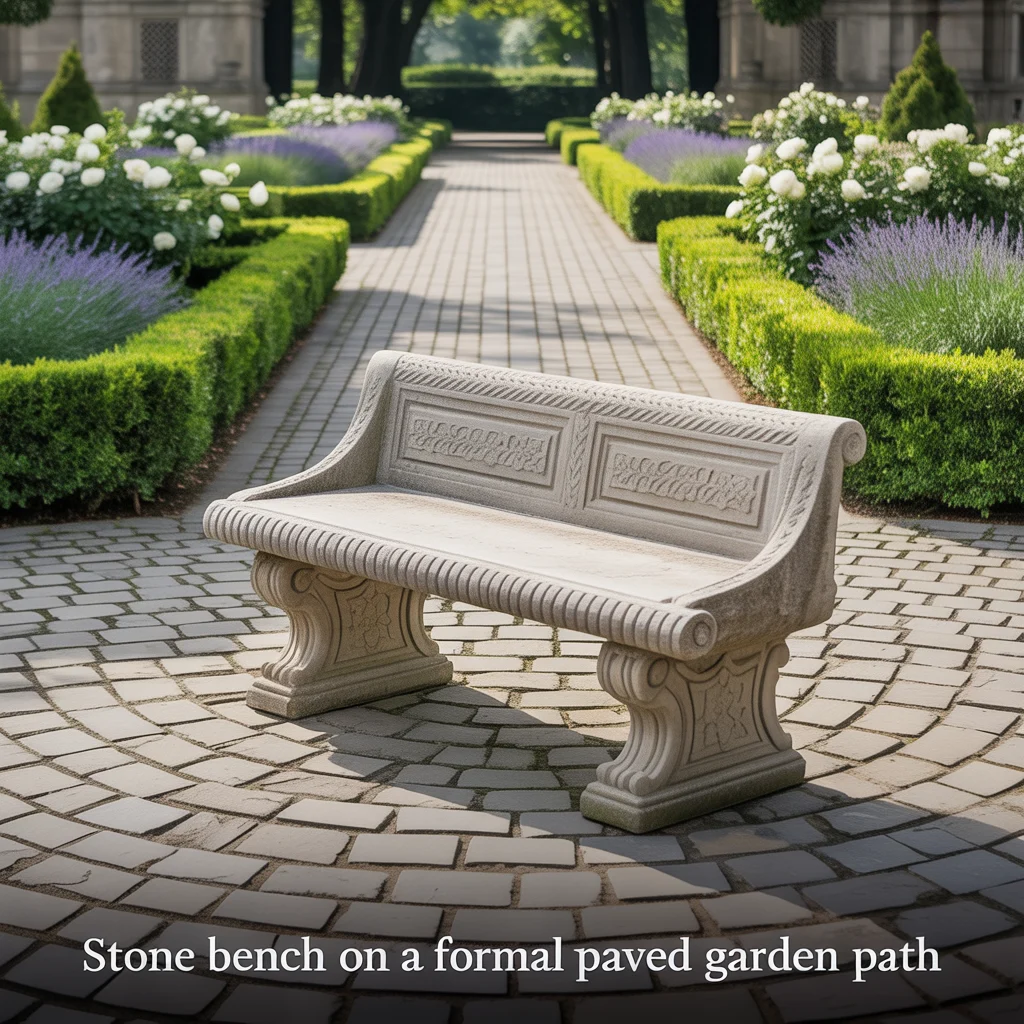
A stone bench on a formal paved garden path uses a solid reconstituted stone, natural sandstone, or granite bench positioned at a path junction, alcove, or terminus to create a permanent, weather-resistant seating element that suits period, formal, and classical garden designs where a wooden bench would look insufficiently substantial for the architectural scale of the surrounding path and garden. I specified a reconstituted Portland stone bench at the junction of two crossing paths in a formal walled garden project, and the bench provided a seated focal point visible from all four path approaches simultaneously while requiring zero maintenance beyond an annual brush-clean to remove lichen and algae accumulation.
Stone Bench Types for a Garden Path
Reconstituted Portland stone benches, natural sandstone benches, and granite block benches are three stone types suited to a formal garden path seating position. Reconstituted Portland stone benches cost $180 to $450 and age to a natural lichen-covered surface within three to five years of outdoor installation, providing the period-appropriate weathered appearance of genuine antique stone at a fraction of the cost. Natural sandstone benches cut from a single block or assembled from dressed stone sections cost $350 to $900 and suit a garden path where the warmth of sandstone coordinates with existing sandstone path surfaces or boundary walls. Granite block benches cost $200 to $600 and provide the most structurally durable stone seating option for a garden path in high-rainfall or frost-affected positions.
Positioning a Stone Bench on a Garden Path
A stone bench on a formal garden path is positioned most effectively at a point where the path changes direction, widens into a small paved area, or terminates at a boundary wall or hedge, because all three positions provide a natural reason for the path user to stop walking and consider sitting. I position stone benches at path junctions with the bench back against the boundary hedge, wall, or planting rather than projecting into the path space, which keeps the minimum 3-foot walking clearance maintained on both sides of the bench position without reducing the effective path width at the seating point.
Cast Iron Bench on a Victorian Garden Path
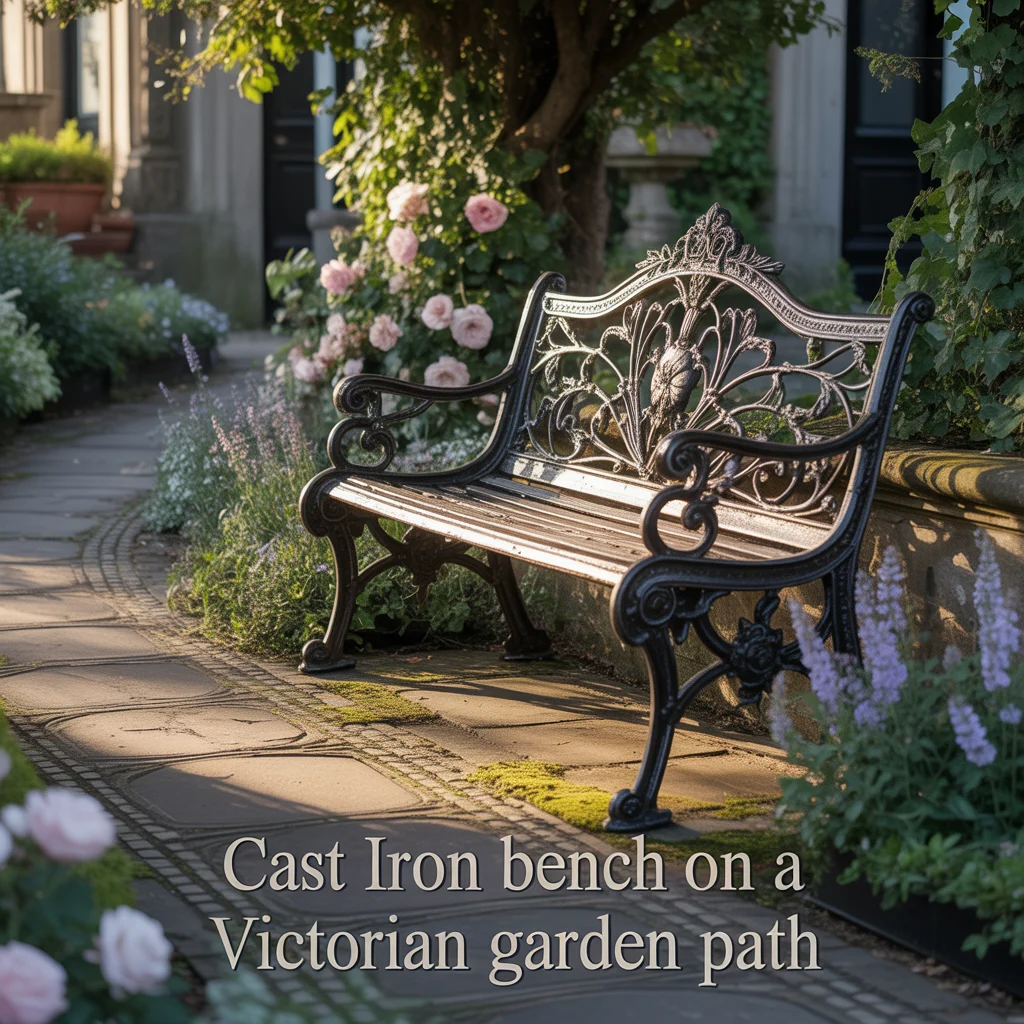
A cast iron bench on a Victorian garden path uses an ornate or scrollwork cast iron bench design positioned alongside a brick or York stone path to create a period-appropriate seating element that suits Victorian terrace gardens, formal town gardens, and heritage properties where the decorative ironwork character of a cast iron bench is consistent with the architectural style of the surrounding garden and building. I sourced a reclaimed Victorian cast iron bench from a local reclamation yard at $120 and positioned it at the midpoint of a 28-foot reclaimed brick path at a period property project, and the bench produced an immediate period character that complemented the existing Victorian ironwork on the property’s boundary railings and gate.
Cast Iron Bench Styles for a Victorian Garden Path
Coalbrookdale fern pattern, scrollwork lattice, and ivy leaf pattern are three cast iron bench styles suited to a Victorian garden path. The Coalbrookdale fern pattern bench uses naturalistic fern frond castings across the back and arm sections, measuring 4 feet in length at $180 to $350 for modern reproductions, and suits a formal Victorian garden path at a period terrace or town house property. The scrollwork lattice bench uses repeating spiral scrollwork in the back panel and arm sections and suits a formal Victorian path where a more geometric rather than naturalistic decorative style is preferred. The ivy leaf pattern bench uses climbing ivy leaf casting throughout the frame and suits a cottage Victorian garden path where the organic ivy motif coordinates with the surrounding planting.
Maintaining a Cast Iron Bench on a Garden Path
A cast iron bench on a garden path requires annual inspection for rust spots, treatment with a rust-inhibiting primer on any bare metal areas found during inspection, and a topcoat of exterior black metal paint over the primed areas to restore the finish. I use a wire brush to remove loose rust before priming and find that a thorough 30-minute wire brushing followed by two coats of rust-inhibiting primer and one coat of satin black exterior metal paint restores any cast iron garden path bench to a presentable condition within a single maintenance session. A cast iron bench maintained on this annual schedule lasts indefinitely without structural deterioration, making it the most durable long-term garden path seating material available.
Park Bench Landscaping on a Garden Path
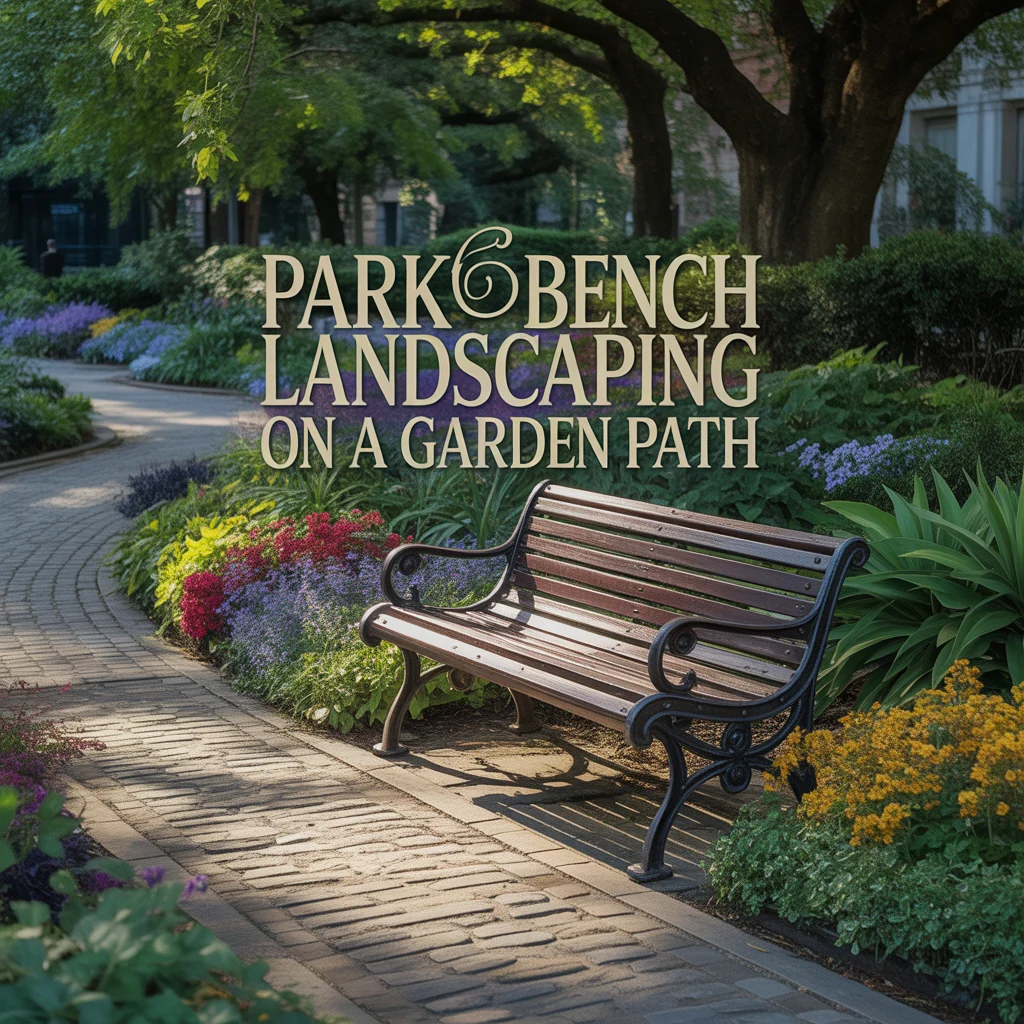
Park bench landscaping on a garden path uses a traditional park-style bench with a cast iron or powder-coated steel frame and hardwood slats, positioned alongside the garden path in a setting that replicates the feeling of a public park seating arrangement in a private garden space. I placed a classic park-style bench with a black powder-coated steel frame and iroko hardwood slats at the midpoint of a 30-foot gravel path at a large residential garden, surrounding it with a semicircular planting of Lavandula angustifolia on both sides of the bench back, and the resulting park bench landscaping idea transformed the path midpoint into a destination rather than a transit point on the route to the garden terminus.
Park Bench Frame Materials for a Garden Path
Powder-coated steel, cast iron, and recycled plastic lumber frames are three park bench frame materials suited to a garden path. Powder-coated steel frames in black or anthracite grey cost $85 to $250 and provide a modern interpretation of the classic park bench frame that suits both traditional and contemporary garden path designs. Cast iron frames with the traditional decorative casting detail of a Victorian park bench cost $120 to $350 and suit a heritage or period garden path where the cast iron character is consistent with the surrounding garden materials. Recycled plastic lumber frames in black or dark green cost $150 to $400 and provide the most weather-resistant and maintenance-free park bench frame for an exposed garden path position.
Hardwood Slat Options for a Park Bench on a Garden Path
Iroko, teak, and FSC-certified European oak are three hardwood slat materials suited to a park bench on a garden path. Iroko produces a golden-brown slat surface that weathers to a silver-grey patina within two to three seasons and costs $180 to $350 for a fully slatted 5-foot bench, providing good durability of 15 to 20 years with an annual oiling. Teak provides the most naturally durable hardwood slat material with a lifespan of 25 to 40 years and costs $250 to $550 for equivalent bench slatting. FSC-certified European oak provides a sustainably sourced alternative to teak at $200 to $400 for full bench slatting with a lifespan of 15 to 25 years in outdoor conditions.
Wooden Garden Path With a Built-In Bench
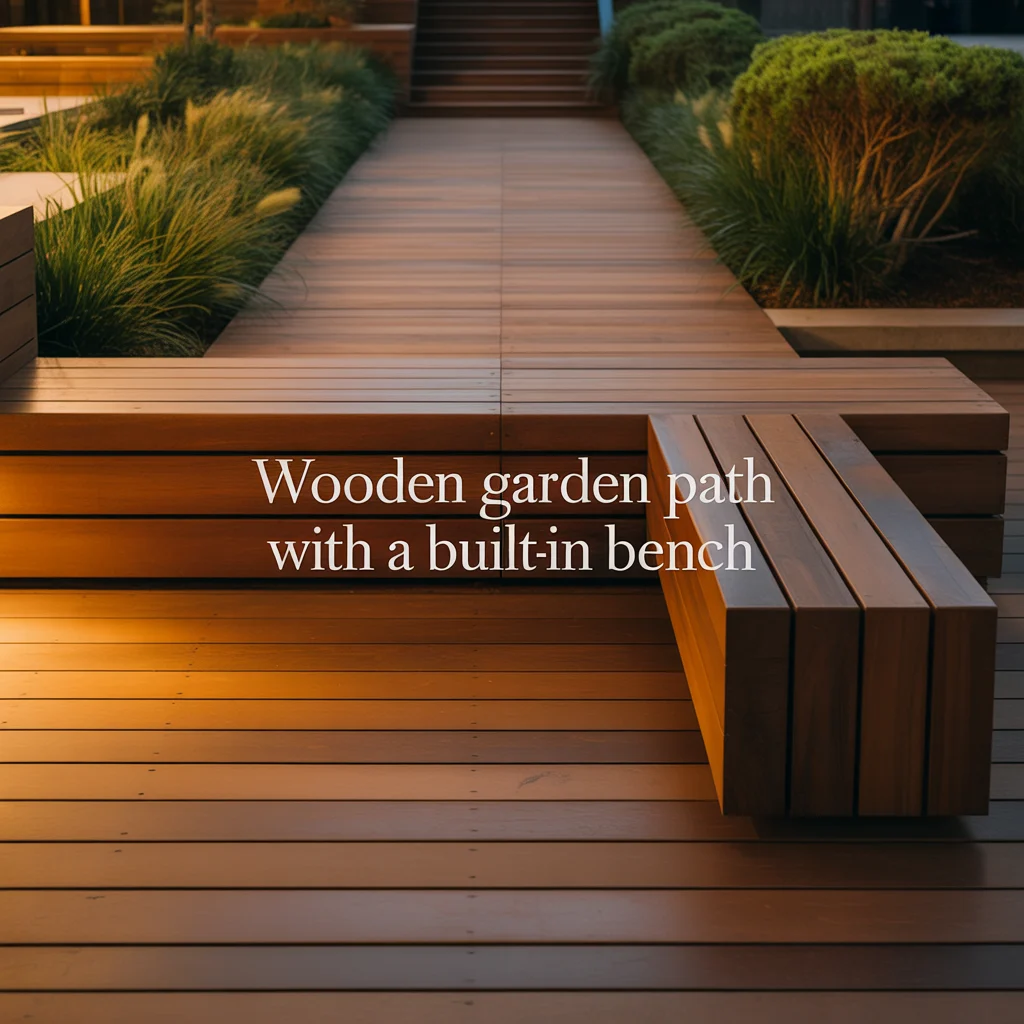
A wooden garden path with a built-in bench integrates a fixed timber seating element directly into the path structure, using the path decking frame or raised timber path edging as the structural base for the bench seat to create a path and bench that read as a single unified design rather than a path with a separately positioned piece of furniture. I built a decked garden path with an integrated bench along one section of a 25-foot timber deck walkway at a residential project, extending the deck frame on one side by 18 inches to create a seat platform at 17 inches height with a backrest fixed to the post at the rear, and the built-in bench produced a seating element that looked completely part of the path structure.
Building a Decked Path With an Integrated Bench Seat
A decked garden path with a built-in bench seat extends the deck frame by 18 to 20 inches on one side to create the seat platform, using the same joists as the main deck at 16-inch centers with an additional outer rim joist at the seat width. The seat platform surface uses the same decking board material as the main path surface at 4 to 5-inch width with 5mm gaps between boards for drainage. The backrest fixes to a 4-by-4-inch post set in the deck frame at 36 inches height from the seat surface, with horizontal backrest rails of 2-by-2-inch timber at 4-inch spacing from seat height to backrest top. I build the backrest at a 10-degree backward lean from vertical, which produces a comfortable sitting angle without any additional cushioning required.
Decking Materials for a Wooden Path and Bench
Pressure-treated softwood, composite decking, and hardwood decking are three materials suited to a wooden garden path with an integrated bench. Pressure-treated softwood costs $2 to $4 per linear foot of board and provides a practical, affordable material for a decked path and bench combination, lasting 15 to 20 years with an annual preservative treatment. Composite decking costs $4 to $9 per linear foot and provides a genuinely low-maintenance surface that requires no annual treatment, suiting a garden path bench where eliminating maintenance is more important than material cost. Hardwood decking in ipé, ipe, or Cumaru costs $6 to $12 per linear foot and produces the most attractive natural timber surface for a wooden garden path and bench combination.
Garden Path With a Bench at the Terminus
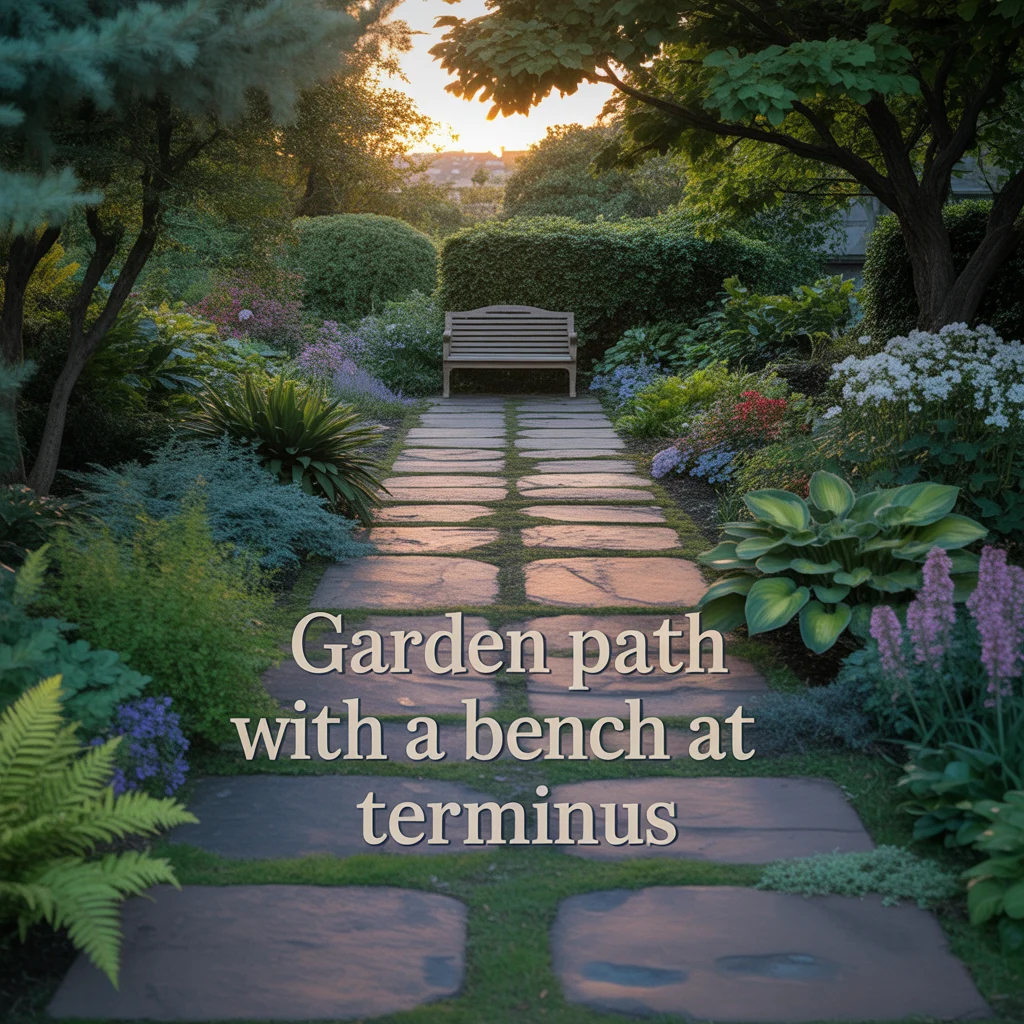
A garden path with a bench at the terminus positions the seating element at the far end of the path as the primary visual destination of the entire walkway, so every step along the path moves toward the bench as the organizing focal point of the garden path design. I designed a 40-foot formal garden path with a beautiful charming garden bench positioned at the far end between two clipped Portuguese laurel standards in stone pots at a residential project, and every visitor who used the garden walked to the bench and sat down simply because the path directed them there with such clarity that not sitting felt like leaving a sentence unfinished.
Bench Positioning at a Garden Path Terminus
A bench at a garden path terminus is positioned on the path center axis with the bench back against a wall, hedge, or planting that provides visual enclosure behind the seat. The bench face aligns perpendicular to the path direction so a seated person looks back along the full path length toward the garden entrance, which provides the seated user with the maximum garden view available from the bench position. I set the bench at 18 to 24 inches back from the last paving stone at the path end, which provides enough space to stand in front of the bench before sitting without stepping off the path surface and maintains the visual connection between the bench position and the paved path surface leading to it.
Planting to Frame a Bench at a Path Terminus
Flanking standard trees, pleached hornbeam panels, and tall ornamental grasses are three planting options suited to framing a bench at a garden path terminus. Flanking standard trees including Prunus lusitanica or Laurus nobilis in matching pots placed one on each side of the bench at 6-inch clearance from the bench arm provide a vertical green frame that defines the bench position against the surrounding garden without creating full enclosure. Pleached hornbeam panels trained on a horizontal wire structure create a living green backdrop behind the bench that is more formal and structural than loose border planting. Tall ornamental grasses including Miscanthus sinensis flanking the bench provide a naturalistic, semi-transparent screen behind the seating that suits an informal garden path terminus.
Garden Path With a Mid-Point Bench and Planting Alcove
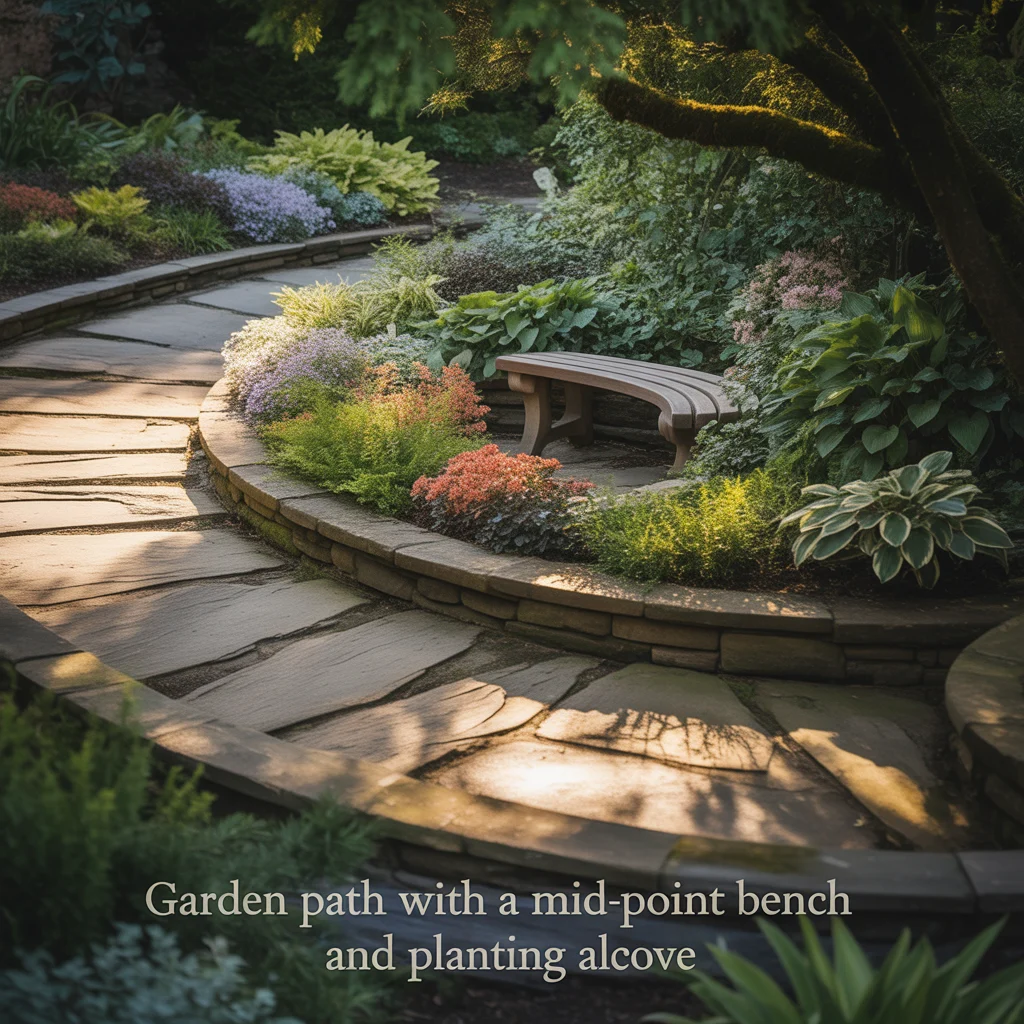
A garden path with a mid-point bench and planting alcove positions a bench within a widened section of the path at its midpoint, surrounded on three sides by planting that creates a sense of enclosed arrival at the seating position without fully isolating the bench from the main path route. I created this design on a 35-foot gravel path by widening the path surface by 3 feet on one side at the 18-foot mark, creating a rectangular alcove of 6 by 4 feet with a teak bench positioned against the back planting and Hydrangea arborescens Annabelle on both sides. The alcove bench felt genuinely different from any bench placed directly at the path edge without the widened planting setting.
Creating a Path Alcove for a Garden Bench
A garden path alcove for a bench is created by widening the path at the designated bench position by the bench length plus 18 inches on each side, producing an alcove of sufficient width for the bench plus comfortable sitting clearance on both ends. The alcove depth from the path edge to the back planting measures a minimum of 36 inches, which provides 18 inches of planting space behind the bench for the back planting to establish without the foliage touching the bench back. I mark the alcove boundaries on the path surface before excavating, which ensures the widened section aligns symmetrically with the bench dimensions and produces the enclosed, organized appearance that distinguishes a deliberate bench alcove from a path that simply widens in an apparently random location.
Plants for a Garden Bench Alcove on a Path
Hydrangea arborescens Annabelle, Rosa Gertrude Jekyll, and Lavandula angustifolia are three plants suited to a bench alcove on a garden path. Hydrangea arborescens Annabelle produces large round white flower heads from July to October at 4 feet height on both sides of the bench, creating the most visually dramatic seasonal alcove planting available for a semi-shaded bench position. Rosa Gertrude Jekyll provides a fragrant, deep pink flower display from June to October at 4 feet height directly behind the bench back, combining scent and colour in the immediate space around the seated user. Lavandula angustifolia planted at the front edge of the alcove at 18 inches height provides a low fragrant border that defines the alcove entrance from the main path route.
Outdoor Garden Path With a Stone Alcove Bench
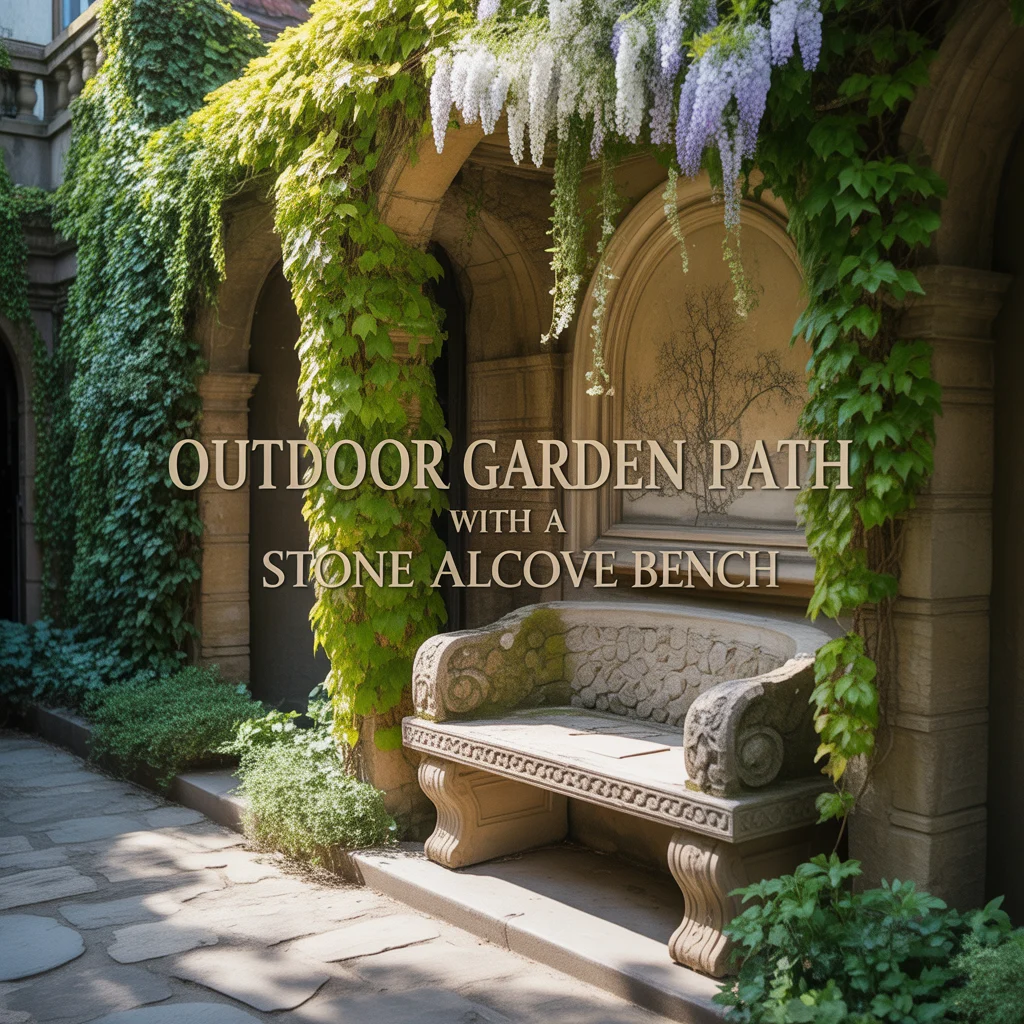
An outdoor garden path with a stone alcove bench uses a curved or rectangular recess cut into a garden wall or dense hedge to create an enclosed seating niche directly accessible from the path, positioning a stone or timber bench within the alcove to provide a sheltered, private seating position that feels separated from the main path route while remaining connected to it. I designed a stone alcove bench at a walled garden project by cutting a 5-foot-wide by 3-foot-deep rectangular recess into a 6-foot-tall yew hedge alongside a York stone path, positioning a natural sandstone bench in the recess, and the alcove produced a seating experience of genuine seclusion and shelter that became the most used sitting area in the entire garden.
Creating a Hedge Alcove for a Garden Path Bench
A hedge alcove for a garden path bench is created by cutting a rectangular or arched recess into an established hedge of sufficient depth and density to provide enclosure behind and on both sides of the bench position. The hedge must be a minimum of 3 feet deep from the path edge to the back of the hedge to produce a recess of adequate depth for a bench and comfortable sitting clearance. Yew, hornbeam, and beech are the three hedge species that produce the densest, most compact growth suitable for cutting a clean alcove recess, with yew producing the best-defined recess edge due to its fine leaf texture and tolerance of cutting back into old wood to any depth.
Bench Materials for a Garden Path Alcove
Natural sandstone, teak, and recycled plastic lumber are three bench materials suited to a sheltered alcove position on a garden path. Natural sandstone cut as a solid slab bench suits a stone alcove in a period or formal walled garden where the matching stone material between bench and alcove back wall creates a unified architectural seating element. Teak provides a warm, contrasting material that reads clearly against a dark yew hedge background and suits a hedge alcove bench at a domestic garden path where the contrast between the warm timber and the dark green enclosure is the visual intention. Recycled plastic lumber provides the most maintenance-free bench material for a sheltered alcove position where moisture from the surrounding hedge creates humid conditions that accelerate timber decay.
Garden Path With a Bench Facing a View
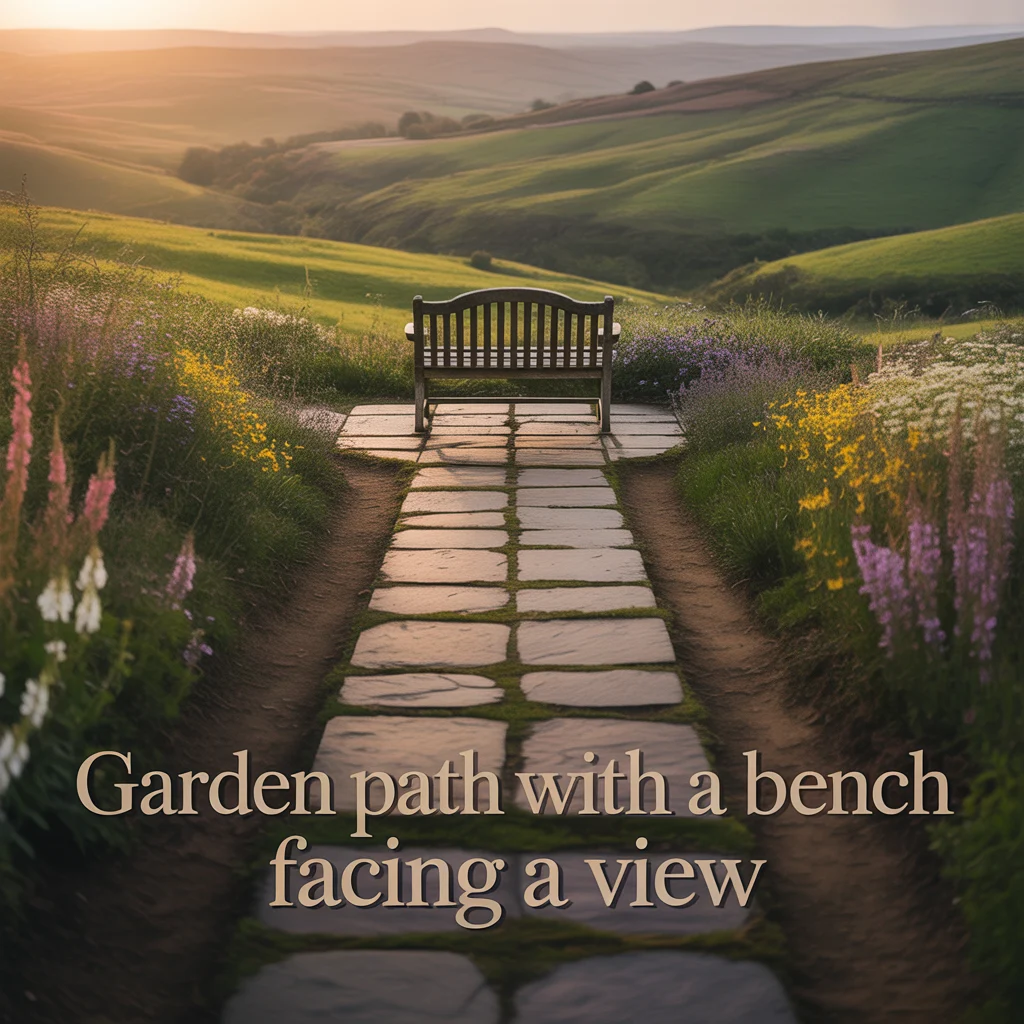
A garden path with a bench facing a view positions the seating element at a point on the path where a specific garden view, water feature, or landscape panorama is most clearly visible from the seated position, making the bench not just a resting point but a deliberate viewing platform integrated into the path design. I positioned a park-style bench on a raised garden path at a residential project at the precise point where the entire 80-foot garden length was visible from the seated position, and the homeowner told me six months after installation that she sat on that bench every evening in summer because the view from the seated position was better than from any other point in the garden, including the terrace.
Identifying the Best View Point for a Garden Path Bench
The best viewpoint for a bench on a garden path is identified by walking the full path length at a slow pace, stopping at 3-foot intervals, and crouching to seated height at each stop to assess the garden view from that position. I follow this process on every garden path with benches design project before confirming the bench position, because the view from a seated position at 18 inches height is significantly different from the standing view at 5 to 6 feet, and the optimal visual experience is almost always from a lower seated vantage point that would not be identifiable from normal walking height. The best view position is typically at a path curve, a slight path elevation change, or a point where the path direction aligns with a garden axis.
Bench Orientation for a View-Focused Garden Path
A bench facing a garden view is oriented with its back to any boundary wall, fence, or planting that closes the view in the direction away from the intended view point, which maximizes the openness of the visual field in front of the seated user. Benches oriented at 90 degrees to the path direction provide a direct forward view for a seated person and suit a view positioned to the side of the path rather than along its length. Benches oriented at 180 degrees to the path direction, facing back toward the path entrance, suit a terminus bench position where the entire path length and surrounding garden is the view. I always confirm bench orientation by sitting on the bench itself at the intended position before finalizing the installation angle.
Pinterest-Style Garden Path With a Decorative Bench
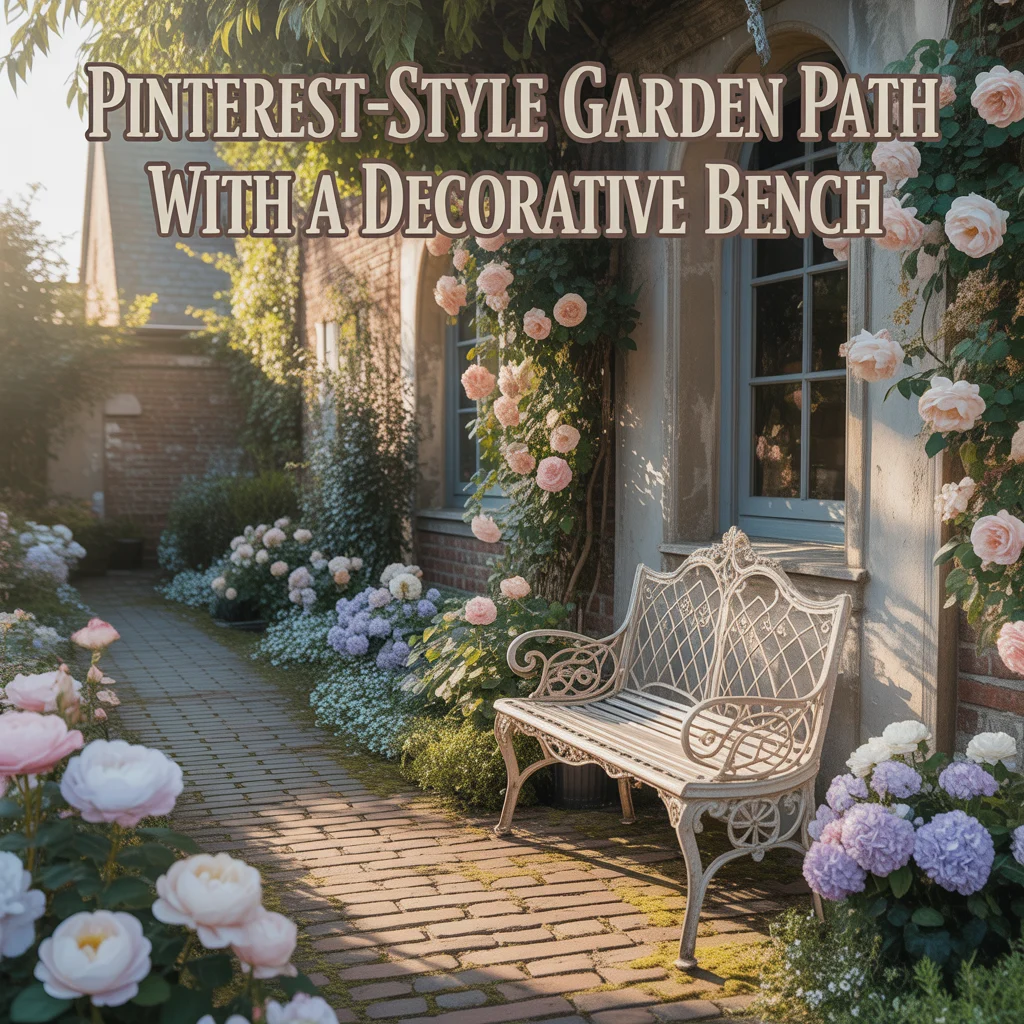
A Pinterest outdoor benches style garden path uses a highly decorative bench as the primary visual feature of the path design, selecting the bench for its aesthetic character as much as its seating function and surrounding it with carefully chosen planting, paving, and accessory elements to create a coordinated visual composition centered on the bench as the focal point of the path. I designed this type of garden path for a homeowner who specifically requested a path and bench combination that would photograph well for social media, using a white cast iron bench positioned at the end of a winding stepping stone path through a cottage border planting of roses, lavender, and Alchemilla mollis.
Decorative Bench Styles for a Photogenic Garden Path
White cast iron, painted hardwood, and ornate carved teak are three decorative bench styles suited to a photogenic Pinterest-style garden path. A white cast iron bench with a scrollwork back panel provides the strongest visual contrast against a green planted border background and suits a cottage or romantic garden path where the white bench reads as the clear focal point from the path approach direction. A painted hardwood bench in sage green, slate blue, or cream produces a softer colour presence in the garden path composition and suits a design where the bench colour is chosen to coordinate with the surrounding flower colours rather than contrast against the planting. An ornate carved teak bench uses decorative hand carving on the back panel to create a bench of genuine artistic character suited to a formal or heritage garden path.
Planting to Enhance a Decorative Bench on a Garden Path
Rosa Gertrude Jekyll, Hydrangea macrophylla Annabelle, and Clematis montana are three plants that enhance a decorative bench on a garden path by providing a flowering backdrop or flanking planting that creates the composed visual setting of a Pinterest outdoor benches photograph. Rosa Gertrude Jekyll planted directly behind a white cast iron bench provides a deep pink flowering backdrop from June to October that creates a strong colour contrast between the white bench and the rose flowers behind it. Hydrangea macrophylla Annabelle planted in two matching pots flanking the bench provides a formal symmetrical white flower frame. Clematis montana trained over a simple arch above the bench creates an overhead floral canopy of white or pink flowers in May.
Garden Path With a Bench Under a Tree
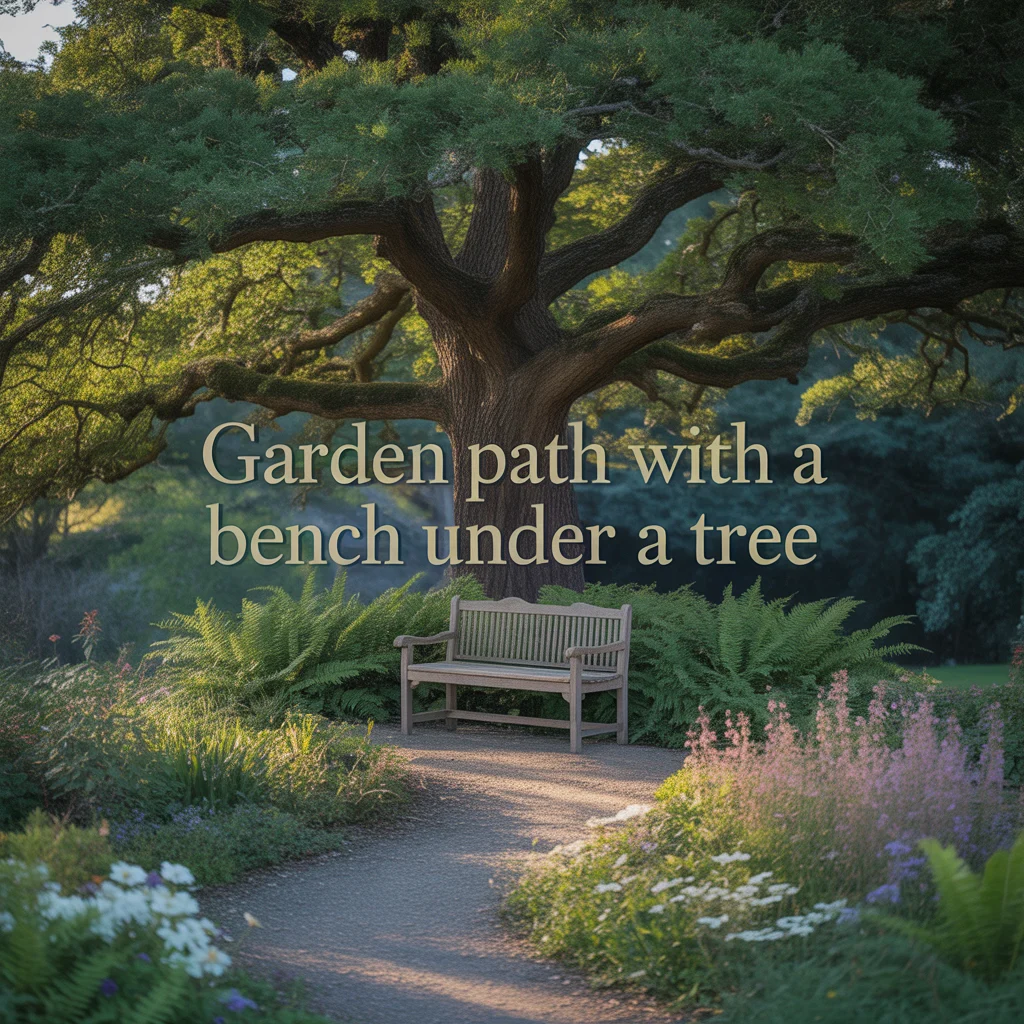
A garden path with a bench under a tree positions the seating element in the sheltered space beneath an established tree canopy alongside the path, creating a shaded, naturally enclosed seating position that provides protection from direct summer sun while maintaining the visual connection to the path and surrounding garden. I placed a simple teak bench under the spreading canopy of a mature apple tree alongside a 25-foot gravel path in my own garden, and the bench became my most frequently used garden seat because the dappled shade in summer made sitting under the tree at midday considerably more comfortable than any sun-exposed bench position elsewhere in the garden.
Positioning a Bench Under a Tree on a Garden Path
A bench under a tree on a garden path is positioned with the bench back toward the tree trunk at a minimum distance of 3 feet from the trunk base, which provides trunk clearance for future growth and prevents the bench from sitting in the root zone area where soil level changes over time. The bench faces outward away from the trunk toward the path and surrounding garden, giving the seated user the widest available view of the garden from the sheltered tree position. I set the bench on a 2-inch compacted gravel pad of 4 by 6 feet beneath the tree rather than directly on the tree root zone soil, which provides a level, stable bench base and prevents the surface roots from lifting the bench legs over time.
Ground Treatment Under a Tree Bench on a Garden Path
Bark chip, pea gravel, and shade-tolerant ground cover plants are three ground treatment options suited to the area beneath a tree bench on a garden path. Bark chip at 3-inch depth on a weed-suppressing membrane provides a practical, natural-looking surface beneath the bench that suits a woodland or naturalistic garden path setting and costs $15 to $25 for a standard bench seating area. Pea gravel at 2-inch depth provides a firmer, more formal surface that suits a period or formal garden path bench under a tree and costs $20 to $35 for the same area. Shade-tolerant ground cover plants including Vinca minor or Pachysandra terminalis provide a living surface beneath the tree bench that requires no topping up but takes two growing seasons to establish full coverage.
Garden Path With Multiple Benches at Intervals
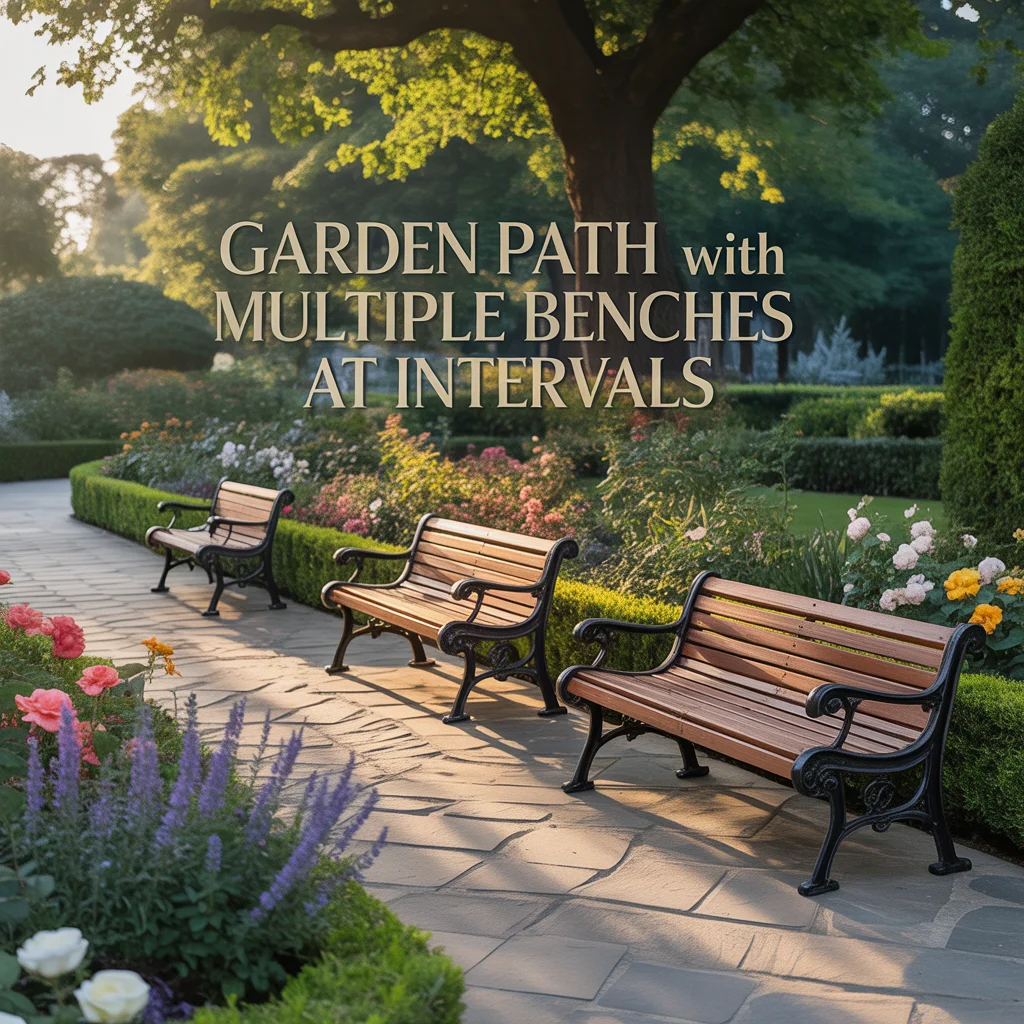
A garden path with multiple benches at regular intervals places seating elements at planned distances along the full path length, creating a route where the walking experience is punctuated by a series of seated stopping points rather than a single destination bench. I designed a 60-foot garden path with three benches positioned at 20-foot intervals at a large residential garden project, using a teak bench at the path entrance, a stone bench at the path midpoint, and a cast iron bench at the path terminus. The three different bench materials at three positions created a visual sequence that gave the long path a clear structure and three distinct characters across its length.
Spacing Multiple Benches on a Garden Path
Multiple benches on a garden path are spaced at minimum 15-foot intervals to provide enough path length between each bench for the walking experience to feel complete before the next seating position is reached. Benches spaced below 12 feet apart create a seating density that makes the path feel more like a waiting area than a garden walk. The optimum spacing for multiple benches on a garden path of 40 to 60 feet is 18 to 20 feet between bench centers, which produces three seating positions on a 60-foot path and provides enough walking distance between each bench for the garden planting and path character to change noticeably between one seated position and the next.
Varying Bench Styles on a Multiple Bench Garden Path
Using different bench materials, styles, or orientations at each position on a multiple bench garden path creates a sequential experience where each seating point offers a distinct character rather than a repeated version of the same seat. I design multiple bench paths using a simple rule of material progression: teak at the path entrance for a warm welcome impression, stone at the midpoint for a permanent, immovable quality suited to the heart of the garden, and cast iron at the terminus for a decorative, period character at the journey’s end. The three different materials create a sequence of distinct seating experiences along the same continuous path.
Garden Path With a Bench and Water Feature
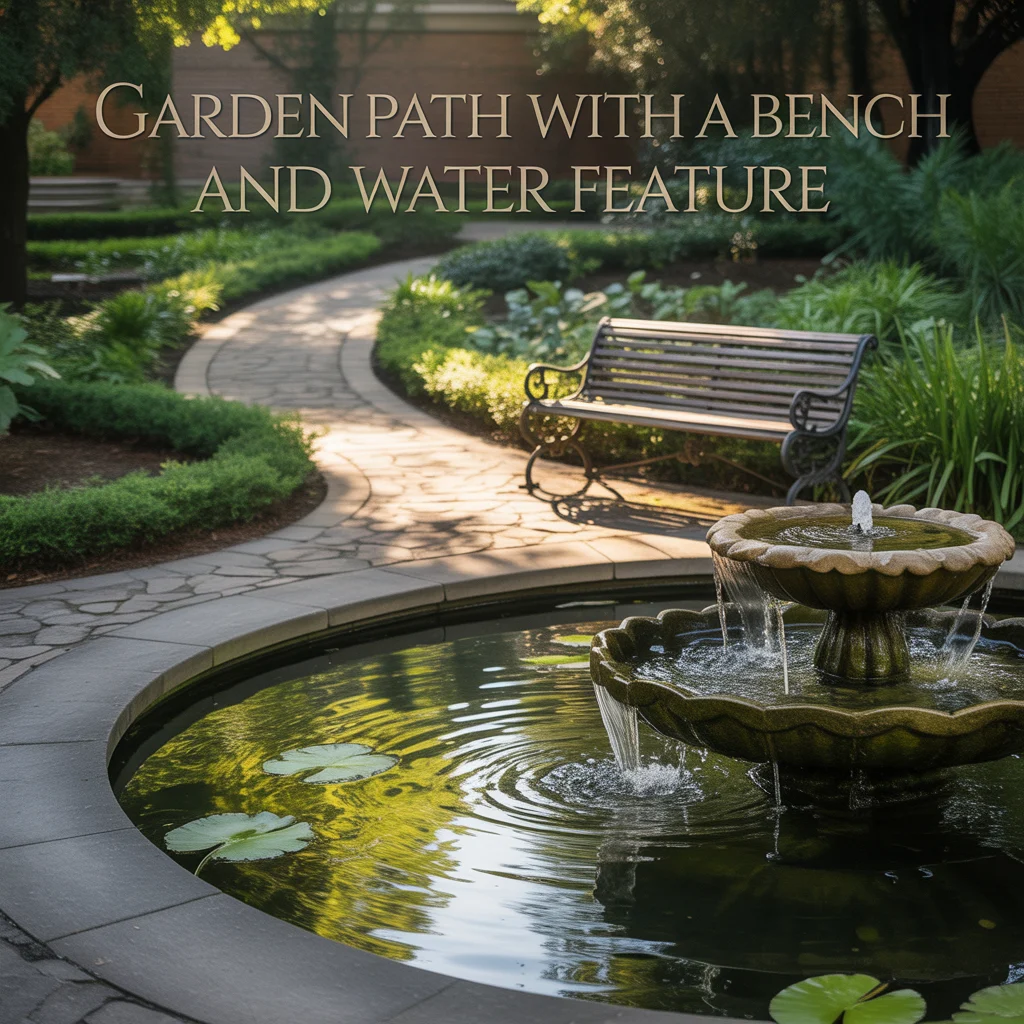
A garden path with a bench and water feature positions the seating element adjacent to a fountain, rill, pond, or water channel alongside the path, combining the restful quality of moving water with the physical comfort of a seated position to create the most relaxing seating point available on any garden path design. I placed a weathered teak bench at the edge of a small recirculating stone fountain alongside a 20-foot York stone path at a residential project, and every visitor to the garden migrated to that bench without direction, drawn by the combination of the water sound and the available seating in a way that no bench position without a water element in the same garden produced.
Water Features Suited to a Garden Path Bench Position
A bubbler fountain, a narrow rill alongside the path, and a formal basin fountain are three water features suited to a bench position on a garden path. A bubbler fountain of 12 to 18 inches diameter placed within 3 feet of the bench position produces a gentle upward water sound at 40 to 45 decibels, which is audible and calming from the seated bench without being loud enough to prevent conversation. A narrow rill of 6 to 8 inches width running alongside the path and passing within 2 feet of the bench position produces a continuous gentle water sound as the water moves over the channel surface. A formal basin fountain of 24 to 36 inches diameter placed 4 to 5 feet directly in front of the bench provides both the visual focus and the water sound from a seated position facing the fountain across a short viewing distance.
Bench Materials for a Water-Adjacent Garden Path Position
Teak, powder-coated aluminium, and reconstituted stone are three bench materials suited to a position adjacent to a water feature on a garden path. Teak provides natural water resistance and tolerates the increased moisture levels produced by a nearby water feature without accelerating timber decay, making it the most appropriate hardwood bench material for a water-side garden path position. Powder-coated aluminium provides complete rust and corrosion resistance in a water-adjacent position and suits a contemporary garden path water feature bench where the clean metal form coordinates with a modern fountain or rill design. Reconstituted stone provides the most permanent and moisture-resistant bench material for a formal water feature bench position and suits a period garden path where the matching stone material of bench and fountain basin creates a unified composition.
Garden Path With a Hammock or Swing Seat
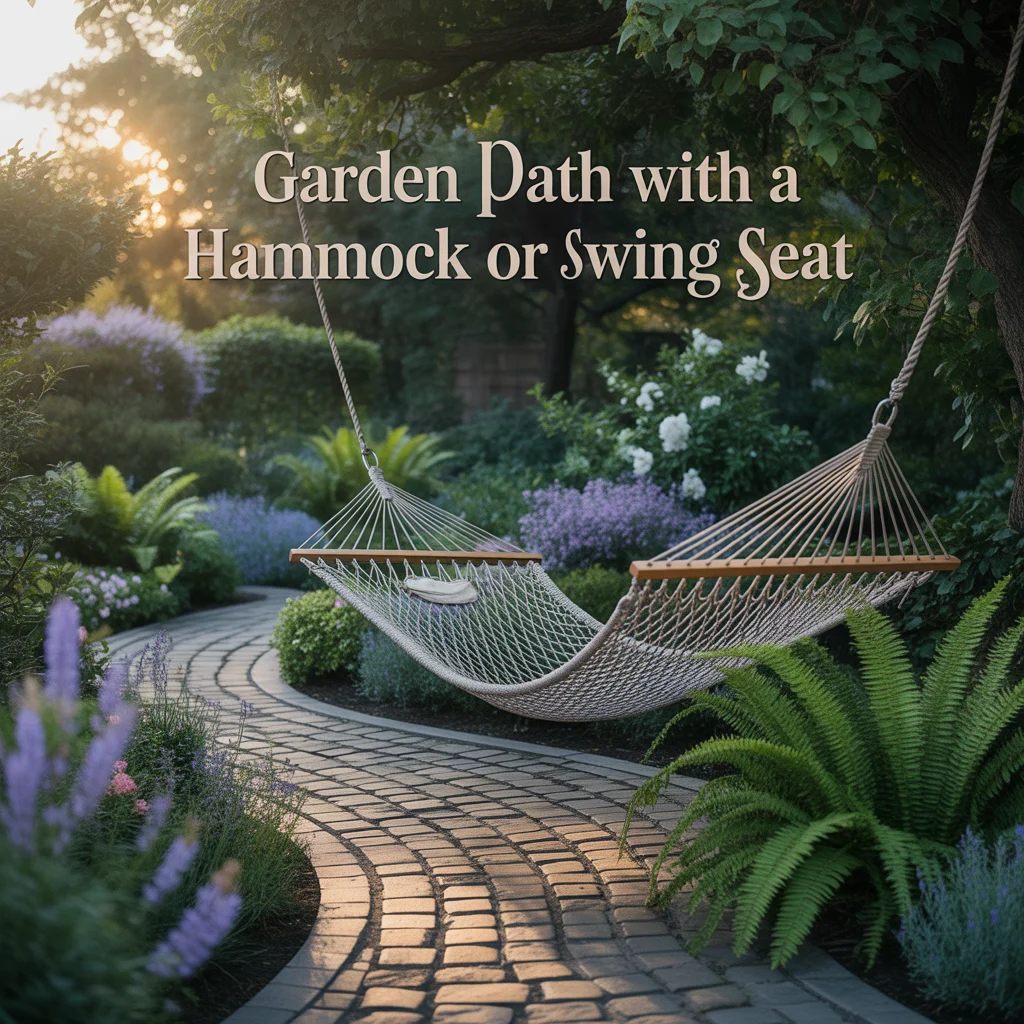
A garden path with a hammock or swing seat uses a suspended or swinging seating element positioned at the path edge to provide an alternative to a fixed bench, creating a more playful and kinetic seated experience at a dedicated stopping point on the path route. I hung a hardwood swing seat from a mature oak tree bough alongside a 30-foot bark chip path in a large garden and found it became the most used seated element in the garden by children and adults equally, providing a seated experience that no fixed bench in the same garden replicated. The swing required a 6-foot-diameter clear ground area beneath the seat for safe swinging clearance at path edge level.
Swing Seat Types for a Garden Path
A single hardwood swing seat, a two-person swing bench on a metal frame, and a hammock chair hung from a timber A-frame are three suspended seating types suited to a garden path. A single hardwood swing seat uses two hanging ropes or chains attached to an overhead branch or beam at 8 to 10 feet height, costing $45 to $120 for the seat and fixings. A two-person swing bench on a freestanding metal frame costs $180 to $450 and requires no tree or overhead structure, suiting a garden path position where no suitable overhead hanging point exists. A hammock chair on a timber A-frame costs $80 to $200 and provides a cocoon-shaped suspended seating experience suited to a sheltered path position in a woodland or informal garden.
Safety Clearance for a Swing Seat on a Garden Path
A swing seat on a garden path requires a minimum clear zone of 6 feet in front of and behind the seat at its rest position, and a minimum 3 feet clear on both sides to prevent the swinging path from intersecting with the path walking surface or adjacent planting. I always install swing seats on a garden path with the swing arc oriented perpendicular to the path direction rather than along it, which directs the swing movement away from the path rather than across it. A 2-inch compacted rubber bark or rubber mat ground surface beneath the swing seat of 6 by 6 feet minimum provides impact cushioning for the ground area directly beneath the swing.
Garden Path With a Bench in a Rose Garden
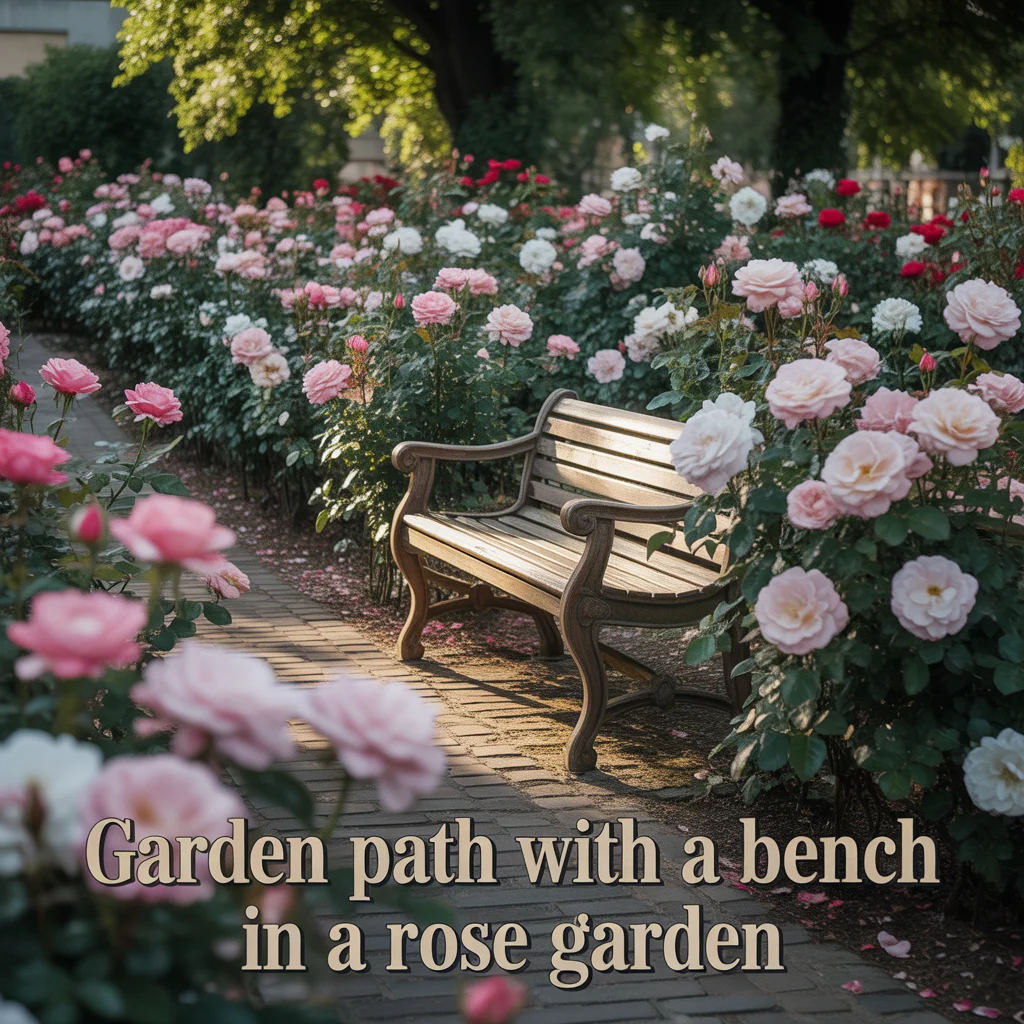
A garden path with a bench in a rose garden positions the seating element within a dedicated rose planting alongside the path, creating a seated experience where the visual display, fragrance, and physical presence of the surrounding roses is at its most concentrated directly at the bench position. I designed a rose garden bench position for a residential project by creating a 10-foot-diameter semicircular rose planting around a teak bench at the path midpoint, using Rosa Gertrude Jekyll, Rosa Munstead Wood, and Rosa The Generous Gardener in alternating positions, and the combined fragrance and colour of the three rose varieties at the bench position in June produced a seated garden experience that was described by the homeowner as the most intensely pleasurable part of her garden.
Roses for a Garden Path Bench Planting
Rosa Gertrude Jekyll, Rosa Munstead Wood, and Rosa Olivia Rose Austin are three roses suited to a bench planting on a garden path. Rosa Gertrude Jekyll planted at 18 inches behind the bench back provides a deep pink flowering backdrop from June to October with the strongest old rose fragrance available in any modern English rose variety. Rosa Munstead Wood provides deep crimson-purple flowers with a strong old rose fragrance from June to October at 3 to 4 feet height and suits planting on both sides of the bench at a 24-inch clearance from the bench arms. Rosa Olivia Rose Austin produces clear pink flowers at 3 to 4 feet height from June to October and suits the outer positions of a semicircular rose bench planting where a slightly softer colour frames the deeper tones of the central roses. For anyone designing a bench as a deliberate destination within a flower planting, further ideas are covered in these flower bed with benches as a path destination point.
Bench Placement in a Rose Garden Path
A bench in a rose garden path is placed at a minimum clearance of 18 inches from the nearest rose stem to prevent thorned growth from catching clothing or scratching skin when sitting down and standing up from the bench. I always choose Rosa Zephirine Drouhin, the thornless climbing rose, for any rose planted within 12 inches of a garden path bench because the absence of thorns on the stems immediately adjacent to the bench seat eliminates the snagging hazard that thorned varieties create at bench clearances below 24 inches.
Garden Path With a Memorial Bench
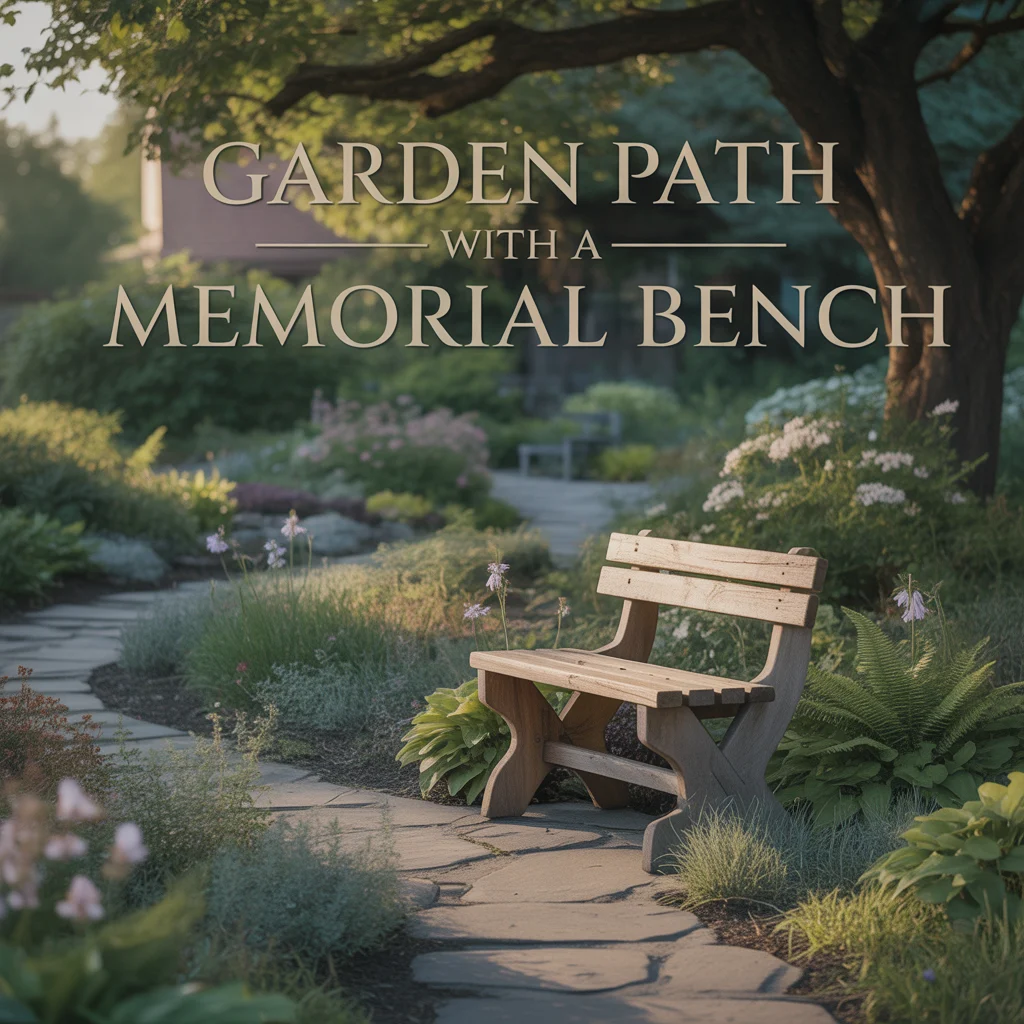
A garden path with a memorial bench uses a dedicated bench with a commemorative plaque as a meaningful seating element on the garden path, creating a seated stopping point that carries personal significance for the garden owner or their family and transforms a section of the path into a place of quiet remembrance. I helped a homeowner position a memorial bench for her late husband at the midpoint of his favourite garden path, choosing a simple teak bench with a brass plaque mounted on the back rail and surrounding it with his preferred plants including Rosa Graham Thomas and Lavandula angustifolia Hidcote, and the bench became the most visited and most valued point in the entire garden within the first season of installation.
Memorial Bench Styles and Materials
Plain teak with a brass plaque, carved oak with an integral inscription, and cast iron with an enamel plaque are three memorial bench approaches suited to a garden path. A plain teak bench with a 3-inch by 5-inch brass plaque mounted on the back rail provides the most understated, classically beautiful memorial bench for a garden path at a bench cost of $280 to $500 plus $45 to $80 for a professionally engraved brass plaque. A carved oak bench with an integral hand-carved inscription provides a more uniquely personal memorial bench in which the text becomes part of the bench structure rather than a separately attached element. A cast iron memorial bench with an enamel plaque suits a period garden path where the decorative character of cast iron is consistent with the surrounding garden aesthetic.
Planting for a Memorial Bench on a Garden Path
Rosa Graham Thomas, Lavandula angustifolia, and Rosmarinus officinalis are three plants suited to a memorial bench planting on a garden path. Rosa Graham Thomas, an English climbing rose producing golden-yellow flowers with a strong tea rose fragrance from June to October, provides a warm, positive seasonal colour at a memorial bench without the heavier emotional associations of darker red or purple roses. Lavandula angustifolia provides a calming, meditative fragrance that suits the quiet, reflective purpose of a memorial bench on a garden path. Rosmarinus officinalis, rosemary, carries a long historical association with remembrance and provides an aromatic, evergreen planting that maintains a year-round presence at the memorial bench position on the garden path.
Garden Path With a Bench and Bird Feeding Station
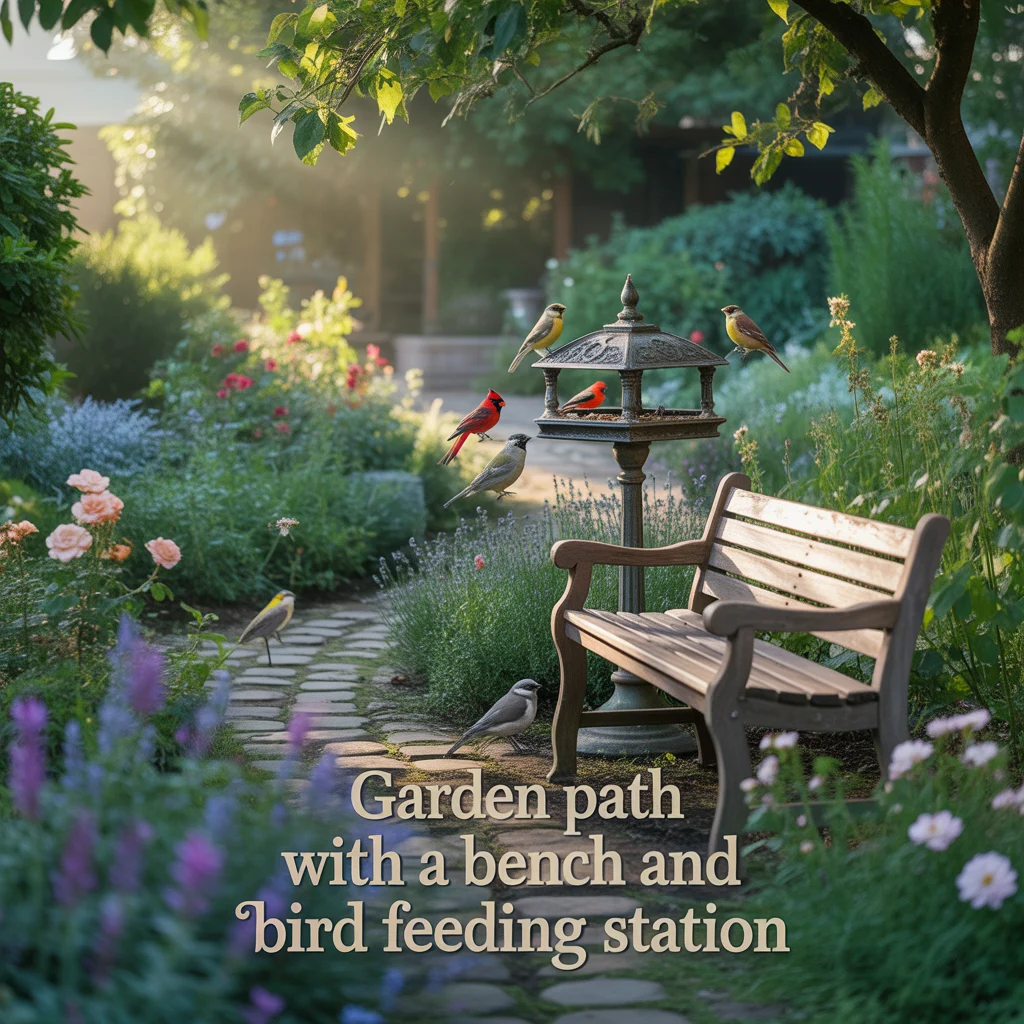
A garden path with a bench and bird feeding station combines a seating position alongside the path with bird feeders, a bird bath, and native planting positioned within 6 to 10 feet of the bench to create a wildlife observation point on the garden path where the seated user watches bird activity at close range. I positioned a teak bench alongside my own garden path at a distance of 8 feet from a feeding station containing four feeders of different seed types, and the combination produced a morning garden experience during which I regularly observed 6 to 10 bird species at the feeders from the seated bench position during a single 20-minute sitting.
Bird Feeding Station Setup for a Garden Path Bench
A bird feeding station for a garden path bench uses a post-mounted feeder pole of 6 to 7 feet height positioned 6 to 8 feet from the bench at a 45-degree angle from the bench face, which places the feeders in the natural forward viewing arc of a seated person without requiring the head to turn sharply left or right. I attach four different feeder types to the feeding pole: a nyger seed feeder for goldfinches, a sunflower hearts feeder for tits and finches, a peanut feeder for nuthatches and woodpeckers, and a suet block feeder for robins and wrens. The variety of feeder types increases the number of bird species visiting the station and extends the bird activity at the bench viewpoint throughout the day.
Planting for a Wildlife Observation Bench on a Garden Path
Verbena bonariensis, Echinacea purpurea, and Ilex aquifolium are three plants suited to a wildlife observation bench on a garden path. Verbena bonariensis produces tall stems of small purple flowers from July to October that attract butterflies and hoverflies to the immediate area around the bench, providing insect observation alongside bird watching from the same seated position. Echinacea purpurea provides cone flowers with prominent seed heads that attract goldfinches directly to the plant in autumn when other seed sources are depleted, bringing birds within 3 to 4 feet of the bench position on the garden path. Ilex aquifolium, holly, provides winter berries that attract thrushes, fieldfares, and redwings to the garden path bench area from November to February.
Garden Path With a Children’s Bench
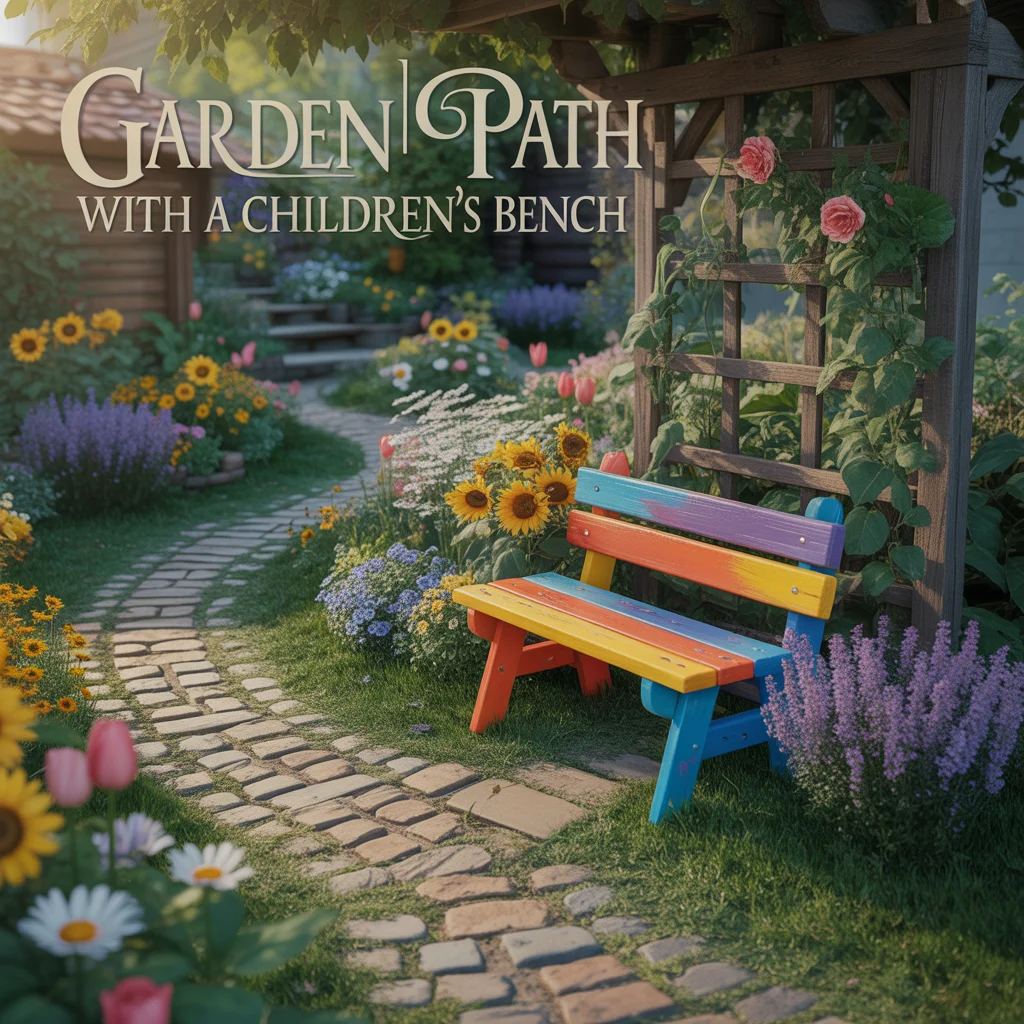
A garden path with a children’s bench uses a reduced-height seating element of 10 to 14 inches seat height positioned alongside the path at a scale appropriate for children aged 3 to 10, creating a seating point on the garden path that children can use independently without adult assistance and that connects the children’s movement through the garden with a dedicated resting and sitting point on the walkway. I built a simple children’s bench from two log slice legs and a sawn timber seat plank at 12 inches height alongside a bark chip garden path in my niece’s back garden, and her three children aged 4, 6, and 8 used the bench as a base for garden play activities rather than simply a seating point, sitting on it, standing on it, and placing collected garden objects on the seat surface during every garden visit.
Children’s Bench Heights for a Garden Path
Seat heights of 10 to 12 inches, 12 to 14 inches, and 14 to 16 inches are three height ranges suited to children’s benches on a garden path. A seat height of 10 to 12 inches suits children aged 3 to 5 who can mount and dismount a bench of this height independently without assistance. A seat height of 12 to 14 inches suits children aged 5 to 8 who have longer leg length and benefit from a slightly higher seat that provides a more comfortable sitting position for a full-sized child rather than an adult. A seat height of 14 to 16 inches suits children aged 8 to 12 who are approaching adult proportions and find the lowest bench heights too low for comfortable sitting during longer outdoor activities alongside the garden path.
Safe Materials for a Children’s Bench on a Garden Path
Pressure-treated softwood, recycled plastic lumber, and smooth hardwood are three safe materials for a children’s bench on a garden path. Pressure-treated softwood provides an affordable, smooth-sanded surface at $25 to $55 for a complete children’s bench and requires no ongoing treatment for 15 to 20 years when factory-treated with a preservative rated for ground contact. Recycled plastic lumber provides a completely splinter-free, maintenance-free surface suited to a children’s garden path bench where the elimination of splinter risk is the primary material requirement. Smooth hardwood in oak or ash provides a durable, naturally splinter-resistant surface when sanded to 120-grit finish on all sitting and touching surfaces before installation.
Low Maintenance Garden Path With a Recycled Plastic Bench
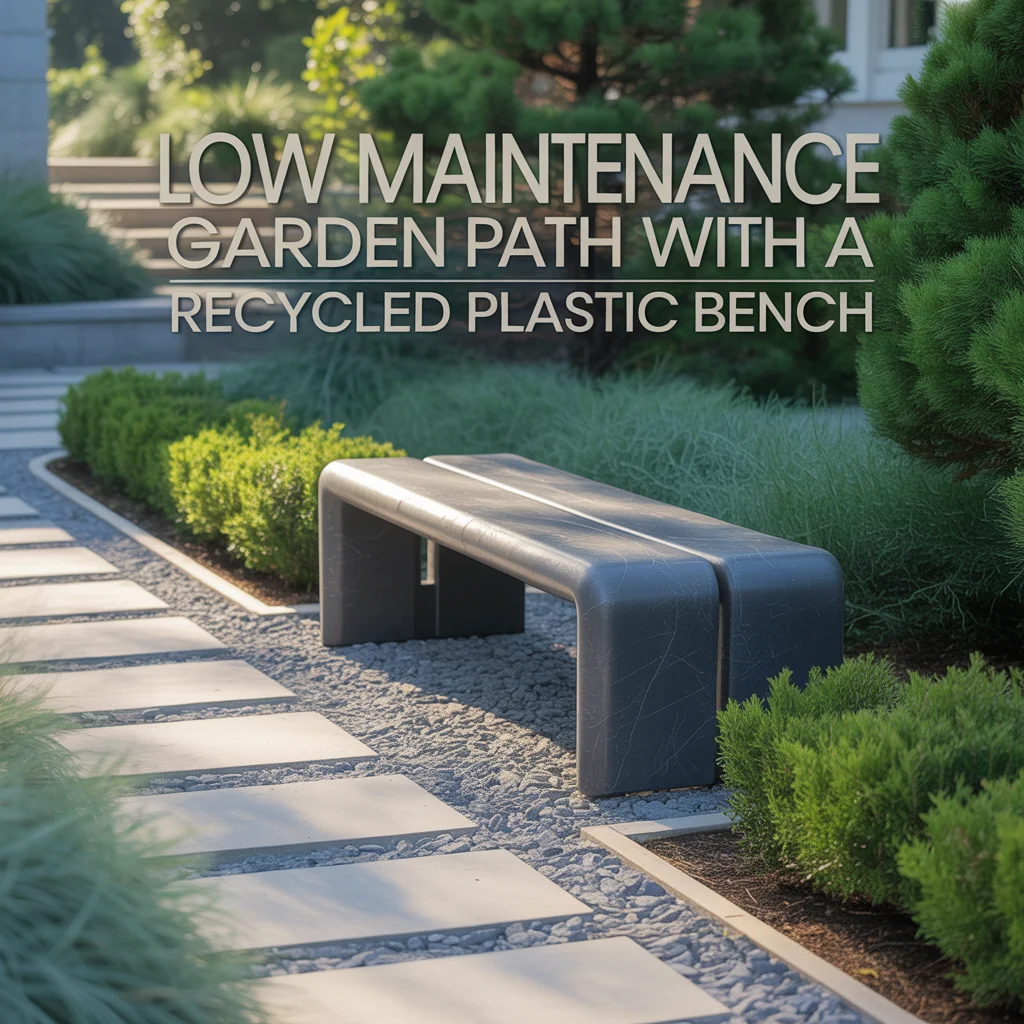
A low maintenance garden path with a recycled plastic bench uses a bench manufactured from recycled plastic lumber in a hardwood-effect finish as the seating element alongside the path, providing a permanently maintenance-free seating option that requires no treatment, no painting, no oiling, and no protection against weathering in any outdoor exposure condition. I specified a recycled plastic bench in brown woodgrain effect at a low maintenance residential garden project for a homeowner in her eighties who wanted a beautiful garden bench that required zero maintenance between uses, and the bench has sat on the same garden path for four years without any surface degradation, colour change, or structural movement.
Recycled Plastic Bench Colors and Finishes
Brown woodgrain, grey woodgrain, and black smooth finish are three colour and finish options suited to a recycled plastic bench on a low maintenance garden path. Brown woodgrain provides the closest visual approximation to natural hardwood and suits a traditional or cottage garden path where the warm brown colour of the bench coordinates with brick, terracotta, or natural stone path materials. Grey woodgrain provides a cooler, more contemporary surface finish suited to a modern garden path where the grey tone coordinates with slate, porcelain, or rendered surface materials. Black smooth finish provides the most contemporary and architectural appearance and suits a modern garden path where a bold, dark bench creates a strong visual contrast with pale path surfaces and surrounding green planting.
Cost Comparison of Recycled Plastic vs Hardwood Benches
A recycled plastic bench costs $180 to $450 for a standard 4 to 5-foot garden bench and requires $0 in annual maintenance for its full 25 to 50-year lifespan. A comparable hardwood teak bench costs $250 to $550 and requires $15 to $25 in teak oil per year for colour maintenance, totaling $375 to $1,300 in maintenance costs over 25 years on top of the purchase price. A painted softwood bench costs $120 to $280 and requires $20 to $35 in paint and preparation materials every 3 to 4 years, totaling $150 to $290 in maintenance costs over 25 years. The recycled plastic bench produces the lowest total 25-year ownership cost of the three options when the purchase price and maintenance costs are combined.
Related
Best garden bench landscaping ideas for path integration
How to add lighting near garden path bench areas
Pergola bench swing ideas for shaded path seating
Frequently Asked Questions
Where should a bench be placed on a garden path?
A bench on a garden path is placed most effectively at a path terminus, a path midpoint where a view is visible, or a path curve where the natural slowing of the walking pace makes sitting feel natural. The bench back should face a wall, hedge, or planting that provides visual enclosure behind the seat, and the bench face should look toward the most attractive garden view available from that position. I always confirm the bench position by crouching to seated height at the intended location before installing the bench, because the view from 18 inches seat height is significantly different from the standing view and the optimal seated viewpoint is not always identifiable without this check.
What is the best material for a garden path bench?
Teak is the best material for a garden path bench because it provides a natural lifespan of 25 to 40 years in outdoor conditions, requires no maintenance to remain structurally sound, and weathers to an attractive silver-grey patina that suits the widest range of garden path styles from formal to naturalistic. For a completely maintenance-free bench, recycled plastic lumber provides equivalent durability at 25 to 50 years lifespan with zero ongoing maintenance requirements. For a period or formal garden path, cast iron provides the most architecturally appropriate bench character with a lifespan of 50 or more years when maintained with an annual rust-check and repaint schedule.
How far from the path edge should a bench be positioned?
A garden path bench is positioned with its front legs at a minimum of 6 inches and a maximum of 18 inches from the path edge, which maintains the visual connection between the bench and the path while keeping the bench seat surface within easy stepping distance from the path surface. A bench positioned more than 24 inches from the path edge begins to read as a separately placed garden feature rather than a path seating element and loses the direct functional connection to the walkway. I set all garden path benches at 12 inches from the path edge as the standard specification, which provides a comfortable step-off distance from the path to the bench and keeps the bench visually linked to the path surface throughout the garden.
What size bench suits a standard garden path?
A 4-foot bench suits a garden path of 3 to 4 feet width, providing seating for two adults without the bench extending significantly beyond the path width when positioned perpendicular to the path direction. A 5-foot bench suits a path of 4 to 5 feet width and provides more generous two-person seating. A 6-foot bench suits a wide formal path of 5 feet or more and provides three-person seating at a path junction or terminus. I avoid placing a bench longer than the path is wide in a perpendicular position because the bench ends project visually beyond the path boundary and disrupt the organized relationship between the bench dimensions and the path width.
Can I add a bench to an existing garden path without major work?
A bench is added to an existing garden path without major work by placing a freestanding bench directly on the existing path surface or on a 2-inch compacted gravel pad at the path edge, neither of which requires any excavation, concrete, or structural modification to the existing path. A gravel pad of 4 by 6 feet at 2-inch depth costs $8 to $15 in materials and takes 45 minutes to install, providing a stable, level base for any freestanding garden bench. I add gravel pads beneath all garden path benches positioned on natural soil rather than on paved surfaces, because the gravel prevents the bench legs from sinking into soft ground during wet weather and maintains a level, stable bench position throughout the year.