
Stunning Stone Garden Path Ideas for a Professional Look

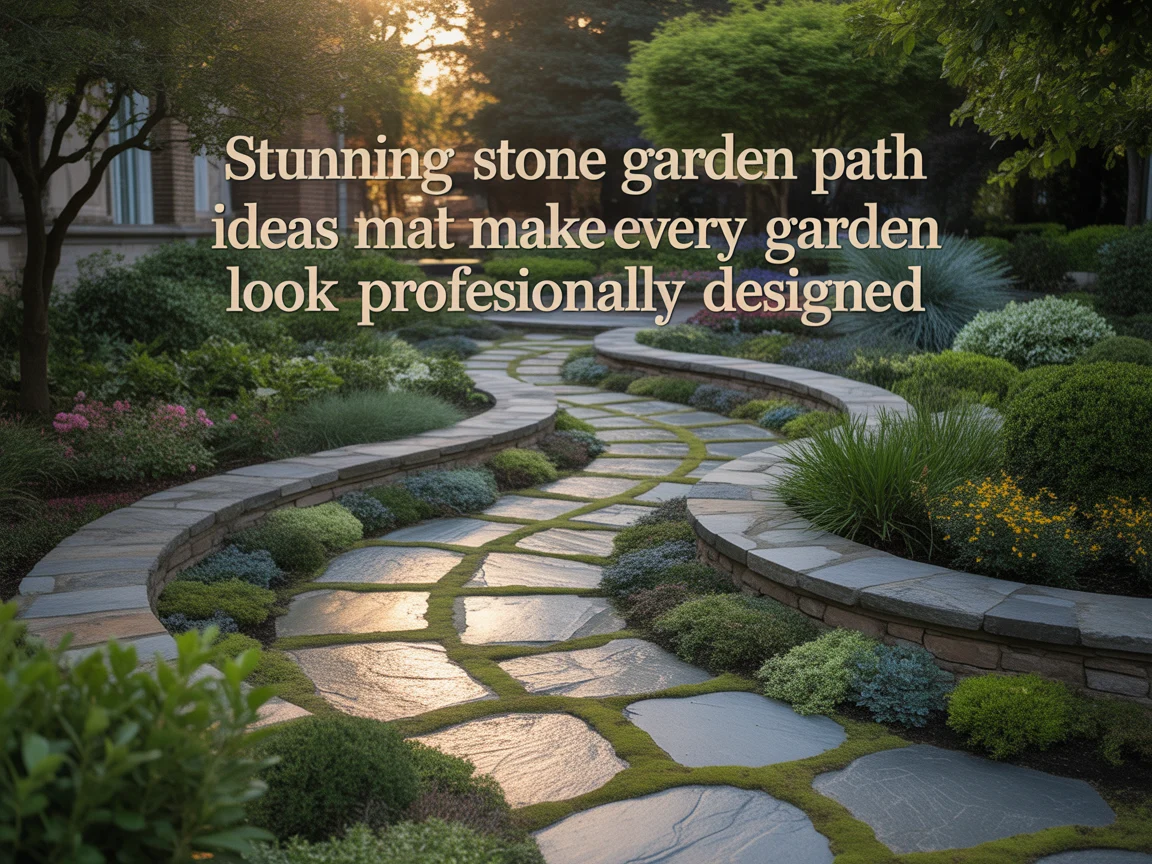
I visited a garden last autumn that had a stone path so well executed that I stopped walking and stood still for a full minute just to look at it. The path used large irregular limestone flags set in a slightly curved route through a mixed herbaceous border, with creeping thyme between every joint and low LED uplighters casting warm light across the stone surface from both sides. Every element of that path had been considered. The stone species, the joint planting, the curve radius, the lighting angle. Nothing was accidental, and the result was a garden path that looked like it belonged in a professional design magazine.
A stunning stone garden path uses natural rock materials including limestone, sandstone, granite, slate, or basalt as the primary path surface, selected and laid with deliberate attention to stone species, joint treatment, path layout, and surrounding planting to create a garden walkway of high visual impact that improves the character and appearance of the entire outdoor space. The natural variation of stone color, surface texture, and aging behavior gives every stone garden path a quality that manufactured paving cannot replicate at any price point.
Since that autumn visit, I have designed and studied stone garden paths across many different styles, materials, and budgets. I have seen natural stone pathway designs executed on modest budgets produce results equal to premium projects, and I have also seen expensive stone laid badly produce disappointing results.
In this article, I am sharing the best stunning stone garden path ideas that I have either created or studied closely enough to recommend with complete confidence.
Natural Limestone Stepping Stone Path
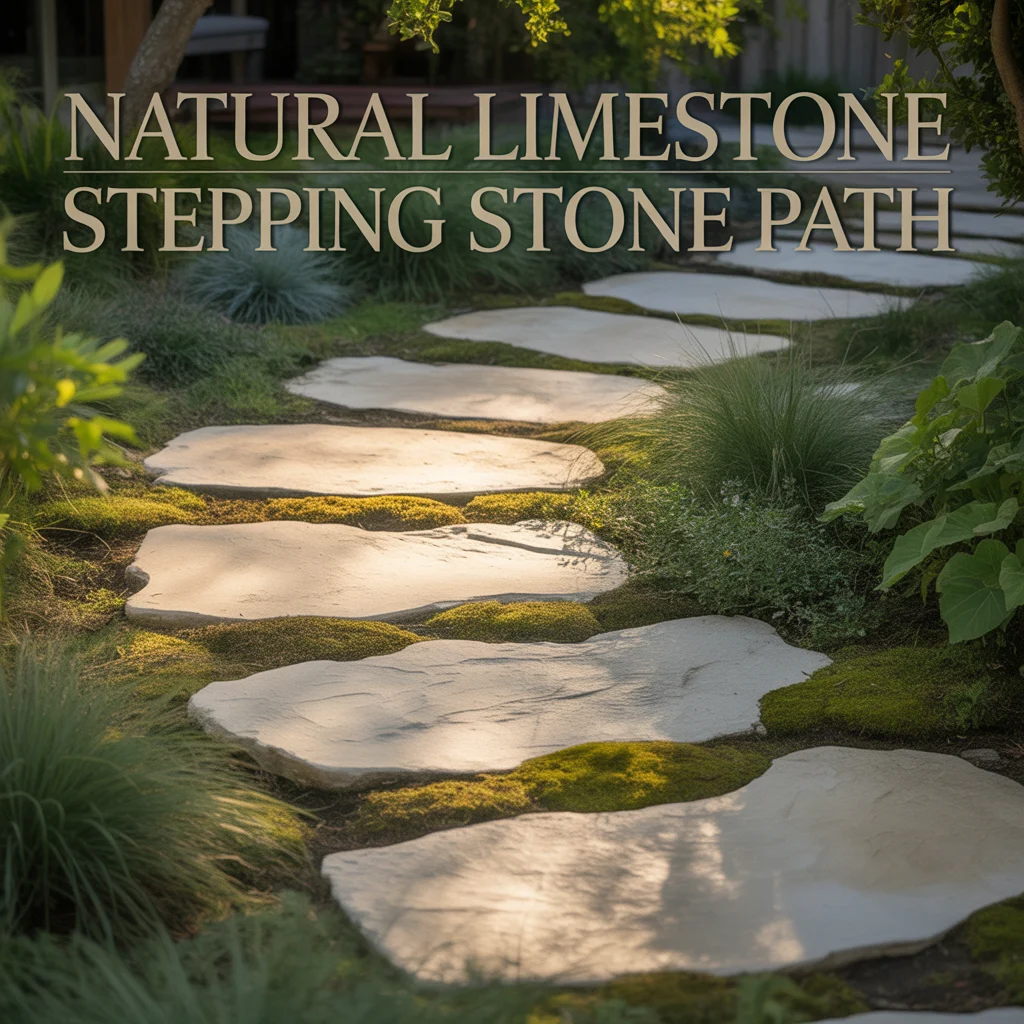
A natural limestone stepping stone path places large individual limestone pieces as separate stepping elements in a grass, gravel, or planted surface, creating a stone pathway in a garden that looks organic and considered rather than heavily constructed. Limestone is my preferred stone species for a stepping stone path because the warm grey-cream color and the natural riven surface texture photograph well in all light conditions, suit a wide range of planting styles from formal to cottage, and develop an increasingly attractive patina as lichen and mineral deposits accumulate on the stone surface over the first three to five years of outdoor installation.
Limestone Stepping Stone Sizes for a Garden Path
Stepping stones for a natural limestone stone pathway measure most effectively at 18 by 18 inches, 20 by 20 inches, or 24 by 24 inches per stone, with thickness of 40 to 50mm providing enough mass to remain stable in a sand-set installation without requiring concrete bedding beneath each stone. Stones of 18 by 18 inches suit a narrow garden path of 2.5 to 3 feet width where the single stone provides confident footing without dominating the surrounding surface material. Stones of 24 by 24 inches suit a wider path of 3.5 to 4 feet and provide a more substantial stepping surface suited to a formal stone garden path design where the generous stone size reinforces the quality of the path material.
Setting Natural Limestone Stepping Stones
Natural limestone stepping stones are set on a 20mm sharp sand bed over compacted soil, with the stone surface positioned 5mm above the surrounding ground level to account for grass or ground cover growth bringing the surface to stone level within four to six weeks of installation. I excavate each stone position by cutting to the exact stone outline, removing the soil to a depth of stone thickness plus 20mm, compacting the base, spreading sharp sand, and pressing the stone firmly before checking level. Each stone requires a 5-minute stability test by standing on the stone corners before the next stone is positioned, which confirms the sand bed is compacted adequately before planting or turf is reinstated around the stone.
Sandstone Natural Stone Walkway
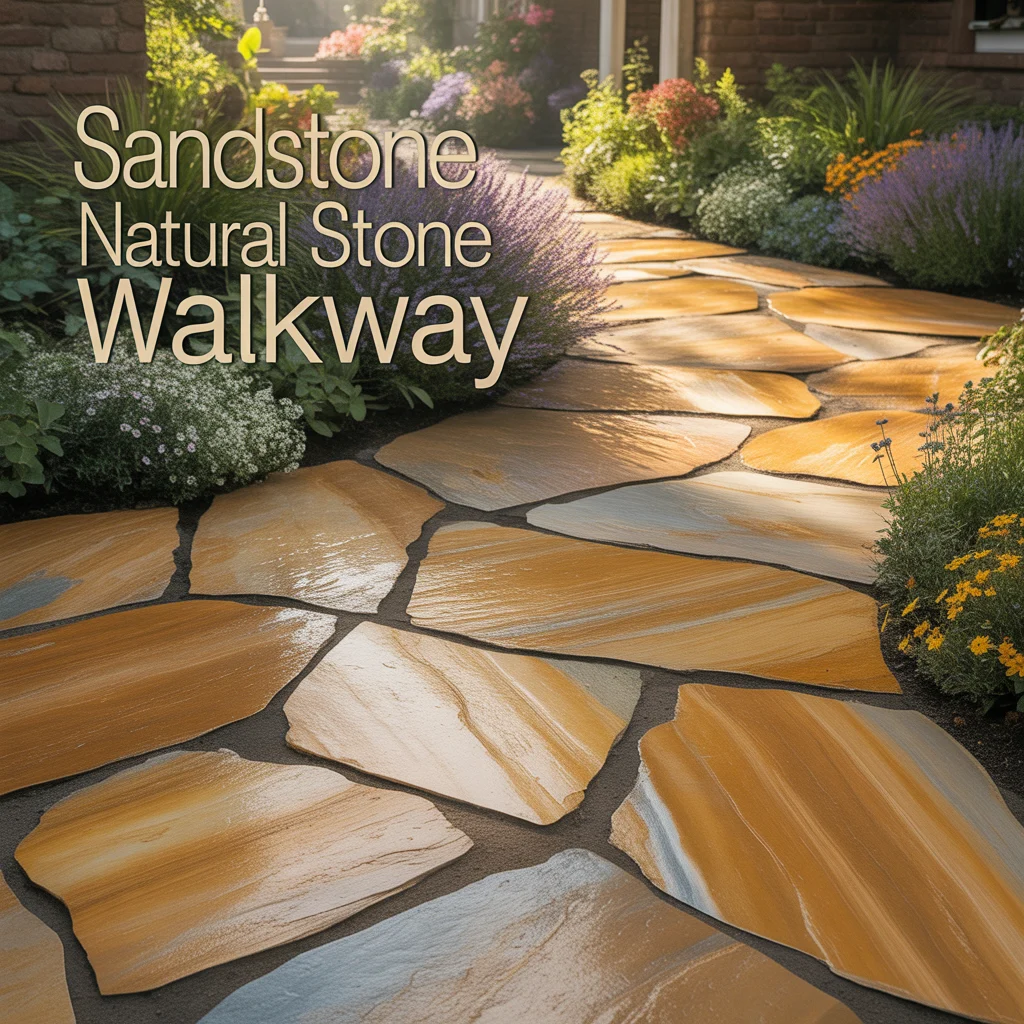
A sandstone natural stone walkway uses warm-toned buff, honey, or autumn blend sandstone flags set in a continuous paved surface to create a stone pathway in a garden with a rich, warm color quality that suits cottage gardens, country properties, and traditional residential spaces where the organic warmth of sandstone coordinates more naturally with the surrounding planting than cooler stone species. I have laid more sandstone paths than any other stone species in my design work because the stone suits the broadest range of UK domestic garden styles, and the warm color becomes progressively more attractive as the stone weathers and develops a natural surface patina over the first few seasons of use.
Sandstone Finish Options for a Stone Garden Path
Riven, sawn, and tumbled are three surface finishes suited to a sandstone natural stone walkway. Riven sandstone has a naturally split surface with slight undulations that provide excellent slip resistance rated at R11 and suit an informal or cottage garden stone path where a naturally textured surface complements the organic character of the surrounding planting. Sawn sandstone has a smooth, flat face that suits a contemporary or formal stone garden path and provides a slip resistance of R10, which requires a surface sealant application to improve wet weather performance on exposed installations. Tumbled sandstone has mechanically rounded edges and a slightly worn surface that mimics aged stone and suits a path design where an instantly established, period-appropriate stone walkway appearance is the design intention.
Sandstone Colors for a Natural Stone Garden Path
Buff sandstone, honey sandstone, and autumn blend sandstone are three color options suited to a natural stone walkway in a garden. Buff sandstone in pale beige-grey tones provides the most neutral sandstone color and suits a garden where the path material needs to recede visually against bolder planting colors rather than compete with them. Honey sandstone in warm golden-orange tones produces the most visually warm and photogenic stone path surface and suits a cottage or country garden where the rich color of the stone is intended to be a prominent visual feature of the path design. Autumn blend sandstone mixes buff, honey, and rust-red tones in a single supply batch, producing a varied, naturally appearing stone surface suited to an informal garden path where tonal consistency is less important than natural variation.
Granite Stepping Stone Path in a Formal Garden
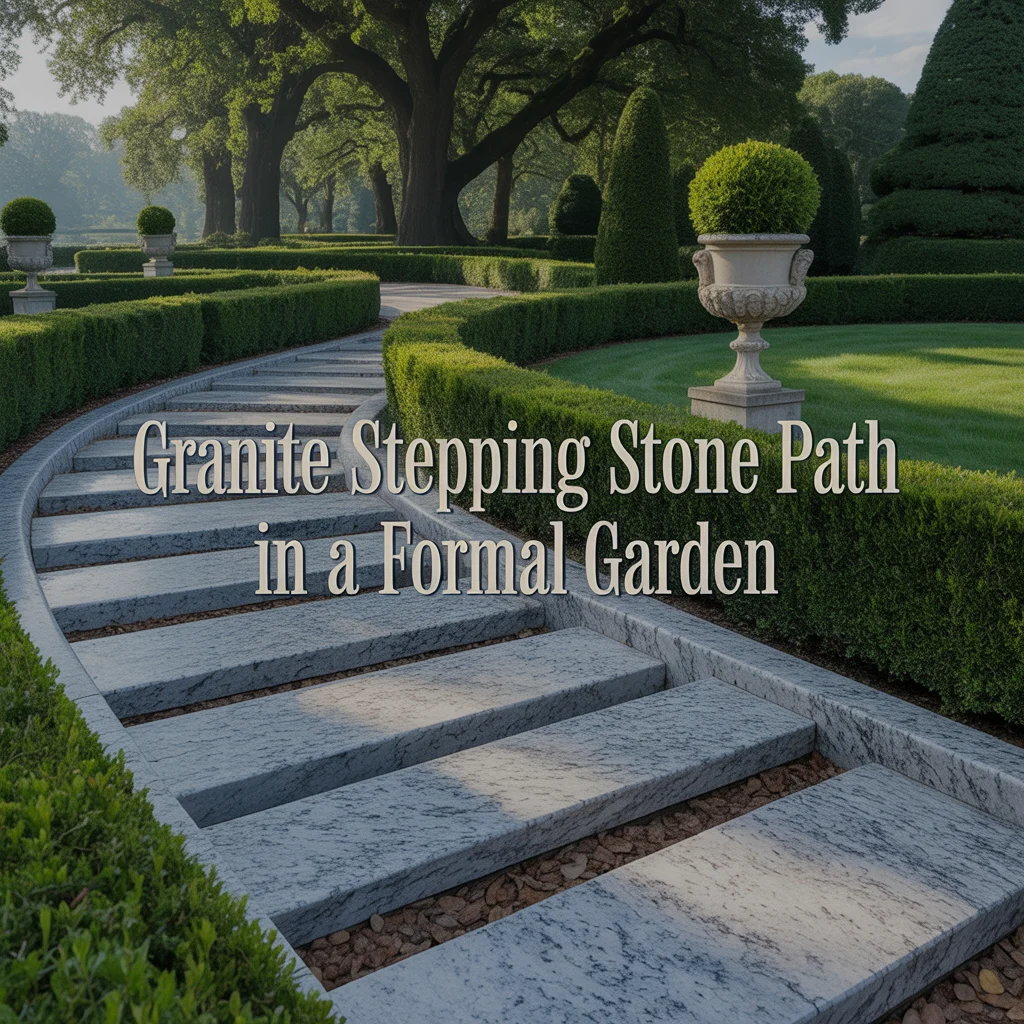
A granite stepping stone path in a formal garden uses the density, hardness, and fine-grained surface of natural granite to create a stone pathway with a refined, permanent quality suited to formal garden designs, period properties, and large-scale outdoor spaces where the strength and longevity of the stone material is as important as its visual character. I specified a pink-grey Caledonian granite stepping stone path for a formal walled garden project, setting 600mm by 600mm sawn granite flags in two parallel rows across a grass surface as a formal approach path to a central garden feature, and the visual weight and precision of the granite produced the most architecturally resolved stone path I have designed.
Granite Types for a Stone Garden Path
Silver grey granite, pink granite, and black absolute granite are three granite types suited to a stone garden path. Silver grey granite is the most widely used granite for a stone garden path because the neutral grey tone suits all garden styles from formal to contemporary and coordinates with the widest range of building materials, boundary wall finishes, and garden furniture. Pink granite, including Caledonian and Peterhead varieties quarried in Scotland, provides a warm pink-grey tone that suits a formal garden path at a period property where the stone color coordinates with pink or red brick building materials. Black absolute granite provides the most dramatic and contemporary stone path surface and suits a modern formal garden where the deep black stone creates a strong visual contrast with pale rendered walls or light-colored planting.
Granite Path Surface Treatments
Flamed, polished, and bush-hammered are three surface treatments applied to granite for a stone garden path. Flamed granite has a rough, textured surface produced by rapid gas flame treatment that opens the stone grain and provides excellent slip resistance of R11 to R12, making it the safest and most practical surface treatment for an outdoor granite stone path in all weather conditions. Polished granite produces a highly reflective mirror surface that provides slip resistance of R9 to R10, which is below the recommended minimum for an outdoor path surface and requires a sealant application and regular maintenance to remain safe in wet conditions. Bush-hammered granite has a mechanically textured surface that provides slip resistance of R10 to R11 and suits a contemporary formal garden path where a refined textured surface is preferred over the rough character of a flamed finish.
Slate Stone Pathway in a Contemporary Garden
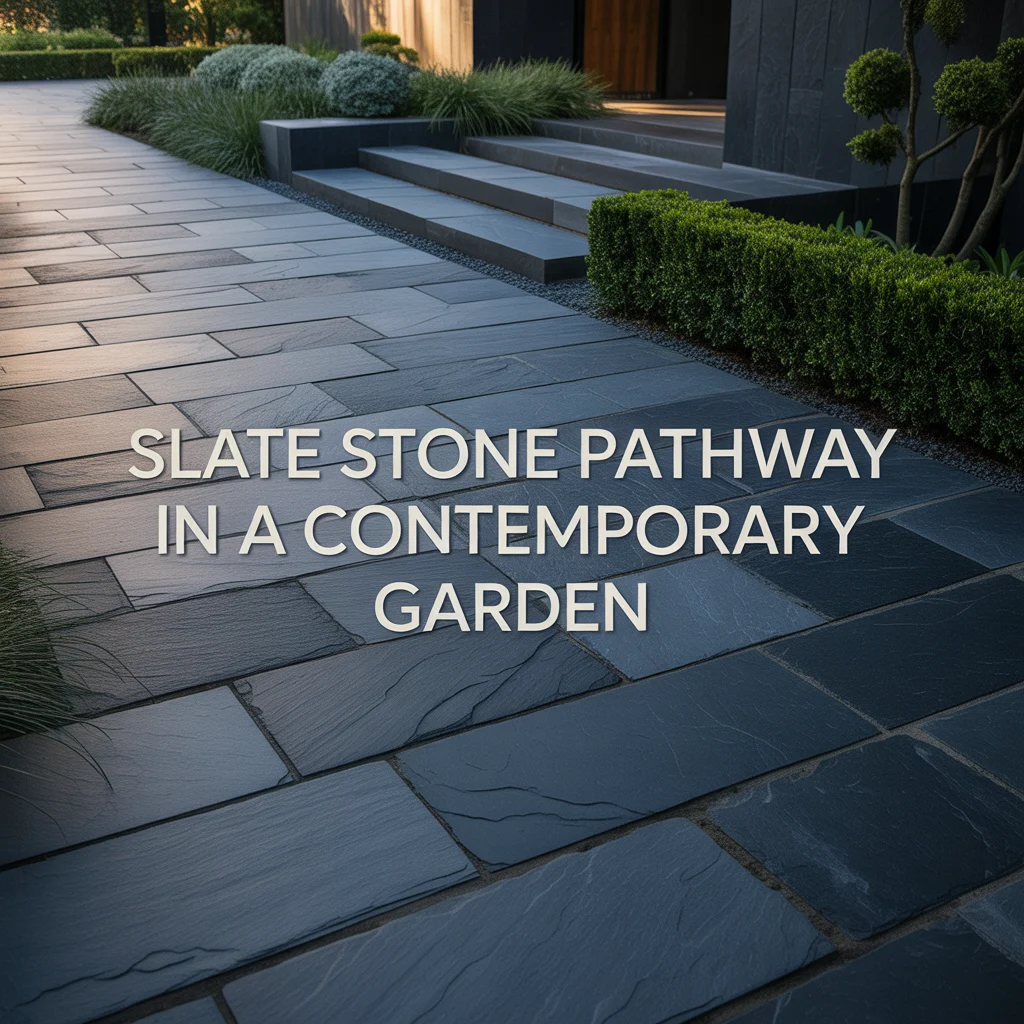
A slate stone pathway in a contemporary garden uses the distinctive layered, blue-grey surface of natural Welsh or Brazilian slate as the path material to create a stone walkway with a cool, refined character suited to modern architecture, urban garden spaces, and designed outdoor living areas where the natural dark tone of the slate coordinates with contemporary metal, timber, and rendered surface materials. I designed a Welsh slate stone pathway at a contemporary terraced house garden, using 600mm by 300mm riven slate flags in a running bond pattern on a mortar bed, and the blue-grey slate surface against the white rendered boundary walls produced the most visually striking stone path in the garden at a cost comparable to mid-range porcelain paving.
Welsh vs Brazilian Slate for a Stone Garden Path
Welsh slate and Brazilian slate are two slate sources used in a stone pathway, and the practical differences between them affect color, thickness consistency, and long-term surface performance. Welsh slate produces a blue-grey to grey-green surface color that is unique to the Welsh quarries and provides a distinctly natural, geologically specific character suited to a stone garden path where provenance and authenticity of the natural material are part of the design intention. Brazilian slate produces a similar blue-grey surface at a lower cost per square foot but with greater color variation between batches and less consistent thickness, requiring more time in the bedding adjustment during installation. Welsh slate costs $18 to $35 per square foot installed, compared to $12 to $22 per square foot for Brazilian slate.
Slate Stepping Stone Path Design
A slate stepping stone path uses individual riven slate pieces of 300mm by 300mm to 500mm by 500mm set in a grass or gravel surface as a stone pathway in a contemporary garden, creating a path with the dark, dramatic character of the slate material combined with the informal stepping stone layout that suits a garden where a fully paved stone path would look too heavy or permanent. I set slate stepping stones in a 10mm sharp sand bed with the stone surface 5mm above the surrounding grass or gravel level, using a rubber mallet to tap each stone level after placement. The riven surface of Welsh slate provides natural slip resistance suited to a stepping stone path in all weather conditions without any surface treatment.
Basalt Stone Path for a Modern Garden
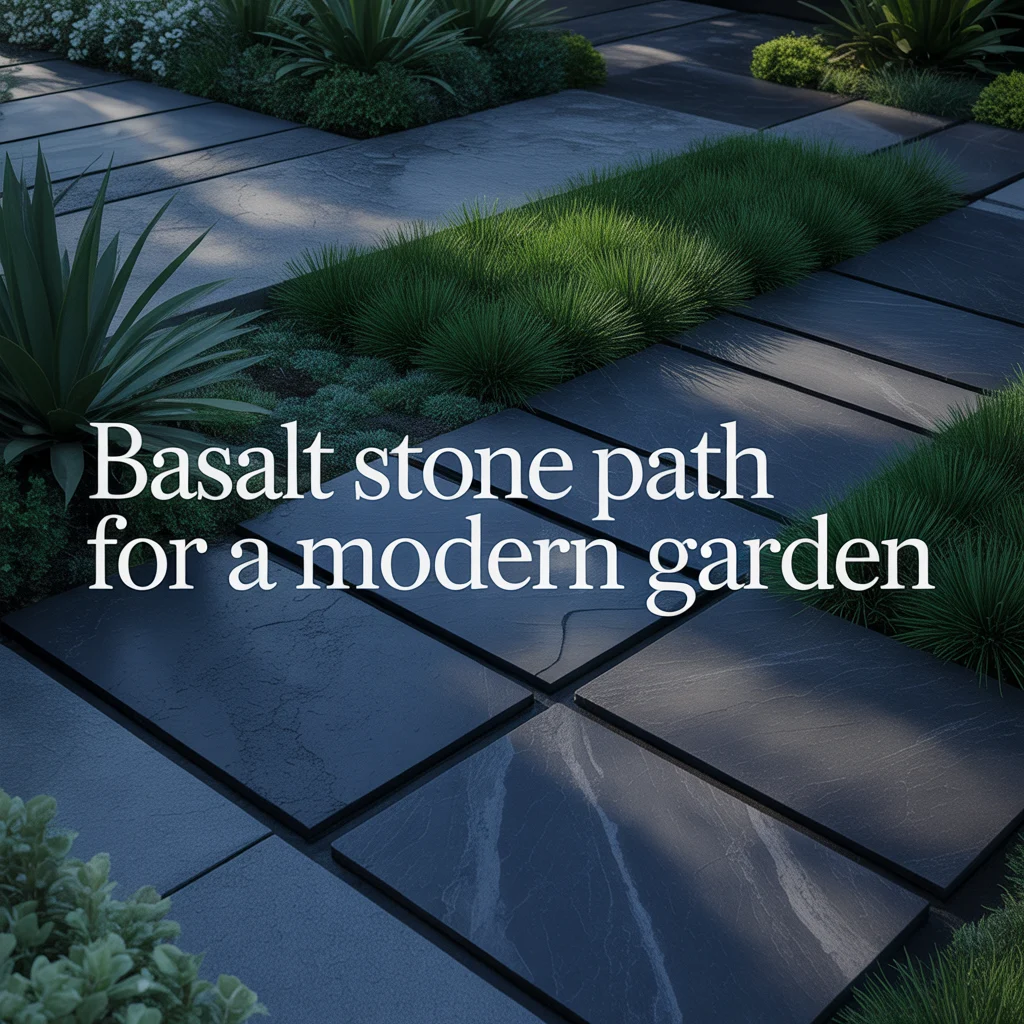
A basalt stone path for a modern garden uses the dark grey to black surface of volcanic basalt as the path material to create a stone walkway of dramatic visual intensity suited to contemporary minimalist garden designs where the deep color of the stone creates a bold contrast with pale walls, light-colored planting, and contemporary outdoor furniture. I saw a basalt stone path at a garden design exhibition where 600mm by 600mm flamed black basalt flags were set in a perfectly straight formal path between two clipped Taxus baccata hedges, and the combination of the black stone, the dark green yew, and the formal path geometry produced one of the most visually authoritative garden path designs I have observed at any professional event.
Basalt Stone Path Specifications
Flamed basalt, sawn basalt, and bush-hammered basalt are three surface specifications suited to a basalt stone pathway in a modern garden. Flamed basalt provides a rough, strongly textured surface with excellent slip resistance of R11 to R12 and suits an outdoor stone path in all weather exposure conditions without additional surface treatment. Sawn basalt provides a smooth, flat surface with a fine-grained texture and slip resistance of R9, which requires a surface sealant to bring the wet slip resistance to the R10 minimum recommended for outdoor pedestrian paving. Bush-hammered basalt provides a mechanically textured surface with slip resistance of R10 to R11 and suits a contemporary stone garden path where a refined textured finish is wanted without the rough character of a flamed surface.
Planting Alongside a Basalt Stone Path
Stipa tenuissima, Festuca glauca, and Phormium tenax are three plants suited to a border alongside a basalt stone pathway in a modern garden. Stipa tenuissima produces fine, golden-buff grass plumes at 24 inches height that create a strong visual contrast with the dark basalt stone surface on both sides of the path, and the movement of the grass in the wind introduces a natural, organic quality alongside the hard, geometric stone surface. Festuca glauca provides a steel-blue, low-growing mound at 12 inches height that coordinates with the cool grey-blue tones of a lighter basalt stone and suits a front edge border position directly alongside the path surface. Phormium tenax provides bold architectural sword leaves at 3 to 4 feet height that suit a back-of-border position alongside a formal basalt path.
Natural Stone Pathway With Moss and Fern Planting
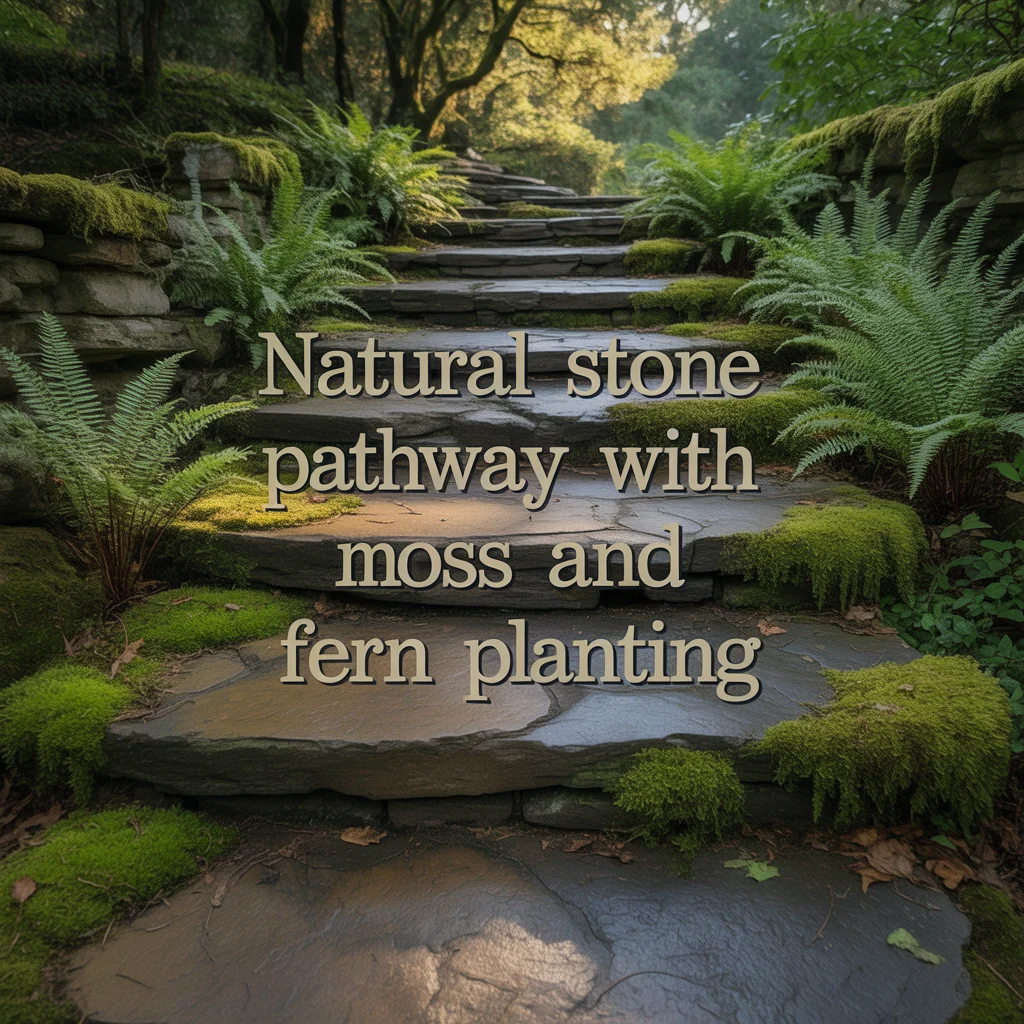
A natural stone pathway with moss and fern planting uses the natural biological colonization of stone surfaces by moss and the surrounding planting of shade-tolerant ferns to create a stone garden path with a woodland, aged character that suits shaded garden areas, woodland gardens, and naturalistic landscape settings. I created this design at a residential property where a 30-foot York stone path ran through a mature tree canopy, encouraging moss to establish in the joints and planting Dryopteris filix-mas ferns at both path edges, and the combination of the moss-covered stone joints, the arching fern fronds over the path edges, and the dappled light through the tree canopy produced a stone pathway that looked centuries old within three growing seasons.
Encouraging Moss on a Natural Stone Path
Moss establishes on a natural stone pathway by applying a moss slurry made from blended fresh moss and buttermilk at 50/50 ratio to the stone joints and the stone surface in late spring, keeping the treated areas moist for 4 to 6 weeks while spore germination occurs. The stone species best suited to moss establishment are Yorkstone, limestone, and sandstone because all three have a slightly porous surface that allows moss spore attachment more readily than the denser surfaces of granite and basalt. I apply moss slurry to shaded stone garden path joints in April and find visible green moss growth within 3 weeks on the most shaded sections and within 6 weeks on the slightly brighter positions.
Fern Species for a Woodland Stone Path Border
Dryopteris filix-mas, Polystichum setiferum, and Athyrium filix-femina are three fern species suited to the border of a natural stone pathway in a woodland garden. Dryopteris filix-mas, the male fern, produces arching fronds of 3 to 4 feet in dry to moist shade and tolerates the competitive root conditions under mature tree canopies better than most ornamental ferns, making it the most reliable species for a shaded stone garden path border. Polystichum setiferum is semi-evergreen and provides winter structure at the stone path edge after deciduous species die back. Athyrium filix-femina produces the most delicate, finely divided fronds of the three species and suits a moist, sheltered stone path position.
Pebble Mosaic Stone Garden Path
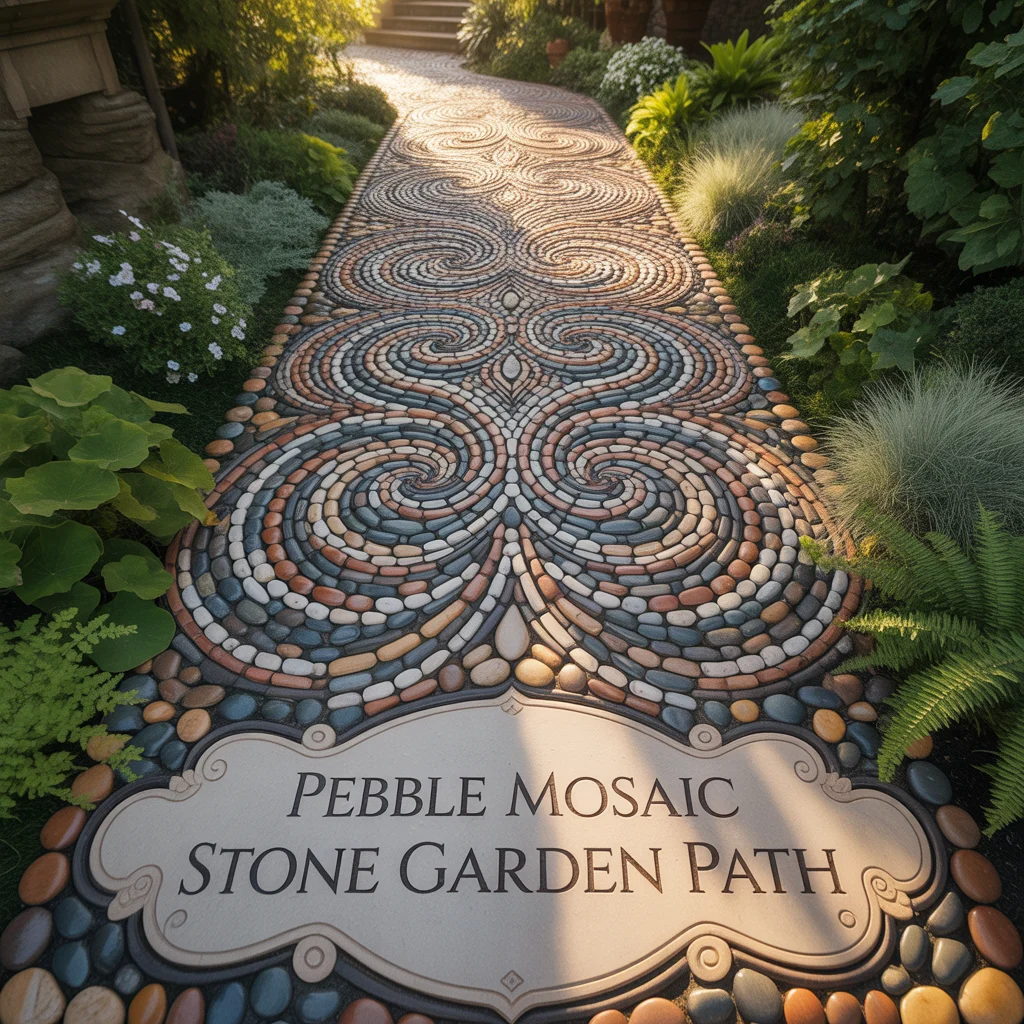
A pebble mosaic stone garden path uses hand-set river pebbles in decorative patterns to create a path surface that is itself a work of art, using the different colors, sizes, and shapes of natural river pebbles to produce geometric, floral, or abstract patterns across the full path surface. I studied pebble mosaic path techniques at a specialist garden design course and subsequently installed a 15-foot pebble mosaic path using black basalt pebbles, white quartz pebbles, and terracotta sandstone pebbles in a running wave pattern, and the craftsmanship of the finished surface attracted more comments from visitors than any other single feature in the garden that summer.
Pebble Types for a Mosaic Stone Garden Path
Black basalt pebbles, white quartz pebbles, and terracotta sandstone pebbles are three pebble types used in a mosaic stone garden path. Black basalt pebbles at 20 to 40mm length provide the highest contrast color and produce the sharpest visual definition in a mosaic pattern, suiting a design where bold color contrast between adjacent pattern elements is the intention. White quartz pebbles reflect the maximum available light and provide the brightest pebble mosaic surface element, suiting a pattern where light reflection is needed to improve visibility in a shaded stone path setting. Terracotta sandstone pebbles provide a warm intermediate color between the black and white extremes and suit a Mediterranean or cottage garden pebble mosaic path design.
Laying Technique for a Pebble Mosaic Stone Path
A pebble mosaic stone garden path is laid by setting individual pebbles vertically into a 40mm deep mortar bed at two-thirds the pebble length, with the flat face of each pebble exposed at the surface. The mortar bed is prepared at 40mm depth over a 100mm compacted hardcore sub-base and 30mm sharp sand layer, using a 3:1 sharp sand and cement mix at a stiff consistency that supports the vertical pebble without any slumping. I work in sections of 6 square inches at a time, completing each section before the mortar sets, and use a straightedge board pressed over the completed surface to ensure all pebble tops are level before the mortar cures.
Cobblestone Natural Stone Walkway
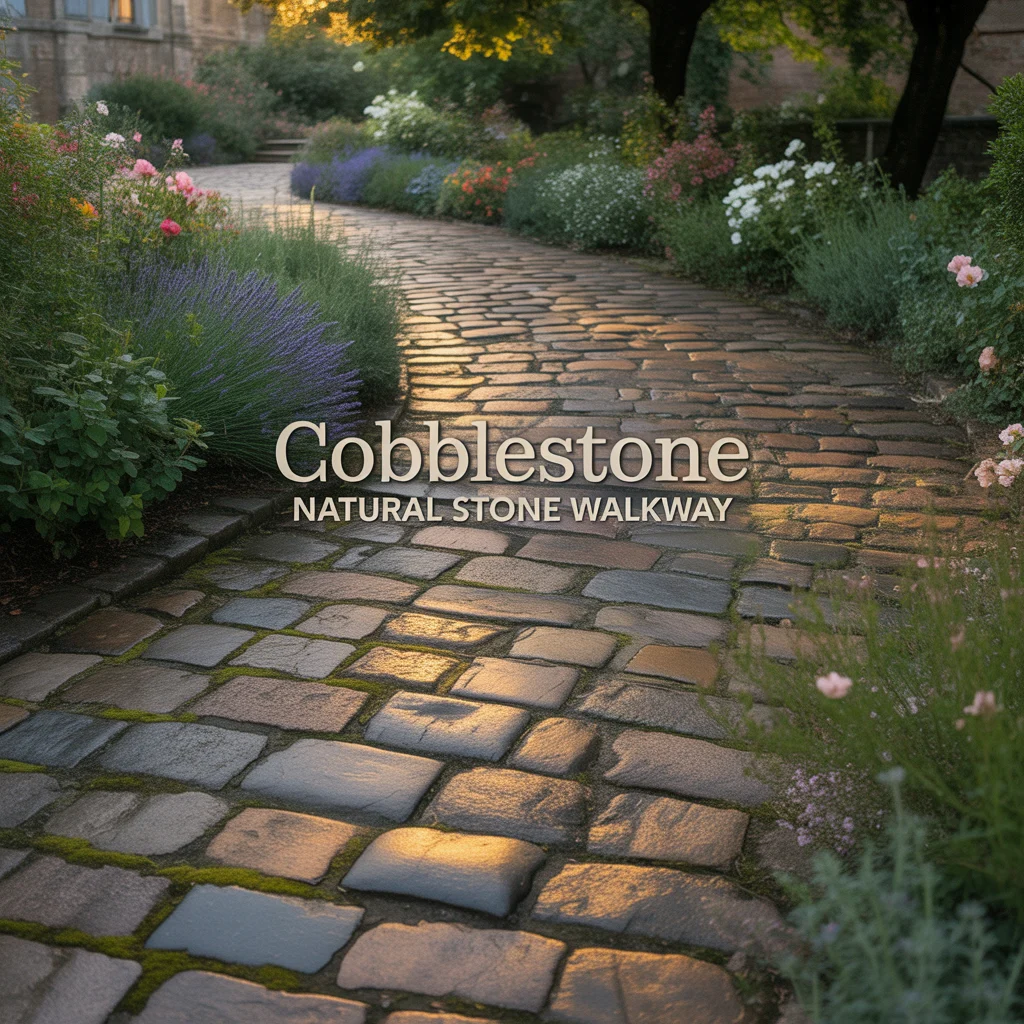
A cobblestone natural stone walkway uses naturally rounded or hand-cut rectangular granite or basalt setts laid in a fan or herringbone pattern to create a traditional stone garden path with a period character suited to Victorian, Georgian, and heritage property gardens. I sourced 200 reclaimed Belgian granite setts from a local reclamation yard at $0.90 each for a cobblestone path project at a Victorian terrace property, laying them in a fan pattern in 4:1 sand-to-cement mortar, and the finished cobblestone stone path produced an entrance that suited the period architecture of the property with a convincing historical character that no modern manufactured paving unit could replicate.
Cobblestone Sett Sizes for a Stone Garden Path
100mm by 100mm setts, 100mm by 200mm setts, and 150mm by 150mm setts are three cobblestone sizes suited to a natural stone walkway. The 100mm by 100mm square sett provides the most precise fan pattern geometry on a curved stone path and costs $0.60 to $1.20 per sett in new granite or $0.40 to $0.90 per sett reclaimed. The 100mm by 200mm rectangular sett produces a traditional herringbone or stretcher bond pattern suited to a formal straight stone path and costs $0.80 to $1.50 per sett new. The 150mm by 150mm square sett produces a bolder, more visible individual unit that suits a wider stone garden path where a larger sett scale is proportionally appropriate for the path width.
Cobblestone Pattern Options for a Stone Walkway
Fan pattern, herringbone, and radial fan are three cobblestone laying patterns suited to a natural stone walkway. A fan pattern uses curved arcing rows of setts that radiate outward from a central axis point, producing a flowing, decorative stone path surface that suits a curved stone pathway or a circular stone feature within the garden design. A herringbone pattern uses setts laid at 45 or 90 degrees in alternating rows, producing the same visual width-widening effect as a herringbone brick path and suiting a straight formal stone garden path. A radial fan uses concentric curved rows centered on the path axis, producing the most formally symmetrical cobblestone pattern for a stone walkway to a front door or formal garden entrance.
Stepping Stone Path With Planted Gaps
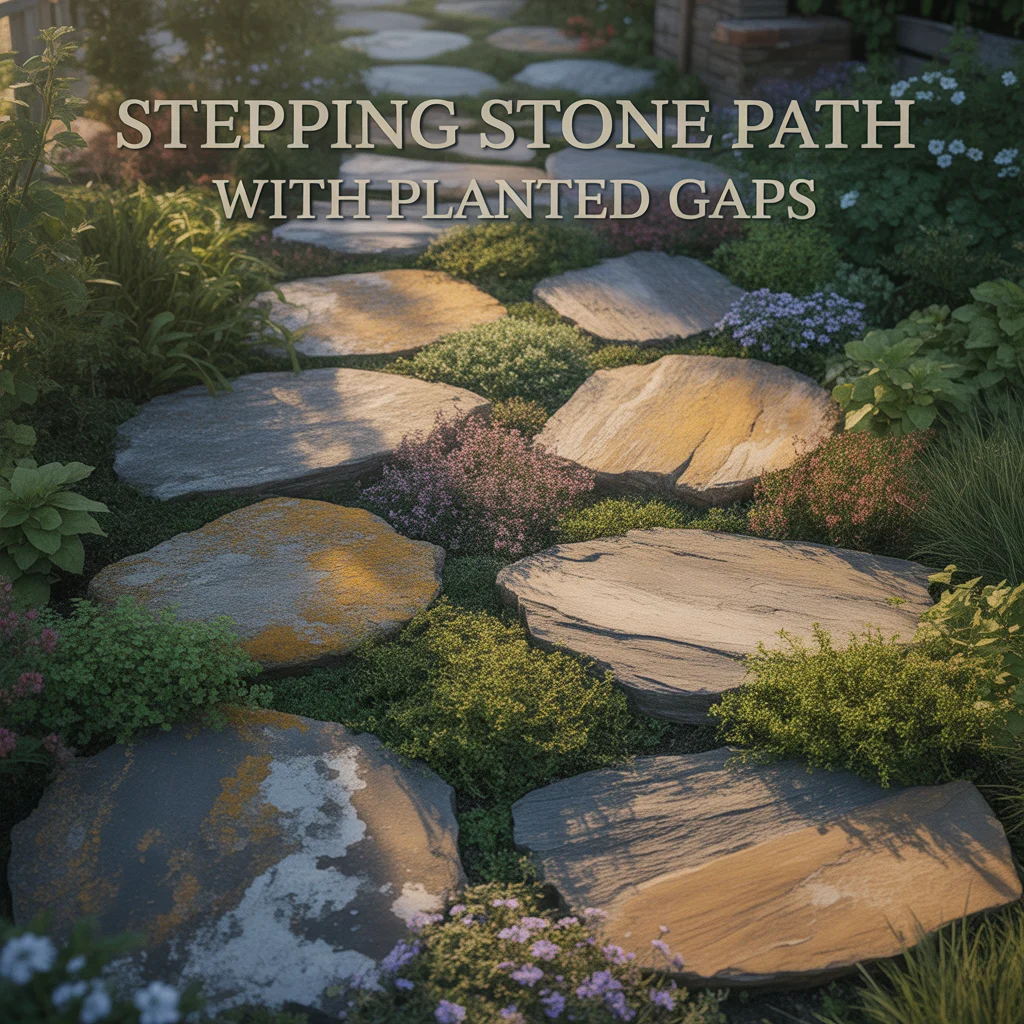
A stepping stone path with planted gaps is one of the most widely photographed types of stone pathway in a garden because the combination of the flat stone surface and the living plant material in the surrounding gaps produces a path that looks simultaneously structured and natural. I have planted Thymus serpyllum, Erigeron karvinskianus, and Acaena inermis in the gaps of stepping stone paths on multiple projects, and the planted gap design consistently produces more positive reactions from garden visitors than an equivalent closely jointed path of the same stone species because the living plant material in the gaps gives the stone path a quality that changes with the seasons.
Stone Species for a Planted Gap Stepping Stone Path
Yorkstone, sandstone, and slate are three stone species suited to a planted gap stepping stone path. Yorkstone provides the warmest, most naturally aged surface for a planted gap stone path and suits a cottage or period garden where the buff-grey color of the stone coordinates with the green and flowering ground cover plants in the gaps. Sandstone in honey or buff tones provides a similar warm tone at a slightly lower cost per square foot and suits a country or informal garden planted gap stepping stone path. Slate in riven blue-grey provides the strongest color contrast with green gap planting and suits a contemporary or woodland stone garden path where the deep grey stone creates a dramatic backdrop to the living plant material in the surrounding gaps.
Gap Planting for a Stone Stepping Stone Path
Thymus serpyllum, Erigeron karvinskianus, and Soleirolia soleirolii are three gap planting species suited to a stone stepping stone path. Thymus serpyllum stays below 2 inches, tolerates light foot traffic, produces pink flowers from June to August, and releases a herbal fragrance when stepped on, providing the most complete sensory gap planting for a stone garden path. Erigeron karvinskianus produces white and pink daisy flowers from May to November and self-seeds freely throughout the stone gap network after the first season. Soleirolia soleirolii, baby’s tears, produces a fine-textured bright green mat suited to a shaded stone path position in a moist, sheltered garden.
Natural Stone Pathway With a Water Feature
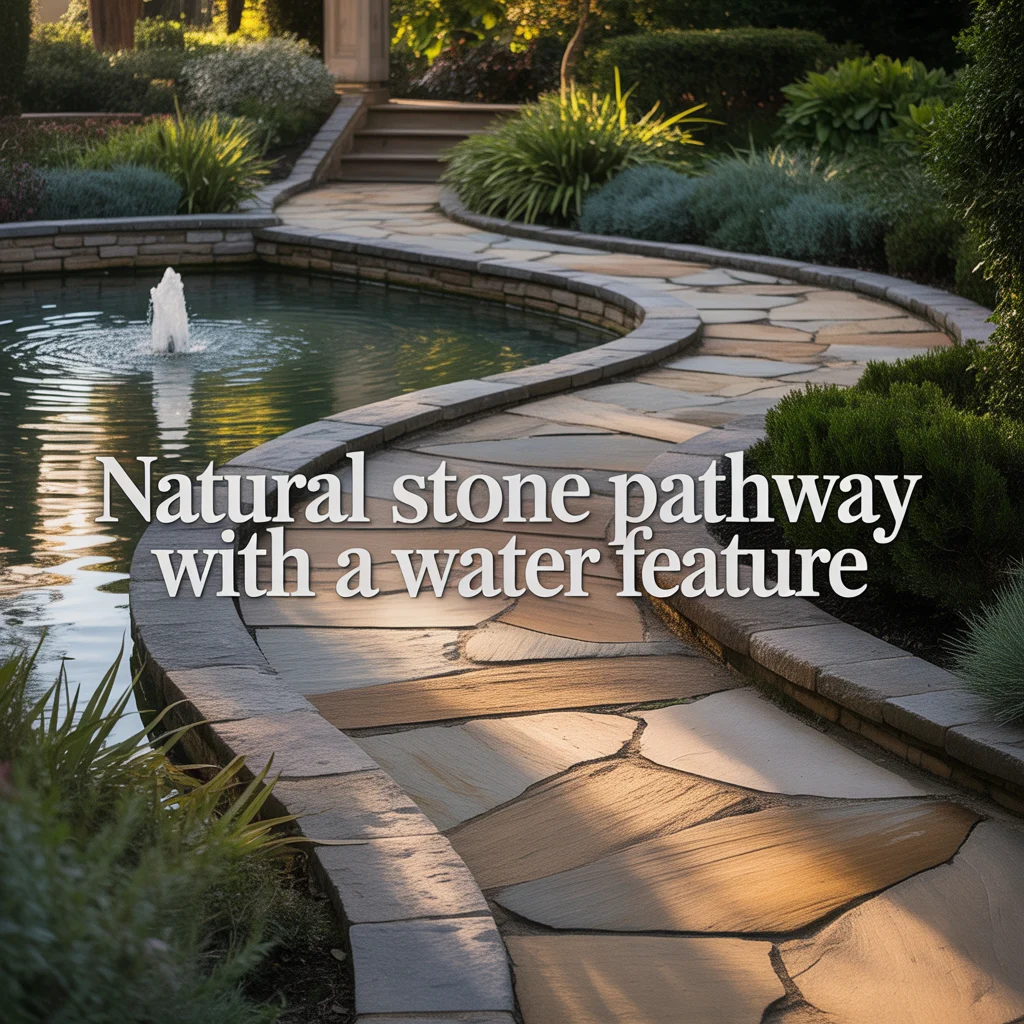
A natural stone pathway alongside a water feature combines the visual quality of natural stone with the sound and movement of water to create a garden path of complete sensory appeal that engages sight, sound, and the physical sensation of moving through a space where both stone and water are present. I designed a natural stone walkway alongside a formal rill at a walled garden project, using Caithness slate flags as the path surface with a 6-inch copper rill running parallel to the path on one side, and the combination of the dark slate surface, the moving water in the copper channel, and the planting on the path’s outer border produced a stone garden path design that the homeowner described as the most complete outdoor experience in the garden.
Stone Surfaces for a Path Alongside a Water Feature
Limestone, slate, and granite are three stone surfaces suited to a garden path alongside a water feature. Limestone in a riven finish provides the warmest surface color alongside a formal water feature and suits a period or Mediterranean garden stone path where the pale limestone coordinates with the stone or rendered material of the surrounding water feature structure. Slate in a riven or sawn finish provides a cool, dark surface that creates a strong visual contrast between the path material and the reflective water surface alongside it, suiting a contemporary natural stone pathway alongside a formal pond or rill. Granite in a flamed finish provides the most slip-resistant surface for a path where water spray from an adjacent fountain or cascade may wet the stone walkway surface.
Water Features Suited to a Stone Garden Path
A narrow rill, a formal basin fountain, and a recirculating stream are three water features suited to installation alongside a natural stone pathway. A narrow rill of 6 to 8 inches width running parallel to the stone path at a distance of 6 to 12 inches produces a continuous gentle water sound alongside the full path length and suits a formal garden design where the precision of the rill channel coordinates with the geometry of the stone path. A formal basin fountain placed at the stone path terminus produces a visual focal point and a concentrated water sound at the path destination point. A recirculating natural-looking stream creates the most informal water accompaniment to a stepping stone path in a garden. Design options and installation details for this type of combined feature are covered in these garden paths with a fountain as a stone path focal point.
Formal Stone Garden Path With Clipped Hedging
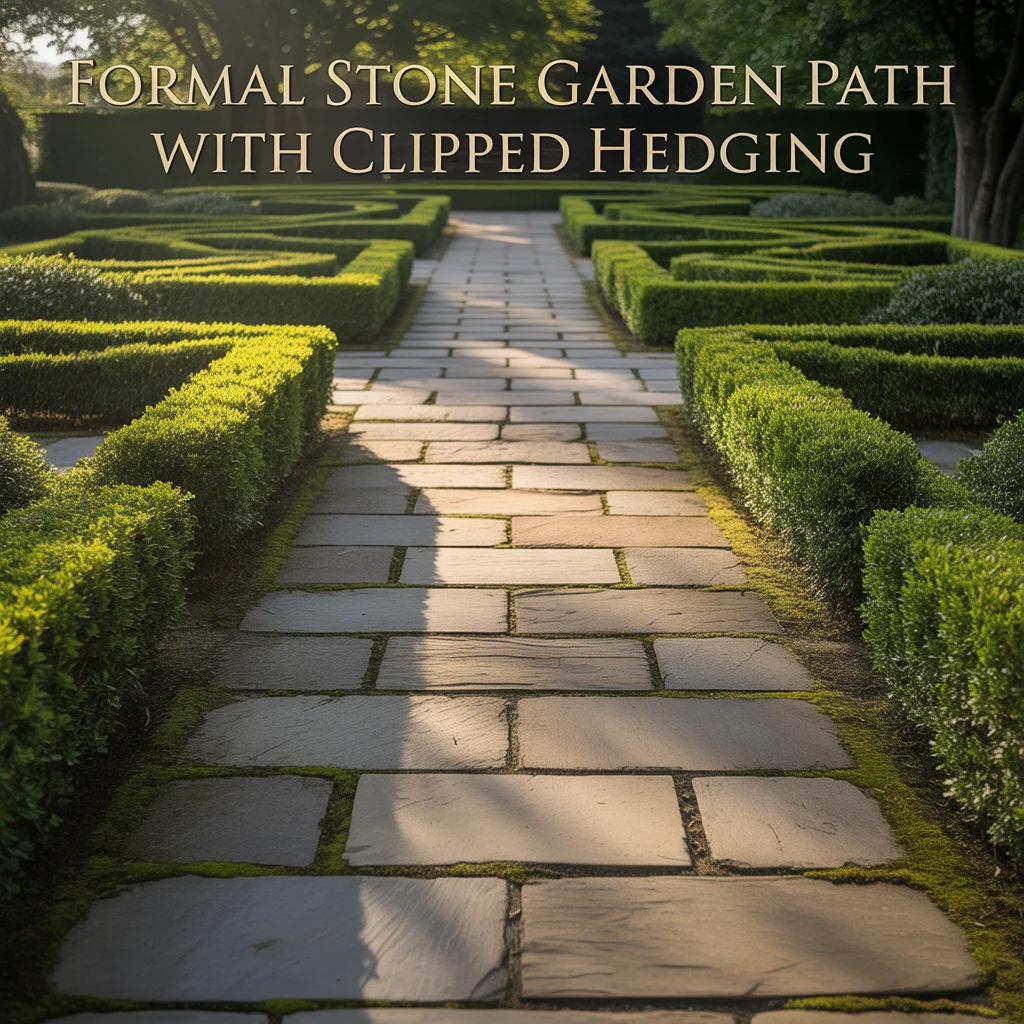
A formal stone garden path with clipped hedging uses a straight, symmetrical stone path with low clipped evergreen hedges on both sides to create a green corridor that frames the stone pathway and draws the eye along the full path length toward the garden focal point at the terminus. I measured the hedge-to-path width ratio at six formal stone garden paths I studied and found that hedge heights of 1.2 to 1.5 times the path width consistently produced the most effective enclosed corridor effect without making the path feel oppressive or tunnel-like. That ratio has become my standard specification for any formal stone garden path with clipped hedging.
Stone Types for a Formal Hedged Garden Path
Yorkstone, limestone, and granite are three stone types suited to a formal stone garden path with clipped hedging. Yorkstone in random irregular format produces the most period-appropriate formal path surface for a traditional walled garden or heritage property where the informality of the random flag pattern contrasts effectively with the formal precision of the clipped hedges on both sides. Limestone in large-format cut flags produces a more contemporary formal path surface that suits a modern formal garden where the precise stone format coordinates with the architectural character of the space. Granite in sawn or bush-hammered finish provides the most permanent and maintenance-free formal stone path surface for a high-traffic formal garden path.
Hedging Species for a Formal Stone Garden Path
Buxus sempervirens, Taxus baccata, and Ilex crenata are three hedging species suited to a formal stone garden path. Buxus sempervirens produces the finest-textured, most precisely clippable hedge surface of any species and suits a formal stone path where the accuracy of the clipped hedge edge reinforces the formal quality of the stone surface below it. Taxus baccata produces a denser, darker hedge that suits a formal stone path where stronger visual enclosure and a more dramatically dark green corridor is the design intention. Ilex crenata provides a box blight-resistant alternative with a similar fine-textured surface suited to a formal stone garden path in gardens where Cylindrocladium buxicola is established.
Stone Garden Path With LED Lighting
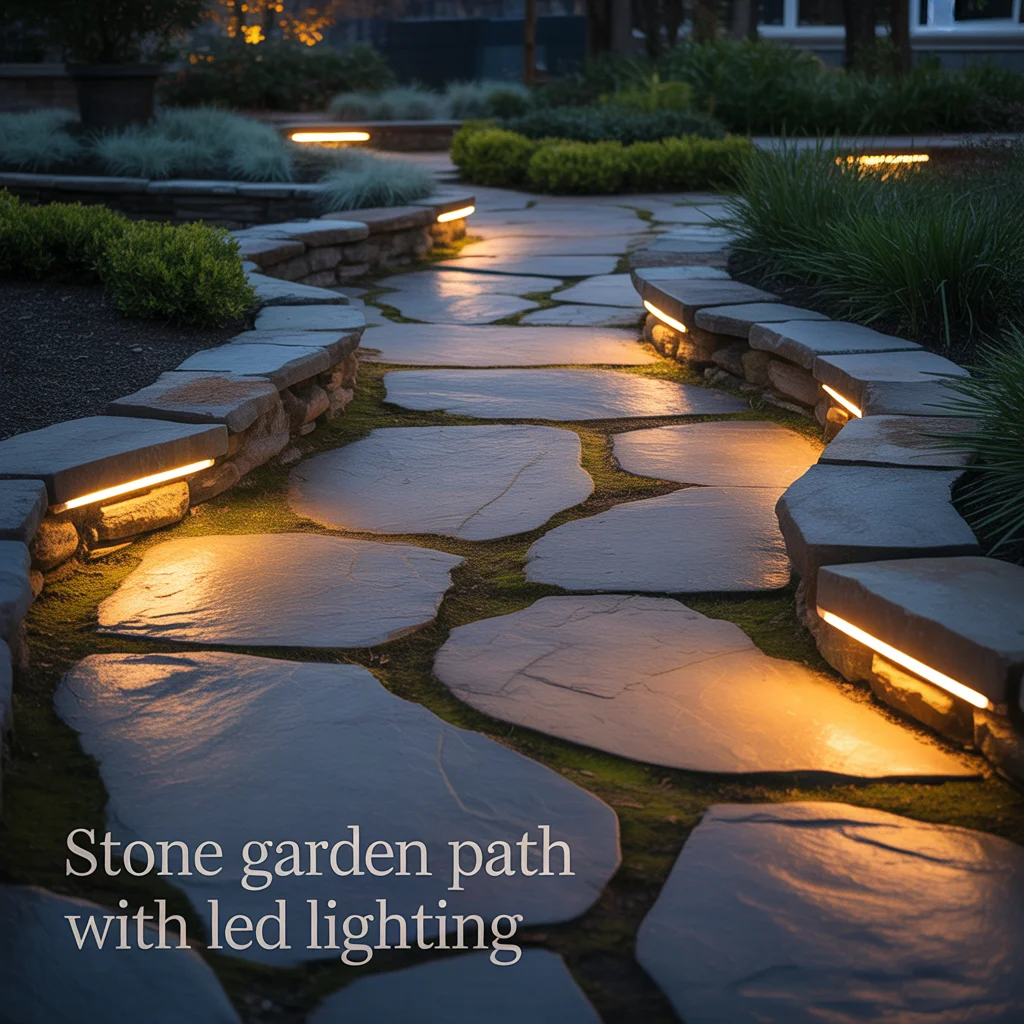
A stone garden path with LED lighting uses integrated or surface-mounted LED fittings to illuminate the natural stone surface after dark, creating a garden path that is as visually impressive at night as during the day and that allows the texture, color, and surface quality of the stone material to be appreciated in the evening hours. I installed a low-voltage LED lighting system on a random sandstone stone garden path at a residential project, using four ground-recessed uplighters set into the sandstone field at 5-foot intervals and two LED bollard lights at the path entrance and terminus, and the after-dark appearance of the warm amber light across the honey sandstone surface was described by the homeowner as more beautiful than the daytime path.
Ground Recessed Lighting for a Stone Garden Path
Ground-recessed LED uplighters in a stone garden path are installed by core drilling individual stone pieces to the fitting diameter before laying, dropping the IP67-rated LED body into the drilled recess, and connecting to a 12-volt cable run beneath the path in a protective conduit. I core drill all stones requiring recessed fitting installation before any mortar bedding is prepared, working with the stone face-down on a padded surface to prevent chipping the visible face during drilling. The fitting sits flush with the stone surface when installed correctly, producing a path surface with no visible hardware above the stone level and a light source that appears to emerge from within the stone itself.
Warm vs Cool LED Color Temperature for a Stone Path
Warm white at 2700K and cool white at 4000K are two LED color temperatures suited to a stone garden path lighting installation. Warm white at 2700K produces an amber-toned light that complements all warm-colored stone species including sandstone, limestone, and Yorkstone, giving the stone surface a rich, inviting appearance after dark that coordinates with the natural warm tones of the stone color. Cool white at 4000K produces a clean, crisp light that suits darker stone species including slate, basalt, and grey granite, where the cooler light temperature matches the cool undertones of the stone color and produces a more contemporary lighting character on the stone garden path.
Stone Path With Natural Planting on Both Sides
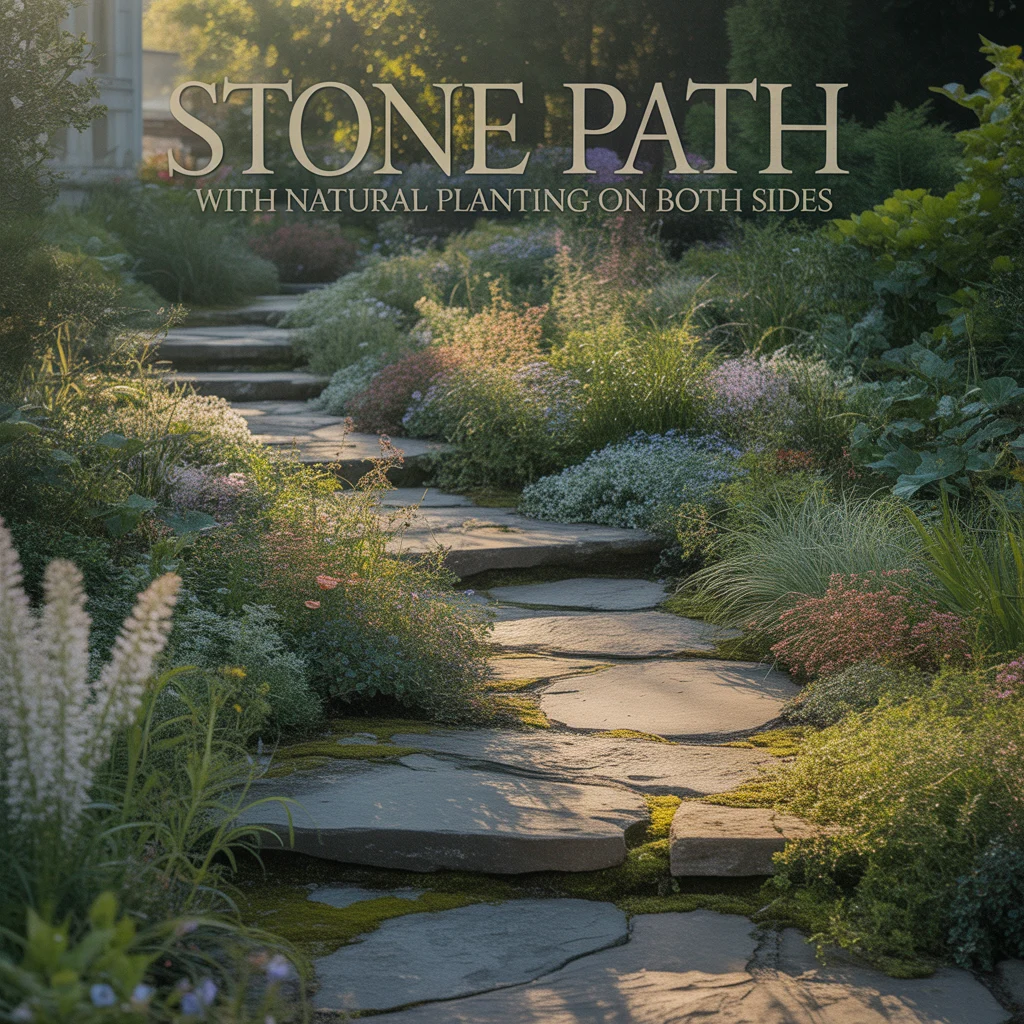
A stone path with natural planting on both sides uses a deliberately informal planting scheme of perennials, grasses, and self-seeding annuals along both path edges to create a stone walkway that appears to have been created within an established garden rather than imposed upon it. I planted a stone path at a residential project with Geranium rozanne, Salvia nemorosa Caradonna, and Pennisetum alopecuroides on both sides, and the combination of the blue-violet flowers at path edge level and the arching grass plumes behind them produced a stone garden path that looked fully established within one growing season, which is the fastest natural planting-to-established-appearance result I have achieved on any stone path project.
Perennial Plants for a Natural Stone Path Border
Geranium rozanne, Salvia nemorosa, and Echinacea purpurea are three perennials suited to a natural border alongside a stone garden path. Geranium rozanne produces blue-violet flowers continuously from June to October at 12 inches height and 24 inches spread, providing the longest flowering season of any hardy geranium directly alongside a stone path edge. Salvia nemorosa Caradonna produces upright dark-stemmed violet spikes from May to August at 24 inches height, providing a strong vertical accent at both sides of the stone walkway. Echinacea purpurea produces pink cone flowers from July to September at 24 to 30 inches height, transitioning the stone path border display from early summer into early autumn.
Grasses for a Natural Stone Path Border
Pennisetum alopecuroides, Deschampsia cespitosa, and Festuca glauca are three grasses suited to a natural border alongside a stone pathway in a garden. Pennisetum alopecuroides produces arching green clumps at 24 inches height with purple-brown bottlebrush flowers from August to October, providing a naturalistic, grass-textured border that suits both contemporary and informal stone garden path designs. Deschampsia cespitosa produces tall, airy flower panicles of 3 to 4 feet in June and July that add a cloud-like floating quality above the stone path border. Festuca glauca provides a steel-blue low mound of 12 inches height that suits a front edge position directly alongside the stone surface.
Stone Garden Path With Reclaimed Materials
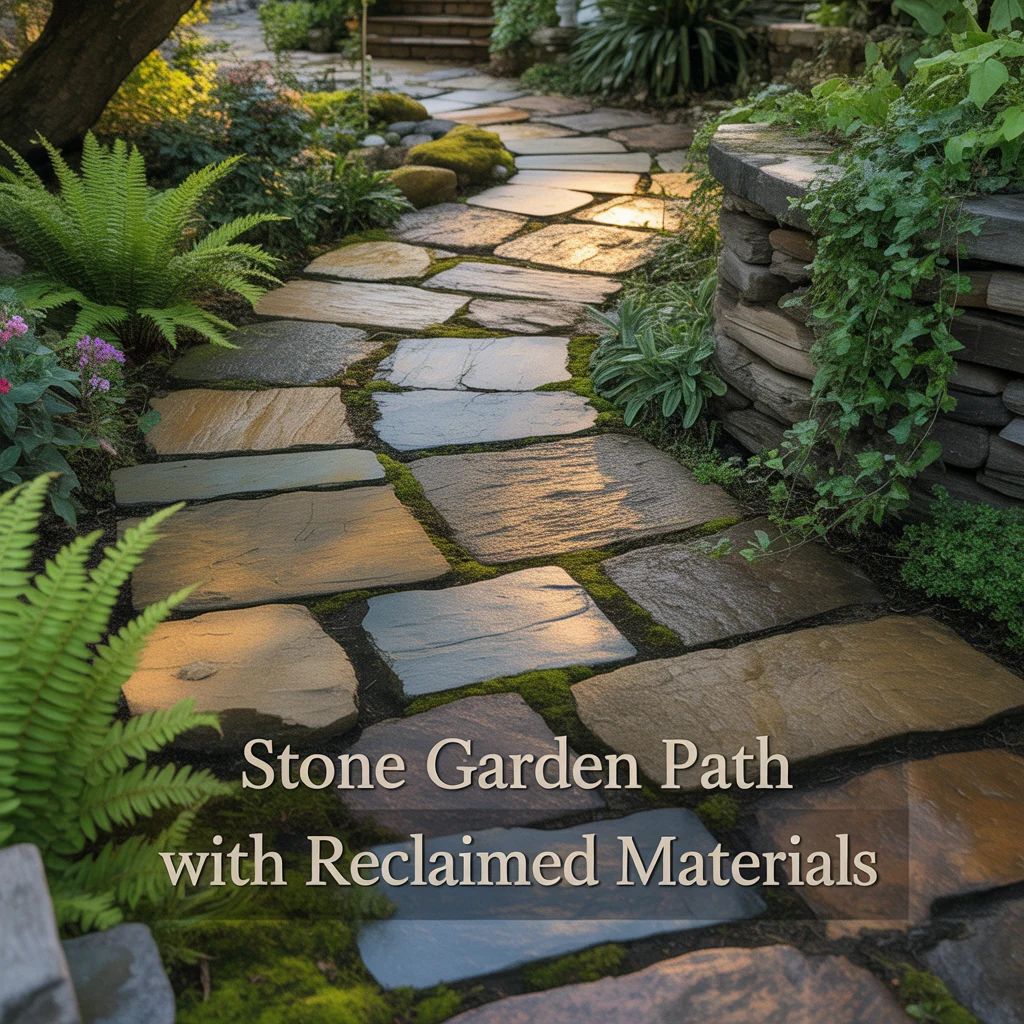
A stone garden path with reclaimed materials uses salvaged stone pieces from demolished buildings, old garden features, or reclamation yards to create a stone walkway with an aged, character-rich appearance that new quarried stone cannot replicate immediately. I have sourced reclaimed Yorkstone, limestone, and granite for multiple stone garden path projects, and the surface weathering, lichen patches, and worn edges of reclaimed stone consistently produce the most visually established natural stone pathway in a garden from the day of installation, because the decades of weathering already present on the stone surface immediately communicate the quality and age that new stone requires years to develop.
Types of Reclaimed Stone for a Garden Path
Reclaimed Yorkstone, reclaimed limestone, and reclaimed granite setts are three reclaimed stone types suited to a garden path. Reclaimed Yorkstone is the most widely sought reclaimed stone for a garden path because its buff-grey surface and natural riven texture ages more attractively than any other British stone species, and genuine old Yorkstone with 50 to 100 years of surface weathering provides a path character that commands a premium over new quarried stone at $15 to $30 per square foot reclaimed. Reclaimed limestone provides a softer, more porous surface that develops an attractive cream-grey patina and suits a cottage or formal garden stone path. Reclaimed granite setts are the most durable and structurally reliable reclaimed stone for a high-traffic stone garden path.
Sourcing and Preparing Reclaimed Stone
Reclamation yards, online platforms, and demolition contractors are three sources for reclaimed stone suited to a natural stone pathway project. Reclamation yards provide the most reliable supply of graded, thickness-sorted reclaimed stone at consistent pricing, stocking common species at $10 to $30 per square foot depending on species and condition. Online platforms including eBay and local selling sites list reclaimed stone from private sources at $3 to $15 per square foot, with condition and thickness consistency varying more than reclamation yard stock. Preparation involves cleaning mortar from all stone faces using a bolster chisel and wire brush, inspecting each piece for structural cracks, and sorting by thickness before beginning the path installation.
Stone Pathway Drawing Into a Designed Garden Plan
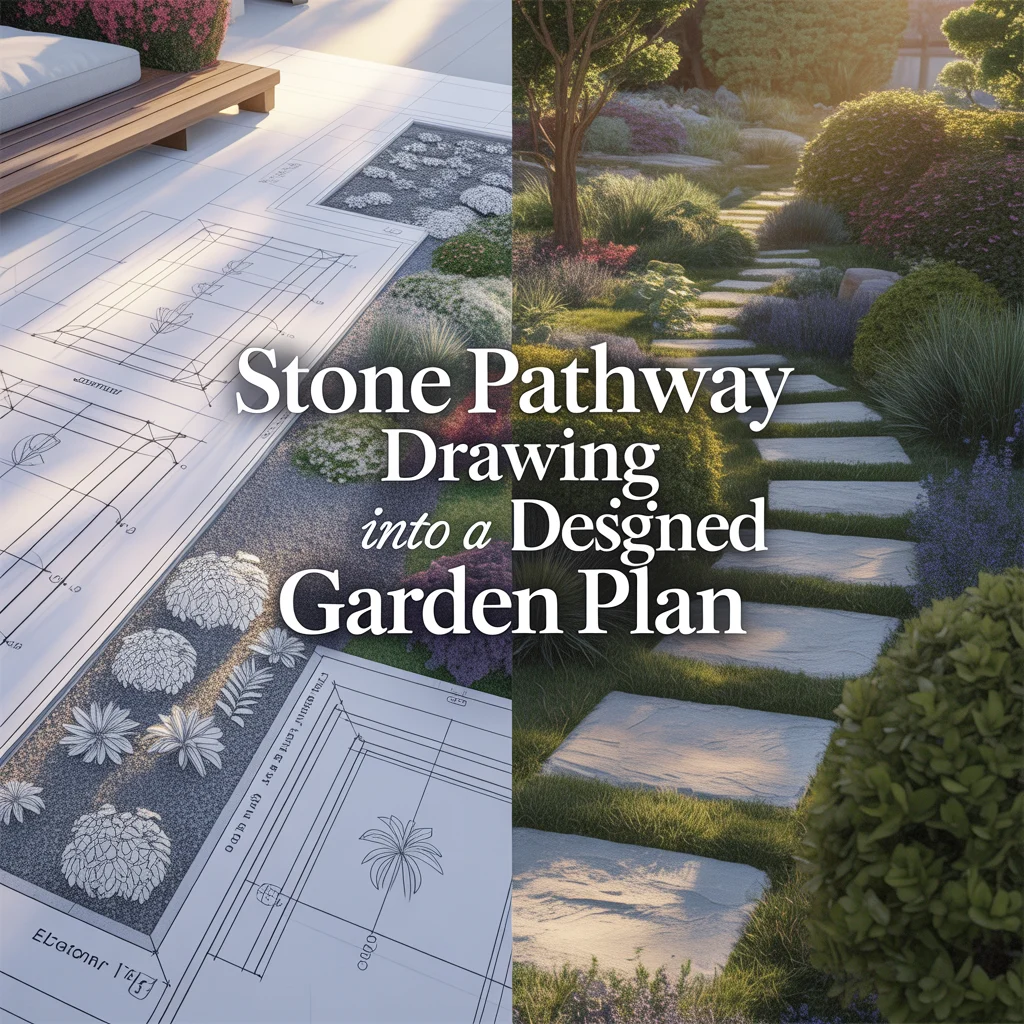
A stone pathway drawing into a designed garden plan uses scaled hand or digital drawings to plan the exact stone layout, joint pattern, species, and border planting of a stone garden path before any installation begins, ensuring that the finished path meets the intended visual and functional design goals. I draw every stone garden path to scale before any groundwork begins, using a 1:20 scale on graph paper for paths up to 6 meters and a 1:50 scale for longer paths, and find that the drawing process reveals proportion problems, pattern irregularities, and planting opportunities that would not be identified until after installation without the planning stage.
Drawing a Stone Garden Path to Scale
A stone garden path drawing uses a 1:20 scale on graph paper where 1cm on the drawing equals 20cm on the ground, allowing individual stones to be represented at a useful size for pattern planning. I draw the path outline first, then add the paving pattern grid, then mark the border planting positions, and finally calculate the stone area and quantities from the drawing dimensions before ordering any material. The drawing stage typically takes 1 to 2 hours for a standard domestic stone path and prevents the most common material ordering errors, including under-ordering stone by failing to account for cutting waste and over-ordering border plants by using approximate spacing rather than calculated plant counts.
Digital Tools for Planning a Stone Garden Path
SketchUp Free, Garden Planner, and AutoCAD LT are three digital tools suited to planning a stone garden path design. SketchUp Free allows a stone garden path to be modeled in three dimensions from a browser without any software installation, showing how the path will appear from the garden entrance and from above at no cost. Garden Planner provides a simple drag-and-drop interface for planning a stone path layout in a full garden context, including border planting positions, at a subscription cost of $25 to $35 per year. AutoCAD LT provides the most precise 2D drawing tool for a professional stone garden path plan and suits a designer or landscape architect producing client presentation drawings at a subscription cost of $420 per year.
Related
best ground cover plants between stone garden path slabs
how to edge a stone garden path with natural borders
garden paths for uneven ground using natural stone
Frequently Asked Questions
What is the best natural stone for a garden path?
Yorkstone is the best natural stone for a garden path because it produces naturally flat flags of consistent thickness, develops an increasingly attractive weathered surface over time, tolerates freeze-thaw cycles without surface delamination, and suits the widest range of garden styles from formal to completely naturalistic. Sandstone is the best choice for a warm-toned stone garden path where the honey and buff colors of the stone are a primary design element alongside cottage or country garden planting. Granite is best for a high-traffic formal stone garden path where maximum durability and the lowest possible maintenance requirement over a 40 to 50-year lifespan are the primary specification criteria.
What are the main types of stone walkways?
The main types of stone walkways are random irregular flagstone paths, stepping stone paths, cobblestone sett paths, pebble mosaic paths, and large-format cut stone paths, each suited to different garden styles and construction budgets. Random irregular flagstone paths suit cottage and informal gardens where the natural variation of the stone shapes produces an organic path character. Stepping stone paths suit lawn and planted areas where a fully paved path would look too heavy. Cobblestone sett paths suit period and formal gardens. Pebble mosaic paths suit decorative feature areas. Large-format cut stone paths suit contemporary and formal gardens where clean geometric lines are the design intention.
How do I make a natural stone pathway look more attractive?
A natural stone pathway looks more attractive with four improvements: planted gap material between the stones, a defined border treatment at both path edges, complementary planting in the adjacent borders, and lighting that illuminates the stone surface after dark. Planted gaps using Thymus serpyllum or Erigeron karvinskianus soften the hard stone surface and add seasonal flower color. A brick soldier course or steel edging border defines the path edges clearly against the surrounding garden. Complementary perennial planting in colors that coordinate with the stone tone frames the path on both sides. Low-voltage LED lighting reveals the stone texture after dark and extends the visual enjoyment of the stone path into the evening hours.
How much does a natural stone garden path cost?
A natural stone garden path costs between $15 and $45 per square foot installed, depending on the stone species, surface finish, joint treatment, and sub-base specification. Sandstone in a riven finish on a standard hardcore sub-base costs $15 to $25 per square foot installed. Yorkstone in a random irregular layout costs $20 to $35 per square foot. Granite in a sawn or flamed finish on a reinforced sub-base costs $25 to $45 per square foot. Reclaimed stone paths cost $10 to $30 per square foot depending on species and condition of the salvaged material. DIY installation reduces the total cost by 30 to 50% compared to professional installation for a straightforward flat stone path without complex cutting or drainage requirements.
What plants look best alongside a stone garden path?
Lavender, Geranium rozanne, Alchemilla mollis, and creeping thyme look best alongside a stone garden path because all four provide different height levels, seasonal flower colors, and textures that frame the stone path surface without obscuring it. Lavender at 18 to 24 inches height provides a fragrant mid-height border that suits warm-toned stone species. Geranium rozanne at 12 inches provides continuous blue-violet flowers from June to October at the path edge level. Alchemilla mollis provides a low-growing, weed-suppressing base planting at the stone surface transition. Creeping thyme planted in the path joints connects the stone surface planting with the border planting on both sides in a single continuous natural material layer.