
Backyard Pathway Ideas for a Well-Planned Outdoor Space

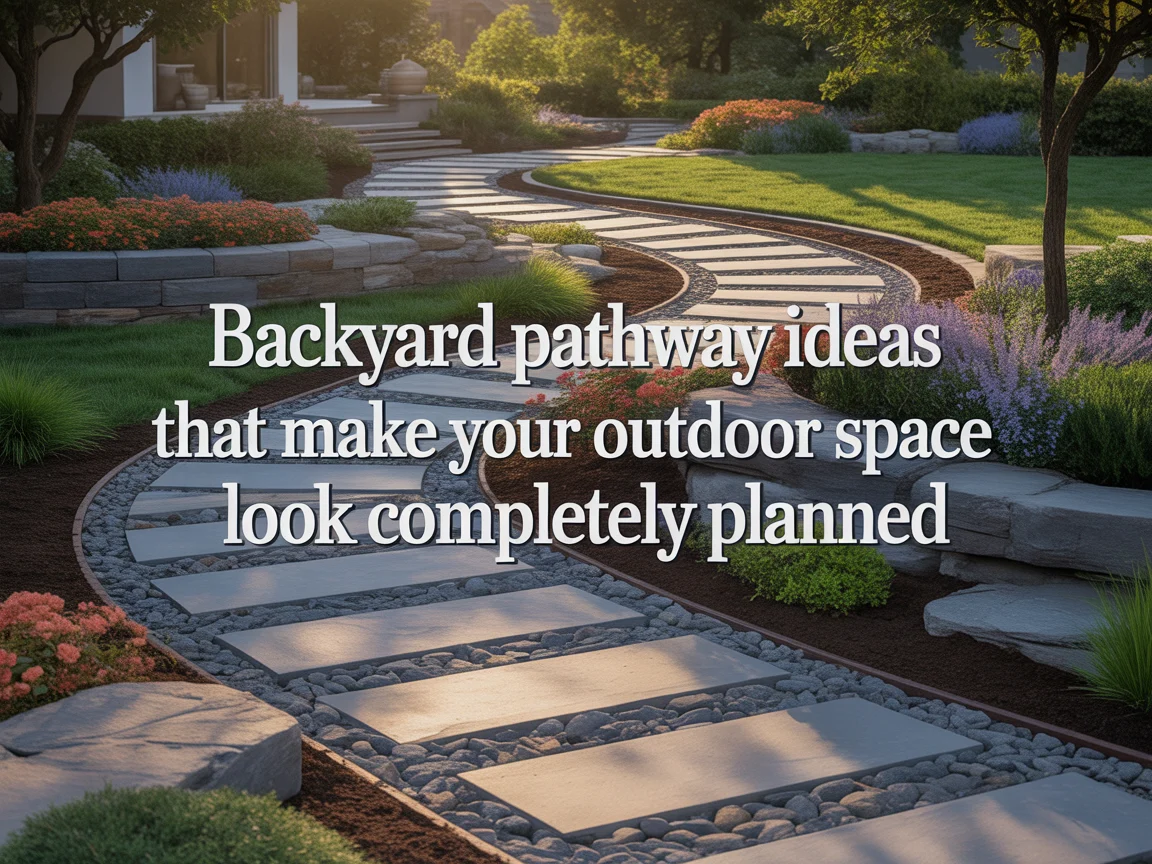
I spent two summers walking across a muddy strip of grass between my back patio and the garden shed before I finally did something about it. The worn trail through the lawn looked terrible, the boots by the back door were permanently dirty, and every time it rained the whole strip turned into a mud channel. I spent one weekend laying a simple gravel pathway with timber edging on both sides, and the backyard immediately looked like someone had actually thought about it. That one pathway changed how I used the entire space.
Backyard pathway ideas use materials including gravel, pavers, concrete, stepping stones, brick, timber, and decomposed granite to create defined walking routes between backyard zones, connecting the patio to the garden, the house to the shed, or different entertaining areas across the outdoor space. A well-placed backyard pathway solves practical problems like muddy routes and worn lawn strips while simultaneously giving the entire backyard a more organized and considered appearance.
Since that gravel pathway weekend, I have designed and installed backyard pathway ideas across many different property sizes, styles, and budgets. I have seen small backyard pathway ideas work in spaces under 20 feet across, and I have also seen large modern garden path ideas covering entire estate-sized properties with consistent design quality throughout.
In this article, I am sharing the best backyard pathway ideas across every style, budget, and material category I have either built or studied closely enough to recommend with confidence.
Gravel Backyard Pathway With Timber Edging
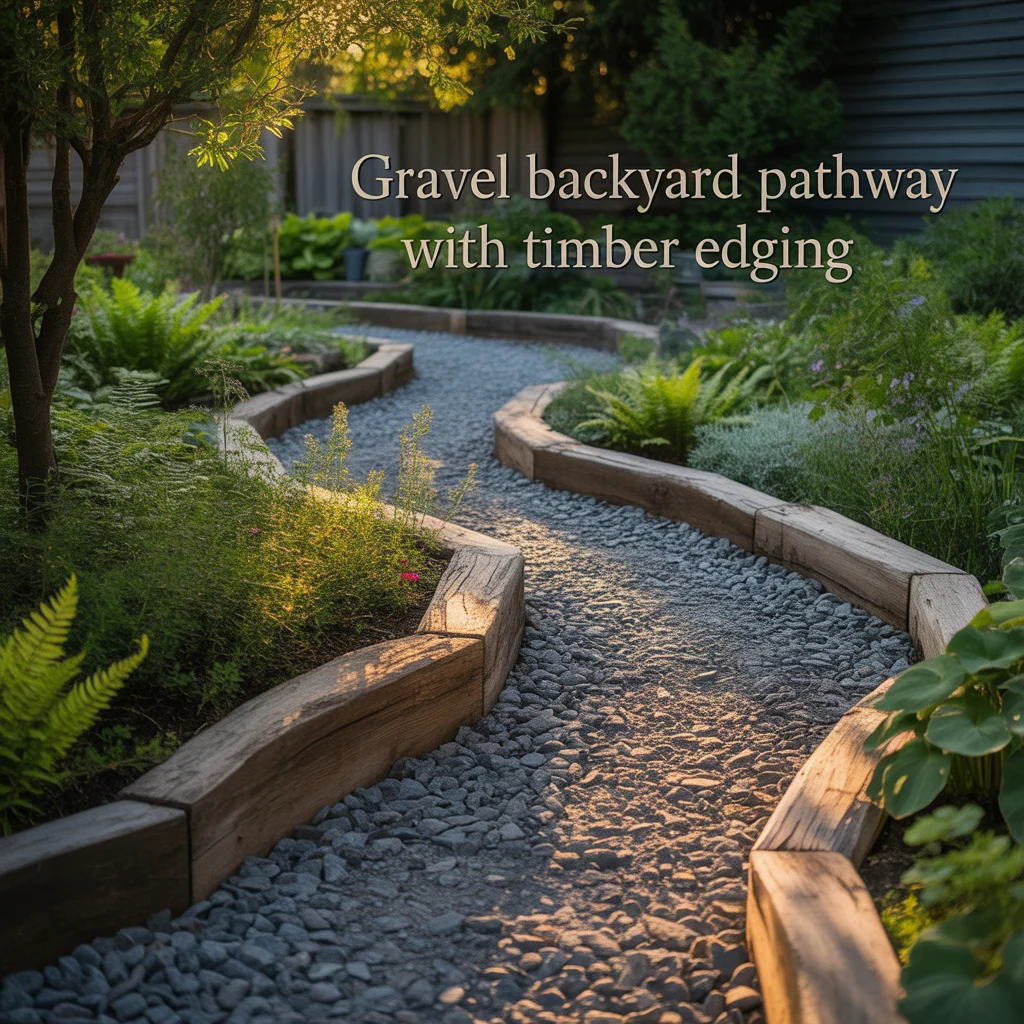
A gravel backyard pathway with timber edging is the most cost-effective and widely installed backyard pathway idea for a homeowner completing the project over a single weekend, producing a defined, all-weather walkway for a material cost of $1.50 to $3.00 per square foot. I laid this exact combination on a 25-foot path between my patio and shed, using 3-by-8-inch pressure-treated timber boards on both sides and 14mm golden gravel at 3-inch depth on a weed-suppressing membrane, and the completed pathway immediately resolved the muddy trail problem and made the backyard look organized for the first time since we moved in.
Materials Needed for a Gravel Backyard Pathway
Gravel, weed-suppressing membrane, timber boards, and timber stakes are four materials needed for a gravel backyard pathway. Gravel at 14mm to 20mm chip size costs $2 to $4 per bag covering approximately 4 square feet at 3-inch depth, with a standard 25-foot-long, 3-foot-wide pathway requiring approximately 18 to 20 bags. A heavy-duty 100-gram woven polypropylene membrane costs $0.40 to $0.60 per square foot and prevents weed growth through the gravel surface for 8 to 10 years. Pressure-treated timber boards of 3-by-8-inch section cost $3 to $5 per linear foot and provide 15 to 20 years of service in ground contact without any additional treatment.
Gravel Colors for a Backyard Pathway
Pea gravel, golden gravel, and crushed granite are three gravel colors suited to a backyard pathway. Pea gravel in natural buff tones costs $2 to $3 per square foot and produces a warm, rounded surface that suits a cottage or informal backyard garden style. Golden gravel at 14mm chip size produces a warm amber-toned surface that brightens shaded backyard areas and suits a traditional or relaxed backyard pathway style. Crushed granite in grey or tan tones compacts to a firmer surface than rounded gravel and suits a backyard pathway on a slope or in a high-traffic area where a more stable walking surface is needed.
Paver Stone Backyard Pathway Ideas
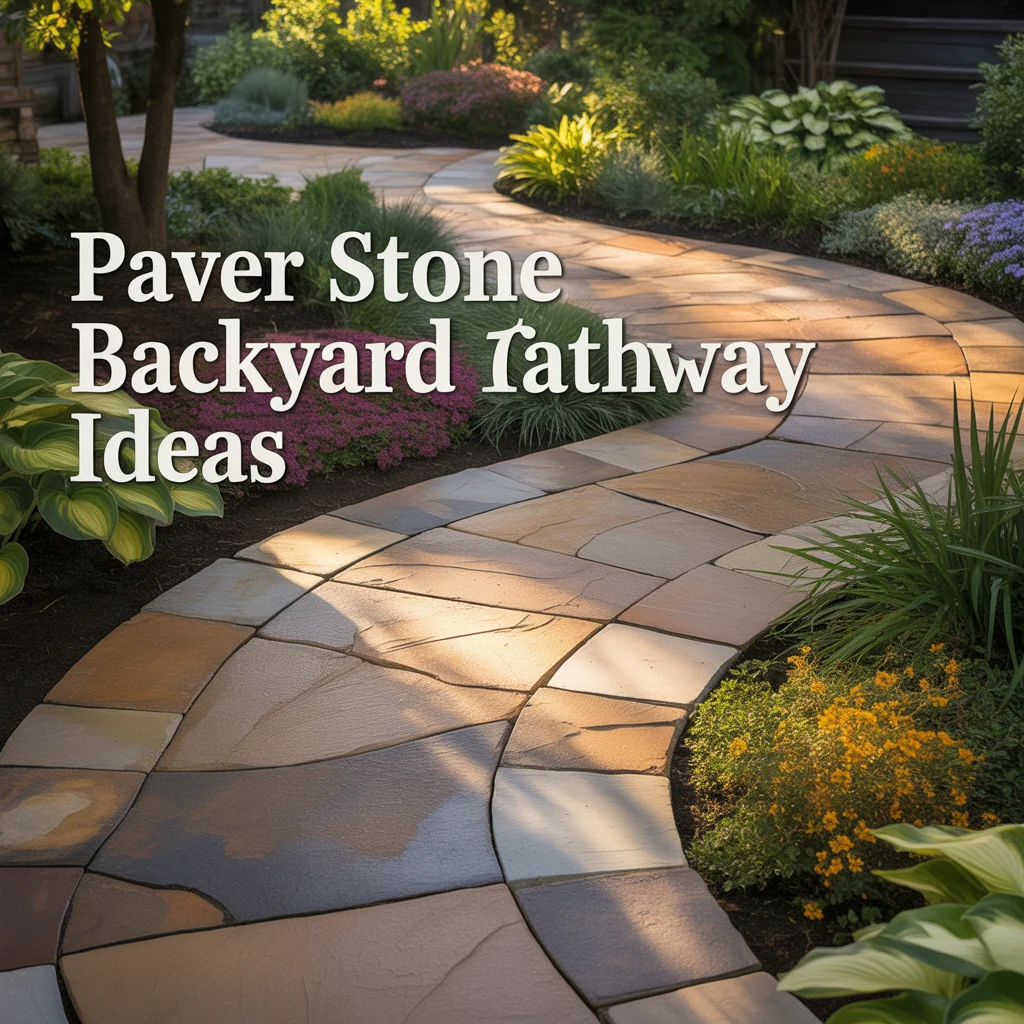
A paver stone backyard pathway uses concrete, brick, or natural stone paving units laid in a continuous surface to create the most durable and long-lasting backyard pathway idea available to a homeowner, with a properly installed paver pathway lasting 25 to 40 years without significant maintenance. I specified a concrete paver pathway for a residential backyard project connecting a rear deck to a detached garage, using 12-by-12-inch charcoal concrete pavers in a simple grid pattern, and the finished pathway provided a clean, professional-looking connection between the two backyard zones at a material cost of $4.50 per square foot.
Concrete Paver Backyard Pathway Installation
A concrete paver backyard pathway is installed on a 4-inch compacted gravel sub-base topped with a 1-inch screeded bedding sand layer, with each paver pressed firmly into the sand and checked level before the next paver is placed. Joint sand is swept into the gaps between pavers after the full pathway surface is laid, using kiln-dried polymeric sand that sets hard when wetted and prevents weed growth in the joints for 5 to 8 years. I use a rubber mallet and a straightedge board to maintain an even, level pathway surface during installation, checking the cross-fall of 1 in 60 across the pathway width at every fifth paver row to ensure drainage away from the house foundation.
Paver Patterns for a Backyard Pathway
Running bond, herringbone, and basketweave are three paver patterns suited to a backyard pathway. Running bond places each paver with its long axis running along the pathway direction and each row offset by half a paver length, producing the simplest and most widely used paver pattern for a straight backyard pathway. Herringbone places pavers at 45 degrees in alternating perpendicular rows, producing a more decorative surface that also makes the pathway appear wider than its actual measurement, which suits a small backyard pathway idea where the visual width-widening effect of the herringbone pattern improves the proportions of a narrow walking route. Basketweave uses pairs of pavers alternating horizontal and vertical in adjacent squares, suiting a formal backyard pathway style.
Stepping Stone Backyard Pathway on a Budget
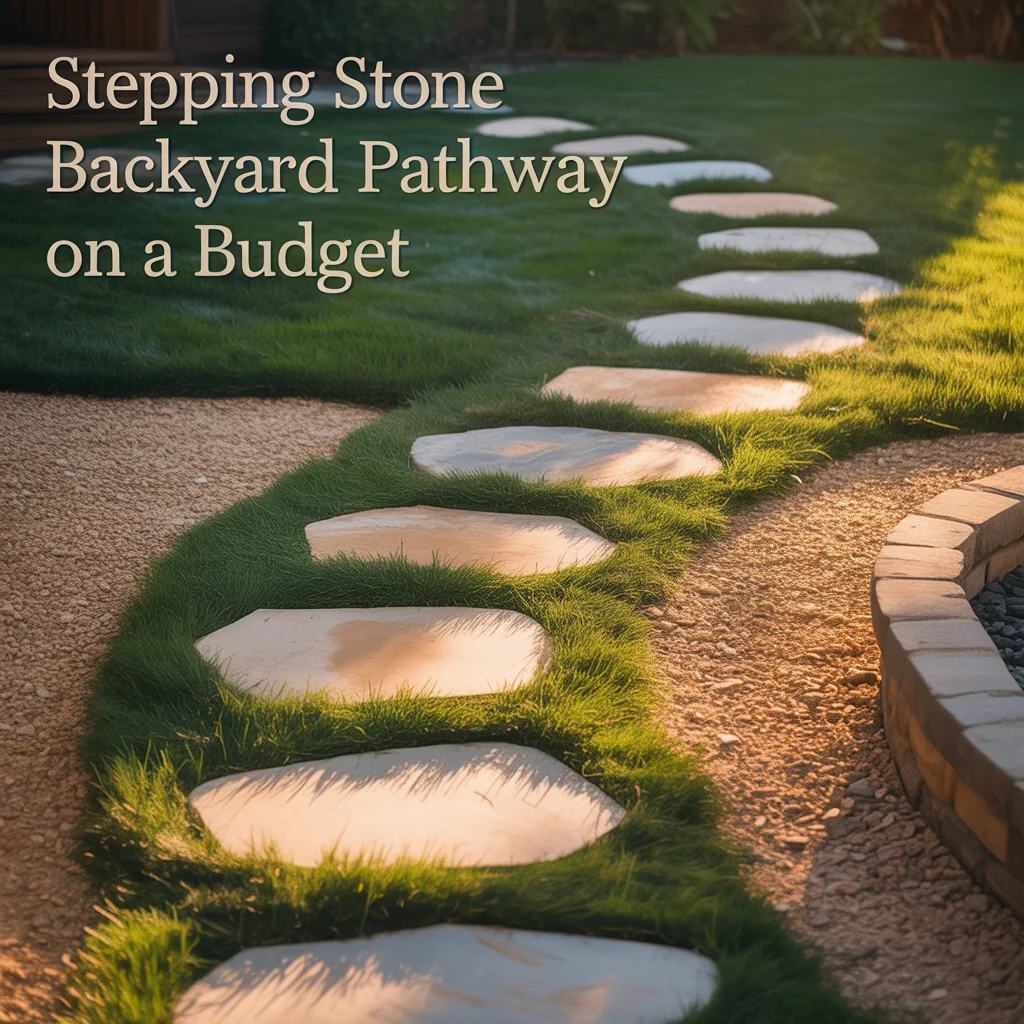
A stepping stone backyard pathway on a budget uses individual flat concrete or natural stone pieces set at stride-width intervals in a lawn, gravel, or bark surface to create a defined walking route for a material cost of $2 to $8 per stone, making it the most affordable of all backyard pathway ideas on a budget for a homeowner installing the path independently. I created a stepping stone backyard pathway in my side garden using twelve reclaimed concrete slabs sourced from a neighbor’s clearance at zero cost, setting them in the lawn at 16-inch stride intervals, and the pathway solved a worn lawn strip problem within a single afternoon of work.
Setting Stepping Stones in a Backyard Lawn
Stepping stones in a backyard lawn are set by cutting the turf to the exact stone outline, removing the cut section, excavating 20mm below the stone thickness, spreading a 20mm sharp sand bed, placing the stone, and tamping it to sit 5mm above the surrounding turf level. The 5mm above-turf height accounts for the grass growing back to the stone surface level within four to six weeks, producing a flush finish that allows a lawn mower to pass directly over the stones without manual edge trimming. I set stepping stones at 16-inch center-to-center spacing for a standard adult stride on a backyard pathway, adjusting to 12 to 14 inches for children’s pathway areas.
Budget Stepping Stone Materials for a Backyard Pathway
Concrete paving slabs, reclaimed brick groupings, and DIY cast concrete pads are three budget stepping stone materials suited to a backyard pathway on a budget. Concrete paving slabs at 18 by 18 inches cost $3 to $5 each from home improvement stores and provide an immediately usable pathway without any preparation beyond setting the stone level in the lawn or bark surface. Reclaimed brick groupings use four flat bricks arranged in a square pattern to produce an 18-by-18-inch stepping element at $0 to $0.50 per brick from demolition clearances. DIY cast concrete pads made in plastic plant saucer molds cost $1.50 to $2.50 each in cement and sand materials and suit a completely budget backyard pathway idea.
Decomposed Granite Backyard Pathway
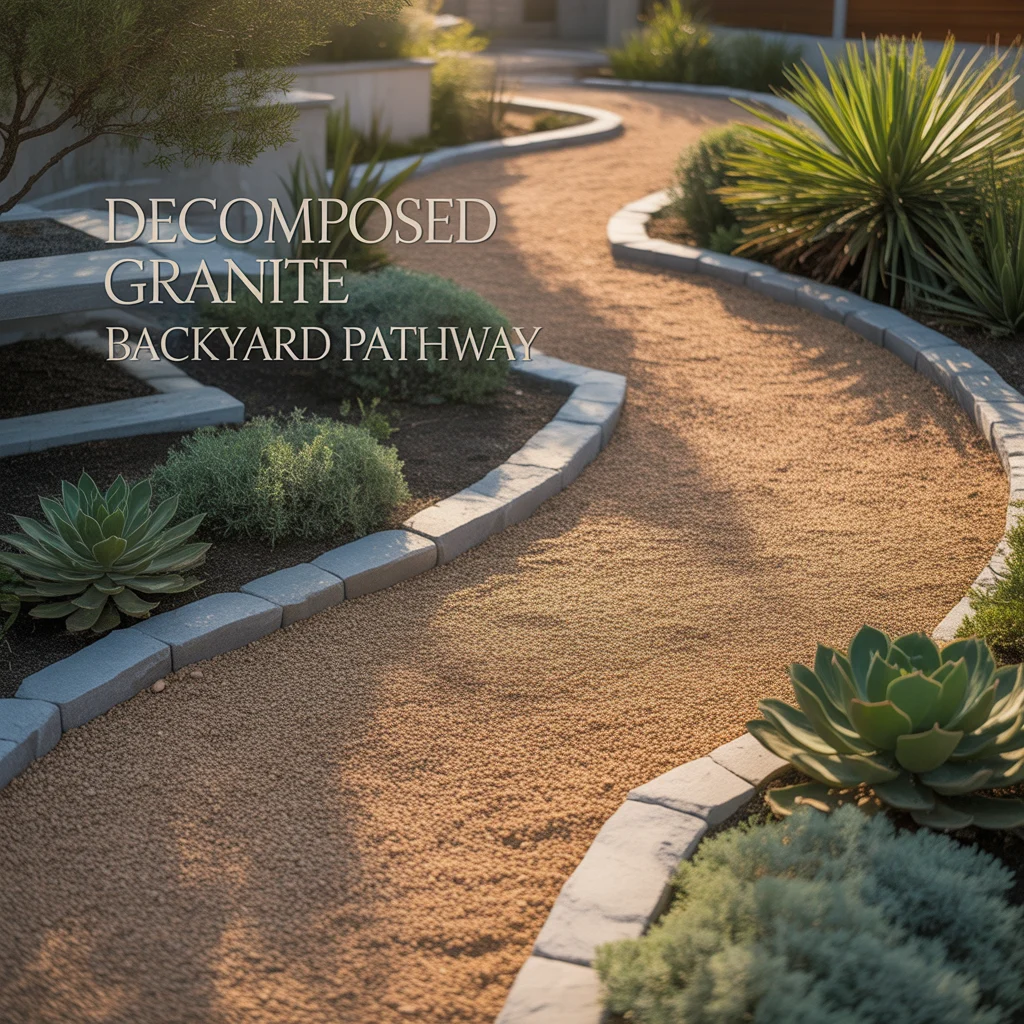
A decomposed granite backyard pathway uses finely crushed granite aggregate that compacts to a firm, stable walking surface at 3 to 4-inch depth, creating a natural-looking pathway suited to dry climates, desert-style backyards, and low-water-use landscaping designs. I researched decomposed granite extensively for a California-climate residential project and found it the most practical low maintenance backyard pathway idea for a hot, dry backyard where gravel pathways shift underfoot and concrete pathways crack in high summer temperatures. Decomposed granite costs $1.50 to $3.00 per square foot for the material and stabilizing binder combined.
Decomposed Granite Installation for a Backyard Pathway
Decomposed granite for a backyard pathway requires a 4-inch compacted sub-base of crushed aggregate topped with a 3-inch layer of decomposed granite mixed with 10% stabilizing binder, compacted with a plate compactor or hand tamper to produce a firm, bound surface. The stabilizing binder hardens the decomposed granite surface to resist displacement in rain and under foot traffic, extending the service life of the pathway surface from 2 to 3 years for unstabilized decomposed granite to 8 to 12 years for stabilized installation. I apply a final light water misting to the compacted stabilized surface and allow 24 hours of cure time before opening the backyard pathway to regular foot traffic.
Edging for a Decomposed Granite Backyard Pathway
Steel edging, timber board edging, and concrete mow strip edging are three edging options suited to a decomposed granite backyard pathway. Steel edging at 4-inch depth contains the decomposed granite within the pathway width and prevents the material from spreading onto adjacent lawn areas, costing $3 to $5 per linear foot in cor-ten or mild steel. Timber board edging using 3-by-4-inch pressure-treated lumber provides a natural-looking containment edge suited to a cottage or informal backyard decomposed granite pathway at $3 to $6 per linear foot. Concrete mow strip edging at 4 inches width and 4 inches depth provides the most permanent and maintenance-free edge containment for a decomposed granite backyard pathway.
Brick Backyard Pathway Ideas
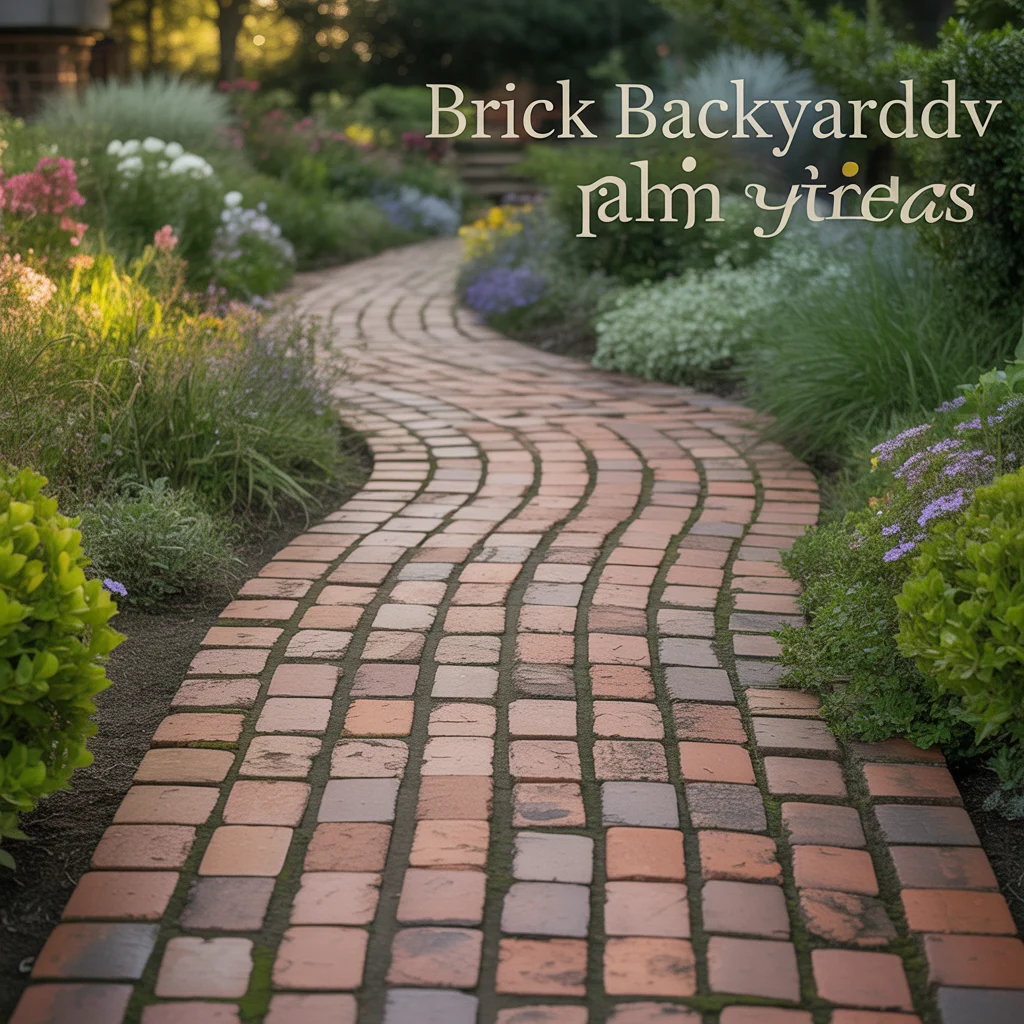
A brick backyard pathway uses clay or concrete brick units in a continuous laid surface to create a traditional, warm-toned pathway suited to period properties, cottage-style backyards, and classic American home garden designs where the red-orange tone of the brick material coordinates with existing brick buildings or boundary walls. I designed a herringbone brick backyard pathway for a residential project connecting the rear door to a detached workshop, using reclaimed red clay bricks at a material cost of $0.60 per brick, and the warm brick pathway produced a backyard connection route that suited the 1940s character of the property immediately.
Brick Types for a Backyard Pathway
Clay bricks, concrete brick pavers, and reclaimed bricks are three brick types suited to a backyard pathway. Clay bricks in standard red or orange tones produce the warmest, most traditional backyard pathway surface and cost $0.80 to $1.50 per brick new or $0.30 to $0.80 per brick reclaimed. Concrete brick pavers in buff, charcoal, and terra cotta tones cost $0.50 to $1.20 per unit and provide more consistent dimensions than natural clay bricks, which suits a backyard pathway where precise joint widths are important for the pattern appearance. Reclaimed bricks provide the most character-rich backyard pathway surface with an aged, worn appearance from the first day of installation at a lower cost than new bricks.
Mortar vs Sand-Set Brick Backyard Pathway
A mortar-set brick pathway and a sand-set brick pathway are two installation methods for a brick backyard pathway, each suited to different installation situations. A mortar-set brick pathway uses a 5:1 sand-to-cement mortar bed beneath each brick and full mortar pointing in the joints, producing a rigid, permanently fixed surface suited to a high-traffic backyard pathway where brick stability is the priority. A sand-set brick pathway uses a 1-inch compacted sand bed beneath each brick with kiln-dried sand jointing, producing a flexible surface that accommodates ground movement without cracking and suits a backyard pathway over clay soil where seasonal ground expansion occurs. I specify sand-set bricks on all backyard pathway projects in clay soil areas.
Wooden Boardwalk Backyard Pathway
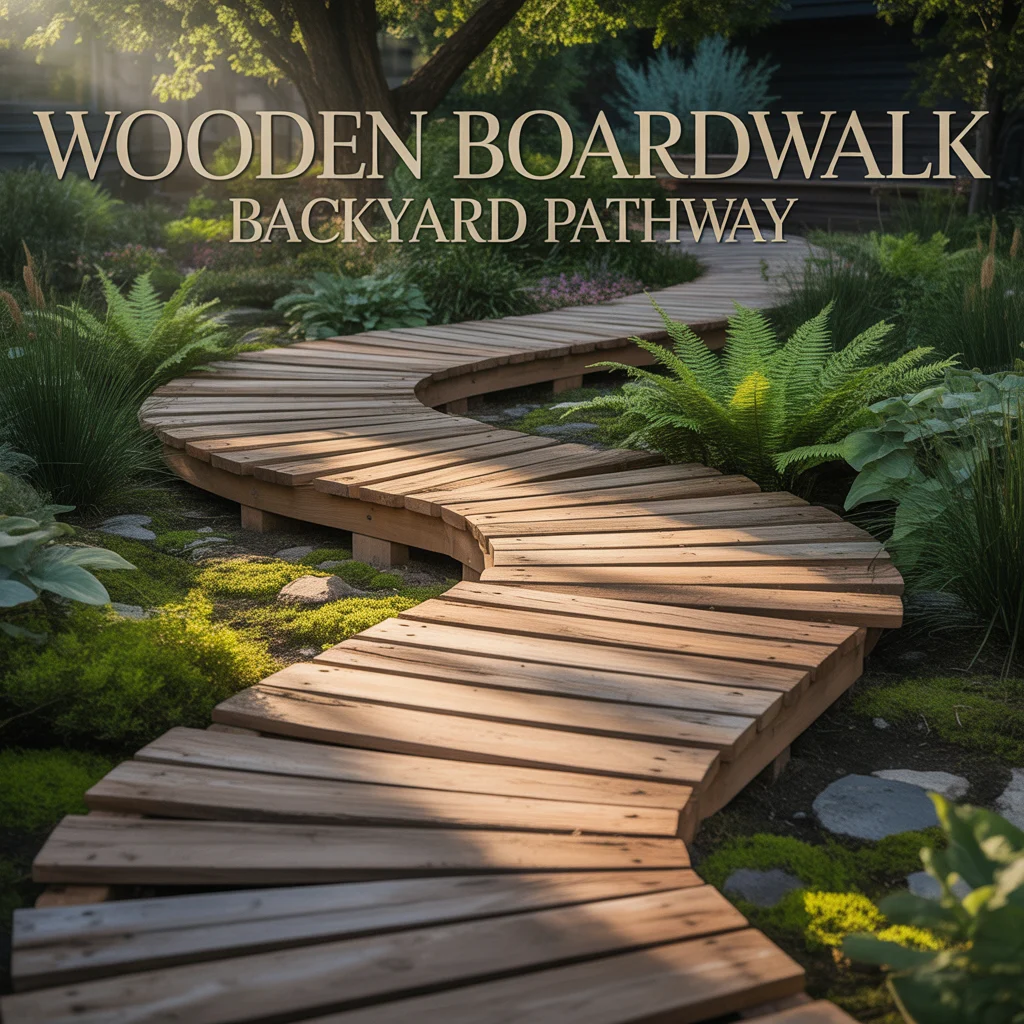
A wooden boardwalk backyard pathway uses pressure-treated timber decking boards fixed to a ground-level frame to create a raised, flat walking surface above the surrounding lawn or garden, producing a pathway with a warm, natural timber character suited to coastal properties, beach-house backyards, and informal outdoor living spaces where the timber surface coordinates with wood-clad buildings and timber garden furniture. I installed a wooden boardwalk pathway at a residential project connecting a rear deck to a garden fire pit area, using 5/4-by-6-inch pressure-treated decking boards on a 4-by-4-inch timber frame at 6-inch height above grade, and the boardwalk produced the most enjoyable outdoor walking experience of any pathway in that backyard.
Timber Species for a Backyard Boardwalk Pathway
Pressure-treated pine, cedar, and composite decking are three timber options suited to a wooden backyard pathway. Pressure-treated pine costs $2 to $4 per linear foot for 5/4-by-6-inch decking boards and provides 15 to 20 years of outdoor service when ground contact-rated treatment is used for the frame components. Cedar costs $3 to $6 per linear foot and provides a naturally decay-resistant, aromatic alternative to pressure-treated pine that does not require chemical treatment for a 15 to 25-year service life in an above-grade boardwalk installation. Composite decking at $4 to $9 per linear foot provides the most maintenance-free wooden boardwalk surface, requiring no sealing, staining, or annual treatment throughout its 25 to 50-year rated lifespan.
Building a Wooden Backyard Pathway Frame
A wooden backyard pathway frame uses 4-by-4-inch pressure-treated posts at 8-foot intervals as the foundation supports, connected by 2-by-6-inch rim joists and 2-by-6-inch interior joists at 16-inch centers running along the pathway length. The posts are set in post-mix concrete at 18-inch depth to provide a stable, frost-resistant base for the boardwalk frame structure. I set all boardwalk pathway posts at the same height using a string line stretched between the two end posts as a height reference, then trim any posts that sit above the string line before installing the rim joists. The decking boards are fixed perpendicular to the joists using two 2.5-inch stainless steel deck screws per board at each joist crossing.
Modern Backyard Pathway Ideas With Large Format Pavers
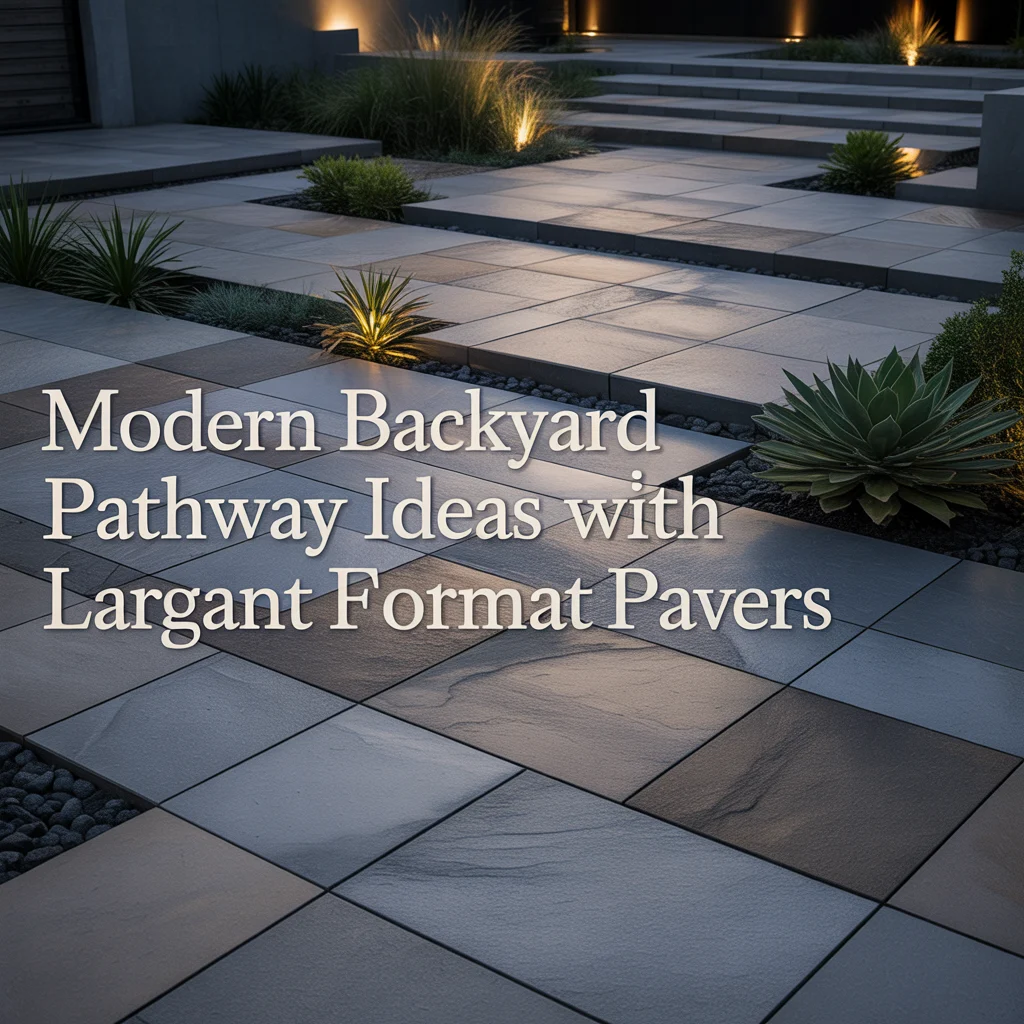
Modern backyard pathway ideas with large-format pavers use 24-by-24-inch or 24-by-48-inch concrete or porcelain pavers in a minimal pattern with tight 5mm joints to create a contemporary pathway that suits modern homes, clean-line backyards, and designed outdoor living spaces where the large stone format produces a sophisticated, architecturally resolved pathway surface. I specified 24-by-48-inch charcoal porcelain pavers for a modern backyard pathway at a new-build property, setting them in a staggered linear pattern with 5mm joints, and the resulting pathway suited the contemporary architecture of the house more precisely than any other paver size or format I considered during the design process.
Large Format Paver Sizes for a Modern Backyard Pathway
24-by-24-inch, 24-by-48-inch, and 18-by-36-inch are three paver sizes suited to a modern backyard pathway. The 24-by-24-inch square format produces a clean grid pattern that suits a wide formal backyard pathway of 4 feet or more where the square stone format reinforces the geometric character of the modern design. The 24-by-48-inch rectangular format produces the most visually dramatic large-format paver pattern and suits a contemporary backyard pathway of 4 to 5 feet width where the full 48-inch paver length spans the path in a single piece. The 18-by-36-inch format suits a slightly narrower modern backyard pathway of 3 to 4 feet where the full 36-inch length spans most of the path width.
Colors for a Modern Backyard Pathway
Charcoal grey, light grey, and sandstone effect are three paver colors suited to a modern backyard pathway. Charcoal grey pavers produce the strongest visual contrast against green lawn, white rendered walls, and light-colored outdoor furniture in a contemporary backyard setting, creating a bold, architecturally assertive pathway statement. Light grey pavers provide a softer mid-tone that suits a modern backyard where the pathway is intended to recede visually rather than dominate, allowing the planting and furniture to be the primary visual elements. Sandstone effect pavers in warm tan or buff tones bridge contemporary and traditional styles and suit a modern backyard pathway at a property with warm brick or natural stone building materials.
Simple Backyard Pathway Ideas Using Mulch
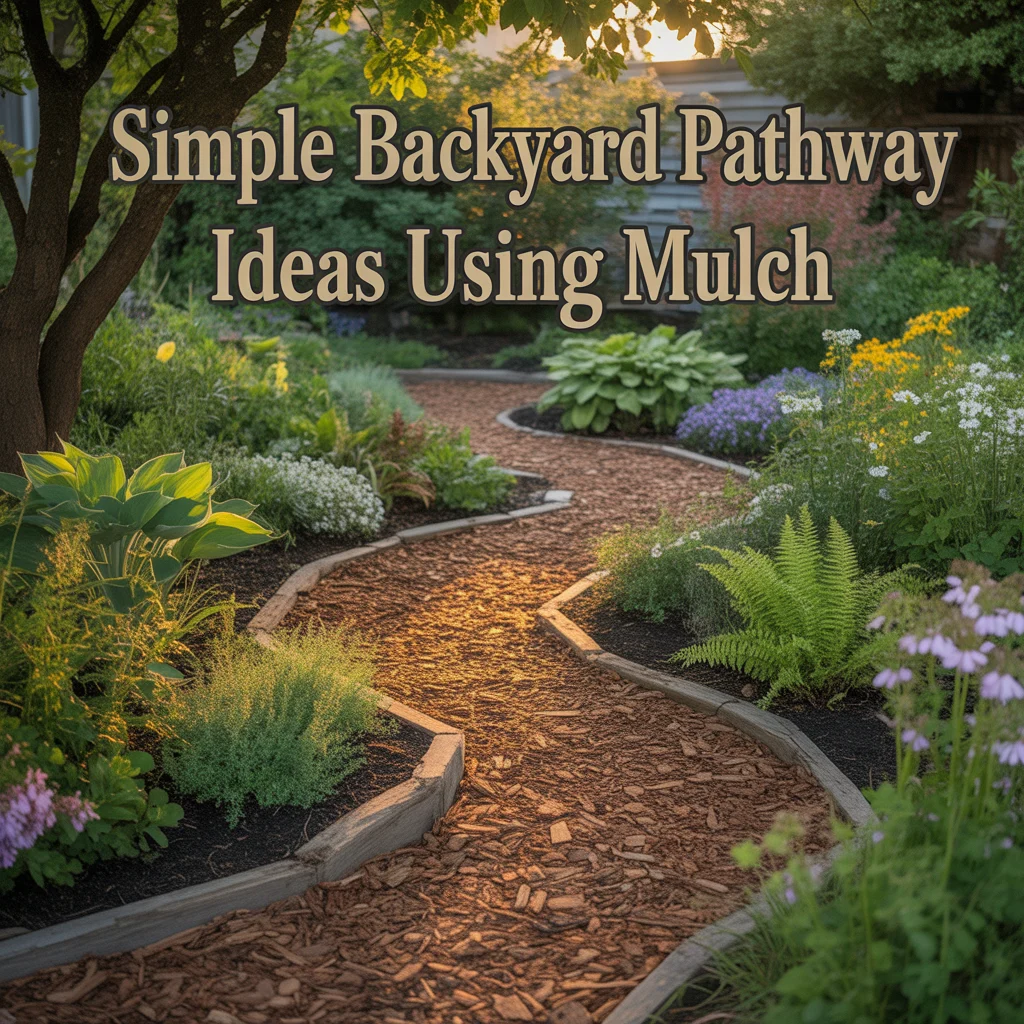
Simple backyard pathway ideas using wood mulch or bark chip create a defined, soft-surface walkway through a planted backyard area at the lowest possible material cost, using a biodegradable, natural path surface that improves soil health in the adjacent planting beds as it decomposes at the pathway edges over each growing season. I created a mulch backyard pathway through my vegetable garden area using free wood chip from a local tree surgeon at zero material cost, and the soft, clean surface of the mulch pathway provided a completely practical all-weather route between the raised beds for a full growing season before the first top-up was needed.
Installing a Mulch Backyard Pathway
A mulch backyard pathway is installed by marking the pathway edges with spray paint or string lines, removing the existing vegetation from the pathway area to 2-inch depth, laying a heavy-duty weed-suppressing membrane across the cleared pathway surface, installing timber or steel edging on both sides to contain the mulch, and spreading wood mulch or bark chip at 3 to 4-inch depth across the full pathway area. The weed membrane is the most important component of a long-lasting simple mulch backyard pathway because membrane-free mulch installations require weekly weeding from the second growing season as perennial weed roots penetrate the mulch from the soil below within 12 to 18 months.
Mulch Types for a Backyard Pathway
Wood chip mulch, bark mulch, and rubber mulch are three mulch types suited to a backyard pathway. Wood chip mulch from local tree surgeons provides a free or very low-cost pathway surface material with an irregular chip size that creates a natural, rustic pathway appearance suited to a cottage or woodland backyard style. Bark mulch in fine or medium grade from garden centers costs $8 to $12 per bag and provides a more consistent, refined surface appearance suited to a designed backyard pathway. Rubber mulch from recycled tires costs $8 to $15 per square foot and provides the most durable and maintenance-free soft-surface pathway material with a service life of 10 to 15 years before replacement is needed.
Backyard Pathway Ideas Along a Fence Line
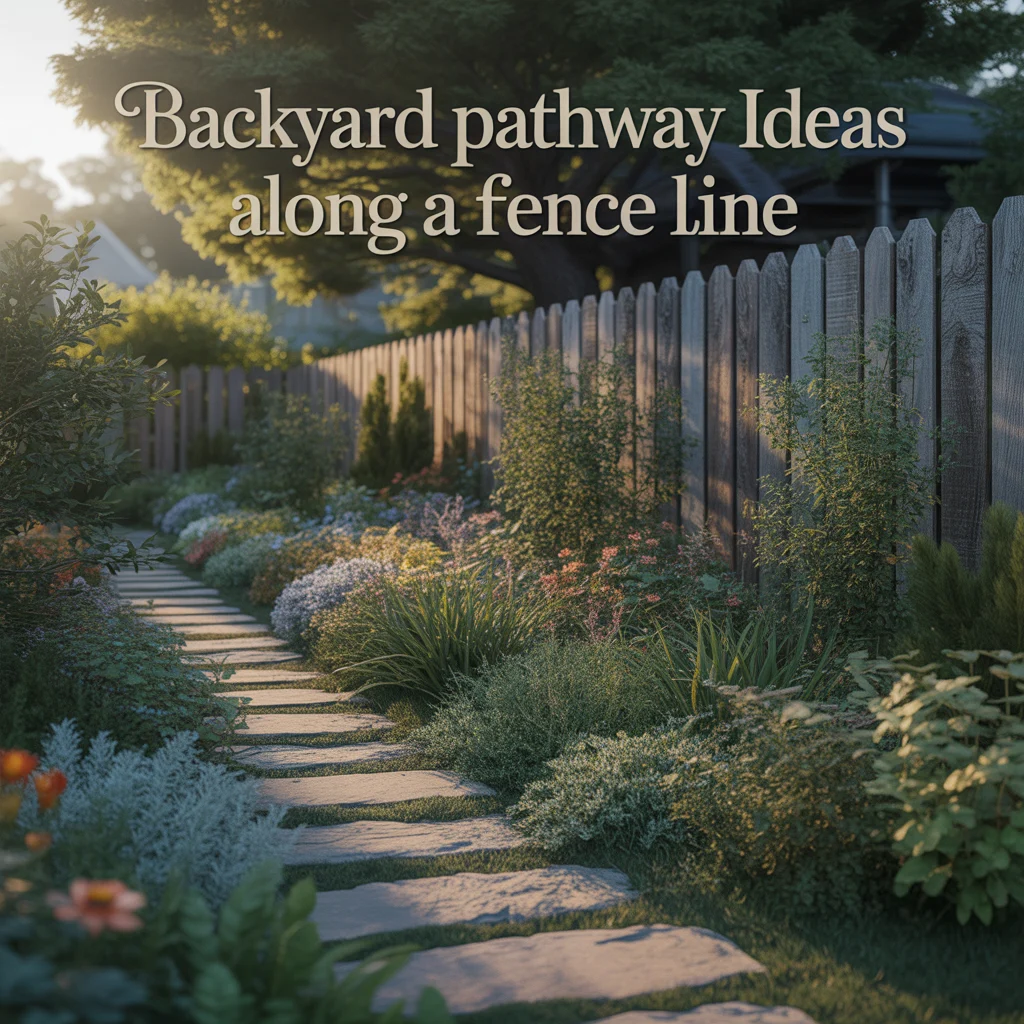
A backyard pathway along a fence line creates a practical access route parallel to the property boundary, connecting the rear of the backyard to a side gate or utility area along a narrow strip of typically unused ground between the fence and the main garden space. I designed a fence line backyard pathway at a residential project using 12-inch-wide concrete pavers in a single center row along a 35-foot fence-line strip, and the narrow pathway transformed a weedy, unused strip of ground into a clean, functional access route that the homeowner used daily to reach the composting area at the rear of the property.
Narrow Pathway Width Along a Fence Line
A fence line backyard pathway measures most effectively at 18 to 30 inches in width, which provides adequate walking clearance along a narrow boundary strip while leaving the remaining garden space outside the pathway available for planting. A pathway narrower than 16 inches feels restrictive when carrying tools or equipment along the fence line. A pathway wider than 36 inches along a fence line uses too much of the available boundary strip for pure pathway surface, reducing the planting space in what is typically a productive narrow strip garden position. I use 24 inches as the standard width for all fence line backyard pathways on residential projects.
Materials for a Narrow Fence Line Backyard Pathway
Gravel on a membrane, single-row concrete pavers, and stepping stones are three materials suited to a narrow fence line backyard pathway. Gravel on a weed-suppressing membrane provides the most cost-effective fence line pathway surface at $2 to $4 per square foot and suits a strip of 18 to 24 inches where the full path area is covered with membrane and contained by timber edging on both sides. Single-row 12-by-12-inch concrete pavers set at flush level in the soil provide a stepping stone-style fence line path at $3 to $6 per stone. Individual stepping stones at 24-by-24-inch size in a single center row provide a less formal fence line path option.
Backyard Pathway Ideas With Lighting
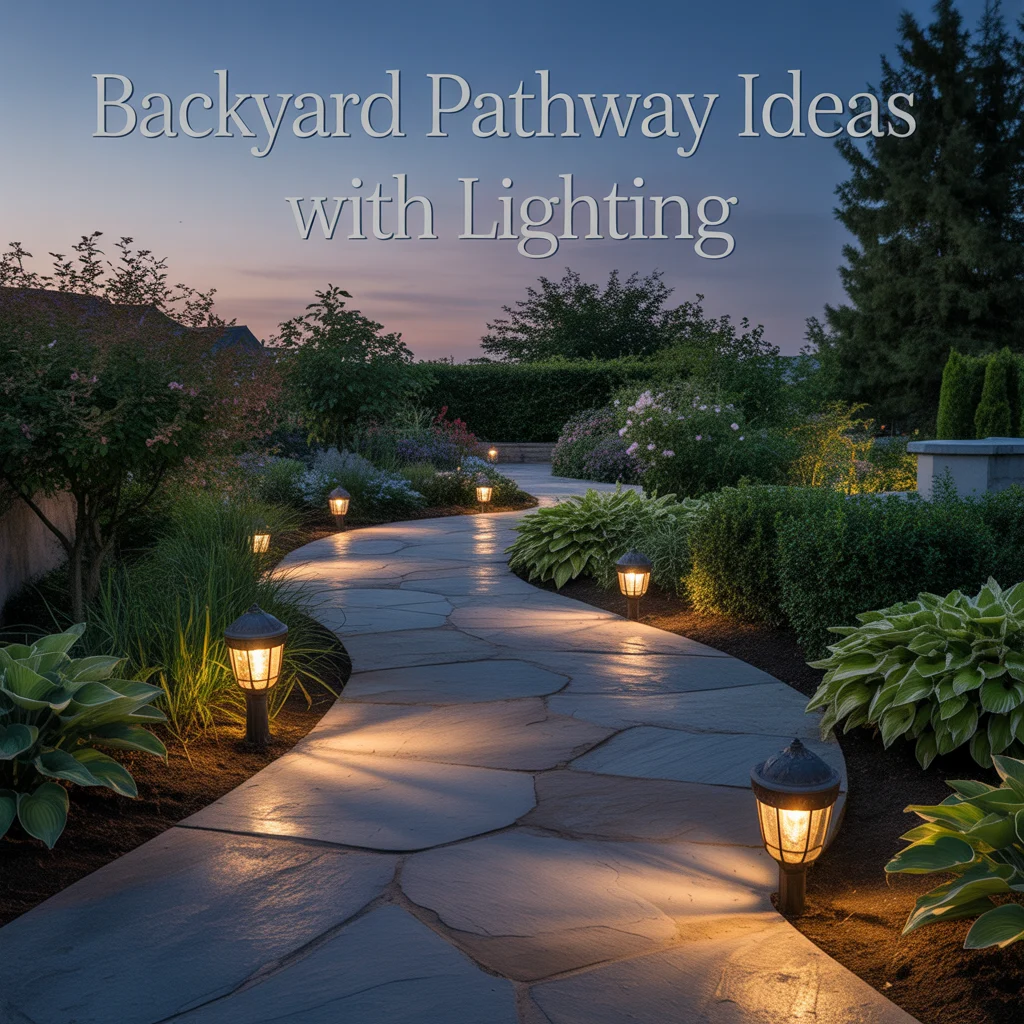
A backyard pathway with integrated lighting uses solar spike lights, low-voltage LED pathway bollards, or ground-recessed LED fittings positioned at regular intervals along the pathway edges to illuminate the walking route after dark, making the backyard pathway safe to use in the evening and creating an atmospheric outdoor lighting effect that extends the backyard’s usable hours into the evening. I fitted eight solar spike lights at 3-foot intervals along both sides of my 20-foot gravel backyard pathway and the warm amber light from each fitting after dark transformed the pathway from a functional daytime route into a genuinely attractive evening garden feature. A full range of lighting styles and installation approaches for safe backyard walkways is covered in these garden paths with lighting for safe backyard walkways.
Solar Pathway Lights for a Backyard Pathway
Solar spike lights, solar bollard lights, and solar stake lanterns are three solar lighting types suited to a backyard pathway. Solar spike lights at 3 to 4-foot alternating intervals cost $8 to $25 per unit and provide the most affordable pathway lighting solution for a backyard with adequate daily sun exposure on the solar panel positions. Solar bollard lights at 300 to 600mm height cost $20 to $55 per unit and provide a more substantial light output than spike lights, suiting a backyard pathway that requires consistent illumination for regular nighttime use rather than occasional decorative evening lighting. Solar stake lanterns at $12 to $35 per unit produce a warm lantern-aesthetic light suited to a cottage or traditional backyard pathway style.
Mains-Powered Lighting for a Backyard Pathway
Low-voltage 12-volt pathway lights connected to a transformer and ground-level conduit cable provide the most reliable and consistent lighting for a backyard pathway that requires guaranteed nighttime operation regardless of daily sun exposure. A 12-volt transformer installed in a weatherproof enclosure connects to a series of LED pathway lights at 3 to 4-foot intervals through a conduit cable buried 4 to 6 inches below the adjacent lawn or border surface. I specify 12-volt systems for all backyard pathway lighting projects where the pathway is used regularly after dark, because solar lights produce unreliable output during short winter days and cannot guarantee adequate light output on consecutive overcast days.
Curved Backyard Pathway Ideas
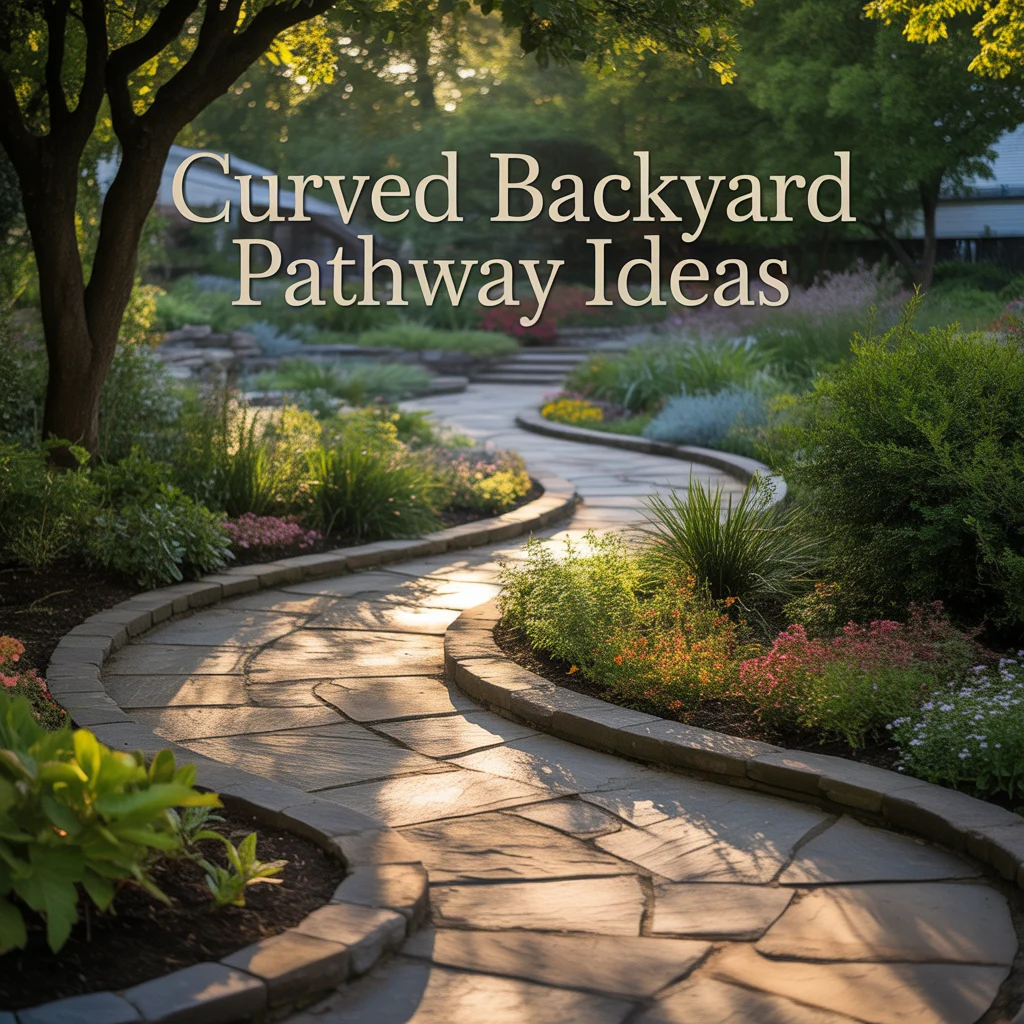
A curved backyard pathway uses a sweeping, flowing line rather than a straight route to connect two backyard zones, creating a pathway that looks organic and naturally placed rather than imposed, and that makes a backyard feel larger than its actual dimensions because a curved route reveals the space gradually rather than displaying its full length at once. I redesigned a straight concrete backyard pathway to a gently curved flagstone route at a residential project, and the homeowner reported that the backyard felt noticeably larger after the curved pathway was installed even though no physical dimensions of the space had changed.
Marking a Curved Backyard Pathway
A curved backyard pathway is marked by laying a garden hose or rope on the ground in the intended curved route and adjusting the position from multiple standing points until the curve looks natural from the primary viewing positions, typically the back door and the main patio seating area. Once the hose position is confirmed as the centerline, I mark both pathway edges using sand poured from a bottle along lines 18 inches on each side of the hose for a 36-inch path, which establishes the full pathway width on both sides of the center curve before any excavation begins. The sand lines guide the edging installation and sub-base preparation throughout the installation.
Materials Suited to a Curved Backyard Pathway
Gravel with flexible steel edging, irregular flagstone, and brick in a stretcher bond are three materials suited to a curved backyard pathway. Gravel with flexible steel edging suits a curved backyard pathway because the steel edging bends to any curve radius down to 12 inches and the loose gravel infill requires no cutting to follow the curved edge on both sides. Irregular flagstone suits a curved pathway because the organic, varied shapes of natural stone pieces accommodate the changing direction of a curved pathway without any straight-edge cuts at the path boundary. Brick in a stretcher bond accommodates a gentle curve through graduated joint width adjustment without any brick cutting along the pathway edge. Formal straight-layout alternatives using the same material are covered in these flagstone path ideas for formal backyard designs.
Backyard Pathway Ideas Through a Garden Bed
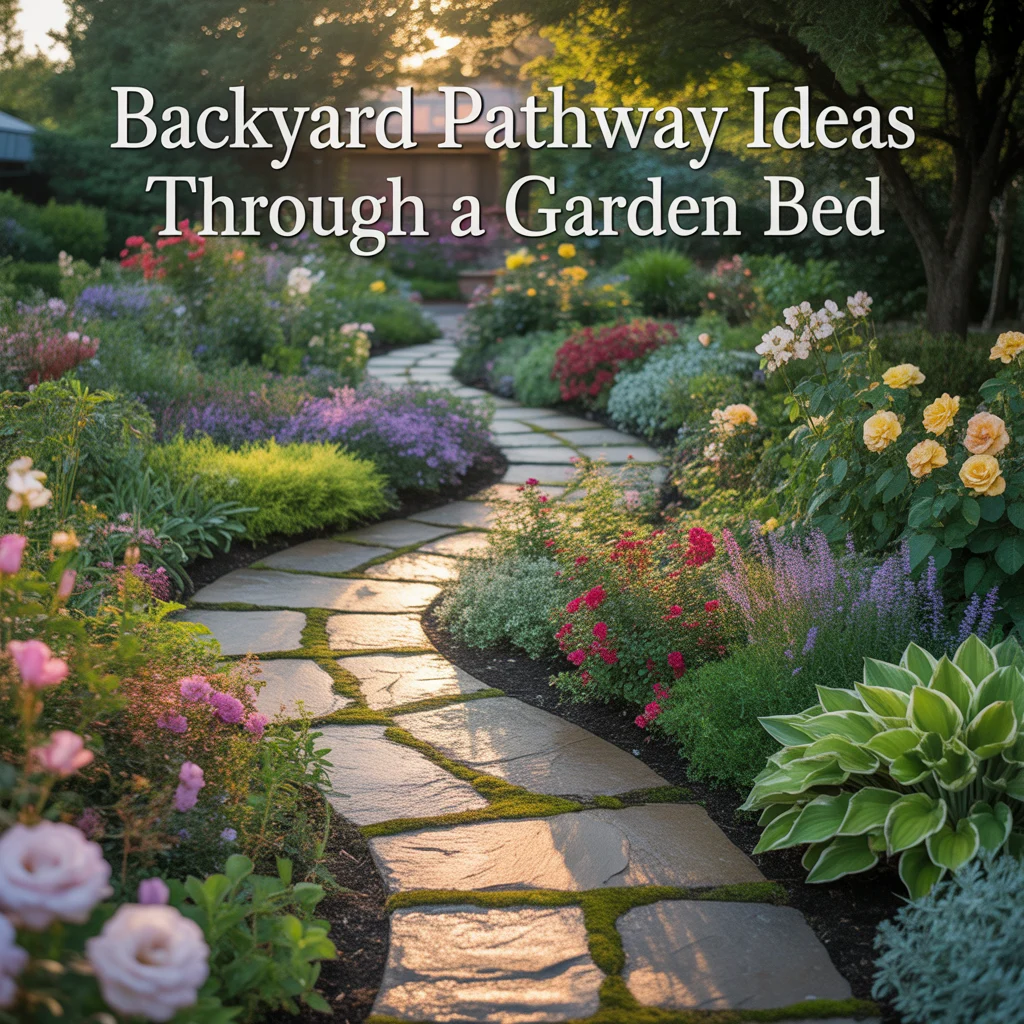
A backyard pathway through a garden bed creates a defined walking route through an existing planting area, allowing the pathway user to move through the planted space to reach a garden feature, seating area, or utility zone at the far side of the border without stepping on the surrounding plant material. I created a stepping stone pathway through a 12-foot-wide mixed perennial border at a residential project, setting 24-by-24-inch sandstone pads at 16-inch intervals in a slightly curved route through the center of the border, and the pathway through the planting produced a more immersive backyard garden experience than any edge-only pathway would have created from the same starting and ending points.
Pathway Width Through a Garden Bed
A backyard pathway through a garden bed measures most effectively at 18 to 24 inches in width, which provides enough walking clearance to move through the planting without brushing against adjacent plants on both sides while keeping the pathway narrow enough to maintain the continuous planted character of the surrounding border. A pathway wider than 36 inches through a garden bed starts to read as a division of the border rather than a route through it, which changes the character of the planted space from a single unified border to two separate planting areas separated by a pathway. I use 20 to 22-inch-wide stepping stone pathways through all garden bed pathway projects.
Plants for a Backyard Pathway Through a Garden Bed
Geranium rozanne, Alchemilla mollis, and Nepeta x faassenii are three plants suited to the border areas directly alongside a backyard pathway through a garden bed. Geranium rozanne produces blue-violet flowers from June to October at 12 inches height and spreads to 24 inches, providing a low, continuous flowering border at the pathway edge that self-repairs after foot traffic brushes the outermost stems. Alchemilla mollis provides a low-growing, soft-textured base planting that suppresses weeds at the pathway edge and self-seeds into the pathway stones over time, creating a naturally planted pathway edge. Nepeta x faassenii produces lavender-blue flowers from May to September at 18 inches height.
Backyard Pathway Ideas for a Small Backyard
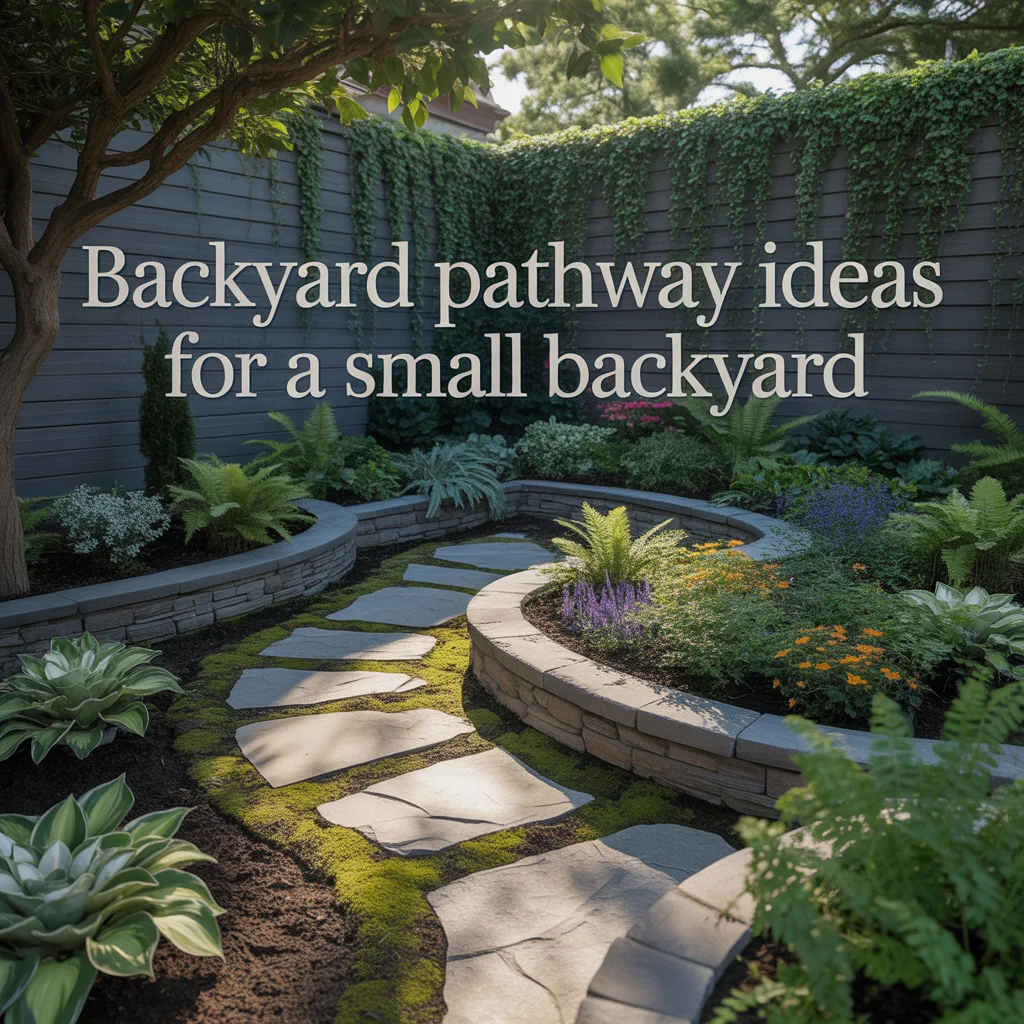
Small backyard pathway ideas focus on creating defined, proportionally correct walking routes in compact outdoor spaces where pathway width, material scale, and pathway layout must all be adjusted to suit a smaller backyard area without making the limited space feel further reduced by an oversized or visually heavy pathway design. I designed a small backyard pathway idea for a 20-by-25-foot urban backyard using 12-by-12-inch buff concrete pavers in a single-row stepping stone format along the fence line, and the narrow single-row pathway provided a fully functional access route while leaving the maximum possible open lawn area in the center of the small backyard.
Pathway Width for a Small Backyard
A small backyard pathway measures most effectively at 18 to 24 inches in width, which provides a functional walking surface while occupying the minimum possible backyard floor area. A pathway of 36 inches or more in a small backyard occupies a disproportionate percentage of the available outdoor floor space, reducing the usable lawn or planted area significantly. I calculate the maximum practical pathway width in a small backyard as 15% of the backyard’s total width, which produces a pathway of 18 to 30 inches in a standard small backyard of 12 to 20 feet width while maintaining enough open space on both sides of the pathway for functional garden use.
Small Backyard Pathway Materials
Stepping stones in grass, narrow gravel strip with timber edging, and single-row brick pavers are three materials suited to a small backyard pathway idea. Stepping stones in grass use the minimum possible hard surface area by occupying only the individual stone footprints rather than a continuous paved strip, preserving the maximum lawn area in a small backyard. A narrow gravel strip of 18 to 24 inches with timber edging on both sides provides a clearly defined pathway surface that suits a small backyard where a stepping stone layout would look too informal. Single-row brick pavers at 9-inch width laid end to end produce the narrowest possible continuous paved pathway at 9 inches, suiting a very tight small backyard boundary strip.
Low Maintenance Backyard Pathway Ideas
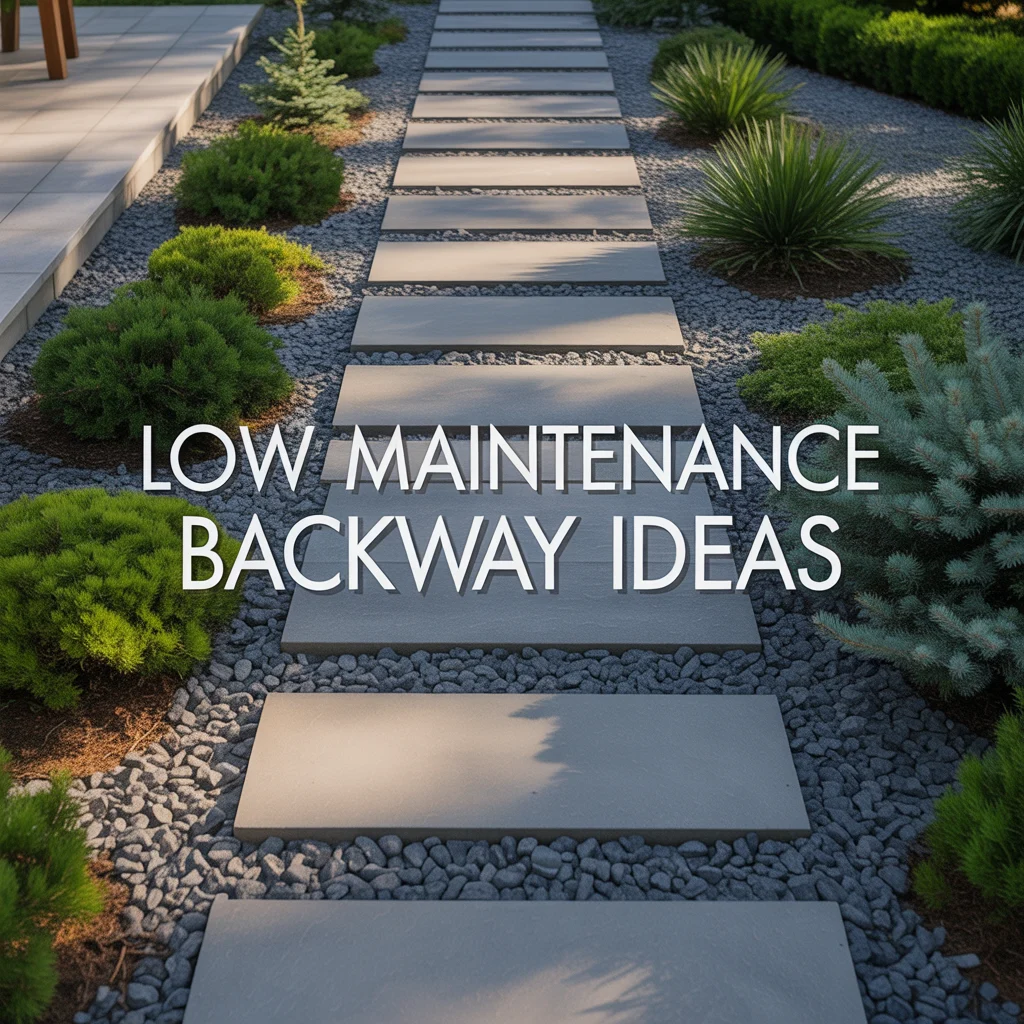
Low maintenance backyard pathway ideas use materials and installation methods that require the minimum ongoing attention after the initial installation, with no annual sealing, no regular joint weeding, and no re-leveling required for a minimum of 5 years. I designed a low maintenance backyard pathway for a retired homeowner using 24-by-24-inch porcelain pavers on a compacted gravel sub-base with polymeric sand jointing, and the pathway has required zero maintenance in three years beyond an annual rinse with a garden hose. That is genuinely my definition of a low maintenance backyard pathway.
Most Low Maintenance Backyard Pathway Materials
Porcelain pavers, decomposed granite with stabilizer, and recycled rubber pavers are three low maintenance backyard pathway materials. Porcelain pavers require no sealing, no annual treatment, and no specialist cleaning beyond a garden hose rinse, with a rated lifespan of 25 to 40 years outdoors without surface degradation. Decomposed granite with stabilizing binder compacts to a firm, bound surface that requires no edging maintenance, no joint weeding, and annual raking only after winter leaf fall, at a material cost of $1.50 to $3.00 per square foot. Recycled rubber pavers provide a completely maintenance-free, frost-proof, and UV-stable pathway surface at $6 to $12 per square foot with a 15 to 20-year lifespan.
Polymeric Sand for Low Maintenance Backyard Pathway Joints
Polymeric sand jointing on a paver backyard pathway cures to a hard, weed-resistant joint after a single water activation, preventing weed growth in the pathway joints for 5 to 8 years without any additional treatment or maintenance. I apply polymeric sand to all paver backyard pathway joints by sweeping the dry sand across the paved surface with a broom until all joints are full, then activating the binding polymer with a fine water mist from a garden hose, applying just enough water to wet the joint surface without washing the sand out of the joints. The activated polymeric sand cures fully within 24 hours at temperatures above 50 degrees Fahrenheit.
Backyard Pathway Ideas With Natural Stone
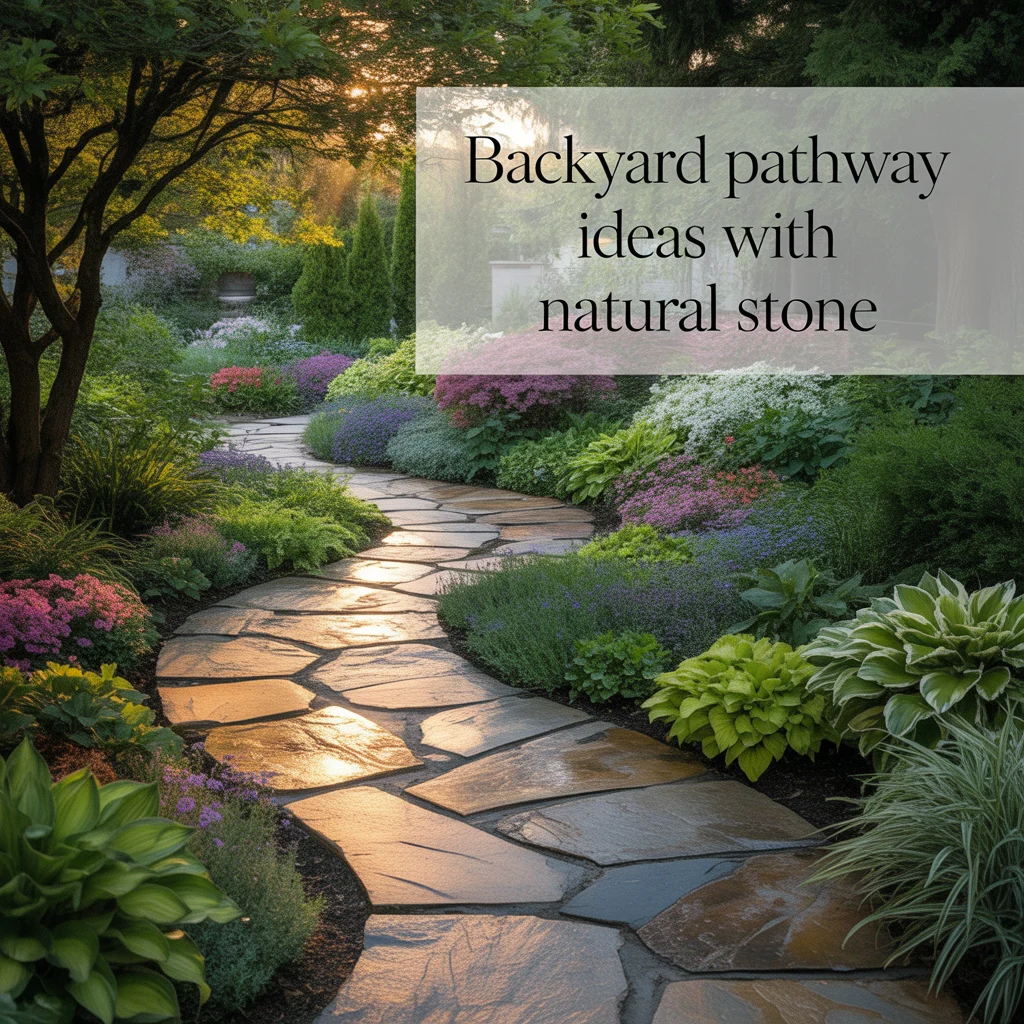
A backyard pathway with natural stone uses quarried or reclaimed stone species including flagstone, limestone, sandstone, granite, or slate as the pathway surface material to create a walking route with a timeless, organic character that suits all backyard styles from traditional to contemporary. I specified a random flagstone backyard pathway for a residential project using reclaimed Yorkstone flags at a material cost of $12 per square foot, and the warm buff-grey surface and natural riven texture of the reclaimed stone produced a backyard pathway of genuine visual quality that improved the appearance of the entire outdoor space.
Natural Stone Types for a Backyard Pathway
Flagstone, limestone, and granite are three natural stone types suited to a backyard pathway. Flagstone in sandstone or Yorkstone provides the most versatile natural stone for a backyard pathway because the irregular shapes, warm surface colors, and natural riven surface suit cottage, country, traditional, and informal backyard styles equally well at a cost of $10 to $25 per square foot installed. Limestone in large-format cut pieces provides a more refined, contemporary stone pathway surface at $12 to $30 per square foot and suits a modern backyard where clean lines and precise stone joints are the design intention. Granite in bush-hammered or flamed finish provides the most durable natural stone pathway at $15 to $35 per square foot with a 50-year or more lifespan.
Setting Natural Stone for a Backyard Pathway
Natural stone for a backyard pathway is set on a 4-inch compacted gravel sub-base topped with a 1-inch dry mortar bed of 5:1 sharp sand and cement mix, with each stone pressed firmly into the mortar bed and checked level before the adjacent stone is placed. The dry mortar bed cures slowly by drawing moisture from the soil below and from rain, producing a hard, permanently fixed bed beneath each stone that prevents individual stone movement without the need for a full wet mortar pour. I complete a dry fit of all natural stone pieces before any bedding is prepared, selecting adjacent stones that fit together with a 15 to 20mm gap and cutting any pieces that create gaps above 25mm.
Backyard Pathway Ideas With Flower Borders
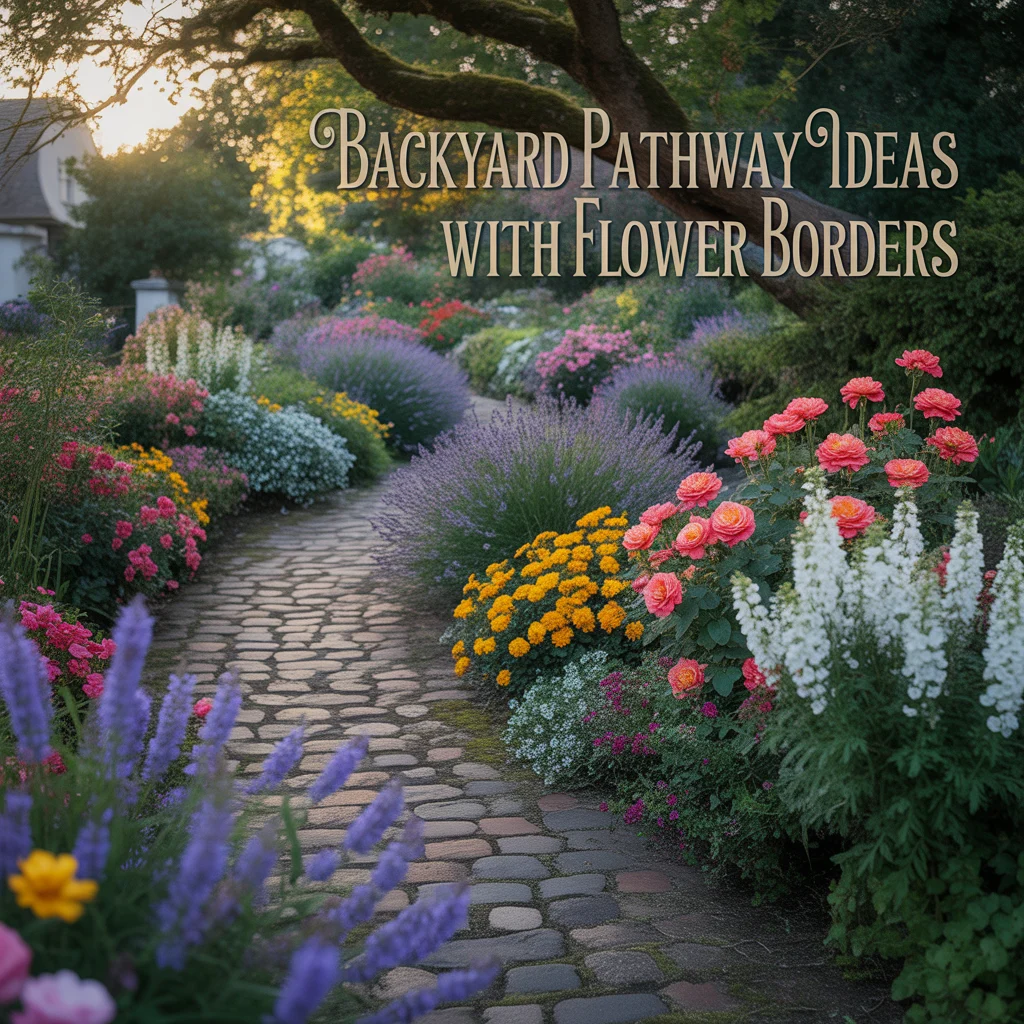
A backyard pathway with flower borders plants continuous perennial or mixed flowering borders along one or both sides of the pathway to create a walking route where seasonal flower color, fragrance, and natural plant growth frames the path surface and makes the walk through the backyard a sensory experience rather than a purely functional route. I planted lavender, salvia, and geranium borders alongside a 20-foot flagstone backyard pathway at a residential project, and the homeowner reported that she now uses the backyard for a daily walk along the pathway specifically to experience the fragrance and color of the borders, which she had never done when the pathway had no planting alongside it.
Perennial Flower Borders for a Backyard Pathway
Lavandula angustifolia, Salvia nemorosa, and Geranium rozanne are three perennials suited to a flower border alongside a backyard pathway. Lavandula angustifolia at 18-inch spacing produces a fragrant, low hedge border of 18 to 24 inches height alongside the pathway from June to August that provides both visual color and the olfactory quality of the lavender fragrance released at pathway edge level when brushed against during walking. Salvia nemorosa Caradonna produces upright violet-blue spikes from May to August at 24 inches height, providing a strong vertical accent alongside the pathway surface. Geranium rozanne produces blue-violet flowers continuously from June to October at 12 inches height.
Annual Flower Borders for a Backyard Pathway
Zinnia elegans, Cosmos bipinnatus, and Petunia are three annual flowers suited to a seasonal border alongside a backyard pathway. Zinnia elegans produces bold round flowers in orange, yellow, red, and pink from July to October at 18 to 24 inches height, providing the richest color saturation of any annual flower alongside a backyard pathway from midsummer onward. Cosmos bipinnatus produces feathery, delicate flowers in pink, white, and crimson from June to October at 3 to 4 feet height, providing a light, airy flower quality that contrasts with the solid pathway surface on both sides. Petunia in trailing or mounding form provides continuous color from May to October at 12 to 18 inches height alongside the pathway edge.
Easy and Cheap Backyard Pathway Ideas
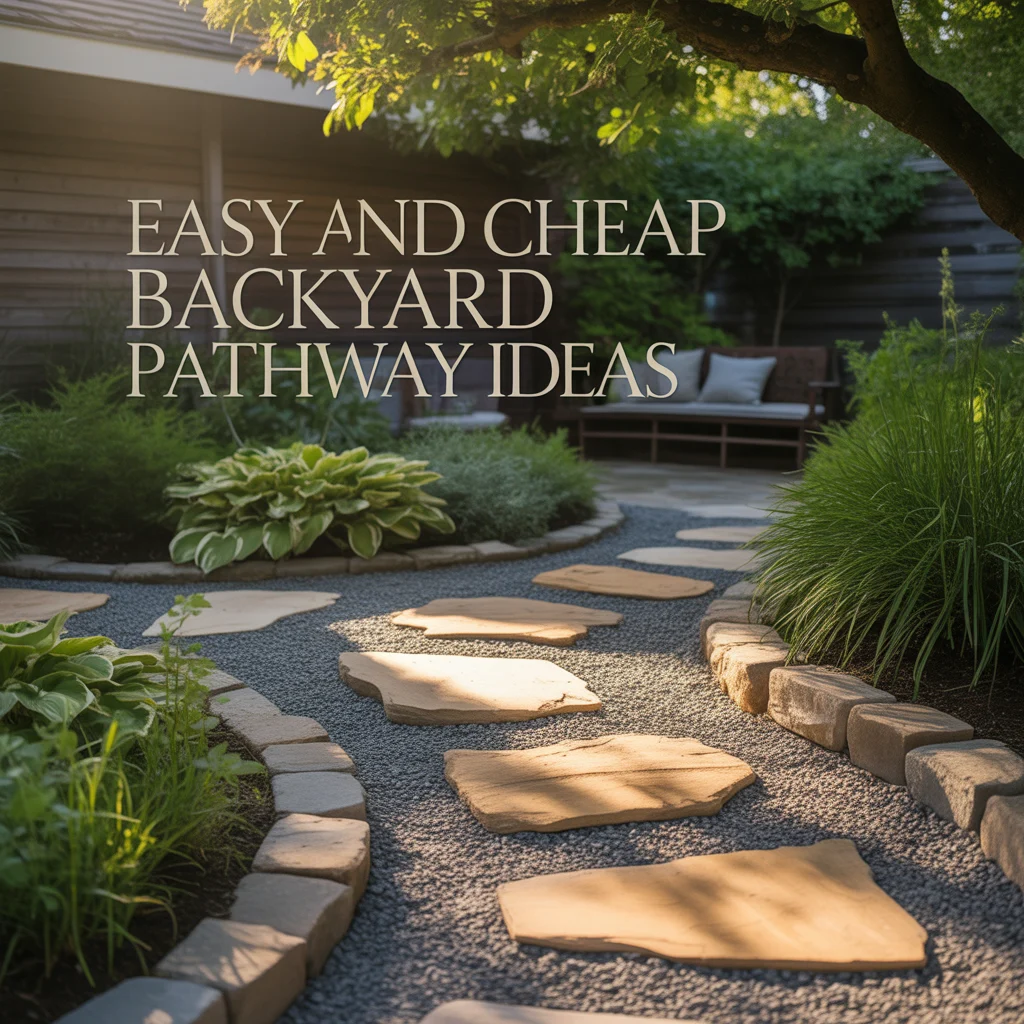
Easy and cheap backyard pathway ideas produce functional, visually acceptable walking routes from low-cost or zero-cost materials using simple installation methods that any homeowner completes in a single day without specialist tools or professional assistance. I have installed six different budget backyard pathways over the years using materials costing under $50 each, and the most successful of these was a pine needle pathway through my woodland garden section that cost nothing and took two hours to install by collecting fallen needles from the surrounding trees and raking them into a 3-foot-wide, 2-inch-deep pathway strip contained by two rows of fallen branches on both sides.
Zero Cost Backyard Pathway Materials
Pine needles, fallen leaves compacted as a path base, and wood chip from tree surgeon deliveries are three zero-cost materials suited to an easy and cheap backyard pathway. Pine needles raked from beneath existing pine trees provide a soft, slightly acidic path surface suited to a woodland or naturalistic backyard pathway area at zero material cost. Wood chip from local tree surgeons is available free through direct contact with tree companies or through the Chip Drop service in the United States, providing enough material for a full backyard pathway from a single free delivery. Compacted fallen leaves from deciduous trees produce a temporary pathway surface that decomposes into the soil over the following year, making it a seasonal pathway material.
Under $50 Backyard Pathway Ideas
A sand path with log edging, a pine bark strip with bamboo edging, and a painted concrete slab path are three backyard pathway ideas completable for under $50 in materials. A sand path uses 4 bags of contractor sand at $5 each spread at 2-inch depth in a marked pathway area contained by two rows of collected fallen logs, completing a 15-foot pathway for $20 in sand and $0 in edging. A pine bark strip uses 4 bags of bark chip at $8 each spread on a plastic sheet base in a defined path width for $32 total. A painted concrete slab path uses 8 existing concrete slabs repainted in exterior masonry paint at $15 per can for a complete budget backyard pathway with zero slab cost.
Related
best garden path border ideas for backyard landscaping
how to add a pergola to a backyard pathway design
stunning stone garden path ideas for backyard makeovers
Frequently Asked Questions
What is the cheapest backyard pathway idea?
A wood chip backyard pathway sourced from a free tree surgeon delivery is the cheapest backyard pathway idea, costing $0 in materials when wood chip is obtained at no charge and spread at 3-inch depth on a weed-suppressing membrane. A stepping stone pathway using reclaimed concrete slabs from a neighbor’s clearance or online free listing also costs $0 in stone materials, with only the sharp sand bedding at $5 to $10 for a standard 20-foot path representing any material expenditure. Buying bark mulch or concrete slabs from a home improvement store produces the next cheapest option at $25 to $50 for a complete 20-foot backyard pathway.
How wide should a backyard pathway be?
A standard backyard pathway measures 3 feet in width, which provides comfortable walking space for a single adult carrying garden tools or equipment. For a backyard pathway used by two people walking side by side, a minimum width of 4 feet is recommended. Small backyard pathway ideas use 18 to 24 inches to preserve maximum backyard space. A pathway to a backyard entertaining area benefits from 4 to 5 feet width to accommodate guests moving in both directions simultaneously. I specify 36 inches as the default backyard pathway width on all residential projects where no specific constraint requires a narrower or wider pathway.
How do I stop weeds from growing in my backyard pathway?
Weeds in a backyard pathway are prevented by installing a heavy-duty 100-gram woven polypropylene membrane beneath the pathway surface material before any gravel, bark, or stone is placed. The membrane blocks light from the soil surface below, preventing weed seed germination for 8 to 10 years when correctly installed with all edges secured and all cuts overlapped by 6 inches. Polymeric sand swept into paver joints prevents weed growth in the joints of a paved backyard pathway for 5 to 8 years. I install a weed membrane on every backyard pathway project regardless of material because the membrane cost of $0.40 to $0.60 per square foot eliminates the ongoing weekly weeding maintenance that membrane-free pathways require.
How do I make a simple backyard pathway on a weekend?
A simple backyard pathway is completed in a single weekend using gravel on a weed membrane with timber edging, which requires no specialist tools, no concrete mixing, and no professional assistance. Day one involves marking the pathway route with spray paint, excavating 4 inches of soil, compacting the sub-base, and installing the timber edging on both sides. Day two involves laying the weed membrane, filling with 3 inches of gravel, and raking the surface level. A 25-foot-by-3-foot backyard pathway using this method costs $80 to $120 in materials and takes approximately 8 hours of total working time across the two days.
What backyard pathway material lasts the longest?
Natural granite pavers last the longest of any backyard pathway material, with a service life of 50 years or more when correctly installed on a compacted gravel sub-base with appropriate joint material. Porcelain pavers provide the next longest lifespan at 25 to 40 years with zero maintenance requirements. Concrete pavers last 20 to 30 years depending on the concrete density and freeze-thaw exposure. Brick pathways last 25 to 40 years for clay bricks and 15 to 25 years for concrete bricks. Timber boardwalk pathways last 15 to 25 years for pressure-treated pine and 25 to 50 years for composite decking materials with no surface maintenance required.