
Garden Paths With Hedges for a Deliberately Designed Look

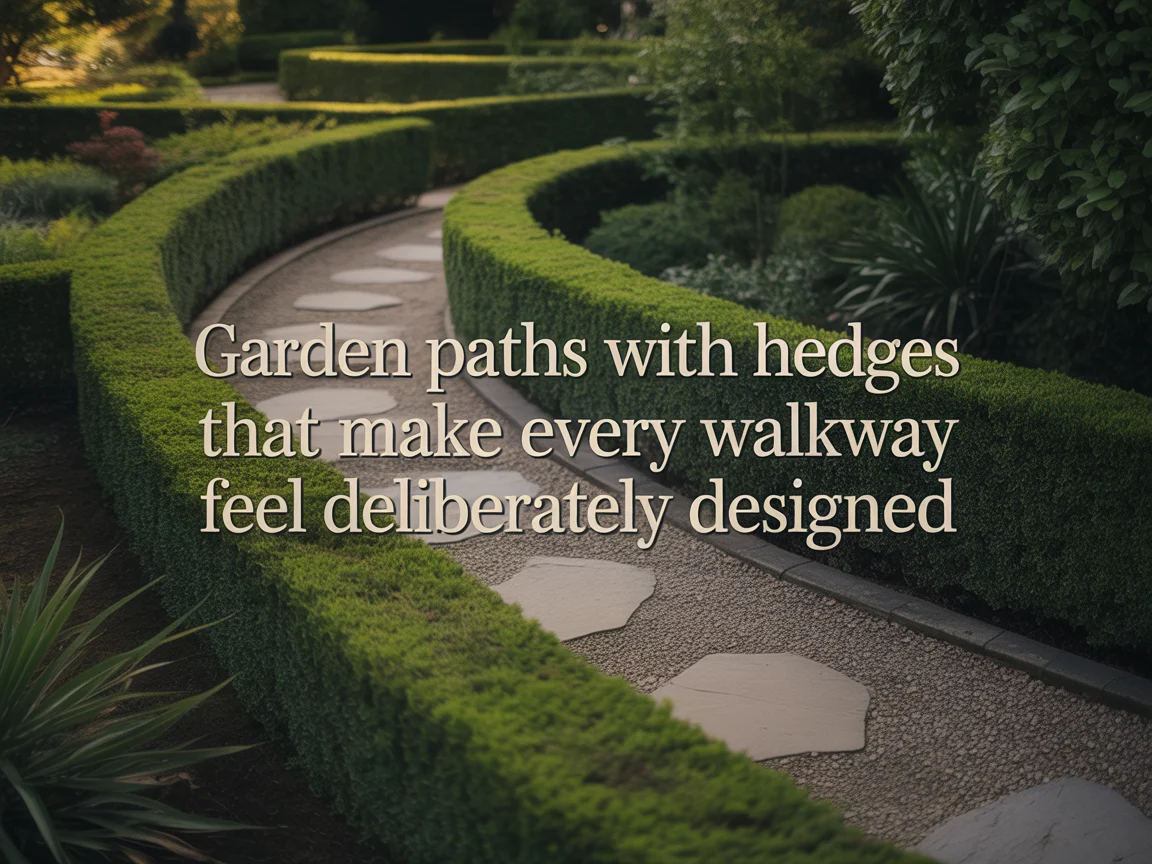
I walked through a garden path lined with clipped yew hedges at a National Trust property three years ago and stopped halfway to simply stand still. The hedge walls on both sides were 6 feet tall, perfectly flat on their faces, and the path between them was 4 feet wide. The combination of the enclosure above, the green walls on both sides, and the pale stone path surface below created a garden experience completely different from any open path I had ever walked. It was the hedges that did it. Without them, the same stone path through open planting would have been perfectly ordinary.
Garden paths with hedges combine a walkable surface with a dense, clipped, or natural shrub planting on one or both sides of the path, creating a defined green corridor that provides privacy, formal structure, seasonal interest, and a sense of enclosure that no other garden path border element produces with the same permanence or architectural quality. The hedge gives the path its walls, and the path gives the hedge a reason to exist as a linear structural garden feature rather than a boundary element.
Since that National Trust visit, I have designed, planted, and studied garden paths with hedges across formal, cottage, contemporary, and naturalistic garden styles. I have seen small hedge garden paths work in compact front gardens, and I have also seen grand yew hedge corridors create entire garden rooms at large estate properties.
In this article, I am sharing the best garden paths with hedges ideas that I have either created myself or researched thoroughly enough to recommend with complete confidence.
Box Hedge Garden Path
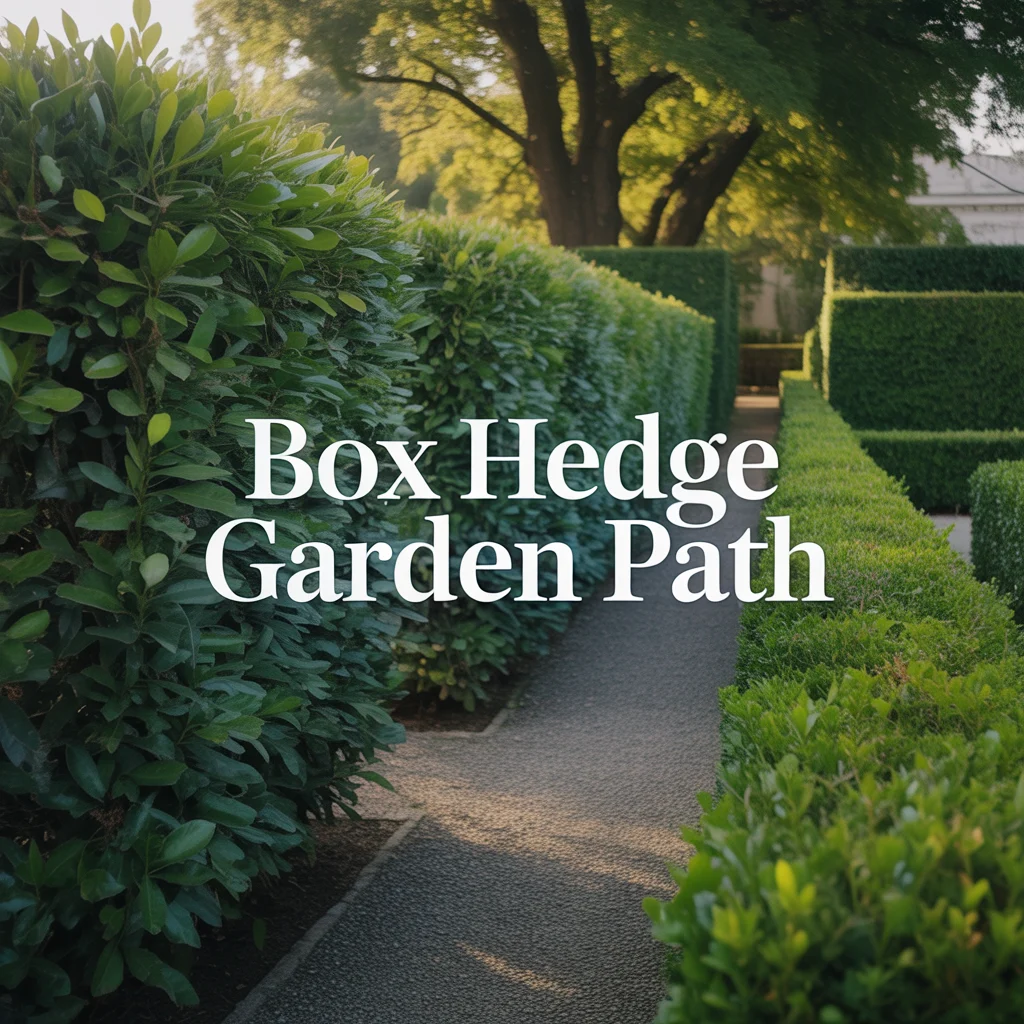
A box hedge garden path plants Buxus sempervirens in a continuous row along one or both sides of the path, clipping it to a precise flat-topped profile of 12 to 24 inches height to create the most widely recognized formal garden path hedge border in domestic garden design. I planted a double box hedge border alongside a 30-foot York stone path at a residential project, using Buxus sempervirens at 9-inch spacing in two staggered rows on both sides, and the clipped hedge produced a formal corridor effect that made the path read as the primary organizing axis of the entire garden layout from the house terrace to the far boundary.
Best Box Hedge Species for a Garden Path
Buxus sempervirens, Buxus sempervirens Suffruticosa, and Ilex crenata are three box hedge species suited to a garden path border. Buxus sempervirens produces the most vigorous, densely branching growth of the standard box range and suits a path hedge of 18 to 36 inches height where a substantial clipped border is the design intention. Buxus sempervirens Suffruticosa, the dwarf box, grows more slowly and produces a finer-textured surface suited to a path hedge of 12 to 18 inches height where a low, precise border edge coordinates with a formal paved path surface. Ilex crenata provides a box blight-resistant alternative with virtually identical visual character, suiting any garden where Cylindrocladium buxicola has been identified locally.
Box Hedge Clipping Schedule for a Garden Path
A box hedge alongside a garden path requires clipping twice per year to maintain a tight, precise surface that reinforces the formal character of the path design. The first clip takes place in late May after the first flush of new growth has extended beyond the intended profile. The second clip takes place in late August after the second growth flush. I use electric hedge shears on the flat top surface and a long straightedge board pressed against the vertical face as a cutting guide, which produces a more consistently flat surface than freehand clipping alone. Each 20-foot run of path hedge takes approximately 25 minutes to clip and tidy per session.
Yew Hedge Garden Path Corridor
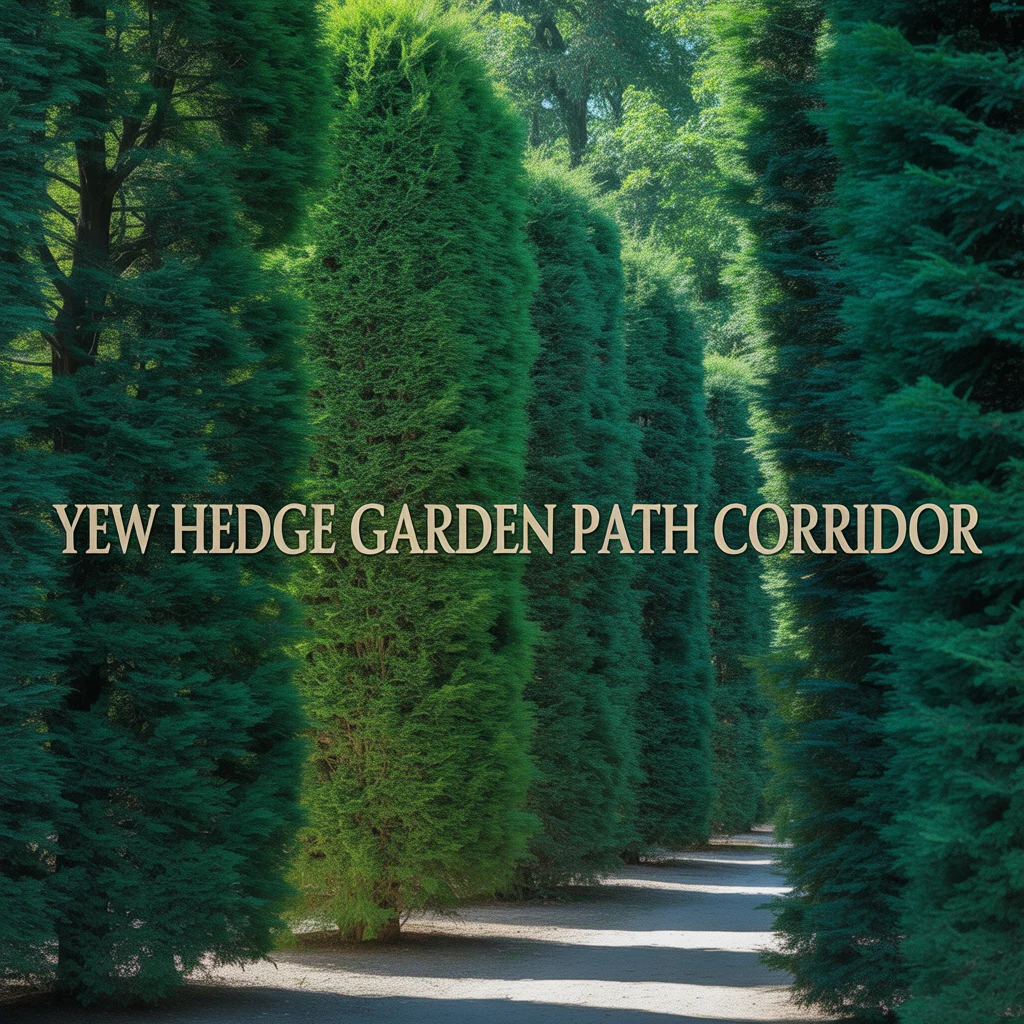
A yew hedge garden path corridor uses Taxus baccata clipped to a formal flat-topped profile of 4 to 8 feet height on both sides of the path to create a fully enclosed green corridor with strong architectural presence suited to large formal gardens, period properties, and heritage landscape settings. I studied yew-bordered garden paths at three National Trust properties and measured the hedge height to path width ratio consistently between 1.2 and 1.5, meaning a 4-foot path typically had a yew hedge of 5 to 6 feet height on both sides. This ratio produces the enclosed corridor effect without making the path feel oppressive or tunnel-like at any point.
Yew Hedge Planting for a Garden Path
Taxus baccata planted as a garden path hedge is set at 18-inch spacing in a single row for a hedge reaching 4 to 6 feet height within five to seven growing seasons, or at 24-inch spacing for a slower-establishing hedge that suits a wider path position. I plant yew hedging in autumn between October and November or in early spring in March, watering weekly for the first growing season and applying a granular slow-release fertilizer in April for the first three seasons to establish vigorous, even growth along the full path hedge length. Full clipped profile is achieved at the intended height within five to eight years depending on soil fertility.
Yew Hedge Clipping on a Garden Path
A yew hedge alongside a garden path requires one clip per year in August or September to maintain the flat-topped, vertical-faced profile that characterizes a formal path hedging border. A single annual August clip on established yew produces tight, even regrowth that remains neat throughout the winter months and into the following spring. I use electric hedge shears on the flat top surface and a cutting guide board on the vertical faces, which produces a more consistently flat surface than freehand clipping. A 20-foot run of yew path hedge at 5 feet height takes approximately 40 minutes per clipping session including tidying fallen clippings.
Hornbeam Hedge Garden Path
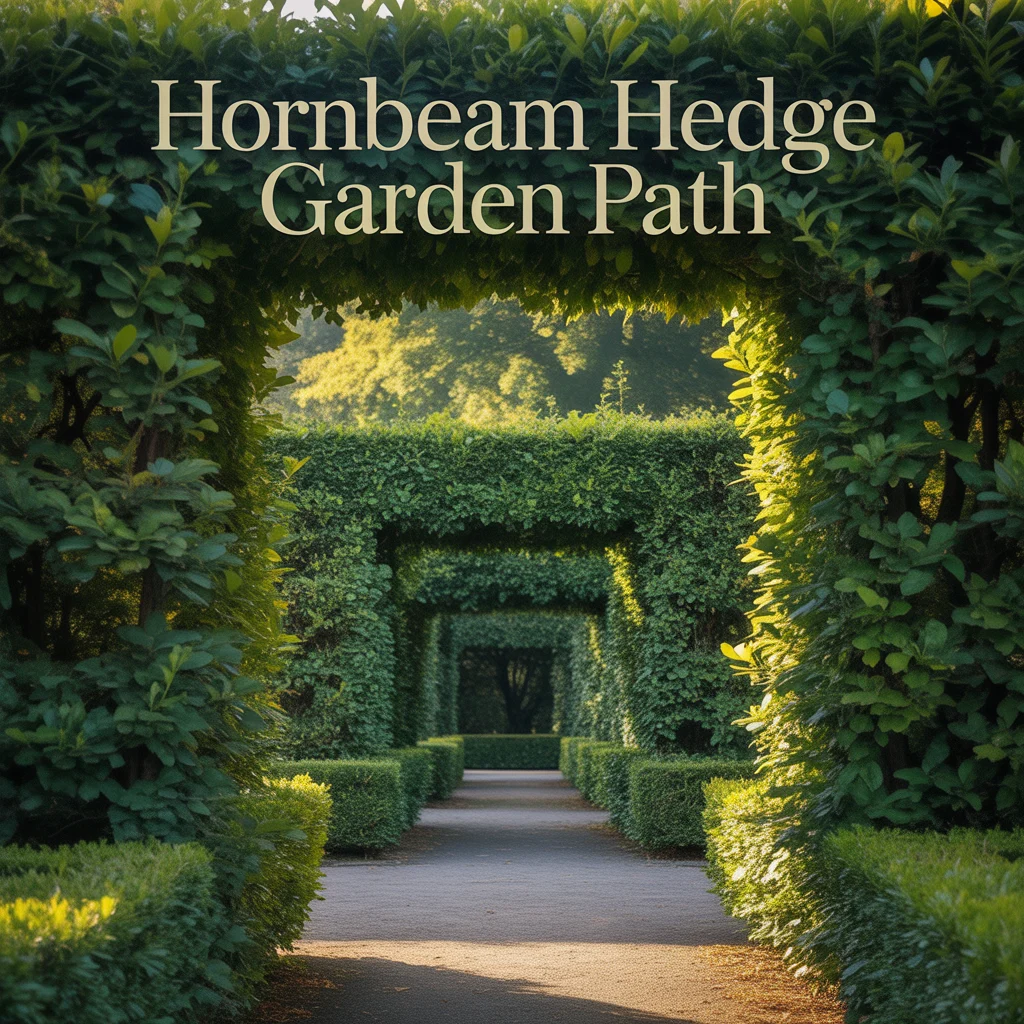
A hornbeam hedge garden path uses Carpinus betulus clipped to a formal profile alongside the path to create a hedge with a distinctive slightly ribbed, mid-green leaf surface that retains its brown dead leaves through winter rather than dropping them, providing a year-round structure that suits a formal garden path in a position where an evergreen hedge is not available due to soil or light conditions. I planted a hornbeam hedge path at a residential project where the acid, poorly drained soil prevented successful yew or box establishment, and the hornbeam produced an equally structured and visually impressive hedge corridor alongside a 25-foot stone path within four growing seasons. Ideas for combining a hedge-lined path with a gated entrance are covered in these garden paths with gates framed by hedge walls.
Hornbeam vs Beech for a Garden Path Hedge
Hornbeam, Carpinus betulus, and beech, Fagus sylvatica, are two deciduous hedging species suited to a formal garden path, with practical differences affecting plant choice in different site conditions. Hornbeam tolerates heavier, wetter clay soils and shadier positions than beech, making it the more reliable choice for a garden path hedge in a challenging soil or light position. Beech produces a slightly larger, smoother leaf than hornbeam with a more copper-orange winter leaf retention tone compared to the tan-brown of hornbeam, suiting a path hedge where the winter leaf color provides a decorative seasonal contrast with the path surface. Both species clip to an equally precise formal profile.
Hornbeam Hedge Planting Spacing for a Garden Path
Hornbeam for a garden path hedge is planted at 18-inch spacing in a single row for a standard path hedge of 4 to 6 feet height, or at 15-inch spacing in a double staggered row for a denser, faster-establishing hedge that suits a path position where achieving visual screening quickly is the priority. I plant hornbeam path hedges in bare-root form between November and March, which costs significantly less per plant than container-grown hedging at $1.50 to $3.00 per bare-root plant compared to $8 to $15 per container plant, and produces equivalent establishment results within the first two growing seasons when planted correctly.
Low Box Hedge Edging on a Garden Path
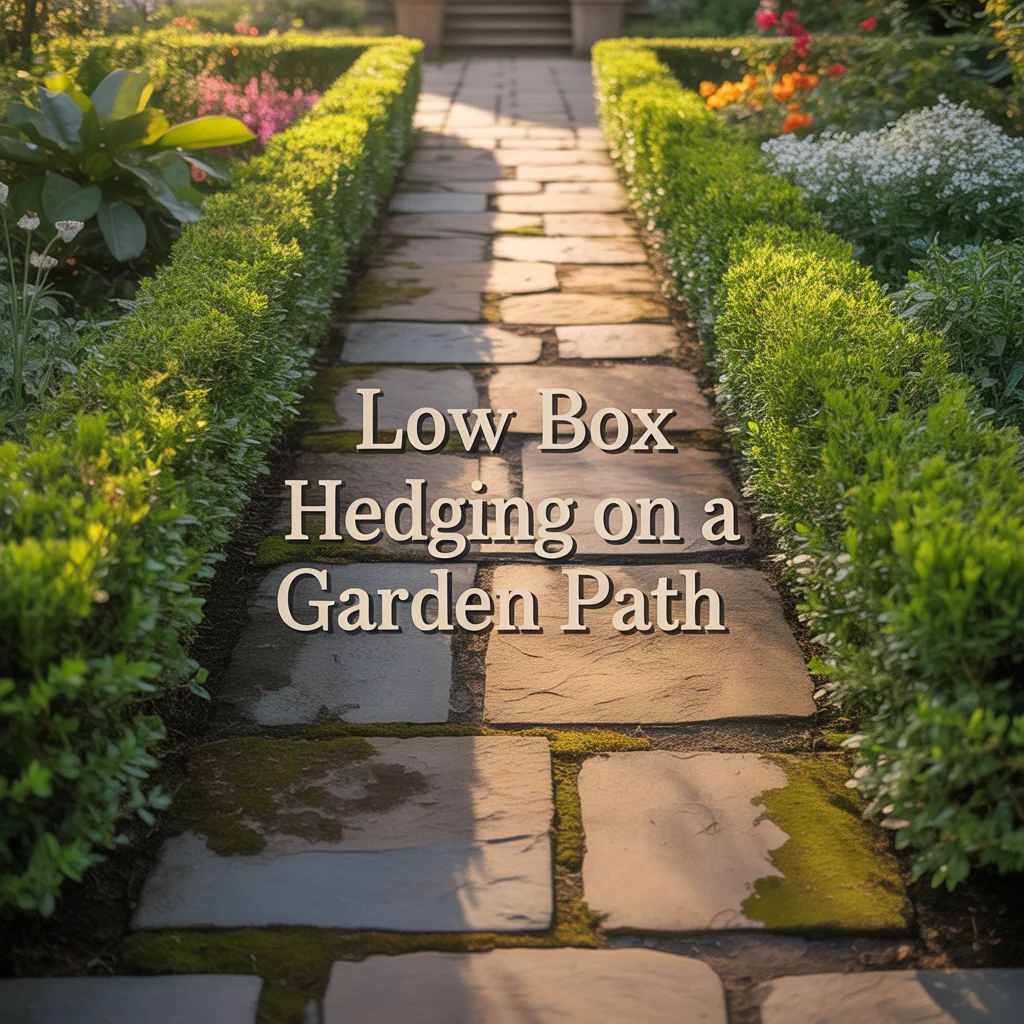
A low box hedge edging on a garden path uses a single row of Buxus sempervirens Suffruticosa clipped to 6 to 12 inches height along one or both sides of the path as a structural path edge rather than a full corridor hedge, creating a defined green border that suits cottage gardens, formal front garden paths, and kitchen garden paths where a low living edge provides both a decorative and a practical path boundary. I planted a low box edging alongside the central path of my kitchen garden at 6-inch spacing and clipped it to 10 inches height, and the low hedge edge reduced the weekly edging maintenance time by half compared to the same path without any edging.
Planting a Low Box Hedge Path Edging
A low box hedge path edging is planted by marking a straight line along the path edge using a string line, digging a 6-inch-wide, 6-inch-deep planting trench along the marked line, setting plug plants or small container plants at 6-inch intervals in the trench with roots spread evenly, backfilling with improved soil mixed with 20% sharp grit for drainage, and firming each plant individually before watering the full planted row. I clip the top of newly planted box edging to 2 inches above the intended final hedge height immediately after planting to encourage basal branching that produces the dense, thick hedge profile needed for an effective path border edge by the third growing season.
Low Hedge Alternatives to Box for a Garden Path
Ilex crenata, Euonymus japonicus, and Lonicera nitida are three low hedge alternatives to box suited to a garden path edging. Ilex crenata provides the most visually identical alternative to box at 6 to 18 inches height and resists box blight, making it the direct replacement plant for gardens where the disease is established. Euonymus japonicus clips to a formal edge at 12 to 24 inches height and suits a path hedge in a coastal garden where box and ilex struggle in exposed salt-wind conditions. Lonicera nitida grows the fastest of the three alternatives, reaching 18 inches of clipped hedge height within two seasons of planting, suiting a path where a fast-establishing box substitute is needed.
Lavender Hedge Garden Path
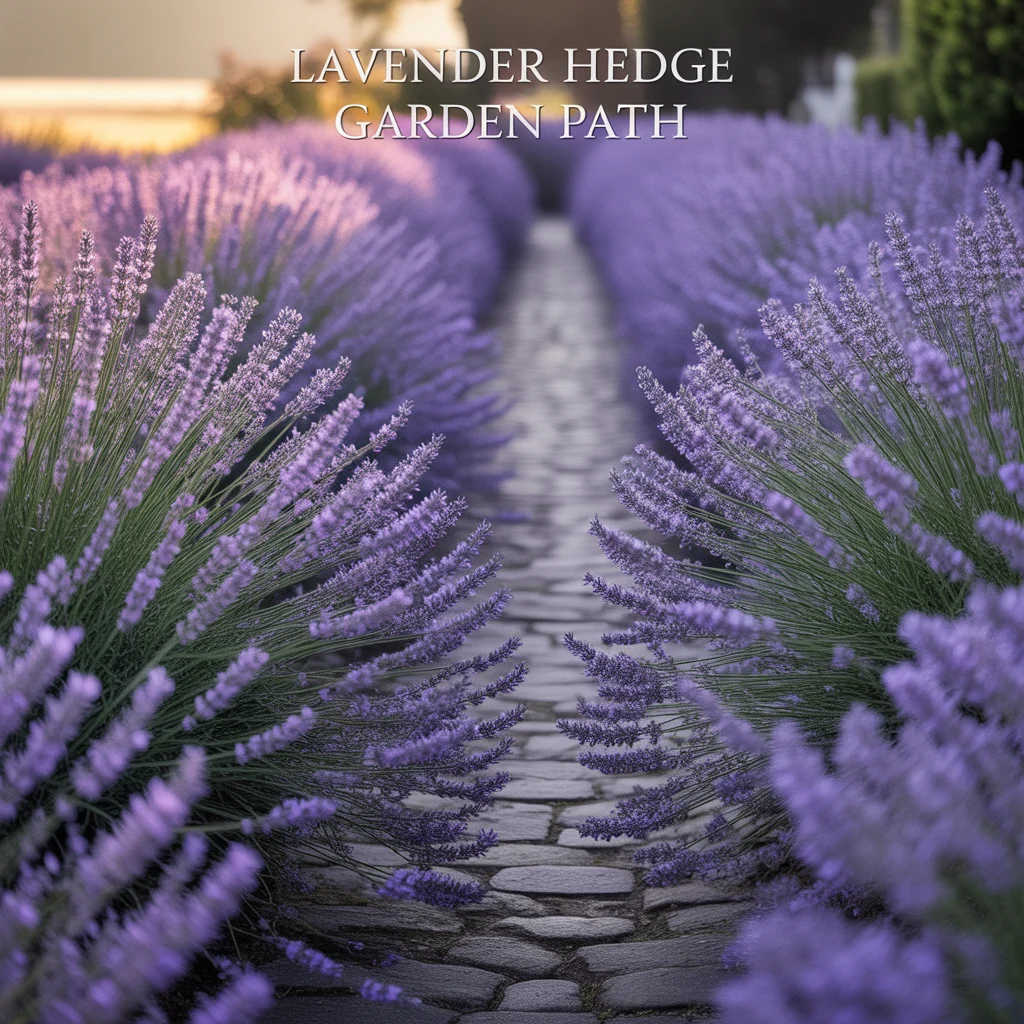
A lavender hedge garden path plants Lavandula angustifolia in a continuous row along both sides of the path to create an informal, aromatic path hedge of 18 to 24 inches height that provides the fragrance and seasonal flower color of a planted border with the structural definition of a low hedge border. I planted a lavender hedge path at a residential project using Lavandula angustifolia Hidcote at 12-inch spacing on both sides of a 20-foot sandstone path, and the dense hedge produced a fragrant, even-profiled border by the second growing season that looked more deliberately designed than the single-plant lavender border it replaced on the same path.
Lavender Hedge Varieties for a Garden Path
Lavandula angustifolia Hidcote, Lavandula angustifolia Munstead, and Lavandula x intermedia Grosso are three lavender varieties suited to a hedge path border. Hidcote produces the most compact, precisely clippable growth of the three varieties at 18 to 24 inches height, suiting a formal or semi-formal path hedge where a tight, even profile is the design intention. Munstead produces a slightly wider, less formal hedge at the same height and suits an informal or cottage garden path where a softer hedge edge is preferred. Grosso is a lavandin hybrid producing the strongest fragrance on 30-inch stems but a less compact clipping profile, suiting a garden path hedge where maximum scent impact is prioritized over precise hedge geometry.
Pruning a Lavender Hedge on a Garden Path
A lavender hedge alongside a garden path requires one pruning session per year in August immediately after the main flowering flush finishes, cutting all flower stems and approximately one-third of the current season’s leafy growth back to just above the old woody base of the plant. Pruning into old woody stems below the current season’s green growth kills lavender, so I always maintain a visible band of fresh green growth above the cut point on every stem pruned. A lavender path hedge pruned on this annual schedule maintains a compact, dense profile for 8 to 12 years before the plants become too woody at the base to regenerate effectively and require replacement.
Privet Hedge Garden Path
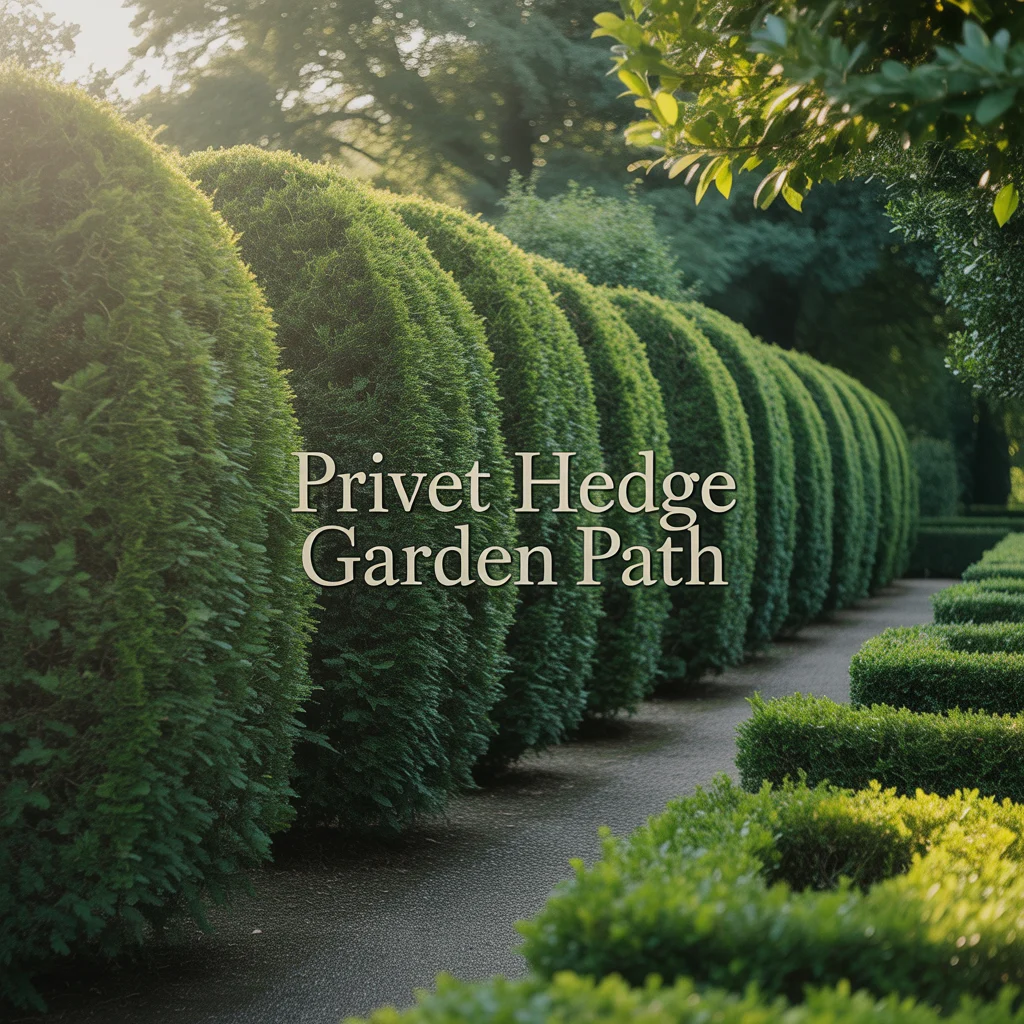
A privet hedge garden path uses Ligustrum ovalifolium clipped to a formal profile alongside the path to create one of the fastest-establishing and most affordable hedge path borders available, with privet growing at 12 to 18 inches per season and producing a dense, clippable surface within two to three years of planting from bare-root stock. I planted a privet hedge path at a front garden project where the homeowner needed a formal hedge corridor alongside a 20-foot brick path within three years of planting and at the lowest possible material cost, using bare-root Ligustrum ovalifolium at $0.80 per plant set at 12-inch spacing, and the hedge reached the intended 4-foot clipped height within three growing seasons. Ideas for combining a hedge corridor with additional border planting are covered in these garden paths with borders inside hedge-lined walkways.
Privet Hedge Design for a Garden Path
Formal box-top profile, tapered A-frame profile, and rounded top profile are three privet hedge design options suited to a garden path. A formal box-top profile clips the top flat and the sides vertical, producing the most architecturally precise hedge design for a formal or period garden path where maximum structural definition is the intention. A tapered A-frame profile clips the hedge slightly narrower at the top than the base, which allows more light to reach the lower hedge surface and prevents the bare-base dieback common in formal box-top privet hedges in shaded positions. A rounded top profile suits an informal or cottage garden path hedge where a softer, less regimented hedge form coordinates with the surrounding planting style. Ideas for applying hedge enclosure to tight or narrow path layouts are covered in these long narrow garden paths enclosed by hedges.
Privet Hedge Maintenance on a Garden Path
A privet hedge alongside a garden path requires clipping three to four times per year to maintain a tight, precise profile because privet grows faster than any other formal hedge species at 12 to 18 inches per season. The first clip in May shapes the spring growth flush back to the intended profile. The second clip in July addresses the early summer growth. The third clip in September maintains the hedge into the dormant season. A fourth light clip in November removes any final season growth on fast-growing privet hedges in favorable growing conditions. I use electric hedge shears on all privet path hedges and find a 20-foot run takes 20 minutes per clipping session.
Pleached Hornbeam Hedge Garden Path
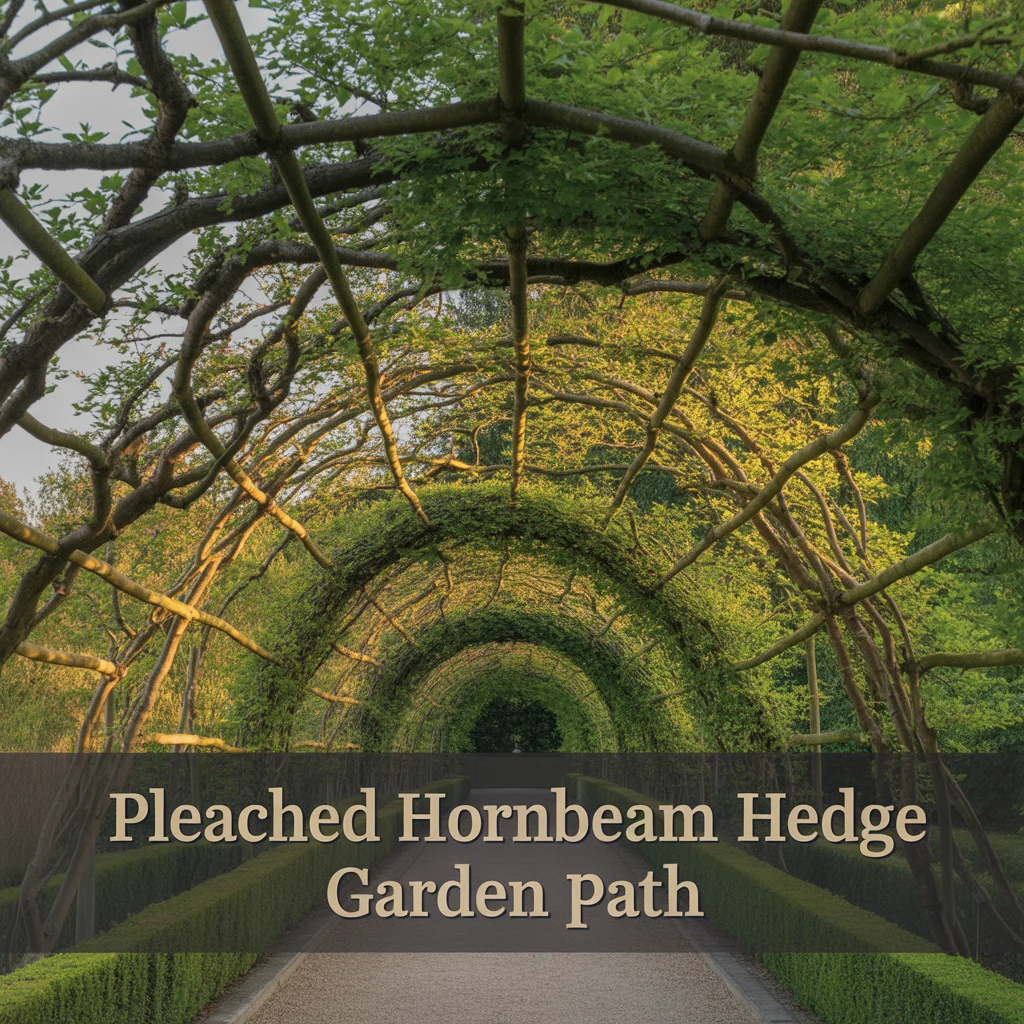
A pleached hornbeam hedge garden path uses Carpinus betulus trained on a horizontal wire framework above a clear stem of 5 to 6 feet, creating a path hedge where the trained canopy begins above head height rather than at ground level, producing a formal overhead canopy effect alongside the path rather than a solid green wall from ground to top. I specified pleached hornbeam panels at 5-foot stem height alongside a 25-foot formal garden path at a large residential project, and the pleached canopy produced a distinctive overhead green lattice alongside the path that suited the contemporary formal character of the garden better than a solid ground-level hedge of the same species.
Pleaching Hornbeam for a Garden Path
Pleached hornbeam for a garden path is trained on a post-and-wire framework with horizontal wires at 18-inch intervals between 5 feet and 8 feet height, using two-year-old feathered hornbeam trees planted at 4 to 5-foot spacing with their lateral branches tied into the horizontal wires and all growth below the 5-foot clear stem height removed. I install the post-and-wire training framework before planting the hornbeam trees, which allows the wire positions to be set accurately at the intended training heights before any plant growth needs to be tied in. The pleached canopy reaches its full framework coverage within three to four growing seasons of initial planting and training.
Hedge Design Ideas Using Pleached Trees
Pleached hornbeam stilts, pleached lime avenues, and pleached apple espalier paths are three hedge design ideas using pleached or trained trees alongside a garden path. Pleached hornbeam stilts provide the most formal and precisely clipped canopy of the three options and suit a large formal garden path where the canopy above adds a ceiling element to the path corridor. Pleached lime, Tilia platyphyllos Rubra, produces a more fragrant canopy with lime flowers in June and suits a formal path where the June fragrance adds a seasonal sensory dimension to the pleached hedge pathway design. Pleached apple espalier paths combine fruiting and decorative functions along a kitchen garden path.
Beech Hedge Garden Path
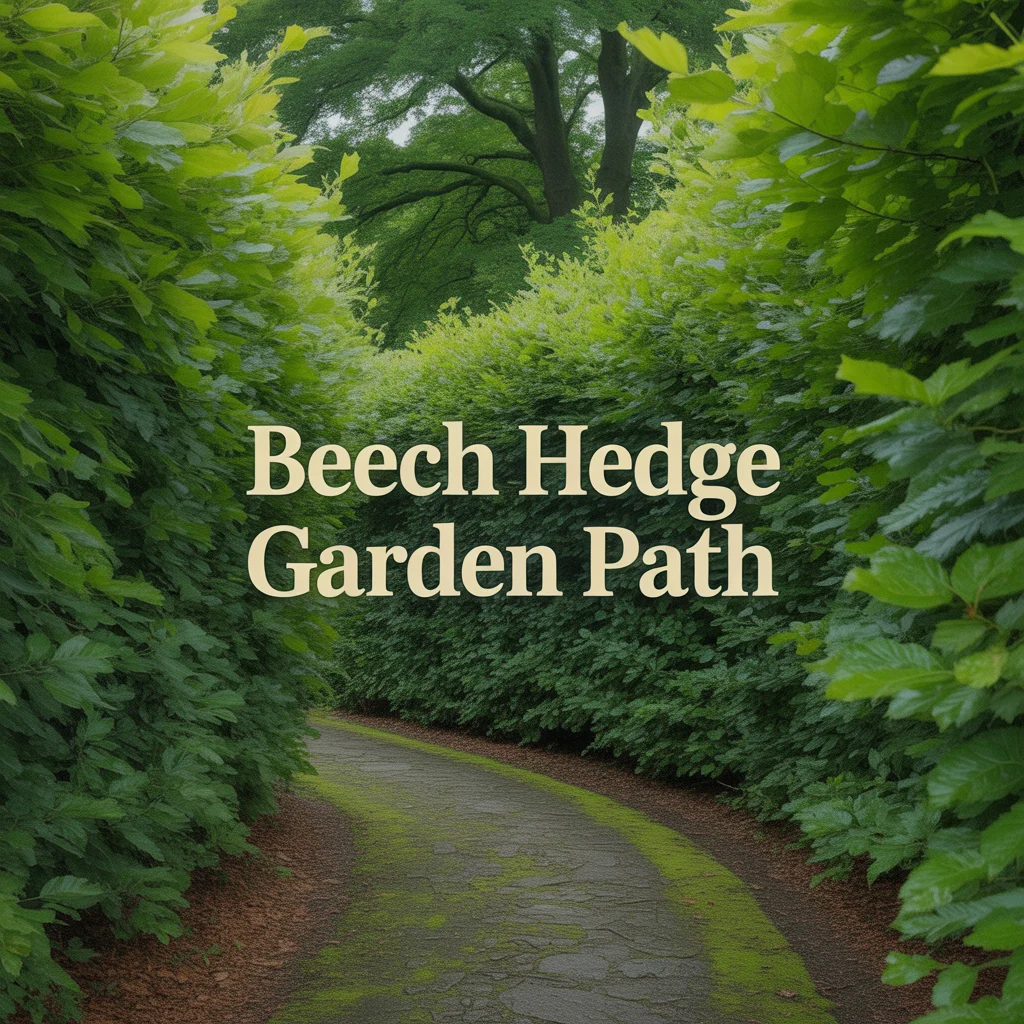
A beech hedge garden path uses Fagus sylvatica clipped to a formal or informal profile alongside the path to create a hedge with a distinctive copper-orange winter leaf retention that provides the path with a warm seasonal color change from October through to March when the dead leaves remain attached to the branches before the new spring growth emerges. I planted a beech hedge path at a residential project and found that the copper winter leaf color photographed better than any other hedge species in autumn light, particularly when the path surface was pale stone and the beech hedge provided the dominant color element in the garden from October onwards.
Beech Hedge Planting for a Garden Path
Fagus sylvatica for a garden path hedge is planted at 18-inch spacing in a single row using bare-root plants between November and March, which costs $1.50 to $3.50 per bare-root plant compared to $10 to $20 per container plant and produces equivalent establishment results within the first two growing seasons. Beech requires a free-draining soil with a pH of 6.0 to 7.5 and tolerates chalk and sandy soils better than most formal hedge species, making it a suitable path hedge for gardens where yew and hornbeam establish poorly due to free-draining alkaline conditions. I water beech path hedges weekly for the first growing season and apply a balanced fertilizer in April for the first three years.
Beech Hedge Height for a Garden Path Corridor
A beech hedge alongside a garden path reads most effectively at heights of 4 to 6 feet, which provides a strong enclosing presence alongside the path without requiring the 8 to 10-foot maintenance access ladder work needed for very tall formal hedges. A beech hedge of 4 feet alongside a 3-foot path creates a hedge-to-path width ratio of 1.3, which produces the enclosed corridor effect that distinguishes a hedge-lined path from an open path with a planted border. I recommend a minimum beech hedge height of 3.5 feet alongside a garden path for the hedge to read as a corridor-forming structural element rather than simply a low ornamental border alongside the path surface.
Laurel Hedge Garden Path
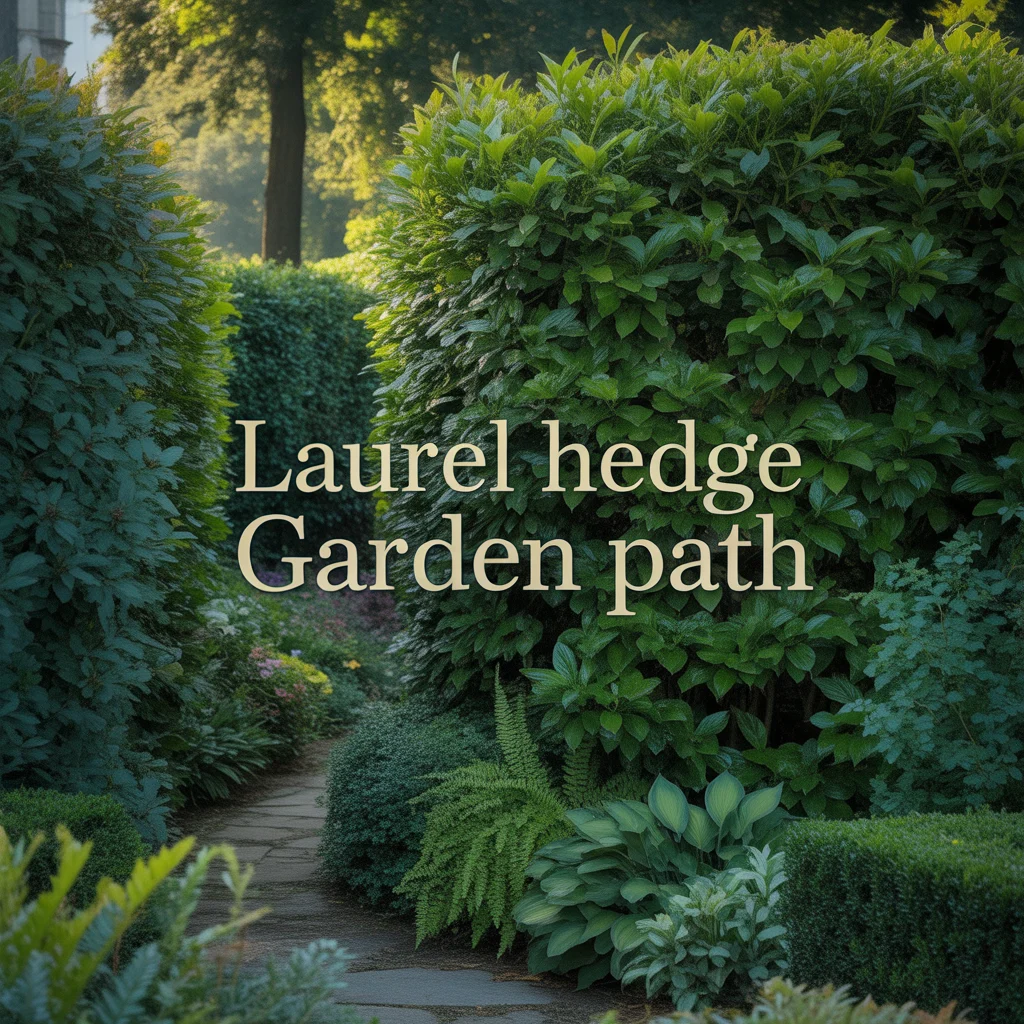
A laurel hedge garden path uses Prunus laurocerasus or Prunus lusitanica clipped or grown informally alongside the path to create a large-leaved evergreen hedge with strong, year-round green presence suited to shaded garden paths where smaller-leaved hedge species including box, yew, and hornbeam fail to produce adequate growth and density. I planted a Portuguese laurel hedge alongside a north-facing 20-foot garden path under a dense hornbeam tree canopy at a residential project, and the Prunus lusitanica produced a dense, well-furnished hedge of 5 feet height within four growing seasons in the deep shade position where three previous attempts with yew had failed to establish.
Cherry Laurel vs Portuguese Laurel for a Garden Path
Prunus laurocerasus, cherry laurel, and Prunus lusitanica, Portuguese laurel, are two laurel species used as garden path hedges with distinct differences in leaf size, clipping character, and aesthetic suitability. Cherry laurel produces the largest leaves of any commonly planted hedge species at 15 to 20cm length, which means cut edges on clipped hedges show brown slicing marks on the leaf surface that make closely clipped formal profiles look untidy. Portuguese laurel produces smaller leaves of 5 to 10cm that clip cleanly without visible cut edges, making it significantly better suited to a formal clipped path hedge than cherry laurel. I always specify Prunus lusitanica rather than Prunus laurocerasus for formal clipped garden path hedge projects.
Laurel Hedge Clipping on a Garden Path
Prunus lusitanica alongside a garden path requires one main clip per year in late July or early August, cutting the full hedge surface back to the intended profile using loppers rather than electric hedge shears to avoid the brown cut-edge marking that slicing through large leaves produces. I use sharp bypass loppers to cut each stem individually rather than passing hedge shears across the full surface, which produces a clean, professional-looking clipped profile without the brown leaf damage that ruins the appearance of laurel hedges clipped with standard hedge cutting equipment. A 20-foot Prunus lusitanica path hedge at 5 feet height takes approximately 90 minutes to clip properly using this individual stem cutting method.
Hedge Ideas for Privacy on a Garden Path
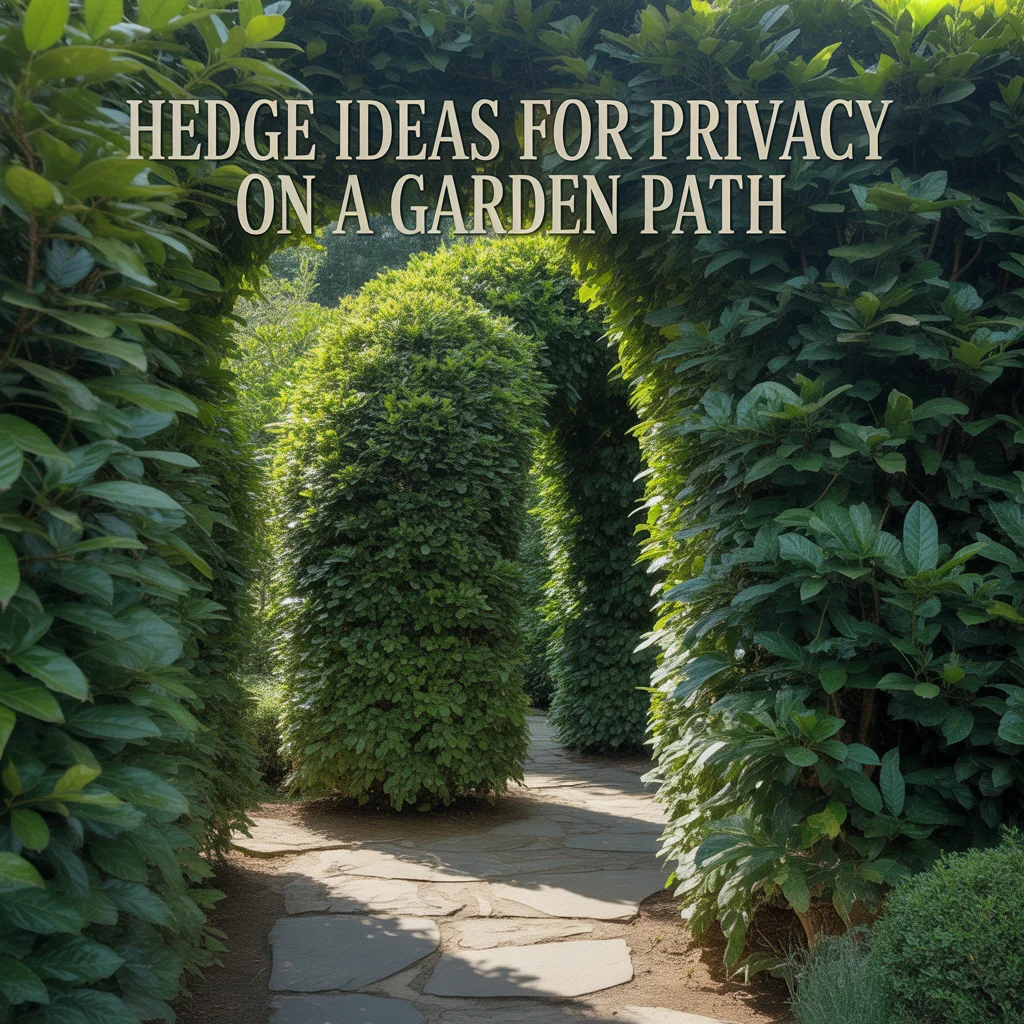
Hedge ideas for privacy on a garden path use dense, tall-growing evergreen species to create a path that is visually screened from adjacent properties, public spaces, or internal garden areas, giving the path user a sense of enclosed privacy that makes the walk through the garden a more personal, contemplative experience. I designed a privacy hedge path for a residential garden directly overlooked by a neighboring property, using a 6-foot Prunus lusitanica hedge planted on the boundary side of the path combined with a 3-foot Buxus sempervirens hedge on the inner side, and the two-sided hedge combination created a completely private garden path corridor that eliminated the overlooking issue permanently.
Best Hedge Species for Privacy on a Garden Path
Taxus baccata, Prunus lusitanica, and Thuja plicata are three hedge species suited to privacy planting alongside a garden path. Taxus baccata provides the most precisely clipped, dense evergreen screen of any hedge species and reaches 6 feet of clipped height within 8 to 10 years from young stock, providing complete visual privacy at a path hedge position where a formal, architectural appearance is the design intention. Prunus lusitanica reaches 6 feet of clipped height within 5 to 6 years and provides an equally dense screen in shaded positions where yew establishes more slowly. Thuja plicata grows at 30 to 45cm per year and reaches 6 feet within 5 to 6 years from bare-root planting, providing the fastest-establishing privacy hedge for a garden path.
Privacy Hedge Heights for a Garden Path
A privacy hedge alongside a garden path reaches its minimum functional screening height when it exceeds the eye height of a standing adult in the overlooking position, typically 6 feet from finished ground level or above. A hedge of 5 feet provides partial privacy by blocking the direct line of sight at seated height from the adjacent position but does not prevent standing-height overlooking. A hedge of 7 to 8 feet provides full privacy from a standing adult at ground level in the adjacent area. I calculate the required hedge height for a garden path privacy planting by measuring the finished ground level difference between the path position and the overlooking position, then adding 6 feet to the height of any elevated overlooking position.
Hedge Design Ideas for a Front Garden Path
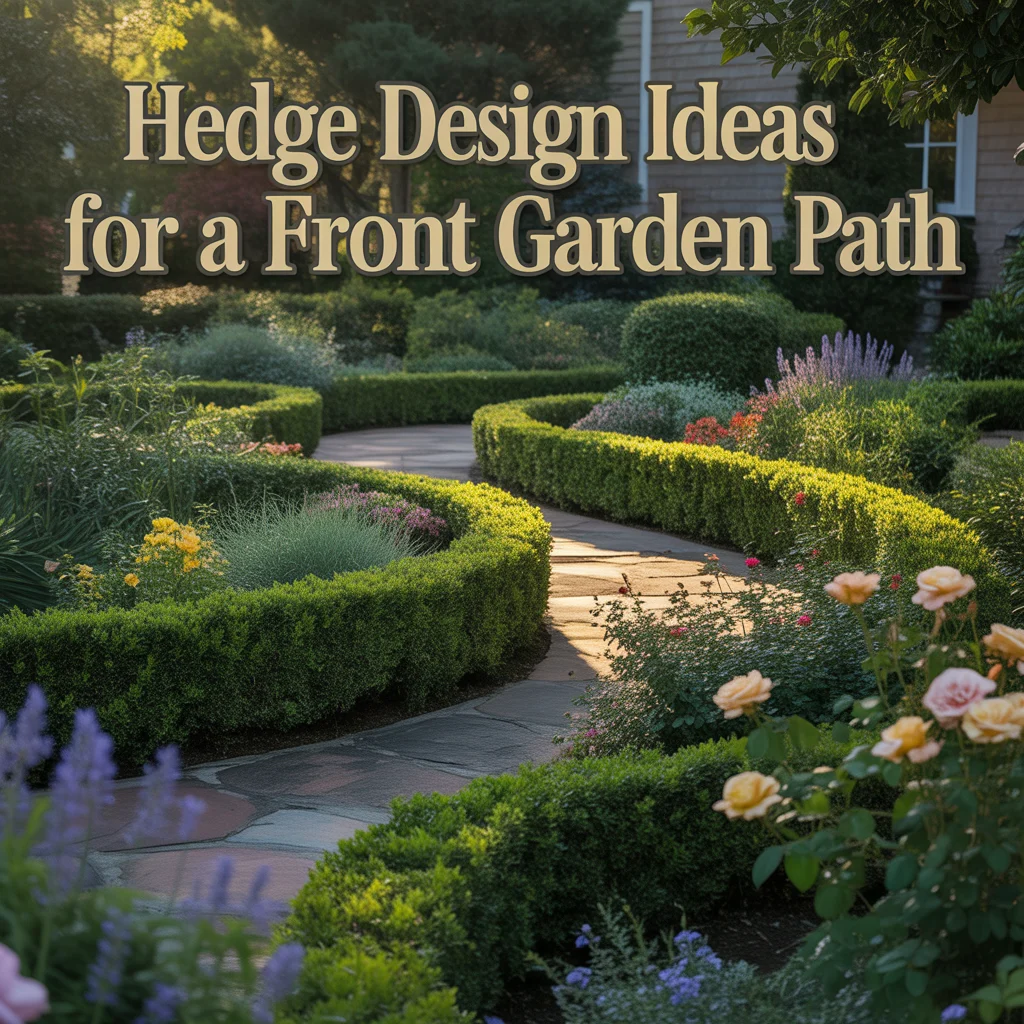
Hedge design ideas for a front garden path use carefully selected hedge species, heights, and profiles to create a front garden path experience that balances privacy from the street with an open, welcoming entrance appearance that suits the architectural character of the house and the scale of the front garden space. I redesigned the front garden path of a semi-detached property by replacing the existing mixed boundary planting with a formal Buxus sempervirens hedge of 24 inches height on both sides of a 3-foot-wide sandstone path, and the low formal hedge immediately gave the front garden a structured, well-maintained appearance that increased the property’s kerb appeal significantly.
Low Maintenance Hedges for Front of House on a Garden Path
Ilex crenata, Euonymus japonicus, and Lonicera nitida are three low maintenance hedges suited to a front garden path. Ilex crenata requires only one clip per year in July to maintain a precise 18 to 24-inch profile alongside a front path and provides complete box blight resistance, making it the most reliable formal path hedge for a front garden where maintenance time is limited. Euonymus japonicus clips to a neat formal profile at 18 to 30 inches and tolerates coastal and urban pollution conditions better than box or ilex, suiting a front garden path in an exposed or urban location. Lonicera nitida establishes the fastest of the three species and reaches the intended clipped height within two growing seasons.
Hedge Ideas for Front of House Path Proportions
A front garden path hedge reads most effectively when the hedge height equals 60 to 80% of the path width, producing a hedge that frames the path clearly without creating an enclosed corridor effect that would be inappropriate for a welcoming front garden entrance. For a standard 3-foot front path, the correct hedge height range is 22 to 29 inches. For a 4-foot front path, the range is 29 to 38 inches. I measure the front path width before finalizing the intended hedge height on every front garden path hedge design project, because the proportional relationship between hedge height and path width is more important to the visual success of the design than any specific hedge height in isolation.
Hornbeam Tunnel Hedge Garden Path
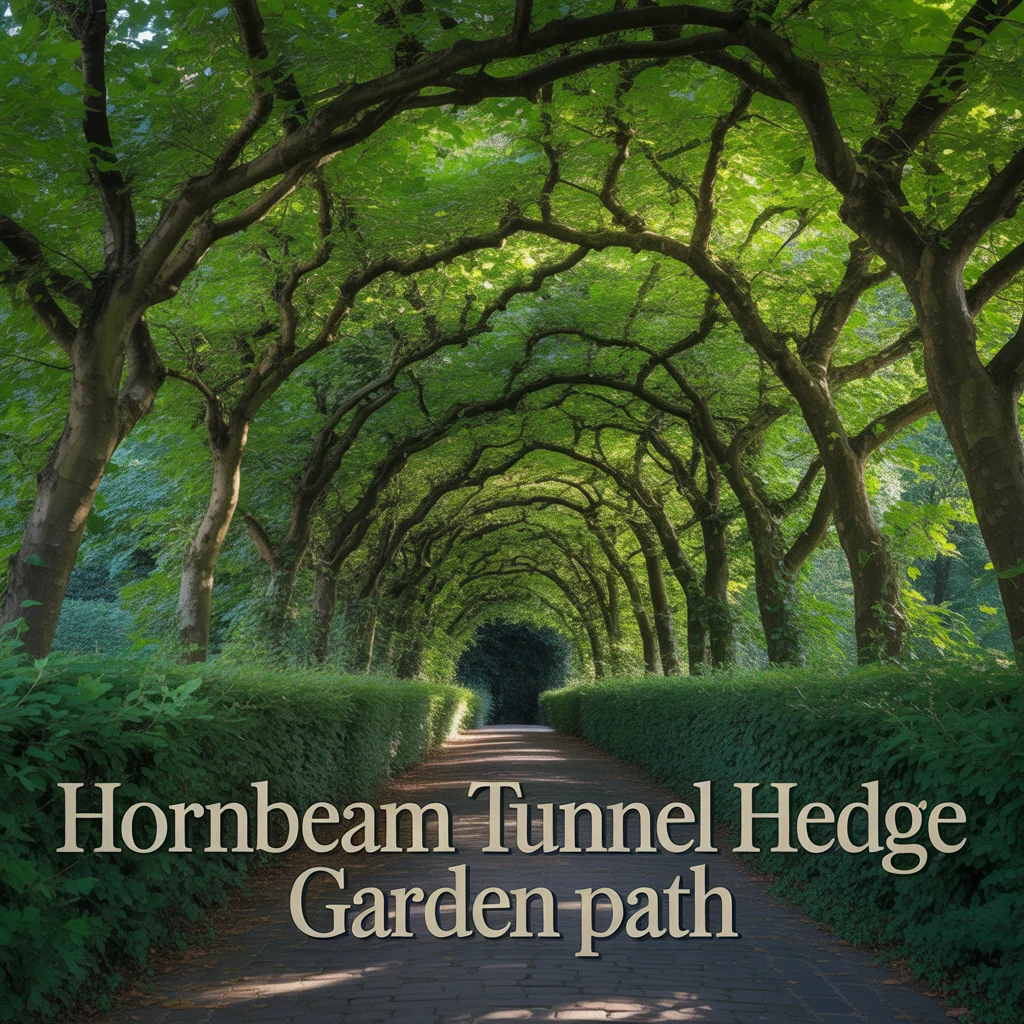
A hornbeam tunnel hedge garden path trains Carpinus betulus in arching forms over the full width of the path to create an overhead canopy that encloses the path from above as well as on both sides, producing the most immersive and visually dramatic version of garden paths with hedges available in formal garden design. I visited a private garden with a 40-foot hornbeam tunnel hedge path and the experience of walking through the fully enclosed green tunnel was qualitatively different from any open or partially enclosed hedge path I had experienced before, producing a sense of deliberate movement through a designed space that I found genuinely affecting.
Creating a Hornbeam Tunnel Over a Garden Path
A hornbeam tunnel over a garden path is created by planting two rows of Carpinus betulus at 4 to 5-foot spacing on both sides of the path, training the leading shoots into a central arch frame of galvanized steel hoops at 4 to 5-foot intervals across the path width, and tying the arching shoots to the frame until the hornbeam growth spans the full arch width and the two sides meet at the tunnel apex. The steel hoop framework is installed before planting and anchored to 4-by-4-inch timber posts on both sides of the path, providing the arch support structure for the first five to eight years until the hornbeam growth is self-supporting across the tunnel span.
Hornbeam Tunnel Maintenance on a Garden Path
A hornbeam tunnel hedge on a garden path requires one main clip per year in August after the summer growth flush, using long-reach hedge shears to clip the side faces and the overhead canopy surface to the intended tunnel profile. The interior face of the tunnel is clipped to maintain the internal height of the arch at a minimum of 7 feet to allow comfortable upright walking through the tunnel with clearance for taller adults. I clip the overhead canopy of hornbeam tunnel path hedges standing on a stable step platform rather than working at arm’s length from below, which produces a more consistent, evenly clipped overhead surface and reduces the physical strain of extended overhead cutting during longer clipping sessions.
Formal Garden Path With Two Different Hedge Heights
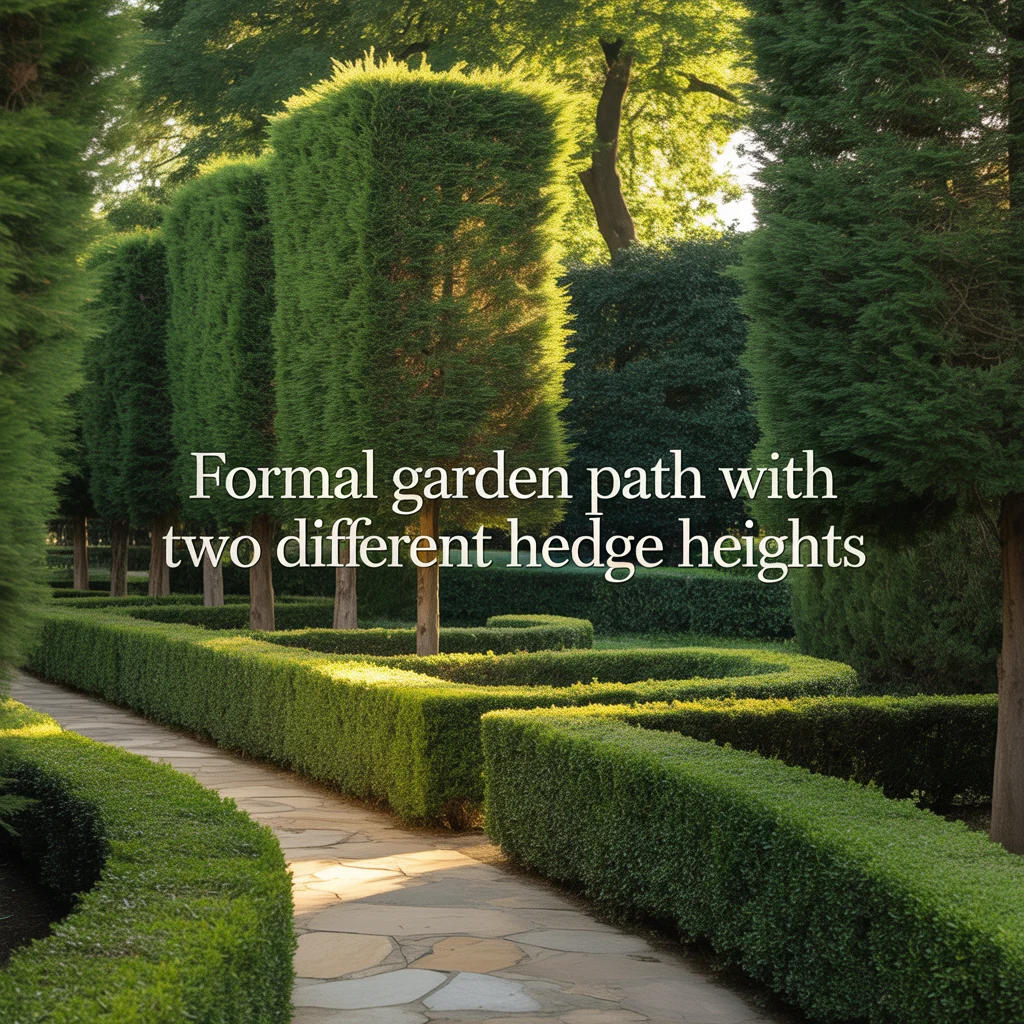
A formal garden path with two different hedge heights uses a tall outer hedge of 5 to 6 feet on one side and a low inner hedge of 18 to 24 inches on the opposite side to create a path with a layered hedge effect that provides privacy from one direction while maintaining an open view in the other. I designed this combination at a formal walled garden project using Taxus baccata at 5 feet on the north boundary side and Buxus sempervirens at 20 inches on the inner garden side of the same path, and the contrast between the tall dark yew and the low green box on opposite sides of the 3-foot path created one of the most formally resolved garden path designs I have produced.
Combining Hedge Species on a Garden Path
Combining yew with box, combining hornbeam with lavender, and combining laurel with rosemary are three hedge species combinations suited to a formal garden path with two-sided planting. Combining yew at 5 to 6 feet with box at 18 to 24 inches creates the most classically formal two-height path hedge combination, suiting a period or formal garden where both hedge species are consistent with the architectural character of the surrounding garden design. Combining hornbeam at 4 to 5 feet with lavender at 18 to 24 inches creates a more relaxed, semi-formal two-height combination suiting a cottage or country garden path where the rigid hornbeam contrasts with the soft, fragrant lavender on the opposite side.
Path Width for a Two-Sided Hedge Garden Path
A garden path with hedge borders on both sides requires a minimum walking width of 3 feet between the inner faces of the two hedges to provide comfortable passage for a single adult without brushing against the hedge foliage on either side during normal walking. A path of 4 feet between the hedge faces suits two people walking side by side and provides enough space for the hedge to overhang the path edges slightly by 3 to 4 inches during the growing season without restricting comfortable walking. I always specify the path width as the clear width between the finished inner hedge faces rather than the total ground-level width including the hedge root zones on both sides.
Informal Country Garden Hedge Path
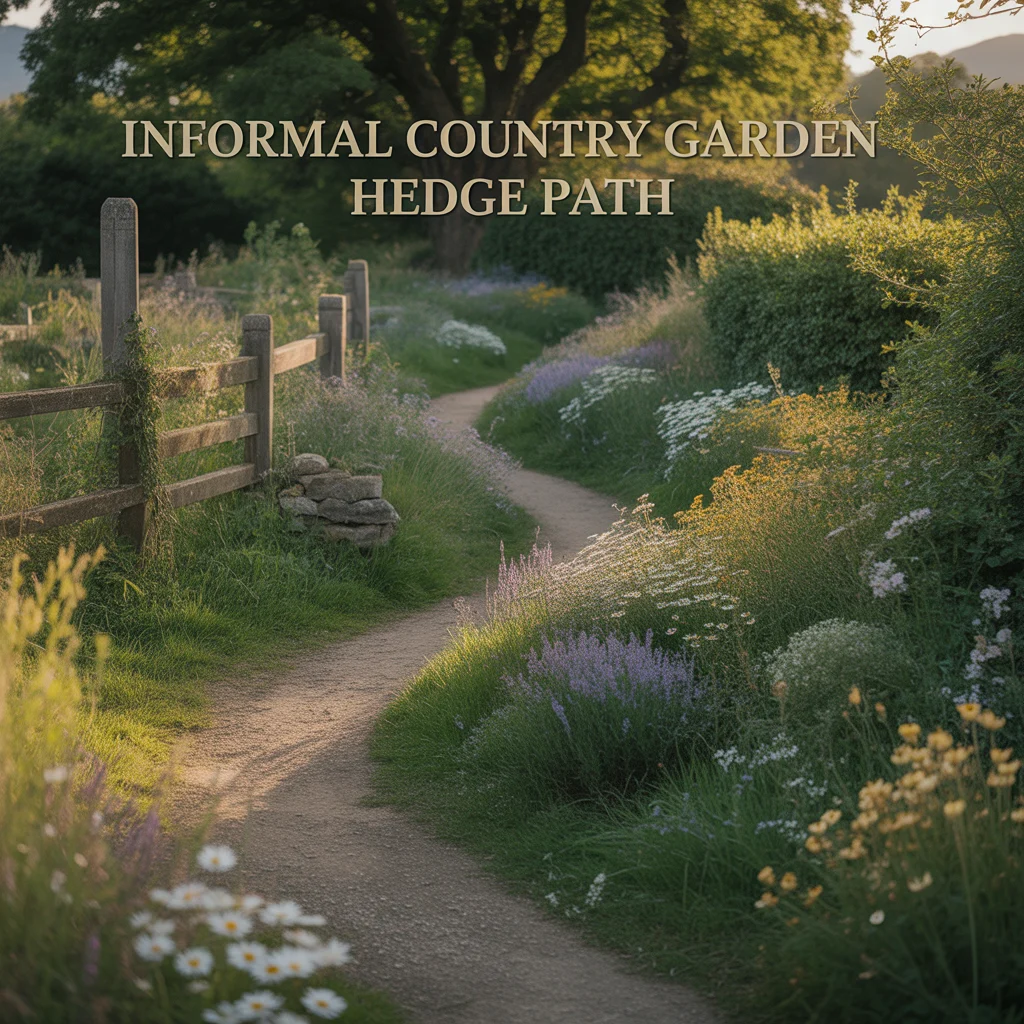
An informal country garden hedge path uses mixed native hedging species including Crataegus monogyna, Cornus sanguinea, and Rosa canina planted together in a loose, naturalistic row alongside the path rather than as a clipped formal monoculture hedge, creating a path border with seasonal flower, berry, and autumn color interest that suits rural properties, wildlife gardens, and naturalistic landscape settings. I planted a mixed native hedge alongside a bark chip path at a rural residential project using whips of hawthorn, field maple, and dog rose at 18-inch spacing in a staggered double row, and the mixed hedge produced white flowers in May, hips and berries in September, and orange-red autumn leaf color in October alongside the path.
Native Hedge Species for a Country Garden Path
Crataegus monogyna, Cornus sanguinea, and Rosa canina are three native hedge species suited to an informal country garden path. Crataegus monogyna, hawthorn, produces dense thorny growth that provides strong physical barrier alongside the path and white flowers in May followed by red haws in September and October. Cornus sanguinea, dogwood, produces red-purple autumn foliage and dark berries attracting birds to the path hedge area throughout autumn and winter. Rosa canina, dog rose, produces single pink flowers in June alongside the path and bright red hips from August through to December, providing the longest fruiting period of any native hedge species alongside a country garden path.
Managing a Mixed Native Hedge on a Garden Path
A mixed native hedge alongside a country garden path requires one main management cut per year in February using powered hedging tools to cut the full hedge face back to the intended profile, which for an informal country path hedge is typically a rounded or A-frame profile rather than the precise flat-faced profile of a formal path hedge. Hawthorn and blackthorn species in a mixed hedge can produce long whippy shoots extending 3 to 4 feet beyond the hedge face during the growing season, which require cutting back to the hedge face line in July on a path hedge to prevent the thorned shoots from obstructing the path walking width during the main garden use period.
Small Hedge Garden Paths in a Compact Space
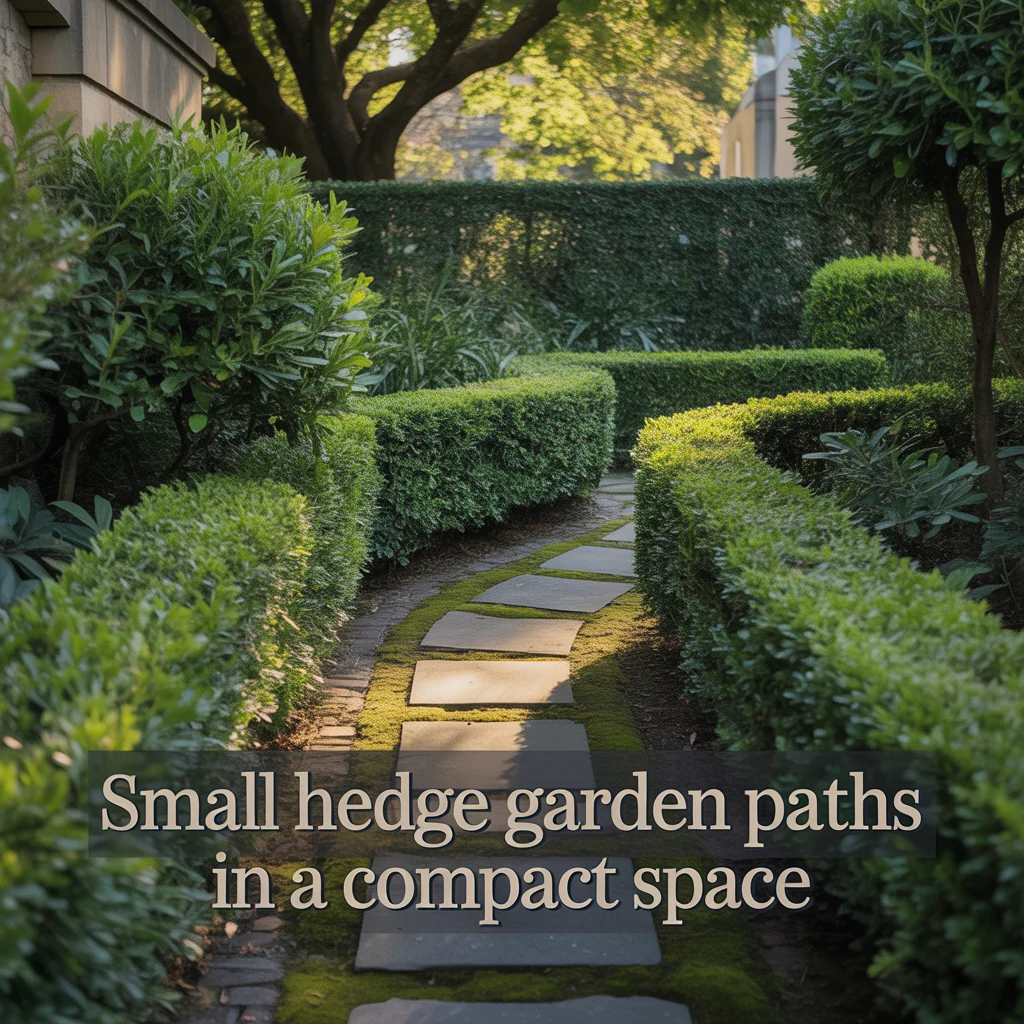
Small hedge garden paths in a compact space use reduced-scale hedge planting of 12 to 18 inches height alongside a garden path of 2.5 to 3 feet width to create a hedge-lined path design suited to small front gardens, terraced house gardens, and compact urban outdoor spaces where full-height hedge corridors would make the limited space feel enclosed and oppressive rather than structured and designed. I designed a small hedge garden path for a front garden measuring 15 by 10 feet at a terraced property, using Ilex crenata at 9-inch spacing clipped to 14 inches height on both sides of a 30-inch brick path, and the low hedge border immediately gave the compact front garden a formal, well-organized character.
Compact Hedge Species for Small Garden Paths
Ilex crenata, Buxus sempervirens Suffruticosa, and Lavandula angustifolia Hidcote are three compact hedge species suited to small garden paths. Ilex crenata produces a naturally compact growth habit at 14 to 20 inches clipped height and requires only one annual clip to maintain a tidy profile alongside a small garden path. Buxus sempervirens Suffruticosa, the dwarf box, produces the finest-textured, most precisely clippable surface of any low hedge species and suits a formal small garden path where a very neat, precise hedge edge is the design intention. Lavandula angustifolia Hidcote provides a fragrant, semi-formal low hedge of 18 to 24 inches that suits a small cottage garden path where the sensory quality of the hedge is as important as its structural definition.
Hedge Spacing for a Small Garden Path
A hedge alongside a small garden path is planted at 6 to 9-inch spacing for a compact hedge species to produce the fastest possible dense establishment that fills the path border in the minimum time after planting. A single row at 9-inch spacing for a 15-foot small garden path requires 21 plants per side, costing $42 to $126 per side at $2 to $6 per plant depending on the species selected. I always plant a small garden path hedge in a single row rather than a double staggered row to preserve the maximum planting space on both sides of the path in a compact garden where every inch of ground adjacent to the path has planting value beyond the hedge row itself.
Related
best formal garden path ideas with clipped hedge edges
how to add benches inside a hedge-lined garden walkway
garden paths with pergolas at the entrance of hedge tunnels
Frequently Asked Questions
What is the best hedge for a garden path?
Box, Buxus sempervirens, is the best hedge for a formal garden path because it produces the finest-textured, most precisely clippable surface of any garden hedge species, stays at any intended height from 12 inches to 5 feet with consistent clipping, and provides year-round evergreen structure that maintains the path border character in every season. For a low maintenance alternative, Ilex crenata provides an identical visual result with complete resistance to box blight, requiring only one annual clip. For a fragrant path hedge, Lavandula angustifolia provides both structural definition and seasonal fragrance from June to August alongside the path.
How tall should a hedge be alongside a garden path?
A hedge alongside a garden path reads most effectively at a height of 60 to 150% of the path width, which produces a hedge that clearly frames the path without creating an oppressive enclosed corridor. For a 3-foot-wide path, the functional hedge height range is 22 inches to 4.5 feet. A path hedge below 60% of the path width looks too low to read as a structural border element. A path hedge above 150% of the path width creates a tunnel effect suited to formal heritage gardens but potentially oppressive in a smaller domestic garden. I measure path width before specifying hedge height on every project.
What is the best low maintenance hedge for a front garden path?
Ilex crenata is the best low maintenance hedge for a front garden path because it requires only one clip per year in July, provides complete resistance to box blight, produces an identical visual character to formal box hedging, and tolerates a wide range of soil and urban pollution conditions without the specialist care requirements of Buxus sempervirens. Euonymus japonicus provides the next most low maintenance option, tolerating coastal and urban conditions better than ilex and requiring one clip per year. Lavandula angustifolia Hidcote provides the most low maintenance fragrant hedge option for a sunny front garden path, requiring only one annual August prune.
How do I keep a garden path hedge straight?
A garden path hedge is kept straight by using a string line stretched between two fixed pins at each end of the hedge face as a cutting reference guide during each clipping session. The string line is set at the intended finished surface position on the hedge face, and all growth extending beyond the string line is removed during clipping while leaving growth behind the string line untouched. I use this method on every formal garden path hedge clipping project and find it produces a consistently flat vertical face that freehand clipping cannot match, particularly on longer hedge runs of 20 feet or more where accumulated small errors compound into a visibly wavy surface without a reference guide.
Can I plant a hedge alongside an existing garden path?
A hedge is planted alongside an existing garden path without removing the path by digging a planting trench of 12 inches width and 12 inches depth in the soil adjacent to the path edge, incorporating improved topsoil and slow-release fertilizer, and setting the hedge plants at the correct spacing in the prepared trench. The planting trench is positioned with its inner edge immediately alongside the path edge for a low hedge of under 24 inches, or set back 6 to 12 inches from the path edge for a taller hedge to allow the mature hedge base width to develop without overhanging the path surface within the first five growing seasons after planting.