
Flowering Evergreen Shrubs for Year-Round Color


Camellia, rhododendron, and winter daphne are flowering evergreen shrubs that solve a problem most “flowering shrub” lists ignore. Plenty of shrubs flower beautifully but drop their leaves for months, leaving a bare gap in the border exactly when winter interest matters most. The 12 shrubs below keep their foliage year-round while still producing real seasonal blooms, and they’re organized by bloom season so a garden can have color in more than just one month of the year.
- Winter-blooming (rare and valuable): winter daphne, sasanqua camellia
- Spring-blooming: rhododendron, azalea, camellia japonica, pieris
- Summer-blooming: oleander, escallonia
- Best for hedging while flowering: escallonia, viburnum tinus
Evergreen vs Flowering Shrub Lists

Why “evergreen shrub” and “flowering shrub” aren’t the same list is that many popular flowering shrubs (forsythia, lilac, hydrangea) are deciduous, dropping their leaves completely for winter, while many reliable evergreens like boxwood barely flower at all. Shrubs that do both at once are a smaller, more specific category worth searching for by name rather than assuming any “flowering shrub” recommendation applies.
Why This Matters Most in Winter Borders
Why this matters most in winter borders is that a bed of deciduous flowering shrubs goes fully bare from late fall through early spring, while even one or two true flowering evergreens in the mix keeps the bed from reading as empty during the months color matters most for curb appeal.
Not all “flowering shrub” advice applies here. Many popular flowering shrubs are deciduous and drop their leaves, which defeats the point of an evergreen border.
1. Camellia Japonica for Classic Spring Blooms

Camellia japonica for classic spring blooms on glossy foliage produces rose-like flowers in late winter through spring on top of dark, glossy evergreen leaves that look presentable on their own even when the plant isn’t in bloom.
Why Camellias Struggle in Full Afternoon Sun
Why camellias struggle in full afternoon sun is that their broad leaves scorch easily in hot direct light. Camellias generally perform best in filtered shade or morning sun with afternoon protection, especially in warmer growing zones.
Camellia japonica needs afternoon shade in hot climates. Full sun exposure is the most common reason a planted camellia underperforms.
2. Sasanqua Camellia for Fall and Winter Blooms
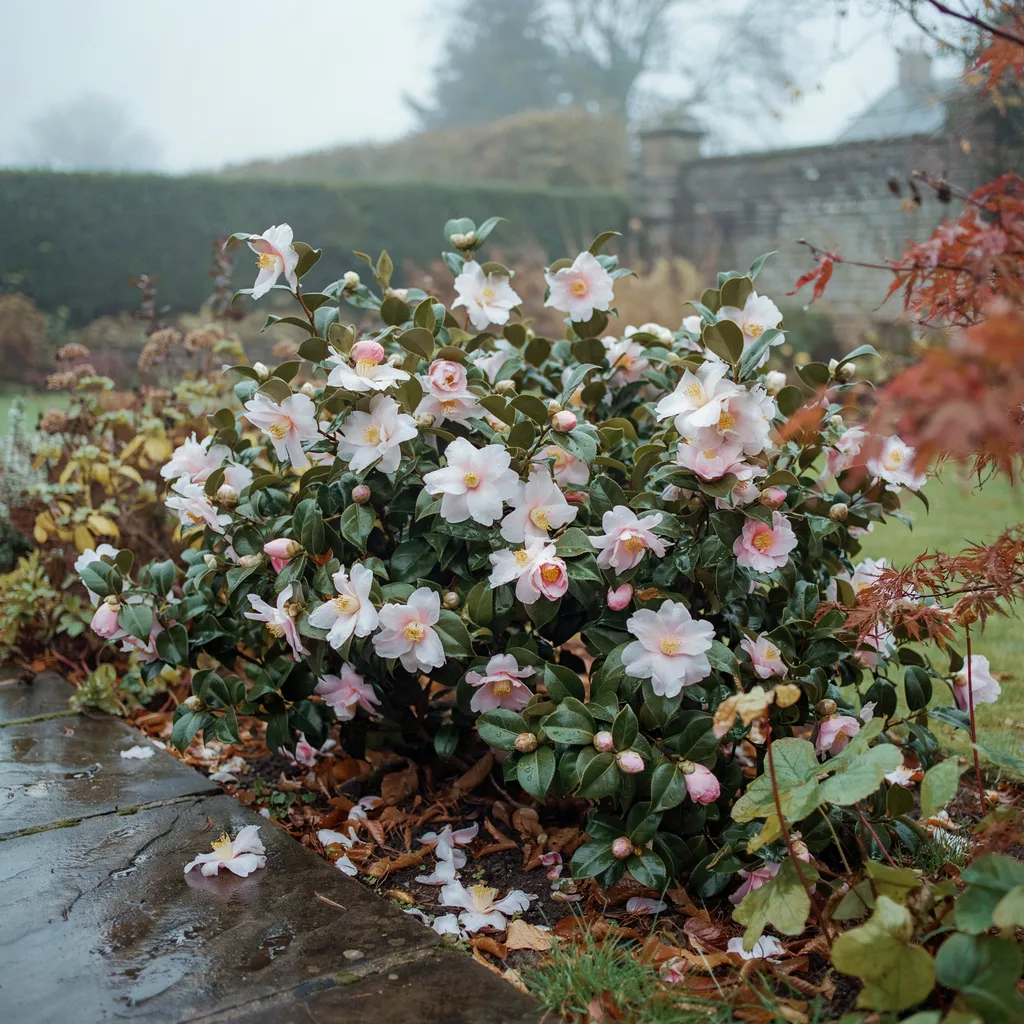
Sasanqua camellia for blooms when almost nothing else flowers opens its flowers in fall through early winter, filling a bloom gap that almost no other evergreen shrub covers, since most flowering evergreens on this list bloom in spring or summer instead.
Sasanqua camellia is one of the only reliable evergreen shrubs blooming in late fall and winter, making it worth including specifically to fill that seasonal gap.
3. Rhododendron for Bold, Large-Cluster Spring Flowers

Rhododendron for bold, large-cluster spring flowers produces some of the largest flower clusters of any evergreen shrub, in colors ranging from white and pink to deep purple and red, on a plant that holds substantial leathery foliage through winter.
Soil Requirements That Make or Break Rhododendrons
Soil requirements that make or break rhododendrons come down to acidity and drainage. Rhododendrons need consistently acidic, well-drained soil, and the single most common reason a rhododendron fails isn’t cold or light, it’s alkaline or waterlogged soil that the roots can’t tolerate.
Rhododendron failure is usually a soil problem, not a climate problem. Test soil pH and drainage before assuming a planting site is unsuitable for other reasons.
4. Evergreen Azalea for Compact Spring Bloom

Evergreen azalea for compact size with heavy spring bloom covers itself so completely in flowers during peak bloom that the foliage briefly disappears from view, on a smaller, more manageable plant than most rhododendrons.
| Shrub | Typical Mature Size | Bloom Season |
|---|---|---|
| Evergreen azalea | 3-6 ft | Spring |
| Rhododendron | 4-8 ft | Spring |
| Camellia japonica | 6-12 ft | Late winter-spring |
Evergreen azaleas stay smaller than most rhododendrons while still delivering an equally heavy spring bloom, making them the better fit for smaller foundation beds.
5. Winter Daphne for Off-Season Fragrance

Winter daphne for fragrance when little else is blooming produces small pink-white flowers in late winter with a fragrance strong enough to notice from several feet away, on a compact evergreen shrub suited to spots near a doorway or path where the scent gets appreciated.
Why Winter Daphne Has a Reputation for Being Temperamental
Why winter daphne has a reputation for being temperamental is real. It’s genuinely sensitive to wet feet and will decline in poorly drained soil faster than most shrubs on this list, so raised beds or naturally well-drained sites suit it far better than heavy clay.
Winter daphne’s fragrance and off-season bloom make it worth the extra care, but it needs genuinely well-drained soil to avoid the sudden decline it’s known for.
6. Pieris Japonica for Cascading Spring Flower Clusters

Pieris japonica for cascading spring flower clusters produces drooping chains of small white or pink flowers in early spring, with new growth that often emerges bright red or bronze before maturing to green, giving two separate seasonal color changes from one plant.
Pieris offers color twice in spring, once from the flower clusters and again from the colored new growth, making it worth the space even in a smaller bed.
7. Escallonia for Summer Flowers and Hedging

Escallonia for summer flowers on a shrub that also hedges well combines small pink or red summer flowers with dense, glossy foliage that tolerates regular shearing, which makes it one of the few shrubs on this list that works as a flowering privacy hedge rather than just a specimen plant.
Escallonia is one of the few flowering evergreens dense enough to double as a hedge, solving privacy and seasonal color in the same planting.
8. Viburnum Tinus for Winter Flowers and Berries

Viburnum tinus for reliable late-winter flowers and berries opens pink-tinged white flower clusters in late winter, followed by dark blue berries that extend visual interest well past the bloom period and provide food for birds.
Viburnum tinus extends its visual interest past bloom time through berry production, giving two distinct seasonal features rather than one.
9. Oleander for Heat-Tolerant Summer Blooming
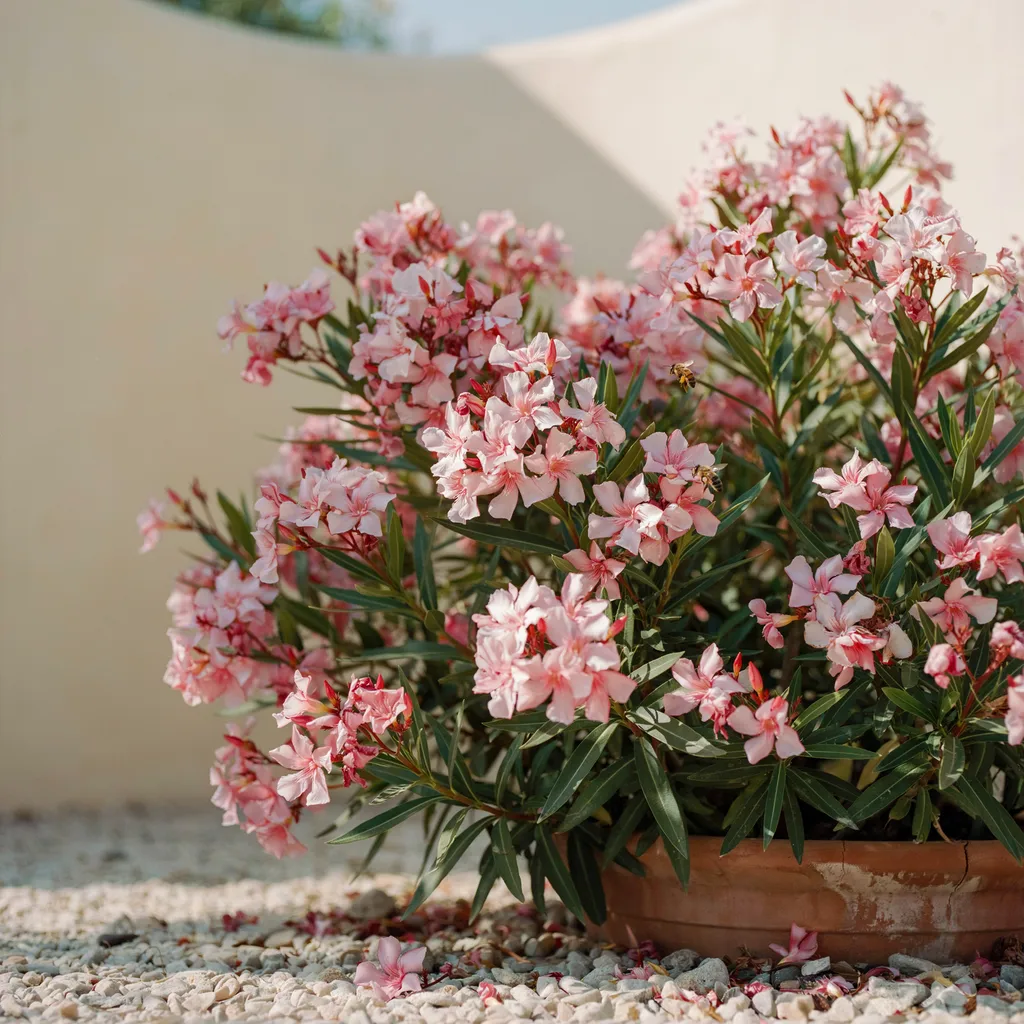
Oleander for heat-tolerant summer blooming keeps producing flowers through the hottest, driest part of summer when many other shrubs slow down, making it a reliable choice specifically for hot climates where other flowering evergreens on this list struggle.
An Important Toxicity Warning
An important toxicity warning applies to oleander specifically, every part of the plant is toxic if ingested, including smoke from burning trimmings, so it should be avoided in gardens with young children, grazing animals, or anyone who might burn yard waste.
Oleander tolerates heat better than most shrubs on this list, but its toxicity is serious enough to rule it out entirely for households with children, pets that graze, or livestock nearby.
10. Indian Hawthorn for Low-Maintenance Spring Flowers

Indian hawthorn for low-maintenance spring flowers produces small pink or white flower clusters in spring on a naturally rounded, slow-growing shrub that rarely needs pruning to maintain its shape, making it one of the lower-maintenance options on this list.
Indian hawthorn’s naturally compact, rounded growth habit means it needs less regular pruning than most shrubs on this list to stay tidy.
11. Loropetalum’s Fringed Flowers and Burgundy Foliage

Loropetalum for unusual fringed flowers on burgundy foliage stands apart with narrow, spidery pink or red flowers set against deep burgundy-purple leaves that hold their color year-round, giving foliage interest even outside the bloom period that green-leaved shrubs on this list don’t offer.
Loropetalum’s burgundy foliage provides color even when not in bloom, which distinguishes it from the mostly green-leaved shrubs elsewhere on this list.
12. Mountain Laurel for Native, Woodland-Suited Spring Blooms

Mountain laurel for native, woodland-suited spring blooms produces intricate cup-shaped flower clusters in late spring on a shrub native to eastern North American woodlands, making it a strong choice for naturalized or woodland-style plantings rather than formal foundation beds.
As a native woodland species, mountain laurel fits naturalized shade plantings more naturally than the more formal foundation-planting shrubs elsewhere on this list.
Building Year-Round Bloom With Evergreen Shrubs

Building year-round bloom with evergreen shrubs means deliberately combining shrubs from different bloom seasons rather than planting several spring bloomers and calling it done. A bed with sasanqua camellia for fall-winter, rhododendron for spring, and escallonia for summer covers three separate seasons instead of one crowded month.
| Season | Shrub Options |
|---|---|
| Late fall-winter | Sasanqua camellia, winter daphne, viburnum tinus |
| Spring | Rhododendron, evergreen azalea, camellia japonica, pieris |
| Summer | Oleander, escallonia |
Choose at least one shrub from each bloom season rather than clustering several spring bloomers together. This is what actually produces year-round color, not just a heavier spring show.
The Bottom Line
True flowering evergreen shrubs, ones that keep foliage year-round while still blooming on a schedule, are a smaller, more specific list than “flowering shrubs” in general, since many popular flowering shrubs are deciduous. Camellias and rhododendrons cover spring, escallonia and oleander cover summer, and sasanqua camellia or winter daphne fill the fall-winter gap most gardens leave completely bare.
Frequently Asked Questions
What Is the Best Flowering Evergreen Shrub for Shade?
Camellia japonica and pieris japonica are among the best flowering evergreen shrubs for shade, since both tolerate filtered light or morning sun with afternoon shade and actually perform worse in full, hot afternoon sun than they do in partial shade.
Do Flowering Evergreen Shrubs Bloom Every Year?
Yes, established flowering evergreen shrubs bloom on a predictable annual schedule once mature, though a shrub that’s been recently transplanted or pruned at the wrong time of year may skip or reduce blooming for a season while it recovers.
Which Flowering Evergreen Shrub Blooms in Winter?
Winter daphne and sasanqua camellia are the two most reliable flowering evergreen shrubs for winter and late-fall bloom, filling a season almost no other shrub on this list covers, since the majority bloom in spring or summer instead.
Can Flowering Evergreen Shrubs Be Used as a Privacy Hedge?
Escallonia and viburnum tinus are the best choices here, since both tolerate regular shearing and grow densely enough to form a solid screen, unlike looser-growing specimen shrubs like rhododendron that are better suited to standalone planting.
Are Any of These Shrubs Toxic to Pets?
Oleander is seriously toxic to pets and humans in every part of the plant, including smoke from burning it, and should be avoided entirely in households with pets or children; rhododendron and azalea foliage is also toxic if grazed in quantity, which matters mainly for households with livestock or grazing animals.
How Often Should Flowering Evergreen Shrubs Be Pruned?
Most flowering evergreen shrubs need pruning right after their bloom period ends, not before, since pruning too early removes the flower buds that were already set. Checking each specific shrub’s bloom timing before reaching for pruning shears prevents accidentally cutting off next season’s flowers.
What’s the Easiest Flowering Evergreen Shrub for Beginners?
Indian hawthorn is a strong beginner choice, since its naturally compact, rounded growth habit means it rarely needs corrective pruning, and it tolerates a wider range of soil and light conditions than more particular shrubs like winter daphne or rhododendron.