
Small Garden Design Tips for a Stunning Look in Any Space

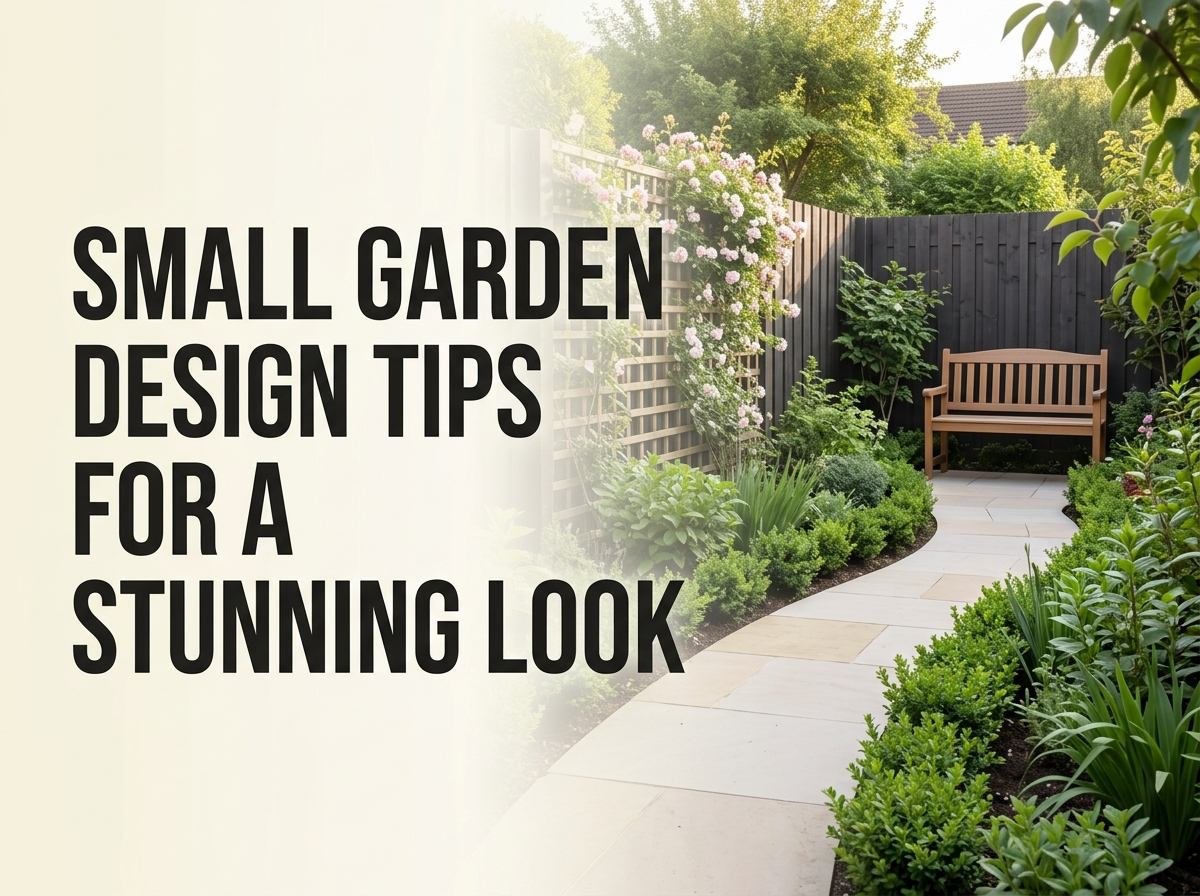
A small garden looks larger and more intentional when it relies on a limited plant palette (3-5 repeated species rather than one of everything), a single dominant sightline that draws the eye to a focal point, and vertical layering that uses wall and fence space most gardeners leave empty. The most common small-garden mistake is trying to fit in too much variety, which actually makes limited space feel more cluttered and smaller than it is. The design principles below focus specifically on techniques that work with spatial constraints rather than fighting them.
Limiting Your Plant Palette for Visual Cohesion

A small garden with 15 different plant species scattered throughout reads as busy and chaotic, while the same square footage planted with 4 or 5 species repeated in drifts reads as intentional and considerably more spacious, since repetition gives the eye a pattern to follow rather than constantly processing new information. Choose plants with at least two of three shared traits (similar color family, complementary texture, or matching bloom time) so that even a limited palette offers enough variation to avoid looking monotonous. This doesn’t mean sacrificing seasonal interest; select your limited palette specifically to include plants that peak at different times (a spring bulb, a summer perennial, and a fall-blooming grass, for example) so the same restrained plant list still delivers three-season color. Resist the common impulse to buy “one of everything” at the nursery, since that instinct is precisely what produces the cluttered, smaller-feeling result most small gardens struggle with.
Key takeaway: A restrained plant list executed well genuinely reads as more sophisticated and spacious than a large, varied collection crammed into the same space.
Creating a Dominant Sightline and Focal Point

Every small garden benefits from one clear focal point (a specimen tree, a sculptural container, a distinct piece of garden art, or a defined seating area) positioned to be the first thing the eye lands on when entering the space, since a garden without a clear visual anchor leaves the eye wandering and makes the space feel smaller and less resolved. Position this focal point at the far end of the garden’s longest sightline, which pulls the eye the full length of the available space and makes that entire distance register consciously, an effect lost if the focal point sits too close to the entry point. Framing the focal point with plants or structure on either side, rather than leaving it fully exposed, adds a sense of depth and discovery, similar to how a framed view feels more substantial than an unobstructed one. Avoid competing focal points; a small garden with a statue, a bright red bench, and an ornamental tree all vying for attention undermines the very anchoring effect a single focal point provides.
Key takeaway: One well-placed, well-framed focal point does more for a small garden’s sense of scale than several competing attractive features.
Building Vertically to Multiply Usable Space

Wall-mounted planters, trellises, and tiered plant stands add genuine growing area without consuming any additional ground footprint, which matters enormously in a garden where every square foot of soil is already accounted for. A pergola or overhead structure draws the eye upward, which makes the overall garden feel taller and more spacious by engaging vertical sightlines that a purely ground-level garden never uses. Espaliered fruit trees or trained climbing roses against a fence or wall add both height and productive or ornamental interest in a footprint of just 12 to 18 inches deep, a technique particularly valuable along property line boundaries. Layering plant heights (tall structural plants at the back or center, medium perennials in the middle, low groundcover at the front edge) within even a narrow border creates the same sense of depth and abundance that a much larger garden achieves through sheer size.
Key takeaway: Every small garden has more usable vertical space than ground space, and using it is one of the highest-return design moves available.
Using Curves and Diagonals to Increase Perceived Size

A straight path running directly from entry to the back of a small garden reveals the entire space at a glance, which paradoxically makes it feel smaller since there’s nothing left to discover. A curved or angled path, even a gentle one, hides part of the garden from immediate view and creates a sense of unfolding space as you move through it, a well-documented perceptual effect used by garden designers specifically to make compact spaces feel larger than their actual dimensions. Similarly, laying pavers, decking boards, or a lawn’s mowing stripe pattern on a diagonal rather than parallel to the garden’s boundary lines draws the eye across the longest available dimension rather than the shortest, subtly exaggerating the sense of width or length. Even a small garden bed benefits from a curved edge rather than a straight one, since curves read as more organic and make precise boundaries less immediately obvious to the eye.
Key takeaway: Diagonal and curved lines consistently outperform straight, parallel lines for making a small space feel larger, a principle borrowed directly from professional landscape design.
Choosing a Cohesive Material and Color Palette

Limiting hardscape materials to two, at most three, types (one for paths, one for edging, one for any structures) keeps a small garden visually calm, since too many competing materials, like brick paths next to concrete pavers next to wood decking, fragment the limited space into visually disconnected pieces. Lighter-colored hardscape materials (buff or tan pavers rather than dark charcoal or black) reflect more light and can make a shaded small garden feel noticeably more open, while darker materials tend to visually recede and can make an already-tight space feel more enclosed. Repeating a single accent color across containers, cushions, or garden art throughout the space (rather than a different color for each element) ties the whole garden together the same way a repeated plant palette does. Match fence or wall paint color to the garden’s overall mood; painting a boundary fence a dark, recessive color like charcoal or deep green actually makes it visually disappear more than a bright white fence would, letting the plants in front become the visual focus instead of the boundary itself.
Key takeaway: A recessive-colored boundary fence draws less attention to the garden’s actual size limits than a bright, high-contrast one does.
Using Mirrors and Reflective Elements Strategically

A well-placed outdoor mirror, positioned to reflect a planting bed rather than the sky or a neighboring wall, can create a genuinely convincing illusion of additional garden space extending beyond the mirror’s edge. Position mirrors at a slight angle rather than flat against a wall to avoid an obvious, flat reflection that reads as a mirror rather than as extended depth, and frame the mirror’s edges with climbing plants or a trellis to soften the transition between real and reflected space. Reflective or light-colored water features, like a simple raised basin or small still pond, add both a focal point and a light-bouncing surface that brightens a shaded small garden considerably more than the same space without any water element. Use these techniques sparingly though, since more than one or two reflective elements in a small space starts to feel gimmicky rather than genuinely expansive.
Key takeaway: One well-angled mirror does more for perceived space than several scattered reflective accents, which start to undercut the illusion rather than reinforce it.
Comparing Small Garden Design Approaches

| Technique | Effort Level | Visual Impact | Best For |
|---|---|---|---|
| Limiting plant palette | Low (planning only) | High | Any small garden |
| Vertical structures | Moderate | High | Narrow side yards, fence lines |
| Curved paths | Moderate-high (installation) | High | Gardens with room for a path |
| Mirror placement | Low | Moderate-high | Shaded, enclosed spaces |
| Cohesive material palette | Low (planning only) | Moderate | Gardens with existing hardscape |
Scaling Furniture and Features to Match the Space

Oversized furniture is one of the fastest ways to make a small garden feel cramped, so choose a bistro set or a single loveseat-sized bench over a full outdoor sectional, which visually and physically overwhelms a compact patio area. Folding or stackable furniture that can be put away when not in use gives a small garden flexibility to serve as open lawn space one day and a dining area the next, without permanent furniture dictating the layout year-round. Similarly, scale down garden ornaments and pots; a single oversized urn as a focal point can work well, but several large containers scattered throughout a small space compete for attention and eat into already-limited walking room. When in doubt, one slightly smaller-than-expected version of each element (furniture, pots, structures) almost always reads better in a small garden than the standard full-size version.
Key takeaway: Deliberately undersizing furniture and containers relative to what feels “normal” is counterintuitive but consistently makes small gardens function and look better.
The Bottom Line
A small garden achieves a stunning look not by cramming in more, but by being disciplined about plant selection, creating one clear focal point with a strong sightline, and using vertical space, curves, and color strategically to work with the space’s real constraints rather than against them. These techniques, borrowed largely from professional landscape design, consistently make compact gardens read as intentional and spacious rather than limited and cluttered. Start with the plant palette and sightline decisions first, since those two choices shape every other design decision that follows.
Frequently Asked Questions
How many plant species should I use in a small garden design? Aim for 3 to 5 species repeated in drifts throughout the space rather than a wide variety of single specimens, since repetition creates a cohesive, intentional look. Choose species that peak at different times of year to maintain seasonal interest without expanding the plant list.
Does a curved path really make a small garden feel bigger? Yes, curved or angled paths hide part of the garden from immediate view, creating a sense of discovery and unfolding space as you move through it. A straight path reveals the entire garden at a glance, which counterintuitively makes the space feel smaller and more finite.
What color should I paint a fence in a small garden to make it feel larger? Darker, recessive colors like charcoal, deep green, or black actually make a boundary fence visually disappear more effectively than bright white or light colors, which draw attention to the garden’s actual limits. This lets plants and focal points in front of the fence become the visual priority instead.
Can vertical gardening really replace ground-level planting space? Vertical structures like trellises, wall planters, and tiered stands add genuine growing area without using footprint, effectively multiplying usable space in a small garden. This is particularly valuable along fence lines and walls that would otherwise remain entirely unused.
Is it better to have one focal point or several features in a small garden? One clear, well-placed focal point is more effective than several competing features, since multiple focal points fight for attention and undermine the sense of a resolved, intentional design. Position the single focal point at the end of the garden’s longest sightline for maximum impact.
Do mirrors actually work to make a garden look bigger, or is that just a trick? Mirrors genuinely create a convincing illusion of additional space when positioned to reflect greenery rather than the sky or a wall, and when angled slightly rather than mounted flat. One well-placed mirror is more effective than several, since too many reflective elements start to look gimmicky rather than expansive.