
How to Create 17+ Stunning Garden Backgrounds in Your Backyard

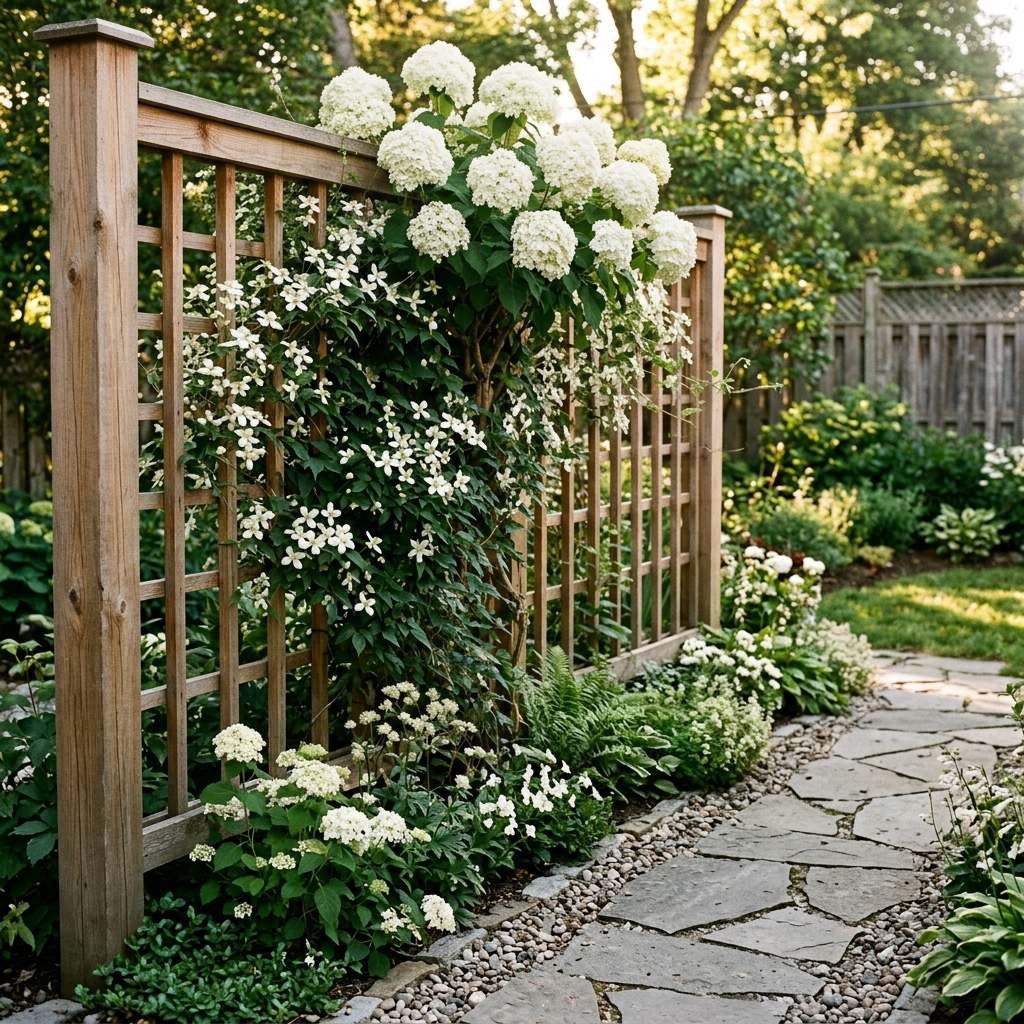
A stunning garden background is built from a structural element (fence, trellis, wall, or screen) combined with a climbing or espaliered plant chosen to match that structure’s material, sun exposure, and desired mature coverage. The structure does the immediate visual work while the plant matures into it over one to three growing seasons, and the pairing matters more than either element alone; a beautiful trellis with the wrong vine looks unfinished for years, while the right vine on a flimsy structure eventually collapses it. The 17+ ideas below cover fence-based, trellis-based, wall-based, and freestanding screen backgrounds, each with the plant pairings that actually work structurally and aesthetically.
1. Classic Wood Lattice Fence with Clematis

A cedar or pressure-treated lattice panel fence, typically 6 to 8 feet tall, gives clematis vines something to grip via their twining leaf stalks, and pairing early, mid, and late-blooming clematis varieties on the same panel extends bloom color from May through September. Lattice with openings around 2×2 inches provides enough grip points for clematis tendrils without the vine outgrowing the support structure within its first two seasons.
2. Board-on-Board Privacy Fence with Climbing Hydrangea

A solid board-on-board fence provides a dense, uniform backdrop, and climbing hydrangea (Hydrangea anomala subsp. petiolaris), which attaches via aerial rootlets rather than twining, can be trained directly against the flat surface. This pairing takes patience, often 3 to 5 years before the plant produces significant bloom coverage, but the eventual white lacecap flowers against dark wood create a genuinely striking contrast.
3. Horizontal Slat Fence with Climbing Roses

Horizontal wood slat fencing, a popular modern hardscape style, provides a clean backdrop that shows off climbing rose canes trained loosely along horizontal wires attached to the fence posts. Varieties like ‘New Dawn’ or ‘Zephirine Drouhin’ work well here, reaching 10-15 feet and providing repeat summer bloom against the fence’s linear structure.
4. Wire Grid Trellis with Sweet Peas

A simple galvanized wire grid trellis, inexpensive and quick to install, suits annual climbers like sweet peas, which are lightweight enough not to need heavy-duty support and complete their full growth cycle in a single season. This is a good option for a background that needs to look established fast, since sweet peas can cover a 4-6 foot trellis within 8-10 weeks of planting.
5. A-Frame Trellis with Climbing Beans or Morning Glory

An A-frame trellis, built from two lattice or wire panels leaned together at the top, creates a freestanding background that doesn’t require an existing fence or wall, useful for creating a backdrop in the middle of an open yard. Morning glory or climbing beans grow fast enough to fully cover an A-frame within a single summer, though they need to be replanted annually since both are typically grown as annuals in most climates.
6. Brick or Stone Wall with Espaliered Fruit Trees

A brick or stone wall retains heat, creating a warmer microclimate that benefits espaliered fruit trees like apples or pears, which can be trained flat against the wall’s surface using wire supports anchored into mortar joints. This background takes 3-5 years to fully train but produces both a striking geometric backdrop and an actual fruit harvest, unlike purely ornamental vine options.
7. Painted Concrete Block Wall with Bougainvillea

In warmer climates, a painted concrete block wall provides a durable, low-maintenance backdrop for bougainvillea, whose vibrant magenta, orange, or purple bracts create intense color contrast against a neutral or white-painted wall. Bougainvillea needs to be tied to wire supports since it doesn’t climb by itself, but once established it can cover 10+ feet of wall within two to three growing seasons in the right climate.
8. Retaining Wall with Cascading Creeping Fig
Creeping fig (Ficus pumila) clings directly to masonry via aerial rootlets and creates a dense, textured green backdrop on a retaining wall without needing any additional support structure. It’s evergreen in warmer zones, providing a consistent backdrop year-round, though it needs regular trimming to prevent it from working into mortar joints and causing long-term structural damage.
9. Bamboo Screen Panel with Passionflower

A rolled bamboo screen panel, an affordable and fast way to add a background to an open fence or bare wall, pairs well with passionflower vine, whose intricate, exotic blooms provide a striking visual layer over the natural texture of the bamboo. Passionflower is vigorous and can cover a 6-foot bamboo panel within a single growing season in warm climates, though it may need cutting back hard each spring to control size.
10. Living Willow Fedge (Fence-Hedge) as a Background
A living willow fedge, woven from freshly cut willow whips planted directly into the ground in a diagonal lattice pattern, roots and grows into a genuinely living fence within one to two growing seasons. This option needs no additional plant pairing since the willow itself forms the entire structural and visual background, though it does need annual pruning to maintain the woven pattern as new growth emerges.
11. Arborvitae Hedge as an Evergreen Backdrop

Emerald Green arborvitae, planted at 3-foot spacing, forms a dense, narrow evergreen backdrop reaching 12-14 feet at maturity, providing year-round green backdrop color that deciduous vine-covered structures can’t match during winter months. This works well behind a perennial border where you want consistent green structure regardless of season, without any additional climbing plant needed.
12. Corten Steel Panel with Trumpet Vine

Corten steel’s warm, rusted patina creates a striking industrial-meets-garden backdrop, and trumpet vine (Campsis radicans), which clings via aerial rootlets, provides a strong textural and color contrast with its orange-red summer blooms. This pairing suits gardeners comfortable with a vigorous, sometimes aggressive vine, since trumpet vine can spread beyond its intended area if not monitored and pruned back regularly.
13. Woven Willow or Hazel Hurdle Panels

Woven hurdle panels, made from flexible willow or hazel branches, provide a rustic, textured backdrop on their own even without plants, and they work particularly well as a temporary or budget-friendly background while slower-growing permanent plantings like hedges establish behind them. These panels typically last 5-8 years before needing replacement, giving ample time for a living hedge planted alongside to mature and eventually take over the backdrop role.
14. Cattle Panel Arch or Wall with Climbing Squash

A galvanized cattle panel, bent into an arch or mounted flat against a frame, is an inexpensive, sturdy structure originally intended for livestock fencing but well-suited to heavy vining edibles like climbing squash, cucumbers, or gourds. This dual-purpose background works well in a vegetable garden area where a decorative backdrop and food production can share the same structure.
15. Frosted or Textured Glass Panel with Ornamental Grasses in Front

A frosted glass privacy panel provides a modern, light-permeable background, and rather than a climbing plant, pairing it with a layered planting of ornamental grasses like feather reed grass or maiden grass in front creates movement and texture that contrasts with the panel’s smooth, static surface. This works well in contemporary garden designs where a fully plant-covered background would clash with the clean, modern hardscape aesthetic.
16. Painted Shed Wall with Vertical Planter Pockets
A shed or garage wall painted a neutral or bold color becomes an effective background on its own, and mounting vertical planter pockets or a modular living wall system against it adds a textured, plant-covered layer without needing a true climbing vine at all. This approach works well for renters or anyone wanting a background that doesn’t require multi-year plant establishment, since planter pockets can be filled with mature plants for immediate visual impact.
17. Reclaimed Wood Pallet Wall with Herbs and Trailing Plants

A wall built from reclaimed wood pallets, stood on end and secured to a post frame, creates a rustic textured backdrop, and the gaps between pallet slats can be filled with small pockets of soil for trailing herbs like thyme or oregano. This is one of the most budget-friendly background options on this list, often using free or low-cost reclaimed material, and it doubles as a small-space herb garden.
18. Bonus: Mirror Panel Behind a Planting Bed

A weatherproof outdoor mirror panel mounted behind a dense planting bed creates the illusion of a much deeper garden space by reflecting the planting in front of it, a trick particularly useful in small backyards where an actual deep background isn’t physically possible. Position mirrors where they reflect greenery rather than the sky or a neighboring structure, since a poorly angled mirror can look jarring rather than seamless.
Comparing Structural Background Types

| Structure Type | Cost | Time to Mature Look | Best Plant Pairing |
|---|---|---|---|
| Wood lattice fence | Low-moderate | 2-3 seasons | Clematis, climbing roses |
| Brick/stone wall | High (if built new) | 3-5 seasons | Espaliered fruit, creeping fig |
| Wire/cattle panel | Low | 1 season | Annual vines, squash |
| Living willow fedge | Low-moderate | 1-2 seasons | None needed (self-forming) |
| Evergreen hedge | Moderate | 3-5 seasons | None needed (self-forming) |
Matching Structure Strength to Plant Weight
Heavy, woody vines like wisteria or trumpet vine can weigh several hundred pounds at maturity and will genuinely warp or collapse a lightweight lattice panel within a few years, so these vigorous vines need reinforced wood, galvanized metal panels, or masonry walls rather than standard decorative trellis material. Lighter annual vines like sweet peas or morning glory place minimal structural stress on their support and can safely go on thinner wire grids or bamboo structures without concern. Before choosing a plant, check its listed mature weight and vigor, and when in doubt, oversize the structure rather than the plant, since reinforcing a support after a vine is established is far more disruptive than building sturdy from the start.
Key takeaway: Always match plant vigor to structural strength before planting, since the most common garden background failure is a beautiful but flimsy trellis collapsing under a vine that outgrew it.
The Bottom Line
A stunning garden background comes from thinking of structure and plant as one paired decision rather than two separate purchases, since the wrong combination either looks unfinished for years or eventually damages the structure itself. Whether you’re working with an existing fence, building a new trellis, or repurposing something as simple as reclaimed pallets or a cattle panel, matching the plant’s growth habit, weight, and mature size to what the structure can actually support is what separates a background that thrives for a decade from one that needs redoing in three years. Give the pairing time (most of these combinations need two to five seasons to reach their full visual impact) and the patience pays off in a backdrop that looks intentional rather than accidental.
Frequently Asked Questions
What is the fastest-growing plant for covering a garden background structure? Annual vines like morning glory, sweet peas, and climbing beans can fully cover a small to medium trellis within a single growing season, making them the fastest option if you need coverage quickly. Perennial vines like clematis or climbing hydrangea take 2 to 5 years to reach full maturity but offer a more permanent, low-maintenance long-term background.
Can I add a plant-covered background to an existing plain fence? Yes, most existing wood, wire, or masonry fences can support an added climbing plant, though the plant choice should match the fence’s material and structural strength. Attaching a wire grid or lattice panel to a solid fence gives twining vines something to grip if the solid surface itself doesn’t offer grip points.
How do I prevent a climbing vine from damaging my fence or wall? Choose vines that attach via tendrils or twining stems rather than aerial rootlets if the structure is a wood fence you want to preserve, since rootlet-clinging vines like creeping fig can work into joints and cause damage over time on masonry. Regular pruning also prevents any vine from becoming heavy enough to structurally stress its support.
What’s a good garden background option for a very small backyard? A-frame trellises, bamboo screen panels, and vertical planter pocket walls all provide strong background impact without requiring a large footprint, since they work vertically rather than needing horizontal spread. A mirror panel behind a planting bed is another small-space trick that visually expands the perceived depth of the yard.
Do I need an evergreen background if I want year-round color? Not necessarily, but evergreen options like arborvitae hedges or creeping fig provide consistent green structure through winter when deciduous vines have dropped their leaves. Combining both, an evergreen base layer with a deciduous flowering vine layered in front, gives year-round structure plus seasonal bloom drama.
How much does it cost to build a plant-covered garden background? Costs vary widely: a wire grid trellis with annual vines can cost under $50, while a built brick or stone wall with espaliered fruit trees can run into the thousands once labor and mature plant stock are included. Budget-friendly options like reclaimed pallet walls or cattle panels deliver strong visual impact for relatively low material cost.