How to Espalier an Apple Tree


Espalier training an apple tree into its flat, geometric pattern against a wall or fence genuinely takes 3 to 5 years to establish the permanent branch framework, and attempting to rush this timeline by forcing branches into position faster than the tree’s actual growth rate can support genuinely weakens the resulting structure, making patience through this multi-year establishment period a real requirement, not simply a nice-to-have.
Why Rushing Weakens the Structure
Why rushing the multi-year timeline genuinely weakens the espalier structure is that forcing branches into their final horizontal or angled position faster than the tree’s natural growth and wood-hardening process can support creates genuine structural weak points, meaning branches bent too aggressively or too quickly are more prone to breaking or developing permanently weak attachment points compared with the gradual training a proper multi-year timeline allows.
Why Wood-Hardening Takes Time
The wood-hardening process that makes patience a genuine structural requirement is that young, flexible branch wood needs time to gradually harden into its trained position, and forcing this process faster than the wood’s natural maturation genuinely risks the kind of structural damage that undermines the entire multi-year framework investment, making the standard 3-to-5-year timeline a genuine structural necessity rather than an arbitrary traditional guideline.
Respecting the wood’s natural hardening timeline genuinely protects the long-term structural integrity of the espalier framework, making patience through the full multi-year establishment period a real technical requirement worth prioritizing over faster visual results.
Starting With a Young, Whip-Form Tree for Maximum Training Control

Starting with a young, whip-form tree for maximum training control means selecting an unbranched, single-stem young apple tree as the starting point, since this genuinely gives the grower complete control over exactly where and how the framework branches develop from the very beginning, rather than trying to retrain an already-branched tree into the desired flat pattern.
Whip-form starting material genuinely provides the cleanest, most controllable foundation for espalier training, making this specific starting point worth seeking out rather than attempting to adapt an already-branched nursery tree to the desired pattern.
Installing a Sturdy Wire and Post Support Framework Before Training Begins

Installing a sturdy wire and post support framework before training begins means establishing the horizontal wire guides, attached to sturdy posts or a wall, that will guide branch placement throughout the training process, a genuinely necessary structural element that needs to be in place before or immediately at planting rather than added later once training is already underway.
Having the support framework genuinely ready before training begins prevents the awkward retrofit of trying to add structural guides to an already partially trained tree, making upfront framework installation a worthwhile initial investment.
Selecting and Training Framework Branches Along the Wire Guides Gradually

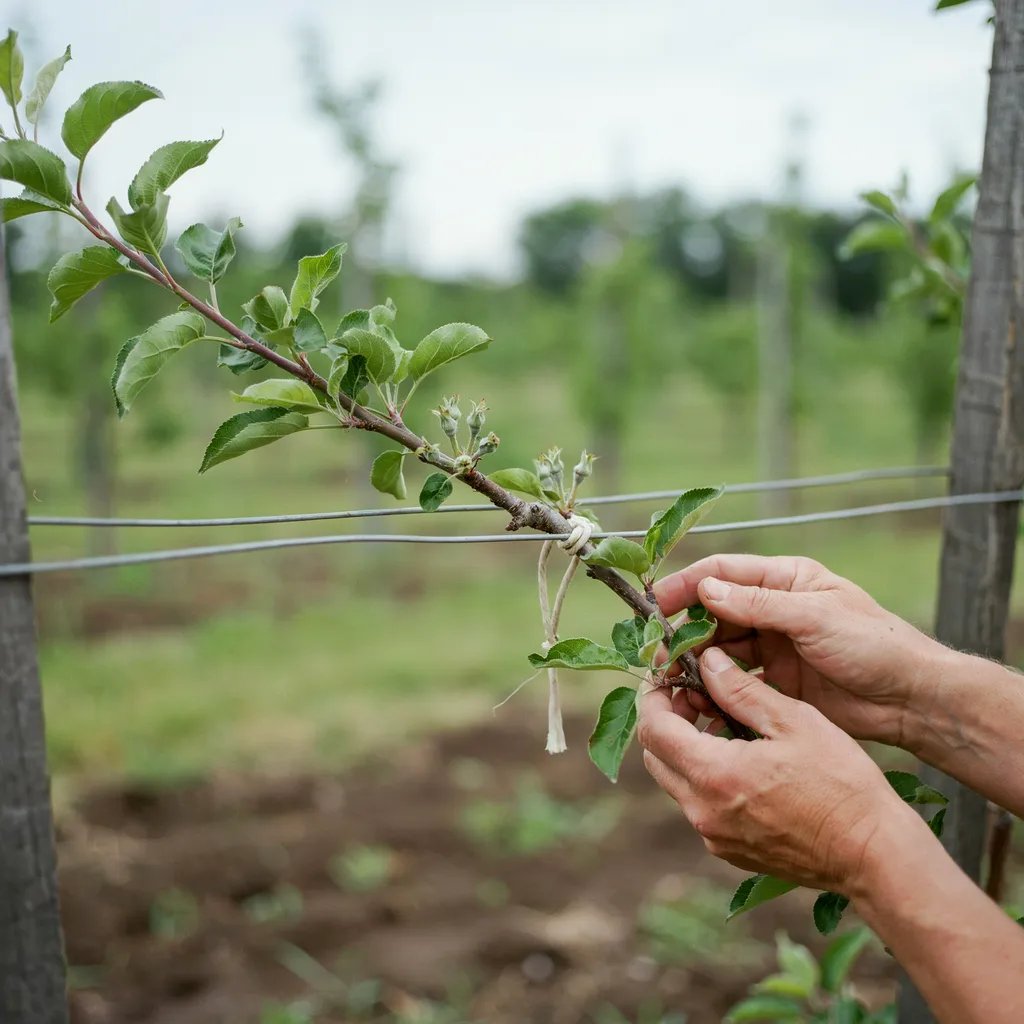
Selecting and training framework branches along the wire guides gradually means choosing appropriately positioned new growth each season and gently tying it along the wire framework as it develops, allowing the branch to gradually assume its trained position over time rather than attempting to bend an already-hardened branch into place all at once.
Gradual branch training as new growth develops, rather than attempting to force already-hardened wood into position, genuinely aligns with the wood-hardening timeline this entire technique depends on for structural success.
Conducting Regular Summer Pruning to Maintain the Flat Form

Conducting regular summer pruning to maintain the flat form means pruning throughout the growing season, not just during traditional dormant-season pruning, since summer pruning genuinely helps redirect the tree’s growth energy toward the desired framework branches while controlling unwanted growth that would otherwise disrupt the flat, geometric espalier pattern.
Summer pruning’s genuine role in redirecting growth energy makes it a necessary ongoing task distinct from standard dormant-season pruning, worth incorporating as regular maintenance throughout each growing season, not just once annually during winter.
Choosing the Right Varieties and Rootstocks

Choosing apple varieties and rootstocks genuinely suited to espalier training means selecting a dwarf or semi-dwarf rootstock combined with a variety known to respond well to this training style, since not every apple variety and rootstock combination genuinely suits the controlled, compact growth pattern espalier training requires.
Rootstock and variety selection genuinely affects how successfully a tree adapts to espalier training, making this an important upfront decision worth researching rather than assuming any apple tree will train equally well into this specific form.
The Bottom Line
Successfully espaliering an apple tree depends on respecting the genuine 3-to-5-year timeline needed to establish a structurally sound permanent framework, starting with a young whip-form tree for maximum training control and installing a sturdy wire support structure before training begins. Gradually training new growth along the framework as it develops, conducting regular summer pruning to maintain the flat form, and choosing appropriately suited dwarf or semi-dwarf rootstock and variety combinations round out an approach that produces a genuinely durable, attractive espalier structure rather than one weakened by rushed, forced training.
Frequently Asked Questions
Can an Already-Established, Branched Apple Tree Be Trained Into an Espalier Form, or Does It Need to Start as a Whip?
While a whip-form start offers the most control, some experienced growers do successfully adapt young, already-branched trees with careful selective pruning, though this approach generally requires more skill and produces less predictable results than starting with unbranched whip-form material.
How Much Space Against a Wall or Fence Is Genuinely Needed for a Full Espalier Apple Tree Framework?
Space requirements vary based on the specific espalier pattern chosen, but a mature framework often needs 10 to 15 feet or more of horizontal wall or fence space, making this a real space consideration worth planning for before committing to the multi-year training project.
Does Espalier Training Genuinely Reduce an Apple Tree’s Fruit Production Compared With a Standard Tree Form?
Well-trained espalier trees can genuinely produce a meaningful, sometimes even proportionally higher, fruit yield relative to their compact space footprint compared with a standard tree form, making espalier training a space-efficient rather than production-sacrificing choice when done correctly.
Can Espalier Training Be Successfully Applied to Fruit Trees Other Than Apples?
Yes, this training technique genuinely works well on several other fruit tree species, pears particularly being well-suited, along with some stone fruits, though apples and pears remain the most commonly and successfully espaliered fruit tree types.
What’s the Most Common Mistake Beginners Make When Attempting Their First Espalier Apple Tree?
Rushing the training timeline by forcing branches into position too quickly, along with inadequate or poorly planned support framework installed after training has already begun, represent the most common and genuinely avoidable mistakes for first-time espalier attempts.
How Long Does an Established Espalier Apple Tree Typically Remain Productive Once the Framework Is Fully Developed?
A well-established, properly maintained espalier apple tree can genuinely remain productive for many decades, similar to a standard-form apple tree’s typical lifespan, making the multi-year training investment worthwhile given the tree’s long subsequent productive life.