
Mistakes to Avoid When Planting a Rhododendron

Rhododendrons fail more often from planting mistakes made in the first hour than from anything that happens afterward, since this shrub’s shallow, sensitive root system doesn’t forgive the same planting habits that work fine for most other landscape shrubs. The seven mistakes below cover what actually goes wrong most often, in the order they typically happen during planting.
Quick Answer
Why Rhododendrons Are Less Forgiving Than Most Shrubs
The Root System That Explains Most of the Rules
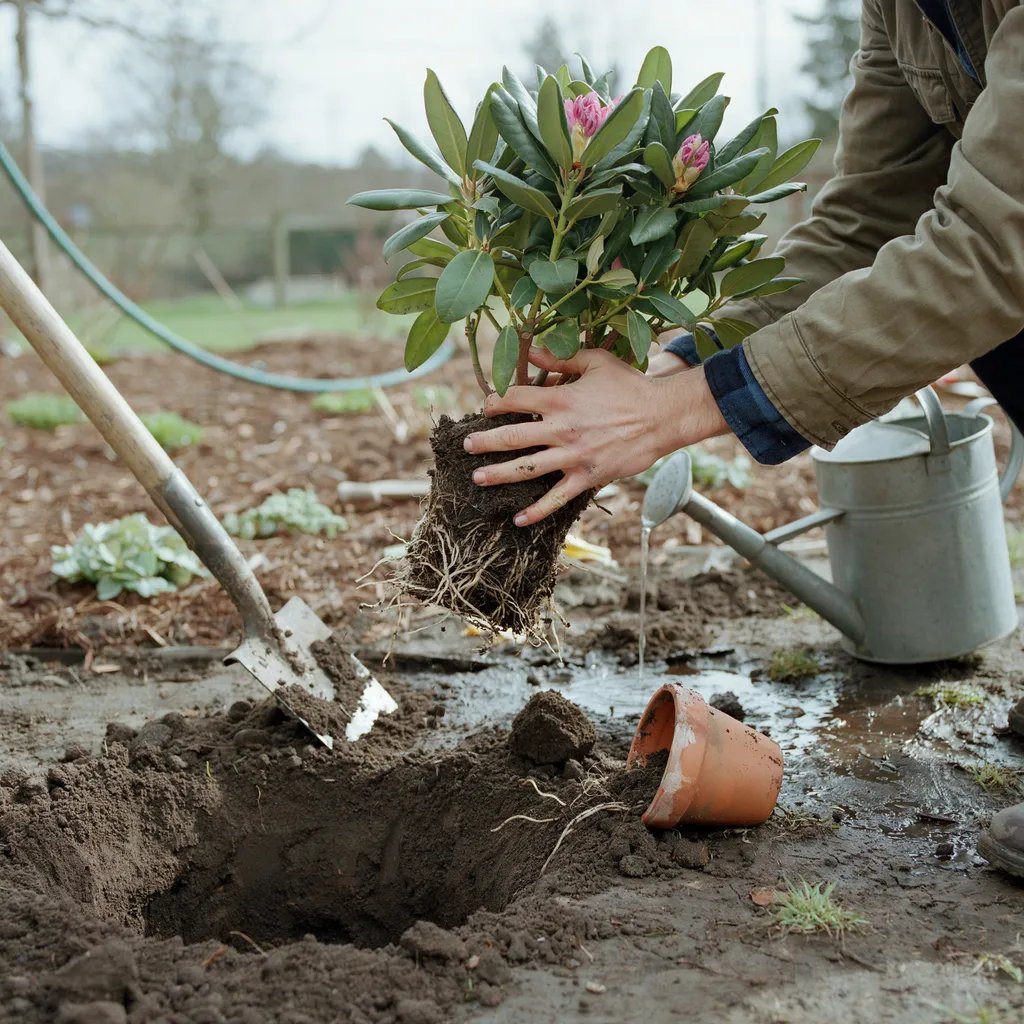
Why rhododendrons are less forgiving than most shrubs is that their root system is genuinely shallow and fine, evolved for the loose, acidic, well-drained forest floor conditions of their native habitat, which means planting mistakes that a deeper-rooted shrub would shrug off can seriously stress or kill a rhododendron.
The root system that explains most of the rules is fibrous and shallow, sitting mostly in the top several inches of soil, which is the underlying reason behind nearly every specific planting mistake on this list, from depth to soil type to mulching.
Rhododendron’s shallow, fine root system is the reason behind almost every specific planting mistake on this list, so understanding that root structure explains why the details matter as much as they do.
Mistake 1: Planting Too Deep
How to Check Planting Depth Correctly
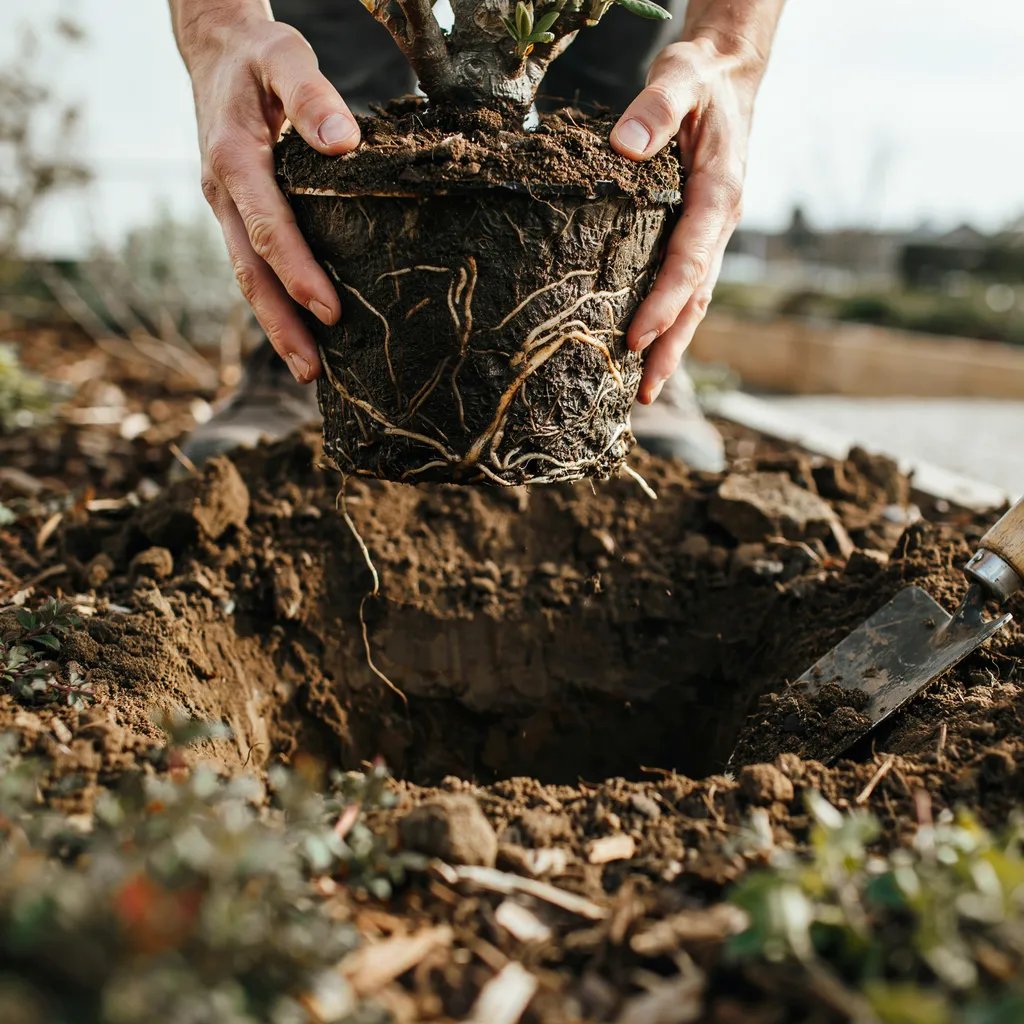
Mistake 1 is planting too deep, burying the root ball at or below grade the way many other shrubs are planted, when rhododendrons actually need their root ball to sit at or even slightly above the surrounding soil level to avoid suffocating the shallow roots.
How to check planting depth correctly means looking for the root flare, where the topmost roots meet the stem, and ensuring it sits level with or slightly above the surrounding soil grade, not buried beneath it the way a typical planting hole would naturally result in.
Rhododendrons should be planted with their root ball at or slightly above grade, the opposite instinct from planting most shrubs, since their shallow roots suffocate easily if buried too deep.
Mistake 2: Skipping Soil Amendment for Acidity and Drainage
Why Both Soil pH and Drainage Matter Independently
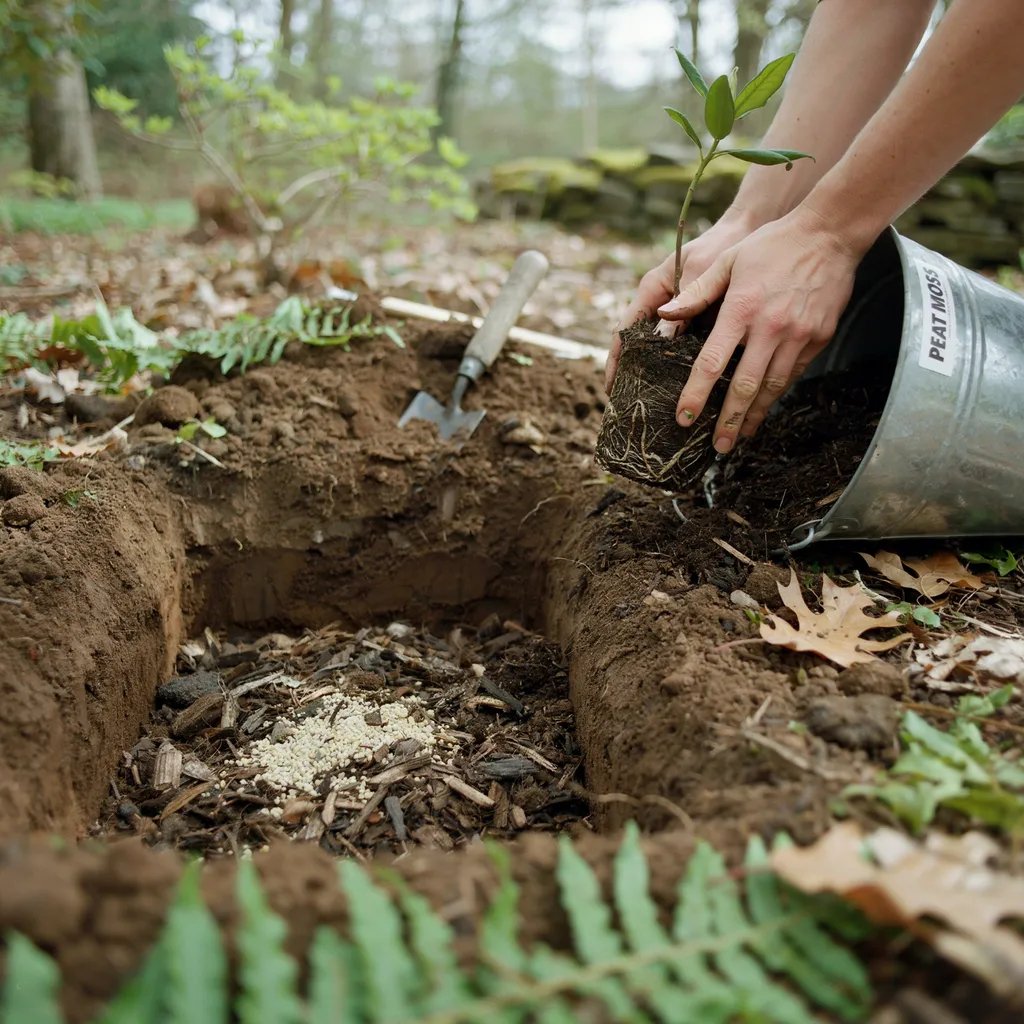
Mistake 2 is skipping soil amendment for acidity and drainage, planting directly into unamended alkaline or heavy clay soil, both of which cause serious problems for a plant that specifically needs acidic, well-drained conditions to take up nutrients properly.
Why both soil pH and drainage matter independently is that fixing one without the other still leaves a rhododendron struggling; acidic soil that doesn’t drain well causes root rot, while well-drained soil that’s too alkaline prevents proper nutrient uptake regardless of drainage quality.
Both soil acidity and drainage need to be addressed together before planting; correcting only one still leaves the plant vulnerable to the problem the other one causes.
Mistake 3: Choosing a Full-Sun Location in Hot Climates
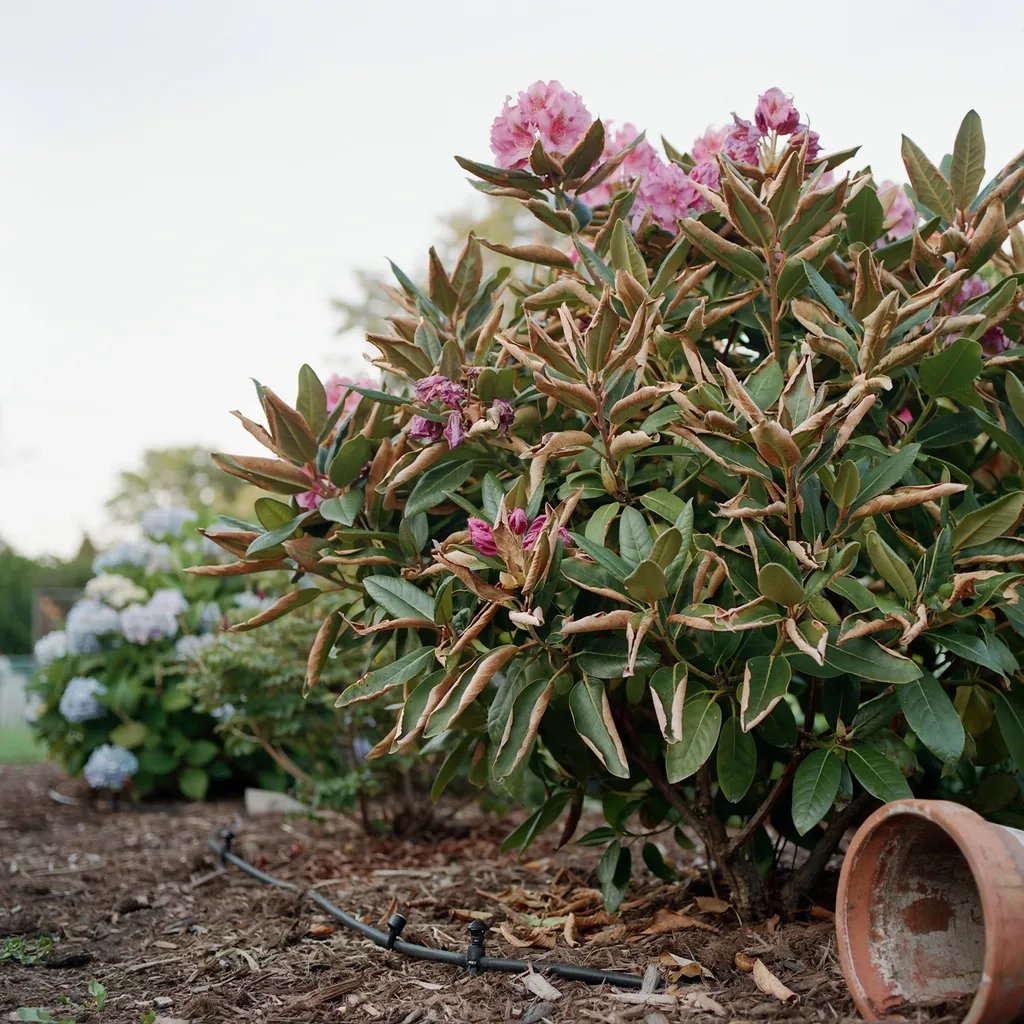
Mistake 3 is choosing a full-sun location in hot climates, since while rhododendrons need some light to bloom well, all-day direct sun in warmer regions scorches their broad leaves and stresses the plant significantly more than the same sun exposure would in a cooler climate.
Sun tolerance for rhododendrons genuinely varies by climate; a spot that works in a cool region can be too harsh in a hot one, so local climate should factor into placement, not just general “partial shade” advice.
Mistake 4: Mulching Directly Against the Stem
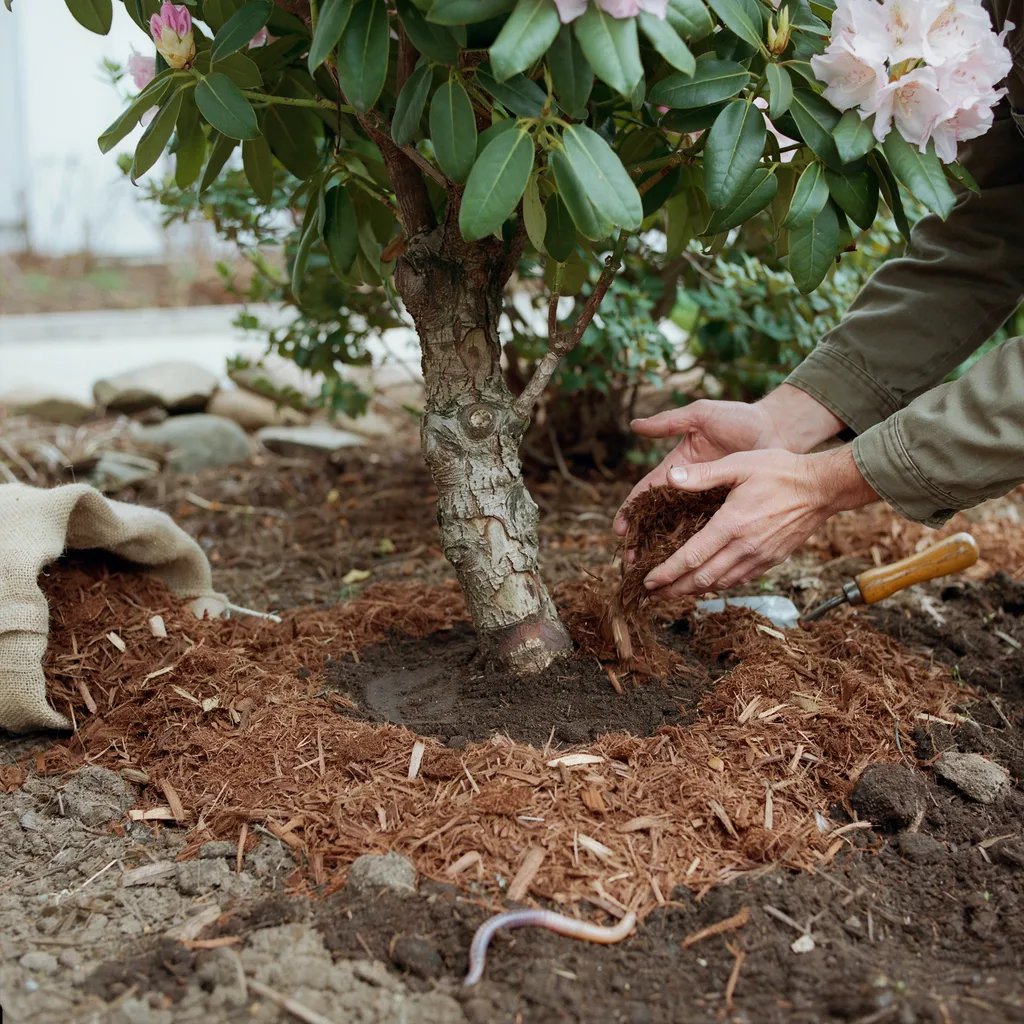
Mistake 4 is mulching directly against the stem, piling mulch up against the base of the plant the way it’s sometimes done for other shrubs, which traps moisture against the stem and creates conditions for rot and disease.
Leaving a small gap between mulch and the stem, rather than piling it directly against the base, prevents the trapped moisture that leads to stem rot.
Mistake 5: Digging a Planting Hole Too Narrow
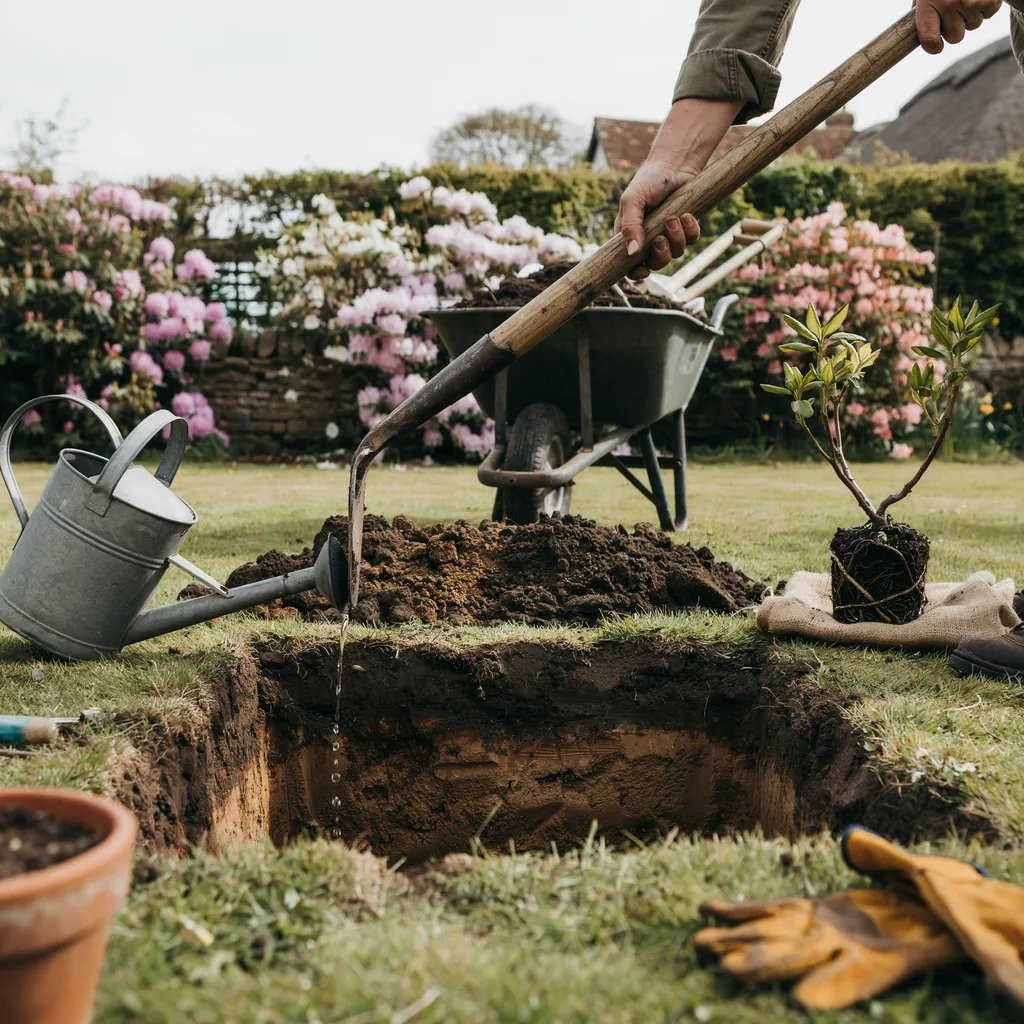
Mistake 5 is digging a planting hole too narrow, sized just for the root ball rather than significantly wider, which doesn’t give the shallow, spreading root system the loosened soil it needs to establish and expand outward in its first seasons.
A planting hole significantly wider than the root ball, not just deep enough, gives rhododendron’s shallow roots room to spread into loosened soil during establishment.
Mistake 6: Watering on a Fixed Schedule Instead of Checking Soil Moisture
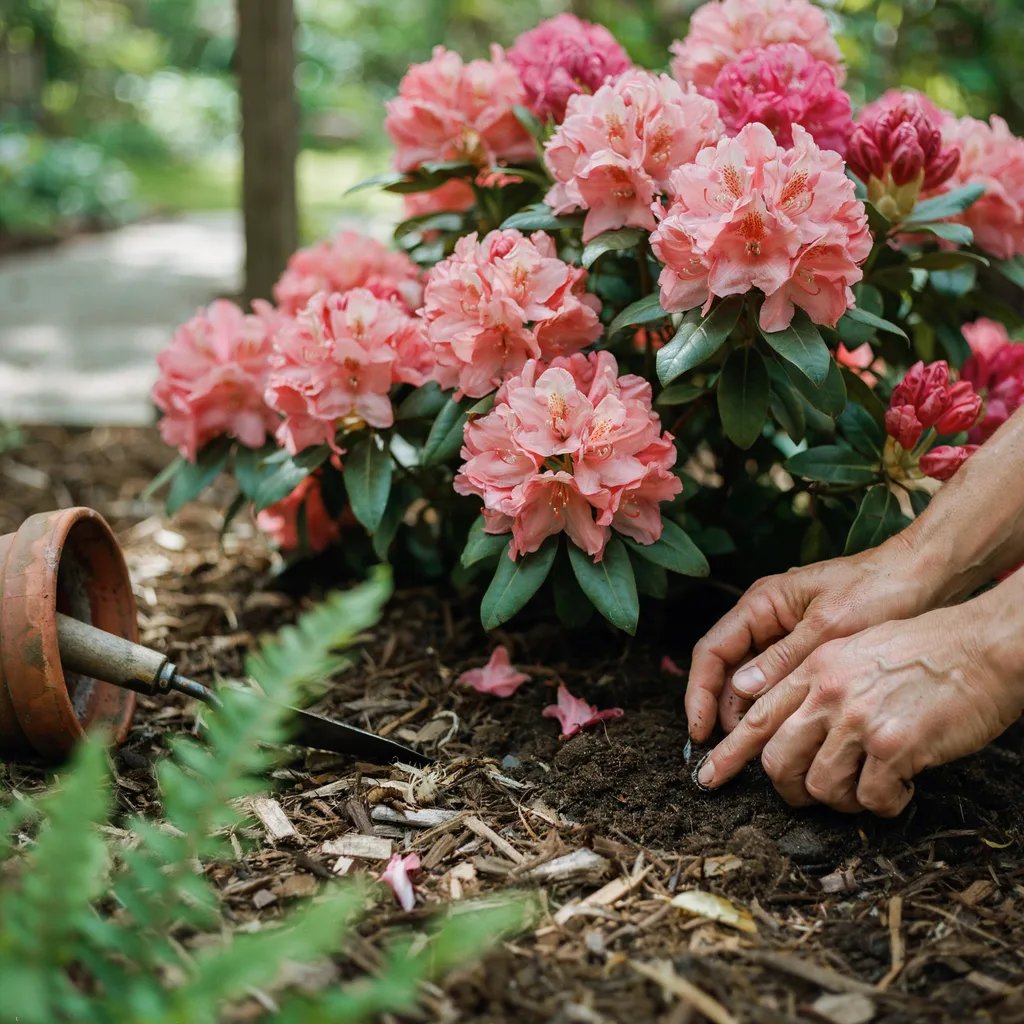
Mistake 6 is watering on a fixed schedule instead of checking soil moisture, since rhododendrons need consistently moist but never waterlogged soil, and a rigid watering schedule doesn’t account for weather, soil drainage, or seasonal changes in actual water need.
Checking soil moisture directly, rather than following a fixed watering schedule, better matches rhododendron’s need for consistent moisture without waterlogging.
Mistake 7: Fertilizing Immediately After Planting
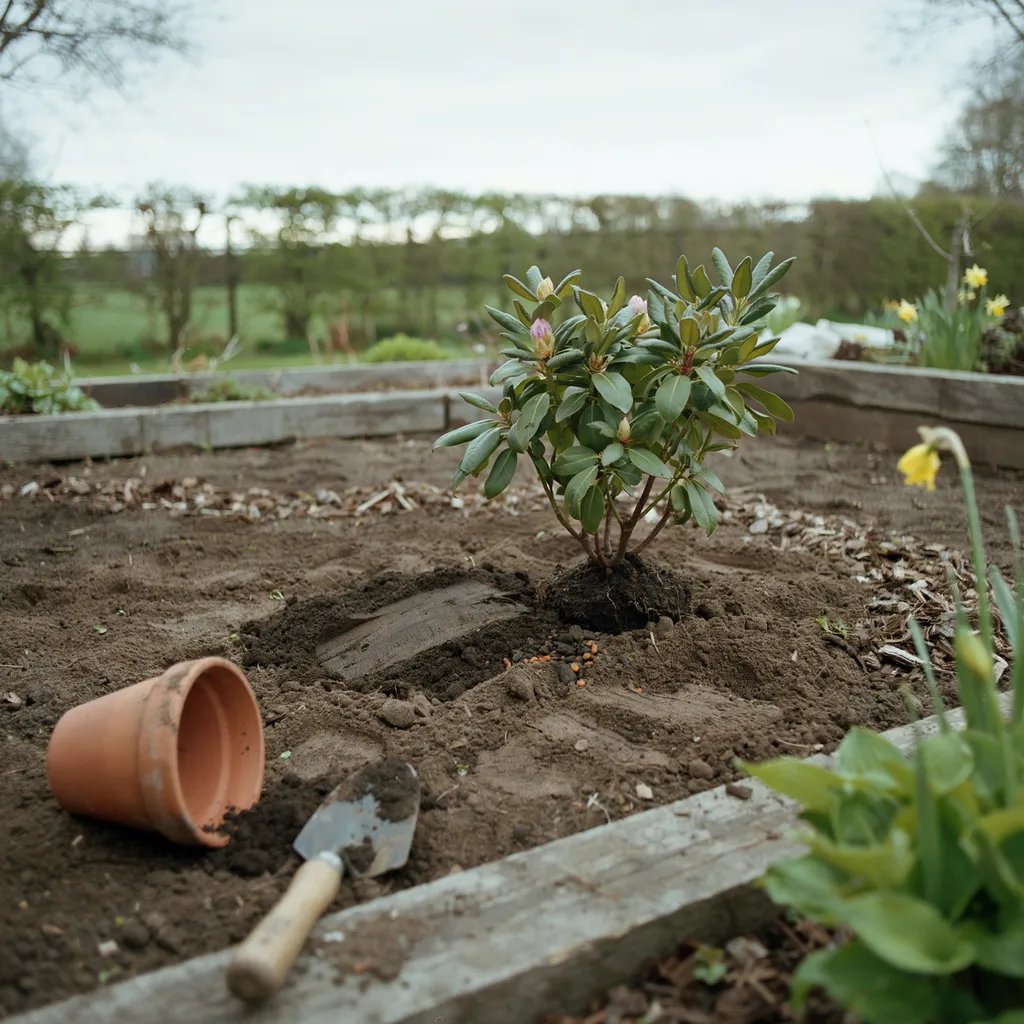
Mistake 7 is fertilizing immediately after planting, adding fertilizer to a stressed, newly transplanted root system before it’s had time to establish, which can burn tender new roots rather than helping the plant settle in.
Waiting until a newly planted rhododendron shows signs of active new growth before fertilizing avoids stressing roots that are still adjusting to their new location.
The Bottom Line
Most rhododendron planting failures trace back to the same root cause: not accounting for the plant’s shallow, sensitive root system, whether through planting too deep, skipping soil amendment, or mulching against the stem. Getting planting depth right, at or slightly above grade, and preparing acidic, well-drained soil beforehand solve the majority of problems before they start.
Frequently Asked Questions
How Do I Know if My Soil Is Acidic Enough for a Rhododendron?
A soil test, available cheaply through most garden centers or extension offices, gives a definitive pH reading, and rhododendrons generally need soil in the 4.5 to 6.0 range, meaningfully more acidic than the neutral soil many other landscape plants tolerate well.
Can Rhododendrons Be Planted in Containers Instead of the Ground?
Yes, rhododendrons can do well in containers, particularly compact cultivars, as long as the container has excellent drainage and is filled with an acidic, well-draining potting mix rather than standard all-purpose potting soil.
What Time of Year Is Best for Planting a Rhododendron?
Early fall or early spring are generally the best planting windows, giving the root system time to establish in mild weather before facing the stress of either summer heat or winter cold, both of which are harder on a newly planted, still-establishing rhododendron.
How Long Does It Take a Newly Planted Rhododendron to Establish?
Most rhododendrons take one to two full growing seasons to establish a strong root system, and it’s normal for a newly planted rhododendron to show minimal growth or bloom in its first year while it focuses energy on root development.
Can I Correct a Rhododendron That Was Planted Too Deep After the Fact?
Yes, if caught within the first year or two, a rhododendron planted too deep can often be carefully dug up and replanted at the correct depth, though the process is stressful for the plant and best done during its dormant season for the least additional shock.
Do Rhododendrons Need Different Care in Their First Winter?
A newly planted rhododendron benefits from extra winter protection in its first year, such as a wind-blocking burlap screen in exposed locations, since its still-developing root system is more vulnerable to winter desiccation than an established plant’s would be.