
13 Best Materials for a Dog-Friendly Backyard Potty Area

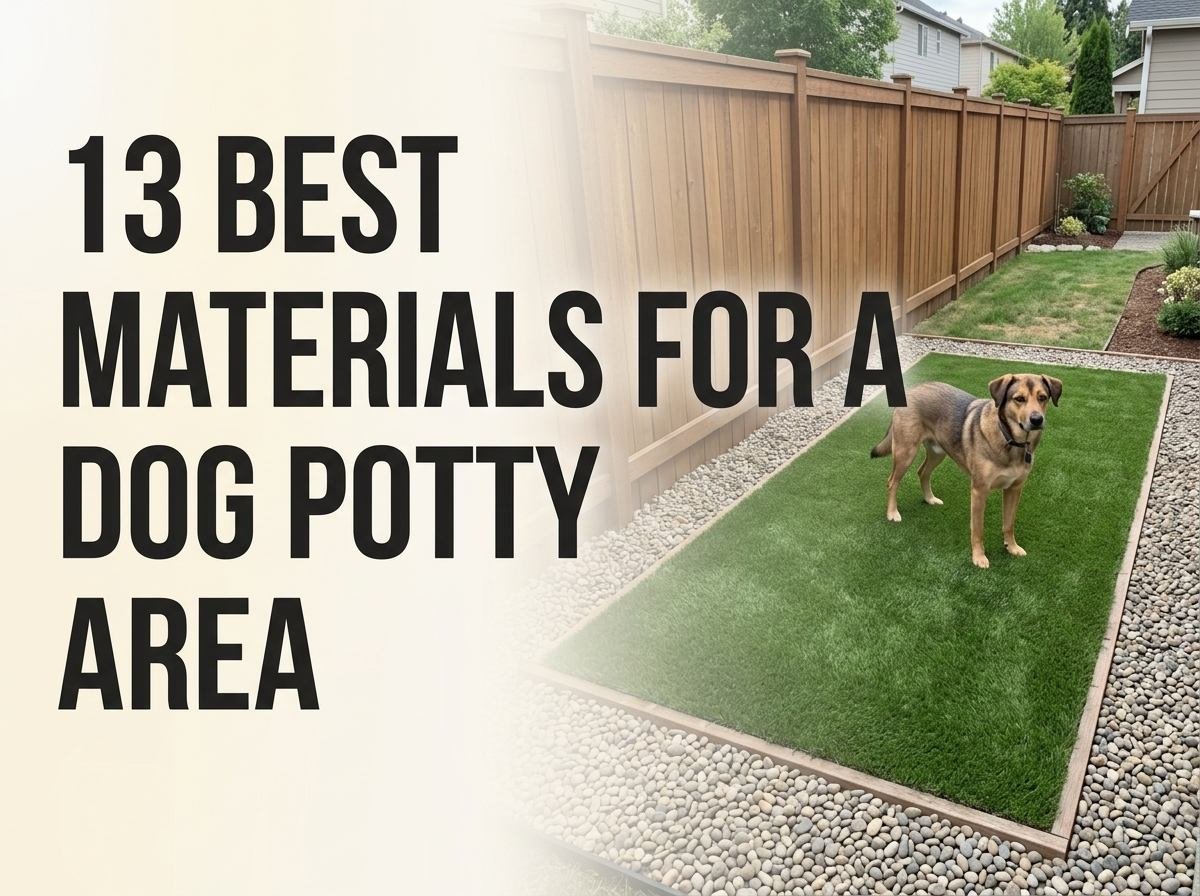
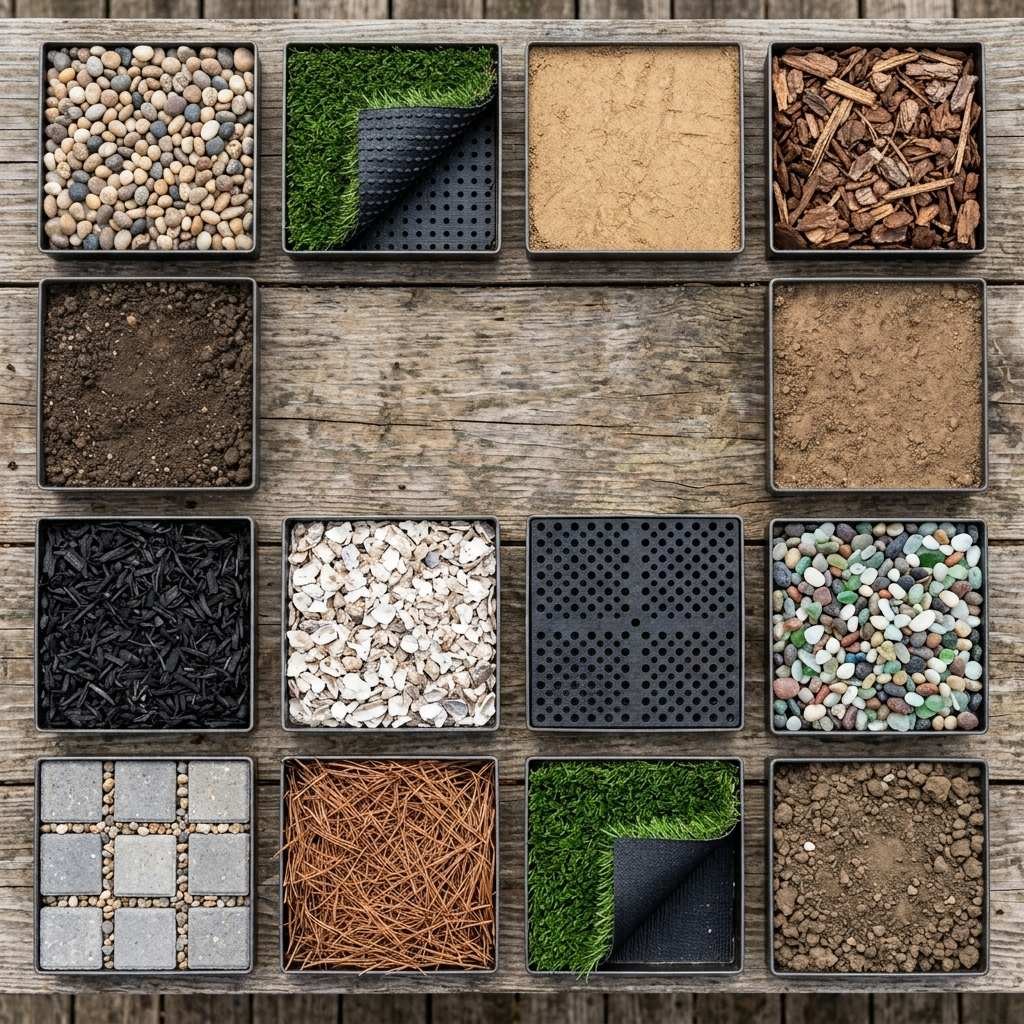
The best materials for a dog potty area are the ones that drain fast, don’t trap odor, and survive digging and repeated waste breakdown, which in practice means pea gravel, artificial turf, and mulch consistently outperform natural grass and solid pavers for this specific use. Grass struggles because dog urine’s high nitrogen content burns and yellows the blades within days, while gravel and turf let urine pass through to the ground or a drainage layer below rather than pooling on the surface. Choosing the right material depends on your priorities: gravel is cheapest and drains best, turf looks nicest and needs no digging maintenance, and mulch is soft on paws but needs more frequent replacement.
1. Pea Gravel
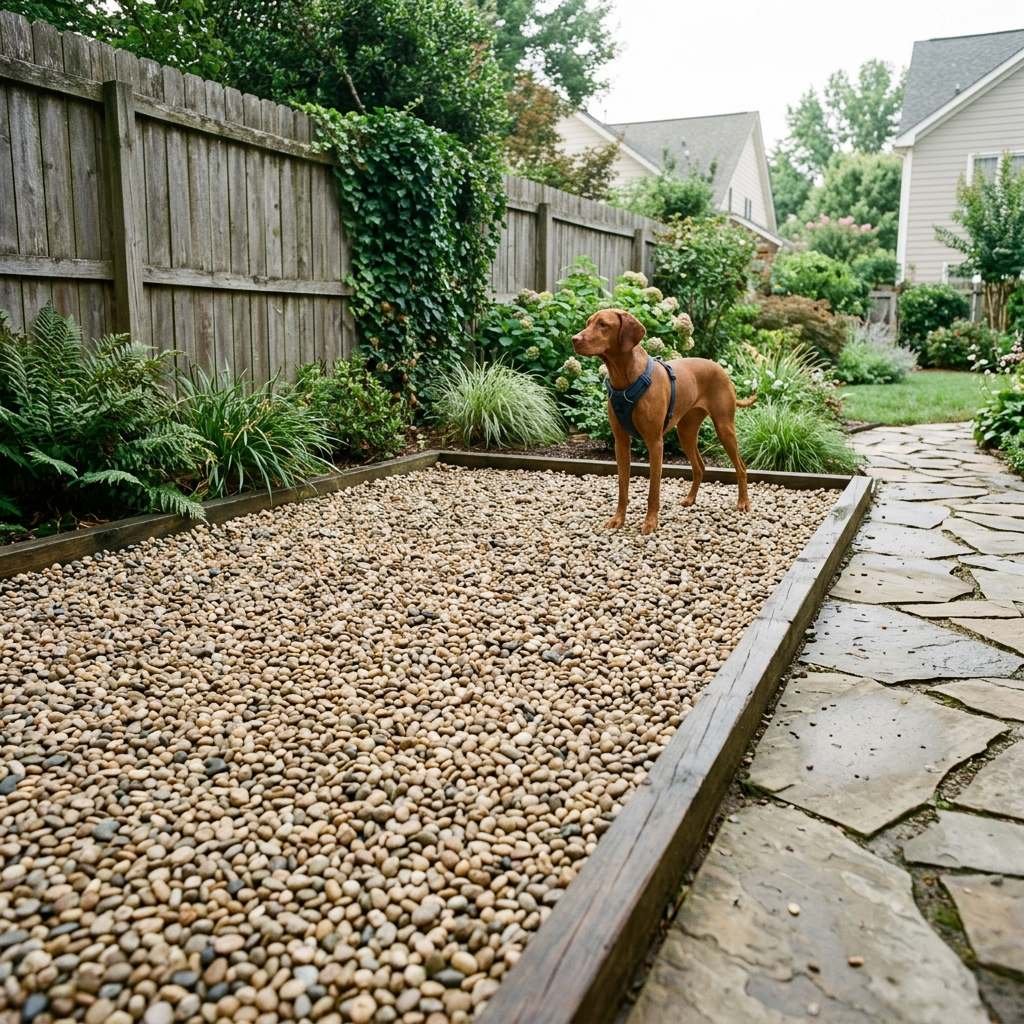
Pea gravel (smooth, rounded stones roughly 3/8 inch in diameter) is the most commonly recommended material for dedicated dog potty areas because its rounded shape is gentle on paw pads and its loose structure lets liquid waste drain through immediately rather than pooling. A 3-4 inch layer over a compacted base allows urine to pass down to the soil below, where it dilutes and disperses rather than sitting on the surface where odor builds. Solid waste is easy to spot and scoop off the surface of pea gravel, and an occasional hose-down or diluted enzymatic cleaner spray keeps odor from accumulating over weeks of use. At roughly $30-50 per cubic yard delivered, it’s one of the most budget-friendly options on this list, though it does need periodic replenishing every 1-2 years as fines settle and stones get displaced by digging.
Key takeaway: Pea gravel remains the gold-standard recommendation from landscapers and dog trainers alike because it drains instantly and costs the least of any purpose-built option.
2. Artificial Pet Turf
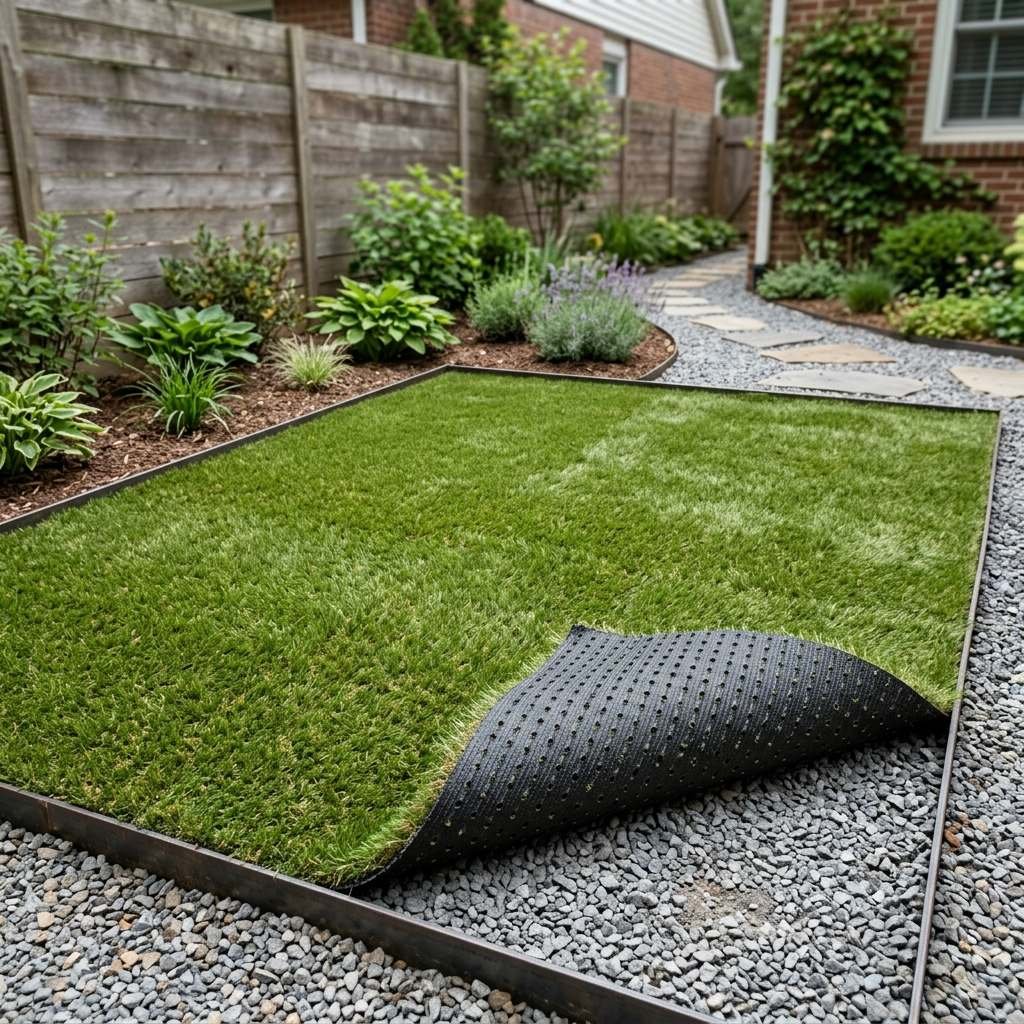
Purpose-built pet turf differs from standard artificial lawn turf in a critical way: it includes a perforated backing and often an antimicrobial infill designed specifically to let liquid drain straight through rather than sitting on top the way regular landscaping turf does. This solves the biggest complaint about real grass (urine burn and dead patches) while still giving dogs and owners a soft, green, natural-looking surface. Installation costs $3-8 per square foot including a proper drainage base of crushed stone underneath, and the surface needs regular rinsing (weekly in high-use areas) plus an enzymatic cleaner every few weeks to prevent bacterial odor buildup in the infill layer over time.
Key takeaway: Pet-specific turf with drainage backing solves grass’s biggest weakness but requires an ongoing rinsing routine to stay odor-free.
3. Decomposed Granite (DG)
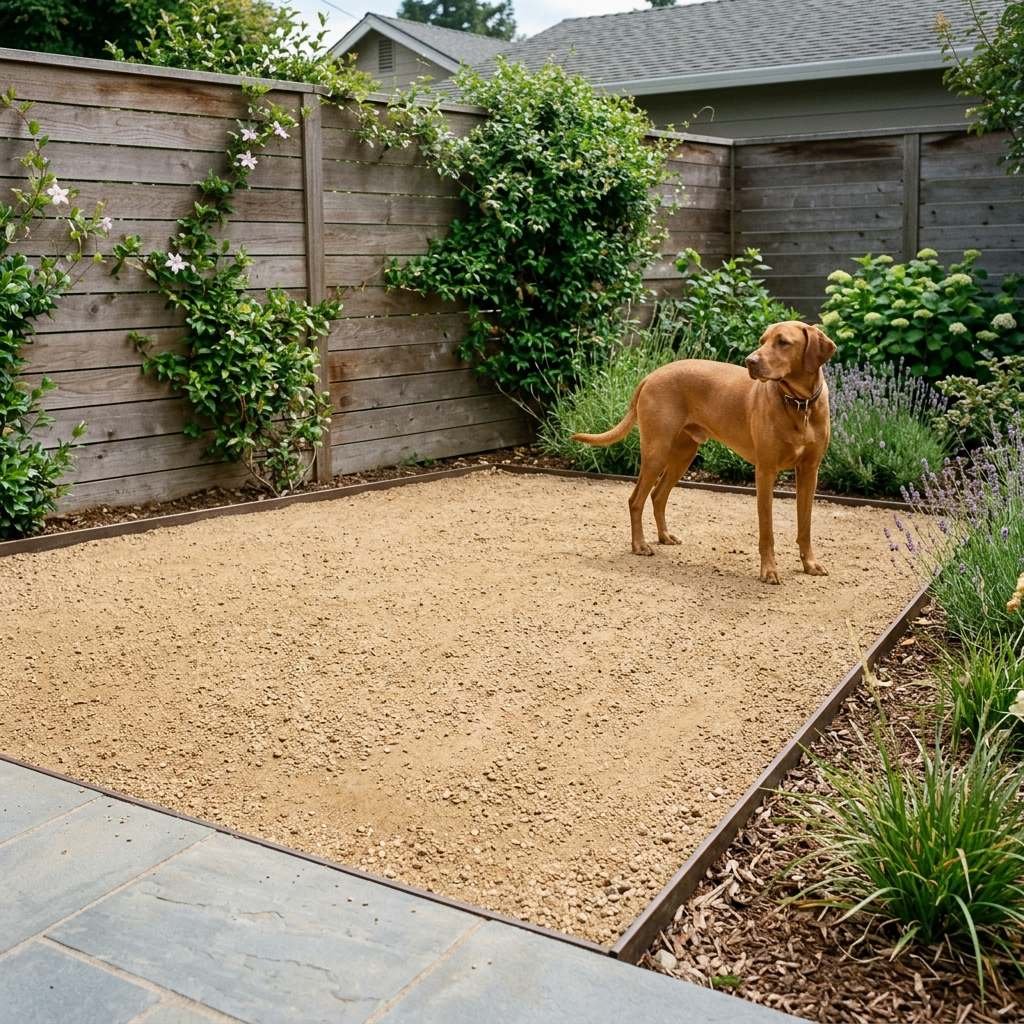
Decomposed granite is crushed, weathered granite that compacts into a firm, semi-permeable surface, offering a middle ground between loose gravel and solid hardscape. Once compacted with a plate tamper, it resists digging far better than pea gravel while still allowing some drainage through the material’s natural porosity. It costs slightly more than pea gravel at $40-60 per cubic yard installed, and its neutral tan color blends well with most landscape designs, making it a popular choice for potty areas positioned near patios or entertaining spaces where aesthetics matter alongside function.
4. Mulch (Non-Cocoa Varieties)
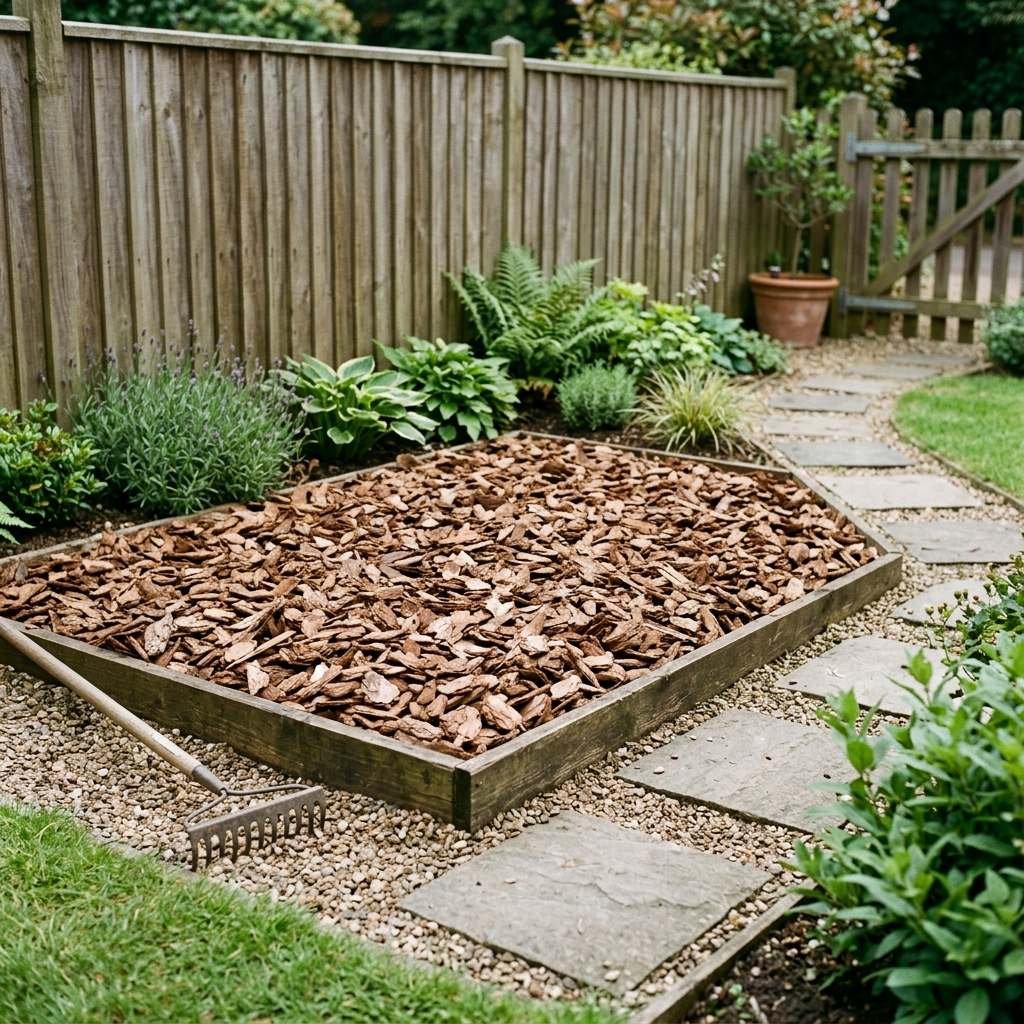
Cedar or pine bark mulch offers a soft, natural surface that’s gentle on paws and has natural odor-masking properties from the wood’s own aromatic compounds, making it a reasonable budget option at $25-40 per cubic yard. It’s critical to avoid cocoa bean mulch entirely, since it’s toxic to dogs if ingested (containing theobromine, the same compound that makes chocolate dangerous for pets). Mulch does break down and needs replacing every 6-12 months, faster in a high-traffic potty area than in a typical landscape bed, and it can harbor bacteria and odor more than gravel or turf if not raked and refreshed regularly.
5. Sand (Washed, Coarse-Grade)
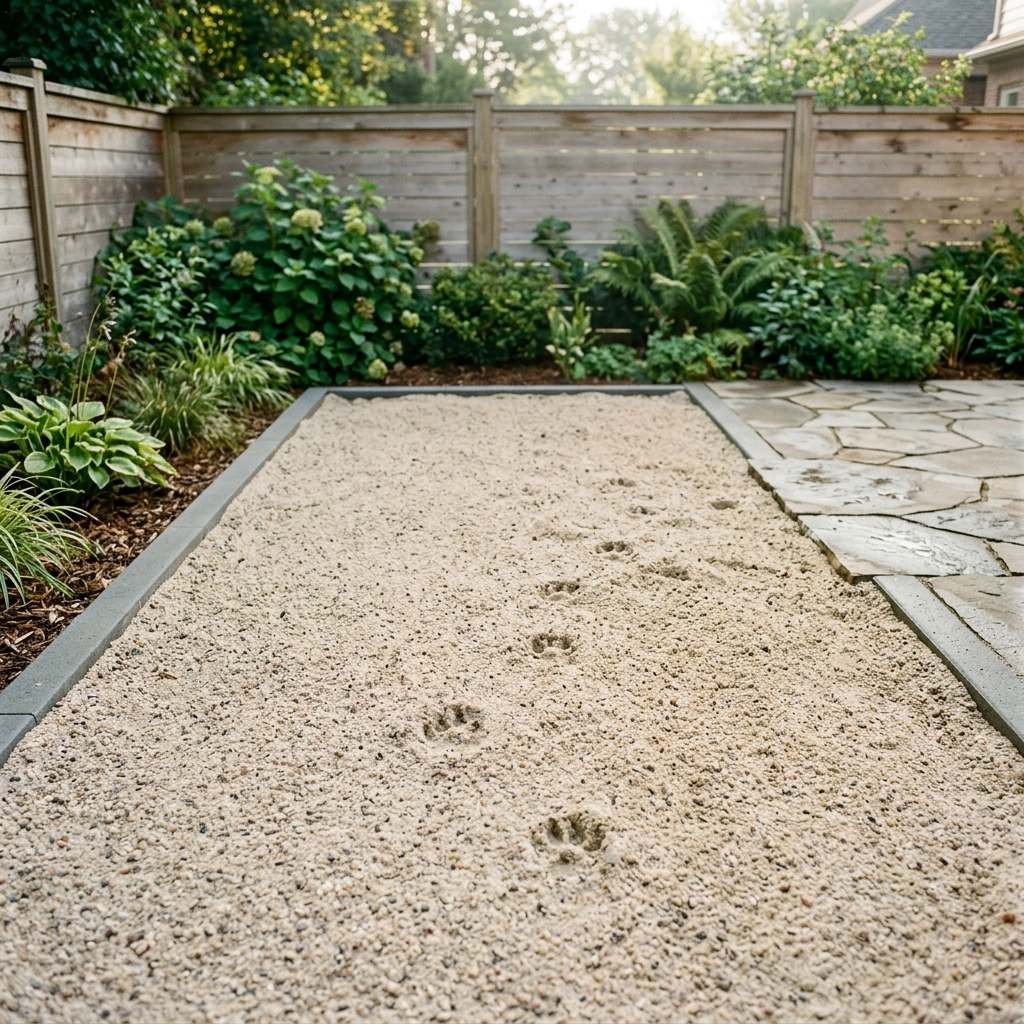
Washed coarse sand drains exceptionally well and is soft underfoot, which is why it’s a common choice for dedicated dog runs at boarding kennels and shelters. The downside is that sand tracks into the house on paws far more readily than gravel, and solid waste can be harder to spot and fully scoop compared to a surface with more visual contrast. Coarse, washed play sand (not fine beach sand, which compacts and drains poorly) runs about $30-45 per cubic yard.
6. Rubber Mulch
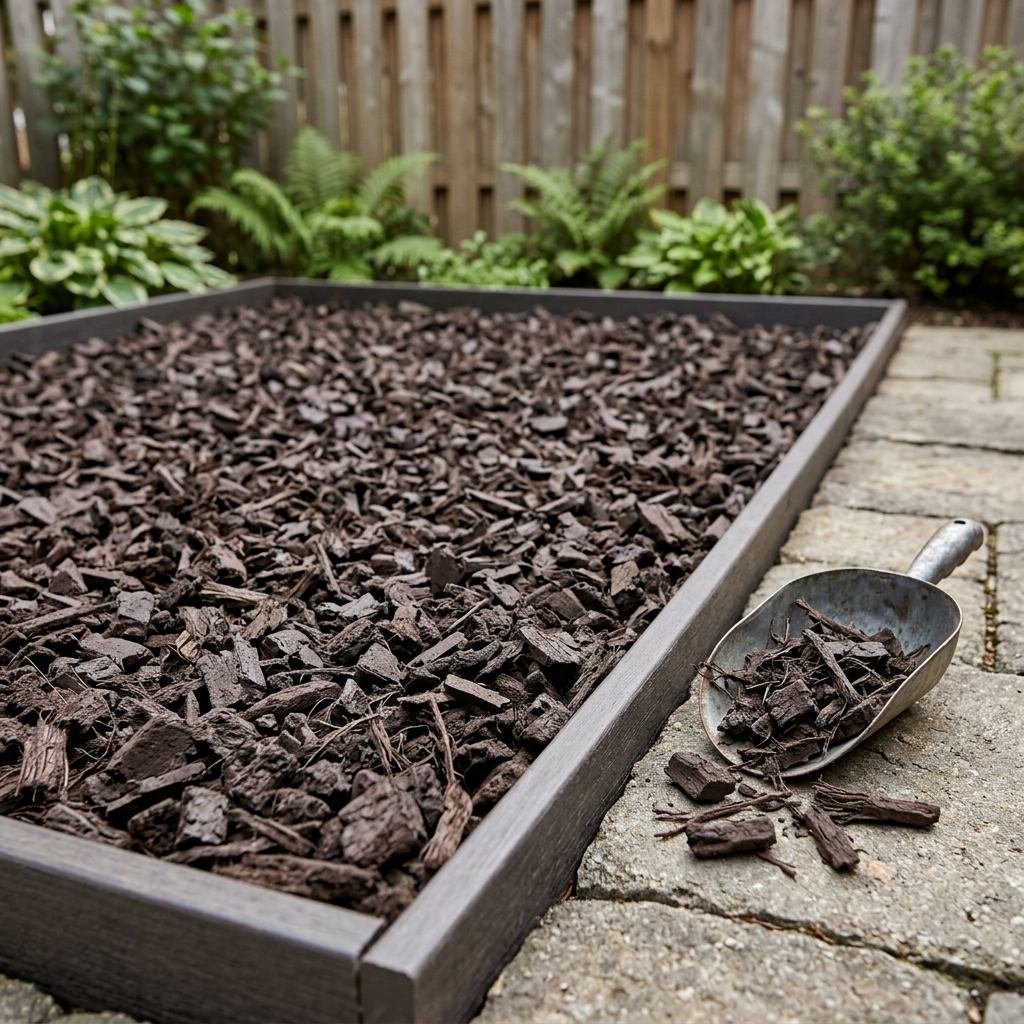
Made from recycled tires, rubber mulch doesn’t break down, doesn’t attract insects, and provides good drainage between the chunks, making it a low-maintenance long-term option costing $80-120 per cubic yard, more expensive upfront than organic mulch but requiring no annual replacement. Some dogs chew on rubber mulch pieces, which is a genuine safety concern since ingested pieces can cause digestive blockages, so it’s best suited to dogs that don’t have a history of chewing non-food items in the yard.
7. Crushed Oyster Shell
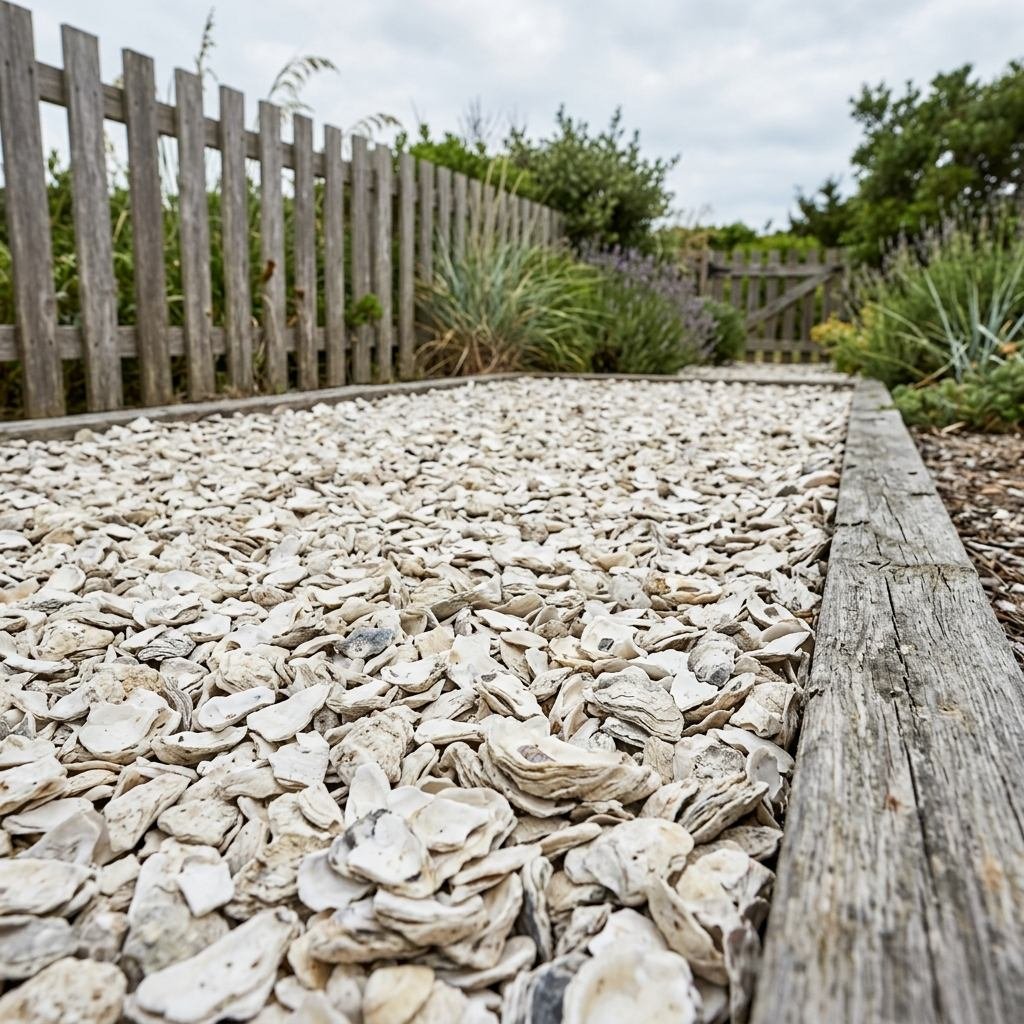
Crushed oyster shell is a lesser-known but effective option, particularly popular in coastal regions, offering good drainage and a naturally odor-neutralizing alkaline quality that helps counteract the acidity of dog urine. It’s rougher underfoot than pea gravel, which makes it less ideal for puppies or dogs with sensitive paws, but its durability and natural odor control make it worth considering at a similar price point to pea gravel, around $35-55 per cubic yard.
8. Rubber Paver Tiles
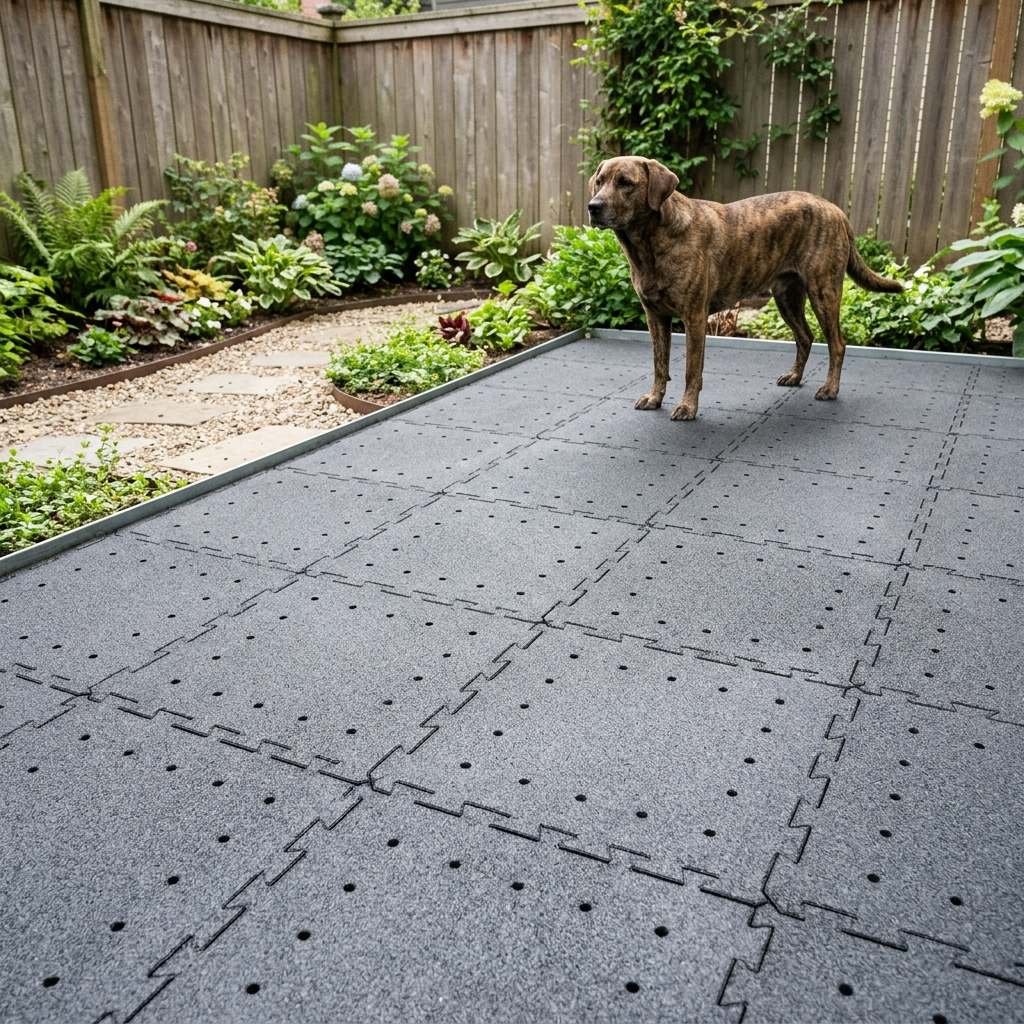
Interlocking rubber paver tiles, often made from recycled materials, create a solid but slightly cushioned surface with drainage holes built into the tile design. They’re easier to hose down and disinfect than loose materials since there’s a defined, sealed surface, making them a good choice for a potty area located close to the house where hygiene is a bigger concern. Cost runs $4-10 per square foot, on the higher end of this list, but installation is simpler than loose-fill materials since no compaction or edging is required.
9. Synthetic Pet-Specific Gravel Alternatives (Recycled Glass Gravel)
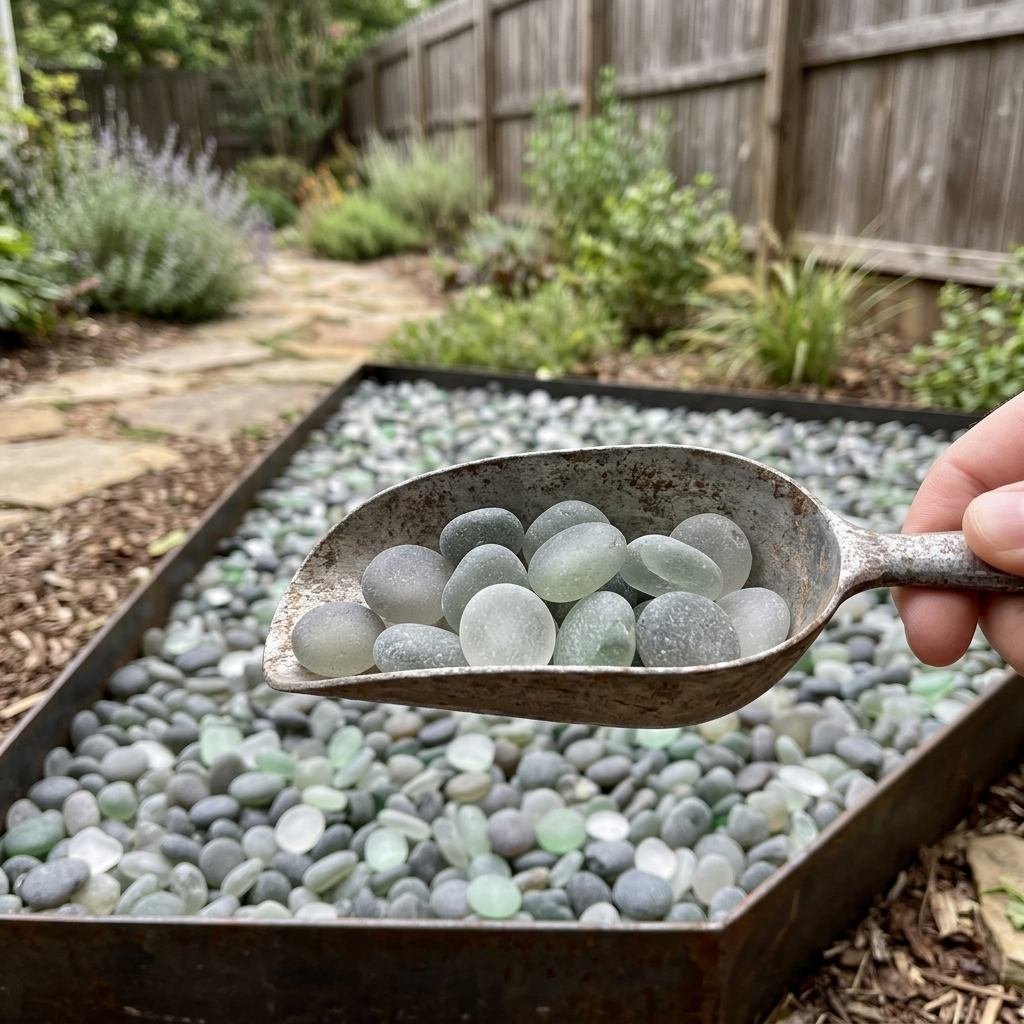
Tumbled recycled glass gravel, sold under various pet-safe landscaping brands, offers similar drainage benefits to pea gravel with the added advantage of being non-porous, meaning it doesn’t absorb urine odor into the material itself the way some natural stone can over years of use. It costs more than traditional pea gravel, typically $60-90 per cubic yard, but its smooth, tumbled edges are safe for paws and it never needs replacing due to material breakdown.
10. Concrete Pavers with Gravel Joints
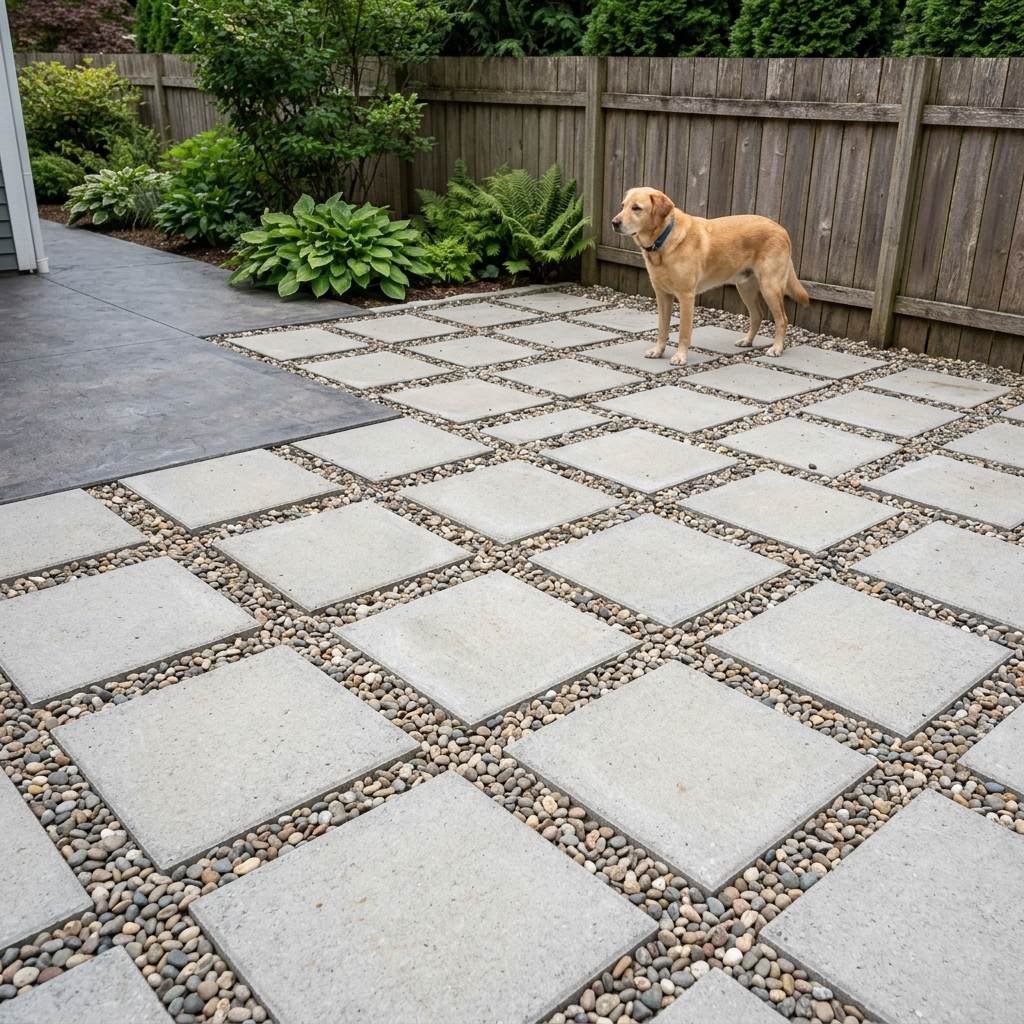
Rather than solid poured concrete, individual concrete pavers laid with wide gravel-filled joints combine a firm, easy-to-walk-on surface with functional drainage channels between the pavers. This hybrid approach costs more to install ($8-15 per square foot) but creates a genuinely low-maintenance, long-lasting potty area that resists digging entirely, since pavers can’t be dug up by even determined diggers.
11. Pine Straw
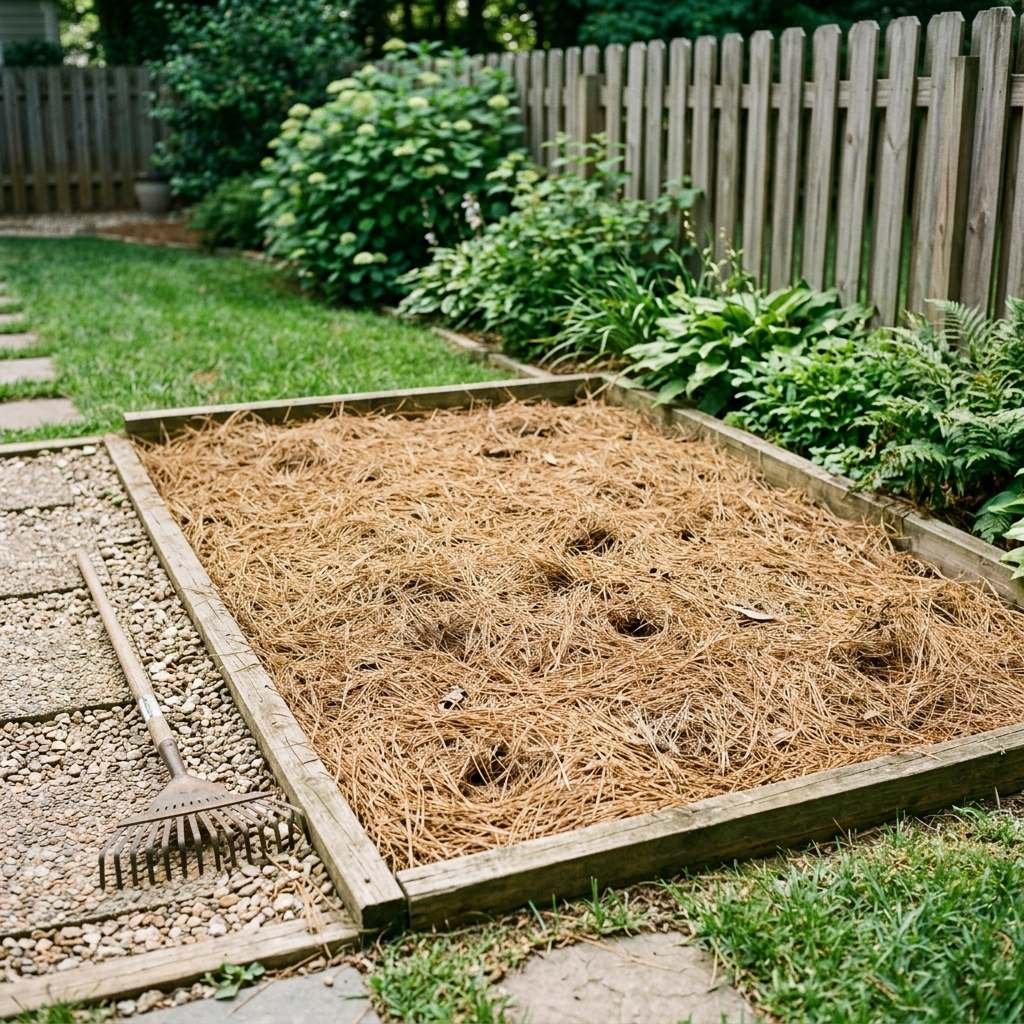
Pine straw (dried pine needles) is an underused option that drains well due to its loose, layered structure and has a naturally pleasant scent that helps mask odor between cleanings. It’s inexpensive, often under $20 per compressed bale covering a substantial area, and works particularly well in regions where pine straw is a byproduct of removing needles from lawns elsewhere on the property. It breaks down over 3-6 months and needs replenishing more often than gravel-based options.
12. Artificial Turf Without Drainage Backing (What to Avoid)
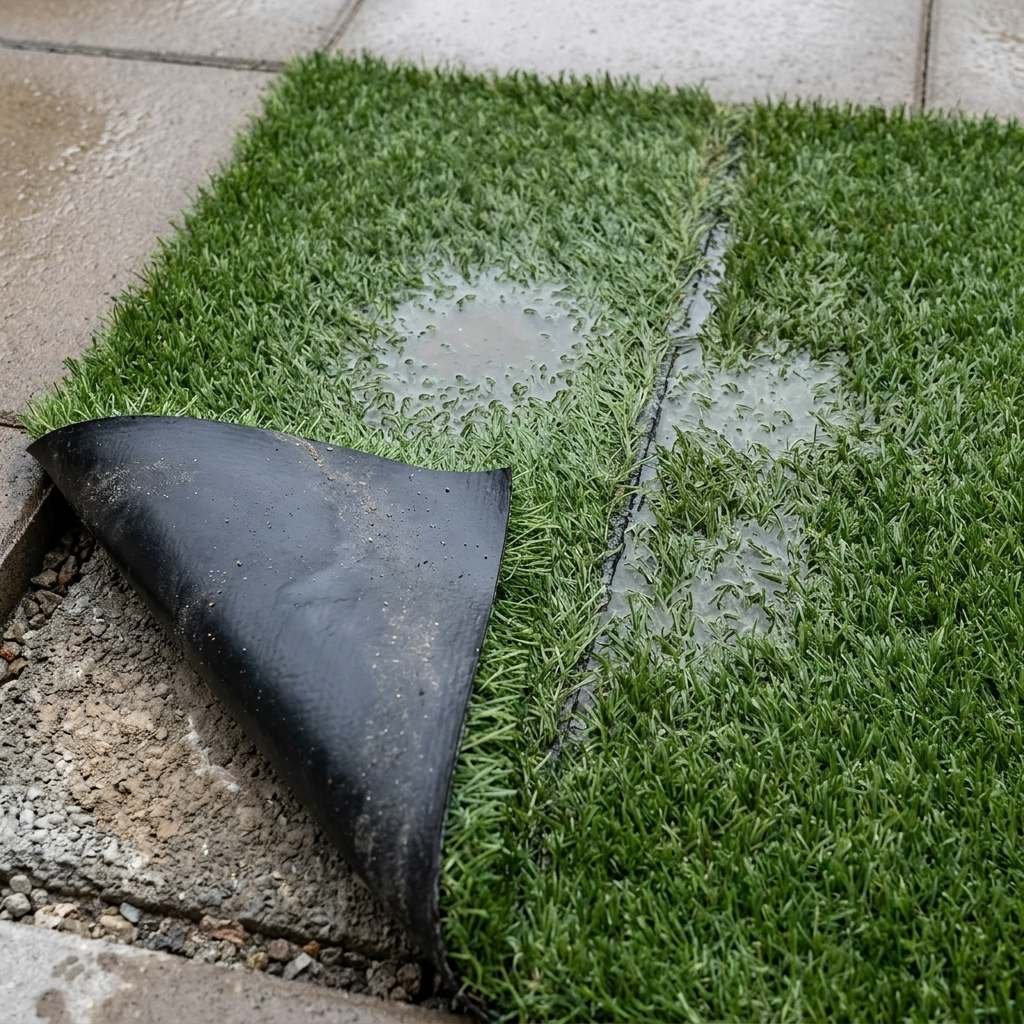
Standard landscaping artificial turf, the kind sold for aesthetic lawns without a pet-specific drainage design, is worth naming specifically as a poor choice because it lacks the perforated backing and infill needed to let urine pass through. Liquid pools on the surface or in the seams, creating persistent odor and bacterial growth that no amount of rinsing fully resolves. If turf is the preferred look, spending the extra 20-30% for genuinely pet-rated turf with proper drainage is worth it to avoid this common and expensive mistake.
13. Bare Dirt (Compacted, With Drainage Slope)
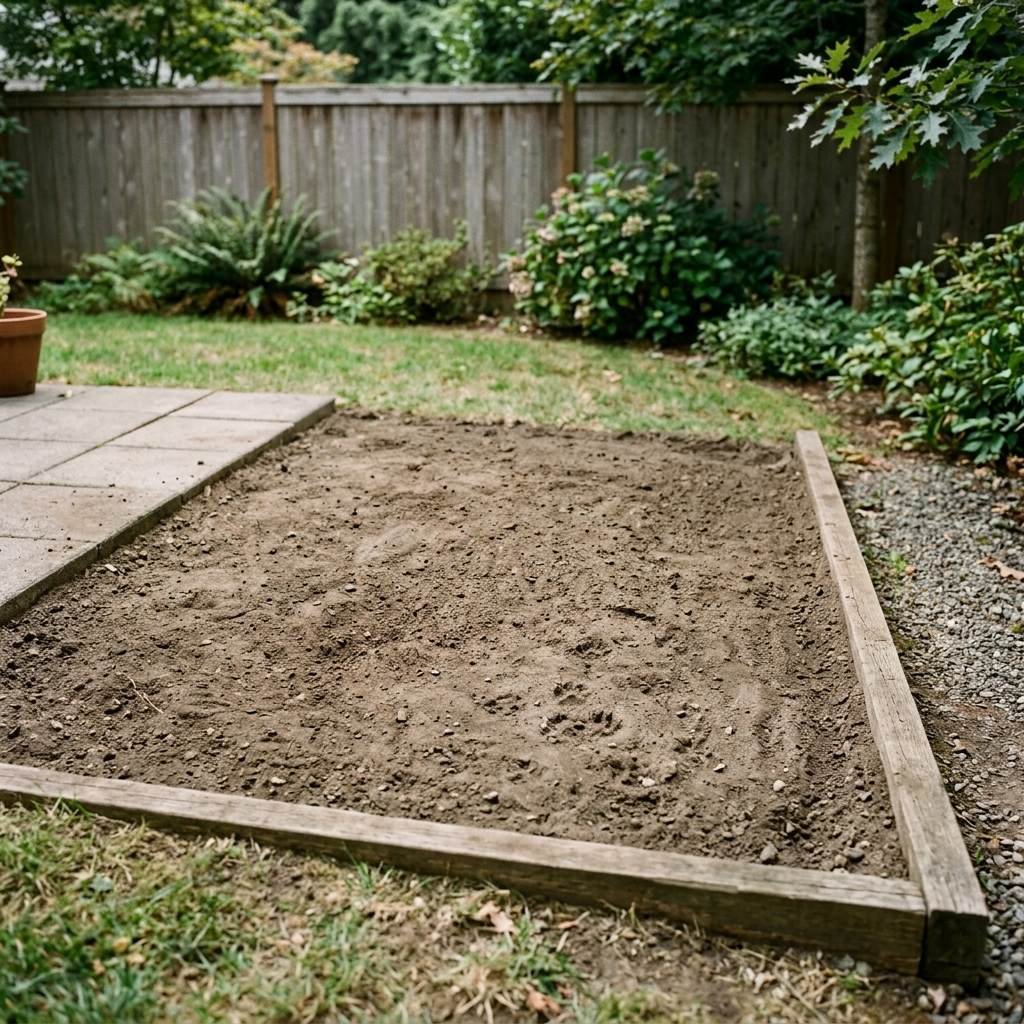
Sometimes overlooked as “not a real material,” a well-graded, compacted dirt area with a slight slope for drainage is actually a functional, zero-cost potty area option, particularly as a starting point before investing in a more permanent material. The main drawbacks are that it turns to mud in heavy rain, dogs can dig in it more easily than in compacted gravel or DG, and it looks less finished than any purpose-built material, but it’s a legitimate low-budget starting point.
Comparing All 13 Materials
| Material | Cost Range | Drainage | Digging Resistance | Paw Comfort |
|---|---|---|---|---|
| Pea gravel | $30-50/cu yd | Excellent | Moderate | Good |
| Pet turf (with backing) | $3-8/sq ft | Excellent | High | Excellent |
| Decomposed granite | $40-60/cu yd | Good | High | Good |
| Bark mulch | $25-40/cu yd | Good | Low | Excellent |
| Washed sand | $30-45/cu yd | Excellent | Low | Excellent |
| Rubber mulch | $80-120/cu yd | Good | Moderate | Good |
| Crushed oyster shell | $35-55/cu yd | Excellent | Moderate | Fair |
| Rubber paver tiles | $4-10/sq ft | Good | High | Good |
| Recycled glass gravel | $60-90/cu yd | Excellent | Moderate | Good |
| Pavers with gravel joints | $8-15/sq ft | Good | Very high | Good |
| Pine straw | Under $20/bale | Good | Low | Excellent |
| Standard turf (no backing) | $2-5/sq ft | Poor | High | Excellent |
| Compacted bare dirt | Free-$10 | Poor to fair | Low | Fair |
The Bottom Line
Pea gravel and pet-specific turf remain the two most reliable recommendations because they solve the core problem, fast drainage plus odor control, without major compromises, while options like decomposed granite and rubber paver tiles trade some cost for extra digging resistance. Whatever material you choose, plan for a slight slope away from the house, a defined edge (steel or plastic landscape edging) to keep the material contained, and a realistic cleaning routine, since even the best material accumulates odor without regular spot-cleaning and occasional deeper rinsing with an enzymatic pet-safe cleaner.
Frequently Asked Questions
What’s the single best material overall for a dog potty area?
Pea gravel is the most commonly recommended by professional landscapers and trainers because it balances low cost, excellent drainage, and reasonable paw comfort better than any other single material. Pet-specific turf is the best choice if aesthetics and a natural-grass look matter more than minimizing cost.
Will any of these materials fully eliminate potty area odor?
No material eliminates odor entirely without a cleaning routine; drainage-focused materials like gravel and turf reduce surface odor buildup significantly compared to grass or solid concrete, but they still need periodic rinsing with water or an enzymatic cleaner. Odor control is a combination of material choice and maintenance habit.
How big should a dedicated dog potty area be?
A general guideline is 4×4 feet minimum for a single small to medium dog, and 6×8 feet or larger for bigger dogs or multiple dogs, though a well-trained dog can be encouraged to use a smaller dedicated spot consistently. Size should factor in room for the dog to turn around comfortably.
Can I use regular grass instead of one of these materials?
Regular grass typically develops yellow, burned patches in a heavily used potty spot within days to weeks due to the high nitrogen concentration in dog urine. Materials like gravel, turf with drainage, or mulch avoid this problem because they don’t rely on living grass tissue that urine can chemically damage.
How often do I need to replace or refresh these materials?
Organic materials like mulch and pine straw need replacing every 6-12 months, while gravel, decomposed granite, and turf typically last 2-5 years or longer with proper maintenance and occasional replenishing of settled material. Rubber and paver-based options can last a decade or more.
Is it safe to let dogs eat or chew materials like mulch or rubber mulch?
Cocoa mulch is toxic and must be avoided entirely, while rubber mulch poses a choking or blockage risk for dogs prone to chewing non-food items. Pea gravel, sand, and turf are generally safer if accidentally ingested in small amounts, though none should be treated as edible and supervision is still recommended for dogs with known chewing habits.