
Build Perfect Raised Beds: Simple Steps for Your Backyard Garden

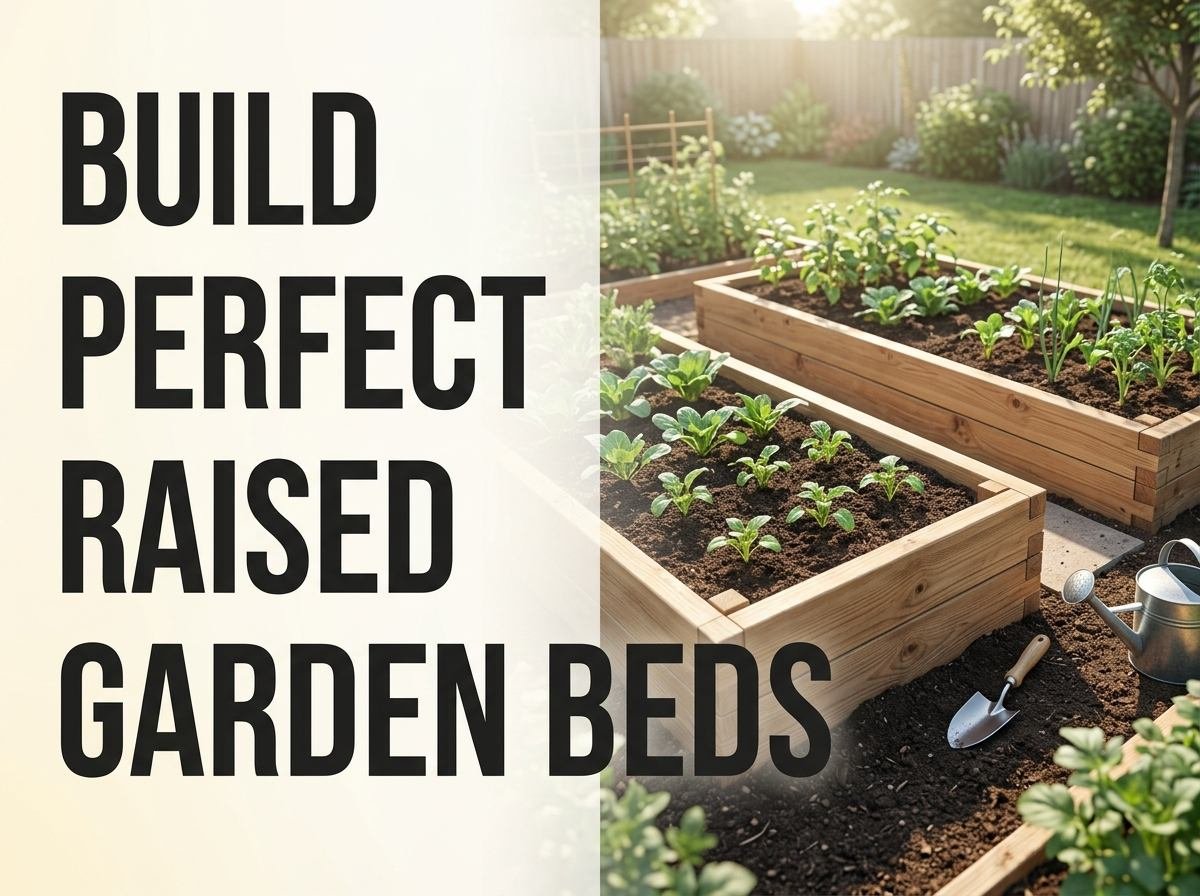
A well-built raised bed comes down to three decisions that determine everything else: width no more than 4 feet (so you can reach the center from either side without stepping in), depth of at least 8 inches for most vegetables (12 inches for root crops like carrots), and a soil mix that’s roughly 60% topsoil, 30% compost, and 10% aeration material like perlite. Getting these three right matters more than the material you build the frame from, whether that’s cedar, composite, or concrete block. The steps below walk through sizing, material selection, construction, and the soil mix that actually makes a raised bed outperform in-ground planting.
Choosing the Right Dimensions

Width is the single most important dimension to get right, and 3 to 4 feet is the standard because it lets you reach the center of the bed from either side without ever stepping on and compacting the growing soil. Length is flexible and mostly a matter of available space and lumber sizing, but 8 feet is common since it matches standard lumber lengths and minimizes cutting and waste. Depth depends on what you’re growing: leafy greens and herbs are fine with 6 to 8 inches, tomatoes and peppers do better with 10 to 12 inches for stronger root development, and carrots or parsnips genuinely need 12 to 14 inches of loose soil to grow straight without forking. A bed deeper than 18 inches rarely adds benefit for typical vegetables and significantly increases both material cost and the volume of soil mix needed to fill it.
Key takeaway: Get width and depth right first, since length is just a matter of how much space and lumber you have available.
Selecting Bed Material

Untreated cedar and redwood naturally resist rot and insects thanks to their tannin content, lasting 10 to 15 years without any chemical treatment, which matters because you don’t want treated lumber leaching preservatives into food-growing soil. Pine is roughly a third of the cost but breaks down within 3 to 5 years when in constant contact with moist soil, making it a reasonable budget choice if you’re comfortable rebuilding sooner. Galvanized steel and composite lumber (recycled plastic and wood fiber blends) both last 20+ years and don’t rot, though steel beds can raise soil temperature significantly in full sun, which benefits early spring planting but can stress heat-sensitive crops in peak summer. Concrete block or brick offers the longest lifespan of any option (essentially permanent) but costs considerably more upfront and lacks the flexibility to easily resize or relocate the bed later.
Key takeaway: Cedar offers the best balance of cost and longevity for most gardeners, while steel and composite make sense for those wanting a truly long-term, low-maintenance structure.
Step-by-Step Construction

Start by clearing the planting site of grass and weeds, then level the ground using a long board and a level, since even a moderate slope will cause soil and water to pool unevenly on one side of the finished bed. Cut lumber to your chosen dimensions (standard 2×10 or 2×12 boards work well for depth), and assemble corners using galvanized deck screws rather than nails, since screws hold significantly better against the outward pressure that wet, settled soil exerts on the frame over time. For beds longer than 6 feet, add a center support stake or a cross-brace at the midpoint to prevent the long sides from bowing outward under soil pressure after a few months. Line the bottom with cardboard or several layers of newspaper if placing directly over lawn, which smothers grass without blocking the drainage and worm activity that a solid barrier like landscape fabric would prevent.
Key takeaway: Mid-span bracing on longer beds prevents the slow outward bowing that eventually cracks corner joints within the first year or two.
Building the Ideal Soil Mix

The often-cited “Mel’s Mix” ratio of one-third compost, one-third peat moss (or coconut coir as a more sustainable alternative), and one-third coarse vermiculite works well for smaller beds, but for larger beds a more economical mix of 60% quality topsoil, 30% compost, and 10% perlite or coarse sand achieves similarly loose, well-draining structure at lower cost. Compost should come from at least two different sources (municipal compost plus your own kitchen compost, for example) to ensure a broader range of nutrients and beneficial microbes than any single source provides alone. Avoid using pure topsoil or garden soil alone, since it compacts significantly more than a blended mix and won’t drain well in a contained raised bed the way it might spread out in open ground. Expect to add 1 to 2 inches of fresh compost to the surface each spring, since raised bed soil settles and depletes nutrients faster than in-ground soil due to more frequent watering and better drainage.
Key takeaway: A blended mix with real aeration material beats straight topsoil every time in a raised bed, since contained soil compacts faster than open ground soil.
Calculating How Much Soil You Need

For a standard 4-foot by 8-foot bed at 10 inches deep, you need approximately 27 cubic feet of soil mix, which translates to roughly 1 cubic yard, or about 13-14 standard 2-cubic-foot bags if buying bagged soil rather than bulk. Buying in bulk from a landscape supplier typically costs 40 to 60% less per cubic yard than bagged soil from a garden center, making it worth the logistics of delivery or hauling for anyone building more than one or two beds. Always calculate volume before shopping using length times width times depth (in feet), divided by 27 to get cubic yards, since underestimating soil volume is one of the most common first-time raised bed mistakes.
Key takeaway: Bulk soil delivery pays for itself once you’re filling more than about two standard-sized beds.
Ensuring Proper Drainage

Even with a well-draining soil mix, raised beds set directly on heavy clay subsoil can develop drainage problems if water has nowhere to go once it passes through the growing mix. Elevating the bed slightly, or adding a 1 to 2 inch layer of coarse gravel at the very bottom before adding soil, gives excess water somewhere to move rather than pooling at the root zone. Beds placed on top of existing lawn generally drain better than beds set into excavated ground, since the surrounding soil structure remains intact and allows lateral water movement. If a bed does develop standing water after heavy rain, that’s usually a sign either the underlying ground is too compacted or the soil mix itself has too little aeration material.
Key takeaway: Poor drainage in a raised bed is almost always a subsoil or soil-mix problem, not a design flaw in the frame itself.
Comparing Common Raised Bed Materials

| Material | Lifespan | Relative Cost | Notes |
|---|---|---|---|
| Untreated cedar | 10-15 years | Moderate | Naturally rot-resistant, food-safe |
| Pine | 3-5 years | Low | Budget option, needs replacement sooner |
| Galvanized steel | 20+ years | Moderate-high | Raises soil temp in full sun |
| Composite lumber | 20+ years | High | Low maintenance, doesn’t rot |
| Concrete block | 25+ years | High | Permanent, hard to relocate |
Positioning the Bed for Sun and Access

Most vegetables need 6 to 8 hours of direct sunlight daily, so orient beds running north to south when possible, which gives more even light exposure across the whole bed length as the sun moves through the day compared to an east-west orientation that can leave one end shaded longer. Leave at least 2 to 3 feet of walking space between multiple beds, both for wheelbarrow access and to avoid accidentally compacting soil at bed edges while walking between them. Position beds within reasonable hose or watering can distance from a water source, since the improved drainage that makes raised beds productive also means they dry out faster than in-ground plots and need more frequent watering, particularly in summer.
Key takeaway: Raised beds dry out faster than in-ground gardens, so proximity to a water source matters more here than it does for traditional garden plots.
The Bottom Line
A raised bed that performs well over many seasons comes down to getting the fundamentals right at the start: proper width for easy access, adequate depth for what you’re growing, a soil mix with real aeration and organic matter, and a frame material matched to your budget and how long you want it to last. Skimping on soil quality to save money is the most common mistake, since even a beautifully built frame underperforms with poor soil inside it. Get those elements right, and a raised bed genuinely outproduces equivalent in-ground space season after season.
Frequently Asked Questions
How deep does a raised bed need to be for vegetables? Most vegetables do well with 8 to 10 inches of depth, though root vegetables like carrots and parsnips need 12 to 14 inches of loose soil to develop properly without forking. Shallow-rooted herbs and greens can succeed in as little as 6 inches if needed.
What is the cheapest material to build a raised bed? Untreated pine is the cheapest common option, though it only lasts 3 to 5 years in constant soil contact before needing replacement. Cinder blocks stacked without mortar are another low-cost option that lasts considerably longer than pine, if the aesthetic works for your yard.
Can I put a raised bed directly on grass or lawn? Yes, layer cardboard or several sheets of newspaper over the grass before adding soil, which smothers the grass over a few months without blocking drainage. This method also avoids the labor of digging out sod first.
How often do I need to add soil to a raised bed? Plan to add 1 to 2 inches of fresh compost to the surface each spring, since raised bed soil settles and nutrients deplete faster than in-ground soil due to more frequent watering and drainage. Full soil replacement usually isn’t needed for many years if it’s topped up annually.
Do raised beds need drainage holes in the bottom? No drainage holes are needed if the bed sits on open ground, since water passes through the soil into the earth below, but a bottom layer of coarse gravel helps if the underlying soil is heavy clay. Beds sitting on a hard surface like concrete or a patio do need actual drainage gaps or holes built into the frame.
How much does it cost to build a 4×8 raised bed? Material and soil costs typically range from $80 to $150 for a basic pine frame filled with a bulk soil mix, up to $300 or more for cedar or composite lumber with a premium soil blend. Buying soil in bulk rather than bagged is the single biggest cost-saving step for larger beds.