
Backyard Gardening for a Big Harvest in Just 100 Square Feet

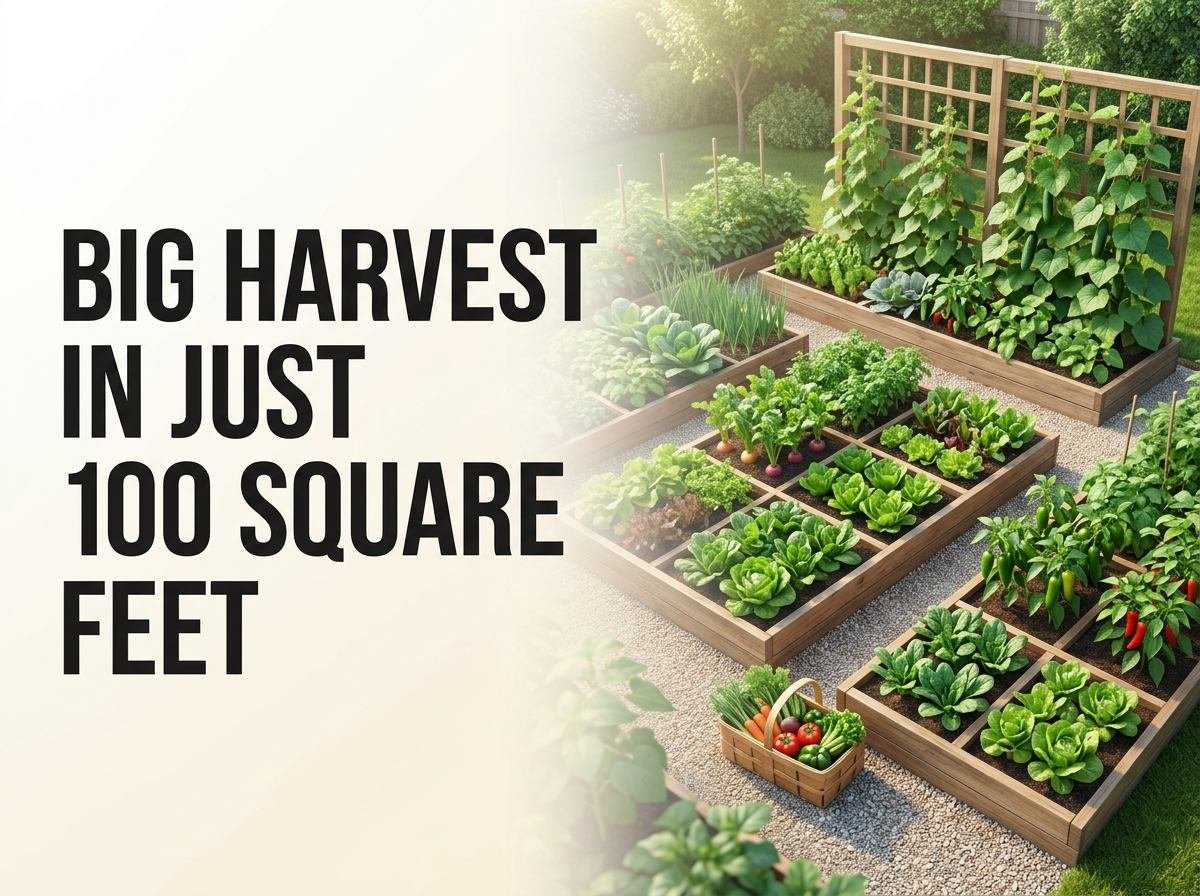
A 100-square-foot garden, laid out using the square-foot gardening grid method with intensive spacing and planned succession, can realistically produce 300-500+ pounds of vegetables in a single growing season, far more than traditional row gardening extracts from the same footprint. The method behind this yield isn’t a secret ingredient or special soil, it’s a specific planning approach: dividing beds into 1-foot grid squares, spacing each crop at the tightest distance it can tolerate, and replanting each square the moment its current crop finishes. This turns 100 square feet from a modest kitchen garden into a genuinely productive growing system.
Understand the Square-Foot Grid System
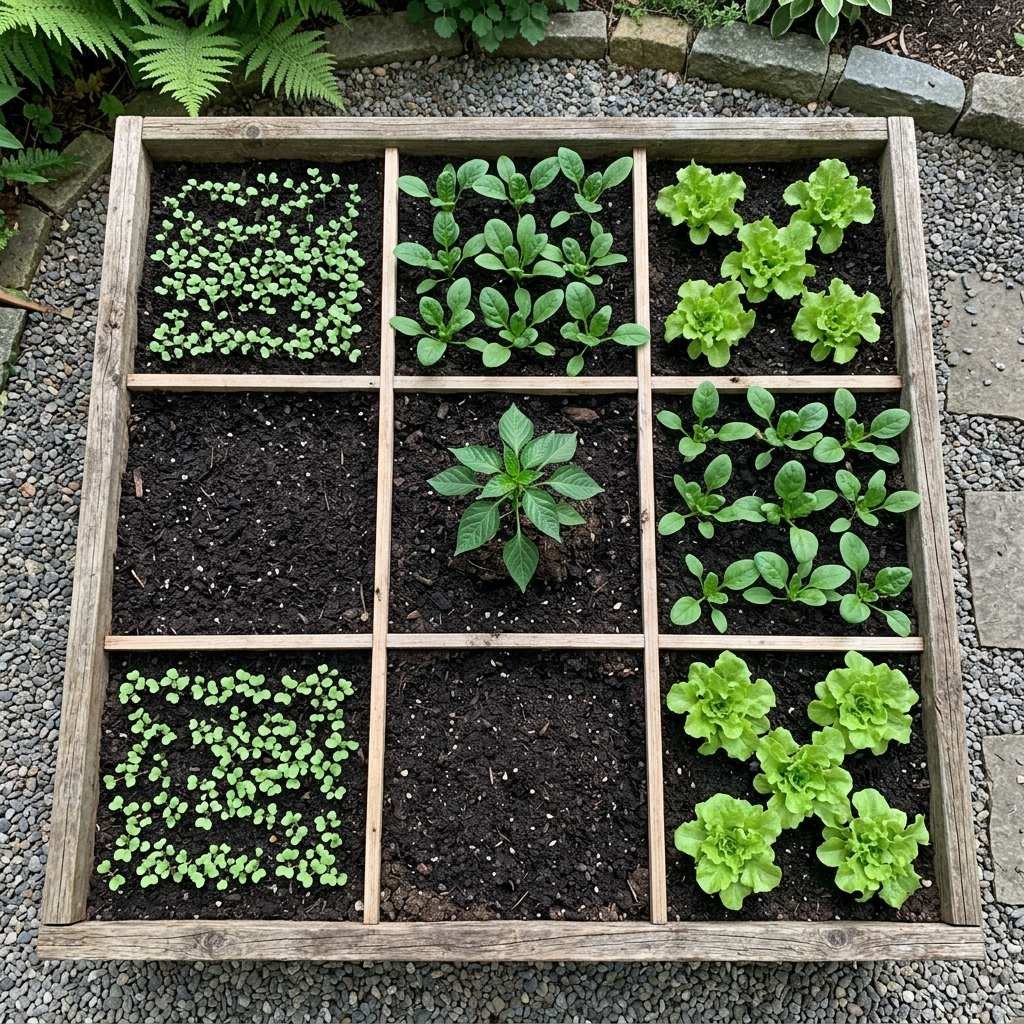
The core planning tool for maximizing a 100-square-foot garden is dividing every bed into a literal grid of 1×1 foot squares, using string, wood strips, or a simple visual guide, and then assigning each square a specific number of plants based on that crop’s actual mature spacing needs rather than the wider spacing traditional row gardening recommends. A square gets 16 plants if the crop needs roughly 3-inch spacing (radishes, carrots), 9 plants at 4-inch spacing (bush beans, spinach), 4 plants at 6-inch spacing (lettuce, Swiss chard), or just 1 plant if it needs a full 12+ inches (tomatoes, peppers, broccoli). This system works because it replaces the wasted walking-row aisles of traditional gardening with continuous planting, while still respecting each individual plant’s actual space requirement for healthy growth, meaning nothing is truly overcrowded even though far more plants occupy the same total area.
Key takeaway: Grid the whole 100 square feet into 1-foot squares and assign each one a plant count based on that specific crop’s mature size, not a one-size-fits-all spacing rule.
Allocate Squares by Crop Value and Yield Potential
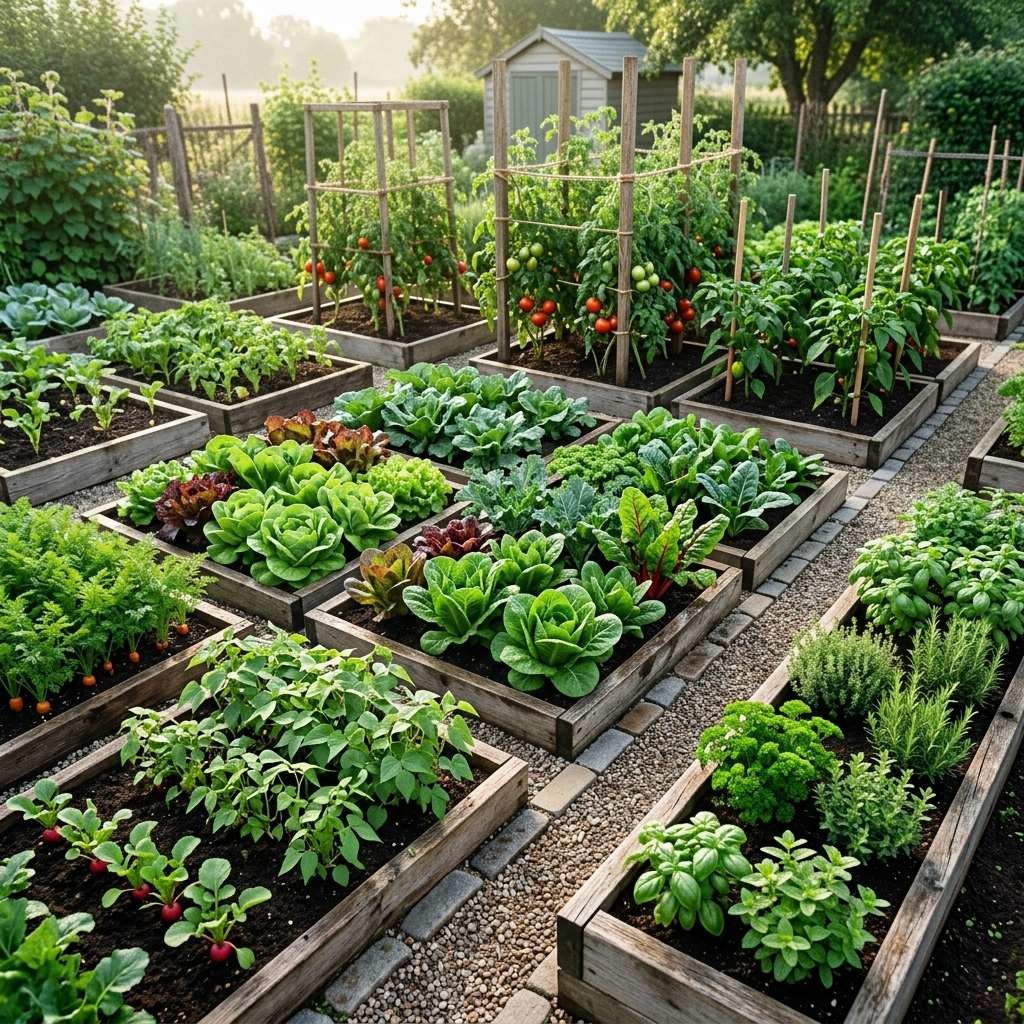
With roughly 100 individual grid squares available (in a 100-square-foot layout), the highest-yield plan prioritizes crops that either produce continuously over the season or turn over quickly enough to be replanted multiple times, rather than devoting large blocks to single-harvest, space-hungry crops like winter squash or corn that would consume dozens of squares for a modest yield. A practical allocation might include 20 squares of leafy greens (lettuce, spinach, kale) supporting continuous cut-and-come-again harvest, 16 squares of root vegetables (carrots, beets, radishes) at high density, 15 squares of bush beans replanted twice, 12 squares of vertically trellised vining crops (cucumbers, pole beans) that occupy minimal ground footprint relative to their yield, 10 squares each for tomatoes and peppers (each needing its own full square due to mature size), and the remainder split between herbs and a rotating experimental section. This kind of value-weighted allocation, rather than an even split among whatever crops sound appealing, is what actually drives total harvest weight upward.
Key takeaway: Weight your square allocation toward continuous-harvest and quick-turnover crops rather than splitting space evenly among everything you’d like to grow.
Use Vertical Space to Multiply the Effective Footprint
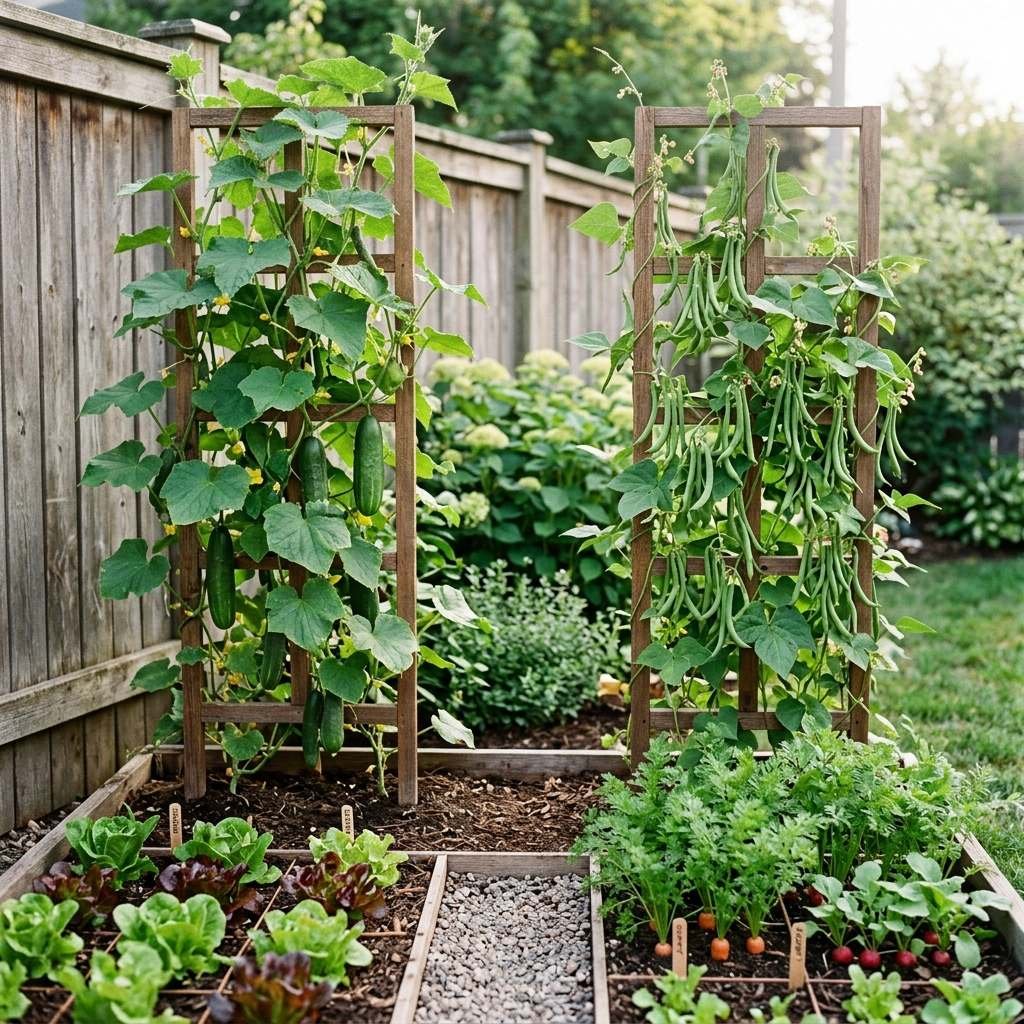
Every vining crop planted in this 100-square-foot plan should go on a trellis rather than sprawling, since a single square foot at the base of a trellis can support a cucumber or pole bean plant that produces the same yield a sprawling plant would need 12-16 square feet of ground to achieve. Building 2-3 vertical trellis sections along the north edge of the growing area (positioned there specifically so their height doesn’t shade shorter crops during the day) effectively adds growing capacity without subtracting from the 100-square-foot ground total. Pole beans on a trellis can produce 2-3 times the yield per square foot of ground space compared to bush beans grown at the same footprint, making this substitution one of the single highest-leverage decisions in the whole layout.
Key takeaway: Every square foot devoted to a trellised vining crop does the yield work of several square feet of sprawling growth.
Plan Succession Cycles Into Every Square From Day One
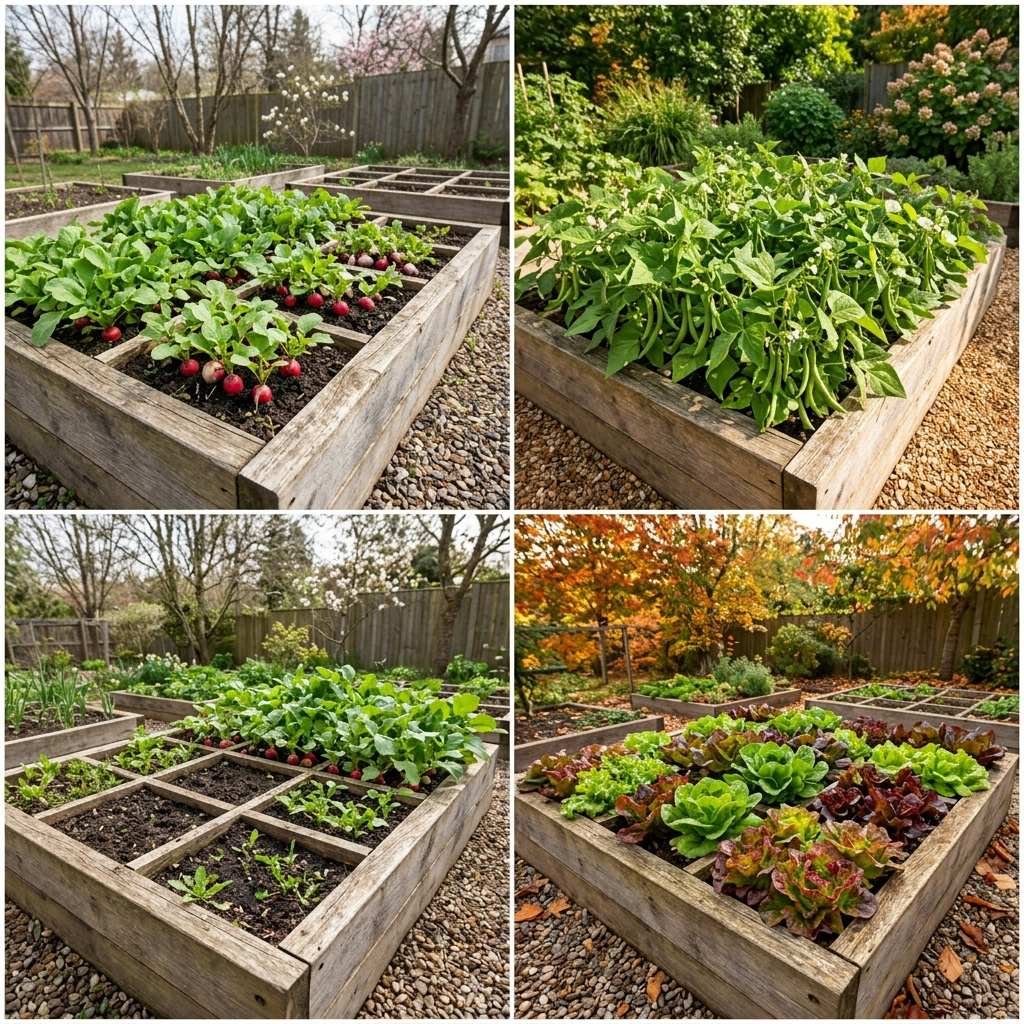
The difference between a garden that produces a “good” harvest and one that produces a genuinely “big” harvest from the same 100 square feet is almost entirely about how many times each square gets replanted across the season, rather than what’s planted in it initially. Fast crops like radishes (25 days) and baby lettuce (30 days) can cycle through a single square 3-4 times between spring and fall in most temperate climates, while even a slower crop like bush beans (50-55 days) fits two full cycles in a typical 5-6 month growing season. Building a written succession calendar before the season starts, mapping which crop follows which in each square, prevents the common failure mode of a square sitting empty for weeks after an early harvest simply because there was no plan for what came next. Over a full season, this practice alone can be responsible for 40-60% of a 100-square-foot garden’s total harvest weight, since it multiplies the number of harvests the same physical space produces.
Key takeaway: Write out a season-long succession plan for every square before planting day one; empty, unplanned squares are the single biggest yield loss in an intensive garden.
Feed Soil Aggressively to Support the Density
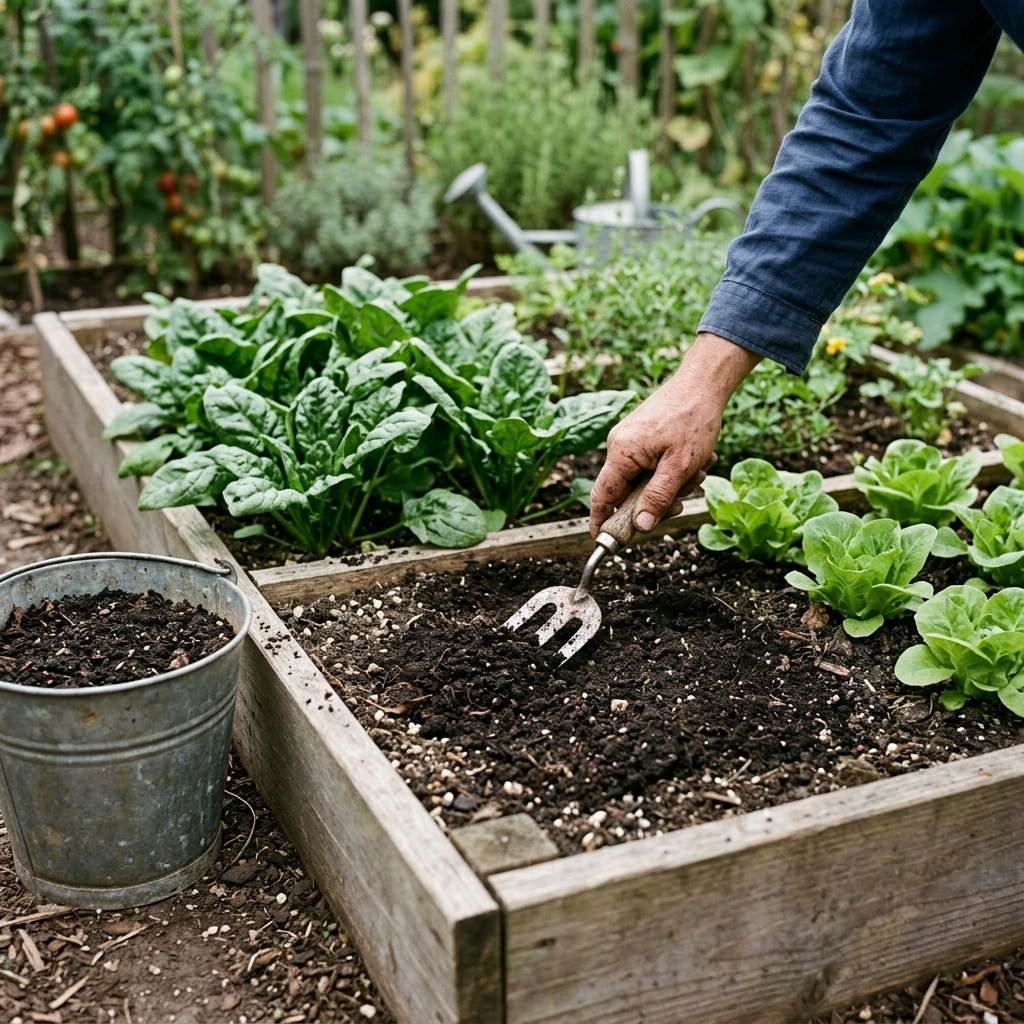
Intensive square-foot spacing asks considerably more of the soil than traditional wide-spaced gardening, since far more plant roots are drawing nutrients and moisture from the same soil volume, which makes soil quality and replenishment the limiting factor on how well this whole system performs. The classic square-foot gardening soil mix, equal parts compost, peat moss (or coconut coir), and vermiculite, provides excellent drainage, nutrient density, and moisture retention specifically suited to this tight spacing, and is typically used in a raised bed rather than native ground soil. Side-dressing with an inch of fresh compost between each succession planting replenishes what the previous crop’s dense root system drew down, and skipping this step is the most common reason intensive gardens see declining yields in later summer plantings compared to their spring performance.
Water Consistently to Match the Higher Plant Density
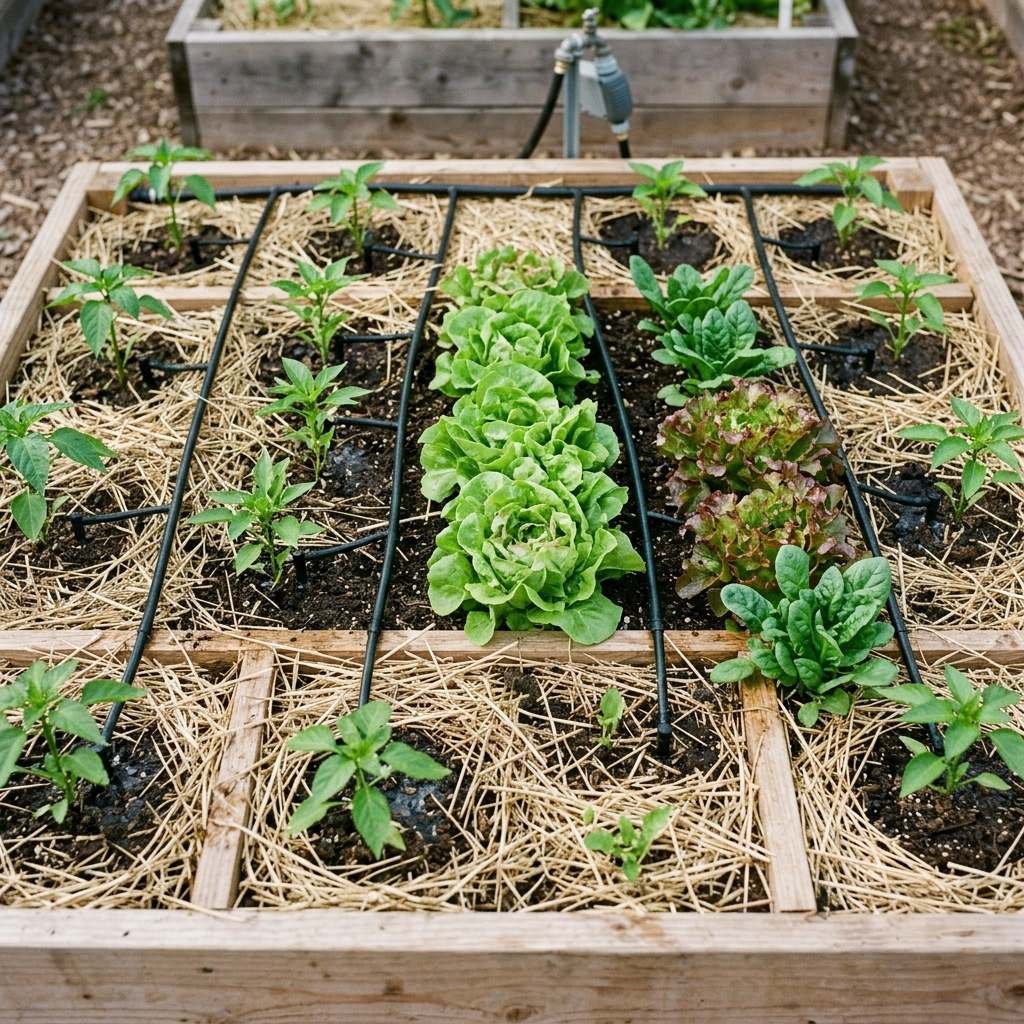
Densely planted squares dry out faster than widely spaced traditional rows, simply because more roots are competing for the same soil moisture, which makes consistent watering (rather than occasional deep watering that works fine for sparser plantings) genuinely necessary rather than optional. Drip irrigation on a timer, set to run for shorter durations more frequently than a typical garden schedule, keeps moisture levels stable across the whole grid without the labor of daily manual watering. A 2-inch mulch layer between plants (straw or shredded leaves work well without smothering the tightly spaced seedlings) reduces water loss and keeps the soil surface from crusting between waterings.
Comparing Traditional Row Gardening vs. the Square-Foot Method
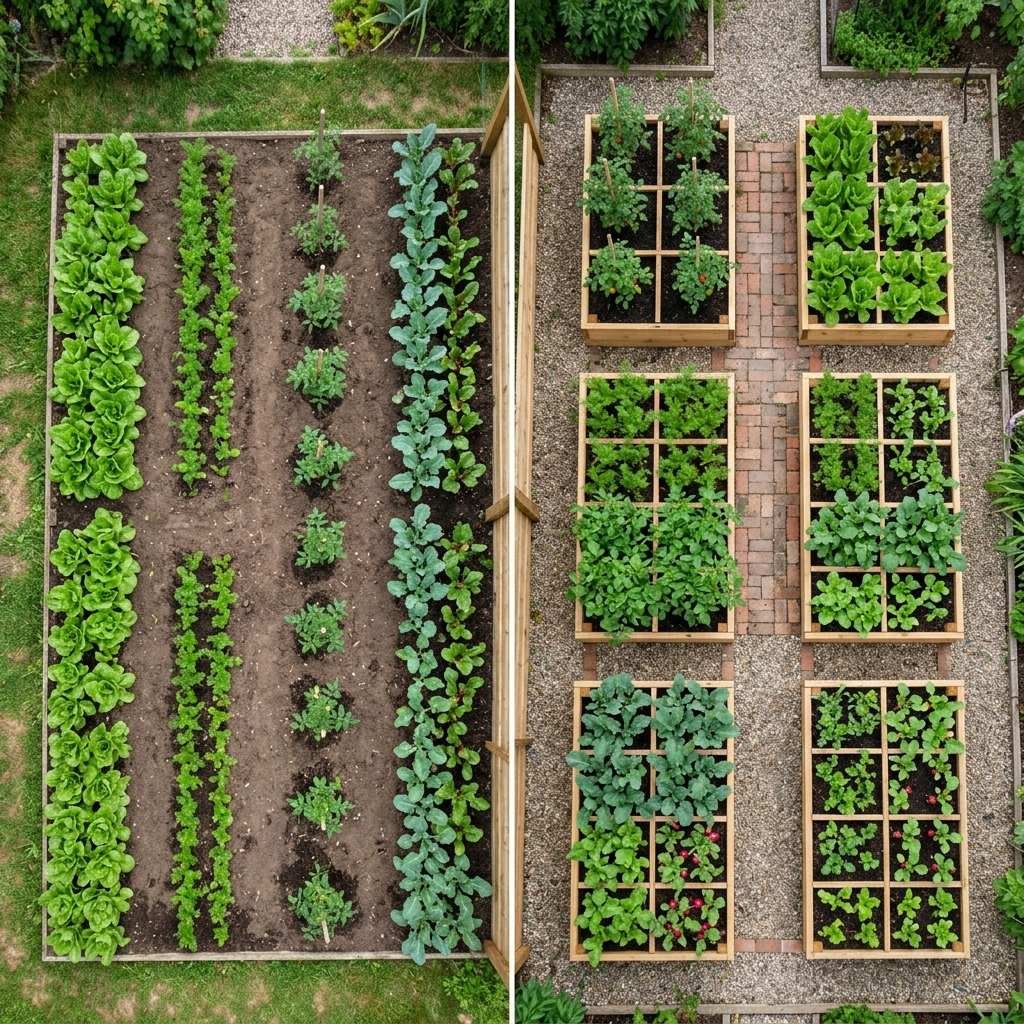
| Factor | Traditional Row Gardening | Square-Foot Grid Method |
|---|---|---|
| Usable planting area in 100 sq ft | ~40-50 sq ft (rest is aisles) | ~85-90 sq ft (minimal paths) |
| Plants per square foot | 1-4 depending on crop | 1-16 depending on crop |
| Typical seasonal harvests per bed | 1-2 | 2-4 (with succession planning) |
| Watering approach | Deep, infrequent | Frequent, consistent (drip preferred) |
| Soil demand | Moderate | High (needs regular compost input) |
The Bottom Line
A big harvest from 100 square feet isn’t about finding rare miracle crops, it’s about applying the square-foot grid method consistently: gridding the space, assigning plant counts by actual mature size, trellising every vining crop, and running a genuine succession plan through each square across the whole season. The soil and watering demands go up alongside the plant density, so feeding the soil aggressively between plantings is what sustains the higher yield rather than letting it decline by midsummer. Done this way, 100 square feet stops being a limiting constraint and becomes a genuinely productive growing system.
Frequently Asked Questions
How much food can a well-planned 100-square-foot garden actually produce in a season?
With intensive square-foot spacing, vertical trellising, and succession planting all applied together, a well-managed 100-square-foot garden can realistically produce 300-500 pounds of vegetables across a full growing season. Traditional row gardening in the same footprint typically produces well under half that amount.
Do I need a raised bed for the square-foot gardening method to work?
A raised bed isn’t strictly required, but it’s strongly recommended because it lets you control soil quality directly (using the classic compost, peat, and vermiculite mix) rather than working with whatever native soil quality your yard has. Raised beds also warm up faster in spring and drain better, both of which support the tighter spacing this method relies on.
How often do I need to replant each square in a square-foot garden?
Fast crops like radishes and lettuce can be replanted 3-4 times per season in the same square, while slower crops like tomatoes or peppers occupy their square for the entire season. On average, a well-planned garden replants each square 2-3 times across a typical growing season.
Is the square-foot gardening method the same thing as intensive spacing generally?
The square-foot method is a specific, structured version of the broader intensive spacing concept, using a literal 1-foot grid and fixed plant-count rules per square. Other intensive methods (like biointensive gardening) achieve similar density goals through slightly different spacing calculations, but the underlying principle of eliminating wasted aisle space is shared.
What crops should I avoid in a 100-square-foot intensive garden?
Space-hungry, single-harvest crops like corn, winter squash, and pumpkins generally aren’t a good fit for a small intensive garden, since they consume many squares for a relatively modest total yield compared to continuous-producing or quick-turnover crops. These are better grown in a larger, separate area if space allows.
How much time does maintaining a 100-square-foot intensive garden take per week?
Expect roughly 3-5 hours per week during peak season, covering watering checks, succession planting, harvesting, and soil amendment between plantings. This is somewhat more time-intensive than a sparsely planted traditional garden of the same size, since the higher plant density and frequent succession planting require more consistent attention.