
17+ Backyard Hammock Ideas That Turn Any Yard Into a Summer Retreat

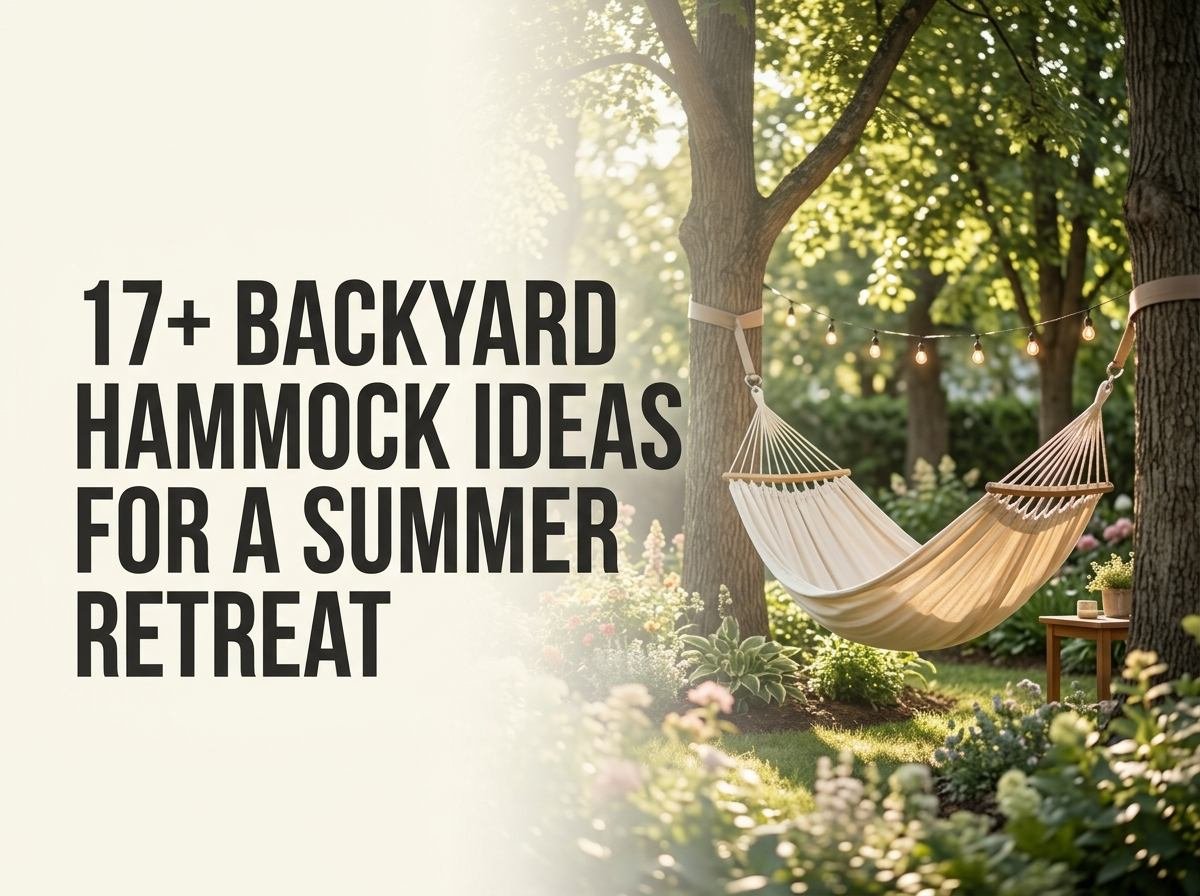
The right backyard hammock setup depends less on the hammock itself and more on what it’s hung from, since a freestanding stand, two mature trees, or a built pergola each solve different yard limitations and produce genuinely different looks. Trees remain the most cost-effective option (spacing them 12 to 15 feet apart is ideal for most fabric hammocks), while stands cost more upfront but work in yards without suitable trees at all. Below are 17+ specific ideas covering hanging methods, shade, privacy, and finishing touches that separate a hammock that gets used daily from one that becomes a forgotten yard fixture.
1. Classic Two-Tree Hang

The traditional hang between two sturdy trees remains the cheapest and most natural-looking option, requiring only tree-safe webbing straps (never rope, which damages bark) wrapped around trunks at least 6 inches in diameter. Space trees 12 to 15 feet apart for a standard 9 to 13-foot hammock, and hang straps at a height that lets the hammock’s lowest point sit 18 to 24 inches off the ground when occupied. A 30-degree sag angle, achieved by hanging the hammock slightly looser than it looks like it should be, actually distributes body weight more comfortably across the fabric than a taut, straight hang.
2. Freestanding Metal Stand for Treeless Yards

A powder-coated steel stand solves the problem entirely for yards without mature trees, and stands are rated by weight capacity (typically 250 to 500 pounds) and footprint length, so measure available space before buying since stands need 12 to 15 feet of clearance even for compact models. Portability is the real advantage here: a stand can move with the sun through the season or get stored away entirely during winter in colder climates.
3. Pergola-Integrated Hammock

Mounting a hammock directly to a pergola’s structural beams creates a defined, semi-enclosed retreat space, but this only works safely if the beams are rated for dynamic load (a person moving in a hammock creates more stress than static weight), typically requiring beams at least 4×6 inches in dimension and properly bolted rather than merely nailed. This setup pairs naturally with climbing vines like wisteria or trumpet vine trained across the pergola roof for dappled shade by the second growing season.
4. Hammock Chair for Small Patios

A hanging hammock chair needs only a single sturdy overhead point, whether a pergola beam, a heavy-duty ceiling hook rated for at least 300 pounds, or a compact single-point stand, making it the best option for small patios or balconies where a full-length hammock won’t fit. These typically hang 24 to 30 inches off the ground and work well tucked into a corner alongside potted plants for a cozy reading nook.
5. Double Hammock Stand for Couples

Wider stands built for two-person hammocks (often rated up to 450-500 pounds) need a longer footprint, generally 13 to 15 feet, and a wider fabric bed of at least 55 inches to comfortably fit two people. These work best positioned where there’s a clear view, whether of a garden bed, pool, or open lawn, since the wider design invites longer, more social lounging sessions.
6. Shaded Retreat with a Freestanding Umbrella

Pairing a hammock stand with a cantilever or offset umbrella solves the shade problem without needing mature trees, and an umbrella with a 9 to 10-foot canopy diameter provides enough shade coverage for a standard hammock positioned beneath it during peak midday sun. Position the umbrella base off to one side rather than directly under the hammock’s swing path to avoid collisions while getting in and out.
7. Vine-Covered Arbor Hang

An arbor trained with fast-growing vines like Virginia creeper, climbing hydrangea, or grapevine creates natural, living shade within two to three growing seasons, and the arbor’s crossbeams (properly reinforced) can double as the hammock’s hanging points. This option takes patience to mature but produces a genuinely cooler microclimate underneath, since living shade cools the air more than a solid roof by several degrees through transpiration.
8. Poolside Hammock Zone

Positioning a stand-mounted hammock 8 to 10 feet from a pool’s edge gives swimmers a shaded, breeze-cooled spot to dry off without hammock fabric getting directly splashed, while still keeping the area social and connected to pool activity. Quick-dry, mildew-resistant polyester rope hammocks hold up far better than cotton in this humid, chlorine-adjacent environment.
9. Woodland Edge Hang

If a yard backs onto a wooded area or has a cluster of mature trees along a fence line, hanging a hammock at that transition point creates a genuine retreat feel, with the open lawn providing a runway of sunlight and the tree line offering immediate shade and privacy. This spot also tends to be several degrees cooler on summer afternoons due to the combination of shade and any airflow moving across open lawn into the trees.
10. Elevated Deck Hammock

Mounting sturdy eye bolts into ceiling joists of a covered deck or porch (verified to hold at least 300 pounds of dynamic load) puts the hammock under a solid roof, meaning it stays usable during light rain and offers full shade regardless of sun angle throughout the day. This works especially well in climates with intense midday sun where ground-level shade options can’t fully block overhead light.
11. Fire Pit-Adjacent Hammock Corner

Positioning a hammock 10 to 12 feet from a fire pit, upwind of prevailing smoke direction, extends usable hammock hours into cool evenings without the fabric absorbing constant smoke smell. This works particularly well with a hammock chair or compact single hang rather than a full-length hammock, since it’s typically a secondary seating option alongside fire pit chairs rather than the main gathering spot.
12. Hammock with String Lights and Lanterns

Running warm-white LED string lights along the same trees or stand structure supporting the hammock extends its usable hours well into dusk and evening, and battery or solar-powered options avoid the need to run extension cords across the yard. Positioning lights slightly above and behind the hammock, rather than directly overhead, avoids glare while still providing enough ambient light for reading or conversation.
13. Privacy Screen with Bamboo or Lattice

Adding a bamboo screen, lattice panel, or tall ornamental grasses like Miscanthus behind a hammock creates a sense of enclosure, particularly useful in yards visible from neighboring properties. Screens 6 to 8 feet tall block sightlines from standing height while still allowing airflow through the hammock area, which matters for keeping the spot comfortable in humid summer conditions.
14. Container Garden Border Around the Hammock Zone

Surrounding a hammock area with large containers of fragrant plants like lavender, jasmine, or citrus (in colder climates, moved indoors for winter) adds a sensory element that a bare lawn setup lacks. Position fragrant plants within 3 to 5 feet of the hammock so the scent carries on light breezes without being overwhelming.
15. Multi-Hammock Family Zone

For families, installing two or three stands or tree hangs in a cluster, spaced 6 to 8 feet apart from each other, creates a shared lounging zone without hammocks colliding when in use. This setup works particularly well anchored around a central shade tree or shared umbrella, keeping the whole group in one cooler zone.
16. Hillside or Sloped Yard Hammock

On a sloped yard, a stand with adjustable or extendable legs compensates for uneven ground better than a fixed tree hang, which requires the ground beneath to be relatively level for safe entry and exit. Alternatively, terracing a small level platform into a hillside specifically for a hammock stand turns an otherwise unusable slope into functional space.
17. Rooftop or Elevated Deck Retreat

On a rooftop deck or elevated platform, a low-profile stand secured against wind uplift (important since elevated spots see higher wind speeds than ground level) can create a hammock retreat with a view unavailable at ground level. Stands here should be weighted or bolted down given the added wind exposure, and fabric should be UV-resistant polyester rather than cotton to handle intensified sun exposure at height.
18. Bonus: Seasonal Hammock Storage and Rotation

Rotating a portable stand between a sunny spot in spring and fall and a shadier spot in peak summer keeps the hammock comfortable year-round without needing multiple permanent installations. Storing fabric indoors or in a weatherproof bag during off-season months, particularly for cotton rope hammocks, prevents UV degradation and mildew that cuts a hammock’s lifespan roughly in half compared to one properly stored.
Comparing Hanging Methods

| Method | Cost | Setup Difficulty | Best For |
|---|---|---|---|
| Two-tree hang | Low ($20-40 for straps) | Easy | Yards with mature trees 12-15 ft apart |
| Freestanding stand | Moderate ($100-300) | Easy, no tools for install | Treeless yards, portability |
| Pergola-mounted | Moderate-high (structure cost) | Requires structural verification | Yards with existing pergola |
| Deck/porch ceiling mount | Low (hardware only) | Requires joist verification | Covered decks, rain protection |
The Bottom Line
The best backyard hammock setup is the one matched honestly to what your yard already offers, whether that’s a pair of well-spaced mature trees, a covered deck with solid joists, or open space that calls for a freestanding stand. Shade, lighting, and privacy additions matter more than the hammock brand itself for turning the spot into something used daily rather than admired occasionally. Start with the structural basics (proper spacing, verified weight capacity, correct sag angle) and layer in the finishing touches once the core setup is solid.
Frequently Asked Questions
How far apart should trees be for a hammock? Most standard hammocks need trees spaced 12 to 15 feet apart, though this varies by hammock length, so check the manufacturer’s specification before choosing trees. Trees should also be at least 6 inches in trunk diameter and healthy enough to bear dynamic weight safely.
Can I hang a hammock without trees or a stand? Yes, if you have a covered porch, deck, or pergola with structurally sound beams or joists rated for at least 300 pounds of dynamic load. Eye bolts installed into solid framing, not just siding or drywall, are required for a safe overhead mount.
What’s the ideal height to hang a hammock? Hang the hammock so its lowest point sits 18 to 24 inches off the ground when someone is lying in it, which keeps entry and exit comfortable without excessive strain. The hanging points themselves are typically 4.5 to 5 feet high on the supporting structure.
Do I need a special hammock for outdoor use versus indoor use? Yes, outdoor hammocks should be made from weather-resistant materials like polyester or specially treated rope rather than plain cotton, which absorbs moisture and mildews quickly outside. UV-resistant fabric also holds color and structural integrity much longer under direct sun exposure.
How do I keep bugs away from a backyard hammock area? Position the hammock away from standing water sources and use a citronella diffuser or a small fan nearby, since mosquitoes are weak fliers and avoid consistent light air movement. A mosquito net designed for hammocks is also available and drapes over the entire frame for evening use.
Is it safe to leave a hammock stand outside year-round? Powder-coated steel stands generally tolerate outdoor exposure well, but the fabric itself should come down or be covered during off-season months and heavy storms to prevent UV degradation and mildew. In regions with heavy snow load, stands should be disassembled or stored to prevent structural stress from ice accumulation.