
Columnar Trees for Narrow Garden Spaces

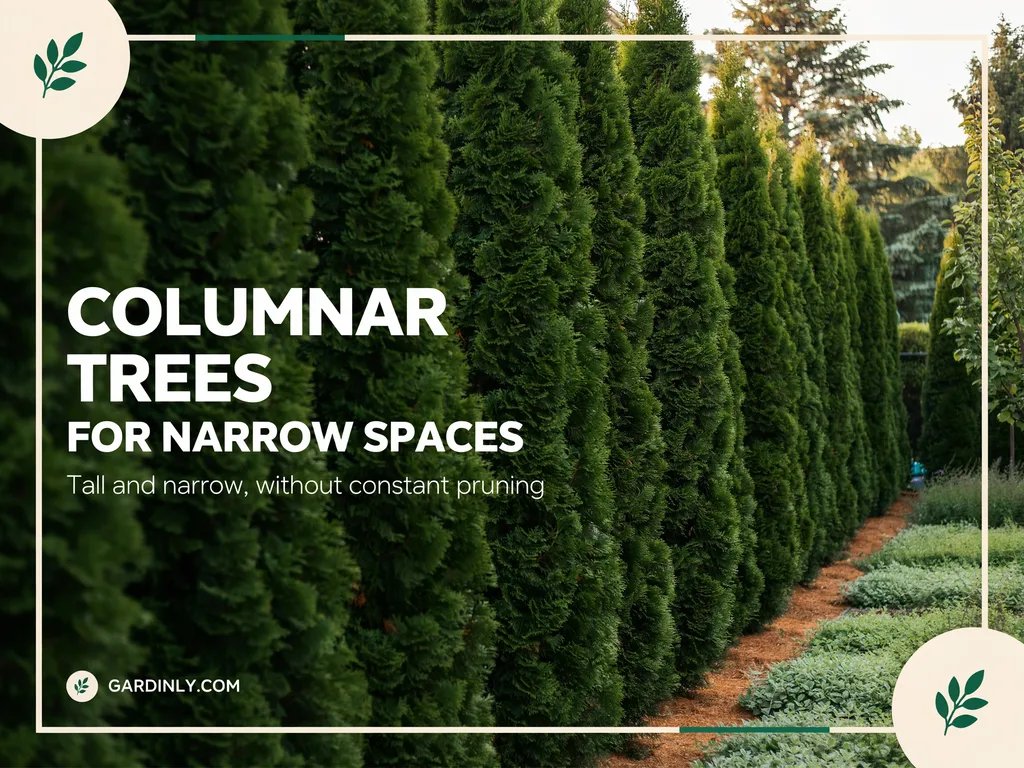
Narrow side yards, tight property lines, and small urban lots share a specific problem most tree lists don’t address: a normal tree’s wide, spreading canopy simply doesn’t fit, no matter how well-suited the species is otherwise. Columnar trees solve this by growing tall while staying genuinely narrow, often just 3 to 6 feet wide even at full height, and the eight varieties below are organized by the specific job each one does best.
Quick Answer
Why Columnar Trees Solve a Problem Regular Trees Structurally Can’t
How Columnar Growth Habit Actually Works
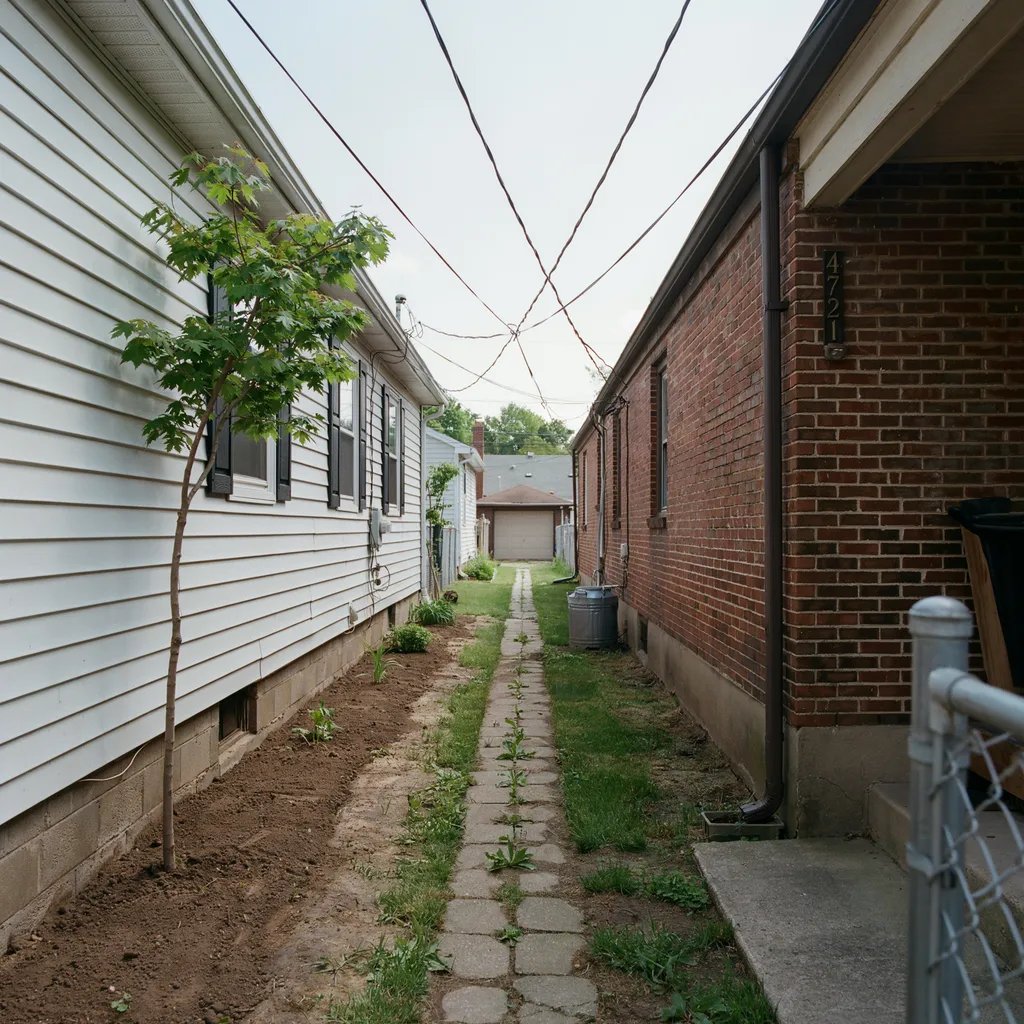
Why columnar trees solve a problem regular trees structurally can’t is that a standard shade tree’s canopy width is often equal to or greater than its height, meaning even a modest 30-foot tree can spread 25 feet wide, which simply doesn’t work in a side yard measuring a few feet across.
How columnar growth habit actually works comes down to a genetic growth pattern where branches grow upright and tightly angled to the trunk rather than spreading outward, a naturally occurring or selectively bred trait that keeps the tree narrow without constant pruning to maintain that shape.
Columnar trees stay narrow through their natural branch angle, not through pruning, which means the narrow form holds with minimal maintenance rather than requiring constant shaping.
1. Emerald Green Columnar Arborvitae for the Narrowest Evergreen Screen
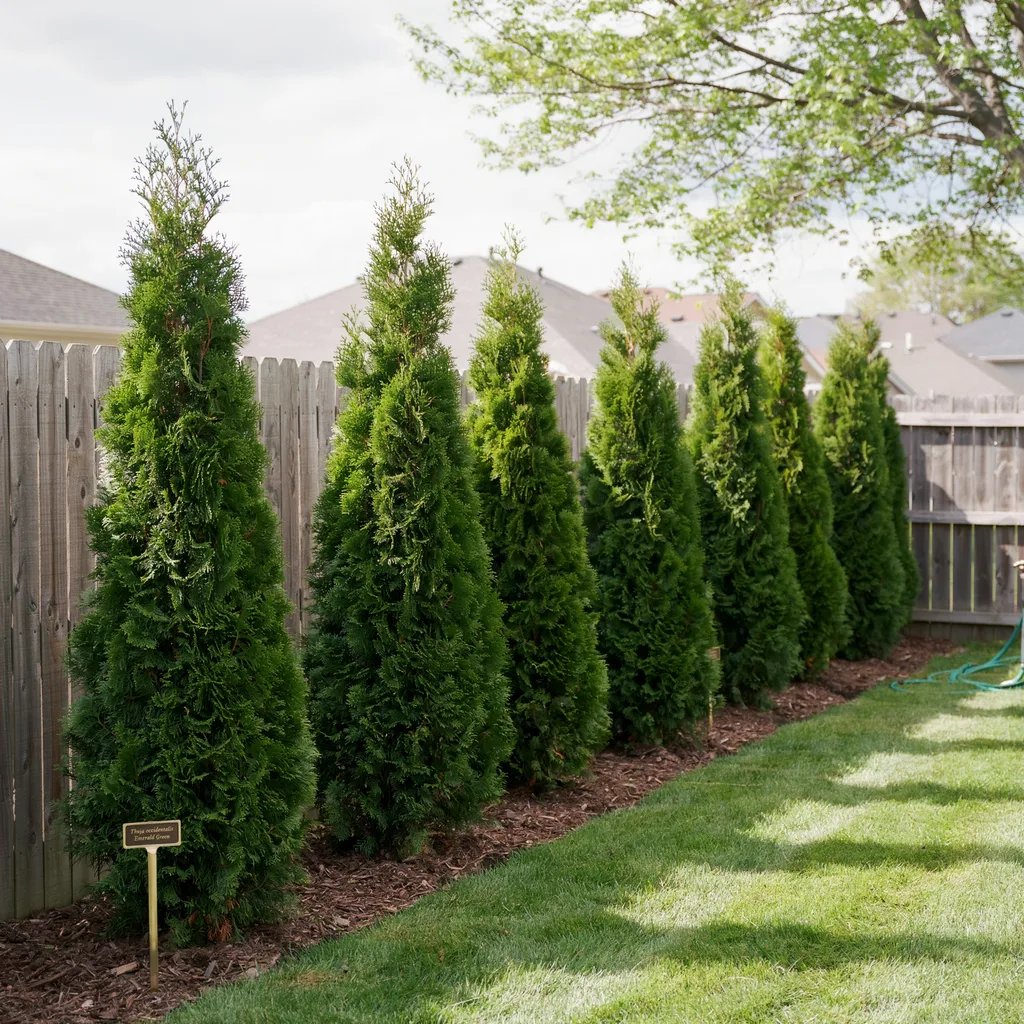
Emerald Green columnar arborvitae for the narrowest evergreen screen stays just 3 to 4 feet wide while reaching 12 to 14 feet tall, making it one of the narrowest genuinely effective screening options for a tight side yard.
At just 3-4 feet wide, Emerald Green arborvitae fits spaces too narrow for almost any other screening tree while still providing real evergreen privacy height.
2. Columnar Sugar Maple for Narrow Fall Color
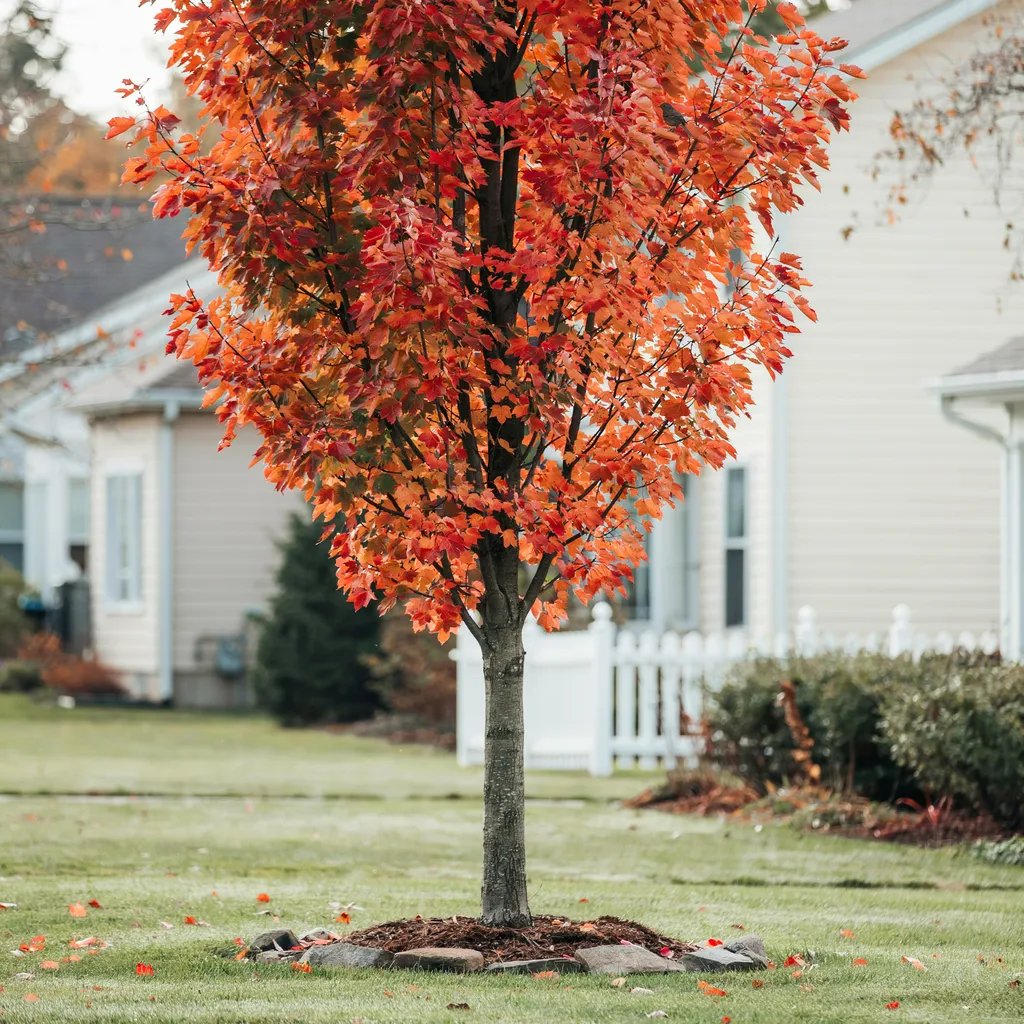
Columnar sugar maple for narrow fall color brings the classic brilliant orange and red fall display of a standard sugar maple into a narrow form, typically 15 to 20 feet wide at maturity, considerably more compact than the wide-spreading standard variety.
Choosing a columnar cultivar for fall color doesn’t mean sacrificing color quality, since the narrow growth habit changes shape, not the intensity of the seasonal display.
3. Columnar Flowering Pear for Narrow Spring Bloom
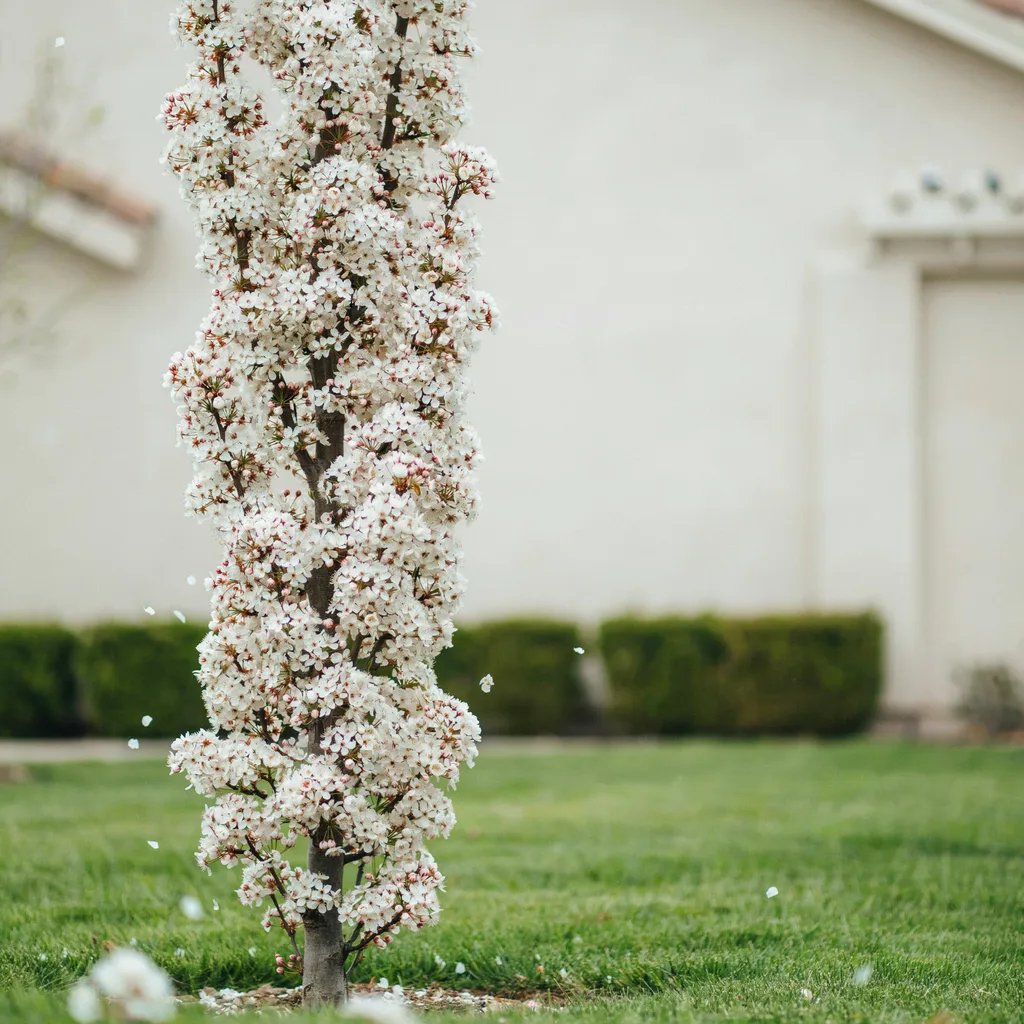
Columnar flowering pear for narrow spring bloom provides a dense flush of white spring flowers on a narrow, upright form, giving a flowering-tree effect in spaces too tight for the wide-canopied flowering trees most spring bloom lists recommend.
Columnar flowering pear is one of the few narrow tree options that provides genuine ornamental spring bloom, not just structural screening.
4. Skyrocket Juniper for a Narrow, Silvery-Blue Accent
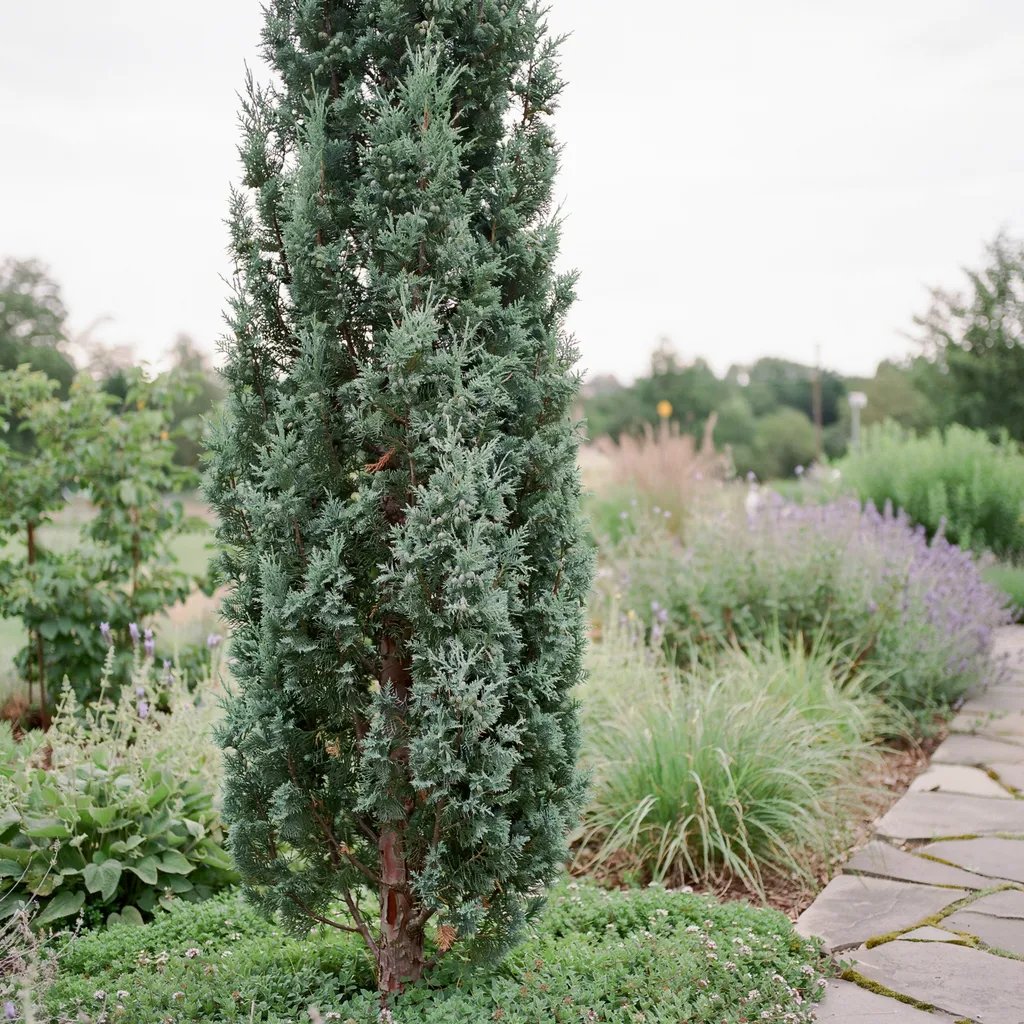
Skyrocket juniper for a narrow, silvery-blue accent grows in an extremely tight, upright column with distinctive silvery-blue foliage, often used as a single vertical accent or repeated in a row for a formal, narrow evergreen statement.
Skyrocket juniper’s silvery-blue color sets it apart visually from the more common green columnar evergreens on this list, worth choosing specifically for that color contrast.
5. Columnar English Oak for Long-Term Narrow Structure
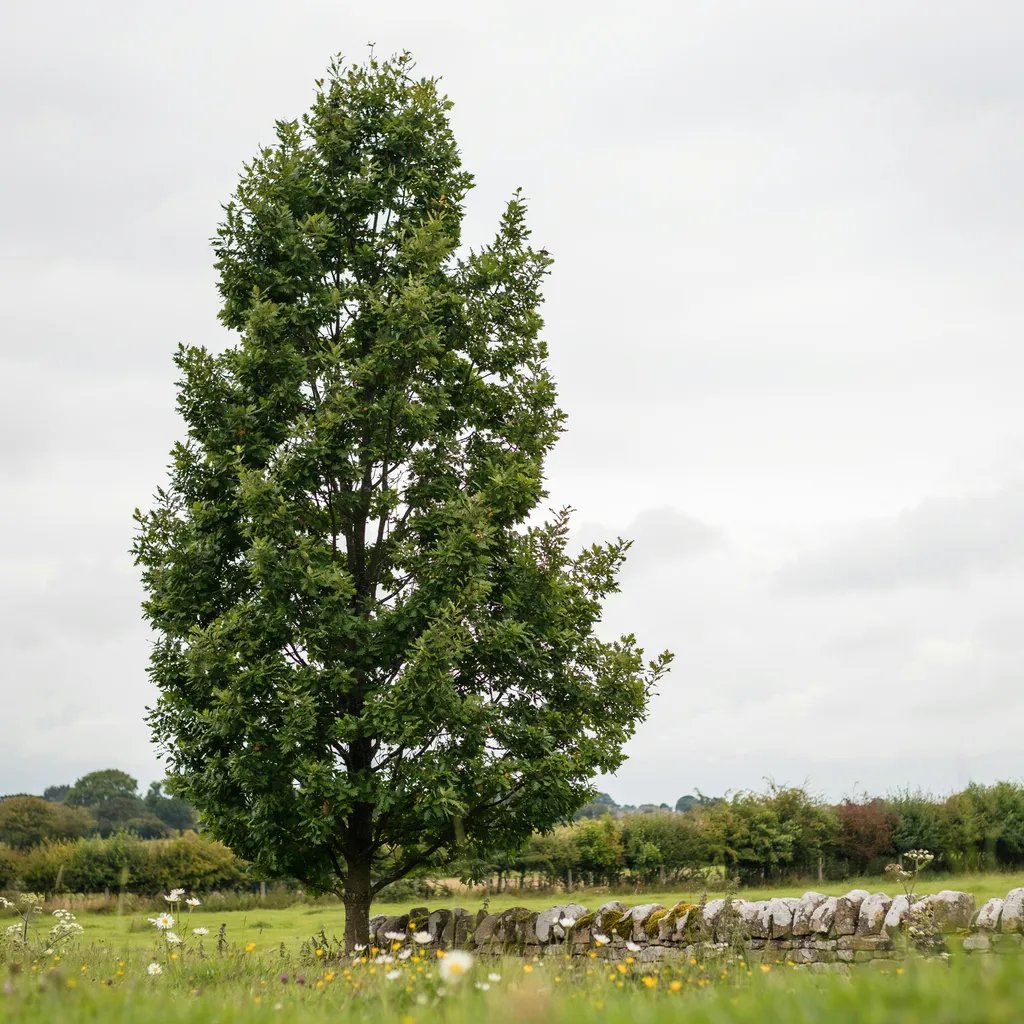
Columnar English oak for long-term narrow structure offers a genuinely narrow form on a long-lived, substantial tree, filling a role most narrow tree lists lack: a true oak, with its associated wildlife and longevity value, that still fits a constrained space.
Columnar English oak is worth considering specifically for gardeners who want a true long-lived shade and wildlife tree without the oak family’s typically enormous mature spread.
6. Italian Cypress for a Formal, Mediterranean Vertical Line
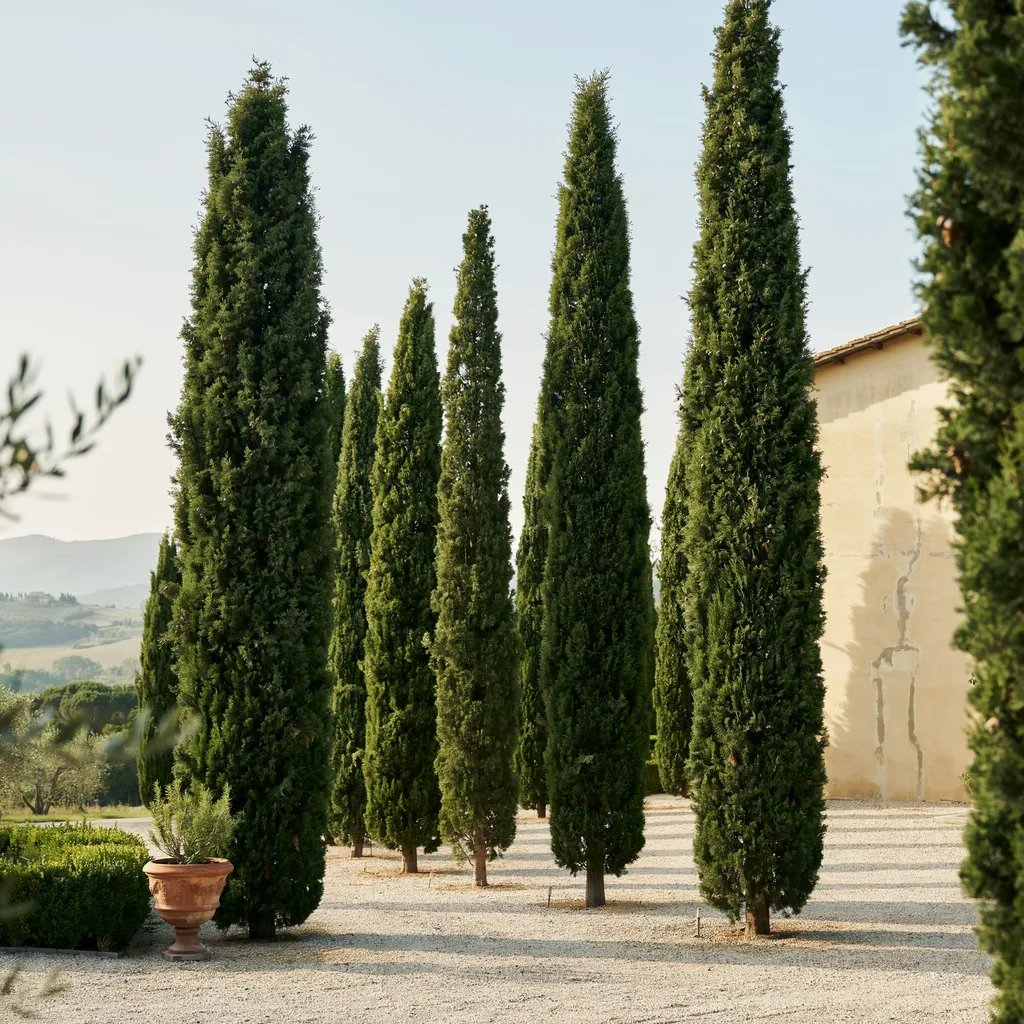
Italian cypress for a formal, mediterranean vertical line grows in an extremely narrow, dramatic column, widely used to create a formal, symmetrical vertical statement, though it’s best suited to warmer climates that match its Mediterranean origin.
Italian cypress delivers the most dramatically narrow, formal vertical line on this list, but its climate limitations to warmer zones matter more than with most other options here.
7. Columnar Norway Spruce for Dense, Year-Round Evergreen Structure
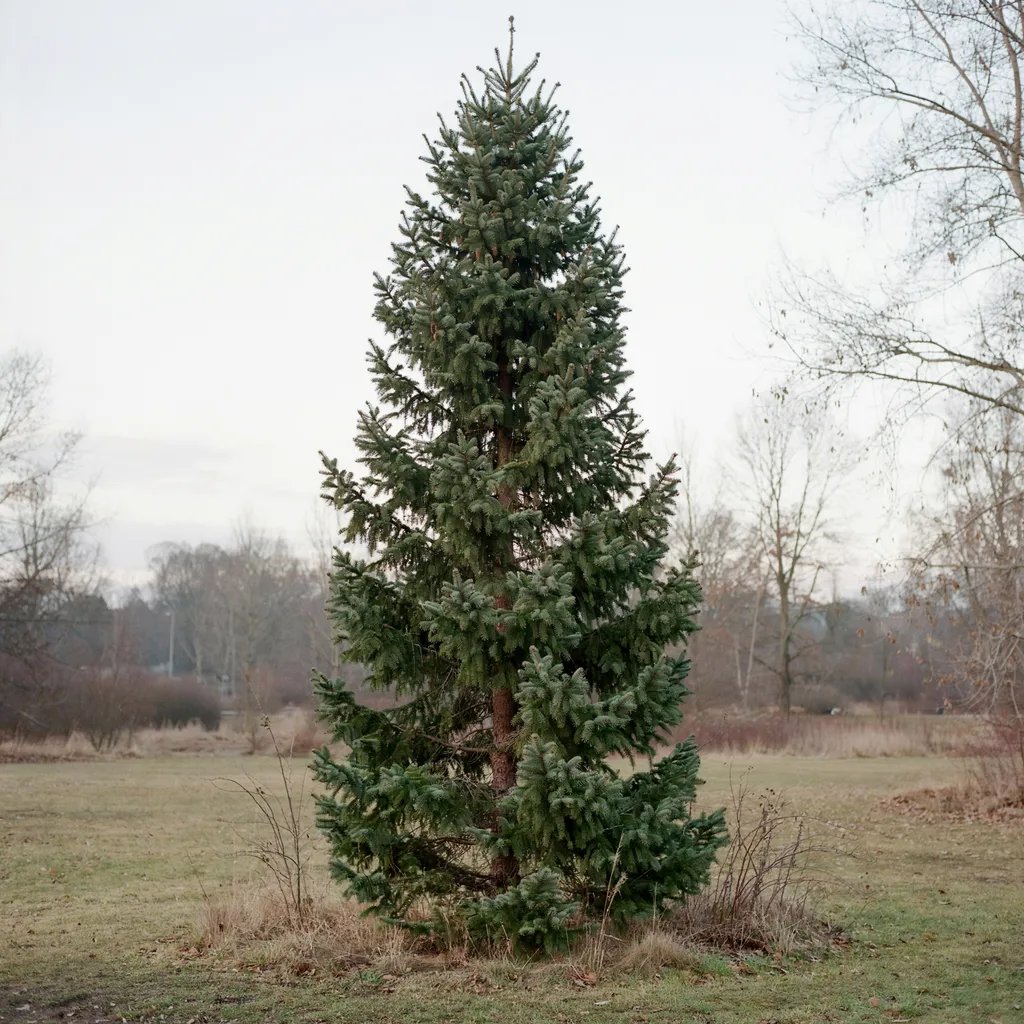
Columnar Norway spruce for dense, year-round evergreen structure provides a tighter, more formally narrow alternative to a standard spruce, holding dense evergreen branching in a genuinely columnar silhouette rather than the broader pyramidal shape most spruce varieties have.
Columnar Norway spruce solves the same narrow-evergreen-structure need as arborvitae options but with a notably different texture and denser branching pattern.
8. Columnar Apple for a Narrow Tree That Also Produces Fruit
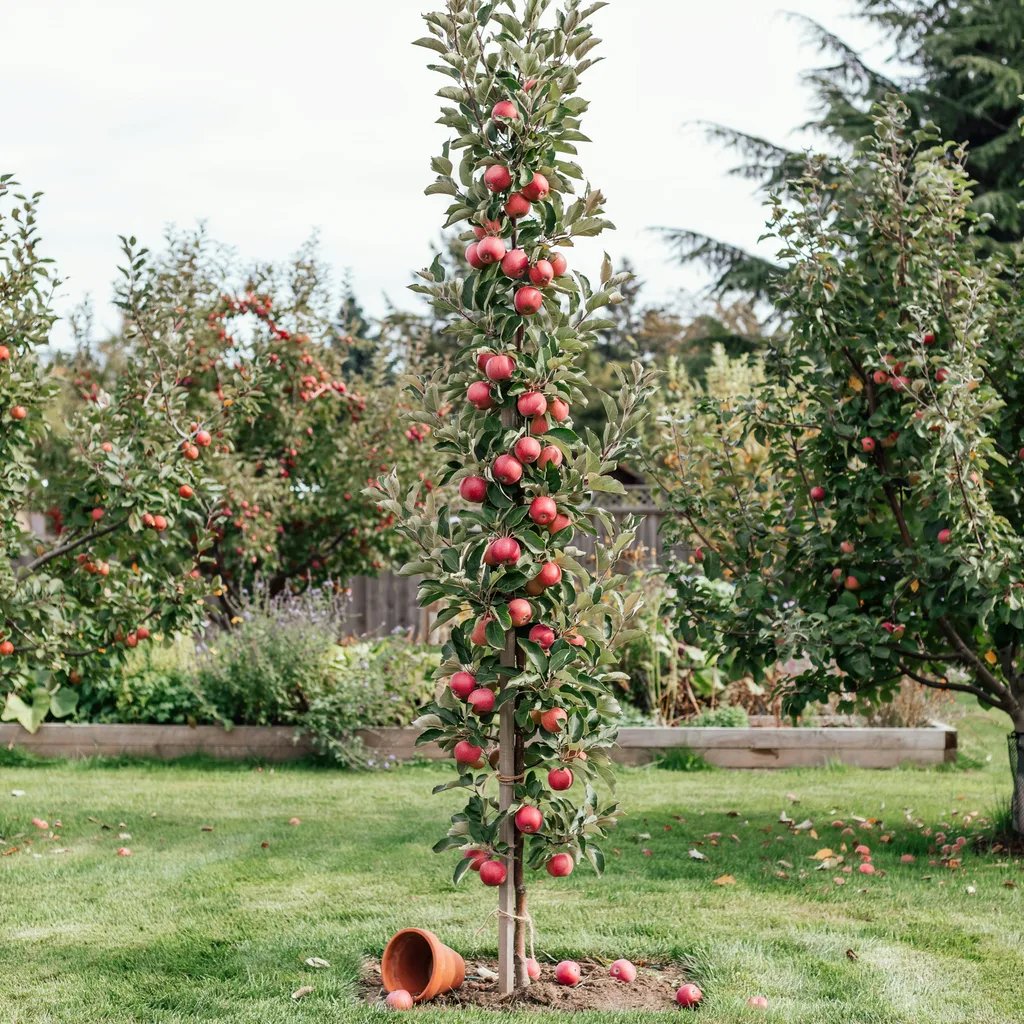
Columnar apple for a narrow tree that also produces fruit is bred specifically for extremely narrow spaces and even container growing, producing full-size apples on a tree that stays just 2 to 3 feet wide, making it the only genuinely productive fruiting option on this list.
Columnar apple is worth choosing specifically when a narrow space needs to be productive, not just ornamental or screening, since it’s the one tree on this list that actually produces a harvestable crop.
Matching a Columnar Tree to the Actual Space Available

Matching a columnar tree to the actual space available means measuring the narrowest point of the intended planting area first, since even columnar trees vary meaningfully in mature width, from Emerald Green arborvitae’s 3-4 feet to a columnar oak’s 15-20 feet.
“Columnar” describes a category with real width variation within it; measuring the actual available space and matching it to a specific variety’s mature width matters as much here as with any other tree choice.
The Bottom Line
Columnar trees solve the narrow-space problem that standard trees structurally can’t, staying tall while remaining genuinely narrow through their natural upright branch angle rather than through pruning. Emerald Green arborvitae fits the tightest spaces, columnar sugar maple and flowering pear add color interest in slightly wider narrow spots, and columnar apple is the option worth choosing when the space needs to be productive as well as narrow.
Frequently Asked Questions
Do Columnar Trees Need Special Pruning to Stay Narrow?
No, columnar trees maintain their narrow shape naturally through their genetic branch angle, unlike a standard tree pruned or trained into a narrow form, so they need only routine maintenance pruning rather than ongoing corrective shaping to preserve the columnar silhouette.
How Close to a Fence or Wall Can a Columnar Tree Be Planted?
Most columnar trees can be planted reasonably close to structures, often within 2 to 3 feet, given their narrow mature width, though it’s still worth leaving a small gap for air circulation and avoiding planting directly against a foundation.
Are Columnar Trees More Expensive Than Standard Varieties?
Columnar cultivars are sometimes priced slightly higher than common standard varieties due to more specialized propagation, though the price difference is generally modest rather than dramatic, especially for widely available options like columnar arborvitae.
Can Columnar Trees Provide Real Privacy Screening?
Yes, evergreen columnar options like Emerald Green arborvitae and columnar Norway spruce provide genuine year-round privacy screening, and planting several in a row closes gaps between individual trees to create a continuous narrow hedge-like screen.
Do Columnar Fruit Trees Like Columnar Apple Produce a Full-Size Harvest?
Yes, columnar apple trees produce full-size, normal-tasting apples despite the tree’s narrow form, though total yield per tree is naturally lower than a standard-size apple tree simply due to having less overall branch length to bear fruit.
How Tall Do Most Columnar Trees Get at Maturity?
Height varies considerably by species, from Emerald Green arborvitae’s 12-14 feet to columnar oak or maple varieties reaching 40-50 feet, so checking a specific variety’s mature height matters just as much as checking its narrow width before planting.