
How to Create a Natural Swimming Pool in Your Yard

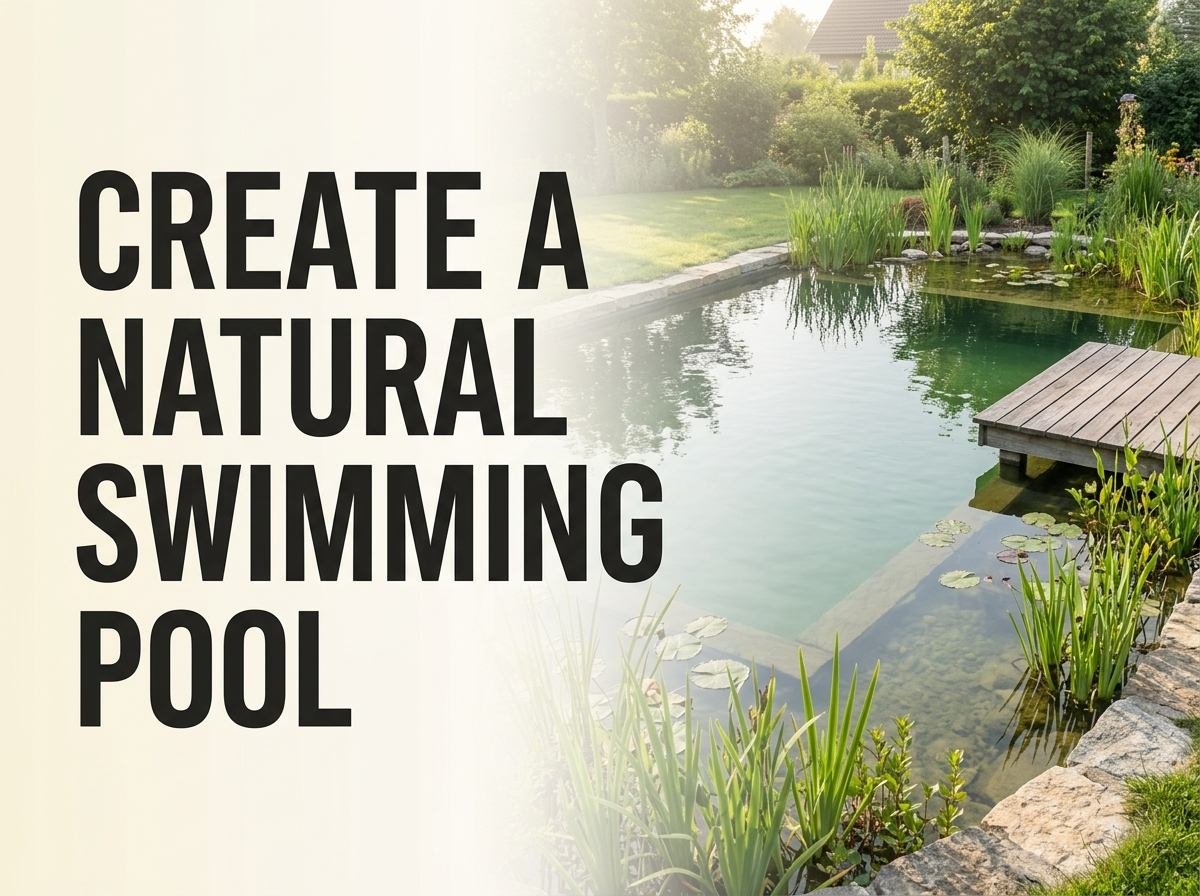
A natural swimming pool works by pairing a swim zone with a planted regeneration zone that filters water biologically instead of with chlorine, and the two areas typically need to be sized at roughly a 1:1 to 2:1 ratio (regeneration to swim area) to keep the water clear. Building one is genuinely more involved than installing a chlorinated pool, both in excavation and in understanding water chemistry, but the payoff is a swimmable pond that also functions as a wildlife habitat and a striking landscape feature. The core mechanics come down to separating swim water from plant-filtered water, keeping nutrients low, and moving water continuously between the two zones.
Understanding the Two-Zone System
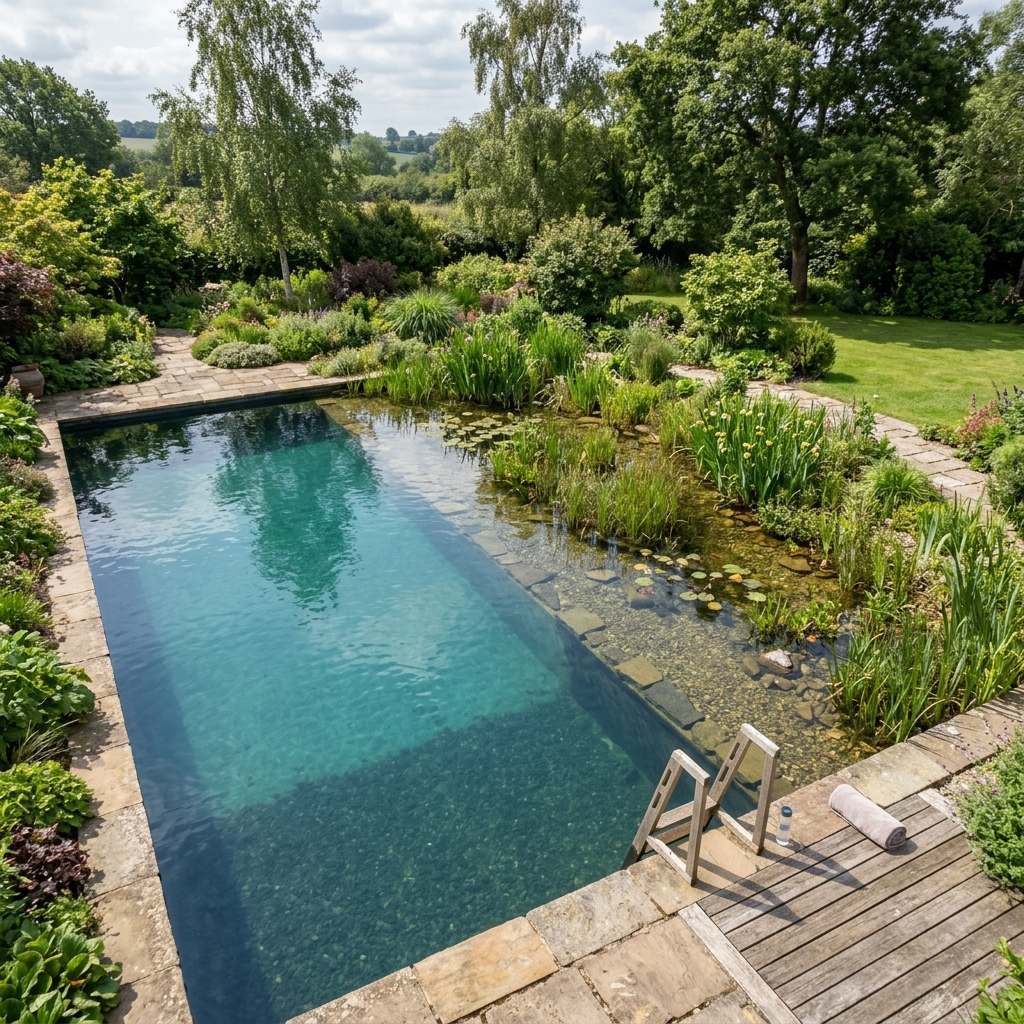
A natural swimming pool, sometimes called a natural pool or swimming pond, relies on two connected but distinct areas: the swim zone, which stays clear and plant-free for swimming, and the regeneration zone, a shallow shelf packed with aquatic plants like hornwort, water lilies, and rushes that pull nitrates and phosphates out of the water before algae can use them. Water is drawn from the swim zone through a skimmer, pushed through a gravel or lava-rock filter bed in the regeneration zone, and returned via a bottom drain or waterfall, completing a full cycle every 4 to 6 hours in a well-sized system. The biological filtration depends on beneficial bacteria colonizing the gravel bed’s surface area, which is why coarse gravel (0.5 to 1.5 inch diameter) is preferred over sand: it maximizes bacterial colonization while still allowing water to pass through. Skipping the regeneration zone or undersizing it below a 1:1 ratio is the single most common reason DIY natural pools turn green within the first summer.
Key takeaway: The regeneration zone does the actual cleaning work, so undersizing it guarantees algae problems no matter how good your pump is.
Choosing a Liner and Excavation Depth
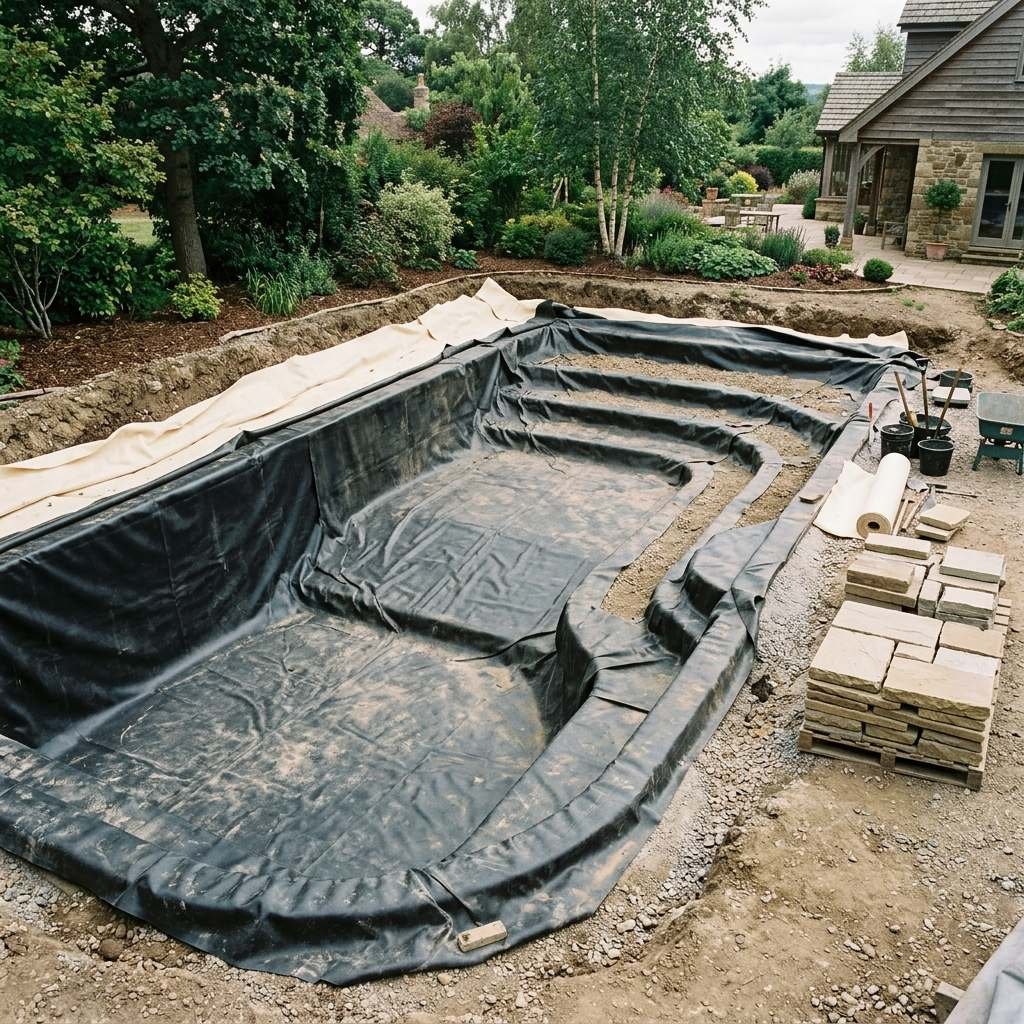
Most natural pools use either a 45-mil EPDM rubber liner or a reinforced PVC liner rated for at least 20 years, laid over a protective geotextile underlayment to prevent punctures from roots or stones. Excavation for the swim zone should slope to 5.5 feet minimum for comfortable swimming and diving-free depths up to 8 feet if you want cooler water in summer, while the regeneration shelf stays a consistent 12 to 24 inches so plant roots get enough light without the water overheating. A steep enough side slope (roughly 60 to 75 degrees in the swim zone) reduces the surface area exposed to sunlight, which helps limit algae growth, while the regeneration zone benefits from a gentler, terraced slope so you can plant at different depths. Budget for the liner alone to run $3 to $6 per square foot depending on material and thickness, which for a 500-square-foot combined pool typically lands between $1,500 and $3,000 before labor.
Key takeaway: A steeper swim-zone slope combined with a shallow, terraced regeneration shelf balances swimmable depth against algae control.
Selecting Plants for the Regeneration Zone
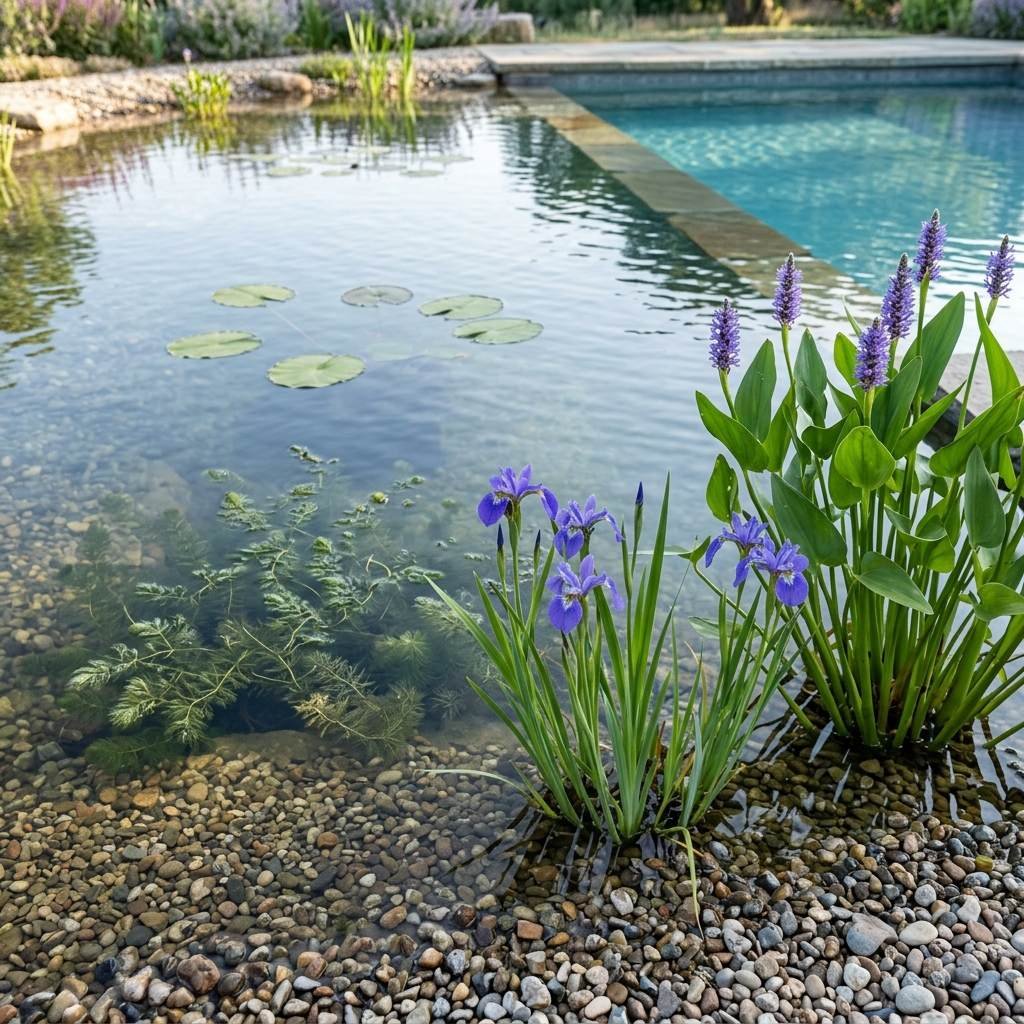
Submerged oxygenators like hornwort (Ceratophyllum demersum) and anacharis do the heaviest nutrient uptake because their entire surface is in contact with water, and planting them at a density of about one bunch per 2 square feet gives fast establishment within the first season. Marginal plants such as pickerelweed, blue flag iris, and dwarf papyrus root in the gravel bed and add vertical filtration plus visual interest along the pool’s edge, while floating-leaved plants like hardy water lilies (limited to no more than 40% surface coverage) shade the water and suppress algae by blocking sunlight. Avoid aggressive spreaders like common cattail or invasive parrot feather, which will choke the regeneration zone within two seasons and require constant thinning. A well-planted zone typically needs 15 to 25 plants per 100 square feet to establish full filtration capacity by the second growing season.
Key takeaway: Combine submerged, marginal, and floating plants rather than relying on one type, since each handles a different part of the filtration job.
Pump, Skimmer, and Circulation Requirements
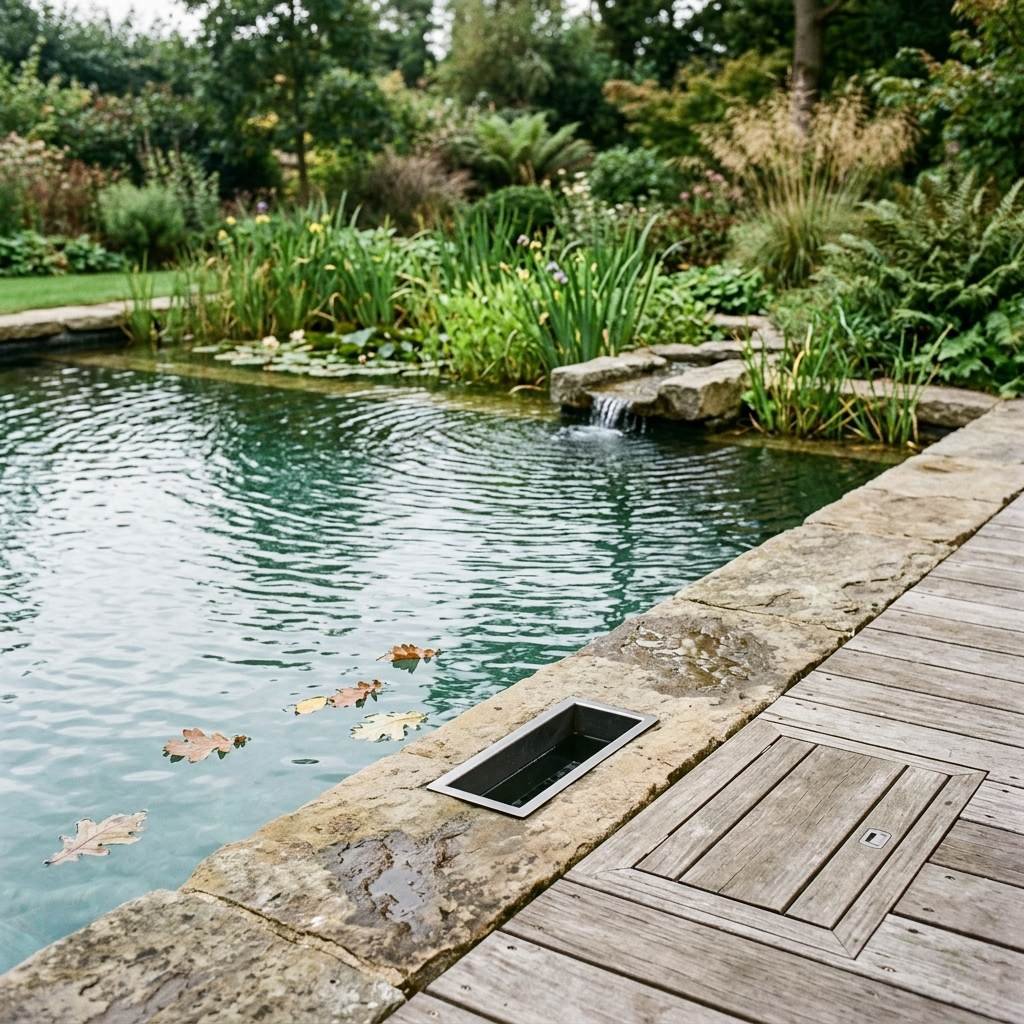
The circulation pump needs to turn over the entire pool volume every 4 to 6 hours, so a 20,000-gallon pool requires a pump rated around 3,300 to 5,000 gallons per hour once you account for head height and pipe friction loss. Low-voltage, energy-efficient pumps designed for ponds (rather than standard pool pumps) are standard here because natural pools run continuously, 24 hours a day, unlike chlorinated pools that often cycle on a timer. A surface skimmer removes leaves and pollen before they sink and decompose, which matters because decomposing organic matter is a major nutrient source that feeds algae blooms. Expect electricity costs for a properly sized pump to run $15 to $30 per month, noticeably less than the combined cost of pump plus chemical treatment for a comparable chlorinated pool.
Key takeaway: Continuous, properly sized circulation is non-negotiable since natural pools have no chemical backstop if flow stops.
Managing Water Clarity Without Chemicals
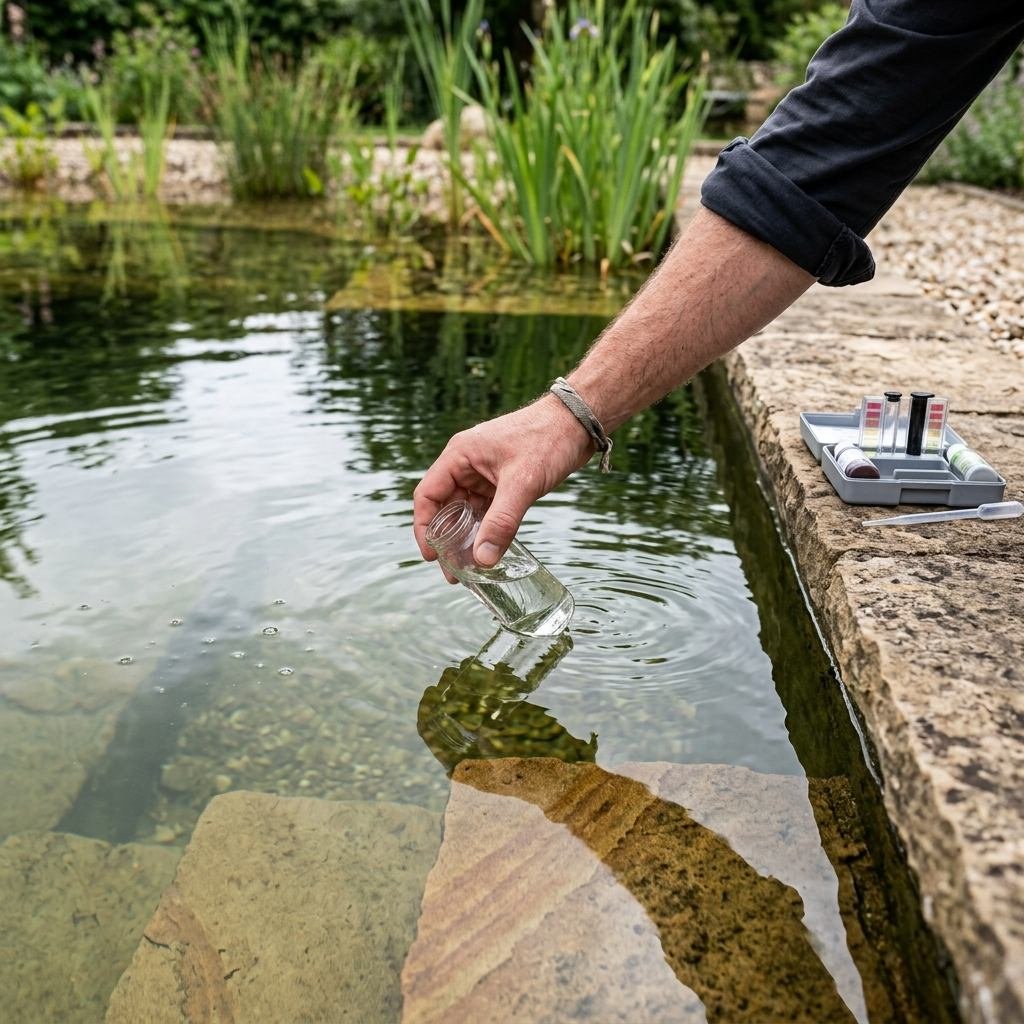
Expect the first full season to run cloudier than a chlorinated pool while the biological filter matures, since the bacteria colony on the gravel bed takes 6 to 10 weeks to fully establish after initial fill. Barley straw extract, added at a rate of about 1 ounce per 1,000 gallons, is a widely used natural clarifier that releases compounds which inhibit algae growth as it slowly decomposes. A UV clarifier unit, while not strictly traditional, is commonly retrofitted into the circulation line by pool owners who want faster clarity, killing free-floating algae cells as water passes through without harming the beneficial bacteria in the gravel bed. Testing pH (target 7.2 to 7.8) and phosphate levels monthly during the growing season helps catch nutrient spikes, often traceable to fertilizer runoff from nearby lawns, before they turn into visible algae blooms.
Key takeaway: Patience through the first season matters more than intervention, since the biological system needs time to reach equilibrium.
Comparing Natural Pools to Chlorinated Pools
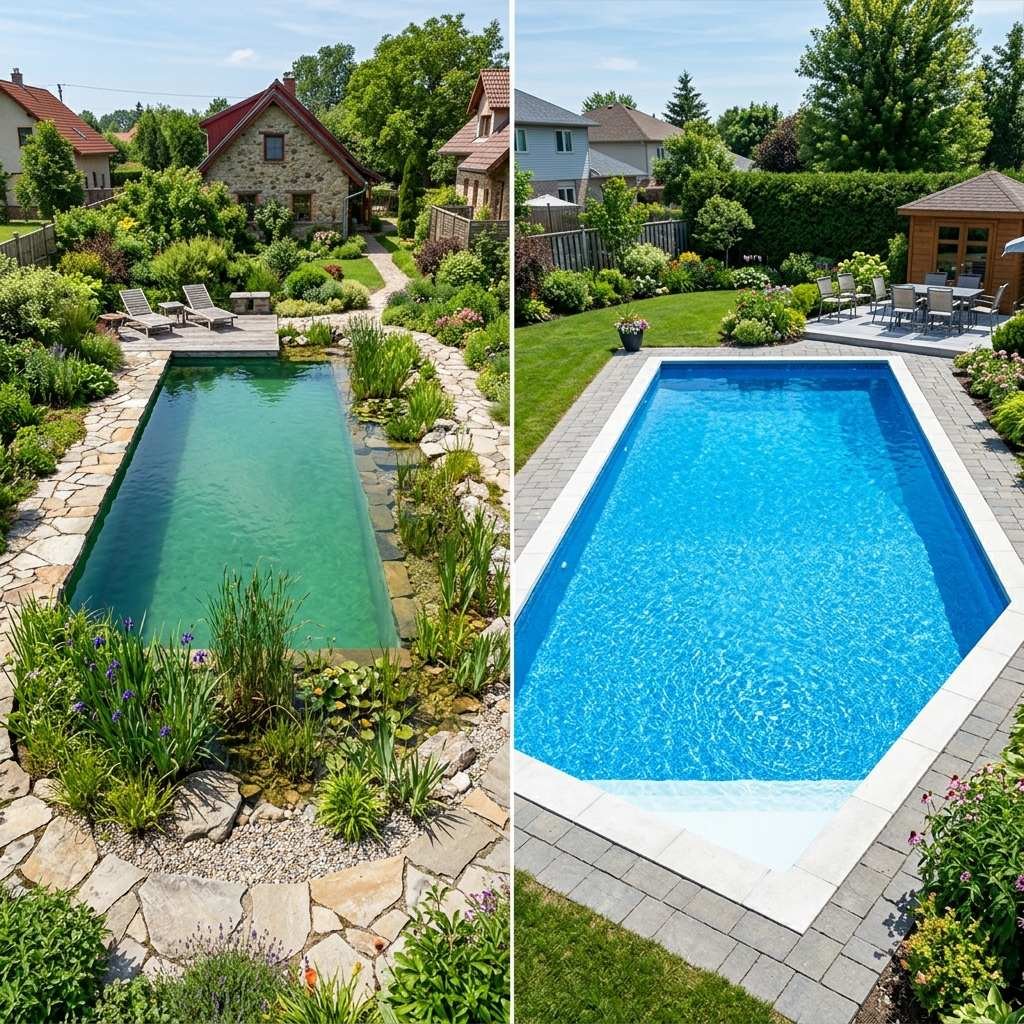
| Factor | Natural Swimming Pool | Chlorinated Pool |
|---|---|---|
| Upfront cost (mid-size) | $40,000-$80,000 | $35,000-$65,000 |
| Annual maintenance cost | $200-$500 | $800-$1,500 |
| Chemical use | None | Chlorine, pH adjusters, algaecides |
| Wildlife value | High (frogs, dragonflies, birds) | Minimal |
| Water feel | Softer, cooler, unfiltered chemically | Chemically treated, consistent |
| Winter care | Minimal, plants die back naturally | Requires full winterization |
Winterizing and Seasonal Maintenance
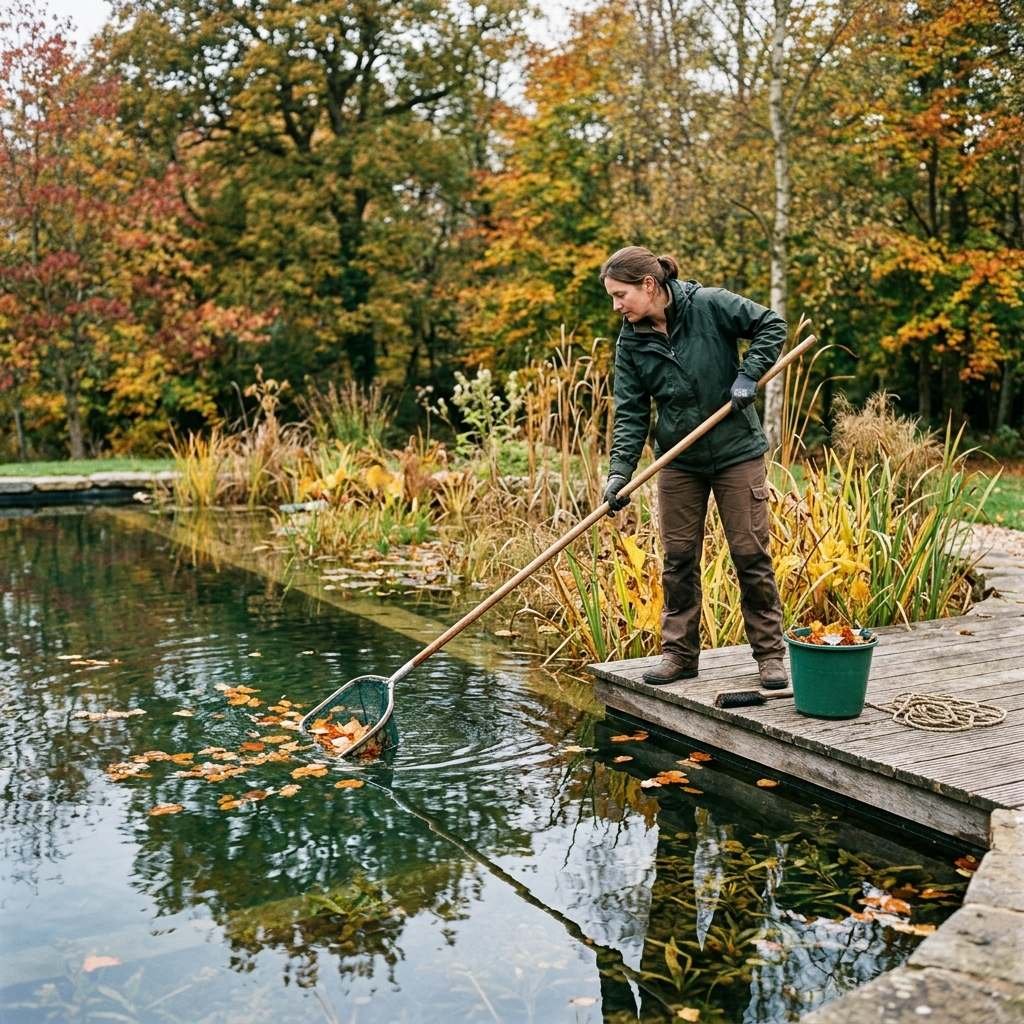
In climates with hard freezes, cut back marginal plants to about 4 inches above the waterline in late fall and leave submerged oxygenators in place, since many go dormant but survive under ice if the pool is at least 3 feet deep in the swim zone. Keep the pump running through fall as long as temperatures stay above freezing to maintain oxygen levels, but many owners in zones 5 and colder shut down circulation once ice forms and rely on an aerator or de-icer to keep one section open for gas exchange. Skim fallen leaves aggressively in autumn, since a single season of heavy leaf litter left to decompose can shift the whole nutrient balance and trigger a spring algae bloom. Spring startup involves testing water chemistry, dividing overcrowded plants, and topping off the regeneration zone’s gravel if it has compacted over winter.
Key takeaway: Fall leaf management has an outsized effect on next spring’s water clarity, so it’s worth prioritizing over almost any other seasonal task.
The Bottom Line
A natural swimming pool rewards patience and correct proportions far more than any single product or gadget. Get the regeneration-to-swim-zone ratio right, plant it densely with the right mix of species, and keep water circulating continuously, and the system genuinely does maintain itself after the first season. It costs roughly comparable amounts to a conventional pool upfront but trades chemical maintenance for biological patience, which suits gardeners more than it suits anyone wanting instant, chemical-grade clarity from day one.
Frequently Asked Questions
How long does it take for a natural pool to clear up after installation? Most natural pools take one full growing season, roughly 3 to 4 months, for the biological filter and plants to mature enough to keep water consistently clear. Some cloudiness in the first few weeks after filling is normal and not a sign of a problem.
Can I convert an existing chlorinated pool into a natural pool? Yes, this is a common and often cheaper route since the swim-zone excavation and structure already exist. You’ll need to add a regeneration zone alongside or adjacent to the existing pool shell, which requires additional excavation and a connecting plumbing system.
Do natural pools attract mosquitoes? Properly circulating natural pools attract fewer mosquitoes than stagnant ponds because moving water disrupts larval development, and the frogs and dragonflies the system attracts actively prey on mosquito larvae. Stagnant regeneration zones with poor circulation are the main risk factor.
Is the water safe to swim in without chlorine? Yes, when the biological filtration is properly sized and maintained, water quality in a mature natural pool meets or exceeds typical bathing water standards. Regular testing for bacteria and nutrients during the first two seasons helps confirm the system is functioning correctly.
How much space do I need for a natural swimming pool? A functional small system needs at least 500 to 600 square feet total (swim zone plus regeneration zone combined) to maintain proper filtration ratios. Smaller installations are possible but require more intensive plant management to compensate for less filtration surface area.
What’s the biggest maintenance task during summer? Thinning overgrown plants in the regeneration zone is the main summer task, since vigorous growers like hornwort can double their mass within weeks and start blocking water flow through the filter bed. Removing surface debris with a net every few days also prevents nutrient buildup.