
How to Identify and Treat Iris Leaf Spot

Iris leaf spot genuinely spreads most effectively through wet foliage left standing overnight and through infected leaf debris left in place through winter, meaning thorough fall cleanup of affected foliage genuinely matters more for long-term management than any single fungicide application, since this cleanup directly removes the overwintering source that drives the following season’s reinfection.
Quick Answer
Why Fall Cleanup Matters Most
The Overwintering Debris Mechanism
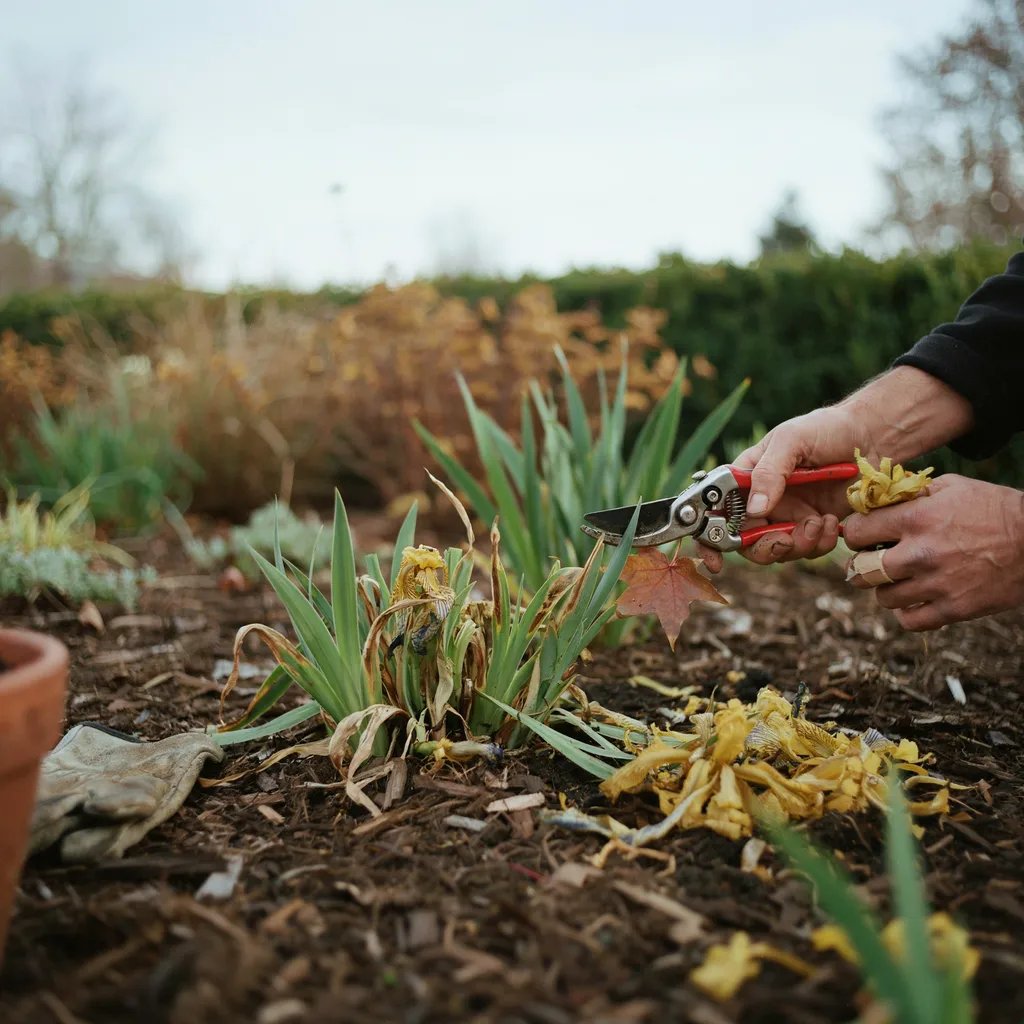
Why fall cleanup genuinely matters more than fungicide alone for long-term management is that this fungal pathogen genuinely overwinters in infected leaf debris left in place through the dormant season, meaning that debris directly seeds the following spring’s new infection cycle, making thorough removal of infected foliage each fall a genuinely more impactful long-term management step than relying on fungicide treatment alone to address each season’s symptoms as they appear.
The overwintering debris mechanism that makes cleanup a genuine long-term strategy is that the pathogen genuinely survives winter specifically within infected plant debris, meaning a garden that leaves this debris in place essentially guarantees a fresh infection source ready to reinfect new spring growth, while thorough removal genuinely breaks this reinfection cycle at its actual source rather than simply treating each new season’s symptoms after they’ve already developed.
Understanding infected debris as the genuine overwintering reservoir for this disease explains why fall cleanup represents real, long-term disease management, not simply general garden tidiness, making this practice worth prioritizing specifically for its actual disease-cycle-breaking function.
Recognizing Small Brown Spots With Yellow Halos on Older, Lower Leaves First
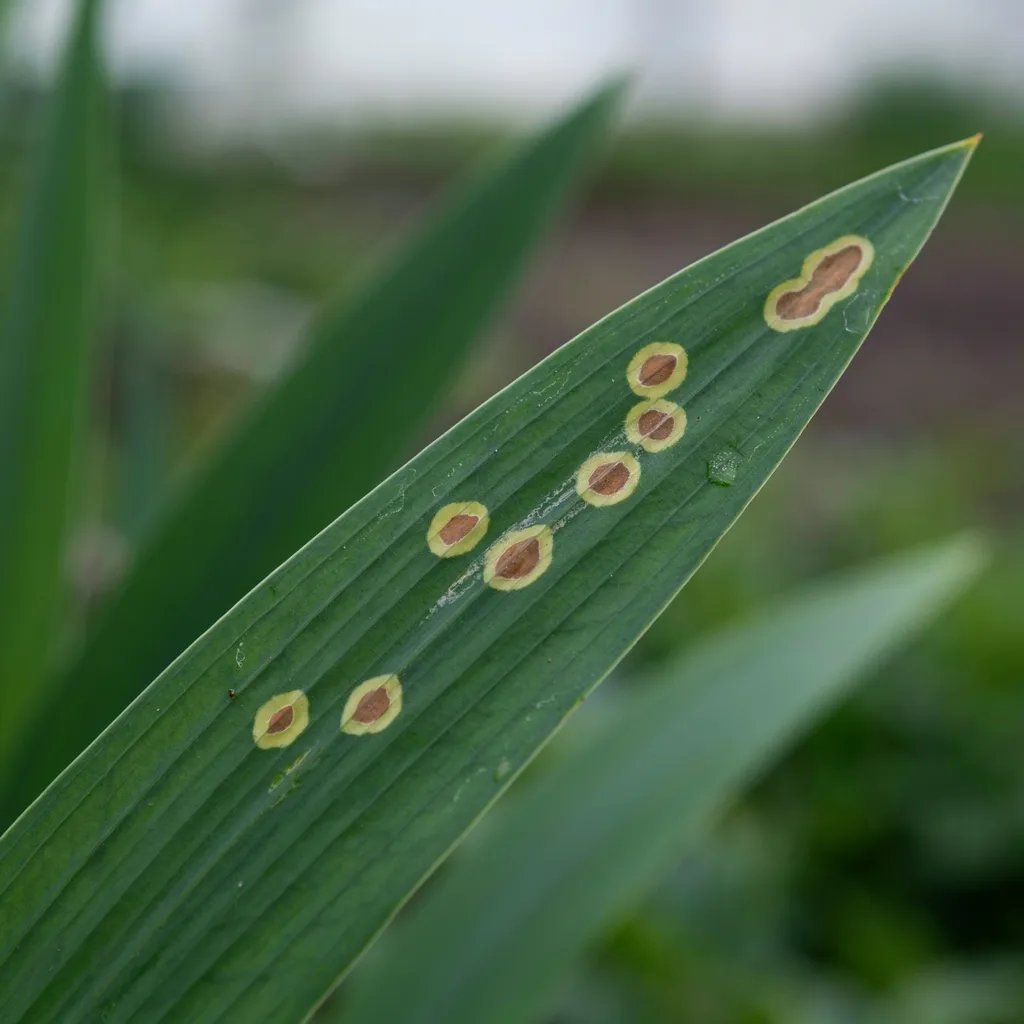
Recognizing small brown spots with yellow halos on older, lower leaves first means watching for this genuinely distinctive symptom pattern, small, roughly circular brown spots surrounded by a yellowish halo, typically appearing first on a plant’s older, lower leaves before potentially spreading to younger growth as the disease progresses.
This distinctive spot-and-halo appearance combined with the typical lower-leaf-first progression pattern provides genuinely reliable identification confirmation, making this disease relatively straightforward to distinguish from other common iris problems once these specific symptoms are recognized.
Removing and Destroying Infected Foliage Thoroughly Each Fall
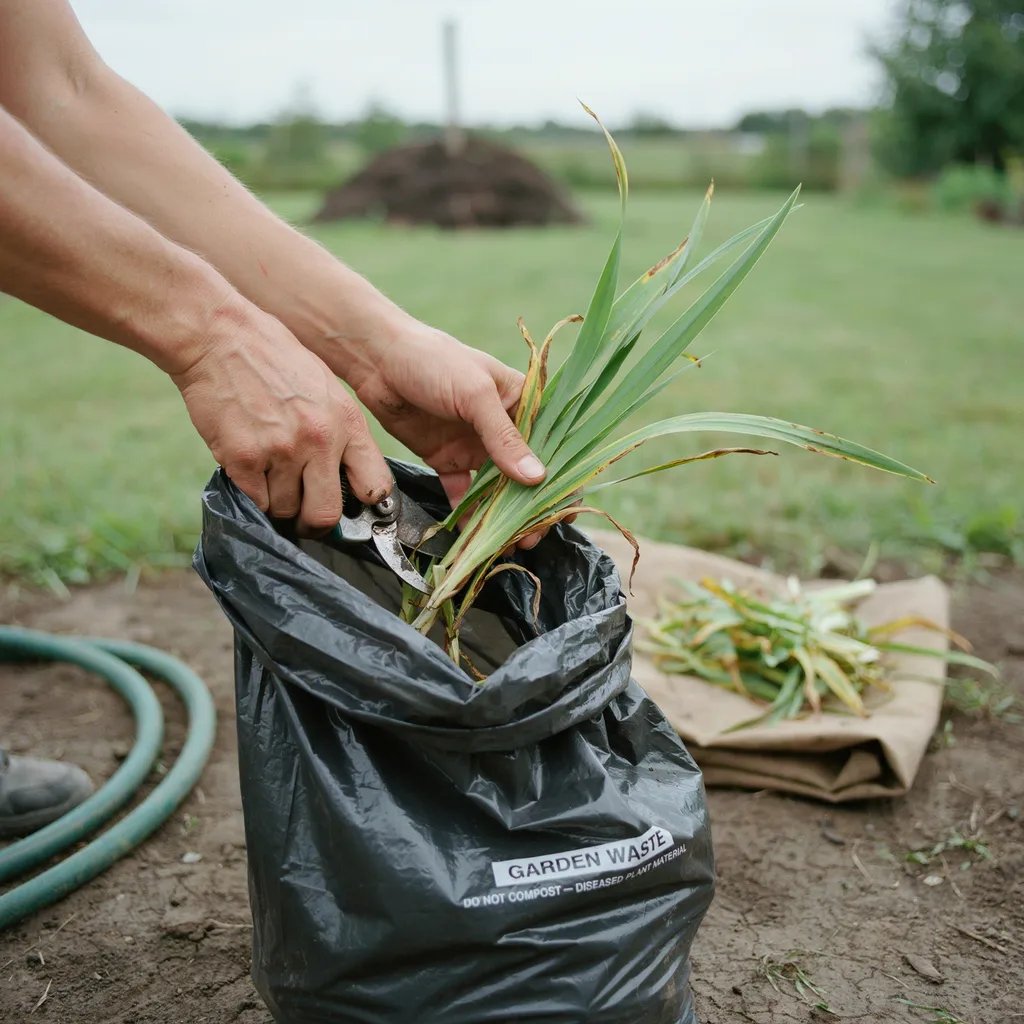
Removing and destroying infected foliage thoroughly each fall means cutting back and removing all infected iris foliage once the growing season ends, disposing of this material away from the garden rather than composting it, since home composting typically doesn’t reach temperatures reliably high enough to destroy the overwintering pathogen this cleanup is specifically meant to eliminate.
Thorough, complete removal genuinely determines this cleanup step’s effectiveness, making it worth doing comprehensively each fall rather than a partial cleanup that leaves enough infected debris behind to still seed meaningful reinfection the following spring.
Watering at the Base Rather Than Overhead to Reduce Wet-Foliage Conditions
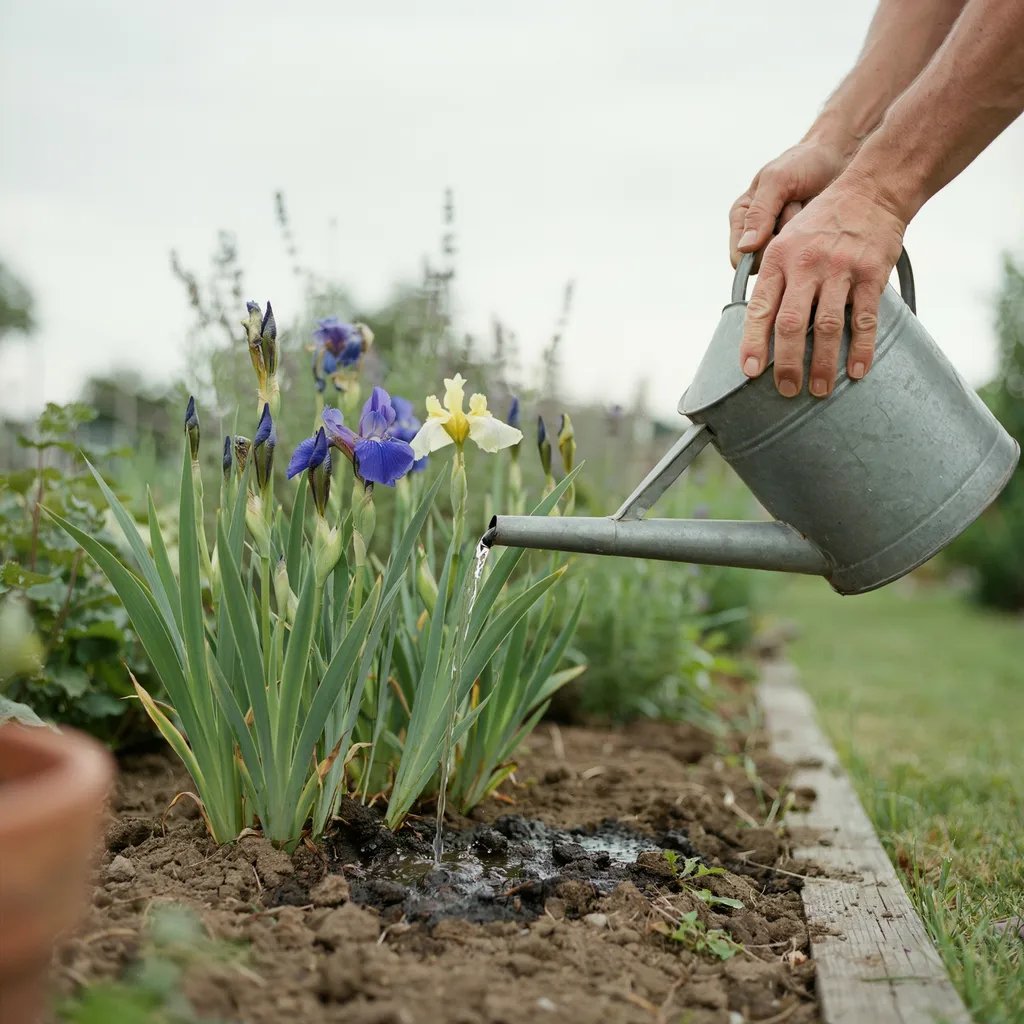
Watering at the base rather than overhead to reduce wet-foliage conditions means adjusting irrigation technique to deliver water directly to the soil rather than overhead sprinkler-style watering that wets foliage, genuinely reducing the extended leaf-surface moisture this fungal pathogen depends on to establish and spread throughout the growing season.
This watering technique adjustment genuinely addresses the disease’s spread mechanism directly, making base-level watering worth adopting as standard practice for iris beds, particularly in areas with a documented history of this specific disease.
Providing Adequate Plant Spacing to Improve Airflow and Reduce Humidity
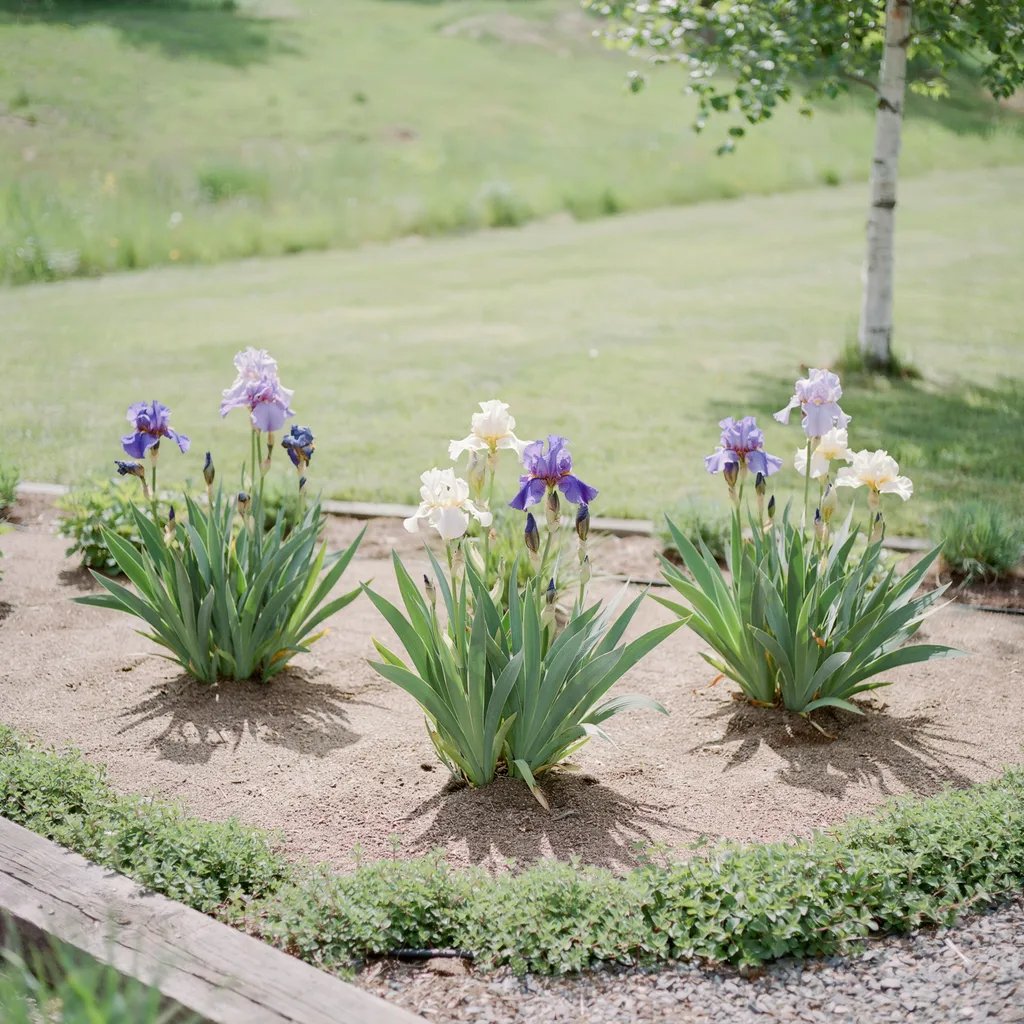
Providing adequate plant spacing to improve airflow and reduce humidity means ensuring iris plantings have genuine room for air movement between plants, since crowded plantings create the humid, still-air microclimate that favors extended foliage wetness and fungal disease establishment, making spacing a real preventive factor worth considering during initial planting or subsequent division.
Adequate spacing genuinely supports the airflow that helps foliage dry more quickly after watering or rainfall, making this planning consideration worth factoring into iris bed layout specifically as a disease-prevention measure, not simply an aesthetic spacing preference.
Applying Preventive Fungicide Early in the Season for Persistently Affected Beds
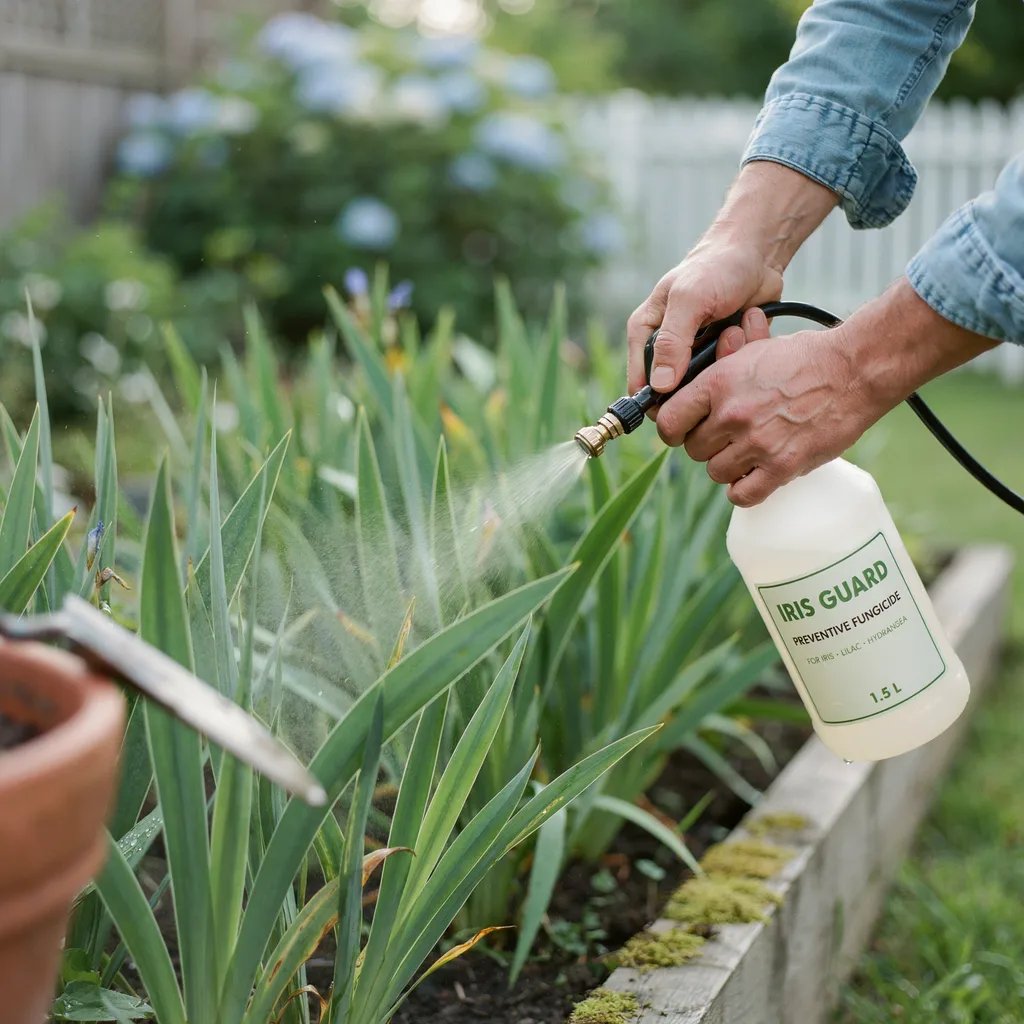
Applying preventive fungicide early in the season for persistently affected beds means, for iris beds with a documented recurring leaf spot history despite good cultural practices, considering preventive fungicide application timed early in the growing season, following the same prevention-over-treatment principle relevant to many fungal disease situations.
Fungicide’s genuine role as a supplementary tool for persistently affected beds, applied preventively rather than as late-stage treatment, makes it worth reserving for situations where cultural practices alone haven’t adequately controlled a recurring problem.
The Bottom Line
Identifying and treating iris leaf spot depends on recognizing its distinctive small brown spots with yellow halos, typically starting on older lower leaves, and understanding that thorough fall cleanup of infected foliage genuinely matters more for long-term management than fungicide alone, since this debris directly seeds the following season’s reinfection cycle. Watering at the base rather than overhead, providing adequate plant spacing for airflow, and reserving preventive fungicide for persistently affected beds round out an approach that addresses this disease’s genuine spread mechanism rather than simply treating each season’s visible symptoms in isolation.
Frequently Asked Questions
Can Iris Leaf Spot Genuinely Kill an Established Iris Plant, or Is It Primarily a Cosmetic Concern?
Severe, repeated infection can genuinely weaken a plant over time by reducing its overall photosynthetic capacity, though this disease is more commonly a persistent cosmetic and vigor concern than an immediate plant-killing threat for most established iris plantings.
Does Iris Leaf Spot Genuinely Affect All Iris Types Equally, or Are Some Varieties More Susceptible?
Susceptibility genuinely varies somewhat between iris types and specific varieties, making some documented resistance differences worth researching when selecting new iris varieties, particularly for gardens with a known history of this disease.
How Quickly Can Iris Leaf Spot Genuinely Spread Once It Appears on a Plant?
Spread rate depends considerably on weather conditions, with warm, humid, wet weather genuinely accelerating disease progression, while drier conditions tend to slow spread, making weather-aware monitoring worth doing during particularly favorable disease conditions.
Is It Safe to Divide Iris Plants That Have Shown Leaf Spot Symptoms in Previous Seasons?
Yes, genuinely, division itself doesn’t inherently spread this foliage-based disease, though ensuring any obviously infected foliage is removed and disposed of properly during the division process, rather than replanted, helps avoid reintroducing infected material to the new planting location.
Can Iris Leaf Spot Spread to Other, Unrelated Garden Plants Beyond Just Irises?
No, genuinely, this disease is specifically associated with iris plants and doesn’t pose a meaningful threat to unrelated garden plant species, making its management concern specifically limited to iris plantings rather than a broader garden-wide fungal disease risk.
How Do I Know if My Iris Bed’s Leaf Spot Problem Is Severe Enough to Warrant Fungicide, Not Just Cultural Management?
Persistent, recurring infection despite consistently good fall cleanup, appropriate watering technique, and adequate spacing over multiple seasons suggests cultural management alone isn’t sufficient, making fungicide addition to the management approach reasonable at that point.