
How to Plant Alliums for a Long-Lasting Purple Bloom

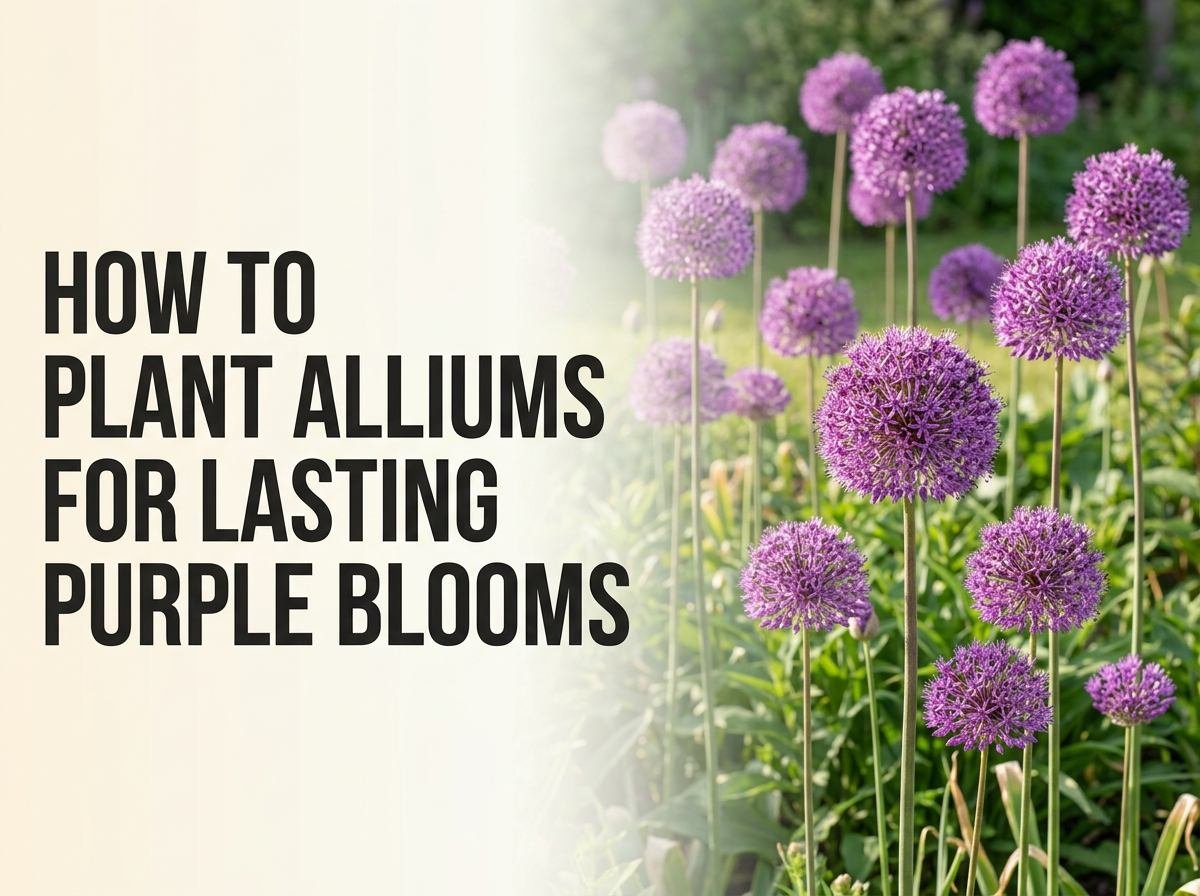
Alliums bloom longest when planted at a depth of three times the bulb’s height (roughly 6-8 inches for large varieties like ‘Globemaster’), in fall before the ground freezes, and in full sun with sharply draining soil. A single variety typically holds its purple color for 3 to 4 weeks, but planting a mix of early, mid, and late-blooming cultivars extends the purple display across 8 to 10 weeks total from mid-spring through early summer. The bulb itself does most of the work if planting depth, timing, and drainage are correct; alliums are genuinely low-maintenance once established compared to many other flowering bulbs.
Choosing the Right Time to Plant

Allium bulbs need a cold dormancy period to trigger spring bloom, which means planting in fall, generally September through November depending on your climate, roughly 2 to 4 weeks before the ground freezes solid. Soil temperature is the better guide than calendar date; plant once soil temperatures drop to around 60°F at a 6-inch depth, which typically coincides with nighttime air temperatures consistently in the 40s°F. Planting too early, while soil is still warm, risks premature root and even top growth that gets damaged by the first hard freeze, while planting too late doesn’t give roots enough time to establish before the ground freezes completely. In warmer climates (zone 8 and above) where winters don’t reliably provide enough chill hours, pre-chilling bulbs in a refrigerator for 8 to 10 weeks before planting compensates for the missing natural cold period.
Key takeaway: Watch soil temperature rather than the calendar, since a warm fall can push the ideal planting window later than usual in your region.
Getting Planting Depth Right

The standard rule for bulb depth is three times the bulb’s height, which for large alliums like ‘Globemaster’ (bulbs roughly 2 to 2.5 inches in diameter) means planting 6 to 8 inches deep, while smaller varieties like ‘Purple Sensation’ (closer to 1.5 inches) need only 4 to 5 inches. Planting too shallow leaves bulbs vulnerable to temperature swings and heaving out of the ground during freeze-thaw cycles in winter, which is a common reason alliums fail to return in their second year. Space large varieties 8 to 12 inches apart to give the substantial root systems room to develop without competing, while smaller and mid-size varieties can go 4 to 6 inches apart for a fuller, more layered look. Always plant with the pointed end facing up and the flatter, root-forming basal plate facing down; if a bulb’s orientation is genuinely unclear, planting it on its side is a safer bet than guessing wrong, since the shoot will still find its way upward.
Key takeaway: Depth matters more for winter survival than for the current season’s bloom, since shallow-planted bulbs may flower fine the first year but fail to overwinter successfully.
Preparing Soil for Proper Drainage

Alliums are highly susceptible to bulb rot in soil that stays consistently wet, so amending heavy clay soil with coarse sand or compost at planting time, working it into the top 8 to 10 inches, meaningfully improves drainage in the root zone. A soil pH between 6.0 and 7.0 suits most allium varieties well, and while they’re not especially fussy about exact pH, extremely acidic soil below 5.5 can limit nutrient uptake and weaken bloom quality. If drainage is a persistent problem in a particular bed, planting alliums in raised beds or mounded rows, even just 4 to 6 inches above surrounding grade, solves the issue more reliably than soil amendment alone in genuinely heavy clay conditions. Adding a balanced, low-nitrogen bulb fertilizer (something like a 5-10-10 ratio) at planting time supports root development without encouraging excessive leafy growth at the expense of blooms.
Key takeaway: Drainage matters more than exact soil fertility for allium success, since rot from wet soil kills far more bulbs than nutrient deficiency ever does.
Selecting Varieties to Extend Purple Bloom Time

‘Purple Sensation’ blooms earliest, typically late April into May, with 3 to 4 inch flower spheres on 20 to 24 inch stems, making it a reliable, affordable starting point for any allium planting. ‘Globemaster,’ one of the largest and most dramatic varieties with 8 to 10 inch flower heads on 30 to 36 inch stems, blooms in late May into early June, overlapping with the tail end of ‘Purple Sensation’ and extending the display. ‘Millenium,’ a more compact variety at 15 to 20 inches tall with smaller 2-inch rose-purple globes, blooms latest, from June into July, and is also notable for being one of the few alliums that reliably naturalizes and spreads over time rather than gradually declining. Layering these three varieties in the same bed, planted at their respective correct depths, creates a continuous purple display from late April through July, roughly 10 to 12 weeks total, far longer than any single variety could provide alone.
Key takeaway: Combine early, mid, and late-blooming varieties in the same planting rather than relying on one cultivar if extended bloom time is the goal.
Caring for Alliums Through the Growing Season

Once shoots emerge in spring, alliums need minimal supplemental water beyond normal rainfall unless the season is unusually dry, since overwatering established bulbs during their active growth is more likely to cause problems than underwatering. After blooming finishes, resist the urge to cut back foliage immediately; letting leaves die back naturally over 6 to 8 weeks allows the bulb to photosynthesize and store energy for next year’s bloom, and cutting green foliage prematurely measurably weakens the following season’s flowering. Deadheading spent flower heads is optional and mostly aesthetic, since it doesn’t affect bulb energy the way foliage removal does, and many gardeners actually leave the dried seed heads in place for their sculptural winter interest in the garden. A light topdressing of compost in early spring as shoots emerge supports another season of strong blooms without the need for heavier fertilization.
Key takeaway: Letting foliage die back naturally after bloom, rather than cutting it early for tidiness, is the single most important aftercare step for reliable rebloom.
Comparing Popular Allium Varieties

| Variety | Bloom Time | Height | Flower Size | Planting Depth |
|---|---|---|---|---|
| ‘Purple Sensation’ | Late April-May | 20-24 in | 3-4 in | 5-6 in |
| ‘Globemaster’ | Late May-June | 30-36 in | 8-10 in | 6-8 in |
| ‘Millenium’ | June-July | 15-20 in | 2 in | 4-5 in |
| ‘Gladiator’ | May-June | 30-40 in | 5-6 in | 6-7 in |
Managing Pests and Common Problems

Alliums are members of the onion family, and their natural sulfur compounds make them genuinely deer and rabbit resistant, which is a significant advantage in yards where browsing animals damage other spring bulbs like tulips. Bulb rot from excess moisture is the most common failure, showing as soft, mushy bulbs at planting or mushy, yellowing foliage in spring, and it’s almost always traceable to poor drainage rather than a disease that spreads from other plants. Onion fly and allium leaf miner can occasionally affect large plantings, showing as tunneling damage in leaves, but these pests are far less common and less destructive to established, healthy alliums than they are to edible onion crops nearby. Overcrowding over several years as bulbs naturally multiply can reduce individual flower size, so dividing and replanting clumps every 3 to 4 years maintains the largest, most impressive blooms.
Key takeaway: Deer and rabbit resistance makes alliums a particularly strong choice for yards where other spring bulbs regularly get eaten before they bloom.
The Bottom Line
Long-lasting purple allium blooms come down to three fundamentals done correctly: fall planting at the right depth for cold dormancy, well-draining soil that prevents rot, and staggering early, mid, and late-blooming varieties rather than planting just one cultivar. Once established, alliums ask very little in return, tolerating drought better than most flowering bulbs and shrugging off the deer and rabbit pressure that devastates tulips and lilies in the same bed. Get the fall planting details right, and a well-planned allium bed rewards you with purple color spanning nearly three months every spring into summer.
Frequently Asked Questions
Can alliums be planted in spring instead of fall? Fall planting is strongly preferred because alliums need a cold dormancy period to develop proper root systems and trigger spring flowering. Spring-planted bulbs, if available as pre-chilled stock, generally bloom later and less reliably than fall-planted bulbs.
How deep should I plant large allium bulbs like ‘Globemaster’? Plant large varieties like ‘Globemaster’ at 6 to 8 inches deep, following the general rule of three times the bulb’s height. Shallower planting risks the bulb heaving out of the ground during winter freeze-thaw cycles.
Do alliums come back every year? Most allium varieties are perennial and will return for several years, though bloom size can gradually decrease as clumps become overcrowded. ‘Millenium’ is notably good at naturalizing and even spreading over time, more reliably than larger varieties like ‘Globemaster.’
Why did my allium bulbs rot instead of sprouting? Bulb rot almost always comes from soil that stays too wet, either from poor natural drainage or planting in a low spot where water collects. Amending heavy soil with sand or compost, or planting in a raised bed, usually resolves the issue for future plantings.
Are alliums resistant to deer and rabbits? Yes, alliums belong to the onion family and their sulfur compounds make them genuinely unappealing to deer and rabbits, unlike tulips and lilies which are frequently browsed. This makes them a reliable choice for gardens with heavy animal pressure.
How do I extend the purple bloom period in my garden? Plant a mix of early (‘Purple Sensation’), mid (‘Globemaster’ or ‘Gladiator’), and late-blooming (‘Millenium’) varieties together in the same bed. This staggers flowering from late April through July instead of a single 3 to 4 week bloom window from one variety alone.