
Purple Pom-Pom Flowers That Make Gardens Come Alive

Purple pom-pom flowers get their name from the tight, spherical flower clusters that look genuinely like a cheerleader’s pom-pom, a shape produced when dozens or hundreds of tiny individual florets radiate outward from a central point on a single stem. Allium, globe thistle, and pom-pom dahlias are the three most reliable and widely available options, spanning early summer through first frost between them, and each brings a slightly different texture and scale to a border. Choosing the right one depends mainly on bloom timing and mature height, since these plants range from 12-inch dwarf varieties to towering 4-foot stems.
Allium: The Classic Early-Season Pom-Pom
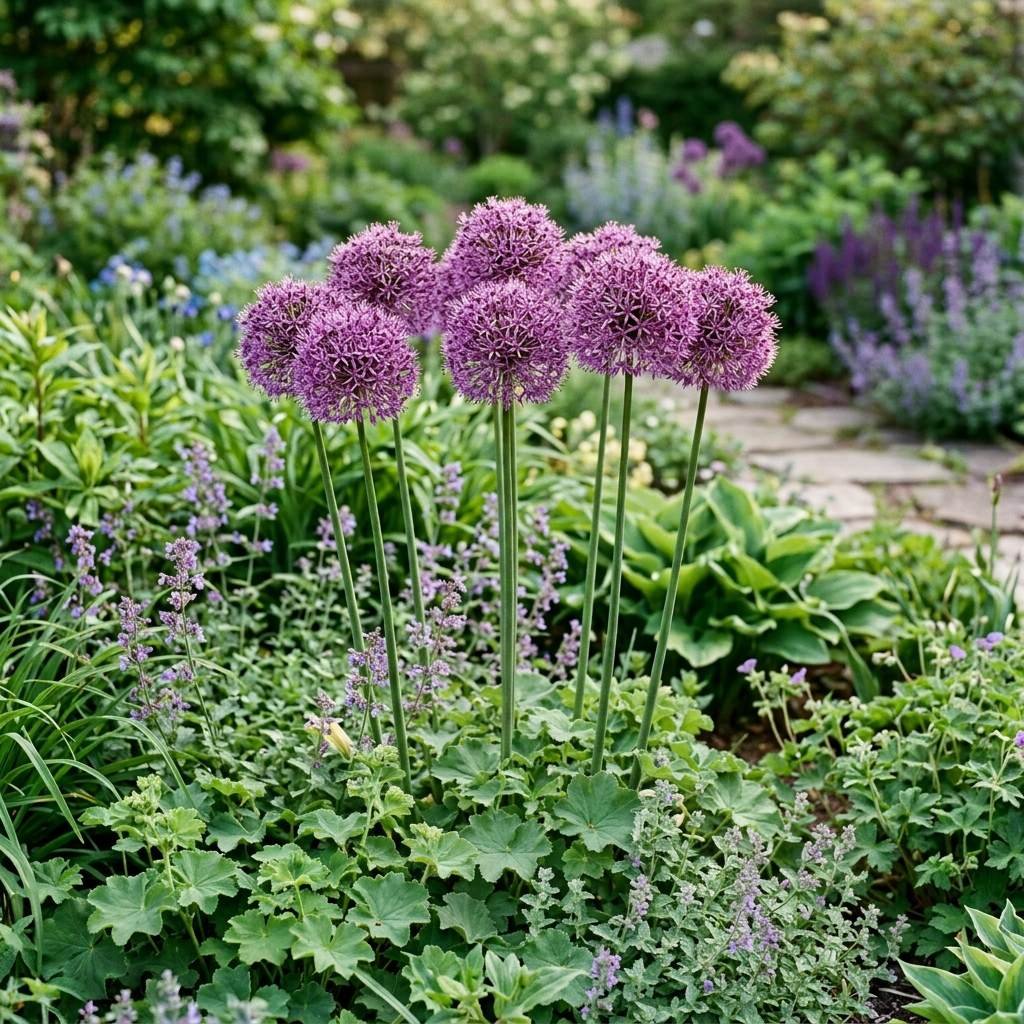
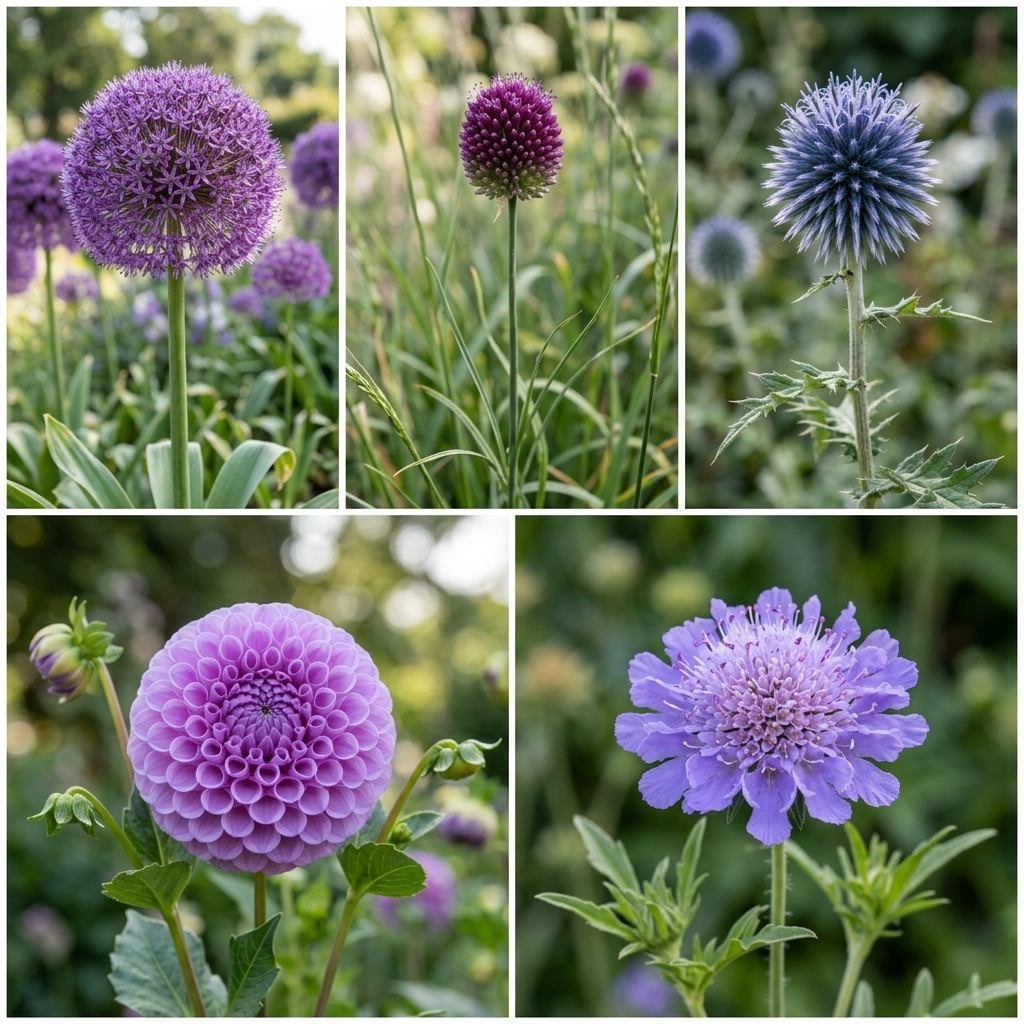
Ornamental allium (Allium giganteum and related species) produces the flower most people picture first when they think of a purple pom-pom: a perfectly spherical cluster of small star-shaped florets sitting atop a tall, leafless stem, creating a striking architectural effect that seems to float above the surrounding foliage of other plants. Giant varieties like ‘Globemaster’ produce blooms 8-10 inches in diameter on 2.5-3 foot stems, while ‘Purple Sensation’ offers a more modest 4-inch bloom on a similar height stem, and ‘Gladiator’ splits the difference at 6 inches. Planted as bulbs in fall (October-November in most temperate zones), allium blooms reliably in May and June, filling the gap between spring bulbs and summer perennials when many gardens have a color lull. Because the foliage often yellows and dies back before or during bloom, interplanting allium among later-emerging perennials like hostas or daylilies hides the fading leaves while letting the purple sphere stand out dramatically above.
Key takeaway: Plant allium bulbs in fall for a striking, gap-filling purple bloom in late spring that most other perennials can’t match for architectural impact.
Globe Thistle: Steel-Blue-Purple Texture for Midsummer
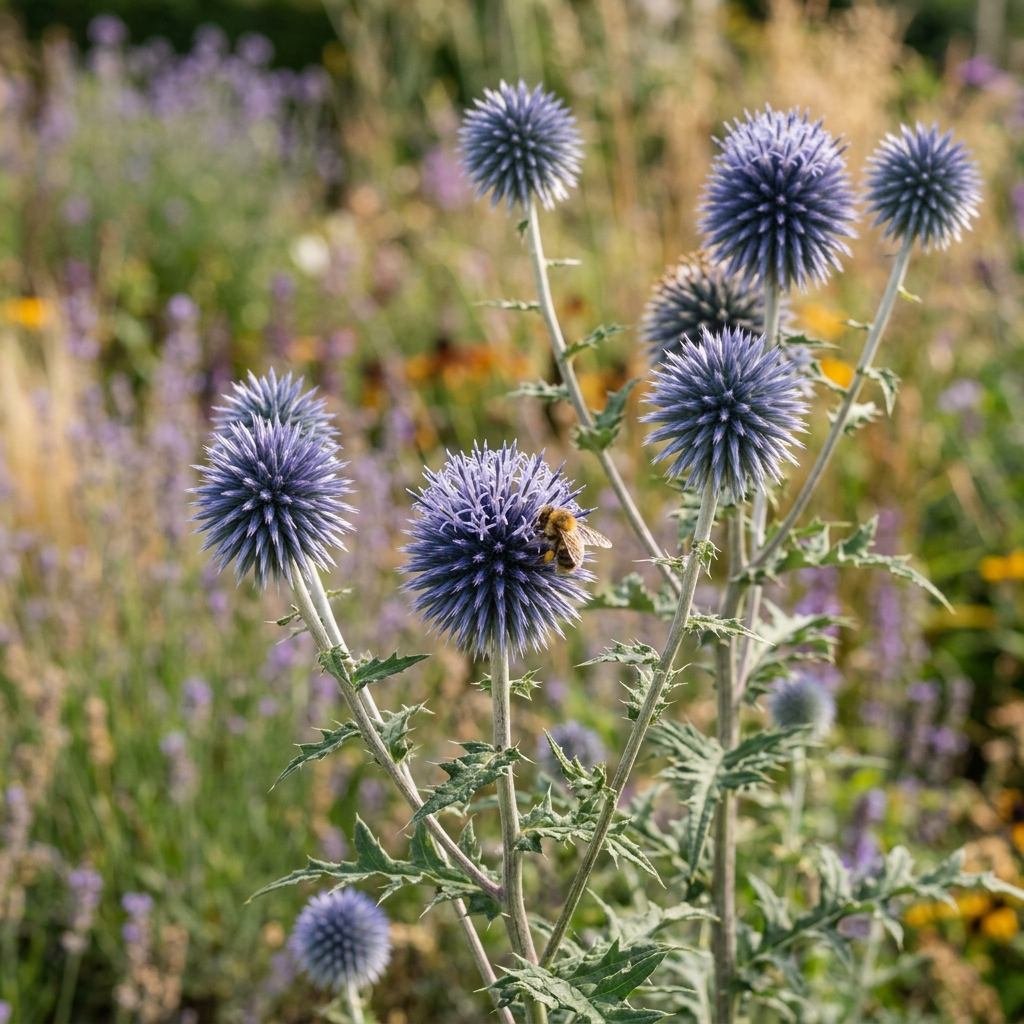
Globe thistle (Echinops ritro) produces smaller, spikier pom-poms, roughly golf-ball sized, in a distinctive steel-blue-purple that reads differently in the garden than the smoother, rounder allium bloom, giving a more textured, almost metallic visual quality. Growing 2-4 feet tall depending on variety, globe thistle blooms from July through September, extending purple pom-pom interest well past allium’s late-spring window and into the heart of summer. It’s also one of the most drought-tolerant and pollinator-attracting options on this list, thriving in poor, well-drained soil and full sun with minimal supplemental water once established, and bees are consistently drawn to the nectar-rich florets in a way that makes it a strong choice for a wildlife-friendly border. The spent flower heads dry well on the stem and provide winter interest plus seed for birds if left standing rather than cut back in fall.
Key takeaway: Globe thistle extends the pom-pom season into summer while asking for almost no water or fertility once its roots are established.
Pom-Pom Dahlias: The Most Perfectly Round Bloom
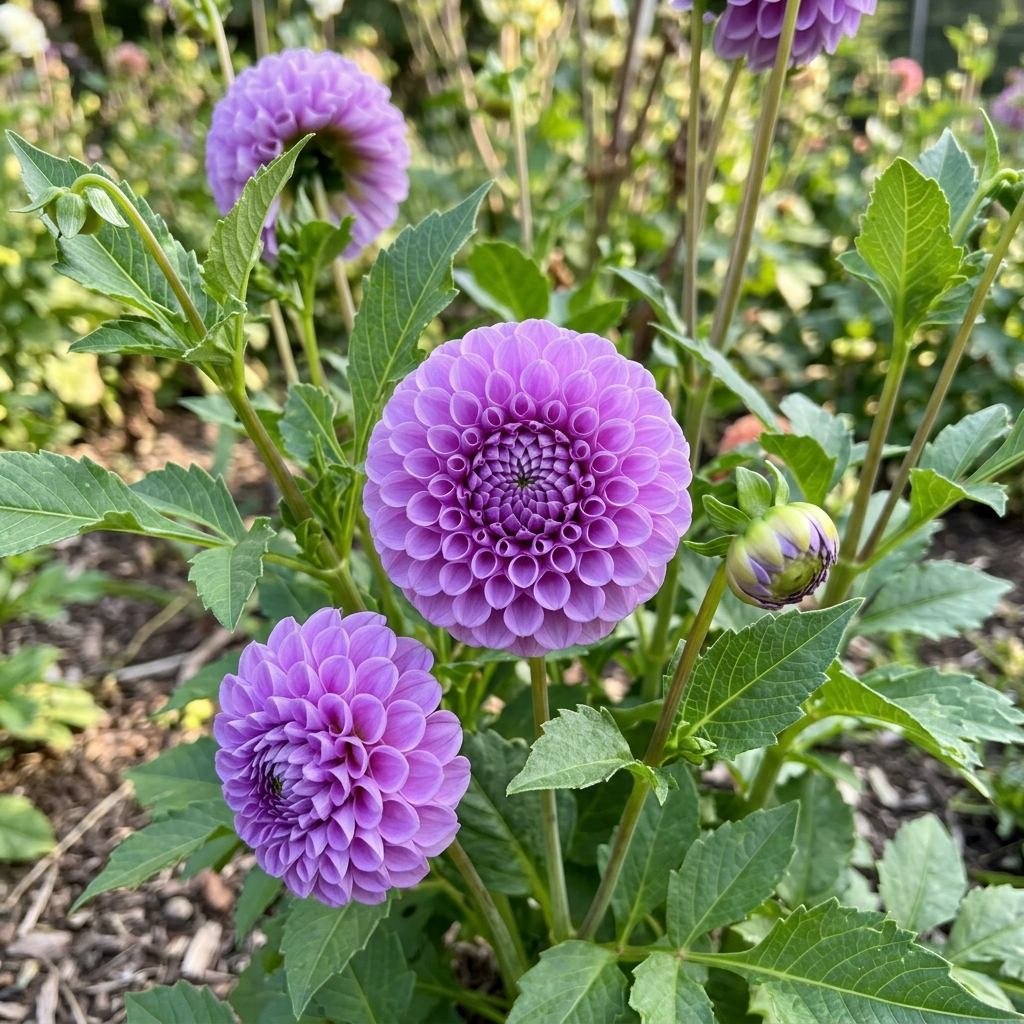
Pom-pom dahlias are a specific dahlia classification (distinct from ball dahlias, which are similar but slightly larger and less perfectly spherical) bred specifically for tightly quilled petals that curl inward to form an almost impossibly precise sphere, typically 2 inches or less in diameter, making them the most refined and formal-looking option in this category. Varieties like ‘Franz Kafka’ (lavender-purple) and ‘Small World’ (white with a hint of lavender) bloom continuously from midsummer until the first hard frost, which is considerably longer than either allium or globe thistle’s window. Dahlias grow from tubers planted after the last frost date in spring, needing full sun, rich, well-draining soil, and regular deadheading to keep the continuous bloom cycle going. In climates below zone 8, tubers need to be dug up and stored indoors over winter, adding an annual maintenance task that allium and globe thistle (both hardy perennials in most temperate zones) don’t require.
Key takeaway: Pom-pom dahlias bloom longest of the three main options but require the most seasonal maintenance, including digging and storing tubers in cold climates.
Ball Dahlias as a Larger Alternative
Ball dahlias are a closely related classification producing similar spherical blooms at a larger scale, 3-4 inches or more in diameter, offering a bolder statement piece for gardeners who want the same round dahlia form at greater visual scale.
Drumstick Allium: A Smaller-Scale Purple Pom-Pom
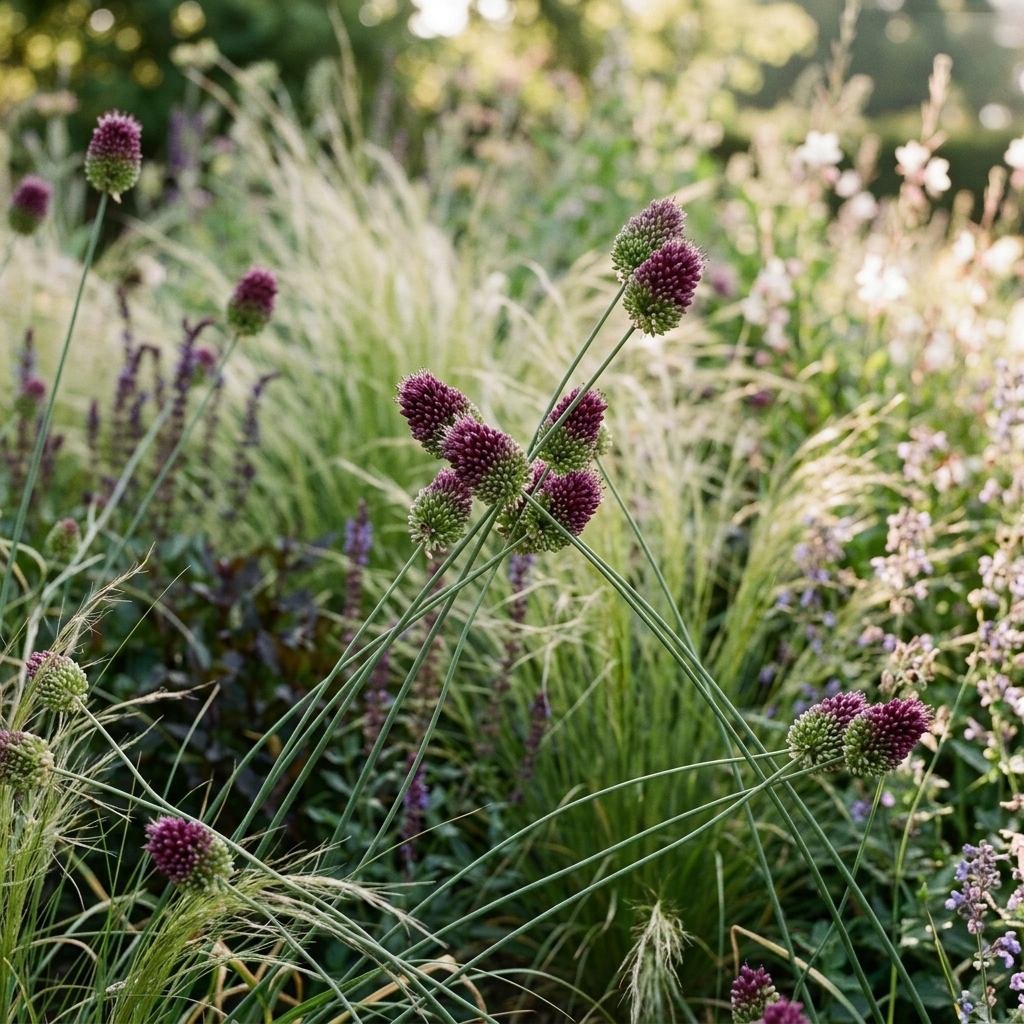
Allium sphaerocephalon, commonly called drumstick allium, produces a smaller, more egg-shaped (rather than perfectly round) cluster in a deep wine-purple, on slender 2-3 foot stems that sway attractively in a breeze rather than standing rigidly upright like giant allium varieties. Blooming in June and July, drumstick allium bridges the gap between giant allium’s late spring show and globe thistle’s midsummer peak, and its smaller, more delicate scale makes it easier to weave through a mixed perennial border without overwhelming neighboring plants the way an 8-inch ‘Globemaster’ bloom can. It’s also notably more resistant to deer and rabbit browsing than many garden perennials, a genuinely useful trait in gardens bordering wooded areas.
Scabiosa: Pincushion Texture in Purple
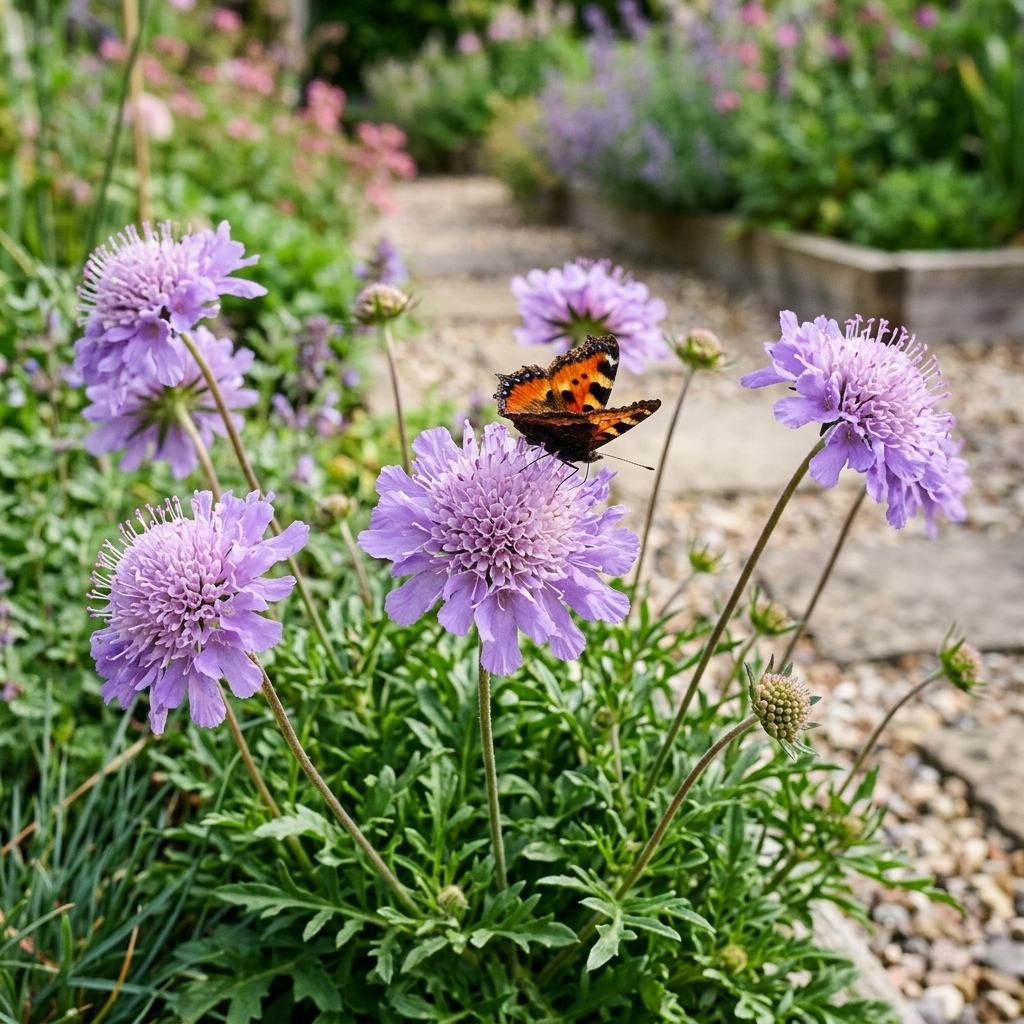
Scabiosa (pincushion flower) doesn’t form quite as tight a sphere as true pom-pom varieties, but its domed, textured purple-blue blooms with protruding stamens create a similar rounded visual effect at a smaller, front-of-border scale (12-18 inches tall). It blooms from early summer through fall with deadheading, making it one of the longest-blooming options here, and it’s a genuine pollinator magnet, particularly for butterflies. Its compact size makes it a practical choice for smaller gardens or container plantings where the taller allium and globe thistle varieties would be out of scale.
Comparing Purple Pom-Pom Flower Options
| Flower | Bloom Time | Height | Sphere Size | Longevity |
|---|---|---|---|---|
| Giant allium | May-June | 2.5-3 ft | 4-10 inches | Perennial (hardy bulb) |
| Drumstick allium | June-July | 2-3 ft | 1-2 inches | Perennial (hardy bulb) |
| Globe thistle | July-September | 2-4 ft | 1-1.5 inches | Perennial |
| Pom-pom dahlia | Midsummer-frost | 2-4 ft | Up to 2 inches | Tender (tuber, dig in cold zones) |
| Scabiosa | Early summer-fall | 12-18 inches | 1-2 inches (domed) | Perennial (short-lived) |
Designing With Purple Pom-Poms for Season-Long Impact
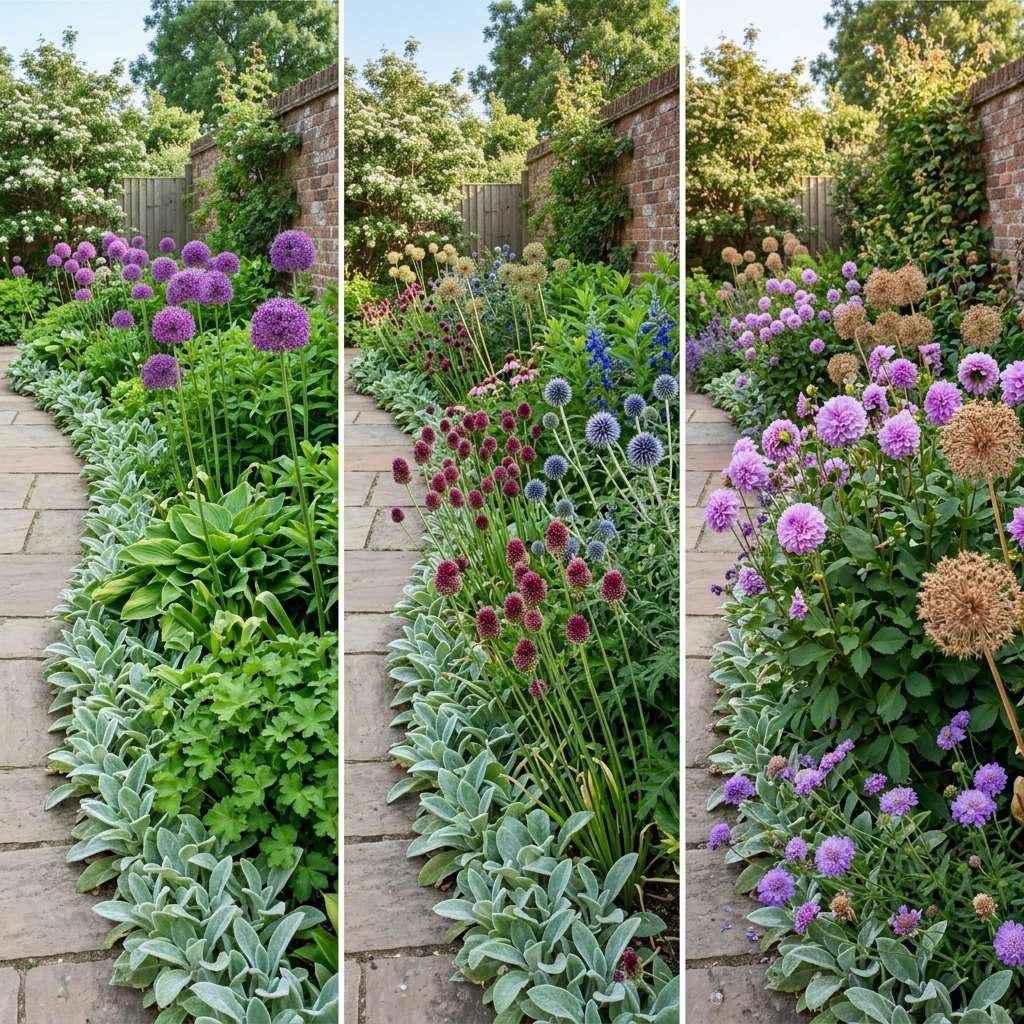
Combining several of these species creates a purple pom-pom presence that spans the entire growing season rather than a single short window: giant allium opens the show in May, drumstick allium and the first globe thistle blooms carry June and July, and pom-pom dahlias take over from midsummer through the first frost. Placing taller varieties (giant allium, globe thistle, tall dahlias) toward the back or middle of a border with scabiosa and drumstick allium toward the front creates natural height layering, and pairing the cool purple tones with silver foliage plants like artemisia or lamb’s ear, or with complementary yellow blooms like coreopsis, makes the purple read as more vivid through color contrast.
The Bottom Line
Purple pom-pom flowers deliver a genuinely different visual texture than typical garden blooms, and layering allium, globe thistle, and pom-pom dahlias together covers late spring through fall with that same striking spherical form in varying scales and shades of purple. Allium demands the least ongoing care as a hardy fall-planted bulb, globe thistle rewards neglect in poor soil, and dahlias ask for more seasonal attention but pay it back with the longest individual bloom window. Picking at least one from each bloom-time category is the simplest way to keep this distinctive flower shape present in the garden nearly year-round.
Frequently Asked Questions
When is the best time to plant allium bulbs for purple pom-pom blooms?
Plant allium bulbs in fall, ideally October or November before the ground freezes, at a depth roughly three times the bulb’s height. This gives them the cold period they need to bloom reliably the following late spring.
Do purple pom-pom dahlias need to be dug up every winter?
In zones colder than zone 8, yes, dahlia tubers should be dug up after the first light frost blackens the foliage and stored in a cool, dry place over winter. In zones 8 and warmer, tubers can generally be left in the ground with a layer of mulch for winter protection.
Are purple pom-pom flowers good for cutting and floral arrangements?
Yes, allium, globe thistle, and pom-pom dahlias are all excellent cut flowers, with allium and globe thistle also drying well for long-lasting arrangements. Dahlias have the shortest vase life of the group at around 5-7 days, while dried allium seed heads can last for months.
Which purple pom-pom flower is easiest for a beginner gardener?
Allium is generally the easiest, since it’s planted once as a fall bulb and returns reliably every year with minimal care beyond well-draining soil and full sun. Globe thistle is a close second, tolerating poor soil and drought better than almost any perennial.
Do these purple pom-pom flowers attract bees and other pollinators?
Yes, globe thistle and scabiosa are particularly strong pollinator magnets, attracting bees and butterflies throughout their bloom period, and allium also draws in a good number of pollinators during its bloom window. This makes them a solid addition to a pollinator-focused garden design.
Can I grow purple pom-pom flowers in containers instead of garden beds?
Scabiosa and drumstick allium work especially well in containers due to their smaller scale, while dahlias also do well in large pots with adequate depth for tuber growth. Giant allium and globe thistle are better suited to in-ground planting given their taller, sometimes top-heavy growth habit.