
Small Backyard? Grow Fruit Trees with These Layout Ideas

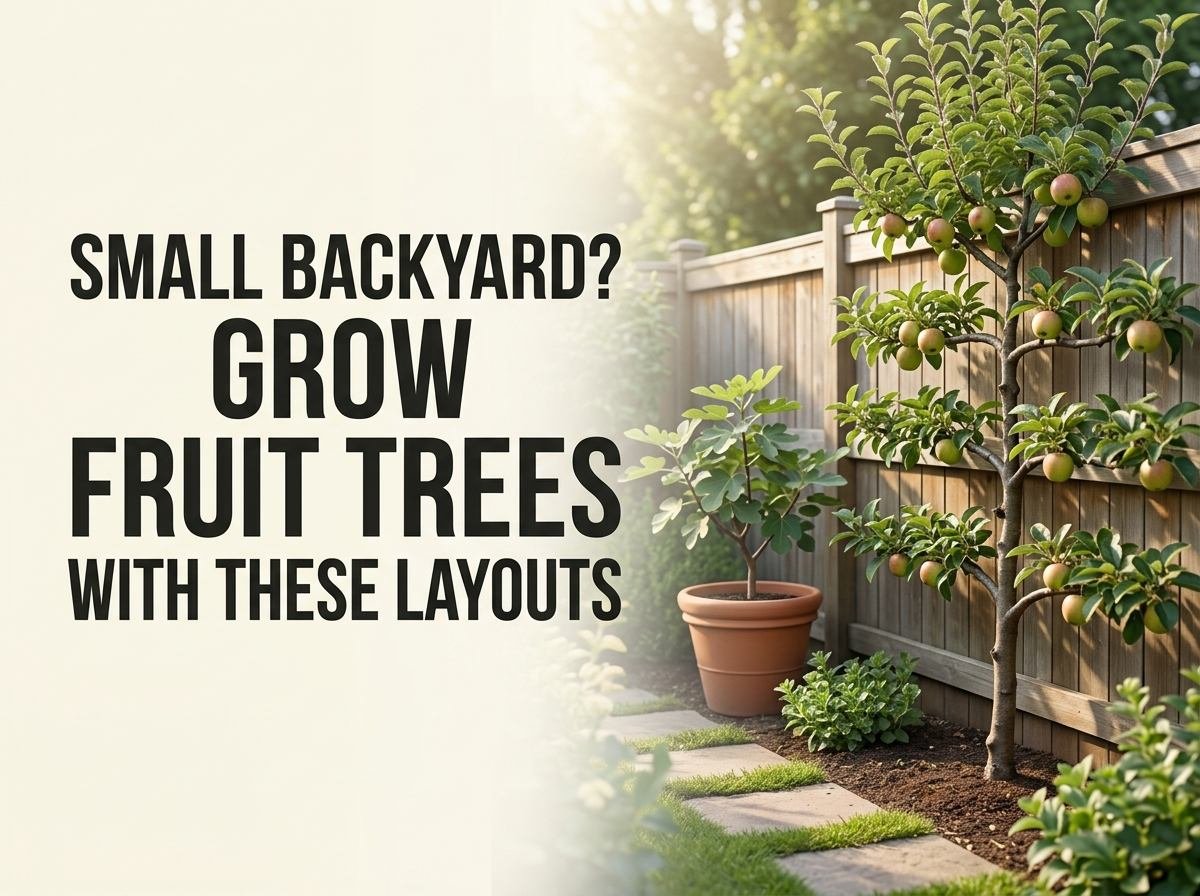
Small backyards can genuinely support fruit trees by relying on dwarf or semi-dwarf rootstock (which caps mature size at 8-12 feet instead of 20-30 feet for standard rootstock) combined with space-efficient layouts like espalier, cordon training, or backyard orchard culture, where multiple trees share a single planting hole. The rootstock choice matters more than the layout method, since it’s what actually limits the tree’s ultimate size regardless of how it’s pruned or trained. Once the right rootstock is selected, the layout ideas below let a yard as small as 15×20 feet support anywhere from one well-placed specimen to five or six trees in a backyard orchard arrangement.
Starting With the Right Rootstock

Rootstock, not the fruit variety grafted onto it, is what determines a tree’s ultimate size, and this is the single most important decision for small-space growing since even careful pruning can’t fully compensate for a rootstock bred to grow to 25 feet. Dwarf rootstocks like M9 or M27 for apples, or Citation for stone fruit, cap mature height around 8 to 10 feet and typically begin fruiting within 2 to 3 years of planting, faster than standard rootstock trees which can take 5 to 7 years. Semi-dwarf rootstocks (M7 or MM106 for apples, for example) grow to 12 to 15 feet, still manageable in a small yard but offering somewhat better drought tolerance and a slightly longer productive lifespan than full dwarf trees. Always check the specific rootstock code on a nursery tag or ask directly, since “dwarf” is used loosely in marketing but the actual rootstock code tells you the real mature size to expect.
Key takeaway: Ask specifically about rootstock code, not just the word “dwarf,” since marketing language varies but rootstock codes are standardized and predictable.
Espalier Training Against Fences and Walls

Espalier involves training a tree’s branches flat against a two-dimensional plane, typically a fence, wall, or wire trellis system, using a framework of horizontal wires spaced 12 to 18 inches apart to guide branch growth. This technique needs remarkably little depth, often just 18 to 24 inches from the wall or fence, making it ideal for narrow side yards or property line boundaries where a freestanding tree’s canopy would never fit. Apples and pears respond best to espalier because their fruiting spurs form reliably on the horizontal branches this method creates, while stone fruits like peaches (which fruit on the previous year’s wood rather than spurs) are trickier and less commonly espaliered successfully. Training takes 3 to 5 years to establish the full desired shape, requiring consistent pruning twice a year (late winter for structure, summer for maintaining the flat plane), but a mature espalier can produce a genuinely useful fruit harvest from a strip of space most gardeners would otherwise dismiss as unusable.
Key takeaway: Espalier turns unusable narrow side-yard space into productive growing area, but commit to the multi-year training process since shortcuts result in an unruly, poorly shaped tree.
Cordon Training for Maximum Density

A cordon is a single-stemmed tree trained at a 45-degree angle along a wire support, and because each tree occupies only about 2 to 3 feet of horizontal space, a 15-foot fence line can hold 5 to 6 individual cordon trees, each potentially a different variety. This method works particularly well for apples, since the angled growth habit naturally slows vegetative vigor and encourages earlier, more consistent fruiting compared to an upright tree of the same rootstock. Cordons need their own dwarfing rootstock (M9 or M27 for apples) to keep growth manageable at this density, and summer pruning to maintain the single stem is required roughly every 4 to 6 weeks during the growing season. This is genuinely one of the highest-density methods for growing multiple fruit varieties in minimal linear space, useful for gardeners who want variety (different apple types for pollination and extended harvest) without needing multiple freestanding trees.
Key takeaway: Cordons let you grow several different fruit varieties along a single fence line, solving both the space problem and the cross-pollination requirement many fruit trees need.
Backyard Orchard Culture: Multiple Trees, One Hole

Backyard orchard culture, a method popularized by California nursery growers, involves planting 2 to 4 trees of different varieties (often different fruit types entirely, like a peach, plum, and apricot together) in a single planting hole spaced just 18 to 24 inches apart, then keeping all of them pruned aggressively to 6 to 8 feet tall. The logic behind this counterintuitive approach is that most home gardeners want variety and a staggered harvest more than they want maximum yield from a single tree, and multiple small trees genuinely provide more of both in the same footprint than one full-size tree would. Summer pruning is essential here, cutting back new growth by half at least twice during the growing season to keep all trees in the group at a similar, manageable height so none shades out the others. This method works especially well for stone fruits (peaches, plums, apricots) which tolerate aggressive summer pruning better than most apple or pear varieties.
Key takeaway: Backyard orchard culture trades the higher per-tree yield of a single full-size tree for variety and extended harvest window, which is usually the better trade for a small home garden.
Choosing Fruit Types Suited to Compact Layouts

Apples and pears generally handle training methods like espalier and cordon better than stone fruits because they fruit on long-lived spurs rather than needing constant new wood, meaning a trained shape stays productive for many years without needing to be regrown. Figs are naturally well-suited to small spaces since they tolerate hard pruning and even container growing without much yield penalty, and many varieties stay under 10 feet even without dwarf rootstock. Columnar apple varieties (bred specifically to grow as a single narrow spire, typically 8-10 feet tall but only 2 feet wide) are a genuinely purpose-built option for extremely tight spaces like a narrow strip along a driveway, requiring almost no training skill compared to espalier or cordon methods. Citrus in containers (Meyer lemon, calamondin) works well for small yards in warmer climates or as a patio specimen that moves indoors for winter in colder zones, offering fruit production without any in-ground space commitment at all.
Key takeaway: Columnar apples and container figs offer nearly training-free options for the smallest spaces, useful for gardeners who want fruit trees without committing to years of espalier or cordon pruning skill-building.
Comparing Small-Space Fruit Tree Layouts

| Layout Method | Space Needed | Skill Level | Best Fruit Types |
|---|---|---|---|
| Dwarf standard tree | 8-10 ft diameter | Low | Apples, pears, stone fruit |
| Espalier | 2 ft deep x fence length | High | Apples, pears |
| Cordon | 2-3 ft per tree along a line | High | Apples |
| Backyard orchard culture | 18-24 in per tree, grouped | Moderate | Stone fruit, apples |
| Columnar apple | 2 ft wide x 8-10 ft tall | Low | Apples only |
| Container fig/citrus | Pot footprint only | Low | Figs, citrus |
Planning for Sun, Pollination, and Spacing

Regardless of layout, fruit trees need a minimum of 6 hours of direct sunlight daily to produce a meaningful harvest, so map your yard’s sun pattern across a full day before committing to a layout, since even the best training method can’t compensate for a shaded location. Many fruit trees, particularly apples and pears, need a second, different variety nearby for cross-pollination, which is exactly why cordon and backyard orchard culture layouts (naturally incorporating multiple varieties) often outperform a single tree in actual yield, even when self-pollinating varieties are chosen. When placing trees near a fence line, foundation, or property boundary, account for root spread as well as canopy; even dwarf rootstock trees develop root systems extending 1.5 to 2 times the canopy width, which matters for placement near foundations, septic systems, or underground utilities.
Key takeaway: Solve the pollination requirement through your layout choice (multiple varieties via cordon or backyard orchard culture) rather than treating it as a separate problem to work around later.
The Bottom Line
A small backyard doesn’t rule out growing real fruit; it just narrows the right approach to dwarf rootstock paired with a space-efficient layout like espalier, cordon training, or backyard orchard culture. The layout you choose should match both your available space and your appetite for ongoing training and pruning, since espalier and cordon demand real skill-building over several years while columnar apples and backyard orchard groupings ask less of the gardener upfront. Whichever method fits, confirming rootstock size, sun exposure, and pollination needs before planting prevents the most common disappointments in small-space fruit growing.
Frequently Asked Questions
What is the smallest fruit tree I can grow in a backyard? Columnar apple varieties are among the smallest, growing only about 2 feet wide while reaching 8 to 10 feet tall, making them suitable for extremely narrow spaces like a strip beside a driveway. Container-grown figs and dwarf citrus are comparably compact options that don’t require any in-ground space.
How much space does an espaliered fruit tree actually need? Surprisingly little depth, often just 18 to 24 inches from the wall or fence it’s trained against, though the horizontal spread along the fence can extend 8 to 15 feet depending on the training pattern chosen. This makes espalier ideal for narrow side yards where a freestanding tree’s canopy wouldn’t fit.
Do I need two fruit trees for pollination in a small yard? Many apple and pear varieties need a second, different variety nearby for reliable pollination, though some self-pollinating varieties exist for gardeners with room for only one tree. Backyard orchard culture and cordon layouts solve this naturally by incorporating multiple varieties in the same footprint.
How long does it take a dwarf fruit tree to produce fruit? Dwarf rootstock trees typically begin fruiting within 2 to 3 years of planting, considerably faster than standard rootstock trees which can take 5 to 7 years to reach fruiting maturity. Trained forms like espalier may take slightly longer to fruit while the structural framework is being established.
Can fruit trees grow in containers on a patio? Yes, particularly figs, citrus, and some dwarf apple or peach varieties bred specifically for container growing, though container trees need more frequent watering and eventual repotting as roots fill the available space. Container growing also allows moving cold-sensitive types like citrus indoors for winter in colder climates.
What is backyard orchard culture and why plant trees so close together? Backyard orchard culture plants 2 to 4 different fruit tree varieties in one hole, spaced just 18 to 24 inches apart, then keeps all of them pruned to 6 to 8 feet. It prioritizes variety and a staggered harvest window over the higher single-tree yield a full-size tree would produce in the same space.