
Woodland Garden Front Yards For Cottage Charm: Curb Appeal Ideas

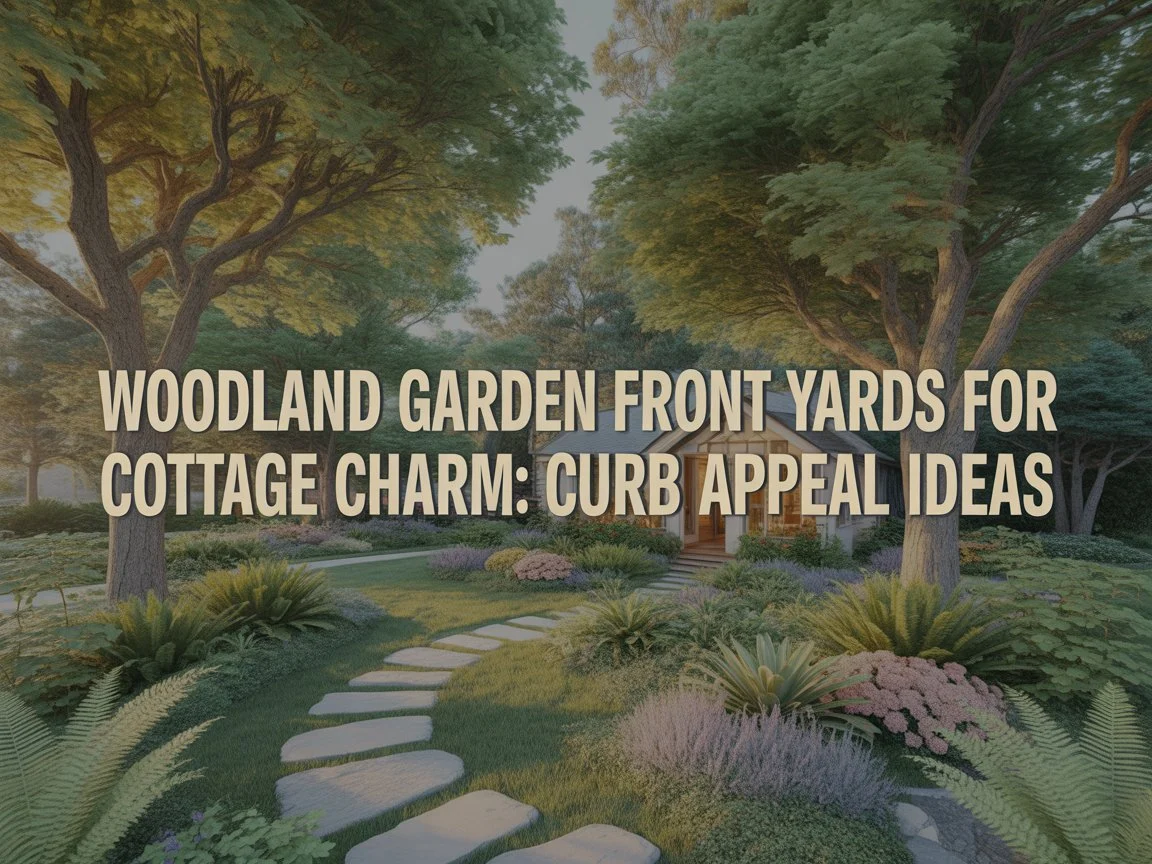
The front yard that changed my mind about cottage woodland design belonged to a small house on an ordinary street, and before the owners touched it, it was the most forgettable plot on the block — a square of patchy lawn, a straight concrete path to the door, and a single struggling shrub. They had a big shady maple out front that everyone told them was the problem. I told them it was the answer. We took out the lawn entirely, let a winding path replace the straight one, and packed the beds with foxgloves, ferns, hostas, and self-seeding cottage flowers beneath that maple. Within a year, people were stopping on the sidewalk to look. Within two, a neighbour told the owners their house had become “the pretty one with the magic garden.” Nothing about it was grand or expensive — it was just a shady front yard finally planted as the woodland cottage garden it always wanted to be. That front yard taught me that the shade most people see as a curb-appeal problem is actually the perfect setting for the most charming front garden style of all.
Woodland garden front yards for cottage charm combine the naturalistic, shade-loving planting of a woodland garden with the romantic, informal abundance of a cottage garden, applied to the street-facing front yard to create a welcoming, characterful, high-curb-appeal entrance beneath small trees and dappled shade. The woodland approach gives the front yard lush shade-tolerant planting and naturalistic beauty, while the cottage charm gives it the romantic flowers, winding paths, and informal abundance that make a front garden genuinely inviting and memorable from the street.
Over the years I have designed and planted woodland cottage front yards across homes ranging from compact urban plots with a single street tree to larger properties with mature front-garden shade. I have seen this style transform an unremarkable house into the most admired one on the street, and I have also helped homeowners solve the specific challenge of creating curb appeal in the shade that defeats conventional front-yard planting. In this article I am sharing the best woodland garden front yard ideas for cottage charm covering planting, paths, layout, small yards, and low-maintenance design.
Capturing Cottage Charm in a Woodland Front Yard
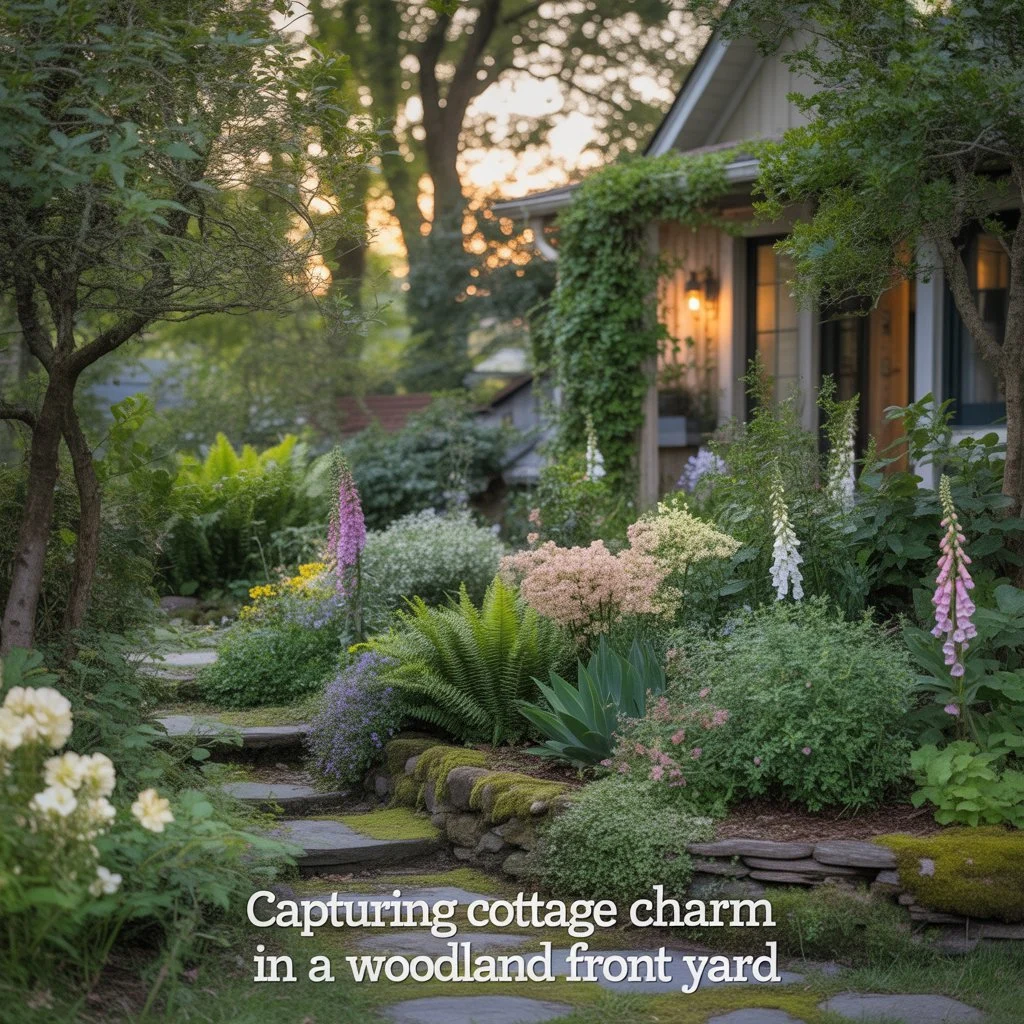
Capturing cottage charm in a woodland front yard is about fusing the romantic informality of a cottage garden with the lush shade planting of a woodland setting, creating a front yard that feels abundant, welcoming, and full of character. I always start a woodland cottage front yard by establishing this fusion, because the charm comes from combining the naturalistic ease of woodland planting with the romantic flowering abundance of the cottage style, creating a front garden that feels both effortlessly natural and lovingly full.
What Creates Cottage Charm
Romantic informality, flowering abundance, and a welcoming feel are three qualities that create cottage charm. Romantic informality in flowing, unstructured planting reads as charming rather than formal. Flowering abundance, with plants spilling and self-seeding, creates the full cottage character. A welcoming feel from planting that softens the approach to the door makes the front yard genuinely inviting.
Blending Woodland and Cottage
Shade-tolerant cottage plants, naturalistic layering, and informal structure are three approaches suited to blending woodland and cottage. Shade-tolerant cottage plants provide cottage flowers that thrive in the woodland shade. Naturalistic layering builds the woodland structure while the cottage flowers provide the romance. Informal structure with winding paths and flowing beds combines the relaxed character of both styles into a charming front yard.
Shade-Tolerant Cottage Garden Flowers
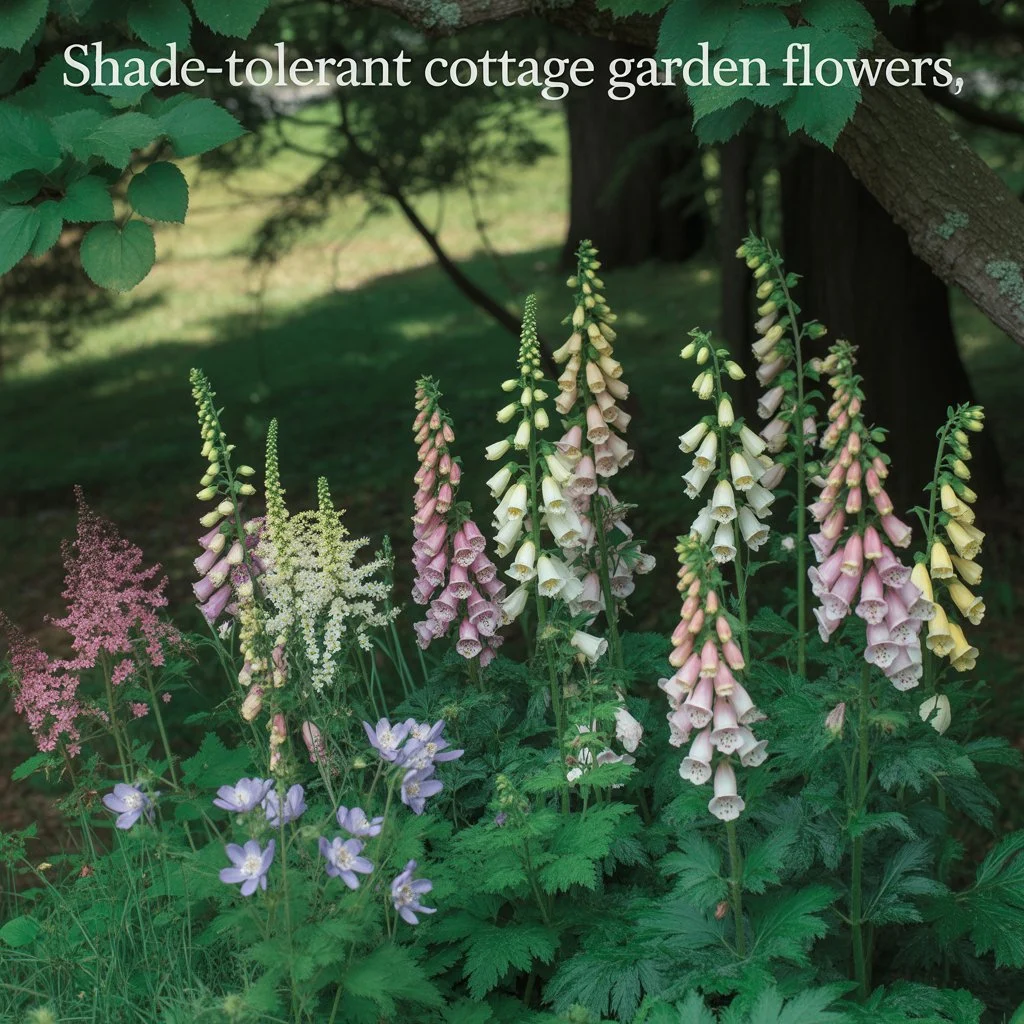
Shade-tolerant cottage garden flowers are the heart of the woodland cottage front yard, bringing the romantic flowering character of a cottage garden to the shaded conditions of a woodland setting. I plant shade-tolerant cottage flowers generously in every woodland cottage front yard, because these plants provide the romantic, abundant flowering that defines cottage charm while thriving in the dappled shade of a front yard beneath trees, bridging the two styles perfectly.
Cottage Flowers for Shade
Digitalis purpurea, Astilbe, and Aquilegia are three shade-tolerant cottage flowers suited to a woodland front yard. Digitalis purpurea, foxglove, produces tall romantic flower spikes in partial shade and self-seeds to colonize the front yard with cottage charm. Astilbe produces feathery plumes in moist shade for soft cottage colour. Aquilegia, columbine, produces delicate nodding flowers in dappled shade and self-seeds freely for an informal cottage effect.
Creating Flowering Abundance
Self-seeding plants, layered flowering, and generous planting are three approaches suited to creating flowering abundance. Self-seeding plants like foxgloves and aquilegia spread to create the full, informal cottage look. Layered flowering across the seasons provides continuous cottage colour. Generous planting that fills the beds creates the abundant, spilling character of a charming cottage front yard.
Ferns and Foliage for Woodland Structure
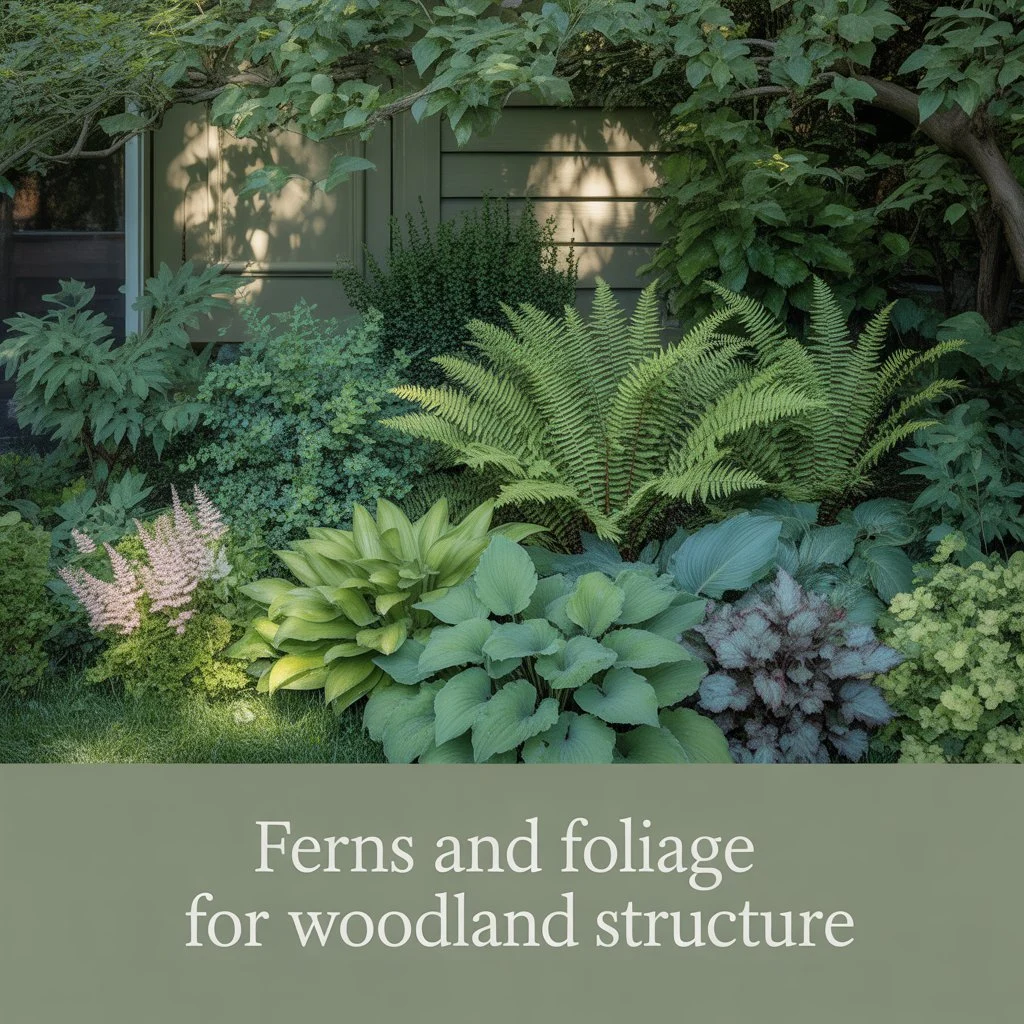
Ferns and foliage for woodland structure provide the lush green framework that gives the cottage flowers their naturalistic woodland setting, creating depth, texture, and year-round structure in the front yard. I plant ferns and foliage as the structural backbone of every woodland cottage front yard, because they provide the green woodland framework that makes the cottage flowers feel like part of a naturalistic woodland rather than a conventional flower bed, and they hold the planting together when the flowers fade.
Ferns for a Cottage Front Yard
Dryopteris filix-mas, Polystichum setiferum, and Athyrium filix-femina are three ferns suited to a woodland cottage front yard. Dryopteris filix-mas provides robust arching fronds tolerating the dry shade of a front yard beneath trees. Polystichum setiferum is semi-evergreen, providing winter structure when the cottage flowers have died back. Athyrium filix-femina provides delicate fronds that soften the planting with fine woodland texture.
Foliage Plants for Structure
Hosta sieboldiana, Heuchera, and Brunnera are three foliage plants suited to a woodland cottage front yard. Hosta sieboldiana provides bold leaves that anchor the planting with architectural presence. Heuchera provides colourful foliage in shades that complement the cottage flowers. Brunnera provides heart-shaped leaves and sprays of blue spring flowers, bridging foliage structure and cottage charm.
A Winding Path to the Front Door
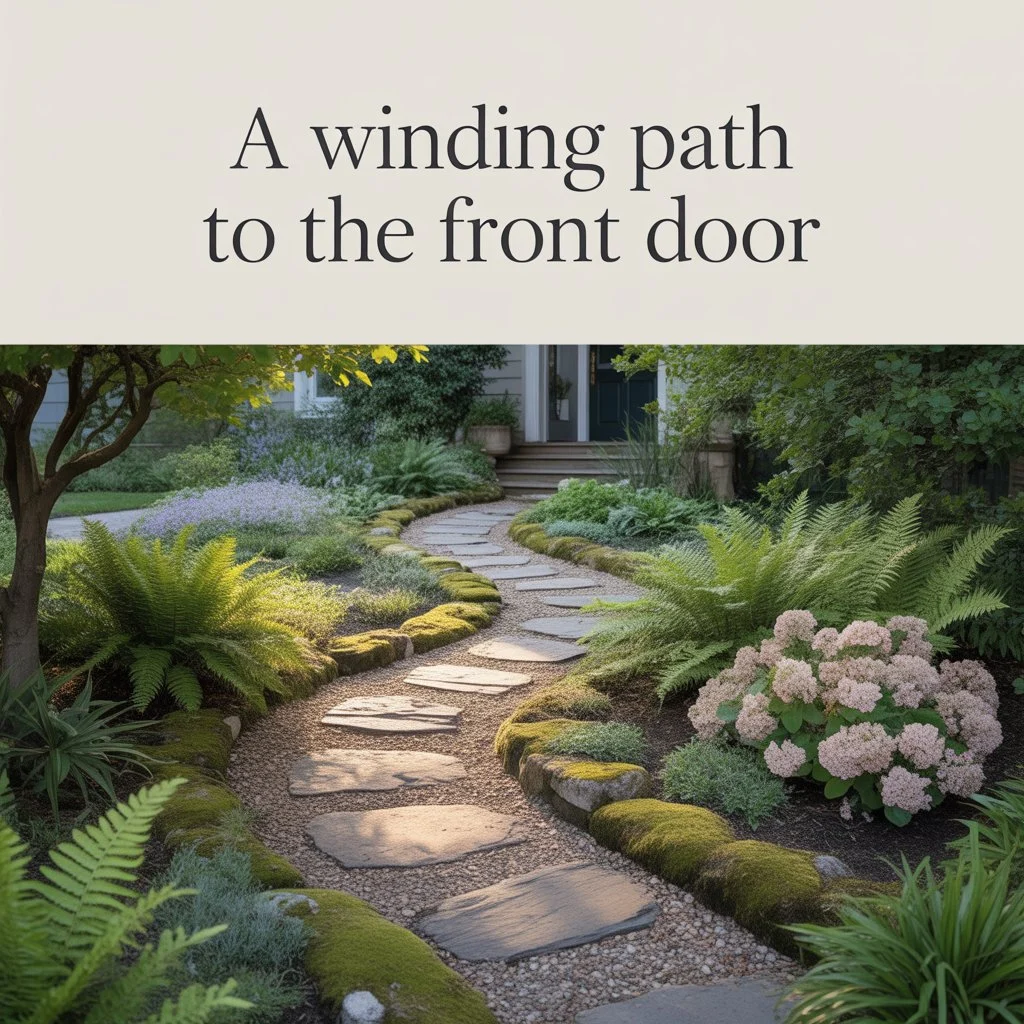
A winding path to the front door is one of the most charming and important elements of a woodland cottage front yard, replacing a straight, functional route with a curving path that invites visitors through the garden and creates a sense of journey to the door. I always design a winding path in place of a straight one, because a curving route through the planting transforms the approach to the front door from a functional walkway into a charming garden journey, which is central to the cottage character.
Path Materials for Cottage Charm
Natural stone, brick, and gravel are three path materials suited to a woodland cottage front yard. Natural stone paving provides a characterful, naturalistic path that suits both the woodland and cottage styles. Brick provides a warm, traditional cottage path that ages beautifully. Gravel provides an informal, affordable path surface with cottage character and the gentle crunch underfoot that adds to the charm.
Designing a Charming Path Route
A gentle curve, planting that spills over, and a welcoming approach are three principles suited to a charming path route. A gentle curve rather than a straight line creates the cottage sense of journey to the door. Planting that spills over the path edges softens it and creates the abundant cottage feel. A welcoming approach that draws the visitor through the garden to the door completes the charming front yard journey.
Small Ornamental Trees for the Front Yard
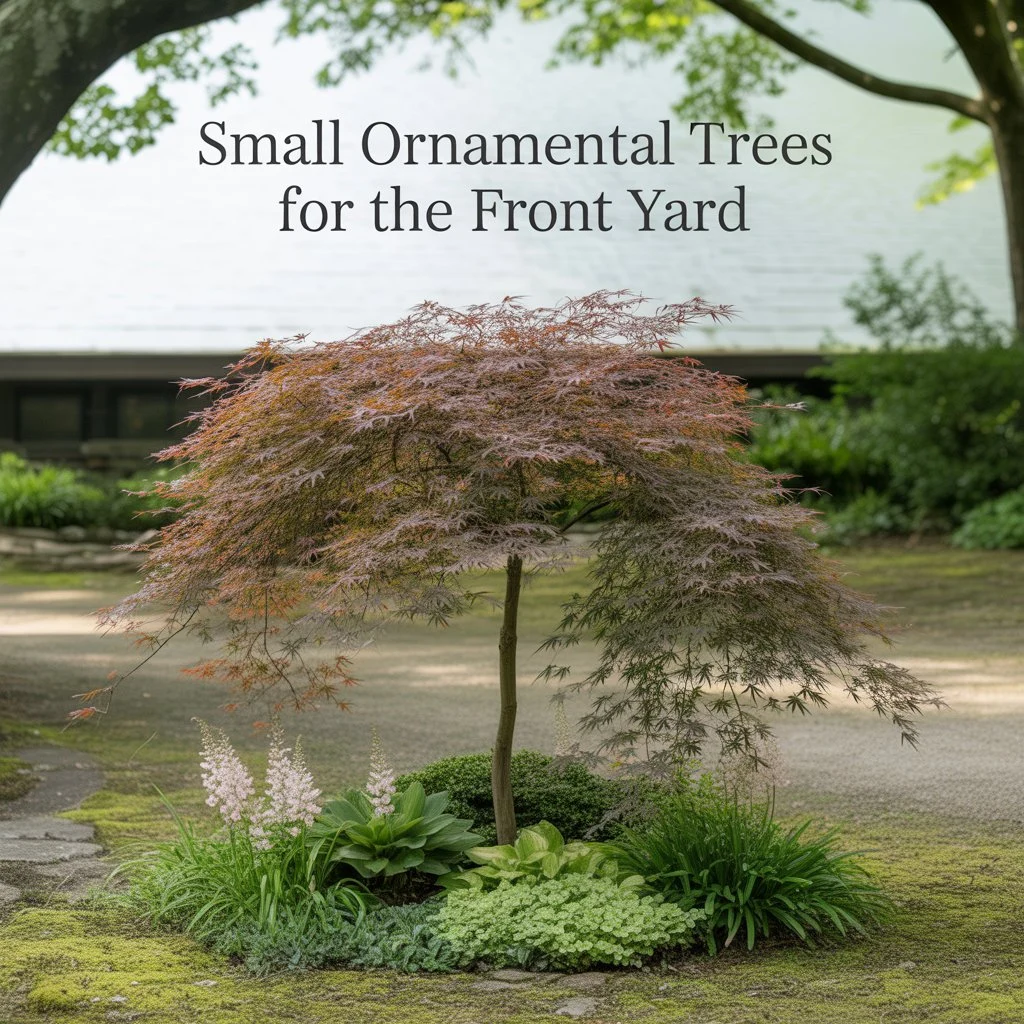
Small ornamental trees for the front yard provide the canopy and dappled shade that define the woodland setting while remaining appropriately scaled for a front garden, creating the overhead structure beneath which the cottage planting thrives. I plant or work with small ornamental trees in woodland cottage front yards, because a well-chosen small tree provides the essential woodland canopy and dappled shade at a scale suited to a front yard, creating both the conditions and the structure for the woodland cottage style.
Small Trees for a Cottage Front Yard
Acer palmatum, Amelanchier, and Cornus are three small ornamental trees suited to a woodland cottage front yard. Acer palmatum provides delicate foliage and vivid autumn colour at a scale ideal for a front yard. Amelanchier provides spring blossom, autumn colour, and berries for wildlife in a compact form. Cornus provides spring flowers and attractive form, offering seasonal cottage charm as a small front-yard tree.
Placing Trees in a Front Yard
Appropriate scale, dappled shade, and a framing position are three considerations suited to placing front-yard trees. Appropriate scale ensures the tree suits the front yard without overwhelming it or the house. Dappled shade from a light canopy provides the woodland conditions while allowing enough light for the cottage flowers. A framing position that enhances the house and frames the approach makes the tree an asset to the curb appeal.
Layering Planting for Naturalistic Abundance
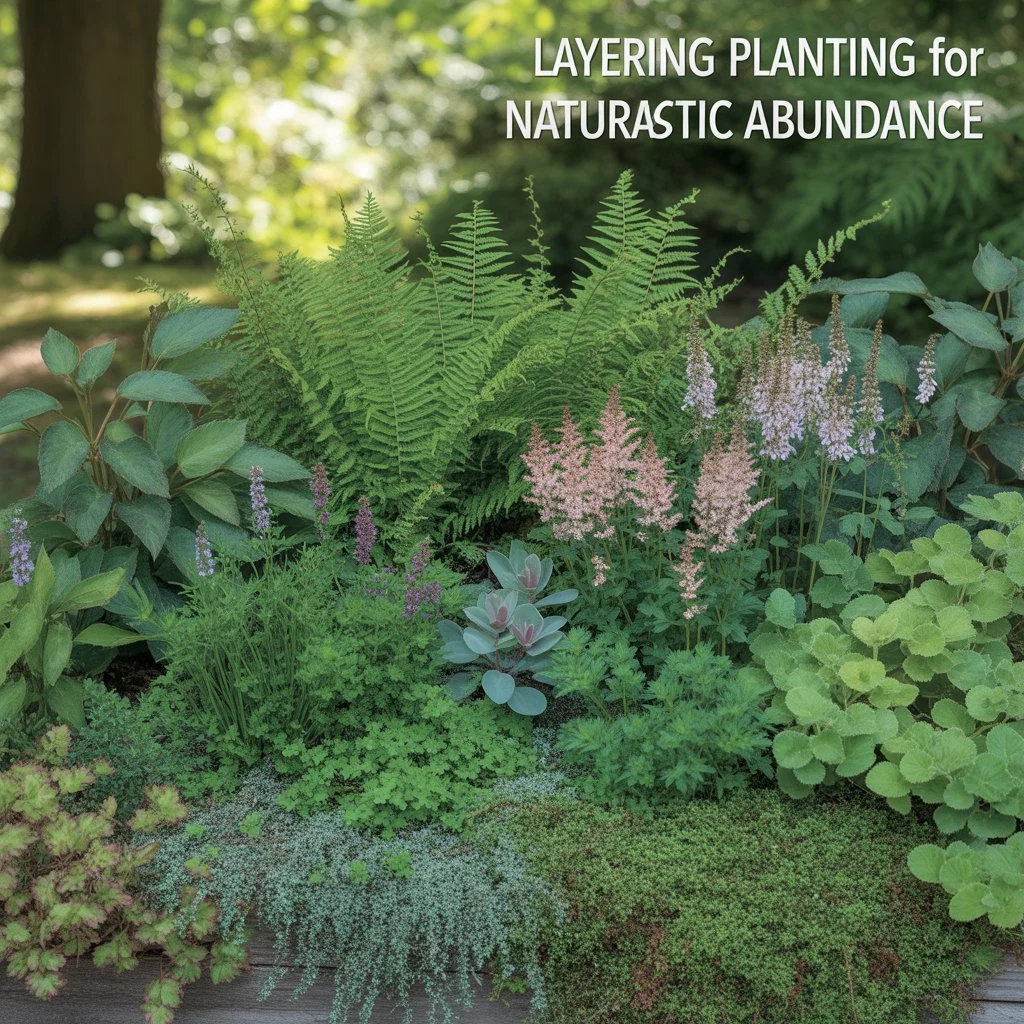
Layering planting for naturalistic abundance builds the woodland cottage front yard in the layers of a real woodland, from small trees down through shrubs and perennials to ground cover, creating the depth and abundance that make the front yard feel lush and established. I layer the planting in every woodland cottage front yard, because the depth created by layering from canopy to ground both provides the naturalistic woodland structure and creates the full, abundant cottage effect that gives the front yard its charm.
Building Planting Layers
A small tree canopy, a perennial and shrub layer, and a ground cover layer are three layers suited to a woodland cottage front yard. A small tree canopy provides the overhead woodland structure and dappled shade. A perennial and shrub layer of cottage flowers and foliage provides the main flowering abundance. A ground cover layer beneath fills the floor and suppresses weeds, completing the layered, abundant planting.
Creating Abundance and Depth
Dense planting, varied heights, and seasonal succession are three approaches suited to creating abundance and depth. Dense planting that fills the space creates the full cottage abundance. Varied heights through the layers build the naturalistic woodland depth. Seasonal succession of flowering ensures the front yard remains abundant and charming through the seasons.
Self-Seeding Plants for Informal Cottage Character
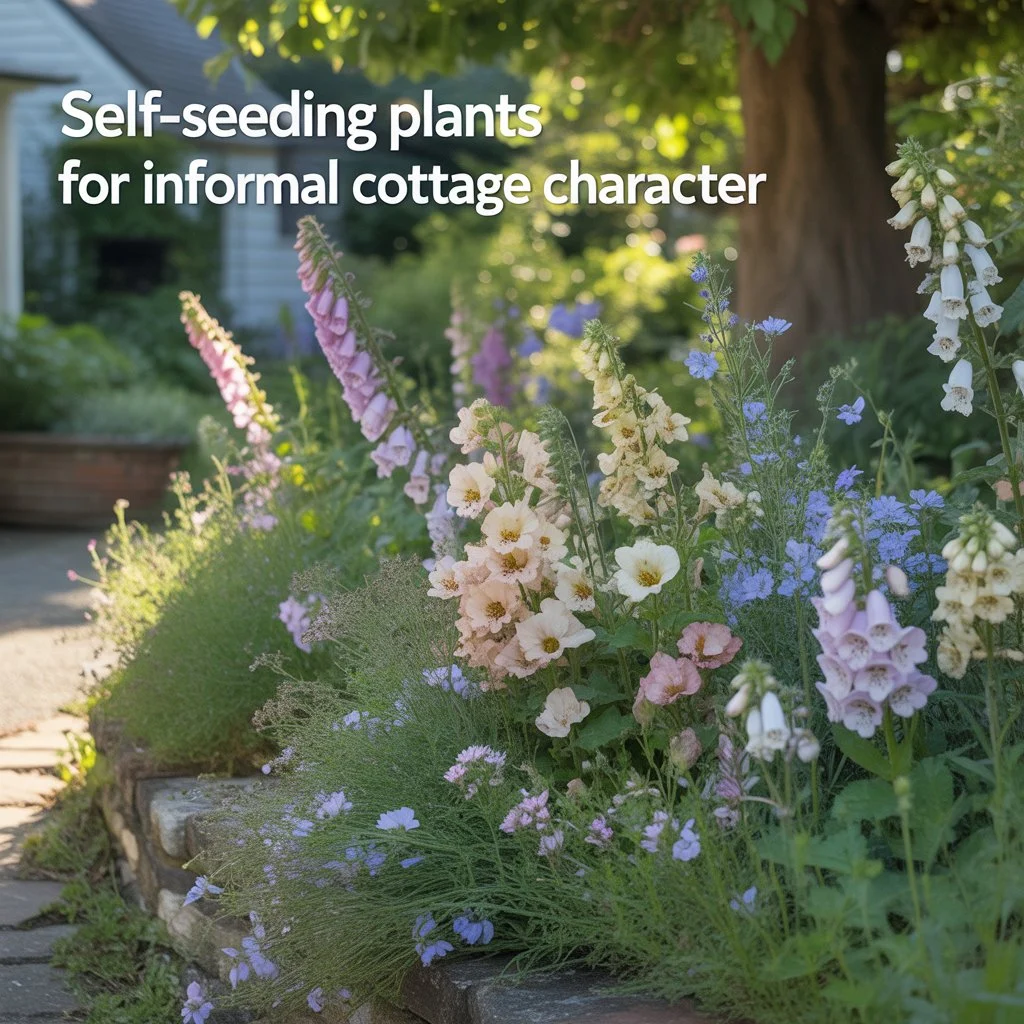
Self-seeding plants for informal cottage character allow the front yard to spread, fill, and evolve naturally, creating the relaxed, abundant informality that is central to genuine cottage charm. I encourage self-seeding in every woodland cottage front yard, because plants that seed themselves around create the spontaneous, unstructured abundance that defines the cottage style, filling gaps and softening edges in a way that deliberate planting alone never achieves.
Self-Seeding Cottage Plants
Digitalis purpurea, Aquilegia, and Myosotis are three self-seeding plants suited to a woodland cottage front yard. Digitalis purpurea, foxglove, self-seeds to produce its romantic spires throughout the front yard year after year. Aquilegia self-seeds freely, scattering its delicate flowers informally through the planting. Myosotis, forget-me-not, self-seeds to create drifts of blue that fill the spring front yard with cottage charm.
Managing Self-Seeding Plants
Allowing spread, selective editing, and embracing informality are three approaches suited to managing self-seeding plants. Allowing the plants to spread creates the informal cottage abundance. Selective editing, keeping the desirable seedlings and removing the unwanted, gently guides the display. Embracing the informality and natural untidiness of self-seeding is essential to achieving authentic cottage charm rather than rigid control.
Small Woodland Cottage Front Yards
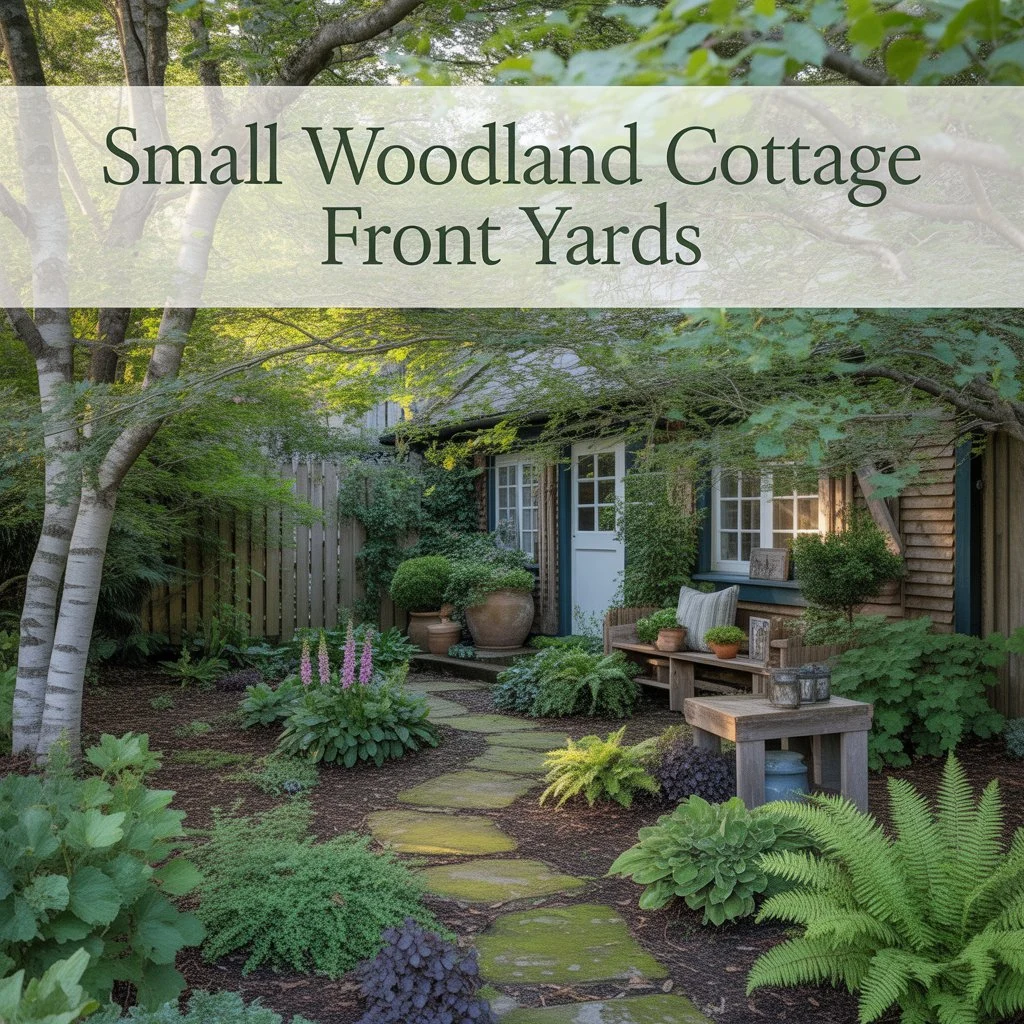
Small woodland cottage front yards bring the charming woodland cottage style to compact front gardens, proving that even a small street-facing plot can become an enchanting woodland cottage garden. I have created woodland cottage front yards in very small spaces, because the abundance and charm of the style suit a small front yard beautifully, with dense layered planting and a winding path making even a compact plot feel like an enchanting cottage garden.
Designing a Small Cottage Front Yard
A single small tree, dense layered planting, and a compact winding path are three approaches suited to a small woodland cottage front yard. A single small ornamental tree provides the woodland canopy in a compact space. Dense layered planting fills the small yard with cottage abundance. A compact winding path creates the cottage journey to the door even in a limited area.
Maximizing a Small Front Yard
Vertical layering, abundant planting, and a focal approach are three techniques suited to maximizing a small front yard. Vertical layering uses height to create depth in a limited ground area. Abundant planting that fills the space creates the full cottage charm. A focal approach to the door draws the eye and creates a welcoming journey in the small front yard.
Simple Woodland Cottage Front Yard Ideas
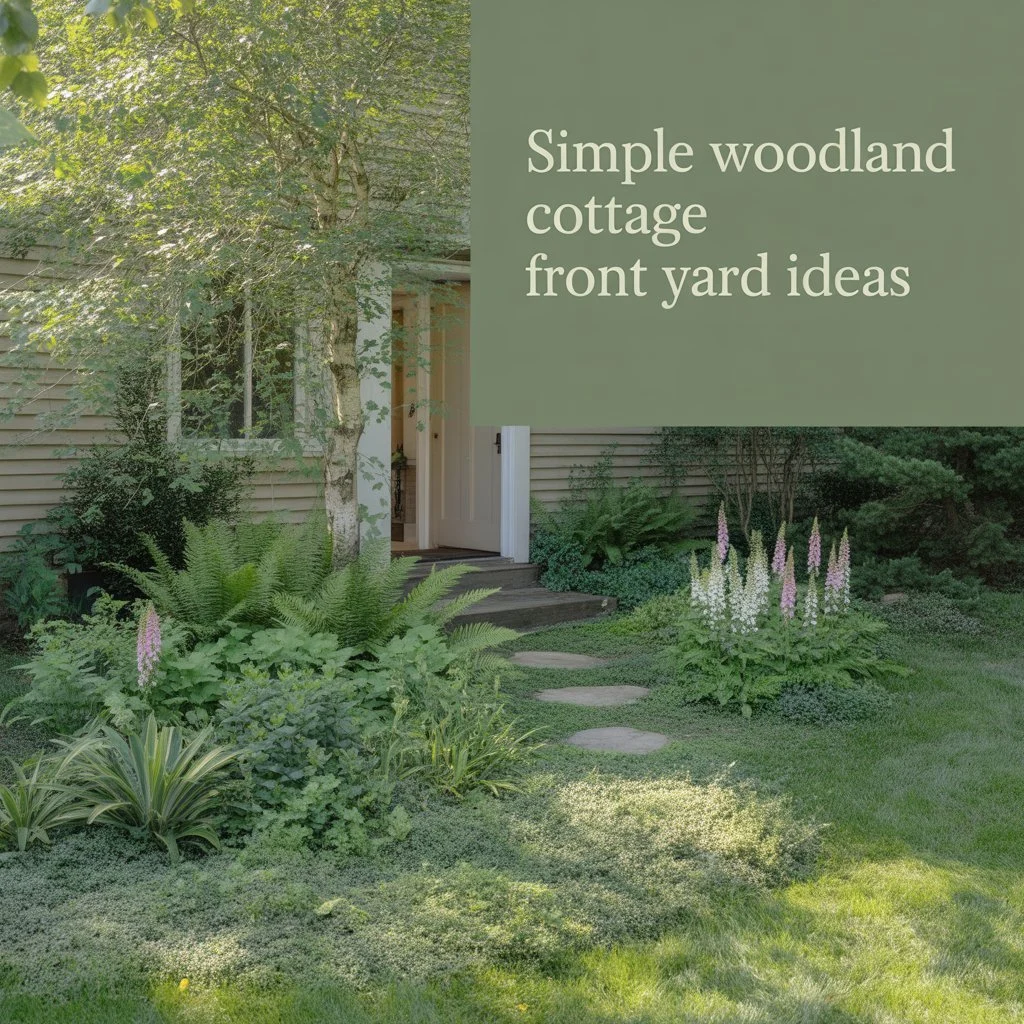
Simple woodland cottage front yard ideas achieve the charming woodland cottage look through straightforward, achievable design and planting, proving that the style does not require complexity or expense to be beautiful. I often create simple woodland cottage front yards, because the charm of the style comes from abundant naturalistic planting rather than elaborate features, so a simple combination of a small tree, layered cottage planting, and a winding path achieves the full enchanting effect with ease.
Simple Design Elements
A small tree, a few key plants, and a winding path are three simple elements suited to a woodland cottage front yard. A small tree provides the woodland canopy and structure. A few key cottage plants repeated through the beds provide the flowering charm without complexity. A winding path creates the cottage journey, together forming a complete charming front yard from simple elements.
Achieving Charm Simply
Reliable plants, generous planting, and natural informality are three approaches suited to achieving charm simply. Reliable shade-tolerant cottage plants ensure success without difficulty. Generous planting that fills the space creates abundance from simple means. Natural informality, embracing the relaxed cottage character, achieves charm without elaborate design or maintenance.
Curb Appeal and Street Presence
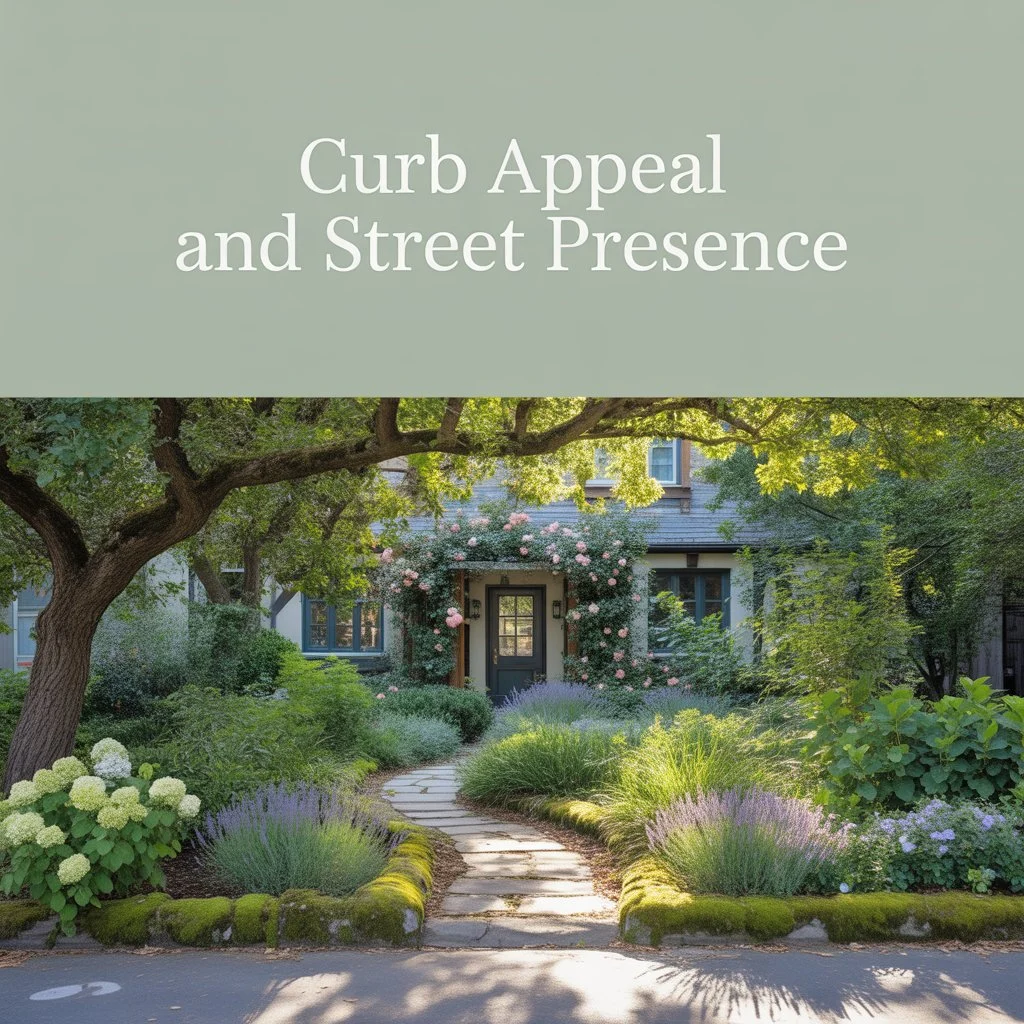
Curb appeal and street presence are central goals of a woodland cottage front yard, creating a charming, characterful, welcoming face that the house presents to the street and enhances the whole property. I always design woodland cottage front yards with curb appeal in mind, because the front yard is the publicly visible face of the home, and a charming woodland cottage garden creates a memorable, welcoming street presence that transforms how the whole property is perceived.
Creating Strong Curb Appeal
A welcoming entrance, abundant planting, and a charming focal point are three elements suited to strong curb appeal. A welcoming entrance with a charming path and softened approach invites visitors and pleases passers-by. Abundant planting that fills the front yard creates the lush, appealing character. A charming focal point, such as a small tree or a flowering specimen, anchors the street presence.
Enhancing the Whole Property
Framing the house, a cohesive style, and seasonal interest are three approaches suited to enhancing the property. Framing the house with planting that complements its architecture enhances the whole frontage. A cohesive woodland cottage style creates a unified, characterful presence. Seasonal interest that keeps the front yard charming year-round maintains the curb appeal through every season.
Seasonal Interest in a Cottage Front Yard
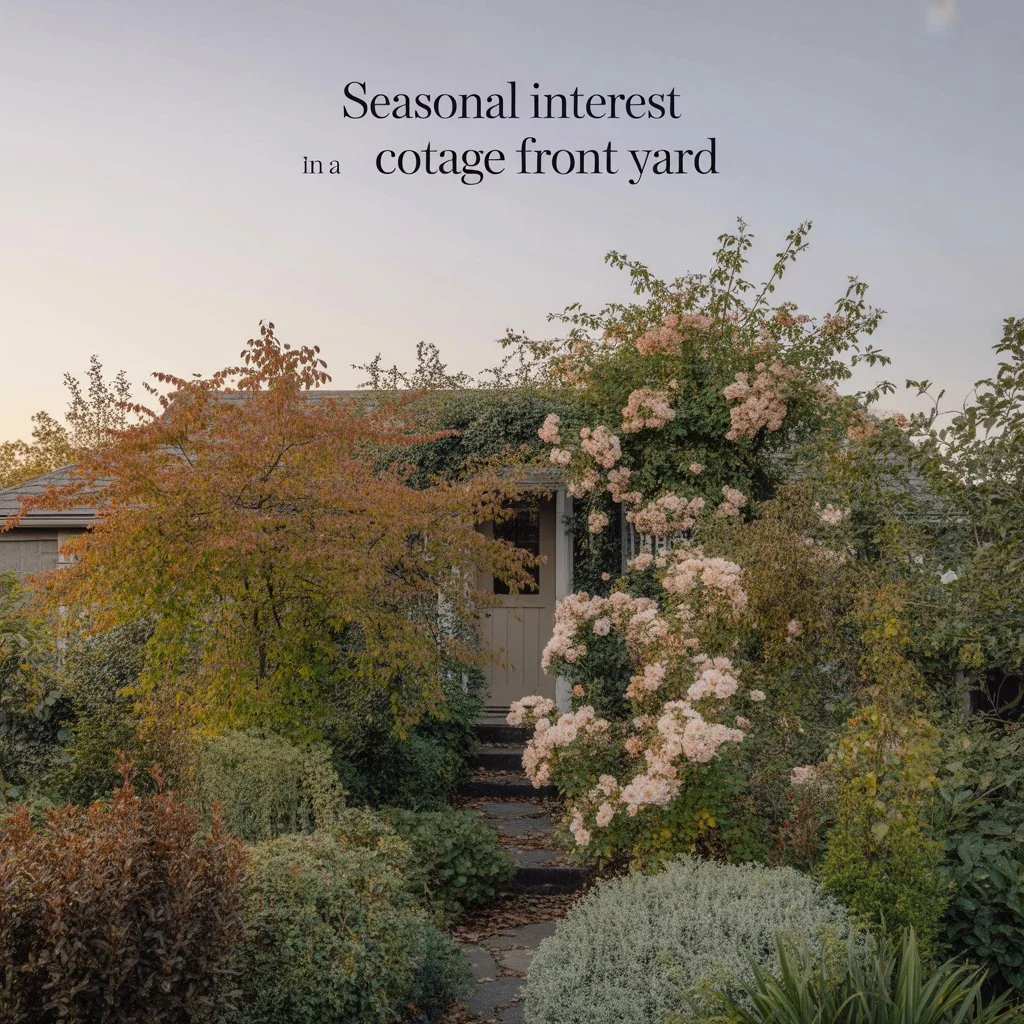
Seasonal interest in a cottage front yard ensures the woodland cottage garden remains charming and welcoming throughout the year, using a succession of flowering and foliage to provide changing beauty in every season. I design woodland cottage front yards for year-round interest, because the front yard is always on view, so a succession of spring bulbs, summer cottage flowers, autumn colour, and winter structure ensures the charming street presence is maintained through every season.
Seasonal Highlights for a Front Yard
Spring bulbs and blossom, summer cottage flowers, and autumn colour are three seasonal highlights suited to a cottage front yard. Spring bulbs and tree blossom provide early charm as the garden wakes. Summer cottage flowers like foxgloves and astilbe provide the peak flowering abundance. Autumn colour from trees and foliage provides seasonal beauty before winter.
Maintaining Year-Round Charm
Evergreen structure, winter interest, and continuous succession are three approaches suited to year-round charm. Evergreen ferns and foliage maintain green structure in winter. Winter interest from tree form, berries, and evergreen planting keeps the front yard appealing in the quietest season. Continuous succession of flowering and foliage ensures the front yard remains charming and welcoming throughout the year.
Cottage Garden Edging and Borders
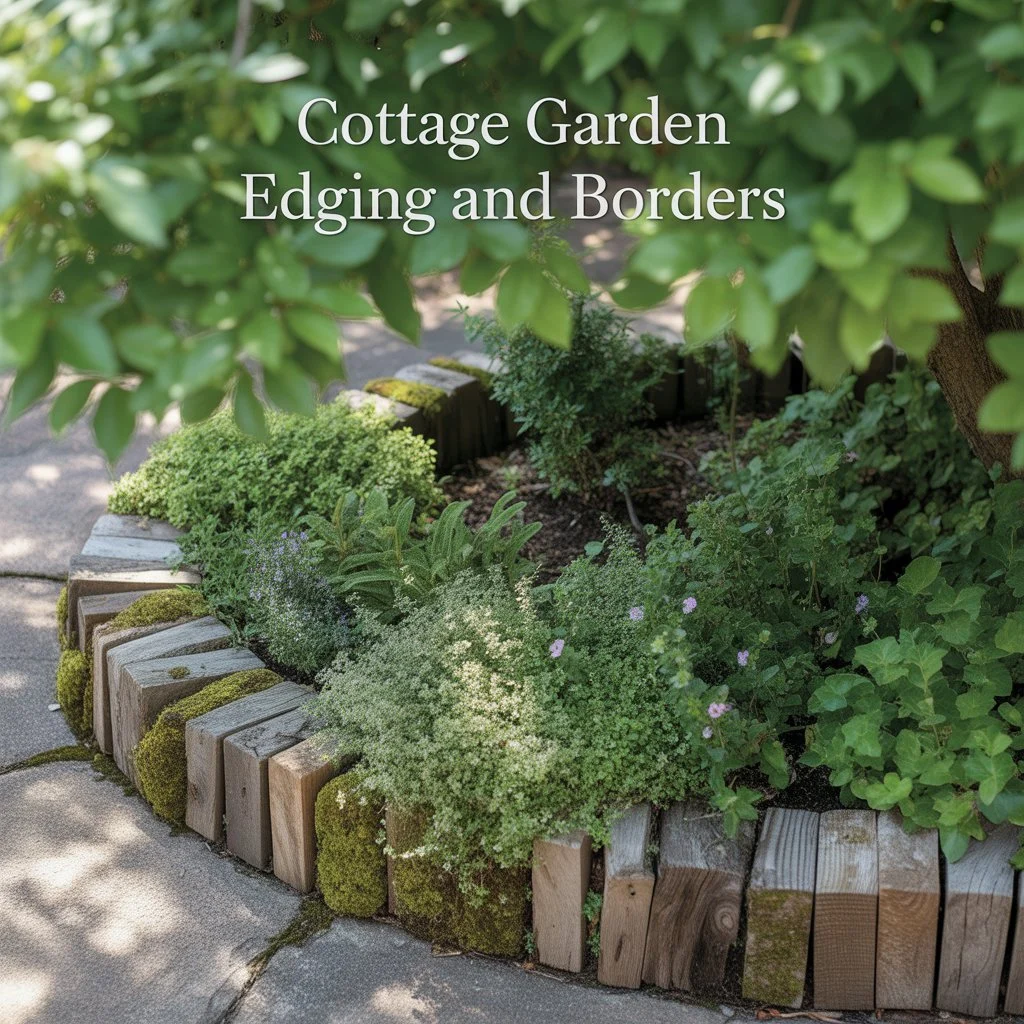
Cottage garden edging and borders define the planting beds and path edges with charming, naturalistic materials that enhance the cottage character of the woodland front yard. I use characterful edging in woodland cottage front yards, because the right edging both defines the informal beds and adds to the cottage charm, framing the abundant planting with a naturalistic edge that suits the relaxed woodland cottage style.
Edging Materials for Cottage Charm
Natural stone, rustic timber, and woven willow are three edging materials suited to a woodland cottage front yard. Natural stone edging provides a characterful, naturalistic border that suits both styles. Rustic timber edging provides a warm, informal cottage edge. Woven willow or hazel edging provides a traditional cottage character that frames the beds with rustic charm.
Designing Informal Borders
Flowing bed shapes, plants spilling over edges, and soft transitions are three principles suited to informal cottage borders. Flowing, curving bed shapes read as naturalistic and charming. Plants spilling over the edges soften the borders and create the abundant cottage feel. Soft transitions between path and planting blur the edges for the relaxed informality of a cottage garden.
Adding Cottage Charm With Accessories
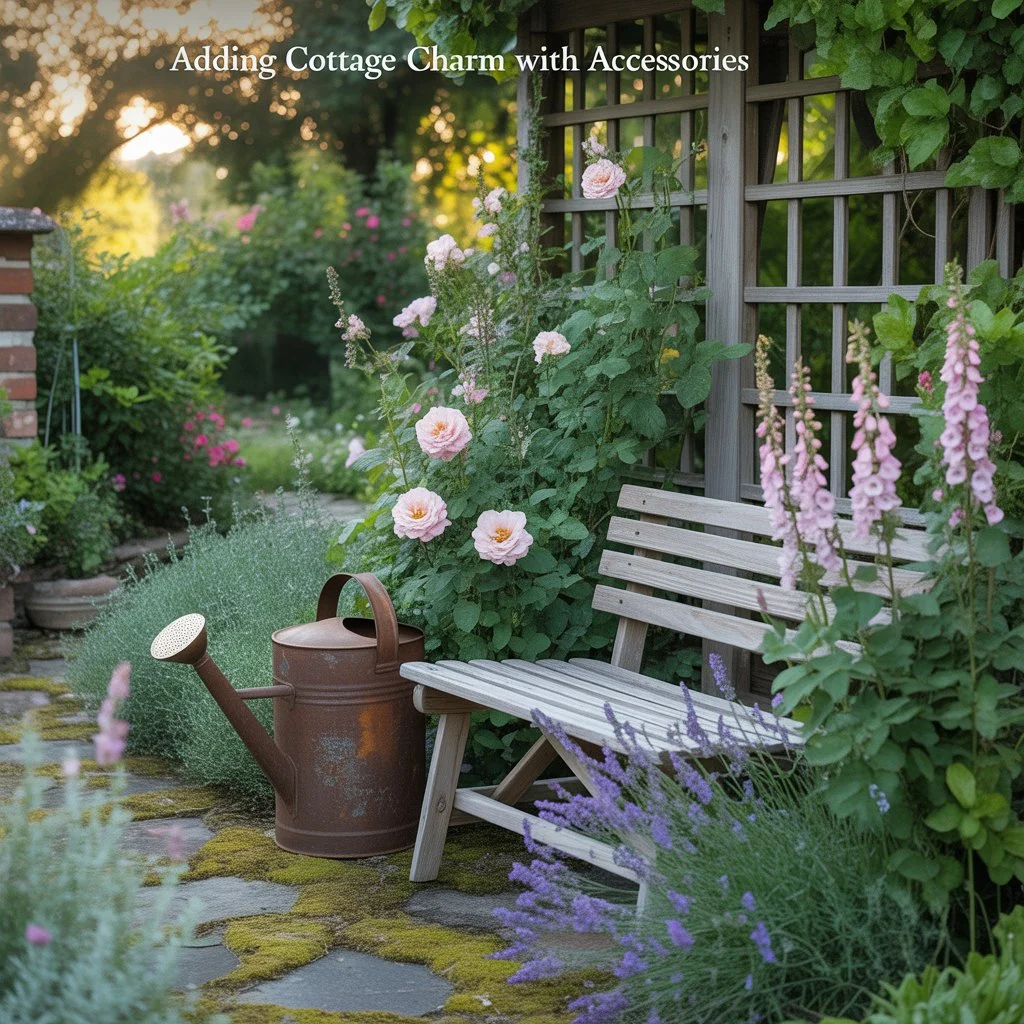
Adding cottage charm with accessories introduces characterful features and details that enhance the cottage personality of the woodland front yard, from rustic containers to charming garden ornaments. I add carefully chosen accessories to woodland cottage front yards, because the right characterful details enhance the cottage charm and add personality, layering the romantic, lived-in quality that makes a cottage front yard feel welcoming and full of character.
Charming Cottage Accessories
Rustic containers, a characterful gate, and vintage garden features are three accessories suited to a woodland cottage front yard. Rustic containers planted with shade-tolerant flowers add cottage charm at the entrance. A characterful gate provides a charming threshold to the front garden. Vintage garden features, used sparingly, add personality and the lived-in cottage character.
Using Accessories With Restraint
Selective placement, complementary character, and avoiding clutter are three principles suited to using accessories. Selective placement of a few well-chosen pieces creates charm without clutter. Complementary character that suits the woodland cottage style ensures the accessories enhance rather than detract. Avoiding clutter keeps the focus on the planting, which should always be the heart of the charming front yard.
Low-Maintenance Woodland Cottage Front Yards
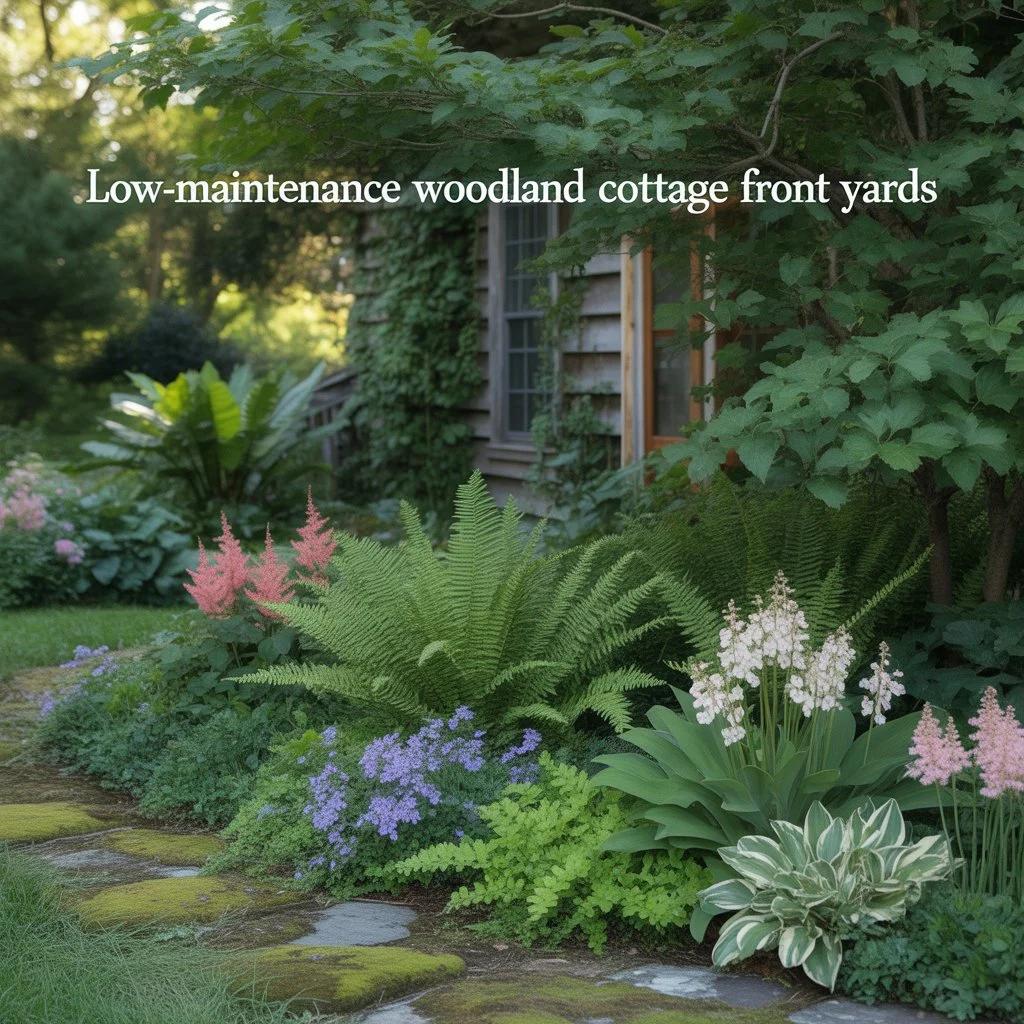
Low-maintenance woodland cottage front yards combine the charm of the style with practical, easy-care planting and design, creating a beautiful front yard that does not demand constant attention. I design woodland cottage front yards for low maintenance, because the naturalistic, self-seeding, shade-tolerant planting of the style is inherently easy-care, with dense ground cover suppressing weeds and self-sustaining plants reducing the work while maintaining the charming abundance.
Why the Style Is Low-Maintenance
Self-seeding plants, dense ground cover, and tough shade-tolerant species are three reasons the style is low-maintenance. Self-seeding plants renew and spread themselves without replanting. Dense ground cover suppresses weeds across the front yard. Tough shade-tolerant species suited to the conditions thrive with little intervention, keeping the charming front yard easy to maintain.
Low-Maintenance Planting Choices
Hardy ferns, self-seeding cottage flowers, and spreading ground cover are three low-maintenance plantings suited to a woodland cottage front yard. Hardy ferns provide self-sustaining structure with minimal care. Self-seeding cottage flowers like foxgloves renew themselves each year. Spreading ground cover provides weed-suppressing cover, together creating a charming front yard that largely looks after itself.
Establishing a Woodland Cottage Front Yard
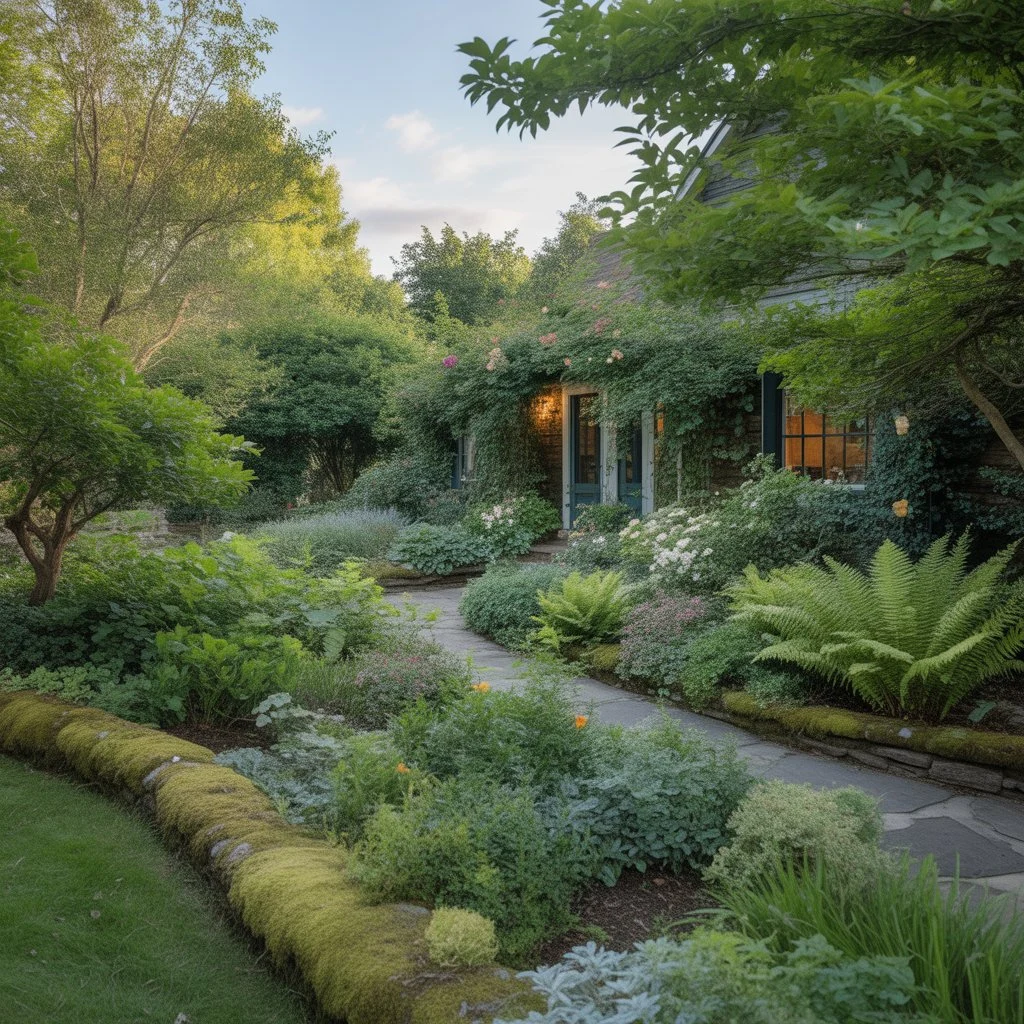
Establishing a woodland cottage front yard involves the initial planting and a couple of seasons of development as the layered planting fills in and the self-seeding plants establish their charming abundance. I set clear expectations for establishing a woodland cottage front yard, because the full charm of the style develops as the planting matures and the self-seeders spread, rewarding a little patience with an increasingly abundant and enchanting front garden.
Stages of Establishment
Initial planting, first-season growth, and developing abundance are three stages suited to establishing a woodland cottage front yard. Initial planting of the layered scheme sets the structure and framework. First-season growth begins to fill the beds as the plants establish. Developing abundance over the following seasons, as plants spread and self-seed, builds the full charming cottage effect.
Guiding the Garden as It Matures
Allowing self-seeding, gentle editing, and patient development are three approaches suited to guiding the maturing garden. Allowing self-seeding lets the cottage abundance develop naturally. Gentle editing guides the spreading plants without imposing rigid control. Patient development, allowing the front yard time to fill and mature, achieves the enchanting woodland cottage charm that makes the style so rewarding.
Frequently Asked Questions
How do I create a woodland cottage garden in my front yard?
You create a woodland cottage garden in your front yard by combining the lush shade planting of a woodland garden with the romantic, abundant flowering of a cottage garden, beneath a small ornamental tree and along a winding path to the door. Begin by working with or planting a small tree to provide the woodland canopy and dappled shade, replace any straight path with a curving route that creates a sense of journey, and pack the beds with shade-tolerant cottage flowers like foxgloves, astilbe, and aquilegia layered with ferns and foliage for woodland structure. The key to the charm is abundance and informality, so plant densely, encourage self-seeding plants to spread and fill the space, and embrace a relaxed, naturalistic style rather than rigid control, which together transform a shaded front yard into an enchanting woodland cottage garden with genuine curb appeal.
What cottage flowers grow in a shady front yard?
The best cottage flowers for a shady front yard are shade-tolerant species that provide the romantic flowering character of a cottage garden while thriving in dappled shade, including foxgloves, astilbe, aquilegia, brunnera, and forget-me-nots. Digitalis purpurea, the foxglove, is especially valuable since it produces tall romantic spires in partial shade and self-seeds to colonize the front yard year after year, while astilbe provides feathery plumes in moist shade and aquilegia and forget-me-nots self-seed freely to create informal cottage drifts. Combining these flowering plants with ferns, hostas, and other woodland foliage provides the green structure that makes them feel part of a naturalistic woodland setting, and choosing self-seeding varieties ensures the front yard develops the spontaneous, abundant informality that defines authentic cottage charm in the shade.
Can I have curb appeal in a shady front yard?
You can absolutely have excellent curb appeal in a shady front yard, since the shade that defeats conventional front-garden planting is actually the perfect setting for a charming woodland cottage garden. Rather than struggling to grow sun-loving plants in unsuitable conditions, you embrace the shade with lush ferns, foliage, and shade-tolerant cottage flowers that thrive there, creating an abundant, naturalistic front garden that stands out beautifully from the street. A small ornamental tree, a winding path softened by spilling planting, and dense layered beds of shade-loving cottage flowers create a welcoming, characterful street presence that transforms how the whole property is perceived, proving that a shady front yard, far from being a curb-appeal problem, offers the ideal conditions for one of the most charming and admired front-garden styles.
What small trees suit a woodland cottage front yard?
The best small trees for a woodland cottage front yard provide dappled shade and seasonal charm at a scale suited to a front garden, with Acer palmatum, Amelanchier, and Cornus among the finest choices. Acer palmatum offers delicate foliage and vivid autumn colour in a compact form ideal for a front yard, Amelanchier provides spring blossom, autumn colour, and wildlife-friendly berries, and Cornus offers spring flowers and attractive form for seasonal cottage charm. The key considerations are choosing a tree of appropriate scale that suits the front yard without overwhelming the house, one that casts dappled rather than dense shade so the cottage flowers beneath still receive enough light, and positioning it to frame the house and enhance the approach, so the tree provides both the woodland conditions and a beautiful focal point for the curb appeal.
Is a woodland cottage front yard low-maintenance?
A woodland cottage front yard is genuinely low-maintenance once established, because the naturalistic, self-seeding, shade-tolerant planting that defines the style is inherently easy to care for. Self-seeding cottage flowers like foxgloves and aquilegia renew and spread themselves each year without replanting, dense ground cover and layered planting suppress weeds across the front yard, and tough shade-tolerant species suited to the conditions thrive with little intervention, so the charming abundance largely sustains itself. The relaxed, informal character of the style also means a degree of natural untidiness is not only acceptable but desirable, which removes the pressure of constant tidying, making the woodland cottage front yard one of the most rewarding ways to combine genuine curb appeal with practical low maintenance.