
Yellow Leaves on Geraniums

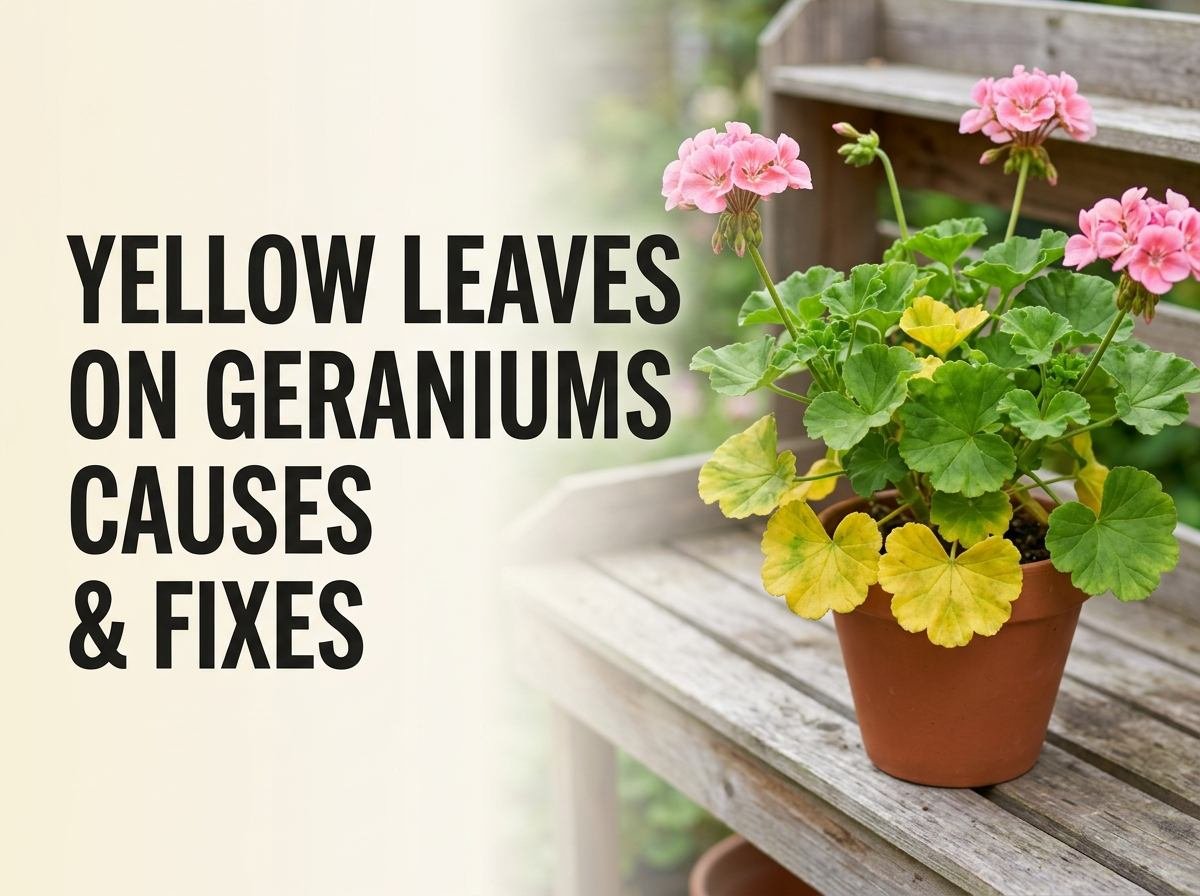
Yellow leaves on geraniums are most often caused by overwatering and poor drainage, though nitrogen deficiency, natural leaf aging, and root-bound pots cause it too. The distinguishing clue is location and pattern: lower leaves yellowing uniformly usually means the plant is shedding old growth or lacks nitrogen, while yellowing with soft, mushy stems points to root rot from excess water. Getting the diagnosis right in the first five minutes saves the plant, because the wrong fix (like more water) accelerates root rot instead of solving it.
Overwatering Is the Number One Cause
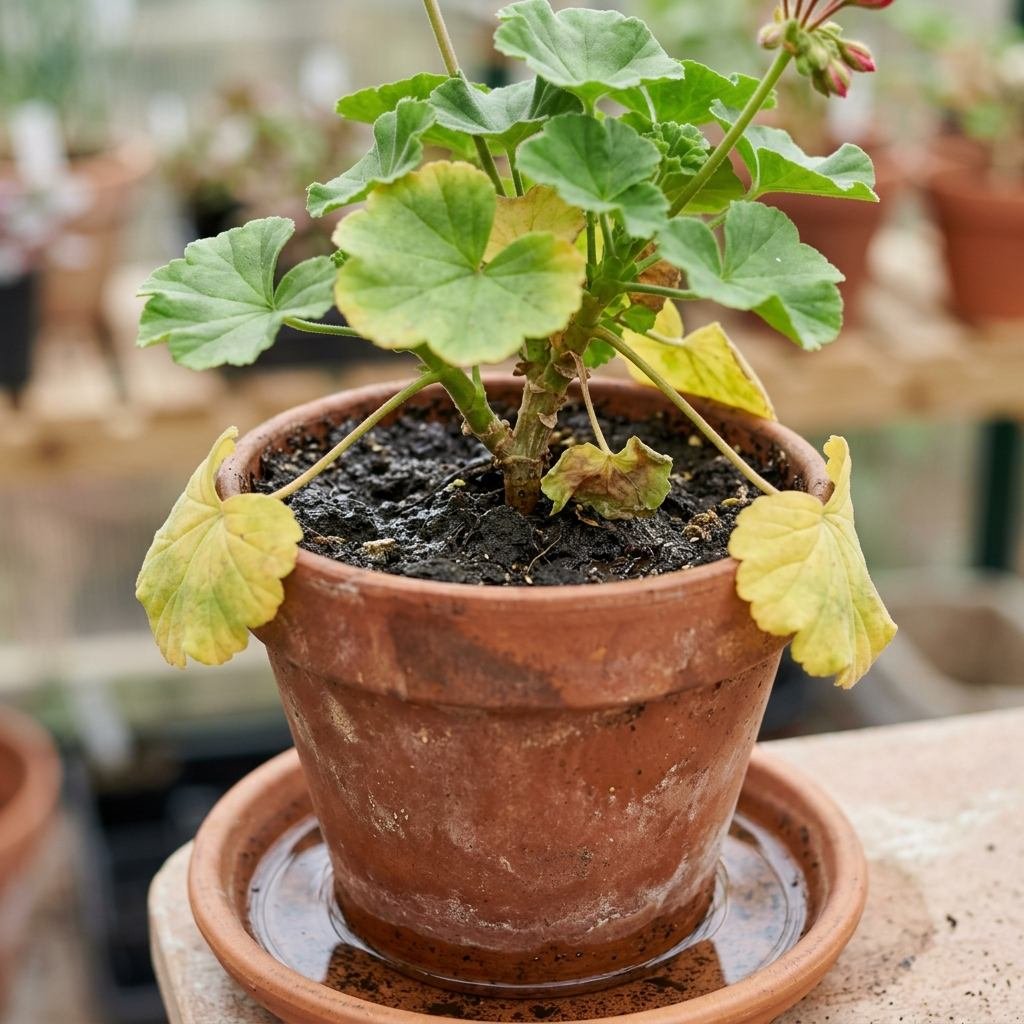
Geraniums (Pelargonium species) evolved in the semi-arid regions of South Africa, which means their roots are genetically wired to handle dry spells far better than wet feet. When soil stays saturated for more than a day or two, oxygen in the root zone drops and roots begin to suffocate and rot, and a plant with damaged roots can’t take up water or nutrients even though the soil is soggy, so it responds by yellowing and dropping leaves in a strange paradox: it looks thirsty while sitting in a swamp. The telltale signs of overwatering specifically are yellow leaves that feel soft or mushy rather than dry and crispy, a sour or musty smell from the soil, and stems that darken or blacken near the soil line. Cut back watering to once every 7-10 days for potted geraniums, and always check that the top 2 inches of soil are dry before watering again. If the pot has no drainage hole, repot immediately into a container with one, because standing water at the bottom of a cachepot or saucer is one of the most common silent killers of geraniums.
Key takeaway: Before doing anything else, stick a finger 2 inches into the soil; if it’s damp, the fix is to stop watering and improve drainage, not add fertilizer or more water.
Natural Aging and Lower-Leaf Shedding
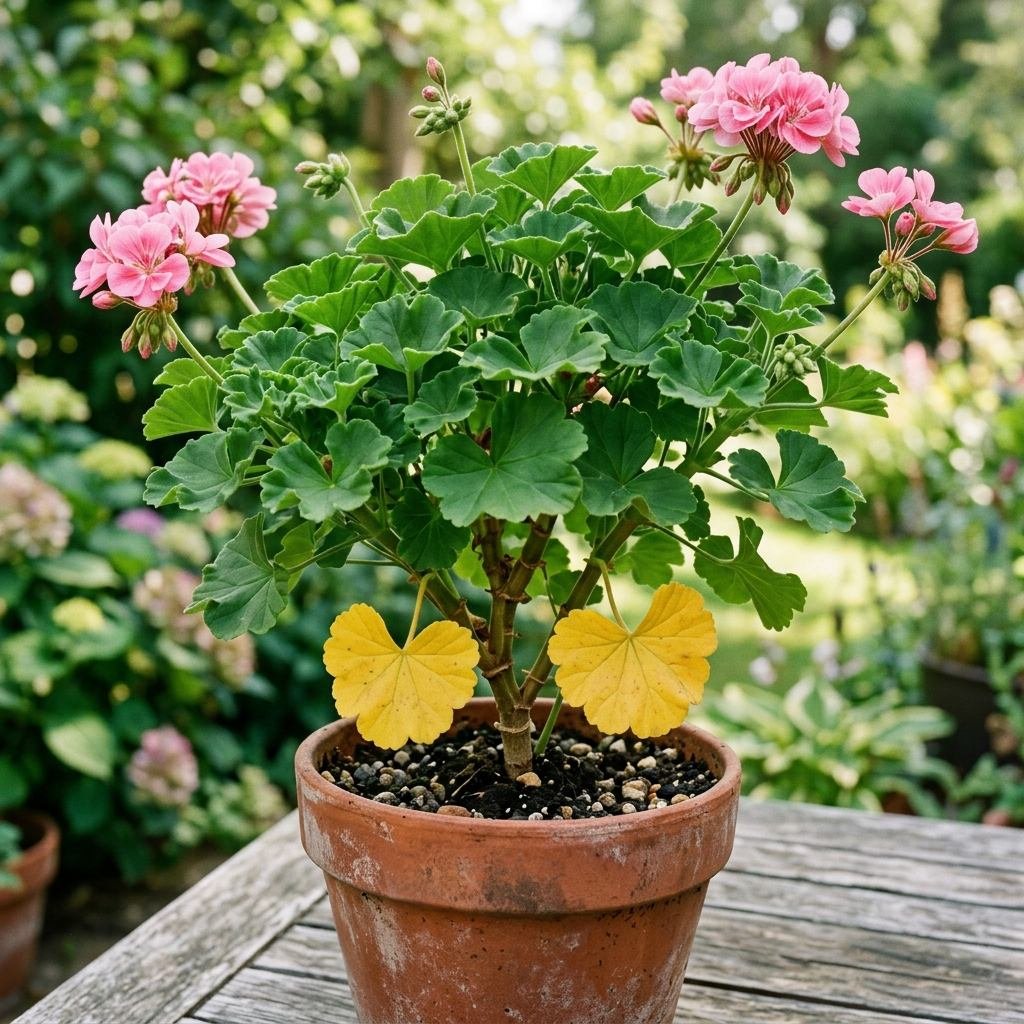
Geraniums continuously produce new leaves at the growing tips while systematically shedding their oldest, lowest leaves, a process that’s completely normal and not a sign of disease. This aging pattern is easy to identify because only the bottom-most, oldest leaves turn yellow (often with a slight reddish tinge first) and the yellowing progresses slowly over a week or two, while the top of the plant continues producing vibrant green growth and new flower buds. Gardeners often panic when they see this and start changing their watering or feeding routine, which can actually create a real problem where none existed. The practical response is simple: pinch or snip off the yellow leaf with clean scissors right where the petiole meets the stem, which also improves airflow and reduces the risk of fungal issues in the lower canopy. Expect to remove two or three of these naturally aging leaves per plant every couple of weeks during active growing season (spring through early fall).
Key takeaway: If only the oldest, lowest leaves are yellowing while new growth looks healthy, this is normal plant maintenance, not a problem to solve.
Nitrogen Deficiency and General Nutrient Lockout
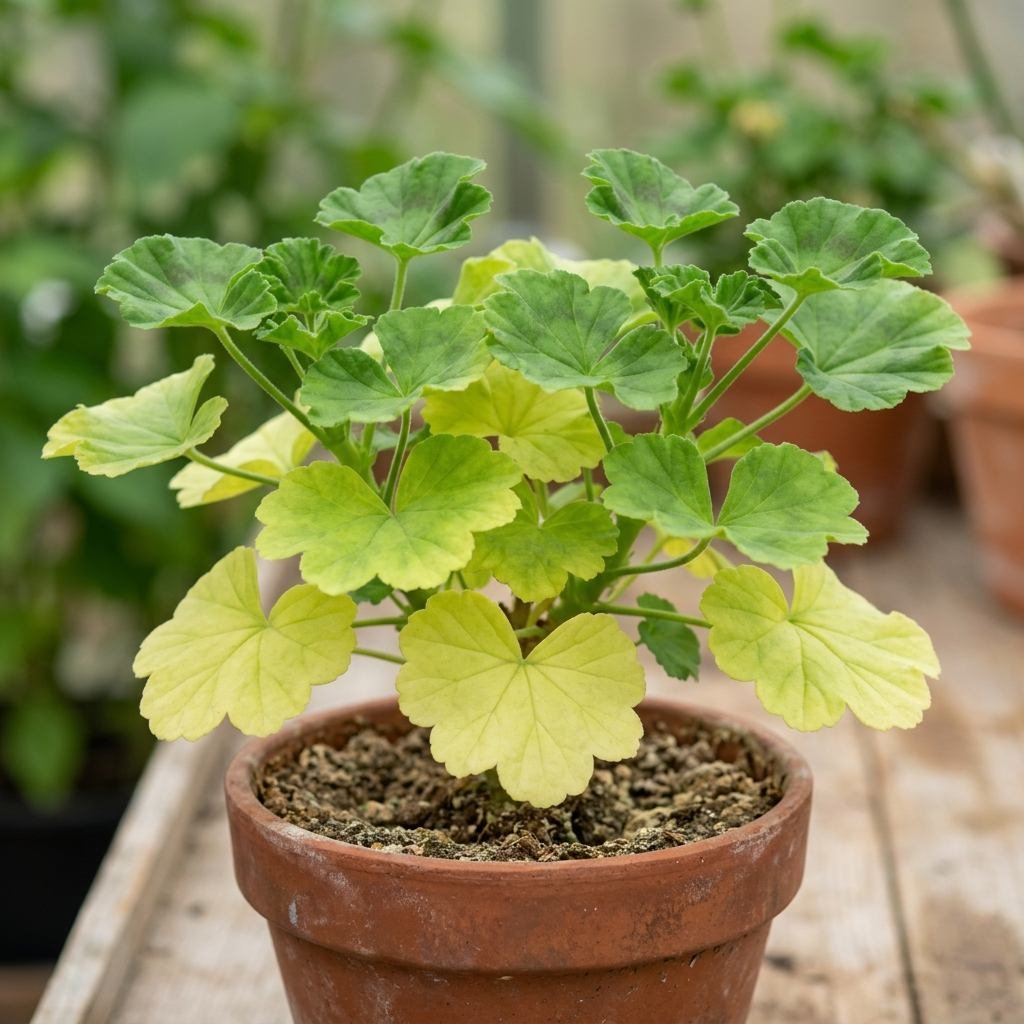
Container-grown geraniums exhaust the nutrients in their potting mix within about 6-8 weeks, and once nitrogen runs low, the plant pulls it from older leaves to support new growth, leaving the older foliage uniformly pale yellow-green rather than vibrant green. This differs from overwatering yellowing because the leaves stay firm and dry, not mushy, and the yellowing tends to be more even across the whole leaf rather than starting at the edges or tips. A balanced water-soluble fertilizer at half strength (something like a 20-20-20 diluted to half the label rate) applied every two weeks during the growing season keeps geraniums supplied. It’s worth noting that geraniums actually bloom best with moderate nitrogen and slightly higher phosphorus and potassium, since too much nitrogen pushes lush leaves at the expense of flowers, so a bloom-booster formula (something like 15-30-15) used every three to four weeks often produces better results than a high-nitrogen all-purpose feed.
Reading the Deficiency Pattern
If yellowing is patchy between the veins while the veins themselves stay green, that’s more likely a magnesium or iron deficiency than straight nitrogen, especially in alkaline soil or hard tap water situations. A diluted Epsom salt drench (1 tablespoon per gallon of water, applied once a month) resolves magnesium-related interveinal yellowing within two to three weeks.
Key takeaway: Firm, dry, evenly yellow older leaves usually mean it’s time to feed, not water.
Root-Bound Plants and Compacted Soil
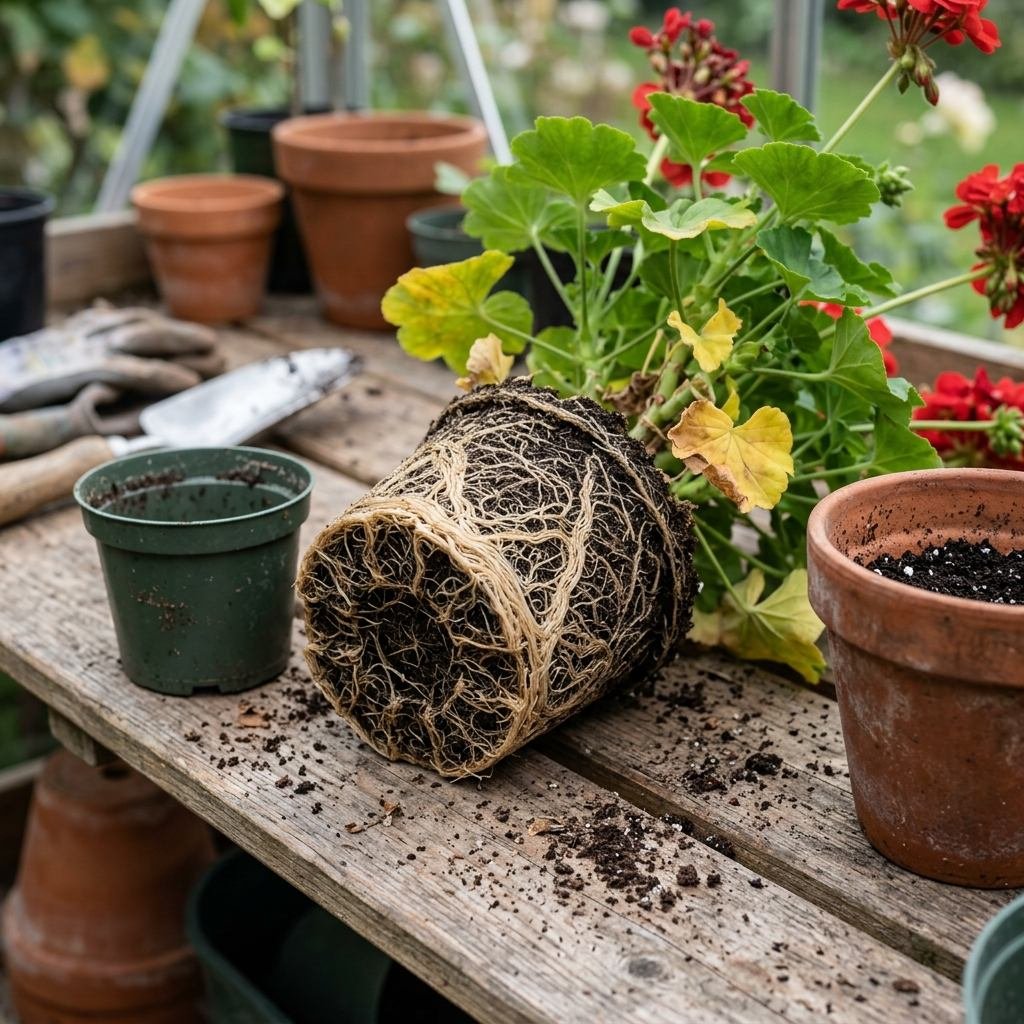
A geranium that has outgrown its pot develops a dense mat of roots that can no longer absorb water or nutrients efficiently, even when watering is done correctly, and the visible symptom is often yellowing combined with stunted new growth and a plant that wilts quickly between waterings. Check for this by gently sliding the plant out of its pot; if you see roots circling densely around the inside edge or growing out of the drainage hole, it’s root-bound. Geraniums generally need repotting every 12-18 months, moving up one pot size (roughly 2 inches in diameter) at a time into fresh, well-draining potting mix. Going too large too fast actually recreates the overwatering problem, because excess soil volume holds moisture the smaller root system can’t use.
Key takeaway: A yellowing geranium that also wilts fast and looks stunted is often crying out for a bigger pot, not more fertilizer.
Fungal and Bacterial Diseases
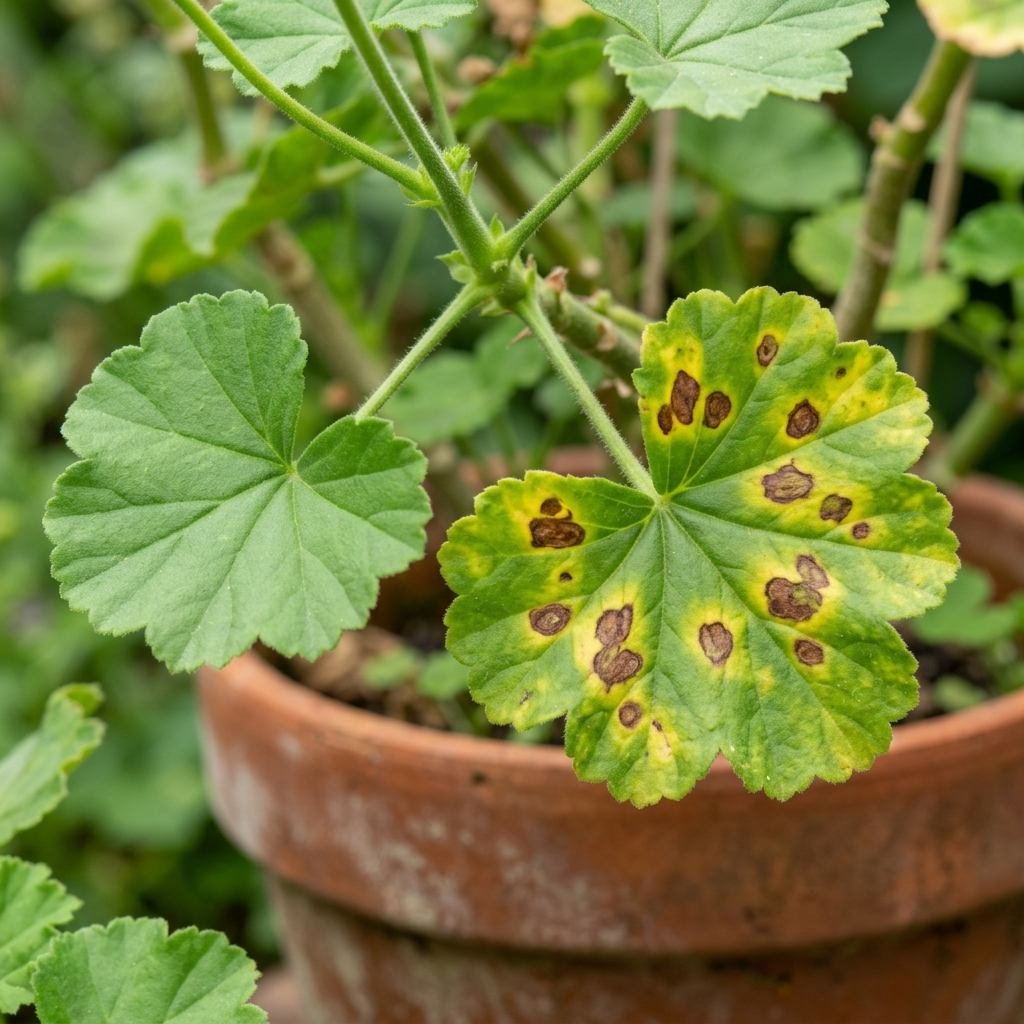
Bacterial leaf spot (caused by Xanthomonas) and various fungal issues can cause yellowing that starts as small brown or black spots ringed with yellow halos, eventually merging into larger yellow, wilted sections of the leaf. Unlike nutrient or watering issues, disease-related yellowing is often asymmetrical and accompanied by visible lesions, black stem streaking, or a foul odor in advanced cases. High humidity, overhead watering, and crowded planting all promote these pathogens. Removing and destroying (not composting) infected leaves immediately, switching to bottom watering or careful soil-level watering, and spacing plants for airflow are the primary controls; a copper-based fungicide can help with fungal spot but does nothing for bacterial infections, which have no chemical cure and require aggressive sanitation instead.
Cold Shock and Temperature Stress
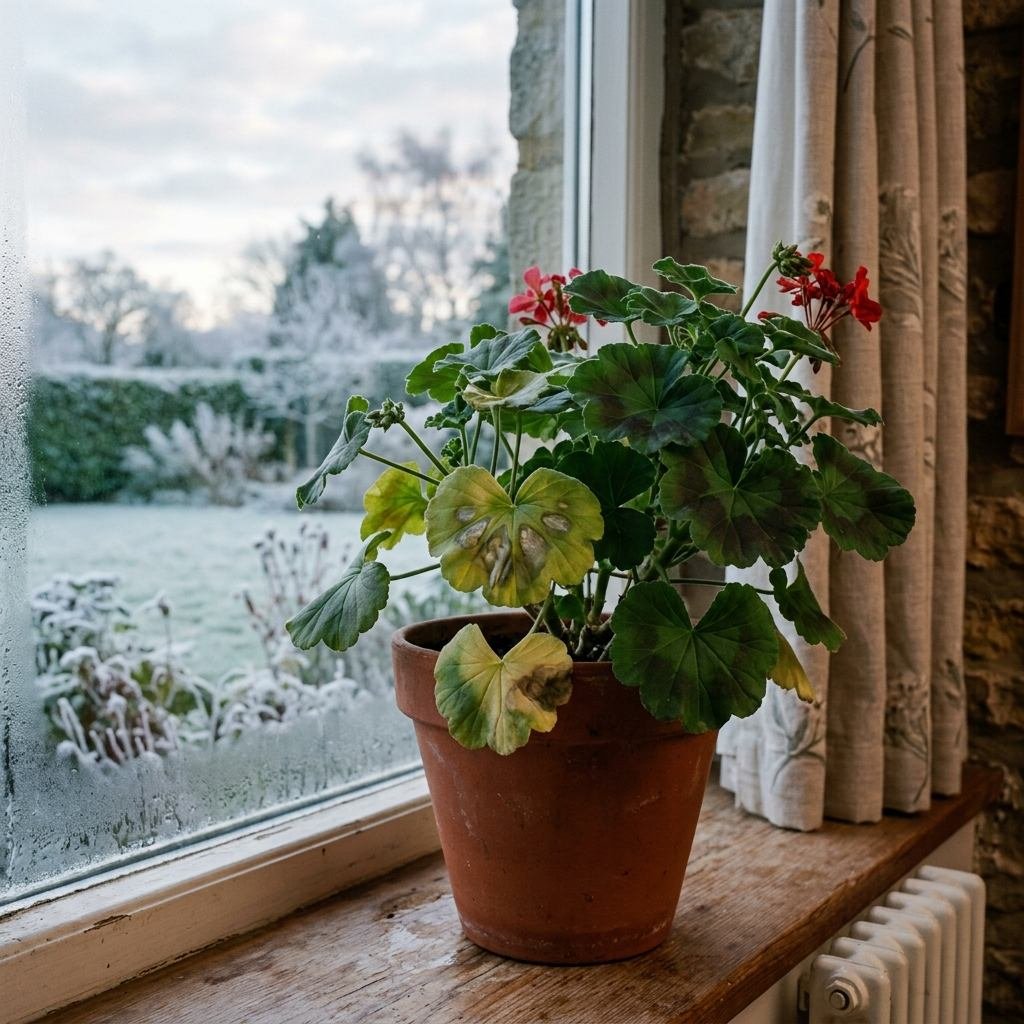
Geraniums are sensitive to temperatures below 50°F (10°C), and a sudden cold snap, a drafty window, or moving plants outdoors too early in spring can trigger yellowing within 24-48 hours, often accompanied by leaf curling or a translucent, water-soaked look before the tissue yellows and dies. This is common with geraniums overwintered indoors near a cold windowpane or brought outside before the last frost date. The fix is prevention: keep geraniums above 55°F (13°C) consistently and harden off outdoor moves gradually over 7-10 days rather than an abrupt transition.
Comparing the Common Causes at a Glance
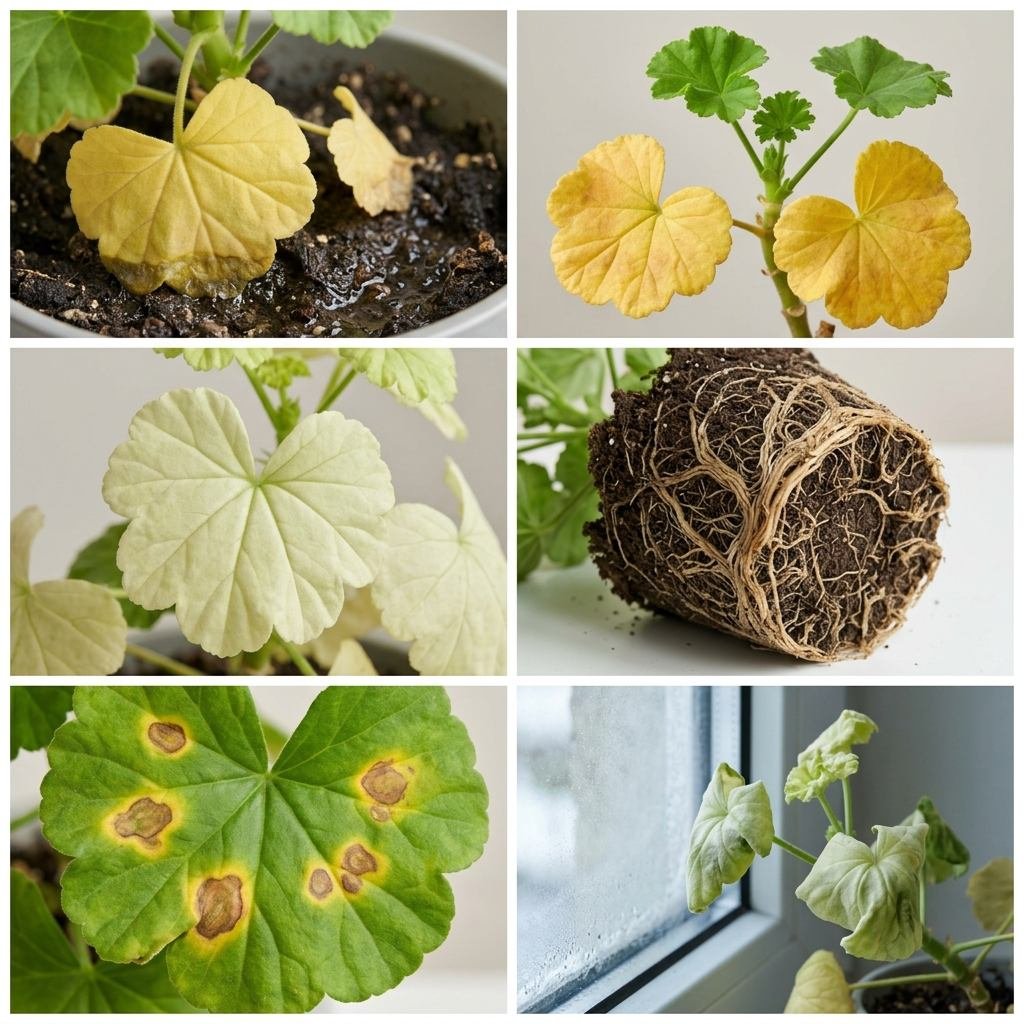
| Cause | Leaf Texture | Pattern | Speed of Onset |
|---|---|---|---|
| Overwatering/root rot | Soft, mushy | Lower leaves first, whole plant eventually | Days to 1-2 weeks |
| Natural aging | Firm, dry | Oldest lowest leaves only | Gradual, ongoing |
| Nitrogen deficiency | Firm, dry | Uniform on older leaves | 2-4 weeks |
| Root-bound | Firm, dry | Combined with wilting/stunting | Weeks to months |
| Fungal/bacterial disease | Spotted, then mushy patches | Asymmetrical, with lesions | Days |
| Cold shock | Water-soaked, then dry | Sudden, whole-plant | 24-48 hours |
The Bottom Line
Yellow leaves on geraniums are rarely a mystery once you check texture, location, and speed of onset side by side. Soft and mushy points to too much water, firm and gradual on the lowest leaves points to normal aging or a nutrient gap, and sudden whole-plant changes point to temperature stress or disease. Start with the soil moisture check every time, since overwatering causes the majority of cases and the fix costs nothing but patience. Once watering is confirmed correct, move to feeding, repotting, or disease management based on what the pattern actually shows.
Frequently Asked Questions
Should I remove all the yellow leaves from my geranium at once?
Yes, remove yellow leaves promptly with clean scissors or by pinching at the base of the petiole. They won’t turn green again, and leaving them on invites fungal growth and wastes the plant’s energy trying to maintain dying tissue.
Can yellow geranium leaves turn green again if I fix the problem?
No, a yellow leaf is already breaking down chlorophyll and won’t revert to green. Focus on fixing the underlying cause so new leaves grow in healthy, and remove the yellowed ones for appearance and plant health.
How often should I water potted geraniums to avoid yellowing?
Water only when the top 2 inches of soil feel dry, typically every 7-10 days indoors and possibly every 4-5 days outdoors in hot summer weather. Always empty saucers of standing water within 30 minutes of watering.
Is yellowing worse in winter for indoor geraniums?
Yes, reduced light and cooler temperatures slow a geranium’s metabolism in winter, so it needs less water and less fertilizer than in summer. Overwatering during winter dormancy is one of the most common causes of yellow leaves and root rot in indoor geraniums.
What fertilizer ratio is best for preventing yellow leaves on geraniums?
A balanced 20-20-20 at half strength every two weeks covers general nutrition, while switching to a bloom-booster like 15-30-15 every three to four weeks during flowering season supports both foliage color and blossom production.
Do yellow leaves mean my geranium is dying?
Not necessarily. A few yellow lower leaves are normal maintenance, but widespread yellowing across the whole plant combined with soft stems or a sour smell signals advanced root rot, which can be fatal if not addressed by repotting into fresh, dry, well-draining soil immediately.