
Woodland Gardens on Slopes for Shady Spots: Practical Design Ideas

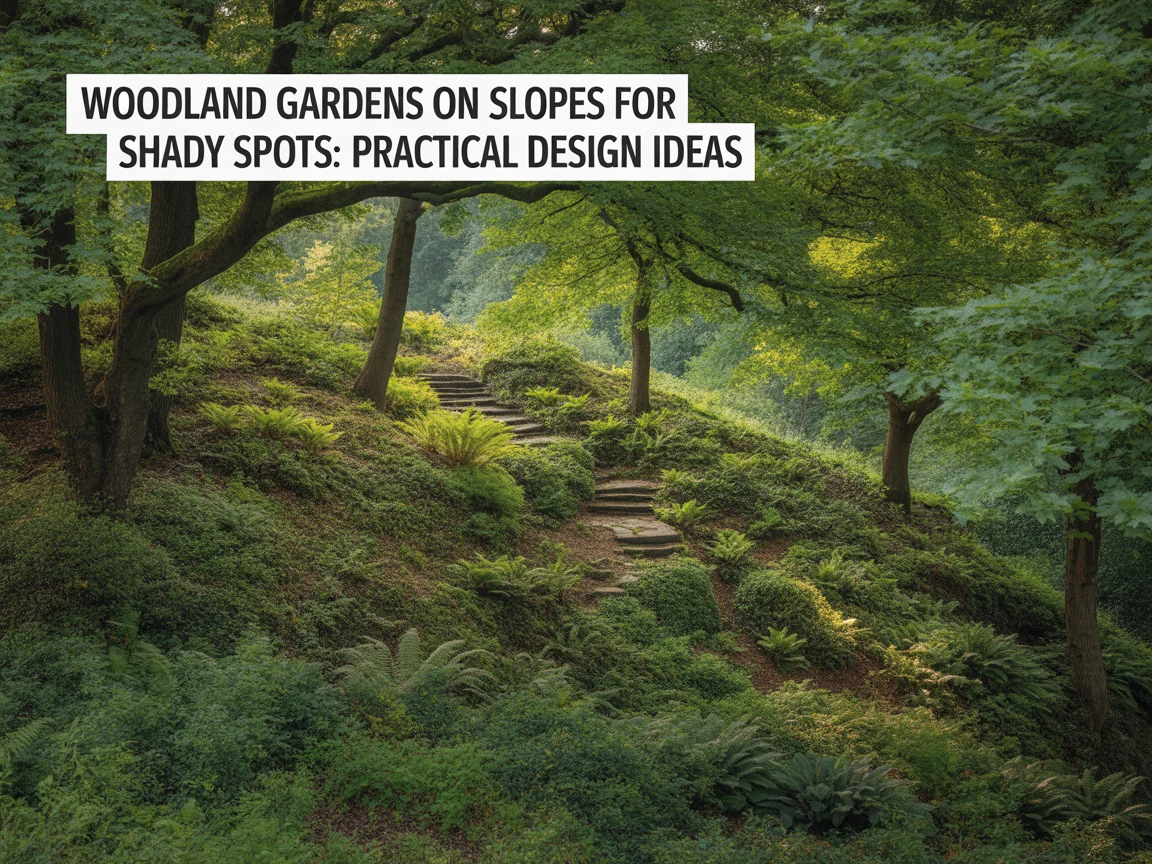
A client once described the problem corner of her garden to me as “the place where nothing works.” It was a steep, north-facing bank beneath a row of mature trees — sloped, shaded, and eroding, with thin bare soil washing down to the path every time it rained. She had tried lawn, which slid off in muddy sheets, and bedding plants, which sulked and died in the gloom. By the time I saw it, she had given up and called it a lost cause. But a sloped shady spot is not a lost cause at all — it is, in fact, almost exactly what a woodland garden wants to be. Within two seasons that same bank was a cascade of ferns and epimedium spilling down a gentle terrace, bluebells naturalizing through the gaps, and not a speck of bare eroding soil anywhere. The slope and the shade that had defeated every conventional approach were the very conditions a naturalistic woodland planting thrives in. That bank taught me the central truth of this subject: a sloped shady spot is not a problem to be overcome but a woodland garden waiting to happen.
Woodland gardens on slopes for shady spots combine slope-stabilizing techniques — terracing, retaining walls, deep-rooted planting, and erosion control — with shade-tolerant woodland planting and naturalistic design to transform challenging sloped, shaded terrain into a beautiful, stable, low-maintenance woodland garden. The slope provides natural drama, layered viewpoints, and the cascading planting opportunities a flat garden lacks, while the shade and the woodland approach provide the perfect conditions for the ferns, ground cover, and shade-loving plants that both stabilize the bank and clothe it in lush green.
Over the years I have designed, terraced, planted, and stabilized woodland gardens on slopes ranging from gentle shaded banks to steep, difficult inclines beneath mature trees. I have seen the right approach turn an eroding, unusable slope into the most beautiful part of a garden, and I have also solved the practical challenges of access, drainage, and stability that sloped shaded ground presents. In this article I am sharing the best woodland garden ideas for sloped shady spots covering slope assessment, terracing, stabilizing plants, paths, drainage, and low-maintenance design.
Assessing a Sloped Shady Spot Before You Begin
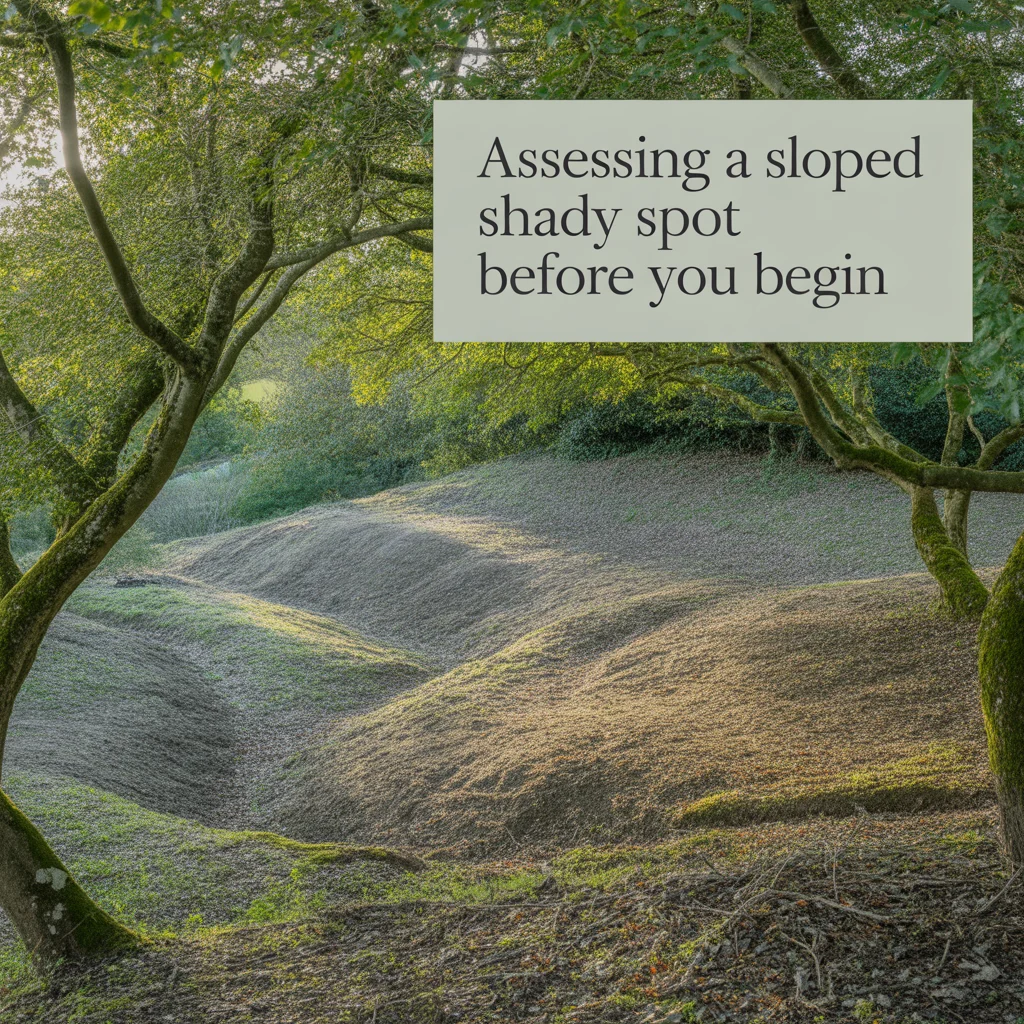
Assessing a sloped shady spot before you begin is the essential first step, because understanding the gradient, the soil, the drainage, and the degree of shade determines every design decision that follows. I always begin a sloped shady project with a thorough assessment, because the steepness of the slope, the stability of the soil, and the depth of the shade together dictate whether the bank needs terracing, what planting will succeed, and how access can be safely provided.
Key Factors to Assess
Slope gradient, soil and drainage, and shade level are three factors to assess in a sloped shady spot. Slope gradient determines whether the bank can be planted directly or needs terracing and retaining structures. Soil and drainage reveal how stable the bank is and how water moves across it. Shade level, whether dappled or deep, determines which shade-tolerant plants will thrive on the slope.
Understanding the Triple Challenge
Slope instability, shade limitation, and access difficulty are three challenges combined in a sloped shady spot. Slope instability creates the risk of erosion and soil movement that planting must address. Shade limitation restricts the planting to shade-tolerant species. Access difficulty makes safe movement across the slope a design priority, so understanding how these three challenges overlap is the key to a successful design.
Terracing a Sloped Woodland Garden
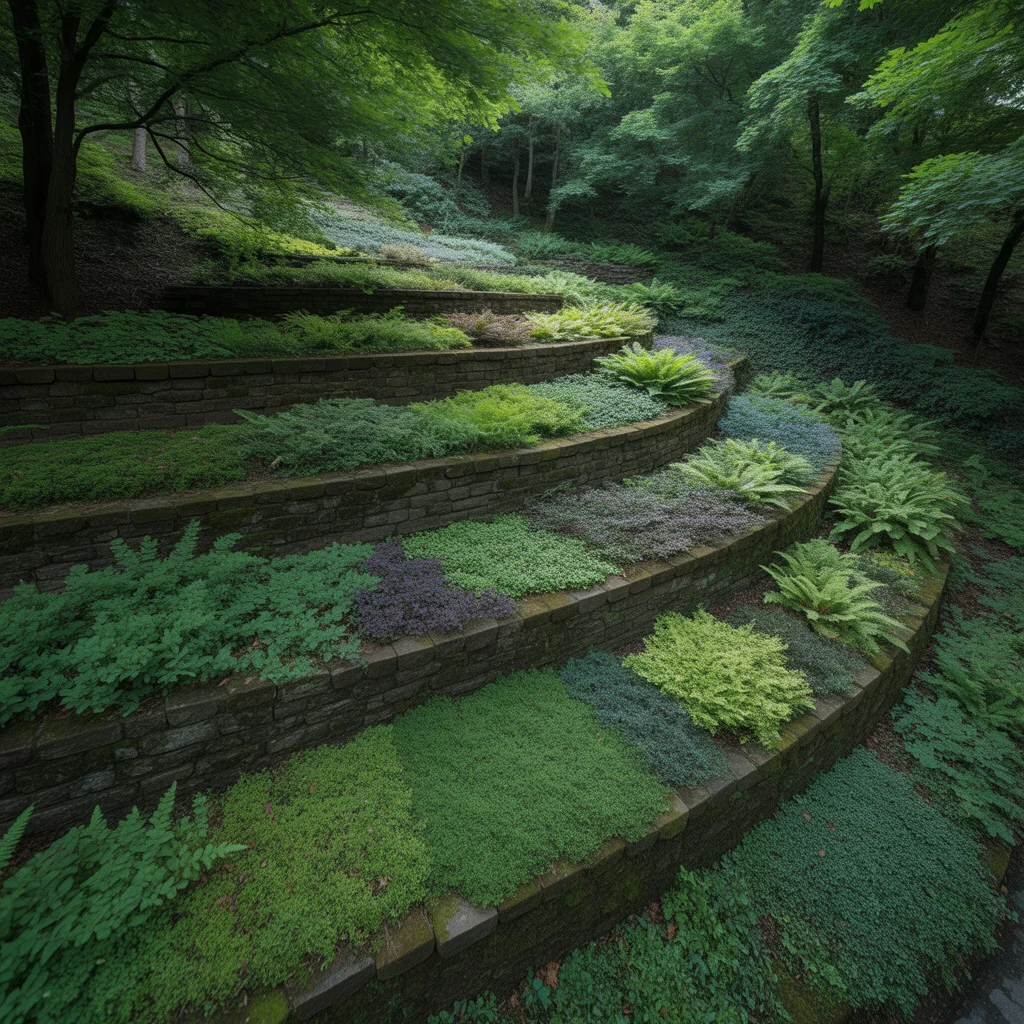
Terracing a sloped woodland garden divides a steep bank into a series of level or gently graded steps held by retaining structures, stabilizing the slope while creating usable planting areas and a dramatic layered woodland design. I terrace steeper woodland slopes because dividing the gradient into manageable levels both halts erosion and creates the series of planting beds and viewpoints that turn a difficult bank into a richly layered woodland garden.
Terracing Methods for a Woodland Slope
Natural stone retaining walls, timber sleeper terraces, and log retaining edges are three terracing methods suited to a woodland slope. Natural stone retaining walls provide the most durable and naturalistic terracing that suits the woodland aesthetic and weathers beautifully. Timber sleeper terraces provide a robust, straightforward retaining structure for moderate slopes. Log retaining edges using horizontal logs provide the most rustic, woodland-appropriate terracing for gentler banks.
Designing Naturalistic Terraces
Irregular terrace lines, varied terrace depths, and softened edges are three principles suited to naturalistic woodland terraces. Irregular, curving terrace lines read more naturally in a woodland than rigid straight terraces. Varied terrace depths create different planting opportunities down the slope. Softened edges, with planting spilling over the retaining structures, disguise the terracing and create the cascading woodland effect that makes a terraced slope beautiful.
Retaining Walls for a Shaded Slope
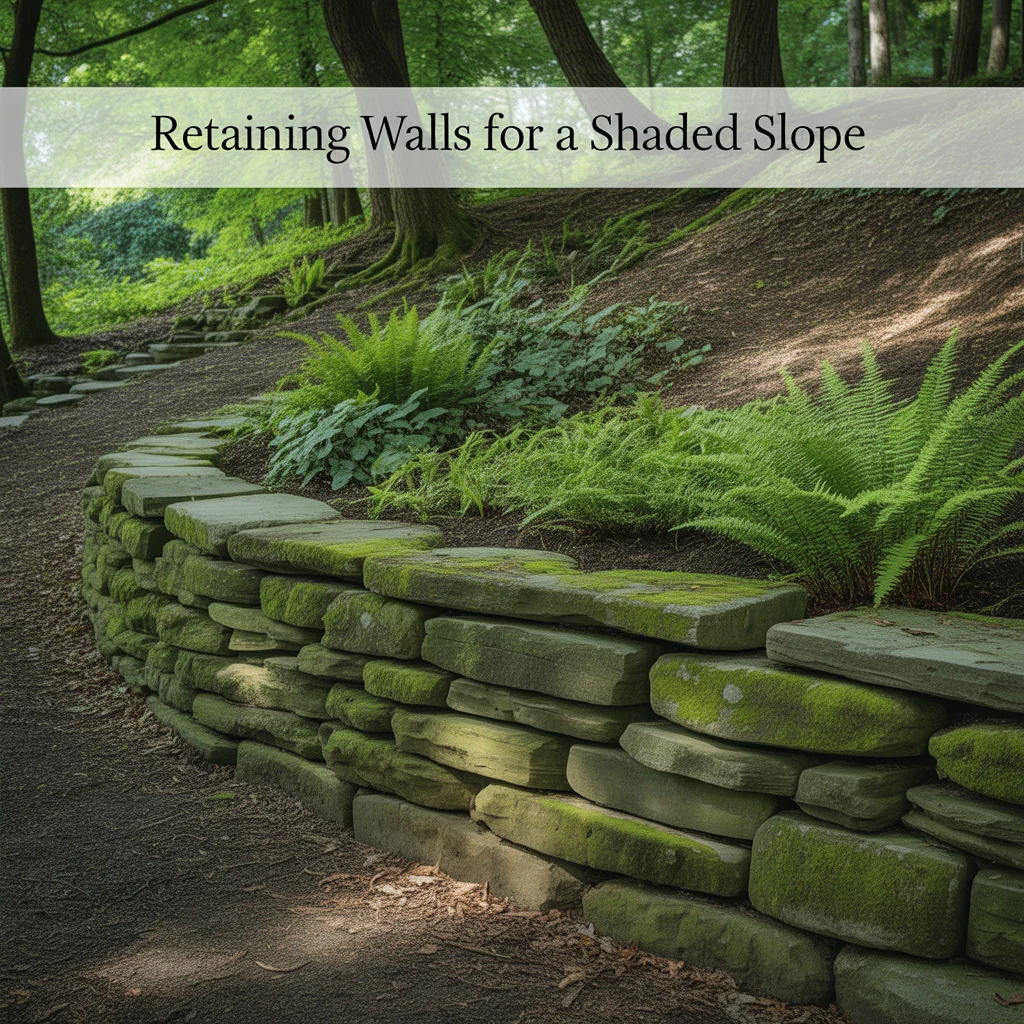
Retaining walls for a shaded slope provide the structural support that holds back soil on steeper banks, combining engineering function with naturalistic materials that suit the woodland setting. I use retaining walls on the steepest sections of a sloped woodland garden, because where a bank is too steep to stabilize with planting alone, a well-built retaining wall in natural materials provides the essential support while contributing to the layered woodland design.
Retaining Wall Materials
Natural stone, railway sleepers, and gabion baskets are three retaining wall materials suited to a shaded woodland slope. Natural stone provides the most naturalistic and durable retaining wall that weathers and accepts moss in the shaded woodland conditions. Railway sleepers provide a strong, straightforward retaining structure for moderate retaining heights. Gabion baskets filled with stone provide a robust, free-draining retaining option that suits a contemporary naturalistic design.
Retaining Wall Considerations
Adequate foundations, proper drainage, and appropriate height are three considerations suited to a slope retaining wall. Adequate foundations ensure the wall can hold back the weight of the soil behind it. Proper drainage behind the wall prevents water pressure building up and undermining the structure. Appropriate height, with taller retaining requirements often needing professional engineering, ensures the wall is safe and stable on the woodland slope.
Fern Planting to Stabilize a Shaded Slope
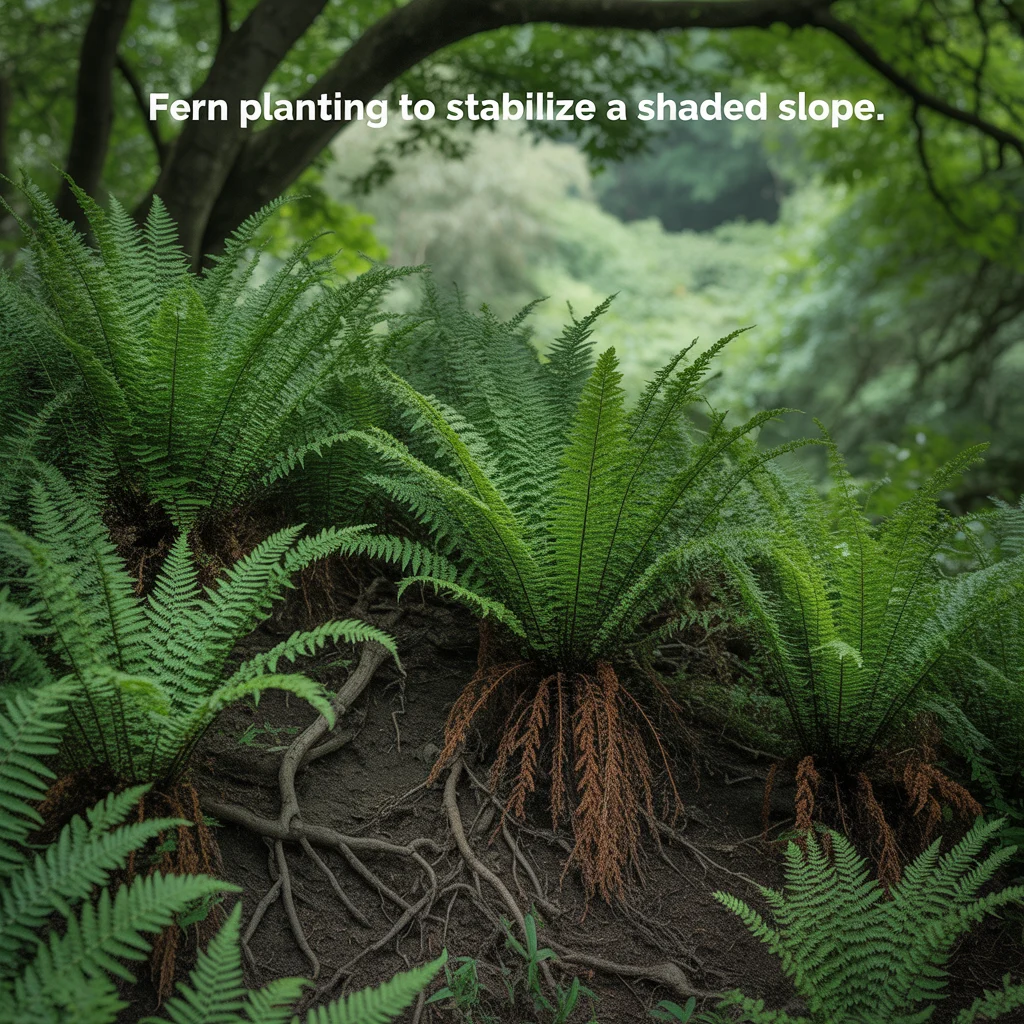
Fern planting to stabilize a shaded slope uses the spreading roots and cascading fronds of ferns to bind the soil and clothe the bank in lush green, providing both erosion control and the quintessential woodland aesthetic. I plant ferns extensively on shaded slopes, because their root systems help hold the soil while their arching fronds cascade down the bank, providing the most beautiful and naturally appropriate stabilizing cover for a sloped woodland garden.
Ferns for Slope Stabilization
Dryopteris filix-mas, Polystichum setiferum, and Matteuccia struthiopteris are three ferns suited to stabilizing a shaded slope. Dryopteris filix-mas forms robust clumps tolerating dry competitive shade and helping bind the slope soil. Polystichum setiferum is semi-evergreen, providing year-round cover and root stabilization on the bank. Matteuccia struthiopteris spreads by runners to colonize and bind a moist shaded slope into a stabilizing fern stand.
Cascading Ferns Down a Bank
Mass planting, staggered placement, and drift planting are three approaches suited to cascading ferns down a slope. Mass planting of ferns across the bank creates dense stabilizing cover. Staggered placement down the slope creates the cascading visual effect. Drift planting of ferns flowing down the bank reads as a natural woodland slope and binds the soil across the whole face.
Ground Cover for Shaded Slope Stabilization
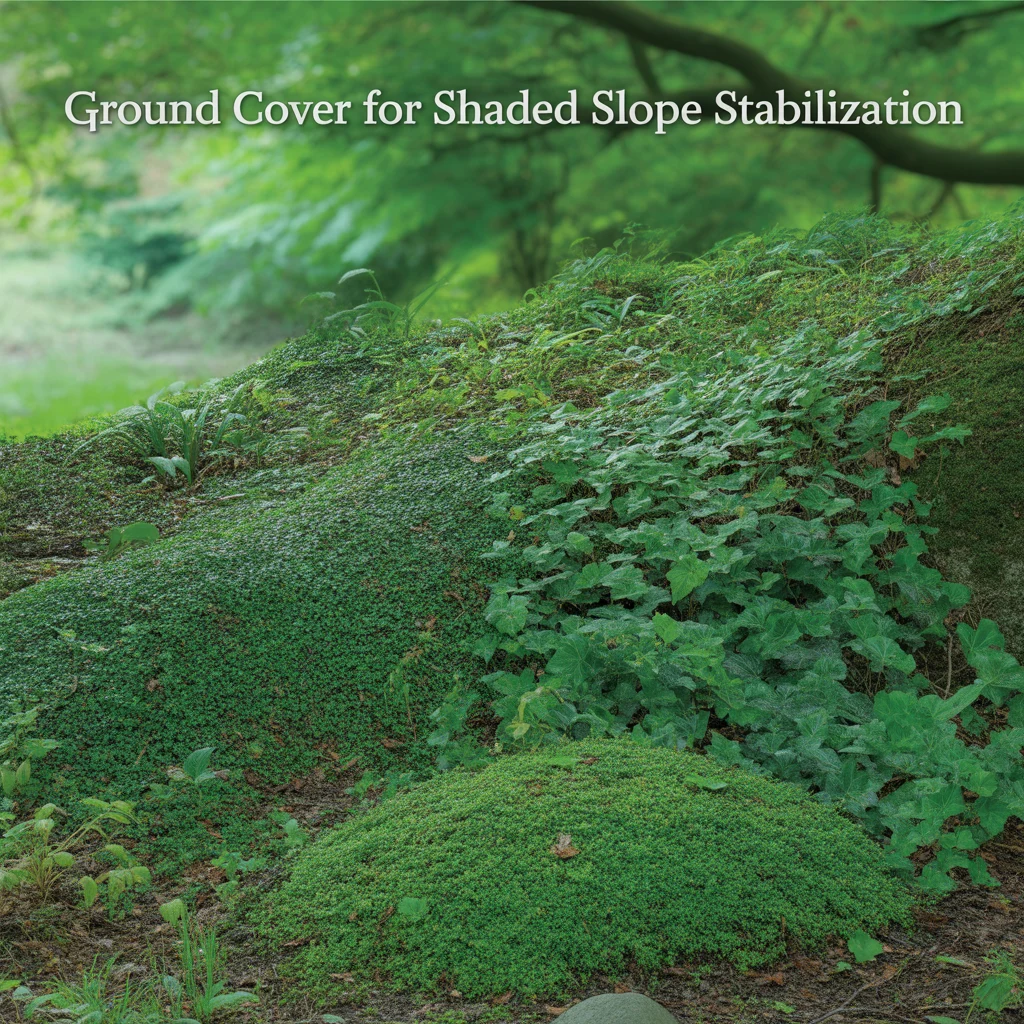
Ground cover for shaded slope stabilization uses dense, spreading, shade-tolerant ground cover plants to clothe and bind the bank, suppressing weeds and holding the soil with their spreading roots and foliage. I use spreading ground cover as a primary slope-stabilizing tool, because a dense ground cover carpet both holds the soil against erosion and suppresses the weeds that would otherwise colonize a disturbed bank, providing the most effective low-maintenance slope cover.
Ground Cover Plants for Slopes
Epimedium, Vinca minor, and Pachysandra terminalis are three ground covers suited to a shaded slope. Epimedium spreads to form a dense weed-suppressing carpet that tolerates the dry shade of a slope beneath trees. Vinca minor spreads vigorously across a bank, its trailing stems rooting to bind the soil and cover the slope quickly. Pachysandra terminalis forms a dense even mat that holds a shaded slope and suppresses weeds with minimal maintenance.
Establishing Ground Cover on a Slope
Dense planting, erosion control during establishment, and slope-following placement are three practices suited to establishing ground cover on a slope. Dense planting speeds the formation of the soil-binding carpet. Erosion control during establishment, such as a biodegradable matting, protects the bank until the ground cover roots take hold. Slope-following placement, planting across rather than up and down the slope, helps slow water flow and establish even cover.
Deep-Rooted Shrubs for Slope Structure
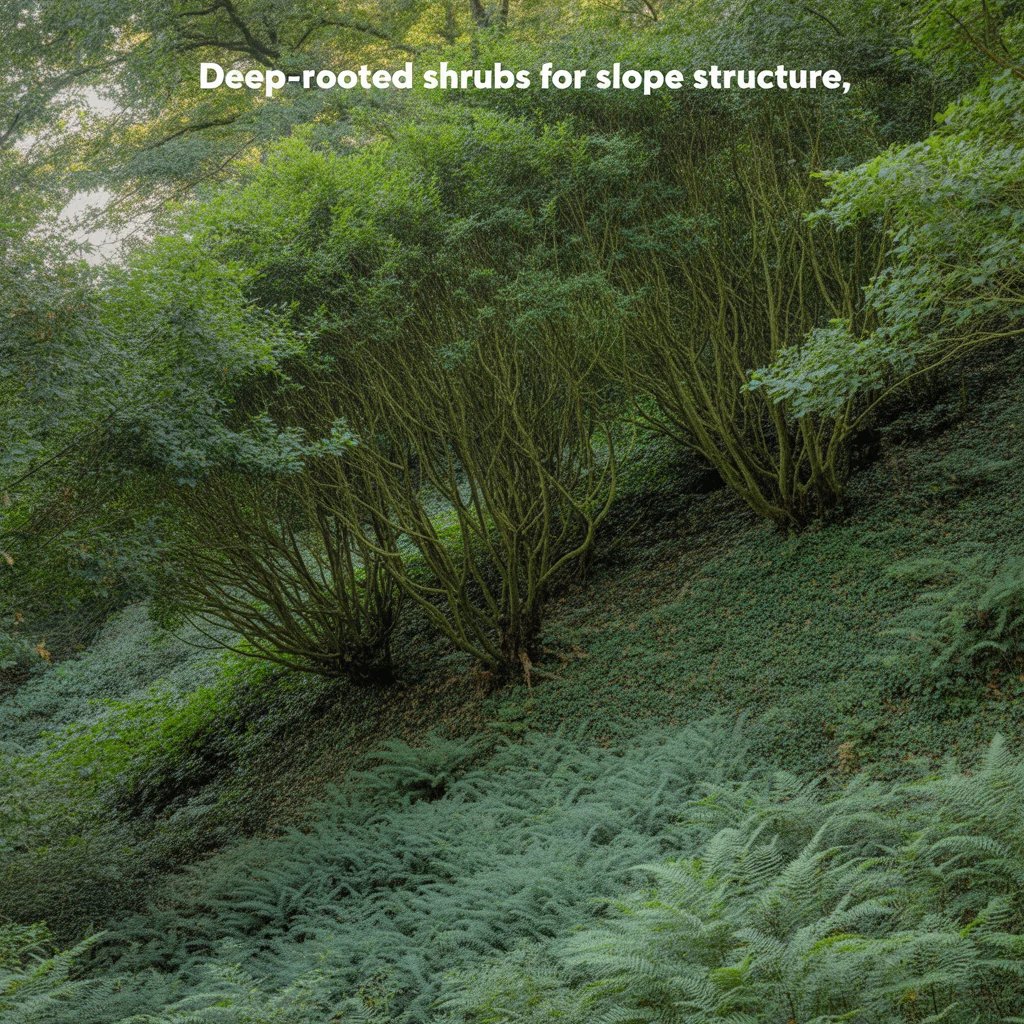
Deep-rooted shrubs for slope structure provide the strongest natural slope stabilization, their deep root systems anchoring the bank while their woody structure adds height and permanence to the woodland slope planting. I plant deep-rooted shade-tolerant shrubs as the structural backbone of a sloped woodland garden, because their deep roots provide the most effective living slope stabilization while their woody framework gives the bank the layered structure of a genuine woodland.
Shrubs for Slope Stabilization
Mahonia, Viburnum, and Hydrangea arborescens are three shade-tolerant shrubs suited to slope stabilization. Mahonia provides deep roots, evergreen structure, and winter flowers, anchoring the slope while tolerating dry shade. Viburnum provides robust deep-rooted structure and seasonal interest on the shaded bank. Hydrangea arborescens, in varieties like Annabelle, provides flowering structure in partial shade while its roots help bind the slope.
Placing Structural Shrubs on a Slope
Anchoring key positions, layering with ground cover, and varied heights are three approaches suited to placing structural shrubs. Anchoring key positions on the slope with deep-rooted shrubs provides the main stabilization points. Layering shrubs above ground cover and ferns builds the woodland structure down the bank. Varied heights of shrubs create the layered woodland profile while distributing root stabilization across the slope.
Naturalizing Bulbs and Wildflowers on Gentle Slopes
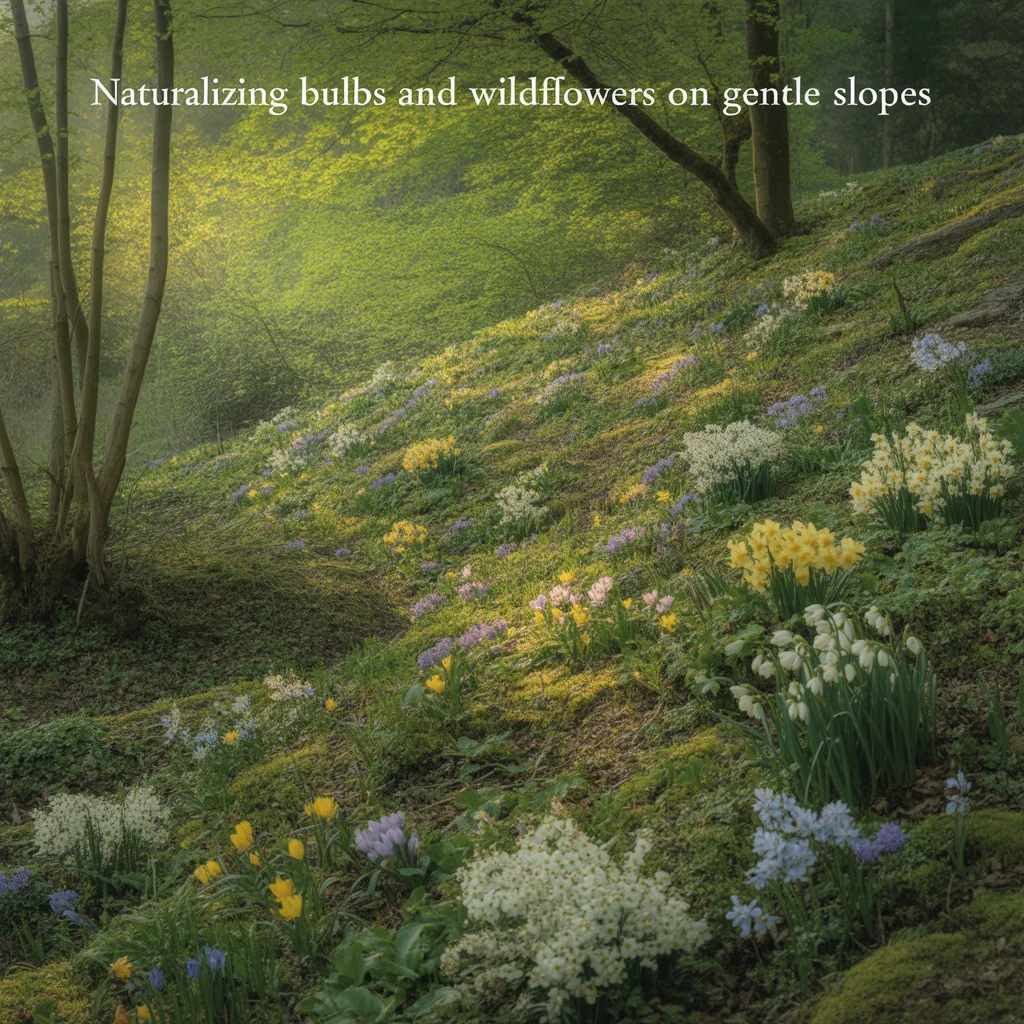
Naturalizing bulbs and wildflowers on gentle slopes carpets a shaded bank in spring colour using native woodland bulbs and flowers that spread and self-seed across the slope, suiting gentler gradients where erosion is less severe. I naturalize bulbs across gentle shaded slopes, because a bank carpeted in bluebells or wood anemones in spring is one of the most beautiful sights a woodland garden offers, and on a gentle slope these native flowers establish and spread to clothe the bank in seasonal colour.
Bulbs and Wildflowers for Shaded Slopes
Hyacinthoides non-scripta, Anemone nemorosa, and Primula vulgaris are three naturalizing plants suited to a gentle shaded slope. Hyacinthoides non-scripta, native bluebells, carpet a gentle slope in blue in spring and self-seed to colonize the bank. Anemone nemorosa, wood anemone, spreads into early white spring drifts across the slope. Primula vulgaris, primrose, naturalizes on the shaded bank with pale yellow spring flowers.
Naturalizing on a Slope
Planting in drifts, allowing self-seeding, and combining with ground cover are three approaches suited to naturalizing on a slope. Planting in generous drifts creates the natural carpet effect down the bank. Allowing self-seeding lets the display spread and expand across the slope over the years. Combining bulbs with foliage ground cover provides both spring flowers and year-round soil-binding cover on the gentle slope.
Paths and Steps Through a Sloped Woodland Garden
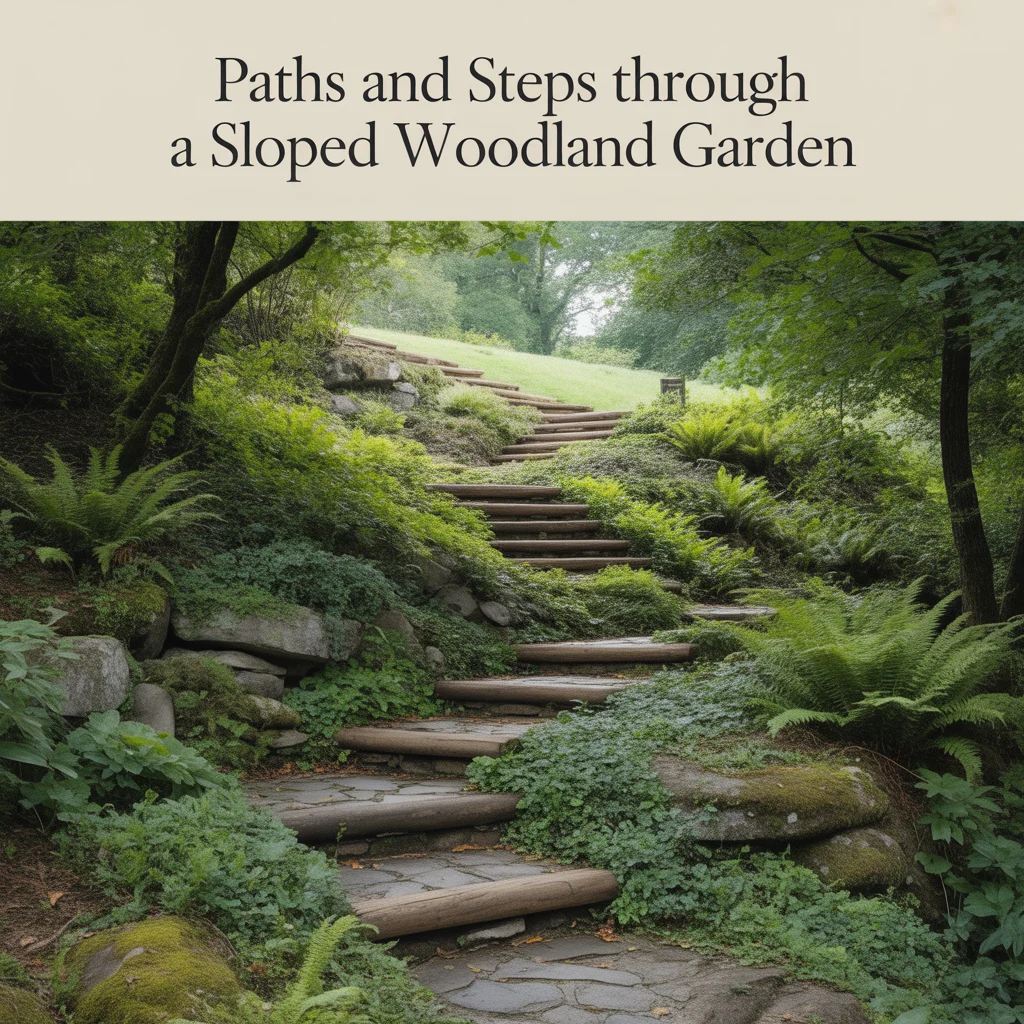
Paths and steps through a sloped woodland garden provide safe access across the bank, using naturalistic materials and routes that both solve the practical challenge of movement and enhance the woodland experience. I design paths and steps carefully on every sloped woodland garden, because safe, comfortable access across a shaded slope is both a practical necessity and an opportunity to create the winding, exploratory routes that make a woodland garden a journey.
Steps for a Sloped Woodland Garden
Natural stone steps, timber sleeper steps, and log riser steps are three step types suited to a sloped woodland garden. Natural stone steps provide the most durable and naturalistic ascent that suits the woodland and weathers attractively. Timber sleeper steps provide a robust, straightforward stepped route up the bank. Log riser steps with a gravel or bark tread provide the most rustic, woodland-appropriate steps for a gentler slope.
Designing Safe Slope Access
Comfortable step dimensions, secure footing, and winding routes are three principles suited to safe slope access. Comfortable step dimensions with a consistent rise make the ascent safe and easy. Secure, stable footing with slip-resistant treads is essential on a shaded slope where damp surfaces can be slippery. Winding routes that traverse the slope rather than climbing straight up both ease the gradient and create the exploratory woodland journey.
Managing Drainage on a Shaded Slope
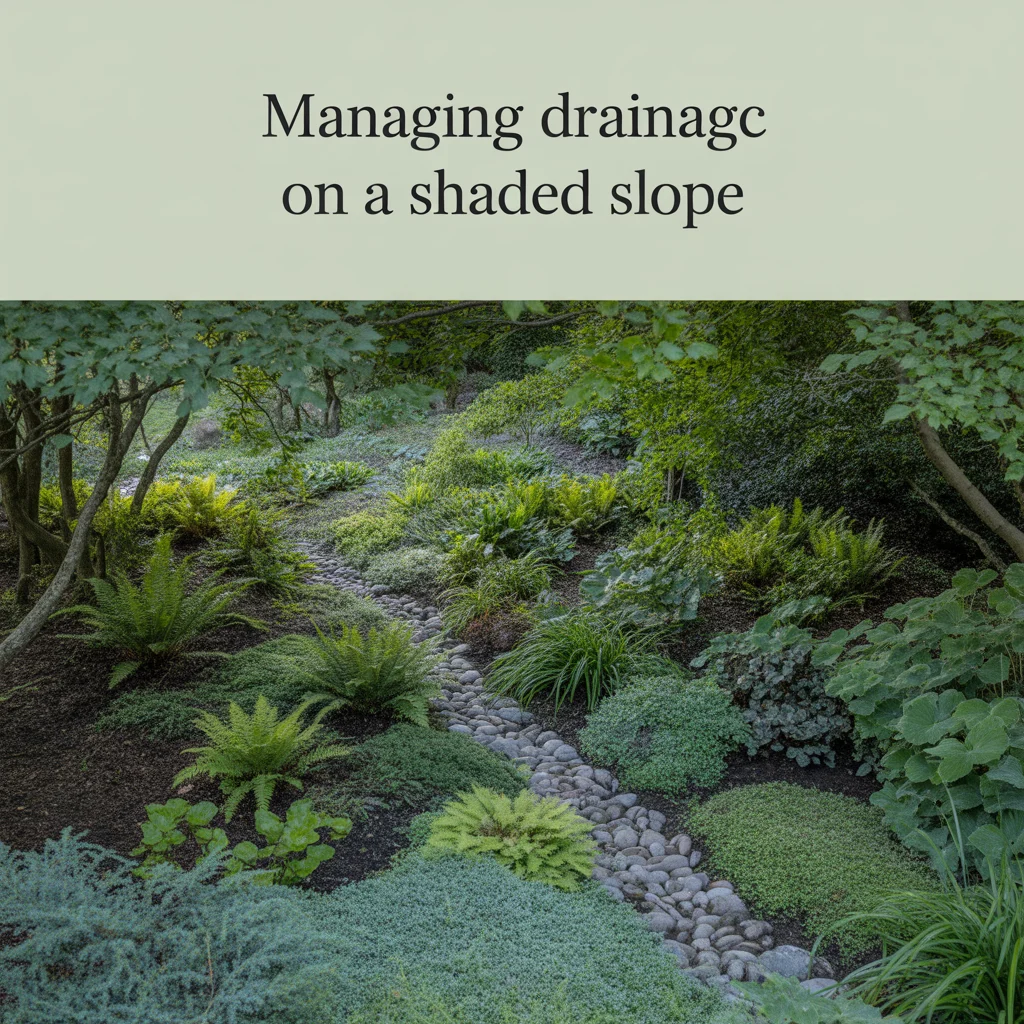
Managing drainage on a shaded slope addresses the water that flows across and erodes a bank, using drainage techniques and planting to control runoff and protect both the slope and the planting. I always address drainage on a sloped woodland garden, because uncontrolled water flowing down a shaded slope is the primary cause of erosion, and managing that water is essential to keeping both the bank and its planting stable and healthy.
Drainage Techniques for a Slope
Cross-slope planting, drainage channels, and terracing are three drainage techniques suited to a shaded slope. Cross-slope planting in bands that slow water flow reduces erosion across the bank. Drainage channels that intercept and direct water prevent it concentrating and cutting into the slope. Terracing breaks the slope into levels that halt the downward rush of water, controlling runoff on steeper banks.
Preventing Erosion on a Shaded Slope
Dense planting cover, erosion matting, and managed water flow are three approaches suited to preventing erosion. Dense planting cover binds the soil and shields it from rain impact. Erosion matting during establishment protects the bare slope until planting takes hold. Managed water flow that controls and slows runoff prevents the concentrated water that cuts channels into a shaded slope.
Small Woodland Gardens on Slopes for Shady Spots
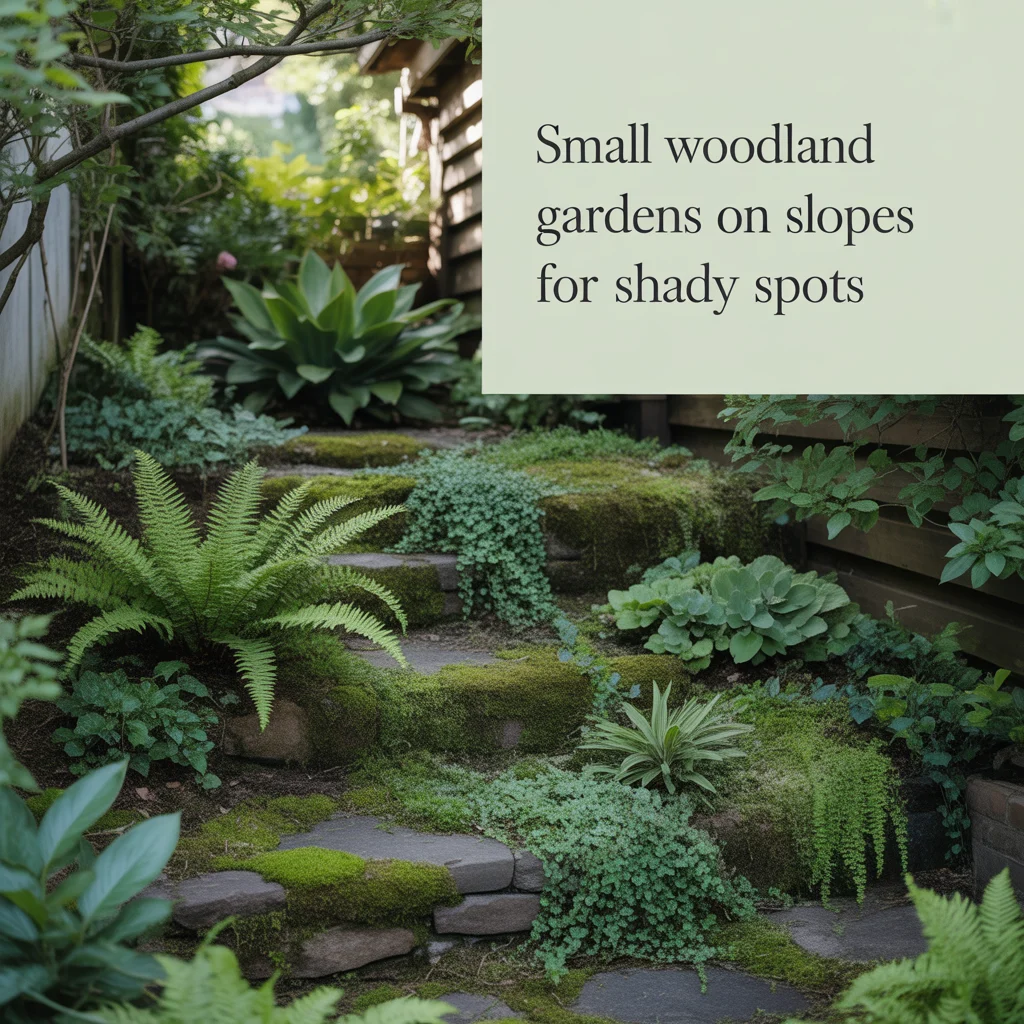
Small woodland gardens on slopes for shady spots bring naturalistic woodland design to compact sloped shaded areas, using carefully scaled terracing and planting to transform a small difficult bank into a beautiful woodland feature. I have created woodland gardens on small sloped shady spots, because even a compact bank can become a richly layered woodland in miniature, with the slope adding drama and the shade providing the conditions for lush woodland planting.
Designing a Small Sloped Woodland Garden
Compact terracing, a winding path, and layered planting are three approaches suited to a small sloped woodland garden. Compact terracing divides even a small bank into manageable, plantable levels. A winding path or steps makes the small slope accessible and exploratory. Layered planting of shrubs, ferns, and ground cover packs the woodland structure into the limited sloped space.
Maximizing a Small Sloped Space
Vertical layering, slope-following viewpoints, and dense planting are three techniques suited to maximizing a small sloped space. Vertical layering uses the slope to display planting at multiple levels, making full use of limited ground. Slope-following viewpoints create the sense of journey and discovery in a compact space. Dense planting that clothes the whole bank creates an immersive woodland feel even on a small sloped shady spot.
Low-Maintenance Sloped Woodland Garden Design
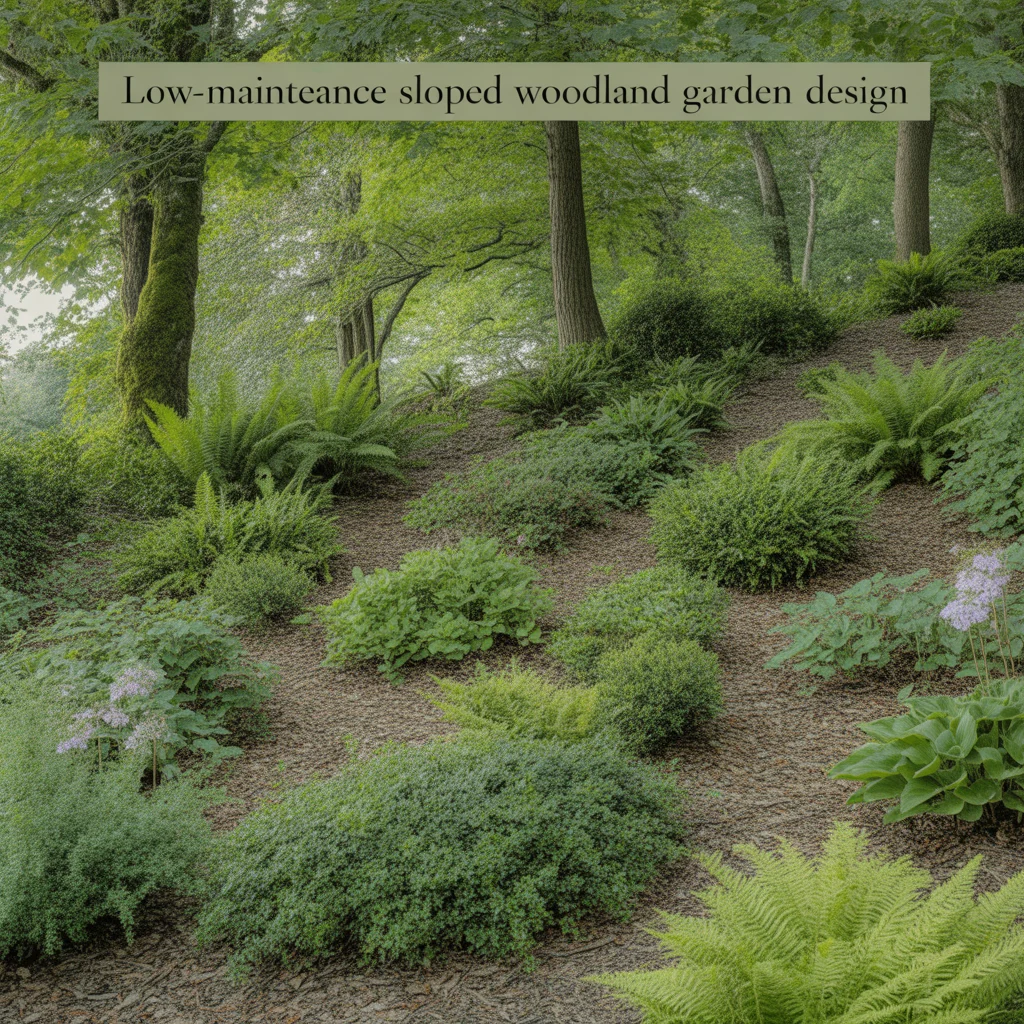
Low-maintenance sloped woodland garden design uses self-stabilizing planting, dense ground cover, and durable structures to create a sloped shaded garden that needs minimal ongoing intervention. I design every sloped woodland garden for low maintenance, because a well-planted slope with dense self-sustaining ground cover and deep-rooted structural planting largely looks after itself, eliminating the erosion control, weeding, and mowing that a poorly planted bank demands.
Why a Planted Slope Is Low-Maintenance
Self-stabilizing planting, weed suppression, and no mowing are three reasons a planted slope is low-maintenance. Self-stabilizing planting with binding roots eliminates the ongoing erosion control a bare slope requires. Weed suppression from dense ground cover removes the constant weeding of open ground. No mowing, since a planted woodland slope replaces the difficult and dangerous task of mowing a bank, dramatically reduces maintenance.
Low-Maintenance Slope Planting
Epimedium, ferns, and deep-rooted shrubs are three low-maintenance plantings suited to a sloped woodland garden. Epimedium provides tough, dry-shade-tolerant ground cover needing only an annual cutback. Ferns provide self-sustaining cascading cover that binds the slope. Deep-rooted shrubs provide permanent structural stabilization with minimal care, together creating the most self-sufficient sloped woodland planting.
Cascading Planting Design for Slopes
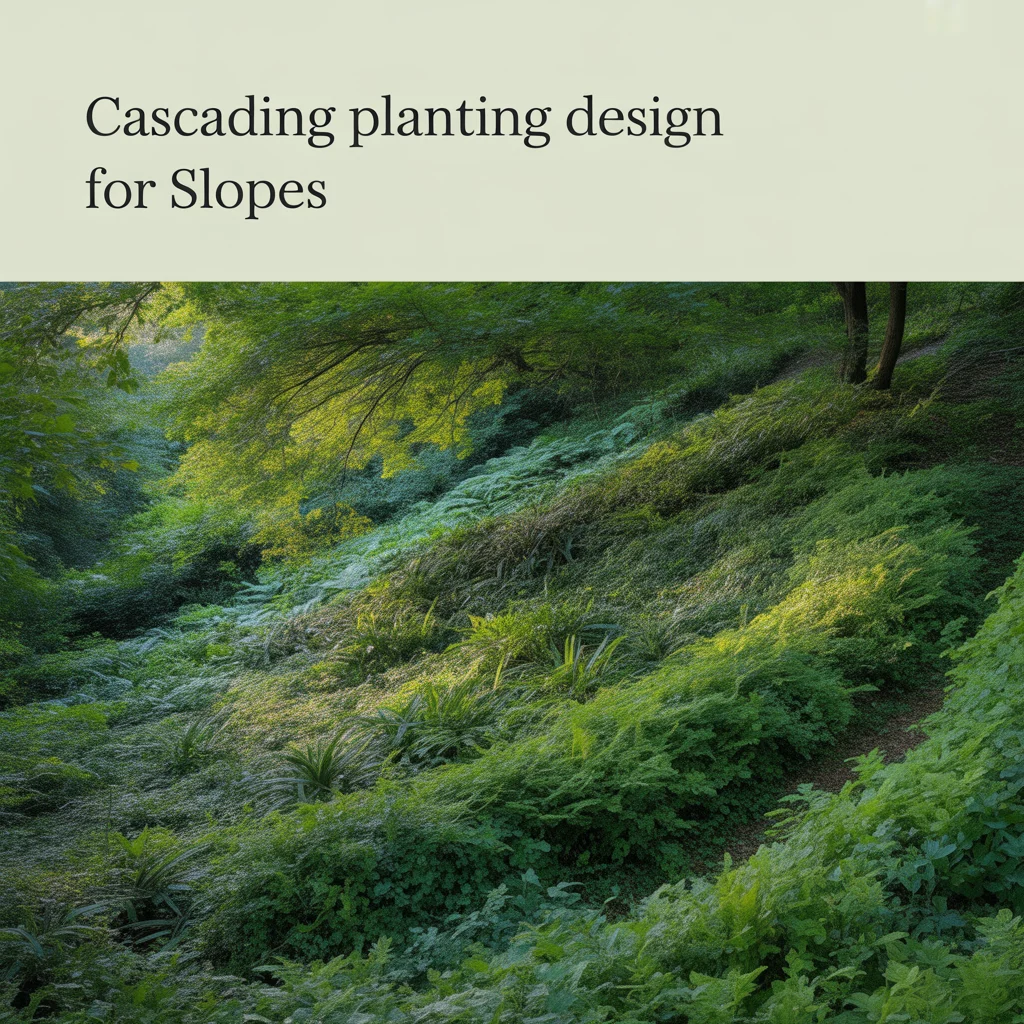
Cascading planting design for slopes uses trailing and spreading plants that flow down the bank to create the beautiful tumbling effect that makes a sloped woodland garden visually striking. I design slopes with cascading planting in mind, because a shaded bank offers the perfect opportunity for plants to spill and flow downward, creating a sense of lush movement and abundance that a flat garden cannot achieve.
Plants for Cascading Slope Effects
Trailing vinca, cascading ferns, and spreading epimedium are three plants suited to cascading slope effects. Trailing vinca flows down the bank with its spreading stems and spring flowers. Cascading ferns arch their fronds down the slope for a tumbling green effect. Spreading epimedium flows across and down the bank as a dense weed-suppressing cascade.
Designing a Cascading Slope
Top-to-bottom flow, layered cascades, and softened edges are three principles suited to designing a cascading slope. Top-to-bottom flow of spreading plants creates the downward visual movement. Layered cascades of different plants down the slope build richness and depth. Softened edges where planting spills over terracing or steps disguise the structure and enhance the tumbling woodland effect.
Combining Shade and Slope Plant Selection
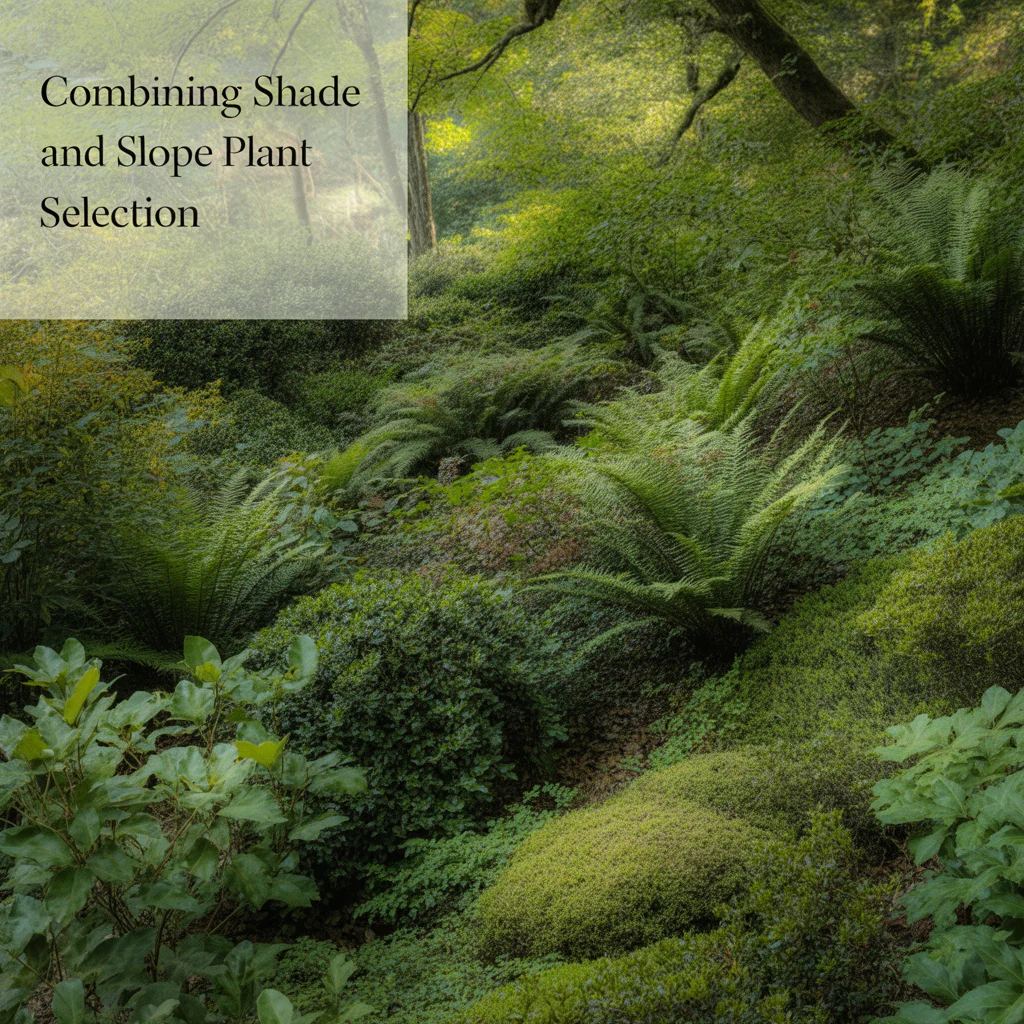
Combining shade and slope plant selection is the central challenge of a sloped shady spot, requiring plants that are both shade-tolerant and effective at stabilizing a slope, a specific combination of qualities. I select plants for sloped shady spots that meet both requirements at once, because the success of the whole garden depends on choosing species that thrive in shade while also binding the slope, which narrows the palette to a specific and reliable group of plants.
Plants That Tolerate Shade and Stabilize Slopes
Epimedium, ferns, and deep-rooted shrubs are three plant types that tolerate shade and stabilize slopes. Epimedium combines genuine dry-shade tolerance with dense soil-binding ground cover. Ferns combine shade adaptation with root stabilization and cascading cover. Deep-rooted shrubs like mahonia combine shade tolerance with the strongest living slope stabilization, together forming the core palette for a sloped shady spot.
Building a Reliable Slope Planting Palette
A ground cover layer, a fern layer, and a structural shrub layer are three layers suited to a sloped shady planting palette. A ground cover layer of epimedium or vinca binds and covers the slope surface. A fern layer provides cascading cover and additional stabilization. A structural shrub layer of deep-rooted shade-tolerant shrubs anchors the slope, together creating the layered, stabilizing, shade-tolerant planting a sloped woodland garden needs.
Creating Viewpoints and Seating on a Slope
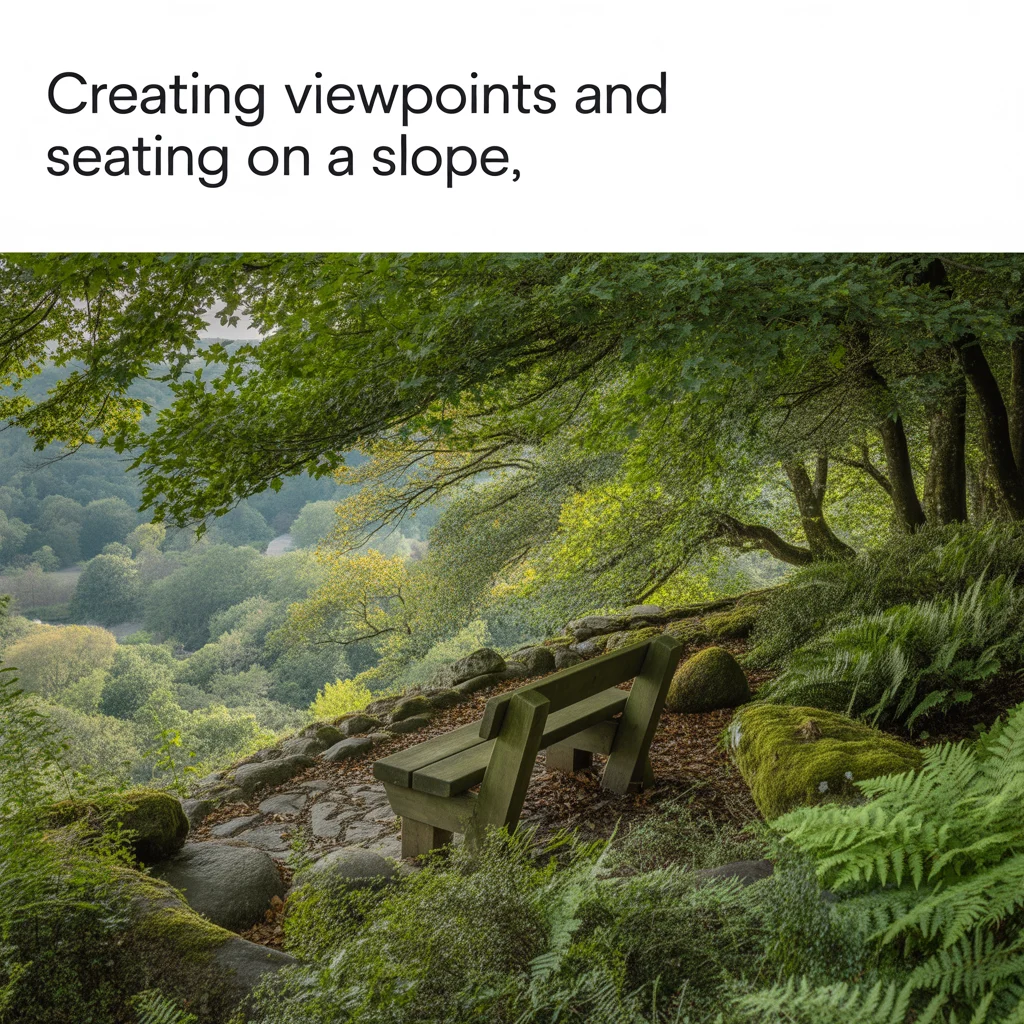
Creating viewpoints and seating on a slope turns the levels and elevations of a sloped woodland garden into opportunities for places to pause and enjoy the garden from different heights. I incorporate viewpoints and seating into sloped woodland gardens, because the changing elevations of a slope offer wonderful opportunities to look across and down through the woodland planting, and a well-placed seat on a terrace becomes a favourite spot to take in the garden.
Seating Opportunities on a Slope
A terrace seating level, a viewpoint bench, and an integrated stone seat are three seating opportunities suited to a sloped woodland garden. A terrace seating level on a flat terrace provides a stable, comfortable place to sit within the slope. A viewpoint bench positioned to look across the woodland captures the best outlook. An integrated stone seat built into the slope or a retaining wall provides a natural, permanent resting place.
Designing Slope Viewpoints
Elevation outlooks, framed views, and pause points are three principles suited to designing slope viewpoints. Elevation outlooks use the height of the slope to provide views across and down through the woodland planting. Framed views through the planting create focused, beautiful outlooks from the viewpoints. Pause points along the path and steps invite the visitor to stop and enjoy the woodland garden from different levels of the slope.
Establishing and Maintaining a Sloped Woodland Garden
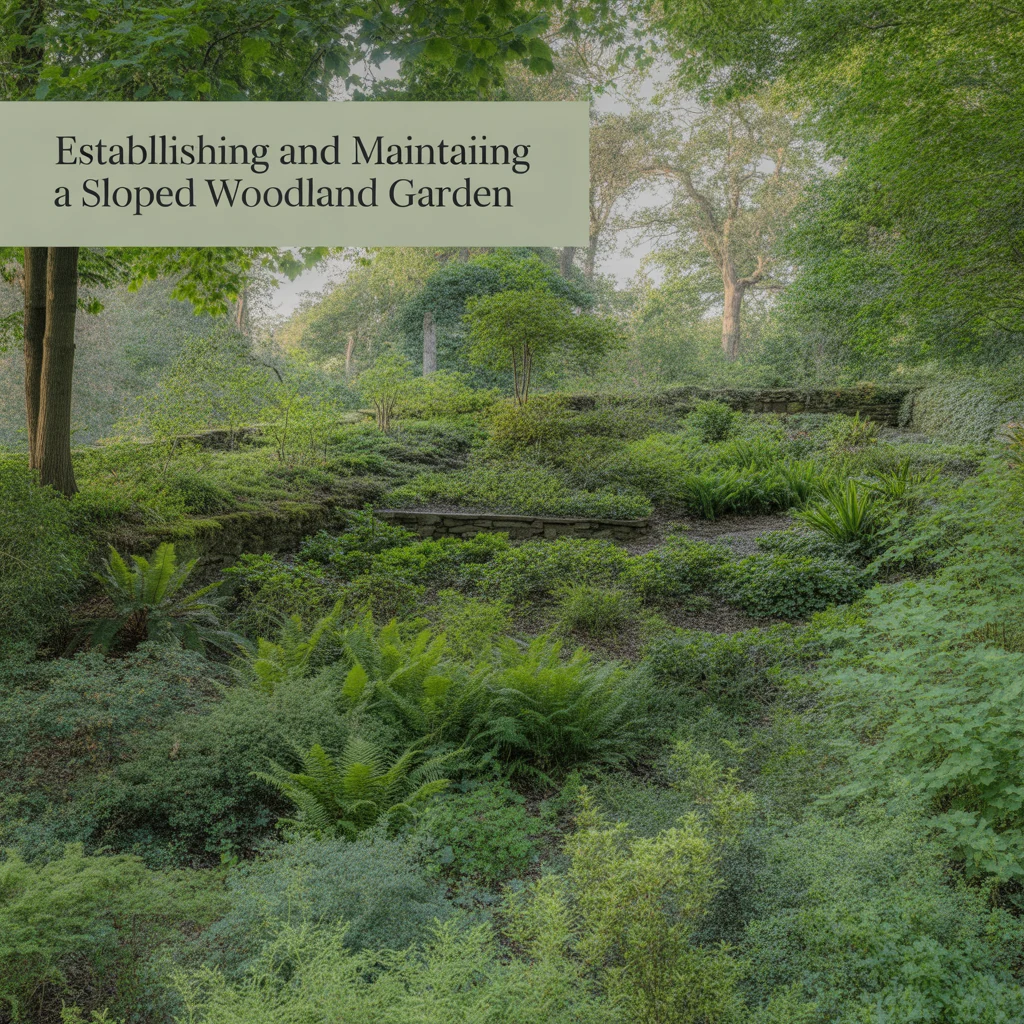
Establishing and maintaining a sloped woodland garden involves the initial stabilization and planting followed by the modest ongoing care that keeps the slope stable and the planting thriving. I set clear expectations for establishing a sloped woodland garden, because the bank needs careful initial stabilization and planting to establish, after which a well-designed sloped woodland garden becomes stable, beautiful, and low-maintenance for the long term.
Establishing a Sloped Woodland Garden
Initial stabilization, dense establishment planting, and erosion protection are three stages suited to establishing a sloped woodland garden. Initial stabilization through terracing or retaining structures where needed prepares the slope. Dense establishment planting of ground cover, ferns, and shrubs begins binding the bank. Erosion protection during establishment, such as matting, protects the slope until the planting takes hold and provides its own stabilization.
Maintaining a Sloped Woodland Garden
Monitoring stability, seasonal planting care, and managing drainage are three tasks suited to maintaining a sloped woodland garden. Monitoring stability, checking for any erosion or movement, catches issues early. Seasonal planting care, such as the modest cutting back and dividing the planting needs, keeps the slope clothed and healthy. Managing drainage, keeping water flow controlled, protects the long-term stability of the sloped woodland garden.
Frequently Asked Questions
How do I create a woodland garden on a steep shady slope?
You create a woodland garden on a steep shady slope by first assessing the gradient and stability, terracing or building retaining walls where the slope is too steep to plant directly, then clothing the bank in shade-tolerant, soil-binding planting such as ferns, epimedium, and deep-rooted shrubs. The key is recognizing that a sloped shady spot is naturally suited to woodland planting, since the shade provides the right conditions for woodland species and their roots stabilize the bank, so the design works with the conditions rather than against them. Begin with any structural stabilization the slope needs, protect the bare soil with erosion matting during establishment, plant densely with a layered palette of ground cover, ferns, and shrubs, and provide safe access with naturalistic steps that traverse the slope, after which the established planting will stabilize the bank and create a beautiful, low-maintenance woodland garden.
What plants stabilize a shaded slope in a woodland garden?
The best plants to stabilize a shaded slope combine genuine shade tolerance with effective soil-binding roots, with epimedium, ferns, vinca, pachysandra, and deep-rooted shrubs like mahonia, viburnum, and hydrangea arborescens being the most reliable choices. Epimedium and vinca form dense ground cover that binds the soil surface and suppresses weeds, ferns such as Dryopteris and Matteuccia provide cascading cover and root stabilization, and deep-rooted shade-tolerant shrubs provide the strongest structural anchoring on steeper banks. The most effective approach is to layer these plants into a complete planting scheme, with a ground cover layer binding the surface, a fern layer adding cover and stabilization, and a structural shrub layer anchoring the slope, which together create a living stabilization system that holds the shaded bank while clothing it in lush woodland planting.
How do I stop a shady slope from eroding?
You stop a shady slope from eroding by clothing it in dense soil-binding planting, controlling the water that flows across it, and protecting the bare soil during establishment with erosion matting. Dense ground cover, ferns, and deep-rooted shrubs bind the soil with their roots and shield it from the impact of rain, which is the most effective long-term erosion control, while terracing or cross-slope planting bands slow the downward rush of water that cuts channels into a bank. During the establishment period before the planting takes hold, biodegradable erosion matting protects the vulnerable bare slope, and managing drainage to intercept and direct runoff prevents the concentrated water flow that causes the worst erosion, so the combination of stabilizing planting, water management, and establishment protection turns an eroding shaded slope into a stable woodland bank.
Can I have steps and paths on a sloped woodland garden?
You can and should have steps and paths on a sloped woodland garden, since safe access across the bank is both a practical necessity and an opportunity to create the winding, exploratory routes that make a woodland garden a journey. Natural stone steps, timber sleeper steps, and rustic log riser steps all suit the woodland setting and provide safe ascent, while paths that traverse the slope rather than climbing straight up both ease the gradient and create a more naturalistic, exploratory route. The most important considerations are comfortable and consistent step dimensions, secure slip-resistant footing since damp shaded surfaces can be slippery, and winding routes that reveal the garden gradually, which together make the sloped woodland garden safe to move through while enhancing the sense of discovery that defines a woodland garden.
Is a sloped shady spot good for a woodland garden?
A sloped shady spot is genuinely well suited to a woodland garden, because the shade provides the conditions that woodland plants thrive in and the slope offers natural drama, layered viewpoints, and cascading planting opportunities that a flat garden lacks. What seems like a difficult combination of challenges is actually close to the natural conditions of a real woodland, where trees create shade and woodland plants clothe banks and slopes, so a naturalistic woodland approach works with these conditions rather than fighting them. The slope allows planting to be displayed at multiple levels and to cascade beautifully down the bank, the shade supports the lush ferns and ground cover that define the woodland aesthetic, and the deep-rooted woodland planting stabilizes the slope, making a sloped shady spot one of the best possible places to create a thriving and beautiful woodland garden.