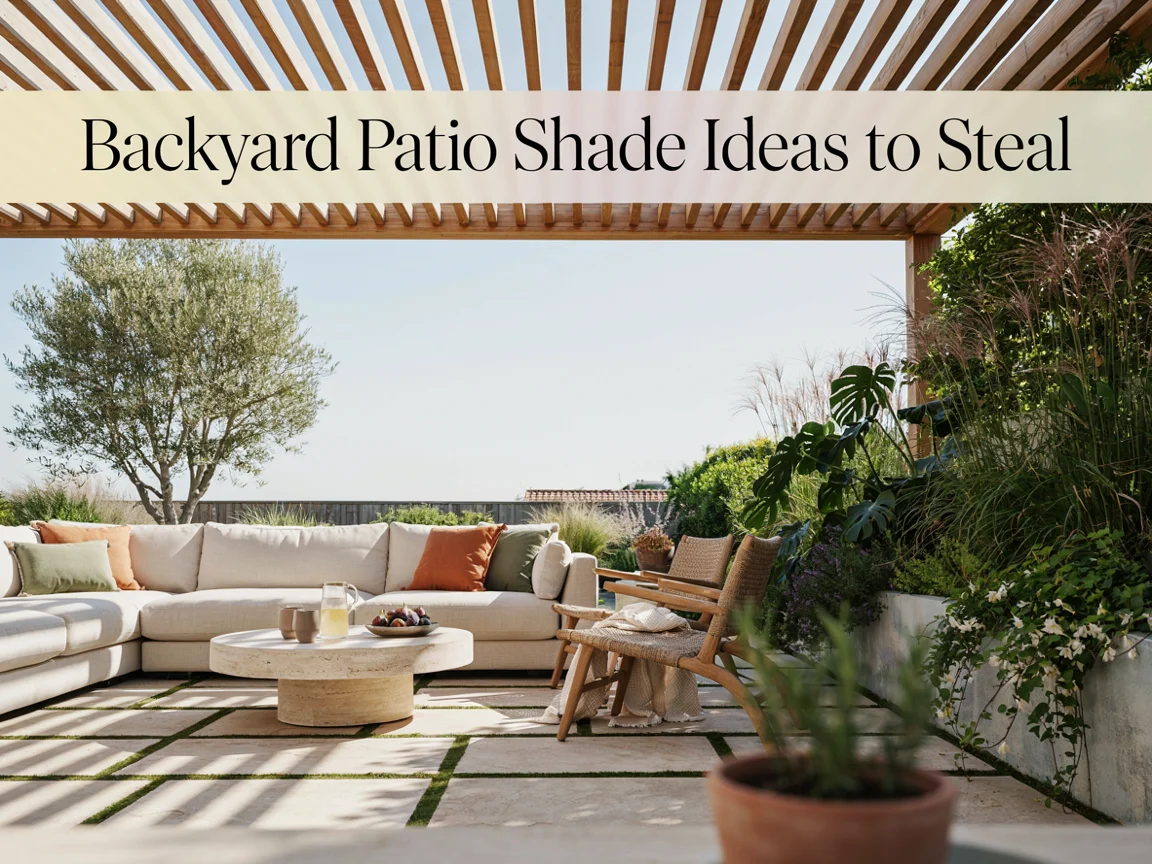
Backyard Patio Shade Ideas to Steal

I have spent years sitting in other people’s shaded corners, squinting up at whatever was blocking the sun, trying to work out exactly how they’d built it. That is not a confession — it is simply how good patio shade gets designed. Every shaded backyard patio I have ever loved taught me something I later carried home: a way of angling a sail so it caught the afternoon glare, a plant choice glimpsed over a fence that gave dappled rather than total shade, a single clever trick for anchoring an umbrella so it survived a windy summer that an old landscaper showed me years ago. The best-shaded patios are rarely invented from nothing — they are pieced together by people who noticed a good idea somewhere else and had the nerve to copy it. So this article is exactly that: a collection of the most brilliant backyard patio shade ideas I have stolen, tested, and stolen again, the ones that work on almost any patio, small or large, covered or open, on a tight budget or a generous one. Take all of them. Steal shamelessly. That is how a good shaded patio gets built.
Backyard patio shade ideas are the proven structure, planting, and fabric tricks that turn a sun-blasted outdoor floor into a comfortable, usable space throughout the hottest part of the day — pergolas, shade sails, umbrellas, retractable awnings, and living shade from trees and vines — drawn from the best patios and adaptable to almost any backyard. These ideas give a patio its comfort and its extended hours of use, while the backyard setting gives each idea the open sky, the shifting sun angles, and the surrounding greenery that make shade genuinely work rather than just look good in a photo.
Over the years I have shaded, reshaded, and studied patios ranging from tiny apartment balconies to sprawling entertaining areas, and I have kept a running shortlist of the shade ideas that actually hold up through a real summer. I have dropped the ones that look good on day one but fail by August, and I have watched the right shade structure turn an unusable midday patio into the most comfortable spot in the whole garden. In this article I am sharing the most brilliant backyard patio shade ideas, covering small-space solutions, budget approaches, structures, living shade, and the details that make a shaded patio actually comfortable to sit in.
A Pergola That Filters Rather Than Blocks the Sun
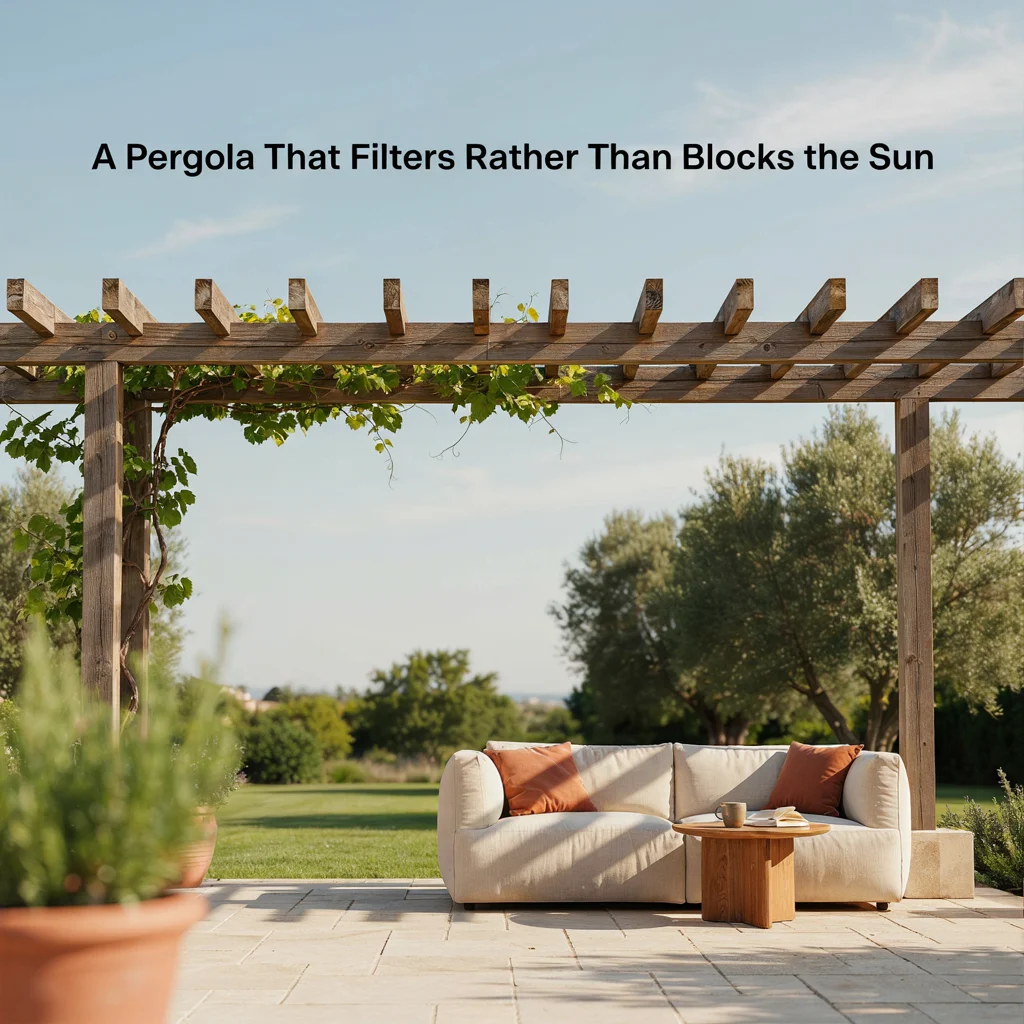
A pergola that filters rather than blocks the sun is perhaps the single most brilliant backyard patio shade idea, using evenly spaced overhead beams to soften harsh light into a dappled, comfortable glow rather than plunging the whole patio into flat shadow. I steal this pergola approach constantly, because a structure that filters light keeps a patio bright and inviting while still cutting the worst of the midday heat, which a solid roof can never quite replicate.
Designing an Effective Pergola
Beam spacing, orientation to the sun, and added fabric or vines are three details suited to an effective pergola. Beam spacing calculated for your latitude determines how much direct sun actually gets through at midday. Orientation to the sun’s path, rather than simply to the house, ensures the structure blocks the sun when you actually need shade. Added fabric or climbing vines across the beams increase coverage on the harshest afternoons without permanently closing off the space.
Materials for a Long-Lasting Pergola
Pressure-treated timber, powder-coated aluminium, and vinyl-clad structures are three material choices suited to a pergola. Pressure-treated timber gives the most traditional look and can be stained to match existing garden features. Powder-coated aluminium resists warping and rot far longer than timber in humid climates. Vinyl-clad structures require the least ongoing maintenance, though they typically cost more upfront than a basic timber build.
Shade Sails Stretched Across an Open Patio
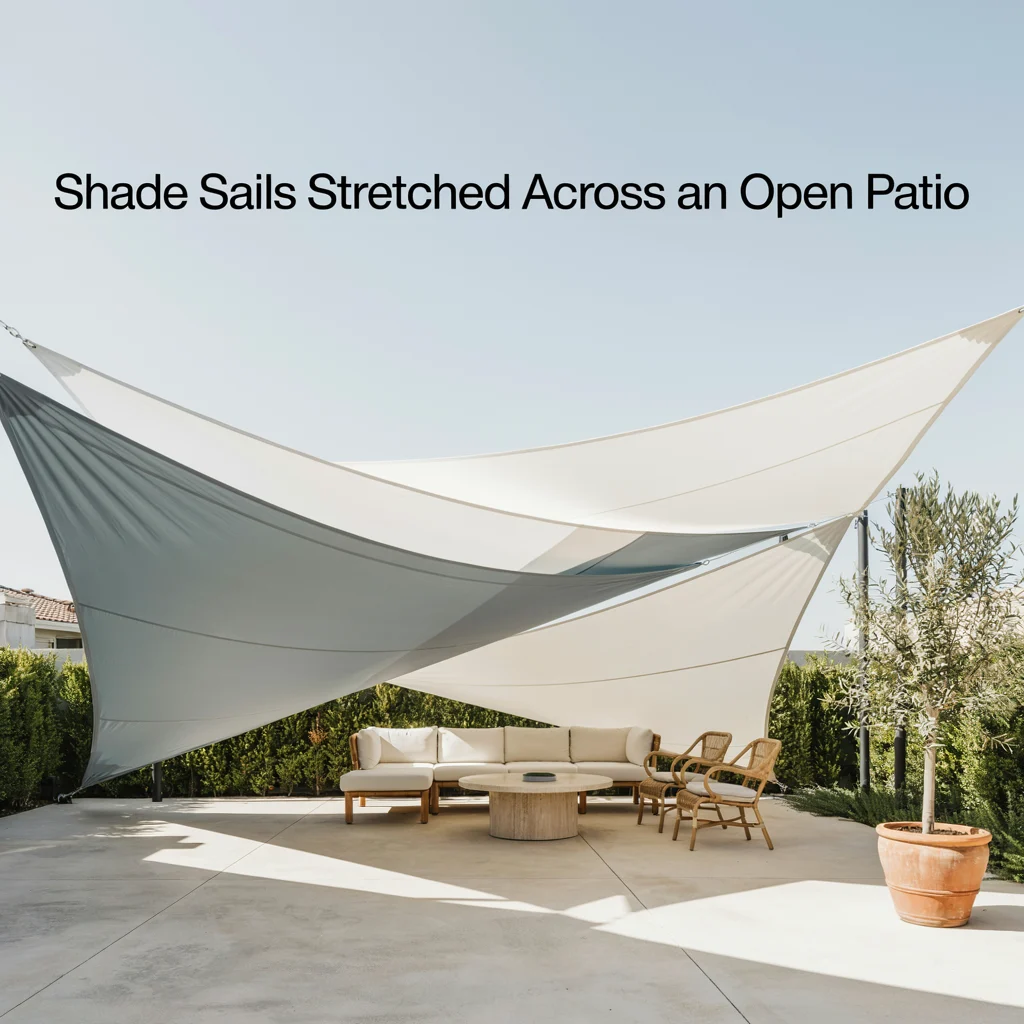
Shade sails stretched across an open patio are the brilliant idea that brings architectural shade to a space with no existing structure to build from, using tensioned fabric anchored between posts, a wall, or existing trees. I steal this shade sail trick often, because a well-angled sail transforms an exposed patio in an afternoon, with none of the cost or permanence of a full roof.
Positioning a Shade Sail
Sun-path tracking, overlapping angles, and a taut installation are three principles suited to positioning a shade sail. Sun-path tracking across the hours you actually use the patio determines where the sail needs to sit, not just where it looks best. Overlapping angles from two or three smaller sails cover more of the day than a single flat sail ever can. A taut installation, pulled tight rather than left slack, keeps the fabric from pooling water and sagging over time.
Choosing Shade Sail Fabric
Knitted shade cloth, waterproof canvas, and UV-rated fabric are three fabric options suited to shade sails. Knitted shade cloth allows some airflow and rain through while blocking a high percentage of UV rays. Waterproof canvas offers full rain protection but needs more careful tensioning to shed water properly. UV-rated fabric, whichever base material you choose, is essential for the sail to hold its colour and strength through repeated summer exposure.
A Retractable Awning for Flexible Shade
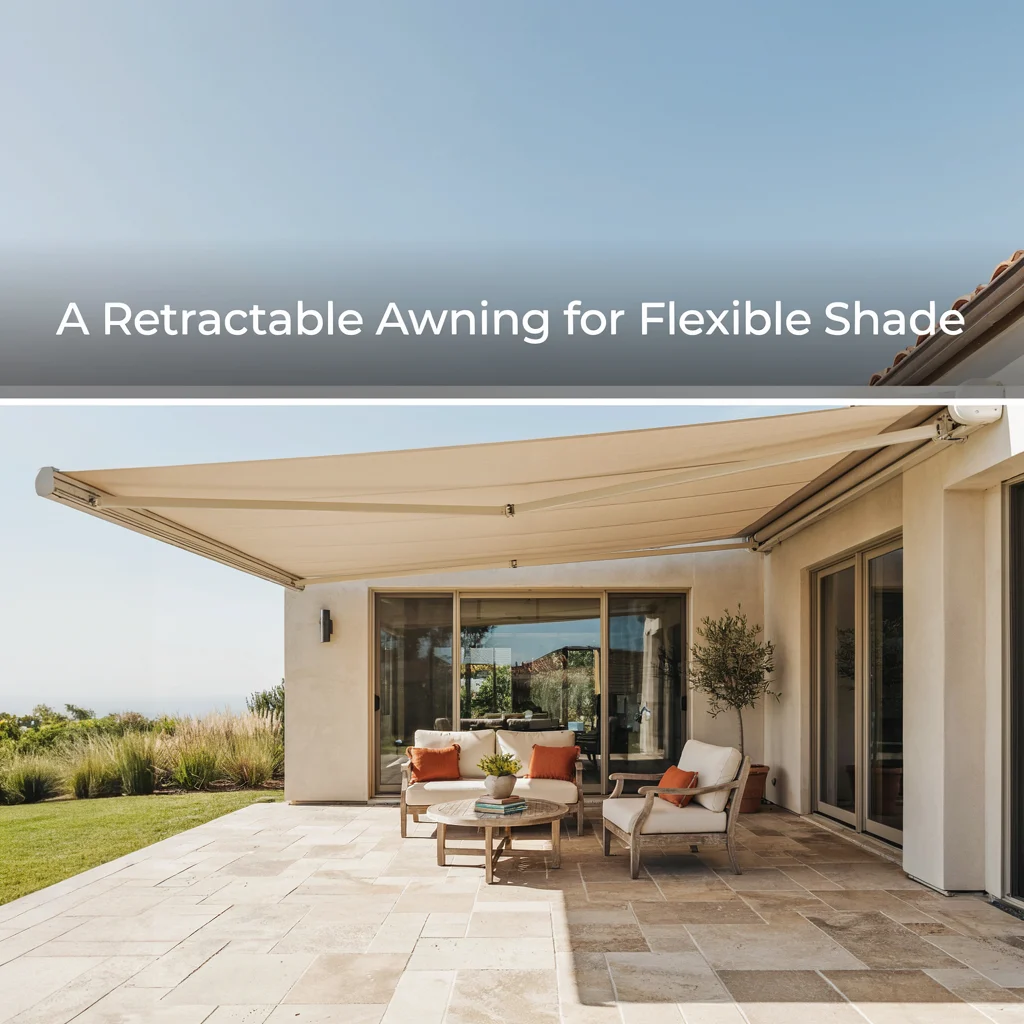
A retractable awning for flexible shade is the brilliant idea that lets you choose sun or shade on demand, using a fabric canopy that extends from the house wall and rolls back in when it isn’t needed. I steal this awning idea for patios attached directly to the house, because the ability to open the space up on a mild day and close it down during a heatwave gives a flexibility that fixed shade structures simply cannot match.
How Retractable Awnings Work
A wall-mounted housing, an extendable arm mechanism, and manual or motorized controls are three components suited to a retractable awning. A wall-mounted housing protects the rolled-up fabric from weather when the awning isn’t in use. An extendable arm mechanism supports the fabric as it unrolls, keeping it taut without additional posts. Manual or motorized controls let you adjust coverage throughout the day with a hand crank or the push of a button.
Getting the Most From an Awning
Wind sensors, a slight downward pitch, and seasonal storage are three considerations suited to awning longevity. Wind sensors on motorized models automatically retract the awning before gusts cause damage. A slight downward pitch lets rain run off rather than pooling on the fabric. Seasonal storage or a protective cover through winter extends the life of the fabric considerably.
Small Backyard Patio Shade Ideas for Tight Spaces
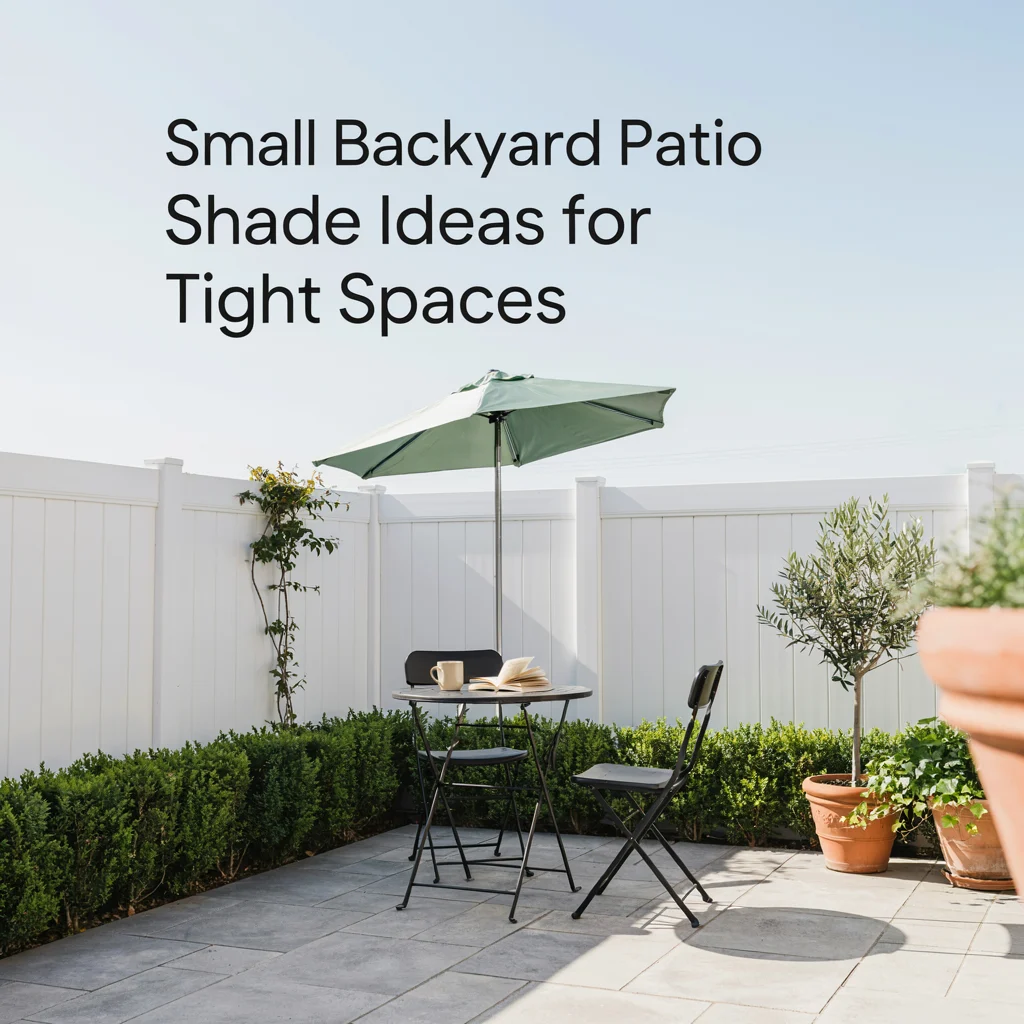
Small backyard patio shade ideas for tight spaces prove that limited square footage is no barrier to a cool, comfortable patio, using compact fixtures like cantilever umbrellas and wall-mounted canopies that don’t require floor-standing posts. I steal these small-space shade tricks constantly, because a balcony or courtyard patio can feel just as shaded and comfortable as a larger garden, provided the structure is scaled correctly to the space.
Shade Options That Suit Small Patios
A cantilever umbrella, a wall-mounted retractable canopy, and a single well-placed shade sail are three options suited to small patios. A cantilever umbrella offers full coverage from a single offset pole, keeping the centre of a small patio free for furniture. A wall-mounted retractable canopy avoids taking up any floor space at all. A single well-placed shade sail, angled to catch the worst of the afternoon sun, can cover a compact patio without dominating it visually.
Making Small-Space Shade Feel Intentional
Proportional scaling, a single colour choice, and multi-use structures are three approaches suited to small shaded patios. Proportional scaling keeps the shade structure from overwhelming a modest footprint. A single colour choice throughout the fabric and frame keeps a small space feeling calm rather than visually busy. Multi-use structures, like a pergola that also supports a climbing vine, get double duty out of the limited space available.
Patio Shade Ideas on a Budget
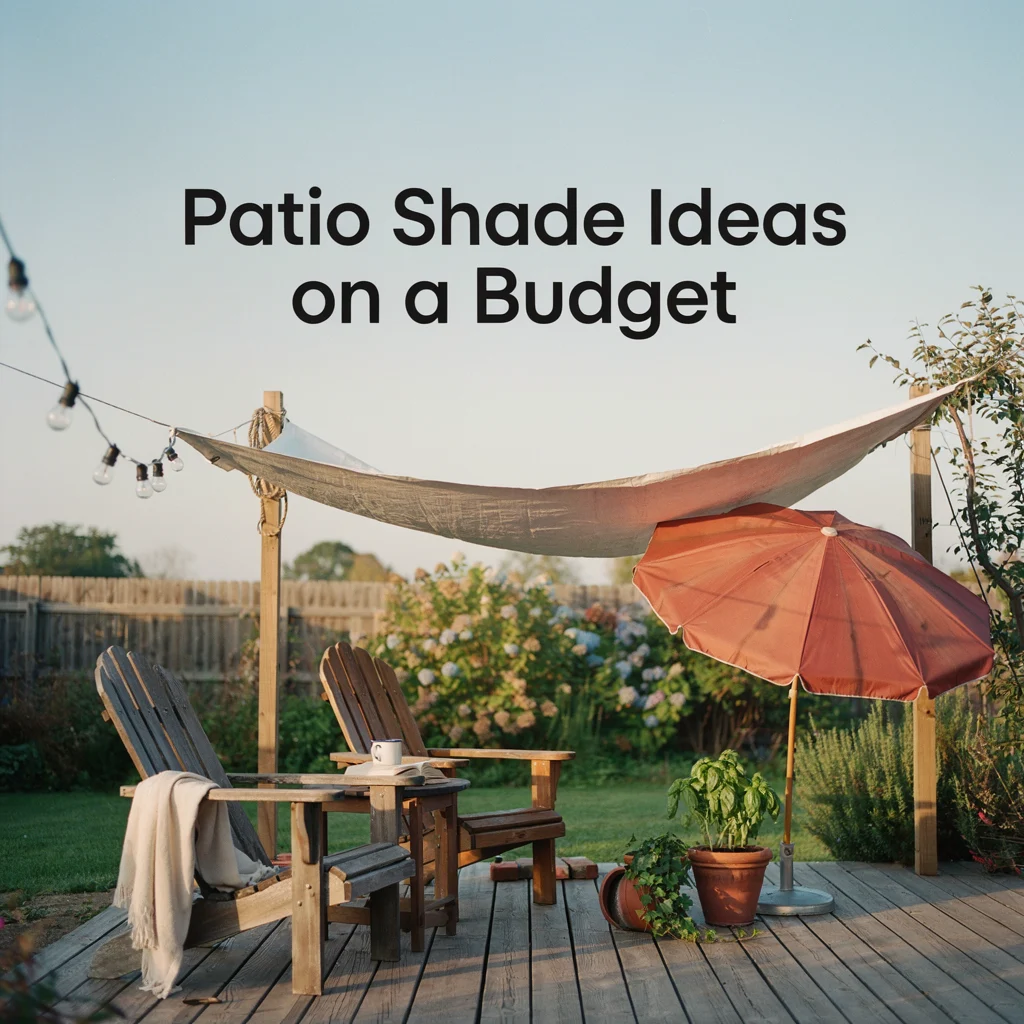
Patio shade ideas on a budget are the brilliant approach for anyone who wants real relief from the sun without a large structural investment, using inexpensive fabric, simple posts, and smart placement to stretch every dollar. I steal these budget tricks often, because a well-planned budget shade solution can feel just as effective as an expensive pergola, provided the basics of positioning and fabric quality are handled properly.
Affordable Shade Solutions
A market umbrella, a simple DIY sail on repurposed posts, and a retractable side awning are three budget-friendly shade solutions. A market umbrella is one of the most affordable ways to create instant, movable shade over a table. A simple DIY sail stretched between repurposed fence posts or existing structures avoids the cost of new framing altogether. A retractable side awning, chosen in a basic manual version rather than motorized, delivers flexible shade at a fraction of the premium-model price.
Stretching a Shade Budget Further
Off-season purchasing, reused materials, and phased upgrades are three ways to save money without sacrificing comfort. Off-season purchasing of umbrellas and sails, bought at the end of summer, often comes with substantial discounts. Reused materials like leftover fence posts or timber offcuts can frame a DIY shade project for next to nothing. Phased upgrades, starting with a simple umbrella and adding a permanent structure later, spread the cost across more than one season.
Living Shade From Trees and Climbing Vines
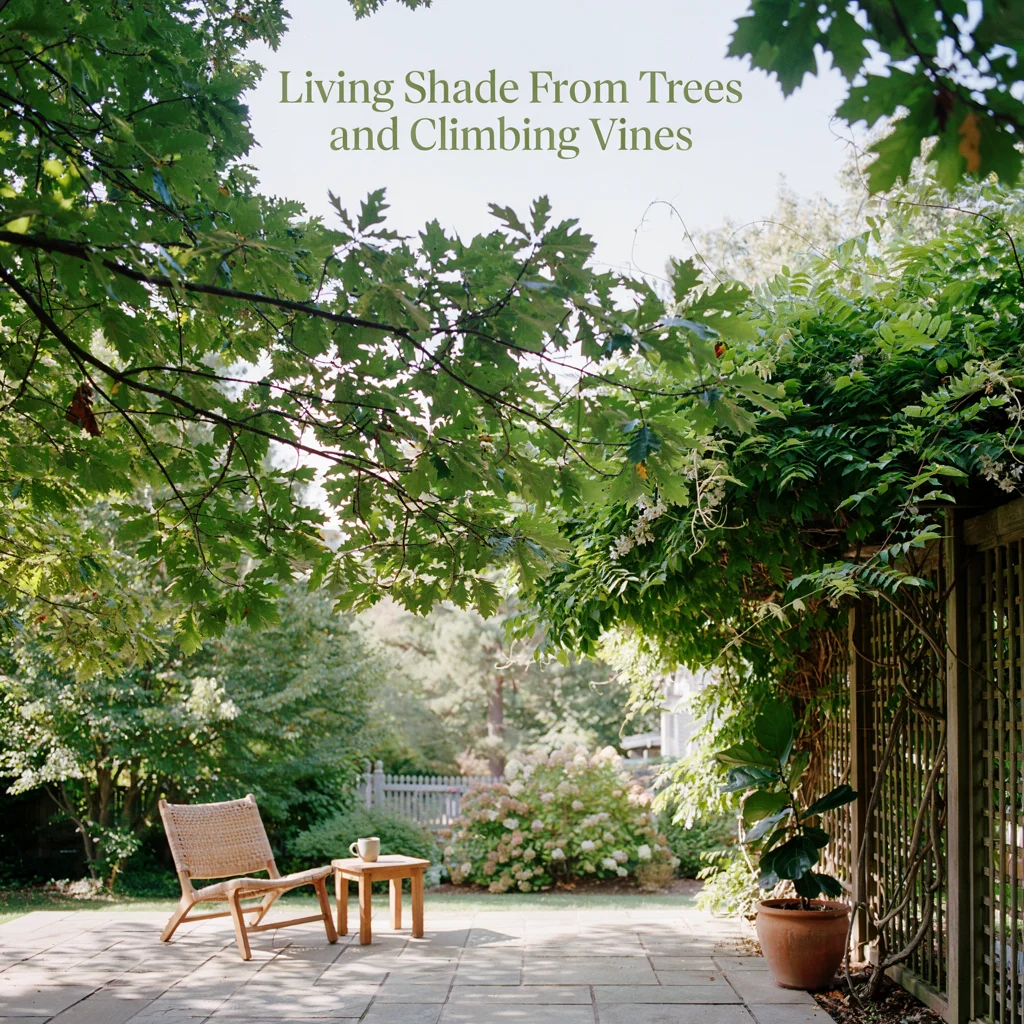
Living shade from trees and climbing vines is the brilliant idea that grows more beautiful and effective every year, using deciduous trees or climbing plants trained over a frame to provide natural, seasonal shade. I steal this living-shade approach for almost every long-term garden project, because a patio shaded by leaves rather than fabric feels cooler, greener, and more connected to the garden around it.
Trees and Vines for Shade
A deciduous shade tree, a fast-growing climbing vine, and an espaliered fruit tree are three planting choices suited to living patio shade. A deciduous shade tree provides cool summer coverage and lets welcome winter sun through once its leaves drop. A fast-growing climbing vine trained over a pergola or arbour can provide usable shade within just one or two seasons. An espaliered fruit tree trained flat against a frame gives shade, structure, and a harvest all from the same planting.
Establishing Living Shade Successfully
Correct spacing from the house, regular pruning, and patient long-term planning are three factors suited to living shade. Correct spacing from the house prevents root or branch interference with the structure as the planting matures. Regular pruning keeps a vine or tree providing shade exactly where it’s wanted rather than growing unchecked. Patient long-term planning accepts that living shade takes longer to establish than fabric or timber, but rewards that patience with a result that only improves with time.
Covered Patio Structures Built to Last
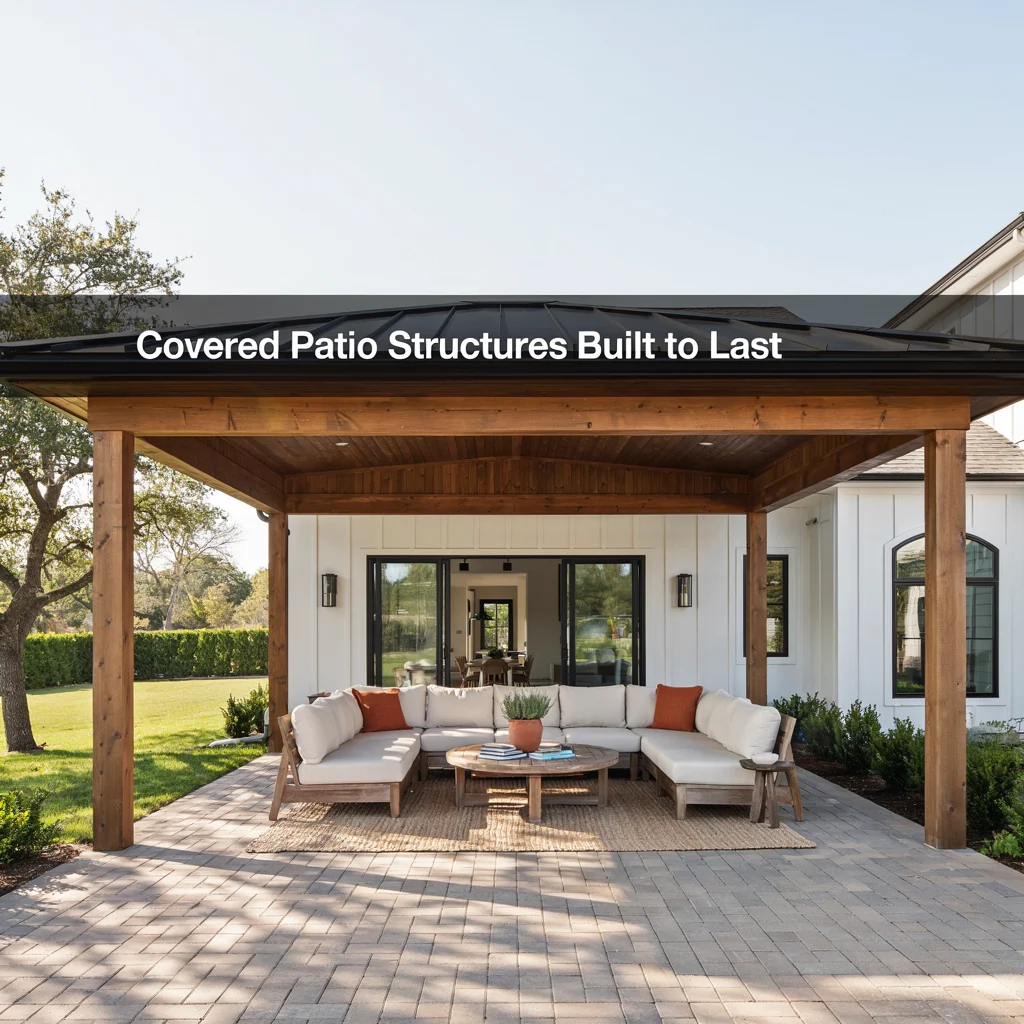
Covered patio structures built to last are the brilliant idea for anyone ready to invest in a permanent solution, using a solid roof — timber, polycarbonate, or metal — to provide full shade and weather protection in every season, not just summer. I steal this permanent-structure approach whenever a patio is used year-round, because a solid roof extends the space’s usefulness through rain and harsh sun alike, not just the handful of mild afternoons that fabric shade suits best.
Roofing Materials for a Covered Patio
Solid timber, polycarbonate panels, and standing-seam metal are three roofing materials suited to a permanent patio cover. Solid timber roofing gives the most traditional look and can be finished to match the house. Polycarbonate panels let some natural light through while still blocking harmful UV rays and rain. Standing-seam metal roofing offers excellent durability and a clean, modern profile with minimal maintenance.
Planning a Permanent Structure
Local building requirements, proper drainage, and integrated lighting are three planning considerations suited to a covered patio. Local building requirements often apply to permanent roofed structures and are worth checking before construction begins. Proper drainage built into the roof design prevents water pooling or running back toward the house. Integrated lighting planned into the structure from the outset avoids awkward retrofitted wiring later on.
Simple Patio Shade Ideas That Work Every Time
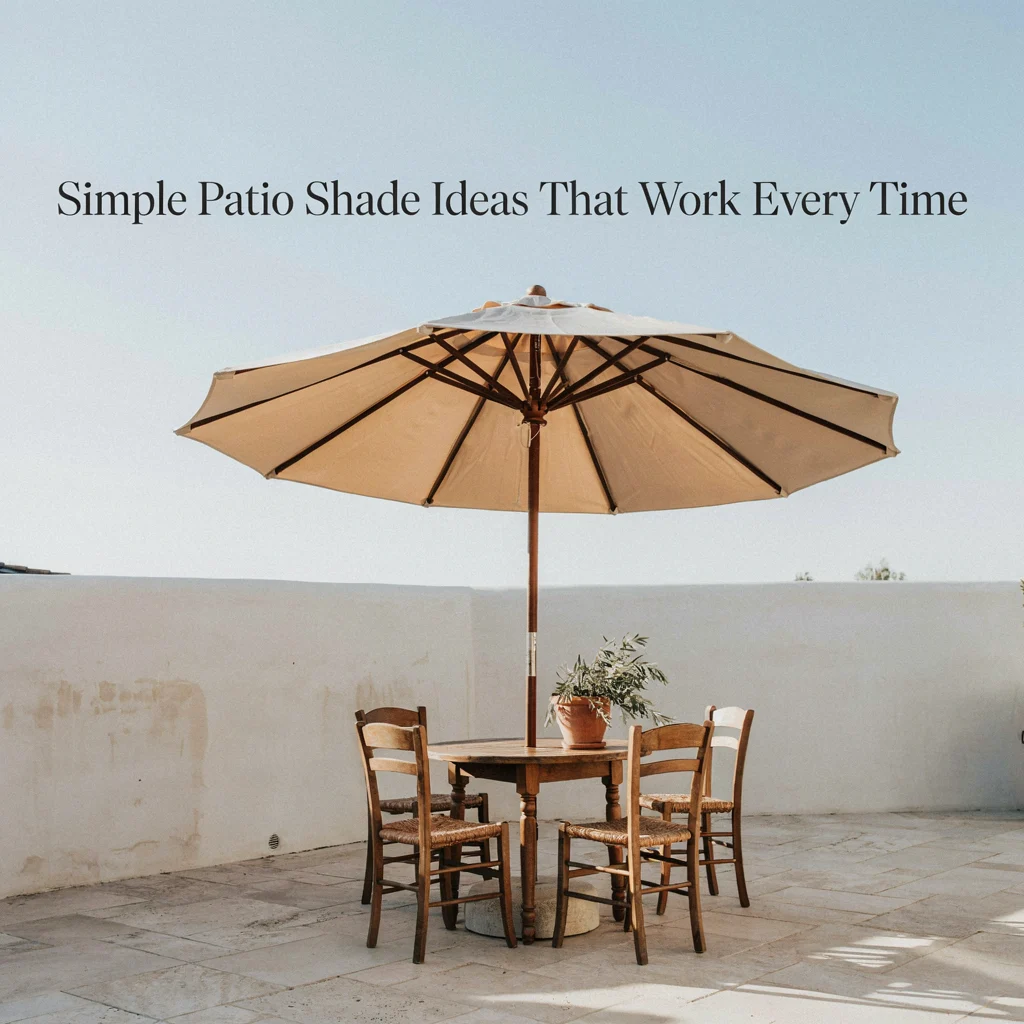
Simple patio shade ideas that work every time celebrate the reliable basics — a well-placed umbrella, a single shade sail, or a modest pergola — over elaborate custom structures that take longer to plan and cost more to build. I steal this simplicity constantly, because the plainest shade solutions I have installed are consistently the ones homeowners still rely on years later, long after more complicated designs have needed repair or replacement.
Why Simple Shade Solutions Endure
Fewer moving parts, easier repairs, and lower upfront cost are three reasons simple shade ideas endure. Fewer moving parts mean less that can break down or need adjustment over time. Easier repairs follow naturally from straightforward designs using widely available parts and fabric. Lower upfront cost makes a simple solution accessible even on a modest landscaping budget.
Choosing a Simple Shade Solution
Matching shade to actual sun hours, choosing durable fabric, and keeping the structure removable are three principles suited to simple shade. Matching shade to the specific hours you actually use the patio avoids over-building for coverage you don’t need. Choosing durable, UV-rated fabric from the outset prevents an early, costly replacement. Keeping the structure removable, like a freestanding umbrella base, offers flexibility to change your mind as the garden evolves.
Combining Multiple Shade Sources for All-Day Comfort
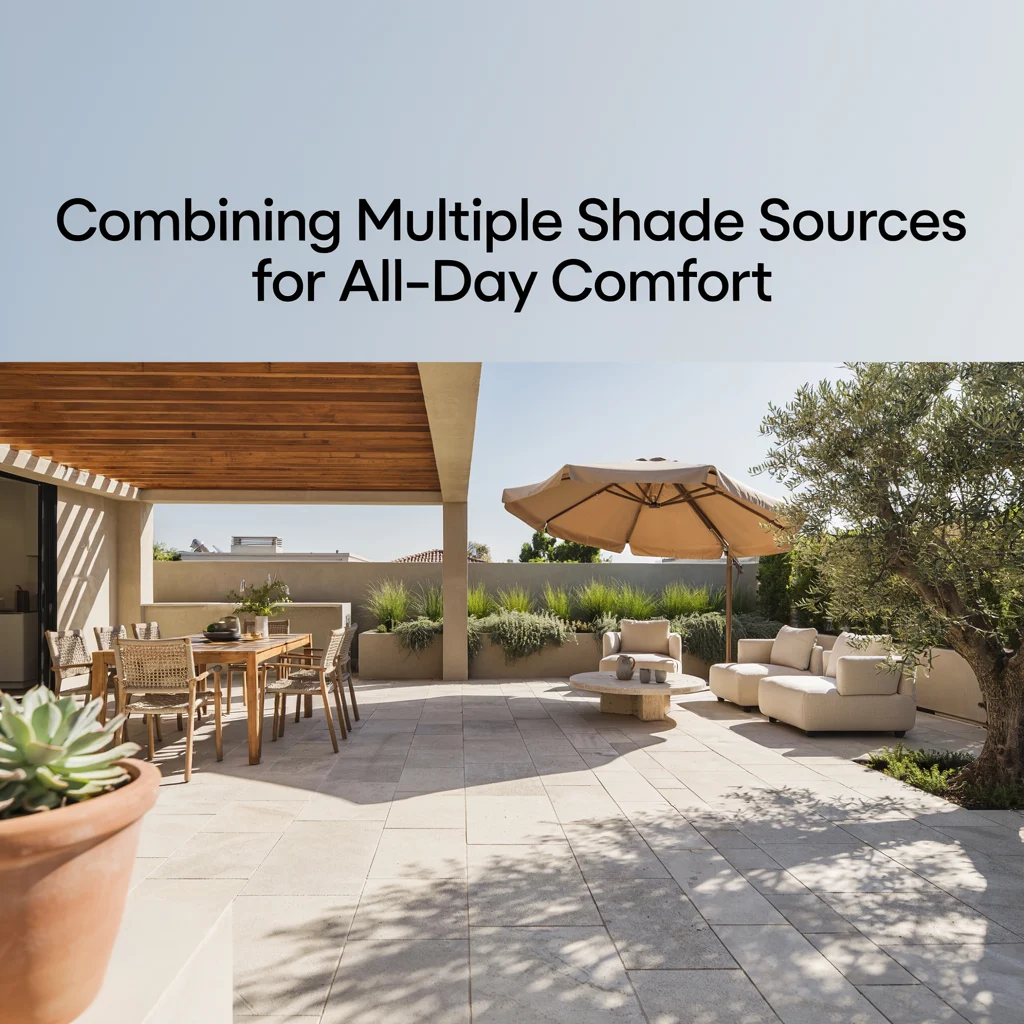
Combining multiple shade sources for all-day comfort is the brilliant idea that acknowledges no single structure covers every hour of a long summer day, layering a pergola, a movable umbrella, and some living shade so the patio stays comfortable from morning through evening. I steal this layered approach for almost every finished patio project, because relying on one fixed shade source inevitably leaves some part of the day, or some part of the patio, still baking in direct sun.
Layering Different Shade Types
A fixed overhead structure, a movable umbrella, and edge planting are three shade sources suited to a layered plan. A fixed overhead structure like a pergola handles the bulk of the coverage throughout the main part of the day. A movable umbrella fills in gaps as the sun shifts, covering whichever seating area needs it at a given hour. Edge planting, whether trees or tall shrubs, blocks low-angle morning or evening sun that overhead structures miss entirely.
Planning a Layered Shade Strategy
Tracking sun patterns across a full day, prioritizing peak-use hours, and leaving room to adjust are three steps suited to planning layered shade. Tracking sun patterns across a full day, ideally across a few different seasons, reveals exactly where gaps in coverage occur. Prioritizing peak-use hours, like a dinner hour or weekend afternoon, ensures the most-used part of the day gets the most reliable shade. Leaving room to adjust, through movable pieces like umbrellas, keeps the whole plan flexible as needs change over time.
Frequently Asked Questions
What are the best backyard patio shade ideas?
The best backyard patio shade ideas combine a mix of structures and living elements rather than relying on a single fixed solution, including a pergola that filters rather than blocks light, a tensioned shade sail for an otherwise open patio, and a retractable awning for flexible day-to-day coverage. Living shade from a deciduous tree or trained climbing vine adds a long-term, ever-improving layer, while a permanent covered structure suits patios used year-round in every season. The single most important factor across every option is matching the shade to the actual hours and angles the sun hits your specific patio, rather than choosing a structure based on appearance alone.
How can I shade a small backyard patio without taking up floor space?
You can shade a small backyard patio without taking up floor space by choosing a cantilever umbrella, which supports its canopy from a single offset pole, or a wall-mounted retractable canopy that extends from the house and rolls away when not needed. A single, well-angled shade sail anchored to existing walls or fences can also cover a compact patio effectively without any freestanding posts crowding the seating area.
What are some patio shade ideas on a budget?
Budget-friendly patio shade ideas include a simple market umbrella for instant, affordable coverage over a table, a DIY shade sail stretched between repurposed posts or existing structures, and a basic manual retractable awning rather than a motorized version. Buying umbrellas and sails at the end of the summer season, when retailers often discount them, and reusing materials like leftover timber for a simple frame are two further ways to keep costs down without sacrificing comfort.
Does living shade from trees actually work as well as a built structure?
Living shade from trees and climbing vines can work extremely well, though it takes longer to establish than a built structure like a pergola or awning. A deciduous shade tree provides cool coverage in summer while still allowing welcome sun through in winter once its leaves drop, and a fast-growing climbing vine trained over a frame can provide usable shade within one or two growing seasons. The trade-off is patience, since living shade improves gradually rather than delivering full coverage the day it’s planted.
How do I make sure my patio stays shaded all day, not just at certain hours?
Keeping a patio shaded all day generally requires combining more than one shade source, since a single fixed structure rarely covers every angle the sun takes across a full day. Pairing a fixed overhead structure like a pergola with a movable umbrella for shifting gaps, and adding edge planting to block low-angle morning or evening sun, creates layered coverage that a single solution alone typically can’t achieve. Tracking how the sun moves across your specific patio over a full day is the best starting point for planning where each layer of shade actually needs to go.