
The Best Small Trees for a Small Yard or Garden

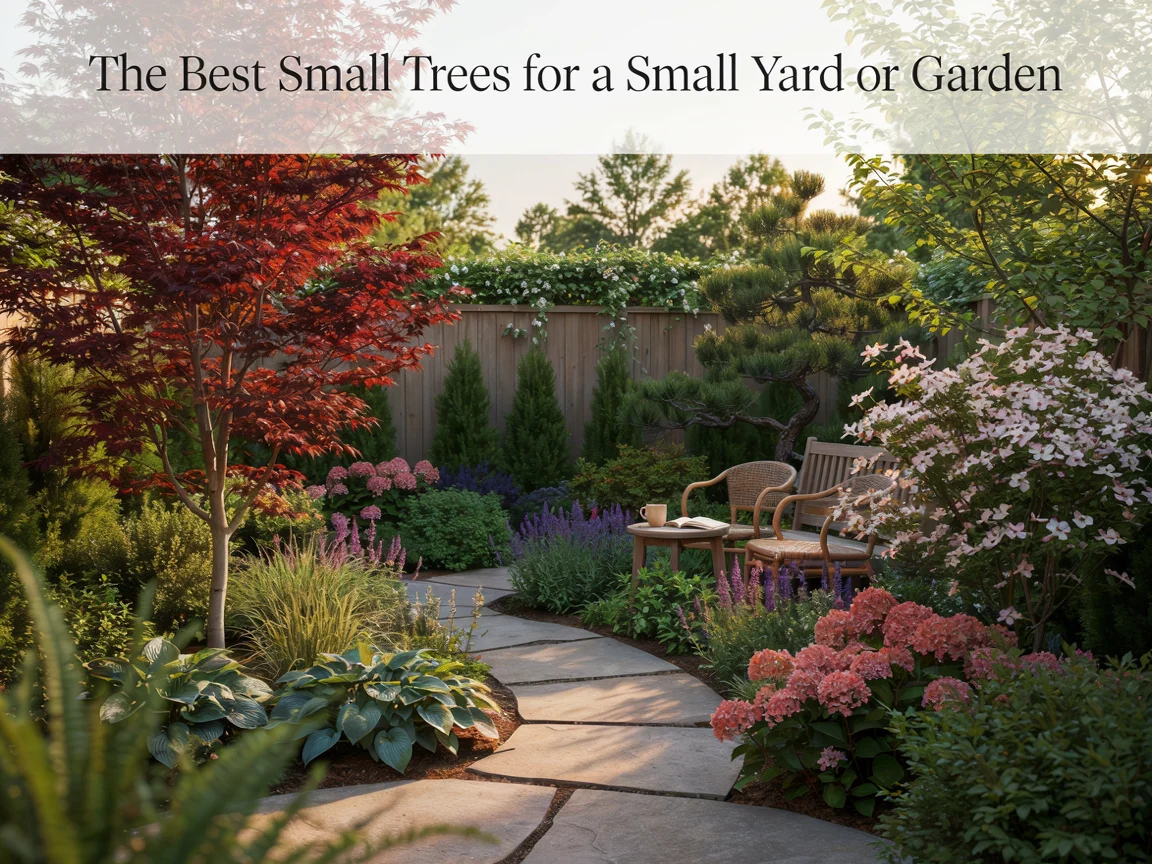
I have spent years comparing small yards where a single well-chosen tree transformed the whole space against equally small yards where an oversized or poorly matched tree eventually became a genuine problem, crowding a foundation or blocking every window. That is not a confession — it is simply how good small-tree selection gets learned. Every successful small garden tree I have studied taught me something I later carried home: a genuinely tiny species that still delivered real visual impact, a columnar variety that added height without spreading wide, a single practical placement trick that gave a small yard privacy without a single inch of ground wasted. The best small trees are rarely chosen at random — they are selected by people who understood exactly what a limited space could support and matched a species to that reality precisely. So this article is exactly that: a collection of the best small trees for a small yard or garden, the choices I have researched, observed, and recommended again and again, the ones that genuinely suit tight spaces, whether the goal is privacy, height, evergreen structure, a weeping form, or a burst of seasonal flowers. Take all of them. Borrow freely. That is how a small yard ends up with a tree that actually fits.
The best small trees for a small yard or garden are the species genuinely suited to a limited footprint, balancing manageable mature size with real visual, functional, or seasonal payoff. Very small and under-10-foot options, privacy-focused choices, columnar or tall-but-narrow varieties, evergreen and weeping forms, and flowering species suited to full sun are drawn from the trees that consistently succeed in genuinely small spaces, rather than those that merely look compact when young. These choices give a small yard its lasting structure and character, while a limited footprint’s real constraints, including proximity to a foundation, overhead lines, or neighbouring boundaries, make correct species and size matching more important than in a larger, more forgiving garden.
Very Small Trees for Genuinely Tiny Gardens
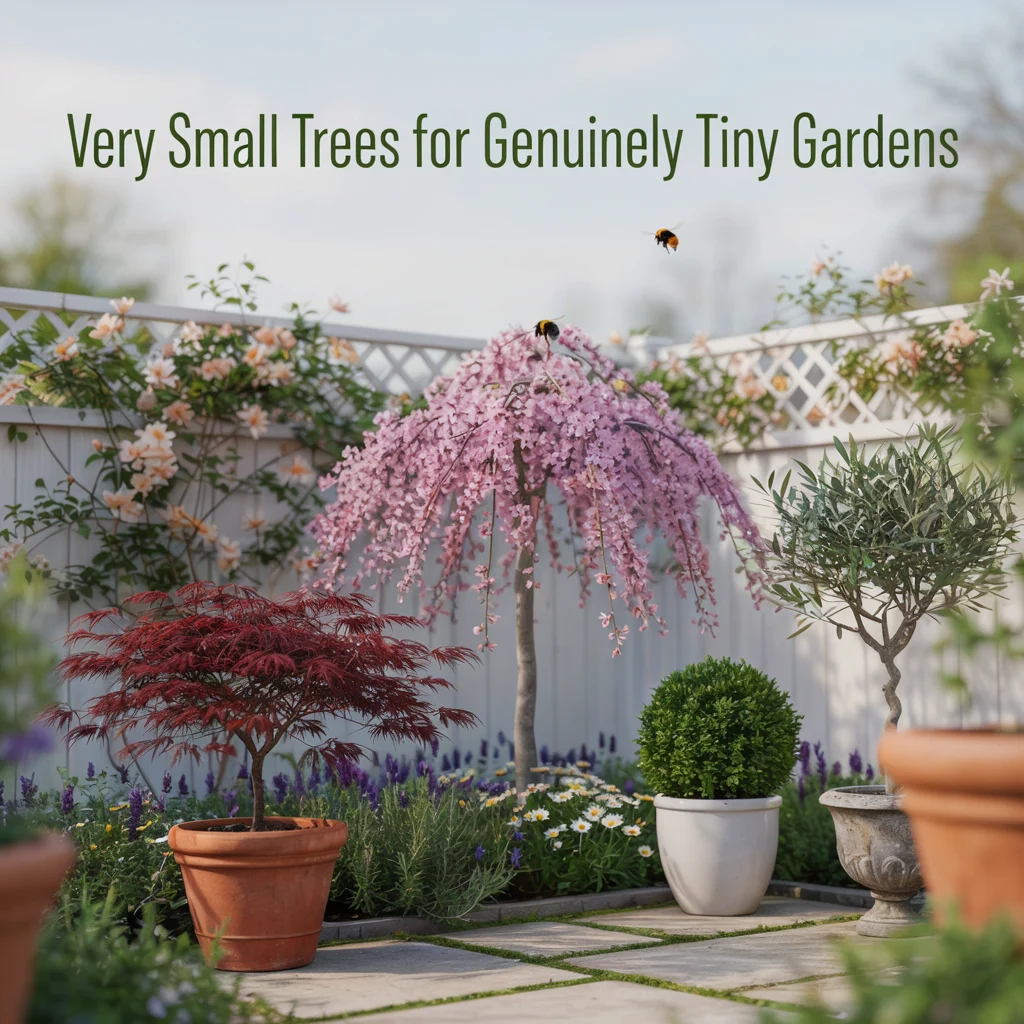
Very small trees for genuinely tiny gardens are the species that stay compact even at full maturity, suited to a courtyard, a narrow side yard, or any space too limited for even a modest standard small tree. I recommend these truly diminutive species specifically for the smallest gardens, since even many trees marketed as “small” still reach a size that overwhelms a genuinely tiny plot.
Species That Stay Genuinely Compact
Dwarf Japanese maple, dwarf crape myrtle, and dwarf pomegranate are three trees that reliably stay very small even at full maturity. Dwarf Japanese maple offers striking foliage colour and an elegant form within a footprint suited to even the tightest courtyard. Dwarf crape myrtle delivers vivid summer blooms and attractive bark in a genuinely manageable, compact size. Dwarf pomegranate combines ornamental flowers and small decorative fruit within one of the most diminutive true tree forms available.
Confirming a Tree’s Genuine Mature Size Before Planting
Checking mature size from a reliable horticultural source rather than a nursery tag alone, understanding that “dwarf” can vary considerably between cultivars, and accounting for eventual canopy spread as well as height are three steps worth taking before committing to a very small tree. Checking mature size from a reliable horticultural source rather than a nursery tag alone avoids the common disappointment of a young plant’s current size misrepresenting its eventual full growth. Understanding that “dwarf” can vary considerably between cultivars means researching the specific variety, not just the general species name. Accounting for eventual canopy spread as well as height ensures a genuinely small tree doesn’t simply stay short while still growing wide enough to crowd a tiny garden’s limited width.
Small Trees Under 10 Feet for Height-Restricted Spaces
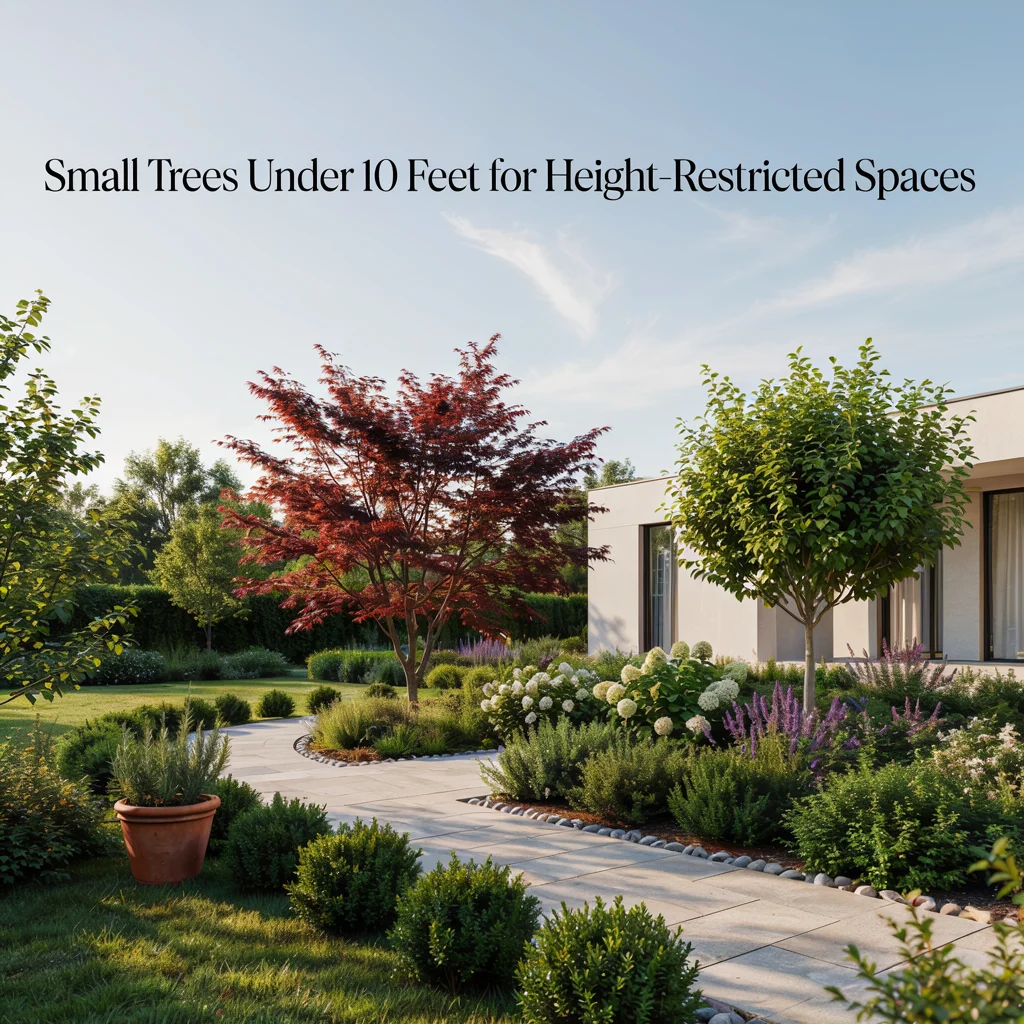
Small trees under 10 feet for height-restricted spaces address situations where overhead power lines, a compact lot, or a simple preference for a low-scale planting genuinely limits how tall a tree can be. I turn to this specific height category often for yards with real overhead or spatial restrictions, since not every small space can accommodate even a modest standard small tree.
Reliable Choices That Stay Under 10 Feet
Dwarf Alberta spruce, compact butterfly bush trained as a small tree, and dwarf Japanese maple cultivars are three species that reliably stay under 10 feet tall. Dwarf Alberta spruce brings a distinctive conical evergreen form within genuinely modest height limits. Compact butterfly bush, trained with a single central stem into a small tree form, brings extended summer blooming and pollinator appeal within a modest footprint. Dwarf Japanese maple cultivars, chosen specifically for both size and form, offer striking foliage colour within a genuinely compact mature height.
Planning Carefully Around a Strict Height Limit
Confirming mature height from more than one source, checking local utility line clearances before planting, and choosing a species with a naturally slow growth rate are three planning steps suited to height-restricted planting. Confirming mature height from more than one source avoids relying on a single potentially optimistic nursery estimate. Checking local utility line clearances before planting prevents the need for aggressive, damaging pruning once a tree reaches a restricted overhead space. Choosing a species with a naturally slow growth rate gives you more years of predictable size before any potential height concerns become relevant.
Small Garden Trees for Genuine Privacy
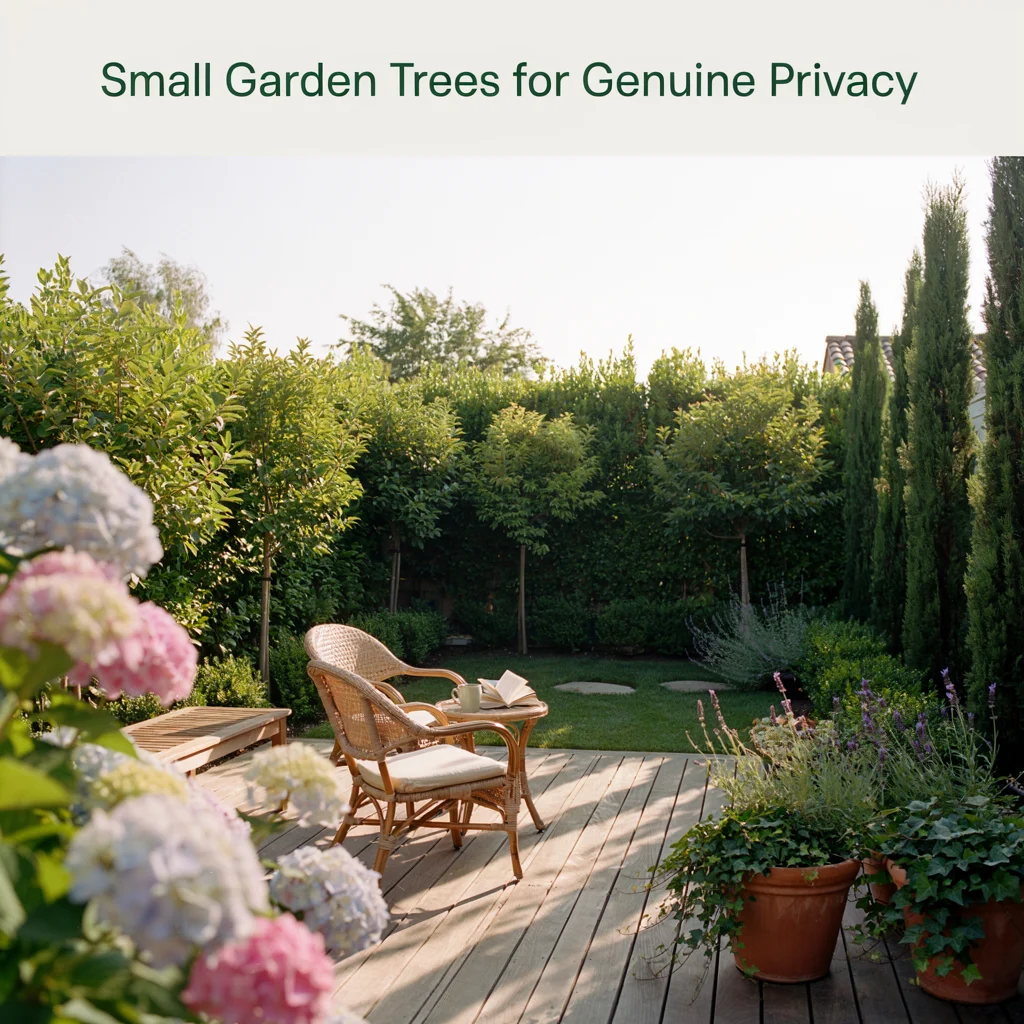
Small garden trees for genuine privacy use dense, typically evergreen species to screen a view or block a sightline from a neighbouring property, without requiring the mature spread a full-sized privacy hedge or tree would demand. I recommend privacy-focused small trees often for tight suburban or urban lots, where a full-scale screening hedge simply isn’t practical.
Species Suited to Small-Space Privacy Screening
Columnar arborvitae, dwarf holly, and Italian cypress in a compact cultivar are three trees suited to privacy screening in a small garden. Columnar arborvitae grows in a narrow, upright form that delivers substantial screening height without consuming significant ground width. Dwarf holly provides dense evergreen foliage alongside decorative berries, offering both privacy and ornamental value in one planting. Italian cypress in a compact cultivar delivers a strikingly narrow, vertical silhouette that screens effectively while taking up minimal footprint.
Placing Privacy Trees Effectively in a Small Space
Planting in a staggered rather than single straight line for fuller coverage, spacing correctly for the specific cultivar’s mature width, and positioning based on the actual sightline needing screening rather than the property boundary alone are three placement principles suited to small-space privacy trees. Planting in a staggered rather than single straight line, where space allows even slightly, creates fuller, more effective coverage than a single row. Spacing correctly for the specific cultivar’s mature width avoids either wasteful over-spacing or overcrowding as the trees reach full size. Positioning based on the actual sightline needing screening, rather than simply the property boundary, ensures the planting solves the real privacy concern as efficiently as possible.
Tall Trees for Small Gardens That Stay Narrow
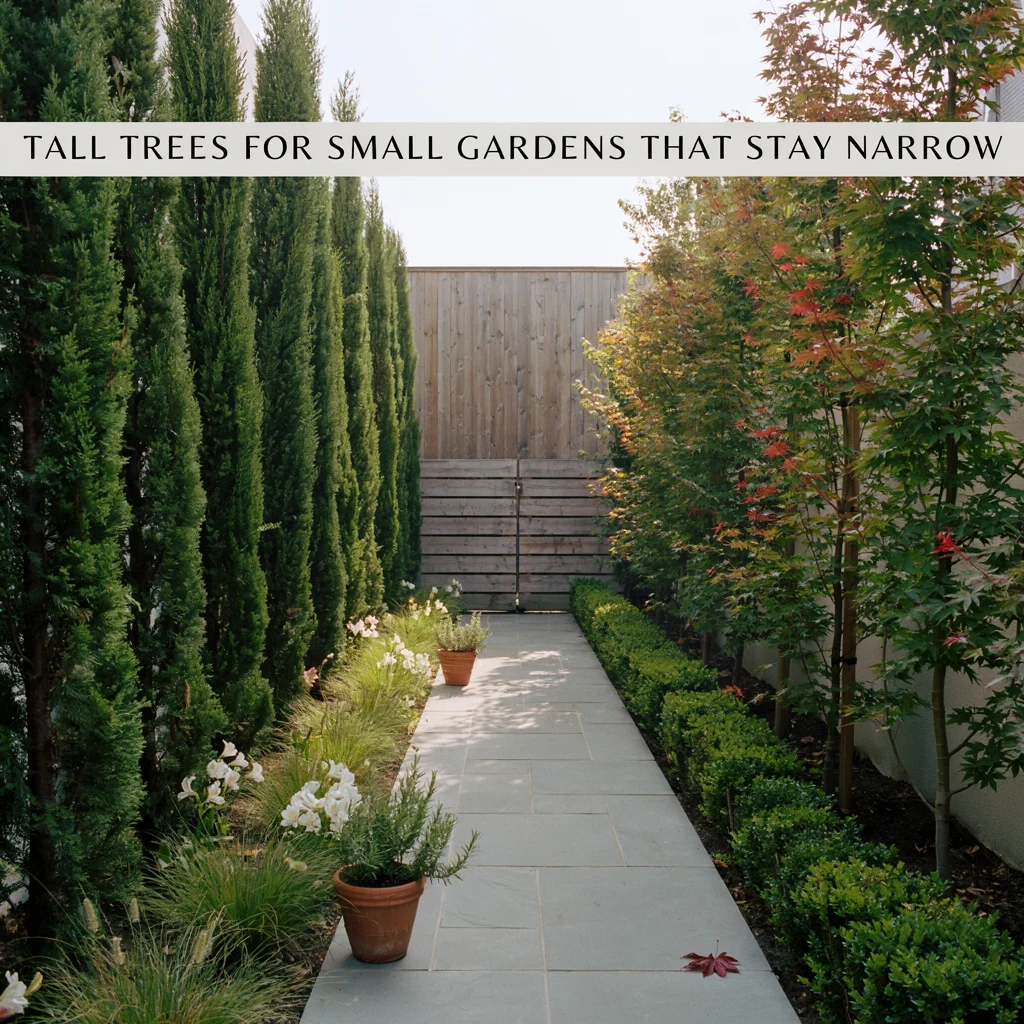
Tall trees for small gardens that stay narrow solve the seemingly contradictory desire for real height within a genuinely limited footprint, using columnar or fastigiate species bred specifically to grow upward rather than outward. I recommend these narrow-growing varieties often for small gardens wanting vertical impact without sacrificing precious ground space.
Columnar Species That Deliver Height Without Width
Columnar European hornbeam, Italian cypress, and fastigiate English oak are three trees that deliver genuine height while staying narrow. Columnar European hornbeam grows in a distinctly upright, narrow form, providing height and structure without a wide-spreading canopy. Italian cypress, already noted for privacy screening, also serves well as a purely vertical accent tree in a small garden wanting genuine height. Fastigiate English oak, a narrow cultivar of a traditionally large species, brings the character of a substantial tree within a footprint suited to considerably smaller gardens.
Making the Most of a Narrow, Tall Tree’s Visual Impact
Positioning as a vertical accent against a horizontal backdrop, using in pairs to frame an entryway or view, and allowing enough vertical clearance for the tree’s full eventual height are three ways to maximize a narrow tall tree’s impact. Positioning as a vertical accent against a horizontal backdrop, like a low wall or a wide lawn, emphasizes the dramatic contrast a columnar tree’s shape provides. Using in pairs to frame an entryway or a garden view creates a formal, architectural effect achievable even within a compact space. Allowing enough vertical clearance for the tree’s full eventual height avoids the disappointment of a naturally tall variety being cut short by an overhead obstruction discovered only after planting.
Evergreen Trees for Small Gardens
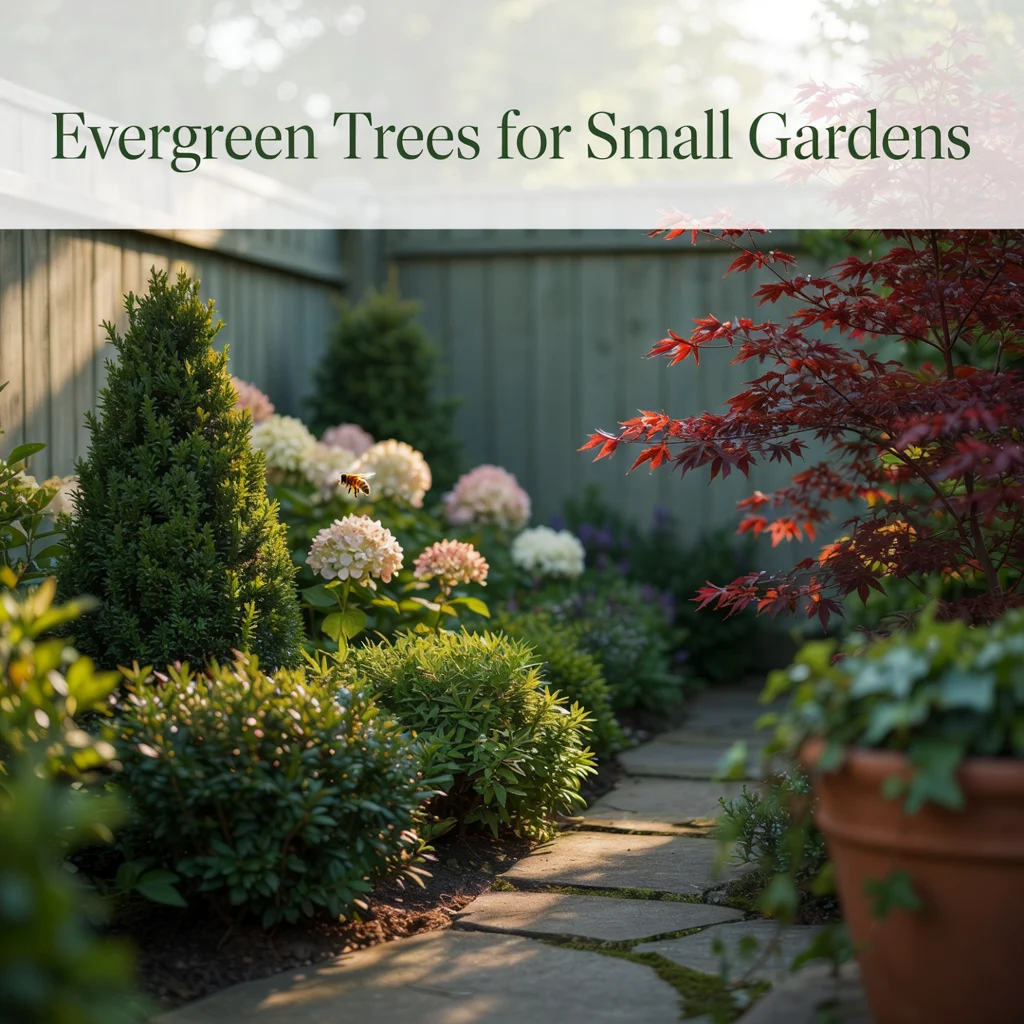
Evergreen trees for small gardens provide year-round structure and privacy, holding their foliage through every season rather than leaving a small space looking bare during the colder months. I recommend at least one evergreen for most small-garden plans, because year-round presence matters considerably in a limited space where every element carries more visual weight.
Reliable Evergreen Options for Small Gardens
Dwarf Alberta spruce, compact holly varieties, and Italian cypress are three evergreen trees well suited to small gardens. Dwarf Alberta spruce, already discussed for its height-restricted suitability, brings reliable year-round conical structure to a small space. Compact holly varieties combine dense evergreen foliage with persistent winter berries, delivering both structure and seasonal colour. Italian cypress, in either a full-sized or compact cultivar depending on available space, offers striking evergreen verticality that holds its character through every season.
Using an Evergreen as a Small Garden’s Year-Round Anchor
Positioning to anchor a corner or entry point, pairing with deciduous flowering trees for seasonal contrast, and choosing a species proportionate to the garden’s overall scale are three ways to use an evergreen effectively in a small garden. Positioning to anchor a corner or entry point gives a small garden a reliable, unchanging visual foundation regardless of season. Pairing with deciduous flowering trees for seasonal contrast lets the evergreen provide winter structure while the flowering species delivers its own seasonal spectacle. Choosing a species proportionate to the garden’s overall scale prevents even a genuinely evergreen small tree from eventually overwhelming a limited space.
Weeping Trees for Small Gardens
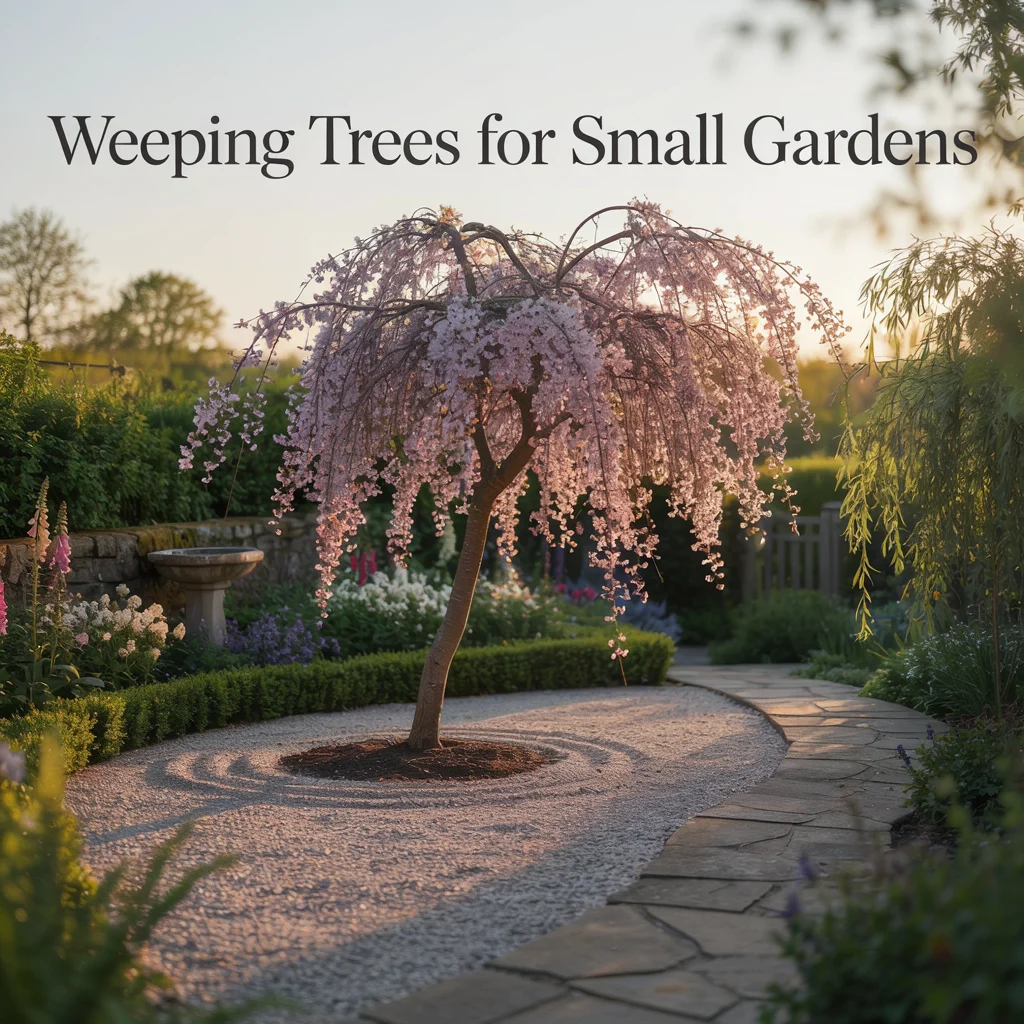
Weeping trees for small gardens bring a distinctive, graceful silhouette to a compact space, using cascading branch forms that create genuine visual drama within a naturally restrained footprint. I recommend weeping varieties often for small gardens wanting a striking specimen tree, since this growth habit typically stays more contained than an upright species of similar overall size.
Weeping Species Suited to Small Gardens
Weeping cherry, weeping Japanese maple, and weeping pussy willow are three trees particularly well suited to a small garden’s limited space. Weeping cherry offers a genuinely graceful, cascading form alongside spring blossom, creating a beautiful specimen even outside its bloom window. Weeping Japanese maple combines the cascading form with striking foliage colour, delivering multi-season interest in a compact, naturally contained shape. Weeping pussy willow provides an unusual, distinctly textured branch structure along with early spring catkins, adding genuine character to a small garden.
Placing a Weeping Tree for Maximum Effect
A prominent, clearly visible position, adequate surrounding space to let the cascading form be appreciated, and positioning near water or a reflective surface where possible are three placement principles suited to a weeping tree. A prominent, clearly visible position ensures a genuinely graceful specimen’s distinctive form is actually experienced regularly rather than tucked away. Adequate surrounding space lets the tree’s cascading branches be properly seen without being crowded by competing nearby plants. Positioning near water or a reflective surface where possible, though not essential, can dramatically enhance a weeping tree’s already striking visual appeal.
Small Trees for a Front Yard in Full Sun
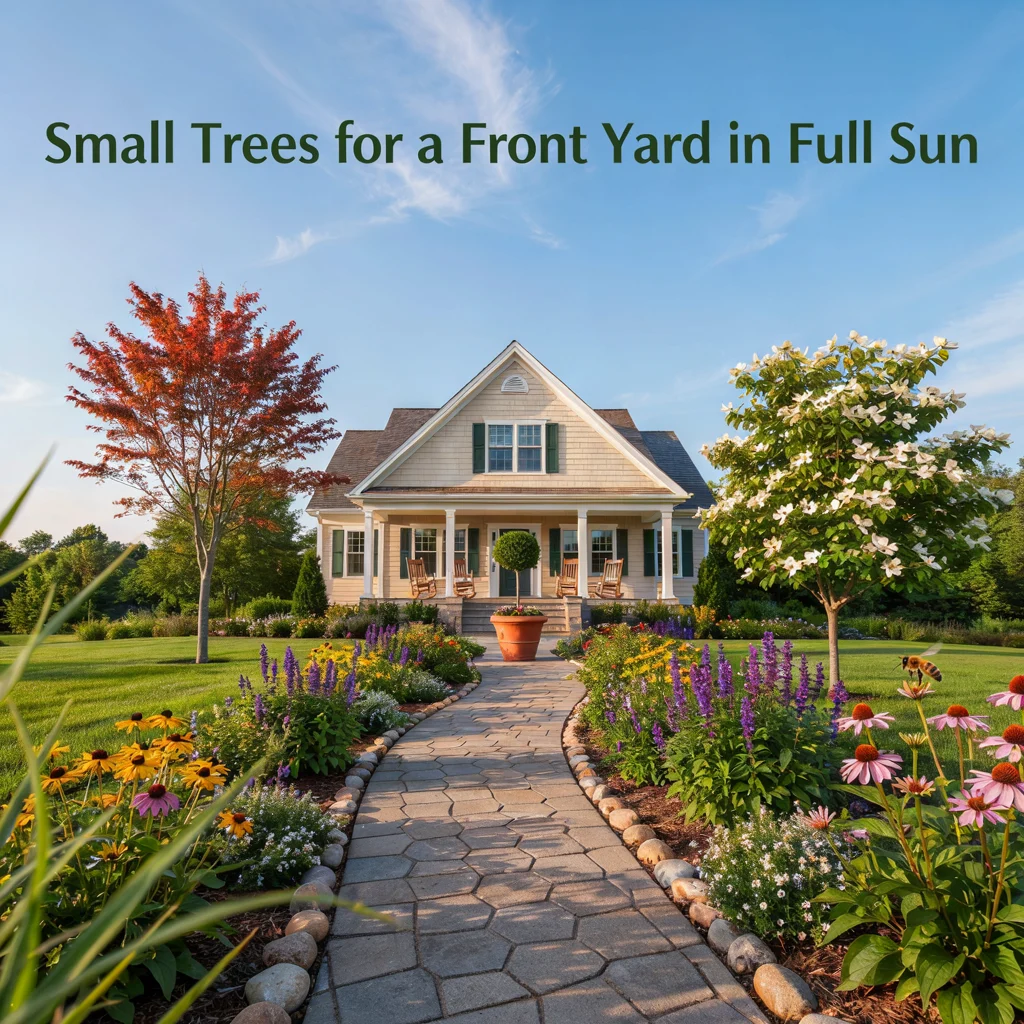
Small trees for a front yard in full sun address the intense, unshaded exposure many front yards experience, requiring species genuinely suited to sustained sun and heat rather than merely tolerant of it. I match sun exposure carefully to species selection for front-yard plantings especially, since this highly visible spot benefits from a tree that thrives rather than merely survives.
Reliable Full-Sun Front Yard Choices
Crape myrtle, dwarf flowering crabapple, and eastern redbud are three trees that genuinely thrive in a full-sun front yard setting. Crape myrtle delivers vivid, extended summer blooms and attractive bark, performing exceptionally well in intense, prolonged sun exposure. Dwarf flowering crabapple provides spring blossom, attractive fruit, and a naturally compact form well suited to a front yard’s limited footprint. Eastern redbud offers a striking early spring flush of pink or purple blossoms, tolerating full sun well once properly established.
Supporting a Full-Sun Front Yard Tree Through Its First Seasons
Deep, infrequent watering rather than shallow daily watering, mulching to conserve soil moisture near the trunk, and monitoring for heat stress during the most extreme summer stretches are three practices suited to supporting a young full-sun tree. Deep, infrequent watering encourages the kind of resilient root system that helps a tree withstand periodic hot, dry stretches. Mulching to conserve soil moisture near the trunk, without piling mulch directly against the bark, reduces water loss during the hottest parts of summer. Monitoring for heat stress during the most extreme stretches allows for timely intervention before lasting damage occurs to a still-establishing young tree.
Flowering Trees for Small Gardens
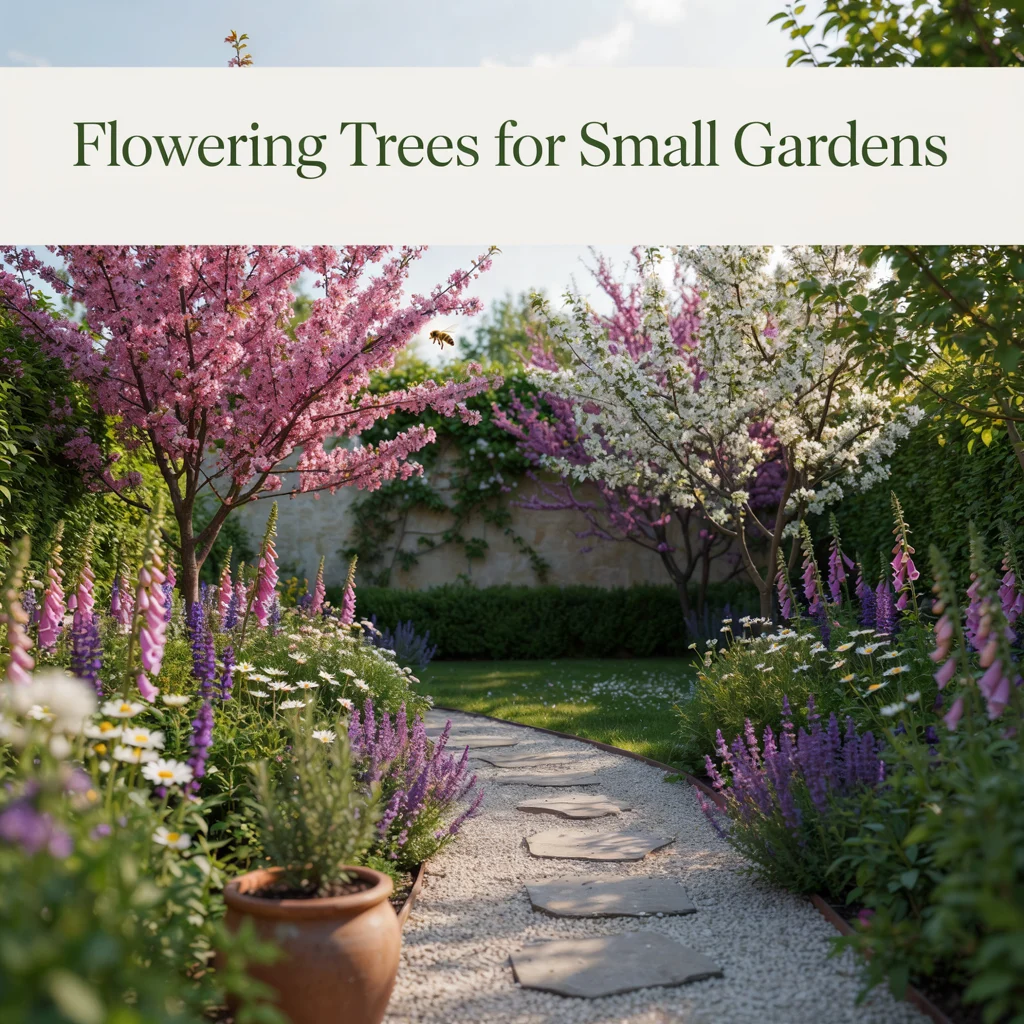
Flowering trees for small gardens bring genuine seasonal colour and charm to a limited footprint, using species that deliver a real floral display without the mature size a larger flowering tree would require. I prioritize flowering performance for many small-garden recommendations, since a genuine seasonal spectacle delivers outsized visual reward relative to the modest space it occupies.
Standout Flowering Choices for Small Gardens
Dwarf crape myrtle, weeping cherry, and dwarf flowering crabapple are three flowering trees particularly well suited to small gardens. Dwarf crape myrtle, already discussed for its compact size, delivers reliable, extended summer blooming within a genuinely manageable footprint. Weeping cherry combines a graceful cascading form with a celebrated, if relatively brief, spring bloom display. Dwarf flowering crabapple offers an extended spring bloom period alongside attractive, often persistent fall fruit, giving it value well beyond its flowering window alone.
Extending Flowering Interest in a Small Garden’s Limited Space
Choosing a single tree with a genuinely extended bloom window, pairing a flowering tree with complementary flowering shrubs beneath it, and considering fall foliage or bark interest alongside spring or summer bloom are three ways to extend a small garden’s flowering interest without adding more trees than the space can support. Choosing a single tree with a genuinely extended bloom window maximizes flowering impact from the one or two trees a small garden can realistically accommodate. Pairing a flowering tree with complementary flowering shrubs beneath it fills seasonal gaps and adds additional colour at a lower, more immediately visible height. Considering fall foliage or bark interest alongside spring or summer bloom results in a tree that earns its place across more of the year, not just its most colourful weeks.
Choosing a Single Best Small Tree When Space Allows for Only One
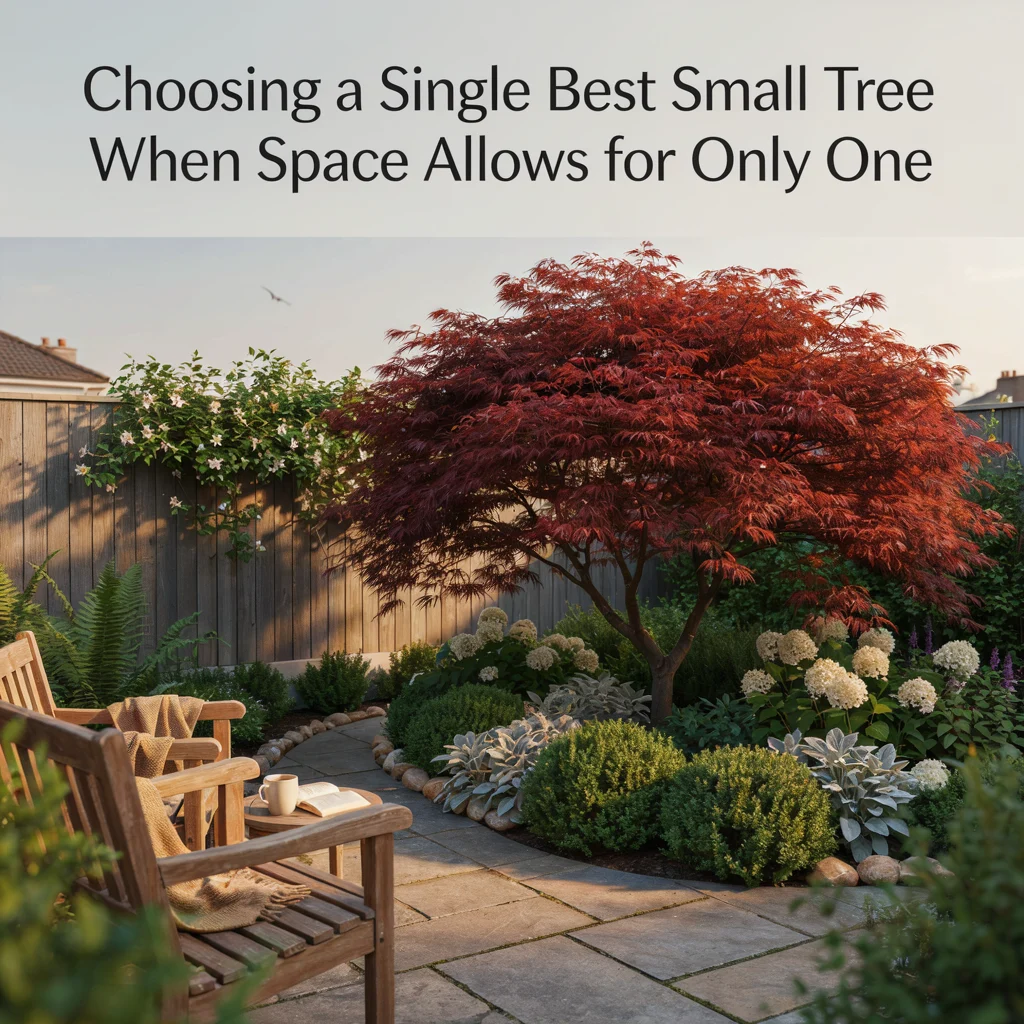
Choosing a single best small tree when space allows for only one is a genuine constraint many small gardens face, requiring a species that delivers as much combined value, whether through privacy, seasonal interest, structure, or shade, as possible from just one planting. I approach this decision carefully whenever a garden’s size truly limits the planting to a single tree.
Prioritizing Multi-Season, Multi-Function Value
A tree with both spring flowers and attractive fall colour, a species offering both ornamental appeal and some genuine screening value, and a variety with interesting bark or winter structure alongside its warmer-season display are three qualities worth prioritizing when only one tree fits. A tree with both spring flowers and attractive fall colour, like serviceberry or certain crabapple varieties, delivers meaningfully more seasonal value than a species blooming briefly and then offering little else. A species offering both ornamental appeal and some genuine screening value, like a densely branched flowering tree, does double duty in a garden too small for separate privacy and ornamental plantings. A variety with interesting bark or winter structure alongside its warmer-season display ensures the single tree earns its place even during the dormant season.
Making a Confident Final Choice
Ranking your top two or three candidates against your garden’s most pressing need, confirming the chosen species’ mature size compatibility with your specific space one final time, and consulting a local nursery for regional performance confirmation are three steps suited to a confident final decision. Ranking your top two or three candidates against your garden’s most pressing need, whether that’s privacy, shade, or seasonal colour, helps clarify which single tree will deliver the most genuine value. Confirming the chosen species’ mature size compatibility with your specific space one final time catches any remaining sizing concerns before a genuinely permanent decision is made. Consulting a local nursery for regional performance confirmation provides a final, locally informed check on how a particular species actually performs in your specific area’s real growing conditions.
Frequently Asked Questions
What are the best small trees for a small yard or garden overall?
The best small trees for a small yard or garden combine genuinely manageable mature size with real multi-season value, including dwarf crape myrtle for compact summer blooms and attractive bark, weeping cherry for a graceful cascading form alongside spring blossom, and dwarf flowering crabapple for spring flowers and persistent fall fruit. Confirming a species’ true mature size and canopy spread from a reliable source, rather than relying on its appearance at purchase, matters more than almost any other factor in a genuinely small space.
What are the smallest trees suitable for a tiny garden?
The smallest trees suitable for a tiny garden include dwarf Japanese maple for striking foliage in a genuinely compact form, dwarf crape myrtle for vivid summer blooms within a manageable size, and dwarf pomegranate for ornamental flowers and small decorative fruit in one of the most diminutive true tree forms available. Researching the specific cultivar rather than just the general species name is especially important, since “dwarf” varieties can still vary considerably in their eventual mature size.
What small trees provide privacy in a tight yard?
Small trees that provide privacy in a tight yard include columnar arborvitae for substantial screening height without wide ground coverage, dwarf holly for dense evergreen foliage alongside decorative berries, and compact Italian cypress cultivars for a strikingly narrow, vertical screening silhouette. Positioning these trees based on the actual sightline needing screening, rather than simply along the property boundary, ensures the planting addresses the real privacy concern as efficiently as possible.
What tall, narrow trees work well in a small garden?
Tall, narrow trees that work well in a small garden include columnar European hornbeam for genuine height without a wide-spreading canopy, Italian cypress for a strikingly vertical accent, and fastigiate English oak, a narrow cultivar of a traditionally large species that brings substantial character within a considerably smaller footprint. Using these columnar varieties in pairs to frame an entryway or garden view creates a formal, architectural effect achievable even in a genuinely limited space.
What weeping or flowering trees suit a small garden’s limited space?
Weeping and flowering trees that suit a small garden include weeping cherry for a graceful cascading form alongside celebrated spring blossom, weeping Japanese maple for striking foliage colour in a naturally contained shape, and dwarf flowering crabapple for extended spring bloom and persistent fall fruit. Choosing a single tree that offers value across more than one season, like both spring flowers and notable fall colour, maximizes the impact of the one or two trees a genuinely small garden can typically support.