
Simple Daisy Garden Ideas That Feel Fresh and Bright

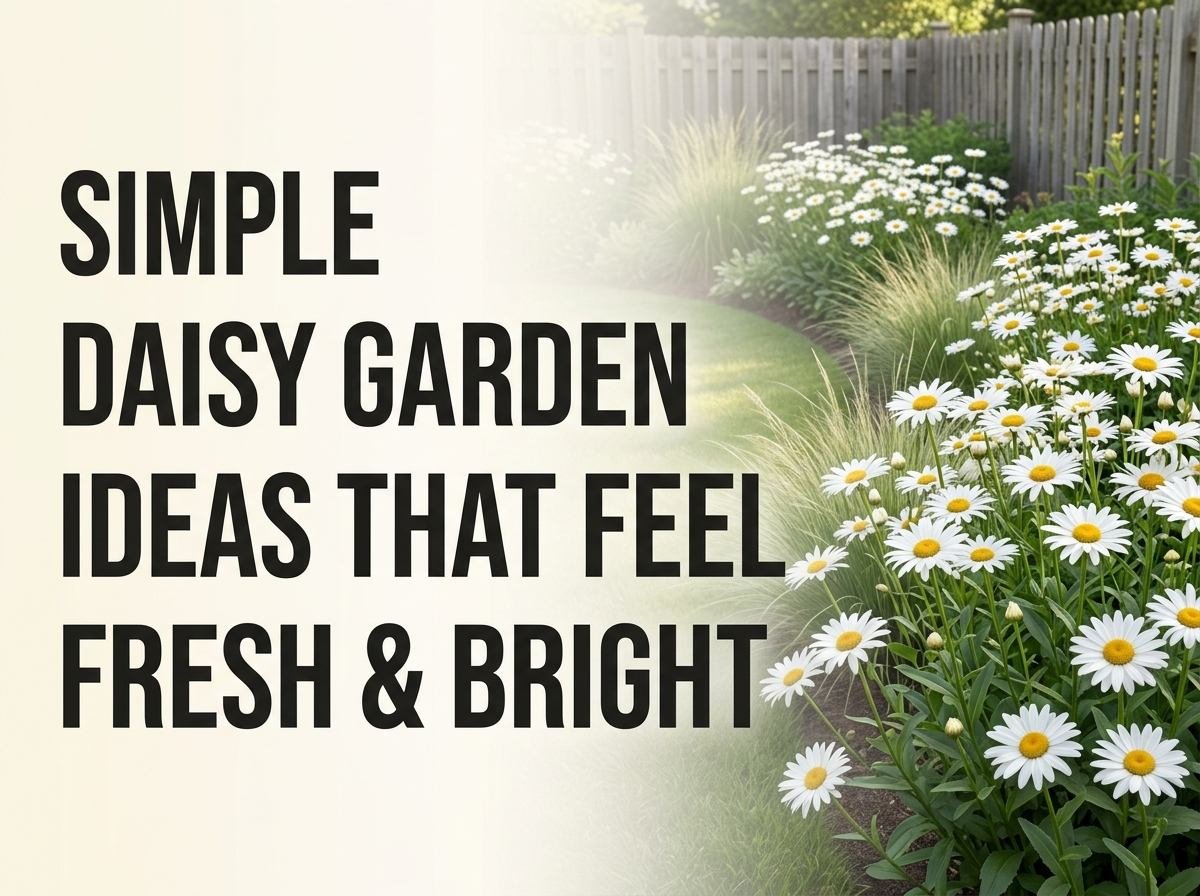
A daisy garden earns its cheerful reputation because the flower’s simple white-petal, yellow-center form reads as “fresh” from across a yard in a way that busier, more layered blooms don’t. The easiest way to build one that actually looks intentional, rather than like a random cluster of white flowers, is to pick 2 to 3 daisy varieties with staggered bloom times and repeat them in loose drifts of 5 or more plants rather than scattering single specimens. Shasta daisies, native oxeye daisies, gerbera daisies, and Montauk daisies each bring a different bloom window and form, which is what lets a small bed stay bright from late spring through fall instead of peaking for three weeks and going quiet.
Start With a Single-Species Drift for Instant Cohesion

The simplest daisy garden idea, and the one least likely to go wrong, is a single drift of one shasta daisy cultivar planted in a loose, informal mass along a border or fence line. ‘Becky’ shasta daisies grow to 30-36 inches and hold up in wind and rain better than shorter cultivars, making them ideal for a standalone drift that needs to look full without staking. Space plants 18 inches apart in a staggered, zigzag pattern rather than a straight row, since straight rows read as landscaped rather than naturalistic. A drift of 7 to 9 plants in a 4-by-6-foot area reaches a mature, floriferous look by the second season, once the clumps have had a full year to establish their root systems. This approach costs less than mixing several varieties and gives beginners a low-risk way to test whether a spot gets the sun and drainage daisies need before expanding.
Key takeaway: One reliable cultivar planted in a generous drift beats a scattered mix for a clean, cohesive first-time bed.
Layer Bloom Times for Season-Long Color

Because individual daisy species bloom in different windows, combining three types in the same bed stretches the display from late May through the first hard frost. Start with Leucanthemum x superbum (shasta daisy) for June through August, add Nipponanthemum nipponicum (Montauk daisy) for a September through November finish, and tuck in Erigeron (fleabane daisy) for an earlier May through July flush that overlaps both. Planting them in the same bed but in separate, labeled clusters (rather than intermixed) keeps the transition visually clean, since each type has slightly different foliage and height. This layering technique means the bed never has a bare, flowerless stretch, which is the most common complaint about single-variety daisy plantings that bloom hard for a month and then sit green for the rest of the season.
Key takeaway: Three daisy species with staggered bloom windows turn a 6-week flower show into a 5-month one.
Pair Daisies With Ornamental Grasses for Movement

Daisies planted alone can look static once established, since the flat, upright blooms don’t move much in a breeze the way grasses do. Interplanting shasta daisies with a fine-textured grass like Karl Foerster feather reed grass or blue fescue adds vertical motion and a textural contrast that makes the white blooms pop rather than blend into a flat mass of green foliage. Space grasses about 24 inches from the daisy clumps so their root systems aren’t competing directly, and choose grasses that mature to roughly the same height as the daisies (3 to 4 feet) so neither element overwhelms the other visually. This combination also extends visual interest into winter, since ornamental grass seed heads and stems hold their form through frost long after the daisies have finished.
Key takeaway: Grasses give daisy beds the movement and winter structure that daisies alone can’t provide.
Build a Cutting-Garden Row Just for Daisies

Daisies are among the longest-lasting cut flowers, holding in a vase for 7 to 10 days, which makes a dedicated row worth the space if you enjoy fresh arrangements. Plant shasta daisies in straight rows (unlike the naturalistic drifts elsewhere in the yard) spaced 12 inches apart within the row and 18 inches between rows, since a cutting garden’s job is production, not landscape aesthetics. Cut stems in the early morning when a bloom is 75% open, using a sharp, clean pair of snips angled at 45 degrees, and place stems immediately in water to prevent air bubbles from blocking water uptake. Regular cutting actually improves the display in the garden bed too, since it functions as an aggressive form of deadheading that pushes the plant to produce more side shoots and blooms.
Key takeaway: A dedicated cutting row lets you harvest bouquets without stripping the display bed bare.
Use Gerbera Daisies for Container Color Near Entryways

Gerbera daisies bring a bolder color range (orange, hot pink, deep red, coral) than the classic white-and-yellow field daisy look, and their compact 12 to 18 inch height makes them well-suited to pots flanking a front door or patio. Use a container at least 12 inches in diameter with excellent drainage holes, since gerberas are notably more prone to root rot than shasta or Montauk daisies if the soil stays wet. Because gerberas are tender perennials in most climates (hardy only in zones 8-11), treat them as annuals in colder zones or bring pots indoors near a sunny window before first frost. Grouping 3 pots of different gerbera colors near an entry creates a bold, saturated daisy display that reads very differently from the soft, cottage-garden feel of a shasta drift.
Key takeaway: Gerbera daisies in containers deliver bold color at entryways where in-ground shasta drifts would look out of place.
Comparing Common Daisy Types for the Garden

| Daisy Type | Bloom Season | Height | Sun Needs | Best Use |
|---|---|---|---|---|
| Shasta daisy | June-August | 24-36 in | Full sun | Borders, cutting gardens |
| Montauk daisy | Sept-Nov | 24-36 in | Full sun | Fall color, coastal gardens |
| Gerbera daisy | Late spring-fall | 12-18 in | Full sun | Containers, bold color |
| Oxeye daisy | May-July | 12-24 in | Full sun-part shade | Meadow/naturalized areas |
| Fleabane (Erigeron) | May-Aug | 12-24 in | Full sun | Rock gardens, edging |
Naturalize Oxeye Daisies in a Meadow-Style Patch

For a wilder, low-maintenance look, oxeye daisies can be sown directly into an existing meadow or unmowed lawn area where they’ll naturalize and spread on their own over a few seasons. Because oxeye daisy can be considered invasive in some regions (it’s on noxious weed lists in parts of the western U.S. and Canada), check local guidance before letting it self-seed freely, and consider Shasta daisy as a non-invasive substitute if you’re unsure. Where it’s appropriate, scatter seed in fall at a rate of about 1/4 ounce per 100 square feet, rake lightly to ensure soil contact, and let winter freeze-thaw cycles handle germination naturally. This approach needs almost no ongoing care beyond an annual fall mowing to reset the meadow for the following year.
Key takeaway: Meadow-style oxeye daisy patches need almost no maintenance, but check regional invasiveness rules first.
The Bottom Line
A daisy garden looks effortless when the planting itself follows a simple structure: choose varieties with staggered bloom windows, plant in generous odd-numbered drifts rather than scattered singles, and give the bed at least 6 hours of direct sun. Whether the goal is a soft cottage border, a bold container display by the front door, or a low-maintenance meadow patch, the daisy’s simple form does most of the visual work on its own. The plants that fail in daisy beds almost always fail from poor drainage or too much shade, not from any complexity in the flower itself.
Frequently Asked Questions
Do daisies come back every year?
Shasta and Montauk daisies are true perennials in zones 4-9 and return reliably each spring, while gerbera daisies are only hardy in zones 8-11 and are grown as annuals elsewhere. Oxeye daisies also perennialize and often self-seed into new areas.
How often should I divide daisy clumps?
Divide shasta and Montauk daisies every 2 to 3 years in early spring or fall, since clumps that grow too dense in the center tend to die out and bloom less. Dividing also gives you free plants to expand the drift or start a new bed.
What’s the easiest daisy for a beginner gardener?
Shasta daisy, particularly the ‘Becky’ or ‘Snowcap’ cultivars, tolerates a wide range of soil conditions, needs minimal fussing, and blooms reliably its first full season after planting.
Why aren’t my daisies blooming as much as expected?
The most common cause is insufficient sun; daisies need a genuine 6+ hours of direct light, and even partial afternoon shade from a nearby tree or fence can cut bloom count significantly. The second most common cause is skipping deadheading, which signals the plant to stop producing new flowers.
Can daisies grow in containers long-term?
Shasta daisies can live in large containers (16 inches or wider) for 2-3 years before needing division or transplanting into the ground, but they perform better long-term in open soil where roots aren’t restricted.
Do daisies attract pollinators?
Yes, the open, flat flower structure of daisies makes nectar and pollen easily accessible to bees and butterflies, and daisy beds are consistently among the more pollinator-active areas of a mixed perennial garden.