
Spring Backyard Makeover: 25 Enchanted Garden Ideas

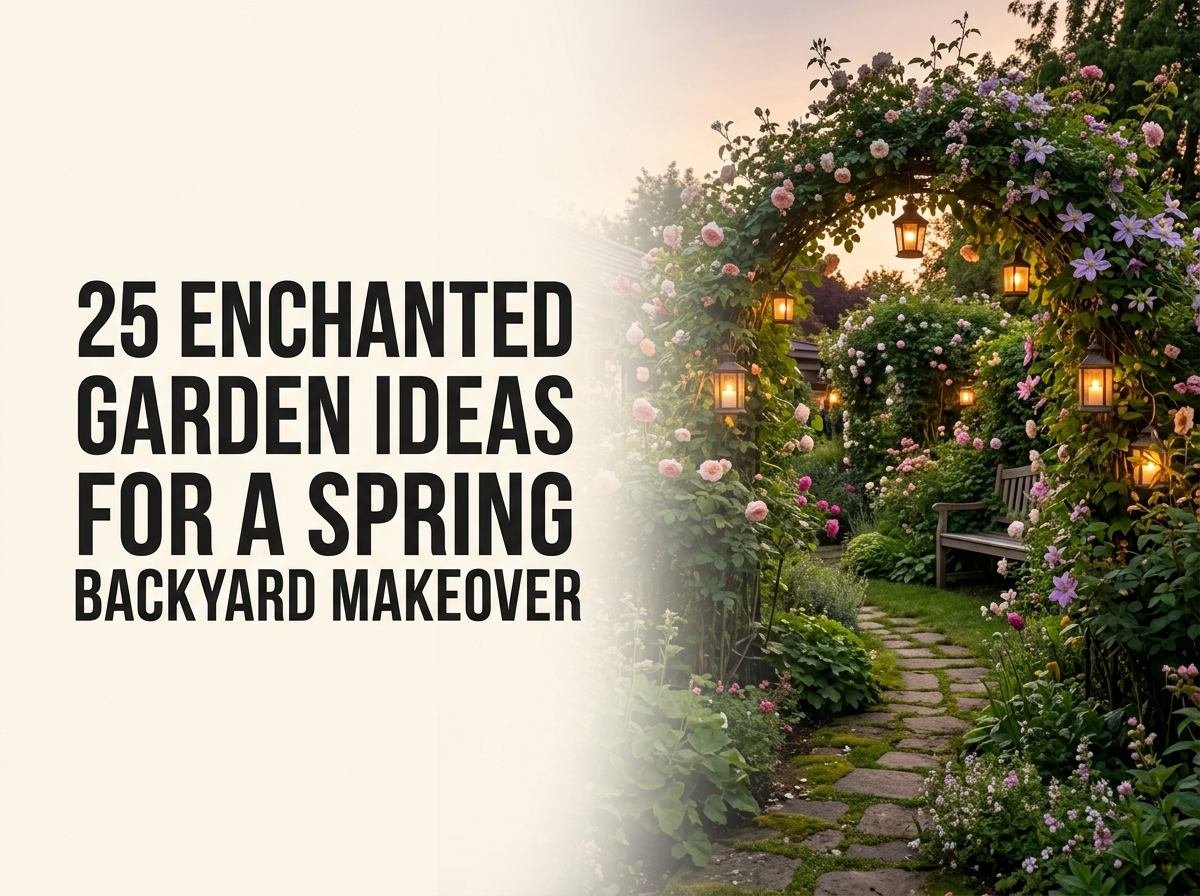
An enchanted garden isn’t built from one dramatic feature, it comes from layering soft lighting, curved sightlines, and dense, slightly wild planting so the eye never sees the whole space at once. The gardens that actually read as “enchanted” rather than just “landscaped” share a few specific traits: pathways that curve out of view, plant heights that create rooms within the yard, and light sources placed low or hidden rather than blasting overhead. Spring is the ideal season to start this kind of makeover since perennials, climbing vines, and flowering shrubs all need a full season to establish before they deliver the layered, lush look an enchanted garden depends on.
Curve Every Path So the End Isn’t Visible

The single biggest mistake in backyard makeovers aiming for an “enchanted” feel is a straight path from patio to back fence, which shows the entire garden in one glance and kills any sense of discovery. Lay a curved path using flagstone, pea gravel, or mulch that bends at least once around a shrub, small tree, or planting bed so a visitor can’t see the destination from the start. Even a yard as small as 20 by 30 feet has room for one meaningful curve if the path skirts around a densely planted bed rather than cutting straight through the middle. This single change does more to create an “enchanted” feeling than any amount of decor, because it introduces anticipation and a sense of a larger space than actually exists.
Build a Living Archway Entrance

A simple metal or wood arch planted with a climbing rose (‘New Dawn’ or ‘Climbing America’ both perform well) or clematis creates a threshold moment that signals “you’re entering somewhere different” the instant someone steps through. Position the arch at the transition point between the patio and the planted garden area, and plant the climber at the base with the roots slightly to the side of the arch’s post so it has room to establish without competing with the hardscape footing. By the second spring, a healthy climbing rose will have covered much of the arch and begun arching blooms over the pathway itself.
Layer Planting Heights Into Distinct Zones

Enchanted gardens read as lush because the planting has clear vertical layers: low groundcover (creeping thyme, sweet woodruff) at path edges, mid-height perennials (foxglove, astilbe, hosta) filling the middle layer, and taller elements (ornamental grasses, climbing vines, small trees) at the back or center. Skipping the middle layer is common and leaves gardens looking sparse even when the total plant count is high. Aim for at least three height tiers in any bed wider than 4 feet, and let the tallest layer partially obscure what’s behind it, since that partial concealment is what creates the sense of discovery central to the enchanted look.
Add a Low, Hidden Water Feature

The sound of moving water does more for atmosphere than almost any visual element, and a small pondless disappearing fountain (water recirculates through a hidden reservoir under gravel or rock) can be tucked into a planting bed without the maintenance of a full pond. A basin as small as 15 gallons with a submersible pump is enough to create audible trickling sound within a 10 to 15 foot radius. Partially screen the fountain with ornamental grasses or ferns so it’s heard before it’s seen, reinforcing the sense of discovery that makes a garden feel enchanted rather than simply decorated.
String Warm-Toned Lights Through Tree Canopies

Skip bright white LED string lights in favor of warm amber (2200-2700K color temperature) bulbs woven through low tree branches or a pergola, since warm light reads as candlelit and magical while cool white light reads as utilitarian, like a work site. Run strings at varying heights rather than in a flat, single-level swag, letting some drape lower into shrub tops and others stay higher in tree canopies, which creates depth in the lighting itself after dark. Solar-powered path lights with a warm color temperature, spaced irregularly rather than in a uniform row, extend this effect down at ground level along the curved paths.
Tuck In a Hidden Reading Nook

A small bench or two chairs set slightly off the main path, partially screened by a shrub or ornamental grass, gives the garden a destination that feels discovered rather than obvious. Use a gravel or flagstone pad no larger than 6 by 6 feet so the nook feels intimate, and back it with a trellis or dense planting so the seating has a sense of enclosure rather than sitting exposed in open lawn. This kind of secondary destination is what turns a garden from something you look at into somewhere you actually spend time.
Plant a Moon Garden Bed for Evening Interest

A moon garden uses white and pale-colored blooms (white foxglove, moonflower vine, white cosmos, silver-leaved lamb’s ear) that appear to glow faintly in dusk and moonlight, extending the garden’s visual interest into the evening hours when many enchanted-garden moments actually happen. Moonflower vine (Ipomoea alba) is worth the extra attention since its large white trumpet blooms open specifically at dusk and close by mid-morning, timing the display for exactly when people are likely to be outside enjoying the yard.
Add Vertical Interest With a Repurposed Ladder Trellis

An old wooden ladder leaned against a fence or wall and planted with a climbing vine (sweet pea, clematis, or black-eyed Susan vine) adds height and a slightly weathered, storybook character that fits the enchanted aesthetic better than a store-bought trellis. This works especially well in small yards where ground space for climbing structures is limited but vertical wall or fence space is available.
Use Moss or Creeping Groundcover Instead of Bare Mulch

Bare mulch between plants reads as “in-progress landscaping,” while moss, creeping thyme, or Irish moss filling those same gaps reads as an established, magical woodland floor. In shady spots, moss will colonize damp soil or even rock surfaces on its own within a season or two if kept consistently moist; in sunnier spots, creeping thyme achieves a similar low, textured carpet while also releasing a light fragrance when walked on.
Install a Small Wildlife Pond

A basin as small as 4 feet across, with sloped edges so birds and small wildlife can access the water safely, brings frogs, dragonflies, and birds into the garden, and that added movement and sound is a major contributor to the “alive” feeling an enchanted garden needs. Add native aquatic plants like dwarf water lily or pickerel rush to oxygenate the water and give the pond a natural, unforced appearance rather than looking like an installed feature.
Plant a Fragrant Night-Blooming Border

Night-scented stock, evening primrose, and nicotiana all release their strongest fragrance after sundown, which layers a sensory element onto the visual design that most backyard makeovers skip entirely. Plant this border near the seating area or path so the fragrance is noticeable during actual evening use of the garden, not tucked in a corner that goes unvisited after dark.
Comparing Enchanted Garden Style Elements

| Element | Effort Level | Cost Range | Time to Mature Effect |
|---|---|---|---|
| Curved pathway | Medium | $200-800 | Immediate |
| Living archway | Low | $80-200 | 1-2 seasons |
| String lighting | Low | $50-150 | Immediate |
| Small water feature | Medium | $150-500 | Immediate |
| Layered planting beds | High | $200-600 | 1-3 seasons |
| Moss/groundcover carpet | Medium | $50-200 | 1-2 seasons |
Add Fairy-Scale Details Sparingly

A few small, well-placed details (a miniature lantern tucked at the base of a tree, a small stone or ceramic mushroom half-hidden in groundcover) reinforce the storybook feel, but overdoing this with too many novelty items tips the garden into kitsch rather than enchantment. Limit these accents to 3 to 5 per garden and place them where they’ll be discovered rather than immediately visible from the main path.
Frame Views With an Ornamental Grass Screen

Planting a loose screen of feather reed grass or miscanthus partway through the yard, rather than a solid fence or hedge, filters the view into the space beyond without blocking it completely, which is exactly the half-hidden effect enchanted gardens rely on. This works particularly well for hiding utility areas (compost bins, sheds) while still letting dappled light and movement through.
Use Weathered, Natural Materials Over New Hardscape

Reclaimed brick, aged flagstone, and weathered wood read as though the garden has existed for years, while brand-new poured concrete or fresh-cut lumber reads as recently built. Sourcing salvaged pavers or letting new stone weather naturally for a season before final placement (or using a stone soap/yogurt mixture to encourage moss growth on surfaces) speeds up this aged appearance considerably.
Plant a Shade Tree Now for a Canopy Later

Enchanted gardens ultimately rely on overhead canopy to create the sense of an enclosed, otherworldly space, and a fast-growing shade tree like a river birch or serviceberry planted this spring will begin contributing meaningful canopy within 4 to 5 years. This is the one element on this list that requires the most patience, but it’s also the one that most defines a garden’s character two decades from now.
The Bottom Line
A backyard makeover reaches “enchanted” territory through layering, not through any single purchase: curved paths that hide the destination, planting in height tiers, warm hidden lighting, and small discovered details all working together. Spring is the right time to lay the structural bones (paths, arches, trees) since the planting needs a full season or more to fill in and soften those hard edges into the lush look the style depends on. Focus effort on the path curve and planting layers first. Those two elements do more work than any water feature, light string, or decorative accent.
Frequently Asked Questions
How long does it take for an enchanted garden to look fully established?
Most gardens need 2 to 3 full growing seasons for perennials and climbing vines to fill in enough to create the layered, slightly wild look enchanted gardens depend on. Trees and larger shrubs can take 4 to 7 years to contribute real canopy.
What’s the cheapest way to start an enchanted garden makeover?
Curving an existing straight path with mulch or gravel, adding a warm-toned string light, and planting a fast-spreading groundcover like creeping thyme delivers noticeable atmosphere change for under $150.
Do enchanted gardens require a lot of maintenance?
More than a minimalist lawn-and-hedge yard, since the layered planting style needs regular deadheading, pruning, and occasional division to stay full without becoming overgrown or messy-looking. Budget for a couple of hours of maintenance weekly during the growing season.
Can a small backyard (under 500 square feet) still achieve an enchanted look?
Yes, scale is less important than the layering and curve principles; even a single curved path around one densely planted corner bed with warm lighting can create the effect in a compact space.
What plants work best for a shady enchanted garden?
Hosta, astilbe, ferns, foxglove, and moss all thrive in shade and contribute the lush, layered texture the style needs; moonflower vine is one of the few dramatic bloomers that also tolerates partial shade.
Is it better to DIY an enchanted garden or hire a landscaper?
The hardscape bones (paths, arches, water features) are worth professional help if budget allows, but the planting layers are very achievable as a DIY project since they’re mostly about patient plant selection and placement rather than technical skill.