
Patios for Small Backyards You’ll Actually Use

I have spent years visiting other people’s small backyards, sitting in the one corner that always seemed to get used while the rest of the space sat empty, trying to work out exactly why that particular spot worked and the rest didn’t. That is not a confession — it is simply how a genuinely usable small patio gets designed. Every well-used small backyard patio I have studied taught me something I later carried home: a furniture size that actually suited daily life rather than just a photo, a placement choice glimpsed over a neighbour’s fence that caught the evening sun at the right hour, a single practical trick for keeping a tight space from feeling like a walkway that an old designer showed me years ago. The best small-backyard patios are rarely the most elaborate — they are the ones built around how people genuinely spend their time outside. So this article is exactly that: a collection of the most brilliant patios for small backyards that I have stolen, tested, and stolen again, the ones that don’t just look good in a single photo but actually get used, week after week, year after year. Take all of them. Steal shamelessly. That is how a small patio earns its keep.
Patios for small backyards you’ll actually use are the proven layout, furniture, and placement choices that prioritize real daily comfort over decorative ambition, favouring practical scale, smart sun positioning, and low-maintenance materials over anything too fussy to keep up with. Drawn from the small patios that get sat on every single evening rather than admired once and forgotten, these ideas give a tight backyard its everyday value, while the small footprint itself forces the kind of honest, functional decisions that a larger, more forgiving garden rarely demands.
Over the years I have designed, furnished, and revisited small backyard patios months and years after completion, checking which ones were still being used and which had quietly become storage for pots nobody watered. I have kept the choices that reliably held up to real life and dropped the ones that looked wonderful on installation day and empty every day after, and I have watched the right combination of scale, placement, and practicality turn a small, awkward yard into the most-used room in the house, indoors or out. In this article I am sharing the most brilliant patios for small backyards you’ll actually use, covering sun positioning, furniture scale, low-maintenance choices, privacy, and the everyday details that keep people coming back outside.
Positioning the Patio Where the Sun Actually Cooperates
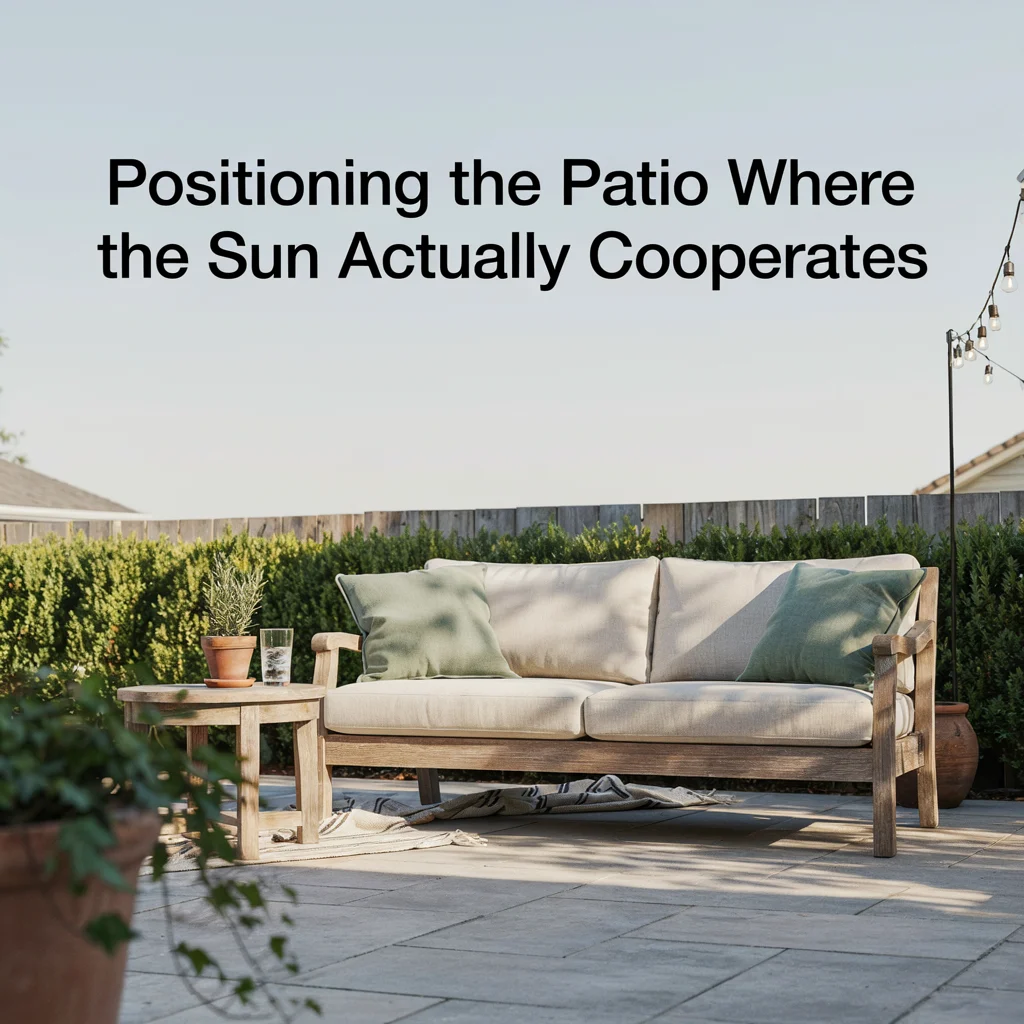
Positioning the patio where the sun actually cooperates is perhaps the single most important decision behind any small backyard patio that gets used regularly, since even the most beautifully designed space goes unused if it’s blazing hot at dinnertime or freezing in shade during the only hour someone’s home to enjoy it. I steal this sun-first approach for every project, because people consistently choose comfort over aesthetics when deciding whether to actually step outside.
Reading Your Yard’s Sun Pattern
Morning shade tracking, evening light checks, and seasonal shifts are three things worth observing before finalizing a small patio’s location. Morning shade tracking reveals whether an early coffee spot will actually be comfortable rather than uncomfortably bright. Evening light checks matter most for patios meant for after-work relaxing or dinner, since this is when most small backyard patios see their heaviest use. Seasonal shifts in the sun’s angle mean a spot that’s shaded in July might be fully exposed by October, so it’s worth observing the yard across more than one season if possible.
Adjusting an Existing Patio’s Sun Exposure
A retrofitted shade sail, strategic tree planting, and a movable umbrella are three ways to fix poor sun positioning without relocating an existing patio. A retrofitted shade sail can solve a too-sunny afternoon spot without any structural rebuild. Strategic tree planting, chosen for appropriate mature size, offers a longer-term natural solution that improves year after year. A movable umbrella provides the simplest immediate fix, letting you chase shade around a small footprint as the sun moves through the day.
Furniture Scaled to Real Daily Use, Not Just Photos
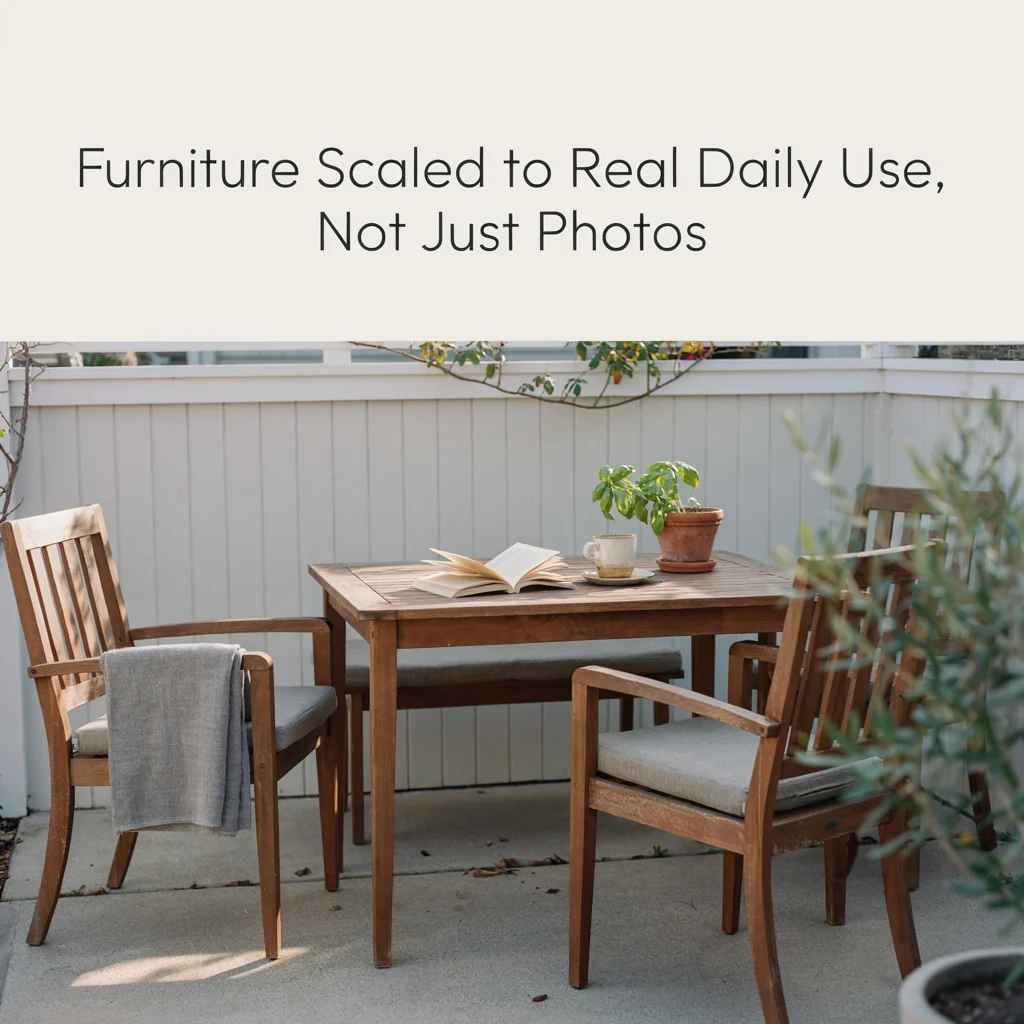
Furniture scaled to real daily use, not just photos, is the brilliant idea that separates a small patio people actually sit on from one that merely looks styled, using pieces sized for how many people genuinely gather there on an average evening rather than the largest imaginable gathering. I steal this scaling discipline constantly, because oversized furniture bought for rare big parties often makes a small patio feel cramped and unused for the other fifty weeks of the year.
Sizing Furniture for Everyday Reality
A two-to-three-seat arrangement, a compact dining set, and stackable extras are three furniture approaches suited to realistic small-patio use. A two-to-three-seat arrangement matches how most households actually use a small patio on a typical evening. A compact dining set, sized for the household rather than a large gathering, avoids the bulk of an oversized table that sits mostly empty. Stackable extras, kept in storage until guests arrive, let a small patio expand for occasional entertaining without permanently crowding the everyday footprint.
Choosing Furniture That Invites Use
Comfortable cushioning, weather-ready materials, and an inviting arrangement facing a view are three factors suited to furniture people actually want to sit in. Comfortable cushioning matters more than most homeowners expect, since a beautiful but uncomfortable chair quietly gets avoided over time. Weather-ready materials mean furniture can be left in place, ready to use on a whim, rather than requiring setup before every use. An inviting arrangement facing a view, whether the garden, a fire feature, or simply the sunset, gives people an actual reason to sit down and stay.
Low-Maintenance Materials That Don’t Demand Weekend Upkeep
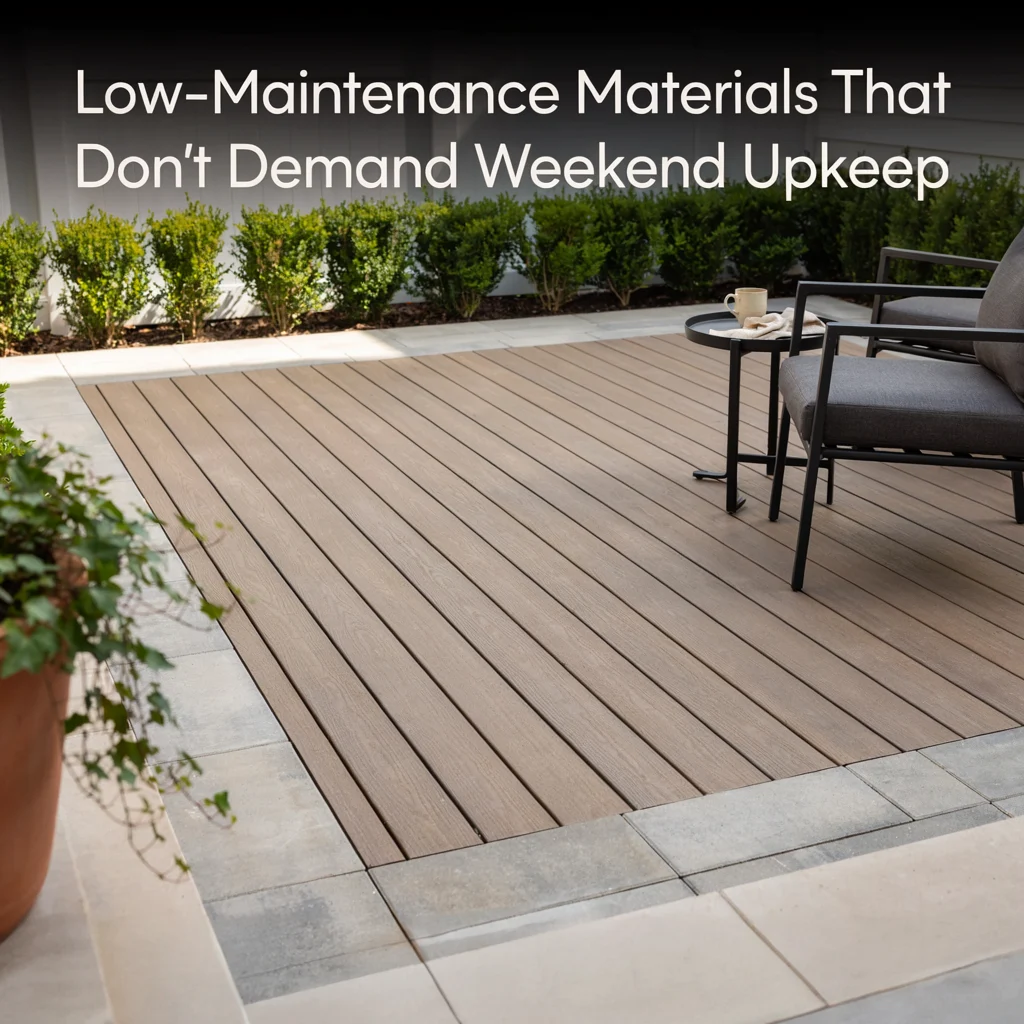
Low-maintenance materials that don’t demand weekend upkeep are the brilliant idea behind every small patio that stays looking good without constant attention, choosing flooring and furniture finishes that hold up with minimal ongoing effort. I steal this low-maintenance principle for nearly every small backyard project, because a patio that requires significant weekend labour to maintain its appearance quietly gets neglected, and a neglected patio stops being a space anyone wants to use.
Flooring That Holds Up With Minimal Effort
Sealed concrete pavers, composite decking, and porcelain tile are three flooring choices suited to low-maintenance small patios. Sealed concrete pavers resist staining and require only occasional resealing rather than constant care. Composite decking avoids the regular staining and sanding that traditional timber decking demands. Porcelain tile offers exceptional stain and weather resistance with essentially no maintenance beyond basic cleaning.
Furniture Finishes That Age Well
Powder-coated metal, resin wicker, and marine-grade fabric are three furniture finishes suited to low-maintenance small patios. Powder-coated metal resists rust and fading far longer than untreated alternatives. Resin wicker mimics natural rattan’s look without the periodic sealing real rattan requires to survive outdoors. Marine-grade fabric on cushions resists fading and mildew, meaning it can stay outside through most of the season without constant hauling in and out.
Privacy Solutions That Make a Small Patio Feel Like a Room
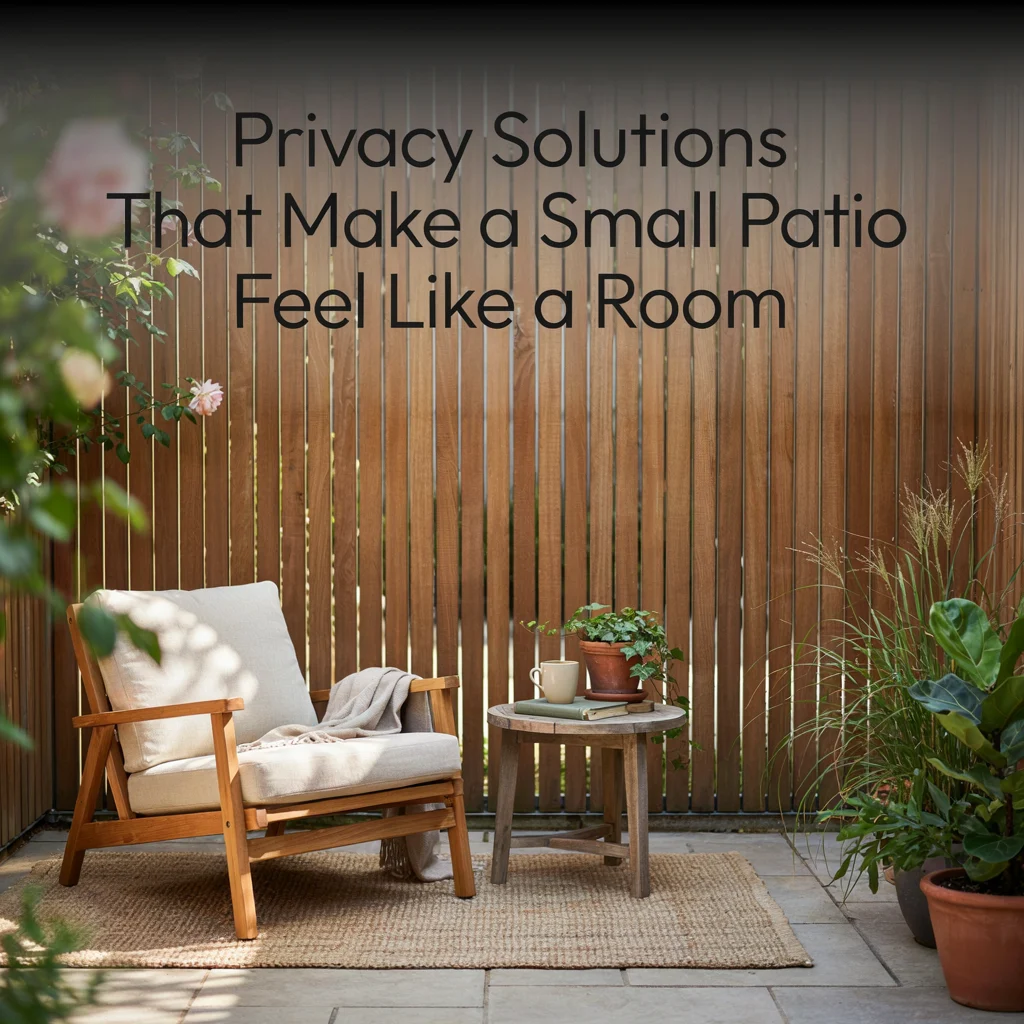
Privacy solutions that make a small patio feel like a room are the brilliant idea that turns an exposed, overlooked corner into a space people actually want to relax in, since a lack of privacy is one of the most common reasons a small backyard patio goes unused despite good design otherwise. I steal privacy-focused solutions constantly for tight urban and suburban yards, because people simply linger longer in a space that feels enclosed and personal rather than on display.
Screening Options for Tight Spaces
A slatted privacy screen, tall potted plants, and a pergola with woven panels are three screening options suited to small patios. A slatted privacy screen blocks direct sightlines from a neighbouring property while still allowing airflow and some light through. Tall potted plants offer a flexible, movable privacy solution that can be repositioned as needs change. A pergola with woven panels along one or two sides combines overhead shade with side privacy in a single structure.
Balancing Privacy With Light and Airflow
Partial-height screening, gapped slats, and strategic rather than complete enclosure are three ways to add privacy without making a small patio feel closed in. Partial-height screening blocks sightlines at seated eye level while still letting light and sky remain visible above. Gapped slats, rather than a solid fence, maintain airflow and prevent a small space from feeling stuffy or boxed in. Strategic rather than complete enclosure, screening only the specific sightlines that actually matter, keeps a small patio open and breathable rather than fully walled off.
A Single, Reliable Heat or Shade Source
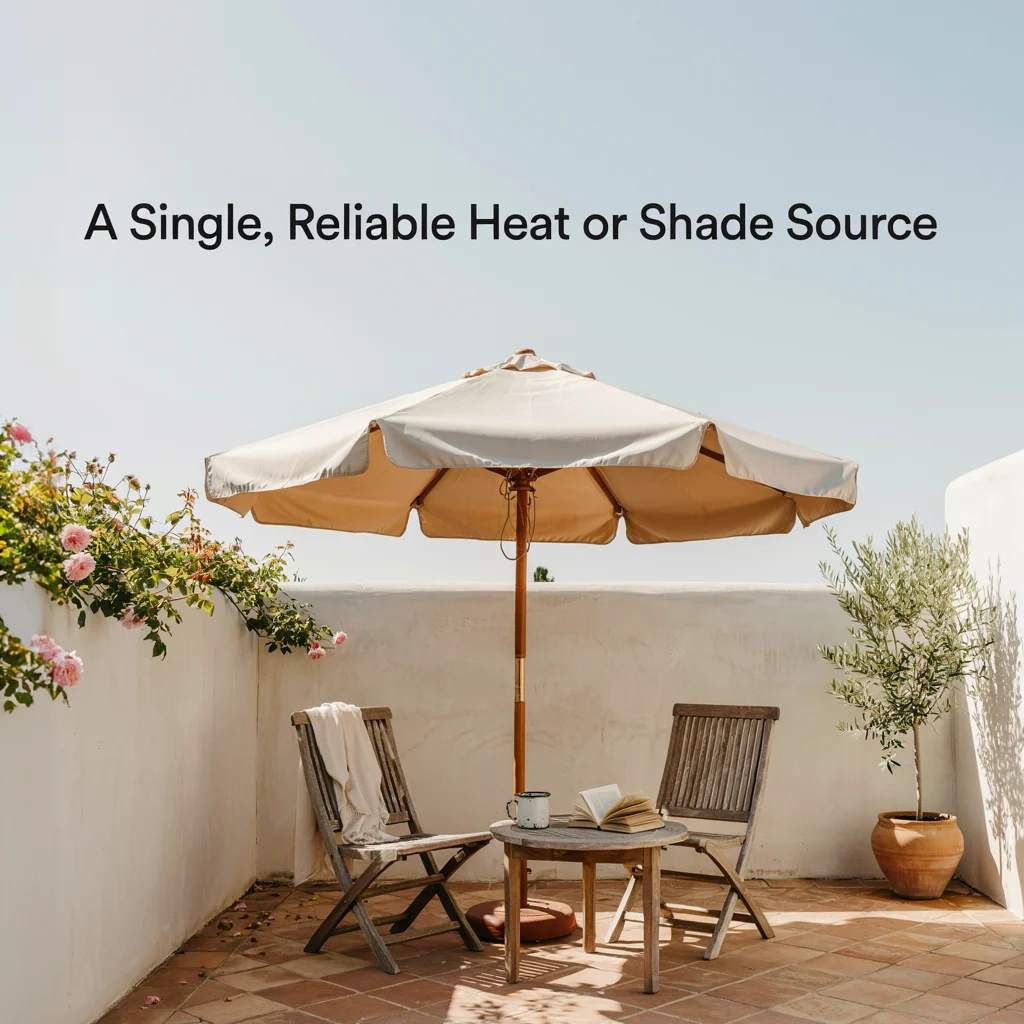
A single, reliable heat or shade source is the brilliant idea that extends a small patio’s usable hours far beyond the handful of perfect-weather days a completely unequipped space can offer, adding either a heat source for cooler evenings or dependable shade for hot afternoons, chosen based on which limitation actually stops your household from going outside more often. I steal this single-source focus for small backyards especially, because a modest patio benefits more from getting one addition right than from a scattered collection of half-measures.
Choosing Between Heat and Shade
Your region’s actual limiting factor, existing structure compatibility, and typical time-of-day use are three considerations suited to choosing between a heat or shade addition. Your region’s actual limiting factor, whether that’s cold evenings or scorching afternoons, should drive the decision more than personal preference alone. Existing structure compatibility, such as whether a pergola frame already exists to support a shade sail, can make one option significantly cheaper and faster to add than the other. Typical time-of-day use, whether the patio sees most of its action at a hot midday lunch or a cool evening dinner, points clearly toward which addition will get used most.
Simple, Effective Additions
A tabletop fire bowl, a single shade sail, and a portable patio heater are three additions suited to extending a small patio’s comfortable hours. A tabletop fire bowl adds warmth and ambiance without the footprint or cost of a full fire pit. A single, well-angled shade sail can transform an unusable midday patio into a comfortable one for a fraction of the cost of a full roof. A portable patio heater offers flexible, movable warmth that can be positioned exactly where people are actually sitting on any given evening.
Keeping Sightlines Open to the Rest of the Garden
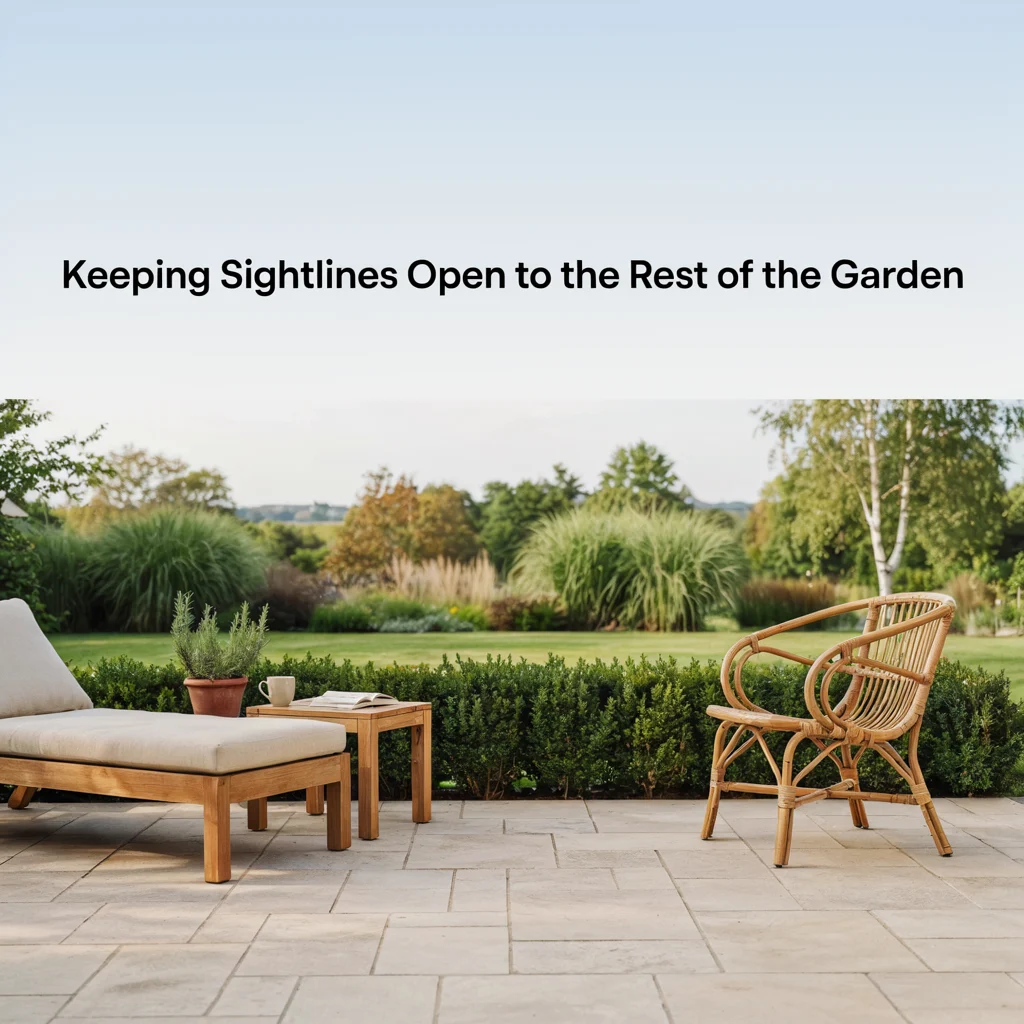
Keeping sightlines open to the rest of the garden is the brilliant idea that prevents a small patio from feeling like an isolated island, using low planting, a clear view beyond the immediate seating area, and thoughtful furniture placement so the eye travels past the patio’s edge rather than stopping abruptly at it. I steal this open-sightline principle constantly, because a small patio that visually connects to the wider yard feels noticeably larger and more pleasant than one that feels cut off from everything around it.
Techniques for Extending the Visual Space
Low-growing border planting, a framed view toward a focal point, and consistent flooring that blurs the patio’s edge are three techniques suited to opening up sightlines. Low-growing border planting around the patio’s perimeter avoids blocking the view beyond it the way tall shrubs or solid fencing would. A framed view toward a focal point, whether a specimen tree or a simple garden feature, gives the eye somewhere pleasant to land past the seating area. Consistent flooring that blurs the patio’s edge into gravel or lawn, rather than stopping at a hard boundary, makes the whole yard read as one connected space.
Furniture Placement That Preserves the View
Lower-profile seating, furniture set back from key sightlines, and an open rather than fully enclosed layout are three placement principles suited to preserving a small yard‘s sense of space. Lower-profile seating keeps sightlines open above the furniture rather than blocked by tall backs or bulky frames. Furniture set back from a key sightline, such as a view from the kitchen window, keeps that connection intact even once the patio is fully furnished. An open rather than fully enclosed layout avoids surrounding the seating area on every side, leaving at least one direction genuinely open to the rest of the garden.
Storage That Keeps a Small Patio From Feeling Cluttered
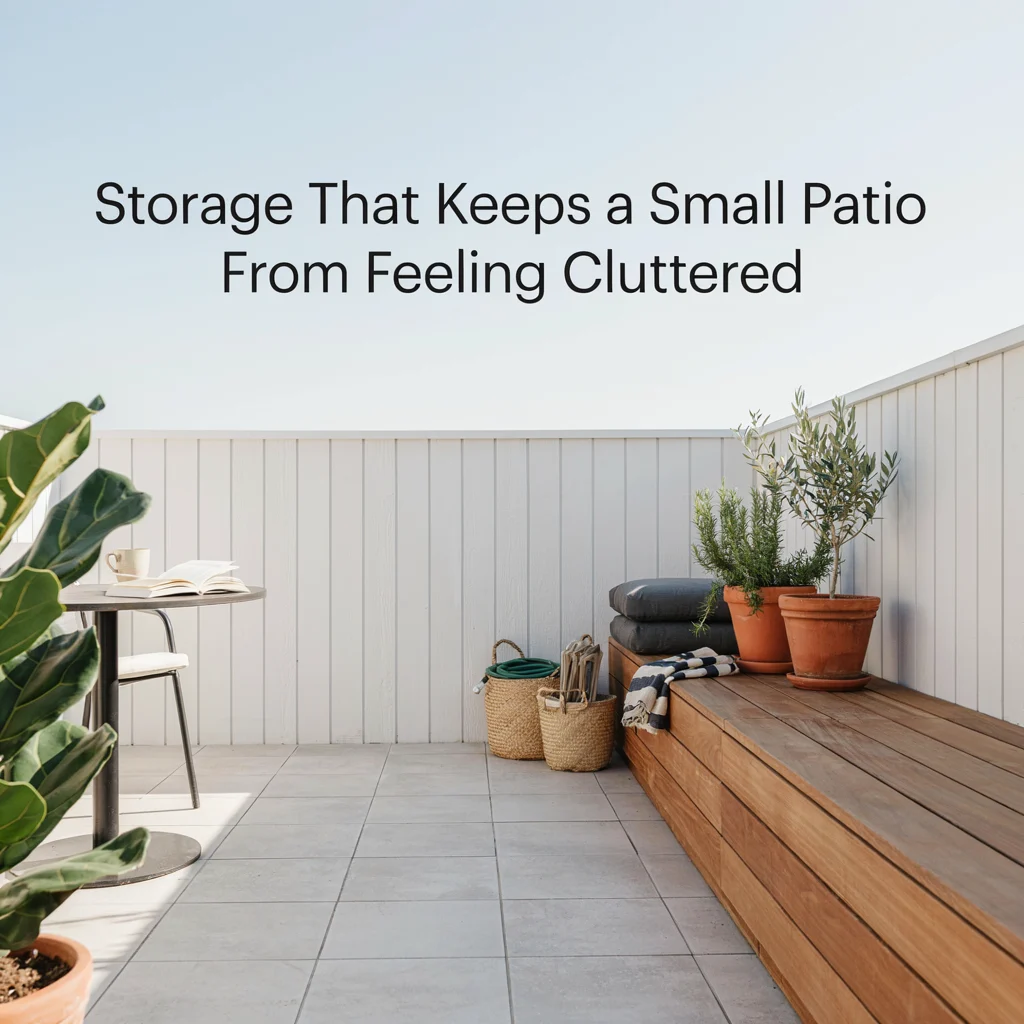
Storage that keeps a small patio from feeling cluttered is the brilliant, often-overlooked idea behind every small outdoor space that still looks tidy and inviting day after day, using built-in or furniture-integrated storage to keep cushions, tools, and seasonal items out of sight rather than scattered around the edges. I steal this storage focus for nearly every small patio project, because clutter is one of the fastest ways a genuinely usable space starts to feel like a chore rather than a retreat.
Storage Solutions That Don’t Take Up Floor Space
A storage bench, an overhead hanging rack, and a slim vertical cabinet are three storage solutions suited to small patios. A storage bench doubles as seating while hiding cushions and smaller items beneath its lid. An overhead hanging rack, mounted along a wall or fence, keeps tools and lightweight items off the floor entirely. A slim vertical cabinet, tucked into an unused corner, holds more than its footprint suggests without eating into usable seating space.
Keeping Storage Itself Low-Maintenance
Weatherproof housing, easy-access design, and modest capacity matched to actual need are three principles suited to practical patio storage. Weatherproof housing protects stored items without requiring them to be hauled indoors every time weather turns. Easy-access design, avoiding storage that’s awkward to open or reach, ensures the storage actually gets used rather than bypassed in favour of leaving things out. Modest capacity matched to actual need avoids buying storage larger than a small patio genuinely requires, which only ends up half-empty or, worse, encourages accumulating more than the space can handle.
Lighting That Extends Use Into the Evening
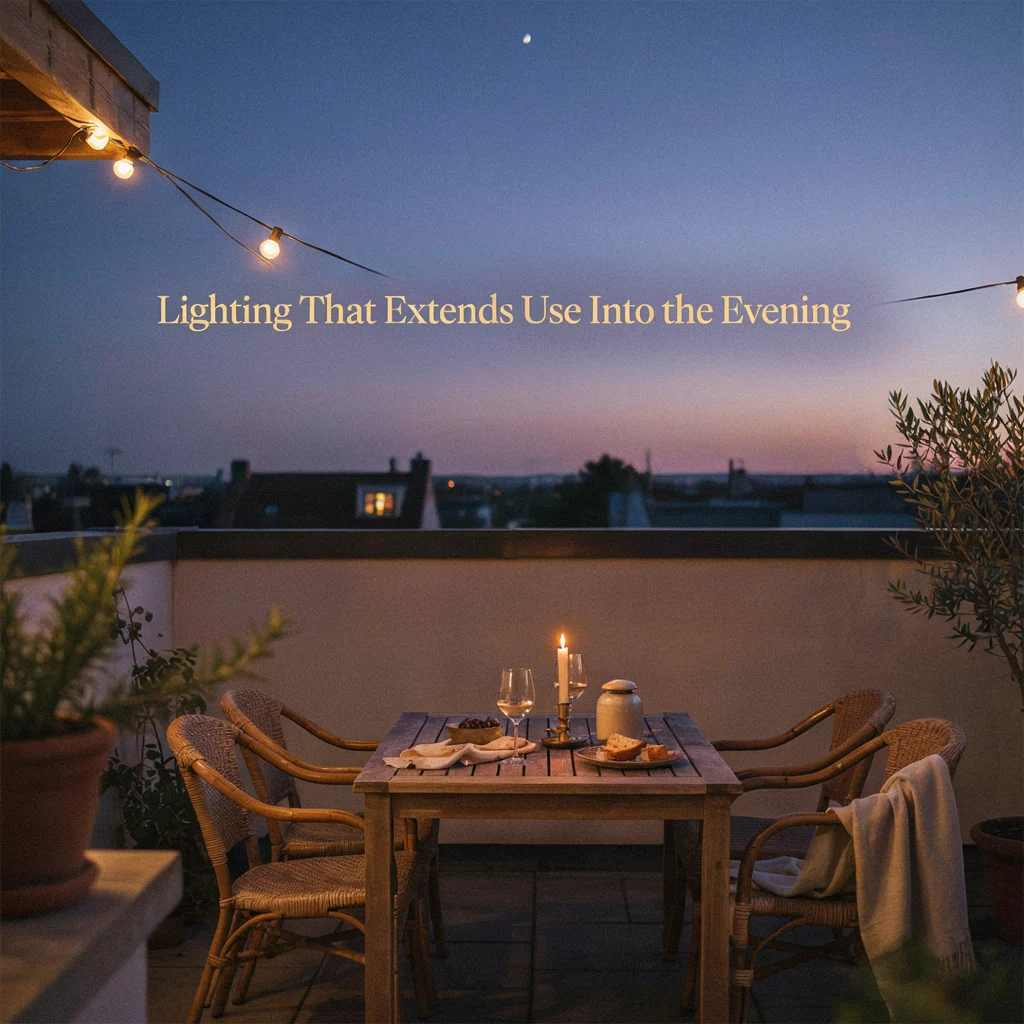
Lighting that extends use into the evening is the brilliant, simple addition that turns a small patio’s usable hours from a narrow afternoon window into most of the day, since many households only have real free time after work, once the sun has already started going down. I steal this lighting focus for nearly every small backyard project, because a patio that goes dark at dusk loses exactly the hours most people actually have free to use it.
Lighting That Suits a Small Footprint
Wall-mounted sconces, a single warm overhead fixture, and low-voltage path lights are three lighting choices suited to a small patio. Wall-mounted sconces add usable light without consuming any floor or table space. A single warm overhead fixture, kept simple rather than elaborate, provides enough general light for everyday use without overcomplicating the space. Low-voltage path lights, positioned along any steps or edges, keep the transition between patio and garden safe once the light fades.
Keeping Evening Lighting Comfortable, Not Harsh
Warm colour temperatures, dimmable controls, and layered rather than single-source light are three principles suited to comfortable evening lighting. Warm colour temperatures, rather than cool white, create the relaxed atmosphere that actually encourages people to stay outside longer. Dimmable controls let the same fixture handle a bright family dinner and a quiet, low-key evening equally well. Layered rather than single-source light, even just a wall sconce paired with a small table lamp, avoids the flat, uninviting look of one bare overhead bulb.
Planning for the Whole Household, Not Just Adults

Planning for the whole household, not just adults, is the brilliant idea that keeps a small patio from being designed around one person’s vision of relaxed evenings while ignoring how children, pets, or visiting family actually use the same space. I steal this whole-household thinking for most residential projects, because a patio that only works for one type of use within the family tends to get monopolized or, worse, avoided by everyone else.
Small-Patio Choices That Suit Everyone
Durable, easy-clean surfaces, a flexible open zone, and pet-safe planting are three choices suited to a patio the whole household can use. Durable, easy-clean surfaces hold up to spilled drinks, muddy paws, or dropped toys without lasting damage or constant worry. A flexible open zone, left intentionally unfurnished, gives children room to play or pets room to move without disrupting the seating area. Pet-safe planting avoids the frustration and risk of a beautiful border that turns out to be toxic to a household dog or cat.
Balancing Adult Relaxation With Family Use
A defined adult seating zone, time-of-day flexibility, and moveable rather than fixed elements are three ways to balance both needs in one small space. A defined adult seating zone, even a small one, gives grown-ups a consistent spot to unwind regardless of what else is happening on the patio. Time-of-day flexibility, accepting that mornings might be more child-focused and evenings more adult-focused, lets the same modest space serve different needs throughout the day. Moveable rather than fixed elements, like a portable fire bowl or a stackable extra chair, let the patio’s function shift easily as who’s using it changes.
Frequently Asked Questions
What makes a small backyard patio actually get used, rather than just look nice?
A small backyard patio that actually gets used typically gets the fundamentals right before any decorative choices: correct sun or shade positioning for the hours it’s needed most, furniture scaled to how the household really gathers rather than for rare large parties, and low-maintenance materials that don’t demand constant upkeep to stay inviting. Privacy from neighbouring sightlines and a single reliable heat or shade addition also do more to extend real usage than any amount of styling, since comfort is consistently what determines whether people actually step outside.
How do I add privacy to a small patio without making it feel boxed in?
Adding privacy without making a small patio feel boxed in comes down to screening only the specific sightlines that matter, rather than enclosing the space entirely. A slatted screen or gapped fence maintains airflow and light while blocking a neighbour’s direct view, and partial-height screening, positioned at seated eye level, keeps the sky and surrounding light visible above while still creating a sense of enclosure where it counts.
Should a small patio be heated, shaded, or both?
Whether a small patio needs heat, shade, or both depends on your region’s actual limiting factor and when the household typically uses the space. A patio mainly used for cool evenings benefits more from a tabletop fire bowl or portable heater, while one used through hot afternoons gets more value from a single well-angled shade sail. Most small backyard projects benefit more from getting one addition right than from splitting a limited budget across both at once.
How much furniture is too much for a small patio?
Furniture becomes too much for a small patio once it starts blocking sightlines to the rest of the garden or leaves no comfortable space to actually move around. Scaling furniture to a household’s typical daily use, generally two to three seats for most families, rather than the largest imaginable gathering, keeps a small patio feeling open and usable, with stackable extras kept in storage for the occasional bigger get-together.
What’s the easiest way to keep a small patio from looking cluttered?
The easiest way to keep a small patio from looking cluttered is built-in or furniture-integrated storage, such as a storage bench that doubles as seating or a slim vertical cabinet tucked into an unused corner. Keeping that storage weatherproof and easy to access ensures it actually gets used day to day, rather than items simply accumulating around the edges of the space instead.