
Ways to Get Rid of Dandelions Before They Spread

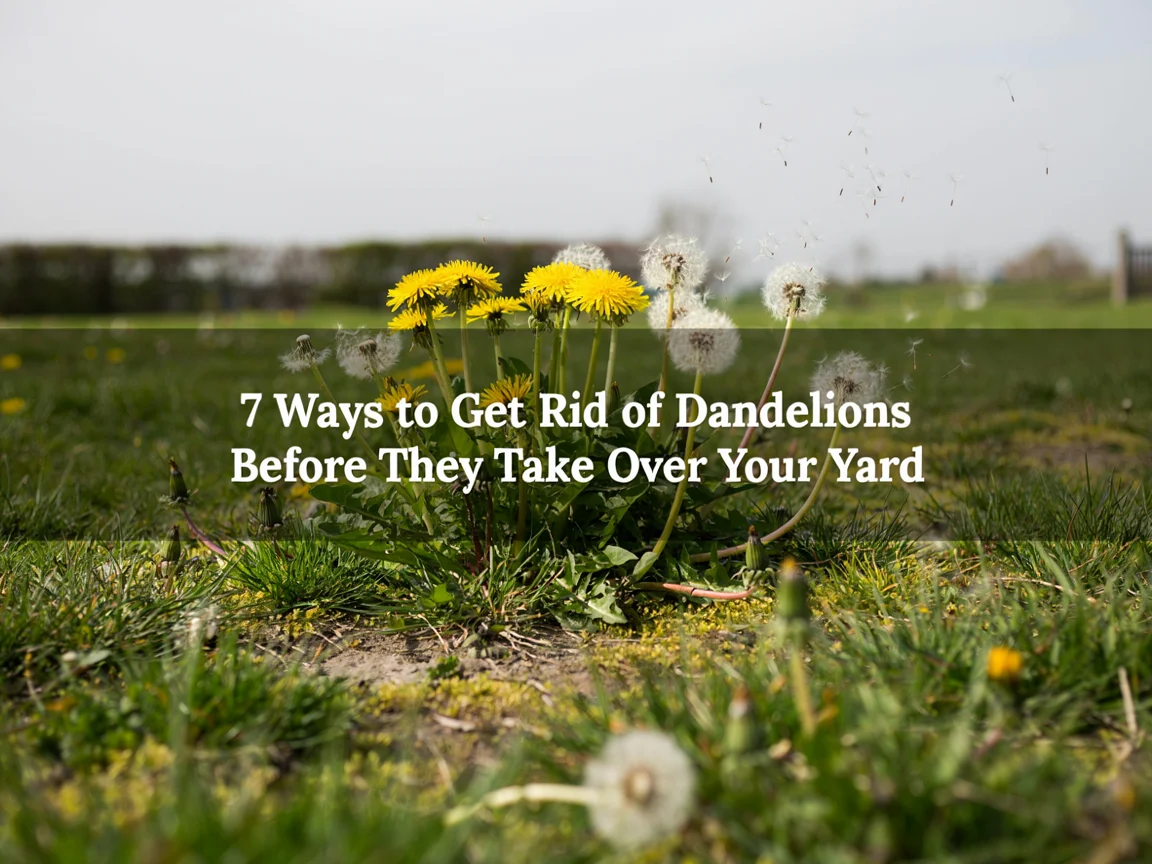
I still remember the spring I let a single dandelion go. It was one cheerful yellow flower in the corner of an otherwise pristine lawn, and I thought, what harm could one do? By the following spring, that one flower had become forty, scattered across the whole yard in a bright yellow rash, because a single dandelion can release thousands of seeds that parachute across the entire lawn on the wind. That was the year I learned the hard truth of dandelion control: these are not weeds you can afford to ignore, because the difference between one plant and an infestation is a single season. The good news is that dandelions, for all their persistence, are entirely beatable — but the key word is before. Catching them early, before they seed and before they take over, is worth more than any amount of frantic effort once they have spread. This guide walks you through seven proven ways to get rid of dandelions, from the gentlest natural methods to the most effective chemical controls, so you can choose the approach that fits your yard and stop them before they win.
Getting rid of dandelions before they take over your yard means combining removal of existing plants with prevention of new ones, using methods ranging from hand-digging and natural treatments to selective herbicides and, most importantly, a thick, healthy lawn that crowds them out. The right method depends on how many dandelions you have, whether you prefer organic or chemical control, and how much you want to protect the surrounding grass, but the underlying principle is always the same: act early, get the whole root, and prevent the seeds before they spread.
Over the years I have battled dandelions across every kind of lawn, and I have learned which methods actually work and which just waste an afternoon. In this article, I am sharing seven effective ways to get rid of dandelions, covering hand removal, natural treatments, selective herbicides, pre-emergent prevention, and the lawn-health strategy that beats them for good, so you can reclaim your yard before the dandelions take it over.
Understanding Dandelions and Why Timing Matters
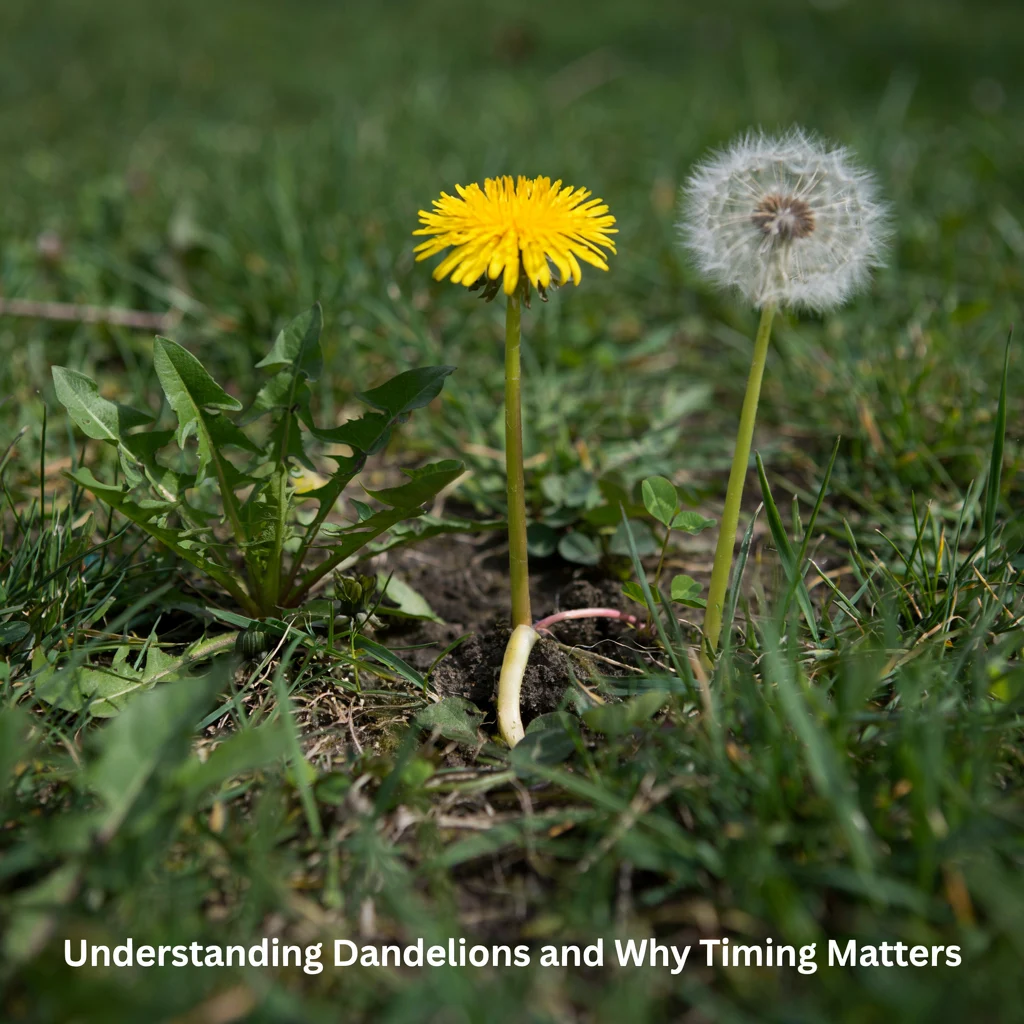
Understanding dandelions and why timing matters is the foundation of controlling them, because knowing how they spread and when to act determines whether you win or lose the battle. I always stress timing above all else, because dandelions spread explosively by seed, and getting to them before they flower and seed is far easier and more effective than trying to control a full infestation later in the season.
How Dandelions Spread
Wind-borne seeds, deep taproots, and rapid establishment are three ways dandelions spread. Wind-borne seeds from the familiar white seed heads scatter across the whole yard, each plant producing thousands. Deep taproots allow dandelions to regrow from any root left in the ground. Rapid establishment lets new plants take hold quickly, turning a few dandelions into an infestation in a single season.
Why Early Action Wins
Preventing seeding, easier removal, and protecting the lawn are three reasons early action wins. Preventing seeding by removing dandelions before the flowers turn to seed heads stops the spread at its source. Easier removal of a few young plants is far simpler than tackling a widespread infestation. Protecting the lawn by acting early keeps the grass healthy and dense enough to resist further invasion.
Hand-Digging With a Dandelion Tool
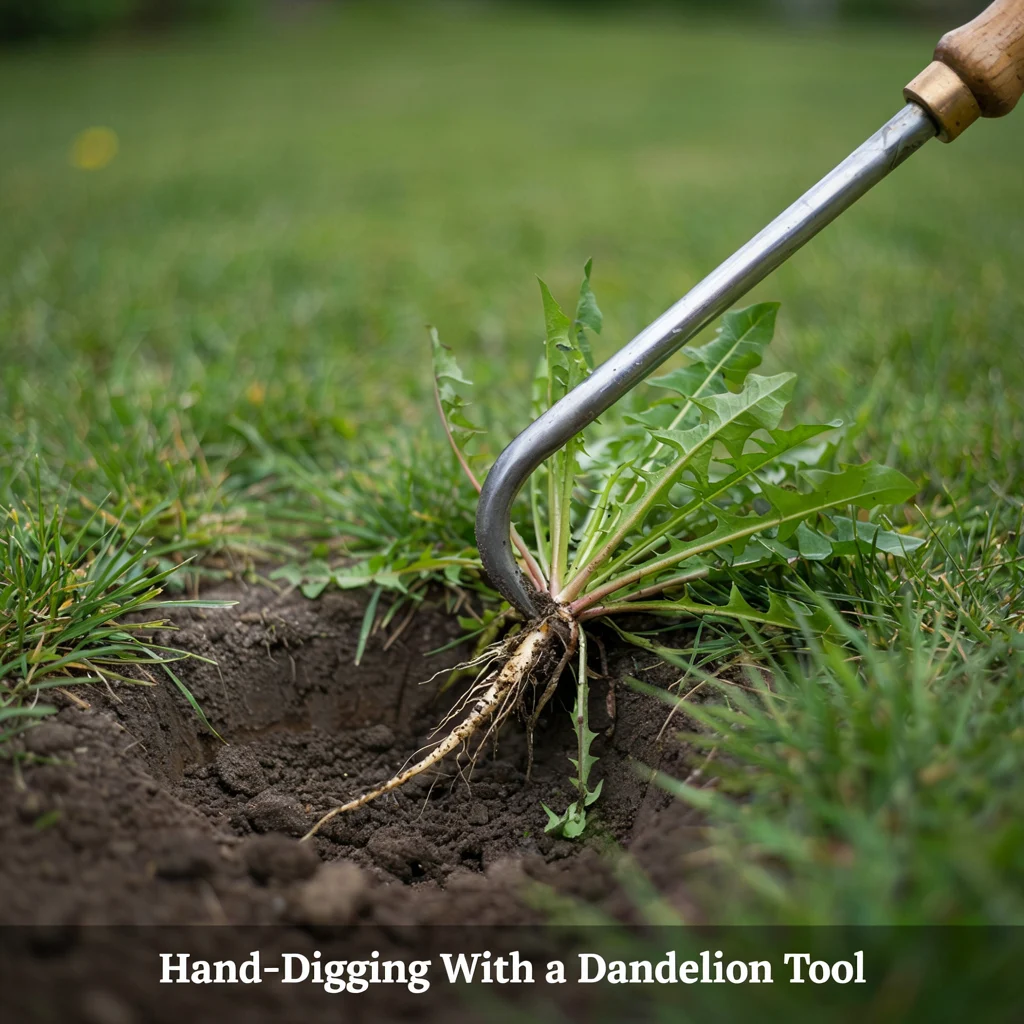
Hand-digging with a dandelion tool is the most direct and satisfying way to get rid of dandelions, physically removing each plant along with its deep taproot. I always recommend hand-digging for small numbers of dandelions, because pulling each plant with its full root using the right tool removes it permanently without any chemicals, making it the most precise and eco-friendly method for a manageable dandelion problem.
Getting the Whole Root
A specialist tool, moist soil, and full root removal are three keys to hand-digging dandelions. A specialist dandelion digging tool, with its forked or narrow blade, reaches deep to lever out the whole taproot. Moist soil after rain or watering makes the roots come out far more easily and completely. Full root removal is essential, since any piece of taproot left behind will regrow into a new plant.
When Hand-Digging Works Best
Small numbers, young plants, and moist conditions are three situations where hand-digging works best. Small numbers of dandelions are quickly cleared by hand without needing chemicals. Young plants with less-established roots come out most easily and completely. Moist conditions make the whole process faster and more effective, so digging after rain gives the best results.
Boiling Water for Natural Spot Treatment
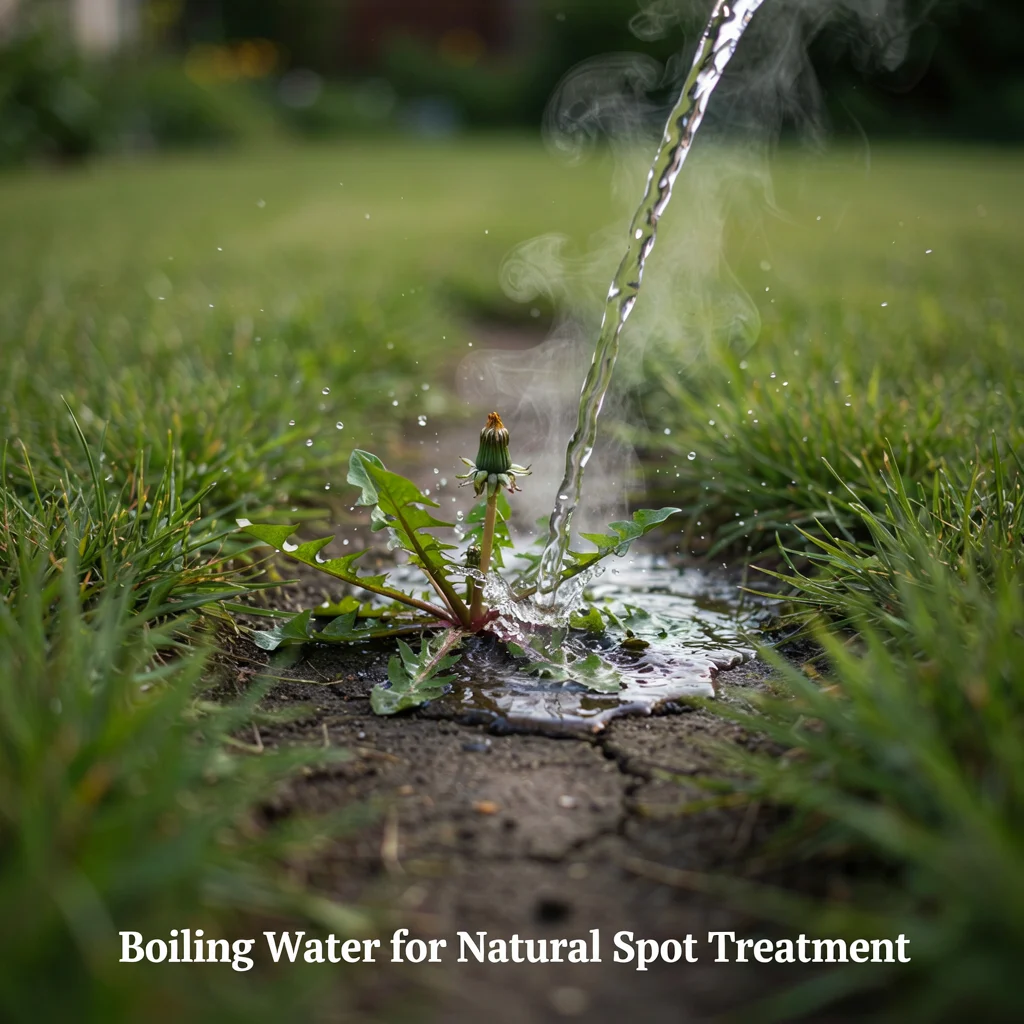
Boiling water for natural spot treatment is a simple, chemical-free way to kill dandelions in the right spots, using heat to destroy the plant. I use boiling water for dandelions in cracks and non-lawn areas, because pouring boiling water directly onto the plant kills it naturally and instantly without any chemicals, making it a cheap and organic option where you do not need to protect surrounding grass.
How to Use Boiling Water
Direct application, repeat treatment, and careful targeting are three keys to using boiling water. Direct application of boiling water onto the crown and leaves scalds and kills the dandelion. Repeat treatment may be needed for established plants with deep roots. Careful targeting is essential, since boiling water kills any plant it touches, including the surrounding grass.
Where Boiling Water Suits Best
Paths and cracks, driveways, and non-lawn areas are three places boiling water suits best. Paths and cracks where dandelions appear between paving are ideal for boiling water. Driveways and hard surfaces can be treated without harming any lawn. Non-lawn areas, where killing surrounding plants does not matter, are where this natural method works best.
Homemade Vinegar-Based Weed Killer
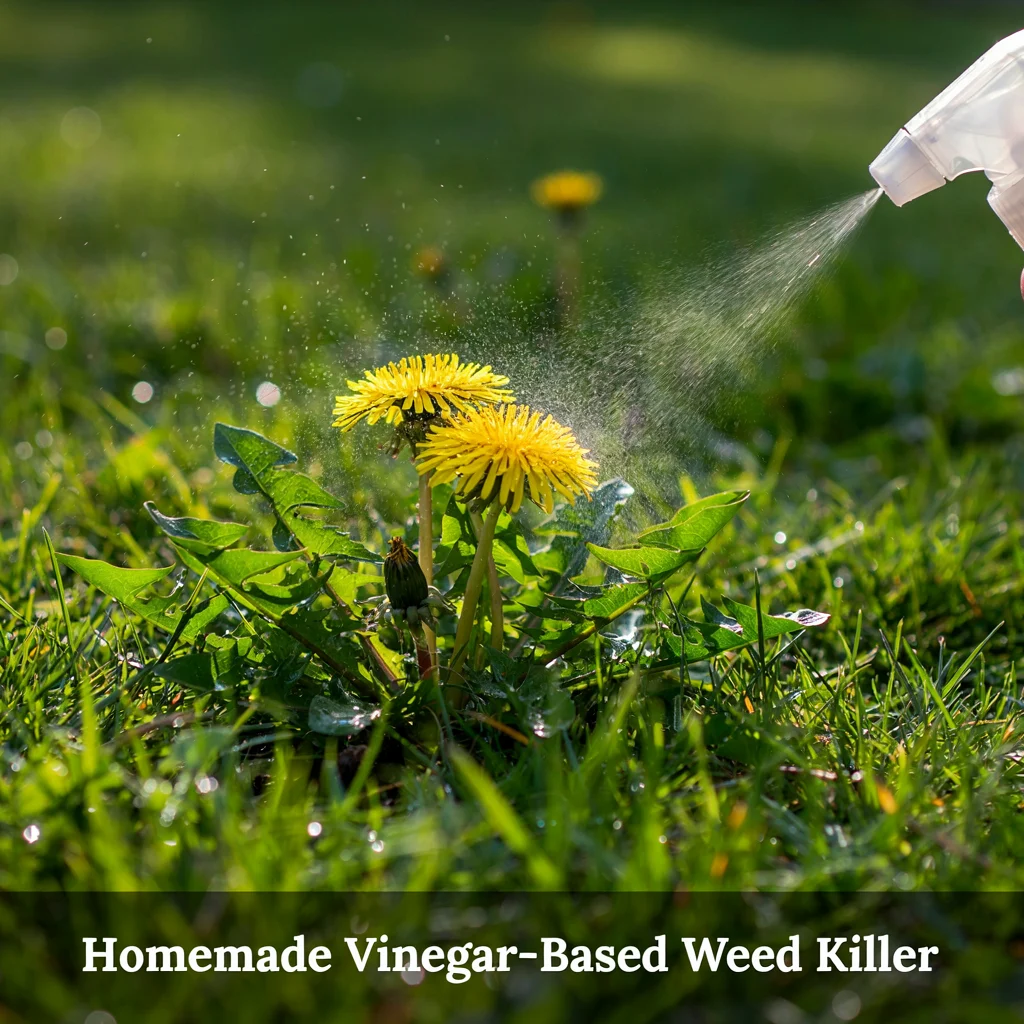
Homemade vinegar-based weed killer is a popular natural option for killing dandelions, using the acetic acid in vinegar to burn off the plant. I use vinegar-based sprays for dandelions in non-lawn areas, because a homemade vinegar solution offers a natural, low-cost way to kill dandelion foliage, though it is best kept away from the lawn since it will damage grass as readily as weeds.
Making a Vinegar Weed Killer
Strong vinegar, added soap, and direct spraying are three keys to a vinegar weed killer. Strong vinegar, ideally horticultural-strength, provides the acidity to burn the foliage. Added dish soap helps the solution stick to the leaves. Direct spraying onto the dandelion foliage on a dry sunny day gives the best results.
Limitations of Vinegar
Non-selective action, foliage-only effect, and repeat treatment are three limitations of vinegar. Non-selective action means vinegar kills grass and other plants as well as dandelions, so it cannot be used on the lawn. Foliage-only effect means it burns the leaves but may not kill the deep taproot. Repeat treatment is often needed, since the plant can regrow from the surviving root.
Selective Broadleaf Herbicide
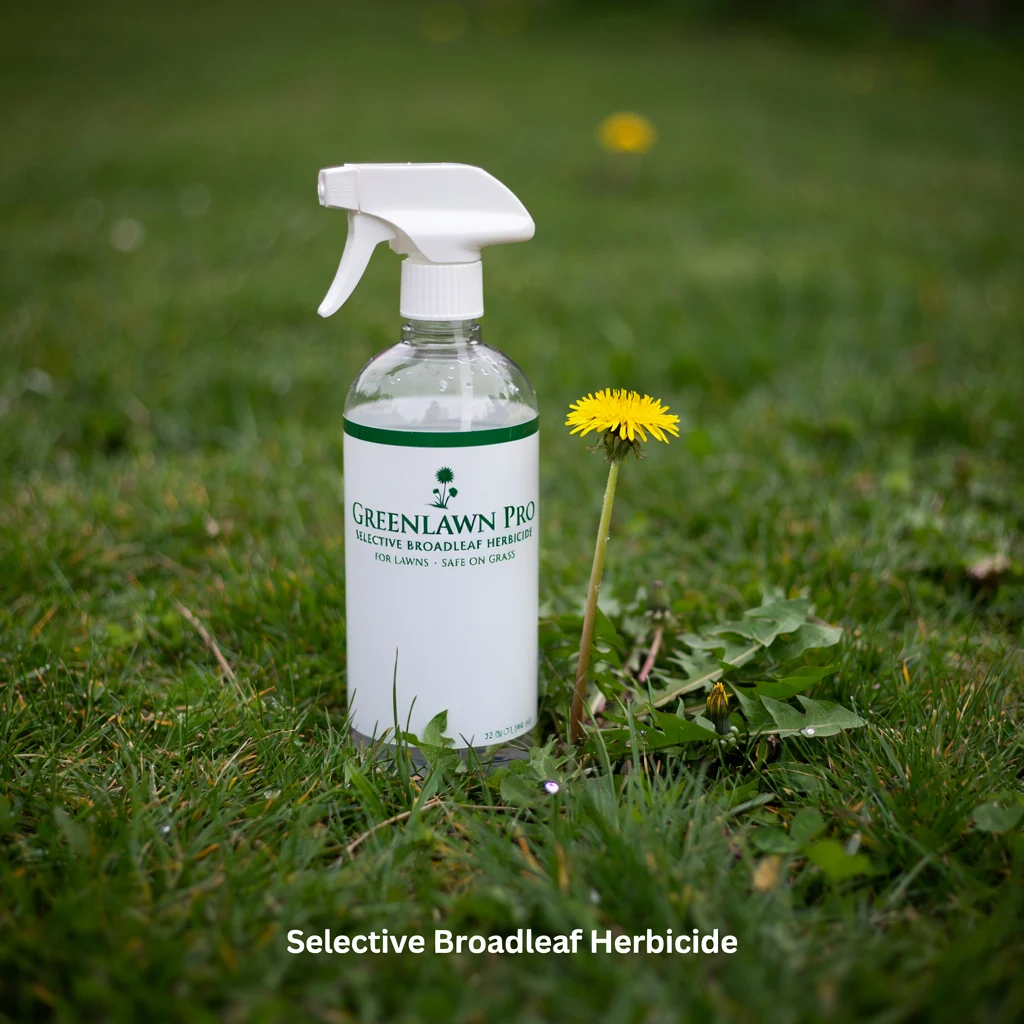
Selective broadleaf herbicide is the most effective chemical way to get rid of dandelions in a lawn, killing the weeds while leaving the grass unharmed. I recommend selective broadleaf herbicides for widespread dandelions in a lawn, because they are specifically formulated to kill broadleaf weeds like dandelions down to the root while leaving the grass unharmed, making them the most effective option for a serious lawn infestation.
How Selective Herbicides Work
Broadleaf targeting, root kill, and grass safety are three features of selective herbicides. Broadleaf targeting means the herbicide affects broadleaf weeds like dandelions and clover but not grass. Root kill, as the herbicide is absorbed and translocated, destroys the whole plant including the taproot. Grass safety allows the herbicide to be applied across the whole lawn without harming the turf.
Applying Selective Herbicide
Correct timing, proper application, and following instructions are three keys to applying selective herbicide. Correct timing, treating actively growing dandelions in spring or autumn, gives the best results. Proper application, whether spot-treating or covering the lawn, ensures effective control. Following the product instructions carefully ensures the herbicide works safely and effectively on the lawn.
Corn Gluten Meal as a Natural Pre-Emergent
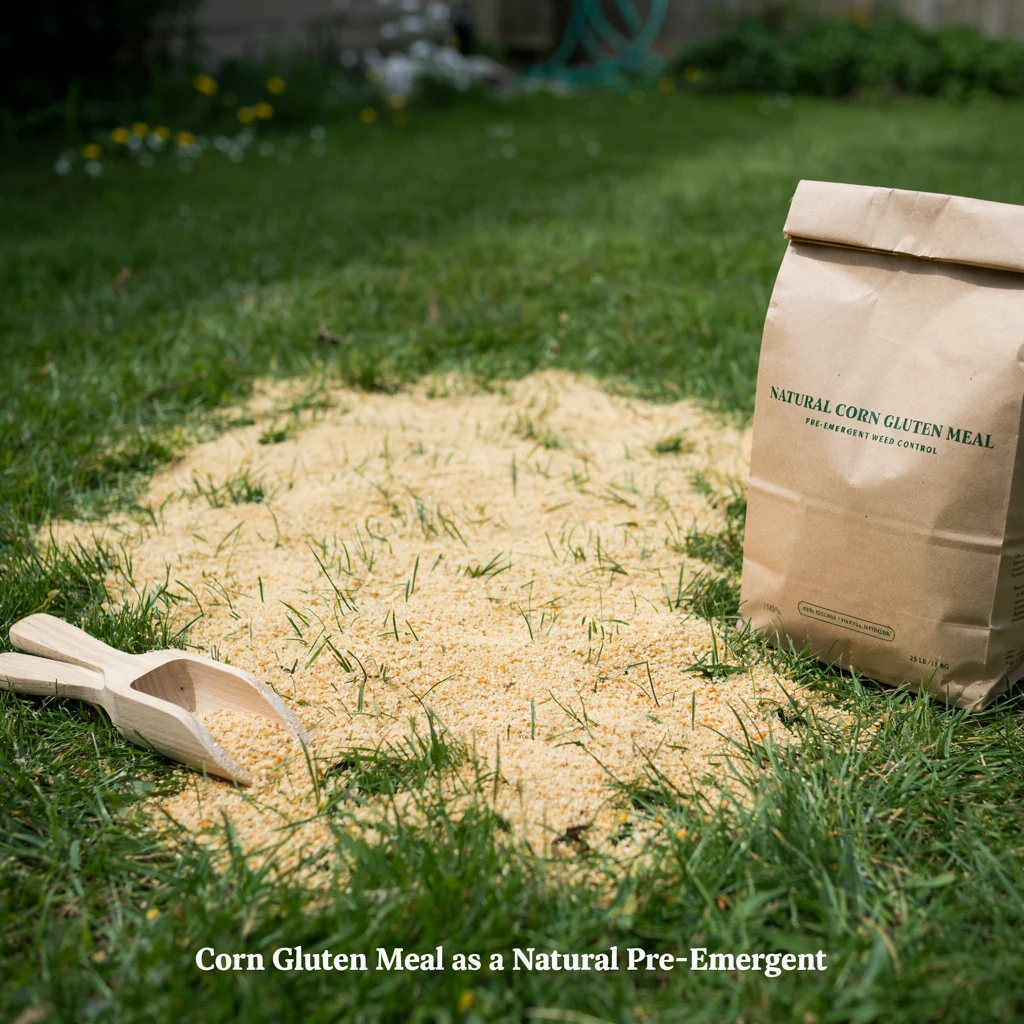
Corn gluten meal as a natural pre-emergent prevents dandelion seeds from establishing, offering an organic way to stop new dandelions before they start. I use corn gluten meal as a preventative measure, because this natural pre-emergent inhibits dandelion seeds from developing roots, providing an organic way to prevent new dandelions from establishing while also feeding the lawn as a mild fertilizer.
How Corn Gluten Meal Works
Seed inhibition, natural action, and lawn feeding are three features of corn gluten meal. Seed inhibition prevents germinating dandelion seeds from developing roots. Natural action provides an organic alternative to chemical pre-emergents. Lawn feeding, as corn gluten meal contains nitrogen, provides a mild fertilizer benefit that strengthens the grass.
Using Corn Gluten Meal Effectively
Correct timing, even application, and repeat treatment are three keys to using corn gluten meal. Correct timing, applying in early spring before seeds germinate, is essential for effectiveness. Even application across the lawn ensures consistent prevention. Repeat treatment each season maintains the pre-emergent barrier, since corn gluten meal prevents new plants but does not kill existing dandelions.
Overseeding to Crowd Out Dandelions
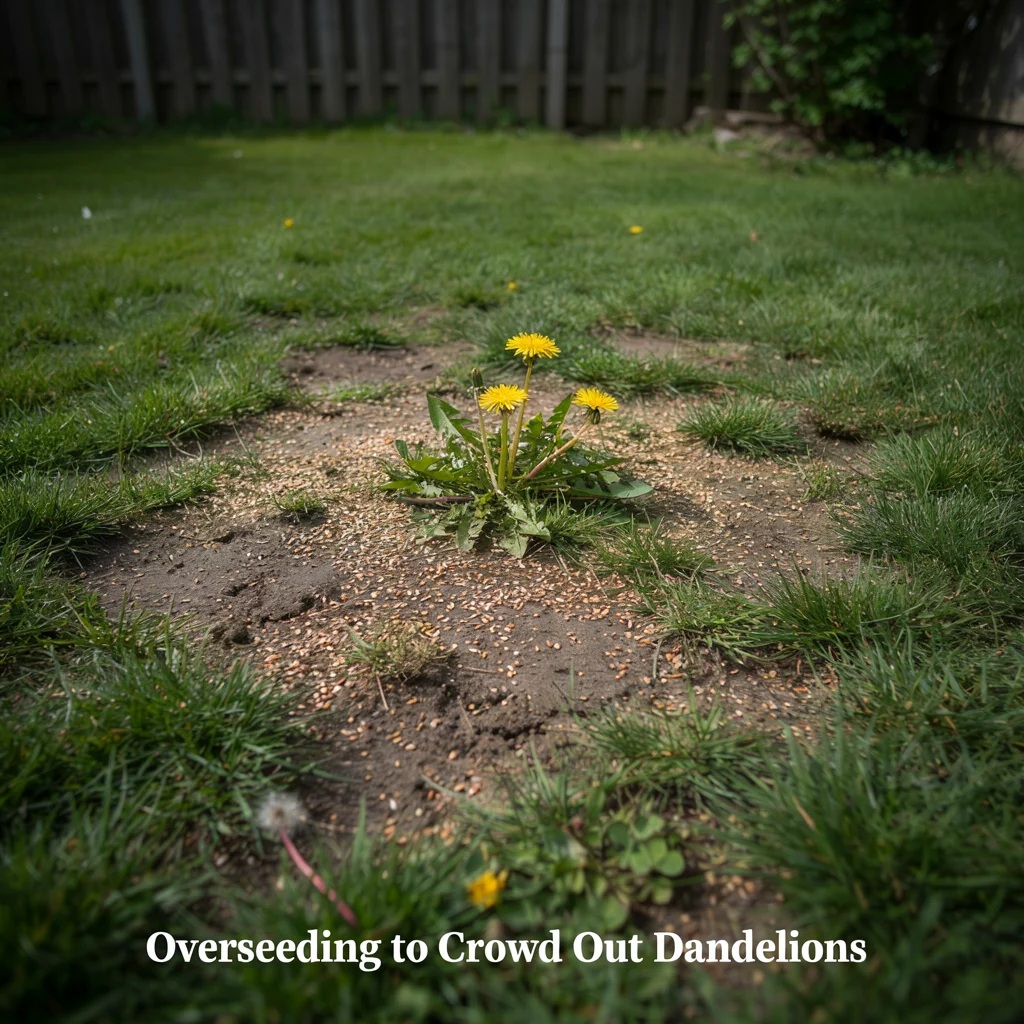
Overseeding to crowd out dandelions strengthens the lawn so dense grass leaves no room for weeds to establish, tackling the problem at its root cause. I always recommend overseeding as part of dandelion control, because dandelions colonize thin, bare, and weak lawns, so thickening the grass through overseeding crowds them out and prevents new seeds from finding the bare soil they need to establish.
How Overseeding Prevents Dandelions
Dense grass cover, no bare soil, and competition are three ways overseeding prevents dandelions. Dense grass cover from overseeding leaves no gaps for dandelions to colonize. No bare soil means dandelion seeds cannot find the open ground they need to germinate. Competition from vigorous grass outcompetes any dandelions that do try to establish.
Overseeding Effectively
Good timing, quality seed, and soil contact are three keys to effective overseeding. Good timing, overseeding in spring or autumn, gives the new grass the best chance to establish. Quality seed suited to your conditions produces a dense, vigorous lawn. Good seed-to-soil contact, by preparing the surface and keeping it moist, ensures strong germination and a thick weed-resistant lawn.
Improving Lawn Health to Prevent Dandelions
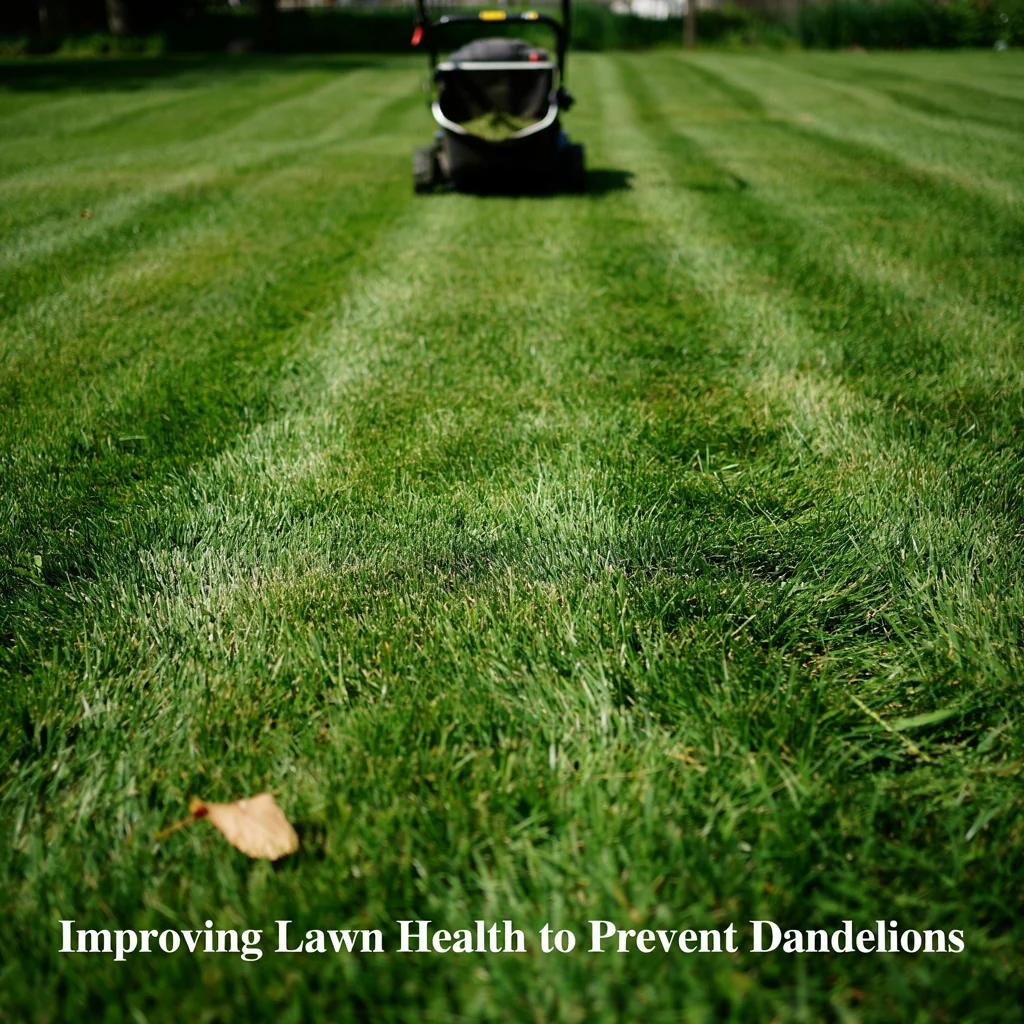
Improving lawn health to prevent dandelions is the most important long-term strategy, because a thick, vigorous, healthy lawn is the single best defence against dandelions taking over. I treat overall lawn health as the foundation of dandelion control, because dandelions thrive in stressed, thin, compacted lawns, so a well-fed, well-maintained, healthy lawn naturally resists them far better than any spray or treatment can once they have taken hold.
Building a Dandelion-Resistant Lawn
Regular feeding, proper mowing, and aeration are three practices that build a dandelion-resistant lawn. Regular feeding keeps the grass vigorous and dense enough to crowd out weeds. Proper mowing at the right height keeps the grass strong and shades out weed seedlings. Aeration relieves compaction, improving the grass roots and reducing the stressed conditions dandelions exploit.
Long-Term Dandelion Prevention
Consistent care, addressing bare patches, and ongoing vigilance are three approaches to long-term prevention. Consistent lawn care maintains the dense healthy grass that resists dandelions. Addressing bare patches promptly by reseeding removes the open ground dandelions colonize. Ongoing vigilance, removing any dandelions that appear before they seed, keeps the lawn dandelion-free for the long term.
For a related project, see our article on Deer-Resistant Flowers, Shrubs, and Trees for Your Garden.
Frequently Asked Questions
What kills dandelions permanently?
What kills dandelions permanently is the removal or destruction of the entire plant including its deep taproot, since any root fragment left behind will regrow. Hand-digging with a specialist dandelion tool removes the whole taproot mechanically and is permanent when the full root comes out, while selective broadleaf herbicides are absorbed and translocated down to kill the entire plant including the root, providing effective permanent control on a lawn. However, the most genuinely permanent solution is prevention through a thick, healthy lawn, because even after you remove existing dandelions, new seeds will constantly blow in and colonize any bare or weak areas, so combining thorough removal of existing plants with a dense vigorous lawn that leaves no room for new ones to establish is the only way to keep dandelions gone for good.
What kills dandelions but not grass?
What kills dandelions but not grass is a selective broadleaf herbicide, which is specifically formulated to target broadleaf weeds like dandelions and clover while leaving grass unharmed. These herbicides are absorbed by the broadleaf weeds and translocated down to kill the whole plant including the taproot, but they do not affect grass, so they can be applied across the entire lawn or spot-treated onto individual dandelions without damaging the turf. This makes selective broadleaf herbicide the most effective option for clearing dandelions from a lawn without harming the grass, and it is best applied to actively growing dandelions in spring or autumn following the product instructions, unlike non-selective options such as vinegar or boiling water which kill grass as readily as weeds and must be kept off the lawn.
What kills dandelions naturally?
What kills dandelions naturally includes hand-digging with a dandelion tool, boiling water, and vinegar-based sprays, all of which remove or destroy dandelions without synthetic chemicals. Hand-digging removes the whole plant and root mechanically and is the most reliable natural method, boiling water poured directly onto the plant scalds and kills it instantly, and a homemade vinegar solution burns off the foliage, while corn gluten meal provides a natural pre-emergent that prevents new seeds from establishing. It is worth noting that boiling water and vinegar are non-selective and will kill grass as well as dandelions, so they are best used in paths, cracks, and non-lawn areas, while hand-digging and corn gluten meal can be used safely in the lawn, and combining these natural methods with a thick healthy lawn provides effective organic dandelion control.
How do I get rid of dandelions and clover in my lawn?
You get rid of dandelions and clover in your lawn most effectively with a selective broadleaf herbicide, since both are broadleaf weeds that these herbicides target while leaving the grass unharmed. Applied to actively growing weeds in spring or autumn, a selective broadleaf herbicide is absorbed and kills both dandelions and clover down to the root without damaging the turf, making it the most efficient way to clear a lawn of both weeds at once. For a natural approach you can hand-dig dandelions and remove clover patches, but the most important long-term solution for both is improving lawn health, because dandelions and clover both colonize thin, weak, and underfed lawns, so a thick, well-fed, vigorous lawn crowds them out and prevents them returning far better than repeated treatments once they have taken hold.
When is the best time to kill dandelions?
The best time to kill dandelions is in spring before they flower and seed, and again in autumn when the plants are drawing energy down into their roots. Treating dandelions in spring before the yellow flowers turn to white seed heads stops them spreading thousands of seeds across the yard, which is the single most important timing for preventing an infestation, while autumn treatment is highly effective for herbicides because the plant is moving nutrients down to the root, carrying the herbicide with it for a thorough kill. Acting early is the key principle throughout, since a few dandelions caught before they seed are far easier to control than a widespread infestation later, so tackling them in spring before they take over and following up in autumn gives the best and most lasting control.