Budget Backyard Ideas Worth Trying

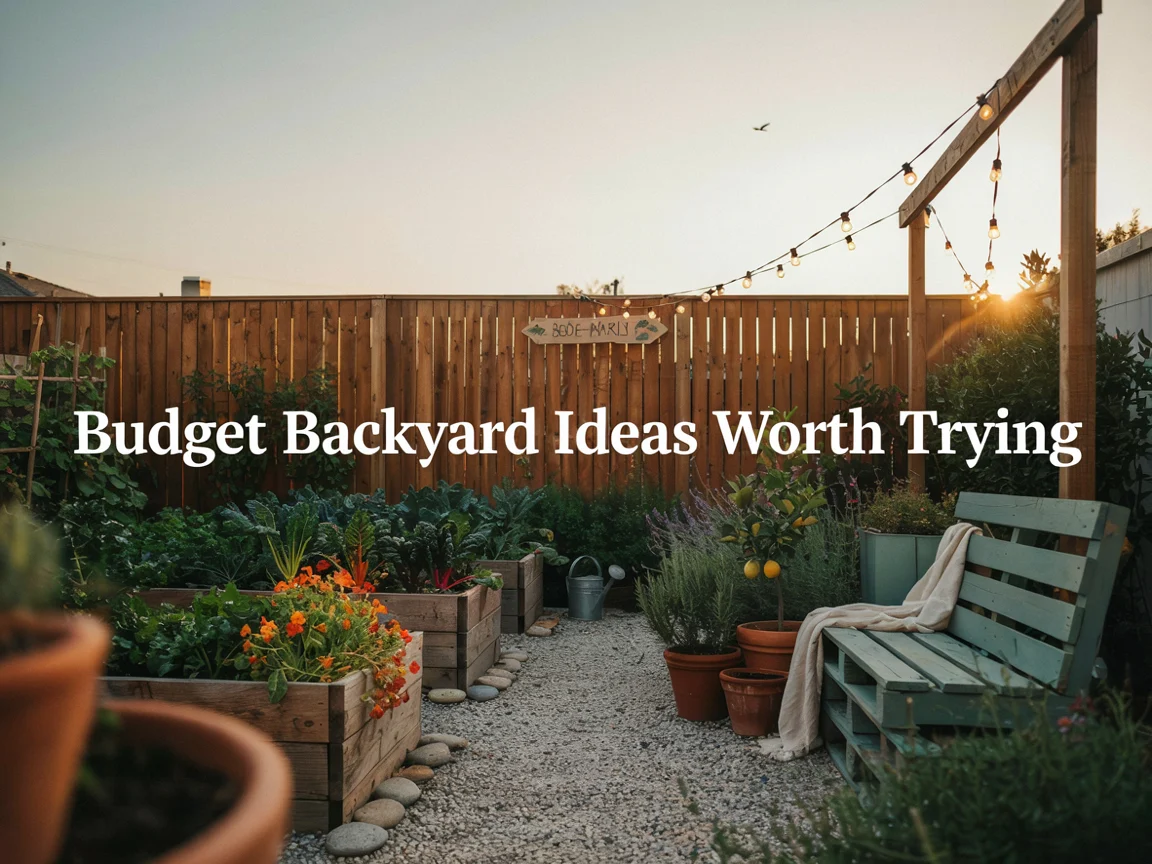
Transforming a backyard on a genuine budget comes down to a handful of smart, well-prioritized choices rather than a bigger overall spend. The backyards that look considered despite a modest budget almost always share the same underlying approach: spend on the one or two elements that matter most, and keep everything else affordable, simple, and low-effort.
Skip Grass Where It Isn’t Practical
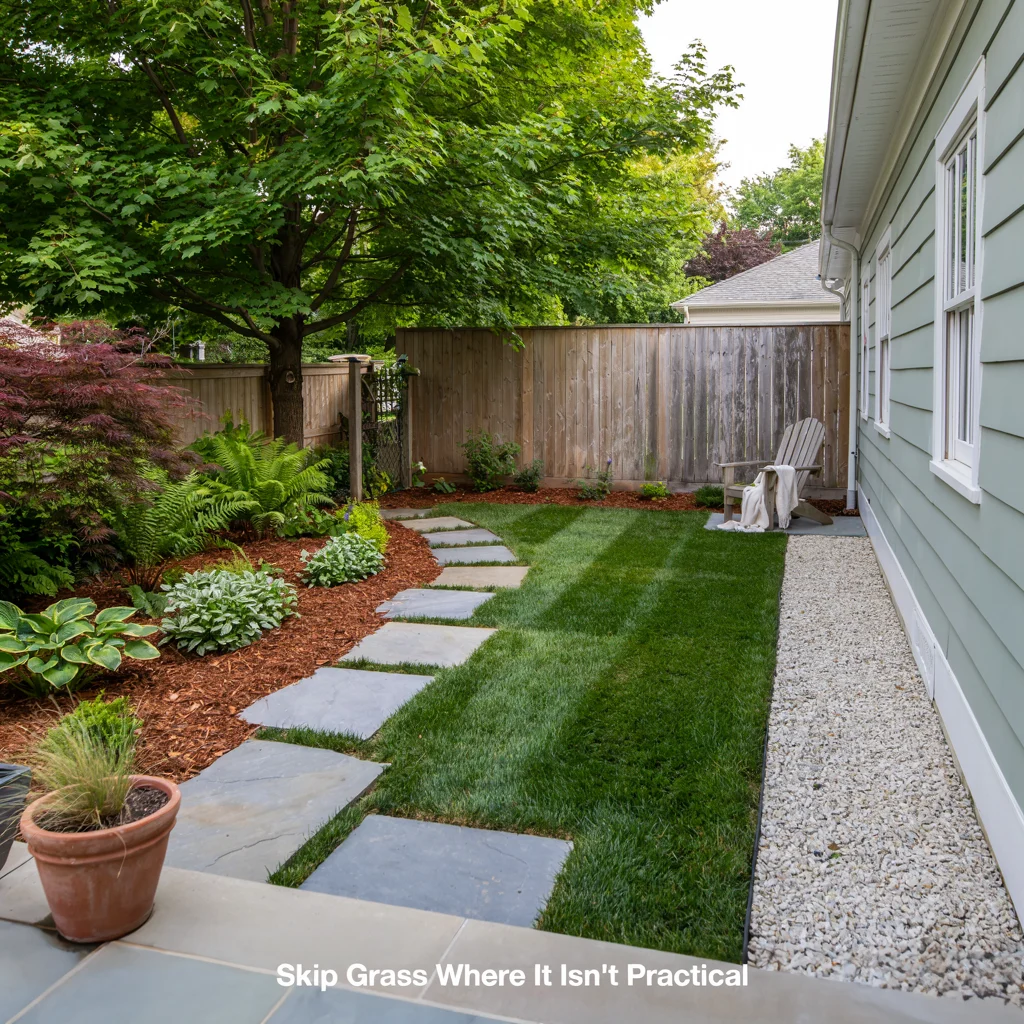
Skip grass where it isn’t practical, replacing it with gravel, mulch, or a spreading ground cover instead of sod. All three options cost considerably less than turf, need no mowing, and install over a single weekend with proper edging to keep them contained.
Gravel and Mulch as Instant No-Grass Coverage
Gravel and mulch as instant no-grass coverage deliver a finished-looking surface almost immediately, since both materials simply need a compacted base, landscape fabric to block weeds, and a few inches of the chosen material spread evenly. Gravel suits a patio-adjacent area or a dry, low-traffic zone, while mulch works well around planting beds and shaded corners where gravel would feel harsher underfoot.
Ground Cover as a Living, No-Mow Alternative
Ground cover as a living, no-mow alternative uses spreading plants like creeping thyme or clover, both of which establish inexpensively from starter plants or seed and require no mowing whatsoever once established. This route takes longer to reach full coverage than gravel or mulch but delivers a softer, greener result that also tolerates light foot traffic reasonably well.
Zone a Large Yard Instead of Spending Evenly Across It
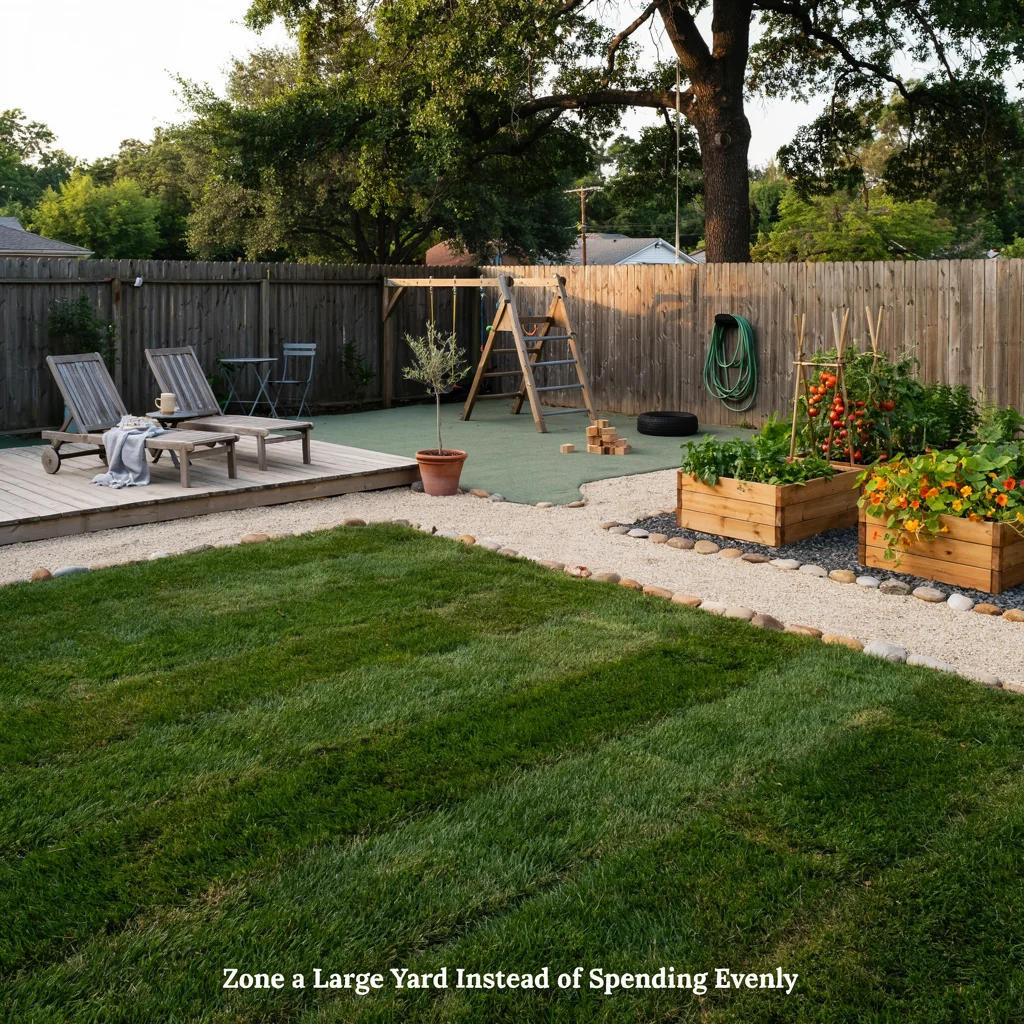
Zone a large yard instead of spending evenly across it, dividing the space into a few distinct areas and using inexpensive material changes or simple plantings to mark each boundary rather than trying to furnish and landscape the whole footprint uniformly.
Defining Zones With Low-Cost Boundary Markers
Defining zones with low-cost boundary markers, such as a simple gravel border, a single row of low plants, or even just a change in mowing pattern for a lawn section, gives a large yard clear structure without requiring a fence or built edging between every area. This keeps the zoning approach genuinely affordable while still reading as intentional.
Prioritizing Which Zone Gets the Most Investment
Prioritizing which zone gets the most investment means directing the bulk of a limited budget toward the single zone used most often, typically a seating or dining area, while leaving other zones, like an open lawn or a simple play area, deliberately minimal. This uneven spending, rather than spreading funds thin across the whole yard, produces a more satisfying result overall.
Use Repurposed Materials for Kid-Friendly Additions
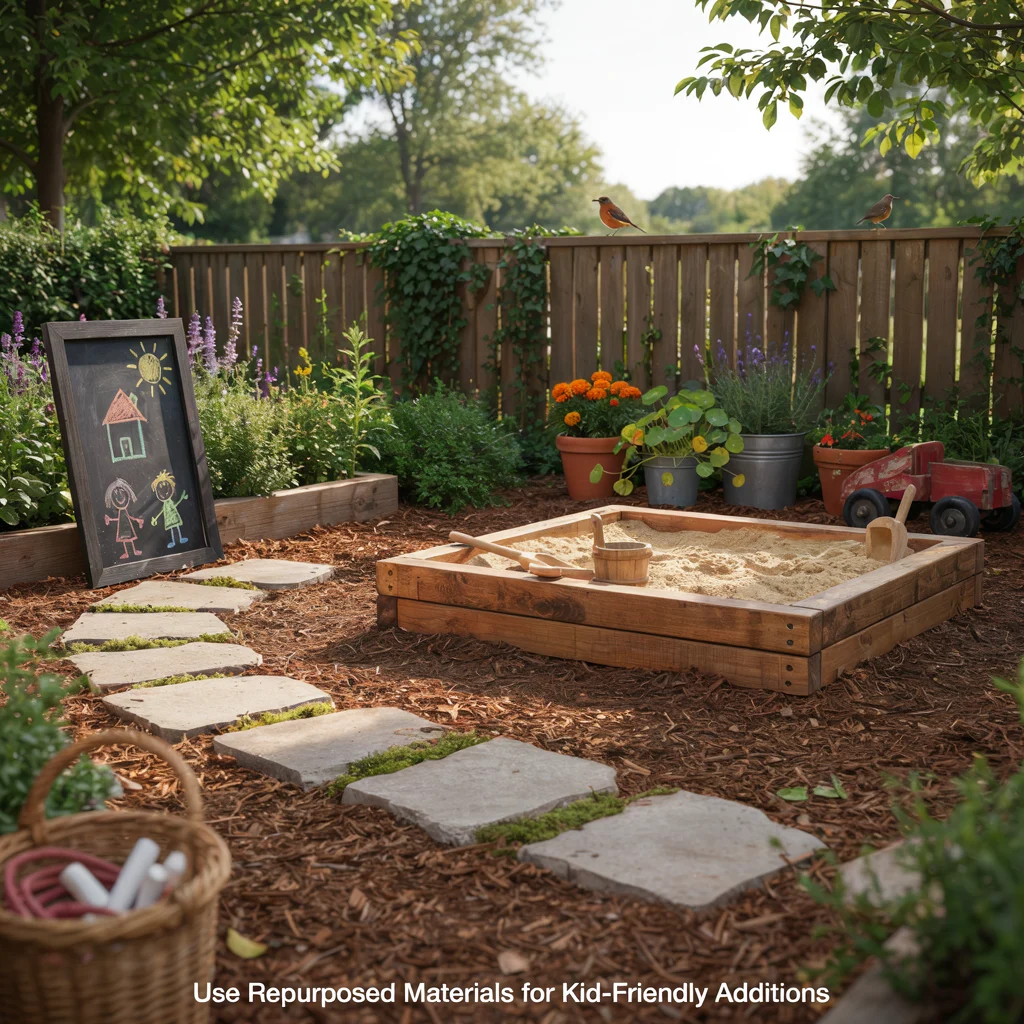
Use repurposed materials for kid-friendly additions rather than purchased play equipment, since reclaimed timber, secondhand furniture, and affordable loose-fill surfacing deliver genuine play value at a fraction of retail cost.
Building Simple Play Features From Reclaimed Materials
Building simple play features from reclaimed materials includes a sandbox framed with leftover timber, a DIY mud kitchen assembled from a secondhand cabinet or crate, and a low balance beam made from a single reclaimed beam set close to the ground. Each of these can typically be built in an afternoon for the cost of a few basic fasteners.
Choosing a Safe, Affordable Surface Beneath Play Equipment
Choosing a safe, affordable surface beneath play equipment matters as much as the equipment itself, and materials like playground mulch or pea gravel provide genuine fall protection beneath a swing or climbing structure without the cost of rubber matting or poured safety surfacing.
Keep Renter-Friendly Additions Fully Portable
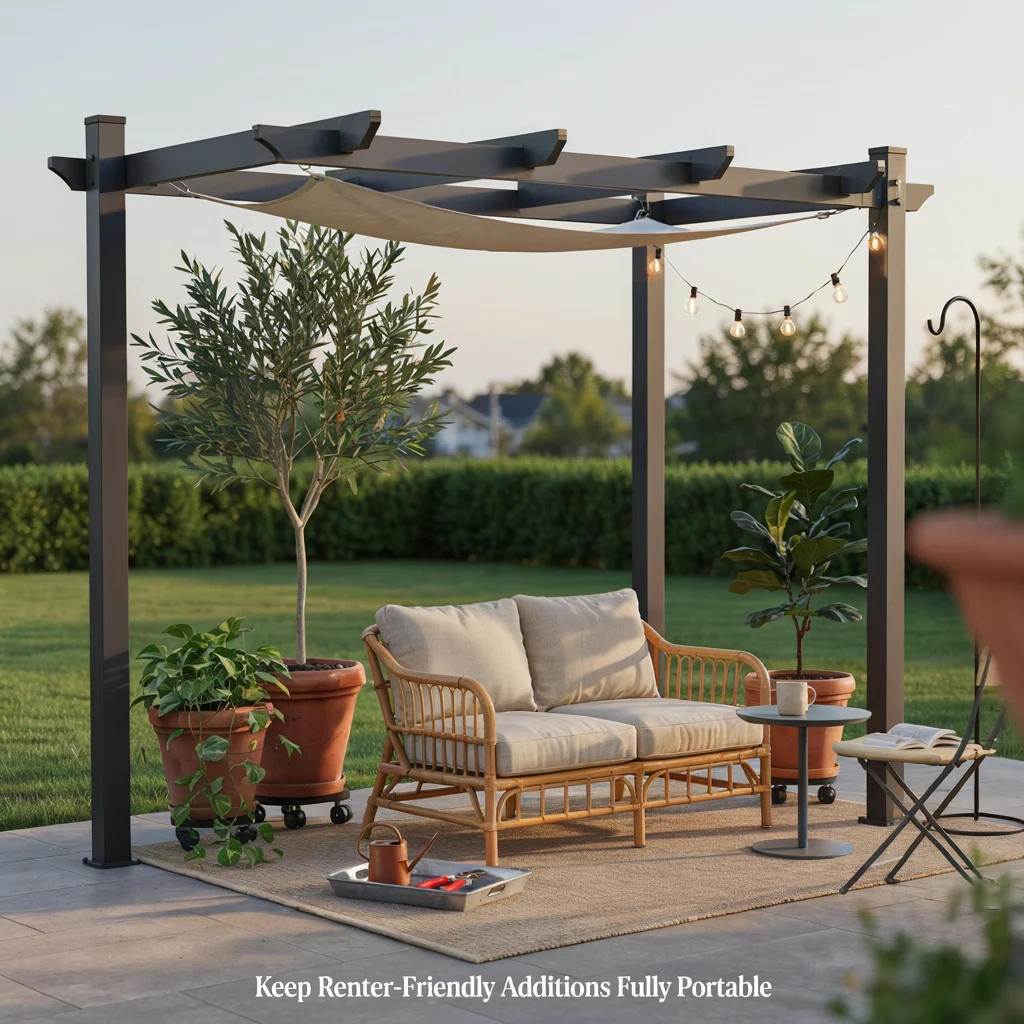
Keep renter-friendly additions fully portable, relying entirely on freestanding elements that can be packed up and taken along at the end of a lease rather than anything installed or built into the property itself.
Portable Plants and Lighting Instead of Permanent Fixtures
Portable plants and lighting instead of permanent fixtures means using potted plants rather than in-ground planting, and battery-powered string lights rather than any wired fixture requiring an electrician or landlord approval. Both options deliver real atmosphere and greenery without touching the property’s existing structure.
A Movable Fire Feature Instead of a Built-In Fire Pit
A movable fire feature instead of a built-in fire pit, such as a portable fire bowl set on a heat-safe base, provides the same gathering-point warmth as a permanent installation without any digging, masonry, or landlord permission required.
Build Simple Landscaping Around a Single Focal Point
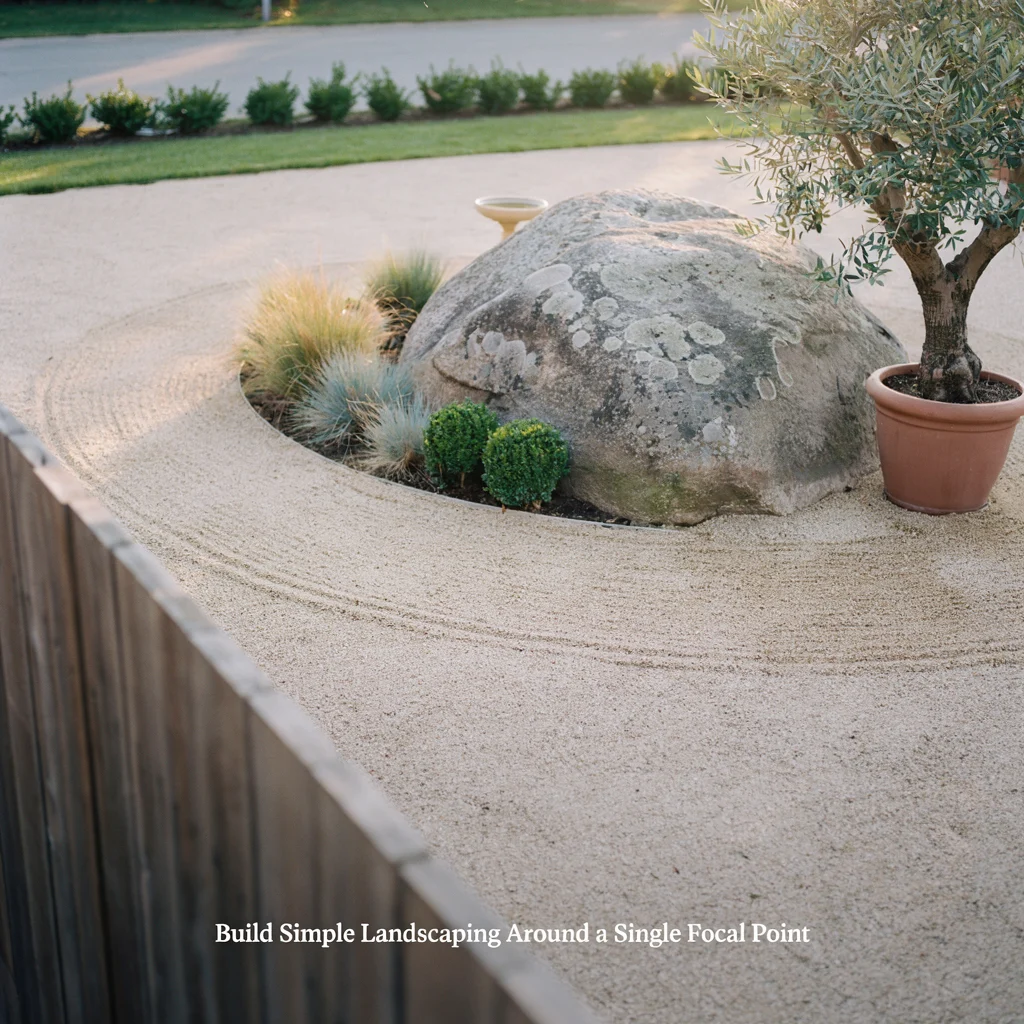
Build simple landscaping around a single focal point rather than scattering a small budget across many minor additions, since one well-chosen feature does more visual work than several scattered, lower-impact purchases.
Choosing a Focal Point Worth the Investment
Choosing a focal point worth the investment, whether a single well-placed tree, a modest water feature, or one striking container plant, means picking the one element that will be seen and enjoyed most often, typically from a main window or the primary seating area.
Letting Restraint Elsewhere Support the Focal Point
Letting restraint elsewhere support the focal point means keeping the surrounding planting and hardscaping deliberately simple and low-key, so the chosen feature genuinely stands out rather than competing for attention with several other, less considered additions.
Achieve a Modern Look With Paint and Restraint
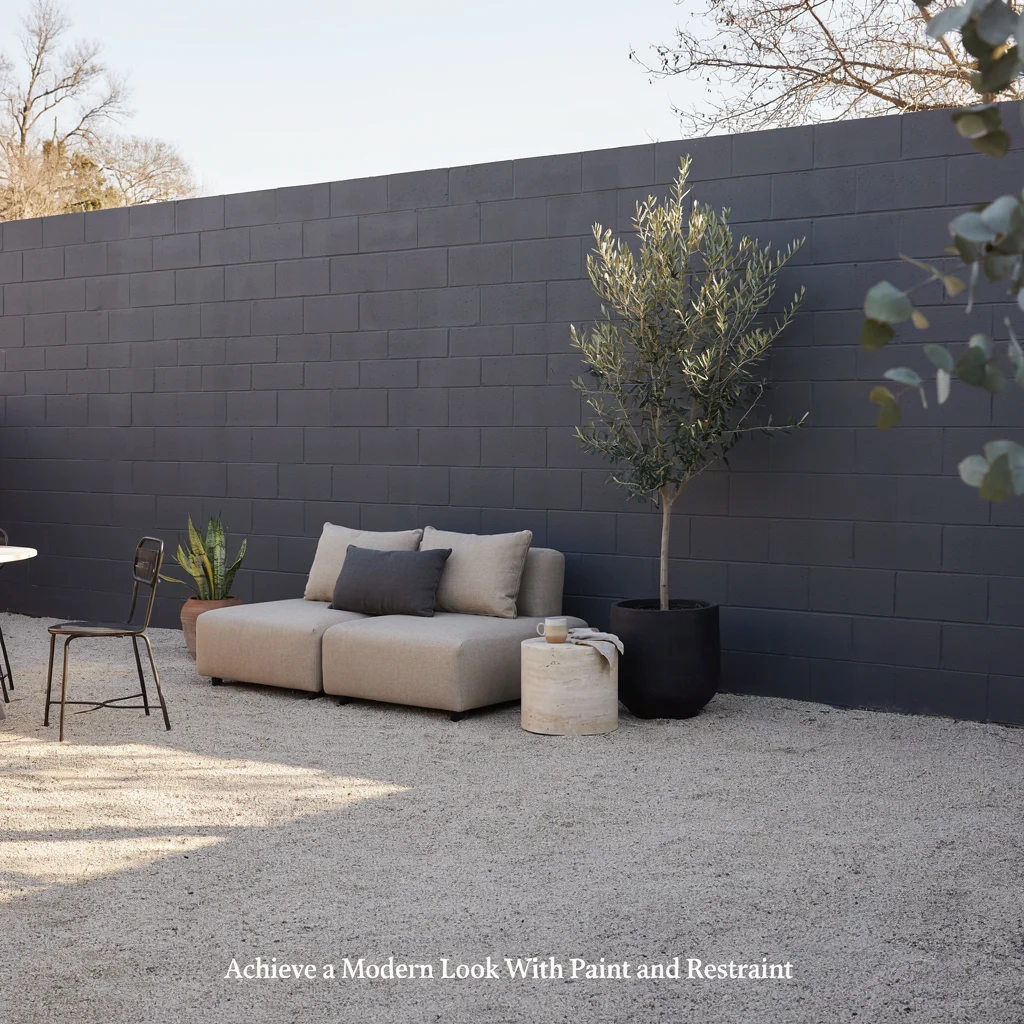
Achieve a modern look with paint and restraint rather than new materials, since a fresh coat of paint and a disciplined, limited plant palette can transform a backyard’s overall feel for a fraction of the cost of new hardscaping.
Repainting an Existing Fence or Deck for Maximum Visible Impact
Repainting an existing fence or deck for maximum visible impact often makes the single biggest difference of any budget project, since a fence or deck typically covers more visible surface area than almost anything else in a backyard, and a clean, contemporary colour instantly updates the whole space.
Keeping the Plant Palette Limited and Repeated
Keeping the plant palette limited and repeated, using just two or three species planted in groups rather than a wide, scattered variety, reinforces the clean, considered look modern design favours while also keeping the total plant budget genuinely affordable.
For related ideas, see our articles on Cheap No Grass Backyard Ideas For a Low-Maintenance Garden, How to Make a Gorgeous Goldfish Pond in Your Backyard, and Couple’s DIY Backyard Stock Tank Pool. This pairs well with our guide to Best Trees for Privacy in Your Backyard.
Frequently Asked Questions
What are the best budget backyard ideas overall?
The best budget backyard ideas prioritize spend on one or two high-impact elements, like a single focal point plant or a repainted fence, while filling out the rest of the space affordably through gravel, propagated plants, and DIY lighting. Zoning a larger yard into a few distinct areas, rather than furnishing it uniformly, also makes a limited budget go considerably further.
What are some cheap backyard ideas that don’t involve grass?
Cheap backyard ideas that avoid grass entirely include replacing turf with gravel or mulch, which costs less than sod and needs no mowing or watering, and using a spreading ground cover like creeping thyme or clover, both of which establish inexpensively and eliminate a lawn’s ongoing maintenance demands.
How can renters improve a backyard without making permanent changes?
Renters can improve a backyard affordably using entirely freestanding elements, including potted plants instead of in-ground beds, a portable fire bowl instead of a built-in fire pit, and battery-powered string lights instead of any wired fixture, all of which can be taken along when a lease ends.
What are some budget-friendly backyard ideas for kids?
Budget-friendly backyard ideas for kids include a simple sandbox built from reclaimed timber, a DIY mud kitchen assembled from secondhand cabinets, and a soft, inexpensive surface like playground mulch or pea gravel placed beneath any swing or climbing equipment.
How do I make a budget backyard look modern rather than just cheap?
Making a budget backyard look modern relies on restraint and a few well-executed details, including a single coat of exterior paint on an existing fence in a clean, contemporary colour, and a genuinely limited plant palette repeated in groups rather than a wide, scattered variety.