
Woodland Gardens With Ground Cover Ideas For Shade

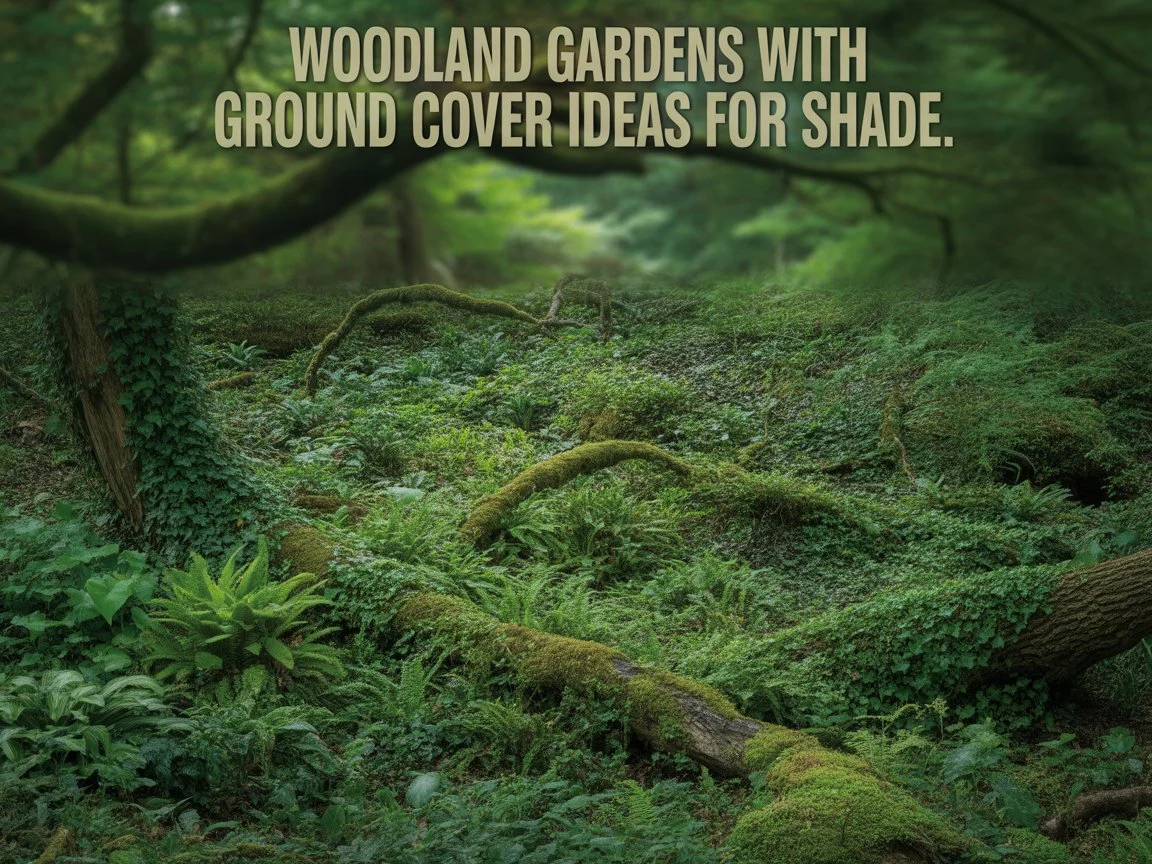
The question I am asked more than any other, in some form, is always the same: “What can I possibly grow in all that shade?” It usually comes from someone standing in front of a stretch of bare, weedy, hopeless-looking ground beneath their trees, convinced that shade is a curse. I felt the same way myself once, until an old mentor walked me through her own deeply shaded garden and showed me a floor so densely and beautifully clothed in overlapping green ground cover that not a single weed could find a foothold. She had not fought the shade. She had simply learned which plants love it, and let them carpet the ground. “Shade isn’t the enemy of ground cover,” she told me. “Shade is where the best ground cover lives.” That walk dissolved my whole sense of shade as a problem. The right shade-loving ground cover does not merely tolerate the dark beneath trees — it thrives there, spreading into a lush, weed-suppressing, self-sustaining carpet that turns the most difficult ground in any garden into the most effortless.
Woodland gardens with ground cover ideas for shade use low-growing, spreading, shade-loving plants — epimedium, vinca, pachysandra, hostas, ferns, wild ginger, moss, and native woodland flowers — planted densely to clothe the shaded woodland floor in a beautiful, weed-suppressing, ecologically valuable living carpet beneath the tree canopy. The ground cover gives the shaded woodland a finished naturalistic floor, natural weed control, and soil protection, while the shade and the cool, moisture-retaining conditions beneath the trees give these specialist plants exactly the environment they are adapted to thrive in.
Over the years I have selected, established, and managed shade ground cover schemes across woodland gardens ranging from small dark corners to large floors beneath mature canopy. I have seen the right shade-loving ground cover solve the most stubborn bare-ground and weed problems, and I have also watched these carpets mature into displays of real seasonal beauty. In this article I am sharing the best woodland ground cover ideas for shade covering plant selection, evergreen options, native species, deep shade, combinations, and low-maintenance care.
Why Ground Cover Is the Answer for Shade
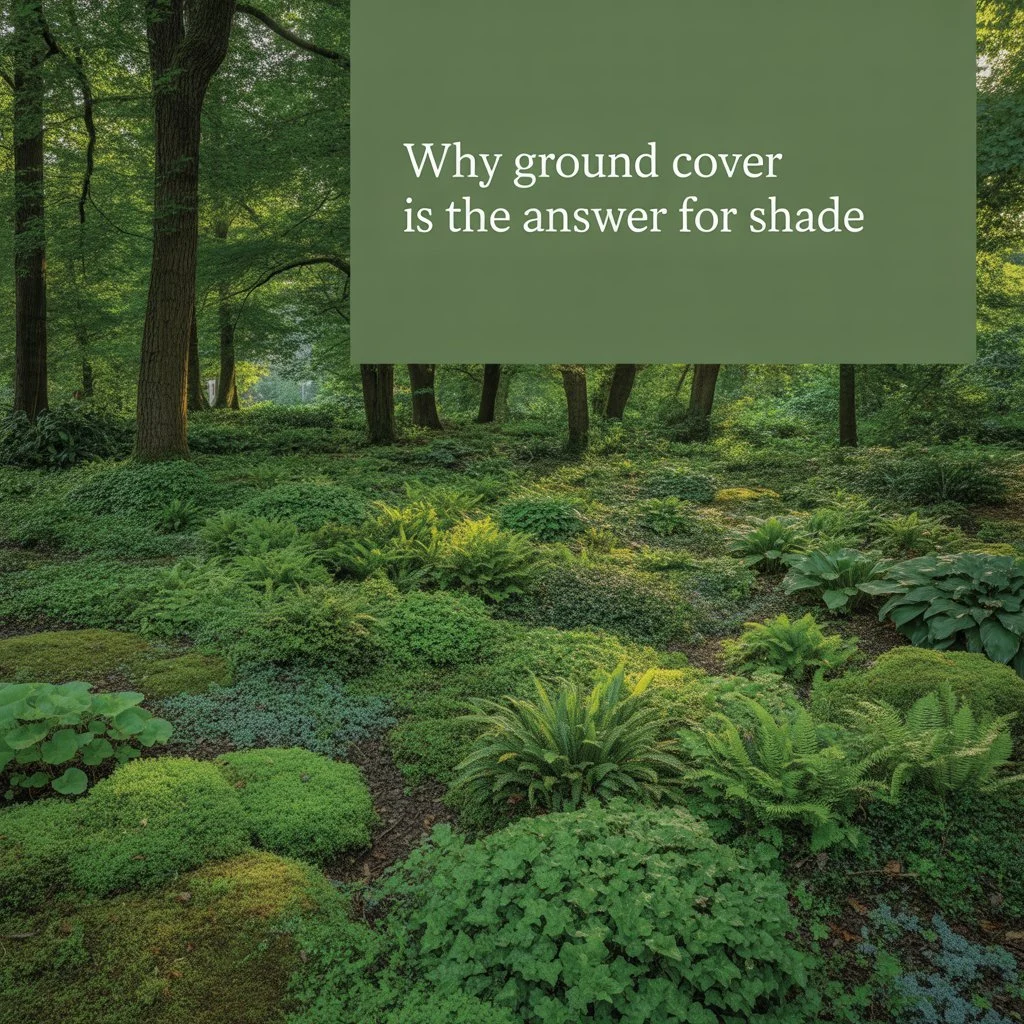
Why ground cover is the answer for shade is the foundation of solving the shaded floor, because dense shade-loving ground cover does what nothing else can — clothing difficult dark ground in a beautiful, weed-suppressing, low-maintenance carpet. I always present ground cover as the solution for shaded ground, because where lawn fails and bare soil breeds weeds, the right shade-loving ground cover thrives, transforming the most difficult shaded floor into the most effortless and beautiful part of the garden.
What Ground Cover Solves in Shade
Bare ground, weed problems, and difficult conditions are three things ground cover solves in shade. Bare ground beneath trees, where little else grows, is clothed by shade-loving ground cover. Weed problems on open shaded soil are suppressed by dense ground cover. Difficult conditions of shade and root competition are precisely what the right ground cover is adapted to thrive in.
The Benefits of Shade Ground Cover
Weed suppression, soil protection, and finished beauty are three benefits of shade ground cover. Weed suppression from dense cover eliminates the weeding that bare shaded ground demands. Soil protection from the living carpet shields the woodland floor from erosion and moisture loss. Finished beauty from the lush green cover completes the woodland garden floor.
Epimedium for Reliable Shade Ground Cover
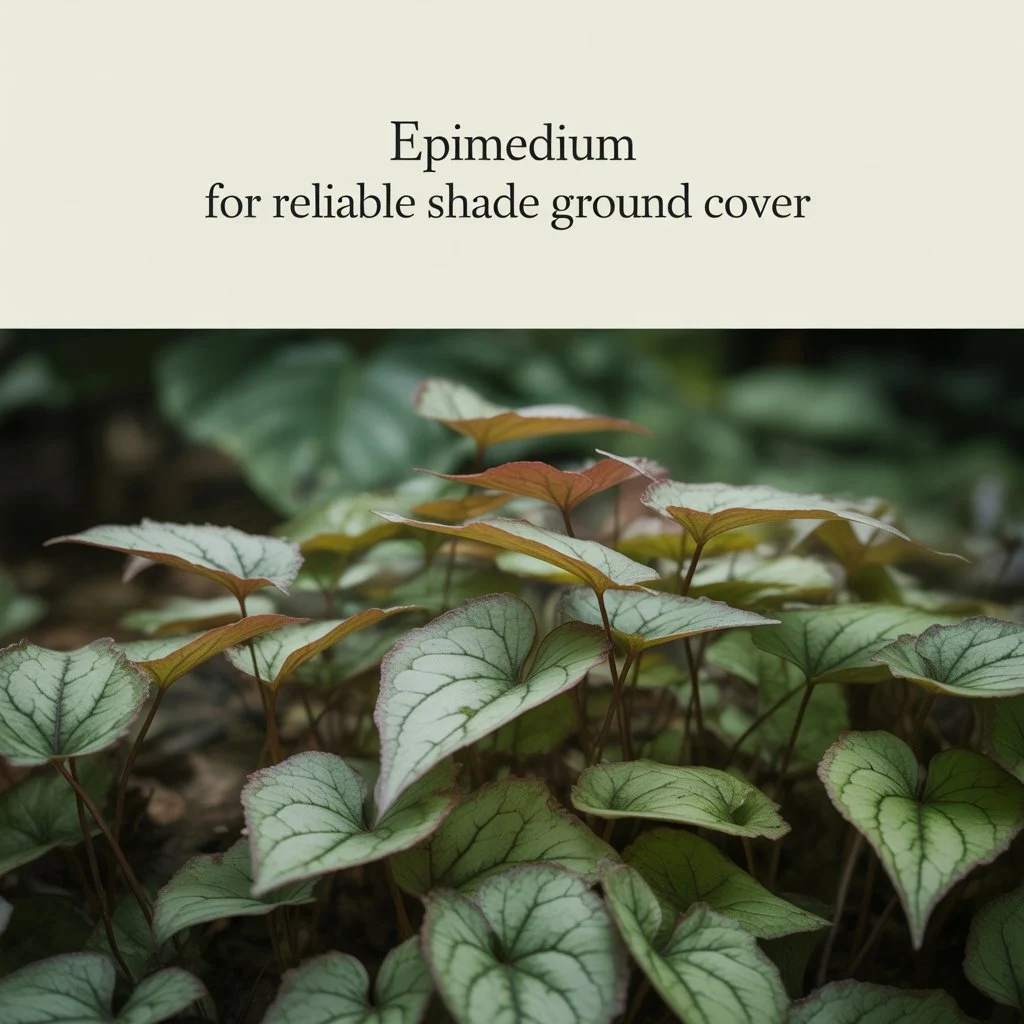
Epimedium for reliable shade ground cover is one of the finest choices for a shaded woodland floor, forming dense weed-suppressing carpets while tolerating the dry, competitive shade beneath trees. I rely on epimedium as a backbone shade ground cover, because few plants combine its toughness, its tolerance of dry root-filled shade, its delicate spring flowers, and its dense weed-suppressing foliage into such a reliable and beautiful carpet for the woodland floor.
Why Epimedium Excels in Shade
Dry shade tolerance, dense foliage, and spring flowers are three qualities that make epimedium excel. Dry shade tolerance allows epimedium to thrive in difficult dry soil beneath trees. Dense foliage forms an effective weed-suppressing carpet. Spring flowers in delicate sprays add seasonal charm above the attractive foliage.
Establishing Epimedium Ground Cover
Dense planting, spring cutback, and patient spreading are three practices suited to establishing epimedium. Dense planting speeds the formation of the weed-suppressing carpet. A spring cutback of old foliage before new growth keeps the display fresh. Patient spreading over a couple of seasons develops the dense mature carpet that suppresses weeds with minimal care.
Vinca for Evergreen Flowering Shade Cover
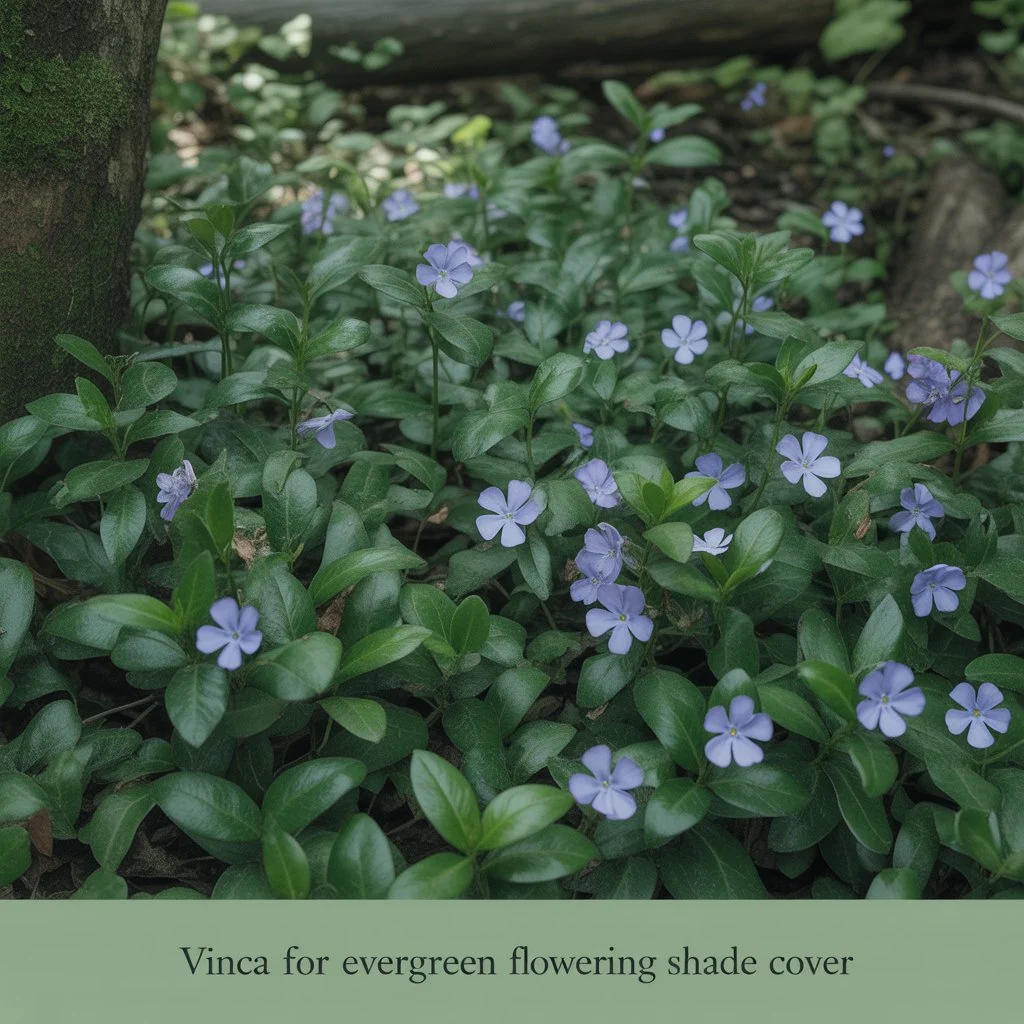
Vinca for evergreen flowering shade cover provides reliable year-round green cover with spring flowers, spreading vigorously to form a dense weed-suppressing carpet beneath the canopy. I use vinca where evergreen shade cover is needed, because its dense spreading growth, its shade tolerance, and its cheerful spring flowers make it one of the most practical and self-sufficient evergreen carpets for a shaded woodland floor.
Vinca as Shade Ground Cover
Evergreen cover, vigorous spreading, and spring flowers are three qualities suited to vinca. Evergreen cover maintains a green floor through winter when deciduous covers die back. Vigorous spreading covers ground quickly and suppresses weeds. Spring flowers in blue or purple add seasonal colour to the evergreen carpet.
Managing Vinca in Shade
Containing the spread, periodic trimming, and right species selection are three approaches suited to managing vinca. Containing the spread prevents vigorous vinca overwhelming delicate neighbours. Periodic trimming keeps the carpet dense and tidy. Right species selection, with less vigorous types for mixed plantings, matches the vinca to the setting.
Pachysandra for Dense Deep Shade Cover
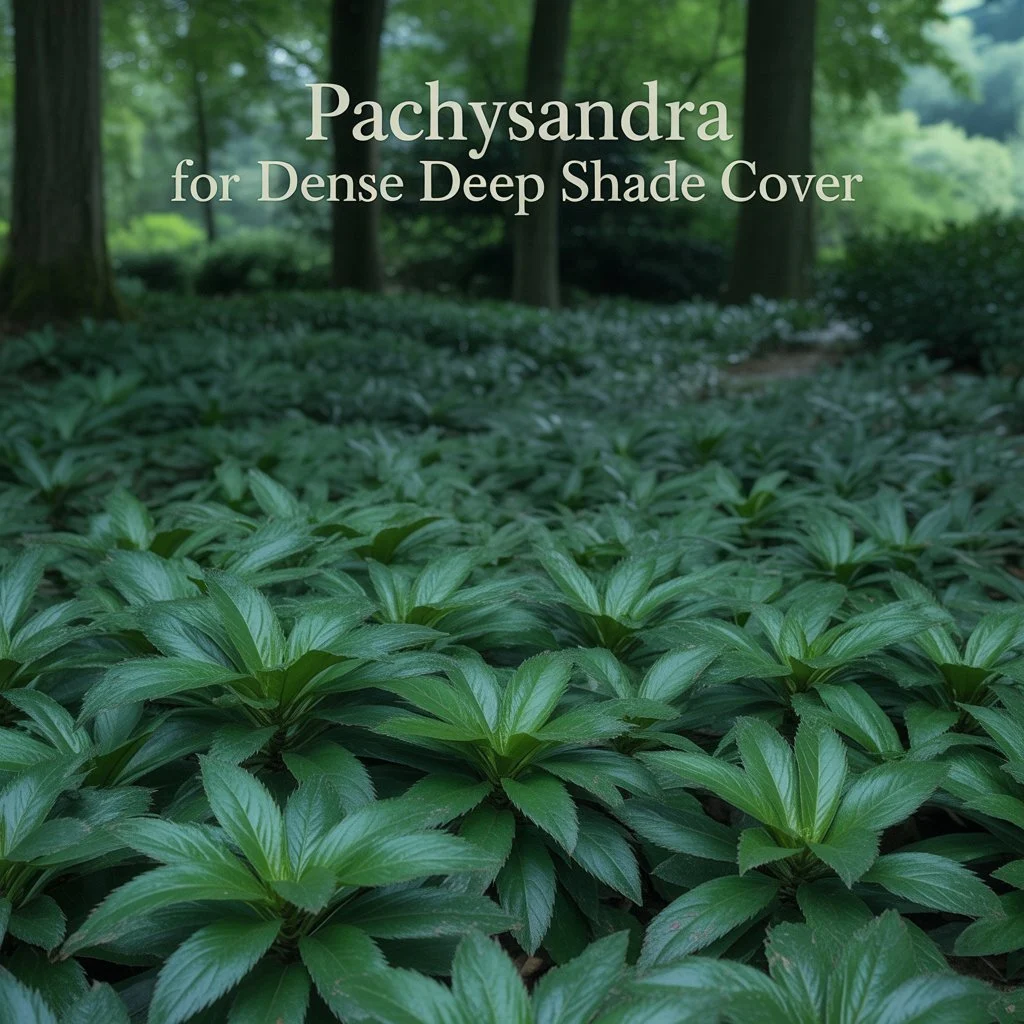
Pachysandra for dense deep shade cover forms one of the densest and most genuinely low-maintenance carpets for deep shade, creating an even weed-suppressing evergreen mat that needs almost no care. I specify pachysandra where the lowest-maintenance deep-shade cover is the priority, because few plants form so dense and uniform a weed-suppressing carpet in deep shade with so little ongoing intervention.
Pachysandra as Deep Shade Cover
Dense even cover, deep shade tolerance, and minimal maintenance are three qualities suited to pachysandra. Dense even cover forms a uniform weed-suppressing mat. Deep shade tolerance allows pachysandra to thrive in the densest shade. Minimal maintenance, with no cutting back, dividing, or pest management needed, makes it the most genuinely low-maintenance shade ground cover.
Establishing Pachysandra in Shade
Dense planting, initial weeding, and patient establishment are three practices suited to establishing pachysandra. Dense planting speeds the formation of the continuous carpet. Initial weeding while the plants knit together prevents weeds in the gaps. Patient establishment over two to three seasons develops the dense mat that then suppresses weeds entirely.
Hostas for Bold Foliage Shade Cover
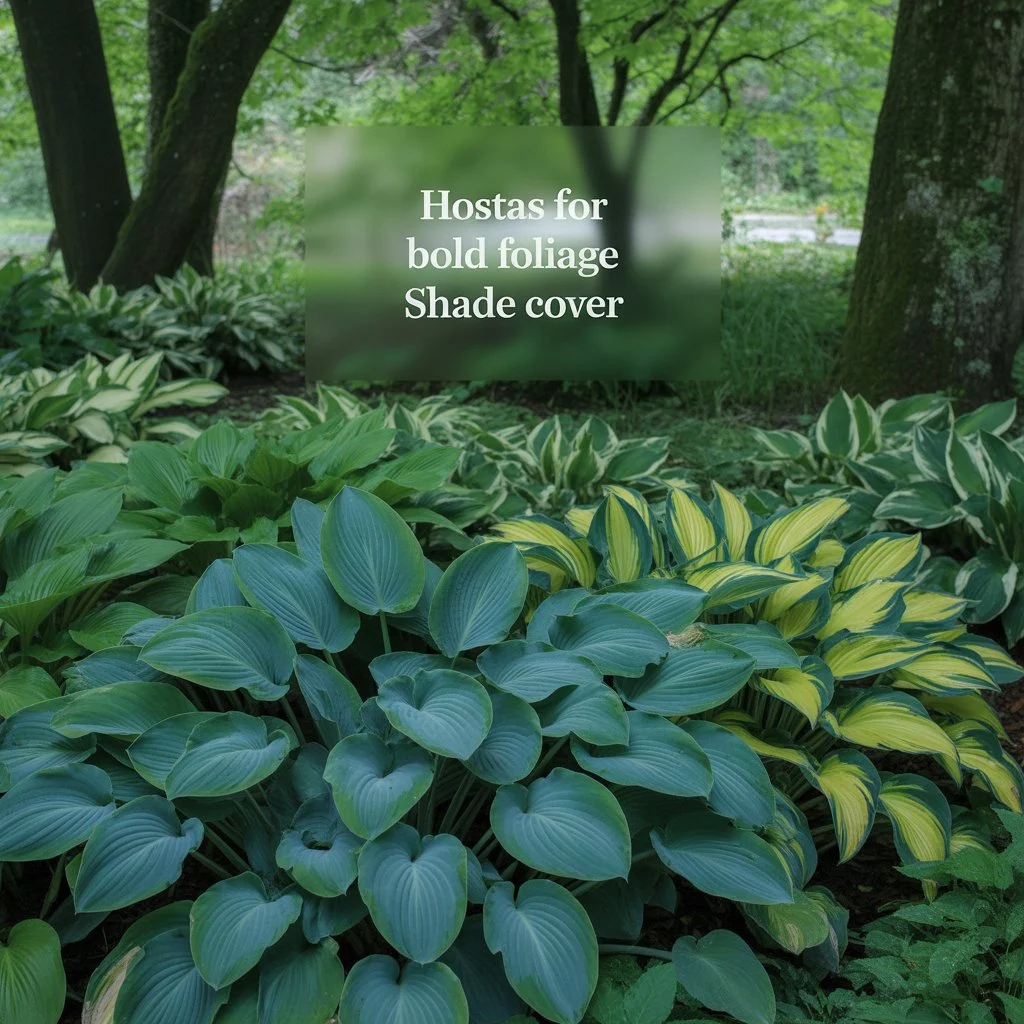
Hostas for bold foliage shade cover provide architectural foliage ground cover in dappled shade, their large overlapping leaves creating dense weed-suppressing cover and strong visual presence. I use hostas where bold foliage shade cover is wanted, because their large leaves both suppress weeds and provide the architectural contrast that lifts a shaded floor from a uniform carpet into a richly textured planting.
Hostas as Shade Cover
Dense leaf cover, varied sizes, and dappled shade suitability are three qualities suited to hostas. Dense leaf cover from the overlapping leaves suppresses weeds beneath. Varied sizes from compact to giant suit different scales of planting. Dappled shade suitability makes hostas ideal for partly shaded woodland floors.
Protecting Hostas in Shade
Slug management, good establishment, and appropriate siting are three considerations suited to protecting hostas. Slug management in damp shade protects the foliage using wildlife-friendly methods. Good establishment in improved soil helps hostas form dense cover. Appropriate siting in dappled rather than deep shade, with moisture, keeps hostas vigorous.
Ferns as Textural Shade Ground Cover
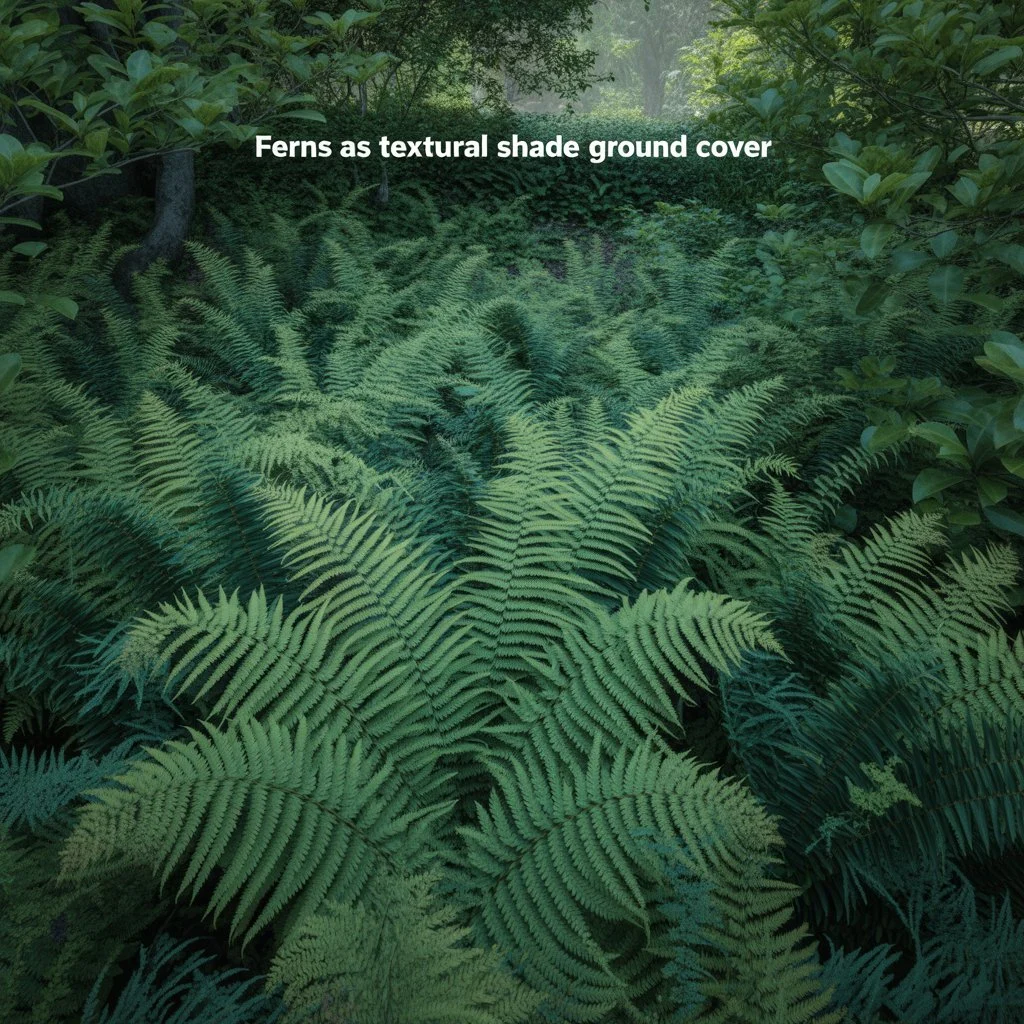
Ferns as textural shade ground cover provide lush green cover with the quintessential woodland-floor texture, their fronds both suppressing weeds and creating the authentic forest-floor character. I plant ferns generously as shade ground cover, because their fronds suppress weeds while creating the deep, layered, green woodland texture that makes a shaded floor feel like a genuine wild wood.
Ferns for Shade Ground Cover
Dryopteris filix-mas, Polystichum setiferum, and spreading ferns are three ferns suited to shade ground cover. Dryopteris filix-mas tolerates dry competitive shade and provides robust cover. Polystichum setiferum is semi-evergreen for year-round cover. Spreading ferns that colonize by runners create the most carpeting fern ground cover.
Using Ferns as Ground Cover
Mass planting, mixed textures, and naturalistic drifts are three approaches suited to using ferns. Mass planting creates dense weed-suppressing cover. Mixed textures with bolder foliage adds contrast. Naturalistic drifts of ferns create the authentic, layered woodland floor.
Native Ground Cover for Shaded Woodland
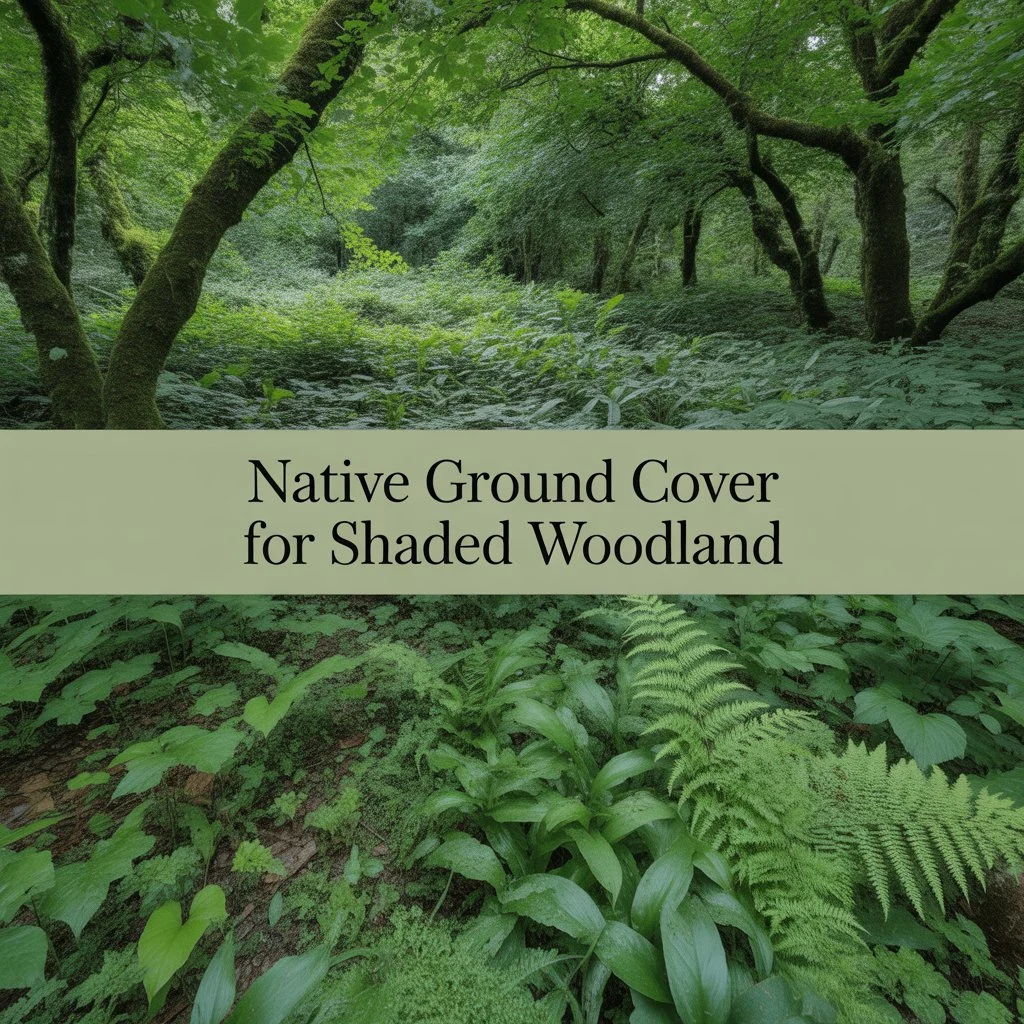
Native ground cover for shaded woodland creates the most authentic and ecologically valuable floor, using locally native shade-loving species that support wildlife and recreate genuine woodland plant communities. I prioritise native ground cover where ecological authenticity matters, because native shade plants support more wildlife, suit the conditions naturally, and create the genuine character of a real wild wood.
Native Shade Ground Covers
Wild ginger, native violets, and native woodland sedges are three native ground covers suited to shaded woodland. Wild ginger spreads across the cool shaded floor with heart-shaped leaves. Native violets provide low spreading cover with delicate flowers. Native woodland sedges provide grassy textural cover suited to the natural setting.
Ecological Benefits of Native Cover
Invertebrate habitat, native plant community, and wildlife support are three ecological benefits of native ground cover. Invertebrate habitat in the native layer supports woodland insects. A native plant community recreates the authentic woodland floor ecosystem. Wildlife support through native nectar, shelter, and food enriches biodiversity.
Moss as Ground Cover for Deepest Shade
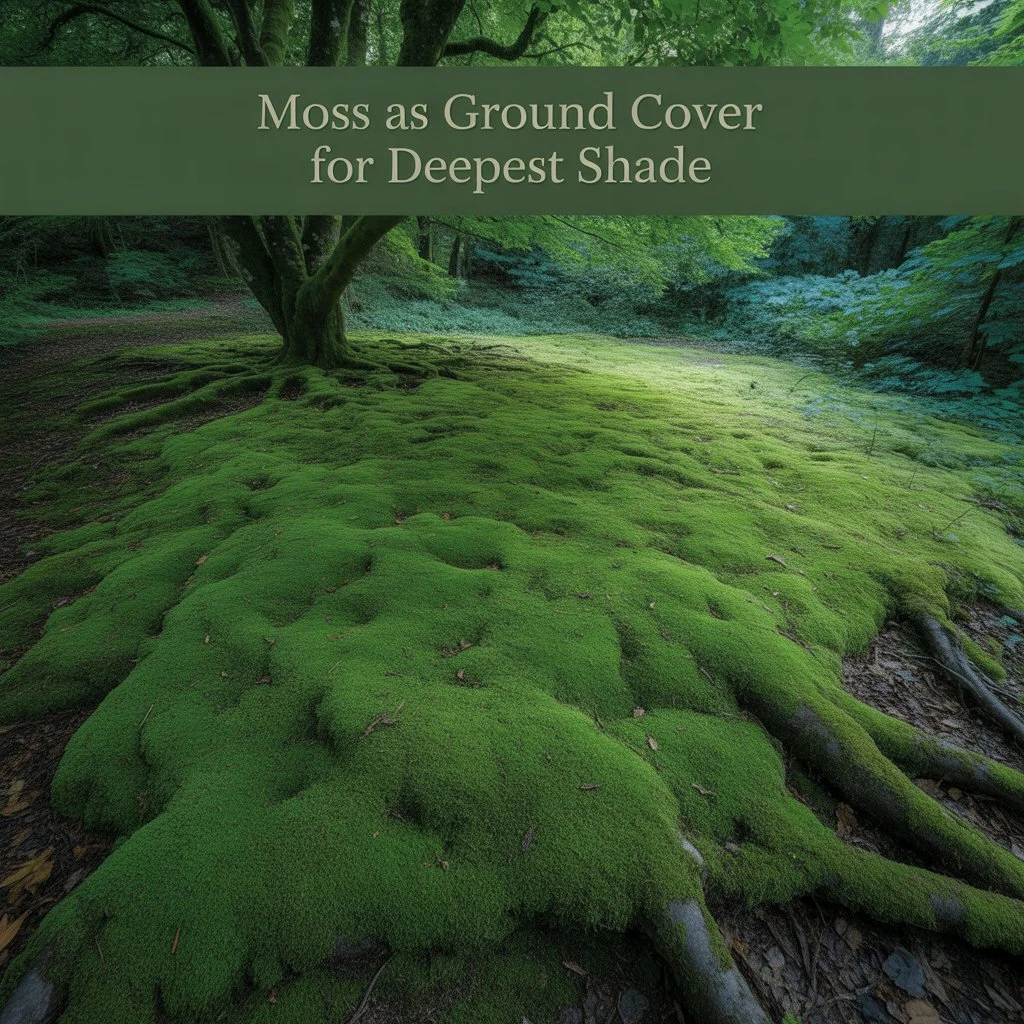
Moss as ground cover for deepest shade provides a thriving green carpet where even other shade plants struggle, embracing the moss that colonizes the darkest, dampest positions as a beautiful natural ground cover. I use moss as ground cover in the deepest shade, because where the canopy is too dense for almost any plant, moss flourishes naturally into a lush green carpet, turning the darkest ground into one of the most beautiful and tranquil features.
Why Moss Suits Deepest Shade
Deep shade tolerance, lush cover, and natural establishment are three reasons moss suits deepest shade. Deep shade tolerance allows moss to thrive where other ground cover fails. Lush green cover from moss provides a soft carpet needing no mowing. Natural establishment occurs as moss colonizes suitable shaded, moist conditions on its own.
Establishing a Moss Carpet
Suitable conditions, encouraging existing moss, and a moss slurry are three approaches suited to establishing moss. Suitable conditions of shade and moisture favour moss. Encouraging existing moss by removing competition lets it spread. A moss slurry applied to bare areas speeds the establishment of a continuous moss carpet.
Spring Flowering Ground Cover for Shade
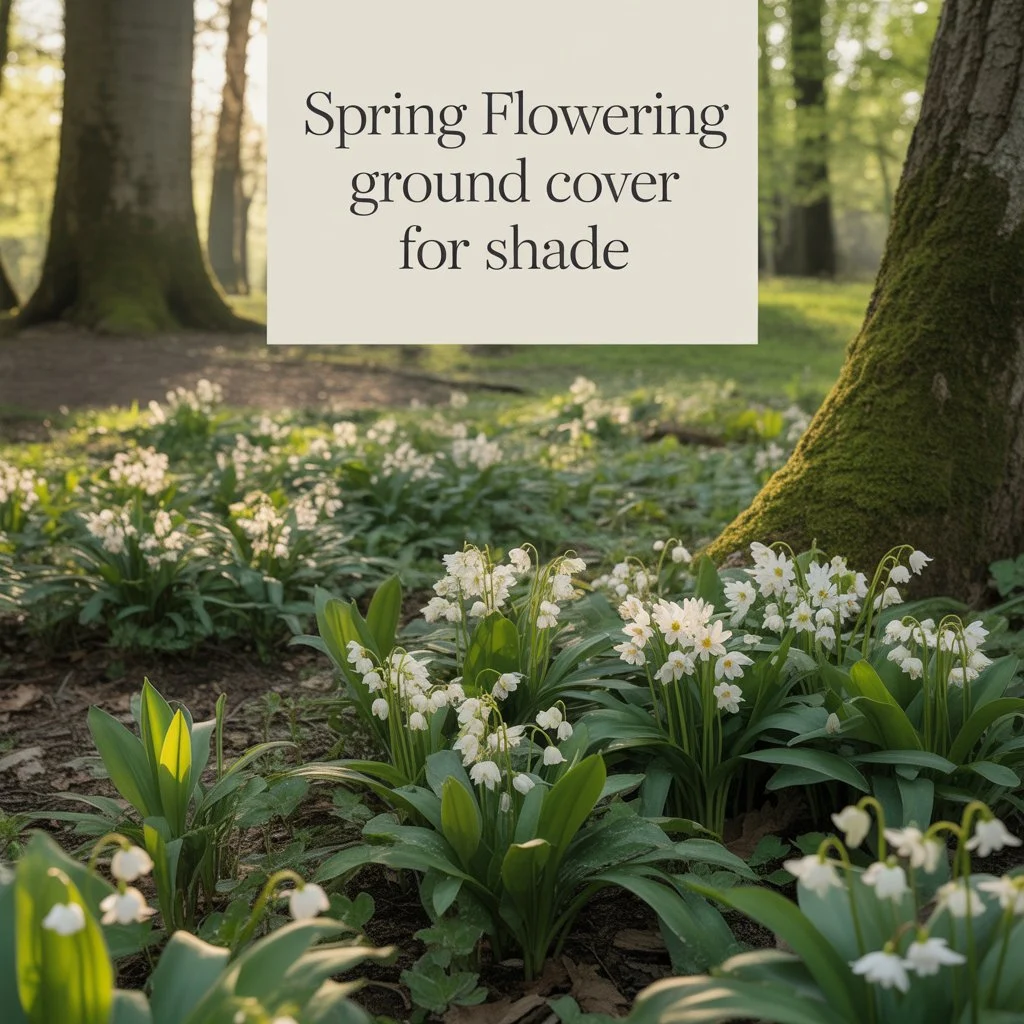
Spring flowering ground cover for shade creates the seasonal displays that brighten the shaded woodland floor, using spreading bulbs and flowering ground cover that carpet the floor in colour before the canopy leafs out. I combine spring flowering cover with foliage ground cover in shaded gardens, because the bulbs and flowers provide the magical spring carpet while the foliage cover provides year-round structure, giving the shaded floor both spectacle and permanence.
Spring Flowering Shade Cover
Native bluebells, wood anemone, and sweet woodruff are three spring flowering covers suited to shade. Native bluebells carpet the floor in blue and naturalize over time. Wood anemone provides early white spring flowers spreading into drifts. Sweet woodruff provides spreading flowering cover with white spring blooms and fragrance.
Combining Flowers and Foliage Cover
Layered planting, complementary timing, and naturalized drifts are three approaches suited to combining flowers and foliage. Layered planting of bulbs beneath foliage cover provides both flowers and year-round cover. Complementary timing sequences the display. Naturalized drifts create the informal carpeting effect of a genuine woodland floor.
Evergreen Ground Cover for Year-Round Shade Cover
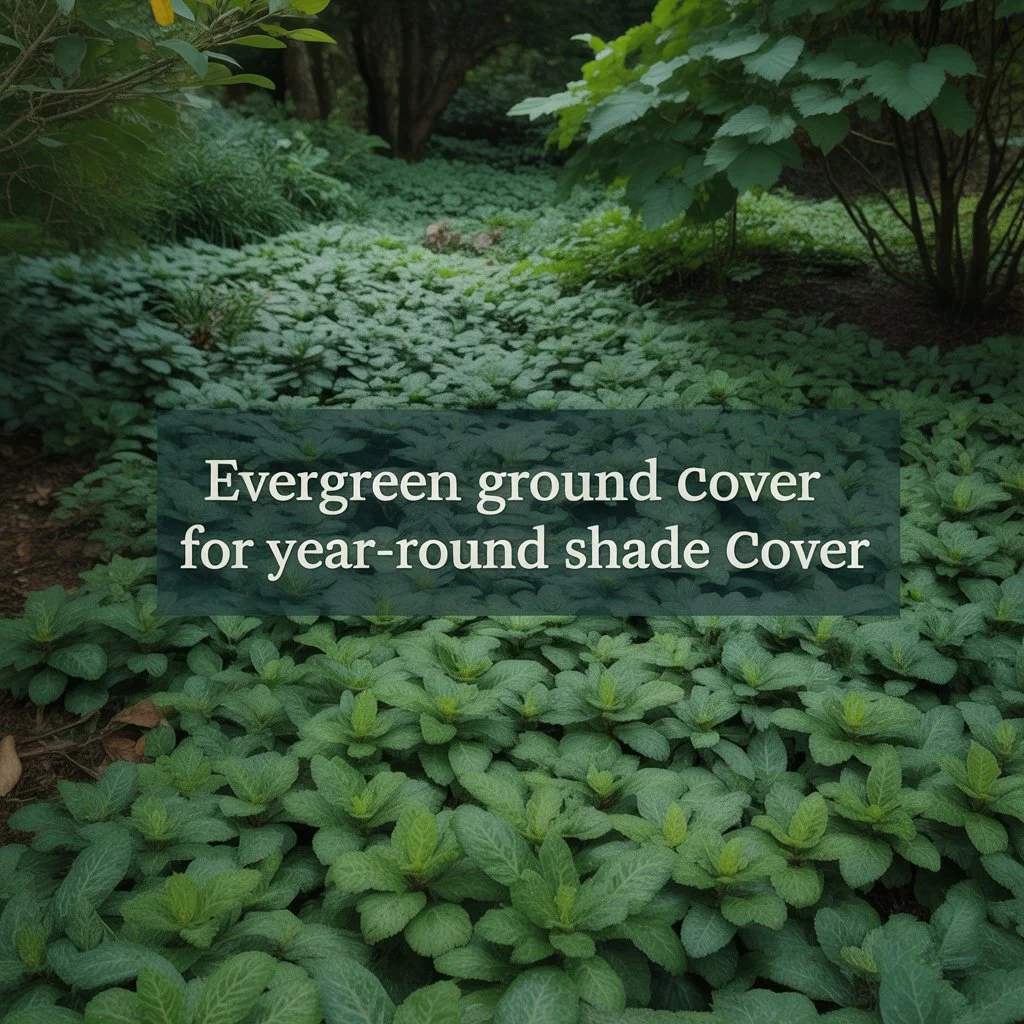
Evergreen ground cover for year-round shade cover maintains a green floor through every season, using evergreen shade-loving plants that hold their cover and weed suppression through winter. I include evergreen ground cover in shaded woodland gardens, because evergreen plants maintain the green floor and weed suppression through winter when deciduous covers die back, ensuring the shaded floor stays clothed and protected all year.
Evergreen Shade Ground Covers
Vinca, pachysandra, and evergreen ferns are three evergreen ground covers suited to shade. Vinca provides evergreen cover with spring flowers. Pachysandra provides the densest evergreen mat in deep shade. Evergreen ferns like hart’s tongue provide year-round green structure, together maintaining cover through winter.
The Value of Evergreen Cover
Winter cover, year-round weed suppression, and seasonal structure are three values of evergreen cover. Winter cover keeps the floor green when deciduous plants die back. Year-round weed suppression maintains control through every season. Seasonal structure from evergreen foliage keeps the shaded floor beautiful even in winter.
Layering Ground Cover for a Lush Shaded Floor
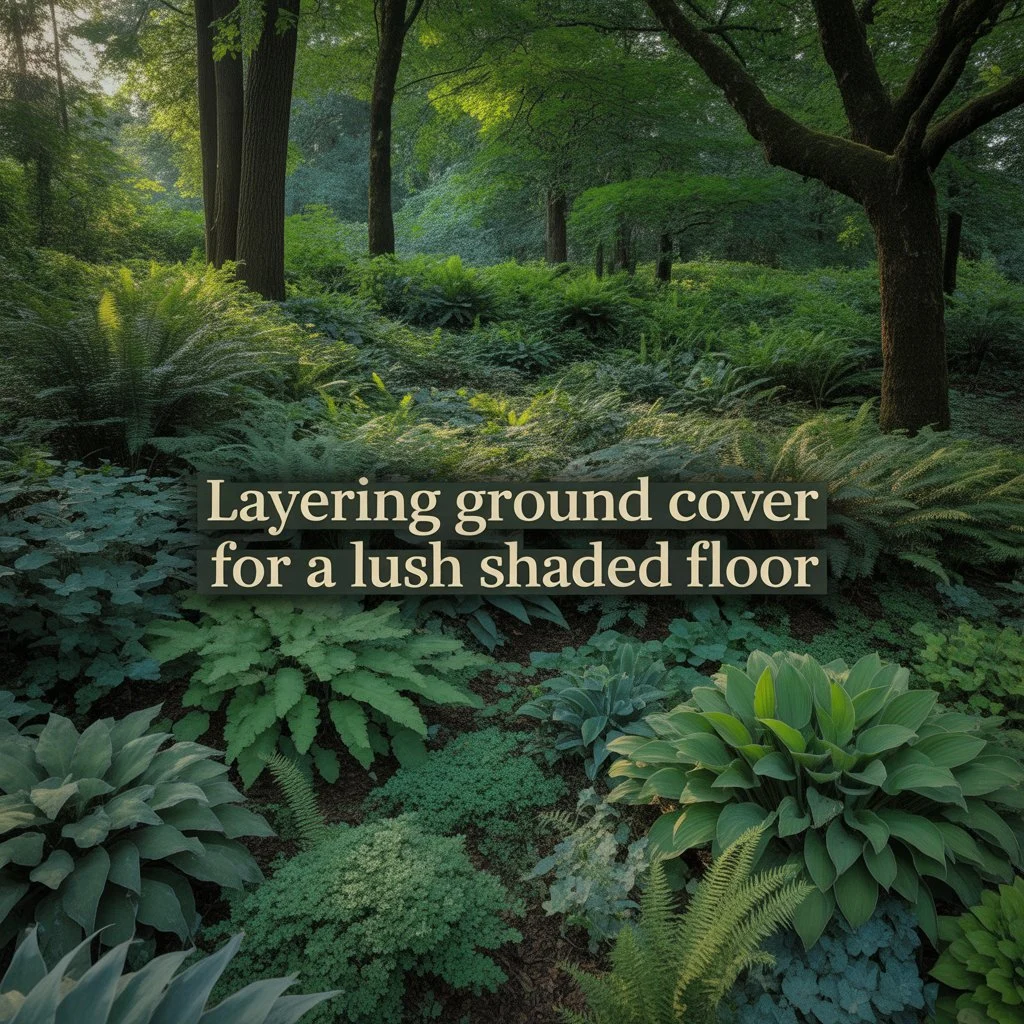
Layering ground cover for a lush shaded floor combines ground covers of different heights, textures, and forms to create the rich, dense, layered floor of a genuine woodland. I layer ground cover in shaded woodland gardens, because combining bold hostas, textural ferns, and carpeting cover in overlapping drifts creates the lush, dense, layered floor that makes a shaded woodland feel immersive and complete.
Building Ground Cover Layers
A carpeting base, a textural mid-layer, and bold accents are three layers suited to a lush shaded floor. A carpeting base of epimedium or vinca provides the continuous weed-suppressing floor. A textural mid-layer of ferns adds woodland richness. Bold accents of hostas provide architectural contrast, together creating the layered shaded floor.
Creating Density and Depth
Overlapping drifts, varied textures, and dense planting are three approaches suited to creating density and depth. Overlapping drifts create a seamless layered floor. Varied textures between bold and fine foliage build richness. Dense planting that fills the space creates the immersive, lush shaded woodland floor.
Ground Cover Ideas for a Small Shaded Garden
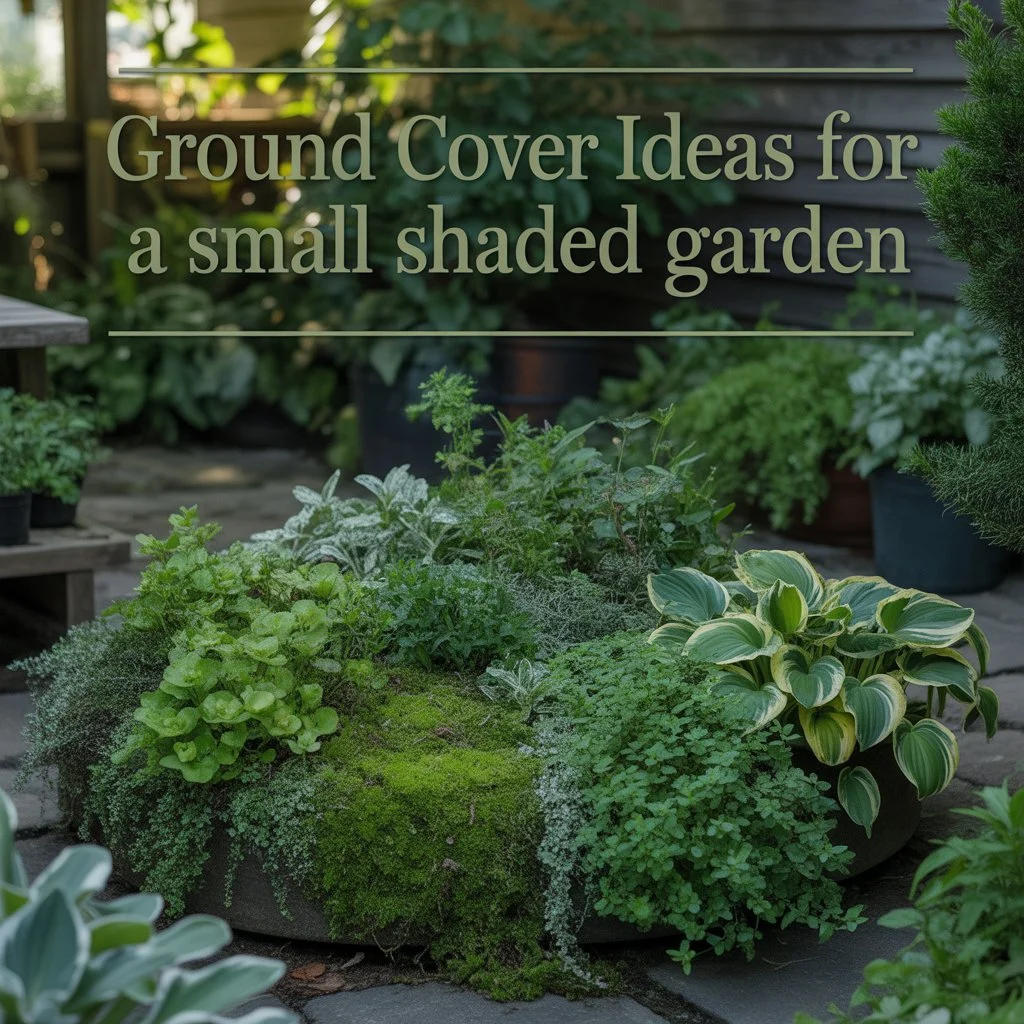
Ground cover ideas for a small shaded garden bring the practical and aesthetic benefits of shade ground cover to compact dark spaces, using carefully chosen plants to create a beautiful, low-maintenance floor. I use ground cover in even the smallest shaded gardens, because a dense floor carpet both finishes the small space beautifully and provides the weed suppression that makes a small shaded garden genuinely low-maintenance.
Ground Cover for Small Shaded Spaces
Compact ground cover, a limited palette, and refined textures are three choices suited to a small shaded garden. Compact, well-behaved ground cover suits a small space without aggressive spreading. A limited palette of a few species keeps a small floor cohesive. Refined textures and attractive foliage make every plant count in a limited area.
Maximizing a Small Shaded Floor
Dense even cover, a cohesive palette, and seasonal interest are three approaches suited to maximizing a small shaded floor. Dense even cover provides full weed suppression and a finished floor. A cohesive palette creates a calm, unified small floor. Seasonal interest from spring flowers and evergreen cover ensures year-round appeal.
Ground Cover Beneath Mature Trees in Shade
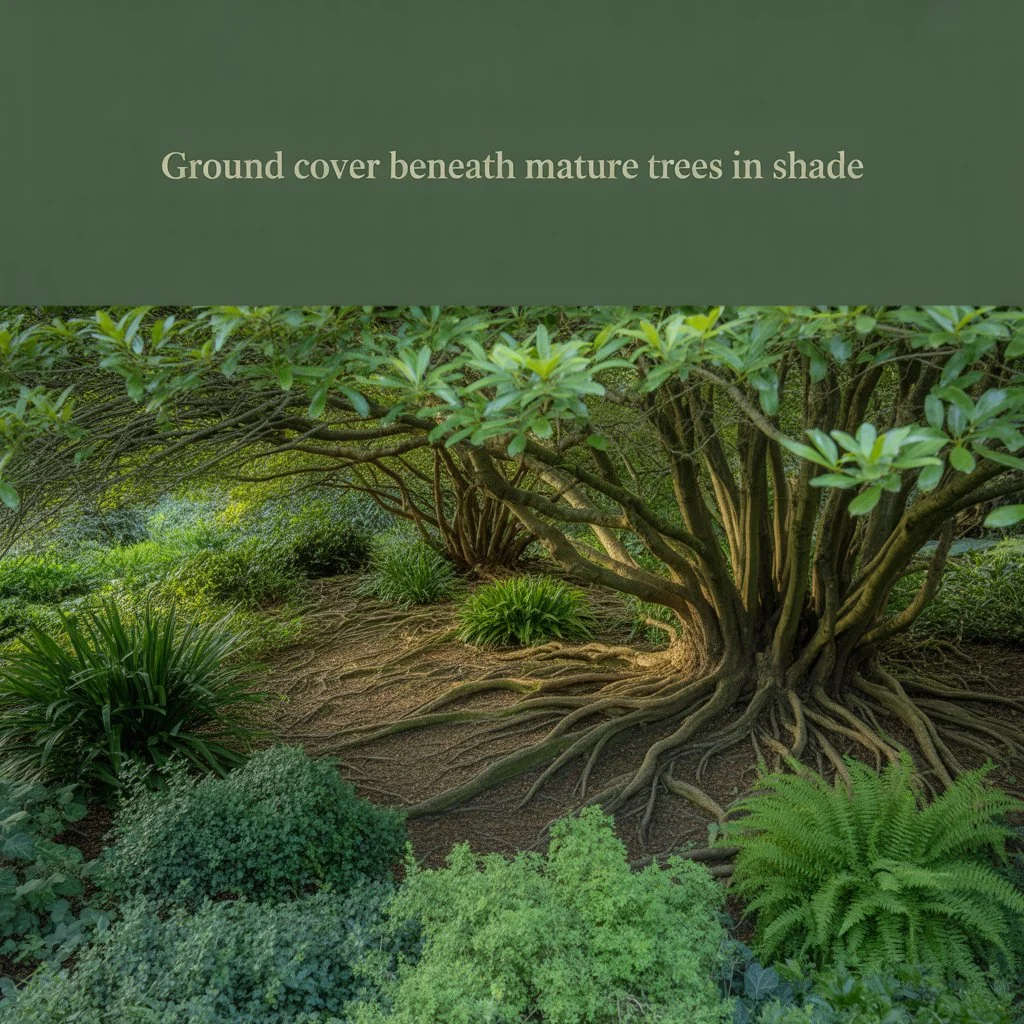
Ground cover beneath mature trees in shade addresses one of the most challenging conditions, the dry, root-filled, deeply shaded soil beneath established trees where many plants fail. I take particular care with ground cover beneath mature trees, because the dry shade and competitive roots demand both the right tough species and careful establishment to succeed in these difficult conditions.
Coping With Dry Shade Beneath Trees
Tough species selection, careful planting, and establishment watering are three approaches suited to dry shade beneath trees. Tough species selection, choosing dry-shade-tolerant plants like epimedium, gives the best chance. Careful planting between major roots protects both trees and plants. Establishment watering helps the ground cover establish before competing with tree roots.
Best Cover for Under Trees
Epimedium, vinca, and pachysandra are three ground covers suited to planting beneath mature trees. Epimedium tolerates dry competitive shade better than almost any other cover. Vinca spreads vigorously enough to establish in difficult dry shade. Pachysandra forms dense cover in deep shade beneath canopy, together the most reliable options for under trees.
Low-Maintenance Shade Ground Cover Design
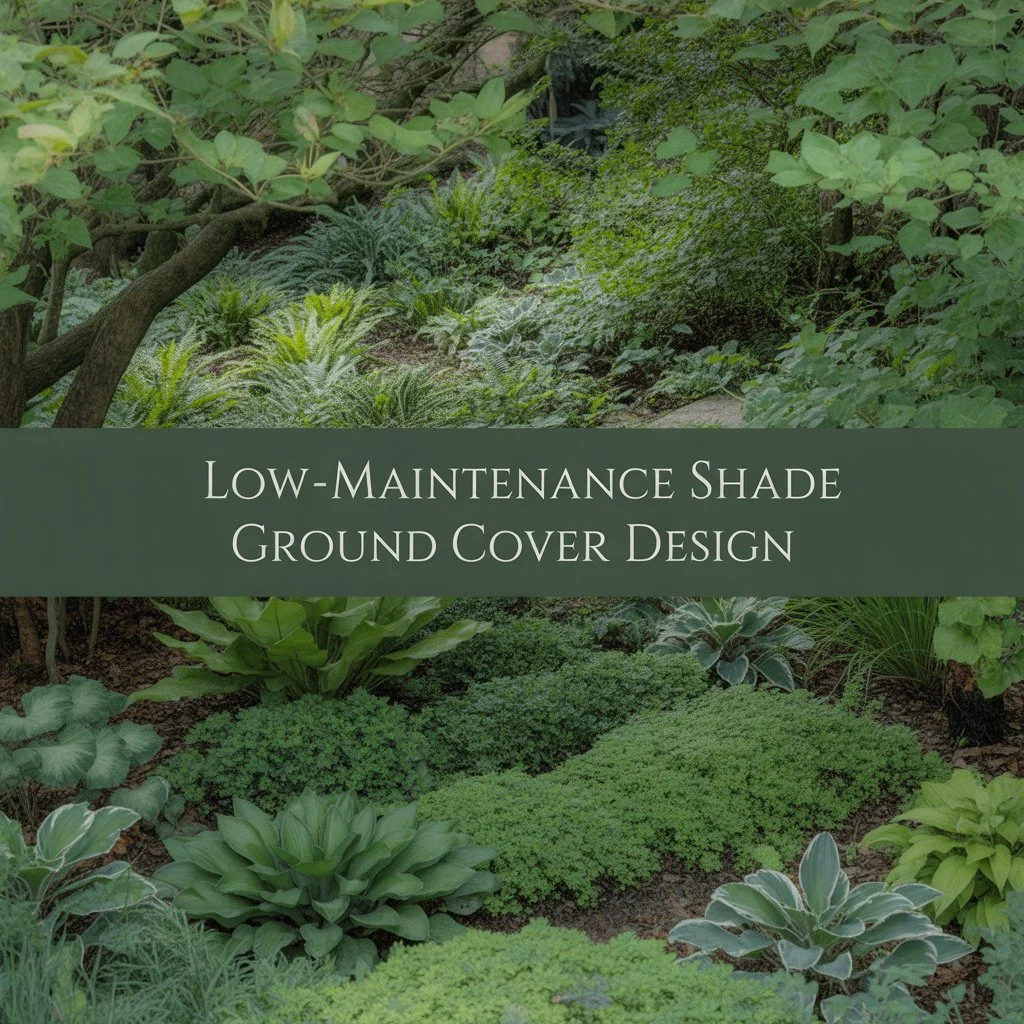
Low-maintenance shade ground cover design uses dense self-sufficient species to create a shaded floor that suppresses weeds and largely cares for itself. I design every shade ground cover scheme for low maintenance, because a dense well-established carpet is the single most effective way to reduce shaded-garden maintenance, eliminating the weeding that bare or sparsely planted shaded ground demands.
Why Shade Ground Cover Is Low-Maintenance
Weed suppression, moisture retention, and self-sustaining growth are three reasons shade ground cover is low-maintenance. Weed suppression from dense cover eliminates constant weeding. Moisture retention beneath the carpet reduces watering. Self-sustaining growth in well-chosen species means the carpet maintains itself once established.
Low-Maintenance Shade Cover Choices
Pachysandra, epimedium, and vinca are three low-maintenance shade cover choices. Pachysandra forms the most maintenance-free dense carpet in shade. Epimedium provides tough dry-shade cover needing only an annual cutback. Vinca provides vigorous evergreen cover with minimal care, together offering the most self-sufficient shaded floor planting.
Establishing Shade Ground Cover Successfully
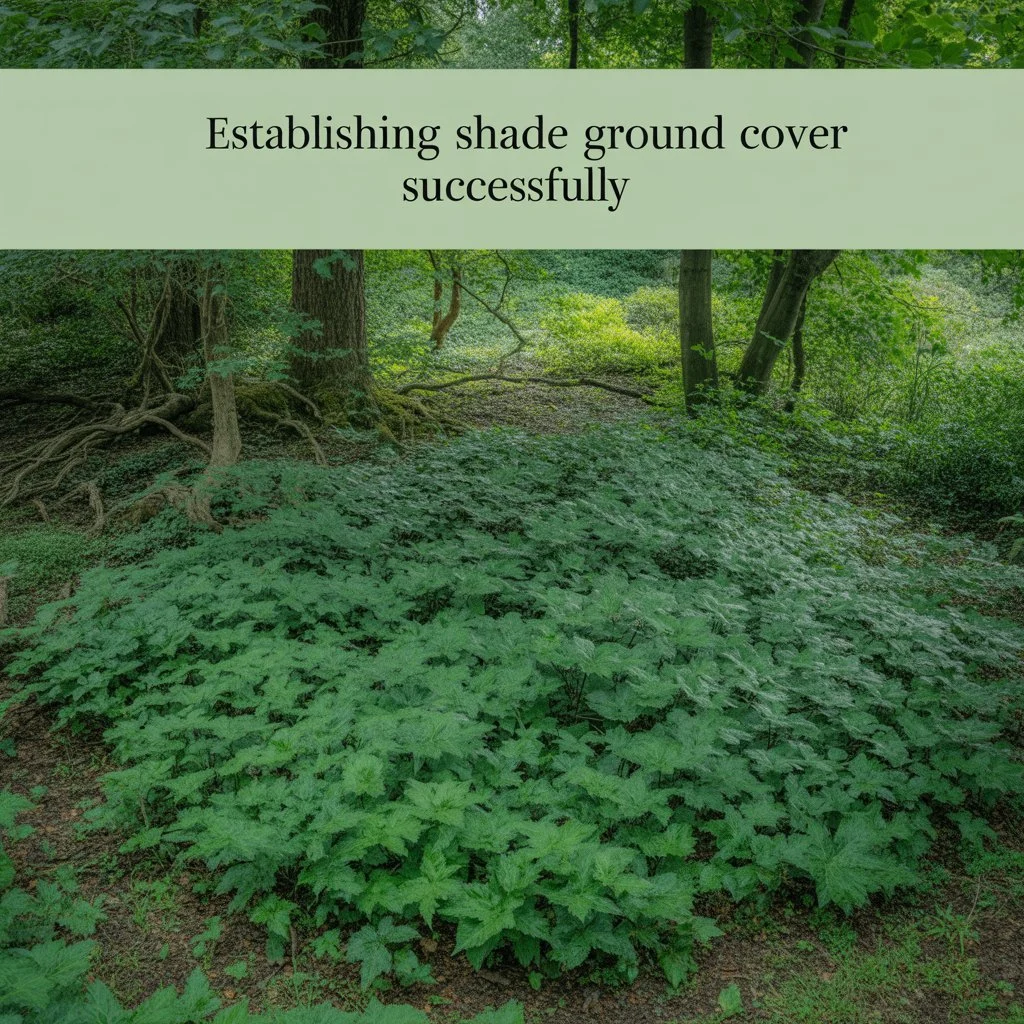
Establishing shade ground cover successfully involves the dense initial planting and the establishment care that lets the carpet knit together and begin suppressing weeds over the following seasons. I follow a clear establishment approach for shade ground cover, because getting the planting density, weed clearance, and establishment care right from the start is what produces the dense, continuous, weed-suppressing carpet that makes shade ground cover so valuable.
Stages of Establishing Ground Cover
Initial clearance, dense planting, and establishment weeding are three stages suited to establishing shade ground cover. Initial clearance of existing weeds gives the ground cover a clean start. Dense planting speeds the formation of the continuous carpet. Establishment weeding while the cover knits together prevents weeds gaining a hold before the carpet closes.
Helping Ground Cover Establish
Good soil preparation, establishment watering, and patient development are three approaches suited to helping ground cover establish. Good soil preparation gives the ground cover a strong start. Establishment watering through the first seasons helps it take hold. Patient development, allowing the cover time to spread and knit together, achieves the dense weed-suppressing carpet that then sustains itself.
Frequently Asked Questions
What is the best ground cover for shade in a woodland garden?
The best ground cover for shade in a woodland garden depends on the conditions, but epimedium, vinca, pachysandra, hostas, ferns, wild ginger, and moss are among the finest choices because all thrive in shade and form dense weed-suppressing cover. Epimedium excels in the dry competitive shade beneath mature trees and offers delicate spring flowers, vinca provides vigorous evergreen cover with spring blue flowers, and pachysandra forms the most genuinely maintenance-free dense carpet in deep shade, while hostas and ferns add bold and textural foliage. For ecological authenticity, native ground covers such as wild ginger and native violets support the most wildlife, and moss flourishes in the deepest shade where other plants fail, so the ideal scheme often combines reliable weed-suppressing carpets with native species and seasonal flowering cover for a floor that is beautiful, low-maintenance, and ecologically valuable.
What ground cover grows in full shade?
The ground covers that grow best in full shade are the most shade-tolerant species, with pachysandra, vinca, certain ferns, wild ginger, and moss all thriving in deep, dense shade where most plants struggle. Pachysandra forms a dense even weed-suppressing carpet in deep shade with very little maintenance, vinca spreads vigorously enough to cover ground in difficult shaded conditions, shade-tolerant ferns like hart’s tongue provide lush cover beneath dense canopy, and wild ginger spreads its foliage across the cool shaded floor. For the very deepest shade where even these struggle, moss flourishes into a beautiful green carpet, embracing rather than fighting the conditions, so the key to success in full shade is matching the plant to the actual light level and choosing species genuinely adapted to the darkest positions.
How does ground cover help a shaded woodland garden?
Ground cover helps a shaded woodland garden by suppressing weeds, protecting the soil, finishing the floor beautifully, and supporting wildlife, all in conditions where lawn fails and bare soil breeds weeds. A dense carpet of shade-loving ground cover shades and crowds out weed seedlings, eliminating the constant weeding that open shaded ground demands, while the living layer shields the woodland floor from erosion and retains moisture in the soil beneath. Ground cover also completes the naturalistic woodland floor with lush green or seasonal flowering cover, and native ground cover in particular provides habitat and food for the invertebrates and small creatures of the woodland ecosystem, so a well-established ground cover carpet transforms the most difficult shaded ground into the most beautiful, ecologically valuable, and low-maintenance part of the garden.
Is shade ground cover low-maintenance?
Shade ground cover is genuinely low-maintenance once established, because a dense carpet of well-chosen shade-loving plants suppresses weeds, retains soil moisture, and largely sustains itself with minimal intervention. The greatest benefit is weed suppression, since a closed ground cover carpet eliminates the constant weeding that bare or sparsely planted shaded ground demands, while the living layer also reduces watering by retaining moisture in the soil beneath. The main ongoing tasks are modest and seasonal, such as a spring tidy-up of plants like epimedium, weeding during the establishment phase before the carpet closes, and occasional division to renew vigour and fill gaps, making shade ground cover one of the most effective ways to reduce maintenance in the challenging shaded conditions of a woodland garden.
How do I plant ground cover in dry shade under trees?
You plant ground cover in dry shade under trees by choosing tough dry-shade-tolerant species, planting carefully between major roots, and watering through the establishment period until the plants take hold. Epimedium, vinca, and pachysandra are the most reliable choices for the difficult dry, root-filled shade beneath established trees where many other plants fail, so selecting the right tough species is the single most important decision. When planting, disturb the tree roots as little as possible by working between them rather than cutting through them, which protects both the trees and the new plants, improve the soil with organic matter where you can to help retain moisture, and water the ground cover through its first seasons so it can establish before it must compete with the tree roots for moisture, after which these dry-shade-tolerant species will largely sustain themselves and spread into a weed-suppressing carpet.