
Woodland Gardens With Ferns: Lush Shade Planting Ideas

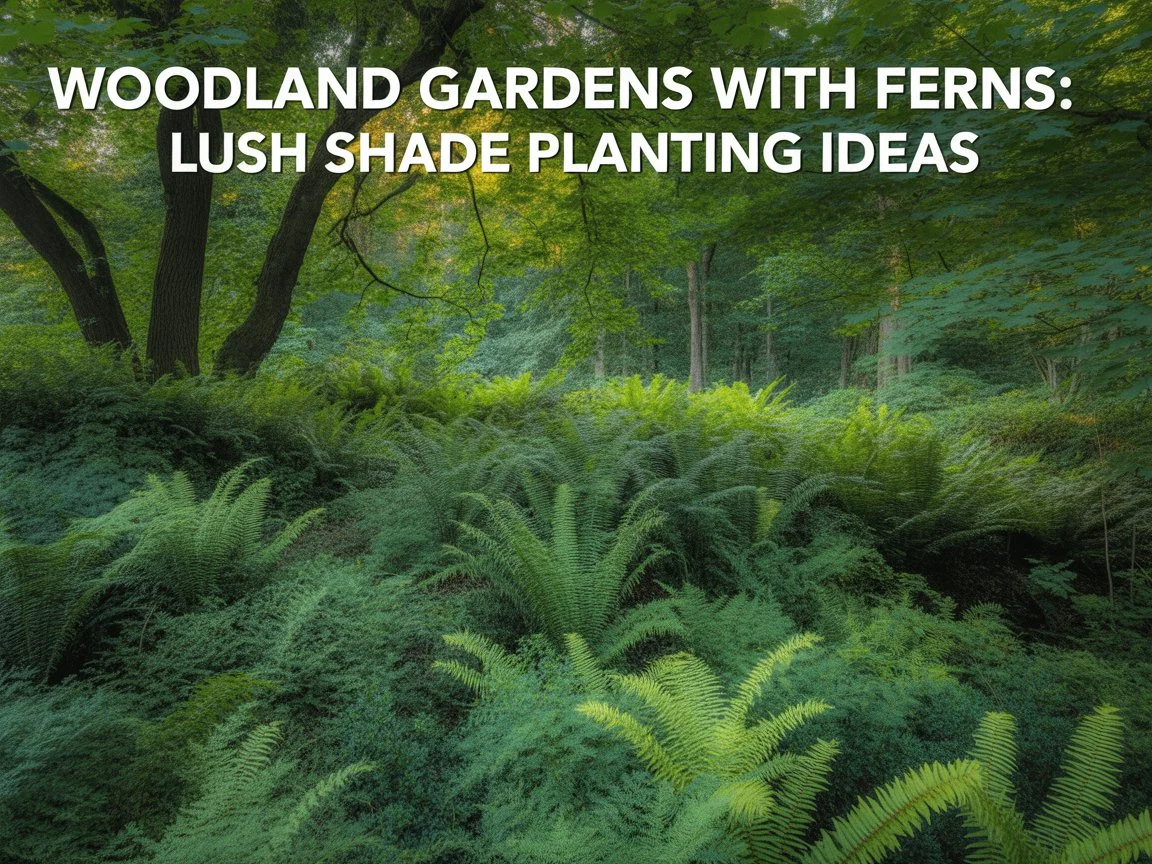
If I had to keep only one plant group for the rest of my career and give up all the others, I would not even hesitate — I would keep the ferns. I came to this conviction slowly, over many gardens, but the moment it crystallized was in a client’s deeply shaded side return that everyone else had written off as hopeless. No flower would grow there, no lawn, nothing. I planted nothing but ferns — a dozen different kinds, from knee-high lady ferns to great architectural shuttlecocks, layered tight from wall to path. When it filled in, that dark, narrow, “impossible” corridor had become the most breathtaking part of the entire garden: a cool, green, prehistoric tunnel of overlapping fronds that people walked into and audibly gasped at. No flowers, no colour beyond a hundred shades of green, and yet utterly enchanting. That corner taught me what every woodland gardener eventually learns — ferns are not the supporting cast of a shade garden, they are the stars, and a woodland garden built around ferns achieves a lush, ancient, atmospheric beauty that no flower-led planting can match.
Woodland gardens with ferns use the shade-loving, moisture-appreciating, texturally rich family of ferns — from delicate maidenhair to bold ostrich fern and evergreen polypody — planted in layered, naturalistic drifts beneath a tree canopy to create a lush, atmospheric, low-maintenance woodland floor of overlapping green fronds. The ferns give the woodland garden its quintessential texture, its cool prehistoric atmosphere, and its effortless adaptation to shade, while the woodland setting gives the ferns the dappled light, cool moisture, and sheltered conditions this ancient plant group evolved to thrive in.
Over the years I have designed, planted, and grown woodland fern gardens across sites ranging from small deeply shaded courtyards to large gardens beneath mature canopy. I have seen a planting of nothing but ferns transform the most hopeless dark corner into something extraordinary, and I have also combined ferns with other woodland plants to create layered gardens of real richness. In this article I am sharing the best woodland garden fern ideas covering species selection, hardy ferns, design, combinations, and low-maintenance care.
Why Ferns Are the Perfect Woodland Plant
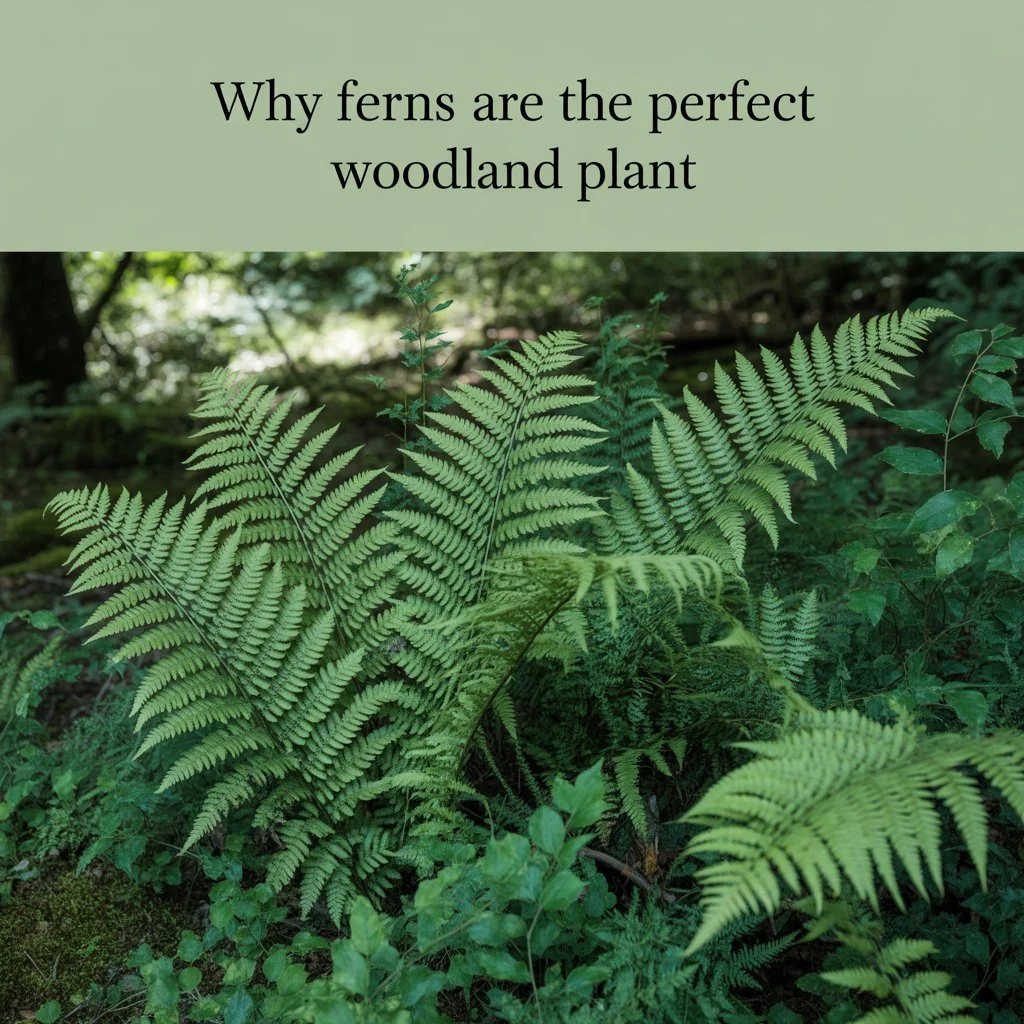
Why ferns are the perfect woodland plant is the foundation of fern gardening, because this ancient, shade-loving, texturally rich plant group is uniquely adapted to the conditions and aesthetic of a woodland garden. I build so many woodland gardens around ferns because they are simply the ideal woodland plant, combining genuine shade tolerance, lush texture, low maintenance, and an ancient naturalistic character that captures the essence of a woodland floor better than any other plant group.
What Makes Ferns Ideal for Woodland
Shade tolerance, lush texture, and naturalistic character are three qualities that make ferns ideal for woodland. Shade tolerance allows ferns to thrive in the low light where most plants struggle. Lush texture from the intricate fronds provides the quintessential woodland floor richness. Naturalistic character from this ancient prehistoric plant group captures the authentic atmosphere of a genuine woodland.
The Ancient Appeal of Ferns
Prehistoric character, primordial atmosphere, and timeless beauty are three aspects of the ancient appeal of ferns. Prehistoric character connects the garden to one of the oldest plant groups on earth. Primordial atmosphere from the unfurling fronds evokes a deep, ancient woodland feeling. Timeless beauty in the form of the fronds gives ferns an enduring appeal that anchors the woodland garden.
Hardy Ferns for Reliable Woodland Planting
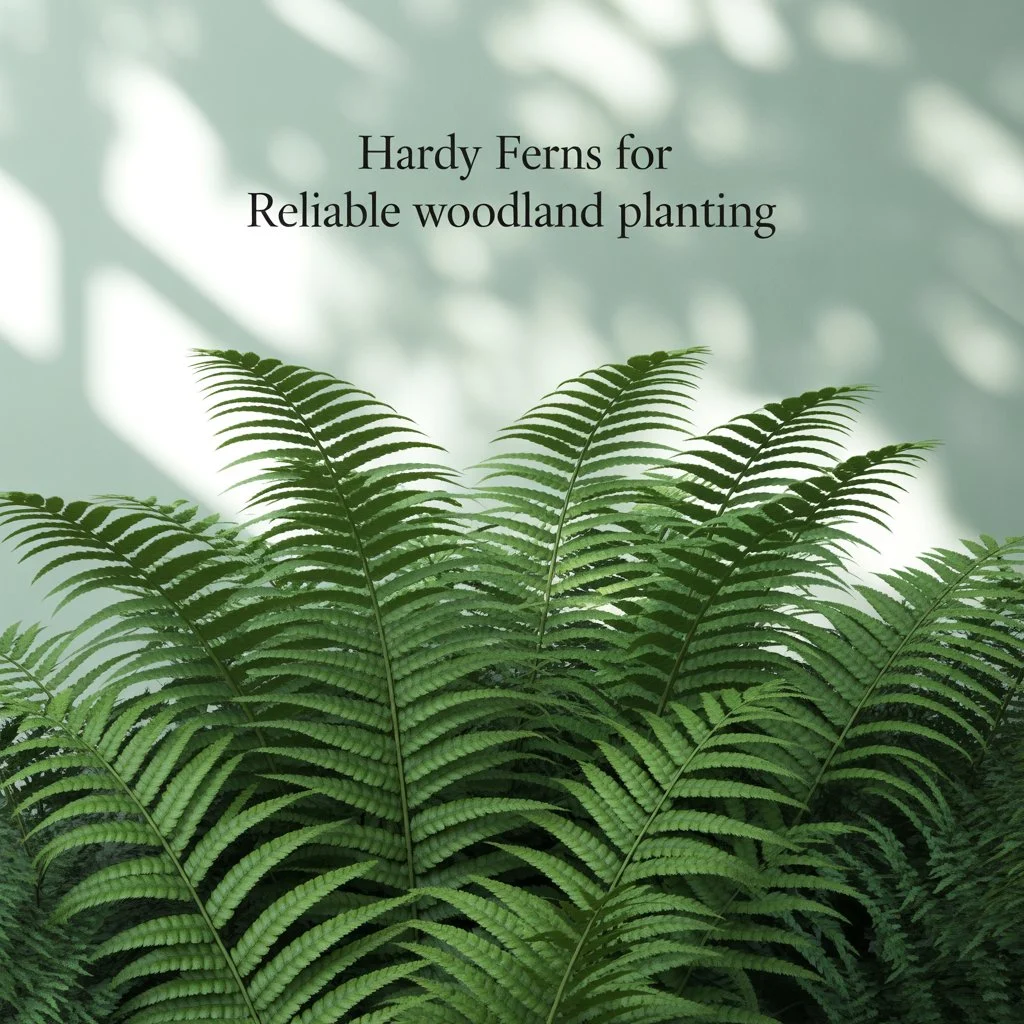
Hardy ferns for reliable woodland planting provide the dependable backbone of a fern garden, using tough, reliable species that establish easily and thrive with minimal care in woodland conditions. I rely on hardy ferns as the foundation of every woodland fern garden, because these dependable species provide reliable structure and cover, establishing readily and thriving in the woodland conditions to form the lush, permanent framework of the fern planting.
Reliable Hardy Ferns
Dryopteris filix-mas, Polystichum setiferum, and Athyrium filix-femina are three reliable hardy ferns suited to woodland planting. Dryopteris filix-mas, the male fern, tolerates dry competitive shade better than most ferns and provides robust reliable structure. Polystichum setiferum, the soft shield fern, is semi-evergreen and provides year-round cover. Athyrium filix-femina, the lady fern, provides delicate finely divided fronds in moist woodland shade.
Choosing Hardy Ferns
Reliable establishment, condition suitability, and structural value are three considerations suited to choosing hardy ferns. Reliable establishment in species known to settle readily ensures success. Condition suitability, matching the fern to the moisture and light, ensures it thrives. Structural value from robust reliable ferns provides the dependable framework of the woodland fern garden.
Bold Architectural Ferns for Structure
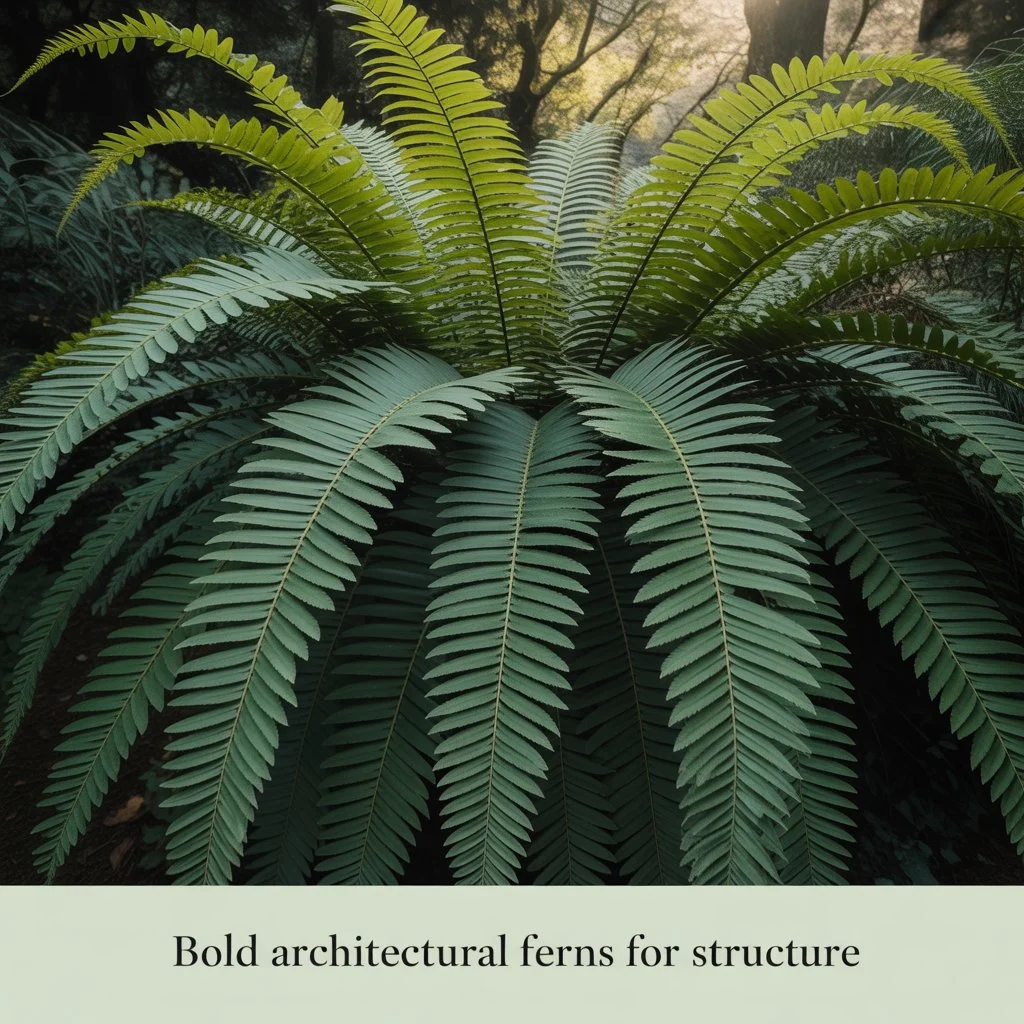
Bold architectural ferns for structure provide the dramatic large-scale ferns that anchor a woodland planting with strong form and presence, creating focal points and structural impact among the finer ferns. I use bold architectural ferns as structural anchors in woodland fern gardens, because their large, dramatic fronds provide the strong form and presence that lift a fern planting, creating focal points and a sense of scale among the more delicate species.
Bold Ferns for Woodland
Matteuccia struthiopteris, Osmunda regalis, and Dryopteris affinis are three bold ferns suited to woodland structure. Matteuccia struthiopteris, the ostrich fern, produces tall upright vase-shaped fronds and spreads to form dramatic stands. Osmunda regalis, the royal fern, produces large fronds and thrives in the wettest woodland positions. Dryopteris affinis, the golden-scaled male fern, provides robust large fronds with strong structural presence.
Using Bold Ferns for Impact
Focal placement, scale contrast, and structural anchoring are three approaches suited to using bold ferns. Focal placement of a bold fern creates a strong point of interest. Scale contrast between bold and delicate ferns adds dynamic variation. Structural anchoring with large ferns provides the framework around which the finer fern planting is arranged.
Delicate Ferns for Fine Texture
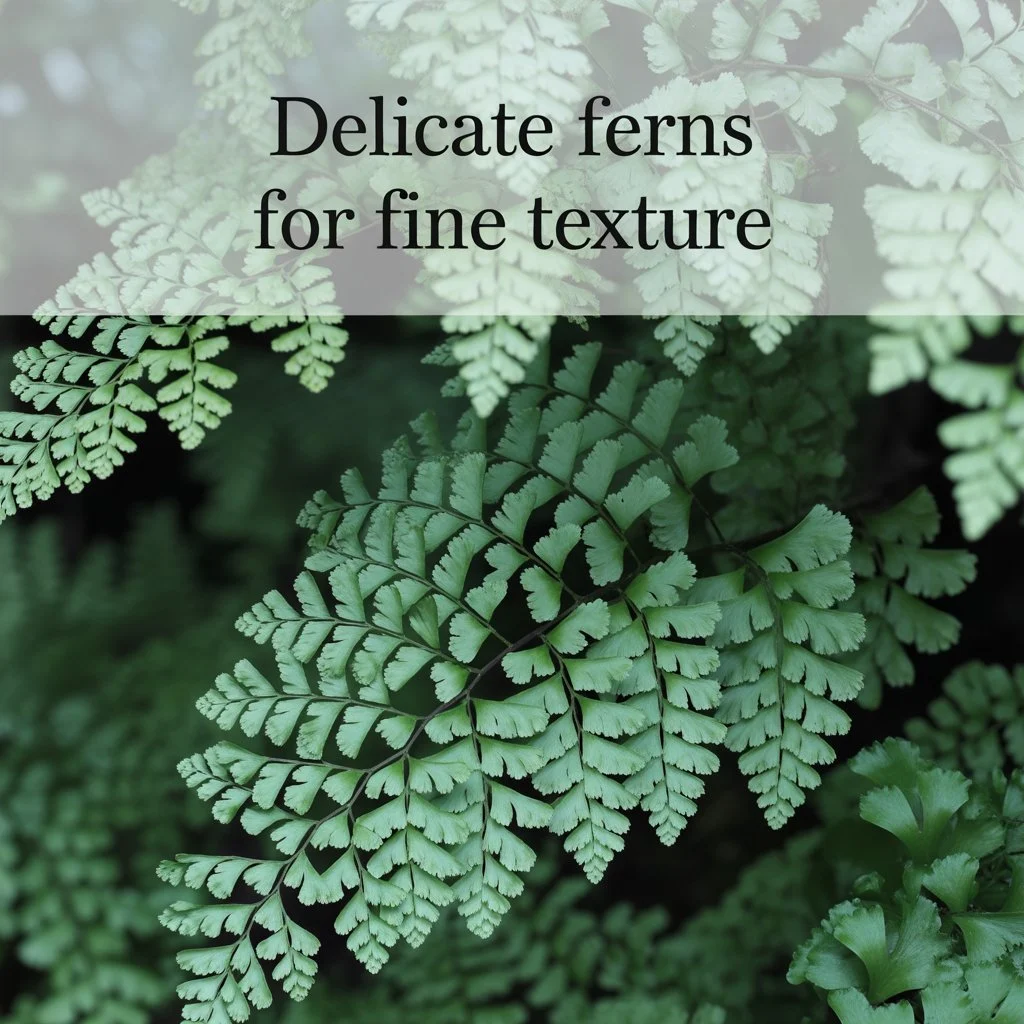
Delicate ferns for fine texture provide the intricate, finely divided fronds that add lightness and detail to a woodland fern planting, contrasting beautifully with the bolder ferns. I use delicate ferns to add fine texture to woodland fern gardens, because their intricate fronds provide a lightness and delicacy that balances the bold ferns, creating the textural richness and detail that make a fern planting visually captivating up close.
Delicate Ferns for Woodland
Adiantum, Athyrium niponicum, and Asplenium trichomanes are three delicate ferns suited to woodland fine texture. Adiantum, the maidenhair fern, provides exquisitely delicate fronds on fine dark stems in sheltered moist shade. Athyrium niponicum, the Japanese painted fern, provides finely divided silver and burgundy fronds. Asplenium trichomanes, maidenhair spleenwort, provides tiny delicate fronds for crevices and detail.
Placing Delicate Ferns
Sheltered positions, close-view placement, and textural contrast are three approaches suited to placing delicate ferns. Sheltered positions protect the delicate fronds from wind and damage. Close-view placement near paths and seating allows their intricate detail to be appreciated. Textural contrast against bolder ferns and foliage highlights their delicacy in the woodland planting.
Evergreen Ferns for Year-Round Structure
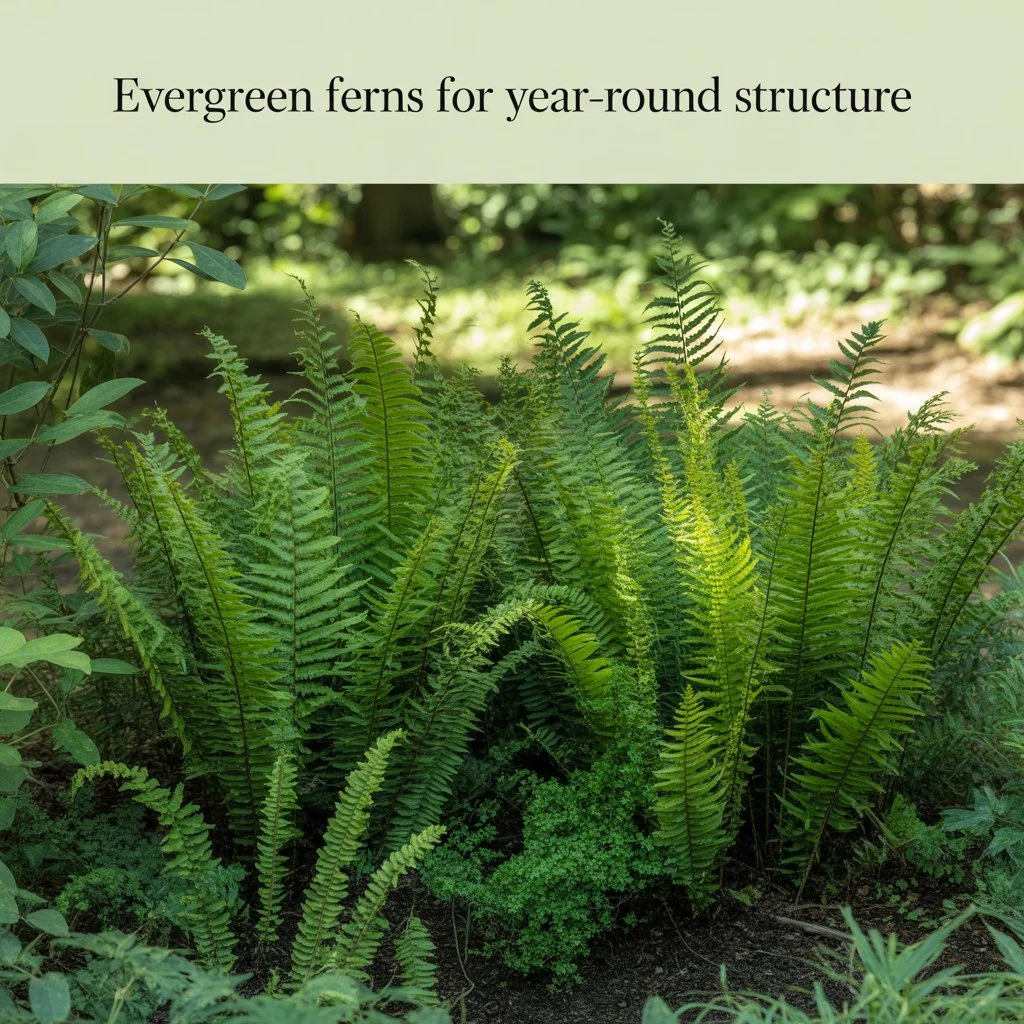
Evergreen ferns for year-round structure maintain green presence through winter when deciduous ferns die back, providing essential structure and interest in the dormant season. I always include evergreen ferns in woodland fern gardens, because they maintain the green woodland floor through winter when the deciduous ferns have died back, providing the year-round structure that keeps the fern garden beautiful in every season.
Evergreen Ferns for Woodland
Polystichum setiferum, Asplenium scolopendrium, and Polypodium are three evergreen ferns suited to woodland. Polystichum setiferum, the soft shield fern, is semi-evergreen and holds its fronds through winter. Asplenium scolopendrium, the hart’s tongue fern, provides glossy evergreen strap-shaped fronds. Polypodium, the polypody fern, provides evergreen fronds and thrives even in drier shade and on surfaces.
The Value of Winter Ferns
Winter structure, year-round cover, and seasonal interest are three values of evergreen ferns. Winter structure maintains the form of the fern garden through the dormant season. Year-round cover keeps the woodland floor clothed and weed-suppressed. Seasonal interest from evergreen fronds ensures the fern garden remains beautiful even in the depths of winter.
Layering Ferns for a Lush Woodland Floor
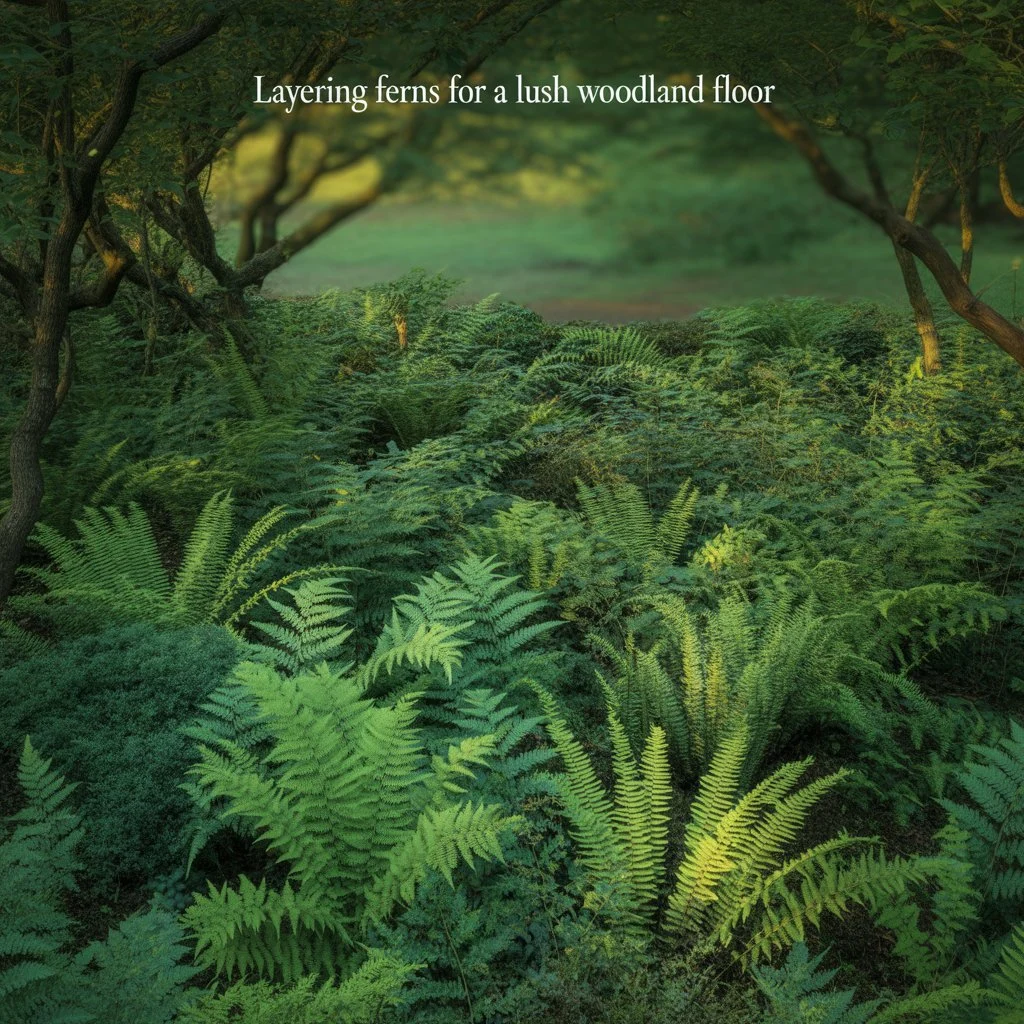
Layering ferns for a lush woodland floor combines ferns of different heights, textures, and forms in overlapping layers to create the rich, dense, immersive fern planting that defines a woodland fern garden. I layer ferns in every woodland fern garden, because combining tall bold ferns, mid-height reliable ferns, and low delicate ferns in overlapping drifts creates the lush, dense, layered floor that makes a fern garden so immersive and beautiful.
Building Fern Layers
A tall fern layer, a mid-height layer, and a low fern layer are three layers suited to a lush fern floor. A tall fern layer of bold architectural ferns provides the upper structure. A mid-height layer of reliable hardy ferns fills the main body of the planting. A low fern layer of delicate and small ferns clothes the floor, together creating the full layered fern planting.
Creating Density and Depth
Overlapping drifts, varied textures, and dense planting are three approaches suited to creating density and depth. Overlapping drifts of different ferns create a seamless, layered floor. Varied textures between bold and fine fronds build richness. Dense planting that fills the space creates the immersive, lush fern woodland that captures the essence of a forest floor.
Combining Ferns With Other Woodland Plants
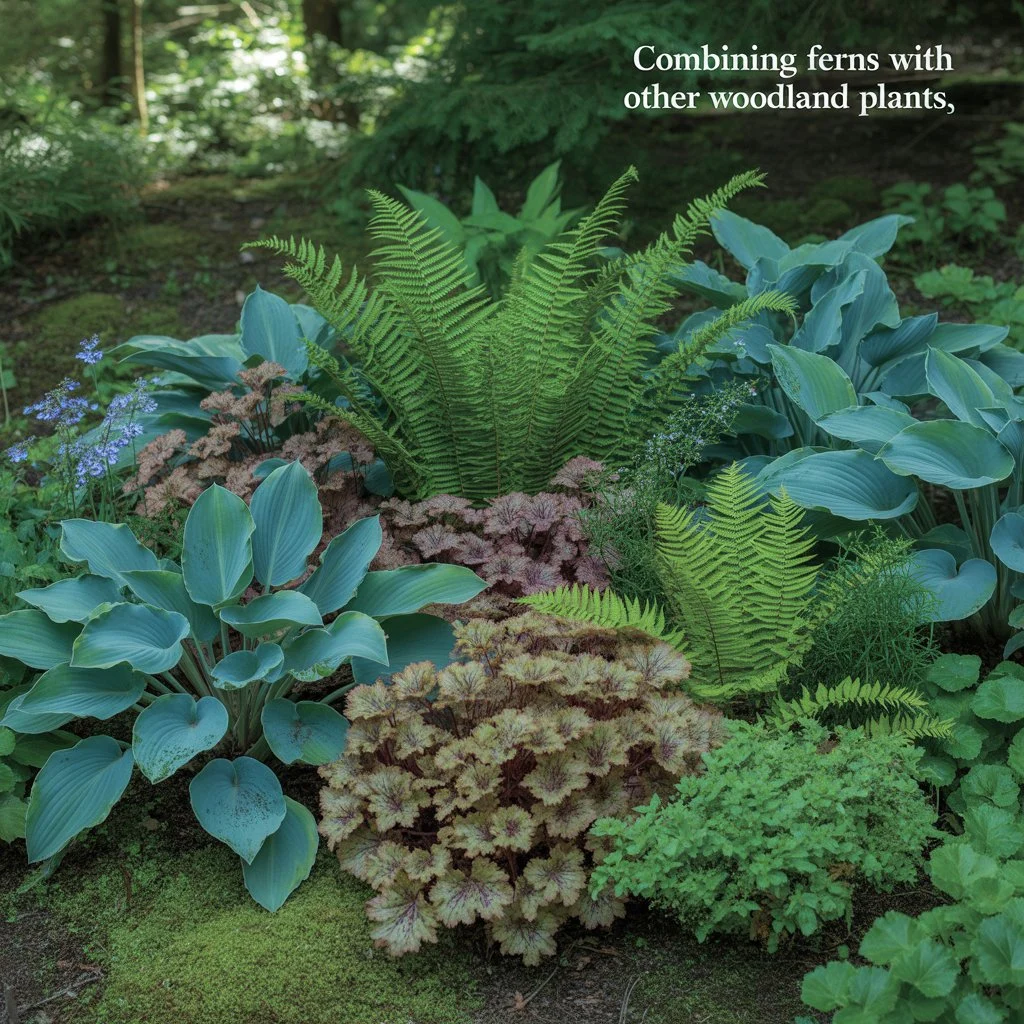
Combining ferns with other woodland plants integrates ferns into a richer woodland planting, using complementary shade plants to add flower, bold foliage, and seasonal interest alongside the fern texture. I combine ferns with complementary woodland plants in many gardens, because while ferns alone are beautiful, pairing them with hostas, spring flowers, and other shade plants adds flower colour, bold foliage contrast, and seasonal variation that enrich the fern planting.
Fern Planting Companions
Hostas, spring bulbs, and woodland flowers are three companions suited to a fern planting. Hostas provide bold foliage contrast that highlights the fine fern texture. Spring bulbs provide early flower colour before and among the unfurling ferns. Woodland flowers like bleeding heart and foam flower add seasonal flower interest alongside the ferns.
Designing Fern Combinations
Texture contrast, seasonal layering, and complementary forms are three approaches suited to designing fern combinations. Texture contrast between ferns and bold-leaved plants creates dynamic variation. Seasonal layering with spring flowers and summer ferns provides changing interest. Complementary forms, pairing the arching ferns with mounded and flowering plants, create a balanced, rich woodland planting.
Fern Gardens for Deep Shade
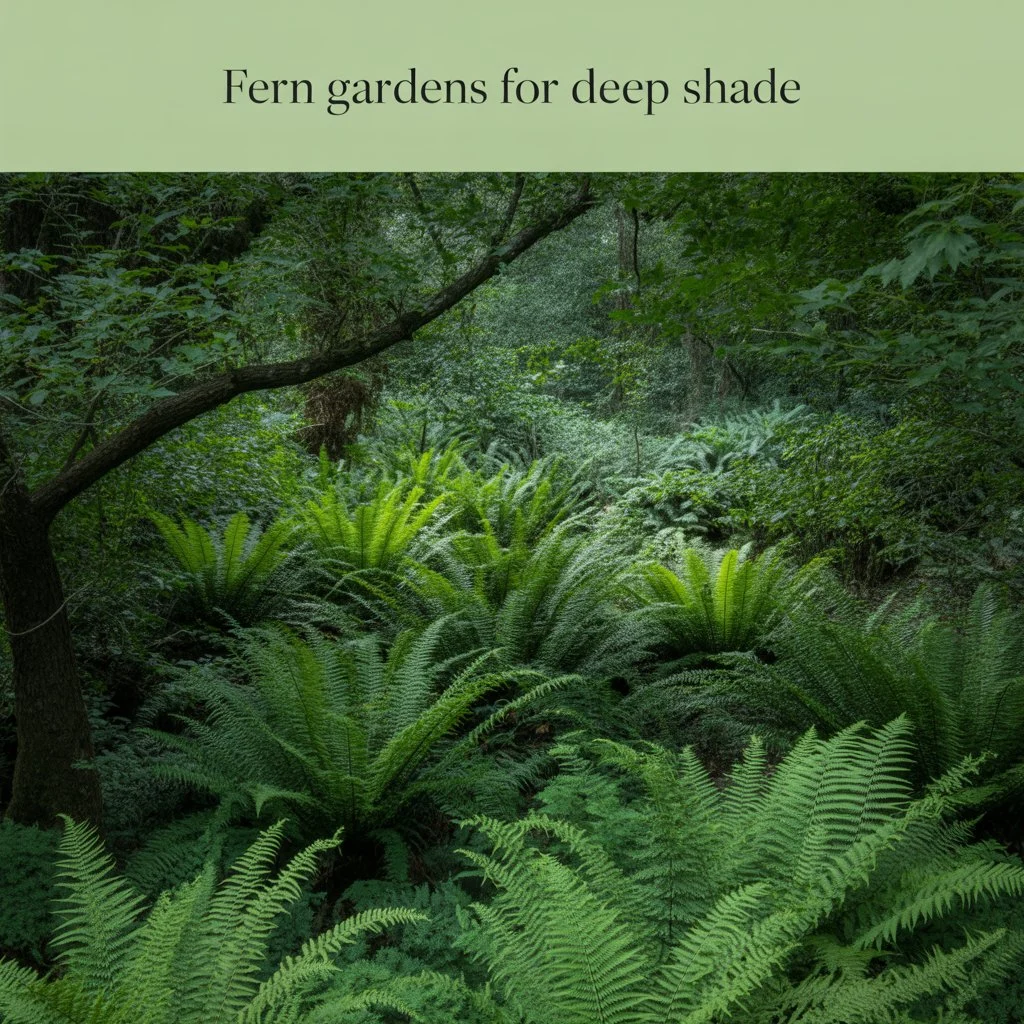
Fern gardens for deep shade make the most of the deepest, most challenging shaded positions, using the shade-tolerant ferns that thrive where almost nothing else will grow. I turn to ferns for the deepest shade in any garden, because many ferns thrive in the deep shade that defeats other plants, making a fern planting the ideal solution for transforming the darkest, most difficult corners into lush, beautiful woodland features.
Ferns for Deep Shade
Dryopteris, Polystichum, and Asplenium scolopendrium are three ferns suited to deep shade. Dryopteris species tolerate deep, dry shade better than most ferns. Polystichum provides reliable evergreen cover in deep shade. Asplenium scolopendrium, the hart’s tongue fern, thrives in deep shade with its glossy evergreen fronds, together providing reliable options for the darkest positions.
Designing for Deep Shade
Shade-tolerant selection, moisture provision, and lush density are three approaches suited to designing for deep shade. Shade-tolerant selection of the most adaptable ferns ensures success in deep shade. Moisture provision supports the ferns in the often dry conditions of deep shade beneath trees. Lush density of fern planting transforms the dark corner into an immersive green feature.
Moisture-Loving Ferns for Damp Woodland
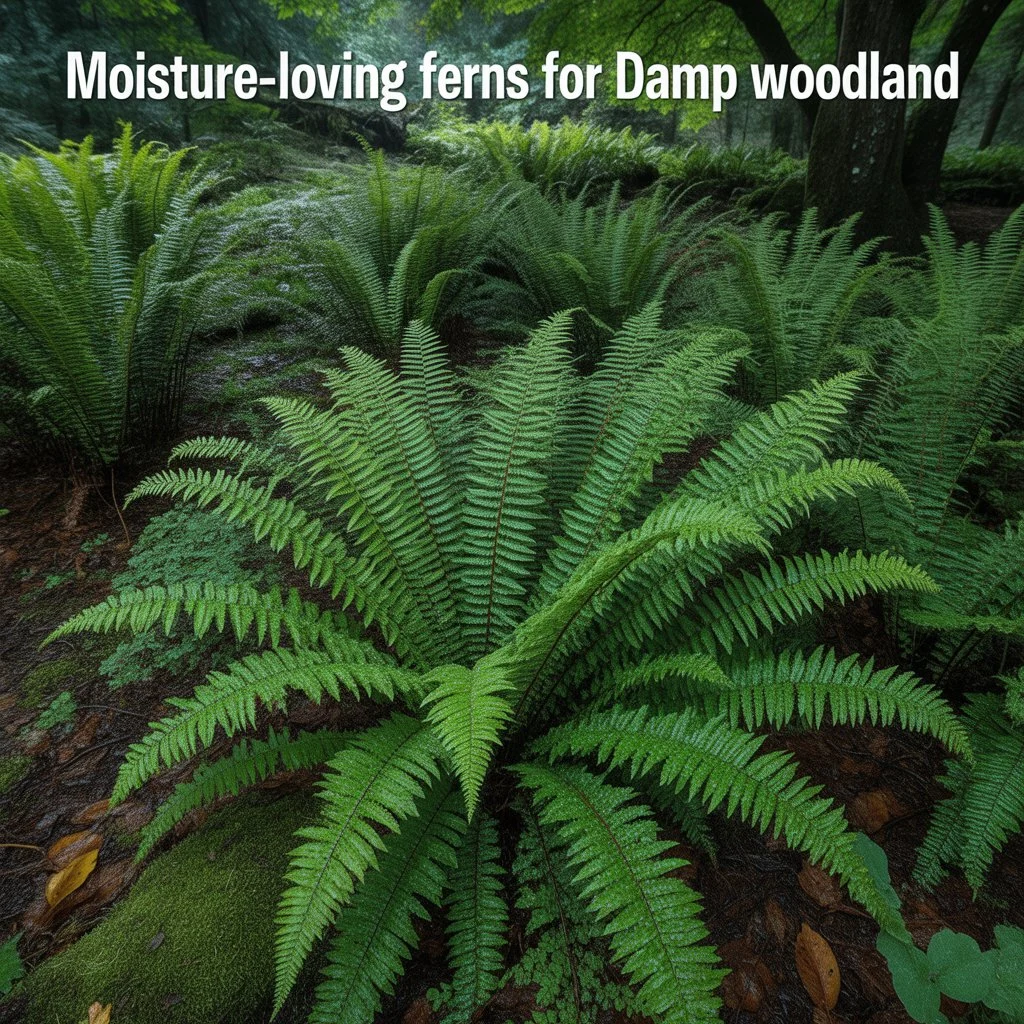
Moisture-loving ferns for damp woodland make the most of the damp, wet positions in a woodland garden, using ferns that thrive in moist conditions to create lush planting where waterlogging challenges other plants. I use moisture-loving ferns in the damp parts of woodland gardens, because these ferns thrive in the wet conditions that many plants dislike, turning damp problem areas into lush, beautiful fern features beside streams, ponds, and in moist hollows.
Moisture-Loving Ferns
Osmunda regalis, Matteuccia struthiopteris, and Onoclea sensibilis are three moisture-loving ferns suited to damp woodland. Osmunda regalis, the royal fern, thrives in the wettest positions right at the water’s edge. Matteuccia struthiopteris, the ostrich fern, spreads in moist soil to form lush stands. Onoclea sensibilis, the sensitive fern, thrives in damp and wet woodland positions.
Using Ferns in Damp Areas
Streamside planting, damp hollows, and bog margins are three damp positions suited to moisture-loving ferns. Streamside planting uses ferns to clothe the moist banks of a woodland stream. Damp hollows where water collects become lush fern features. Bog margins beside ponds and wet areas provide ideal conditions for moisture-loving ferns to flourish.
Fern Garden Design Ideas and Layout

Fern garden design ideas and layout arrange the ferns into a beautiful, naturalistic composition that reads as a genuine woodland floor, using drifts, paths, and layered planting to create an immersive fern garden. I design fern gardens as naturalistic compositions, because the way the ferns are arranged in drifts and layers, threaded with paths and combined with other elements, is what transforms a collection of ferns into an immersive, beautiful woodland fern garden.
Designing a Fern Garden Layout
Naturalistic drifts, a winding path, and layered planting are three elements suited to a fern garden layout. Naturalistic drifts of each fern, rather than scattered individuals, create the natural woodland floor. A winding path through the ferns invites exploration and immersion. Layered planting from tall to low builds the depth and richness of the fern garden.
Creating an Immersive Fern Garden
Enclosing planting, overhead canopy, and dense fern cover are three approaches suited to an immersive fern garden. Enclosing fern planting on both sides of a path creates an immersive green corridor. An overhead canopy provides the woodland conditions and atmosphere. Dense fern cover that fills the space creates the lush, enveloping experience of a genuine fern woodland.
Ferns for a Small Woodland Garden
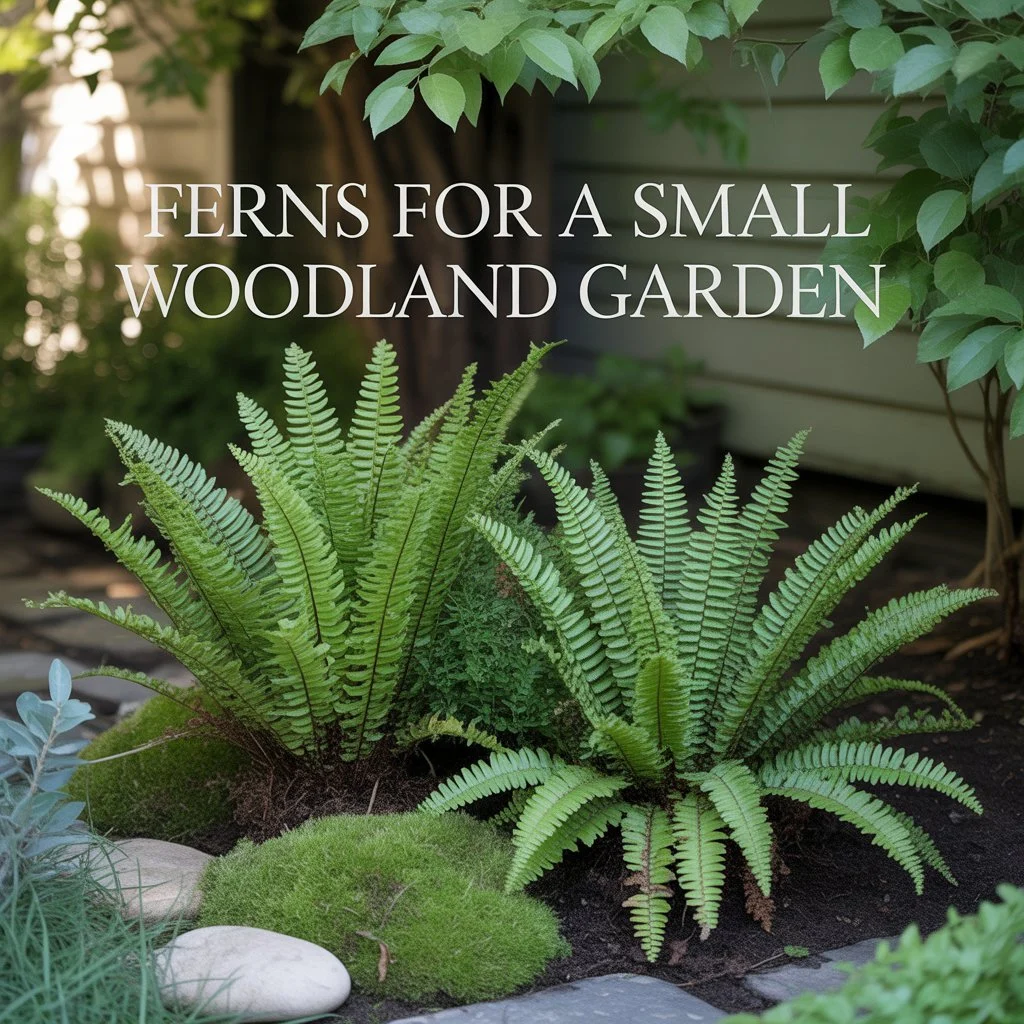
Ferns for a small woodland garden bring lush fern beauty to compact shaded spaces, using carefully chosen ferns to create an immersive woodland feel without overwhelming a limited area. I use ferns extensively in small woodland gardens, because their lush texture and shade tolerance make even a small shaded space feel like an immersive woodland, and a carefully chosen selection of ferns can transform a compact corner into an enchanting green retreat.
Ferns for Small Spaces
Compact ferns, a selective palette, and refined textures are three choices suited to a small fern garden. Compact ferns suited to the scale of a small space provide fern beauty without overwhelming it. A selective palette of a few well-chosen ferns keeps a small planting cohesive. Refined textures and attractive forms make every fern count in a limited area.
Maximizing a Small Fern Garden
Dense layered planting, a sense of enclosure, and fine detail are three techniques suited to maximizing a small fern garden. Dense layered planting creates an immersive fern feel in a small space. A sense of enclosure from the surrounding ferns creates the woodland atmosphere. Fine detail in delicate ferns near paths and seating rewards close viewing in the compact garden.
Encouraging Self-Seeding and Spreading Ferns
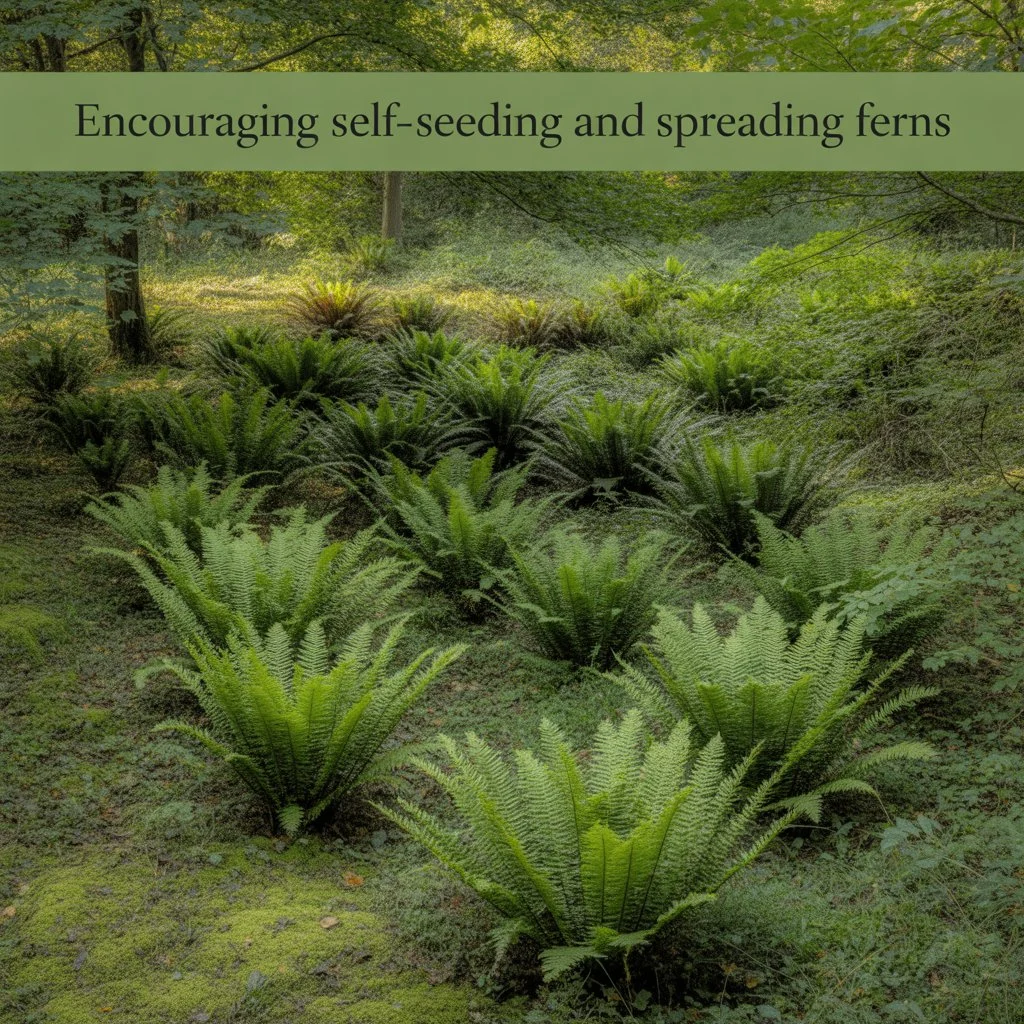
Encouraging self-seeding and spreading ferns allows the fern garden to fill, naturalize, and evolve over time with minimal intervention, creating the spontaneous, established character of a genuine woodland. I encourage ferns to spread and self-seed in woodland gardens, because allowing them to colonize and naturalize creates the established, spontaneous quality of a real fern woodland while filling the planting and reducing the work of maintaining it.
Spreading and Self-Seeding Ferns
Spreading ferns, self-seeding species, and naturalizing groups are three ways ferns colonize. Spreading ferns like ostrich fern colonize by runners to form expanding stands. Self-seeding species spread by spores to appear in suitable spots around the garden. Naturalizing groups of ferns develop into established communities over time, filling the woodland floor.
Managing Naturalizing Ferns
Allowing spread, selective editing, and embracing spontaneity are three approaches suited to managing naturalizing ferns. Allowing the ferns to spread creates the natural, established fern woodland. Selective editing of where they spread guides the planting. Embracing the spontaneity of self-seeded ferns appearing in crevices and corners adds to the authentic naturalistic character of the fern garden.
Ferns and Wildlife in a Woodland Garden
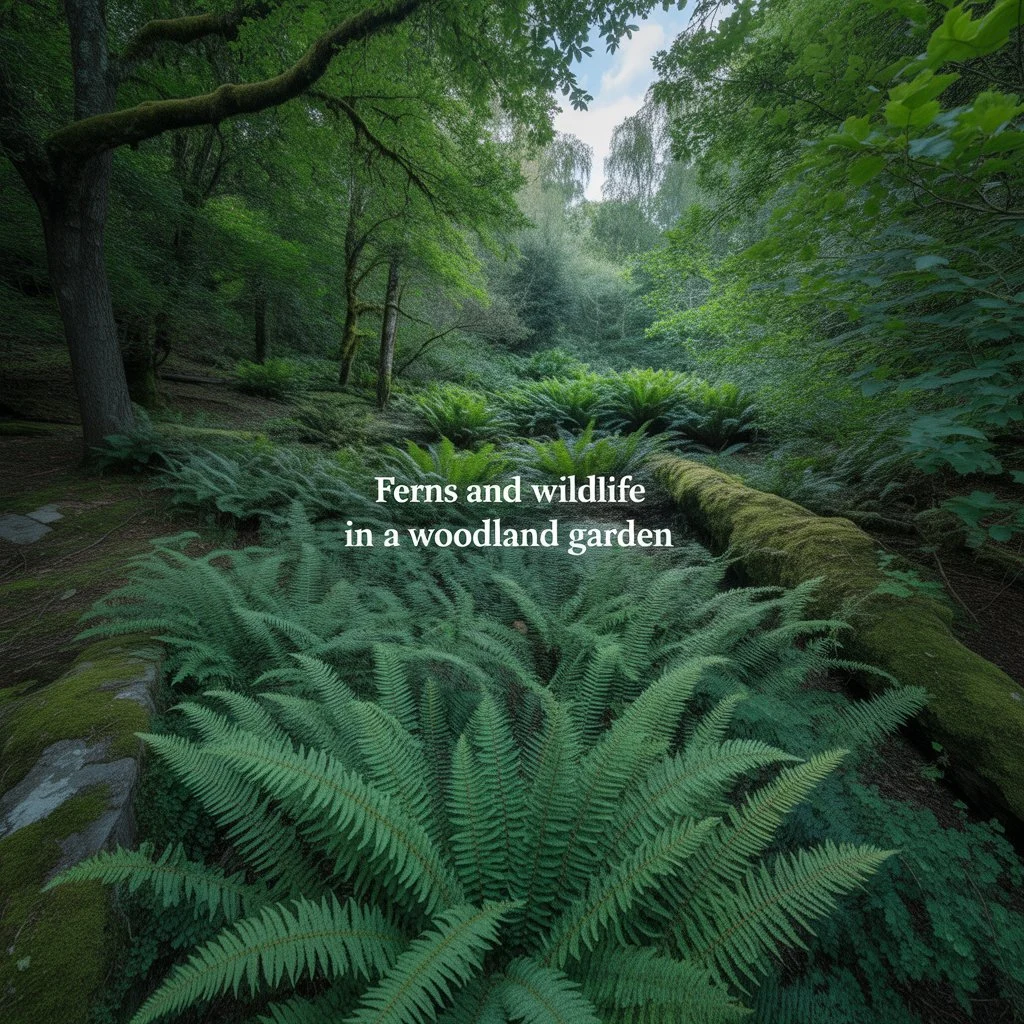
Ferns and wildlife in a woodland garden recognize the ecological value of fern planting, which provides shelter, habitat, and ground cover that support the invertebrates and small creatures of the woodland ecosystem. I value the wildlife role of ferns in woodland gardens, because the dense fern cover provides essential shelter and habitat for the invertebrates and small creatures that underpin the woodland ecosystem, adding ecological value to the fern planting’s beauty.
Wildlife Value of Ferns
Invertebrate shelter, ground cover habitat, and woodland ecosystem support are three wildlife benefits of ferns. Invertebrate shelter in the dense fern fronds provides habitat for the insects of the woodland floor. Ground cover habitat from the fern layer shelters small creatures. Woodland ecosystem support from the fern planting contributes to the biodiversity of the garden.
Enhancing Fern Wildlife Value
Dense planting, undisturbed areas, and combining with habitat features are three approaches suited to enhancing fern wildlife value. Dense fern planting provides the cover wildlife uses. Undisturbed areas left unmanaged allow the fern layer to function as habitat. Combining ferns with habitat features like logs and leaf litter maximizes the wildlife value of the fern woodland.
Low-Maintenance Fern Garden Care
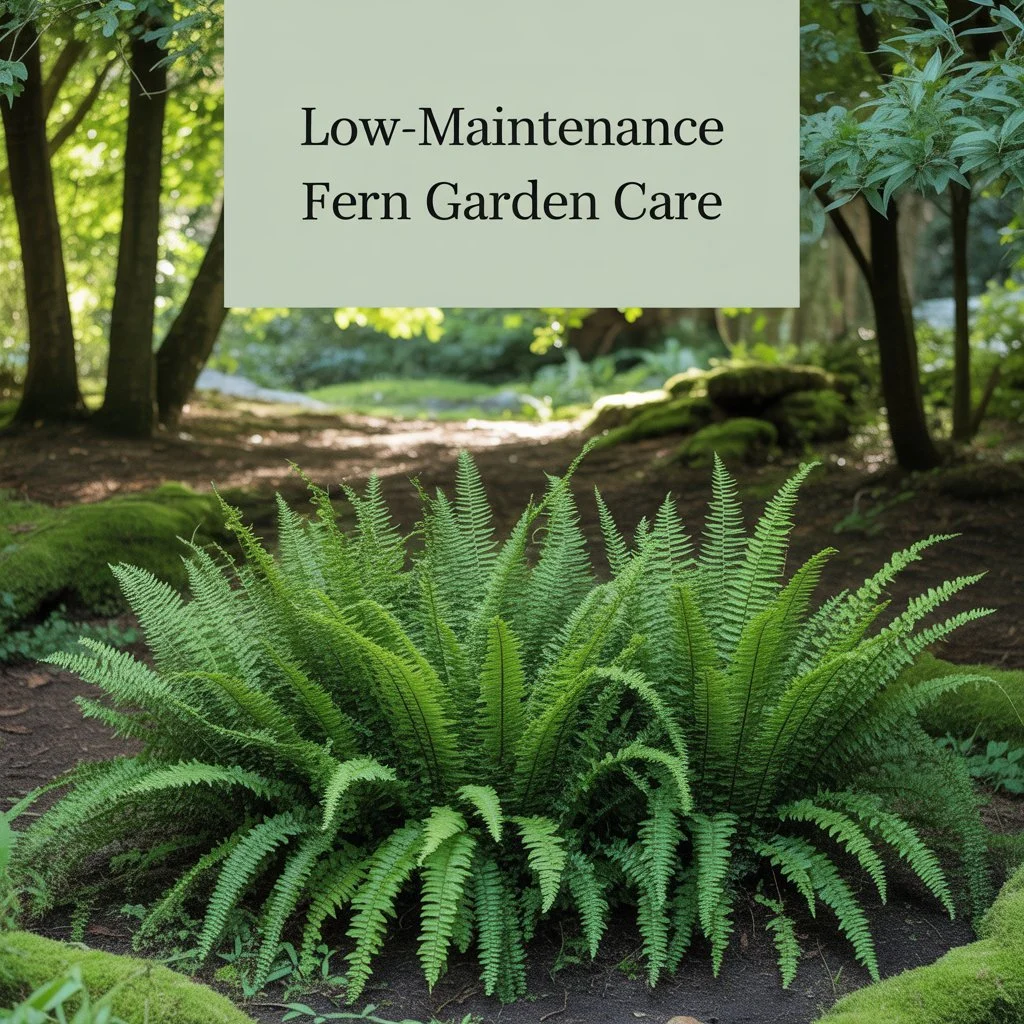
Low-maintenance fern garden care recognizes that ferns are among the most genuinely easy-care plants, thriving in woodland conditions with minimal intervention to create a beautiful, self-sustaining garden. I design fern gardens for low maintenance, because ferns are naturally adapted to woodland conditions and need very little care once established, with dense fern cover suppressing weeds and the planting largely sustaining itself through the seasons.
Why Ferns Are Low-Maintenance
Natural adaptation, weed suppression, and self-sufficiency are three reasons ferns are low-maintenance. Natural adaptation to woodland shade means ferns thrive without intervention. Weed suppression from dense fern cover reduces the need for weeding. Self-sufficiency in established ferns means they need little watering, feeding, or care once settled.
Simple Fern Garden Maintenance
Spring tidying, occasional watering, and minimal intervention are three simple maintenance tasks suited to a fern garden. Spring tidying, removing old fronds before new growth, refreshes the planting. Occasional watering in dry spells supports the ferns in their preferred moist conditions. Minimal intervention, allowing the ferns to grow and naturalize, keeps the fern garden beautiful with very little work.
Establishing a Woodland Fern Garden
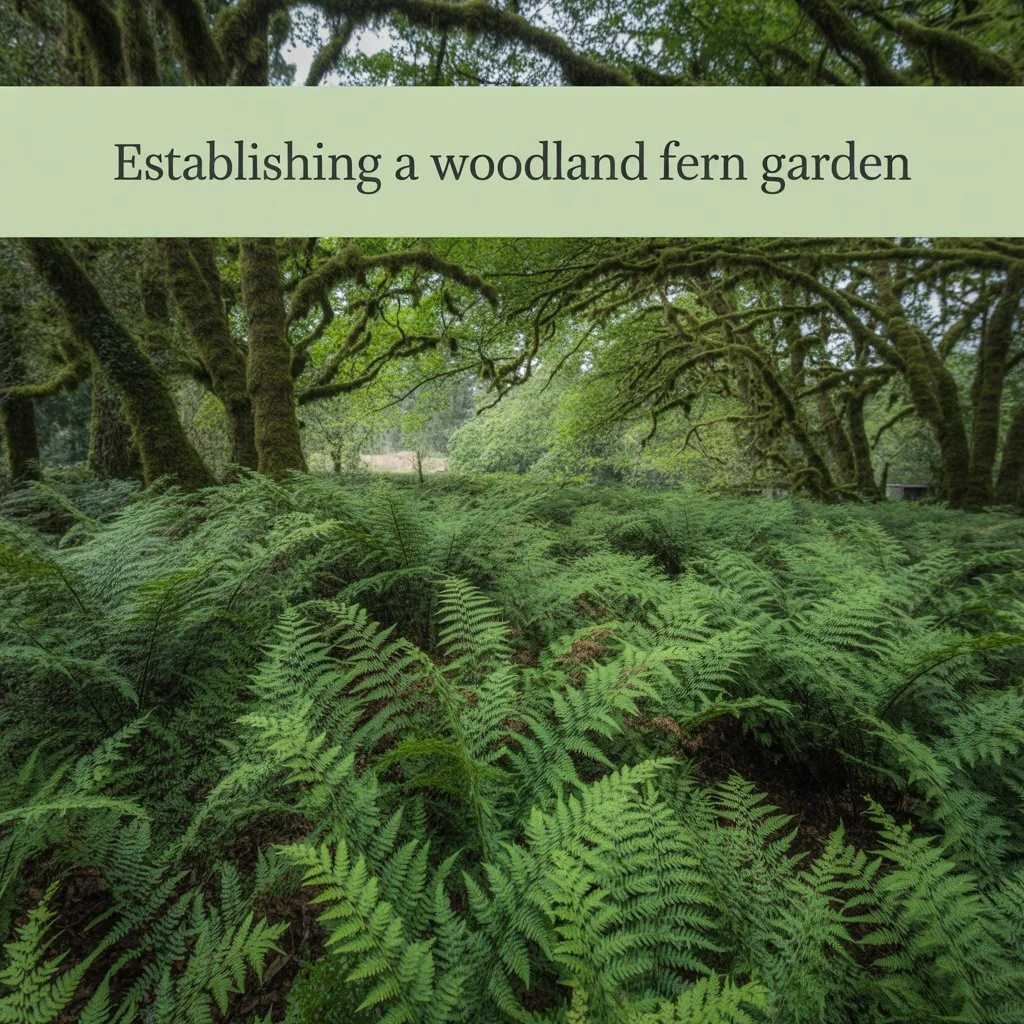
Establishing a woodland fern garden involves the initial planting and the development over the following seasons as the ferns settle, spread, and mature into a lush, layered fern woodland. I set realistic expectations for establishing a fern garden, because while ferns establish reliably, the full lush, layered, naturalized effect develops over a few seasons as the ferns spread and fill, rewarding a little patience with an increasingly beautiful fern woodland.
Stages of Establishing a Fern Garden
Initial planting, first-season establishment, and developing lushness are three stages suited to establishing a fern garden. Initial planting of the layered fern scheme sets the structure. First-season establishment as the ferns settle and root provides the foundation. Developing lushness over the following seasons, as the ferns spread and fill, builds the immersive fern woodland.
Helping Ferns Establish
Good planting conditions, establishment moisture, and patient development are three approaches suited to helping ferns establish. Good planting conditions in suitable moist, shaded soil give the ferns a strong start. Establishment moisture through the first seasons helps the ferns settle. Patient development, allowing the ferns time to spread and naturalize, achieves the full lush fern woodland that makes the planting so rewarding.
Frequently Asked Questions
What are the best ferns for a woodland garden?
The best ferns for a woodland garden combine shade tolerance, reliability, and varied texture, with Dryopteris filix-mas, Polystichum setiferum, Athyrium filix-femina, Matteuccia struthiopteris, and Asplenium scolopendrium among the finest choices. Dryopteris filix-mas, the male fern, tolerates dry competitive shade and provides robust reliable structure, Polystichum setiferum offers semi-evergreen year-round cover, lady fern provides delicate texture, ostrich fern provides bold architectural form, and the evergreen hart’s tongue fern adds glossy winter presence. The ideal fern garden combines bold architectural ferns for structure, reliable hardy ferns for the main body of planting, delicate ferns for fine texture, and evergreen ferns for winter interest, layered together to create the lush, varied, immersive fern woodland that captures the essence of a forest floor.
Are ferns good for shade gardens?
Ferns are arguably the perfect plant for shade gardens, since this ancient plant group is exceptionally well adapted to the low light, cool conditions, and moisture of a shaded woodland setting where many other plants struggle. Many ferns thrive even in deep shade that defeats almost everything else, making them the ideal solution for transforming dark, difficult corners into lush, beautiful features, while their varied textures, from delicate maidenhair to bold ostrich fern, provide the quintessential woodland floor richness. Ferns are also genuinely low-maintenance once established, naturally suited to the conditions and needing little intervention, and their dense cover suppresses weeds, so a shade garden built around ferns achieves a lush, atmospheric, easy-care beauty that flower-led shade planting rarely matches.
How do I design a fern garden?
You design a fern garden by arranging ferns of varied height, texture, and form in naturalistic overlapping drifts beneath a tree canopy, layered from tall architectural ferns through reliable mid-height ferns to delicate low ferns, and threaded with a winding path for immersion. Begin by assessing the shade and moisture, then select a palette combining bold structural ferns like ostrich fern, reliable hardy ferns like the male fern, delicate ferns like maidenhair for fine texture, and evergreen ferns for winter structure, planting each in naturalistic drifts rather than as scattered individuals. Combine the ferns with complementary woodland plants such as hostas and spring bulbs for contrast and seasonal flower if desired, plant densely to create a lush layered floor, and allow the ferns to spread and naturalize over time into an immersive, beautiful fern woodland.
Do ferns need a lot of maintenance?
Ferns need very little maintenance, ranking among the most genuinely low-maintenance plants for a shade garden because they are naturally adapted to woodland conditions and largely care for themselves once established. The main tasks are a simple spring tidy to remove old fronds before the new growth unfurls, occasional watering during dry spells since ferns prefer consistently moist conditions, and otherwise minimal intervention, as established ferns need little feeding or attention and their dense cover suppresses weeds. Because ferns thrive in the shade and moisture of a woodland setting and many spread and naturalize on their own, a fern garden becomes increasingly self-sustaining over time, making ferns an ideal choice for anyone seeking a lush, beautiful shade planting that does not demand constant work.
Can ferns grow in dry shade?
Some ferns can grow well in dry shade, though it is one of the more challenging conditions, with Dryopteris filix-mas, Polystichum setiferum, and Polypodium being among the most tolerant of the dry, competitive shade found beneath established trees. While most ferns prefer the cool moisture of a typical woodland floor, these tougher species tolerate drier conditions better than delicate moisture-lovers like maidenhair or royal fern, making them the reliable choices for dry shade beneath a thirsty tree canopy. To help ferns succeed in dry shade, it is worth improving the soil with organic matter to retain moisture, watering through the establishment period until the ferns take hold, and mulching to conserve moisture, after which these dry-shade-tolerant ferns will provide lush green cover in conditions where many other plants would fail entirely.