
Woodland Garden Streams for Shaded Corners

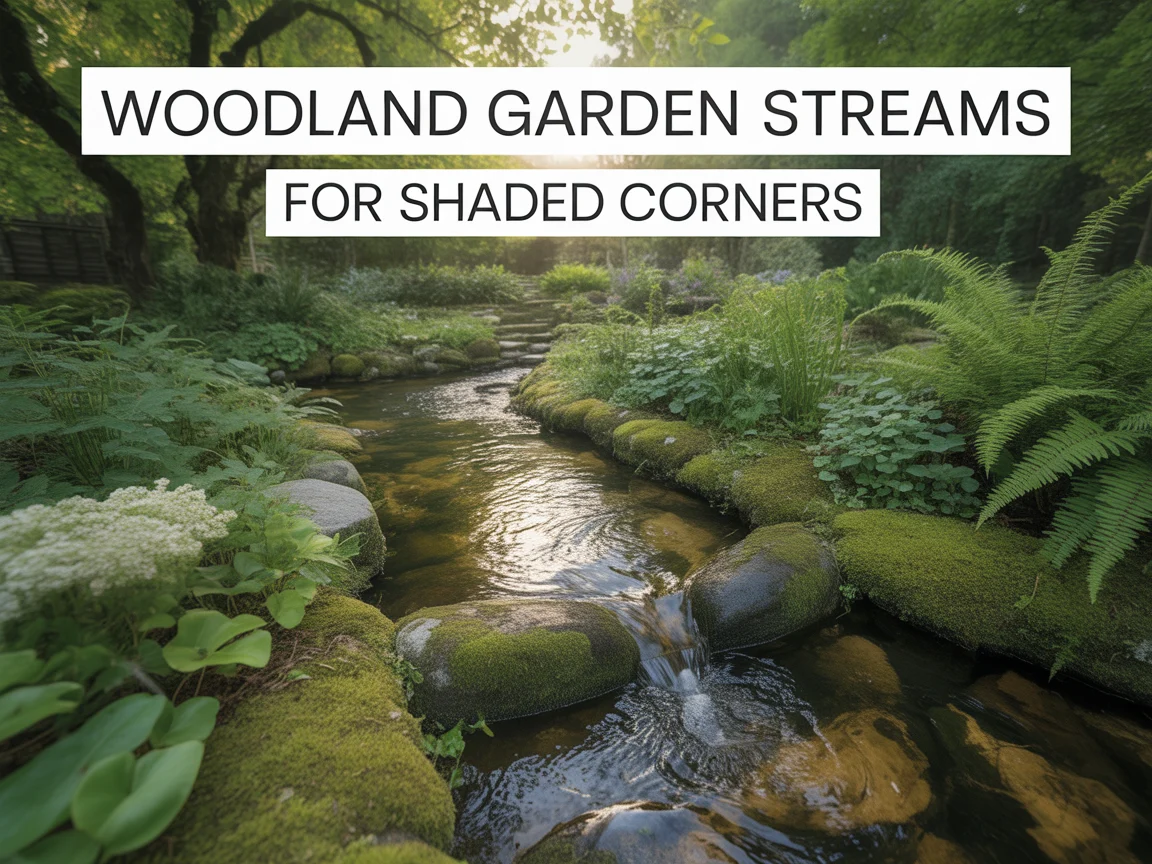
I knelt beside a woodland garden stream at a plantsman’s open garden five years ago and stayed there for almost twenty minutes, which is far longer than I have ever lingered at any other water feature. The stream was modest, a 35-foot run no wider than a dinner plate, dropping perhaps 18 inches in total over a bed of dark cobbles between fern-clothed banks. There was no fountain, no formal pool, and no visible pump. But the water moved with the slightly uneven, hesitant rhythm of a real woodland brook, catching the light where it slipped over a half-submerged boulder and falling silent again in the still pools between. The sound was not a roar but a quiet, intermittent trickle, and it completely transformed the shaded ground beneath the trees into somewhere you wanted to stay. I have been chasing that exact quality of sound and movement in my own work ever since.
Woodland garden streams combine a recirculating water system of liner, pump, and header pool with a meandering, naturalistic channel of stone, cobble, and gravel set through shade-tolerant planting beneath an existing or newly established tree canopy, creating a moving water feature that reads as a genuine forest brook rather than a built ornamental channel. The stream gives the woodland garden movement, sound, and a wildlife corridor, while the surrounding ferns, moss, and marginal planting give the stream its enclosed, atmospheric, half-wild character.
Since that open garden visit, I have designed, installed, and maintained woodland garden streams across sites ranging from a courtyard the size of a parking space with a single multi-stem birch to large rural gardens with established oak and hazel woodland. I have built simple pondless streams for under a few hundred dollars that produce results as immersive as elaborate professional installations, and I have also created complex stream-and-pond systems that become the entire reason a garden is walked. In this article, I am sharing the best woodland garden stream ideas covering construction, materials, planting, wildlife, and low-maintenance approaches.
Recirculating Pump-Fed Woodland Garden Stream
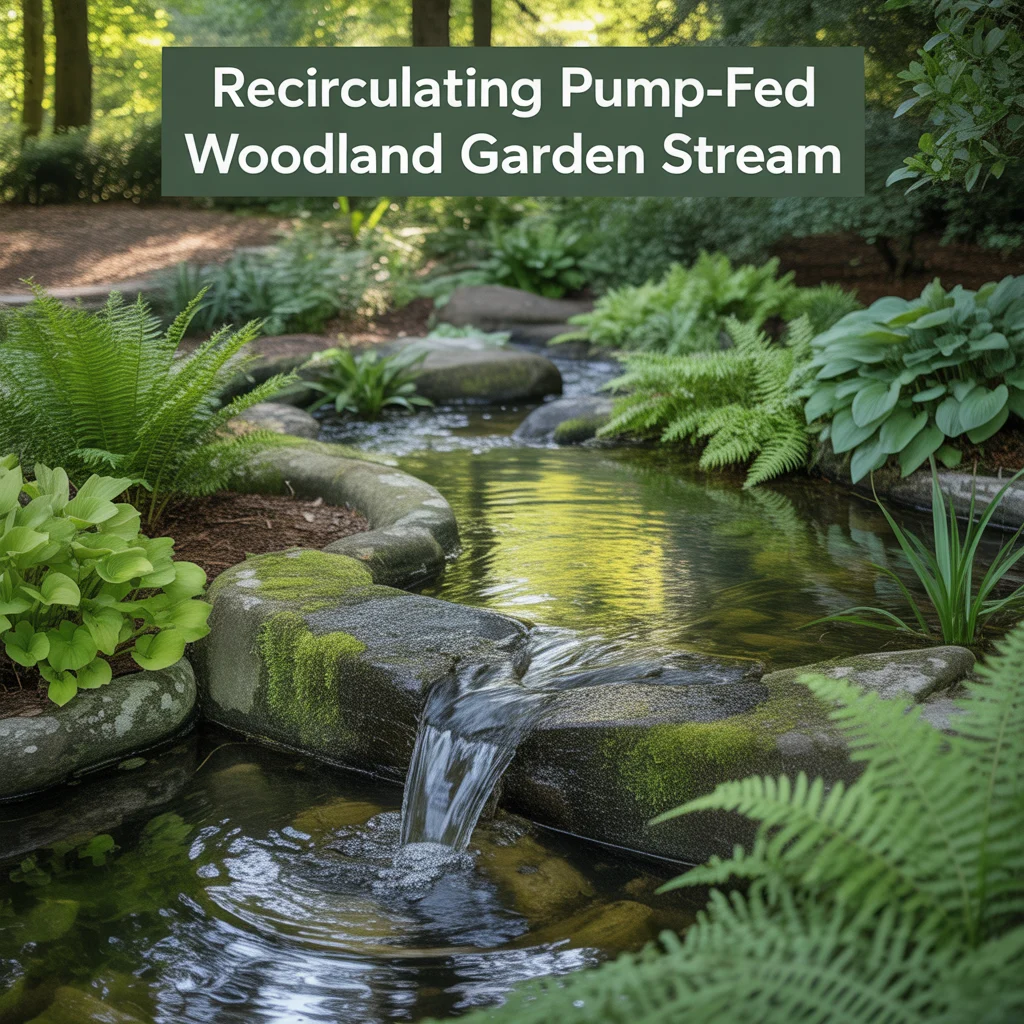
A recirculating pump-fed woodland garden stream is the most widely built and most reliable stream type, using a submersible pump to lift water from a reservoir at the lowest point up to a concealed header pool at the top, from where it flows back down by gravity over a lined, stone-dressed channel in a continuous loop. I built this system in my own woodland section using an EPDM-lined channel and a single submersible pump, and the same water has circulated through the stream for four seasons with nothing more than seasonal leaf clearing and a pump intake clean every spring. Further ideas for combining a water feature with a walking route through a naturalistic setting are covered in these woodland gardens with paths through natural settings.
Liner Types for a Woodland Stream Channel
EPDM rubber liner, butyl rubber liner, and preformed rigid stream units are three options suited to a woodland garden stream channel. EPDM rubber liner at 1mm thickness provides the most flexible and longest-lasting channel surface, conforming closely to a meandering, irregular excavation with a service life of 20 years or more, which makes it the most appropriate liner for a naturalistic woodland stream that twists and varies in width along its length. Butyl rubber liner offers similar flexibility and durability at a slightly higher cost and suits an installer who prefers its handling characteristics. Preformed rigid stream units provide a fast, low-skill installation in a fixed shape but impose a regular, repeating cascade pattern that reads as manufactured rather than woodland, so I reserve them for budget or temporary schemes only.
Pump Selection for a Woodland Garden Stream
A 3,000 LPH pump, a 5,000 LPH pump, and an 8,000 LPH pump are three flow rates suited to different woodland stream widths. A 3,000 litres-per-hour (roughly 800 GPH) pump suits a narrow woodland stream of 6 to 10 inches channel width where a gentle, quiet trickle is the intention, producing soft sound without splashing. A 5,000 LPH pump suits a stream of 12 to 18 inches width, carrying a confident, clearly audible flow over a series of small riffles. An 8,000 LPH pump suits a wider stream of 18 to 24 inches or a stream with multiple cascades where a stronger volume of moving water is needed to fill the channel convincingly. I always size the pump to the head height and stream width together, because an undersized pump produces a disappointing dribble that defeats the entire purpose of a moving stream.
Header Pool and Reservoir for a Recirculating Stream
The header pool is the small concealed basin at the top of the stream from which water emerges, and the reservoir is the larger sump or pond at the base that collects the returning water and houses the pump. I size the reservoir to hold at least the full volume of the stream channel plus a 25 percent surplus, which prevents the pump from running dry during evaporation in warm weather. Both the header pool and the reservoir are disguised beneath boulders, gravel, and overhanging fern planting so that the water appears to emerge from and disappear into the woodland floor rather than from visible plastic basins.
Stone-Edged Meandering Woodland Stream
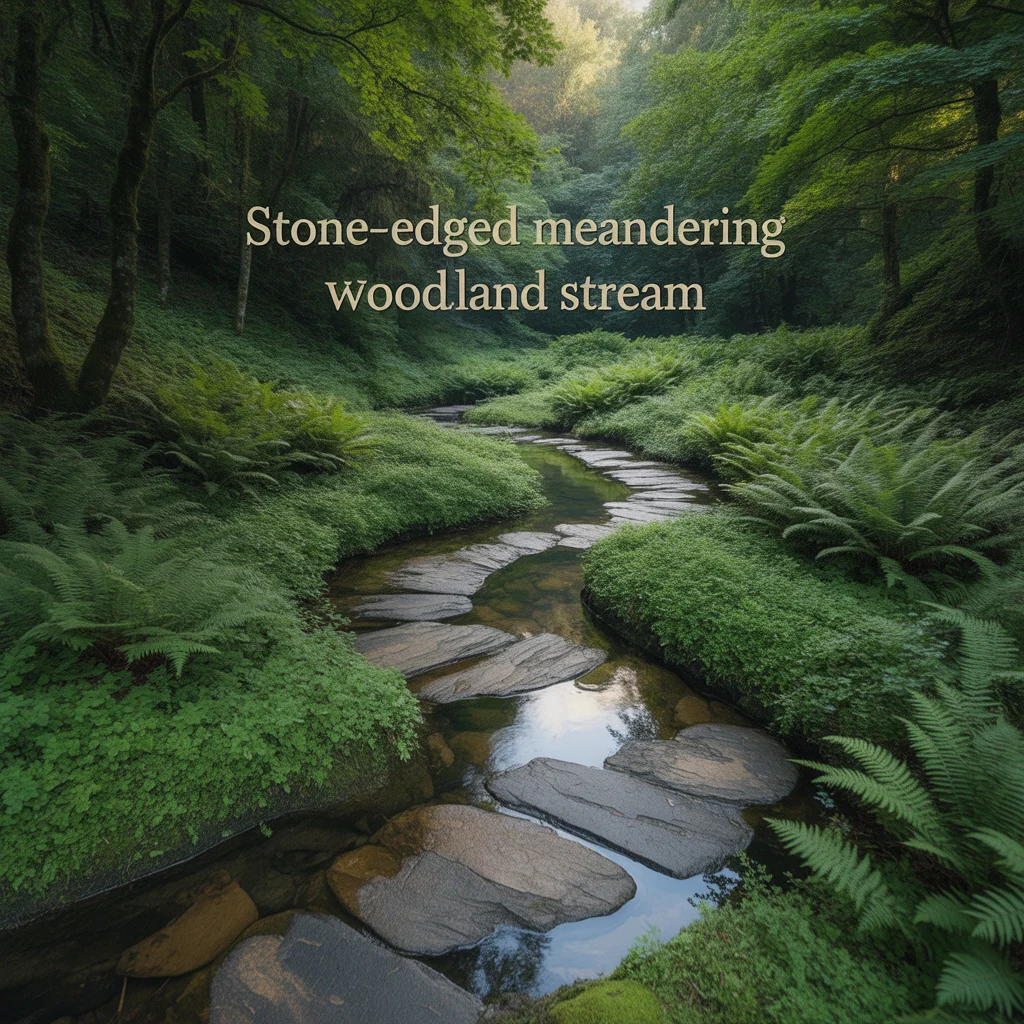
A stone-edged meandering woodland stream uses natural stone set along both banks of a curving channel to create the irregular, organic edges of a genuine forest brook, with the meandering route concealing the full length of the stream from any single viewpoint. I built a stone-edged meandering stream through an established fern planting using local weathered limestone, and the three gentle curves across its 28-foot length revealed the water in a sequence of partial views that made the modest stream feel like a far longer watercourse than its actual measurement.
Stone Types for a Meandering Stream Edge
Weathered limestone, local fieldstone, and rounded river cobbles are three stone types suited to a meandering woodland stream edge. Weathered limestone in irregular pieces develops a lichen and moss patina in the moist shade of a woodland setting within three to five years, producing the aged appearance that makes a built stream look long-established. Local fieldstone gathered from or matched to the surrounding area provides the most contextually authentic edging because it shares the geology a natural stream in that location would reveal. Rounded river cobbles of 2 to 6-inch diameter laid as a bed and lower bank replicate the water-worn stone of a genuine streambed and are the single most important material for making the channel read as natural.
Creating a Convincing Meander
A convincing woodland stream meander is created by curving the channel gently from side to side and widening it into shallow pools at the outside of each bend, exactly as moving water erodes a real watercourse. I mark the stream centerline with a garden hose first and assess the curve from the entrance, the midpoint, and the far end before excavating, because a curve that looks natural from one position frequently appears awkward from another. I never allow a straight run longer than about 8 feet, since an extended straight section instantly betrays the stream as artificial.
Stepping Stone Stream Crossing and Ford
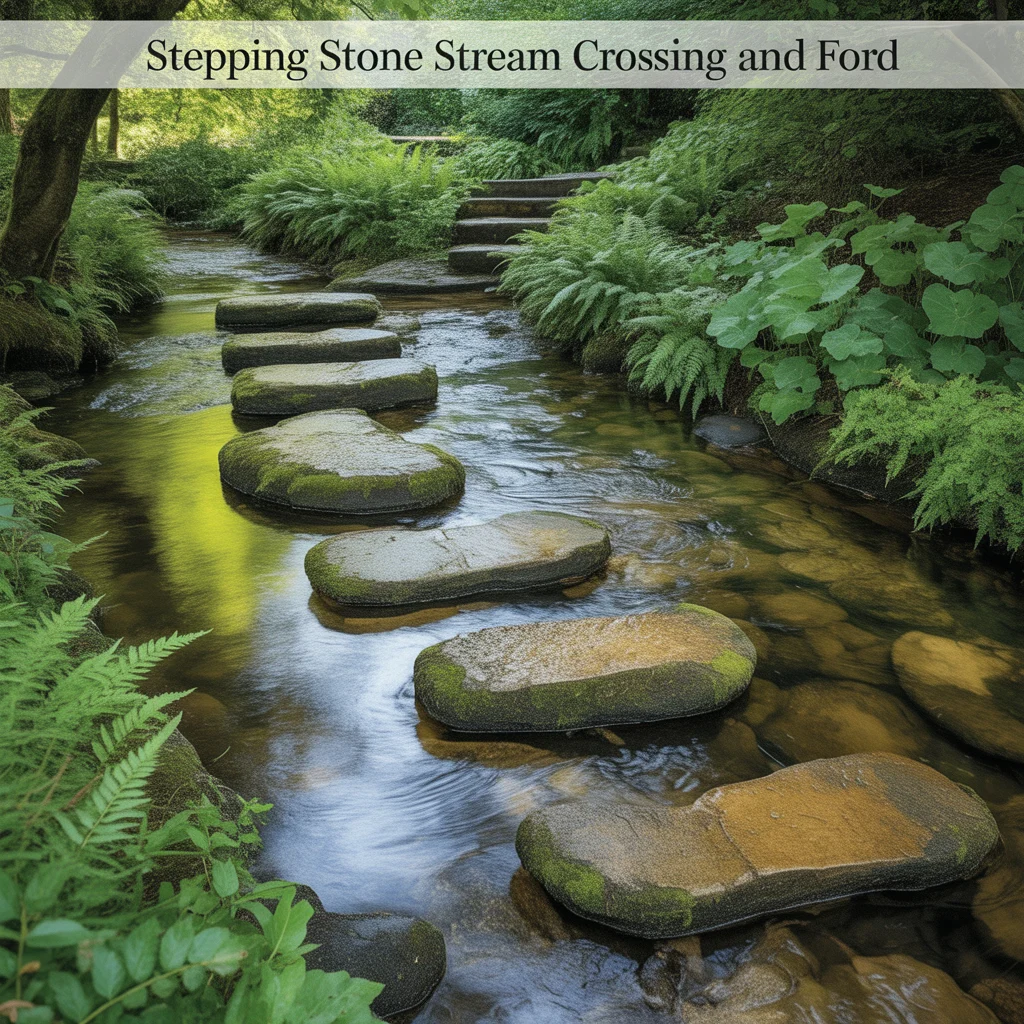
A stepping stone stream crossing places large flat stones across the width of a woodland garden stream at stride intervals, creating a point where the path crosses the water and the visitor steps directly over the moving stream, which is one of the most engaging interactions a woodland garden can offer. I set a five-stone ford across a shallow stream in a woodland garden using flat sandstone slabs, and the crossing became the most visited point in the whole garden simply because stepping over running water is irresistibly satisfying.
Stone Types for a Stream Crossing
Flat Yorkstone slabs, riven sandstone, and large flat boulders are three stone types suited to a woodland stream crossing. Flat Yorkstone slabs of 16 to 20-inch width provide a stable, generous foot placement that suits a crossing in regular daily use and develops an attractive aged patina in the damp stream environment. Riven sandstone in honey or buff tones gives a warmer, textured surface with natural slip resistance from its riven face, suiting a cottage or informal woodland stream. Large flat-topped boulders set with their broad face uppermost provide the most naturalistic crossing because they read as glacial stones the stream has always flowed around rather than placed paving.
Setting Crossing Stones Safely
Crossing stones over a woodland stream are set on a firm, bedded base above the maximum water level so that the walking surface stays dry and the stone cannot rock underfoot. I bed each crossing stone on a compacted sub-base and mortar or sharp-sand haunching set on the liner with protective underlay beneath, and I set the top face 1 to 2 inches above the normal flowing water level. I always test every stone for movement before the stream is commissioned, because a rocking crossing stone is the single most common cause of a stumble at the water’s edge.
Cascade and Riffle Woodland Stream
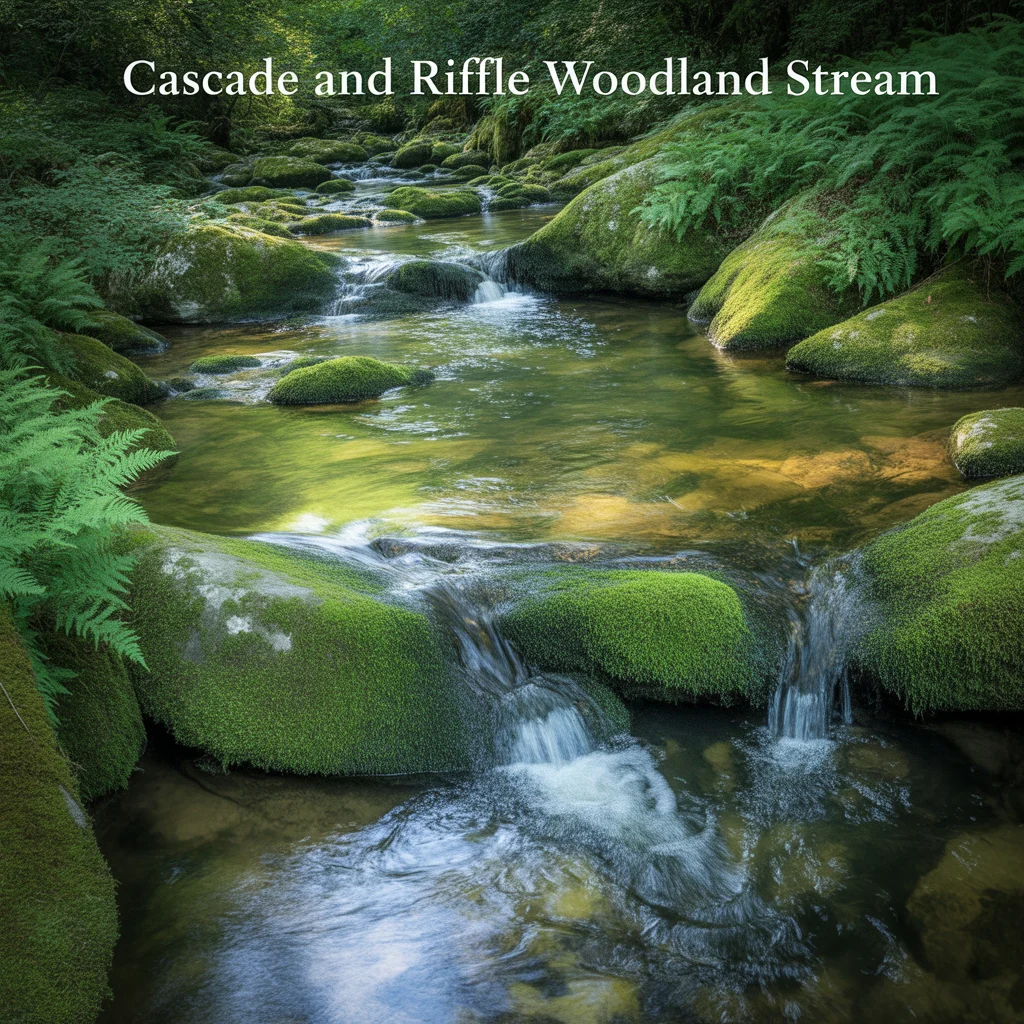
A cascade and riffle woodland stream uses a sequence of small drops and shallow stony rapids along the channel to vary the pace of the water and maximize the sound it produces, alternating lively, chattering sections with calm, silent pools. I built a stream with four small cascades across an 18-inch total fall, and the difference in sound between that stream and an earlier even-gradient stream of the same length was dramatic, because it is the small drops over stone, not the overall flow, that create the audible music of moving water.
Cascade Heights for a Woodland Stream
A 2-inch trickle drop, a 4 to 6-inch step cascade, and an 8 to 10-inch feature fall are three cascade heights suited to a woodland stream. A 2-inch trickle drop over a flat stone lip produces the softest, most subtle sound suited to a contemplative, quiet woodland stream. A 4 to 6-inch step cascade over a projecting stone produces a clearly audible falling-water sound that carries several feet and suits a stream intended as a sensory focal point. An 8 to 10-inch feature fall produces the strongest sound and visual drama and suits a single key position, such as where the stream is viewed from a seating area, though too many large falls make the stream read as a rockery rather than a brook.
Stone for Riffles and Cascade Lips
Flat cascade lip stones, angular riffle cobbles, and a smooth spill stone are three stone elements suited to a cascade and riffle stream. A flat cascade lip stone with a clean straight front edge produces a smooth, even sheet of falling water, while a notched or irregular lip breaks the flow into separate streams for a busier sound and appearance. Angular riffle cobbles of 2 to 4-inch size set proud of the streambed in the shallow fast sections create the broken, gurgling surface and sound of a natural rapid. A single smooth spill stone at a quiet drop produces a glassy, silent fall of water for visual contrast against the noisier riffles upstream.
Pondless Disappearing Woodland Garden Stream
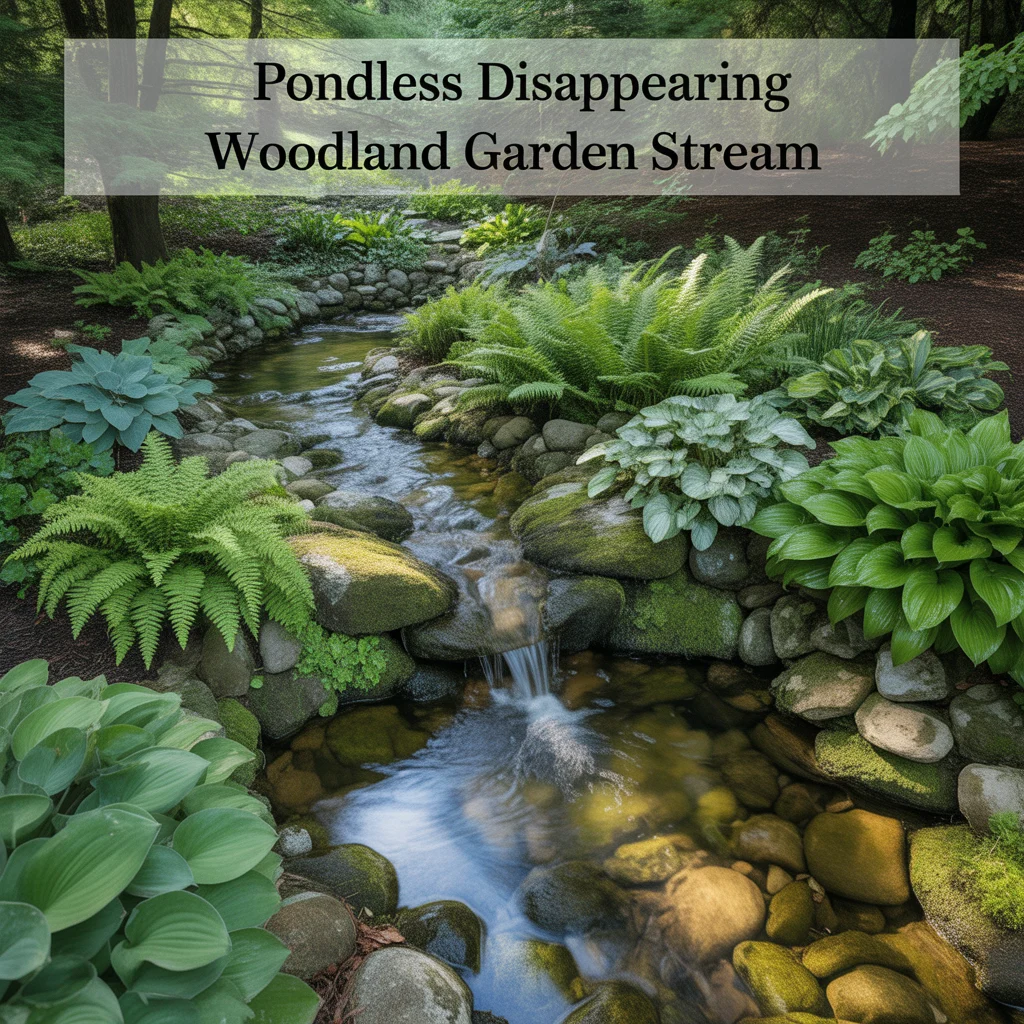
A pondless disappearing woodland garden stream returns the flowing water into a hidden underground gravel-filled reservoir at its base rather than an open pond, so the stream appears to vanish into the woodland floor, which removes open water entirely and makes the feature exceptionally safe and low-maintenance. I built a pondless stream for a client with young grandchildren who wanted moving water without any open pool, and the stream delivered the full sound and movement of a brook while the absence of standing water made it completely safe for unsupervised children in the garden. Further design ideas for combining water and path features within a naturalistic woodland setting are covered in these brilliant woodland garden ideas for path inspiration.
Reservoir Construction for a Pondless Stream
A buried basin reservoir, an Aquablox modular reservoir, and a lined gravel sump are three reservoir options suited to a pondless woodland stream. A buried rigid basin holds the pump and water beneath a steel grate topped with decorative gravel, providing a simple and reliable reservoir for a small to medium stream. An Aquablox modular reservoir uses interlocking plastic crates that create a large water-holding void beneath the gravel, suiting a longer or higher-volume pondless stream that needs greater reserve capacity. A lined gravel sump uses a liner-lined excavation filled with washed stone, providing the most economical reservoir where construction budget is the priority.
Advantages of a Pondless Woodland Stream
A pondless woodland stream offers child safety, reduced maintenance, and lower water loss as its three principal advantages. The absence of open water removes the drowning risk associated with ponds, which makes the pondless stream the only moving-water feature I recommend without reservation for gardens used by very young children. The covered reservoir reduces leaf and debris contamination of the pump, cutting maintenance to little more than a seasonal top-up. The enclosed reservoir also loses far less water to evaporation than an open pond, reducing the frequency of refilling during warm dry weather.
Wildlife Pond and Stream Combination
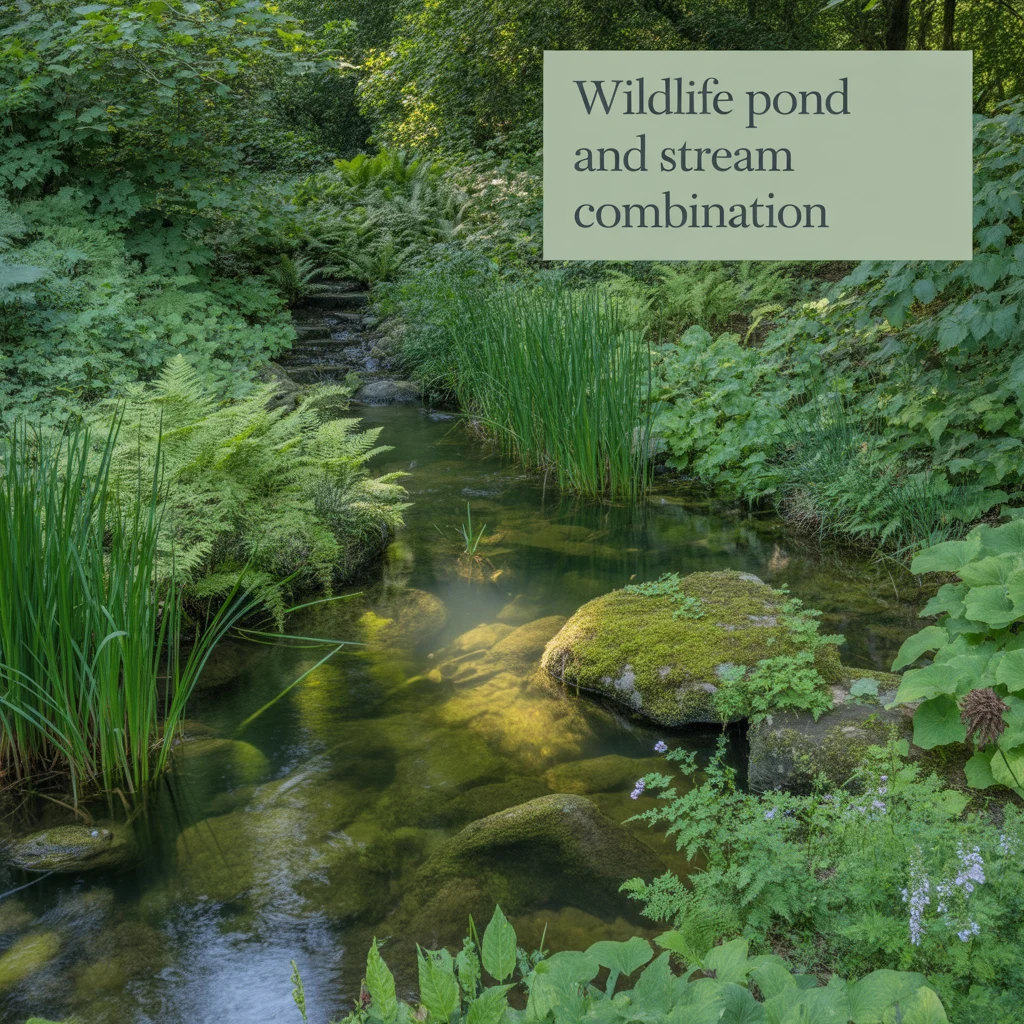
A wildlife pond and stream combination feeds a woodland garden stream into a still, naturally edged pond at its lowest point, combining the sound and movement of flowing water with the rich habitat value and reflective calm of open water in a single integrated feature. I built a stream-fed wildlife pond in a woodland garden with a gently shelving pebble beach at one edge, and within two seasons the combined feature supported breeding frogs, regular bird bathing, and a resident population of dragonflies that made every visit to the garden a wildlife observation.
Designing the Stream-to-Pond Transition
The transition from stream to pond is designed so the moving water enters the still pool over a final shallow riffle or pebble beach rather than a hard drop, mimicking how a natural brook spreads and slows as it reaches a pool. I grade the last 3 to 4 feet of stream into a shallow pebble shelf that slips beneath the pond surface, which both looks natural and creates the shallow, gently warming margin that amphibians and birds use most. The pump draws from the pond to feed the stream header, closing the recirculating loop.
Wildlife Margins for the Pond
A shallow pebble beach, a densely planted marginal shelf, and a log-and-stone refuge are three wildlife margins suited to a stream-fed woodland pond. A shallow pebble beach with a gentle 20-degree slope provides safe drinking and bathing access for birds and hedgehogs and a vital exit route for any creature that falls in. A densely planted marginal shelf at 3 to 4-inch water depth grows marsh marigold, marginal iris, and rushes that provide cover for emerging amphibians and perches for dragonfly larvae. A submerged log-and-stone refuge at the pond edge provides shelter for newts and aquatic invertebrates within view of the woodland path.
Bog Garden Stream Margin
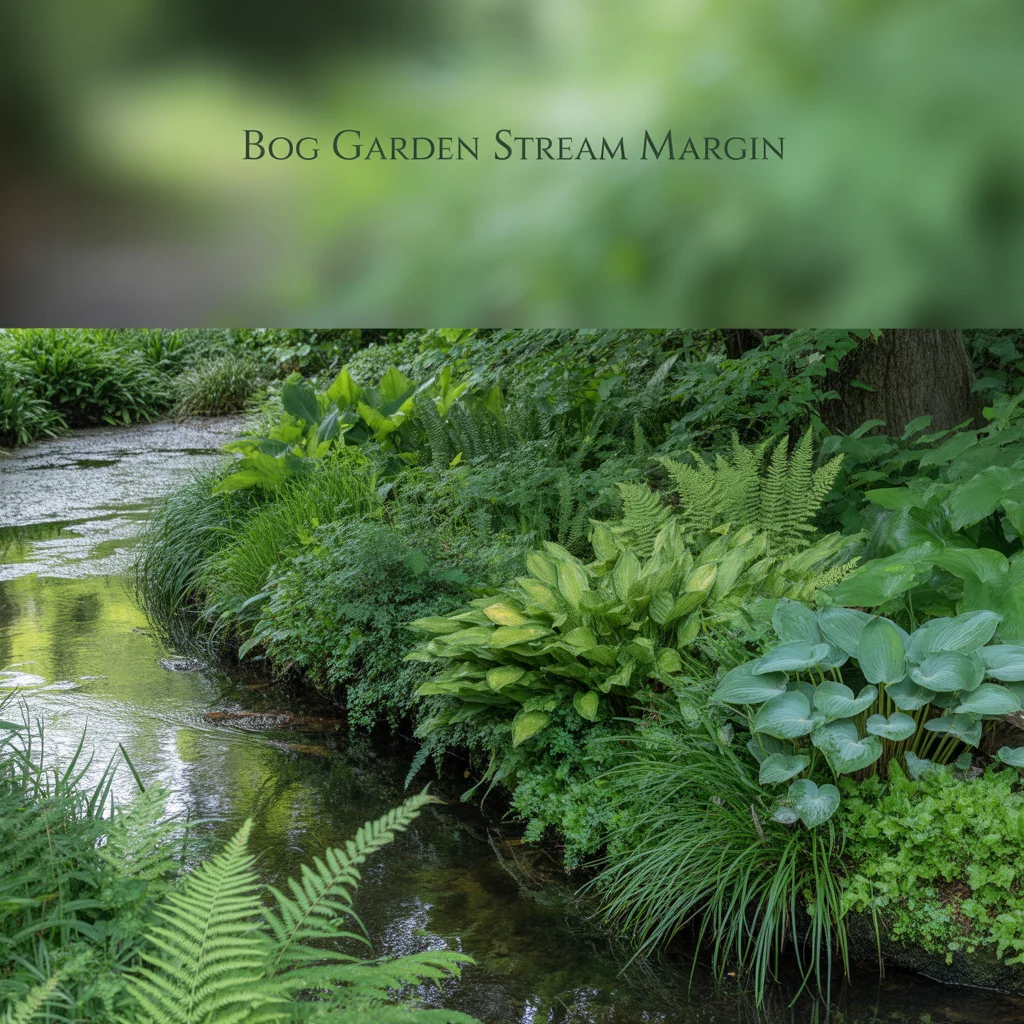
A bog garden stream margin uses the permanently moist ground alongside a woodland garden stream to grow large-leaved, moisture-loving plants that thrive in saturated soil, creating a lush, layered transition between the stone of the stream and the drier woodland floor beyond. I created a bog margin along one bank of a woodland stream using a buried liner to retain moisture, and the bold foliage of Rodgersia and Ligularia growing right to the water’s edge gave the stream a jungle-like richness that transformed it from a simple channel into an immersive planted corridor.
Creating a Bog Margin Beside a Stream
A bog margin beside a woodland stream is created by laying a perforated liner in a shallow excavation alongside the channel and backfilling with moisture-retentive soil, so the ground stays reliably damp without becoming a standing pool. I punch drainage holes at roughly 3-foot spacing in the bog liner so excess water drains slowly rather than stagnating, and I link the bog area to seepage from the stream so it stays naturally moist through summer. A bog margin 18 to 24 inches wide along one or both banks is enough to support a generous planting.
Bog Plants for a Woodland Stream Margin
Rodgersia pinnata, Ligularia dentata, and Astilbe in shade-tolerant varieties are three bog plants suited to a woodland stream margin. Rodgersia pinnata produces bold, deeply veined horse-chestnut-like leaves of 2 to 3 feet that give a strong architectural presence at the stream edge in the moist shade it requires. Ligularia dentata produces large rounded leaves and orange daisy flowers from July to September, providing late-season color along the stream margin in partial shade. Astilbe in shade-tolerant varieties produces feathery plume flowers in white, pink, and red from June to August above ferny foliage, thriving in the permanently moist soil of the bog margin where most flowering perennials would fail.
Low-Maintenance Woodland Stream Design
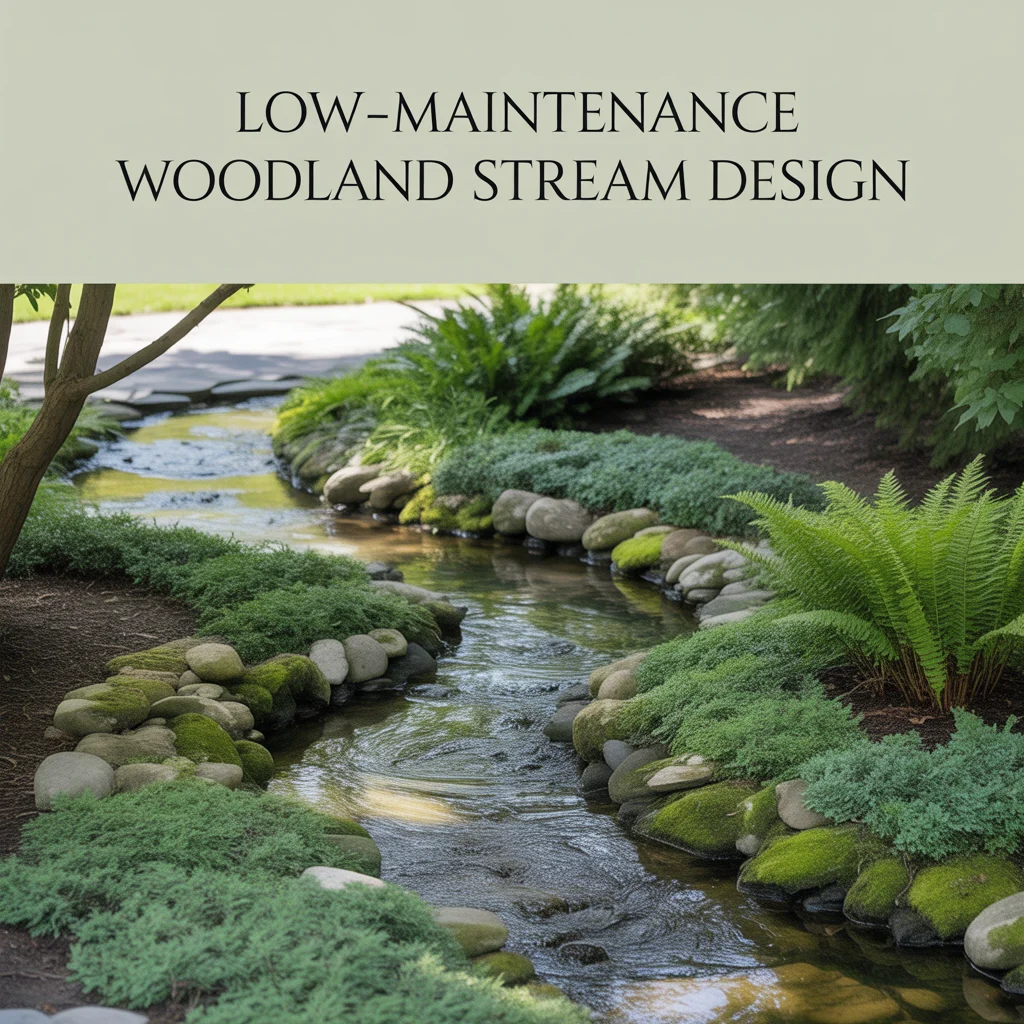
A low-maintenance woodland stream design combines a generously sized reservoir, a leaf-protected pump intake, durable hard materials, and self-sustaining bank planting to create a stream that needs under one hour of attention per month through the growing season. I designed a low-maintenance stream for a homeowner who travelled frequently, using an oversized covered reservoir, a pump fitted with a debris cage, and dense evergreen fern planting, and the stream ran reliably for a full year between her visits with only seasonal leaf clearance required.
Reducing Stream Maintenance
An oversized reservoir, a protected pump intake, and a leaf net in autumn are three measures that reduce woodland stream maintenance. An oversized reservoir holding well above the stream volume reduces top-up frequency by buffering evaporation losses across warm spells. A pump intake fitted with a foam pre-filter or debris cage prevents leaves and grit reaching the impeller, cutting the most common cause of pump failure and the need for frequent cleaning. A fine leaf net stretched over the stream during peak leaf fall in October and November captures the heaviest debris load of the year in a woodland setting, which is removed in a single lift rather than repeated clearing.
Low-Maintenance Bank Planting
Evergreen ferns, Pachysandra terminalis, and Carex in evergreen varieties are three low-maintenance plants suited to a woodland stream bank. Evergreen and semi-evergreen ferns such as Polystichum setiferum hold their structure through winter and require only a single tidy-up of old fronds in early spring. Pachysandra terminalis forms a dense weed-suppressing mat along the upper bank within two to three seasons and needs no cutting, dividing, or feeding once established. Evergreen Carex grasses provide year-round arching foliage at the water’s edge with no maintenance beyond an occasional comb-through to remove dead leaves, making them ideal for the immediate stream margin.
Woodland Stream for a Small Garden
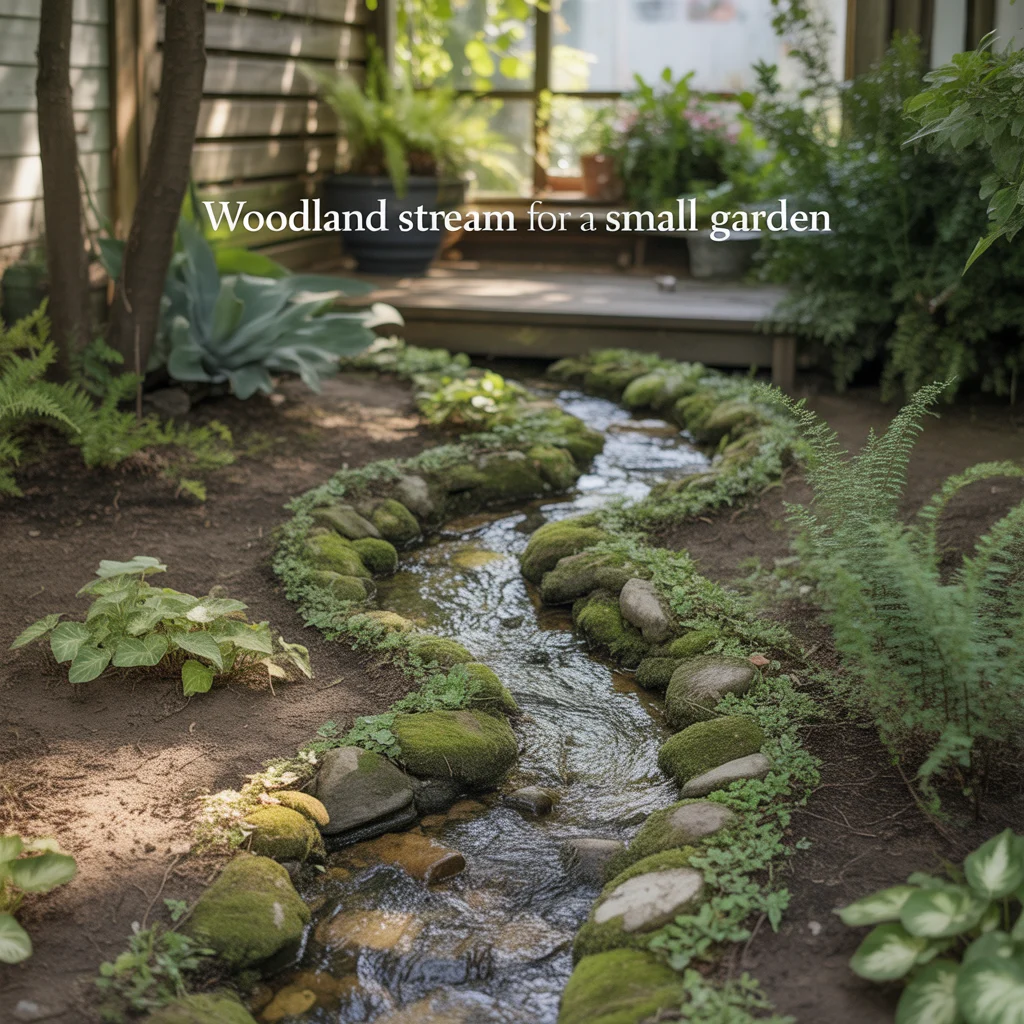
A small woodland garden stream creates the impression of a longer, more immersive watercourse within a compact space by using a tightly winding route and a narrow channel that conceals its full length, so the modest stream feels like a fragment of a much larger woodland brook. I built a small woodland stream in a 16-by-10-foot courtyard using a 6-inch-wide channel that curved twice between fern and hosta planting, and the winding route with the sound of moving water made the tiny space feel like a clearing in a far larger wood.
Small Stream Design Principles
A narrow channel, at least two curves, and a concealed source and end are three design principles suited to a small woodland stream. A narrow channel of 4 to 8 inches keeps the stream in proportion to a small space while still carrying clearly audible moving water. At least two directional changes prevent the eye from taking in the whole stream at once, which is the primary trick that makes a short stream feel longer. A concealed source emerging from behind a boulder and a concealed end disappearing into planting or a hidden reservoir remove the visual cues that would otherwise reveal how short the watercourse really is.
Planting a Small Woodland Stream
Hosta sieboldiana, Athyrium filix-femina, and dwarf Carex are three plants suited to the banks of a small woodland stream. Hosta sieboldiana provides bold blue-green leaves that give maximum visual impact per square foot of bank in a space where every plant must earn its place. Athyrium filix-femina, the lady fern, produces finely divided fronds that lean gracefully over the narrow channel, creating the overhung, enclosed character that makes a small stream feel intimate. Dwarf Carex grasses at the immediate water’s edge provide fine textural contrast against the bolder hosta foliage without overwhelming the small channel.
Fern and Foliage Stream Bank Planting
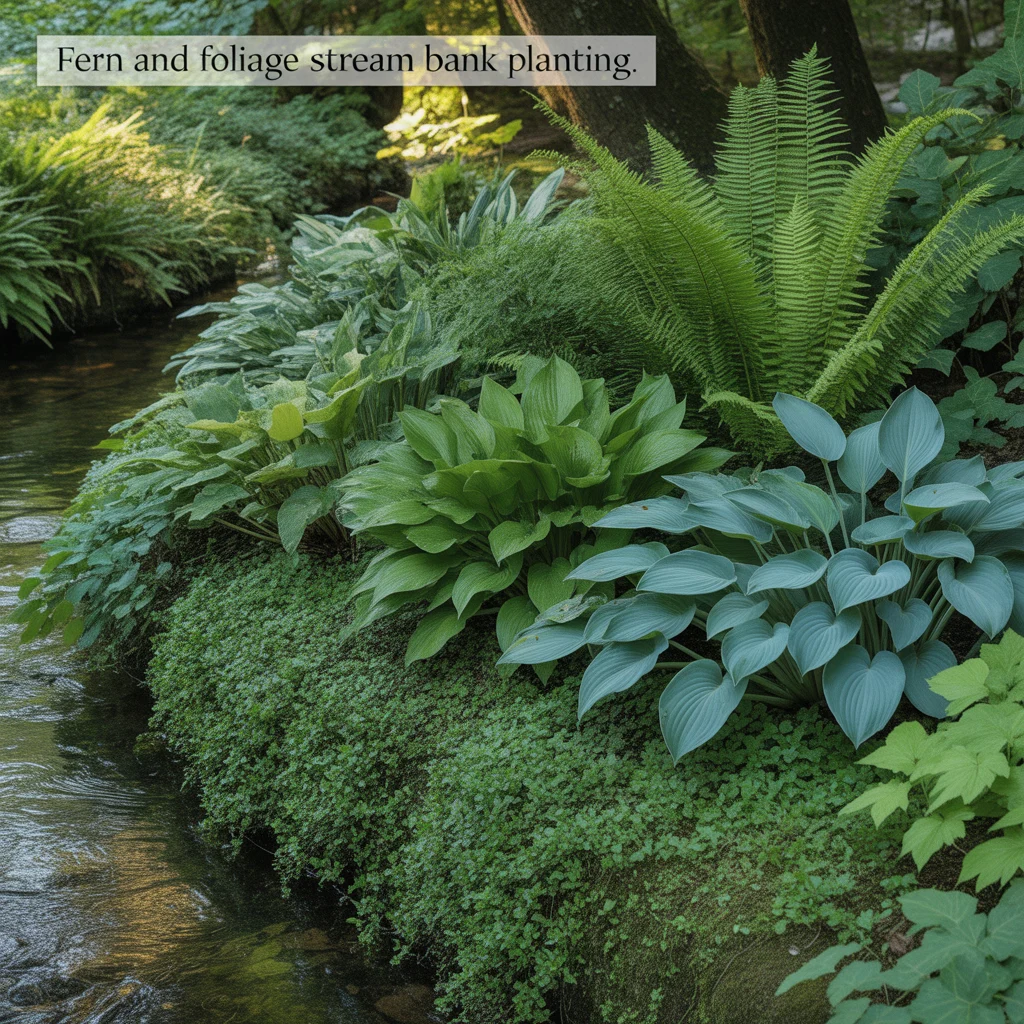
A fern and foliage stream bank planting scheme clothes both banks of a woodland garden stream in shade-tolerant ferns and bold foliage perennials, creating the green, layered, slightly wild enclosure that distinguishes a true woodland stream from an open water channel. I plant all woodland stream banks in drifts of mixed ferns rather than single specimens, because the overlapping fronds of a fern drift spilling toward the water produce the seamless, naturalized bankside that makes the stream look as though it has flowed through the woodland for years.
Ferns for a Woodland Stream Bank
Matteuccia struthiopteris, Osmunda regalis, and Dryopteris filix-mas are three ferns suited to a woodland stream bank. Matteuccia struthiopteris, the shuttlecock fern, produces upright vase-shaped fronds of 3 to 4 feet in moist soil and spreads by runners to colonize a stream bank into a naturalized fern stand, making it the most striking fern for a damp bankside. Osmunda regalis, the royal fern, thrives in the wettest ground right at the water’s edge and turns warm russet-brown in autumn, providing both structure and seasonal color in the saturated margin where few ferns grow. Dryopteris filix-mas tolerates the drier, more competitive ground of the upper bank under tree canopy better than most ferns, making it the reliable choice for the transition from stream to woodland floor.
Bold Foliage for Stream Banks
Hosta sieboldiana, Darmera peltata, and Rodgersia are three bold foliage plants suited to a woodland stream bank. Hosta sieboldiana provides large puckered blue-green leaves that contrast with the fine texture of surrounding ferns. Darmera peltata, the umbrella plant, produces large round leaves on tall stems and spreads to stabilize a stream bank with its creeping rhizomes, suiting a larger naturalistic stream. Rodgersia provides deeply divided architectural leaves and plume flowers that give a strong structural anchor at key points along the bank.
Moss and Boulder Woodland Stream Features
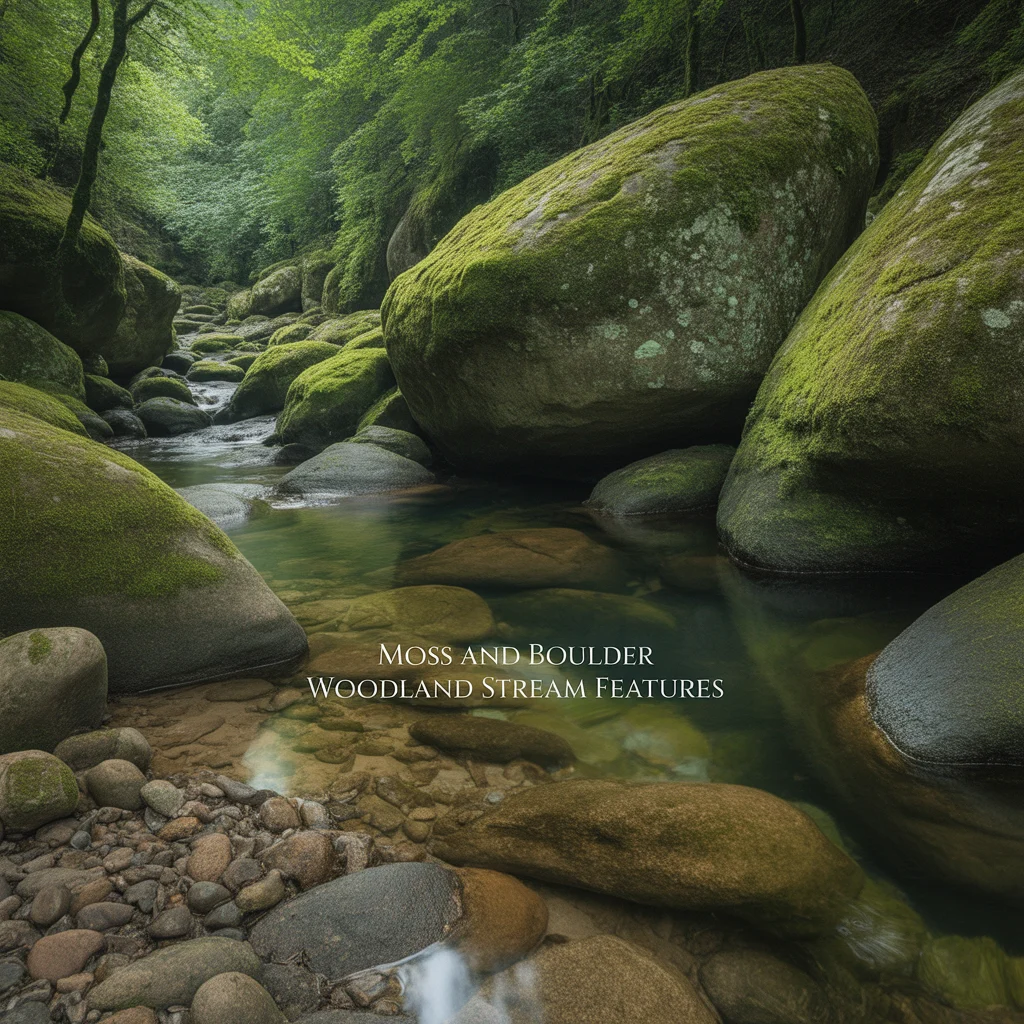
A moss and boulder woodland stream feature uses large moss-covered boulders set into and beside the channel to create the ancient, established appearance of a stream that has flowed past the same stones for decades, combining the soft green of moss with the solidity of weathered rock. I encouraged moss on the boulders of a woodland stream by siting them in deep shade and keeping them damp with stream spray, and visible moss coverage developed within a single season in the most shaded, consistently moist positions beside the falling water.
Encouraging Moss on Stream Boulders
Moss is encouraged on woodland stream boulders by choosing porous, shaded stone, keeping the surface consistently moist, and applying a moss slurry to speed colonization. I select porous stone such as sandstone or limestone rather than dense impervious rock, because moss establishes far faster on a surface that holds moisture. Boulders positioned within the spray zone of a small cascade stay reliably damp and colonize naturally, while a brushed-on slurry of blended moss and buttermilk applied in spring accelerates coverage on drier faces. The essential conditions are deep to partial shade and consistent moisture without scorching sun.
Placing Boulders in a Woodland Stream
Anchor boulders at curves, a midstream feature boulder, and a paired gateway of boulders are three placements suited to a woodland stream. A large anchor boulder set at the outside of a curve looks like the stone the water has eroded around and provides a visual focal point that draws the eye along the stream. A single midstream feature boulder around which the water divides and rejoins creates the broken, varied flow of a natural brook. A paired gateway of two boulders set on opposite banks frames a view down the stream and marks a natural pause point along the watercourse.
Source and Spring Header Feature
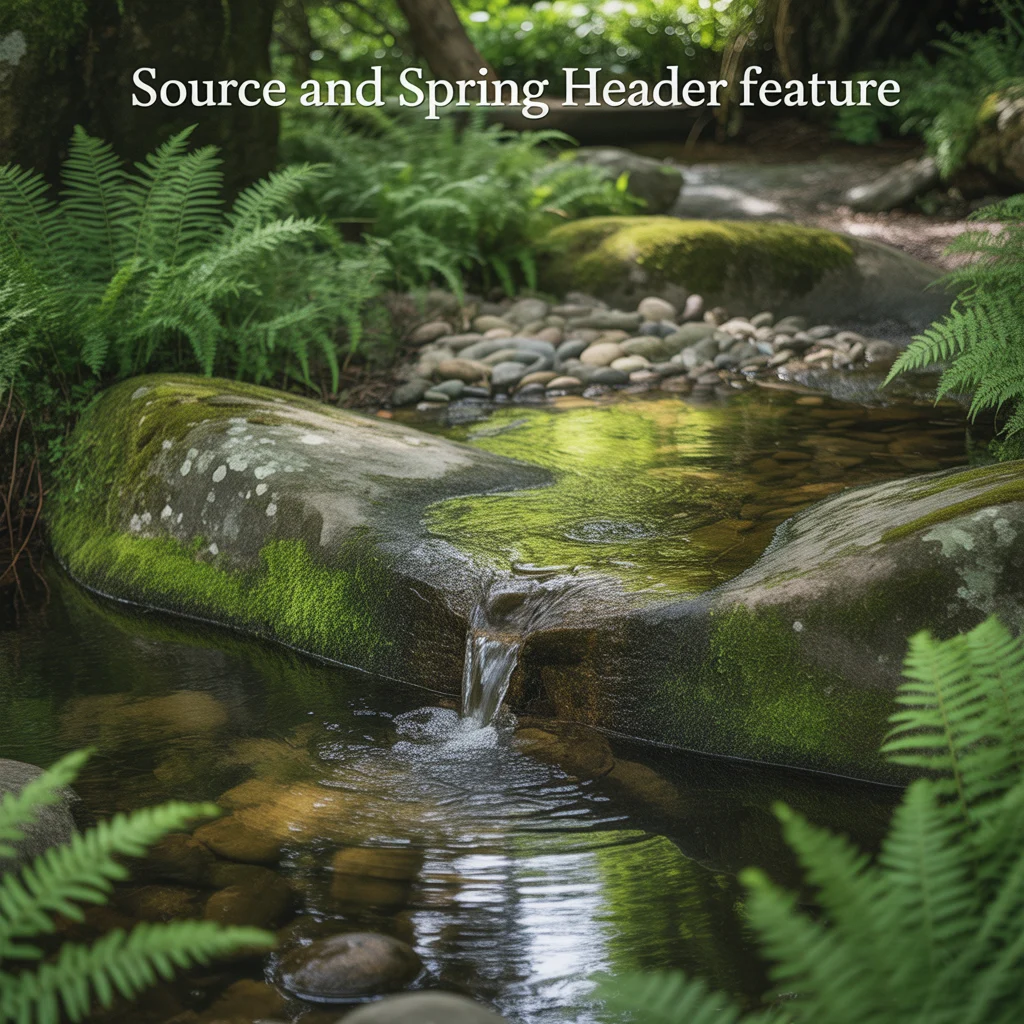
A source and spring header feature disguises the top of a recirculating woodland stream as a natural spring emerging from the ground, a rock fissure, or a pool beneath tree roots, so the water appears to rise from the earth rather than from a visible pipe or basin. I built a spring source for a woodland stream by setting the header pool beneath a group of mossy boulders so the water welled up between the stones, and visitors consistently assumed the stream was fed by a genuine spring rather than a concealed pump beneath the rocks.
Source Styles for a Woodland Stream
A welling spring pool, a rock fissure outflow, and a hidden seep beneath roots are three source styles suited to a woodland stream. A welling spring pool sends the water up gently through gravel in a small basin so it appears to bubble naturally from the ground, suiting a calm, contemplative stream. A rock fissure outflow channels the water out through a gap between two boulders so it appears to issue from the rock itself, suiting a more rugged, stony woodland setting. A hidden seep that releases water at the base of a tree stump or among exposed roots creates the most subtle and naturalistic source, suiting a stream where the origin should be barely perceptible.
Concealing the Header Mechanics
The header mechanics of a woodland stream are concealed by burying the delivery pipe, disguising the header basin, and planting densely around the source. I run the delivery pipe from the pump beneath the stream bank and bring it up hidden within the boulder group at the source so no pipework is ever visible. The header basin is covered with a stone grate topped with gravel and cobbles so the water appears to emerge from stone rather than plastic. Dense fern and moss planting around the source completes the disguise and softens the boulders into the surrounding woodland.
Seasonal Woodland Garden Stream
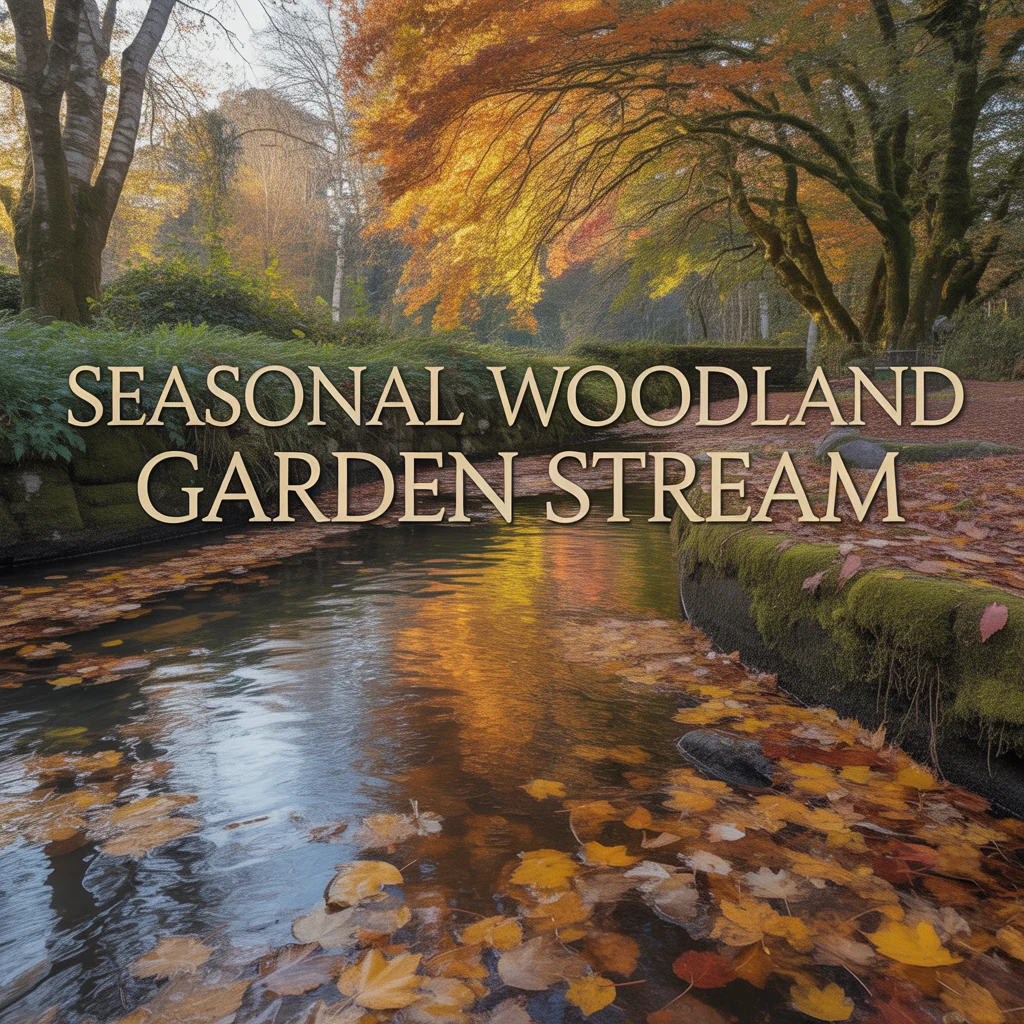
A seasonal woodland garden stream is planted so the banks of the stream provide a distinctly different display in each season, from spring bulbs and marsh marigold through summer fern enclosure to autumn fern color and winter stem and structure. I planned a four-season stream at a residential property using spring marsh marigold and primulas, summer ferns and astilbe, autumn-coloring royal fern, and winter-stemmed Cornus on the upper bank, and the stream offered something visually rewarding in every month of the first full year.
Spring and Summer Stream Display
Caltha palustris, Primula candelabra types, and summer ferns are three plantings suited to the spring and summer phase of a seasonal woodland stream. Caltha palustris, the marsh marigold, produces bright golden cup flowers in March and April right at the water’s edge, providing the earliest strong color of the stream year. Candelabra primulas produce tiered whorls of flower on tall stems through May and June in the moist bankside soil, carrying color into early summer. Summer ferns reach full size by July to create the deep green, enclosed bankside that defines the stream through the main growing season.
Autumn and Winter Stream Display
Osmunda regalis, Cornus alba Sibirica, and evergreen Carex are three plantings suited to the autumn and winter phase of a seasonal woodland stream. Osmunda regalis turns warm russet and gold in October, providing the strongest autumn color of any stream-edge fern before it dies back. Cornus alba Sibirica on the upper bank produces vivid red stems from November through March that reflect in the moving water and provide the principal winter color along the stream. Evergreen Carex holds its arching foliage at the water’s edge through the coldest months, keeping structure at the stream margin when the deciduous planting has died back.
Wildlife-Friendly Woodland Stream
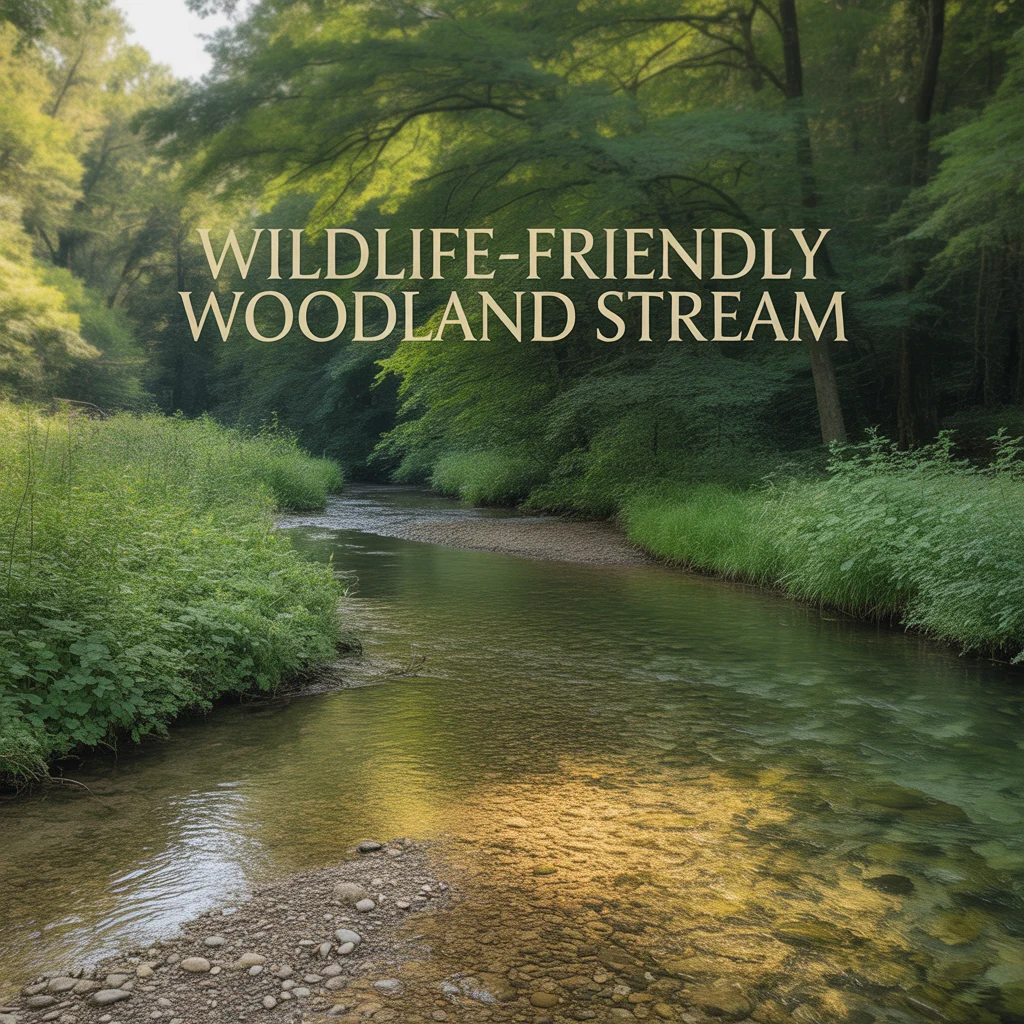
A wildlife-friendly woodland stream incorporates shallow margins, native bankside planting, and deliberate habitat features to make the stream a thriving corridor for birds, amphibians, and invertebrates while remaining a beautiful garden feature. I built a wildlife-focused stream with a shallow pebble riffle, native marginal planting, and a streamside log pile, and the combined habitat drew bathing birds, breeding frogs, and a steady traffic of dragonflies that turned every walk along the stream into a wildlife observation.
Native Marginal Planting for a Wildlife Stream
Caltha palustris, Iris pseudacorus, and Mentha aquatica are three native marginals suited to a wildlife woodland stream. Caltha palustris provides early nectar for emerging insects in spring at the water’s edge. Iris pseudacorus, the native yellow flag iris, provides tall structural cover for amphibians and perches for dragonfly larvae in the marginal shallows, though it should be sited where its vigor can be contained. Mentha aquatica, water mint, produces lilac flowers attractive to pollinators in late summer and thrives in the wet margin and shallow water of the stream edge.
Habitat Features Along a Wildlife Stream
A shallow drinking riffle, a streamside log pile, and a stone refuge are three habitat features suited to a wildlife woodland stream. A shallow riffle of 1 to 2-inch water depth over pebbles provides safe drinking and bathing access for birds along the stream length. A streamside log pile of decaying timber positioned 1 to 2 feet from the bank supports beetles, fungi, and amphibians while staying visible from the path. A stone refuge of stacked flat stones at the water’s edge provides damp shelter for newts and frogs within the moist microclimate the stream creates.
Japanese-Inspired Woodland Stream
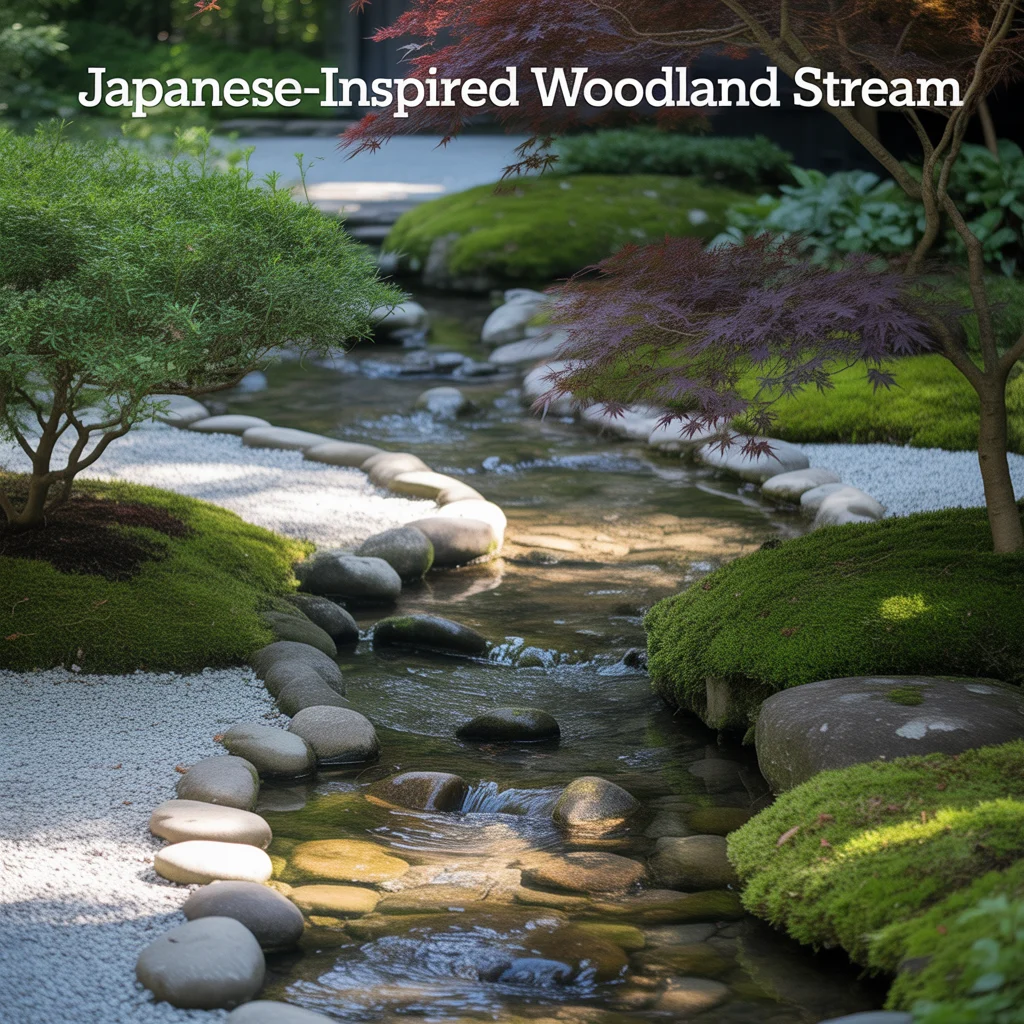
A Japanese-inspired woodland stream applies the principles of Japanese garden design irregular stone placement, restrained planting, moss ground cover, and a contemplative quality of moving water to a shaded woodland stream, connecting the naturalistic character of the woodland with the intentional, meditative calm of a Japanese garden. I designed a Japanese-inspired stream beneath a multi-stem Acer using carefully placed slate, a moss and Ophiopogon ground layer, and a single still pool for reflection, and the result was a woodland stream of genuine contemplative quality within a compact shaded space. Further ideas for connecting a flowing water feature with a walking route through a naturalistic setting are covered in these natural woodland gardens with flowing path designs.
Stone and Water in a Japanese Stream
A still reflection pool, asymmetric stone groupings, and a quiet single cascade are three elements suited to a Japanese-inspired woodland stream. A still reflection pool at one point along the stream provides the calm, mirror-like water surface central to Japanese garden aesthetics, contrasting with the movement upstream. Asymmetric stone groupings of three or five stones placed in the deliberate odd-numbered arrangements of Japanese design create balanced but informal compositions along the channel. A single quiet cascade rather than multiple busy falls maintains the restrained, contemplative sound quality that suits the meditative intention of the design.
Japanese Planting for a Woodland Stream
Acer palmatum, Ophiopogon planiscapus Nigrescens, and moss are three plantings suited to a Japanese-inspired woodland stream. Acer palmatum overhanging the stream provides finely divided foliage that turns vivid orange-red in autumn, giving the seasonal color change central to the Japanese aesthetic and reflecting in the moving water. Ophiopogon planiscapus Nigrescens provides a near-black grassy ground cover between the streamside stones that contrasts strikingly with green moss and pale gravel. Moss carpeting the stream banks and boulders supplies the soft green continuity that is essential to the Japanese woodland stream character.
Related:
Best ground cover plants for shaded woodland garden paths
How to design woodland garden paths on slopes and shady spots
modern woodland garden designs with structured path layouts
Frequently Asked Questions
How do I build a woodland garden stream?
A woodland garden stream is built by excavating a gently meandering channel on a slight slope, lining it with EPDM rubber liner over protective underlay, installing a submersible pump in a reservoir at the lowest point connected by buried pipe to a concealed header pool at the top, and dressing the channel with cobbles, boulders, and bankside planting before commissioning the recirculating flow. The single most important construction decision is the gradient, because a stream needs a fall of roughly 1 to 2 inches per 10 feet to flow naturally, and the second most important is concealing the pump, pipe, header, and reservoir so the water appears to rise from and disappear into the woodland floor rather than from visible equipment.
Do woodland garden streams need a natural water source?
No. Almost all woodland garden streams are recirculating systems that use the same body of water continuously, pumped from a reservoir at the base up to a header pool at the top and returned by gravity down the channel in a closed loop. You need only a power supply for the pump and an occasional top-up to replace water lost to evaporation, which means a convincing woodland stream can be created on any site regardless of whether a genuine spring or watercourse exists. A true natural spring or stream actually complicates the design, because it introduces variable flow and overflow management that a controlled recirculating system avoids.
What plants are best alongside a woodland garden stream?
Ferns such as Matteuccia struthiopteris and Osmunda regalis, marginal plants such as Caltha palustris and Iris pseudacorus, bold foliage such as Hosta and Rodgersia, and moss are the best plantings alongside a woodland garden stream because all thrive in the moist, shaded conditions a stream creates and together build the layered, enclosed bankside that defines a true woodland stream. Ferns provide the structural green enclosure from spring through autumn, marsh marigold and marginal iris provide flower color and wildlife value at the water’s edge, hosta and Rodgersia provide bold architectural contrast, and moss supplies the soft green continuity over boulders and banks that makes a built stream look long-established.
How much does a woodland garden stream cost to run?
A woodland garden stream costs relatively little to run because the only ongoing energy cost is the submersible pump, with a typical small to medium stream using a pump rated between 30 and 80 watts that costs a modest amount per month if run continuously, and considerably less if run only during the hours the garden is used. Water cost is minimal because the system recirculates, with top-ups needed only to replace evaporation in warm weather. The main running considerations are sizing the pump correctly to avoid an oversized, power-hungry unit, and fitting a timer or running the stream only when the garden is occupied to reduce energy use without losing any of the feature’s value.
How do I keep a woodland garden stream from going green?
A woodland garden stream is kept clear by combining the shade of the woodland canopy, the movement of the flowing water, and generous bankside and marginal planting, all three of which suppress the algae that turns water green. Shade reduces the light algae need to grow, which makes the naturally shaded position of a woodland stream a significant advantage over an open, sunny water feature. Moving water discourages the still conditions blanket weed prefers, and marginal planting competes with algae for the dissolved nutrients it feeds on. Clearing fallen leaves promptly in autumn is the most important maintenance task, because decomposing leaves release the nutrients that drive most algae problems in a woodland stream.