
How to Landscape Under Bird Feeders

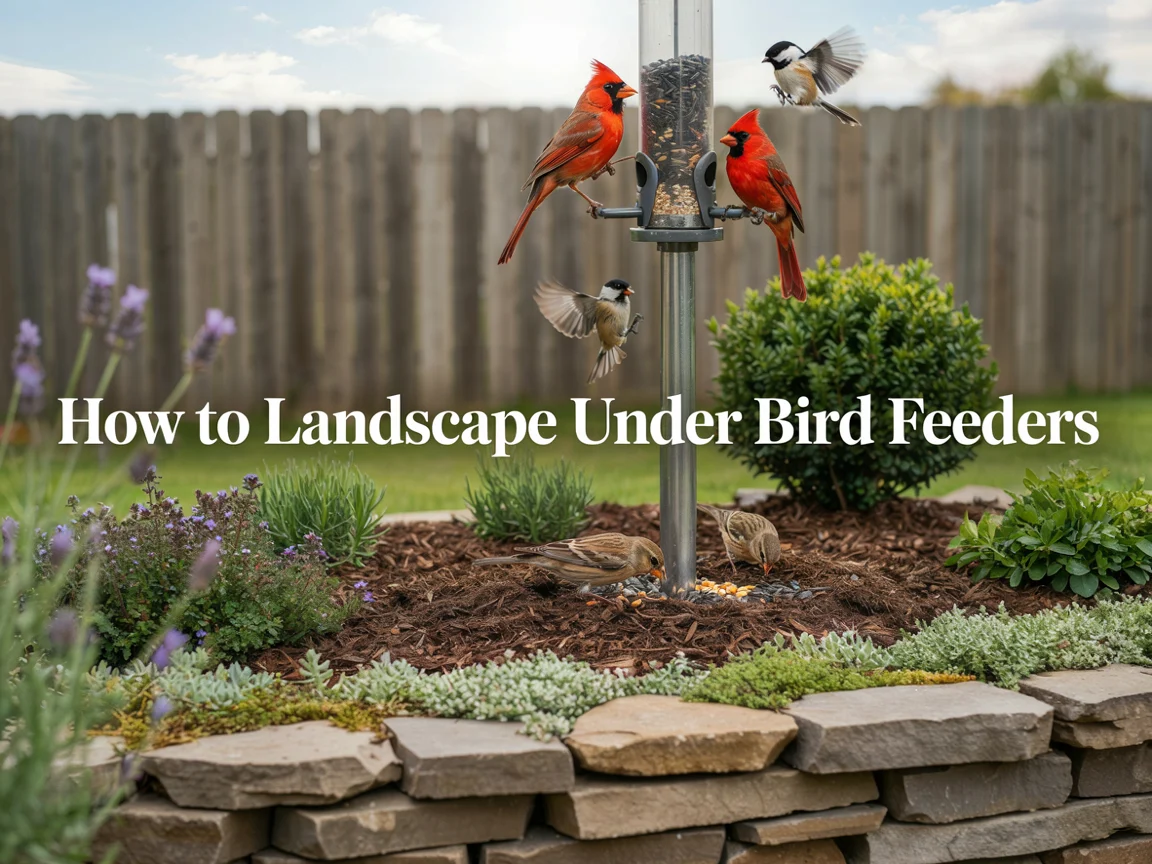
The ground beneath a bird feeder tends to become a genuine mess without a plan, with dropped seed hulls killing grass, sprouting into unwanted volunteer plants, and attracting rodents if it’s left as bare lawn. A few deliberate landscaping choices turn that same spot into one of the tidier, more functional parts of the yard.
Replacing Grass With Mulch or Gravel
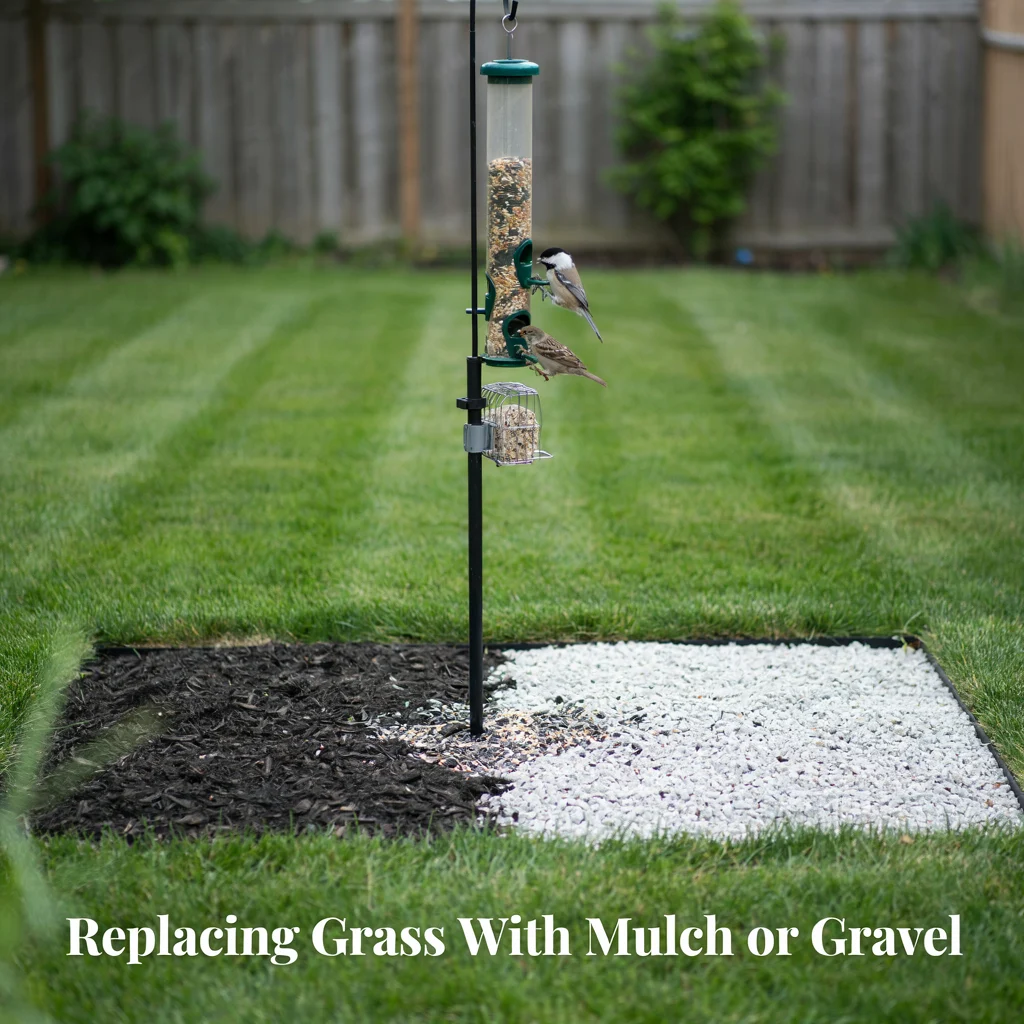
Replacing grass with mulch or gravel directly beneath a feeder solves the most common problem first, since dropped seed and hulls quickly kill grass anyway, leaving a patchy, muddy circle underneath.
Why Grass Struggles Under a Regularly Used Feeder
Why grass struggles under a regularly used feeder comes down to a combination of dropped seed hulls, shade from the feeder itself, and increased foot traffic from both birds and curious pets.
Choosing Between Mulch and Gravel for Easy Cleanup
Choosing between mulch and gravel for easy cleanup depends on maintenance preference, since gravel can be rinsed clean fairly easily while mulch simply gets refreshed and raked periodically.
Creating a Defined Seed-Catch Bed
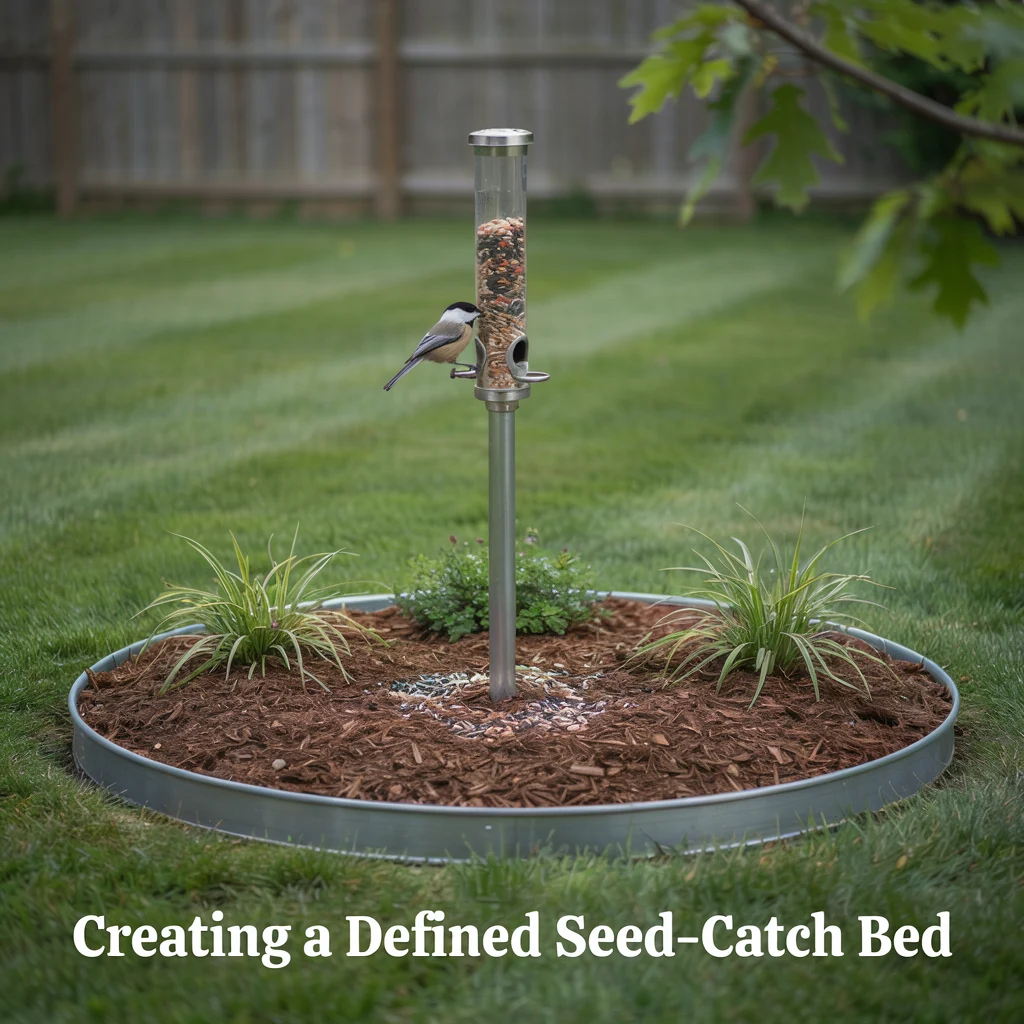
Creating a defined seed-catch bed with a slightly sunken or edged planting area contains dropped seed and makes cleanup considerably more predictable than letting debris scatter across open lawn.
Using Edging to Keep the Area Visually Contained
Using edging to keep the area visually contained, whether stone, metal, or simple plastic edging, gives the space a deliberate, tidy look rather than appearing like an accident of neglect.
Sizing the Bed to Match the Feeder’s Drop Radius
Sizing the bed to match the feeder’s drop radius, generally a few feet in every direction, keeps the actual mess reliably within the designed space rather than spreading into surrounding lawn.
Choosing Low Plants That Tolerate Dropped Seed and Hulls
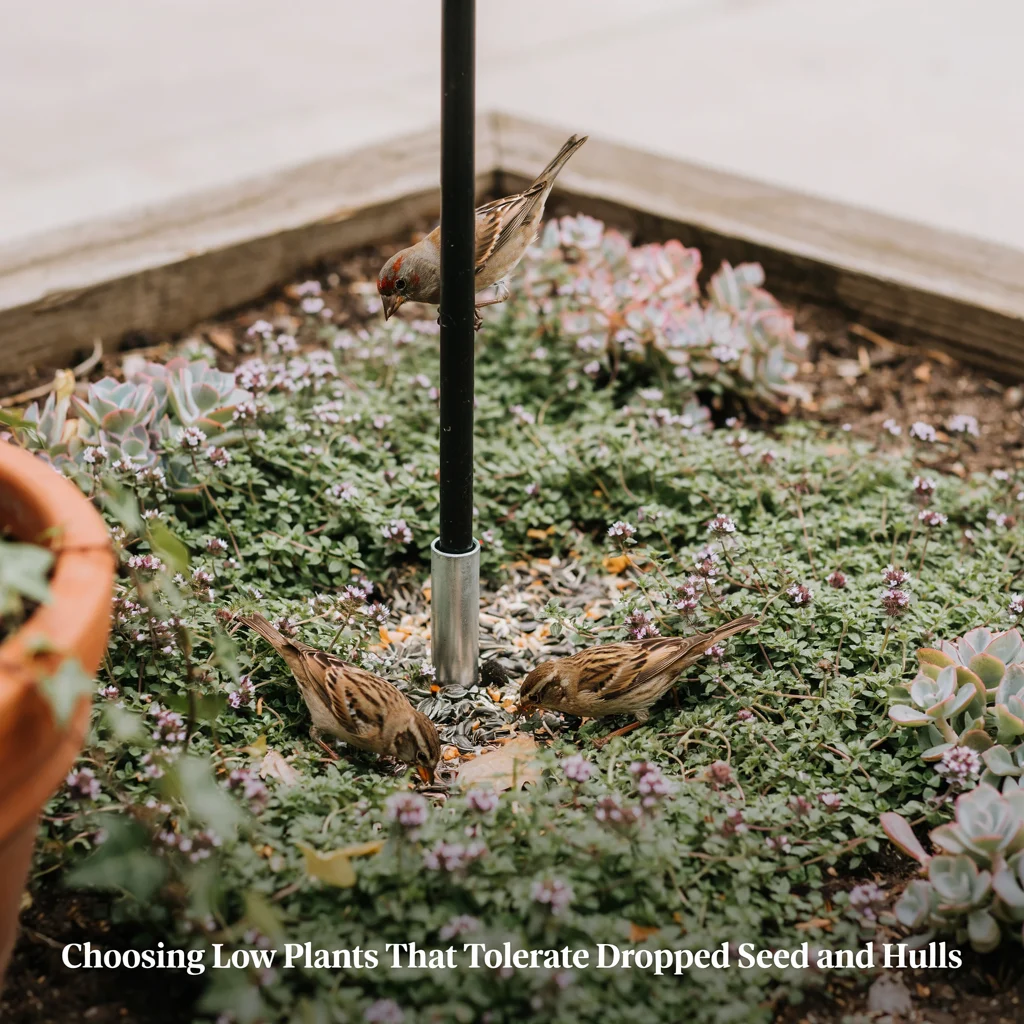
Choosing low plants that tolerate dropped seed and hulls means picking tough, low-maintenance groundcover rather than anything delicate that would struggle under the regular debris a feeder produces.
Groundcovers That Handle Feeder Debris Well
Groundcovers that handle feeder debris well include creeping thyme, sedum, and other tough, spreading perennials that aren’t easily smothered by occasional seed and hull buildup.
Why Delicate Annuals Usually Struggle in This Spot
Why delicate annuals usually struggle in this spot comes down to the combination of debris, shade, and disturbance from feeding birds, all of which stress finer, less resilient plants.
Adding Low Shrubs Nearby for Bird Shelter
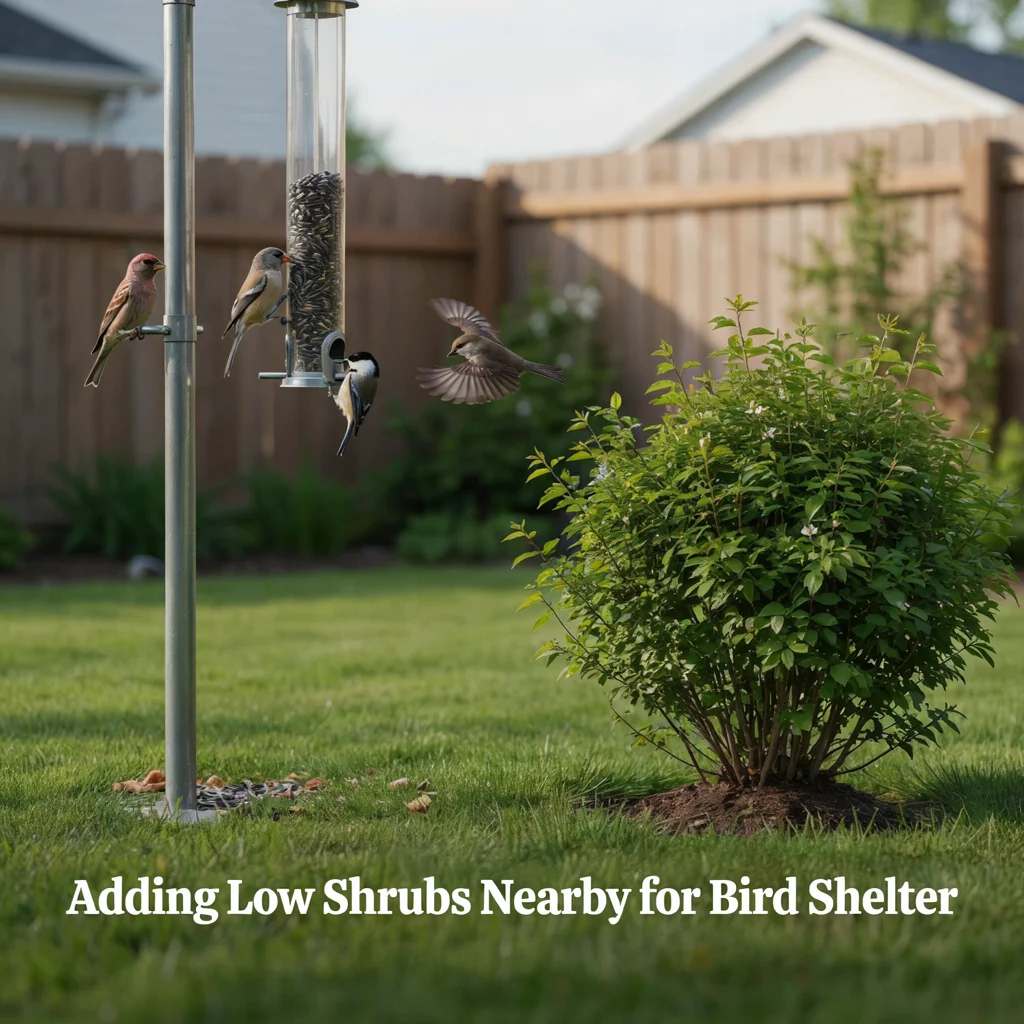
Adding low shrubs nearby for bird shelter gives feeding birds a quick escape route from predators, which noticeably increases how comfortable and active birds are at a feeder.
Why Nearby Cover Increases Feeder Activity
Why nearby cover increases feeder activity comes down to bird behavior, since birds are considerably more willing to linger and feed when a safe retreat is only a short flight away.
Keeping Shrubs Far Enough Away to Avoid Squirrel Access
Keeping shrubs far enough away to avoid squirrel access, generally 8 to 10 feet from the feeder pole, balances the benefit of nearby cover against giving squirrels an easy jumping-off point.
Managing Volunteer Seedlings From Dropped Seed
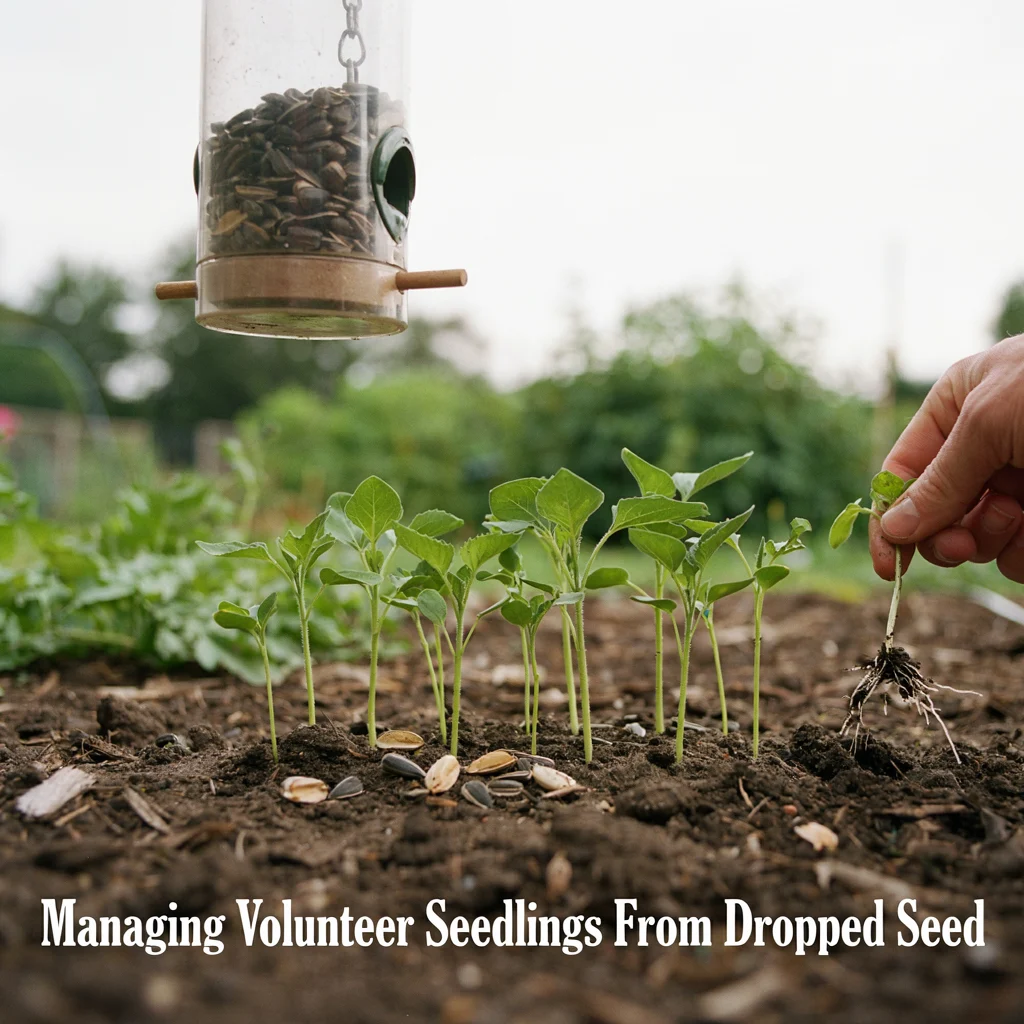
Managing volunteer seedlings from dropped seed is an ongoing part of feeder-area upkeep, since sunflower and millet seed will readily sprout wherever it lands on bare soil.
Why Sunflower Seed Sprouts So Readily Under Feeders
Why sunflower seed sprouts so readily under feeders comes down to its high germination rate, meaning even small amounts of dropped, unhulled seed will often take root if the ground stays damp.
Simple Ways to Pull or Prevent Volunteer Sprouts
Simple ways to pull or prevent volunteer sprouts include a quick weekly check and pull, or using seed marketed as hull-less to reduce the amount of viable seed reaching the ground in the first place.
Positioning the Whole Setup for Easy Maintenance
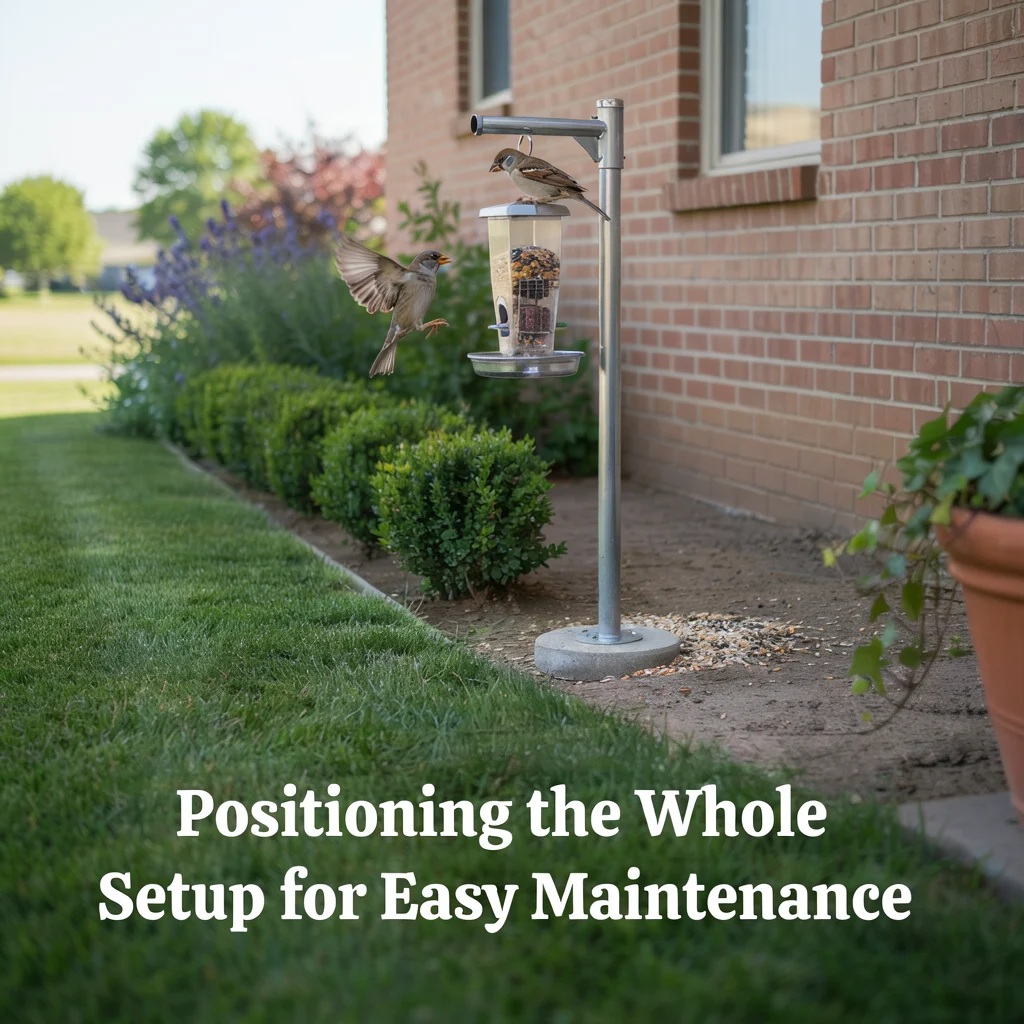
Positioning the whole setup for easy maintenance from the start makes ongoing feeder-area care considerably less of a chore, particularly for cleaning and refilling.
Keeping Feeders Accessible From a Path or Mowed Edge
Keeping feeders accessible from a path or mowed edge avoids having to walk across wet grass or through a planted bed just to refill a feeder regularly.
Placing Feeders Where Debris Won’t Wash Toward the House
Placing feeders where debris won’t wash toward the house or a walkway, generally by checking the slope of the yard, avoids seed hulls and droppings ending up somewhere they’re harder to manage.
The Bottom Line
Landscaping under a bird feeder mostly comes down to accepting that grass isn’t the right surface for the job, then replacing it with mulch, gravel, or tough groundcover contained within a defined bed. Adding nearby shrub cover and staying ahead of volunteer seedlings keeps the whole area both bird-friendly and genuinely low-maintenance.
This pairs well with What Is Xeriscaping? The Desert Modern Garden Style Taking Over America, Six Rules of Landscaping, and Cheap No Grass Backyard Ideas For a Low-Maintenance Garden if you are planning further. Readers planning this often also look at Incredible Small Garden Design Ideas To Recreate and How to Make a Gorgeous Goldfish Pond in Your Backyard.
Frequently Asked Questions
What Is the Best Ground Cover Under a Bird Feeder?
Mulch or gravel is generally the best ground cover directly under a bird feeder, since both handle dropped seed and hulls far better than grass, which tends to die out in that spot anyway.
How Do I Stop Grass From Dying Under My Bird Feeder?
Grass dying under a bird feeder is difficult to prevent entirely, so replacing that specific area with mulch, gravel, or a defined planting bed is generally more effective than trying to keep grass alive there.
Will Plants Under a Bird Feeder Attract Rodents?
Poorly managed seed debris under a feeder, more than the plants themselves, is what tends to attract rodents, so keeping the area tidy and cleaning up excess seed regularly matters more than plant choice.
How Close Should Shrubs Be Planted to a Bird Feeder?
Shrubs should generally be planted a short flight away from a feeder, close enough to offer quick cover but far enough, around 8 to 10 feet, to avoid giving squirrels an easy jump onto the feeder.
Do I Need to Clean Up Seed Hulls Regularly?
Cleaning up seed hulls regularly helps prevent both unwanted sprouting and pest attraction, and a quick rake or sweep every week or two is generally enough to keep the area under control.