
What Is a Cottage Garden, Exactly?

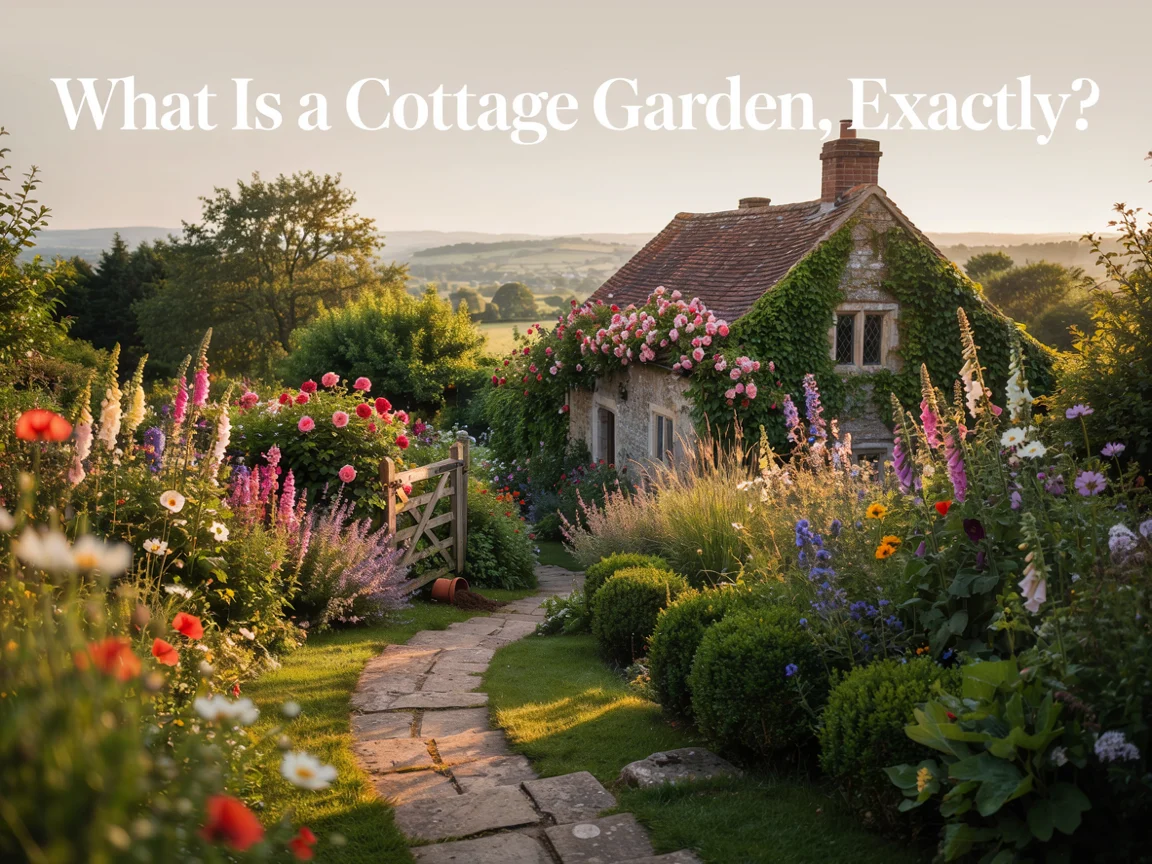
A cottage garden is a densely planted, informal garden style built from a deliberately abundant mix of flowers, herbs, and edible plants, traditionally arranged with more attention to overall lushness than to strict, formal order. Rather than neat rows or symmetrical beds, a cottage garden favours a relaxed, layered look where plants spill into one another, self-seed freely, and create the impression of a garden that has grown up naturally over many years rather than one laid out according to a rigid plan.
The style traces its roots back to traditional English cottage gardens, where working-class households grew a practical, mixed planting of vegetables, herbs, and flowers in a small plot attached to the home, valuing usefulness alongside beauty out of necessity rather than purely decorative intent. Over time, the practical origins of the cottage garden blended with a more romantic, ornamental sensibility, and the style as it’s recognized today, informal, abundant, and richly planted, largely took shape during the nineteenth century as a deliberate aesthetic choice rather than a purely functional one.
The Defining Characteristics of a Cottage Garden
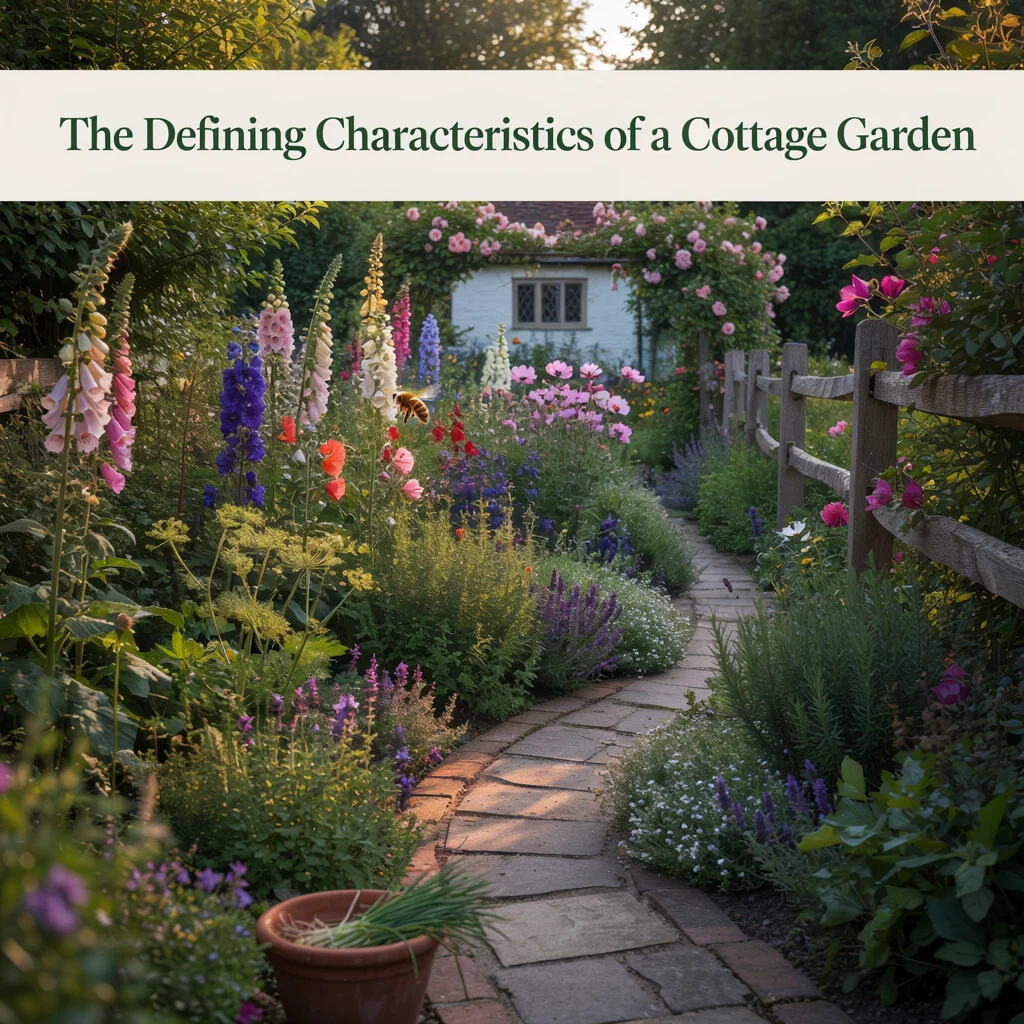
The defining characteristics of a cottage garden set it apart clearly from more formal or minimalist garden styles, built around density, informality, and a sense of natural abundance rather than careful restraint. Understanding these core traits is the clearest way to recognize, and eventually recreate, a genuine cottage garden.
Density and Layering
Dense planting with very little bare soil visible, layered heights from low ground cover to taller back-of-border plants, and self-seeding species allowed to spread naturally are three qualities central to a cottage garden’s characteristic density. Dense planting with very little bare soil visible creates the lush, overflowing look most associated with this style. Layered heights from low ground cover to taller back-of-border plants build the visual depth that gives a cottage garden its rich, textured appearance. Self-seeding species allowed to spread naturally contribute to the relaxed, slightly unpredictable quality that distinguishes a cottage garden from a more controlled formal bed.
Informality Over Strict Order
Curved, meandering paths rather than straight geometric lines, plants allowed to spill over path edges, and an intentional lack of strict colour-blocking are three qualities that define a cottage garden’s informal character. Curved, meandering paths rather than straight geometric lines reinforce the sense of a garden that developed organically over time. Plants allowed to spill over path edges soften any hard boundaries and contribute to the garden’s overall feeling of abundance. An intentional lack of strict colour-blocking, mixing tones freely rather than grouping by careful colour theory, gives a cottage garden its characteristically relaxed, unplanned appearance.
What Is a Cottage Garden Called in Different Traditions
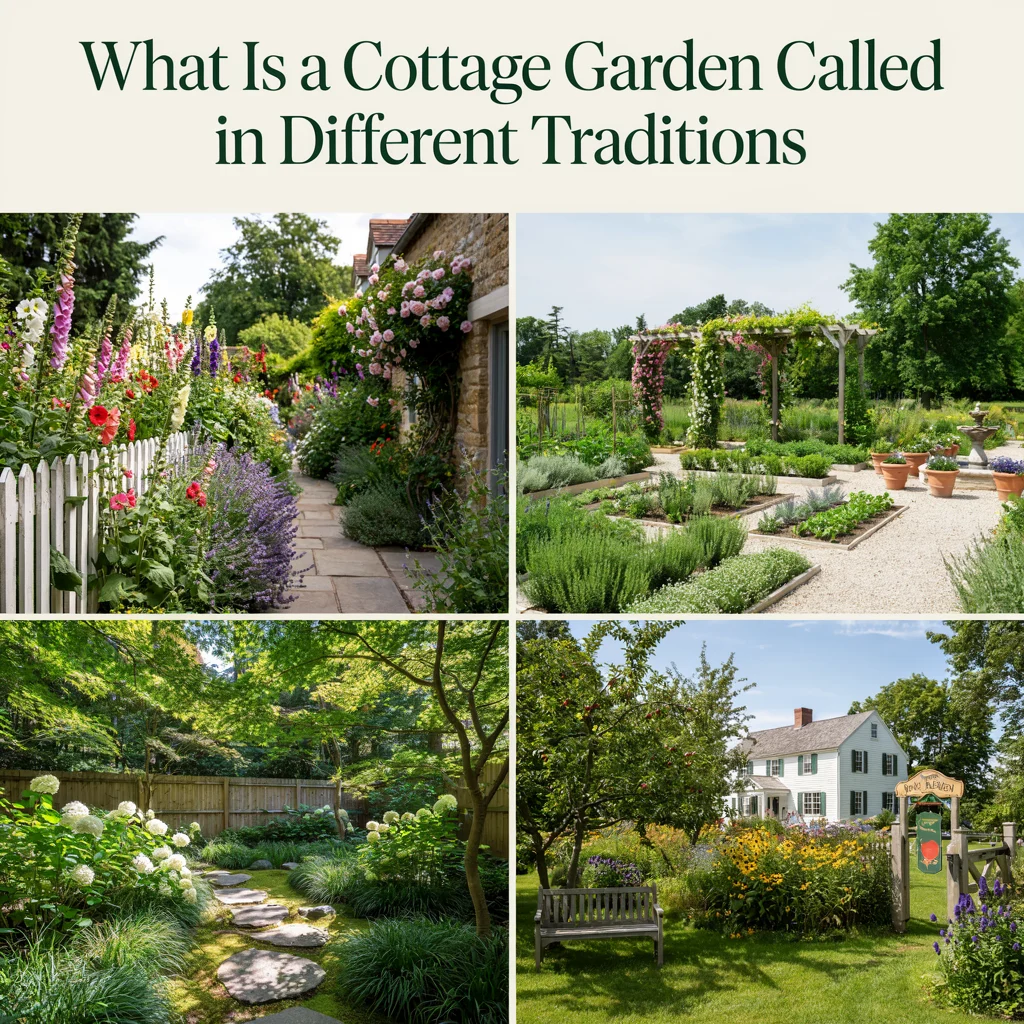
What is a cottage garden called in different traditions varies somewhat depending on region and specific historical influence, though the core concept of a dense, informal, mixed planting style remains broadly consistent across these related terms. Understanding these related names helps clarify how the style connects to similar traditions elsewhere.
Regional and Historical Naming Variations
The English cottage garden, the term most commonly used and historically rooted in England, the American cottage garden, an adapted regional interpretation, and the informal or vernacular garden, a broader descriptive term sometimes used interchangeably, are three names associated with this style. The English cottage garden remains the most historically specific and widely recognized term, directly tied to the traditional planting style of English rural cottages. The American cottage garden describes a regional adaptation that incorporates many of the same informal, densely planted principles while often substituting plant species better suited to different climates. The informal or vernacular garden serves as a broader descriptive term, sometimes used by garden historians to group cottage gardens alongside other similarly relaxed, non-formal planting traditions.
How the Terminology Reflects the Style’s Origins
The word “cottage” itself, tied directly to small rural homes rather than grand estates, reflects the style’s working-class, practical origins rather than the more manicured gardens historically associated with wealthier properties. This naming distinction is part of why cottage gardens are still often associated with warmth, accessibility, and a lack of pretension compared with more formal garden styles.
What Is a Cottage Garden’s Plant Selection Typically Like
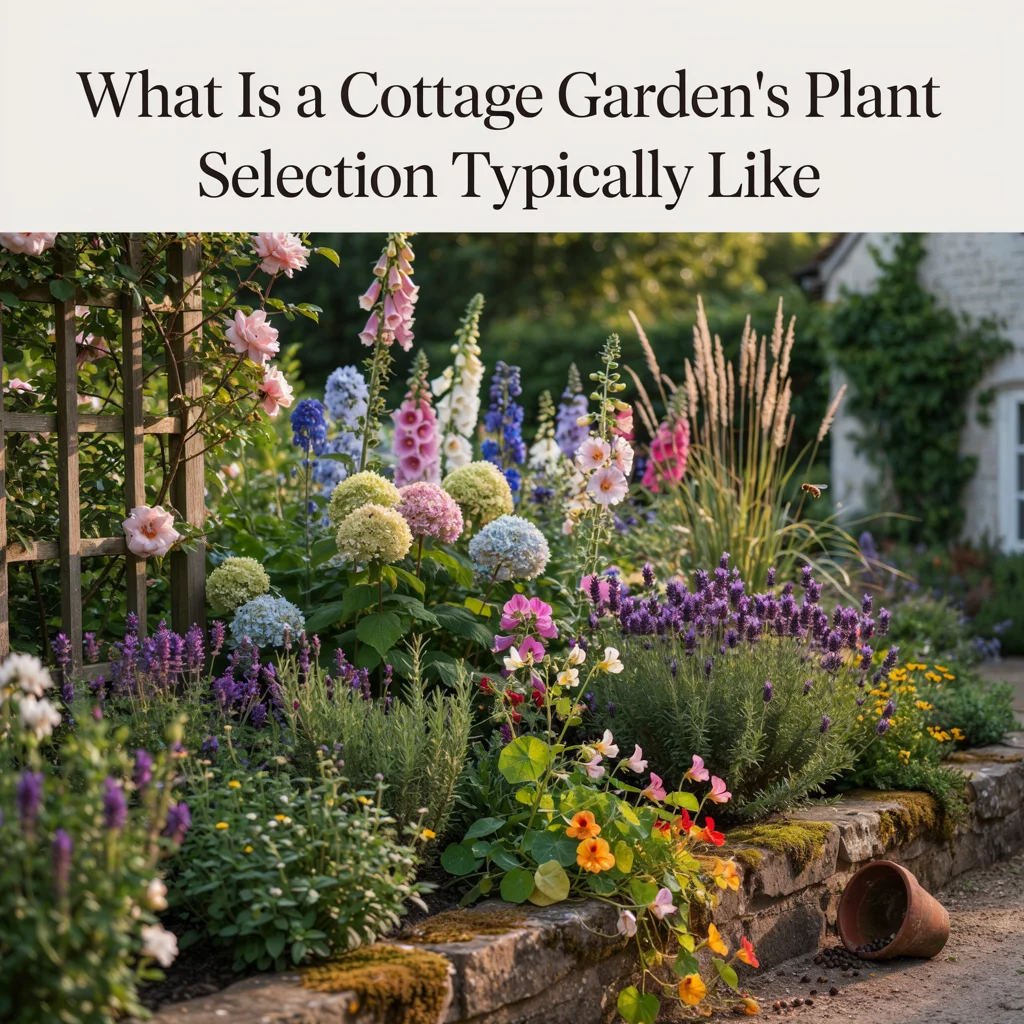
What is a cottage garden’s plant selection typically like centres on a deliberately mixed palette of flowers, herbs, and often edible plants, chosen more for individual charm and cottage-garden character than for a single unifying colour scheme or bloom time. This mixed, layered plant selection is one of the most immediately recognizable features of the style.
Classic Cottage Garden Flowers
Roses, particularly old-fashioned or climbing varieties, hollyhocks, delphiniums, foxgloves, and cottage pinks are commonly associated with classic cottage garden planting. Roses, especially climbing or rambling varieties trained over an arch or wall, provide one of the style’s most iconic and beloved elements. Hollyhocks, delphiniums, and foxgloves contribute the tall, vertical spikes of colour that give a cottage border its characteristic layered height. Cottage pinks and similar low-growing, fragrant flowers fill in along path edges, softening hard boundaries with colour and scent.
Herbs and Practical Plants Within the Display
Lavender, rosemary, and culinary herbs like thyme and sage are frequently woven directly into a cottage garden’s ornamental planting rather than confined to a separate kitchen garden. Lavender contributes both fragrance and a soft, silvery texture that complements the more vivid flowering plants around it. Rosemary and other woody culinary herbs add structure and year-round presence even when a garden’s flowering plants have died back. This blending of edible and ornamental plants reflects the style’s practical historical roots, where beauty and usefulness were never meant to be separated.
What a Cottage Garden House Traditionally Looked Like
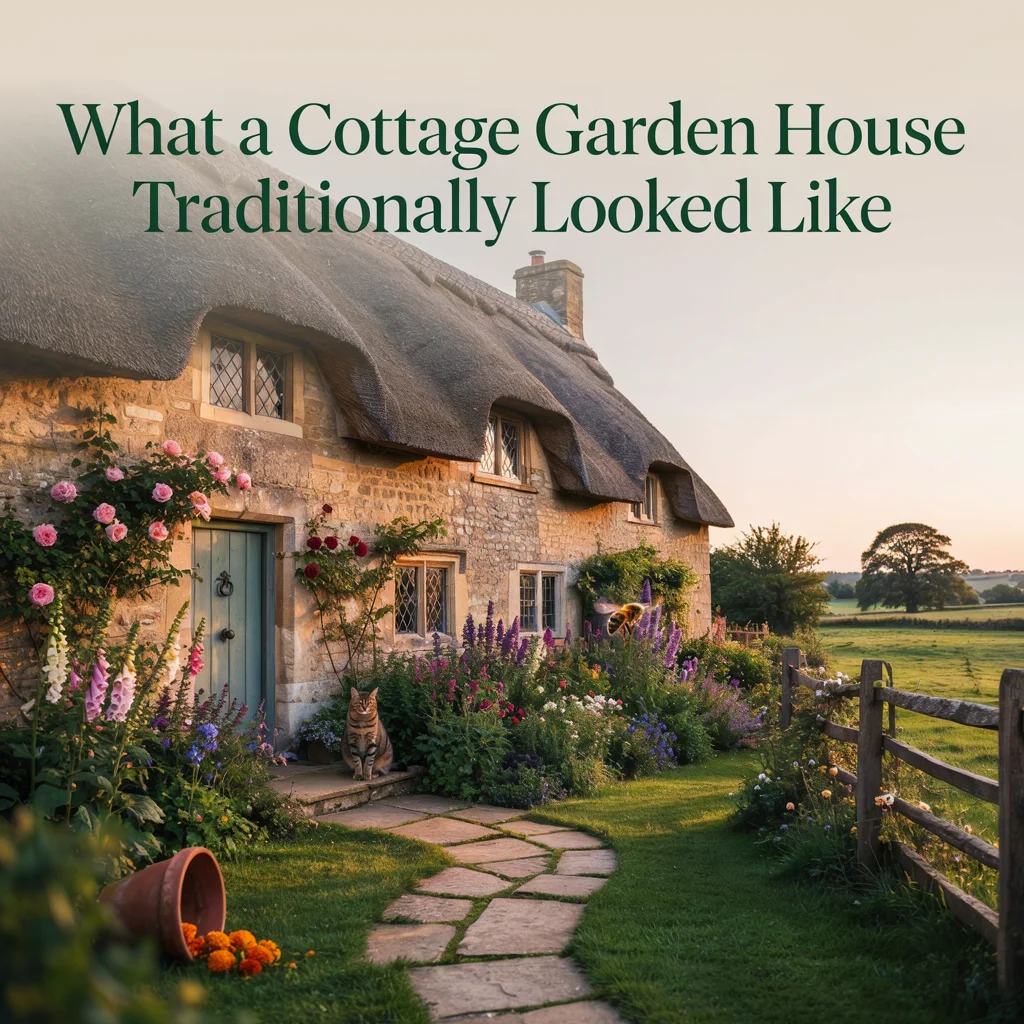
What a cottage garden house traditionally looked like matters to understanding the style’s origins, since the garden itself developed specifically around the small, humble rural cottages of English working households rather than the grander homes associated with formal garden design. The relationship between house and garden was inherently practical and closely intertwined.
The Traditional Cottage and Its Garden Relationship
A small footprint close to the road or lane, a garden plot immediately surrounding the home, and a lack of formal separation between decorative and productive growing space are three characteristics of the traditional cottage-and-garden relationship. A small footprint close to the road or lane meant the garden itself often served as the primary outdoor living and growing space available to the household. A garden plot immediately surrounding the home placed edible and ornamental plants within easy daily reach for practical use. A lack of formal separation between decorative and productive growing space reflects the working-class origins of the style, where a garden needed to serve multiple purposes at once rather than existing purely for visual pleasure.
How the House-Garden Relationship Shaped the Style’s Character
The close, practical relationship between a modest cottage and its immediately surrounding garden helped shape the informal, densely planted character still associated with the style today, since there was rarely space or resources for the kind of elaborate, purely ornamental landscaping found on larger historical estates. This practical origin is part of why cottage gardens continue to feel accessible and achievable to modern gardeners working with a modest home and a limited budget.
Common Cottage Garden Layouts
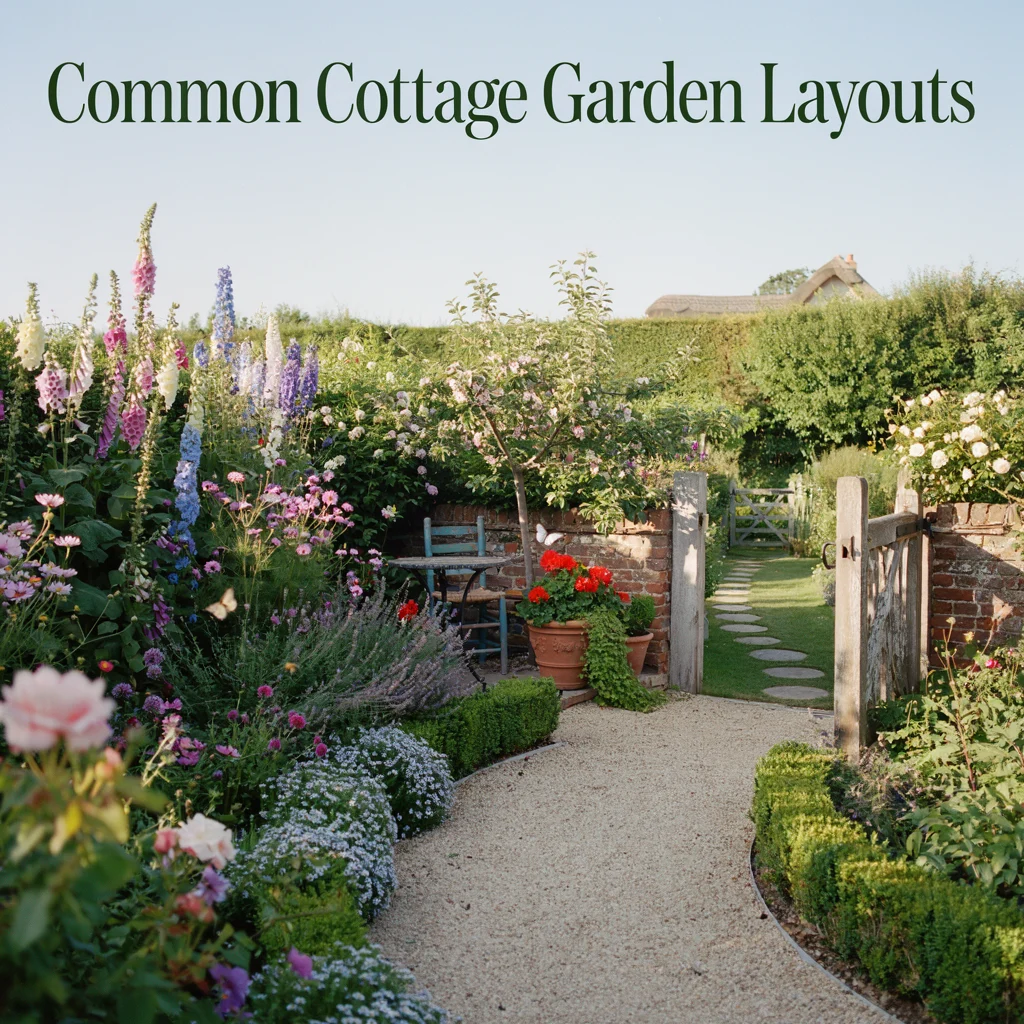
Common cottage garden layouts favour organic, somewhat irregular shapes over the strict geometric symmetry associated with more formal garden styles, though a surprising amount of underlying structure often supports the seemingly relaxed, natural appearance. Understanding these layout principles helps clarify how a cottage garden achieves its characteristic look without descending into genuine chaos.
Structural Elements Beneath the Informal Appearance
A curved or meandering central path, mixed borders along the garden’s edges rather than isolated island beds, and a rough tiered height structure from front to back are three structural elements commonly underlying a cottage garden layout. A curved or meandering central path guides movement through the garden while reinforcing the informal, organic feel central to the style. Mixed borders along the garden’s edges, rather than isolated island beds, keep planting continuous and layered throughout the space. A rough tiered height structure, with lower plants toward the front and taller ones toward the back or centre, provides the underlying order that keeps a densely mixed planting from reading as genuinely disorganized.
Balancing Structure With Deliberate Informality
Allowing some self-seeded plants to appear where they choose, resisting overly precise pruning or shaping, and letting plants slightly overrun their intended boundaries are three ways cottage garden layouts intentionally soften their underlying structure. Allowing some self-seeded plants to appear where they choose introduces the element of genuine unpredictability central to the style’s charm. Resisting overly precise pruning or shaping keeps individual plants looking natural rather than manicured. Letting plants slightly overrun their intended boundaries, within reason, reinforces the sense of abundance and organic growth that defines a genuine cottage garden.
How to Create a Cottage Garden From Scratch
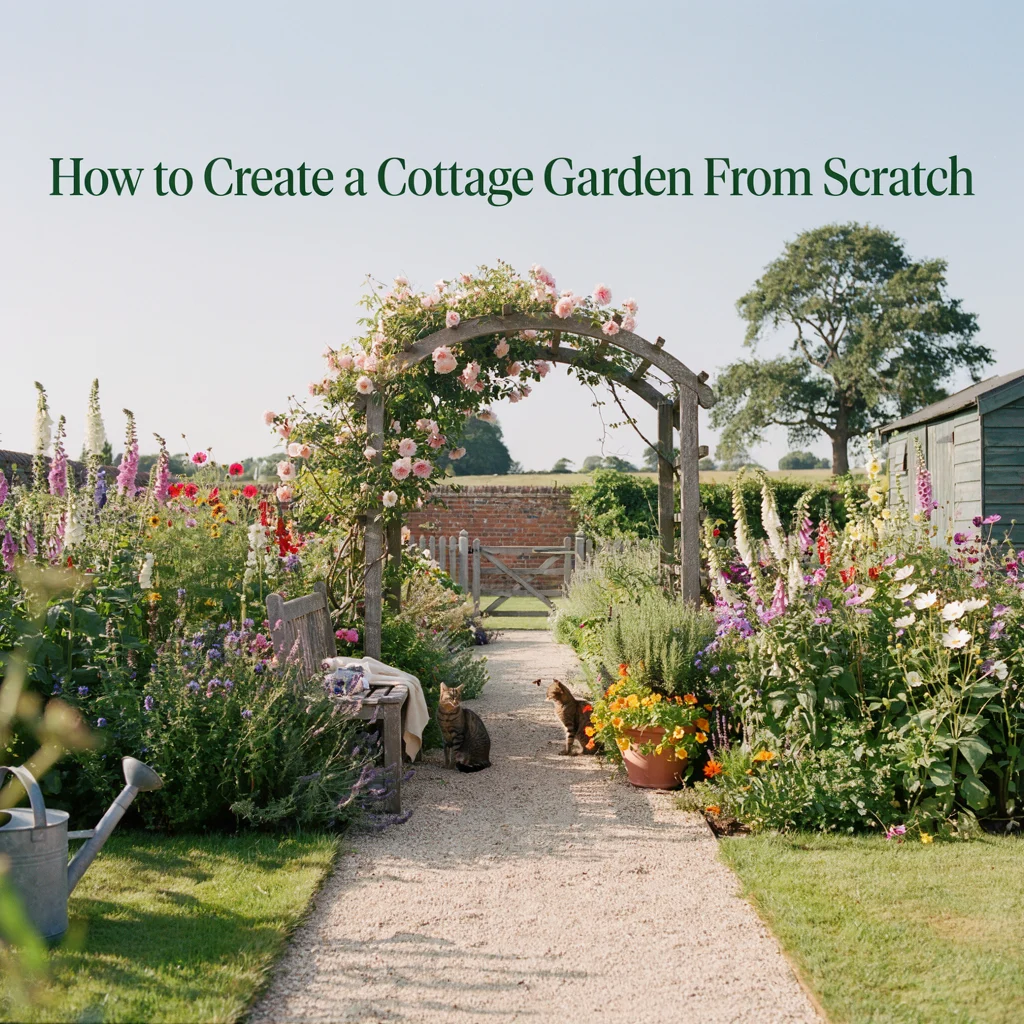
How to create a cottage garden from scratch involves a fairly achievable process for most home gardeners, since the style’s relaxed, forgiving character makes it considerably more approachable than a precisely maintained formal garden. A few key steps guide a successful cottage garden project from initial planning through to its first full growing season.
Planning the Basic Structure First
Establishing a rough path layout, deciding on border shapes even if they’ll later feel organic, and choosing a handful of taller anchor plants before filling in the rest are three planning steps suited to starting a cottage garden. Establishing a rough path layout early gives the whole garden a functional backbone before planting begins. Deciding on border shapes, even ones that will eventually feel loose and organic once planted, provides the underlying structure discussed earlier that keeps a cottage garden from becoming genuinely chaotic. Choosing a handful of taller anchor plants before filling in the rest ensures the garden has clear vertical structure from the very start.
Building Out the Planting Gradually
Starting with a core selection of classic cottage garden species, allowing gaps for self-seeding and gradual expansion, and adding plants over more than one season rather than all at once are three approaches suited to building out a cottage garden’s planting. Starting with a core selection of classic cottage garden species establishes the style’s recognizable character from the outset. Allowing gaps for self-seeding and gradual expansion embraces the genuine unpredictability that makes a cottage garden feel authentic rather than staged. Adding plants over more than one season rather than all at once mirrors how genuine historical cottage gardens actually developed, gradually and organically, and typically produces a more convincing, better-established final result.
Cottage Garden Colour and Texture Approaches
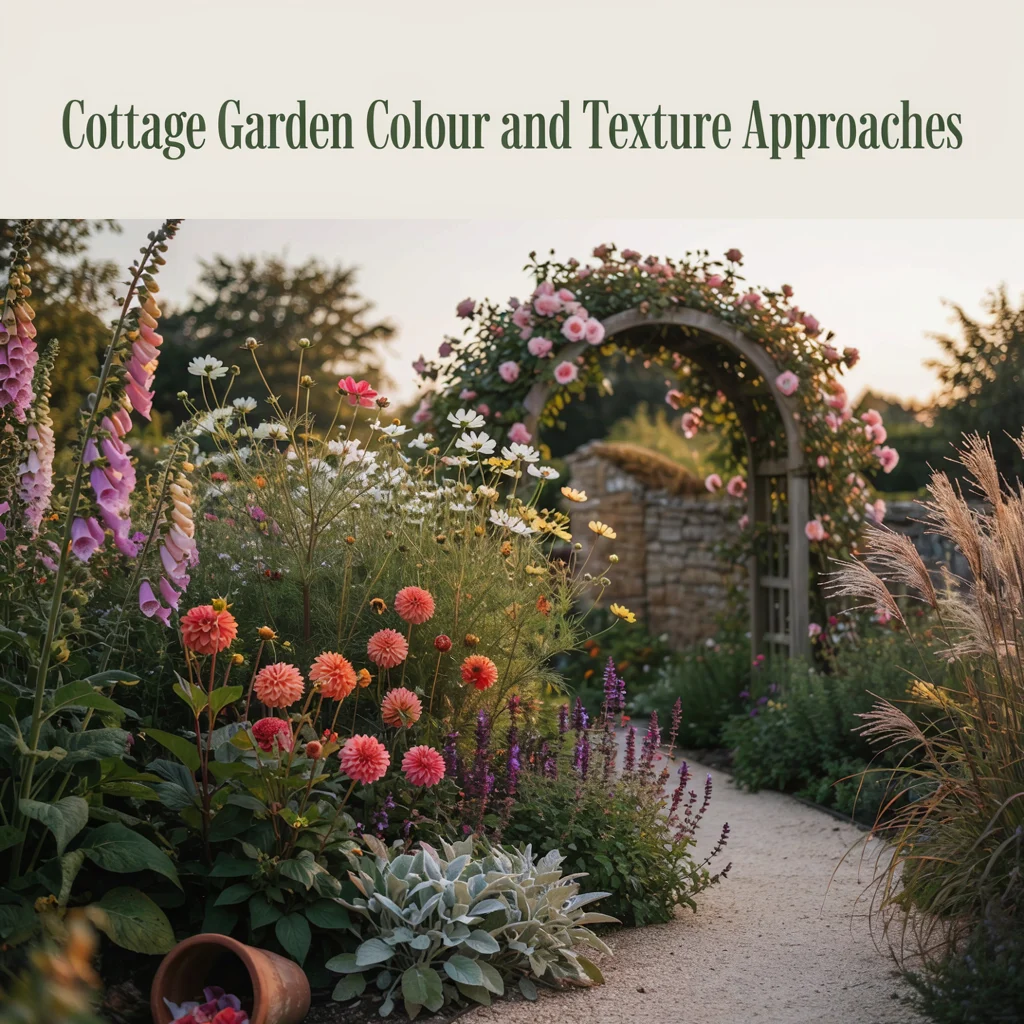
Cottage garden colour and texture approaches favour a deliberately mixed, layered look over the careful, restrained colour theory often applied in more formal garden design. This freer approach to colour and texture is a significant part of what gives the style its characteristically warm, abundant feeling.
How Colour Is Typically Handled
A wide, mixed palette rather than a restricted colour scheme, seasonal succession planned so something is always blooming, and colour combinations chosen for charm rather than strict theory are three approaches to colour in a cottage garden. A wide, mixed palette rather than a restricted colour scheme allows for the visually rich, slightly unpredictable look central to the style. Seasonal succession planned so something is always blooming keeps the garden feeling alive and full across most of the growing season rather than peaking briefly and then fading. Colour combinations chosen for charm rather than strict theory reflect the style’s relaxed, intuitive approach over the more calculated colour planning found in formal garden design.
Texture as an Equal Partner to Colour
Fine, feathery foliage combined with bolder leaf shapes, a mix of climbing, upright, and trailing growth habits, and varied flower forms from spikes to clusters to single blooms are three ways texture plays an equally important role alongside colour. Fine, feathery foliage combined with bolder leaf shapes creates the layered visual interest that keeps a densely planted cottage garden from feeling flat or monotonous. A mix of climbing, upright, and trailing growth habits adds dimension and movement throughout the whole planting scheme. Varied flower forms, from tall spikes to loose clusters to simple single blooms, reinforce the sense of natural variety central to the style’s overall character.
Practical Maintenance a Cottage Garden Actually Needs
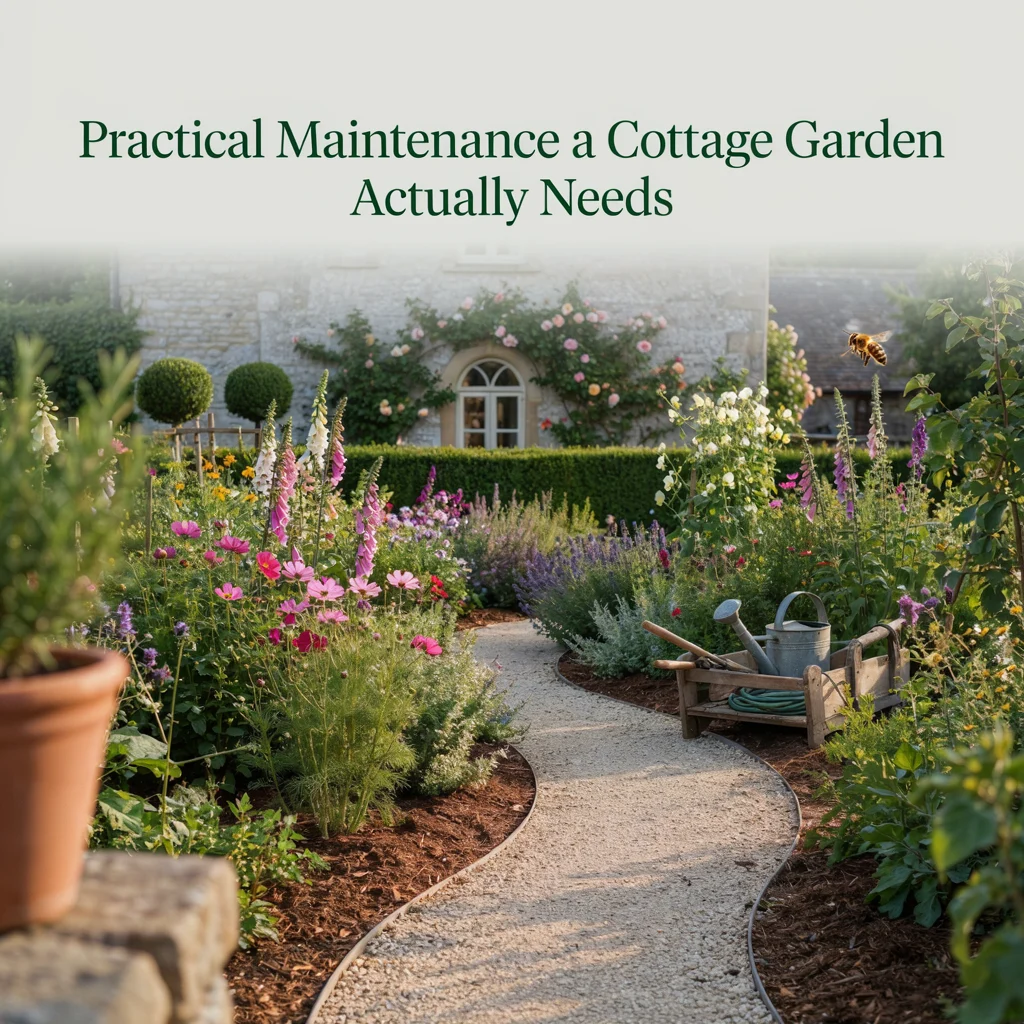
Practical maintenance a cottage garden actually needs is often somewhat different from what its relaxed appearance might suggest, since the style’s informal look doesn’t mean it requires no care at all, but rather a different kind of attention than a formal, tightly manicured garden.
Ongoing Tasks a Cottage Garden Genuinely Requires
Periodic editing of overly vigorous self-seeders, staking for taller flowering plants prone to flopping, and regular deadheading to encourage continued blooming are three ongoing tasks a cottage garden genuinely requires. Periodic editing of overly vigorous self-seeders prevents the most enthusiastic species from crowding out their neighbours entirely. Staking for taller flowering plants prone to flopping, like delphiniums or hollyhocks, protects the garden’s vertical structure through wind and heavy rain. Regular deadheading to encourage continued blooming keeps the garden’s characteristic abundance going for a longer stretch of the growing season.
Why Cottage Gardens Are Still Considered Relatively Forgiving
Despite these genuine maintenance needs, a cottage garden remains considerably more forgiving than a formal garden overall, since its intentionally loose, informal aesthetic tolerates a degree of imperfection, an overgrown corner or a slightly floppy border, that would look distinctly out of place in a more precisely maintained formal design. This built-in tolerance for imperfection is part of what makes the style approachable for gardeners without extensive time or experience.
For more on this, our guides on Woodland Garden Front Yards For Cottage Charm: Curb Appeal Ideas, Cheap No Grass Backyard Ideas For a Low-Maintenance Garden, and What Is Low-Maintenance Landscaping cover related ground.
Frequently Asked Questions
What is a cottage garden?
A cottage garden is a densely planted, informal garden style built from a deliberately abundant mix of flowers, herbs, and often edible plants, arranged with an emphasis on overall lushness and natural-looking abundance rather than strict formal order. The style originated with the practical, mixed planting traditions of small English rural cottages before developing into a deliberate ornamental aesthetic during the nineteenth century.
What is a cottage garden called in other traditions or regions?
A cottage garden is most commonly referred to by that exact name, rooted in its English origins, though related terms like the American cottage garden, describing a regional adaptation, and the broader informal or vernacular garden are sometimes used to describe similar densely planted, non-formal garden traditions elsewhere.
What plants are typically found in a cottage garden?
Plants typically found in a cottage garden include classic flowering species like roses, hollyhocks, delphiniums, and foxgloves for vertical colour and structure, along with cottage pinks and similar low, fragrant flowers along path edges. Herbs like lavender, rosemary, thyme, and sage are frequently woven directly into the ornamental planting rather than kept in a separate kitchen garden, reflecting the style’s practical historical roots.
How do I create a cottage garden from scratch?
Creating a cottage garden from scratch starts with planning a basic structure, including a rough path layout and border shapes, before choosing a handful of taller anchor plants and filling in the rest gradually. Allowing space for self-seeding and adding plants over more than one growing season, rather than all at once, tends to produce a more authentic, naturally established result than trying to complete the whole planting in a single effort.
Do cottage gardens require a lot of maintenance?
Cottage gardens do require some genuine ongoing maintenance, including periodic editing of overly vigorous self-seeding plants, staking for taller flowers prone to flopping, and regular deadheading to keep the display blooming for longer. Despite this real upkeep, the style remains considerably more forgiving than a formal garden overall, since its relaxed aesthetic tolerates a degree of imperfection that would look out of place in a more precisely maintained design.