
How to Grow and Care for Wisteria

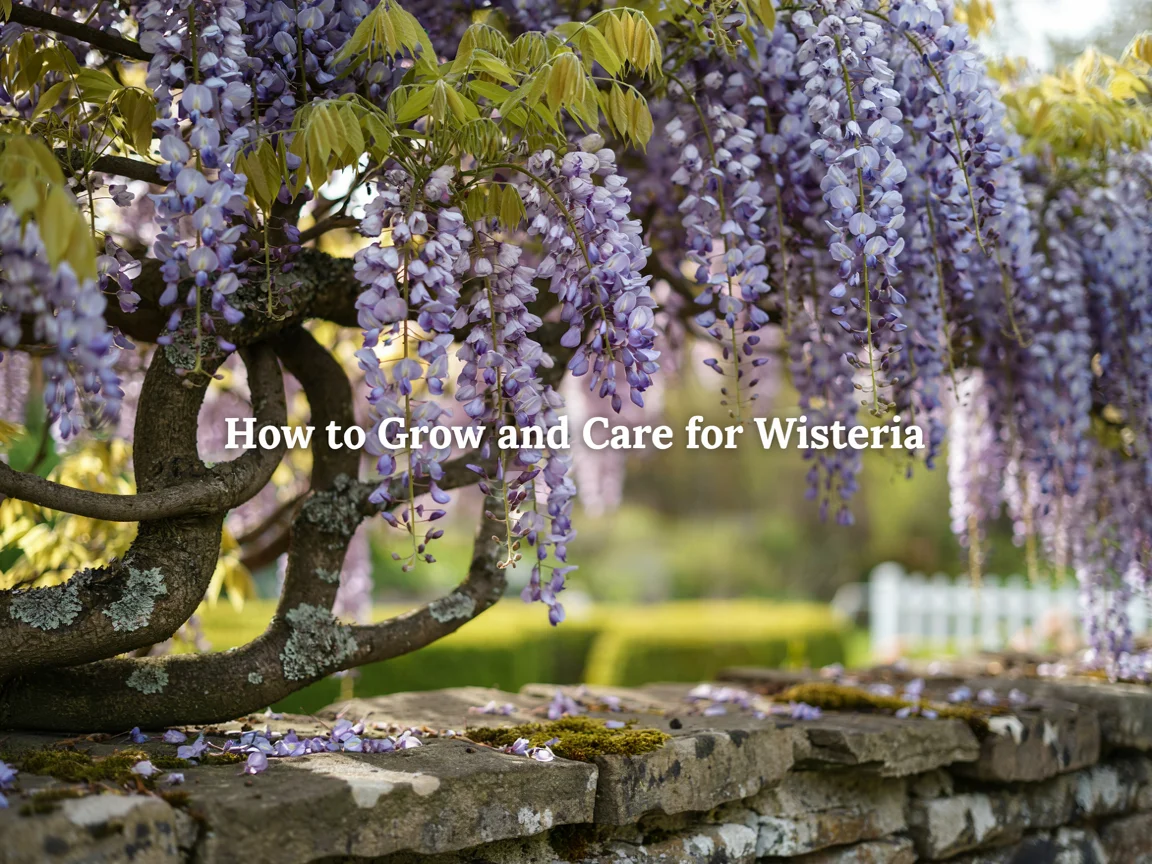
Nothing I have ever grown draws gasps quite like wisteria in full bloom. A friend of mine has an old plant trained along the front of her house, and for two weeks every spring it becomes a waterfall of fragrant purple flowers so heavy the whole street slows down to look at it. That is the dream, and it is entirely achievable, but I have also seen the other side of wisteria, and it is worth being honest about. I once inherited a garden with a wisteria that had never been pruned, and it had swallowed a shed, cracked a gutter, and produced, in ten years of vigorous growth, almost no flowers at all. That plant taught me the two great truths of wisteria: it is one of the most spectacular climbers you can grow, and it is one of the most demanding of correct pruning. Get the pruning right, and you get that unforgettable curtain of bloom; get it wrong, and you get a rampaging monster of leaves with barely a flower in sight. This guide gives you everything you need to grow wisteria for the flowers, not the chaos.
Wisteria is a vigorous, long-lived, woody climbing plant famous for its dramatic cascades of fragrant spring flowers in purple, blue, pink, or white, grown over pergolas, walls, and strong supports. Growing and caring for wisteria means giving it a sunny position and sturdy structure, watering and feeding it well while young, and above all pruning it correctly twice a year to control its vigorous growth and encourage the abundant flowering it is famous for. Over the years I have planted, trained, and pruned wisteria into spectacular displays, and in this article I am sharing how to grow and care for it successfully.
Understanding Wisteria and Its Vigorous Nature
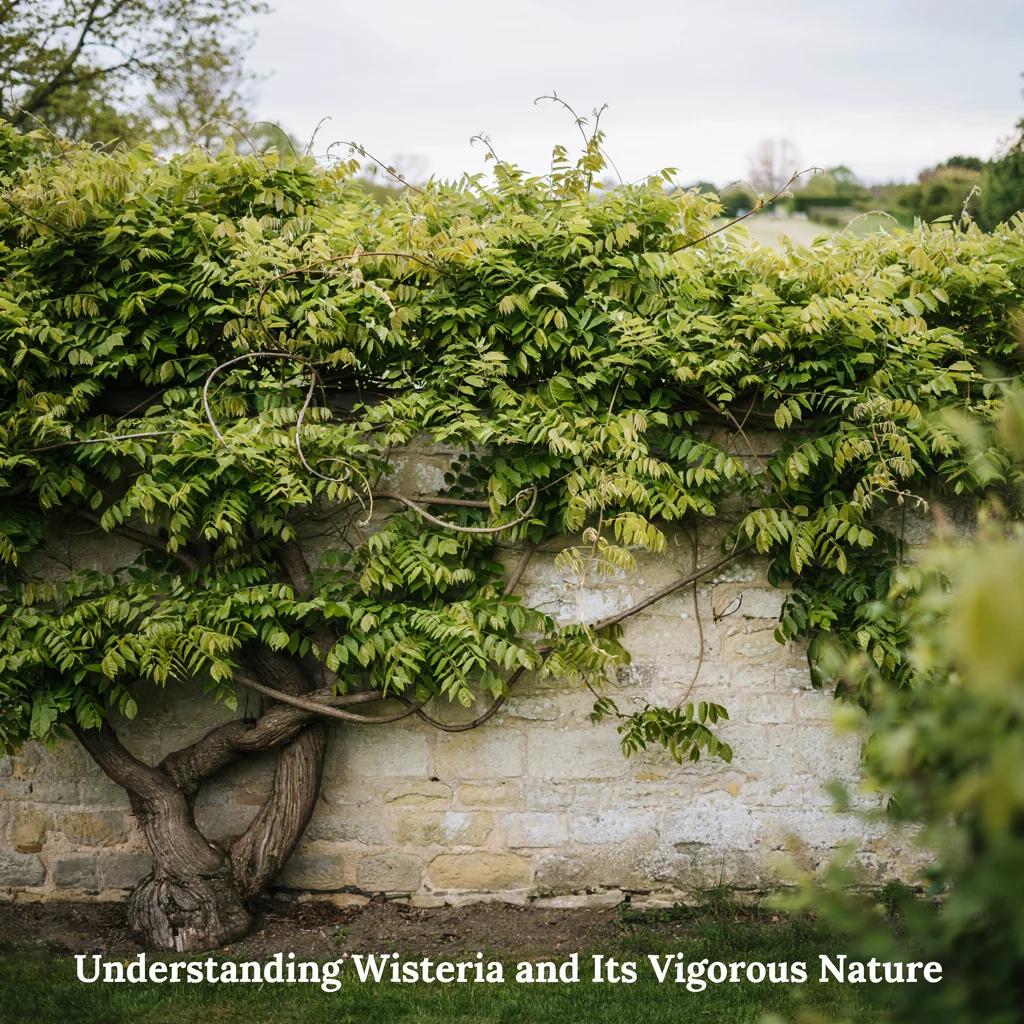
The first thing to understand about wisteria is that it is extremely vigorous and long-lived, which shapes everything about how you grow it. A mature wisteria is a large, heavy, woody climber that can live for decades and put on substantial growth every year, so it needs a strong, permanent support — a solid pergola, a sturdy wall with robust wires, or a heavy-duty structure rather than a flimsy trellis it will quickly overwhelm. This vigour is also why pruning is so central to growing wisteria: left unchecked, the plant channels all its energy into rampant leafy growth and produces few flowers, while correct pruning redirects that energy into the flowering spurs that create its famous display. Understanding and respecting this vigour from the start is the key to a wisteria that dazzles rather than dominates.
Choosing the Right Position and Support
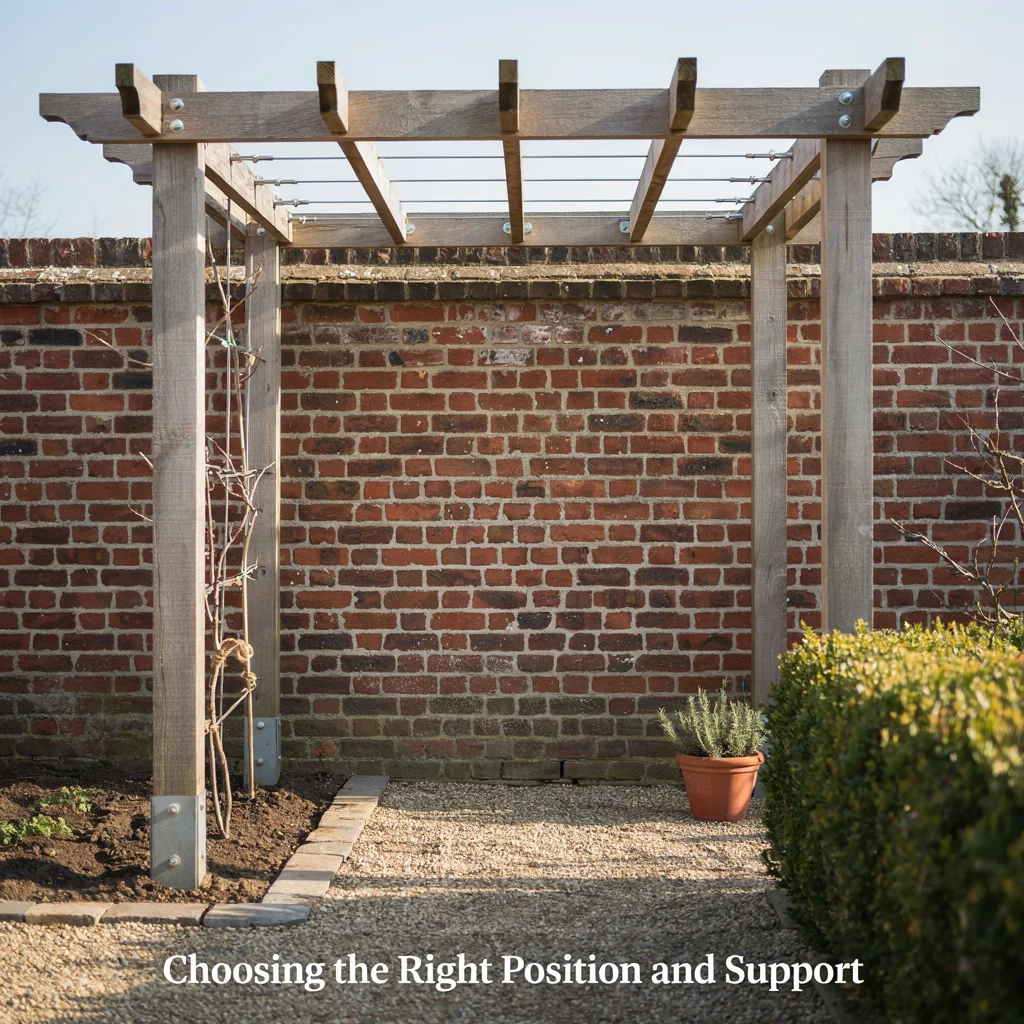
Choosing the right position sets a wisteria up for a lifetime of flowering. Wisteria flowers best in full sun, ideally against a warm, sheltered wall or over a pergola where it receives plenty of light, which is essential for good bloom. It prefers moist but well-drained, fertile soil and, being a long-term plant, benefits from generous soil preparation at planting. Above all, it needs a strong, permanent support built to carry its considerable eventual weight, so it is worth installing sturdy structures — heavy wires on a wall, a solid pergola, or a robust frame before or at planting, since retrofitting support to an established wisteria is difficult and the plant will punish any structure that is not up to the job.
Planting and Training a Young Wisteria
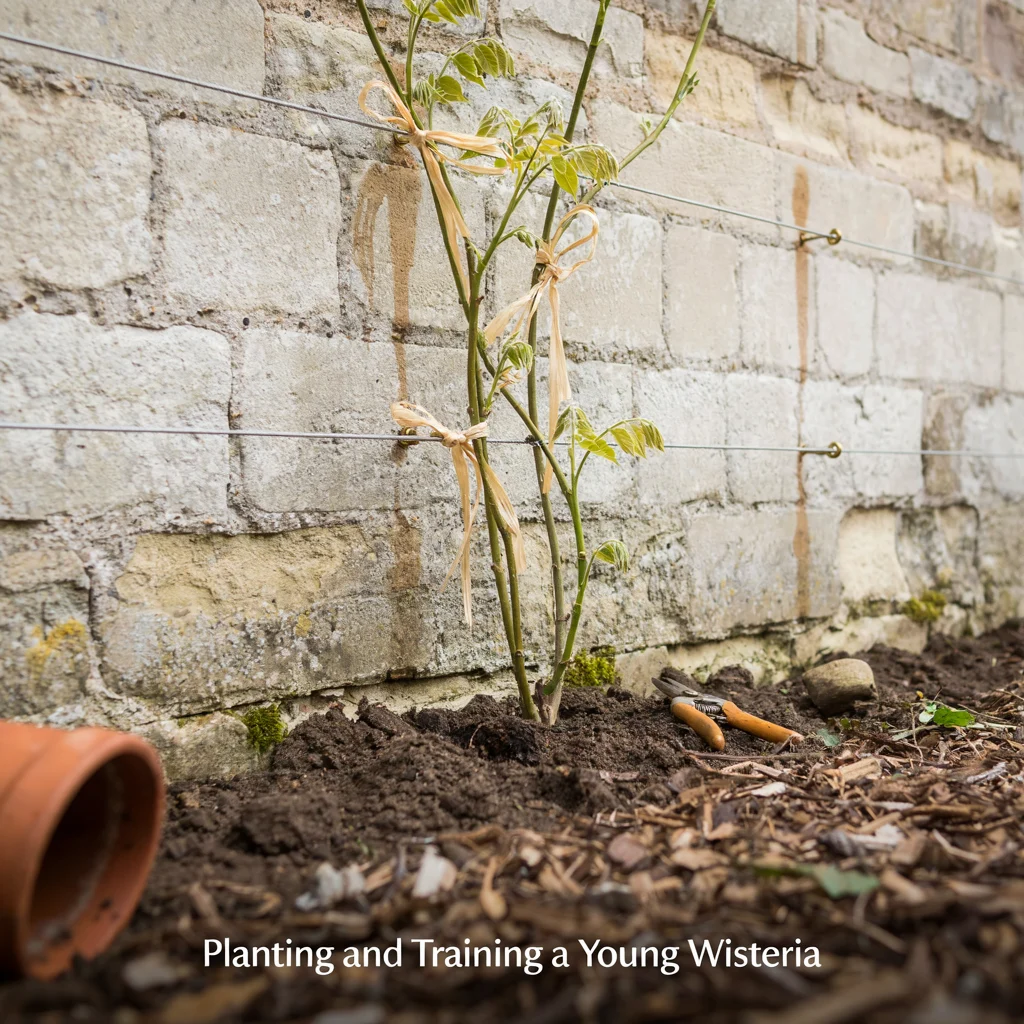
Getting a young wisteria planted and trained well shapes its whole future. Plant it in a generous, well-prepared hole in autumn or spring, positioning it near its support and watering it in thoroughly. From the start, train the main stems onto the framework of the support, tying in and guiding them to build the permanent structure you want — for example, horizontal arms along a wall or the main framework over a pergola since this early framework is what carries the flowering growth for decades to come. It is worth noting that wisteria grown from seed can take many years to flower, so buying a named, grafted, or cutting-grown plant of known flowering quality is strongly recommended for a reliable and quicker display.
Watering, Feeding, and Early Care
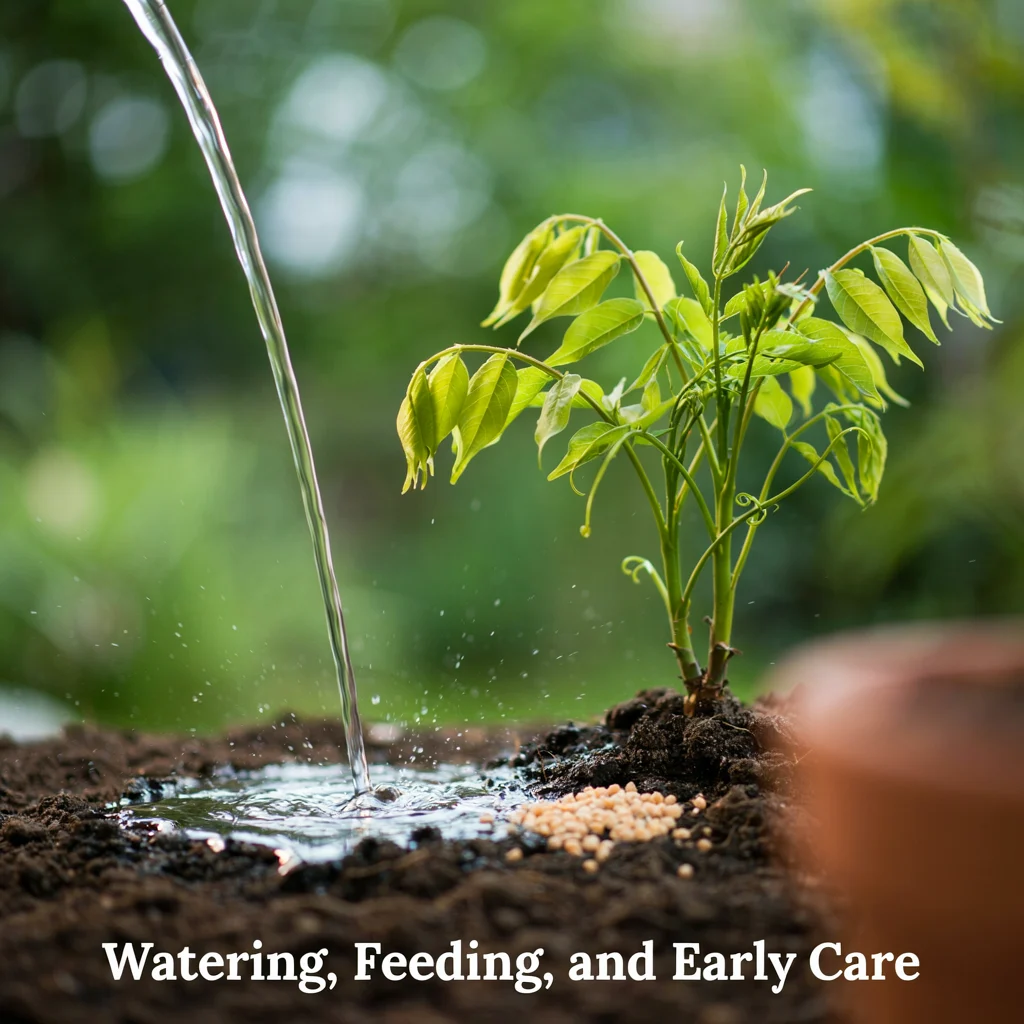
While a mature wisteria is tough, a young one needs attentive care to establish. Water regularly and deeply through the first few growing seasons and in dry spells, as good establishment watering builds the strong root system the plant needs. Feeding supports both growth and flowering: a feed in spring encourages healthy development, and a high-potassium feed can help promote flowering, while avoiding excessive nitrogen is wise since it encourages leafy growth at the expense of flowers. A mulch in spring conserves moisture and feeds the soil. This early care establishes a vigorous, healthy framework, after which the plant becomes largely self-sufficient and the focus shifts almost entirely to pruning for flowers.
The Two-Step Wisteria Pruning Routine
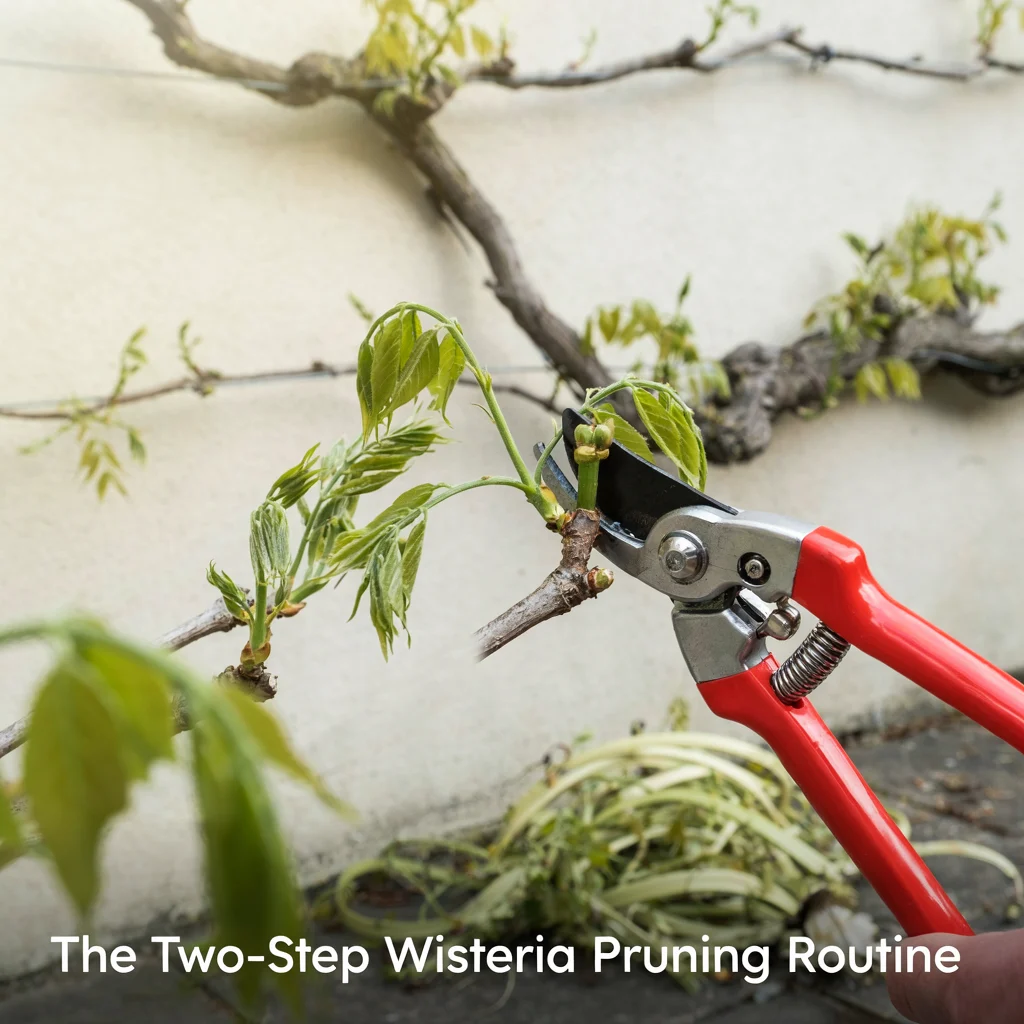
Pruning is the heart of growing wisteria well, and the reliable method is a twice-yearly routine. In summer, after flowering, cut back the long, whippy new shoots to about five or six leaves from the main framework, which controls the plant’s rampant growth and begins directing its energy toward flowering. Then in winter, cut those same shoots back further, to about two or three buds from the framework, which tidies the plant and concentrates its energy into the short flowering spurs that produce the spring display. This summer-and-winter routine is the single most important skill in growing wisteria, because it is precisely what converts vigorous leafy growth into the abundant, cascading flowers the plant is famous for, transforming a rampant climber into a spectacular flowering feature.
Solving Common Wisteria Problems
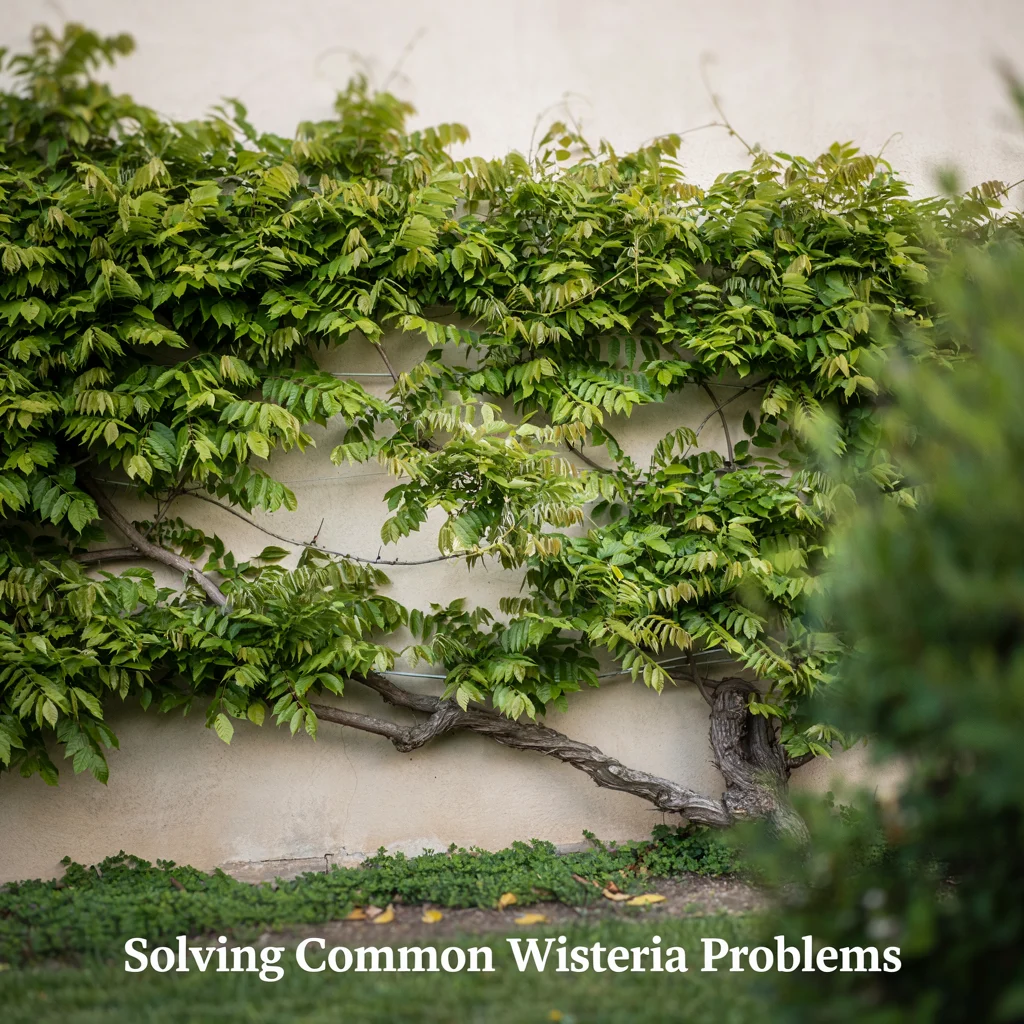
Most wisteria problems come down to a few common causes, and flowering failure is by far the most frequent complaint. A wisteria that will not flower is usually suffering from insufficient pruning, since without the twice-yearly cut it pours its energy into leaves rather than flowers, or from too much shade, excess nitrogen feeding, or simply immaturity; seed-grown plants especially can take many years to bloom. Correcting the pruning routine, ensuring plenty of sun, and using a high-potassium rather than high-nitrogen feed resolve most cases. Beyond flowering, wisteria is generally robust, though its sheer vigour means it needs watching so it does not damage gutters, drainpipes, or structures, and it is worth knowing that all parts of the plant are toxic if eaten, so it is best kept in mind around children and pets.
For more on this, our guides on Flowering Vines: 10 Easiest Climbing Plants to Grow, Flowers You Can Grow with Zero Gardening Experience, and Easiest Climbing Plants to Grow for Beginners cover related ground. For related ideas, see our guides on Vermicomposting for Beginners: Turn Kitchen Scraps into Garden Gold and How to Build a Pet-Friendly Garden.
Frequently Asked Questions
Why is my wisteria not flowering?
A wisteria that is not flowering is most often suffering from insufficient or incorrect pruning, which is by far the commonest cause, since without the twice-yearly summer and winter cut the plant channels its energy into vigorous leafy growth rather than flowers. Other frequent reasons include too much shade, since wisteria needs full sun to bloom well; excess nitrogen feeding, which promotes leaves at the expense of flowers; and simple immaturity, as wisteria, especially seed-grown plants, can take many years to reach flowering age. The solution is usually to establish the correct twice-yearly pruning routine, ensure the plant has plenty of sun, and switch to a high-potassium rather than high-nitrogen feed, which together resolve the great majority of non-flowering wisterias.
How do I prune wisteria?
You prune wisteria in a twice-yearly routine that is the key to controlling its growth and encouraging flowering. In summer, after the plant has flowered, cut back the long whippy new shoots to about five or six leaves from the main framework, which curbs the rampant growth and starts directing energy toward flower buds. Then in winter, shorten those same shoots further, to about two or three buds from the framework, which tidies the plant and concentrates its energy into the short flowering spurs that produce the spring display. This summer-and-winter pruning is the single most important skill in growing wisteria, since it is exactly what turns vigorous leafy growth into the abundant cascading flowers the plant is famous for.
What kind of support does wisteria need?
Wisteria needs a strong, permanent, heavy-duty support because it is an extremely vigorous, long-lived, and eventually very heavy woody climber. A mature plant can put enormous weight and pressure on its structure, so a solid pergola, a sturdy wall fitted with robust horizontal wires, or a heavy-duty frame is essential, while a flimsy trellis will quickly be overwhelmed and destroyed. It is best to install this strong support before or at planting, since the plant will grow into and around it for decades and retrofitting adequate support to an established wisteria is very difficult, so investing in a properly robust structure from the outset is one of the most important decisions in growing wisteria successfully.
How long does wisteria take to flower?
Wisteria can take several years to begin flowering, and the timescale depends heavily on how the plant was propagated, which is an important consideration when buying one. Seed-grown wisteria in particular can take many years, sometimes a decade or more, to reach flowering age, which is why buying a named, grafted, or cutting-grown plant of known flowering quality is strongly recommended, as these flower far sooner and more reliably. Once established and flowering, correct twice-yearly pruning, full sun, and appropriate feeding all help ensure a strong annual display, so choosing the right plant at the outset and caring for it correctly are the keys to enjoying wisteria’s spectacular flowers without an unnecessarily long wait.
Is wisteria poisonous?
Yes, all parts of wisteria are poisonous if eaten, with the seeds and seed pods being particularly toxic, so it is a plant to be mindful of in gardens used by children and pets. While wisteria is grown purely as an ornamental climber and poisonings are uncommon since the plant is not something people would normally eat, the seed pods can look tempting and it is wise to be aware of the risk. Enjoying wisteria safely simply means being conscious of its toxicity, keeping an eye on young children around the plant, and teaching them not to eat any part of it, which allows you to grow this spectacular climber with its dramatic cascades of flowers without meaningful concern.