
How to Plant and Cultivate a Japanese Maple Tree

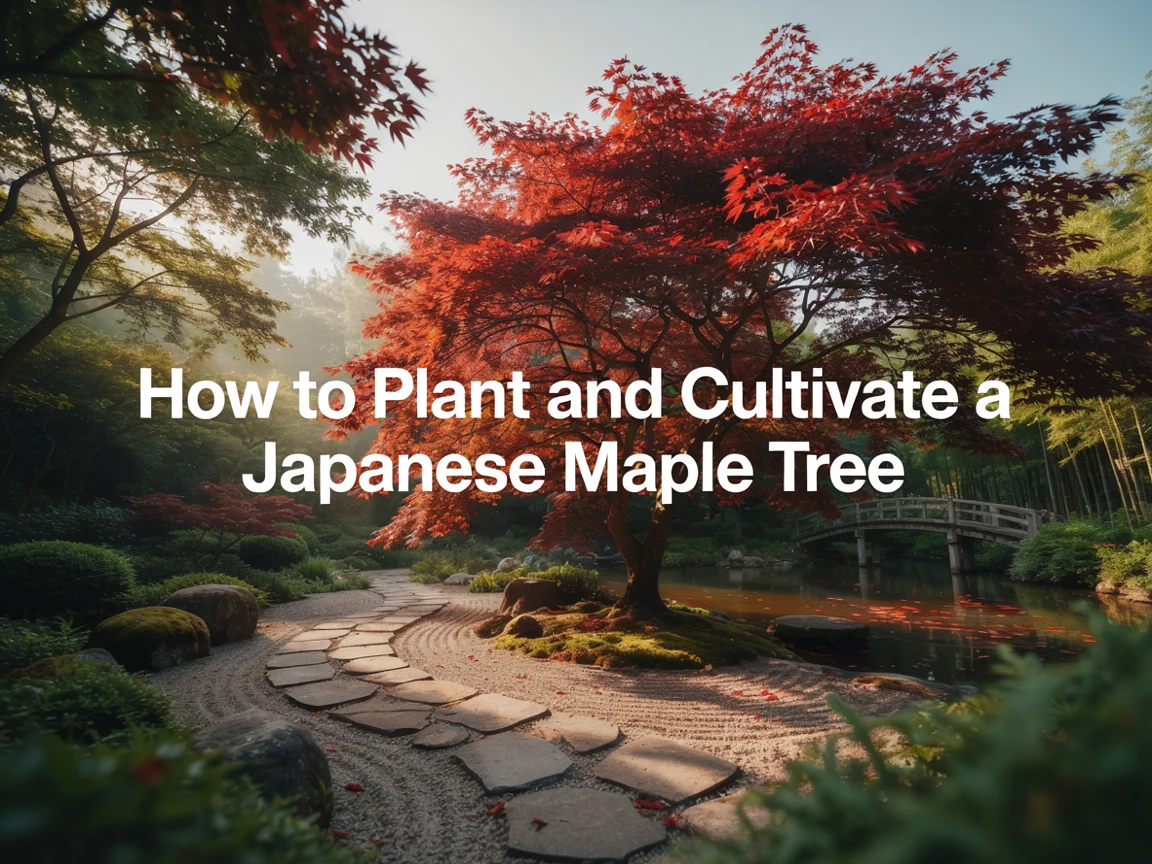
Few ornamental trees offer as much year-round visual payoff as a Japanese maple, prized for its delicate, often deeply cut foliage in shades of red, orange, and green that shift dramatically with the seasons. Getting one established well from the start makes a genuine difference in how it performs for decades afterward.
Choosing the Right Japanese Maple Variety for the Space
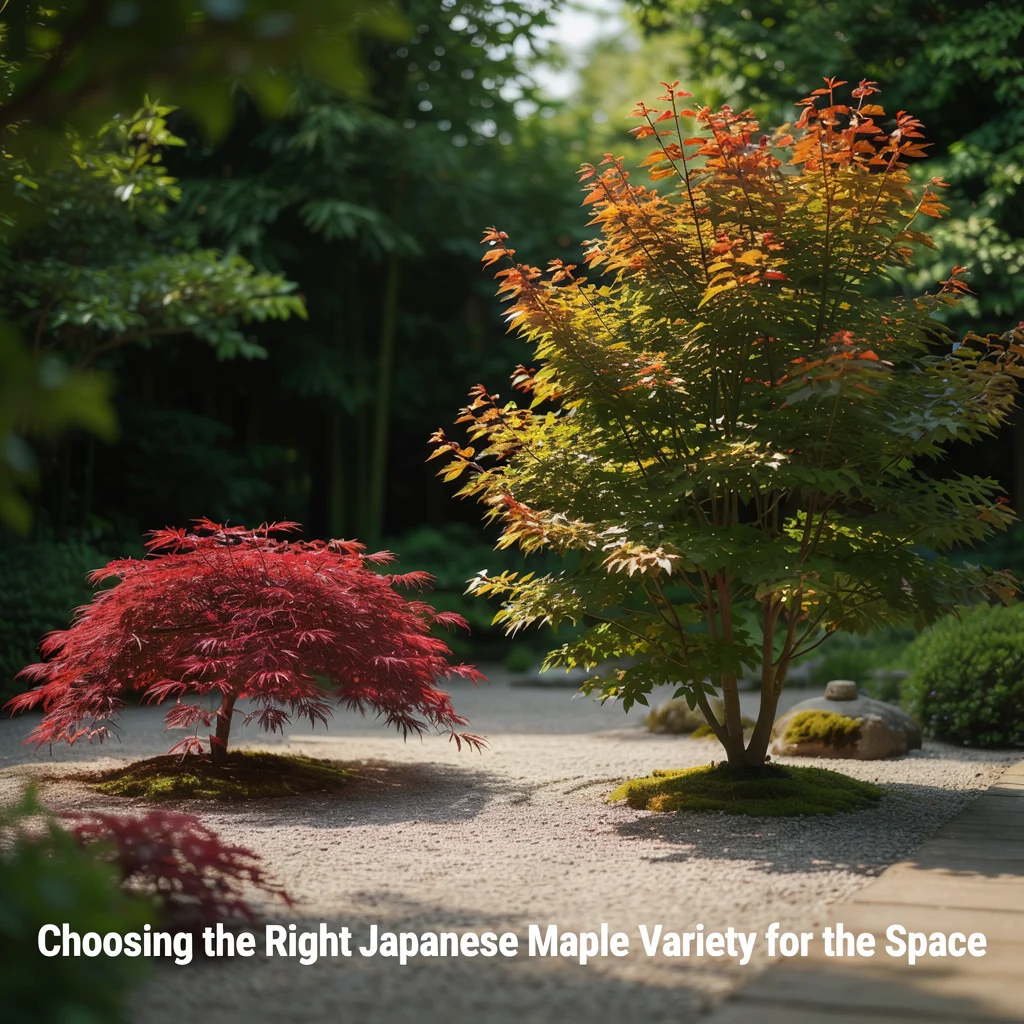
Choosing the right Japanese maple variety for the space matters enormously, since options range from small, weeping lace-leaf types under 6 feet tall to upright varieties that reach 20 feet or more.
Upright Versus Weeping Growth Habits
Upright versus weeping growth habits serve very different roles in a landscape, with upright varieties working well as specimen trees and weeping types suited to cascading over a wall or water feature.
Matching Leaf Color to the Surrounding Landscape
Matching leaf color to the surrounding landscape, whether deep red, variegated, or green that turns fiery in fall, helps a Japanese maple stand out intentionally rather than clashing with nearby plantings.
Picking a Site With Morning Sun and Afternoon Shade
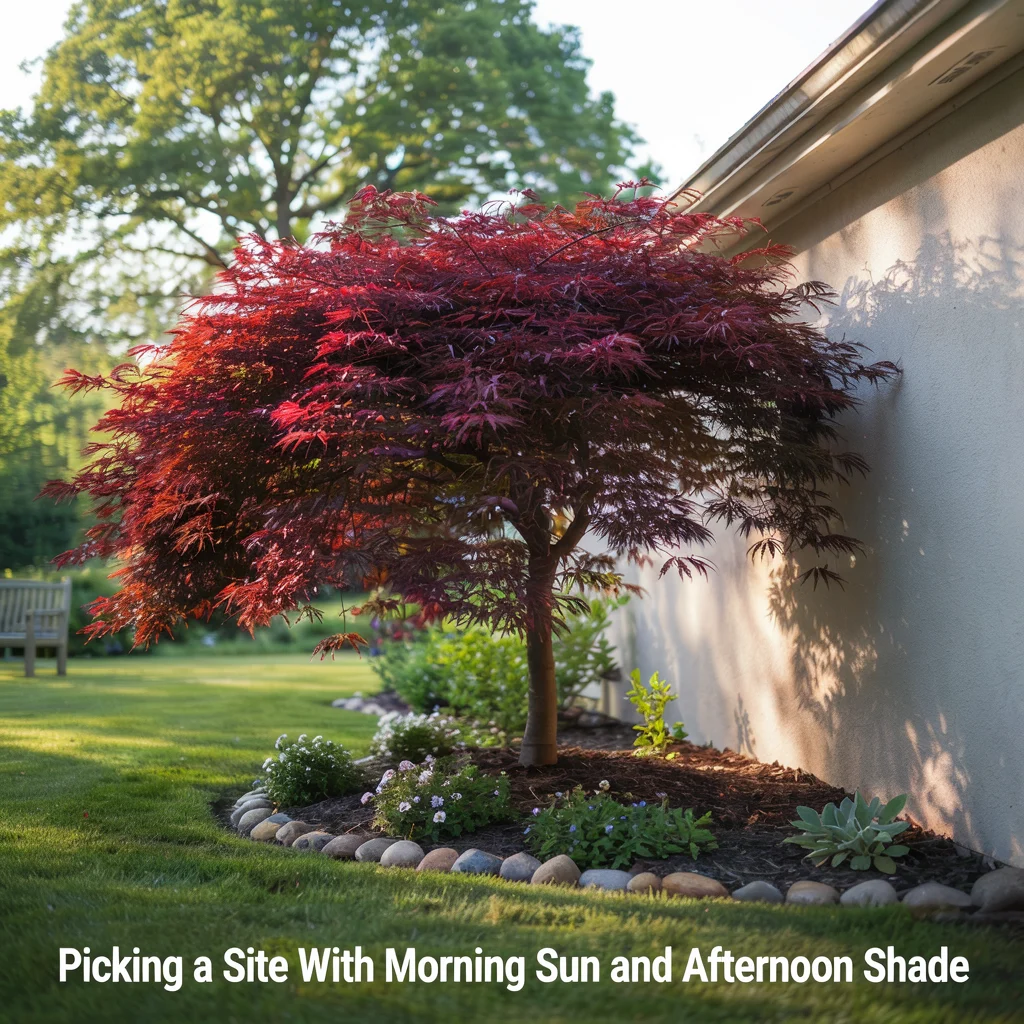
Picking a site with morning sun and afternoon shade generally gives Japanese maple the best combination of light for good color development without the leaf scorch harsh afternoon sun can cause.
Why Red-Leaved Varieties Are Especially Prone to Scorch
Why red-leaved varieties are especially prone to scorch comes down to their darker foliage absorbing more heat, making afternoon shade particularly important in hot climates for these specific cultivars.
Protecting Young Trees From Wind Exposure
Protecting young trees from wind exposure matters early on, since Japanese maple’s delicate, finely cut leaves can dry out and tatter quickly in an exposed, windy planting spot.
Preparing Well-Drained Soil Before Planting
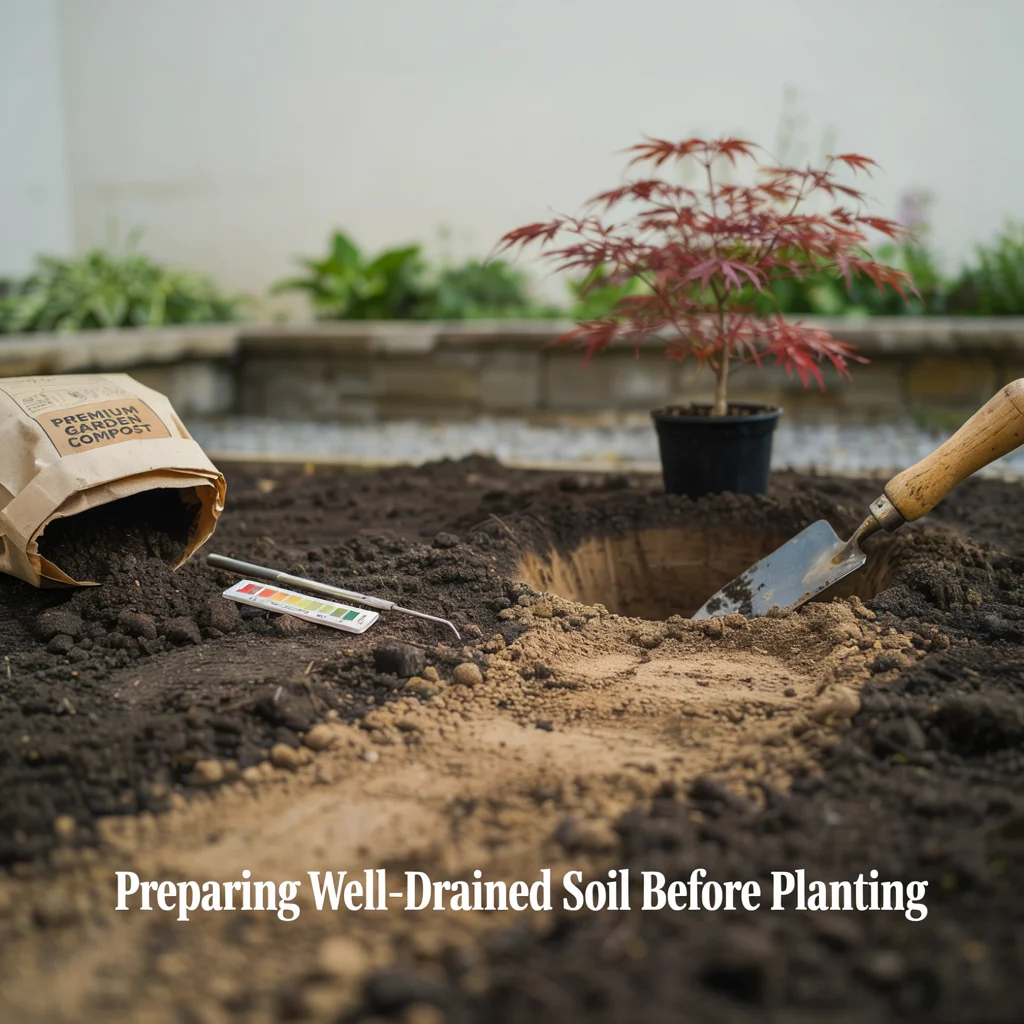
Preparing well-drained soil before planting is essential, since Japanese maple is notably intolerant of soggy, waterlogged roots even though it also needs consistent moisture to thrive.
Amending Heavy Clay Soil for Better Drainage
Amending heavy clay soil for better drainage by working in compost and, if needed, planting slightly above grade in a raised mound helps prevent the root rot clay soil can otherwise cause.
Checking Soil pH for Optimal Growth
Checking soil pH for optimal growth is worth doing before planting, since Japanese maple generally prefers slightly acidic soil and can struggle in strongly alkaline conditions.
Planting the Tree at the Correct Depth
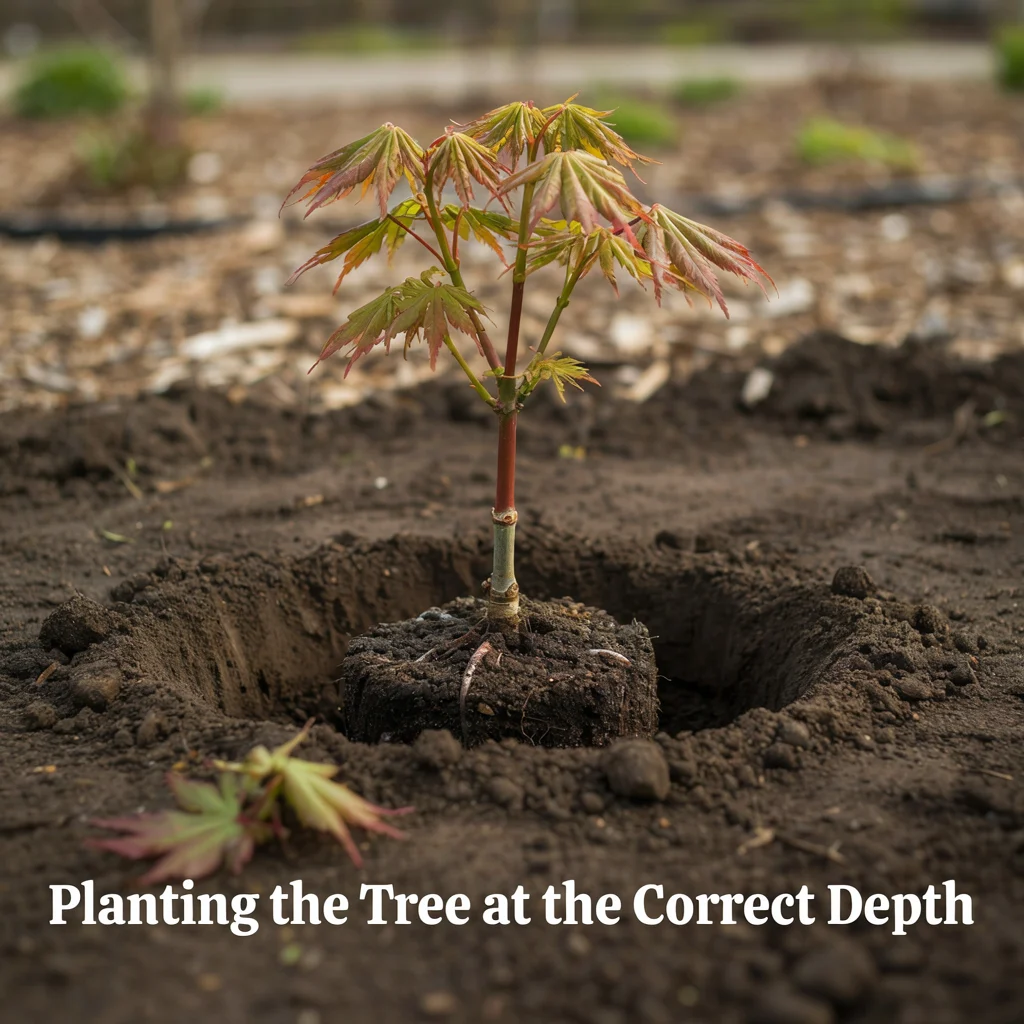
Planting the tree at the correct depth prevents one of the most common mistakes with Japanese maple, since planting too deeply is a leading cause of poor establishment and slow decline.
Setting the Root Flare Slightly Above Soil Level
Setting the root flare slightly above soil level, where the trunk visibly widens into the roots, ensures the tree isn’t smothered and allows proper gas exchange at the root zone.
Staking Only if Genuinely Necessary
Staking only if genuinely necessary applies here, since Japanese maple generally establishes better with some natural trunk movement, and staking should be removed as soon as the tree can stand on its own.
Watering Consistently Through the Establishment Period
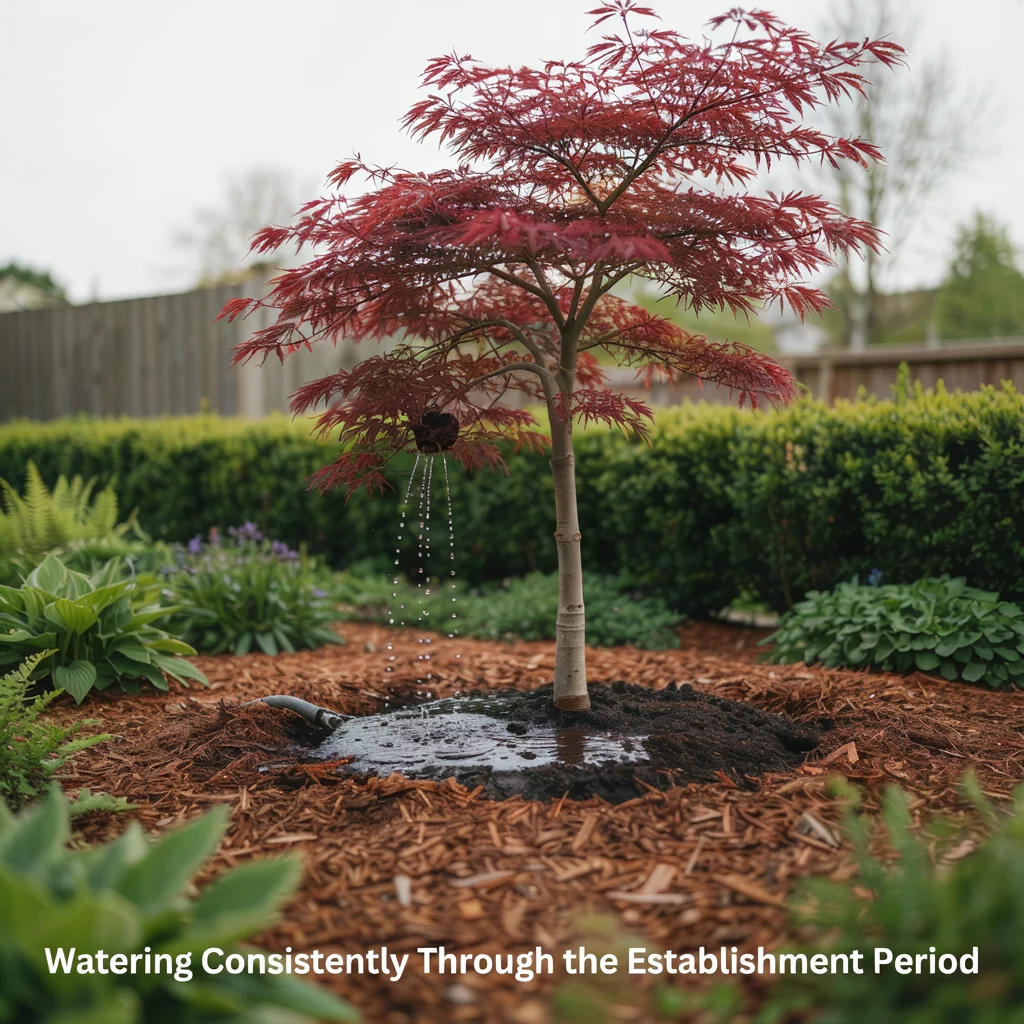
Watering consistently through the establishment period, typically the first two to three years, is critical for Japanese maple, which is considerably less drought-tolerant than many other ornamental trees.
Why Japanese Maple Roots Are Especially Shallow
Why Japanese maple roots are especially shallow comes down to its natural growth pattern, meaning it dries out faster than deep-rooted trees and benefits from more frequent, consistent watering.
Using Mulch to Regulate Soil Moisture and Temperature
Using mulch to regulate soil moisture and temperature with a 2 to 3 inch layer, kept away from direct contact with the trunk, helps maintain the even moisture Japanese maple prefers.
Pruning to Maintain Shape and Airflow
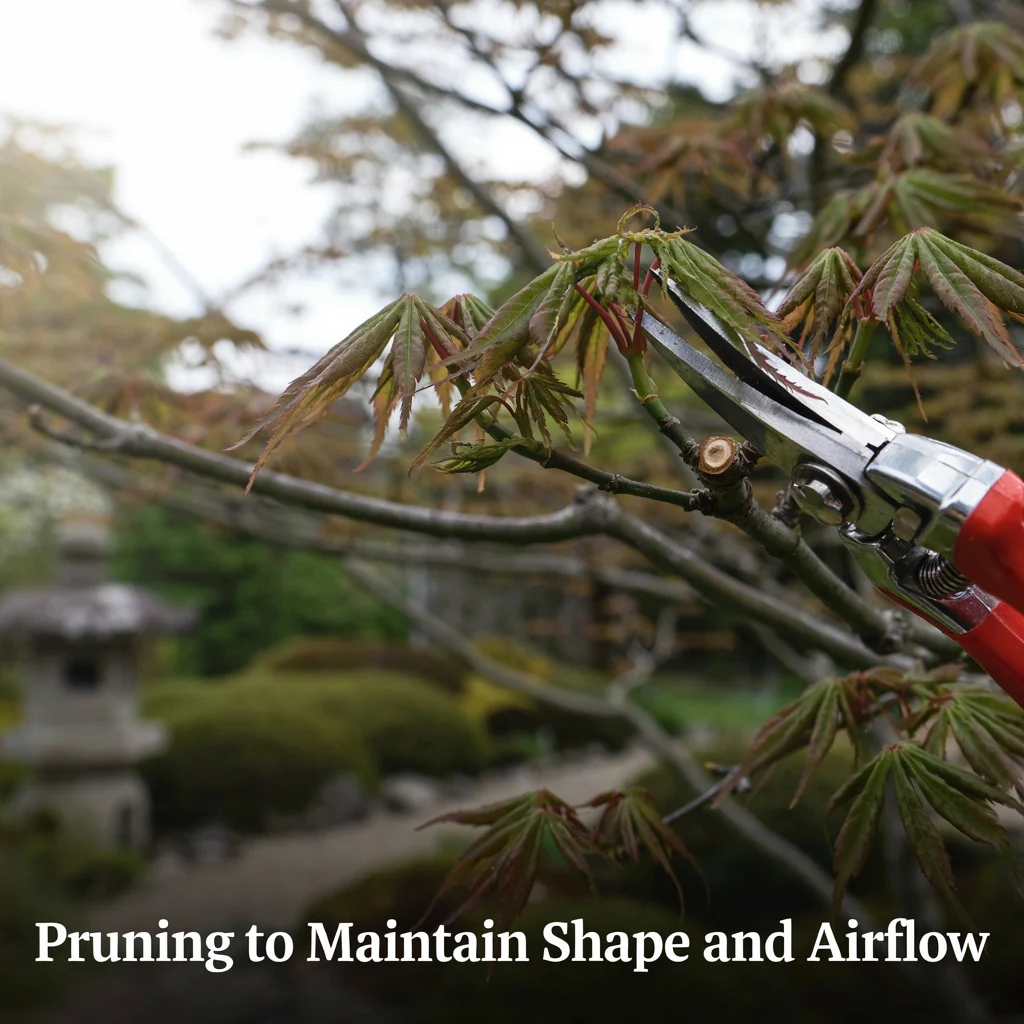
Pruning to maintain shape and airflow is generally done sparingly with Japanese maple, since this tree naturally develops an attractive branching structure that heavy pruning can easily disrupt.
Best Time of Year to Prune Japanese Maple
Best time of year to prune Japanese maple is mid-summer or during dormancy in late fall, since pruning in spring can cause excessive sap loss known as “bleeding.”
Removing Crossing Branches for Better Long-Term Structure
Removing crossing branches for better long-term structure early in the tree’s life prevents rubbing wounds and helps establish the open, layered canopy Japanese maple is known for.
Protecting the Tree Through Seasonal Changes
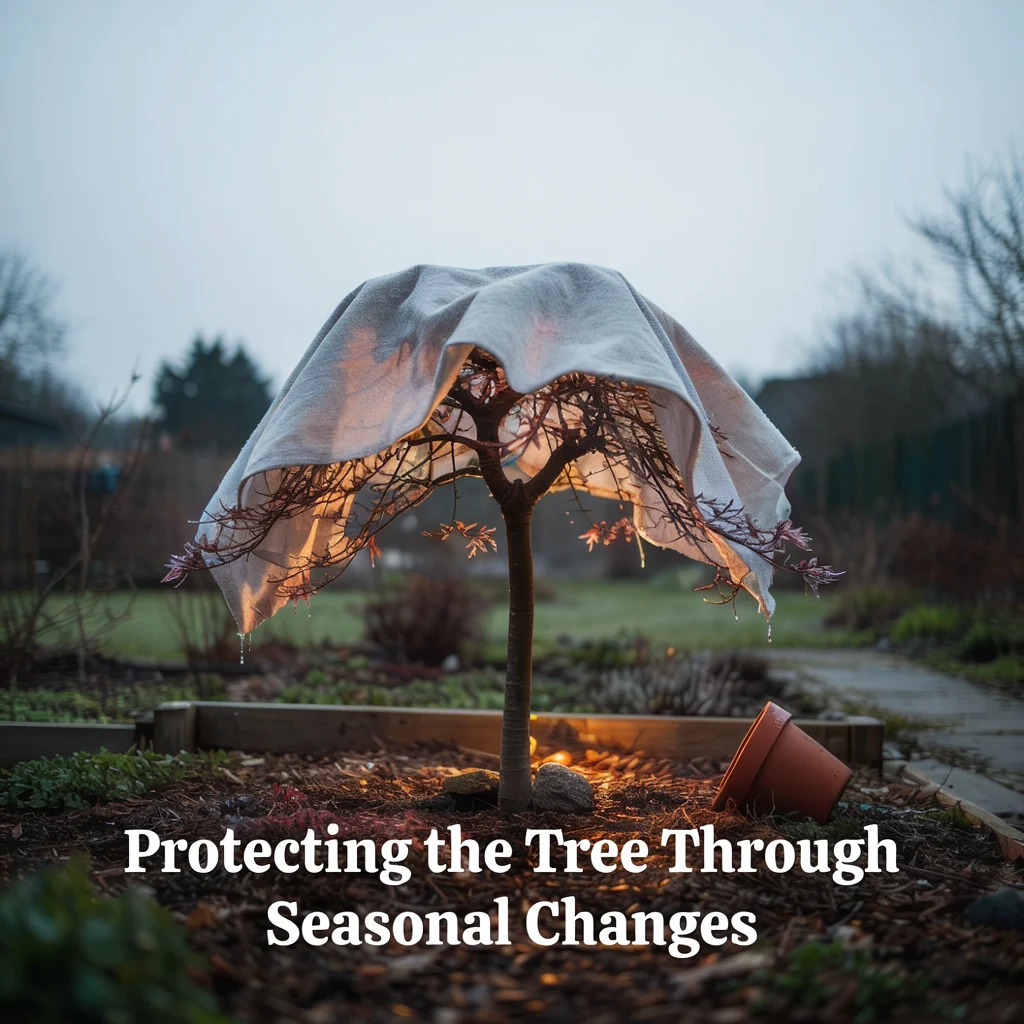
Protecting the tree through seasonal changes matters most in its early years, when it’s more vulnerable to late spring frosts, harsh winter winds, and sudden temperature swings.
Guarding Against Late Frost Damage on New Growth
Guarding against late frost damage on new growth, using a frost cloth on unexpected cold nights after leaves have emerged, protects the tender new foliage most susceptible to damage.
Why Fall Color Intensity Can Vary Year to Year
Why fall color intensity can vary year to year comes down to weather conditions, since cooler nights and sunny days generally produce the most vivid red and orange fall color.
The Bottom Line
A Japanese maple rewards patience with morning sun, afternoon shade, well-drained but consistently moist soil, and a light hand with pruning. Getting the planting depth and site selection right in the first year sets up decades of the layered, colorful growth this tree is prized for.
For related ideas, see our articles on Outdoor Plant Pots Showing Their Age? Transform Them With Spray Paint!, The Best Trees to Plant in Your Yard, and Tree Recommendations for Every Kind of Garden. For more on this, our guides on Vermicomposting for Beginners: Turn Kitchen Scraps into Garden Gold, How to Build a Pet-Friendly Garden, and Mini Garden Ideas That Fit Any Space cover related ground. For related ideas, see our guides on How to Build a Bird Feeder Pole and Why Lilacs Should Be Pruned Right After Blooming.
Frequently Asked Questions
How Fast Does a Japanese Maple Tree Grow?
Japanese maple is generally a slow to moderate grower, typically adding about 1 to 2 feet per year depending on the variety and growing conditions.
Does a Japanese Maple Need Full Sun?
Japanese maple generally does best with morning sun and afternoon shade rather than full, all-day sun, particularly for red-leaved varieties prone to leaf scorch.
How Often Should a Newly Planted Japanese Maple Be Watered?
A newly planted Japanese maple typically needs watering two to three times a week during its first growing season, tapering off as the root system becomes established.
Can Japanese Maple Trees Grow in Containers?
Japanese maple trees can grow well in containers, particularly smaller or dwarf varieties, as long as the pot allows for adequate drainage and winter root protection in colder climates.
Why Are the Leaves on My Japanese Maple Turning Brown at the Edges?
Leaves turning brown at the edges on a Japanese maple usually indicates leaf scorch from too much direct afternoon sun, wind exposure, or inconsistent watering.