
Outdoor Plant Pots Showing Their Age? Transform Them With Spray Paint!

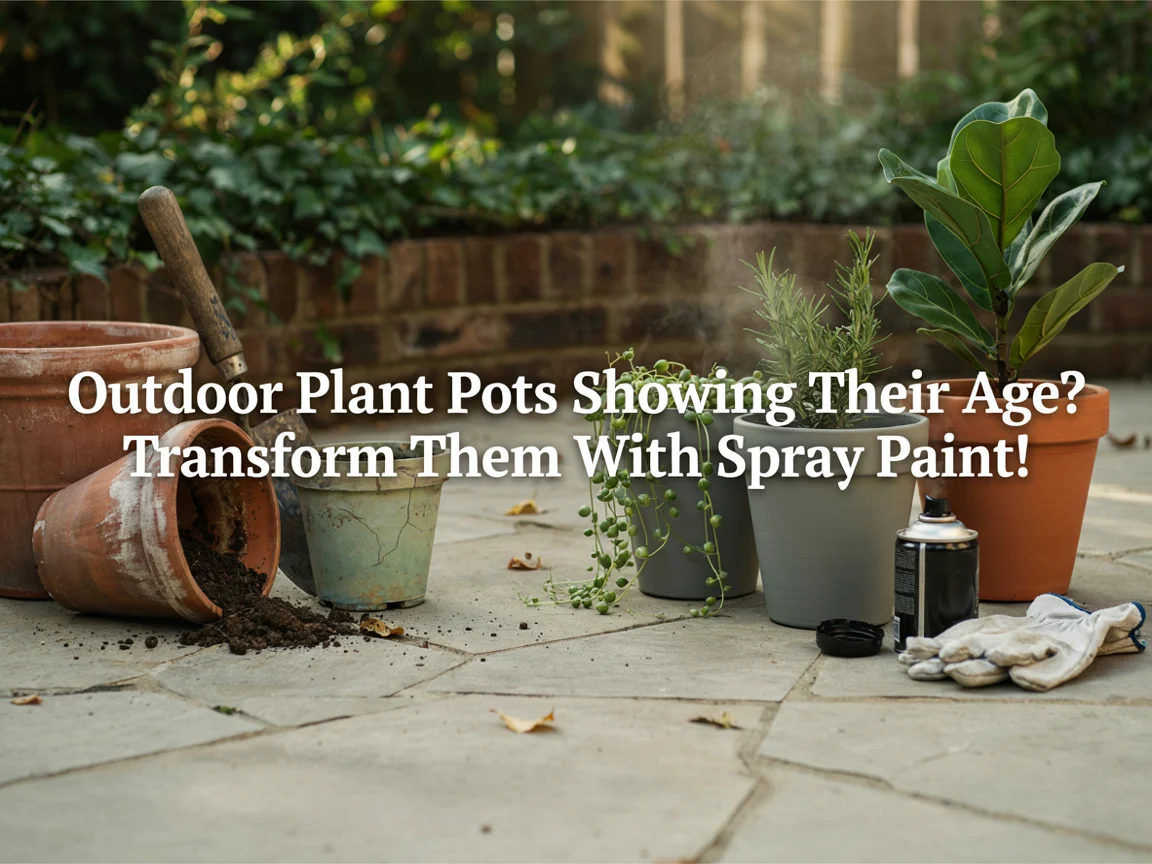
A collection of faded, chalky terracotta or scratched plastic pots doesn’t need to be replaced to look fresh again, since a can of the right spray paint can genuinely transform them in an afternoon for a fraction of the cost of buying new ones. The steps below cover the whole process, from prepping the surface to choosing a paint that’ll actually survive outdoors.
Cleaning and Drying the Pots Thoroughly
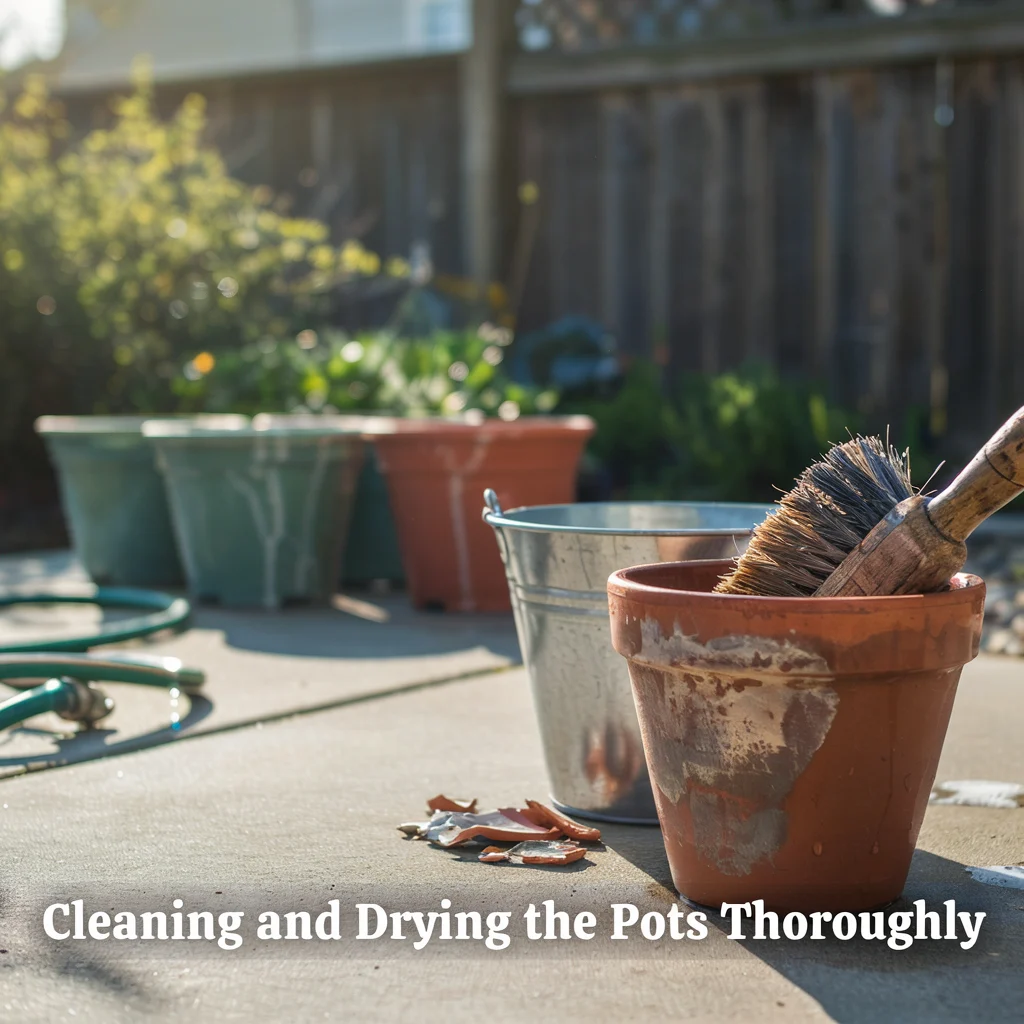
Cleaning and drying the pots thoroughly is the step most likely to get skipped, and skipping it is also the most common reason spray paint fails to adhere properly on outdoor pots.
Removing Dirt, Mineral Deposits, and Old Flaking Paint
Removing dirt, mineral deposits, and old flaking paint with a stiff brush and mild soap and water clears away the buildup that would otherwise prevent new paint from bonding evenly.
Why Pots Need to Be Completely Dry Before Painting
Why pots need to be completely dry before painting comes down to adhesion, since any trapped moisture, especially in porous terracotta, can cause bubbling or peeling once paint is applied over it.
Sanding Glossy or Glazed Surfaces Lightly
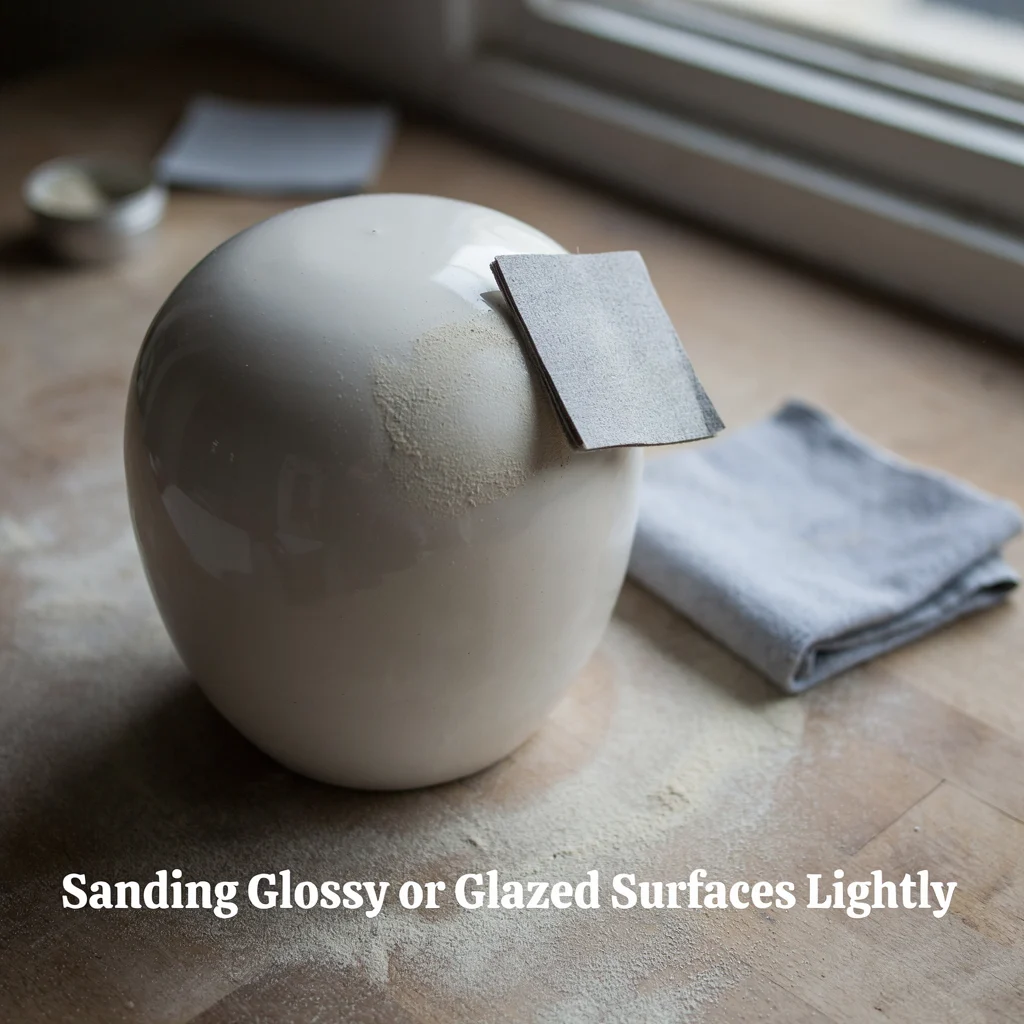
Sanding glossy or glazed surfaces lightly gives paint something to actually grip, since a smooth, glazed or previously painted pot is otherwise too slick for new paint to bond to well.
Which Pot Materials Need Sanding and Which Don’t
Which pot materials need sanding and which don’t varies, with glazed ceramic and glossy plastic benefiting most, while raw, porous terracotta generally doesn’t need sanding at all.
Wiping Away Dust After Sanding
Wiping away dust after sanding with a damp cloth ensures the surface is completely clean before primer or paint goes on, since leftover dust can create a gritty, uneven finish.
Applying a Bonding Primer for Plastic or Glazed Pots
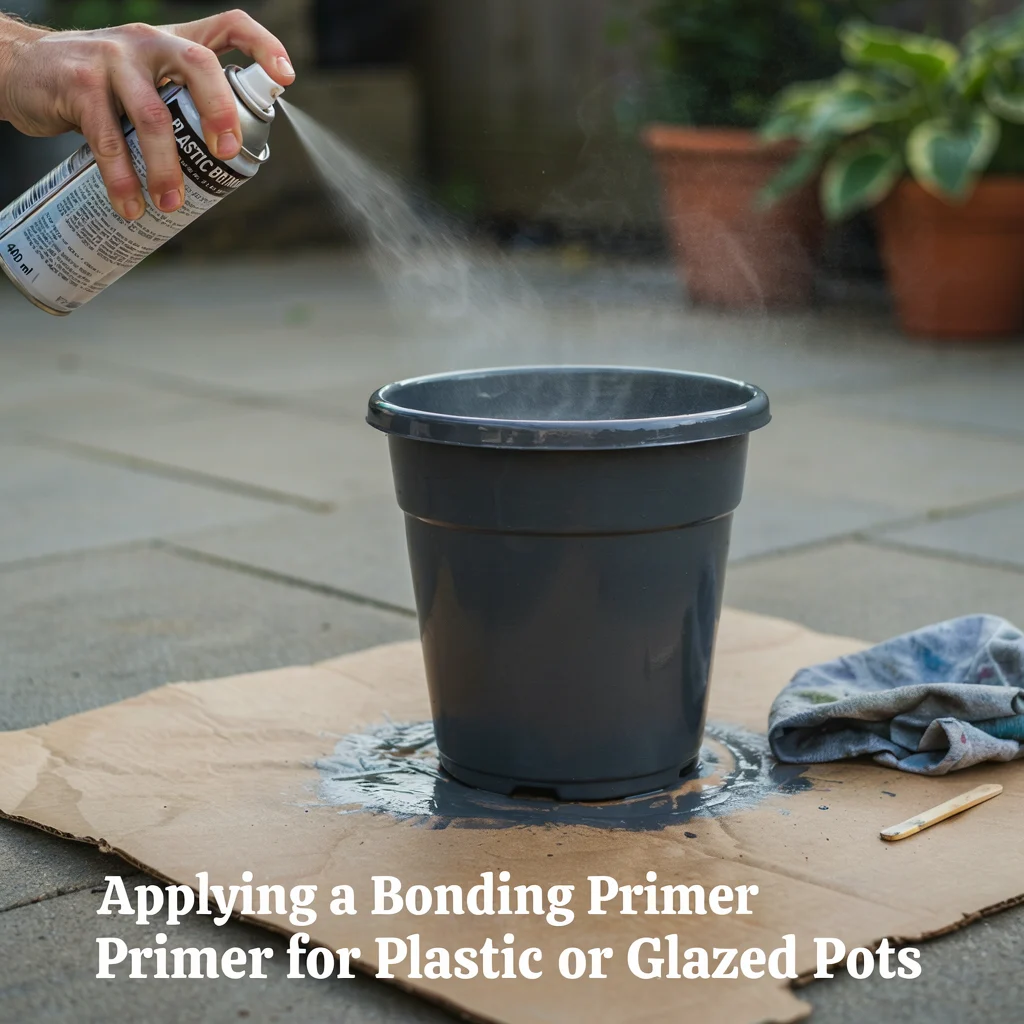
Applying a bonding primer for plastic or glazed pots is a step worth not skipping on these particular surfaces, since regular spray paint often struggles to adhere without it.
Why Plastic Pots Specifically Need a Plastic-Bonding Primer
Why plastic pots specifically need a plastic-bonding primer comes down to plastic’s naturally low-friction surface, which most paints can’t grip onto without a primer formulated to bridge that gap.
Skipping Primer on Raw Terracotta Pots
Skipping primer on raw terracotta pots is generally fine, since the material’s natural porosity already gives paint plenty to bond with directly.
Choosing a Spray Paint Rated for Outdoor Use
Choosing a spray paint rated for outdoor use matters considerably more than picking one meant for indoor crafts, since outdoor pots face sun, rain, and temperature swings a standard paint isn’t built to handle.
Why UV-Resistant Formulas Matter for Color Longevity
Why UV-resistant formulas matter for color longevity comes down to fading, since standard spray paint without UV protection can noticeably dull or discolor within a single sunny season.
Choosing Between Matte, Satin, and Gloss Finishes
Choosing between matte, satin, and gloss finishes is mostly a style decision, though gloss finishes do tend to show water spots and fingerprints more readily than matte options.
Applying Thin, Even Coats in the Right Conditions
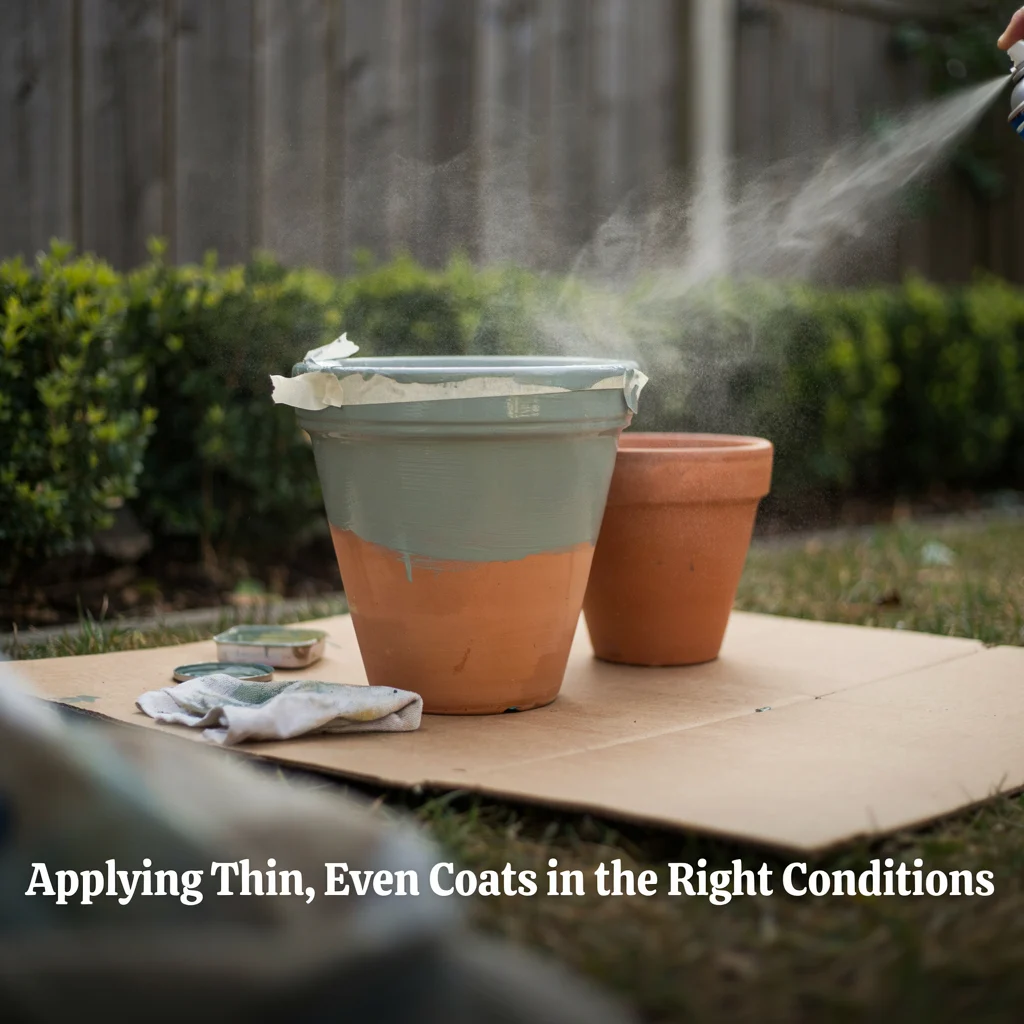
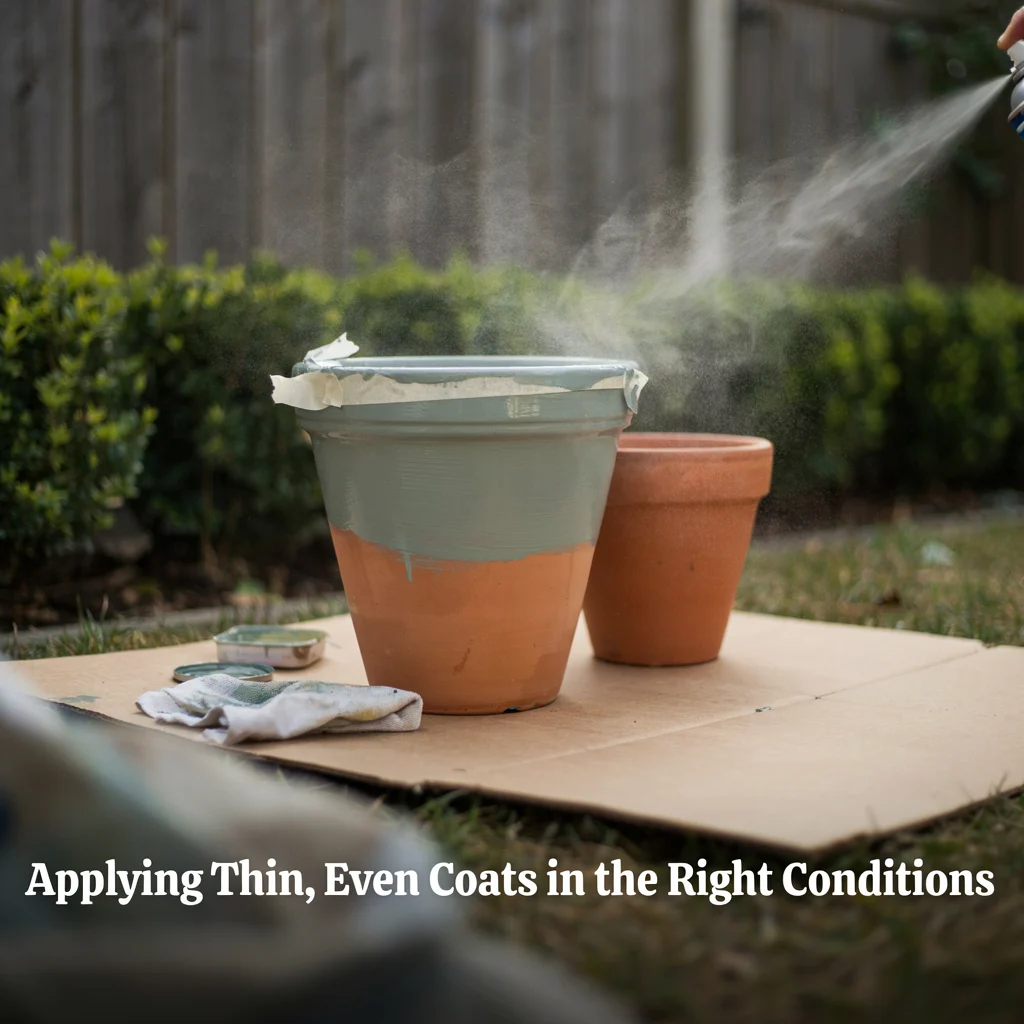
Applying thin, even coats in the right conditions makes the biggest visible difference in the final result, since thick, rushed coats are the most common cause of drips and uneven color.
Ideal Weather Conditions for Spray Painting Outdoors
Ideal weather conditions for spray painting outdoors include mild temperatures, low humidity, and no wind, all of which help paint go on evenly and dry properly without dust or debris sticking to it.
Why Multiple Light Coats Beat One Heavy Coat
Why multiple light coats beat one heavy coat comes down to drying and adhesion, since thin layers cure more evenly and are considerably less prone to cracking or peeling later.
Sealing the Finish for Long-Term Durability
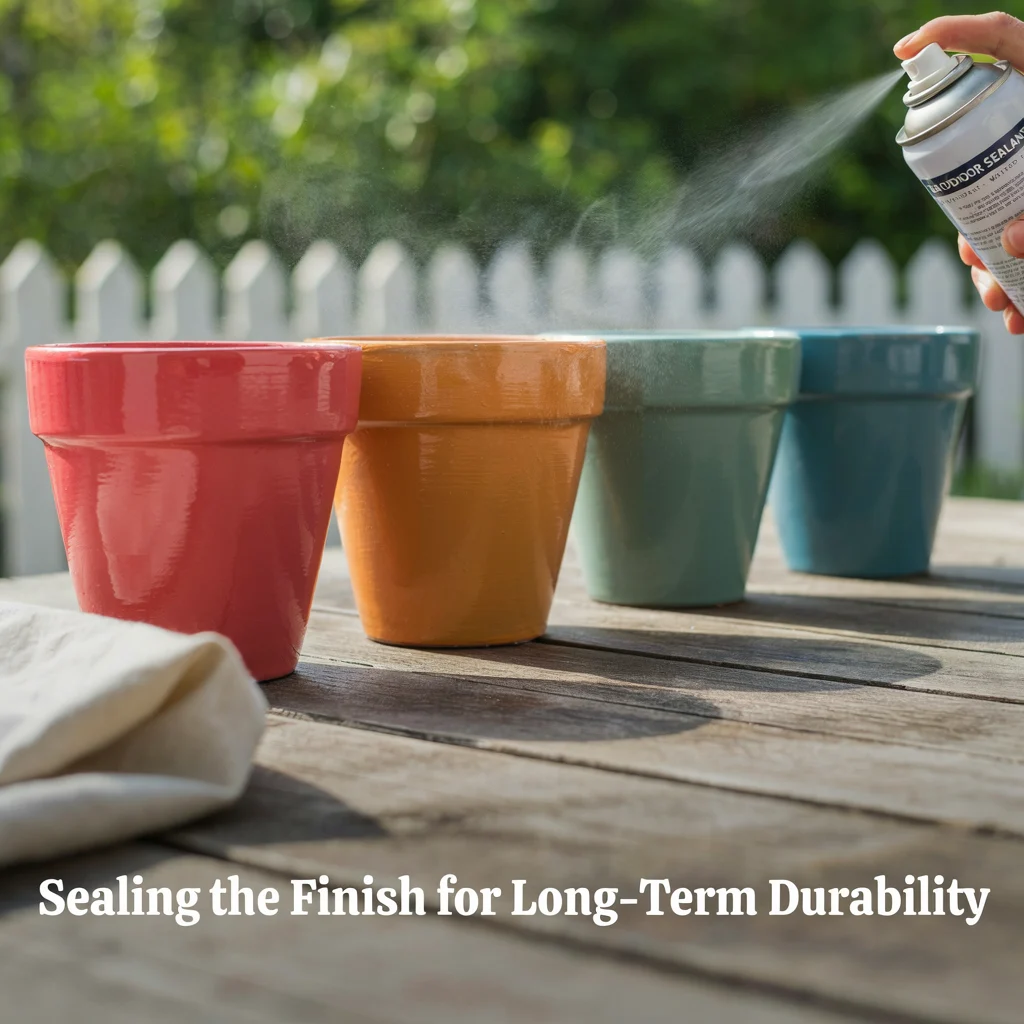
Sealing the finish for long-term durability with a clear outdoor sealant adds an extra layer of protection against sun, rain, and the general wear pots experience sitting outside.
Why a Clear Sealant Extends the Life of the Paint Job
Why a clear sealant extends the life of the paint job comes down to added UV and moisture protection, helping the color stay vibrant considerably longer than paint left unsealed.
How Long to Let Pots Cure Before Adding Soil and Plants
How long to let pots cure before adding soil and plants is generally at least 24 to 48 hours, giving both the paint and any sealant enough time to fully harden before use.
The Bottom Line
Transforming faded outdoor pots with spray paint comes down to proper prep, cleaning, sanding glossy surfaces, and priming plastic, followed by thin, even coats of a genuinely outdoor-rated paint. Sealing the finish afterward is what keeps that fresh color looking good through a full season rather than fading within a few weeks.
Readers working on this often also check The Best Trees to Plant in Your Yard, How to Plant and Cultivate a Japanese Maple Tree, and How to Refinish and Paint an Old Wooden Porch and Deck. For related ideas, see our articles on Outdoor Planter Ideas Worth Trying, Vermicomposting for Beginners: Turn Kitchen Scraps into Garden Gold, and How to Build a Pet-Friendly Garden. This pairs well with Mini Garden Ideas That Fit Any Space and How to Build a Bird Feeder Pole.
Frequently Asked Questions
Can You Spray Paint Plastic Outdoor Pots?
Plastic outdoor pots can absolutely be spray painted, but they generally need a plastic-bonding primer first, since standard paint doesn’t adhere well to plastic’s smooth surface without it.
Does Spray Paint on Outdoor Pots Last?
Spray paint on outdoor pots lasts well when a UV-resistant, outdoor-rated formula is used and properly sealed, typically holding up for a full growing season or longer before needing a touch-up.
Do You Need to Prime Terracotta Pots Before Painting?
Terracotta pots generally don’t need priming before painting, since their naturally porous surface already provides good grip for spray paint to adhere to directly.
What Kind of Spray Paint Is Safe for Pots With Live Plants?
Any exterior-rated spray paint is generally safe for pots with live plants once fully cured, since the paint only coats the outside surface and doesn’t come into contact with soil or roots.
How Many Coats of Spray Paint Do Outdoor Pots Need?
Outdoor pots typically need two to three thin coats of spray paint for even, opaque coverage, with light drying time between each coat.