
Outdoor Planter Ideas Worth Trying

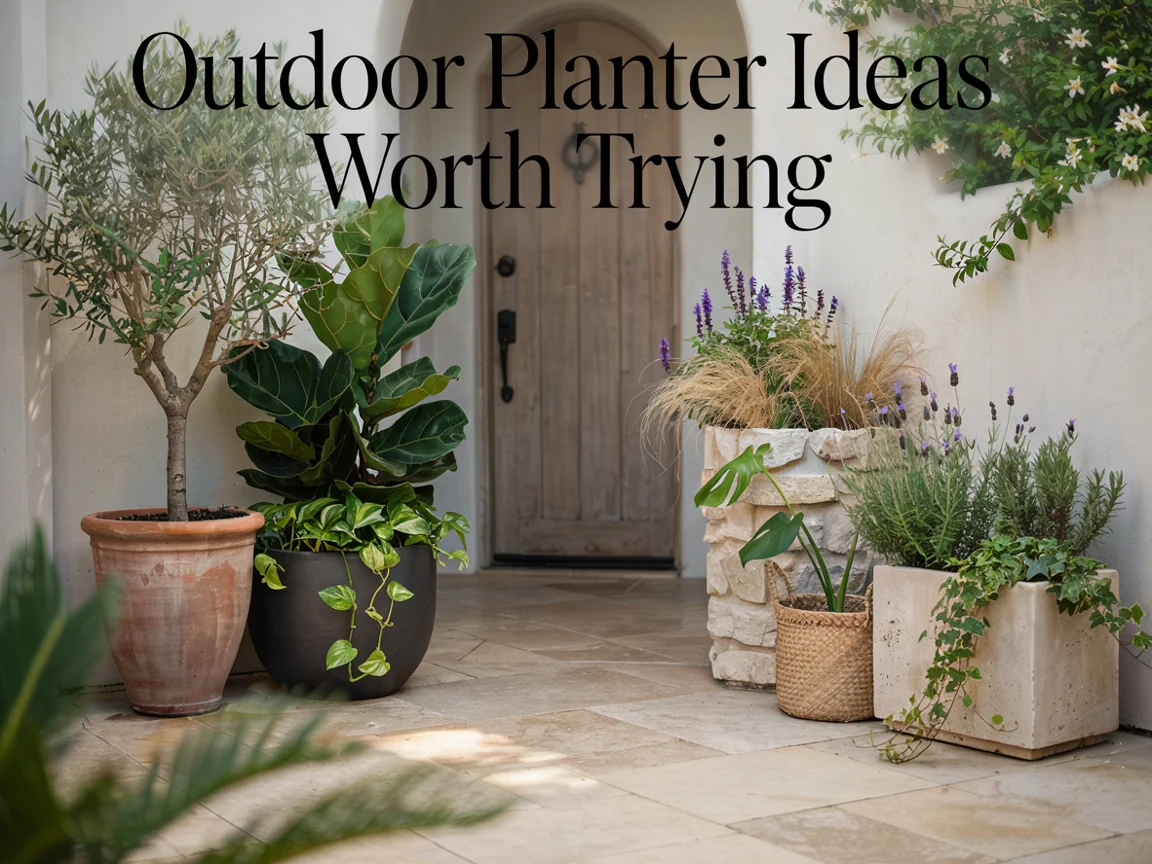
I have spent years walking past other people’s front doors and patios, stopping specifically because a planter had caught my eye, then trying to work out exactly why that particular container and plant combination worked while a similar-looking one down the street felt flat. That is not a confession — it is simply how genuinely good outdoor planter styling gets learned. Every well-planted container I have admired taught me something I later carried home: a large planter proportion glimpsed on a covered porch that instantly upgraded a plain entryway, a DIY container built from budget materials that looked far more expensive than it cost, a single practical plant combination for scorching full sun that an old nursery owner showed me years ago. The best outdoor planter ideas are rarely accidental — they are pieced together by people who noticed what genuinely worked somewhere else and had the nerve to borrow it. So this article is exactly that: a collection of the most brilliant outdoor planter ideas, the ones I have picked up, tested, and adopted again and again, the ones that work whether you’re filling a large statement container or building something inexpensive yourself. Take all of them. Borrow freely. That is how a planter stops looking like an afterthought and starts looking like a genuine design choice.
Outdoor planter ideas are the proven container, material, and plant-pairing choices that turn a simple pot into a genuine design feature rather than an afterthought, spanning large statement planters, budget-friendly DIY builds, and combinations suited to intense full-sun exposure. Drawn from the planter arrangements that actually hold up and look considered over time, rather than only on the day they’re first planted, these ideas give any outdoor space its finishing polish, while the container itself, whatever its size or material, gives each idea the flexibility and portability that make planters such a rewarding way to add greenery almost anywhere.
Over the years I have filled, rebuilt, and studied outdoor planters ranging from a single modest front-door pot to large statement containers anchoring an entire patio, and I have kept a running shortlist of what actually makes a planter look genuinely finished rather than simply present. I have dropped the combinations that look appealing in a single photo but fail within a season of real sun, wind, or neglect, and I have watched the right planter choice transform an ordinary entryway or patio corner into the most complimented detail in the whole yard. In this article I am sharing the most brilliant outdoor planter ideas, covering large statement pieces, DIY builds, front-of-house arrangements, budget approaches, and combinations suited to intense summer sun.
Large Outdoor Planter Ideas for Genuine Visual Impact

Large outdoor planter ideas for genuine visual impact use oversized containers as a deliberate architectural statement rather than simply scaling up a smaller arrangement, anchoring an entryway, patio corner, or garden focal point with real presence. I reach for large planters constantly for spaces that need a genuine sense of scale, because a single well-proportioned large container often does more visual work than a whole cluster of smaller pots.
Where Large Planters Make the Biggest Difference
Flanking an entryway, anchoring a patio corner, and framing a garden view are three placements suited to large outdoor planters. Flanking an entryway with a matched pair of large planters creates an immediately grand, welcoming first impression. Anchoring a patio corner with one substantial container gives an otherwise undefined space a clear visual foundation. Framing a garden view, positioned on either side of a sightline, draws the eye deliberately toward whatever lies beyond.
Choosing the Right Scale and Material
Proportional sizing to the surrounding architecture, weight-appropriate material for the location, and drainage suited to a large volume of soil are three considerations suited to large planters. Proportional sizing to the surrounding architecture prevents an oversized container from looking either absurdly large or, just as commonly, still too small for the space it’s meant to anchor. Weight-appropriate material for the location matters considerably, since a large planter filled with soil becomes extremely heavy, making lightweight fibreglass or resin a practical choice for a rooftop or balcony. Drainage suited to a large volume of soil is essential, since a big container without adequate drainage holes can trap water and quickly cause root rot.
Outdoor Planter Ideas DIY Builders Can Actually Tackle

Outdoor planter ideas DIY builders can actually tackle are the projects realistically achievable with basic tools and a weekend’s effort, rather than requiring specialized woodworking or masonry skill. I recommend DIY planter builds constantly, because a handmade container often carries more genuine character than a store-bought equivalent, at a fraction of the cost.
Achievable DIY Planter Projects
A simple cedar box planter, a repurposed galvanized tub, and a concrete-look hypertufa container are three DIY projects genuinely achievable for most home gardeners. A simple cedar box planter, built from a handful of boards and basic joinery, is one of the most beginner-friendly DIY container projects available. A repurposed galvanized tub, fitted with drilled drainage holes, turns an inexpensive found or secondhand object into a genuinely stylish planter. A concrete-look hypertufa container, made from a lightweight cement-and-peat mixture poured into a simple mould, achieves a convincing stone-like finish at a fraction of real stone’s weight and cost.
Making DIY Planters Last Outdoors
Weatherproof sealant on any wood, adequate drainage holes drilled before planting, and rust-resistant hardware are three considerations suited to durable DIY planters. Weatherproof sealant applied to any wood-based planter protects it from the sun and moisture damage that shortens an untreated piece’s lifespan considerably. Adequate drainage holes drilled before planting, rather than as an afterthought, prevent the waterlogging that quickly kills whatever ends up planted inside. Rust-resistant hardware, chosen from the start for any metal fasteners or brackets, avoids the disappointing sight of rust streaks staining an otherwise nice DIY build.
Planter Ideas for the Front of the House

Planter ideas for the front of the house are specifically suited to a property’s most visible, first-impression space, prioritizing symmetry, tidiness, and reliable seasonal colour over a more experimental or eclectic backyard approach. I plan front-of-house planters with particular care, because this small, highly visible detail often shapes a visitor’s very first impression of the whole property.
Front-Door Planter Arrangements That Work
A symmetrical matched pair, a single statement container centred beneath a window, and a tiered arrangement along a set of steps are three arrangements suited to front-of-house planters. A symmetrical matched pair flanking the front door creates an immediately welcoming, considered entrance. A single statement container centred beneath a window draws the eye toward an architectural feature that might otherwise go unnoticed. A tiered arrangement along a set of steps adds greenery and colour to an often-overlooked transitional space between the street and the front door.
Plant Choices for a Front-of-House Planter
Reliable seasonal bloomers, structural evergreen anchors, and low-maintenance trailing plants are three plant categories suited to front-of-house planters. Reliable seasonal bloomers, chosen for consistent performance rather than novelty, keep a front-of-house display looking fresh and cared-for throughout the growing season. Structural evergreen anchors provide year-round presence, ensuring the entryway never looks bare even in the off-season. Low-maintenance trailing plants spilling over the container’s edge soften its hard lines while asking relatively little in ongoing care.
Inexpensive Large Planter Ideas That Don’t Look Cheap

Inexpensive large planter ideas that don’t look cheap solve the common problem of large containers carrying a genuinely high price tag at full retail, using lightweight materials, clever sourcing, and smart finishing to achieve real scale without the matching cost. I lean on these budget tricks constantly, because a large planter’s visual impact often has very little to do with how much it actually cost to acquire.
Affordable Large Planter Options
Lightweight resin or fibreglass, repurposed large containers like whiskey barrels or troughs, and end-of-season nursery pot clearance are three affordable ways to source a large planter. Lightweight resin or fibreglass containers mimic the look of stone, concrete, or metal at a considerably lower price and weight than the real material. Repurposed large containers, like whiskey barrels or agricultural troughs, bring genuine character and scale for often less than a comparably sized decorative planter. End-of-season nursery pot clearance, buying oversized nursery containers once their original plants have sold, is an often-overlooked source of large, sturdy pots at a steep discount.
Making an Affordable Large Planter Look Premium
A single cohesive colour, quality plant material even in a budget container, and thoughtful placement are three ways to elevate an inexpensive large planter’s appearance. A single cohesive colour throughout the container avoids the patchy or mismatched look that can make a budget find read as cheap rather than simply affordable. Quality plant material, even planted in the most modest container, does an enormous amount to elevate the overall impression far more than the pot itself. Thoughtful placement, positioning the planter where it genuinely enhances the surrounding space, matters as much as the container’s cost in determining its overall visual payoff.
Creative Ideas for Outdoor Plant Containers

Creative ideas for outdoor plant containers move beyond traditional pots entirely, repurposing unexpected objects, from old furniture to reclaimed metal, into genuinely striking planting vessels. I turn to these creative container ideas often for a patio or garden that wants a distinctive, personal touch rather than a purely conventional look.
Unexpected Objects That Work as Planters
A weathered wheelbarrow, a stack of vintage suitcases, and a repurposed metal colander are three unconventional containers suited to creative outdoor planting. A weathered wheelbarrow, left slightly rusted and worn, brings genuine rustic character to a cottage-style or country garden. A stack of vintage suitcases, sealed and drilled for drainage, creates a quirky, layered display well suited to a covered porch out of direct rain exposure. A repurposed metal colander, already perforated with natural drainage, makes a charming small container for herbs or trailing plants.
Practical Considerations for Unconventional Containers
Adequate drainage added where none exists, protection from excessive moisture damage for delicate materials, and appropriate scale for the intended plant are three practical considerations suited to creative containers. Adequate drainage added where none exists, through drilled holes or a lined interior, is essential regardless of how visually appealing an unconventional object might be. Protection from excessive moisture damage, particularly for materials like unsealed wood or untreated metal, extends the usable life of a creative but less weather-resistant container. Appropriate scale for the intended plant ensures a charmingly unconventional container still provides enough root space for genuinely healthy growth.
Summer Planter Ideas for Full Sun

Summer planter ideas for full sun use genuinely heat- and sun-tolerant plant combinations rather than species that scorch or wilt under consistent, intense exposure through the hottest months. I plan full-sun summer planters carefully, because a beautiful spring combination can fail completely once real summer heat arrives if the plant choices weren’t suited to the conditions from the start.
Reliable Full-Sun Summer Combinations
Lantana with trailing sweet potato vine, zinnias with ornamental grasses, and succulents in a mixed arrangement are three combinations suited to full-sun summer planters. Lantana with trailing sweet potato vine delivers long-lasting colour and cascading texture that both thrive in intense, prolonged heat. Zinnias with ornamental grasses combine reliable, heat-tolerant blooms with movement and structure that hold up through the hottest stretches of summer. Succulents in a mixed arrangement tolerate both intense sun and inconsistent watering, ideal for a container that might not receive daily attention during peak summer travel season.
Keeping Full-Sun Containers Thriving All Summer
Larger container volume for thermal buffering, mulched soil surfaces, and a consistent watering schedule are three practices suited to full-sun summer planter success. Larger container volume than the plant strictly requires gives roots more protection against rapid temperature swings in an intensely sunny spot. Mulched soil surfaces slow moisture evaporation, reducing how often a full-sun container needs watering during peak heat. A consistent watering schedule, ideally supported by drip irrigation on a timer, protects a full-sun planter from the rapid drying that can undo weeks of otherwise careful care in just a single missed hot day.
Layered Planter Groupings for Greater Visual Impact

Layered planter groupings for greater visual impact use several containers of varying heights and sizes clustered together rather than a single isolated pot, creating a fuller, more established look than any individual container could achieve alone. I group planters this way often, because a well-composed cluster reads as considerably more intentional and lush than the same number of plants spread out individually.
Building a Cohesive Planter Grouping
Varied height achieved through stands or stacked containers, a shared colour or material thread, and an odd number of pots for visual balance are three principles suited to a layered grouping. Varied height, achieved with simple plant stands or by combining naturally tall and short containers, creates the layered depth this approach depends on. A shared colour or material thread across the whole grouping keeps a cluster of different-sized pots feeling coordinated rather than randomly assembled. An odd number of pots, typically three or five, tends to read as more visually balanced and intentional than an even-numbered grouping.
Arranging a Planter Grouping in Real Space
Largest container at the back or centre, smaller containers layered toward the front, and adequate spacing for individual plant growth are three arranging principles suited to a planter grouping. The largest container positioned at the back or centre anchors the whole arrangement and provides a clear visual foundation. Smaller containers layered toward the front create a natural, cascading sense of depth as the eye moves through the grouping. Adequate spacing for individual plant growth, even within a tightly composed cluster, prevents overcrowding once each plant reaches its full mature size.
Seasonal Planter Rotations That Keep a Space Looking Fresh

Seasonal planter rotations that keep a space looking fresh use a manageable number of dedicated rotation containers to refresh colour and interest throughout the year, while permanent evergreen anchors elsewhere provide consistent year-round structure. I recommend this rotation approach for most planter schemes, because a modest number of seasonally swapped pots keeps a whole space feeling current without requiring a full seasonal overhaul.
Planning a Manageable Rotation Schedule
A few dedicated rotation containers, seasonal plant choices matched to each period, and evergreen anchors left undisturbed are three principles suited to a manageable rotation. A few dedicated rotation containers, rather than the entire planter collection, keep the seasonal refresh affordable and manageable in effort. Seasonal plant choices matched to each period, like spring bulbs, summer annuals, and autumn ornamental grasses, keep those specific containers feeling genuinely current throughout the year. Evergreen anchors left undisturbed provide stable, year-round structure, meaning the whole space never looks bare even between seasonal swaps elsewhere.
Timing and Sourcing Seasonal Rotations Efficiently
Planning ahead by a full season, reusing soil and containers where practical, and sourcing seasonal plants at nursery sales are three practical habits suited to an efficient rotation routine. Planning ahead by a full season, sourcing the next round of plants before the current display fades, avoids an awkward gap where containers sit empty between rotations. Reusing soil and containers where practical, refreshing rather than fully replacing the growing medium each time, reduces both cost and material waste across a full year of rotations. Sourcing seasonal plants at nursery sales, often timed to the very end of a given season, can substantially reduce the overall cost of maintaining a rotating planter scheme.
Matching Planter Style to Your Home’s Architecture

Matching planter style to your home’s architecture is the brilliant principle that keeps individually attractive container choices from clashing with the surrounding building, ensuring the overall look reads as one cohesive design rather than a mismatched collection. I consider architectural style early in nearly every planter project, because even a beautifully planted container can feel oddly out of place against the wrong backdrop.
Coordinating Planters With Different Architectural Styles
Clean geometric containers for modern homes, terracotta or aged stone for traditional properties, and painted wood or galvanized metal for cottage-style houses are three pairings suited to different architectural directions. Clean geometric containers, in simple concrete-look or matte finishes, suit a modern home’s straightforward lines particularly well. Terracotta or aged stone containers complement a traditional property’s more classic, established character. Painted wood or galvanized metal containers bring the relaxed, slightly informal warmth that suits a cottage-style or farmhouse aesthetic especially naturally.
Using Colour to Reinforce Architectural Coordination
Matching trim or door colours, complementary rather than clashing tones, and a consistent material finish across all visible planters are three colour strategies suited to architectural coordination. Matching trim or door colours in a planter’s finish ties the container directly back to the house’s own existing palette. Complementary rather than clashing tones, chosen deliberately rather than by chance, keep even a bold planter colour choice feeling intentional against the surrounding architecture. A consistent material finish across all visible planters, even different sizes or shapes, unifies a whole property’s container displays as one considered design.
Drainage and Soil Choices That Make Any Planter Idea Succeed

Drainage and soil choices that make any planter idea succeed are the practical foundation beneath every visually appealing planter idea on this list, since even the most beautifully designed container fails quickly without the right growing conditions inside it. I treat drainage and soil as non-negotiable on every planter project, because the most stylish container in the world still ends up empty within a season if these basics are overlooked.
Getting Drainage Right in Any Container
Multiple drainage holes rather than just one, a coarse material layer at the base, and elevated feet or risers under the container are three drainage principles suited to any planter. Multiple drainage holes rather than just one distribute water outflow more evenly, reducing the risk of one clogged hole causing the whole container to waterlog. A coarse material layer at the base, like broken pottery shards or coarse gravel, helps prevent soil from washing out through the drainage holes while still allowing water to pass. Elevated feet or risers under the container lift it slightly off the ground, ensuring water can actually drain away rather than pooling beneath a flush-sitting pot.
Choosing Soil Suited to Container Growing
A dedicated container or potting mix rather than garden soil, added perlite or coarse sand for extra drainage in wet climates, and slow-release fertilizer mixed in at planting are three soil considerations suited to container success. A dedicated container or potting mix rather than garden soil provides the lighter, better-draining structure containers specifically require, since garden soil compacts too densely in a confined pot. Added perlite or coarse sand for extra drainage in particularly wet climates further reduces the risk of waterlogged roots. Slow-release fertilizer mixed in at planting removes the need to remember frequent manual feeding throughout an entire growing season.
For more on this, our guides on Vermicomposting for Beginners: Turn Kitchen Scraps into Garden Gold, How to Build a Pet-Friendly Garden, and Mini Garden Ideas That Fit Any Space cover related ground.
Frequently Asked Questions
What are the best outdoor planter ideas overall?
The best outdoor planter ideas combine a container genuinely proportioned to its setting, whether that’s a large statement piece flanking an entryway or a smaller grouping arranged for visual depth, with plant choices matched carefully to the space’s actual sun exposure and climate. Getting drainage and soil right underneath any stylish container choice is what ultimately determines whether a beautiful planter idea actually survives a full growing season.
How can I make a large outdoor planter without spending a lot of money?
Making a large outdoor planter affordably works well with lightweight resin or fibreglass containers that mimic stone or concrete at a fraction of the price and weight, repurposed large objects like whiskey barrels or agricultural troughs, and end-of-season nursery pot clearance sales. A single cohesive colour and genuinely healthy plant material inside the container do more to elevate an inexpensive large planter’s appearance than the pot’s original cost ever does.
What are some easy DIY outdoor planter projects?
Easy DIY outdoor planter projects include a simple cedar box built from basic boards and joinery, a repurposed galvanized tub fitted with drilled drainage holes, and a lightweight hypertufa container poured from a cement-and-peat mixture for a convincing stone-like finish. Applying weatherproof sealant to any wood and drilling adequate drainage holes before planting are the two details that most determine whether a DIY planter holds up well over multiple seasons.
What plants work best in outdoor planters for full sun?
Plants that work best in full-sun outdoor planters include lantana paired with trailing sweet potato vine for long-lasting colour and texture, zinnias combined with ornamental grasses for heat-tolerant blooms and structure, and mixed succulent arrangements that tolerate both intense sun and inconsistent watering. Choosing a larger container volume than strictly necessary and mulching the soil surface both help buffer full-sun plantings against rapid temperature swings and faster water evaporation.
How do I choose planters that match my home’s architecture?
Choosing planters that match your home’s architecture generally means selecting clean, geometric containers for a modern property, terracotta or aged stone for a traditional home, and painted wood or galvanized metal for a cottage-style house, since each material and shape tends to echo the building’s own existing character. Matching a planter’s finish to your home’s trim or door colour, or at least choosing a complementary rather than clashing tone, further reinforces that sense of intentional coordination.